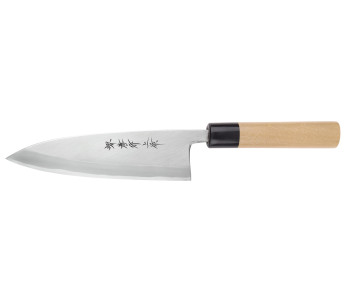
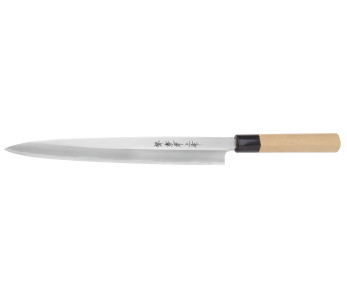
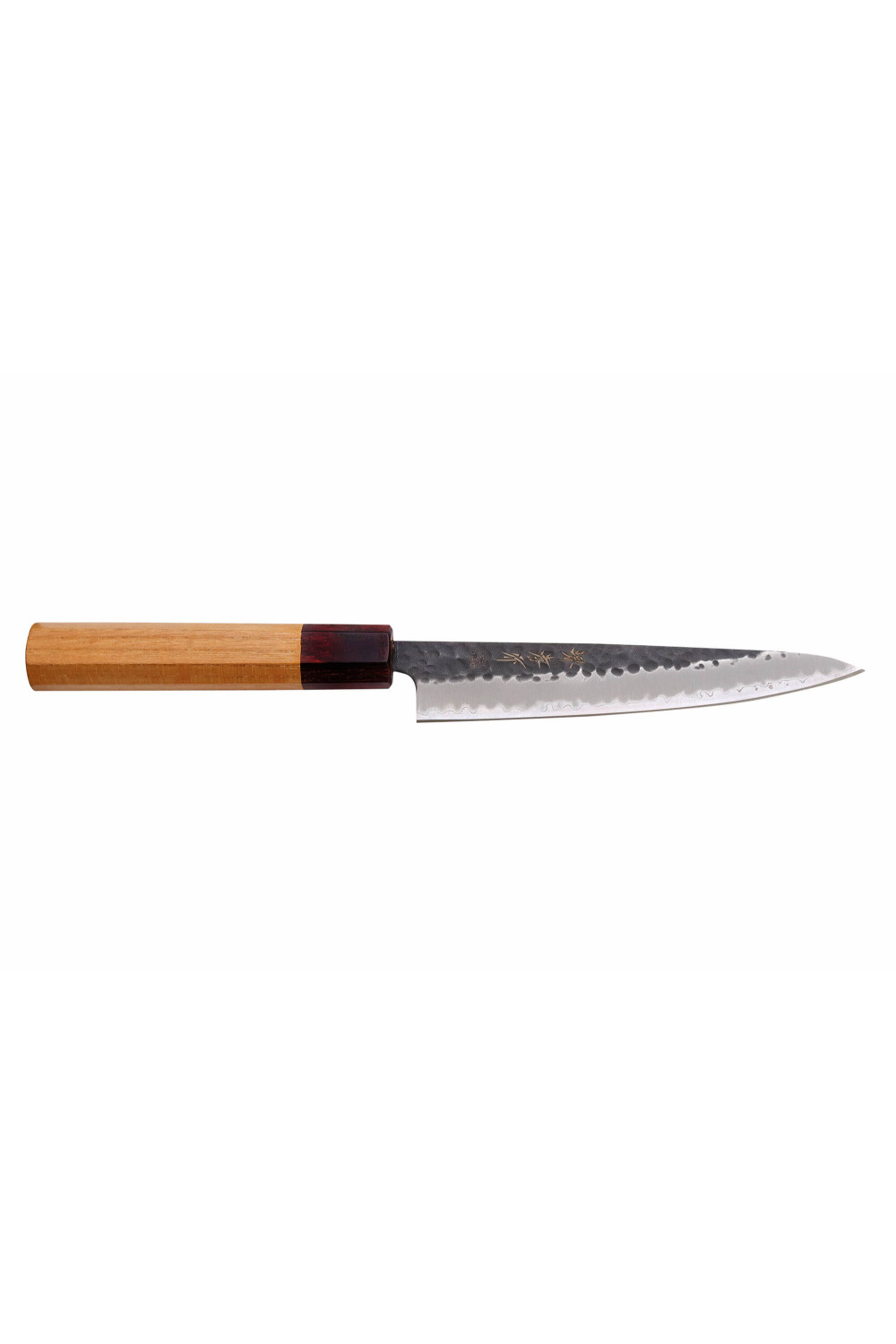
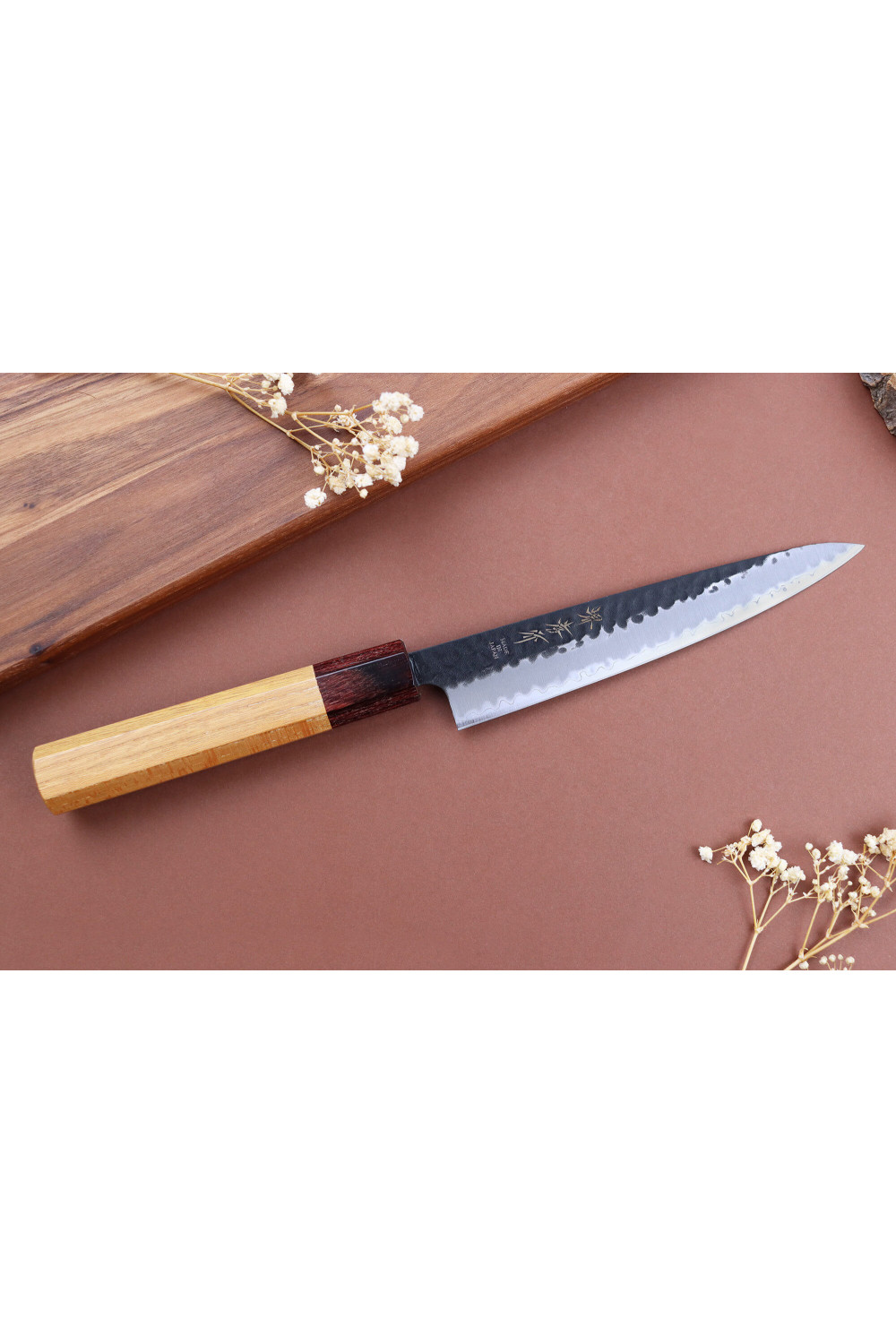
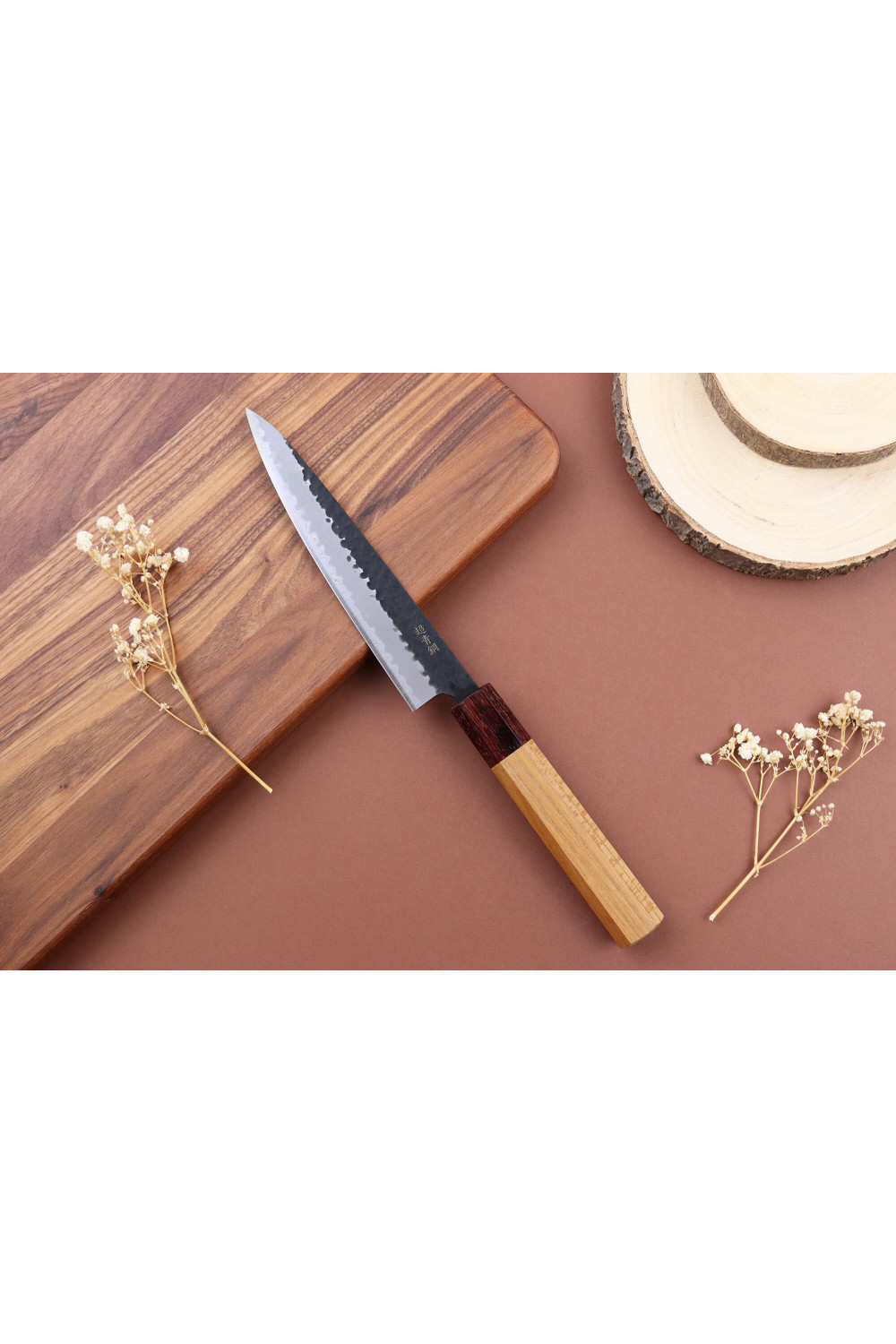
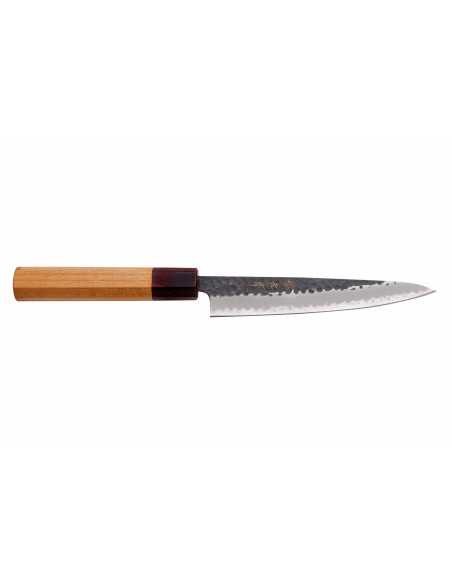
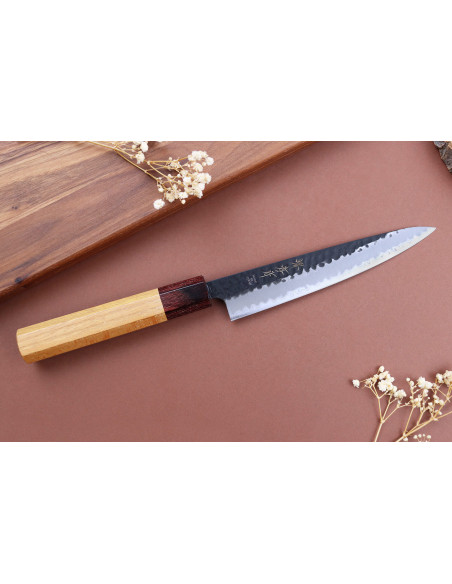
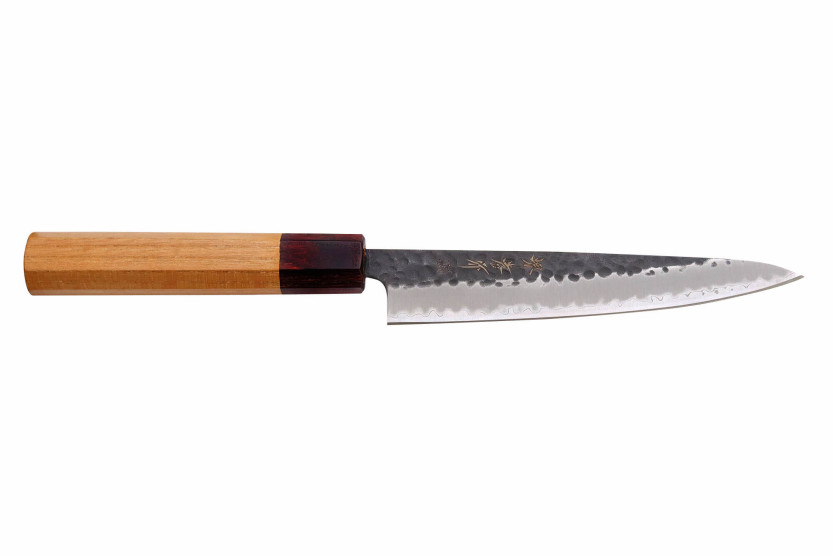
The Universal knife is an indispensable all-rounder! It enables you to perform a wide range of cutting tasks, including small jobs requiring precision. With it, you can prepare fruit, vegetables, meat and cheese with ease. Be careful not to use it on hard foods such as squash, bones, etc.
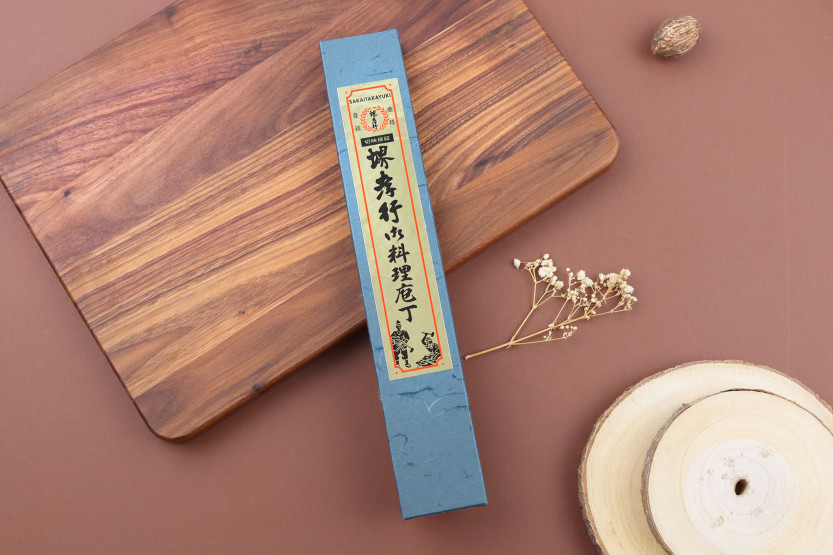
Founded in the 50s, Japanese manufacturer Sakai Takayuki is based in the town of Sakai, from which it takes its name. With decades of experience behind it, the company has perfected manufacturing techniques based on a remarkable heritage: that of the old-time blacksmiths who made the samurai's katanas. Today, Sakai Takayuki manufactures 100% Japanese knives, combining modernity and authenticity.
A top-of-the-range carbon knife
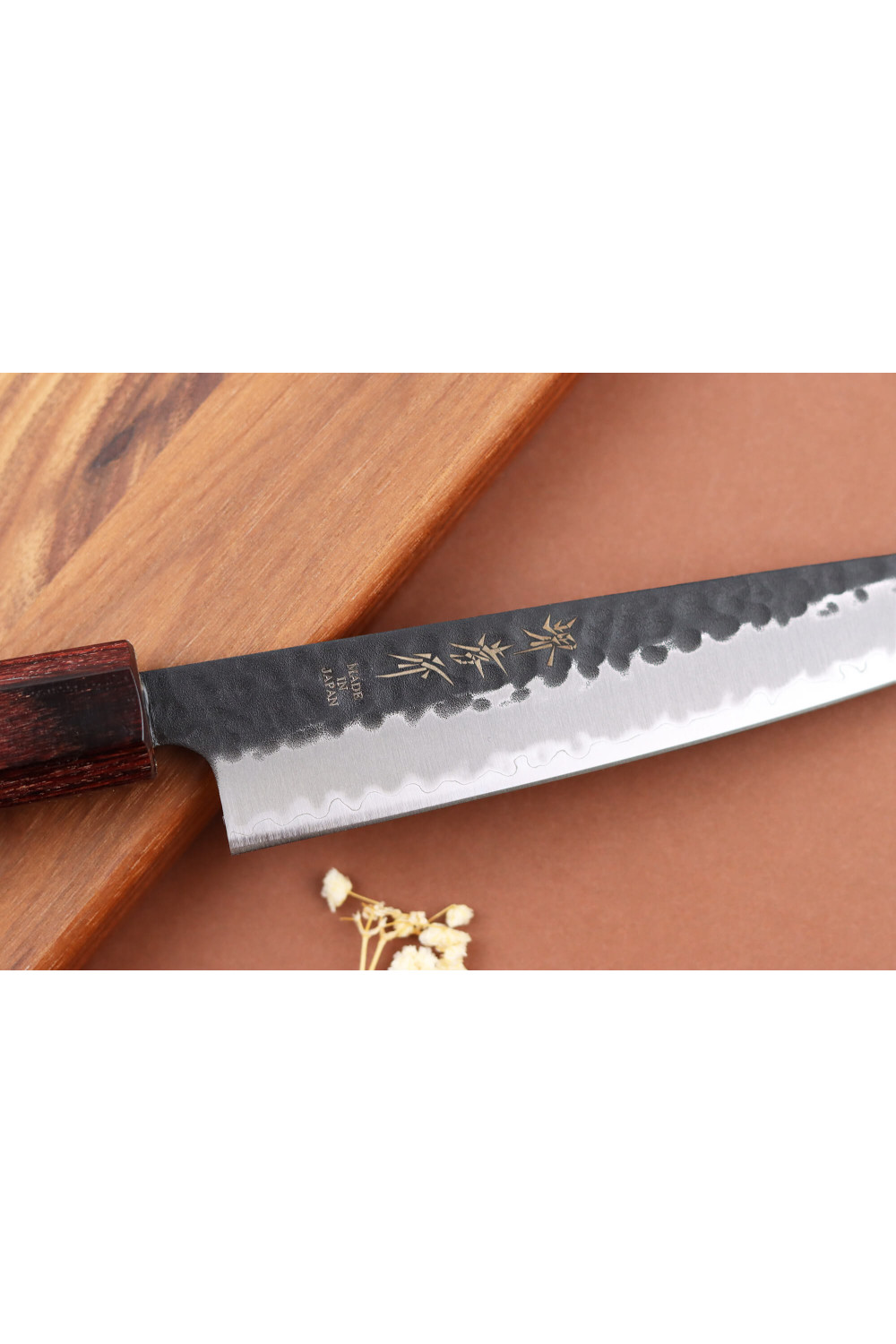
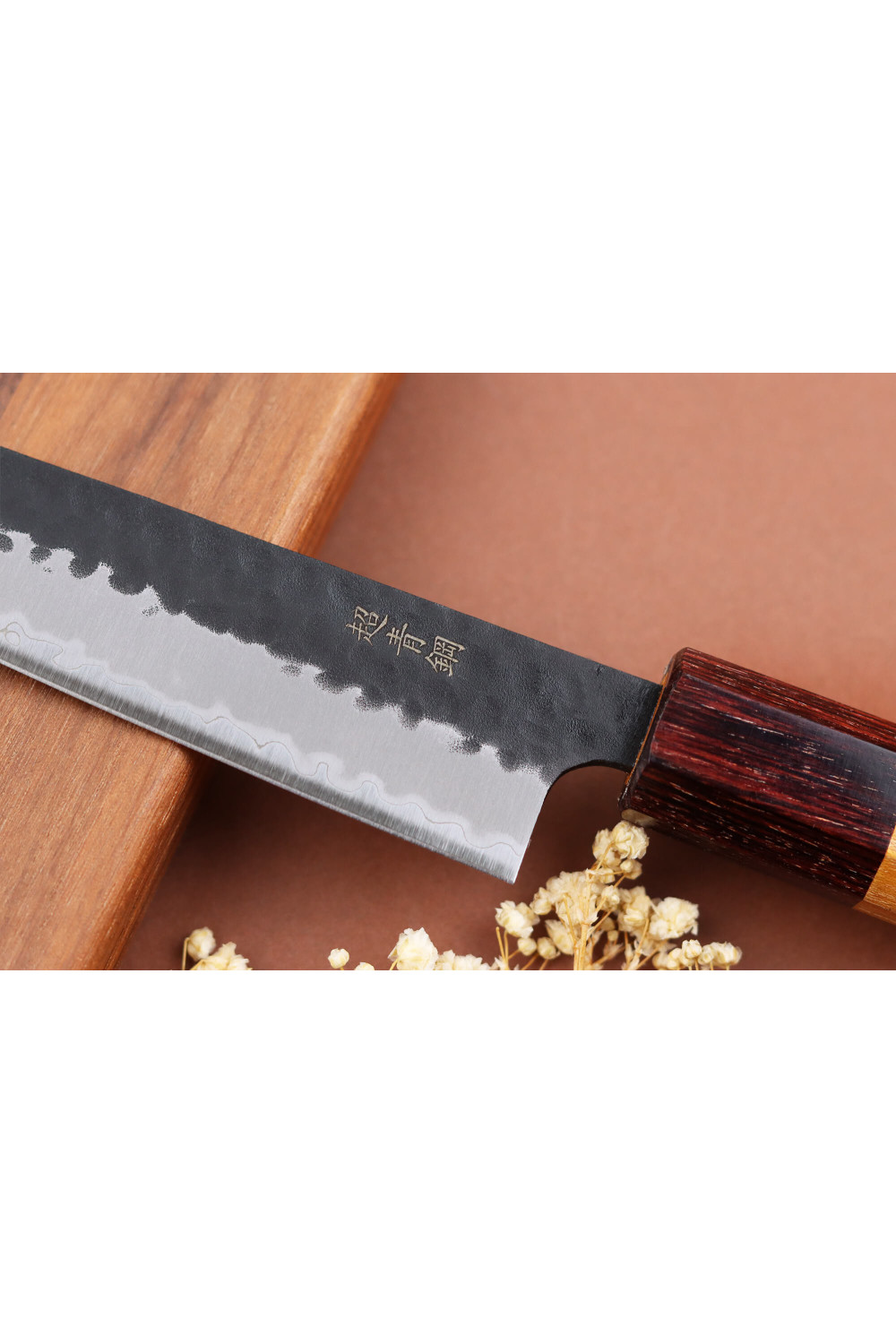
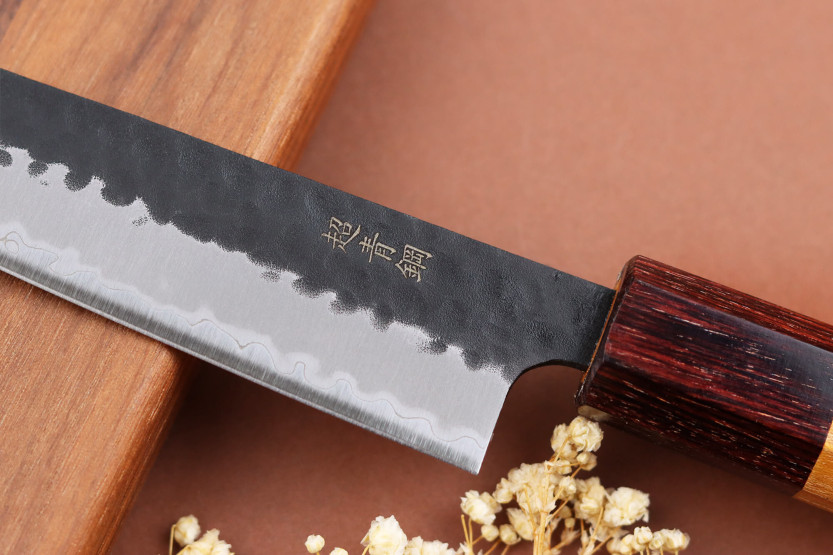
This Sakai Takayuki knife features a typically Japanese San Mai structure: this technique consists of forging the core of a blade in rigid steel, then covering it with a softer layer of steel that folds in on itself. The result is a balanced blade with a well-protected core.
For the core of this blade,Japanese Aogami Super steel (also known as Blue Super Steel) was chosen: a high-end alloy produced by the world-renowned steelmaker Hitachi.
Aogami alloy is a high-performance steel, making it an excellent choice! Indeed, with its high carbon content of around 1.5%, it is far more rigid than most steels (the average for a Western knife is 0.5% carbon). This blade has a hardness of 65HRC on the Rockwell scale, proof that its cutting edge is effective and durable over time, thanks to its rigidity. Sharpening sessions can be spaced out and, when necessary, this steel remains pleasant to work with.
To cover this blade core, a layer ofstainless steel is added. This protects the core and balances its hardness, so that your blade is less brittle.
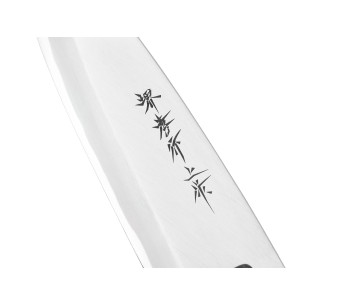
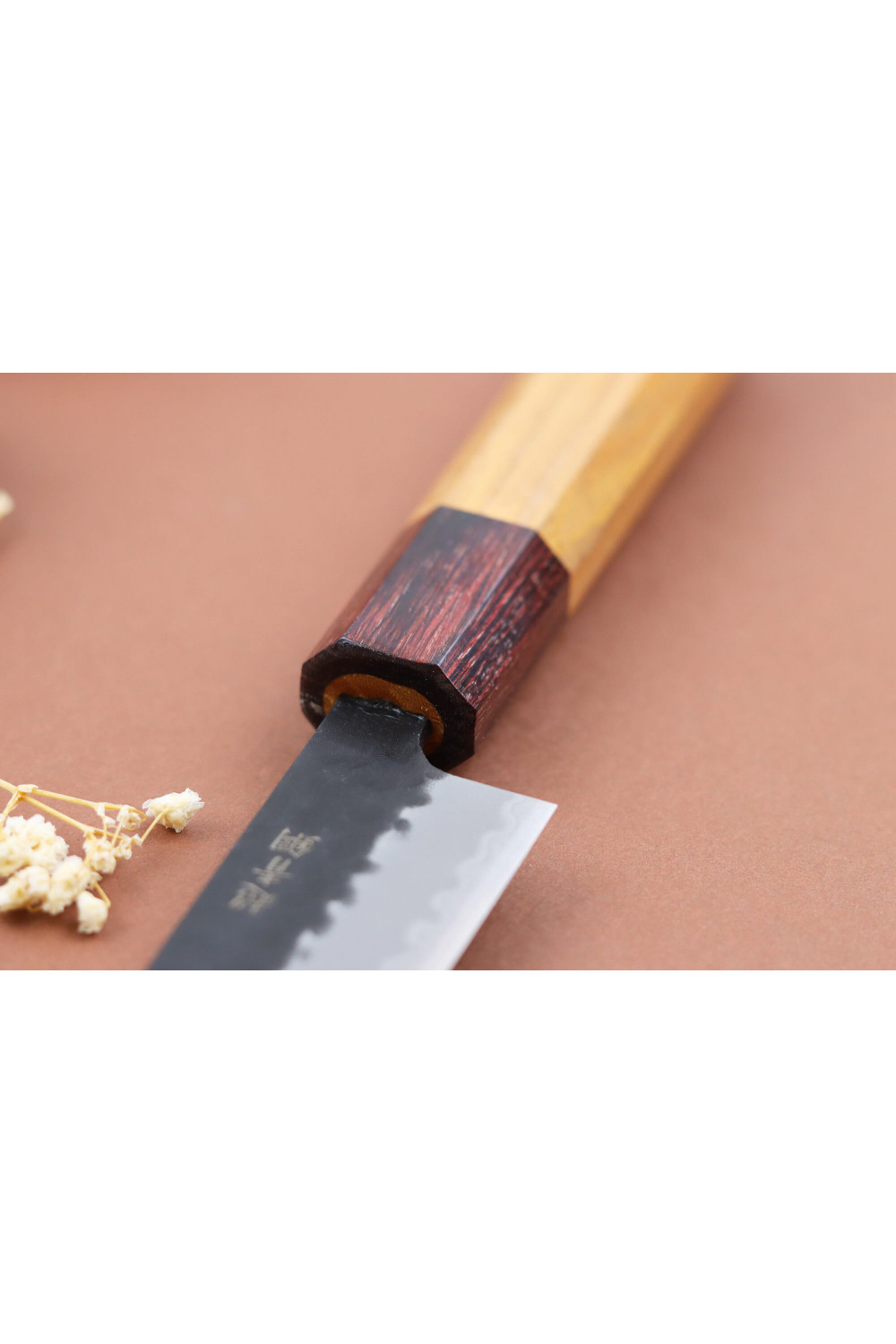
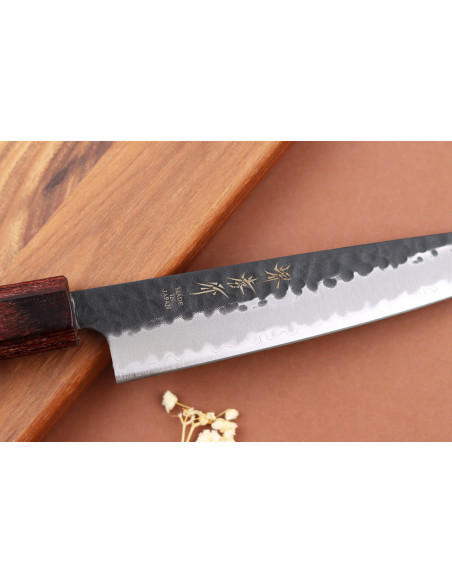
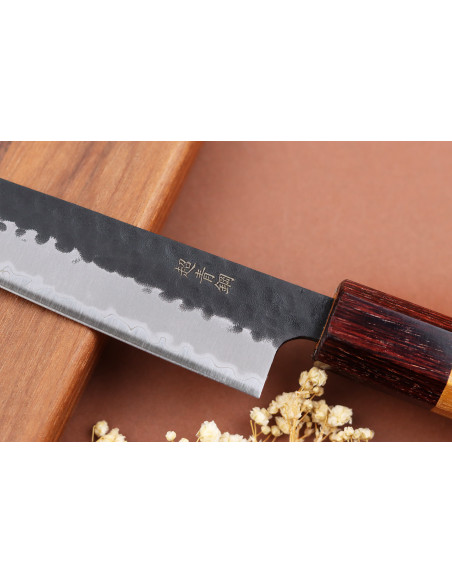
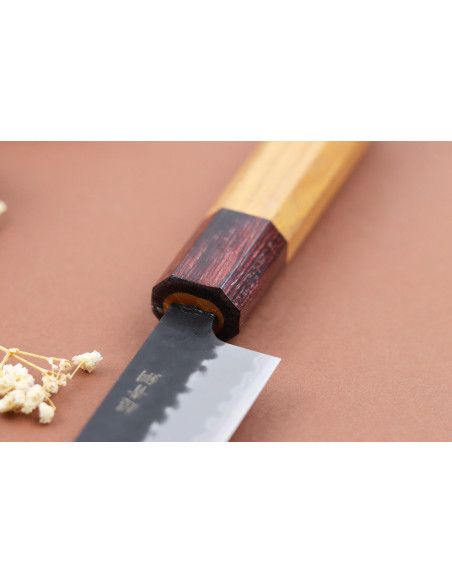
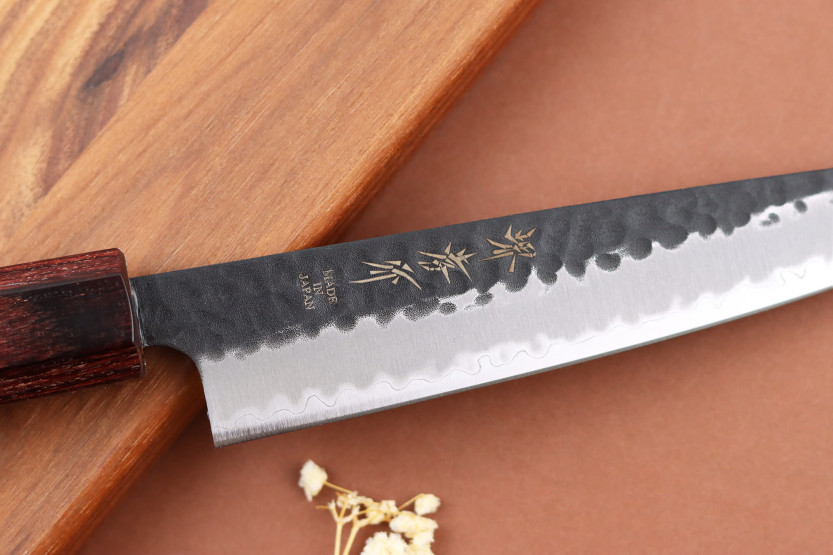
The different alloys can be seen all along the blade, their superimposition forming a fine wave with patterns unique to each piece!
Finally, the blade has a rough forged finish for a touch of authenticity. What's more, it has been hammered for added character, which is much appreciated by Japanese chefs.
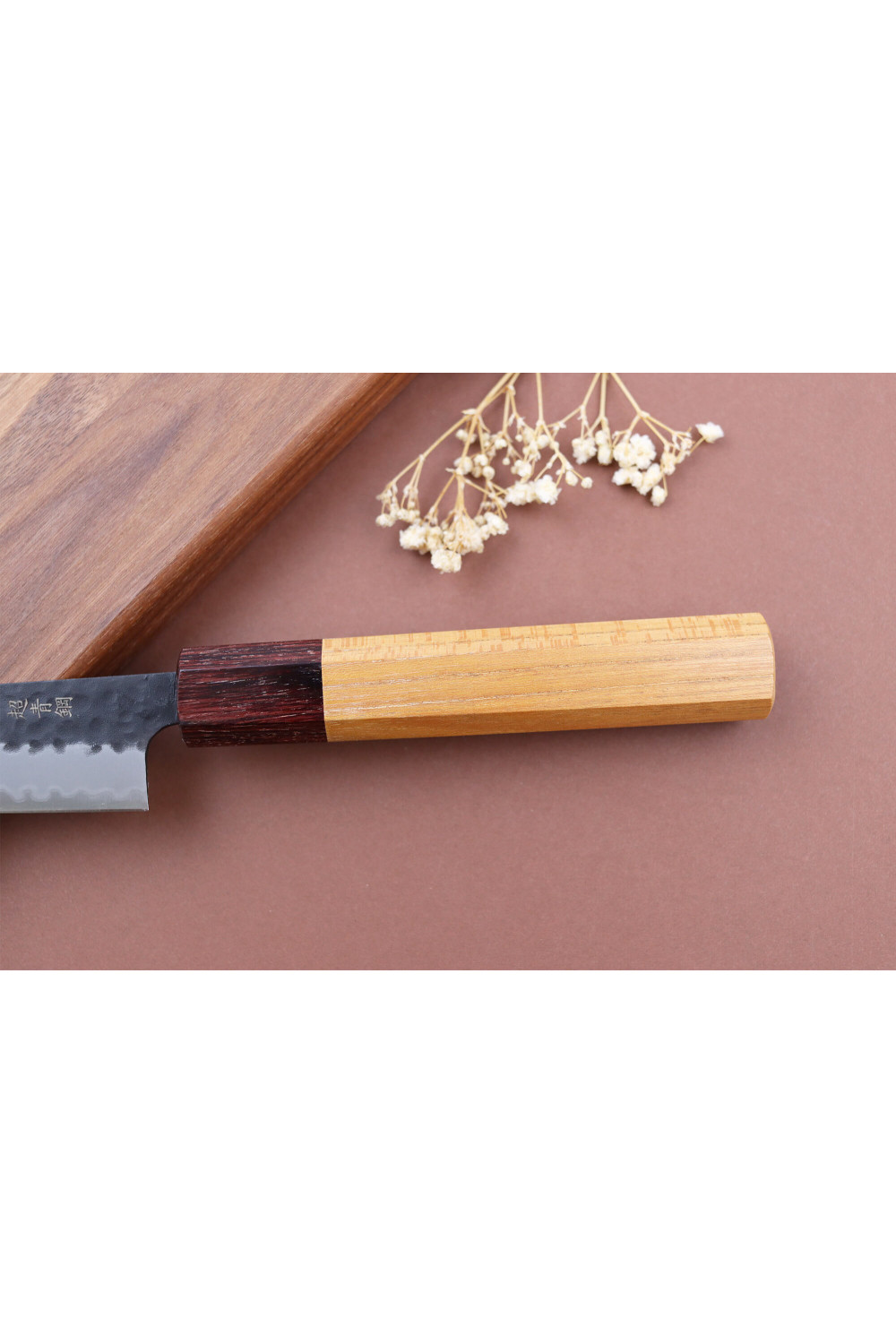
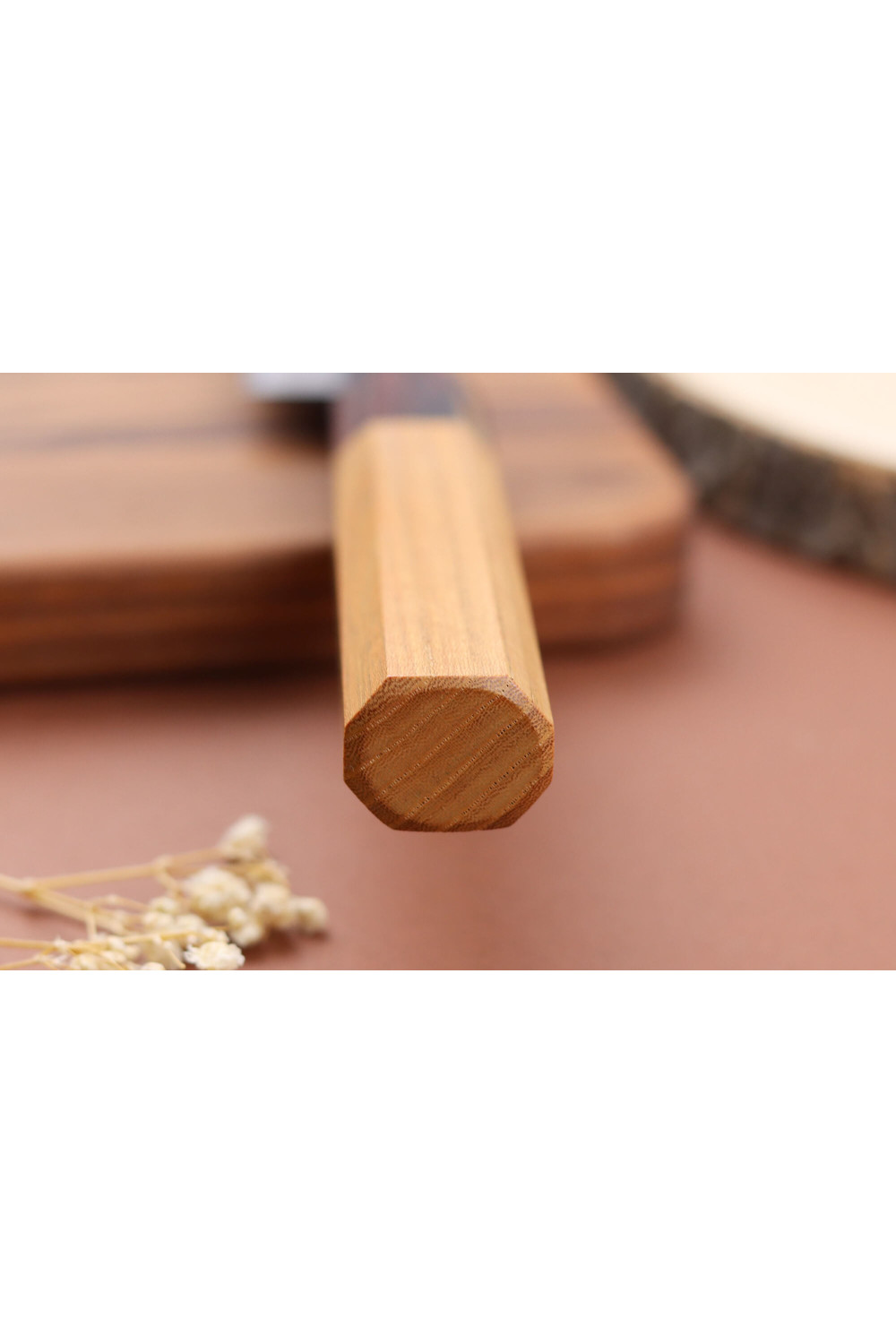
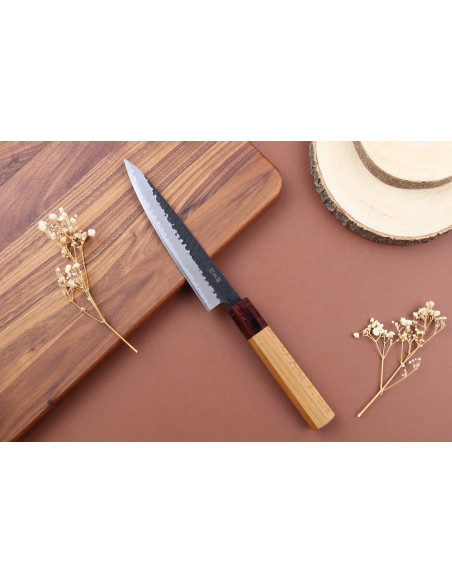
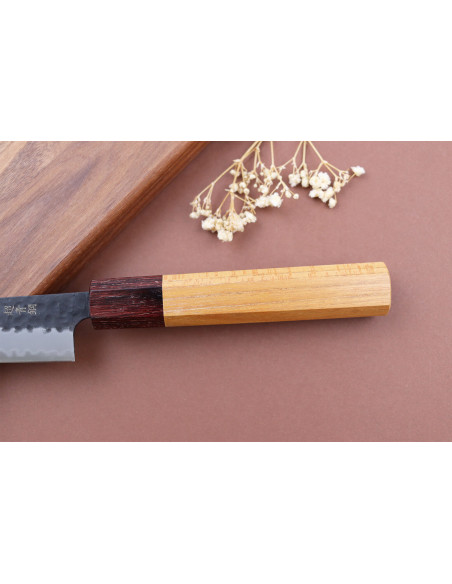
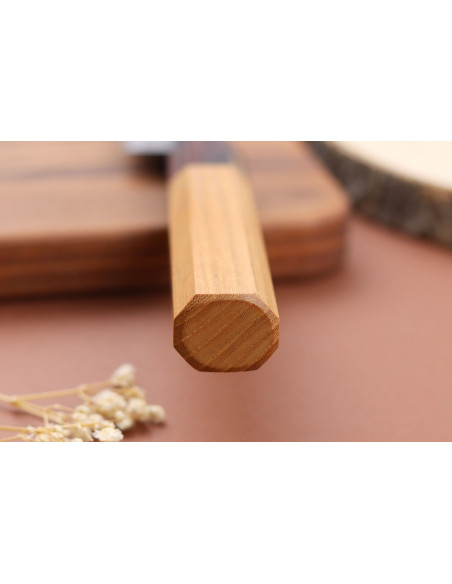
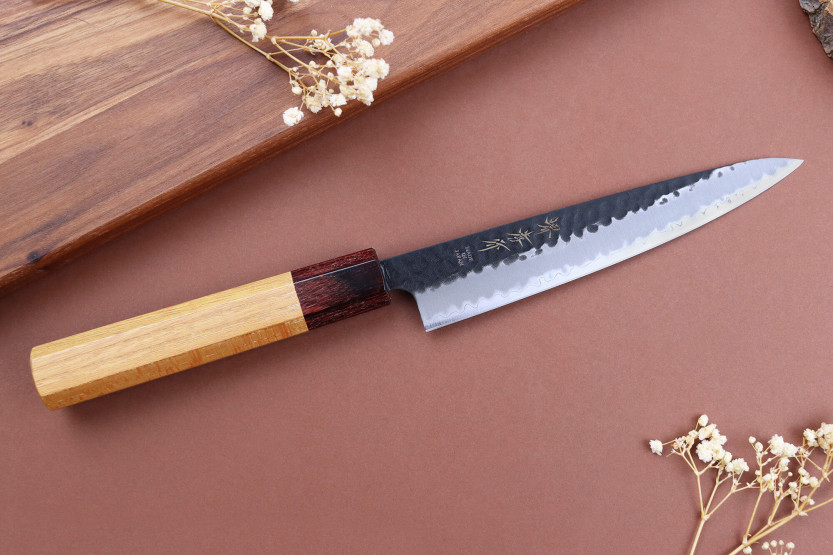
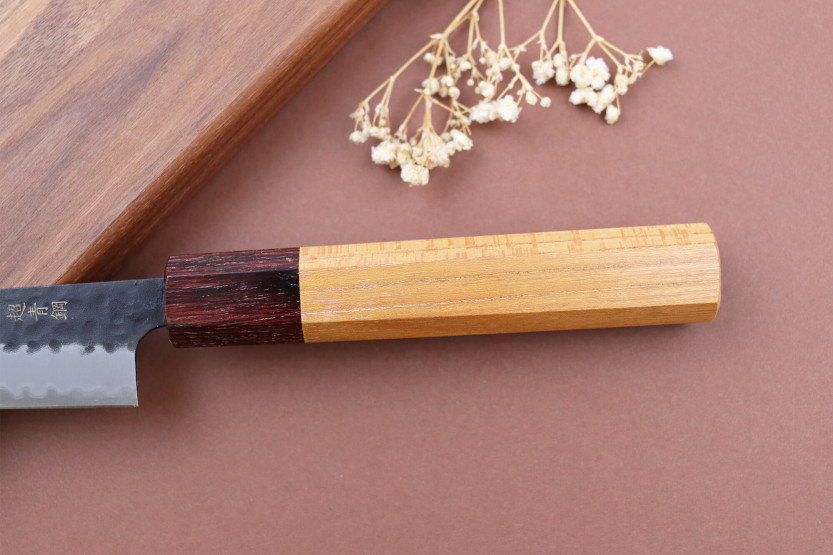
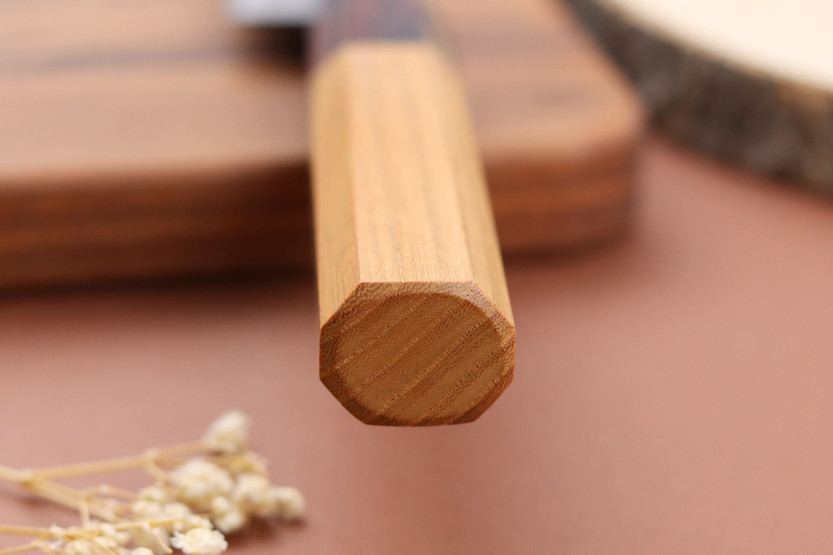
As for the handle, Japanese zelkova wood has been selected: it's a solid species, similar to elm. Its light color is often chosen for luxury furniture. In Japan, this tree is generally used to decorate gardens and parks.
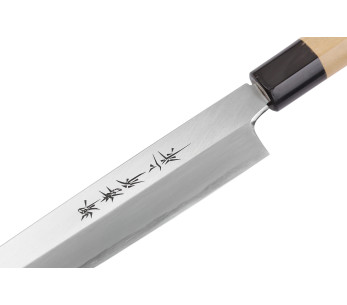
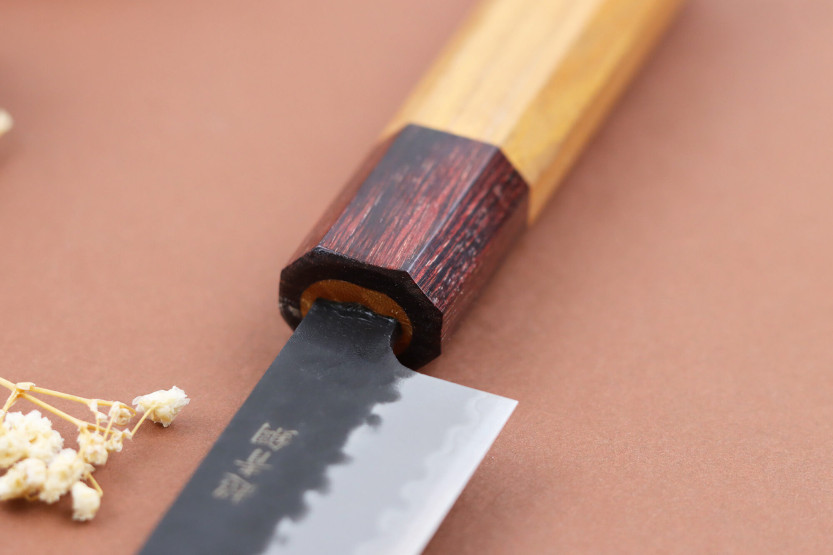
A bolster of pakka wood completes the handle and connects the blade to it. This is a composite material made from resin and laminated wood that are heat-hardened. The result resembles natural wood, with its distinctive grain pattern. The dark aspect of pakka wood contrasts ideally with the light shade of zelkova wood.
Wood paste is added where the blade fits into the handle to fill the small gaps. It also seals the handle to prevent small food items from slipping through.
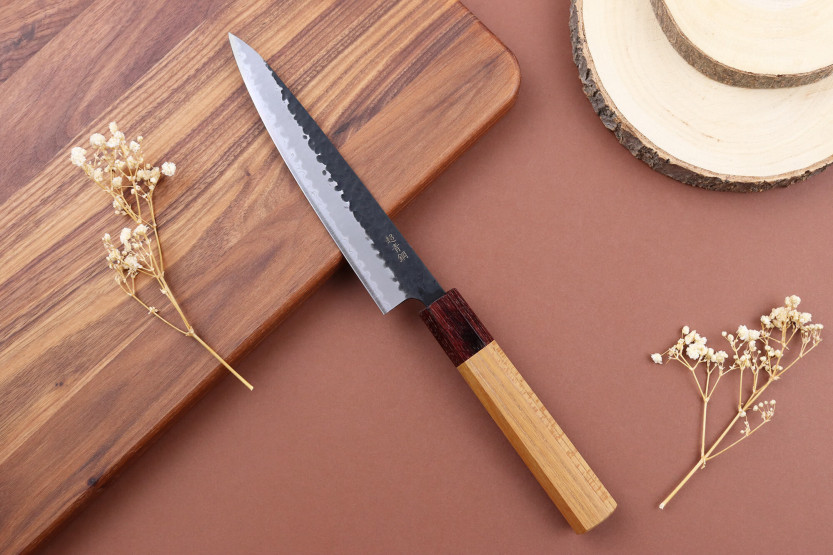
The octagonal handle is suitable for all cooks, right- and left-handed alike!
Our tips for maintaining a carbon Japanese knife
We recommend cleaning by hand only, using a mild detergent and a non-abrasive sponge. As the knife can oxidize, we advise against putting it in the dishwasher or soaking it in the sink. It is also best to avoid getting the handle wet.
After washing, it's important to dry your knife thoroughly so that it can be stored without any trace of moisture.
Please note that the color of the blade may change over time: this is perfectly normal. This is a natural reaction of the carbon caused by the humidity in the air or the acidity of the food being cut. For this reason, we recommend that you wipe the blade between cuts and before washing, so that it does not remain in prolonged contact with acidic foods.
Apply a thin coating of vegetable oil to protect the blade when not in use.
Discover the Sakai Takayuki AS range on KnifeLeader.eu!




 By buying this product you can collect up to