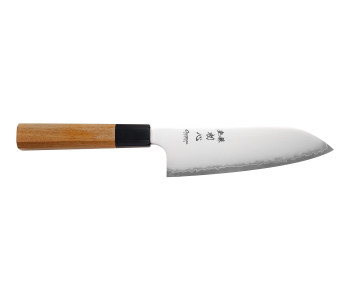
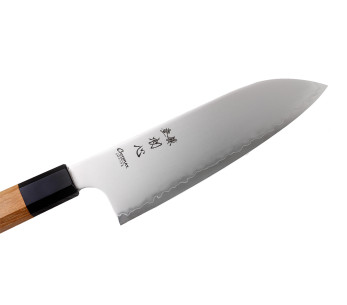
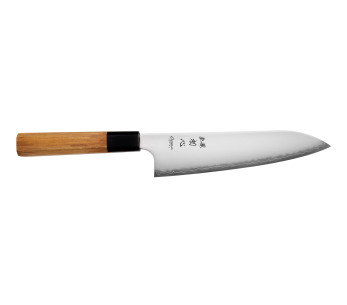
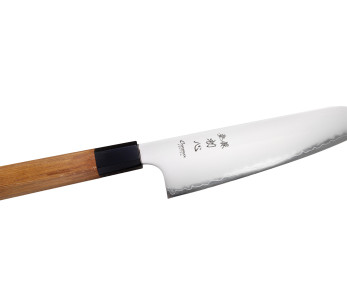
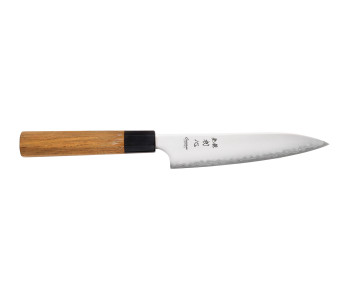
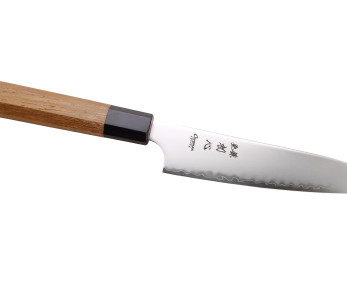
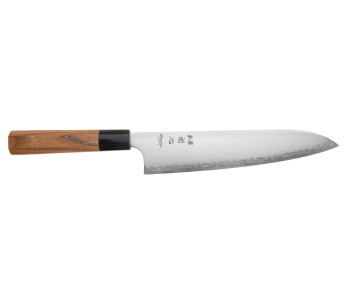
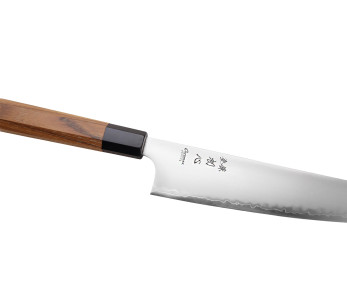
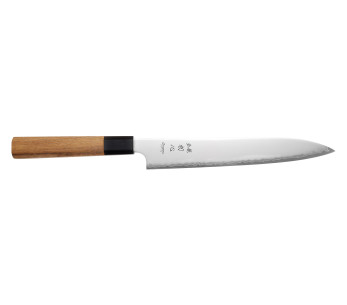
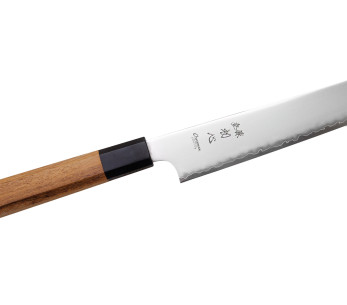
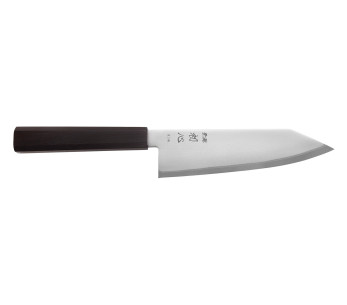
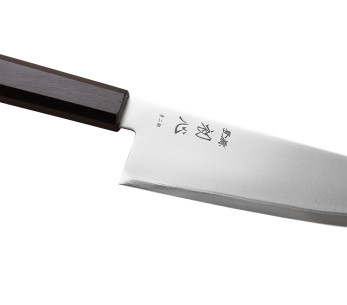
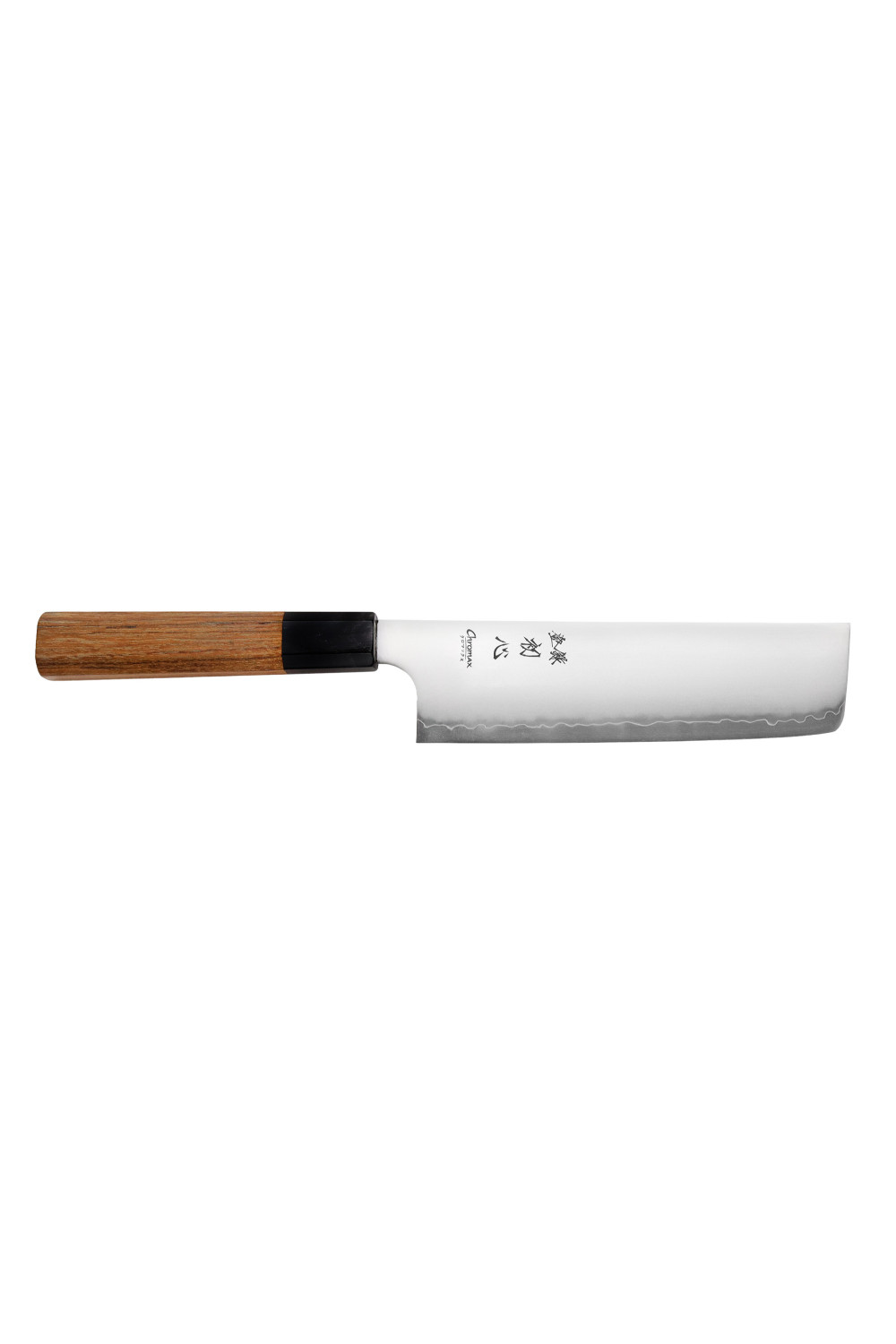
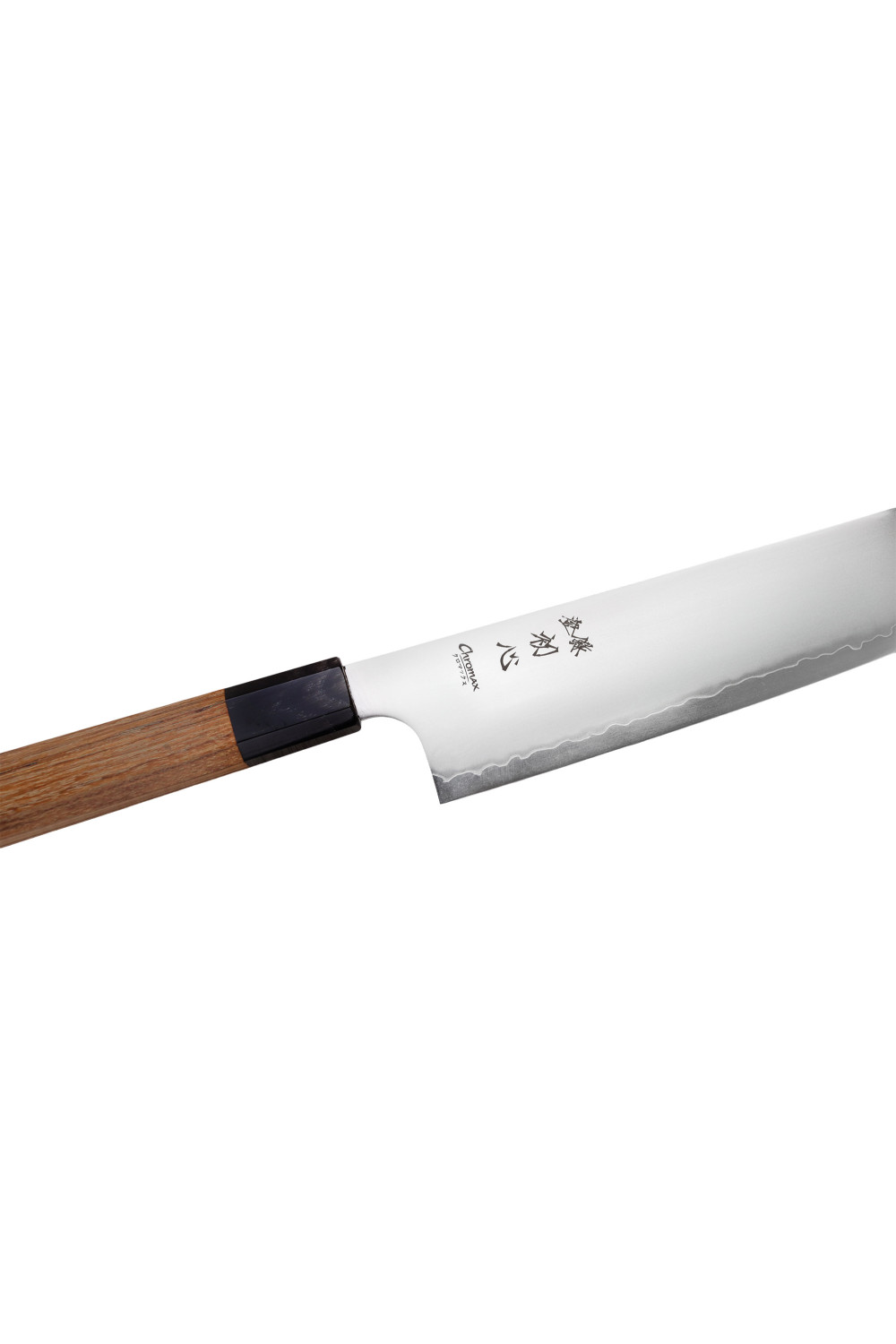
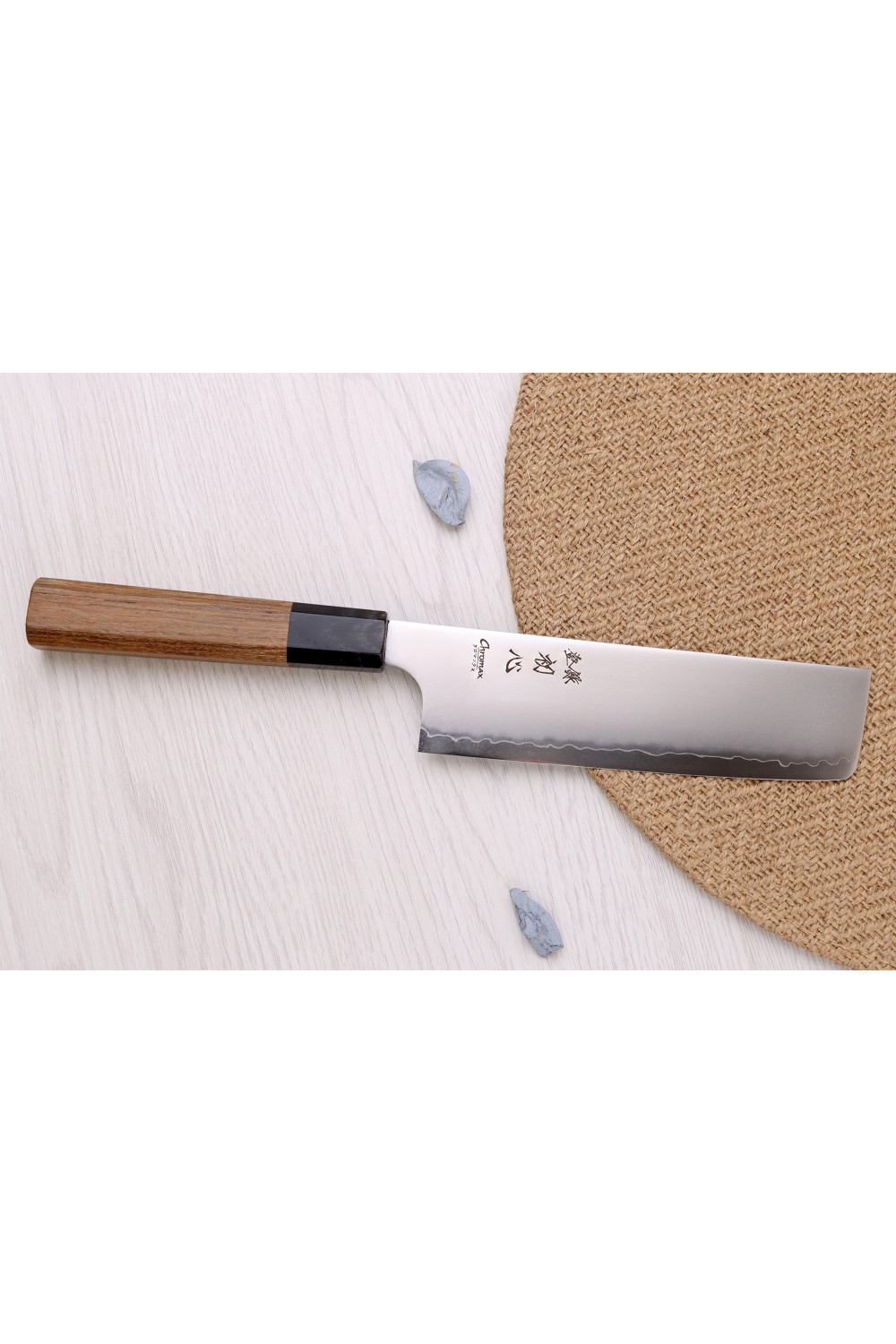
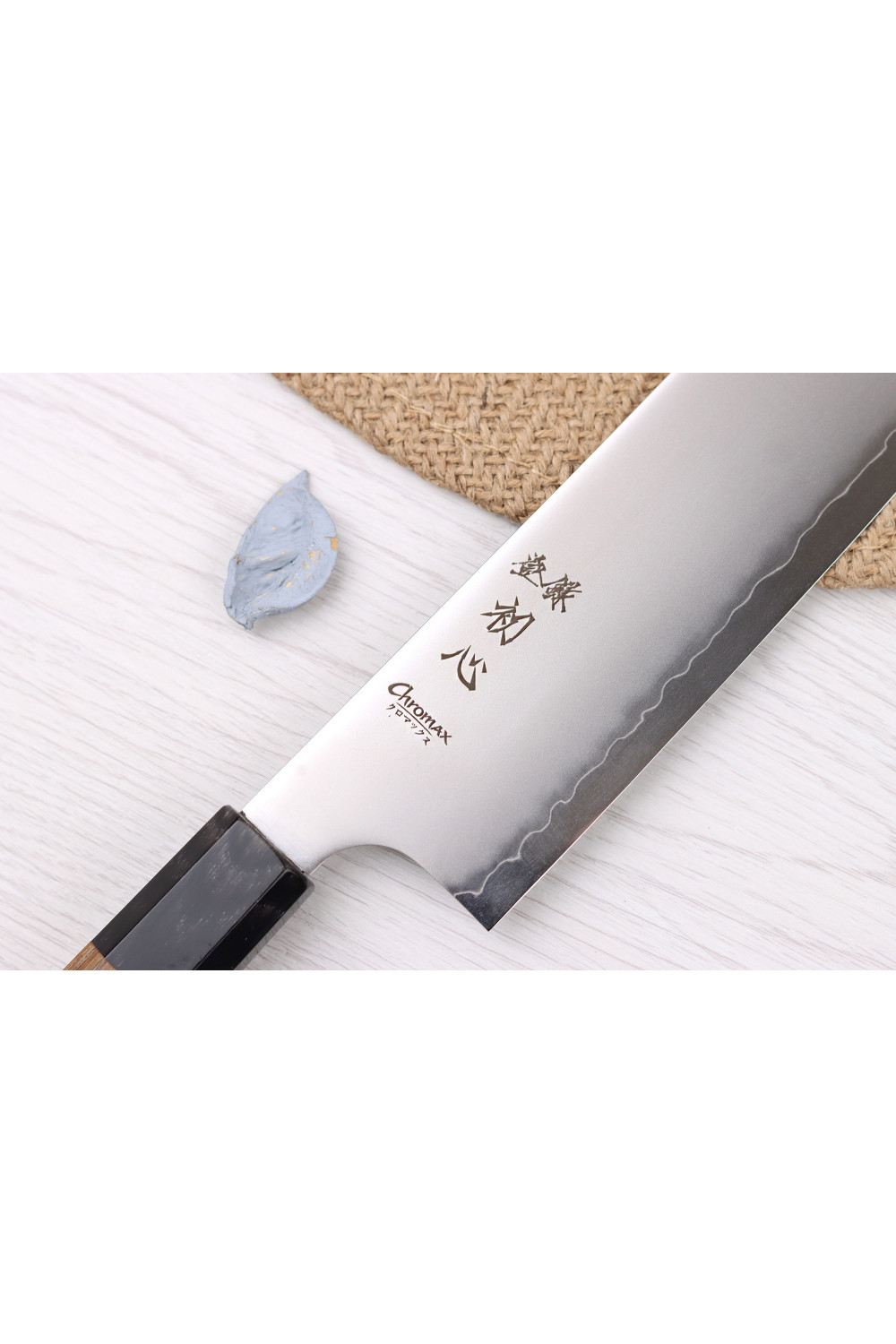
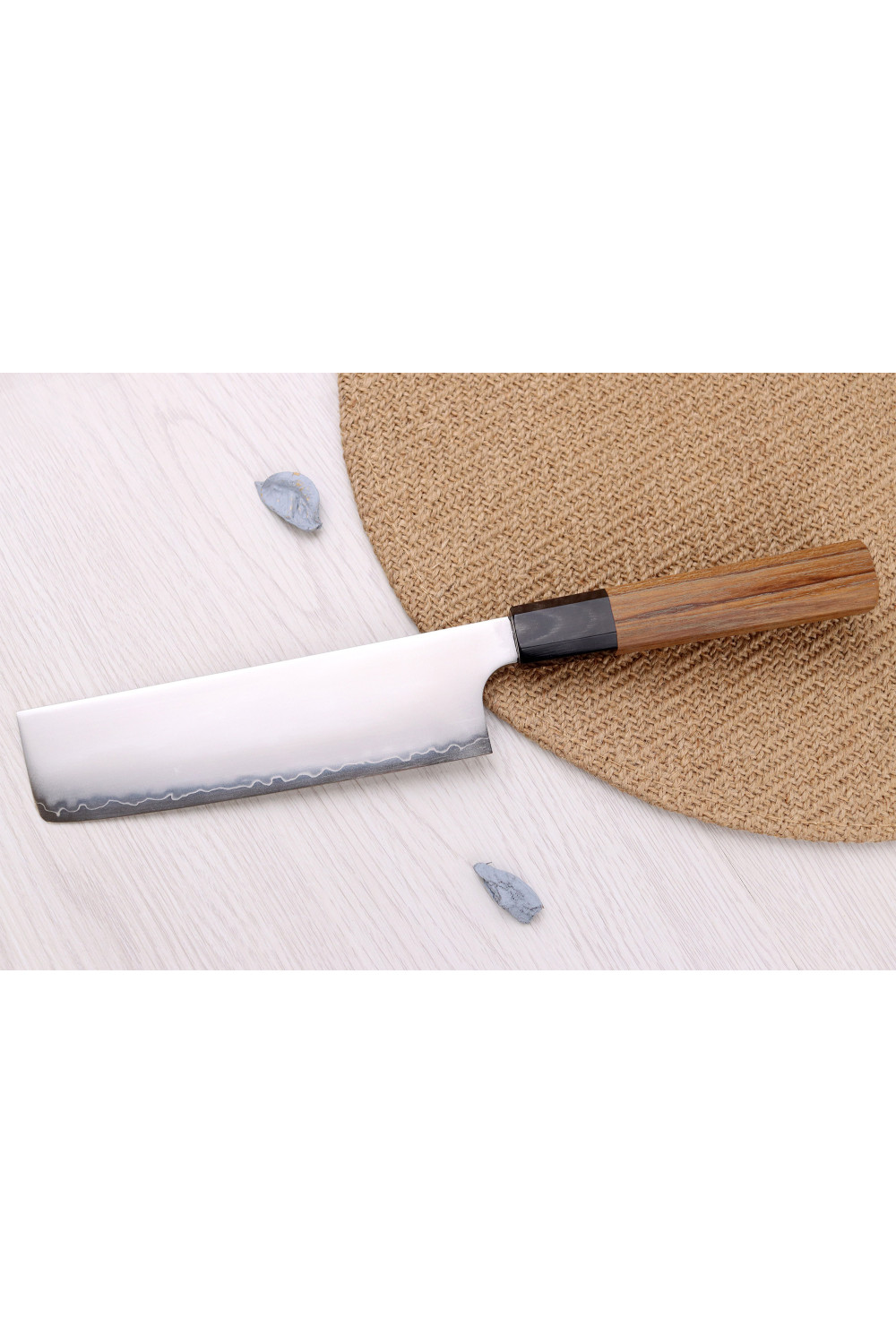
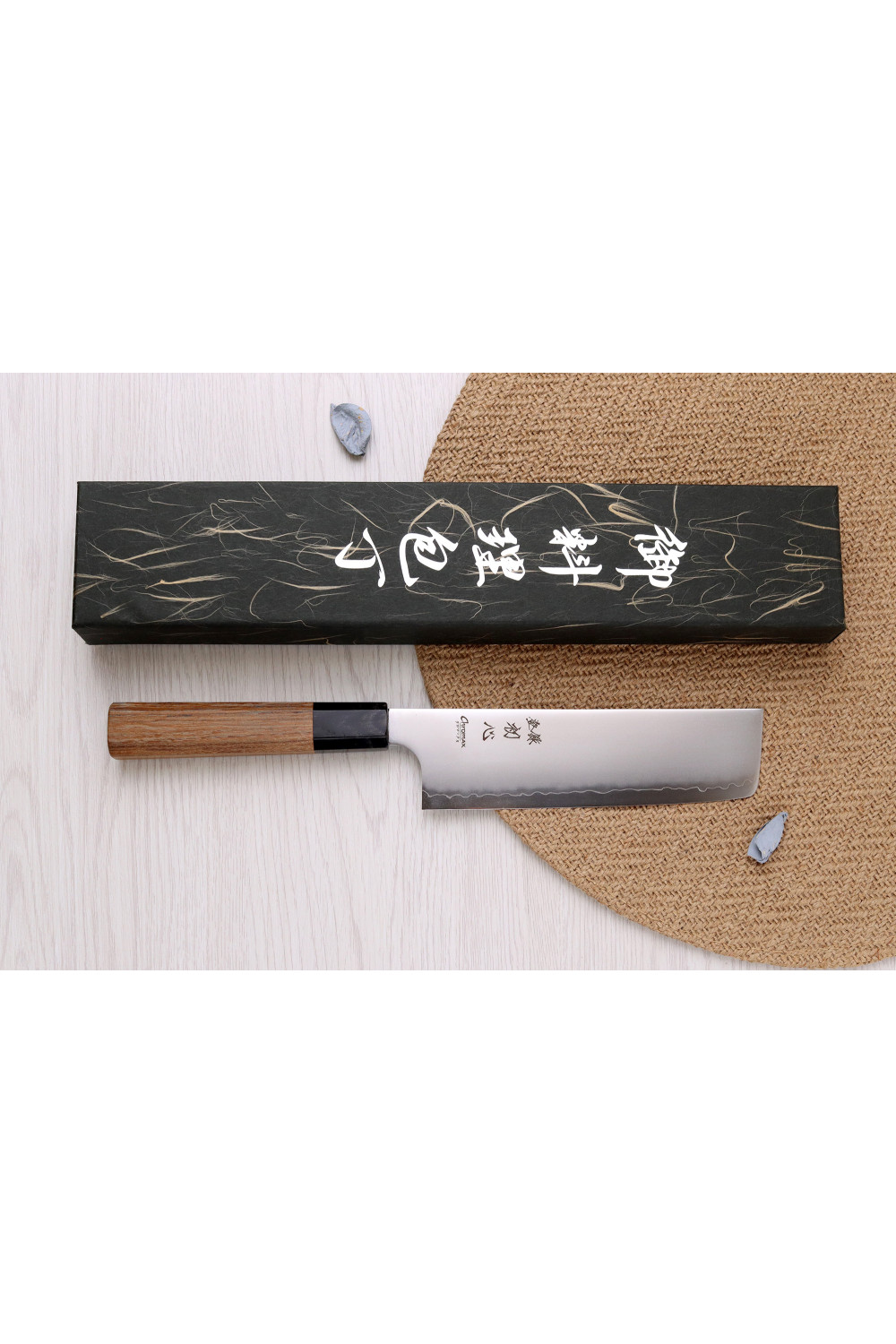
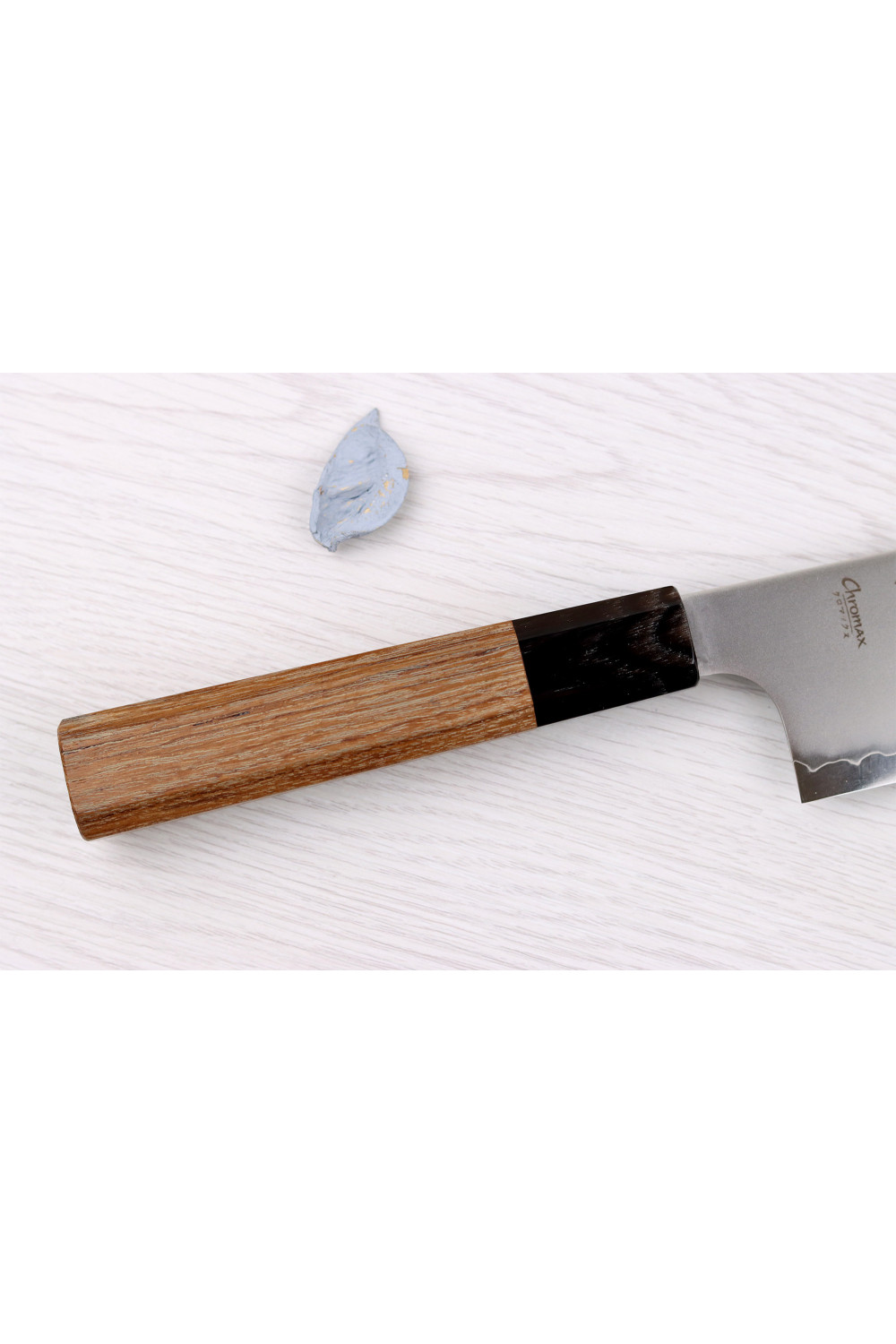
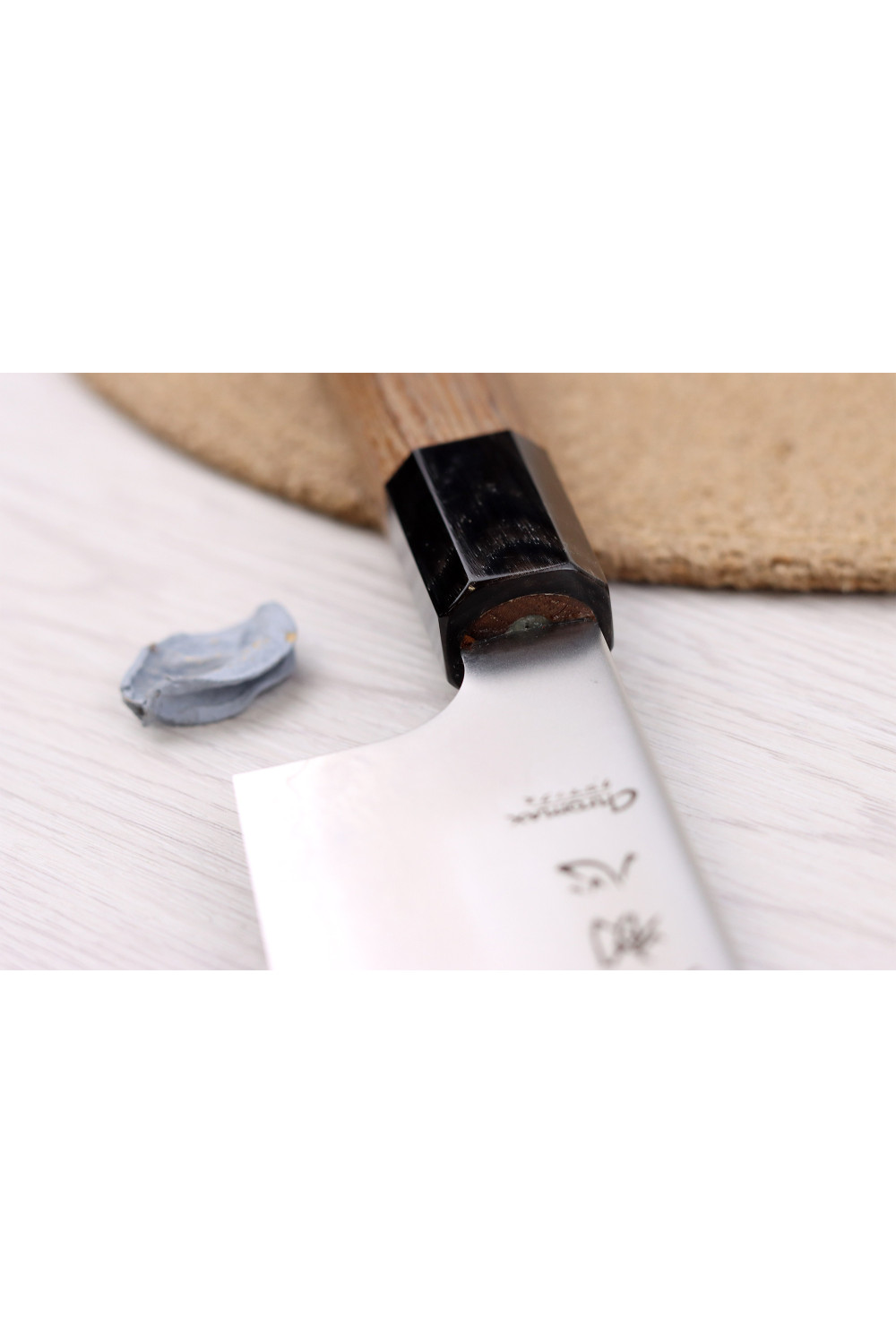
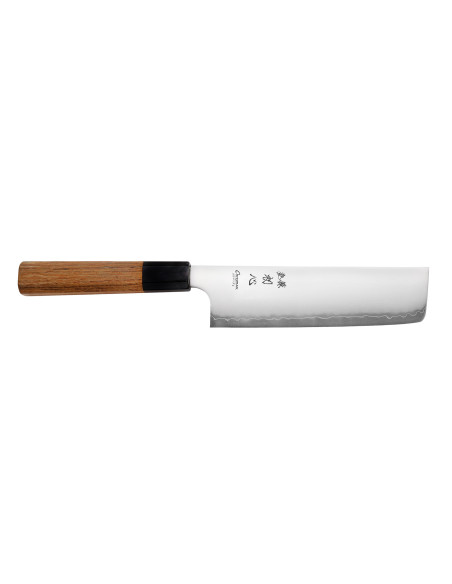
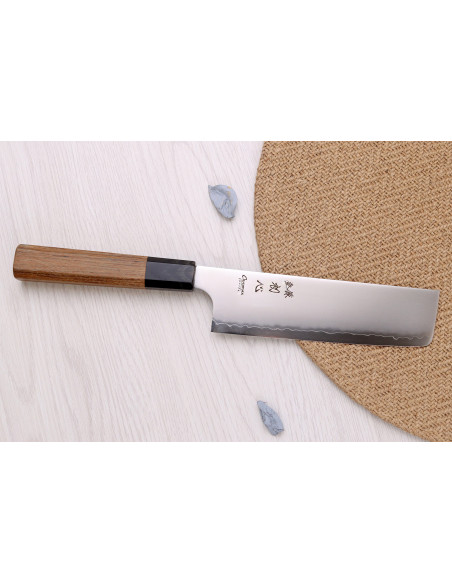
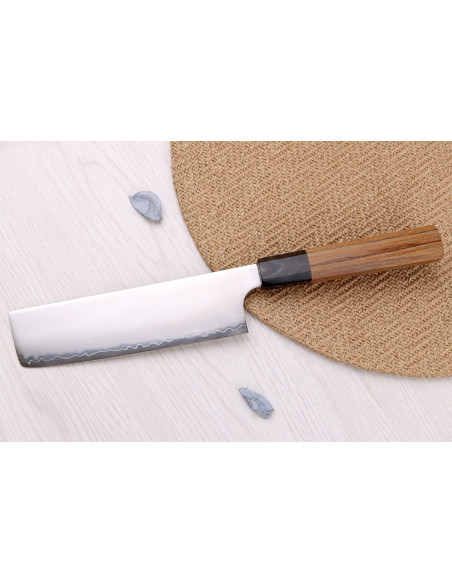
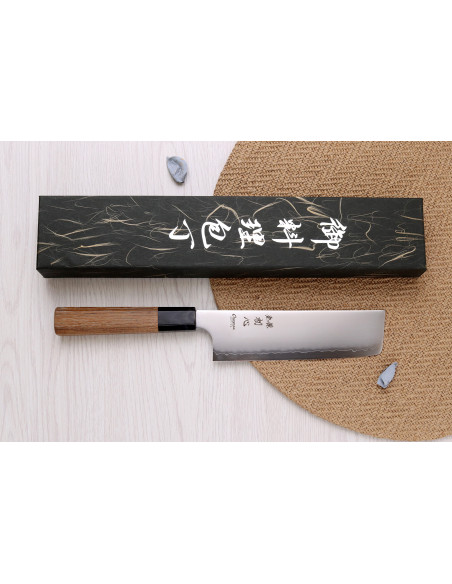
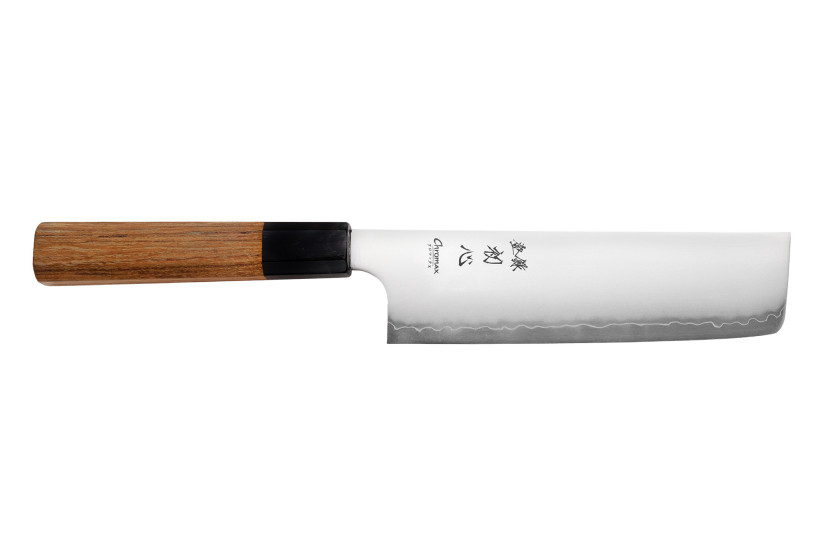
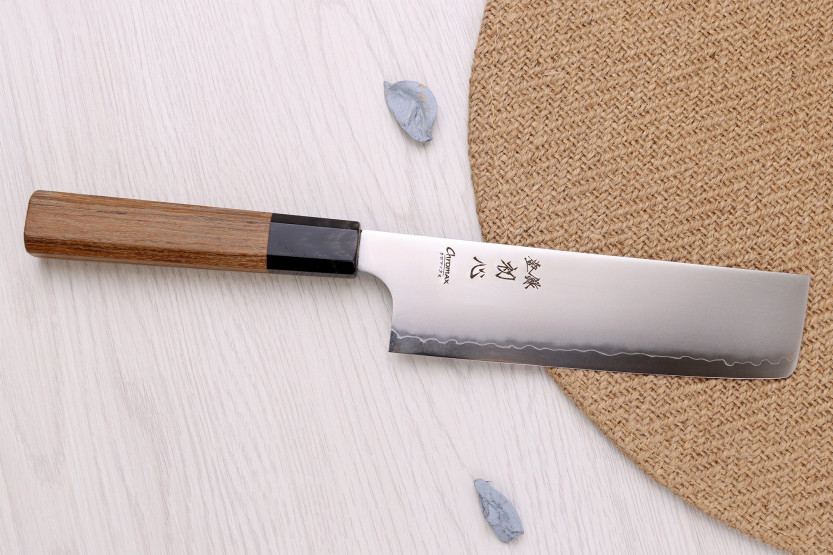
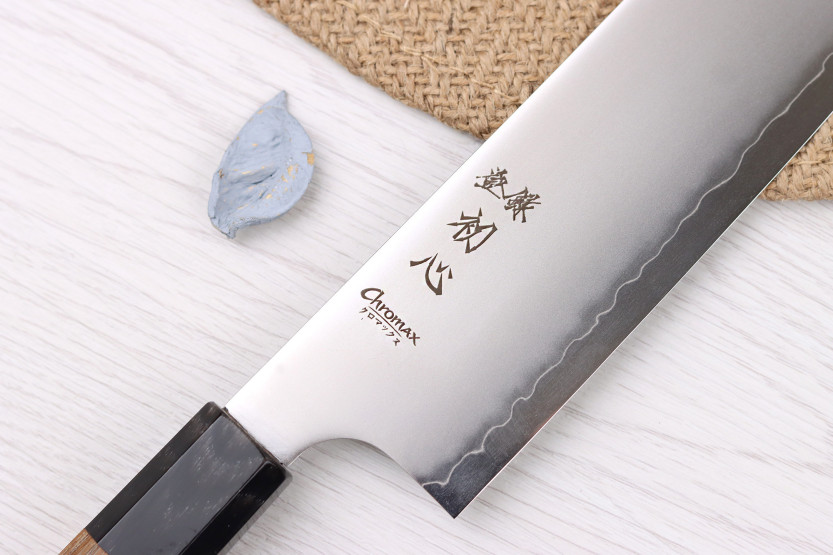
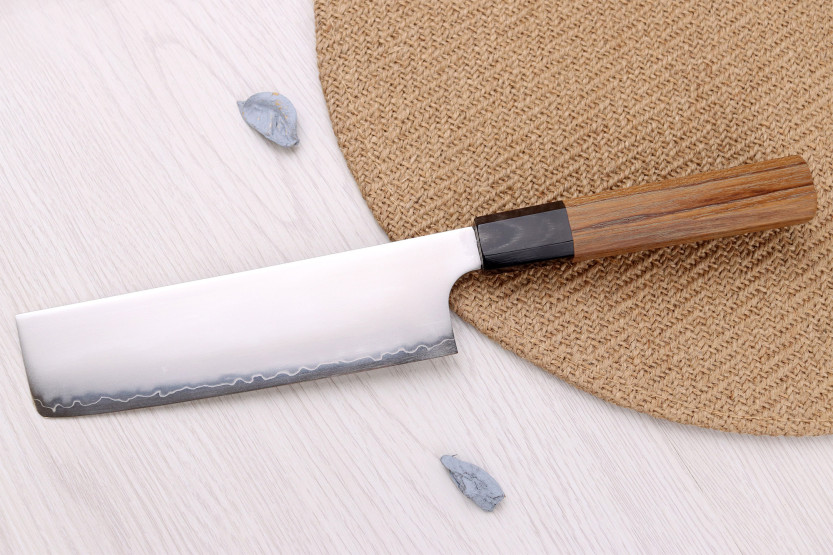
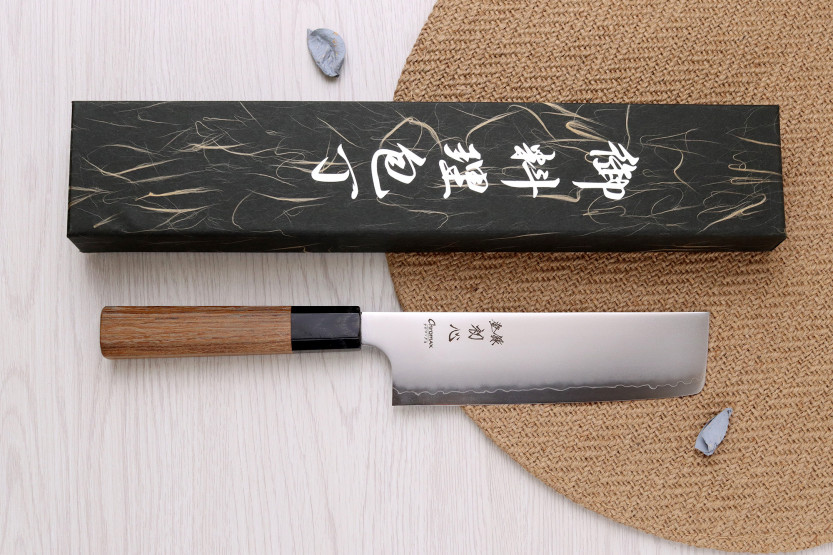
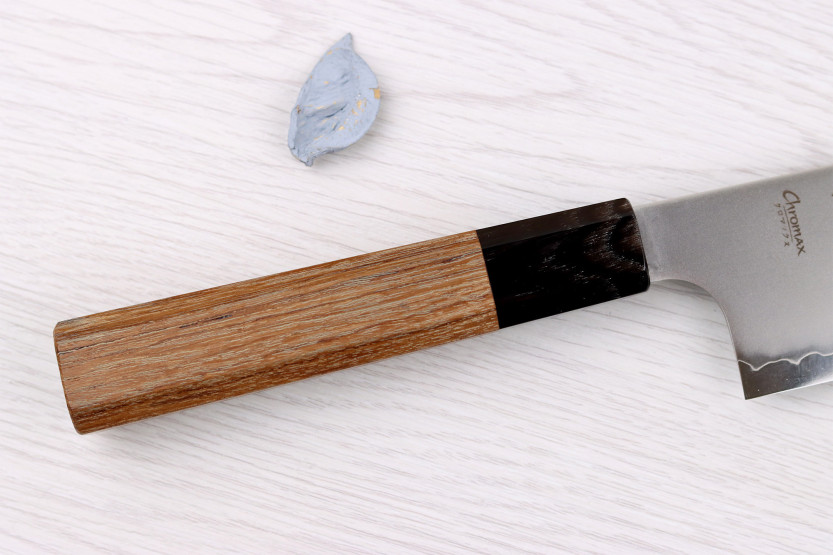
Designed for preparing vegetables, this handcrafted Japanese Hatsukokoro Chromax nakiri knifefeaturesa 16. 5 cm blade, a Chromax hybrid steel core, and a teak handle. Its straight shape facilitates vertical cuts on the cutting board: slicing cabbage, dicing carrots, or chopping herbs becomes a clean, controlled motion. Made in Seki, Japan, it also features the combination of materials characteristic of this Hatsukokoro version: teak, black buffalo horn, and Chromax steel.
A blade designed for slicing vegetables
At 16.5 cm, the blade offers a practical length for preparing everything from a garnish to a generous amount of vegetables. The straight profile of the nakiri allows most of the edge to rest on the cutting board during a vertical cut. It is therefore suitable for mincing, chopping, and slicing vegetables, though it is not intended for cutting bones or frozen foods.
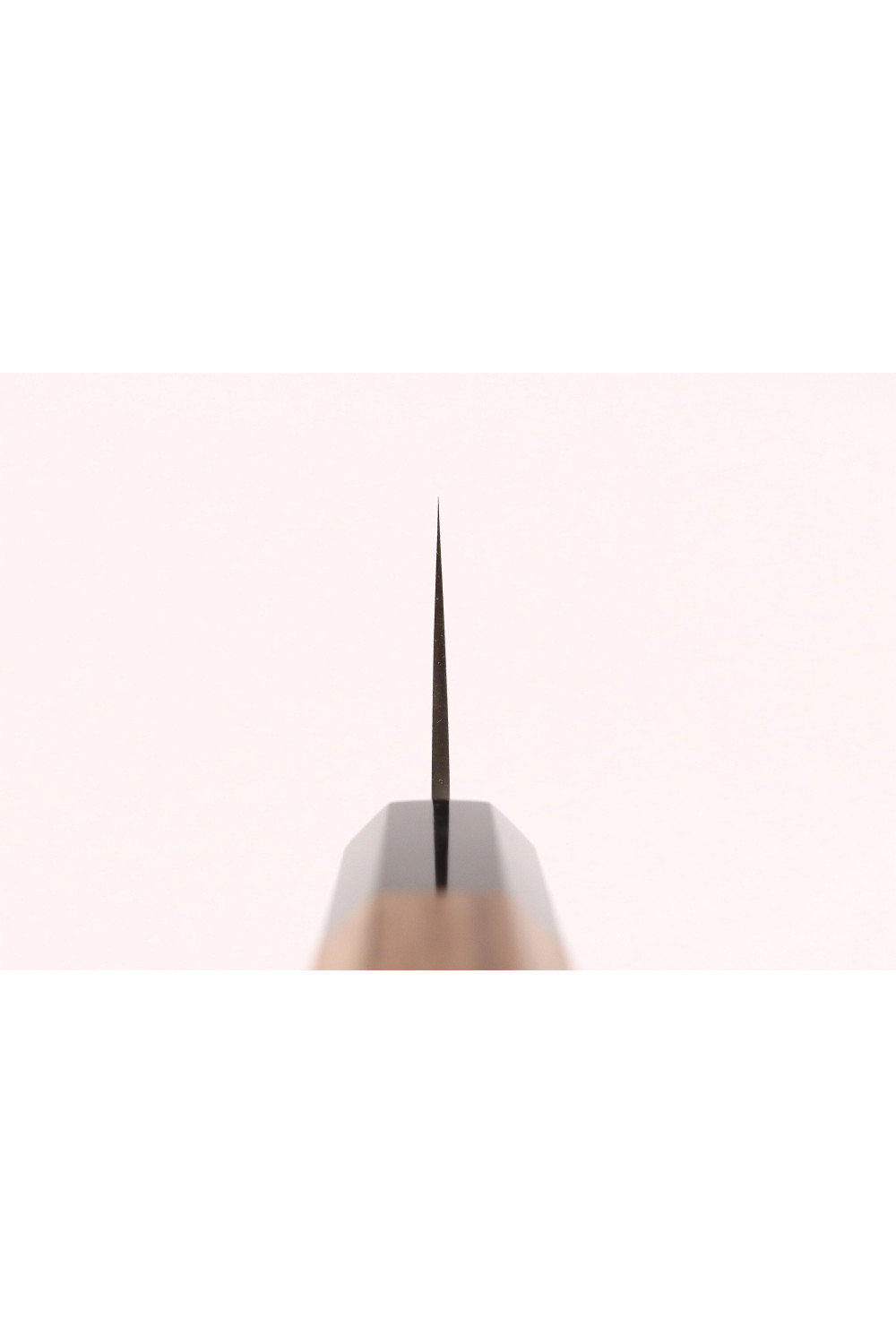
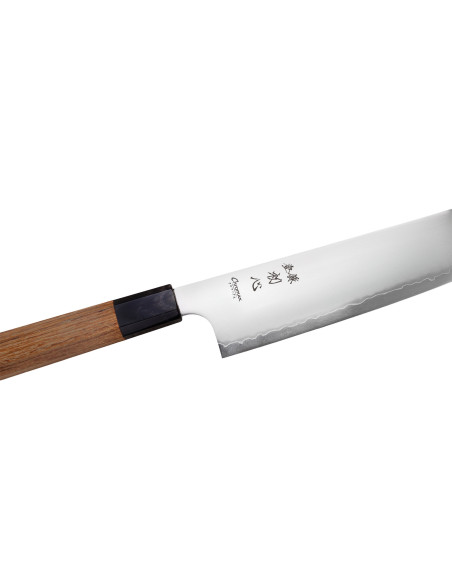
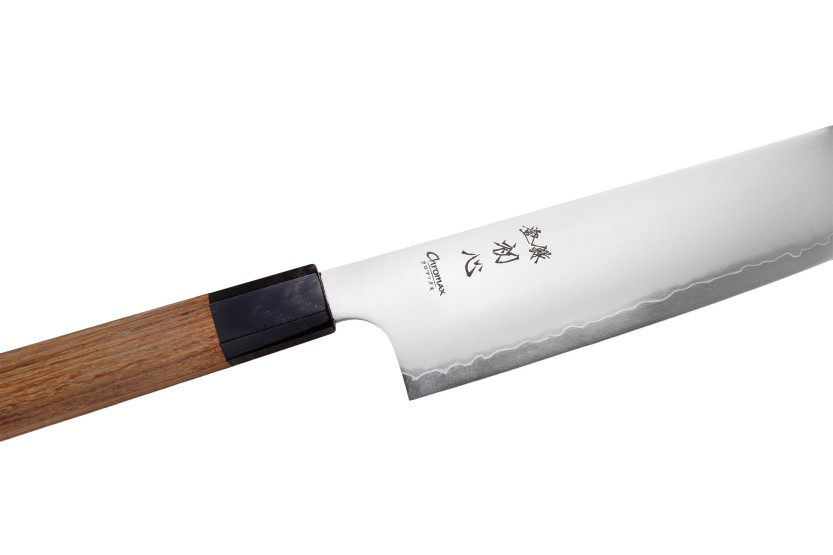
The San Mai construction consists of three alternating layers of steel. At the center, the Chromax hybrid core forms the cutting edge. It contains approximately 1% carbon, a content that contributes to the steel’s hardness and cutting ability. The hardness reaches approximately 65 HRC: the edge holds up well over time, provided you use a suitable cutting board and avoid side impacts.
Chromax is more corrosion-resistant than pure carbon steel, though it is not completely stainless. After use, wash the blade by hand and dry it immediately. To sharpen the blade, use a whetstone suitable for hard steels and maintain a consistent angle.
Teak and buffalo horn: a traditional handle
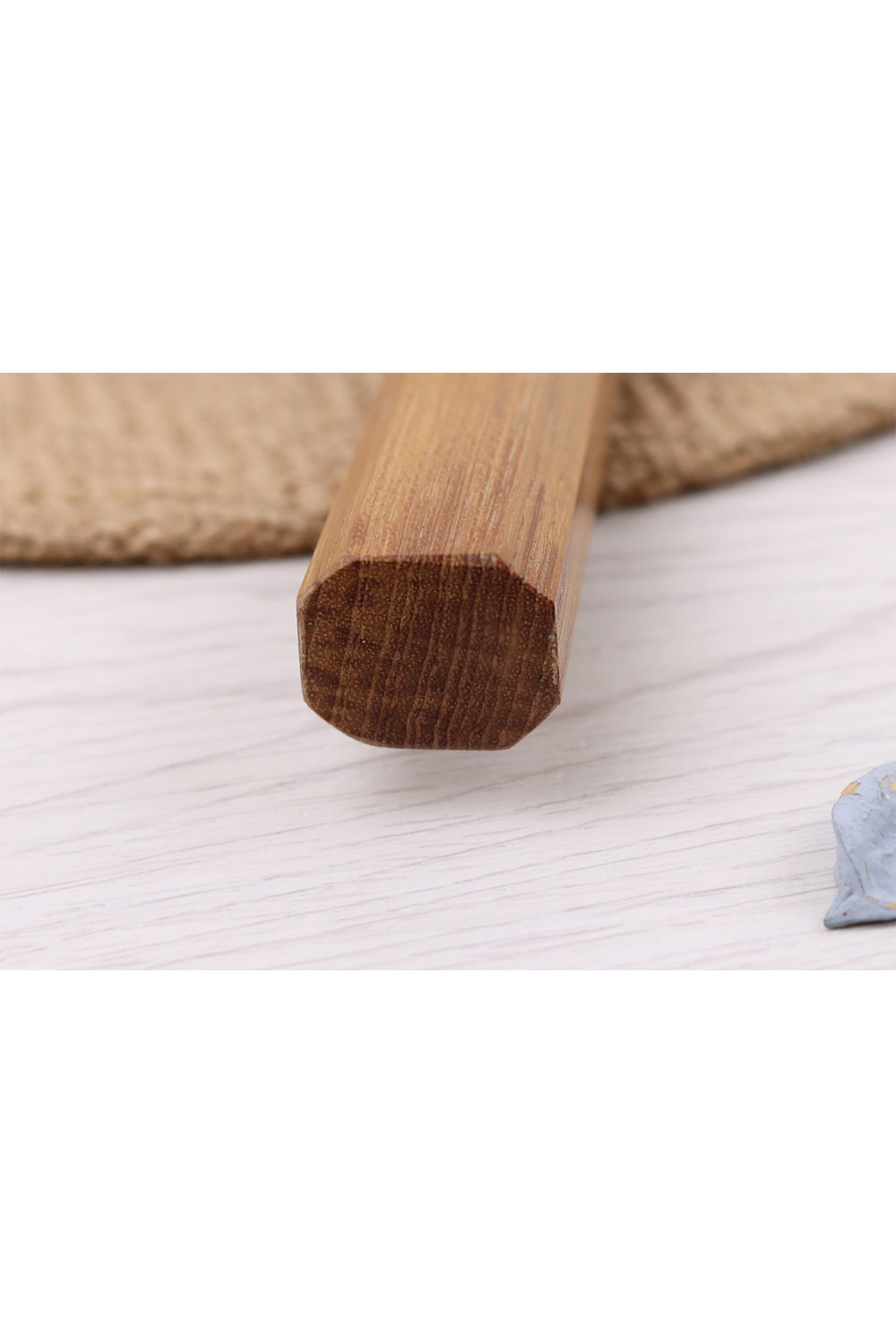
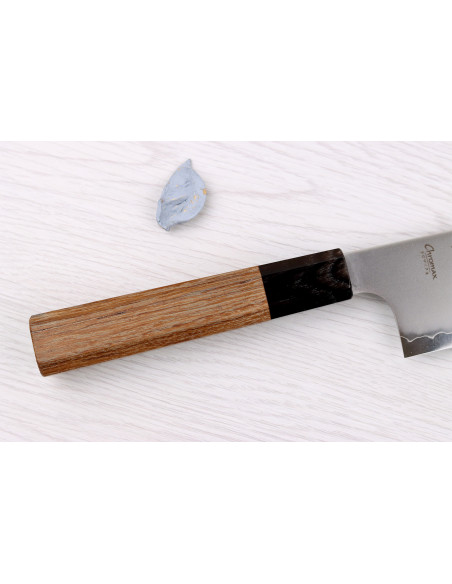
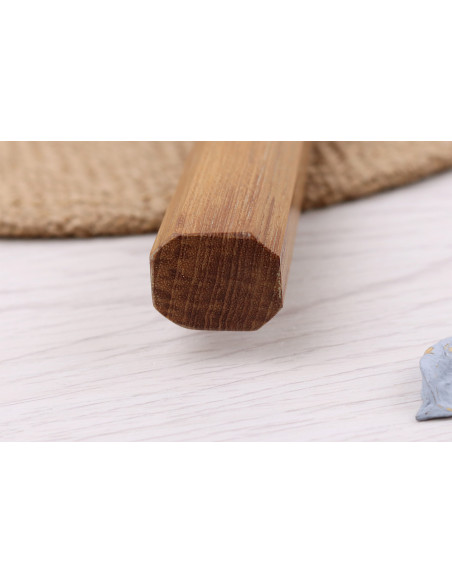
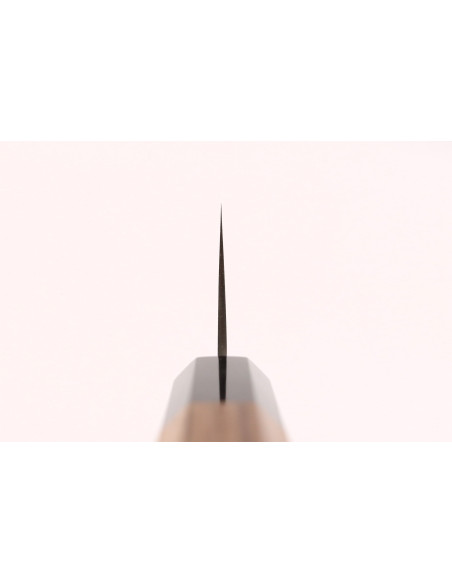
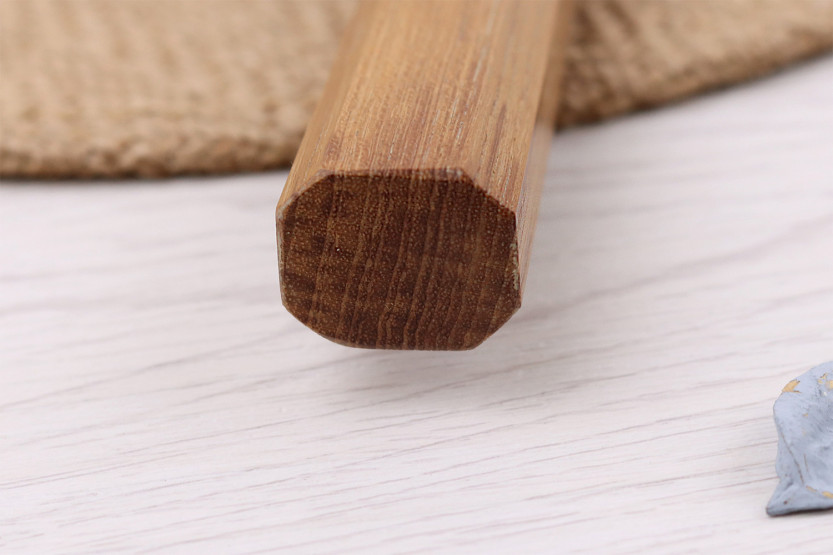
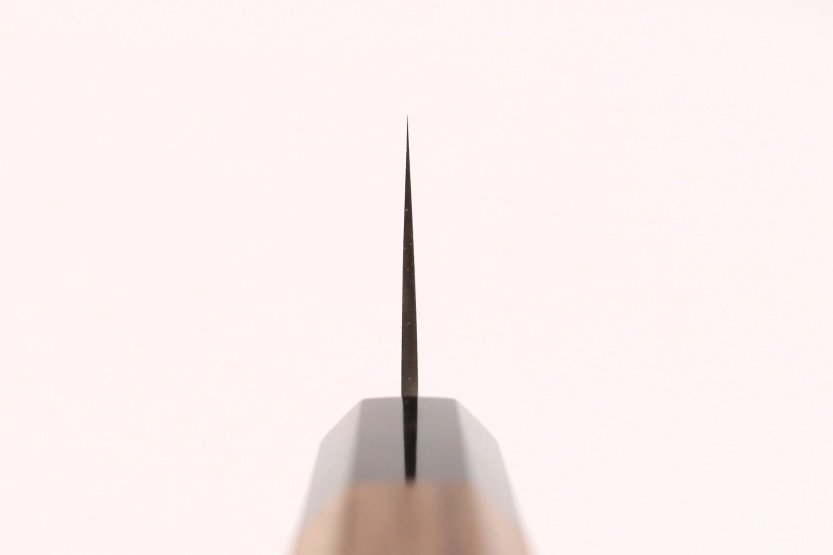
The octagonal teak handle provides multiple contact points for the fingers. This shape helps you orient the knife in your hand and is suitable for both right- and left-handed users. Teak has a natural grain; therefore, its appearance may vary slightly from one piece to another.
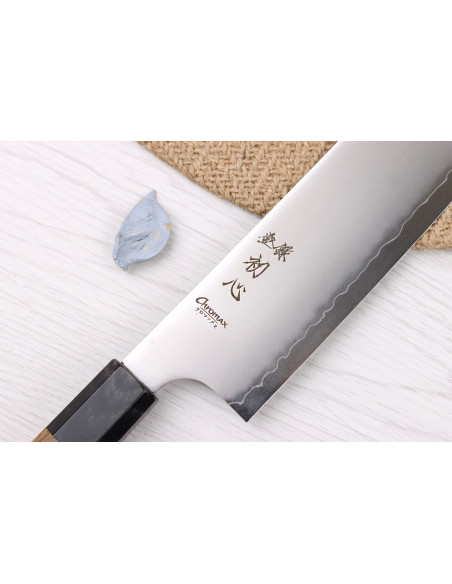
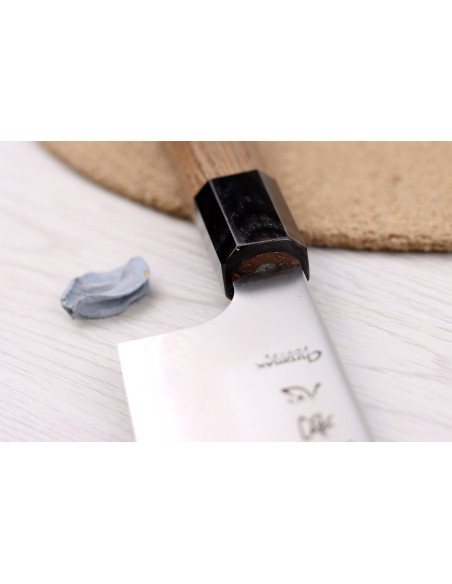
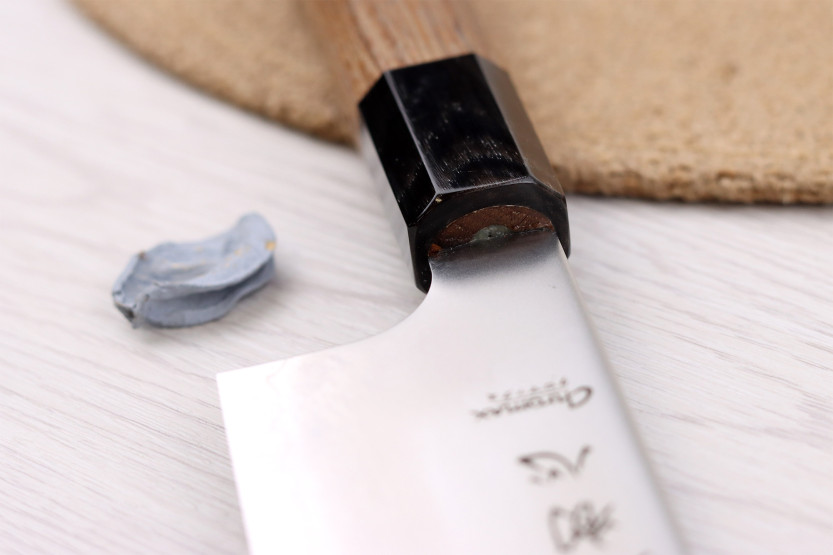
At the junction of the handle and the blade, the black buffalo horn bolster completes the assembly. Its color contrasts with that of the wood and gives the knife a clean, understated look. The design combines natural materials with a blade engineered for the repetitive motions of vegetable preparation.
Key features of this nakiri
-
- 16.5 cm blade: ideal for consistent cuts on a wide variety of vegetables.
- Three-layer San Mai construction: combines a hard core with more flexible outer layers.
-
- Hybrid Chromax core, approximately 1% carbon: forms a fine, high-performance cutting edge.
-
- Hardness of approximately 65 HRC: promotes excellent edge retention.
- Octagonal teak handle: offers a grip suitable for both dominant hands.
-
- Black buffalo horn bolster: marks the transition between the blade and the handle.
-
- Handcrafted in Seki: made in a Japanese city renowned for cutlery.
Daily Use and Care
Reserve this nakiri for vegetables and use it on a wooden cutting board or soft surface. Do not cut bones or frozen foods; also avoid using the blade as a lever. After each use, wash the knife by hand with a soft sponge, then dry the blade thoroughly. Do not put it in the dishwasher. For sharpening, choose a whetstone suitable for a hardness of approximately 65 HRC.
Seki, a Japanese knife-making tradition
Seki is located in Gifu Prefecture, in central Japan. The city is known for its cutlery industry, which has developed over the centuries around blade craftsmanship and metalworking expertise. Today, local production includes kitchen knives made from a variety of steels and in a range of styles.
Hatsukokoro collaborates with various Japanese artisans, specialized workshops, and manufacturers. This approach allows us to offer knives in a variety of shapes, featuring different types of steel, finishes, and handles.
To complete your cutting arsenal, discover our full selection of handcrafted Japanese knives!




 By buying this product you can collect up to