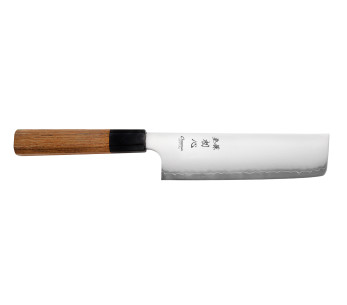
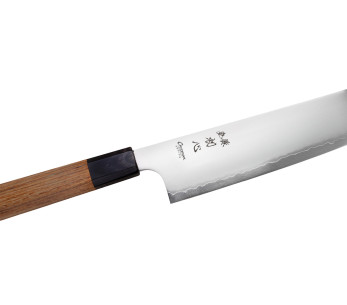
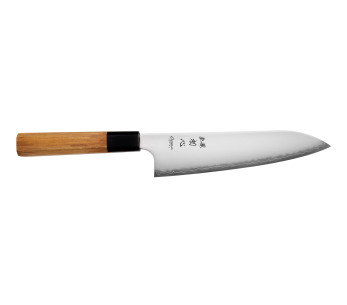
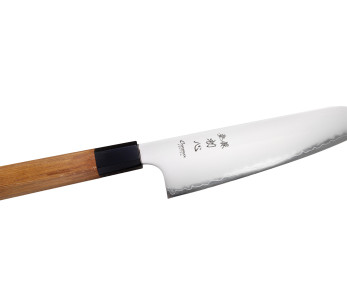
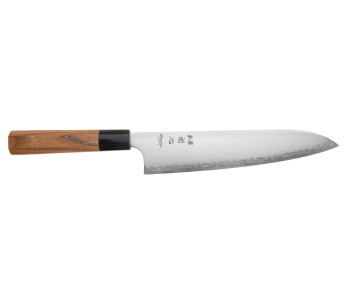
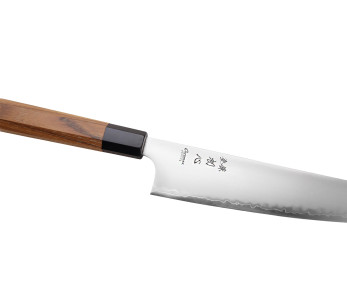
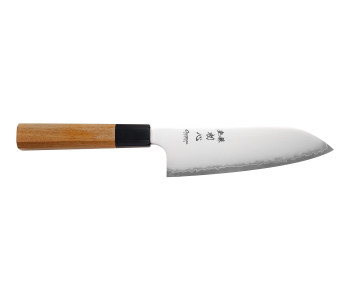
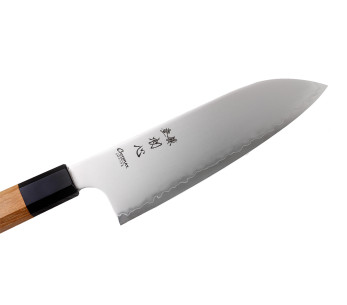
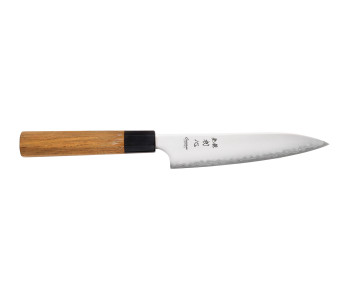
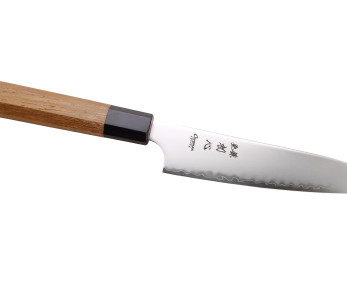
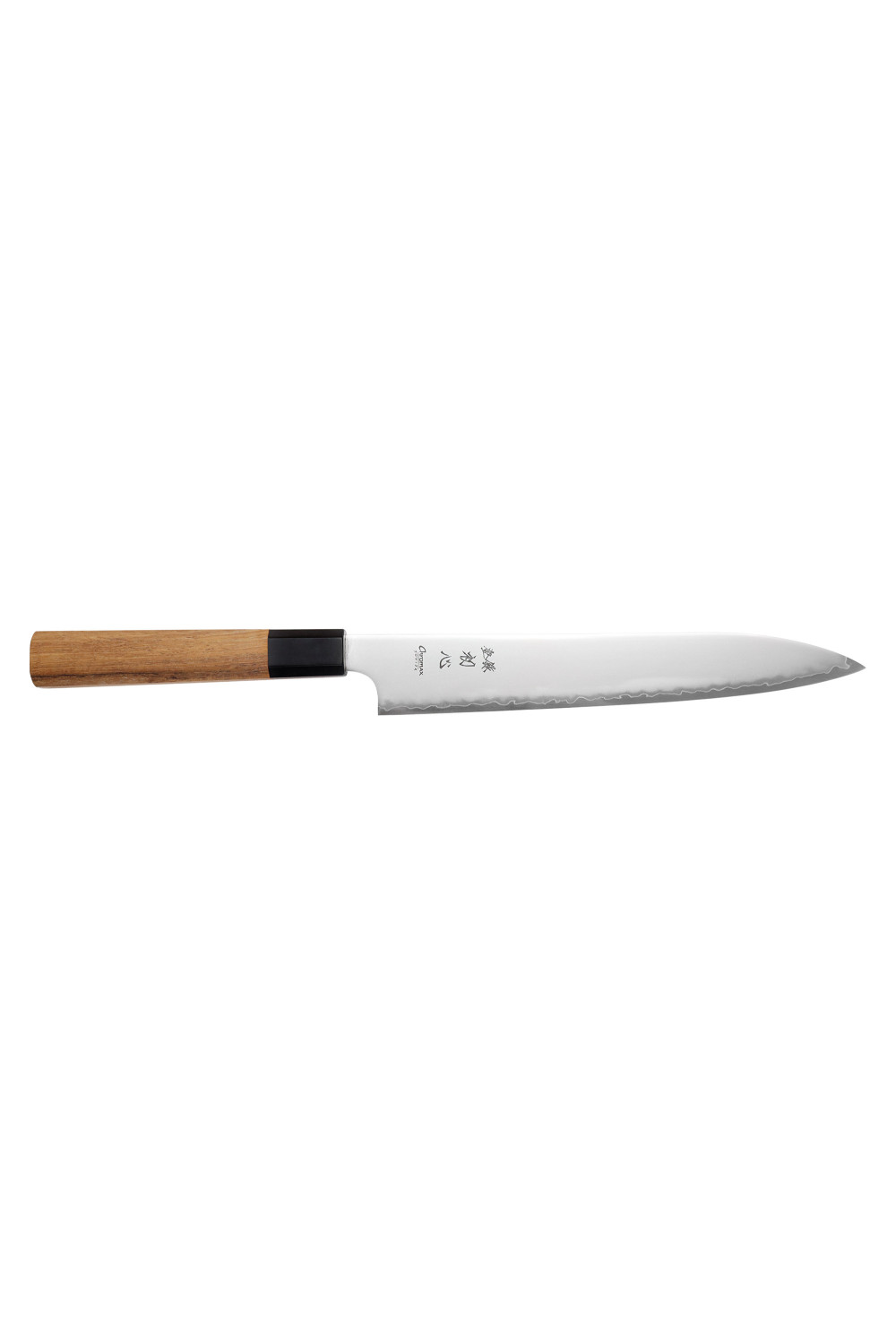
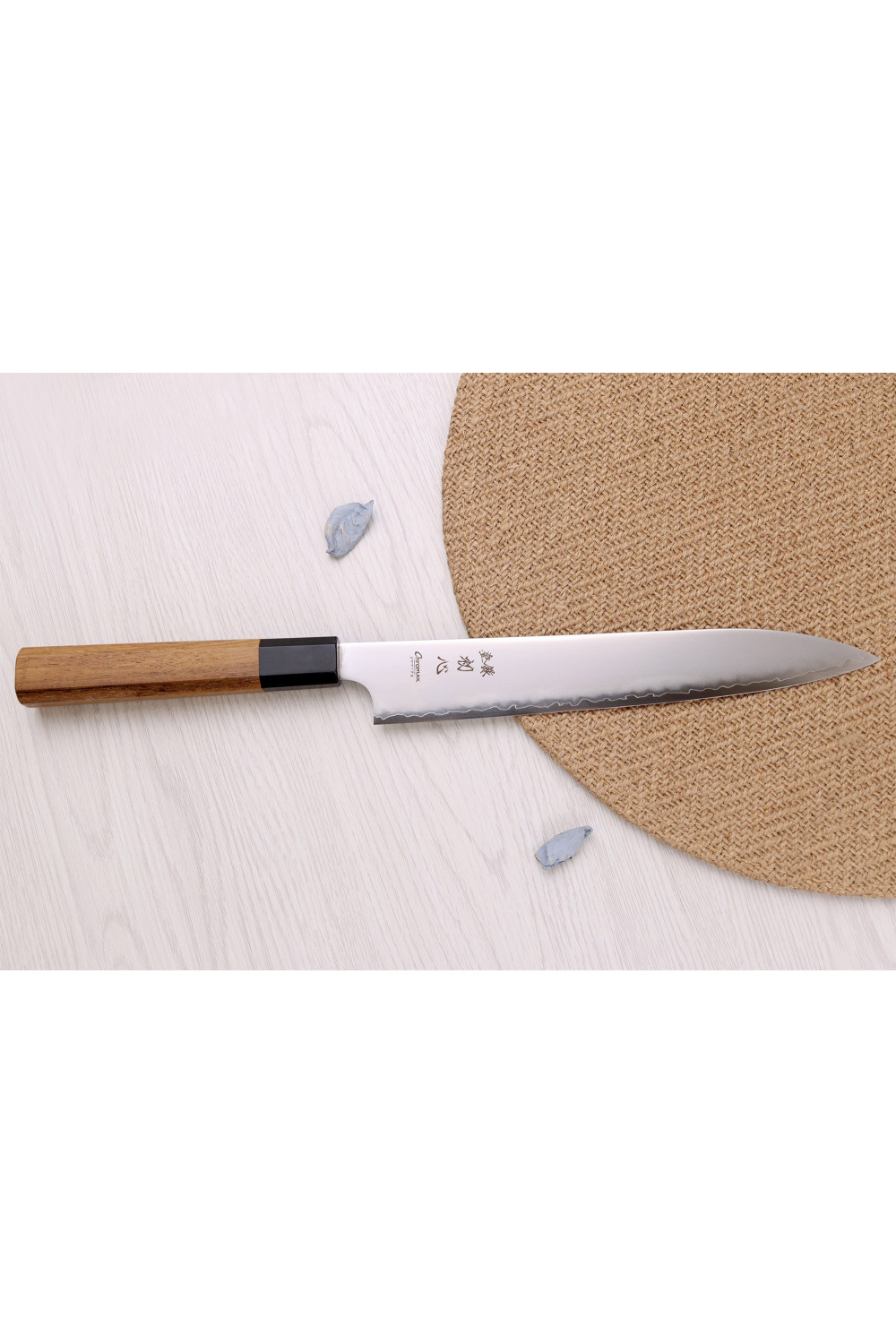
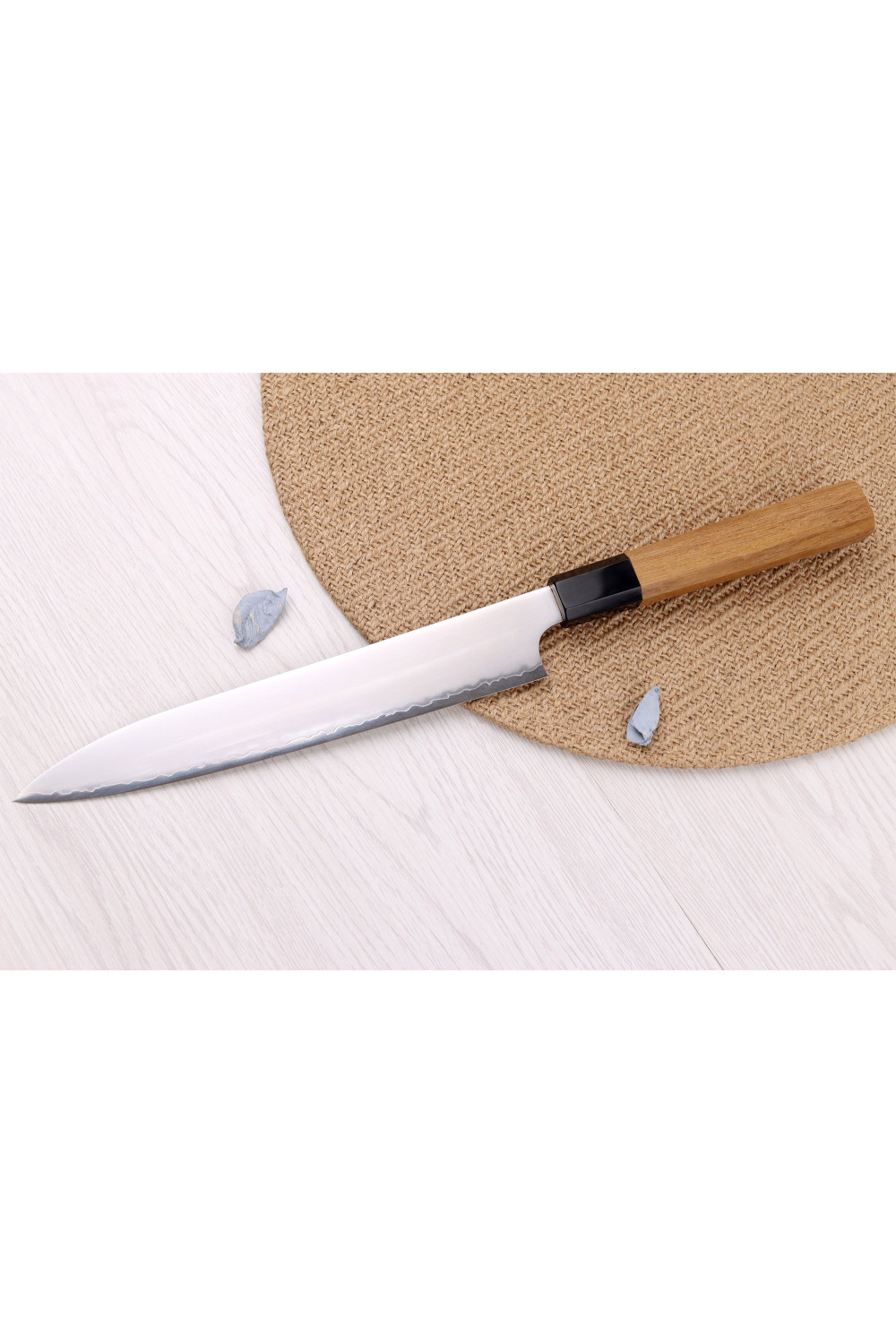
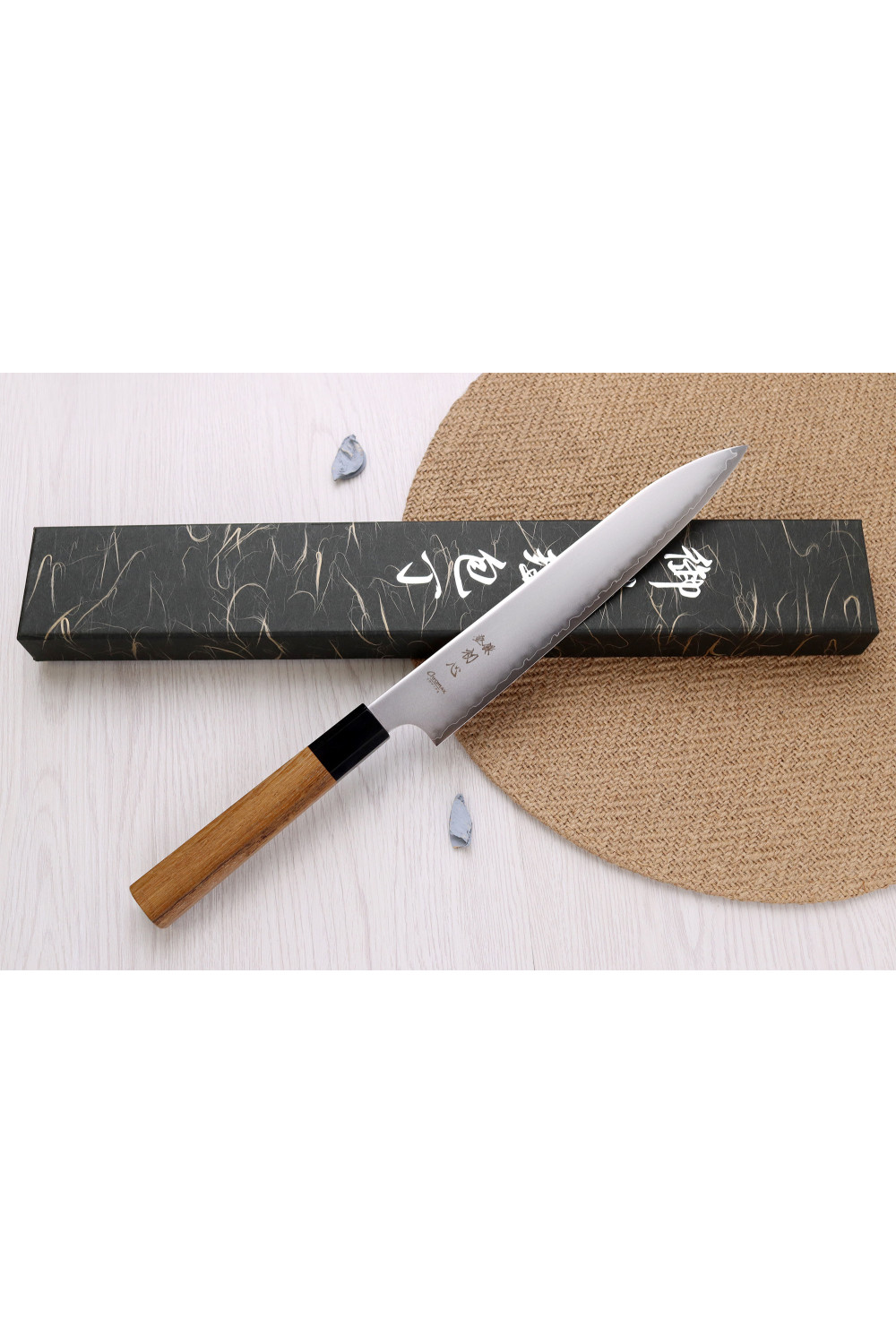
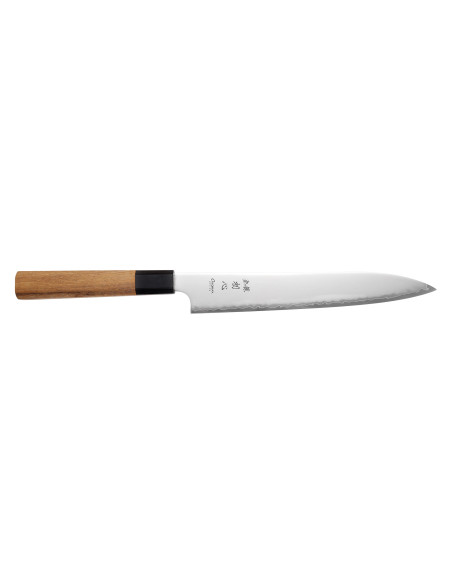
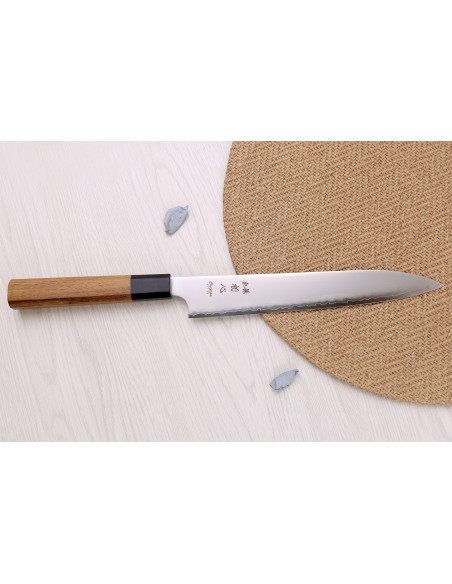
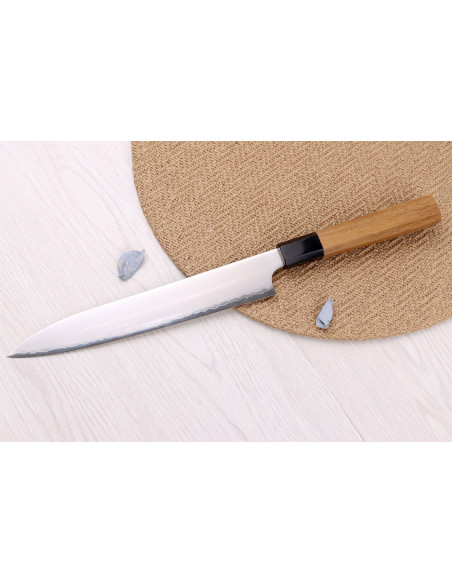
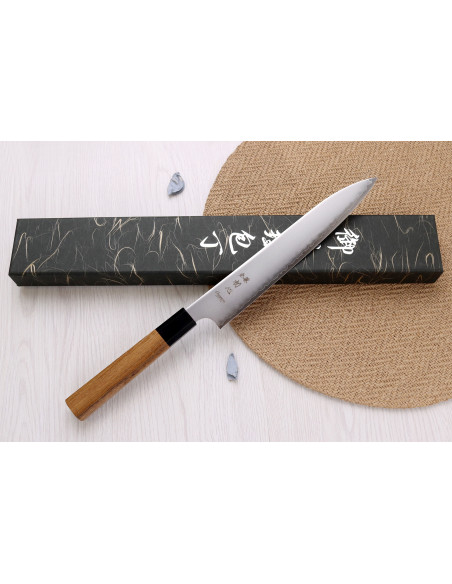
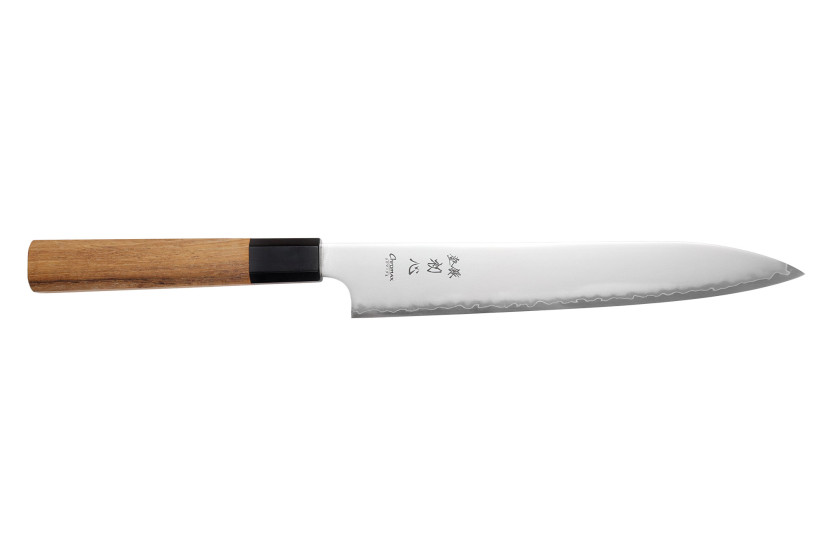
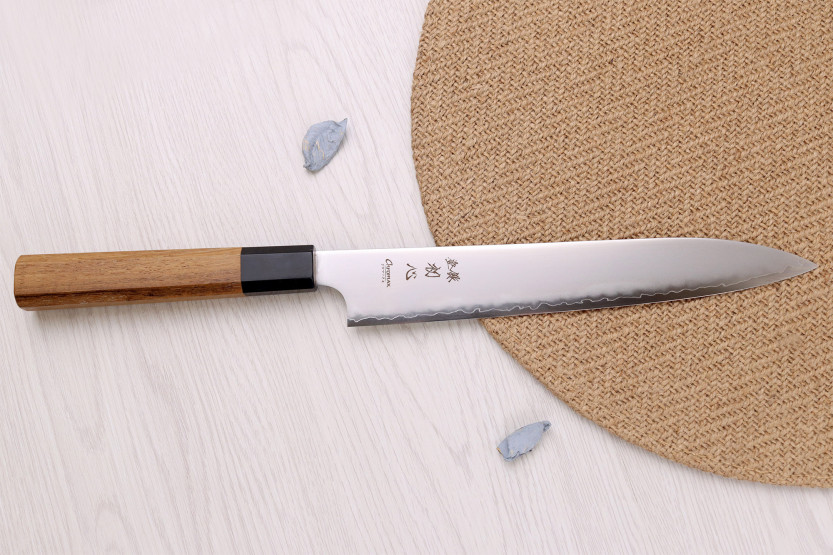
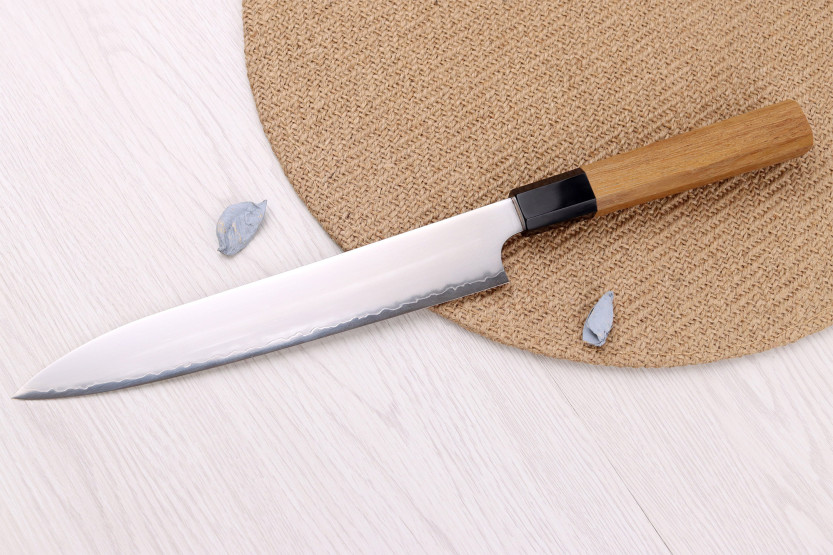
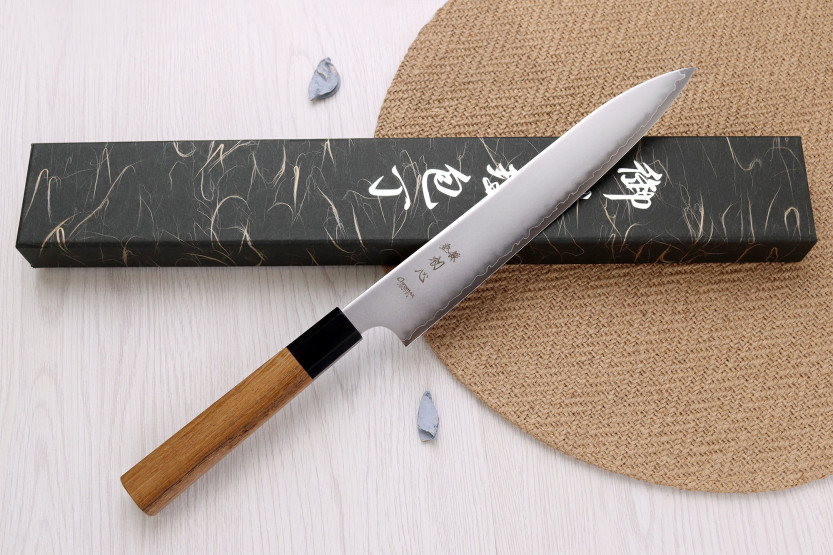
Handcrafted in Seki, Japan, this Hatsukokoro Chromax sujihikiknife is designed for precise slicing of meat and fish. Its long, thin blade allows for smooth, fluid movements, making it ideal for cutting even slices.
A long blade for clean slices
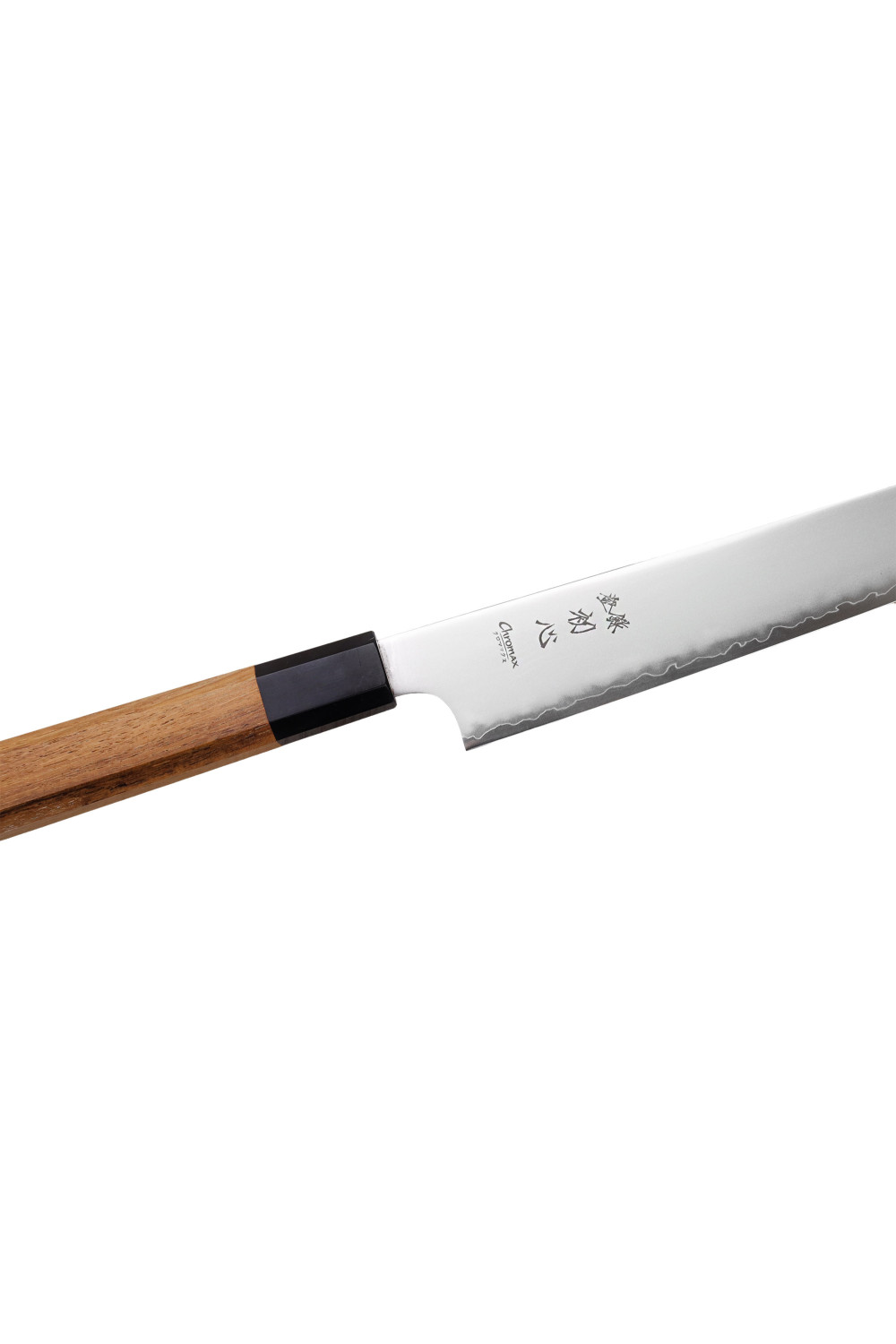
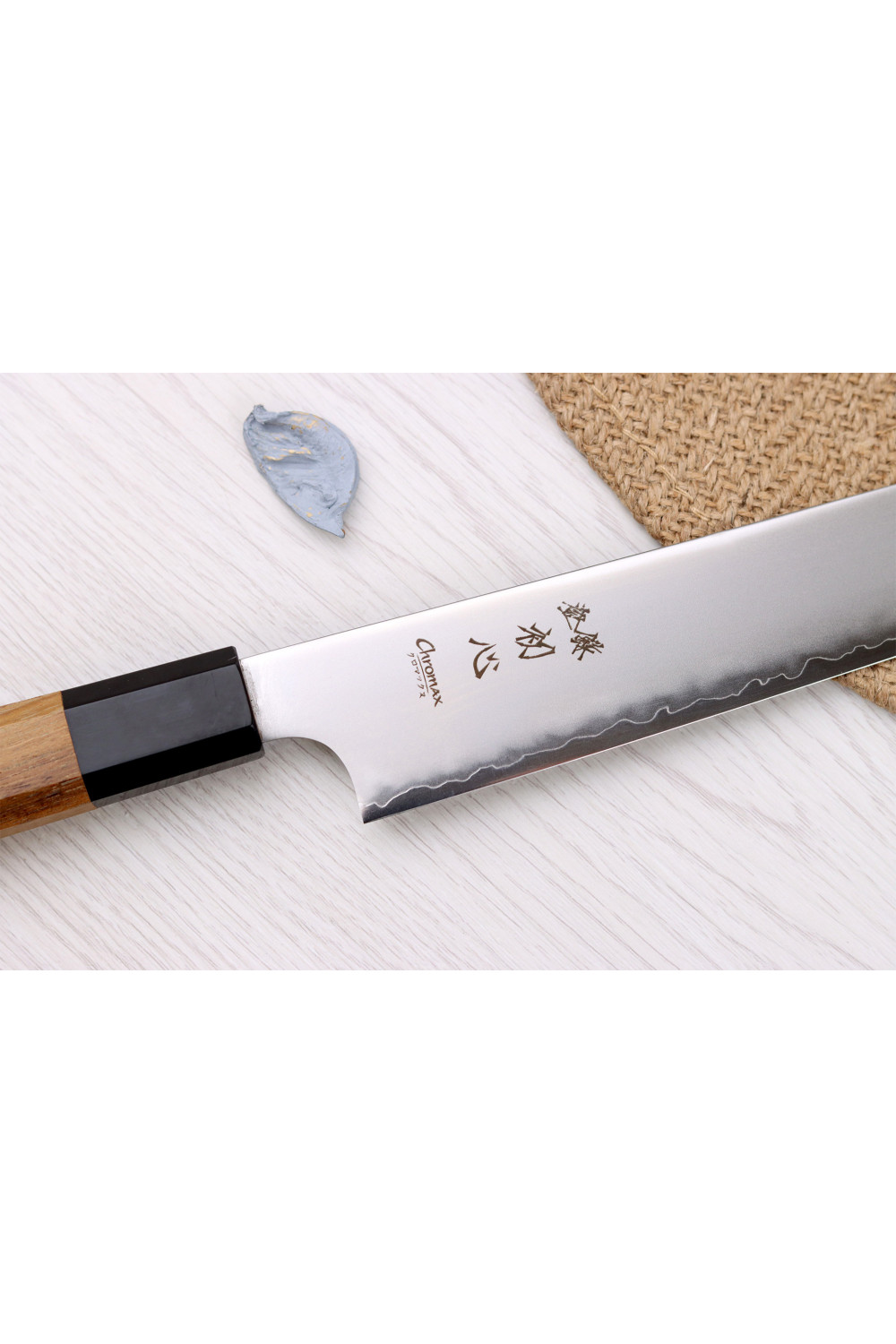
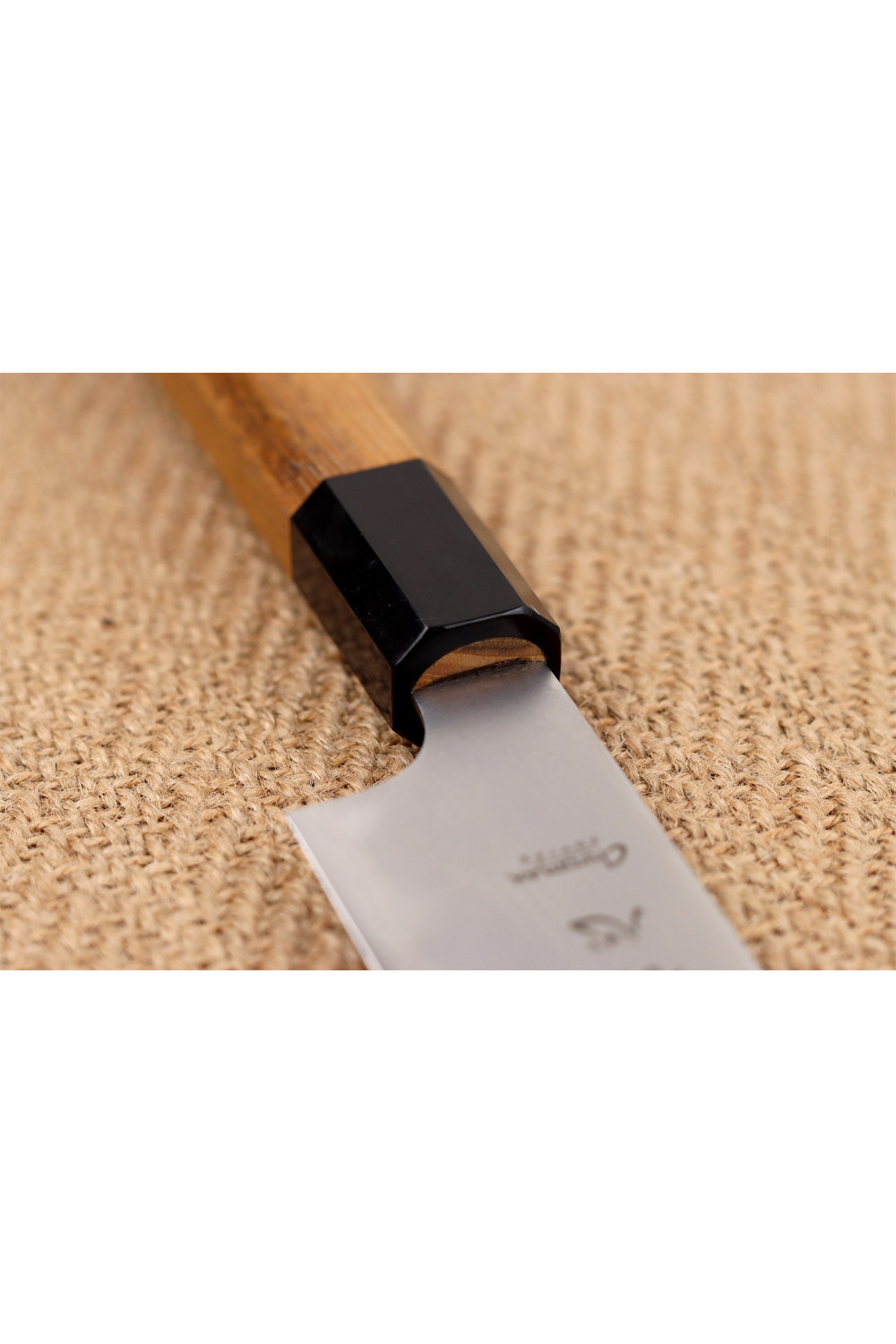
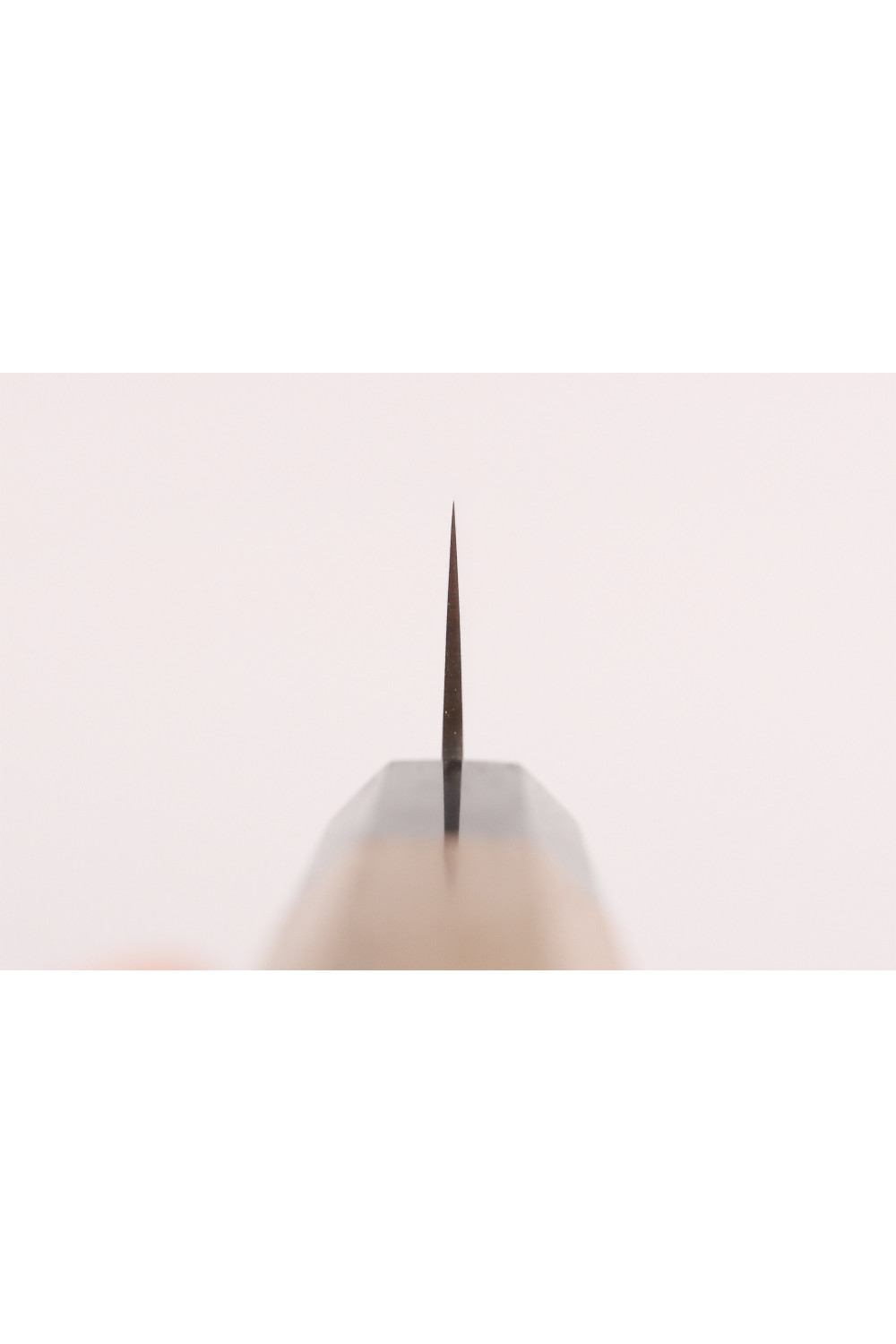
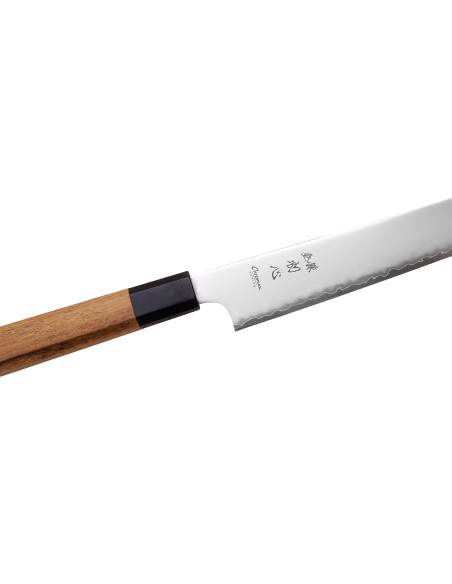
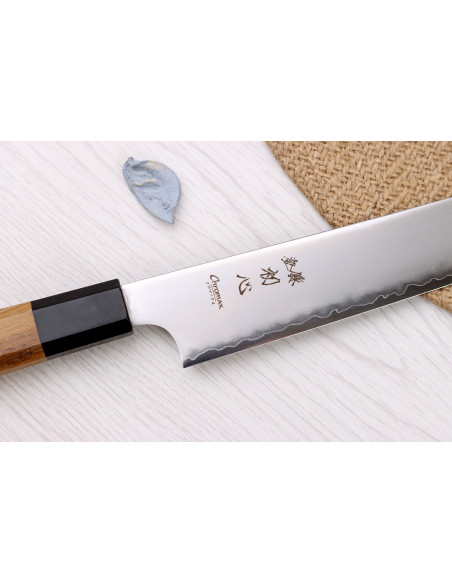
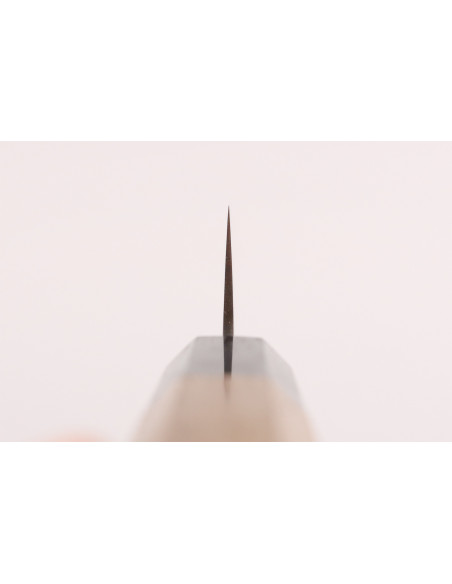
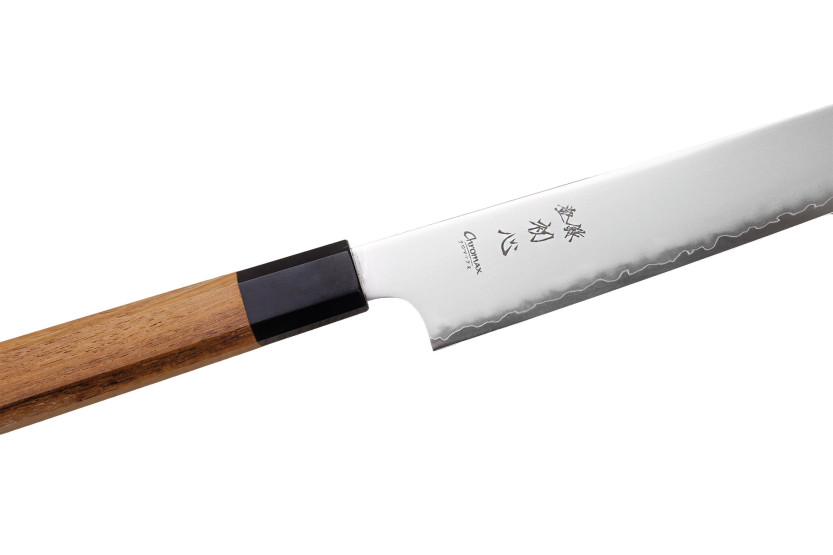
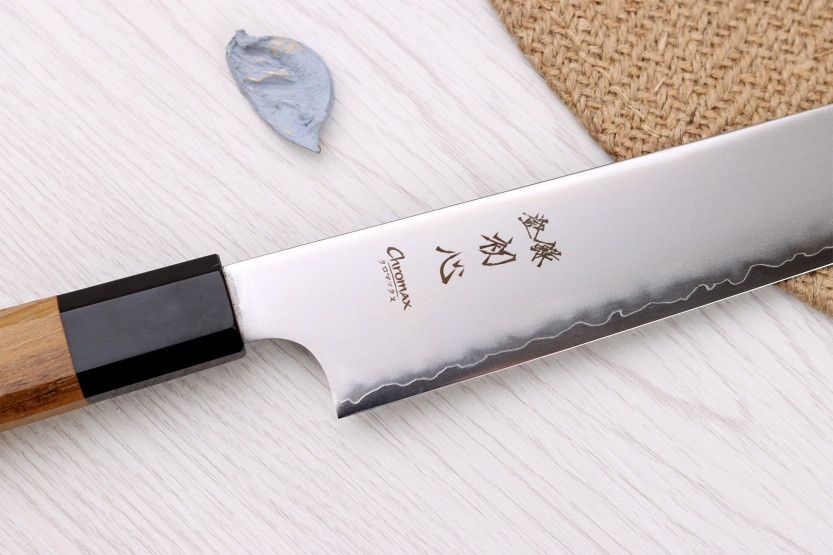
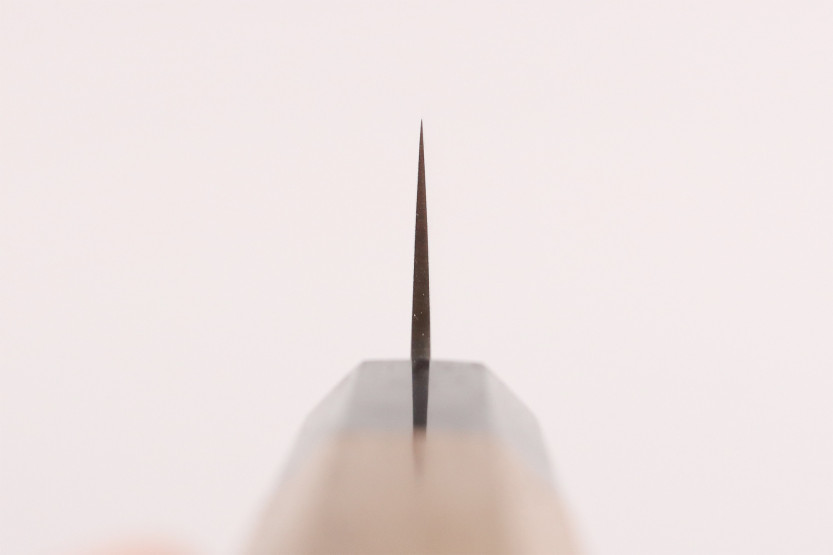
The 23-cm blade is constructed using San Mai, a structure consisting of three layers of steel: a central core surrounded by two outer layers. The core, made of hybrid Chromax steel, forms the cutting edge and contains approximately 1% carbon. The hardness is approximately 65 HRC, which helps maintain an effective edge over time. This multi-layered construction combines a hard core with supporting layers.
The sujihiki’s profile is designed for slicing cuts of meat and fish with long, smooth strokes. Its length makes it easy to cut generous portions without having to make multiple passes. It is also suitable for slicing fish into thin slices. Unlike a blade made exclusively of carbon steel, Chromax offers superior corrosion resistance. However, it is not completely rustproof: cleaning and drying after each use are still recommended.
With its hard edge, the blade requires a controlled cutting technique. Use continuous strokes—without twisting or levering—and a suitable cutting board to preserve the edge.
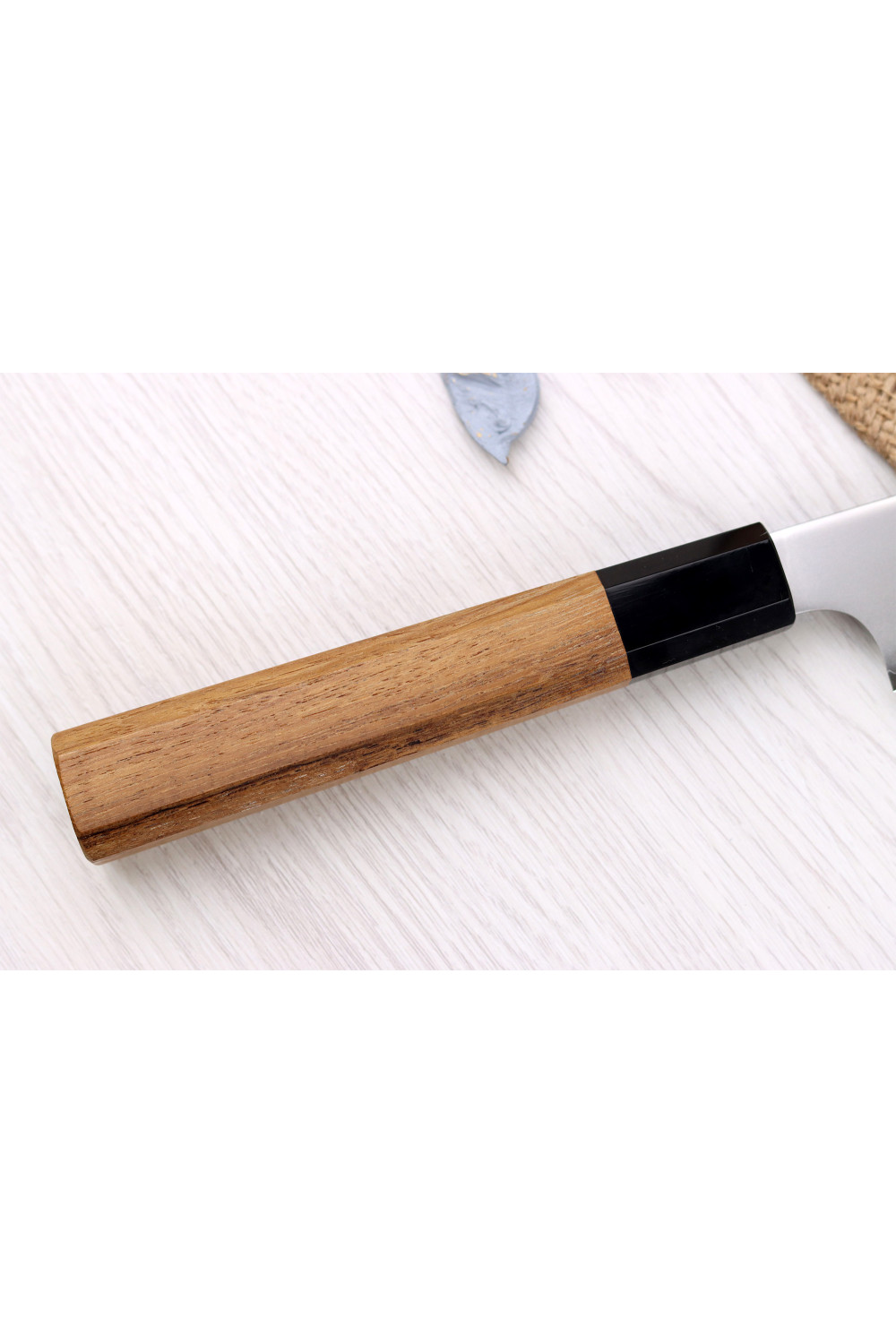
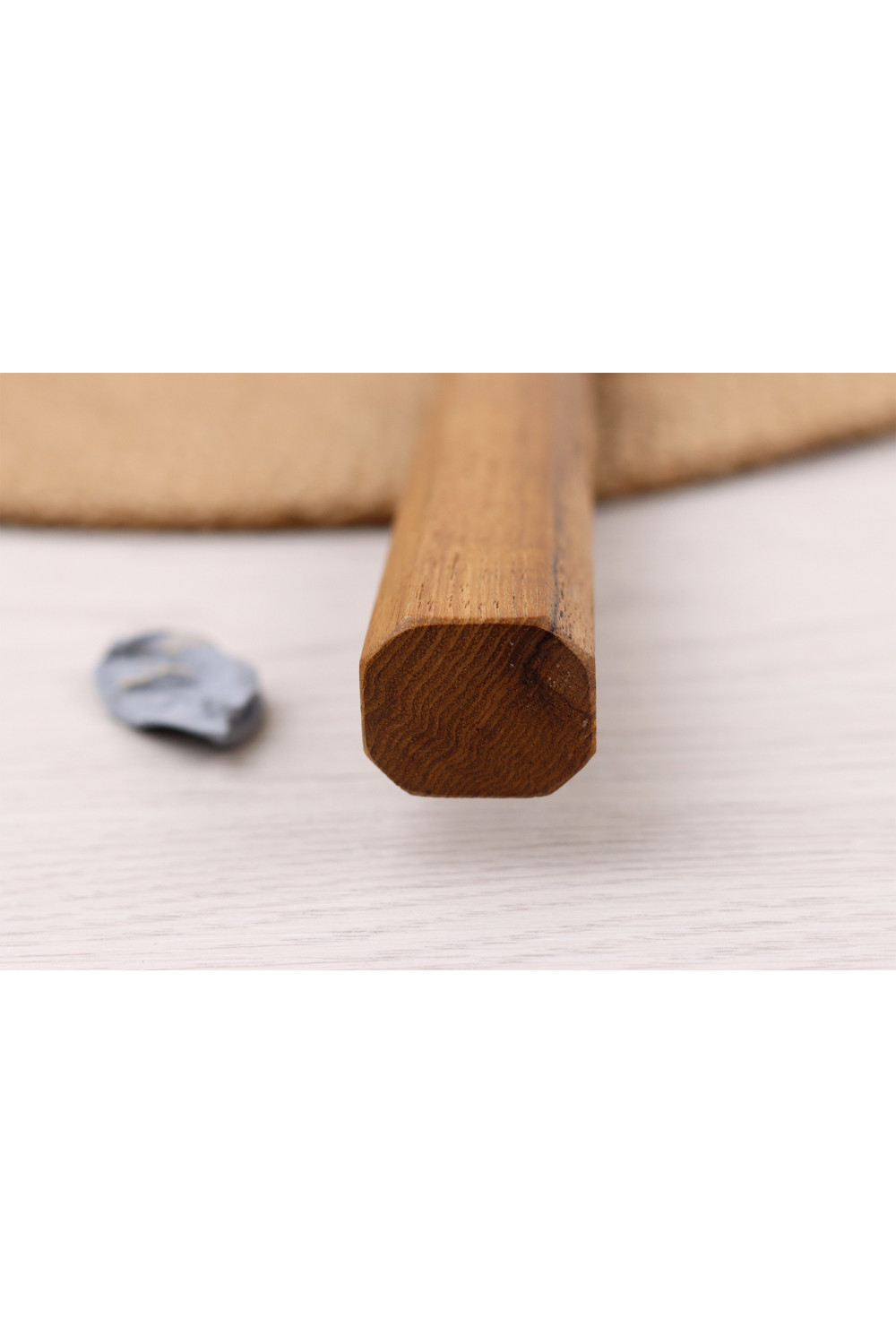
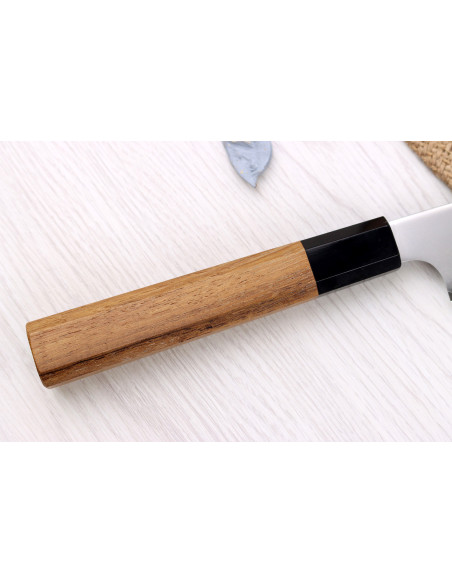
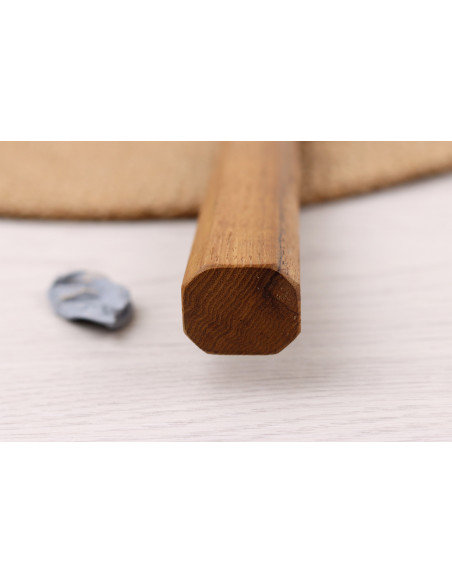
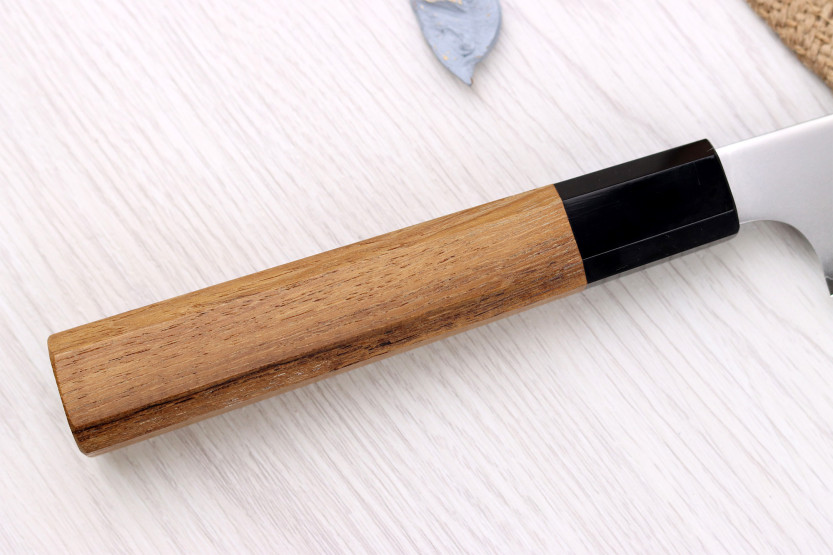
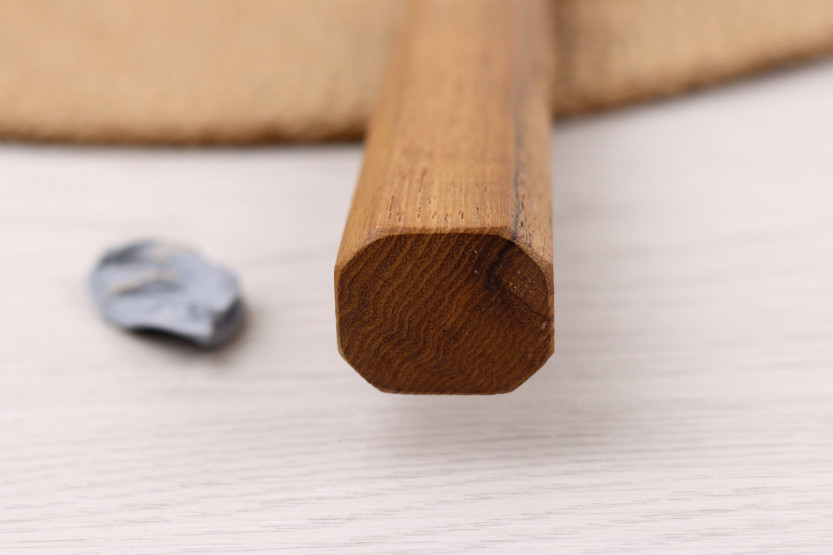
An octagonal teak handle
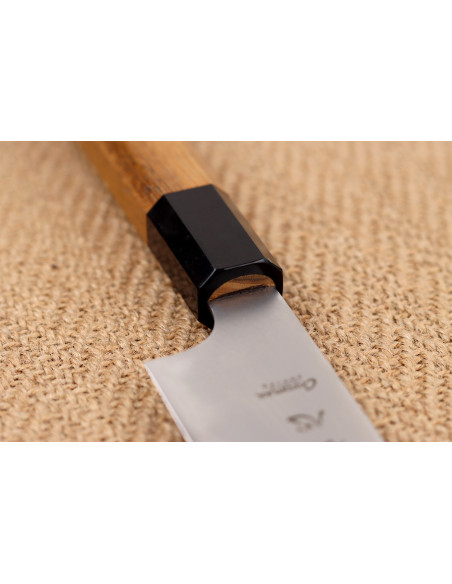
The teak handle features natural grain and shades that may vary from piece to piece. Its octagonal shape provides tactile guidance under the fingers and helps position the hand. It is suitable for both right- and left-handed users, offering an ambidextrous grip.
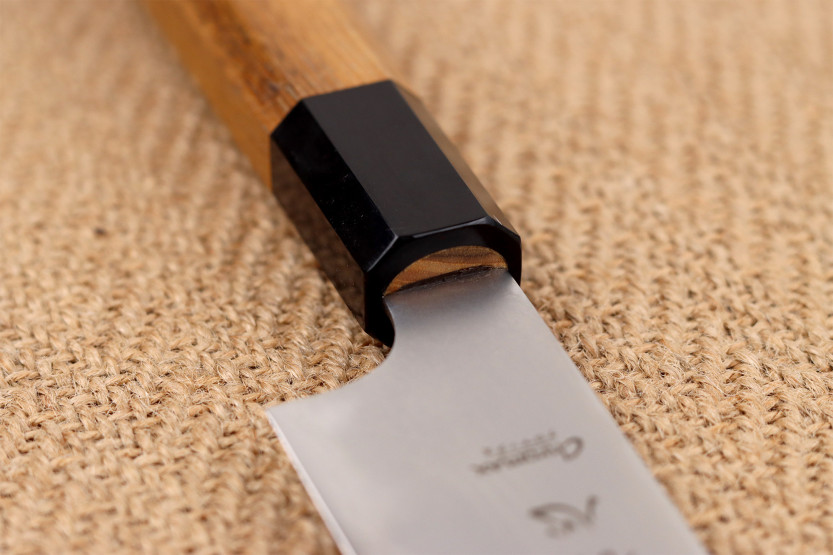
Where the handle meets the steel, a black buffalo horn bolster provides a smooth transition between the handle and the blade and adds a contrasting finish.
Key Benefits at a Glance
-
- 23 cm blade: allows for slicing meat and fish with long, smooth strokes.
-
- Three-layer San Mai construction: combines a central core with two outer layers.
-
- Hybrid Chromax core, approximately 1% carbon: creates an edge suited for precise cuts.
-
- Hardness of approximately 65 HRC: helps maintain the edge for longer.
-
- Superior corrosion resistance compared to pure carbon steel
- Octagonal teak handle: provides grip markers for both right- and left-handed users.
-
- Black buffalo horn bolster: marks the junction between the blade and the handle.
-
- Handcrafted in Seki, Japan: made in a Japanese city renowned for its cutlery.
Usage and Care Instructions
Use the blade on a wooden cutting board or a soft synthetic surface. Avoid glass, stone, ceramic, bone, and frozen foods, as well as twisting motions. After each use, wash the knife by hand with a soft sponge, then dry it immediately, including both the blade and the handle. Do not put it in the dishwasher or let it soak. To sharpen, use a whetstone suitable for hard steels and maintain a consistent angle.
Seki, a Japanese knife-making town
Located in Gifu Prefecture, Seki is known for its history of blade-making. The blacksmithing tradition that developed there over the centuries has expanded to include the production of knives and other cutting tools.
Hatsukokoro offers Japanese knives from various workshops and craftsmanship styles. The brand’s models vary in terms of steel, finish, and handles.
For hassle-free use, come discover all the wooden cutting boards we offer on our website!




 By buying this product you can collect up to