A precise and versatile Japanese blade
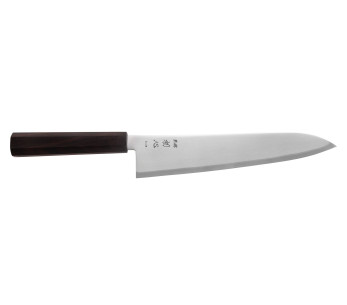
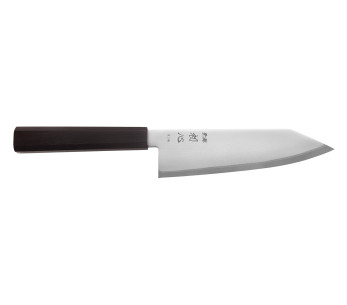
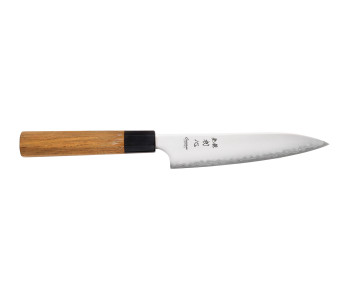
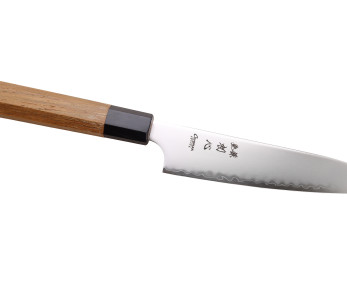
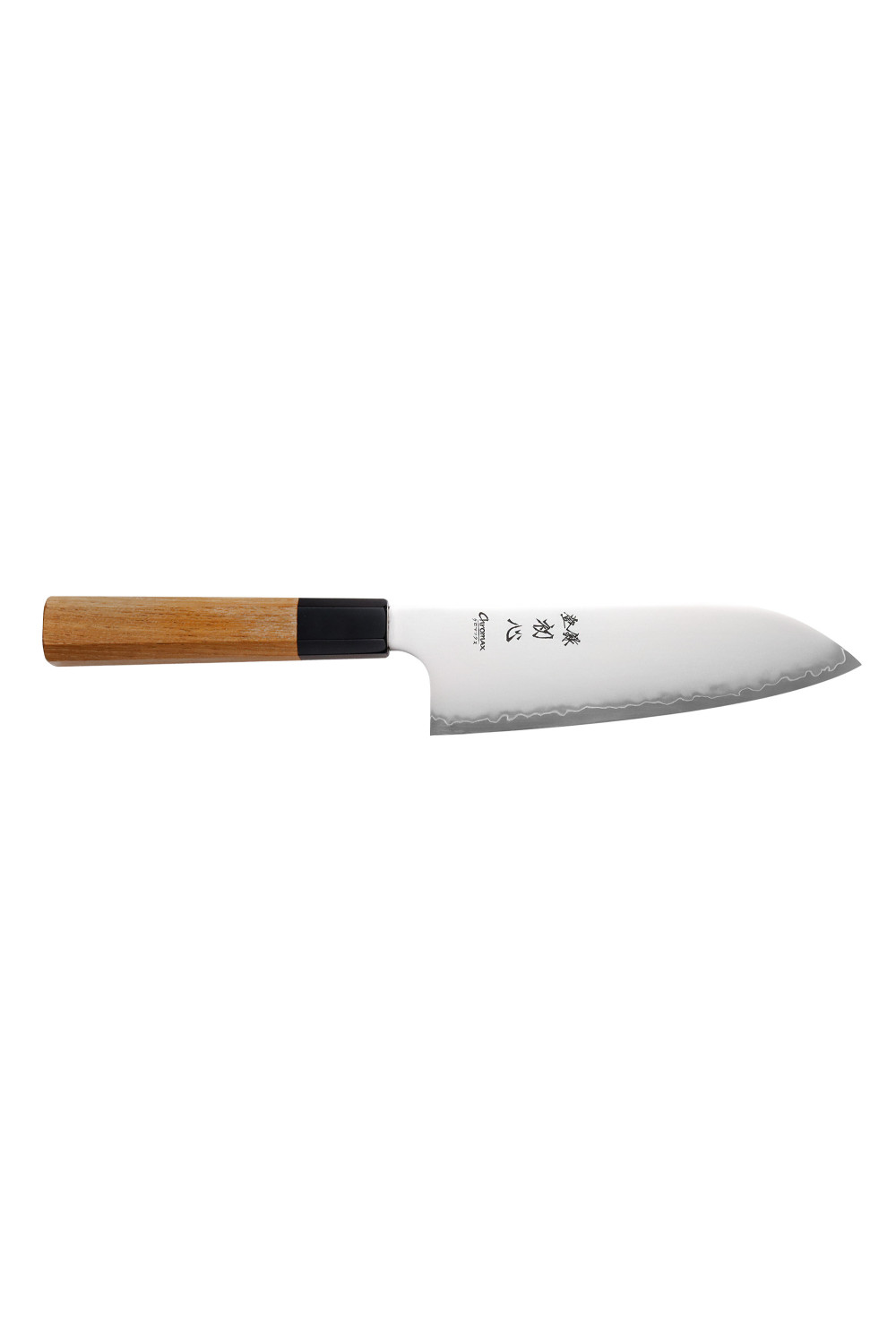
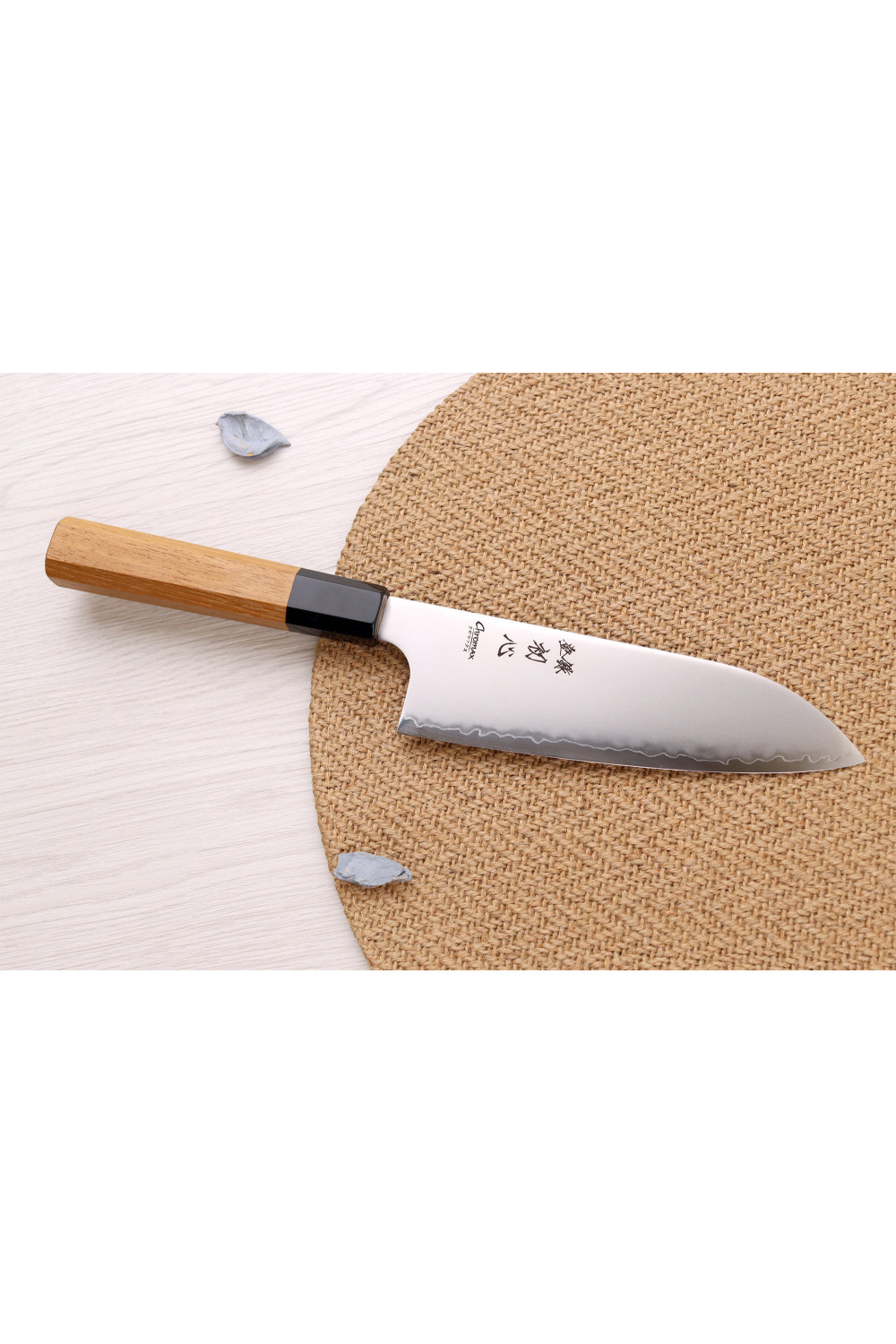
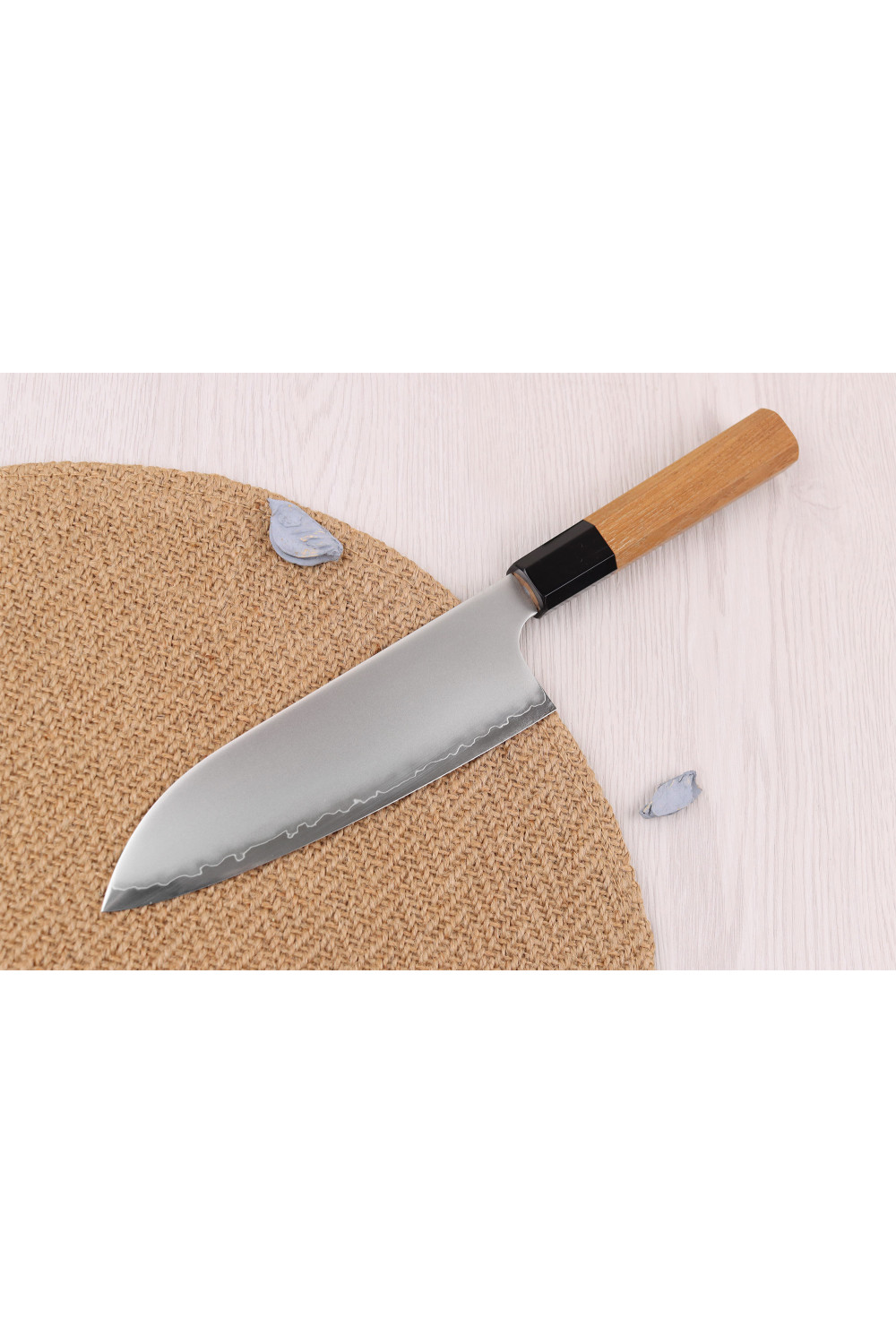
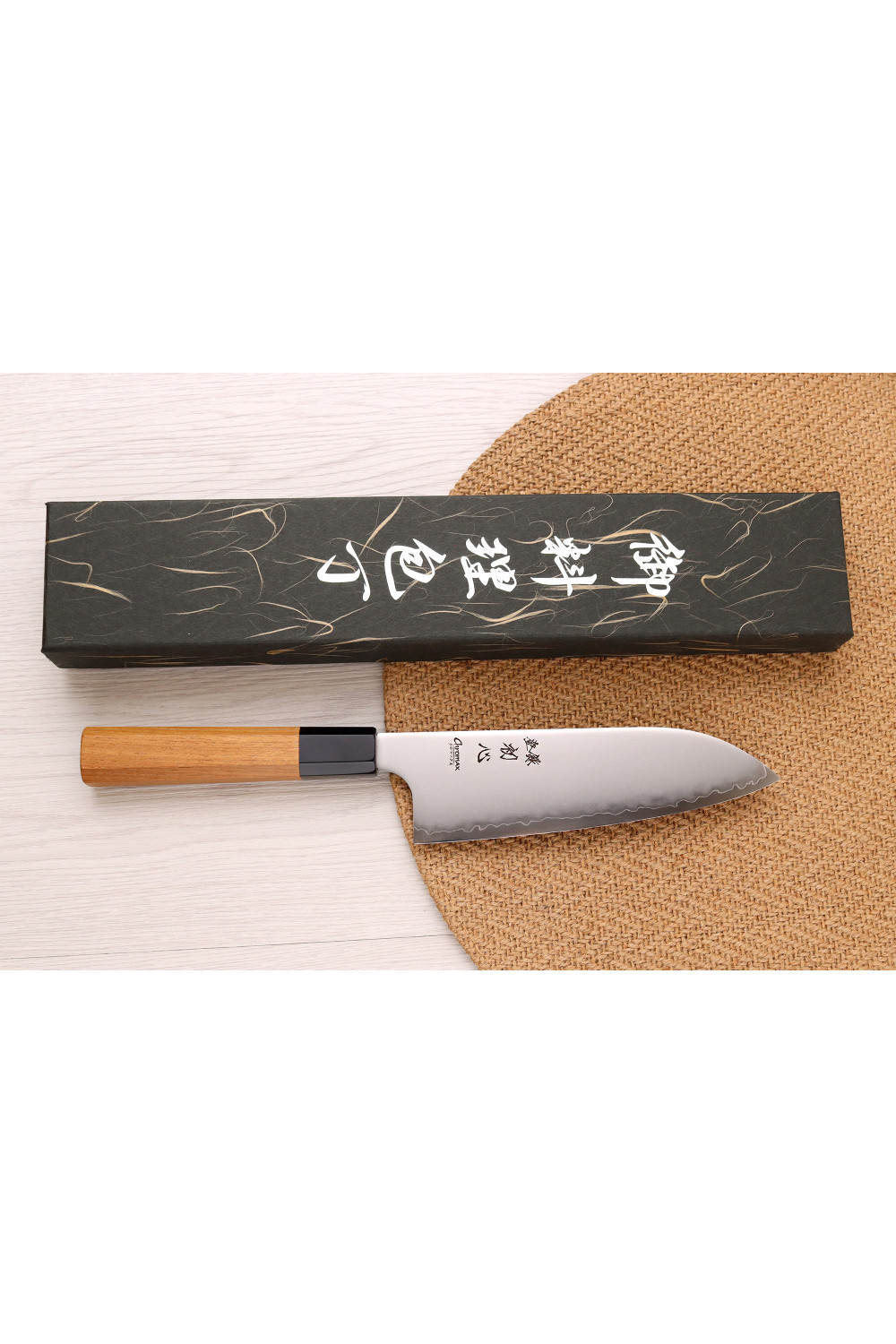
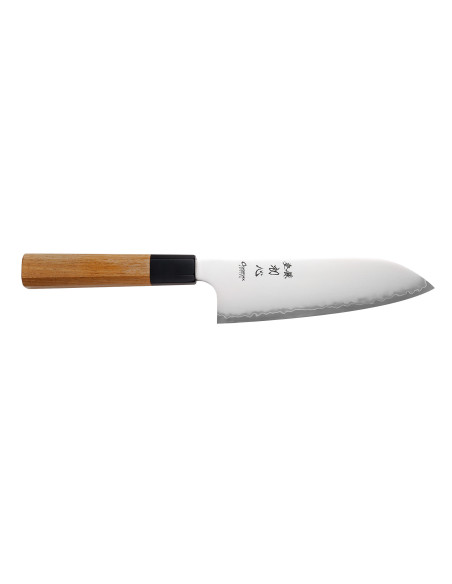
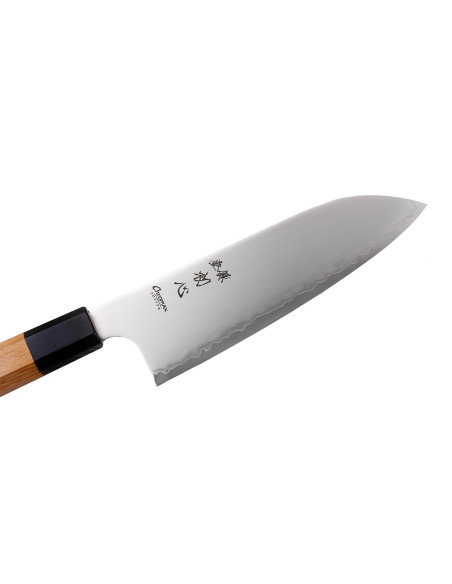
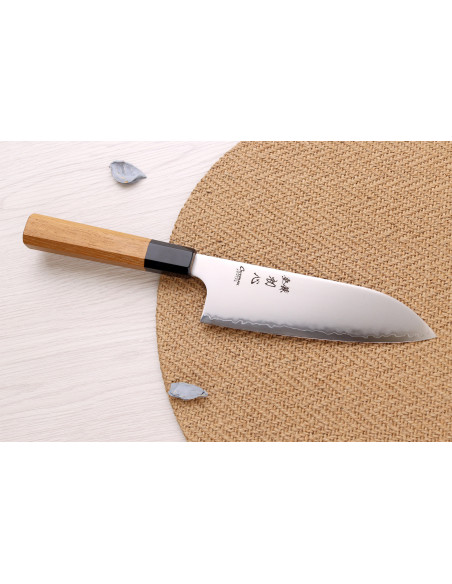
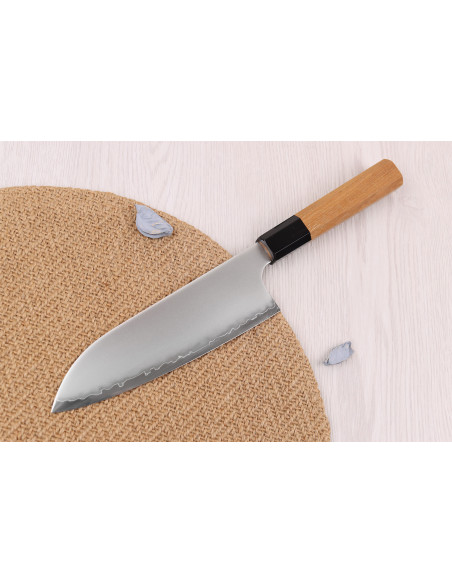
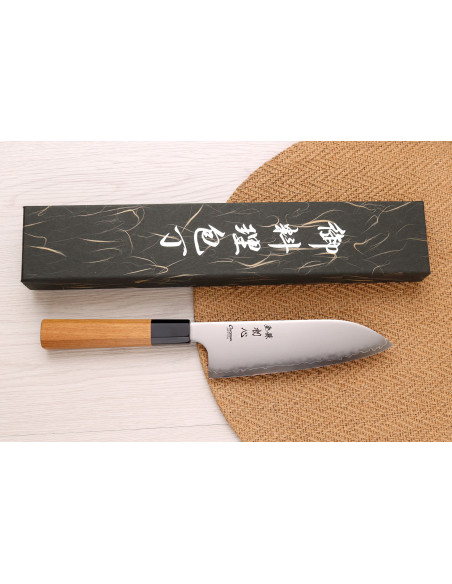
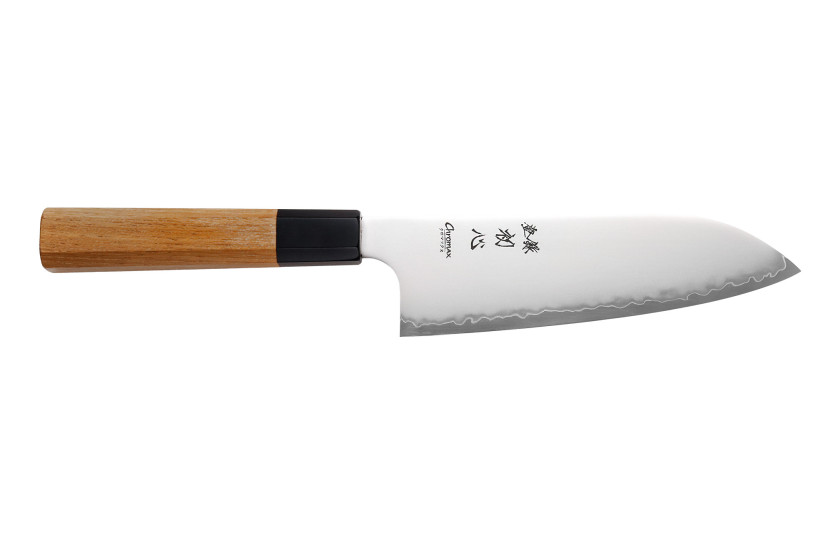
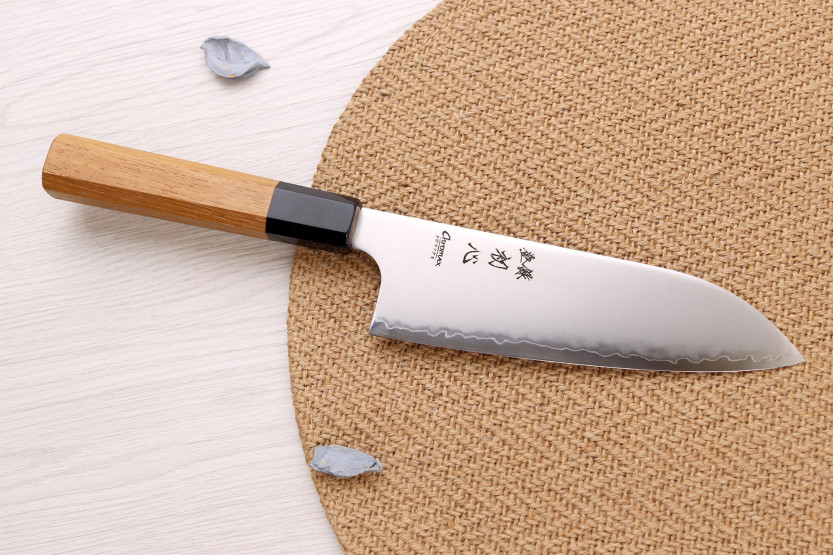
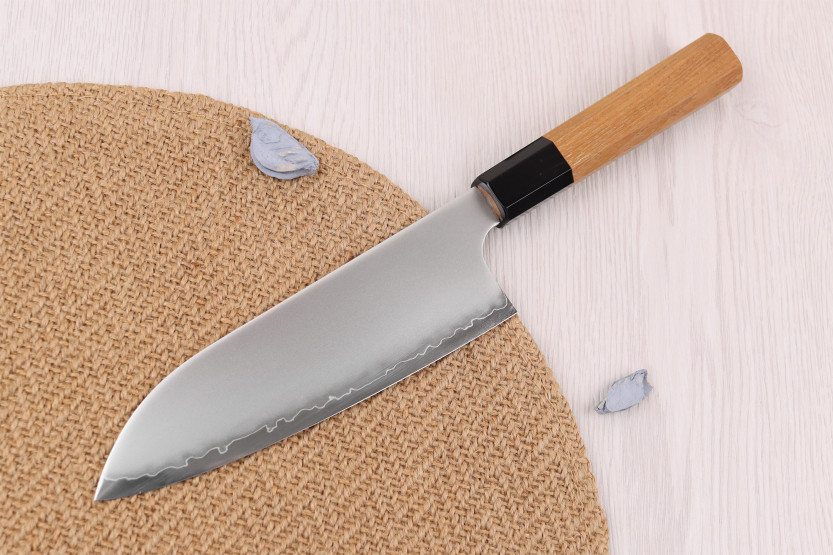
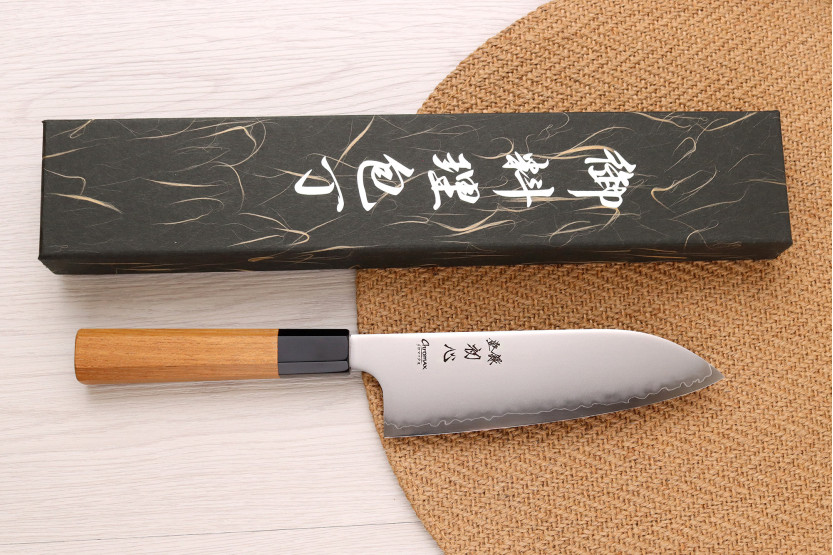
Handcrafted in Seki, Japan, this16.5 cm Hatsukokoro Chromax artisanal Japanese santoku knifefeatures a Chromax hybrid steel core containing approximately 1% carbon and achieving a hardness of about 65 HRC. This versatile size is ideal for everyday cutting of vegetables, fruits, herbs, boneless meats, and fish.
A Chromax San Mai construction
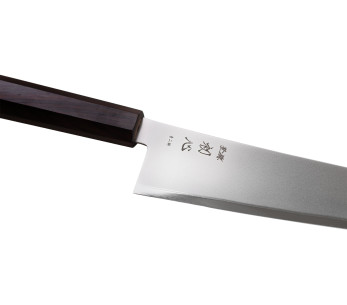
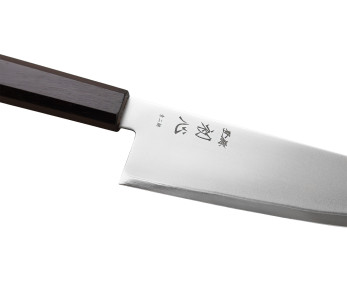
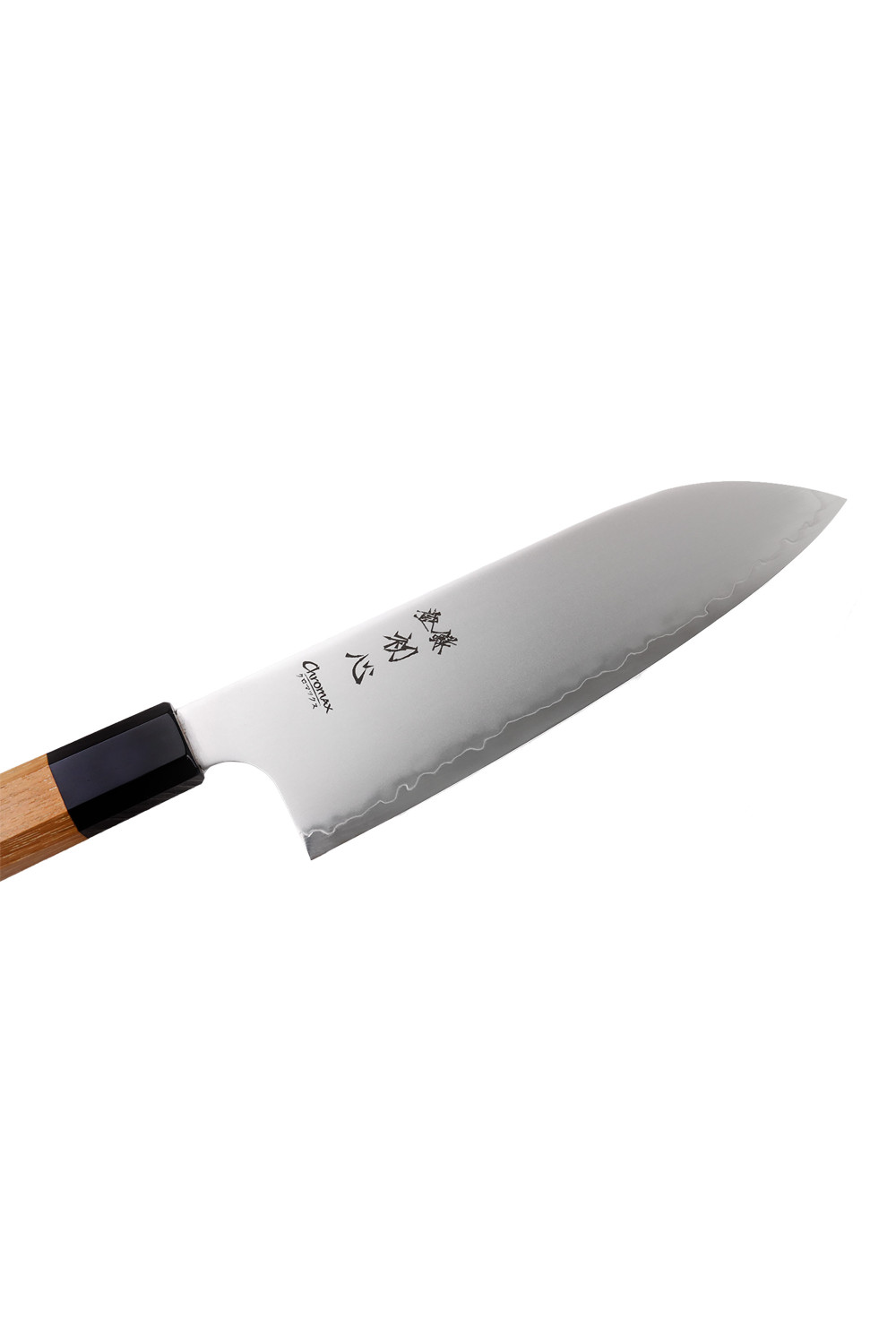
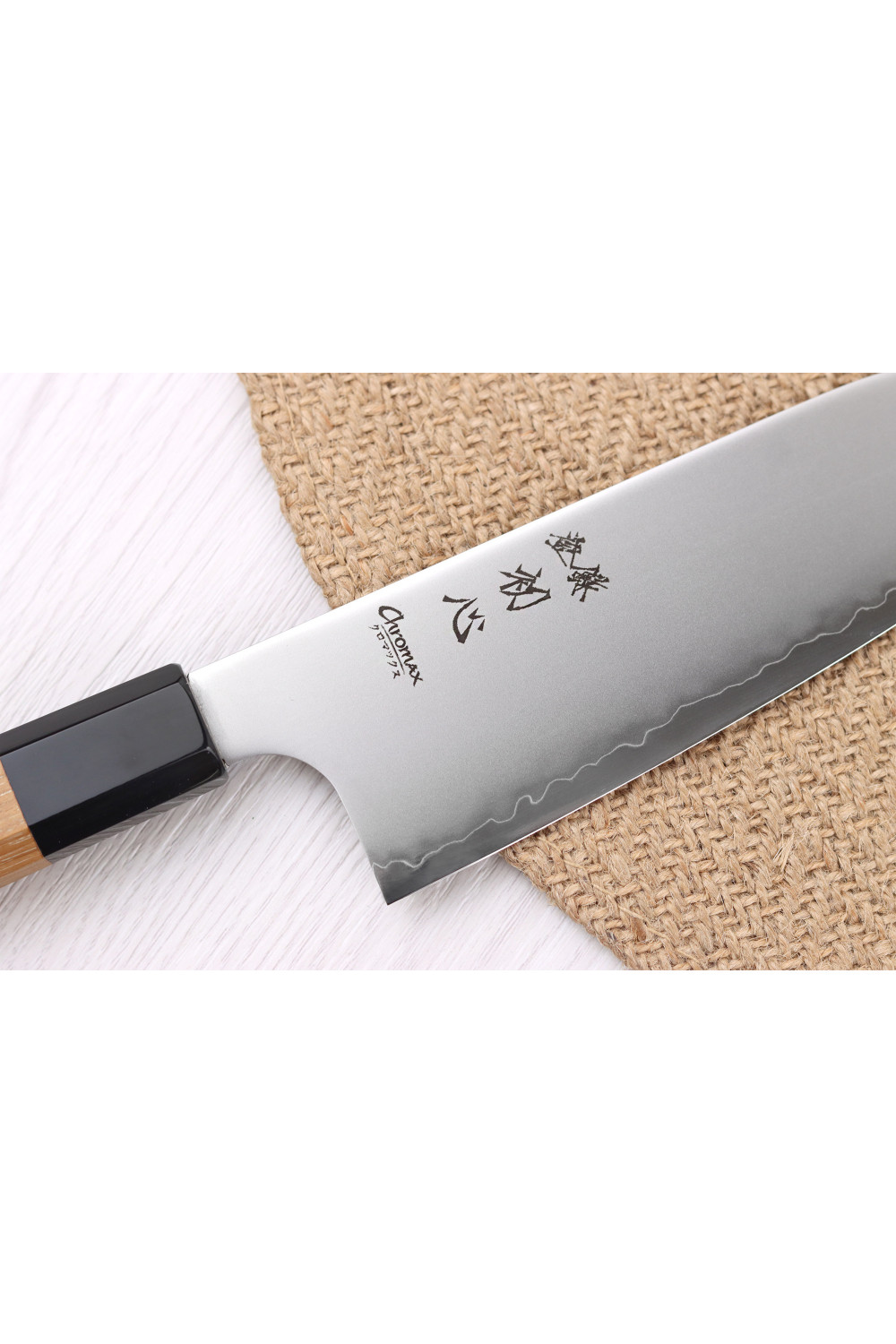
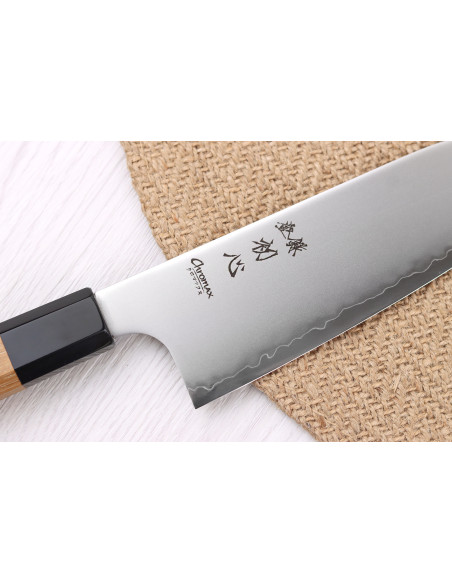
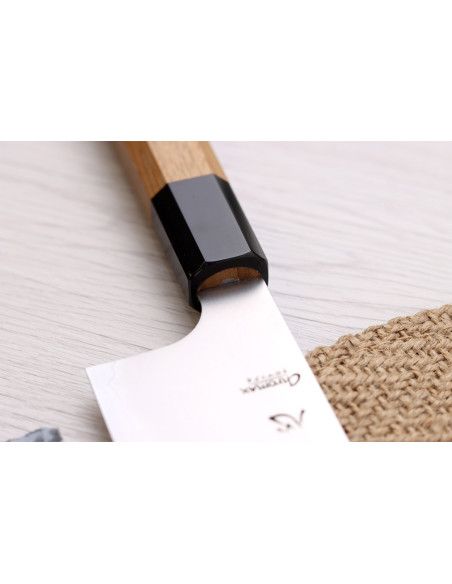
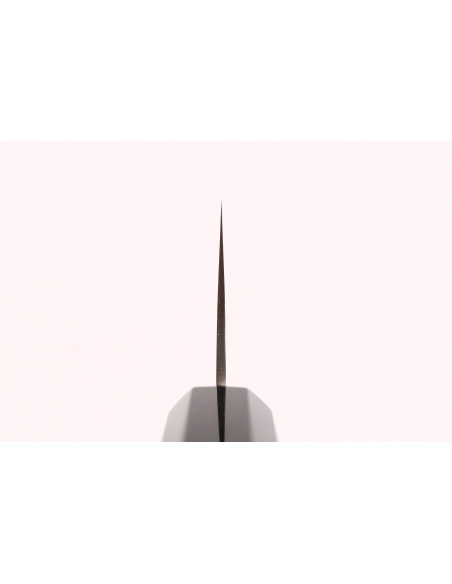
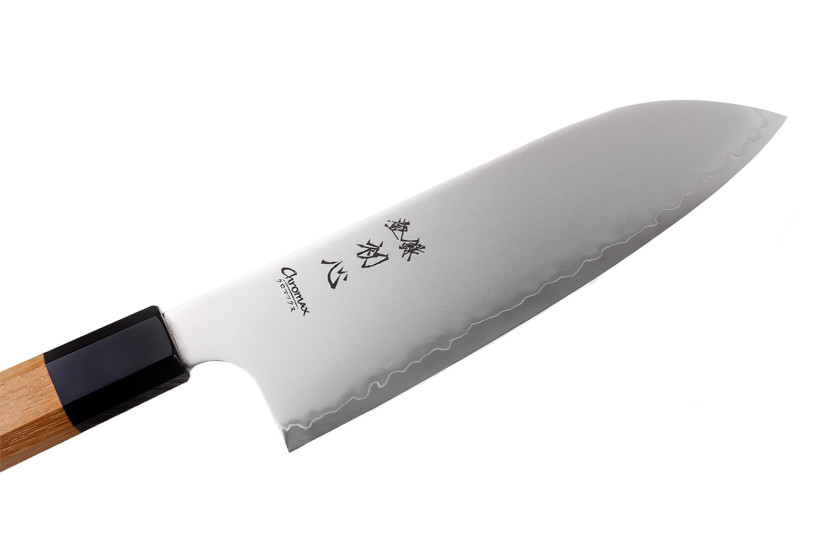
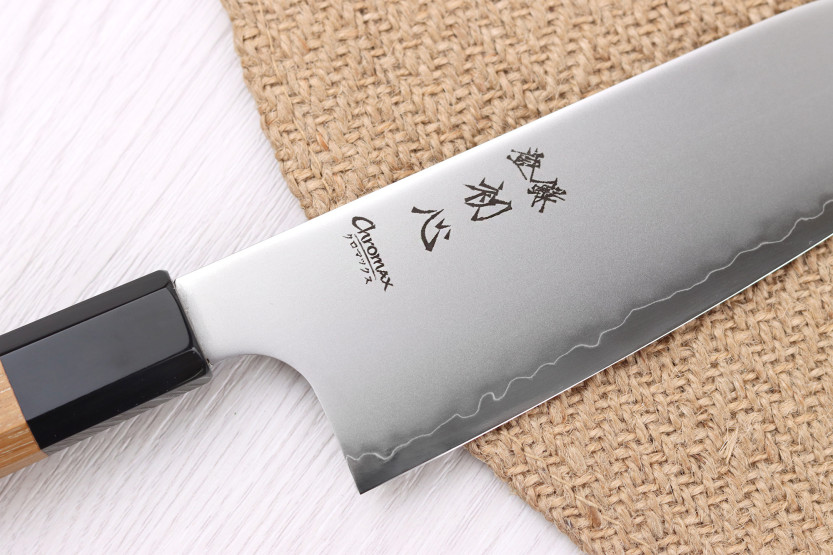
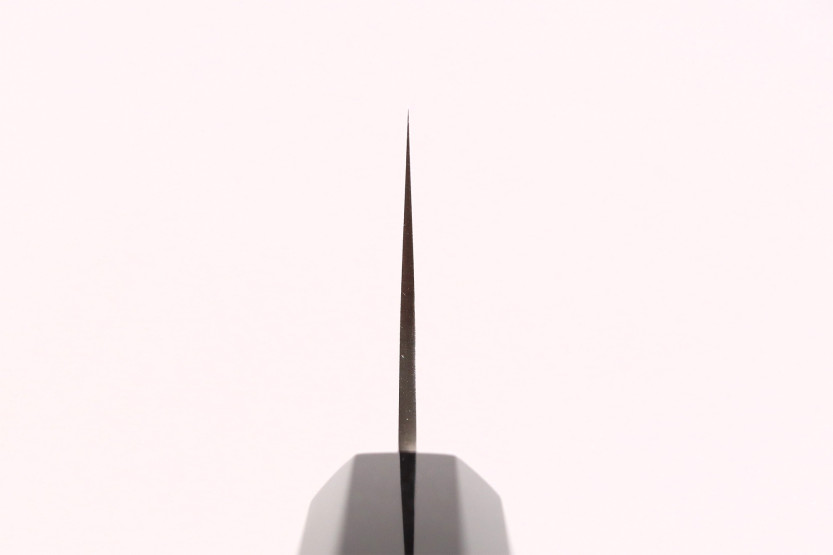
The blade features a Sanmai construction consisting of three alternating layers of steel. This method involves placing a hard steel core in the center and surrounding it with two layers that form the blade’s outer structure. It combines a sharp cutting edge with overall durability.
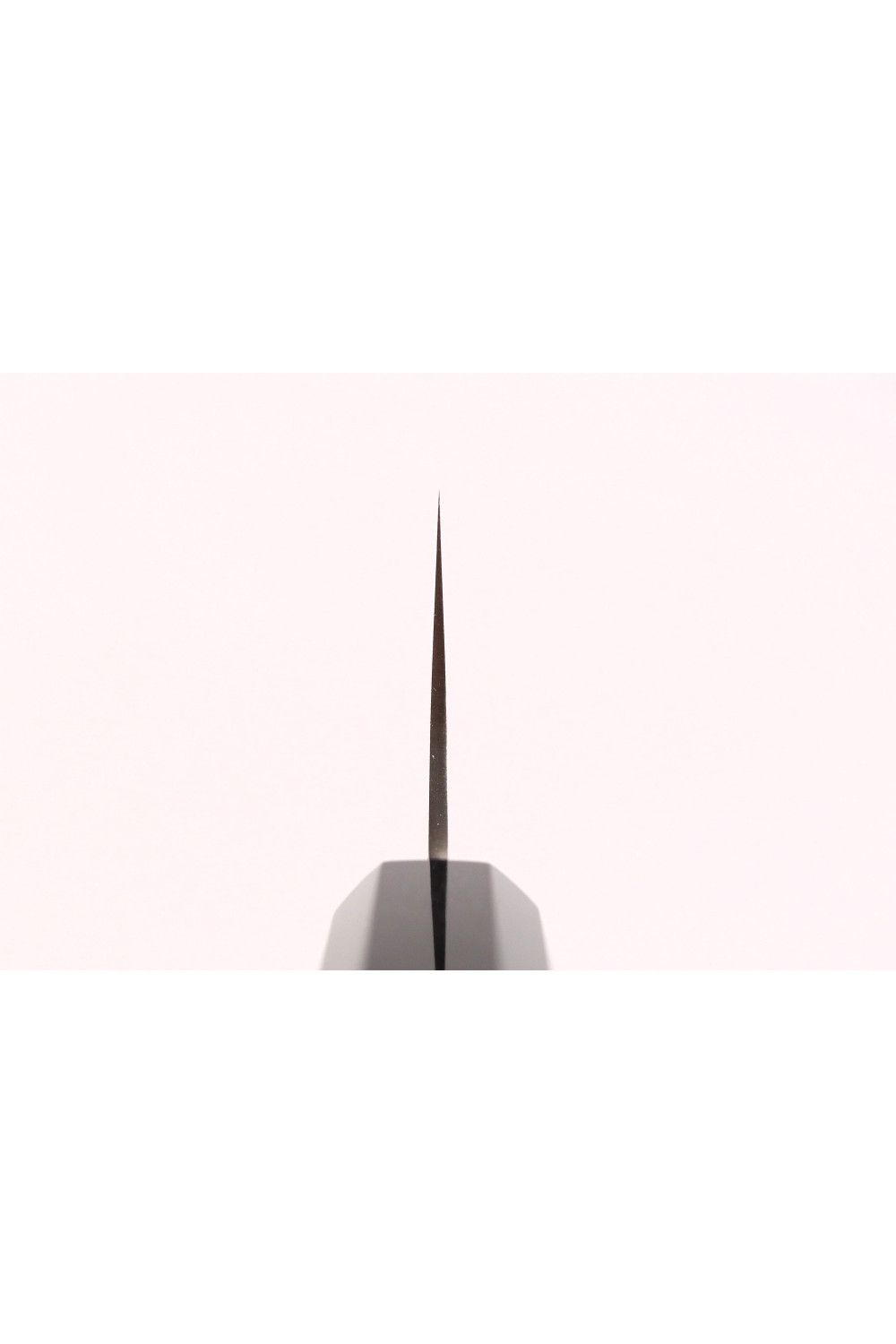
The central core, made of hybrid Chromax steel, contains approximately 1% carbon. This composition results in a particularly fine and durable cutting edge, ideal for precise cuts. With a hardness of approximately 65 HRC, the blade effectively retains its cutting power over time. It can also be resharpened using a whetstone suitable for hard steels.
Chromax offers better corrosion resistance than pure carbon steel. However, it should not be considered completely rust-proof. Hand washing and immediate drying are still necessary to minimize the appearance of stains and preserve the blade’s quality.
An octagonal teak handle
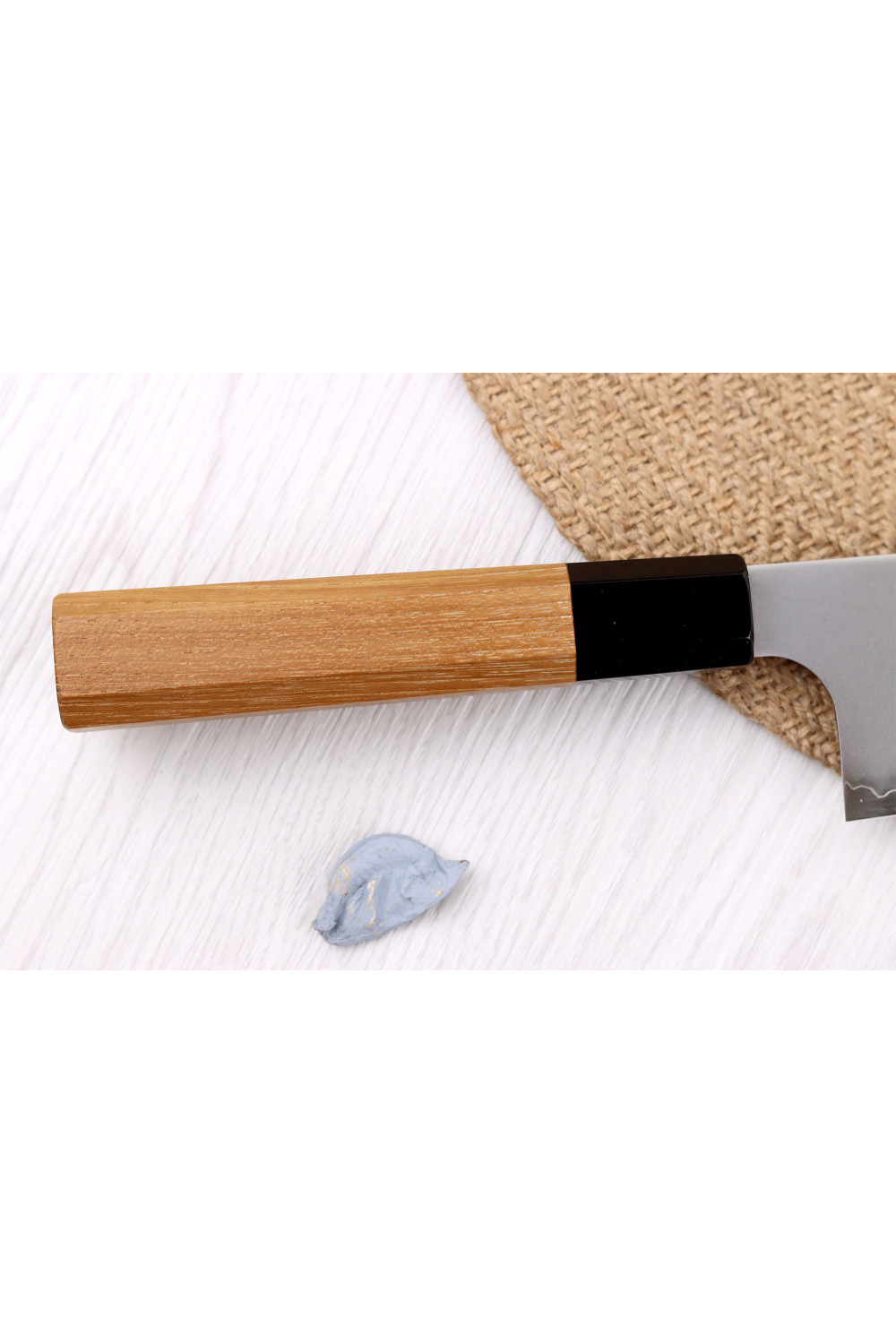
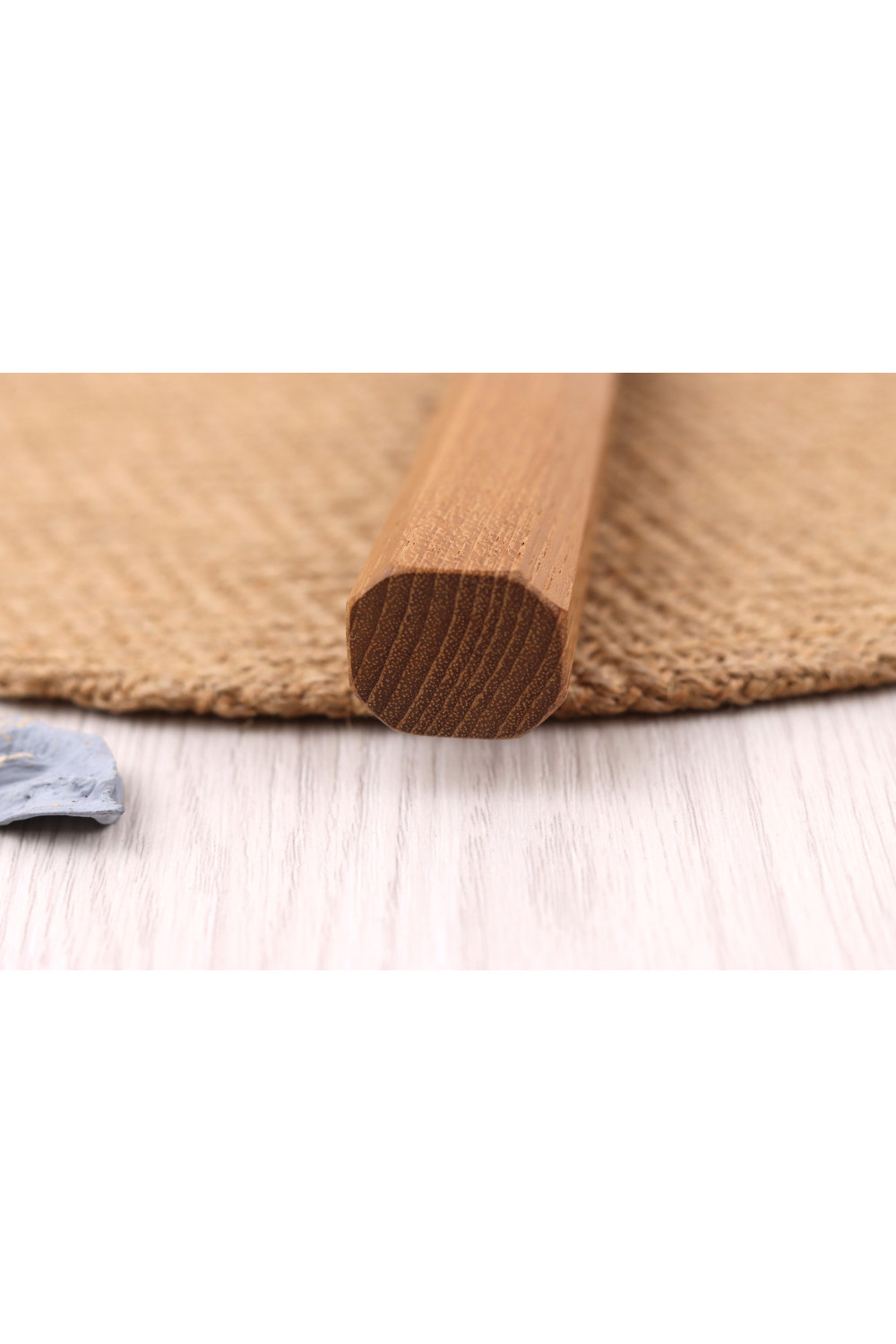
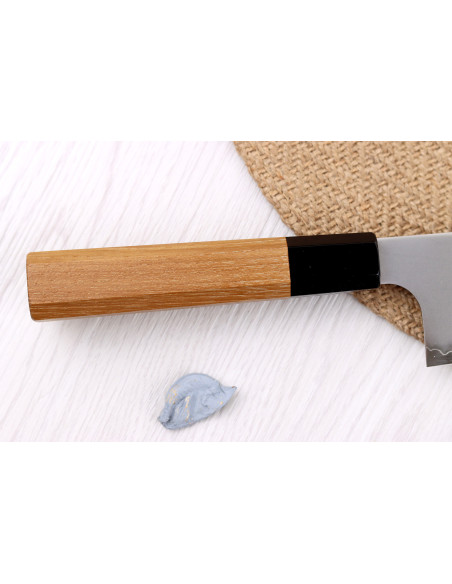
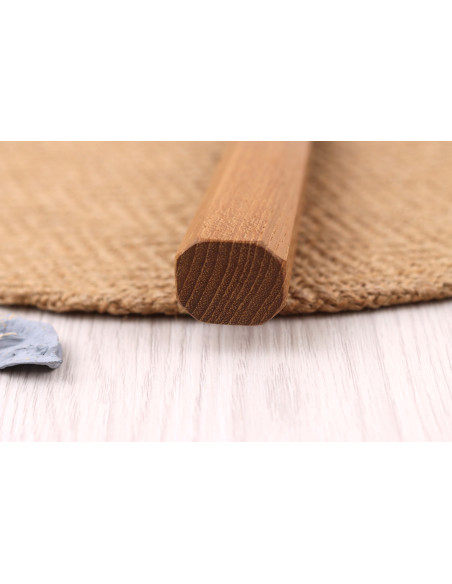
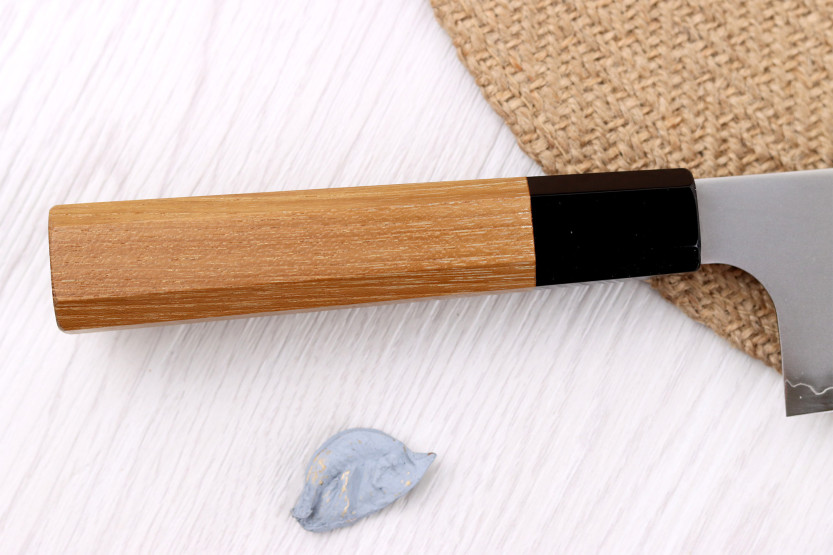
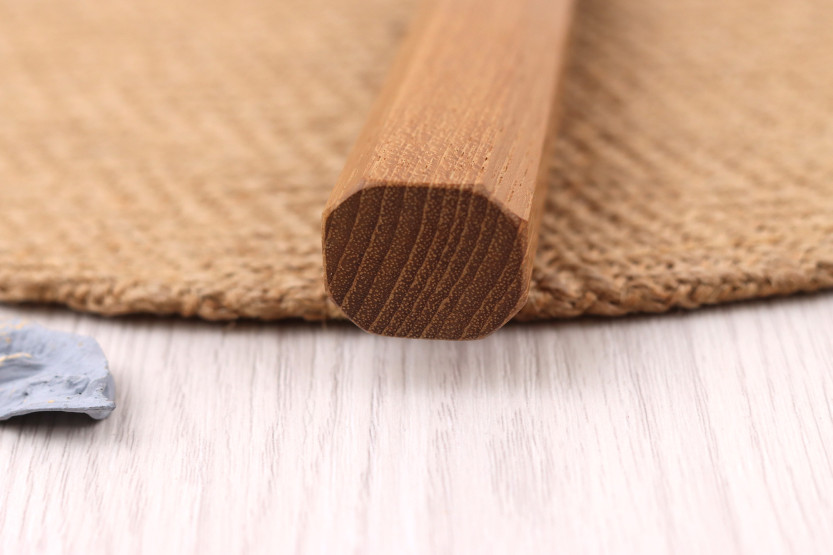
The handle features an octagonal shape, which is very common on Japanese knives with traditional handles. This design is suitable for both right- and left-handed users thanks to its ambidextrous grip.
Crafted from teak wood, the handle features a warm hue and natural grain. This material feels pleasant to the touch and provides good stability during use. Since each piece of teak has its own unique grain pattern, slight variations in appearance may occur from one handle to another.
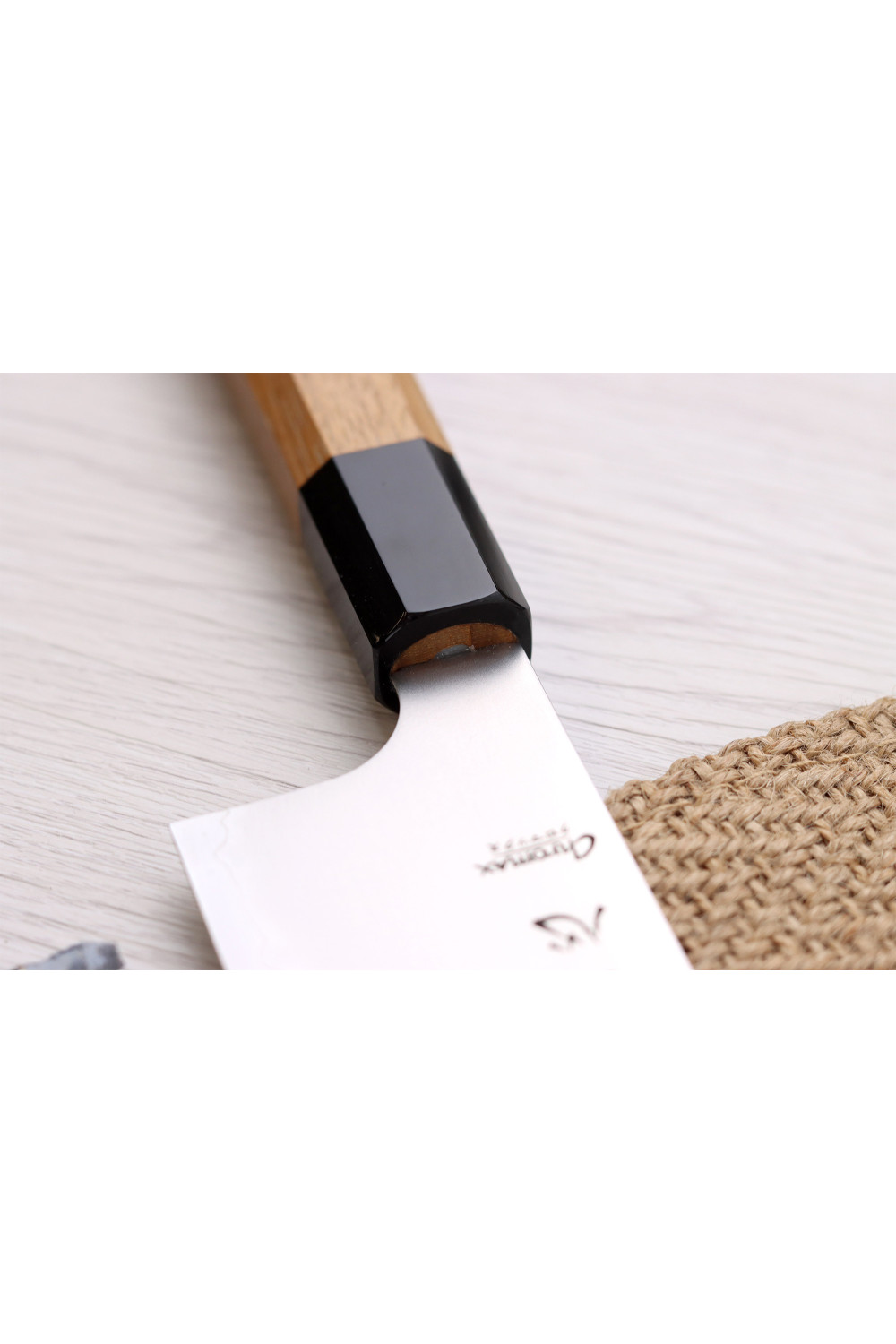
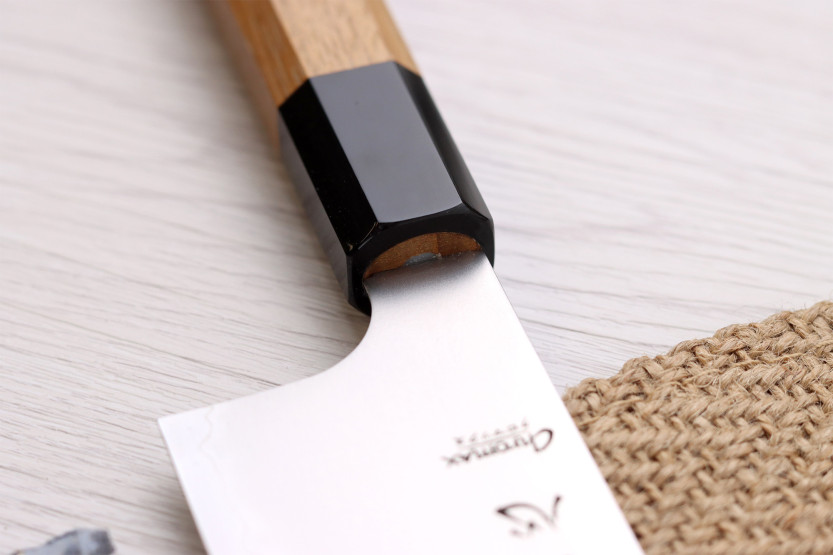
The black buffalo horn guard bridges the gap between the blade and the handle. It lends a simple and elegant finish to the knife, while reinforcing the visual connection between the different materials.
The Benefits of Your Japanese Knife
-
- 16.5 cm blade: a manageable size for precise cuts.
- Three-layer San Mai construction: a balance of hardness and durability.
- 1% carbon Chromax hybrid steel: a sharp, long-lasting edge.
-
- Hardness of approximately 65 HRC: excellent edge retention.
-
- Octagonal teak handle: comfortable, ambidextrous grip.
-
- Black buffalo horn bolster: elegant finish and smooth transition.
-
- Handcrafted in Seki: made using traditional Japanese cutlery craftsmanship.
Usage and Care Instructions
Use this knife on a wooden or soft plastic cutting board. Avoid glass, stone, ceramic, frozen foods, and bones, as these can damage the blade’s edge.
After each use, wash the blade by hand with a soft sponge, then dry it immediately with a clean cloth. Do not put this knife in the dishwasher, particularly because of the teak handle and the high hardness of the steel. To maintain the edge, use a whetstone suitable for hard steels and maintain a consistent angle while sharpening.
Japanese craftsmanship from Seki
Located in Gifu Prefecture, the city of Seki is one of Japan’s major centers for blade manufacturing. Its history of cutlery making developed around metalworking and the production of bladed weapons, before evolving into the manufacture of kitchen knives and modern cutlery.
Japanese knives made in Seki typically combine traditional forging methods with a careful selection of steels and materials.
Hatsukokoro collaborates with various Japanese artisans, specialized workshops, and manufacturers. This approach allows us to offer knives in a variety of styles, featuring different types of steel, finishes, and handles.
You’ll also find a full selection of whetstones to help you care for your Japanese knives!


 By buying this product you can collect up to