A Japanese collector's item, blending art and cutlery
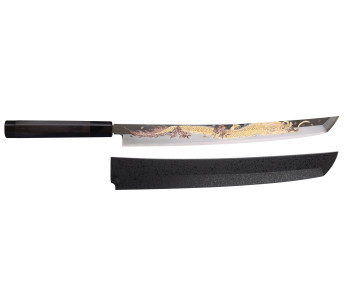
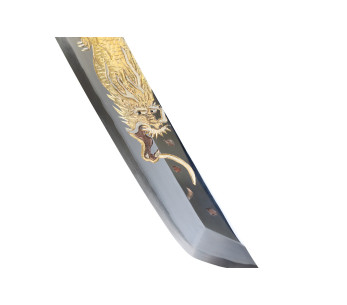
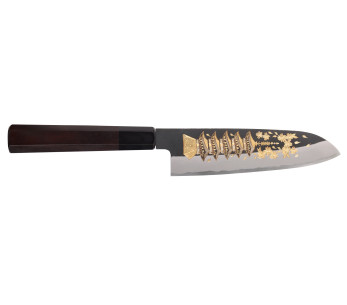
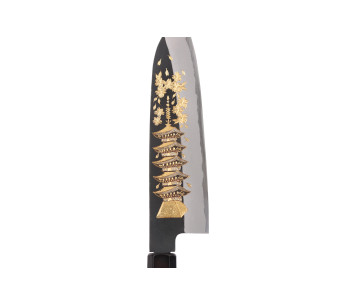
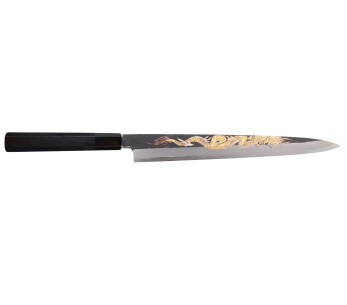
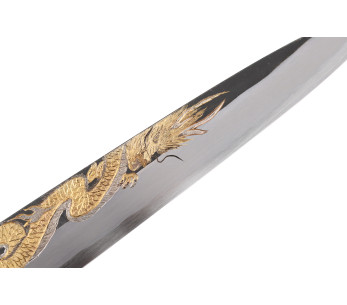
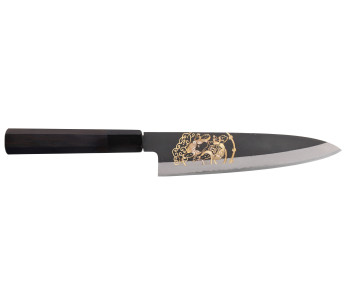
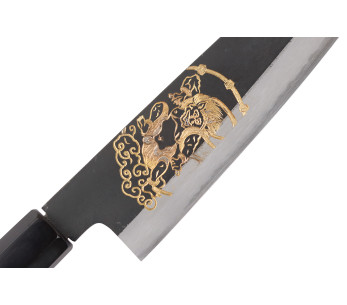
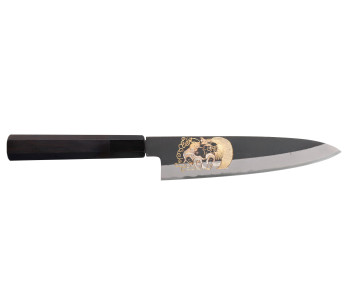
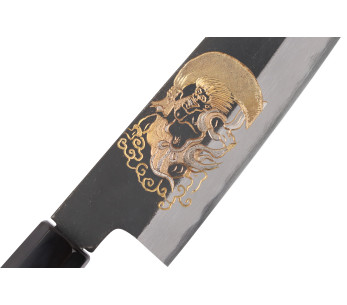
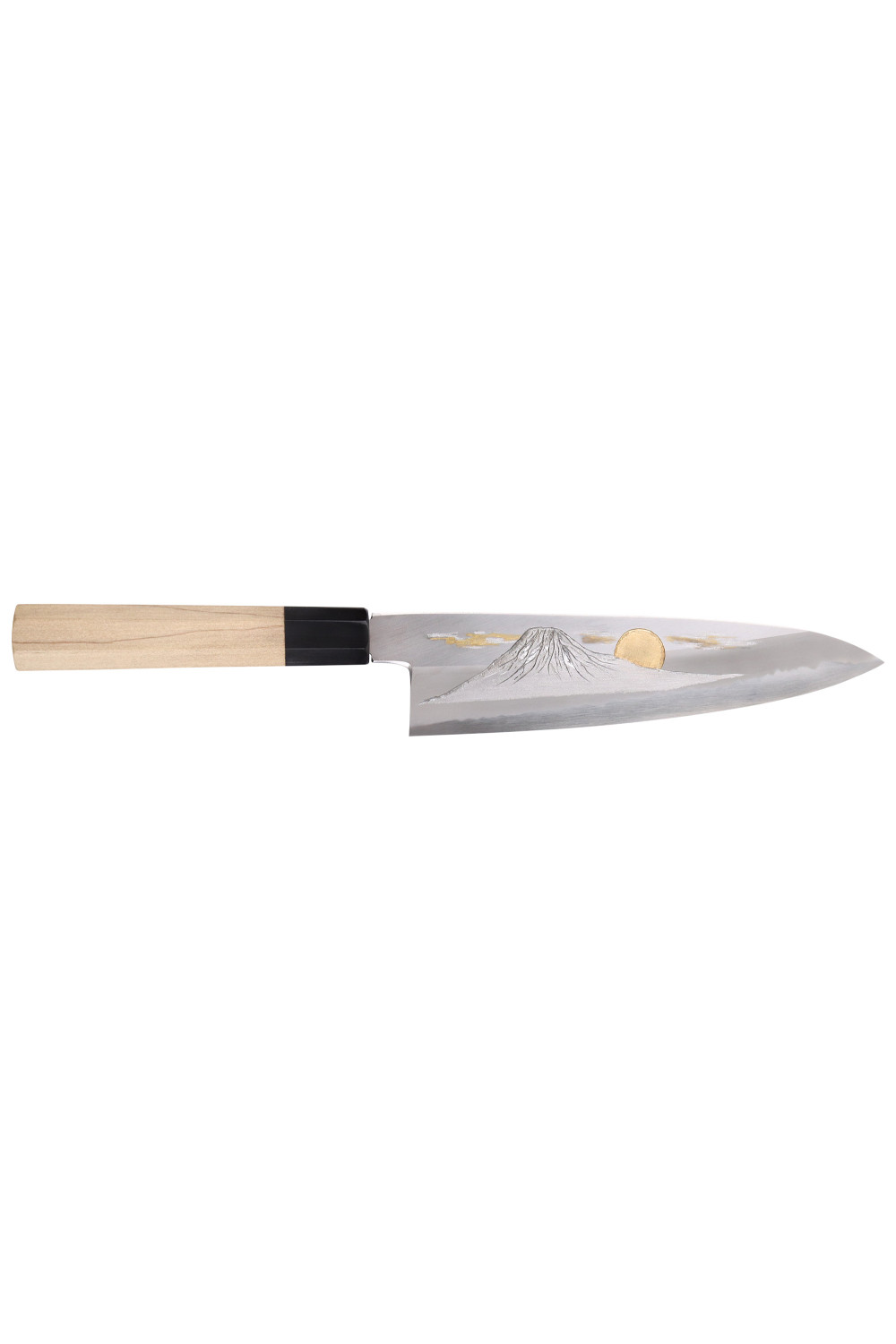
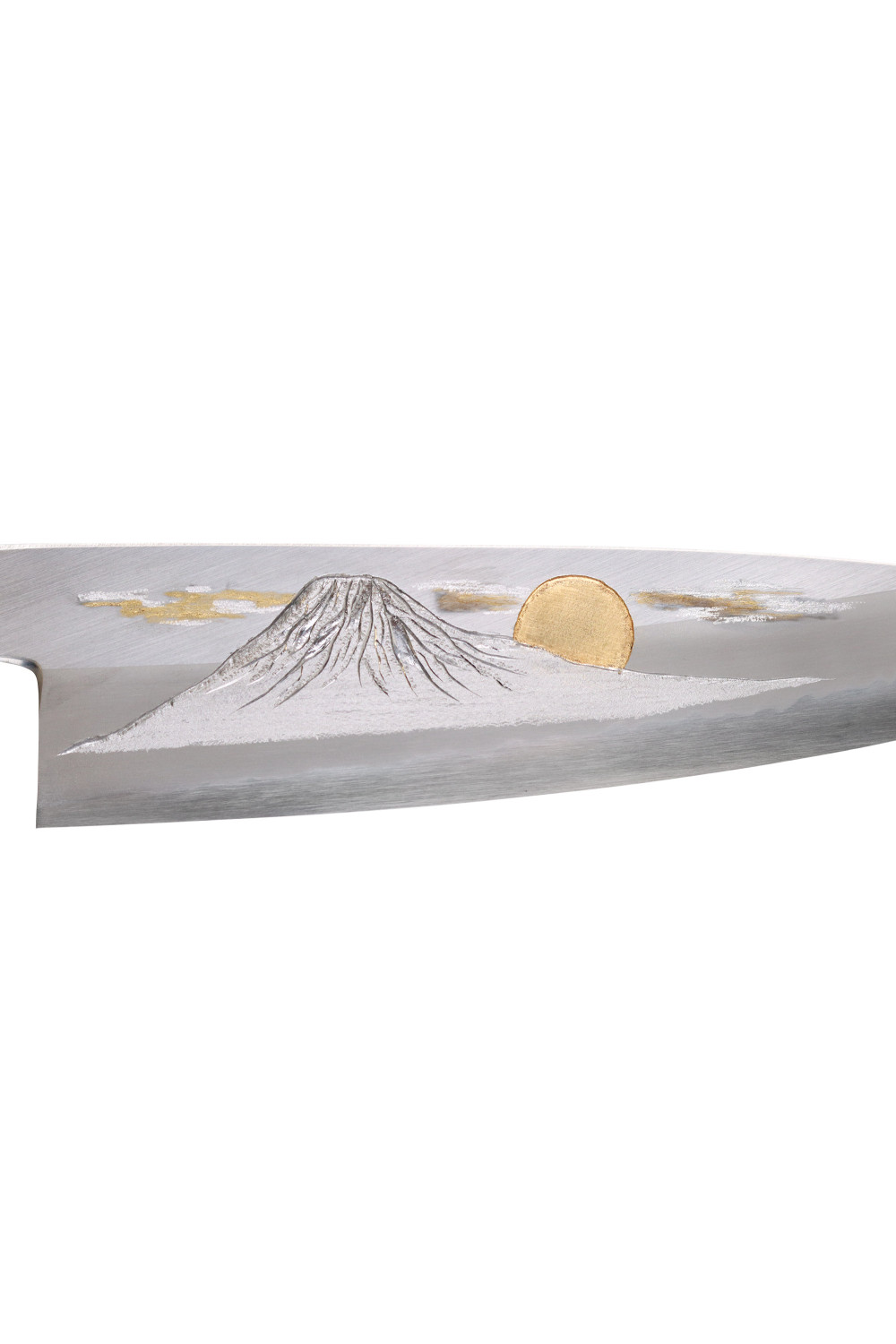
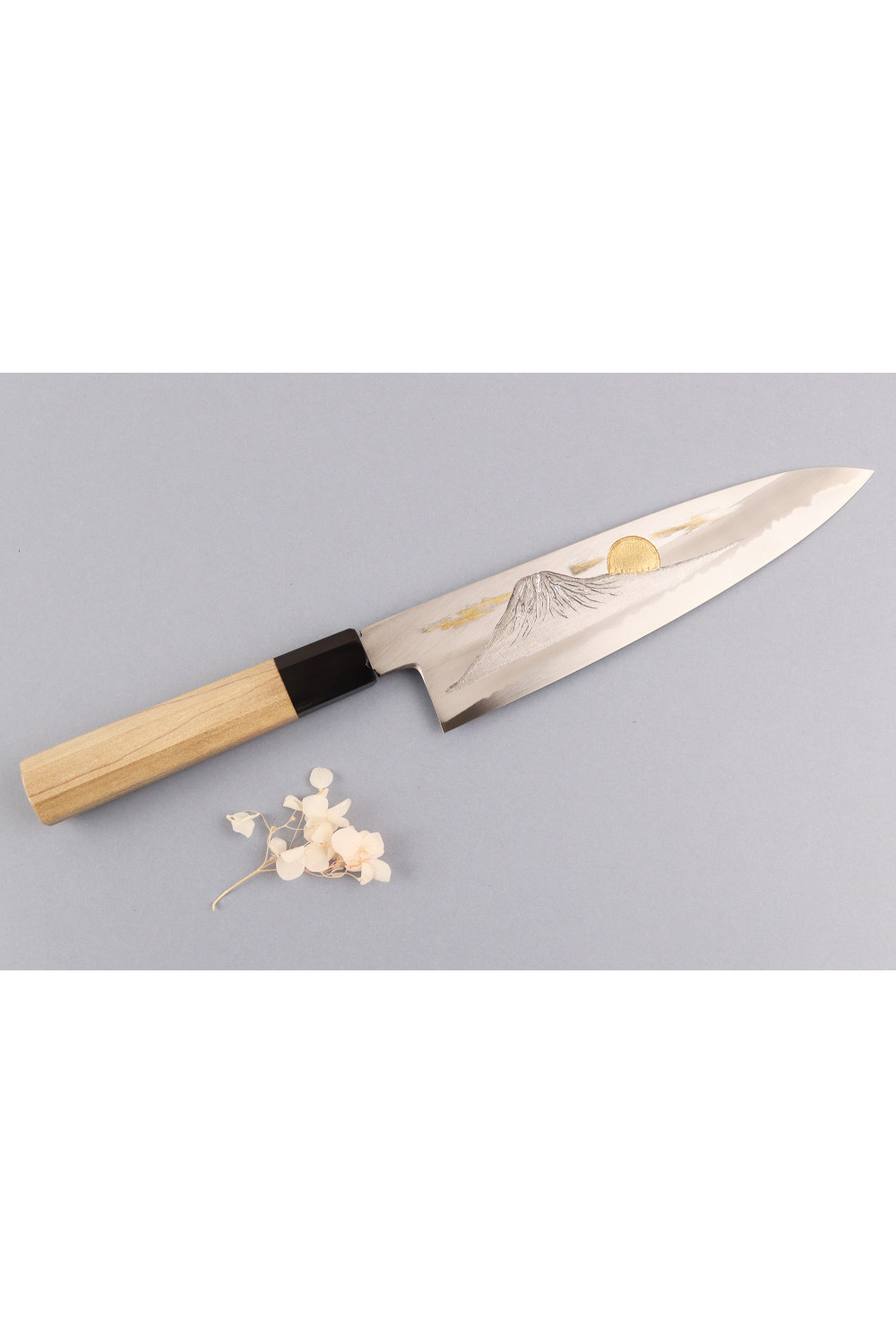
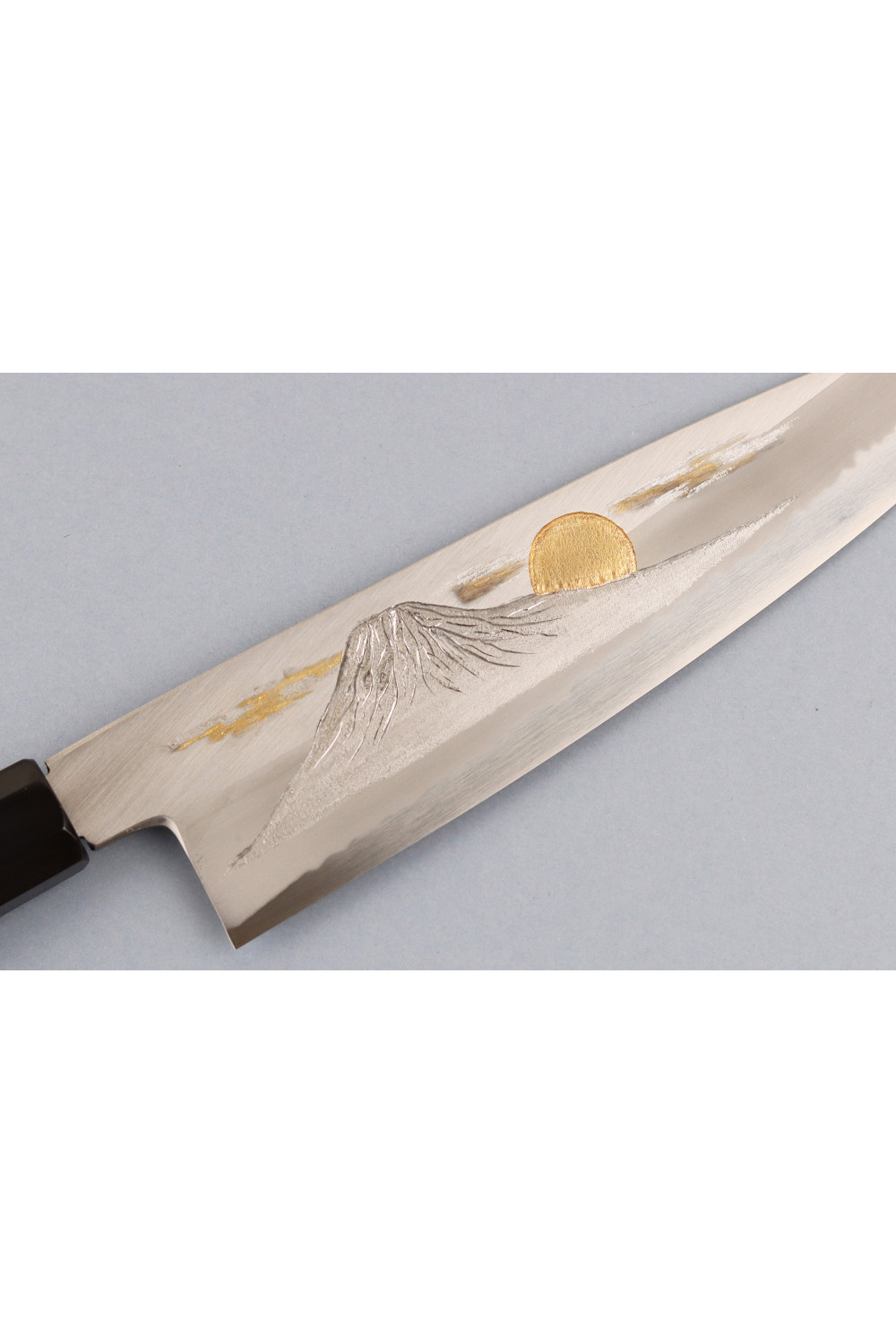
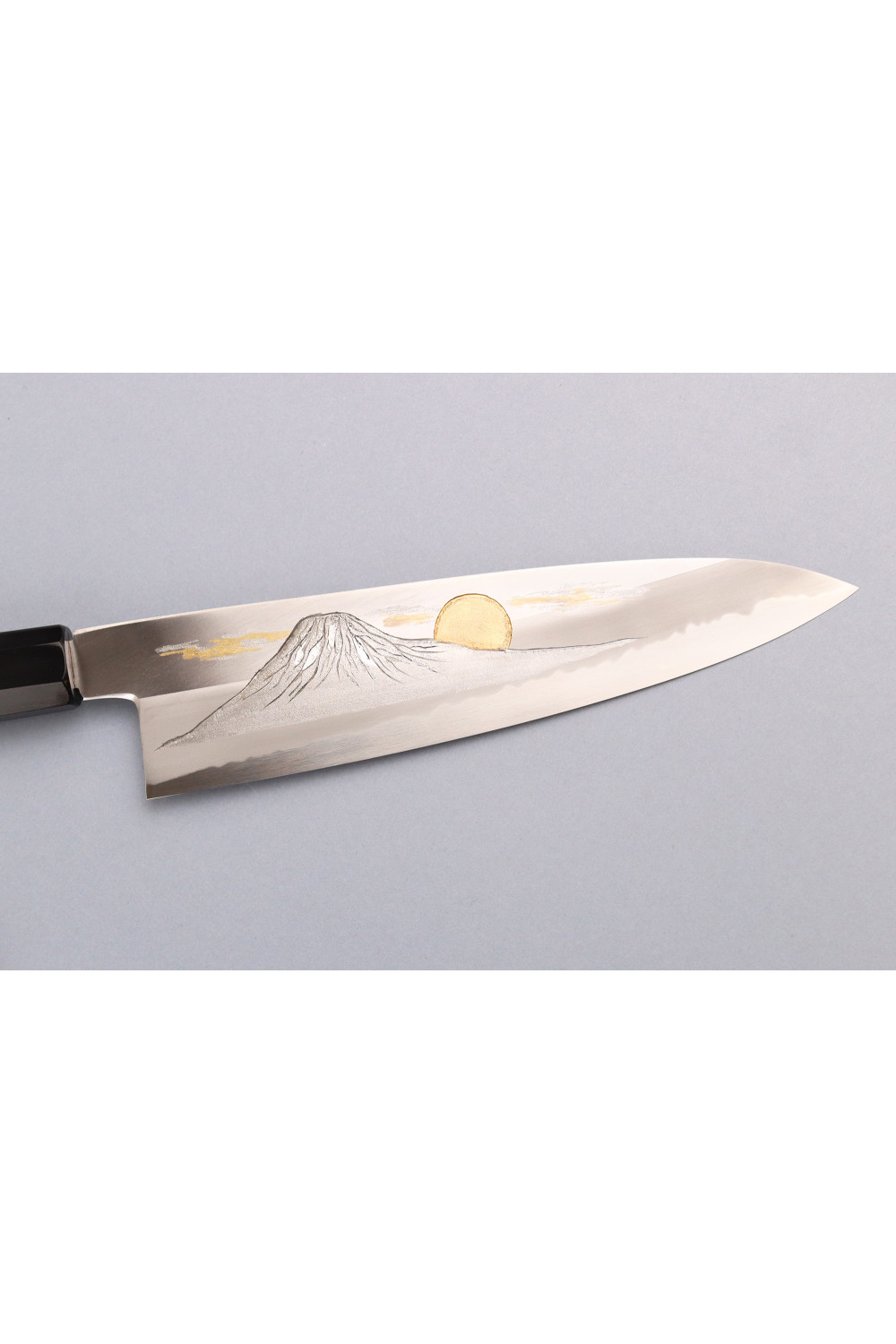
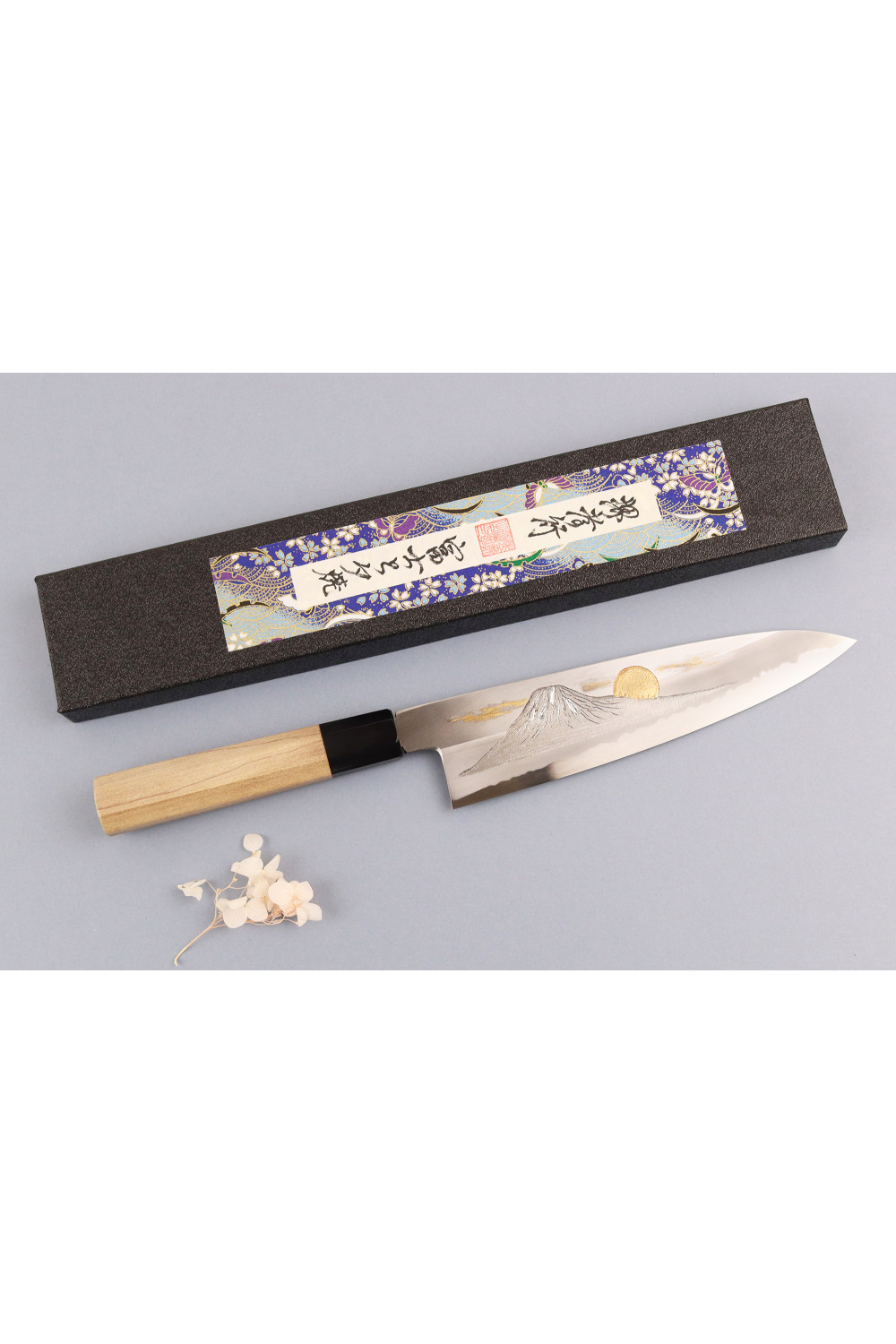
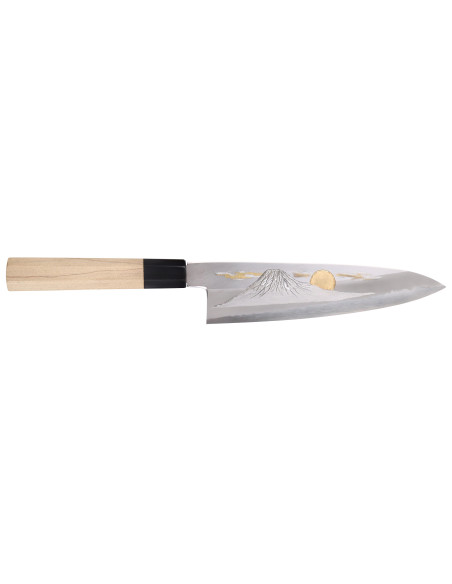
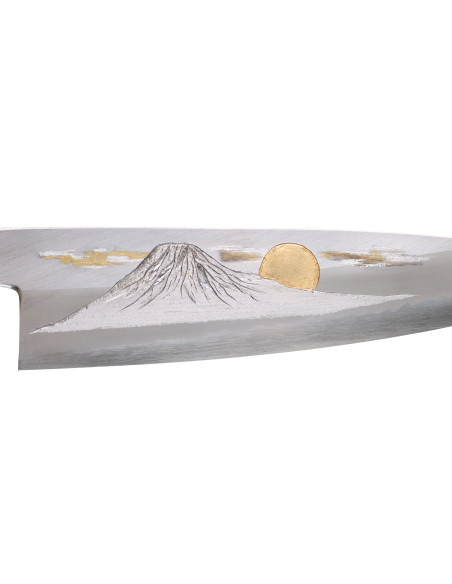
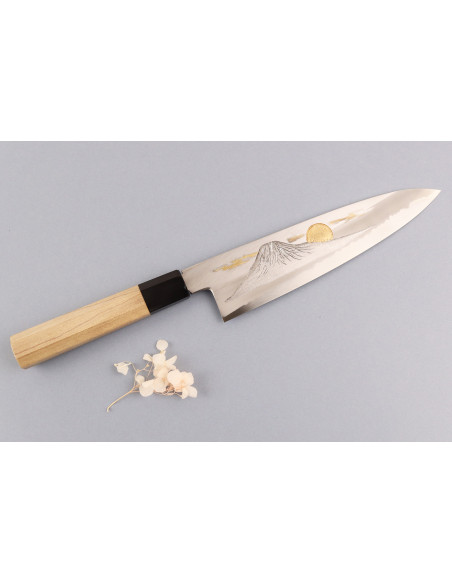
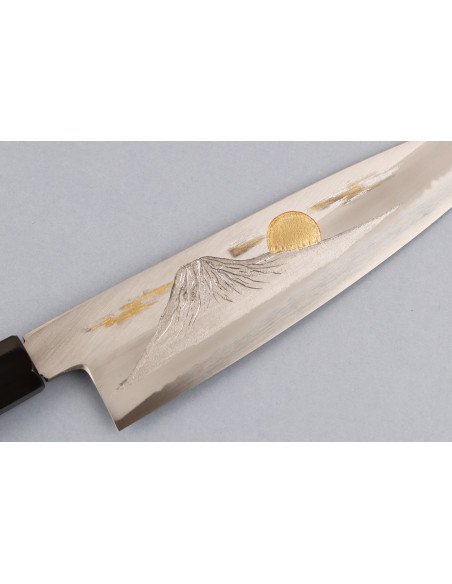
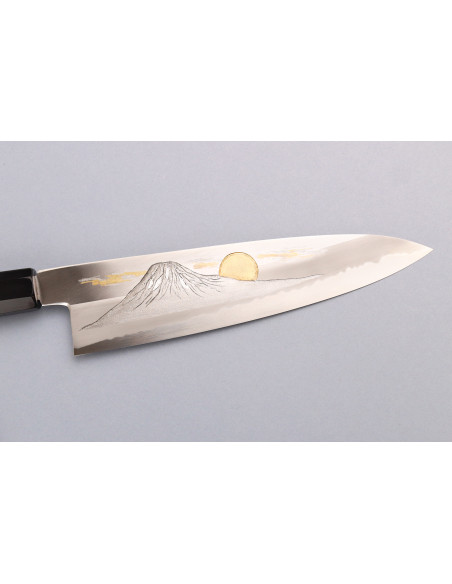
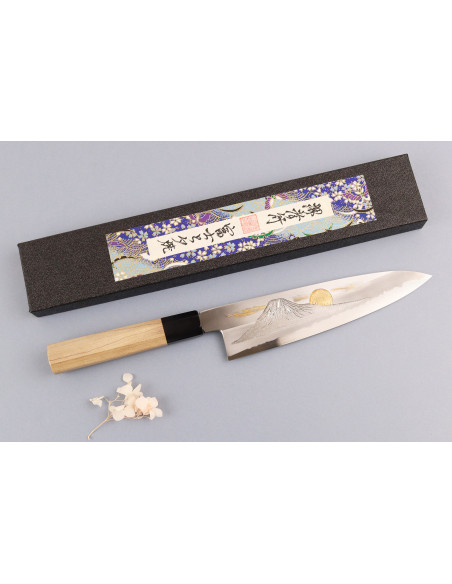
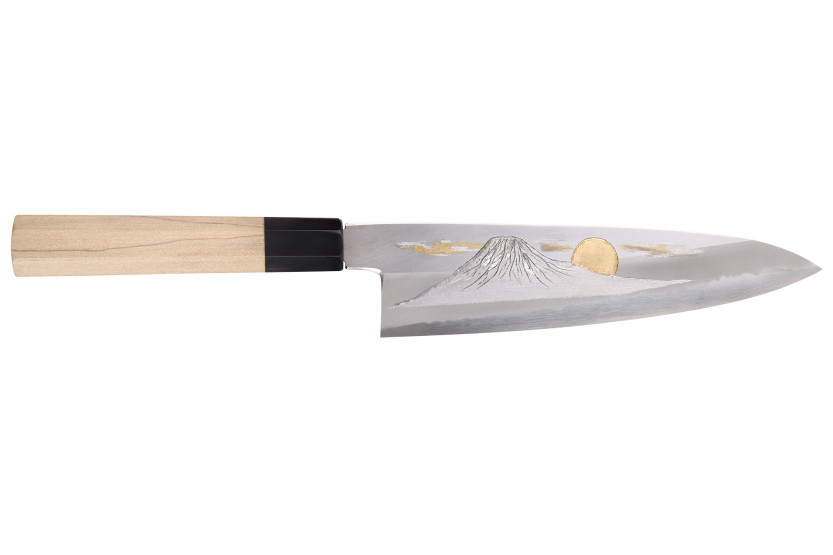
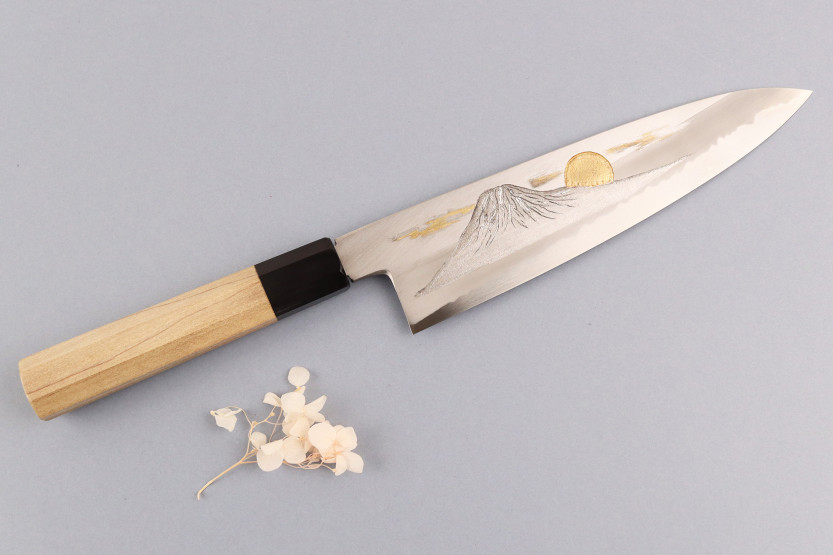
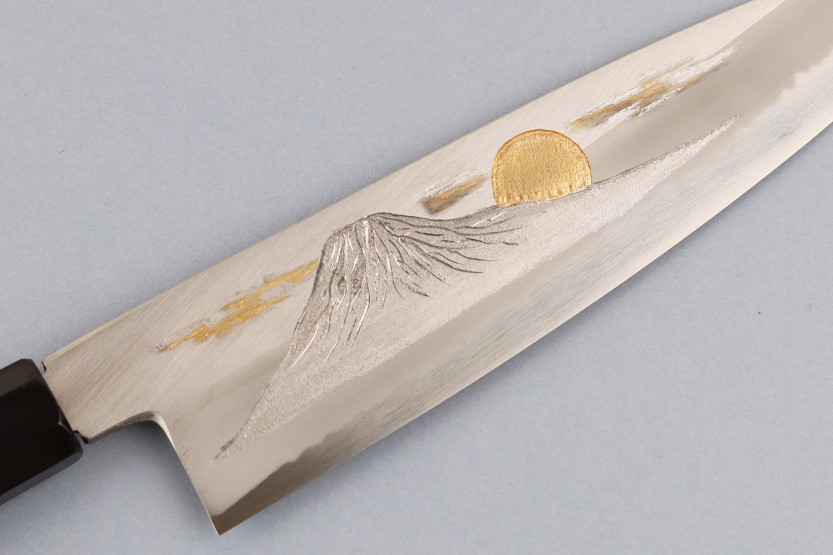
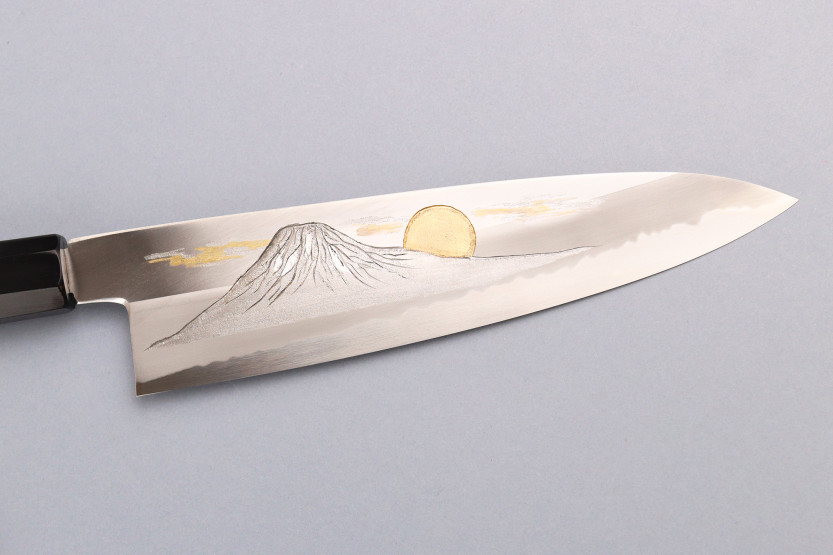
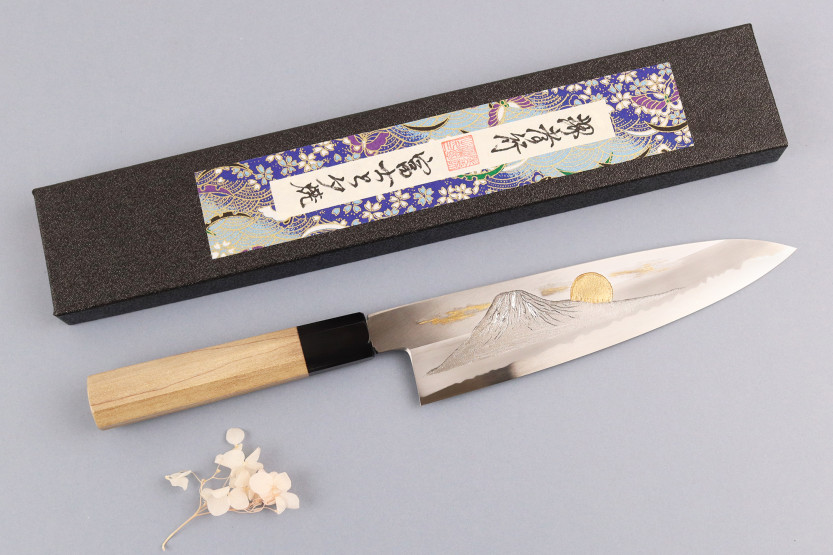
The Sakai Takayuki Fuji Sunset handcrafted Japanese chef’s knifeis first and foremost a collector’s item: its 21-cm blade features an original depiction of Mount Fuji at sunset, created by artist Michiko Kubota. Its name, “Fuji to Yūyake,” evokes this Japanese scene, in which the sun and colorful clouds are highlighted by a metallic plating applied to the surface. The blade combines this unique design with an Aogami #2 steel core and a Sanmai construction. Made in Japan, this knife comes in a floral-patterned box, designed to display or store it with care.
A hand-decorated San Mai blade
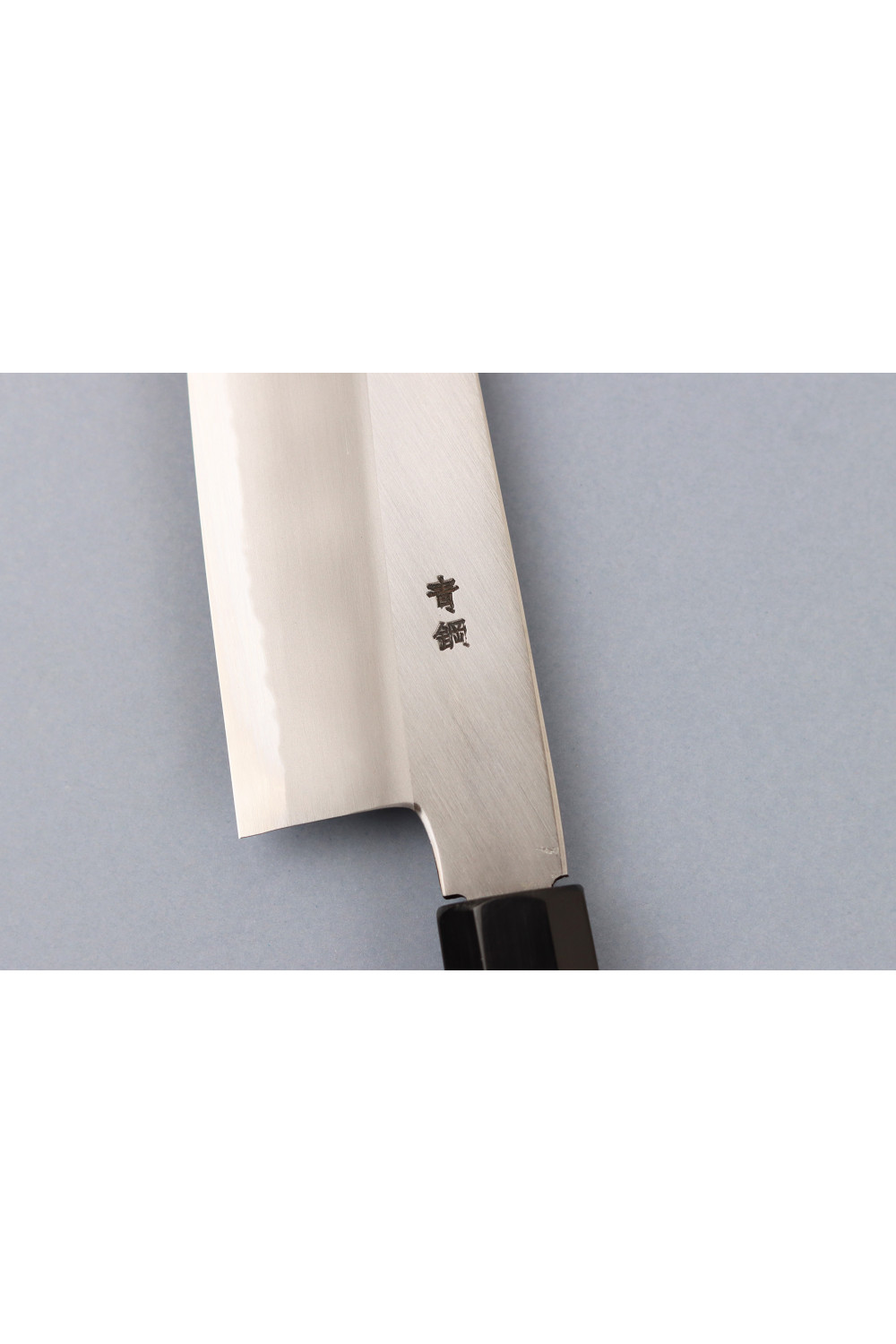
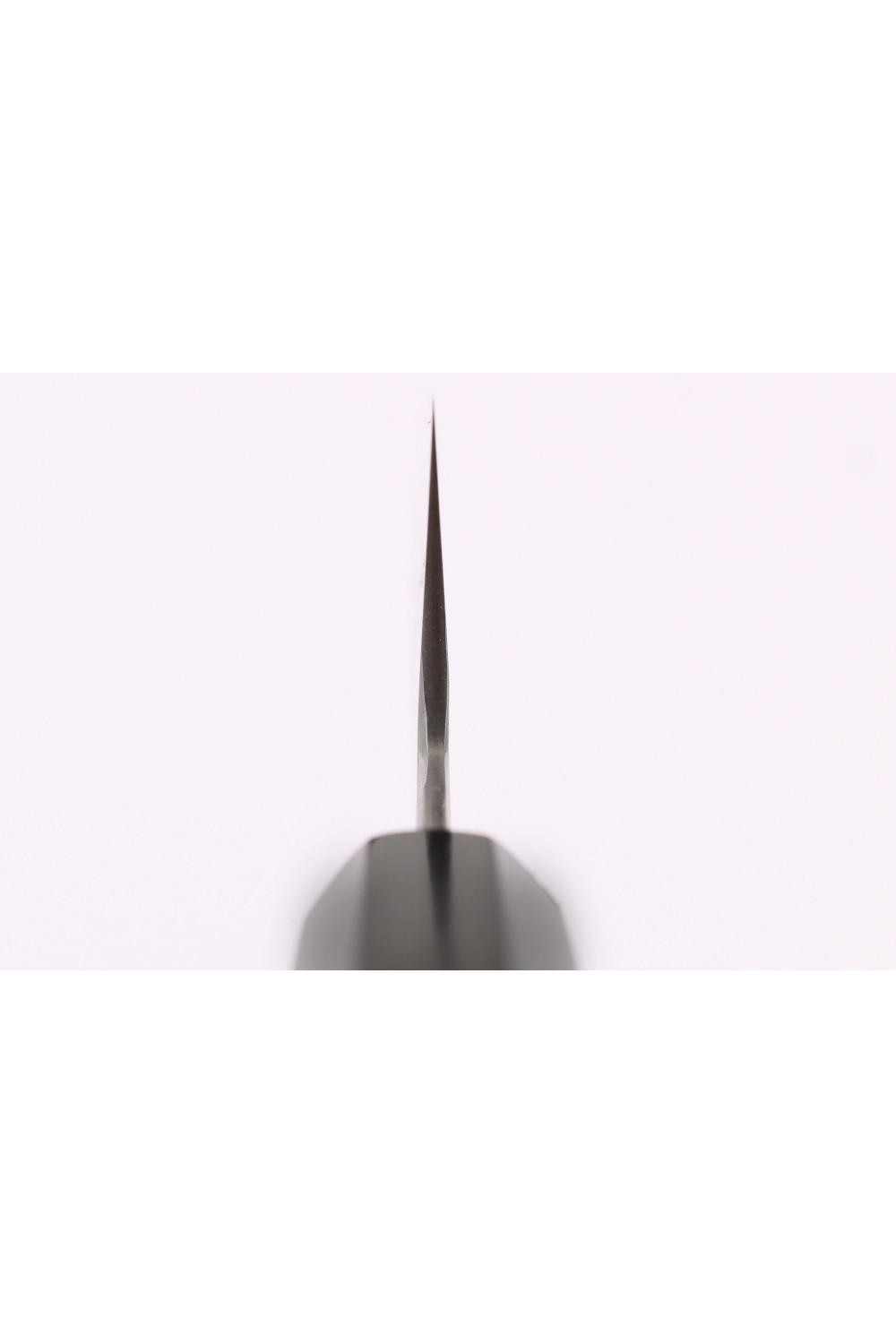
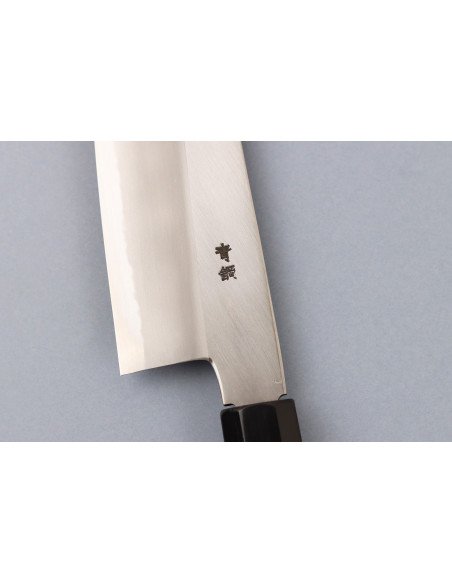
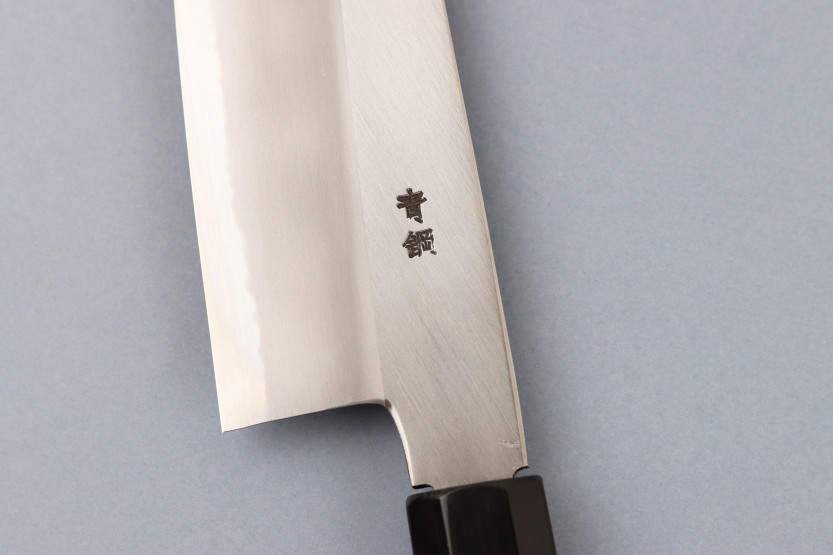
Measuring 21 cm in length, the blade forged by Kenji Togashi features a San Mai structure composed of three layers: a hard steel core surrounded by two layers of softer steel. This construction combines a hard cutting edge with less rigid sides. At the center,the Japanese Aogami #2 steel contains approximately 1.2% carbon. This high carbon content produces a fine, precise edge, ideal for clean cuts. The hardness of approximately 62 to 63 HRC helps the edge retain its sharpness. The outer layers are made of softer steel to make the core less susceptible to impact and twisting.
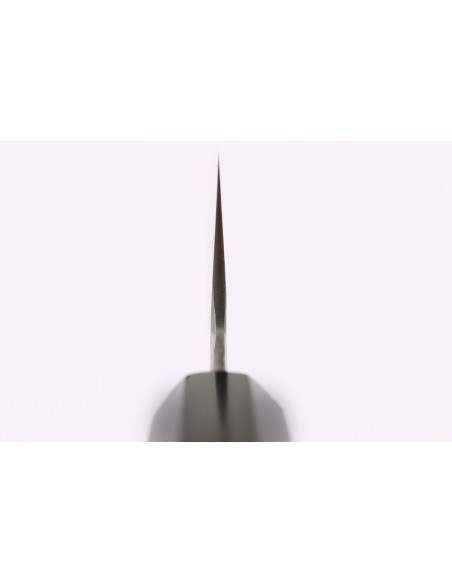
The flat grind creates a uniform geometry that guides the blade through the material and promotes a controlled cut.
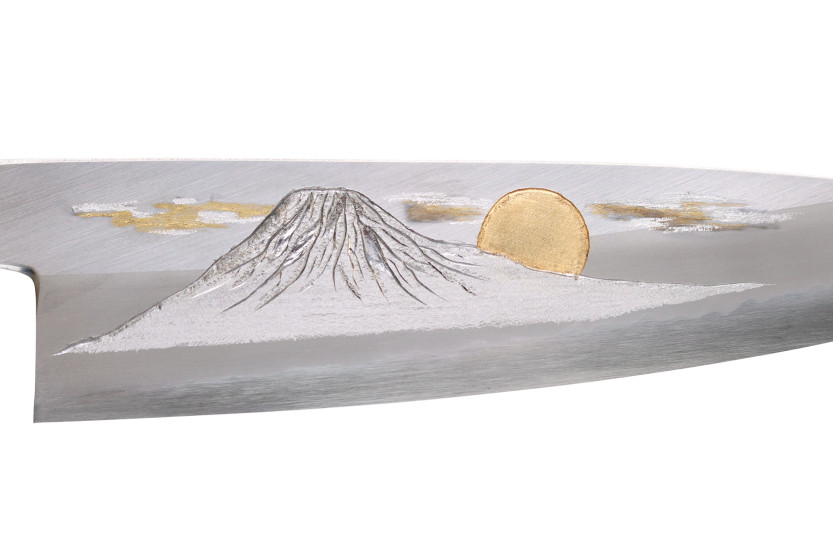
The blade features a stunning original engraving by artist Michiko Kubota: Mount Fuji at sunset, or “Fuji to Yūyake.” The colors of the sun and clouds are achieved through plating, a process that deposits a thin layer of metal onto the blade’s surface. This delicate finish requires very careful handling: vigorous rubbing and abrasive products can gradually damage the colored areas.
The blade is sharpened by Mitsuo Yamatsukato ensure a highly effective cutting edge. This handcrafted finish makes this blade a collectible Japanese artisanal knife, whose decoration deserves as much attention as its sharpness.
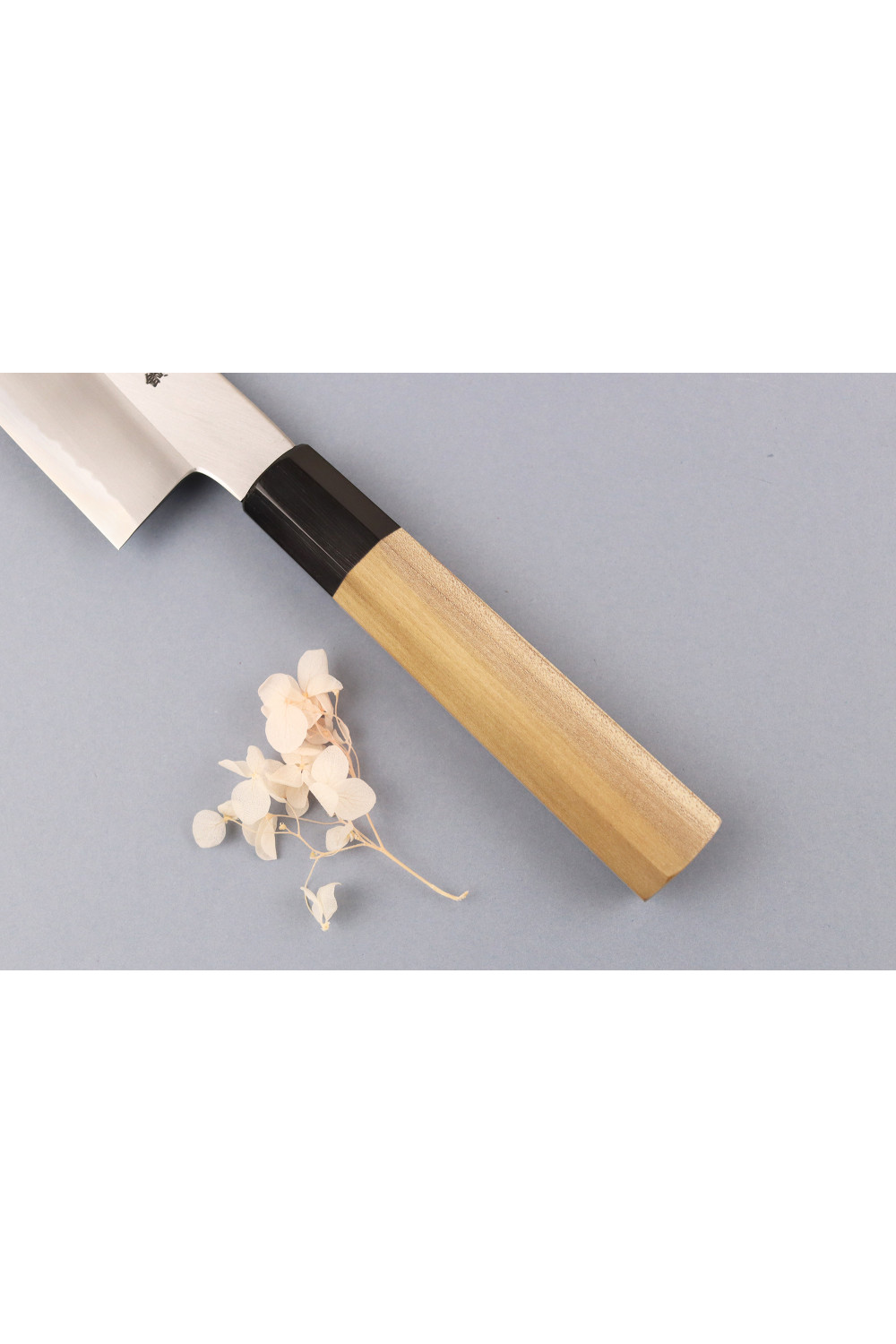
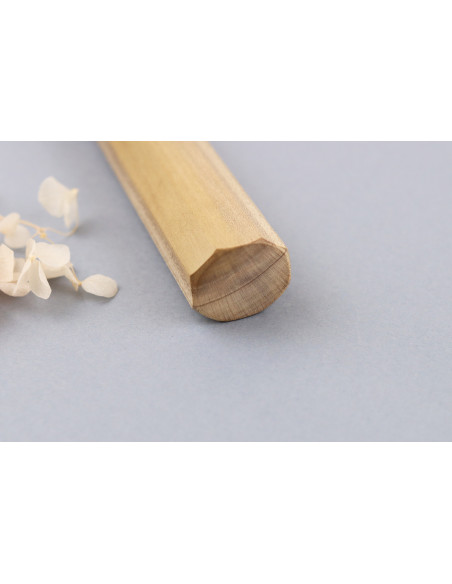
An octagonal magnolia handle
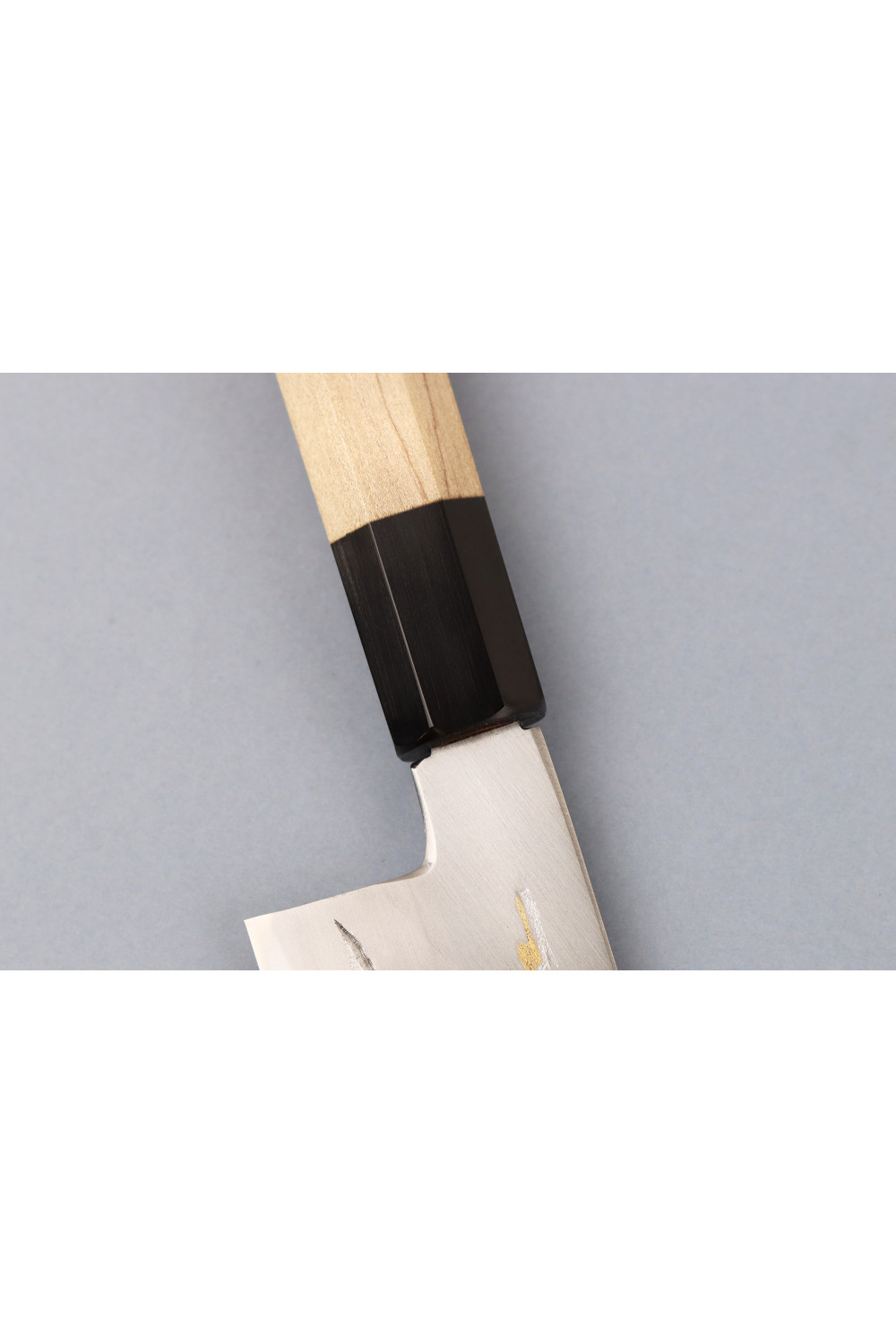
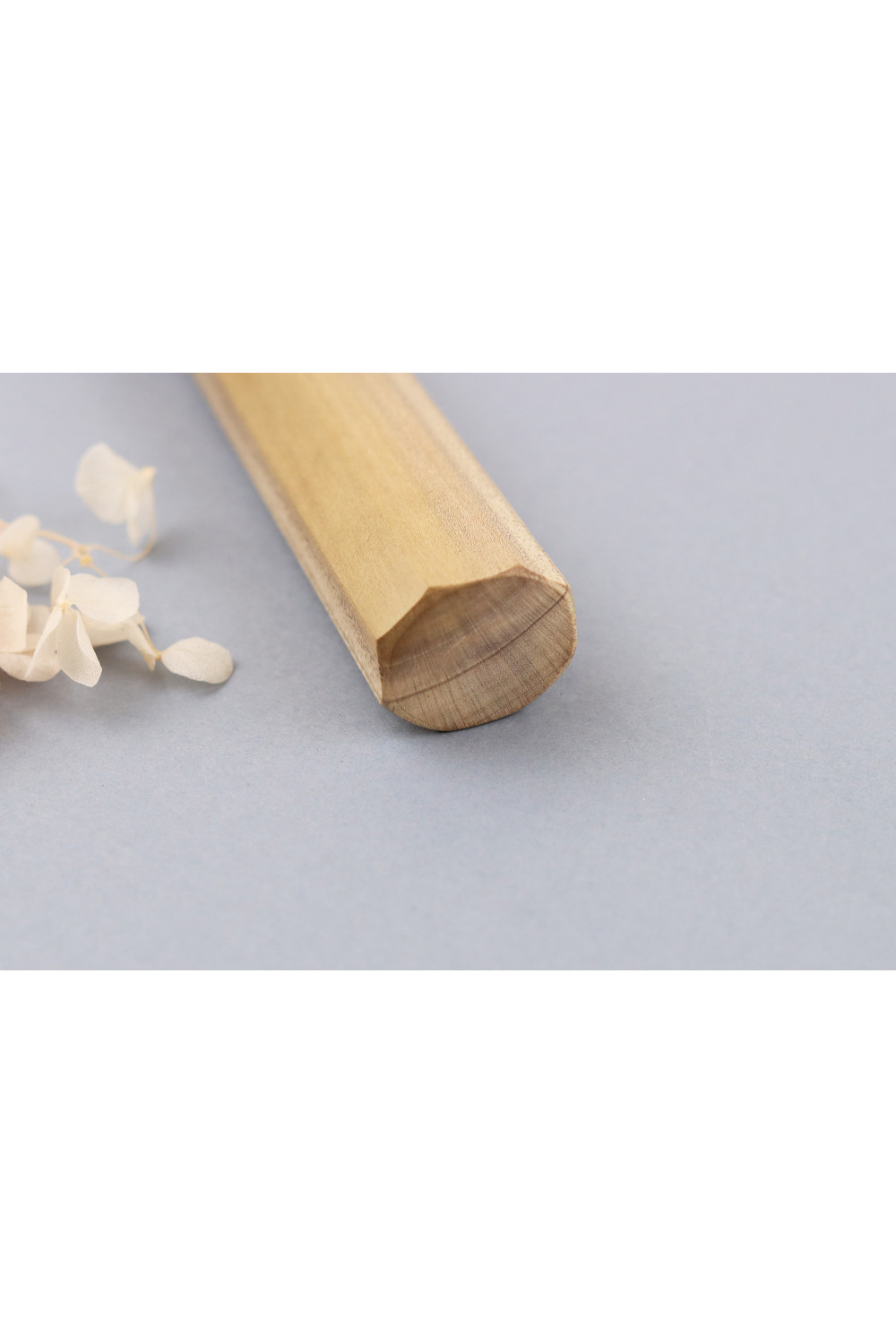
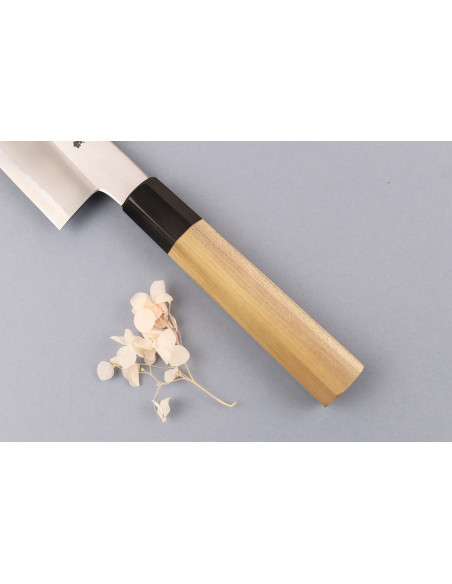
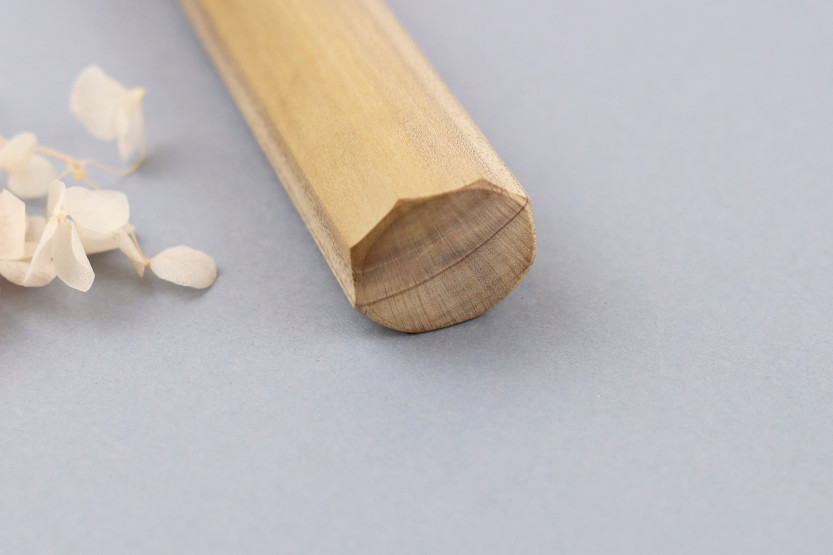
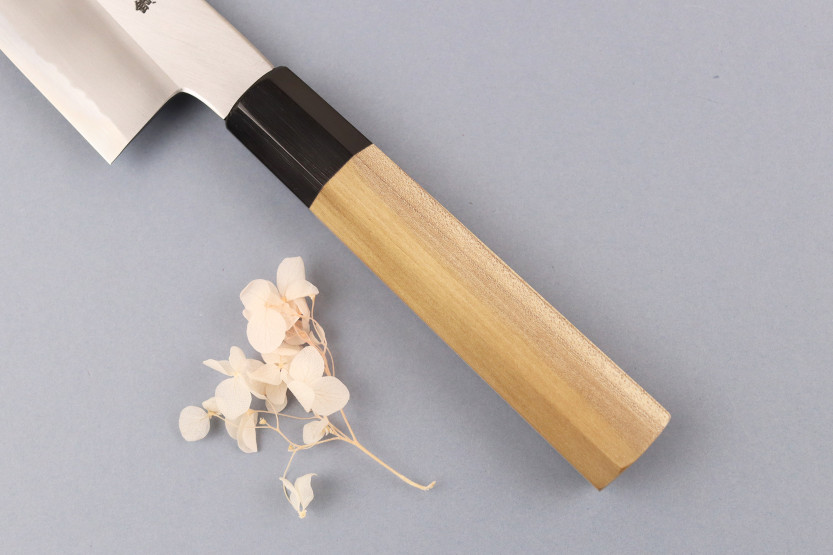
The knife’s handle is made of magnolia wood, a traditional Japanese wood prized for its lightness and pleasant feel. Since magnolia is a natural material, it requires proper care: keep the handle dry and avoid leaving the knife soaking in water after use.
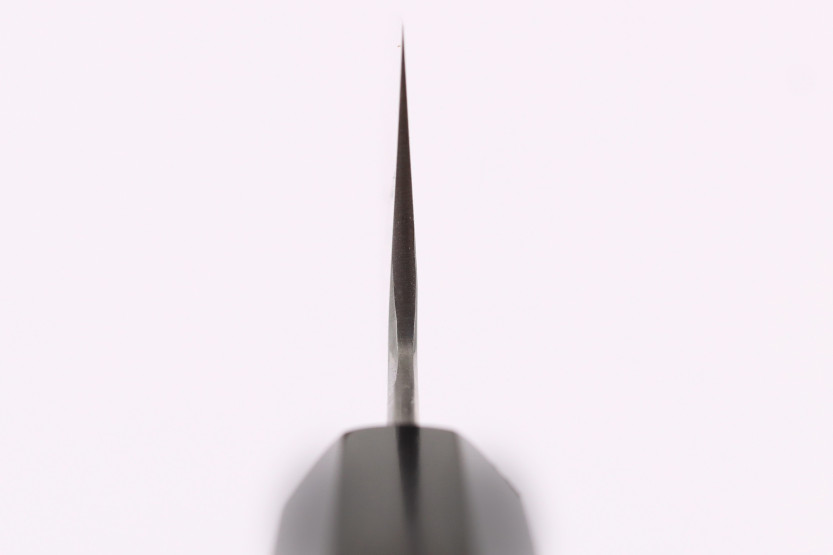
Its octagonal shape provides multiple contact points for the fingers and helps position the hand naturally while cutting. This profile is suitable for both a classic grip and a pinch grip, where the thumb and index finger are placed close to the blade to guide movements with precision.
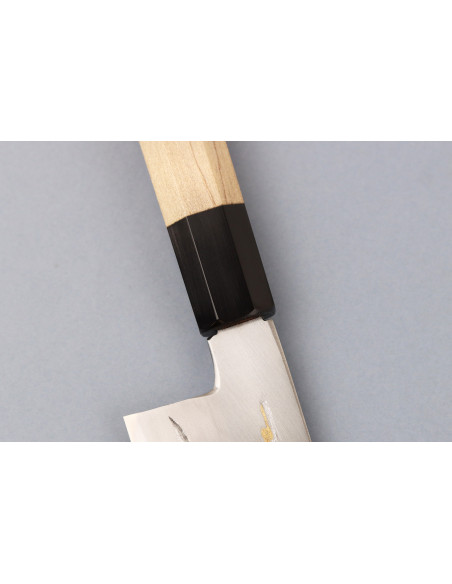
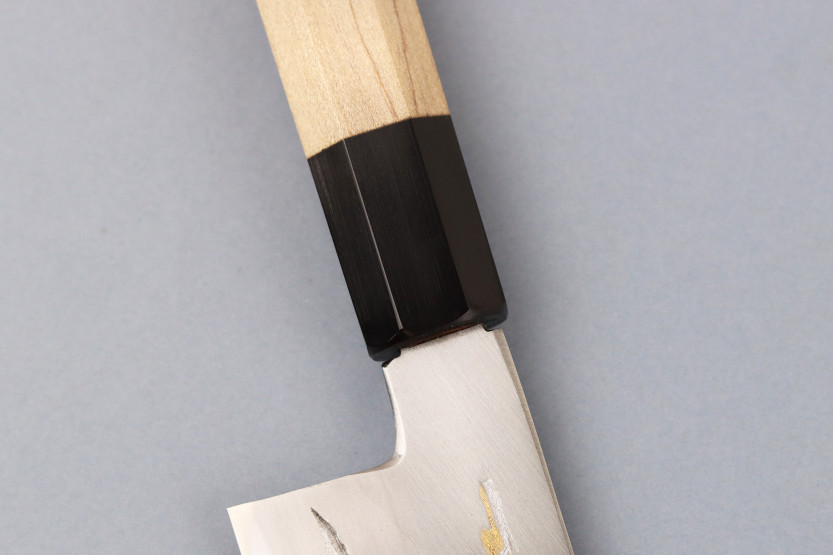
The black horn bolster provides an elegant visual transition between the handle and the steel, while reinforcing the knife’s Japanese identity.
The knife comes in a box with a floral design, ideal for protecting it when stored or for presenting it as a gift.
Key Features at a Glance
-
- 21 cm blade: a versatile length for cutting large pieces
- Three-layer San Mai construction: a hard core surrounded by protective layers
-
- Japanese Aogami #2 steel: fine edge
- Hardness of approximately 62–63 HRC: excellent edge retention
- Flat grind: smooth and precise cut
- Original engraving by Michiko Kubota: a decorated collector’s item
-
- Sharpened by Mitsuo Yamatsuka: refined edge for controlled cutting
- Octagonal magnolia handle: light and natural grip
- Black horn bolster: refined finish and balance
- Forged by Kenji Togashi: specializes in heat treatment of steels
Caring for the blade and its engraving
If you wish to use this knife for cutting food, do so on a wooden or synthetic cutting board. It is not designed for cutting bones or frozen foods, or for twisting or side-to-side movements that could damage the edge.
Aogami #2 steel is high in carbon and can oxidize: after each use, wash the blade by hand, wipe it down immediately and thoroughly, then store it completely dry. Do not use a dishwasher, abrasive sponges, or harsh cleaning agents.
To preserve the colored areas of the engraving, also avoid vigorous scrubbing. Sharpen the blade on a suitable whetstone and opt for regular maintenance rather than aggressive sharpening.
Kenji Togashi, master of heat treatment
Based in Sakai, Kenji Togashi has been forging Japanese knives since 1966. His expertise lies particularly in the heat treatment of steel: a series of meticulously controlled steps that give the blade its hardness and strength. For this knife, he forged the core from Aogami #2 steel with a San Mai structure.Mitsuo Yamatsuka then sharpened the blade to ensure it fully reveals its potential.
The engraving is by Michiko Kubota, an artist based in Takatsuki, Osaka Prefecture, and the head of engraving at Sakai Takayuki. Inspired by Japanese culture and natural landscapes, she created the motif of Mount Fuji at sunset, titled “Fuji to Yūyake.” Her craftsmanship is evident in the detailed engraving that depicts Mount Fuji and the nuances of the sunset. The colored areas—particularly the sun and the clouds—are created using a plating technique: a thin layer of metal is applied to the surface of the blade to form this unique design.
Sakai Takayuki knives await you at Knifeleader.eu!




 By buying this product you can collect up to