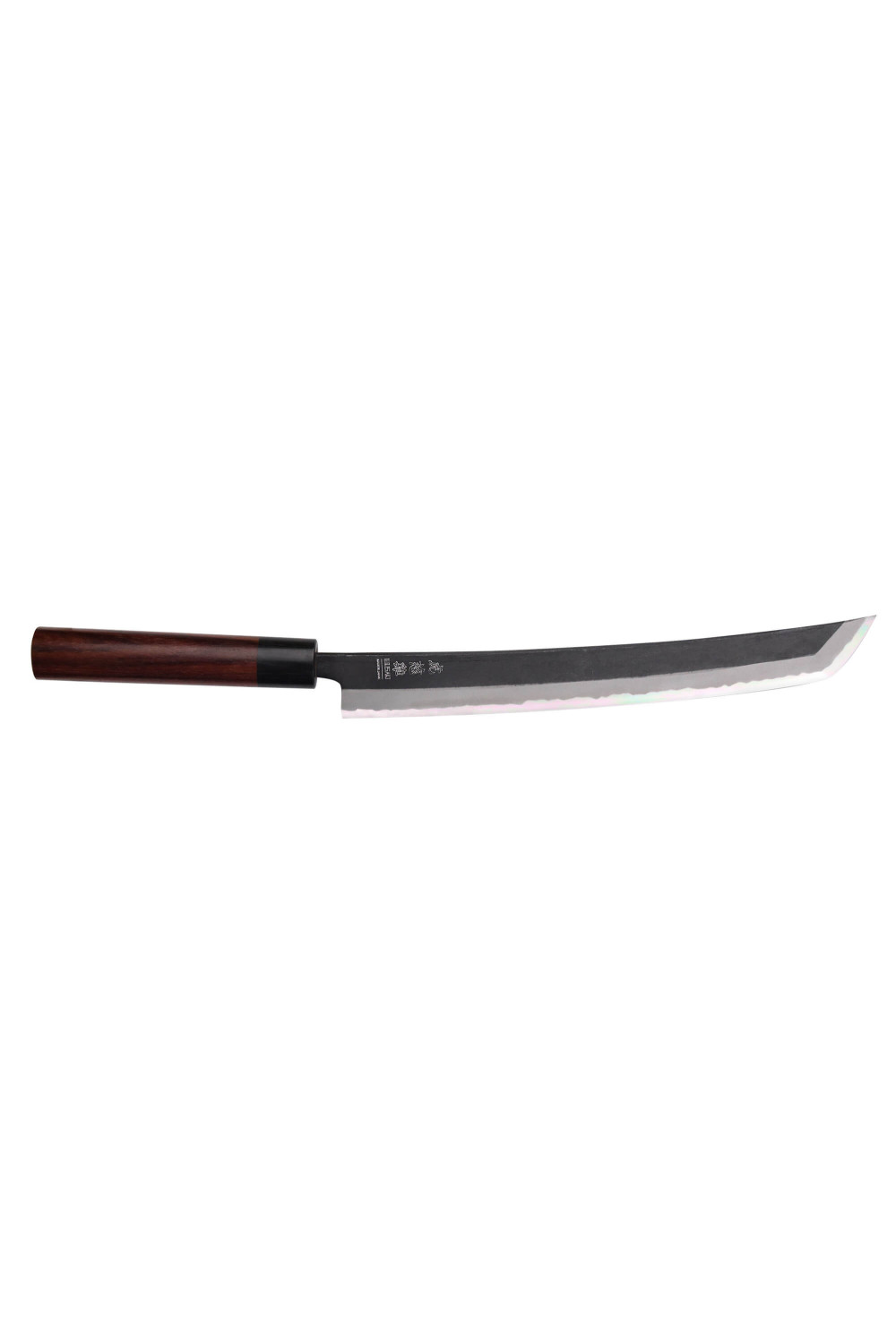
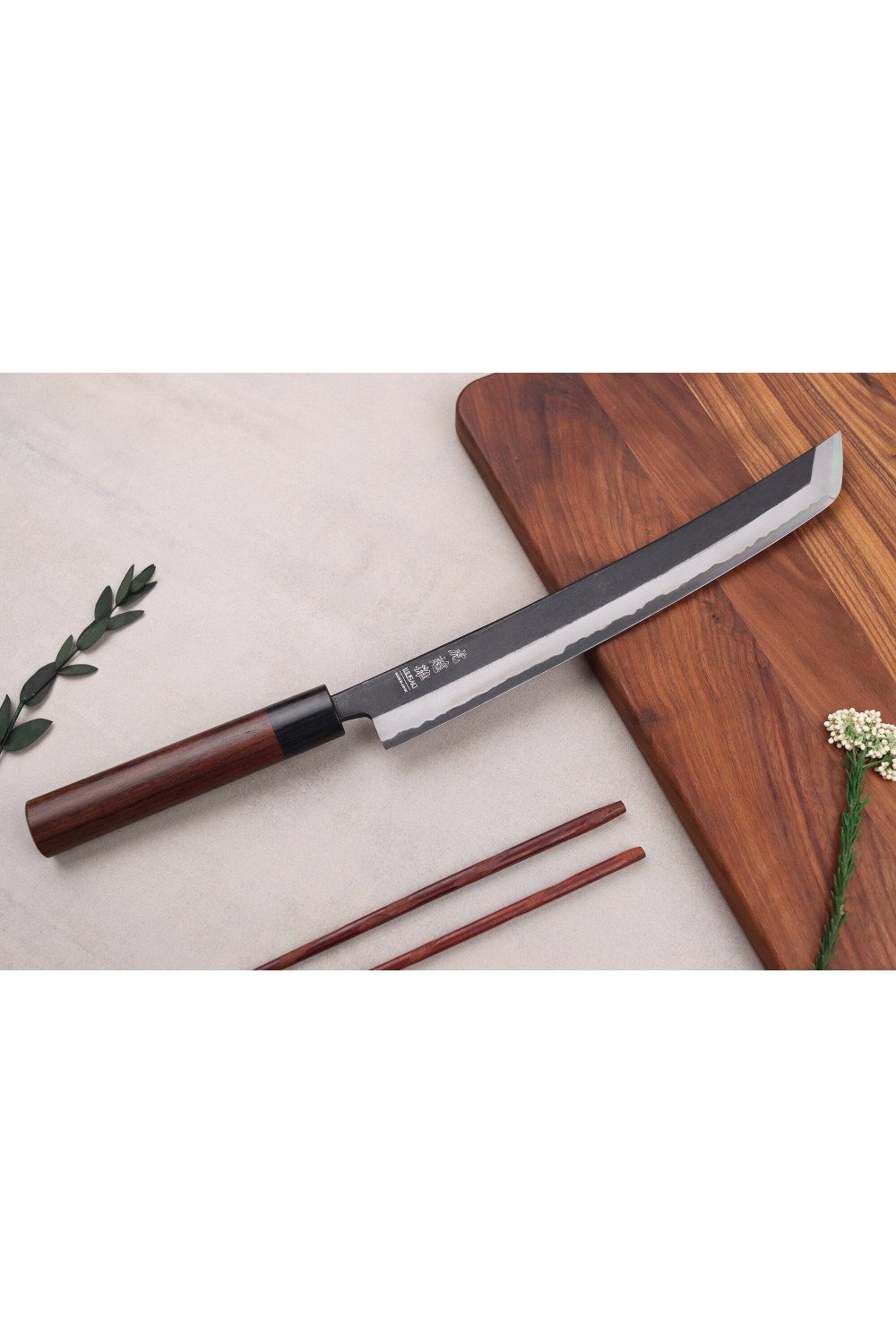
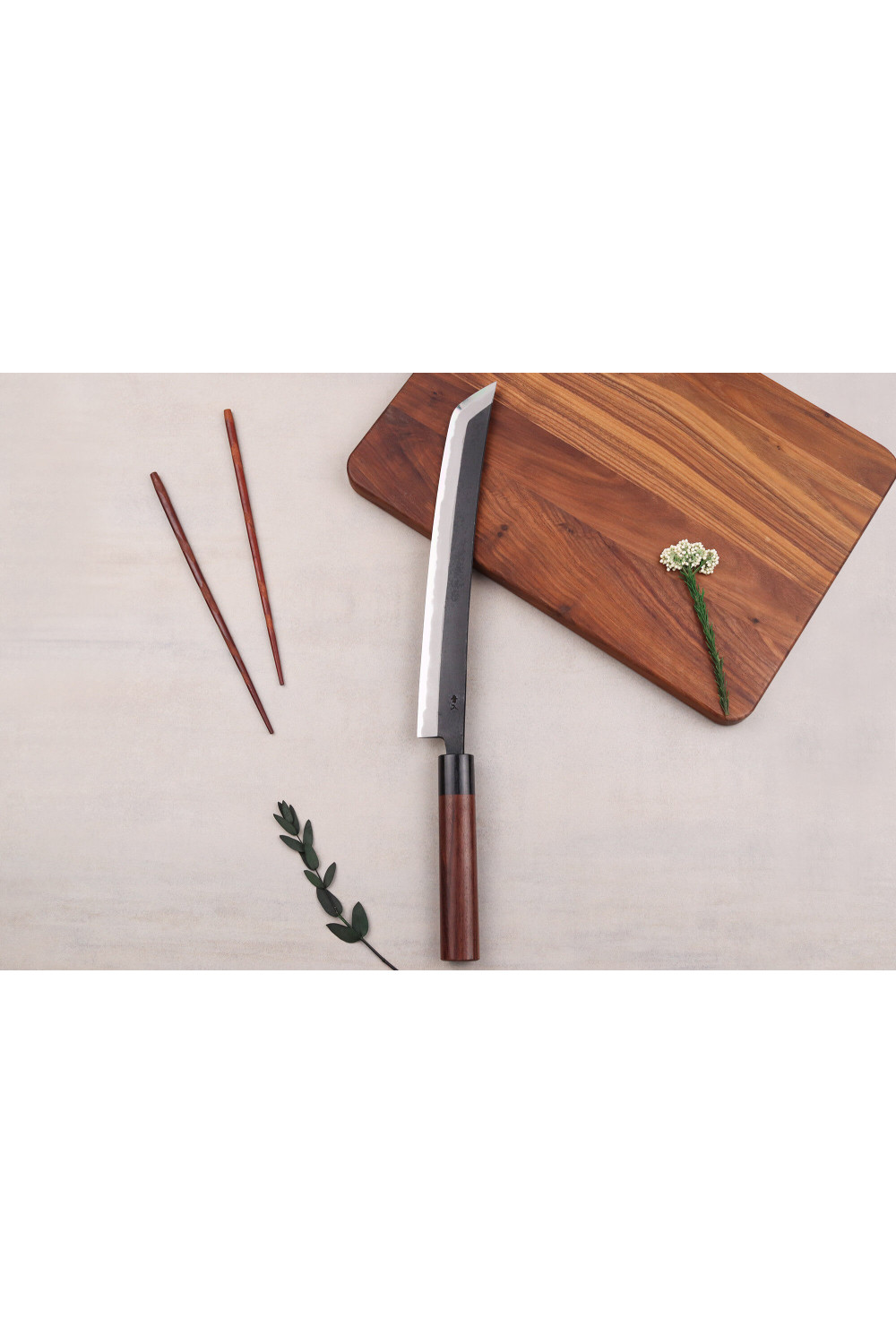
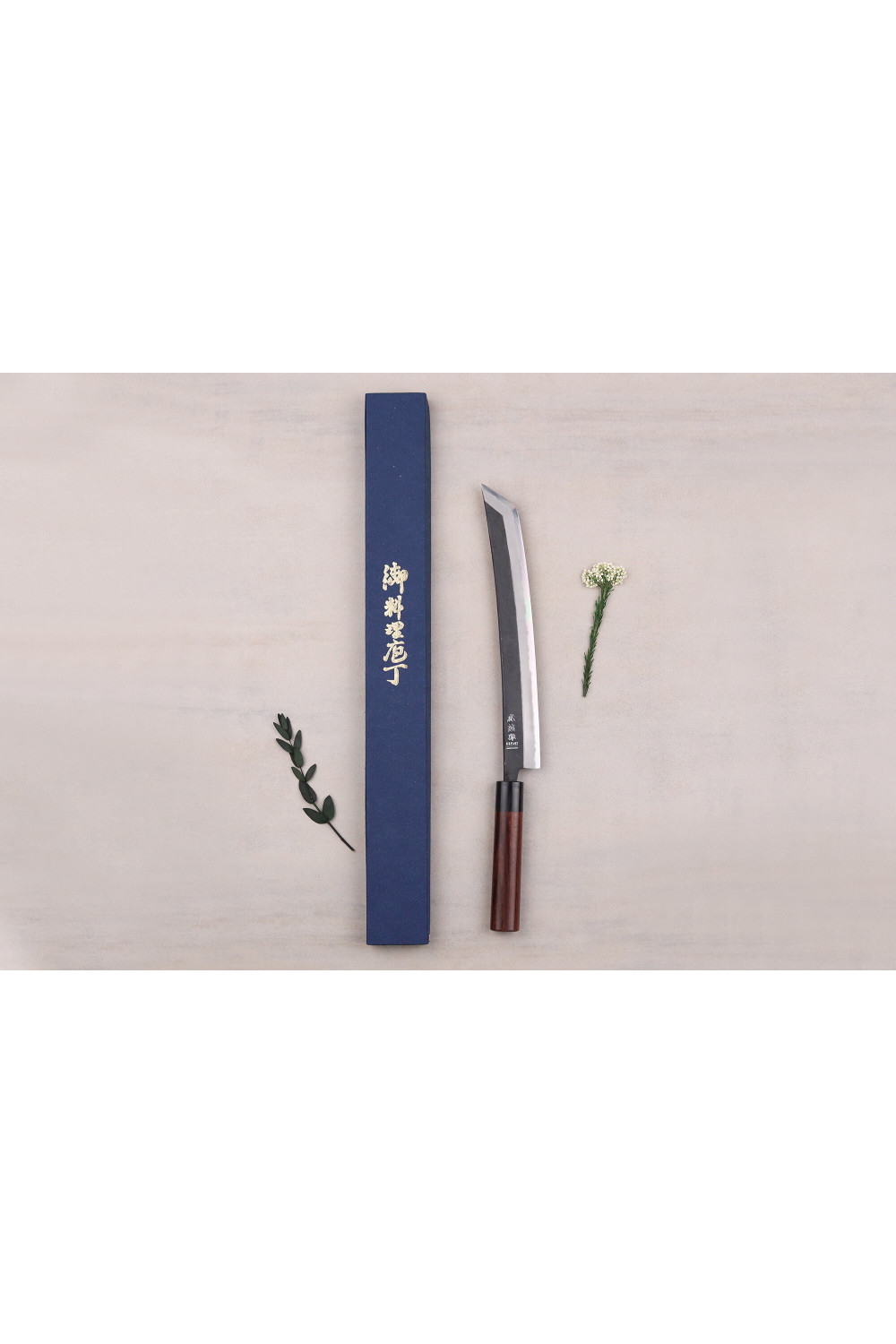
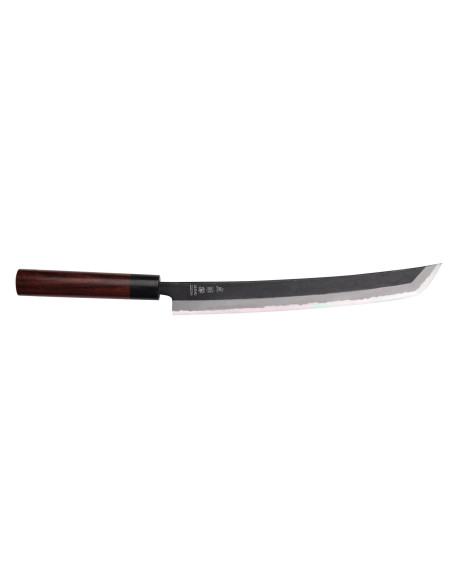
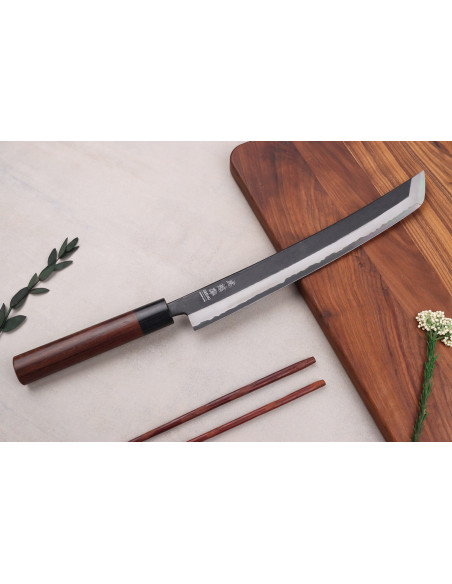
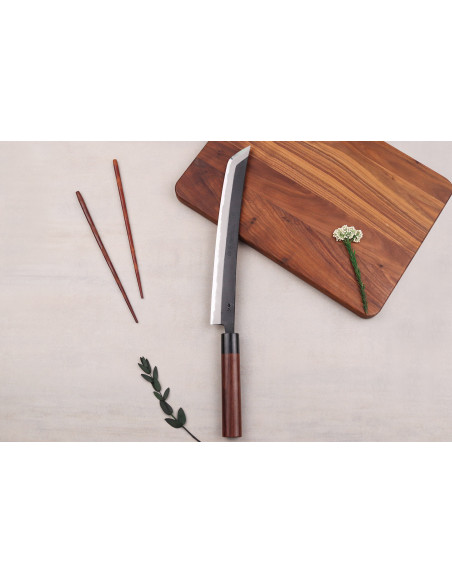
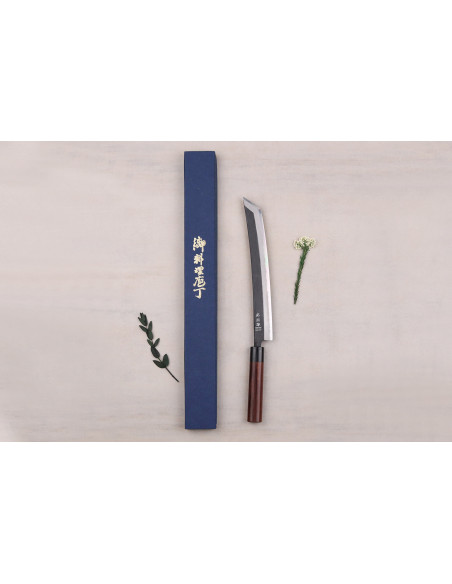
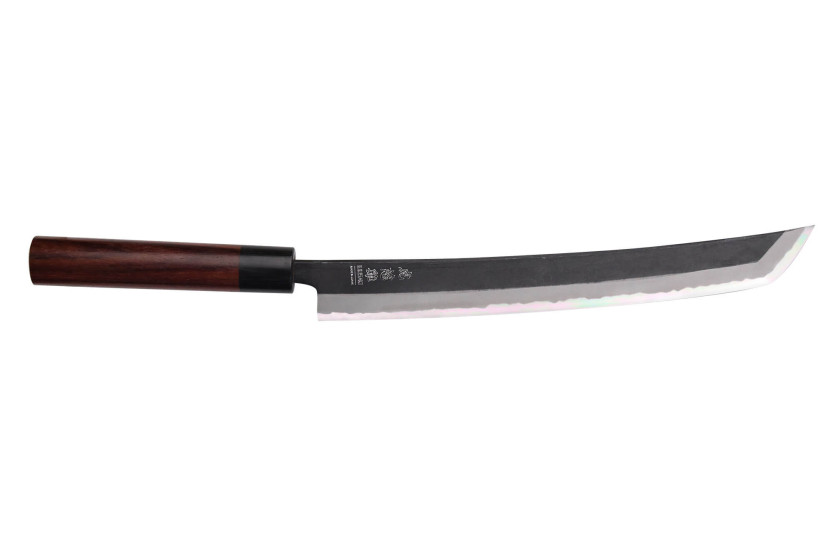
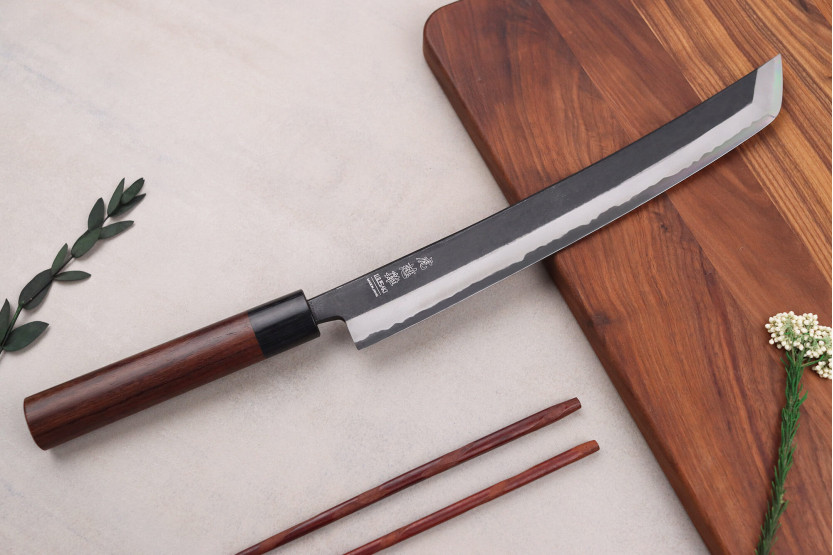
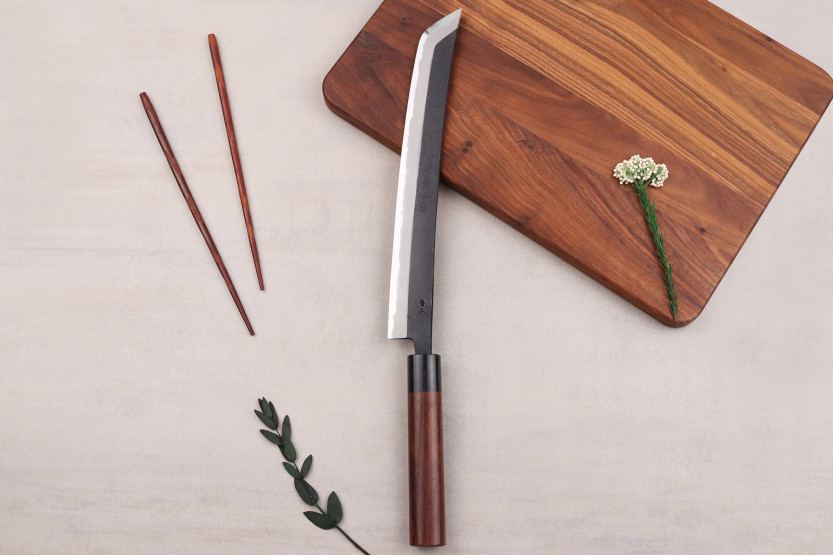
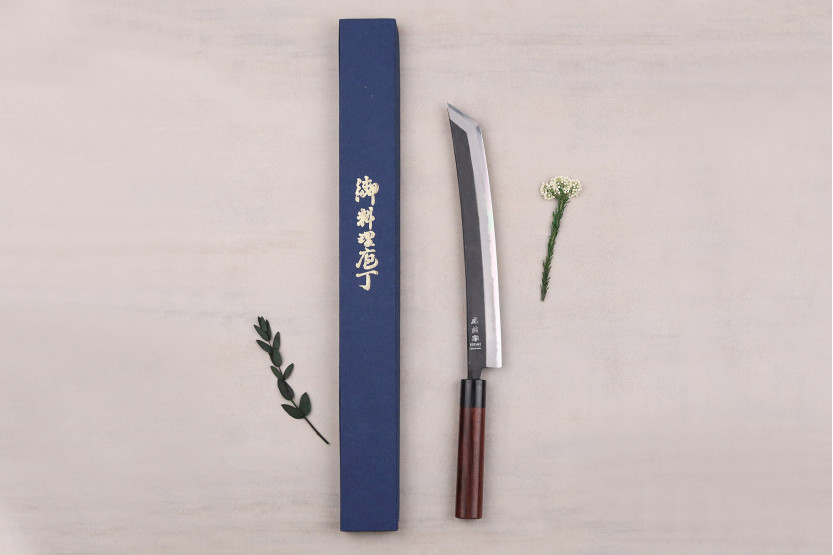
Wusaki Sakimaru BS1 kitchen knives are ideal for cutting large pieces. The blade of a sakimaru knife is long and thin, enabling uninterrupted cuts. Slices are fine and even throughout. Flavor and texture are preserved, as the knife does not attack the flesh. It can be used on meat or fish (without bones or large bones). Chefs also like to use it for sashimi.
In addition to its specific function, this wusaki sakimaru knife is made from high-quality materials often found in Japan.
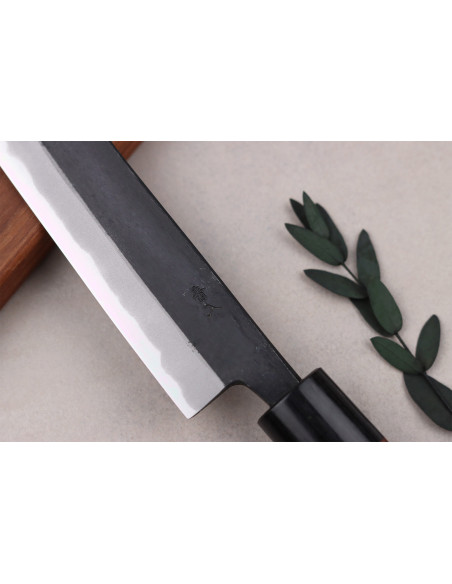
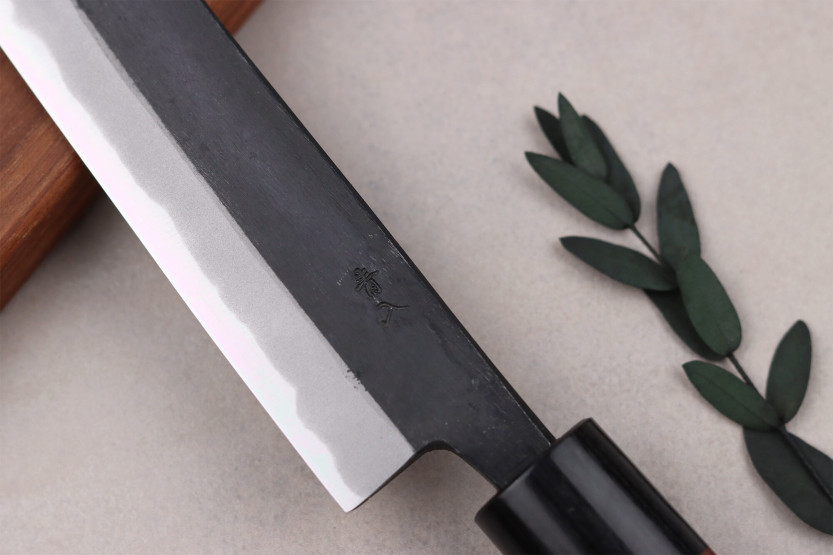
The wusaki sakimaru knife blade
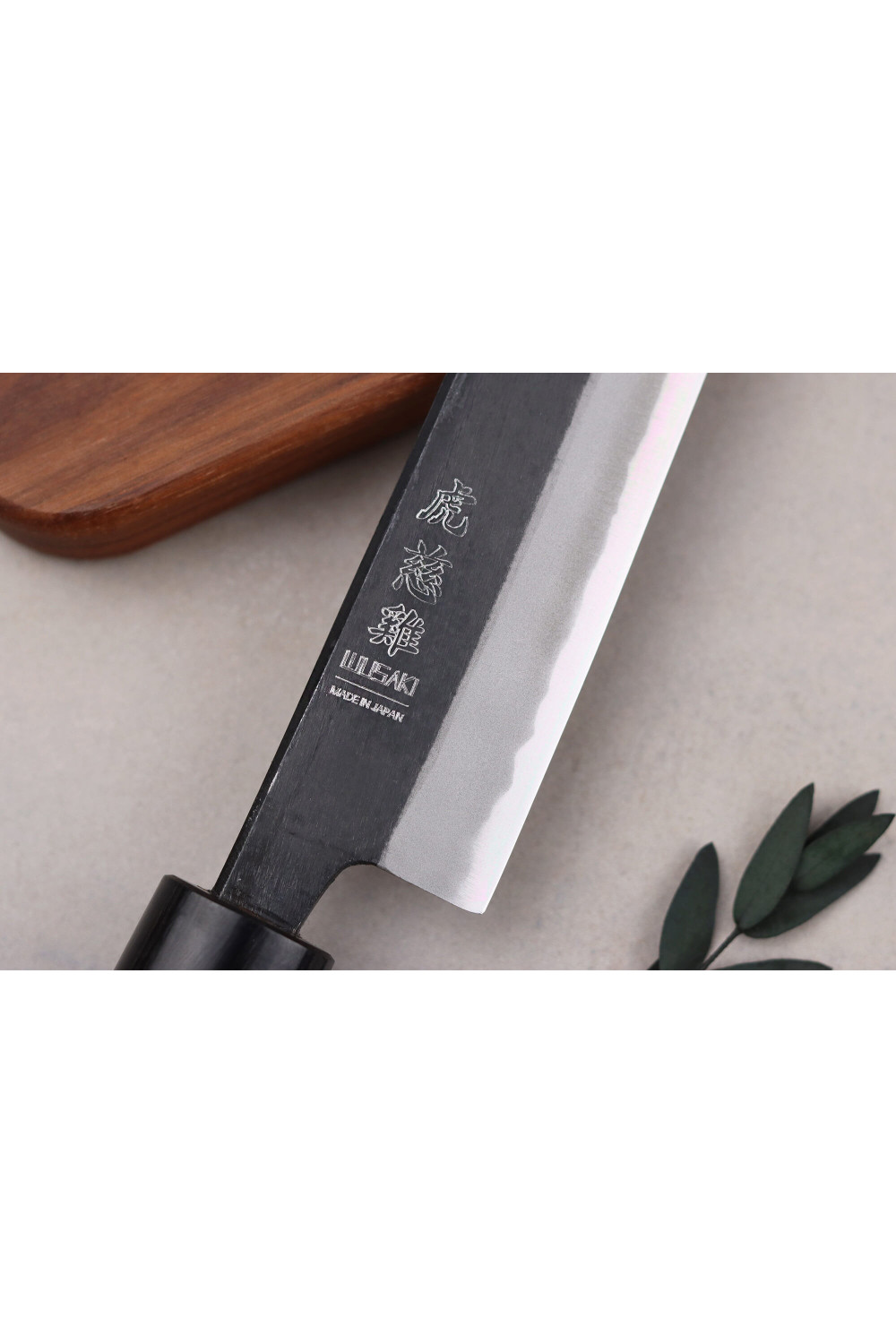
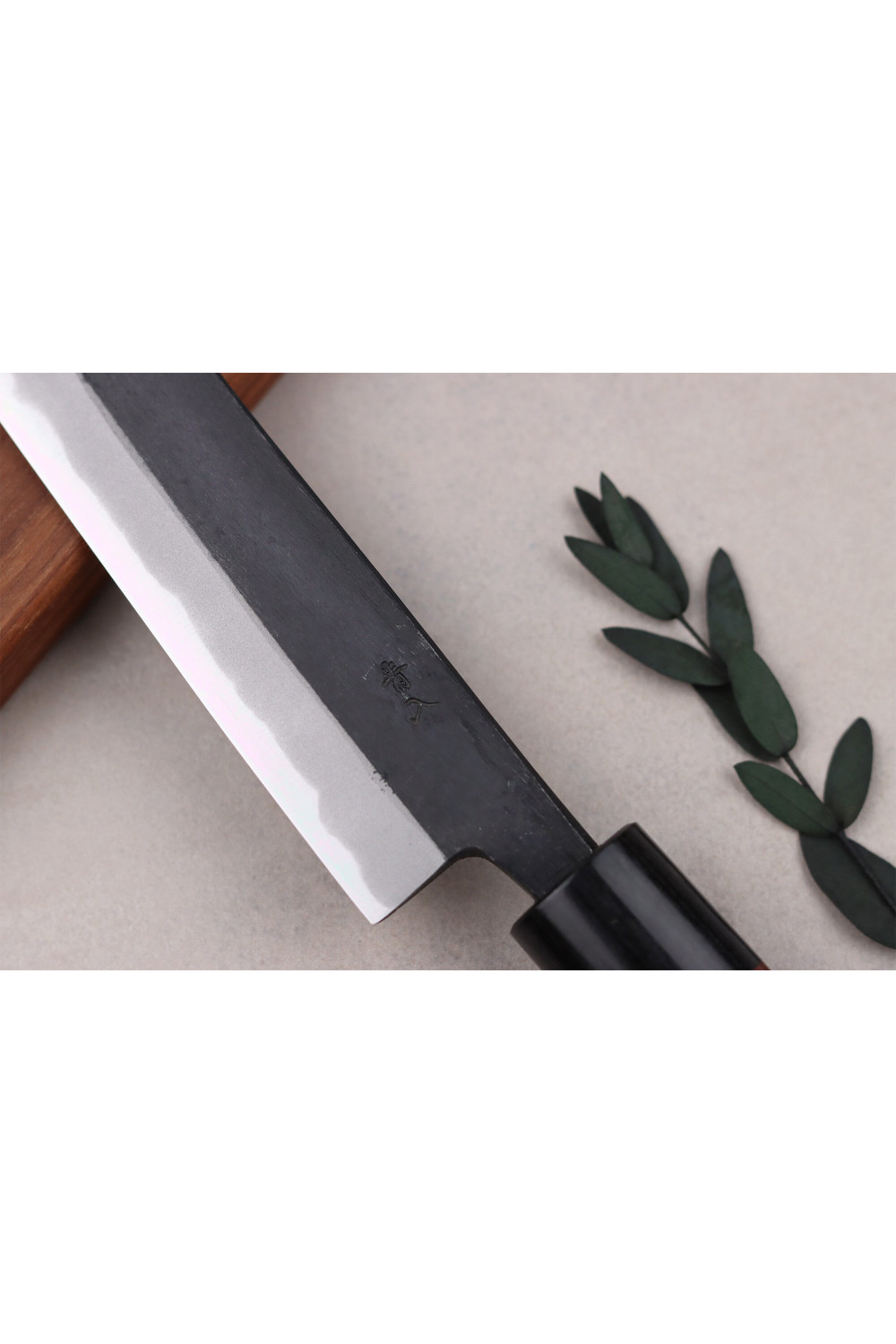
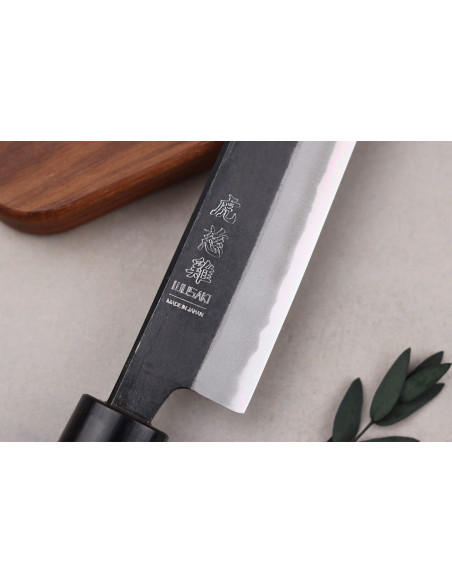
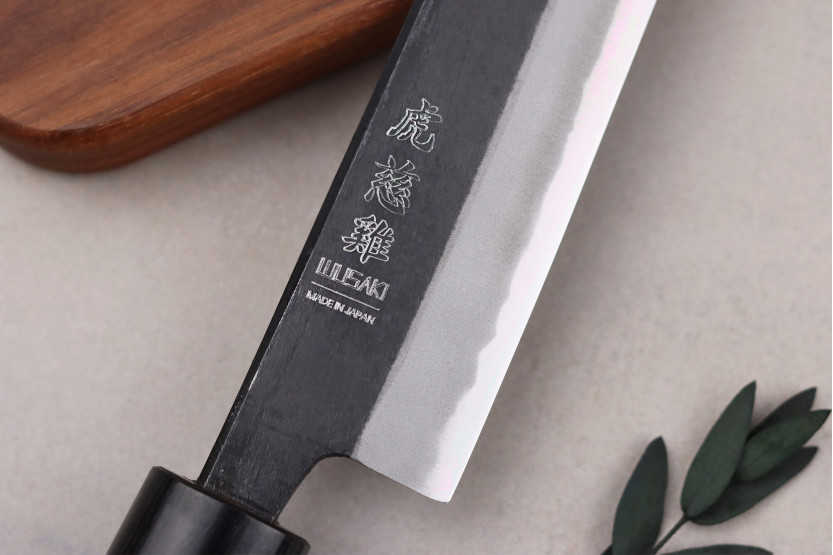
The blade is based on a structure known as San Maï. These words mean "3 layers" in Japanese. Why is this so? Quite simply, because it's built from a core of rigid steel surrounded by a layer of softer alloy that folds in on either side, hence the three layers. This is a structure often found in Japan, and it makes your blades more resistant over time, as this method balances the hardness/softness ratio of an alloy. The top layer softens the very rigid core, preventing it from becoming too brittle.
For this particular knife, we choseAogami 1, a Japanese steel also known as Blue Steel 1, produced by Hitachi, whose alloys are renowned the world over and are used by the best blacksmiths. The company packages this special steel in blue paper, from which it takes its name.
This steel is highly enriched in carbon, and is referred to as carbon steel, as opposed to stainless steel. Carbon steel (here at around 1.3%) offers a number of significant advantages. By definition, it's a hard steel, which means it will retain its sharpness for a long time, despite the use you make of it. So you don't need to keep sharpening.
It's an expensive steel that's difficult to work with, so it's the best that take care of it. In this case, it's Tsunehisa, a small Japanese company made up of experts in the field.
It's surrounded by a layer of iron, which balances it, as mentioned above. Note that Aogami and iron are oxidizable materials, so you'll need to take special care to maintain your Wusaki knife. We'll give you some advice below.
The knife has a rough forged finish. This gives it a traditional look much appreciated by Japanese chefs. The blade is dark, almost rustic.
To attach it to the wooden handle, wood paste is introduced into the gap between the materials. This fixes the blade and seals the handle.
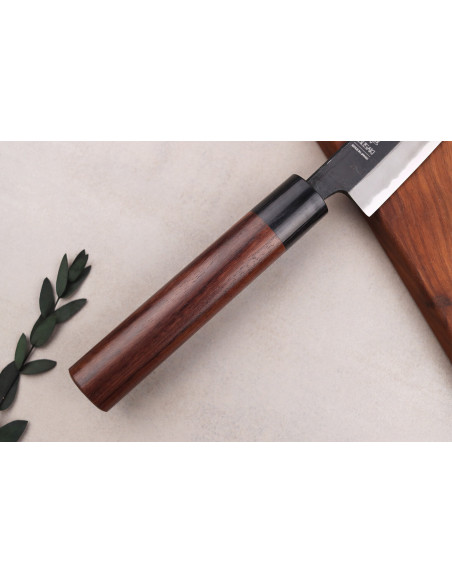
A comfortable handle, even for large hands
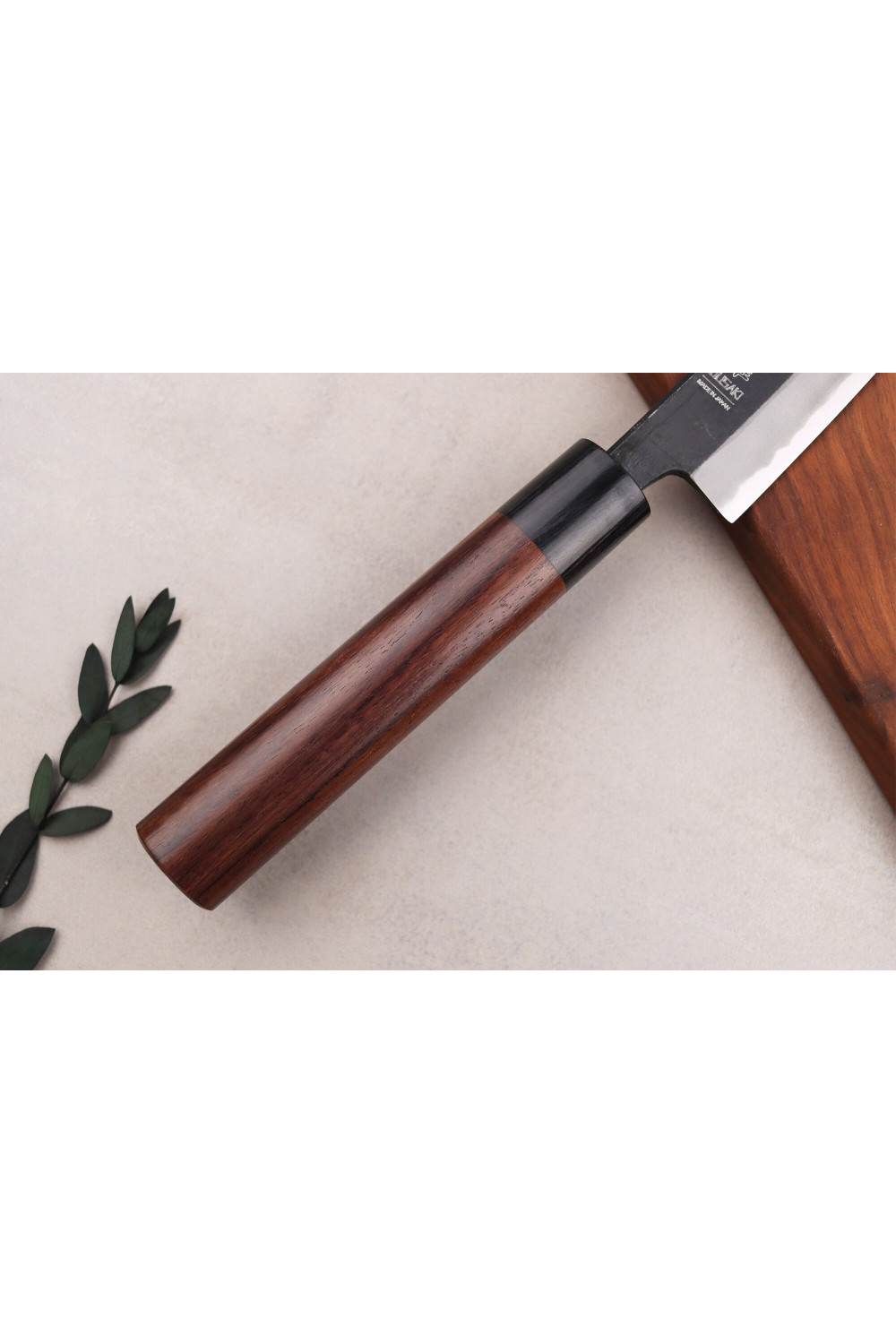
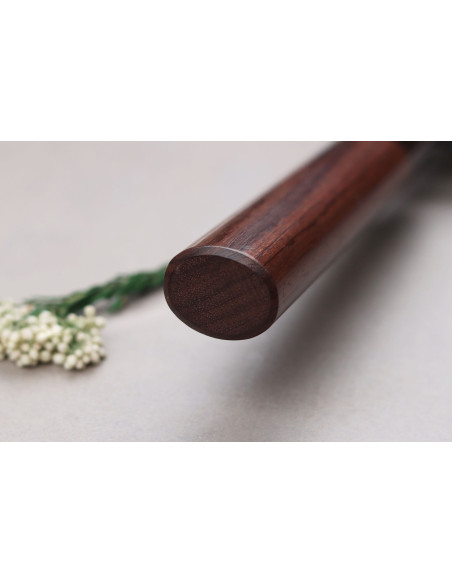
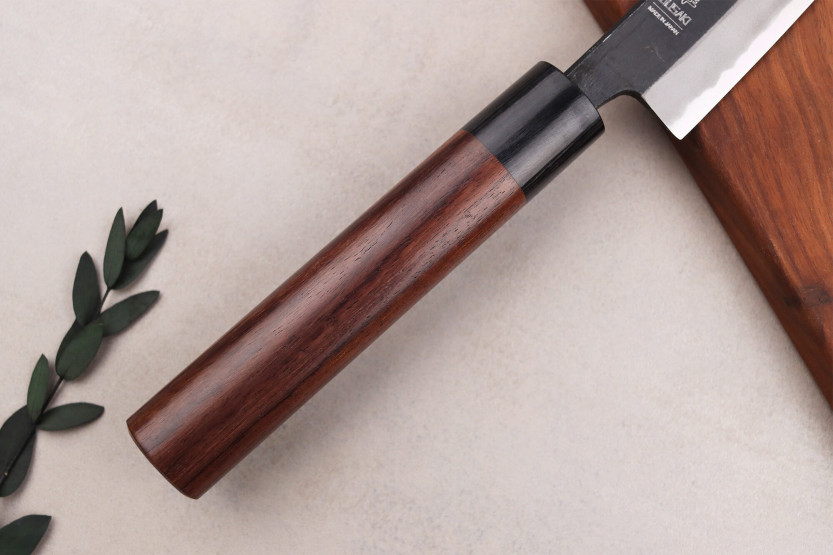
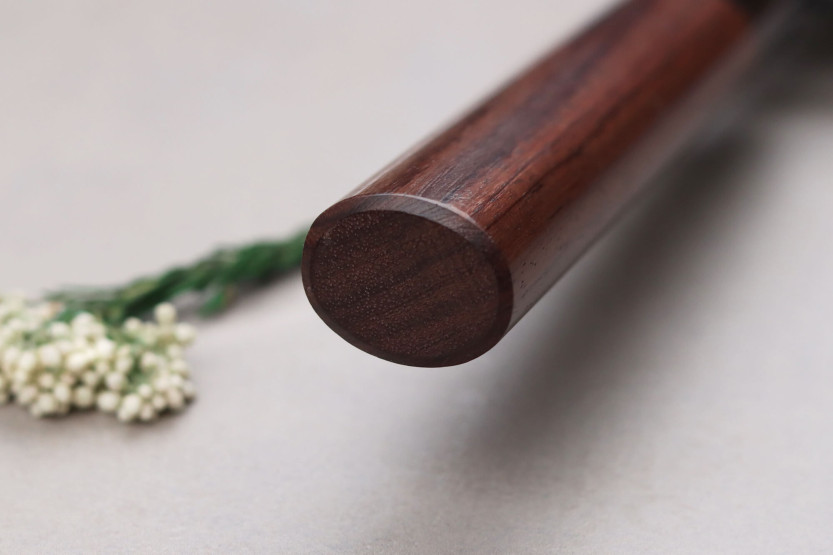
The handle of the wusaki sakimaru Japanese knife is made of rosewood. This beautiful, deep-hued species is known for its strength and compactness. This is why it performs better in the face of humidity. It is completed by a black pakka wood bolster. This composite material blends laminated wood with resin, the whole being hot-pressed. The result is impact-resistant and moisture-resistant too. The combination of materials is elegant.
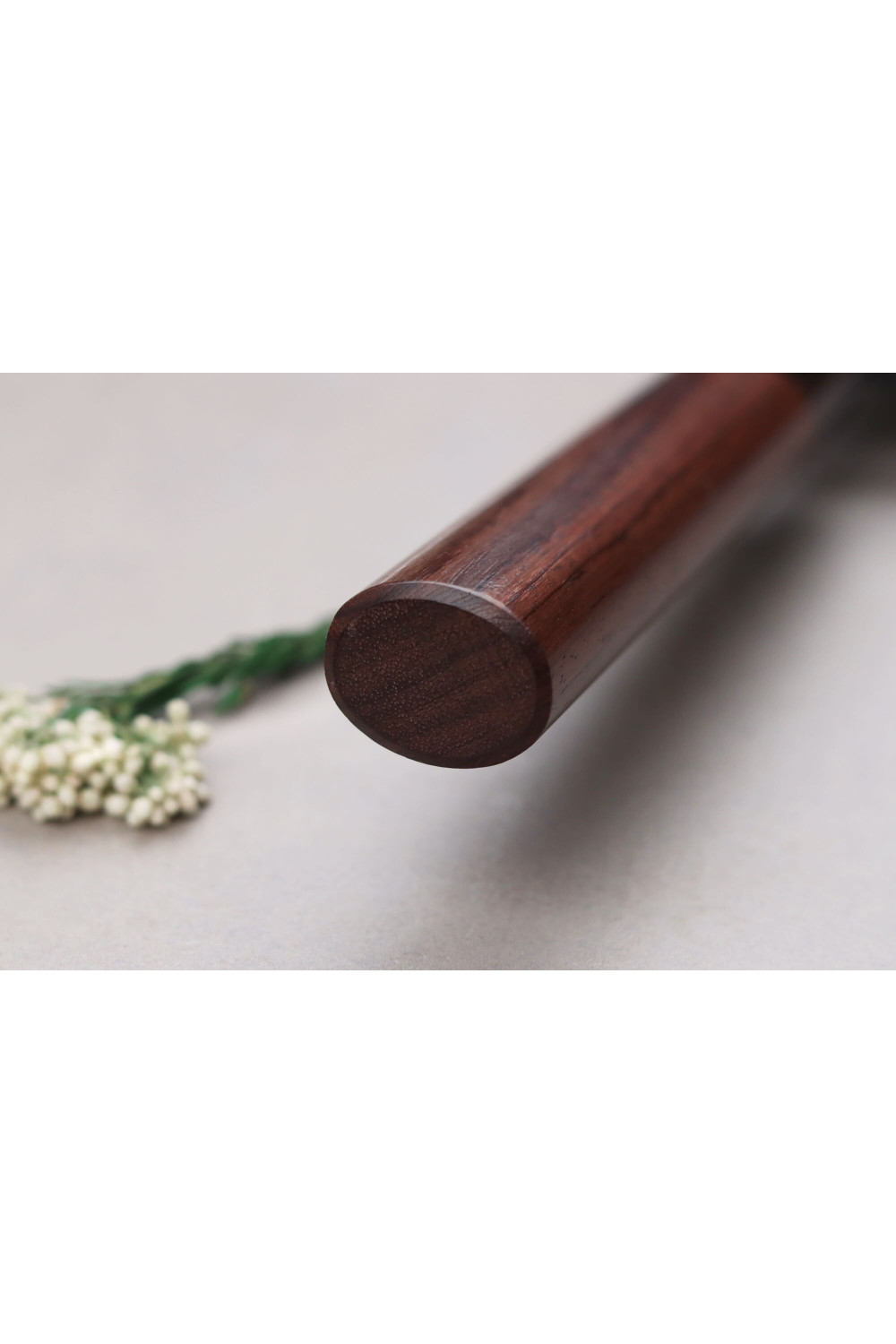
The handle is oval in shape, making it suitable for both right- and left-handed cooks. Its length makes it easy to grip and use.
Caring for your wusaki Japanese knife
As we said, your Wusaki knife is oxidizable. To care for it, wash it by hand and avoid the dishwasher. Note that it should not be left to soak in the sink either.
Between each cut, and before washing, you can wipe it with a paper towel to prevent the acidity of the food from having a direct impact on its color.
In any case, carbon steel changes color over time, and that's perfectly normal! It's a reactive steel, sensitive to moisture in the air and in cut food.
Once you've washed it, wipe it dry before storing it in a dry place. When not in use, you can oil the blade with mineral oil to protect it.
To find all Wusaki knives, click here!




 By buying this product you can collect up to