Shibata knives are renowned for their performance in the kitchen! Each model is specifically designed to meet particular needs, ensuring that it is suitable for all users. Materials are carefully selected according to the type of cutting involved, to guarantee optimum efficiency. Manufactured in the Takefu knifemaking village, each knife is sharpened by Takayuki Shibata himself before undergoing a thorough inspection.
Shibata san has also worked as a master sharpener for Masakage knives, another brand produced by Shibata. Thanks to his sharpening expertise, Masakage knives have a well-deserved reputation for outstanding performance!
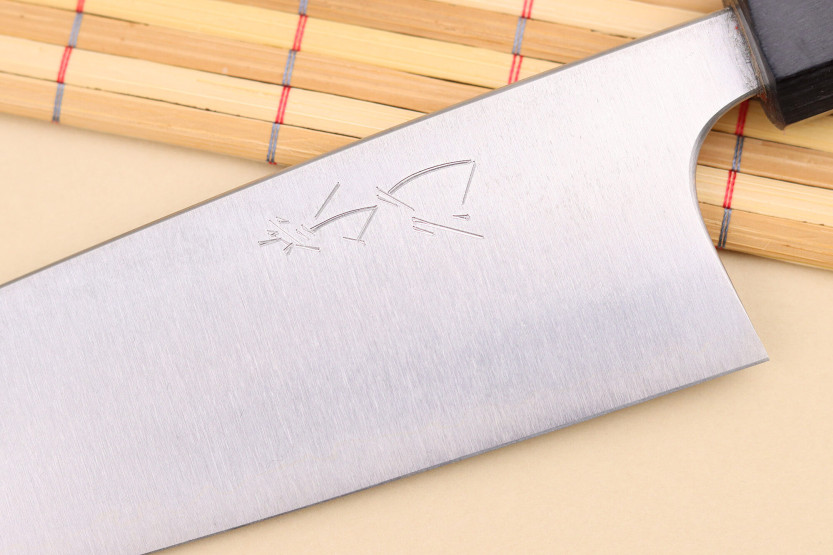
The name of the Shibata Koutetsu range of Japanese knives derives from the shape of the Japanese ship Koutetsu, built in 1864. This ship, emblematic of the Japanese fleet, was renowned for its ability to ram other ships thanks to its inclined shape. The Shibata range of knives has thus inherited this name to underline its efficiency in the kitchen.
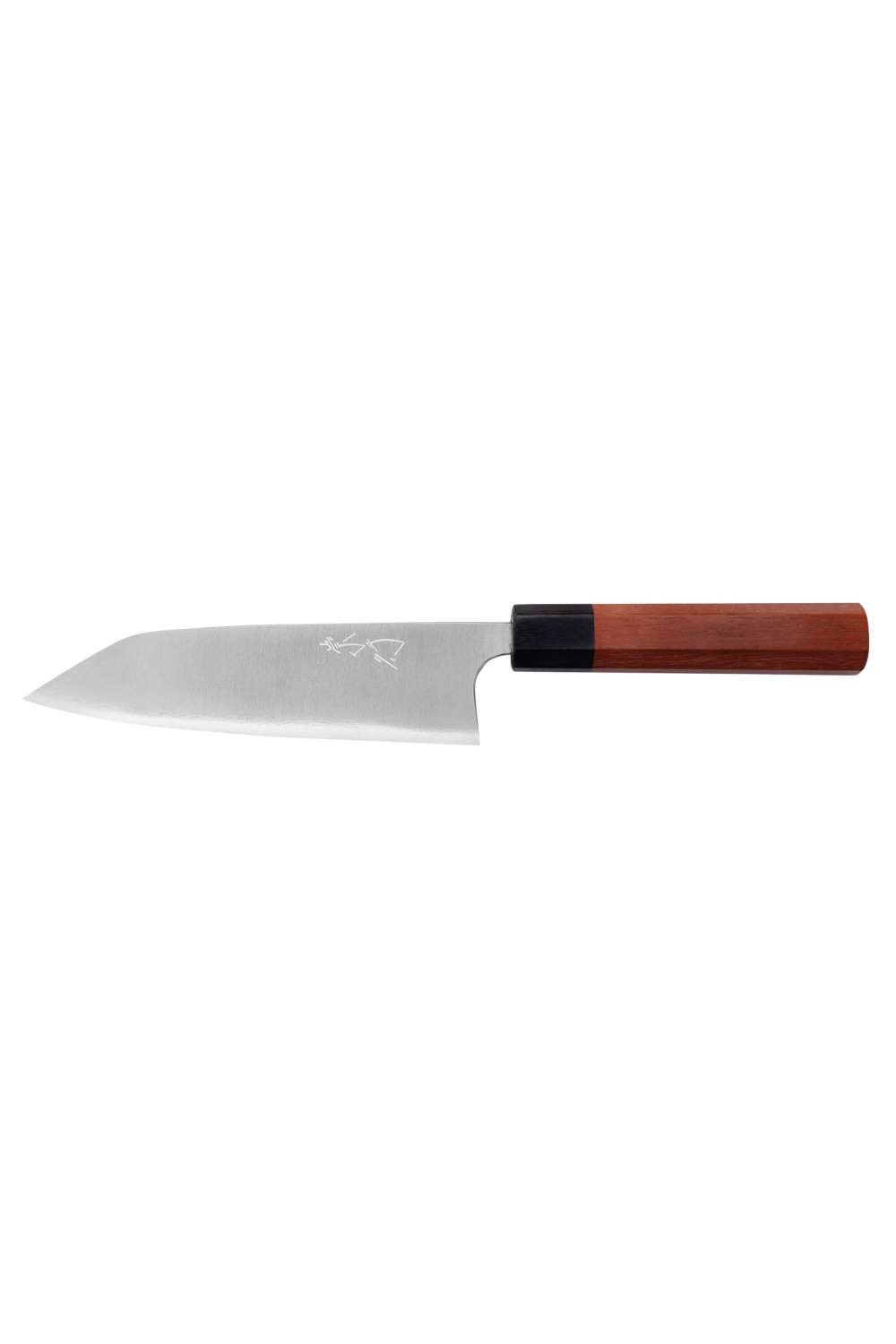
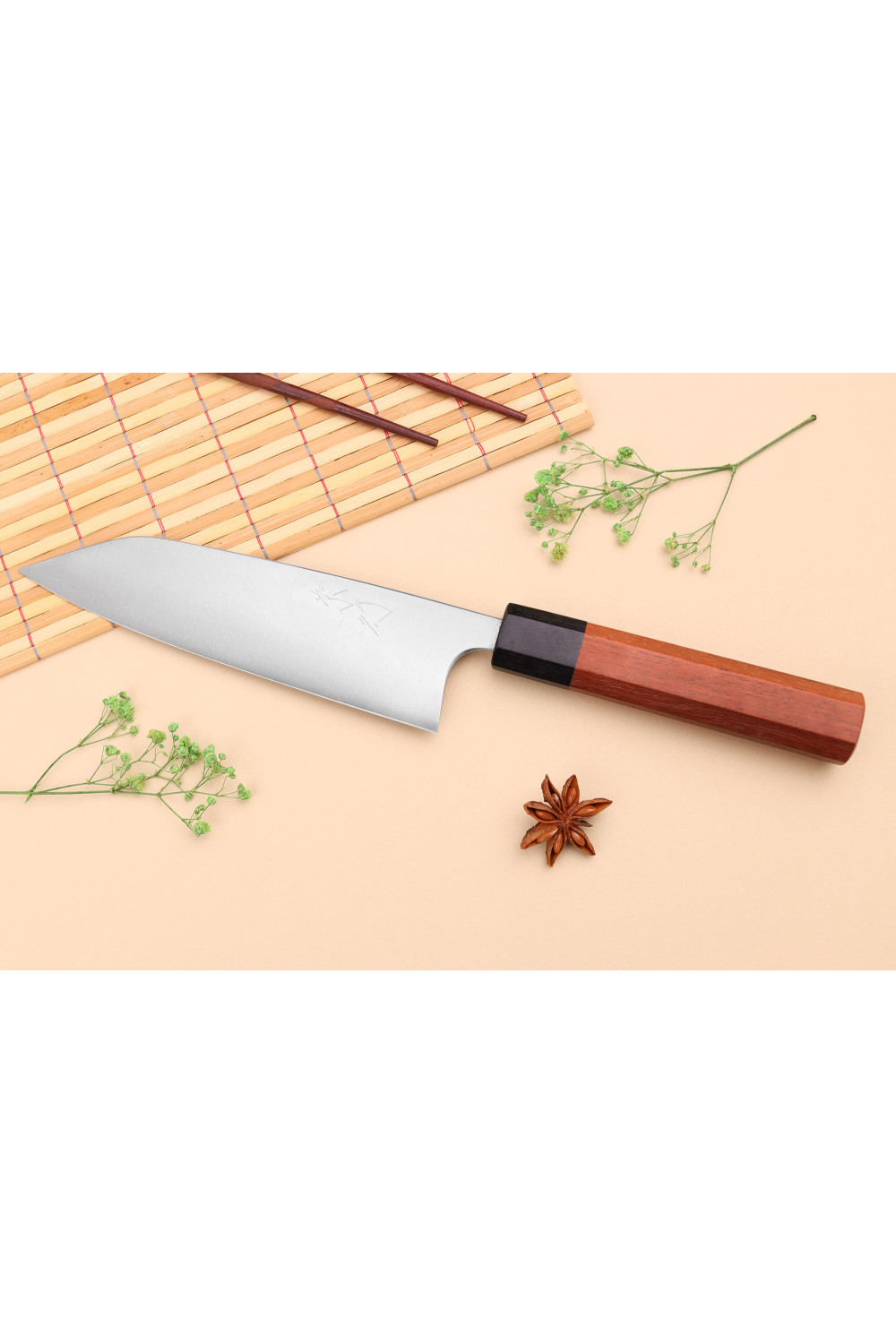
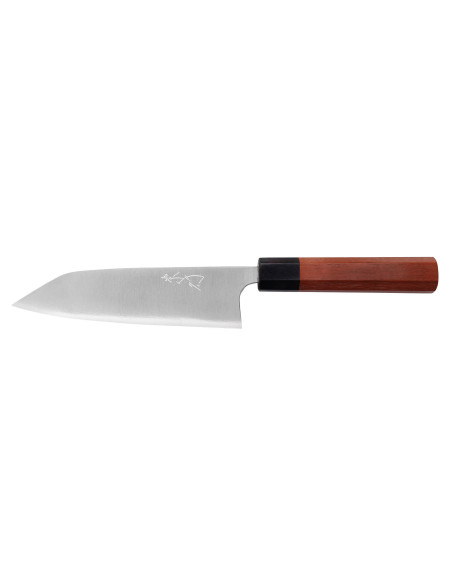
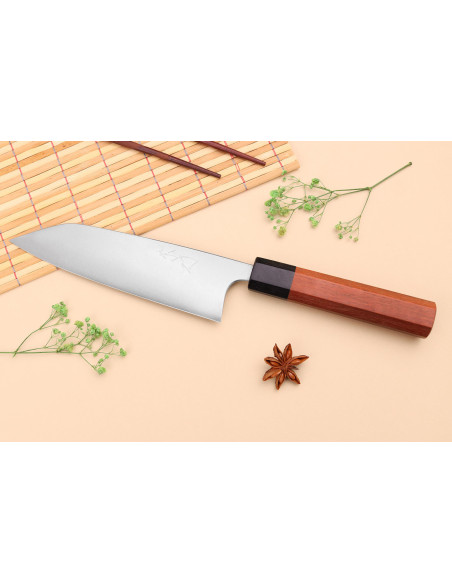
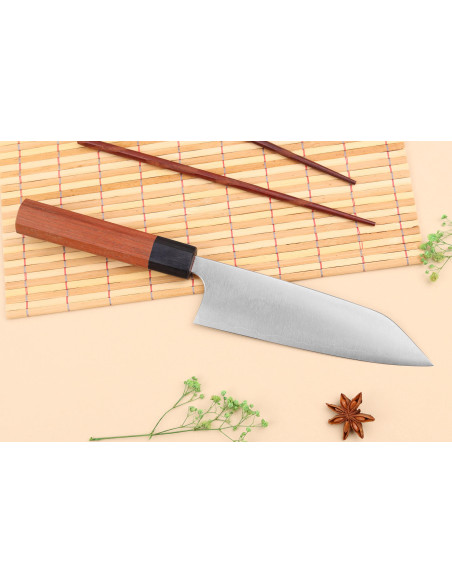
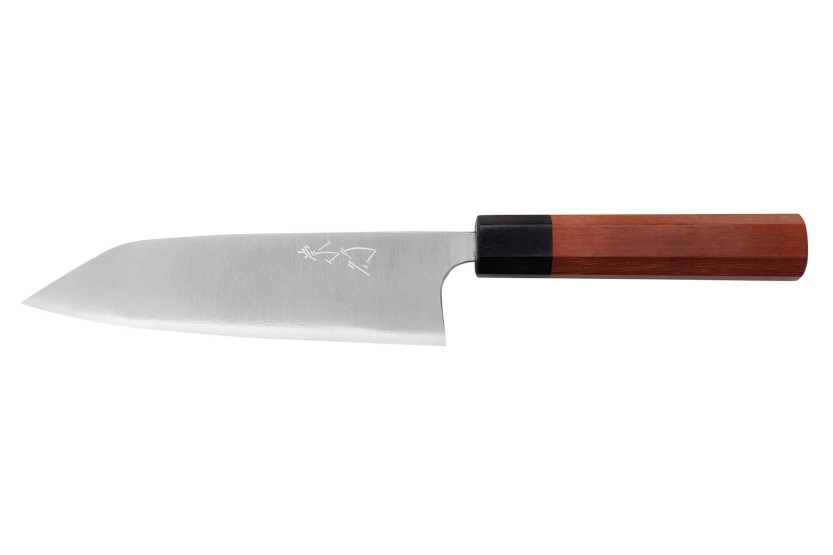
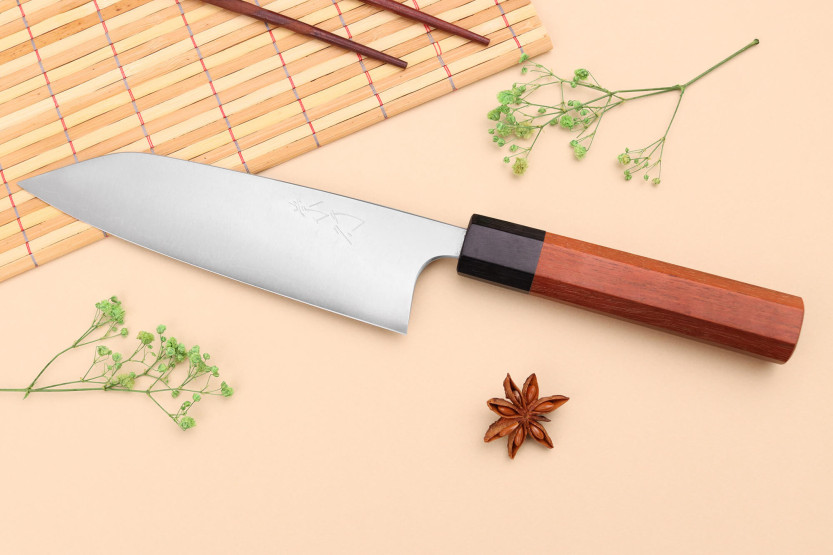
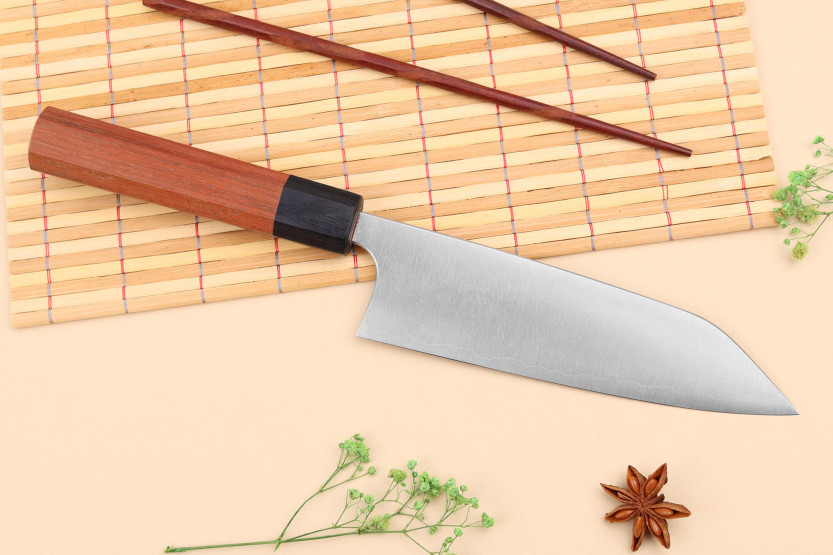
The Japanese santoku knife with a high-performance blade
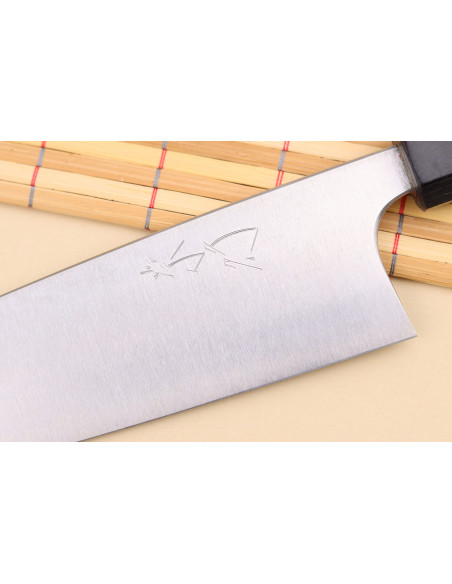
This santoku knife features a blade structured using the San Maï method, typical of Japanese cutlery. This technique involves the creation of a rigid steel core enveloped by a softer layer of steel that is folded in on itself. This process aims to protect the core of the blade while balancing its hardness by making the blade less brittle.
The core of this blade is forged fromJapanese Aogami Super steel ( also known as Blue Paper Steel Super). This is a high-quality alloy produced by the renowned steelmaker Hitachi.
Aogami Super steel has a high carbon content, reaching 1.5%: this is an essential element that contributes to increasing the blade's hardness. With a hardness of 65HRC on the Rockwell scale, it ensures a long-lasting, high-performance cutting edge for your Japanese kitchen knife.
This rare and expensive alloy is rarely used in cutlery, as only a few experienced blacksmiths can use it without loss. It must be carefully maintained to avoid any risk of oxidation.
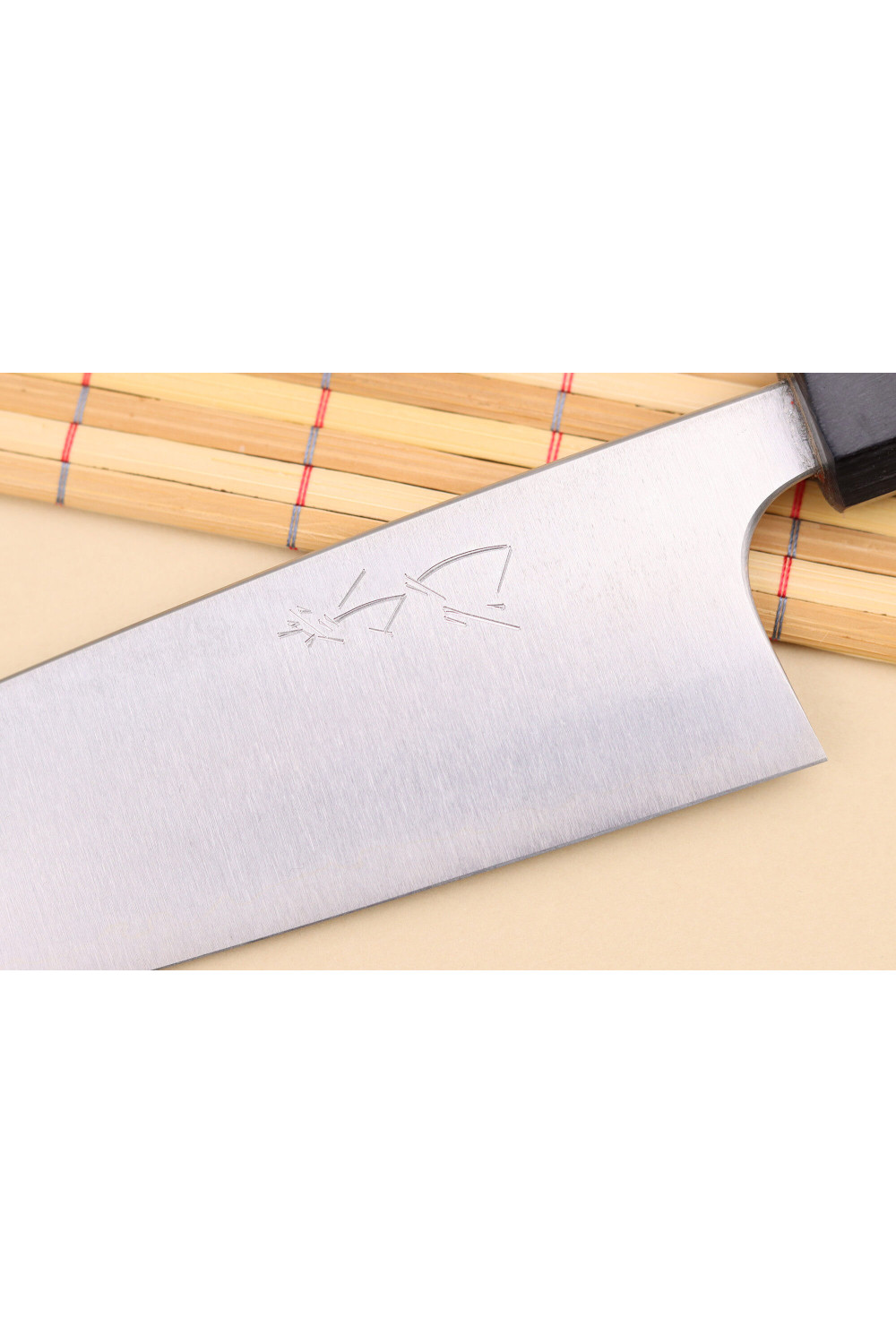
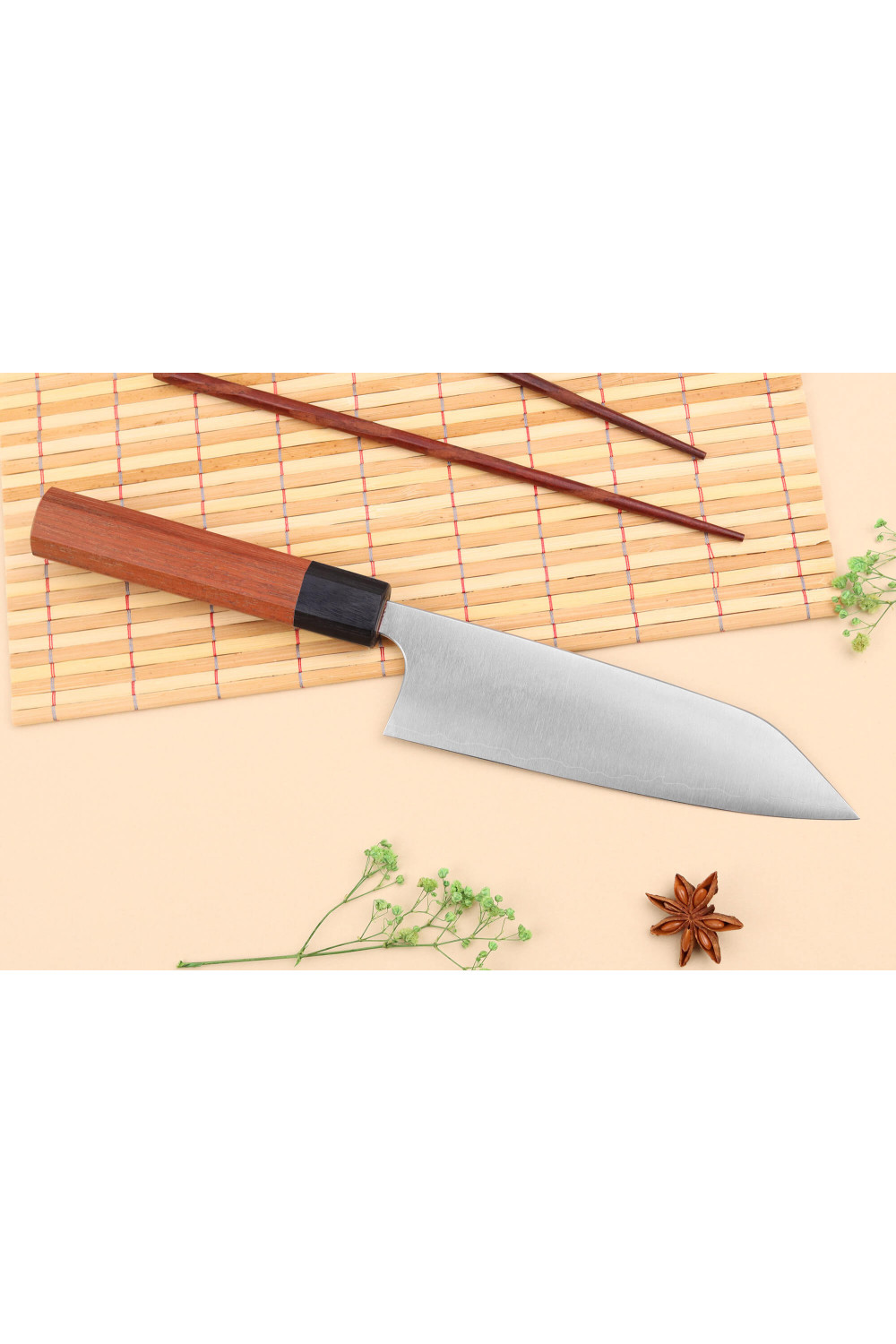
Finally, the core of your blade is wrapped in a layer of softer stainless steel for extra protection. The superimposition of the different steels is visible along the cutting edge, where a fine wave forms, unique to each piece!
A quality wooden handle with warm nuances
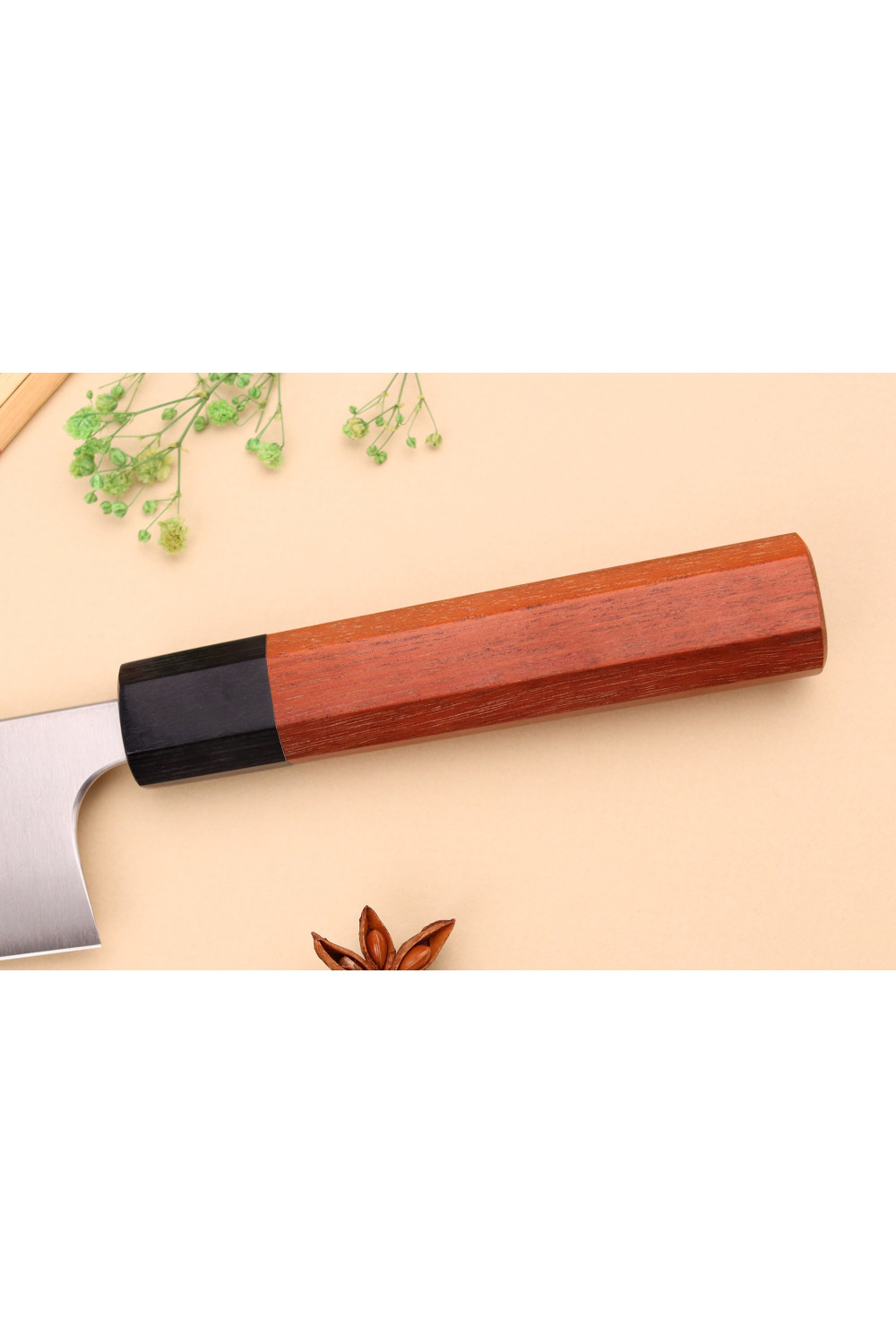
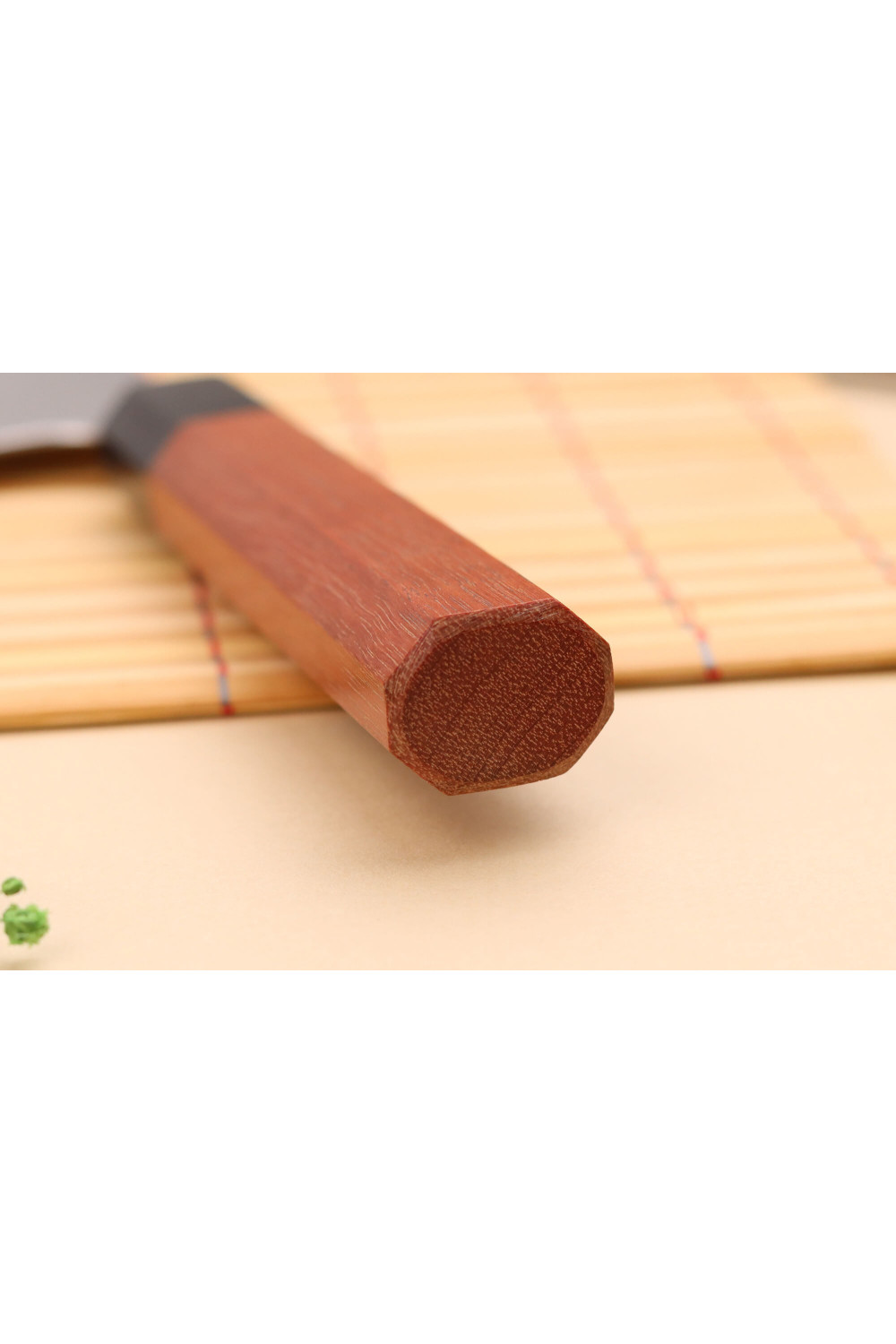
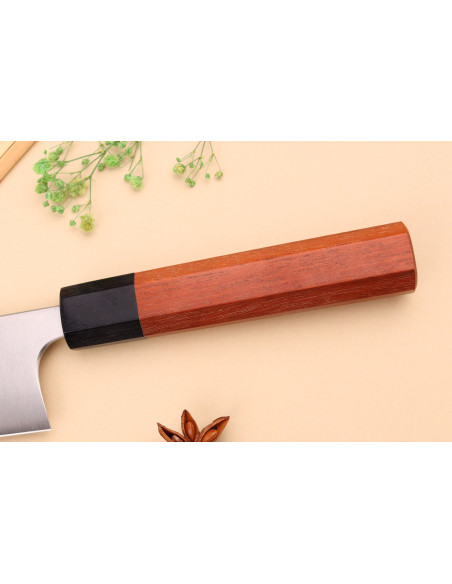
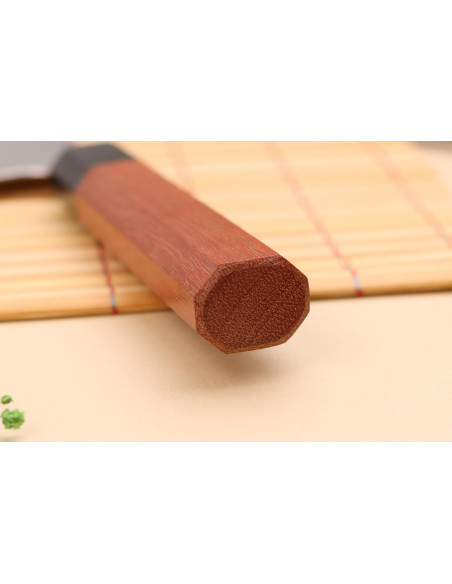
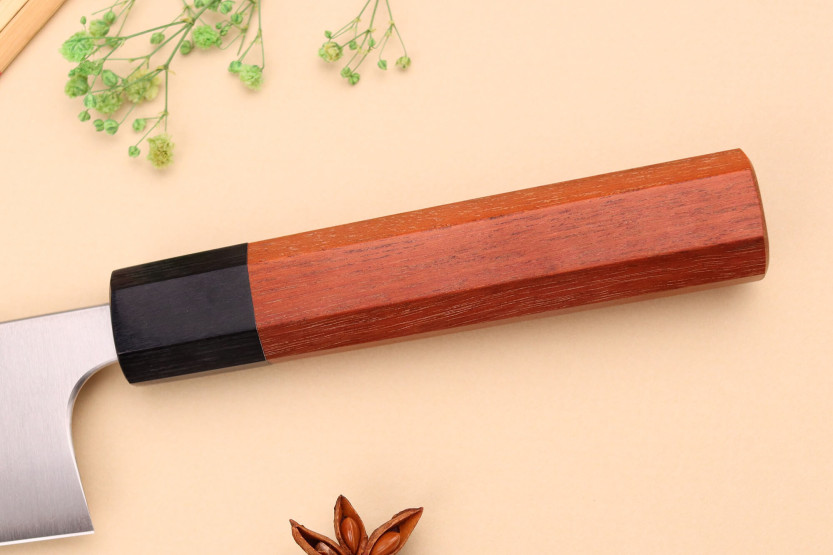
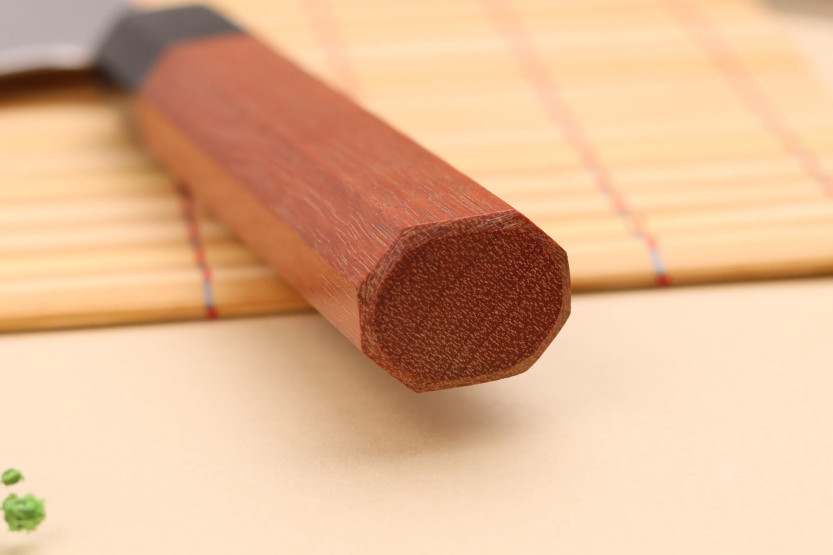
The handle of your Japanese knife is made from tropical jarrah wood, a species renowned for its strength, durability and resistance to humidity. Its brown hue, enhanced by warm nuances, offers a warm design that is much appreciated.
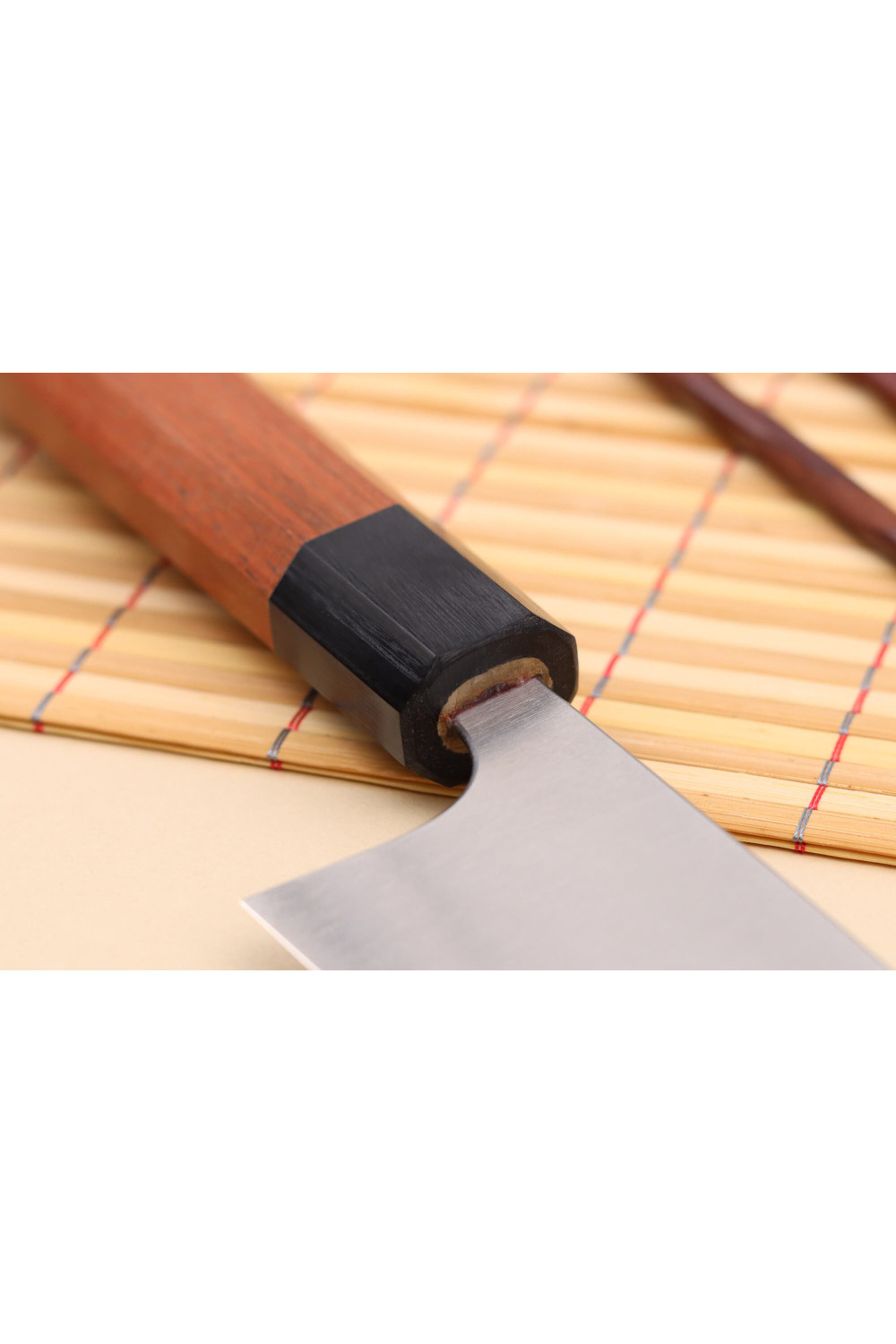
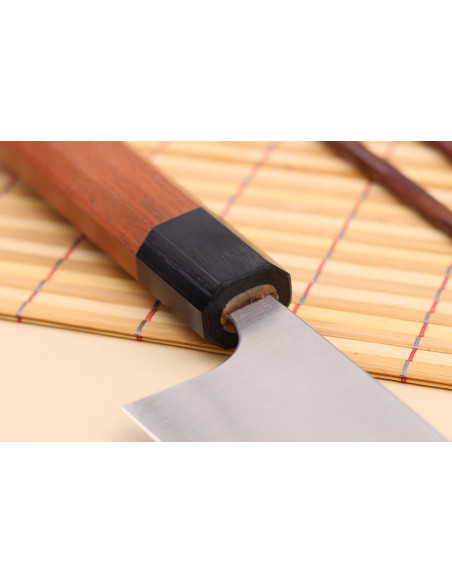
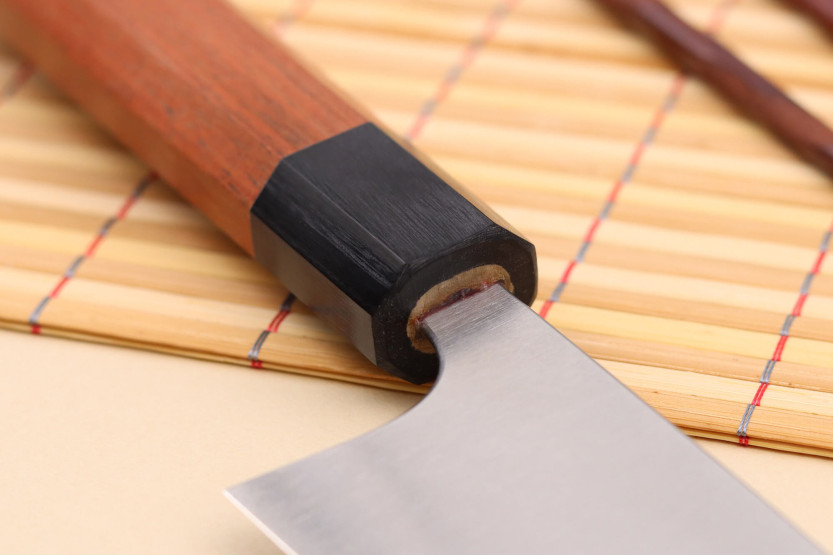
To complete the handle, a black pakka wood bolster is added, a composite material made from laminated wood and resin, heat-hardened. This composition gives the handle the appearance of wood, with a unique, natural-looking grain.
The handle of this handcrafted Japanese knife is octagonal in shape to comfortably fit the hands of all cooks, whether right- or left-handed. It offers an ideal grip, particularly during prolonged use.
Finally, wood putty is used to fill the small gaps where the blade meets the handle, ensuring a watertight seal and preventing water infiltration.
How do I maintain a carbon knife?
To care for your Shibata knife, wash only by hand with a soft sponge, avoiding getting the handle wet. Once washed, wipe dry immediately to remove all traces of moisture and store in a dry place. Do not place in the dishwasher or leave to soak in the sink.
Over time, the color of the blade may change slightly - this is normal! This is a carbon reaction caused by the acidity of the food you're cutting and the humidity in the air.
Discover many handcrafted Japanese knives on KnifeLeader.eu!




 By buying this product you can collect up to