Shibata knives enjoy a well-deserved reputation for efficiency in the kitchen! Each model is specifically designed to meet particular needs, using materials adapted to different cutting tasks. These knives are made in the Takefu knife-making village, and Takayuki Shibata himself sharpens each blade before carrying out a thorough inspection.
Shibata san has also worked as a master sharpener for Masakage knives, also produced by the Shibata brand. Thanks to his sharpening expertise, Masakage knives are renowned for their exceptional performance.
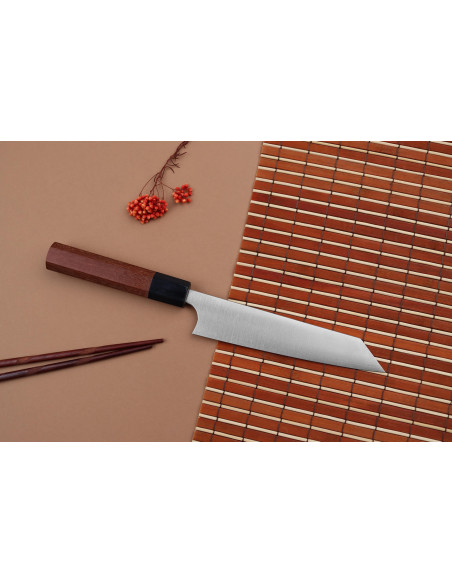
The Shibata Koutetsu range of Japanese knives takes its name from the shape of the Japanese ship Koutetsu, built in 1864. This emblematic vessel of the Japanese fleet was renowned for its inclined shape, which enabled it to ram other ships effectively. The choice of this name for the Shibata range of knives is a tribute to this remarkable efficiency.
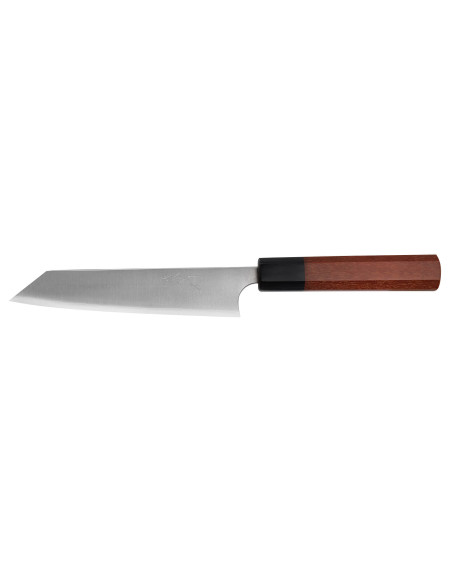
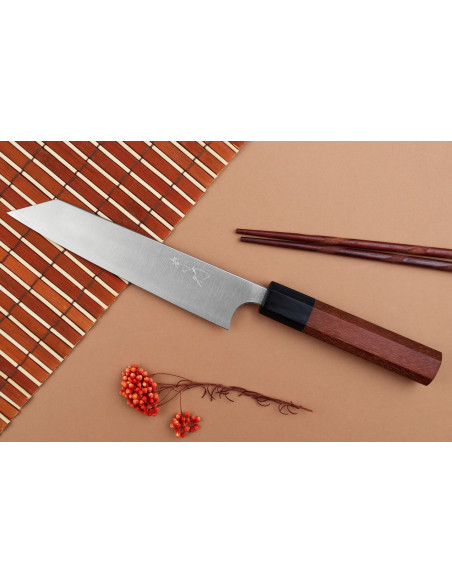
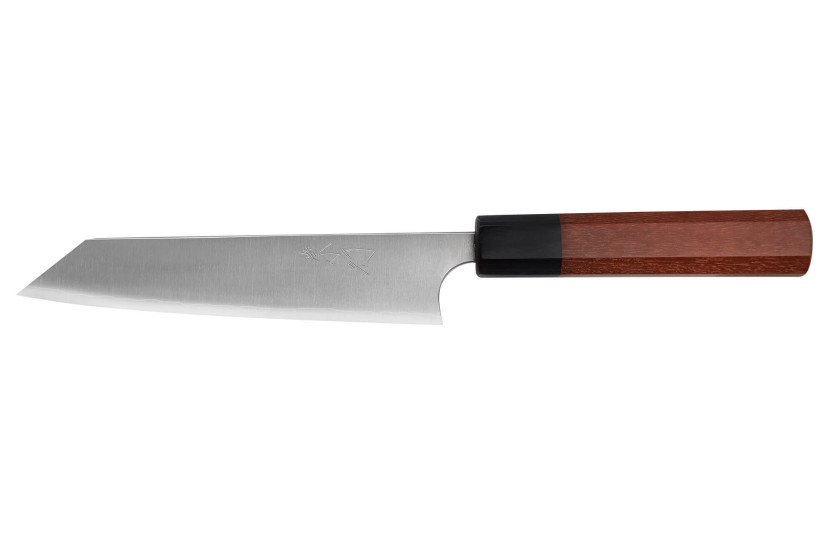
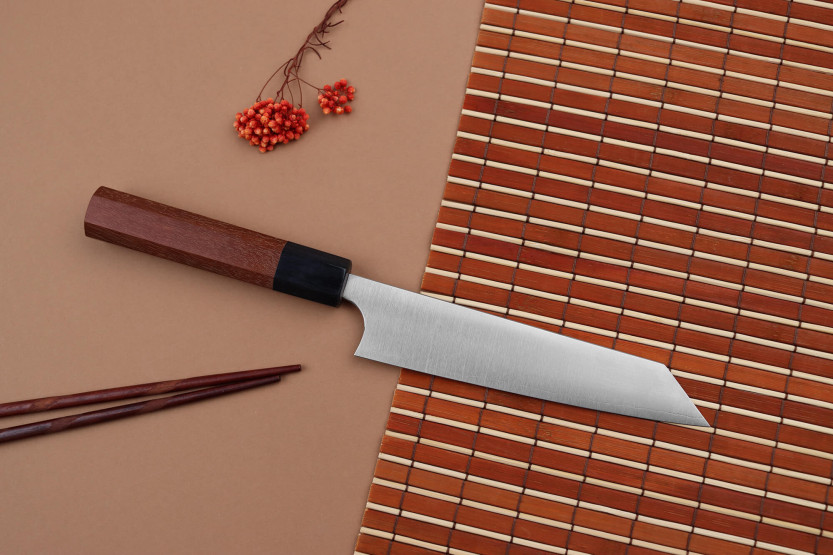
A Japanese all-purpose knife for high performance
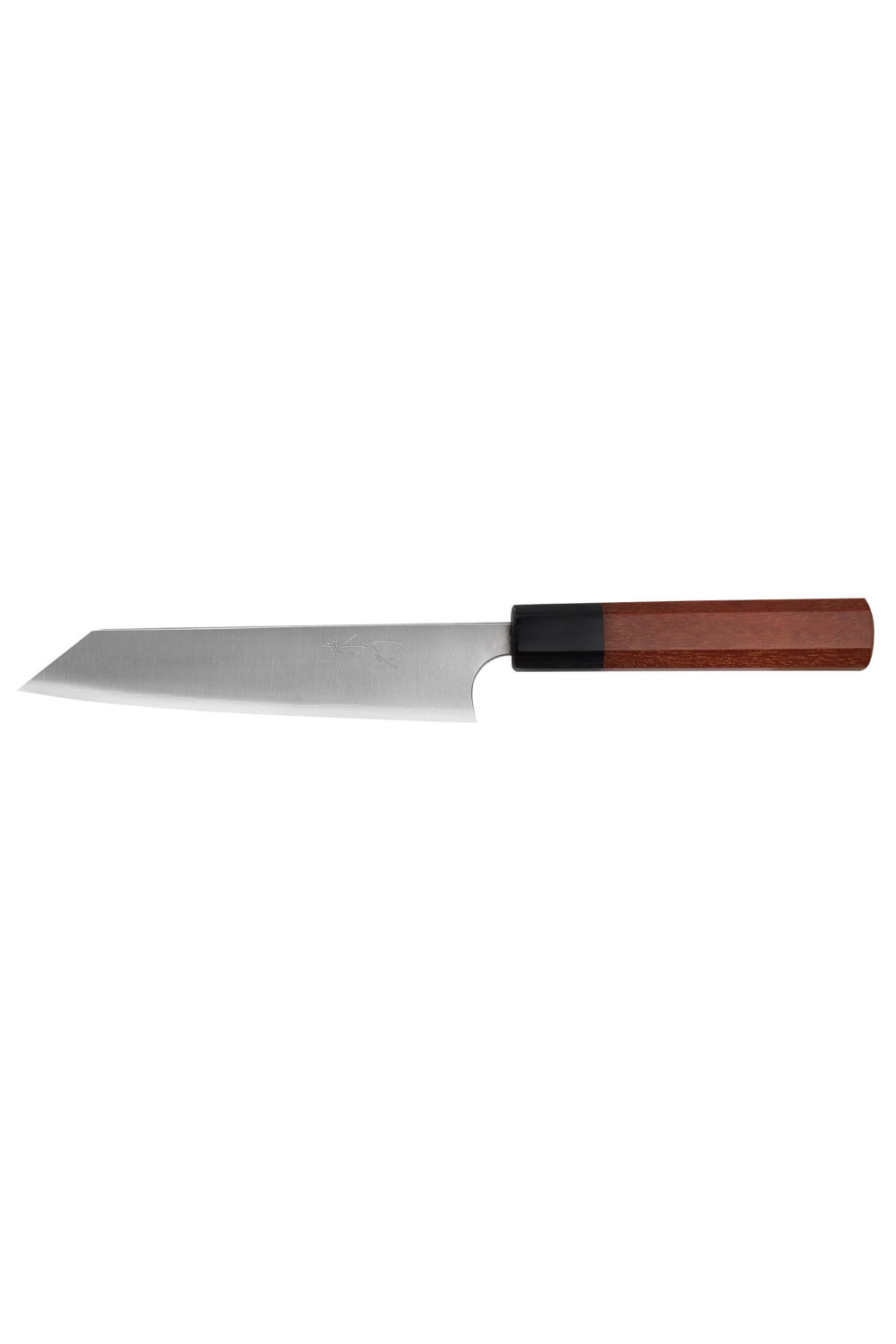
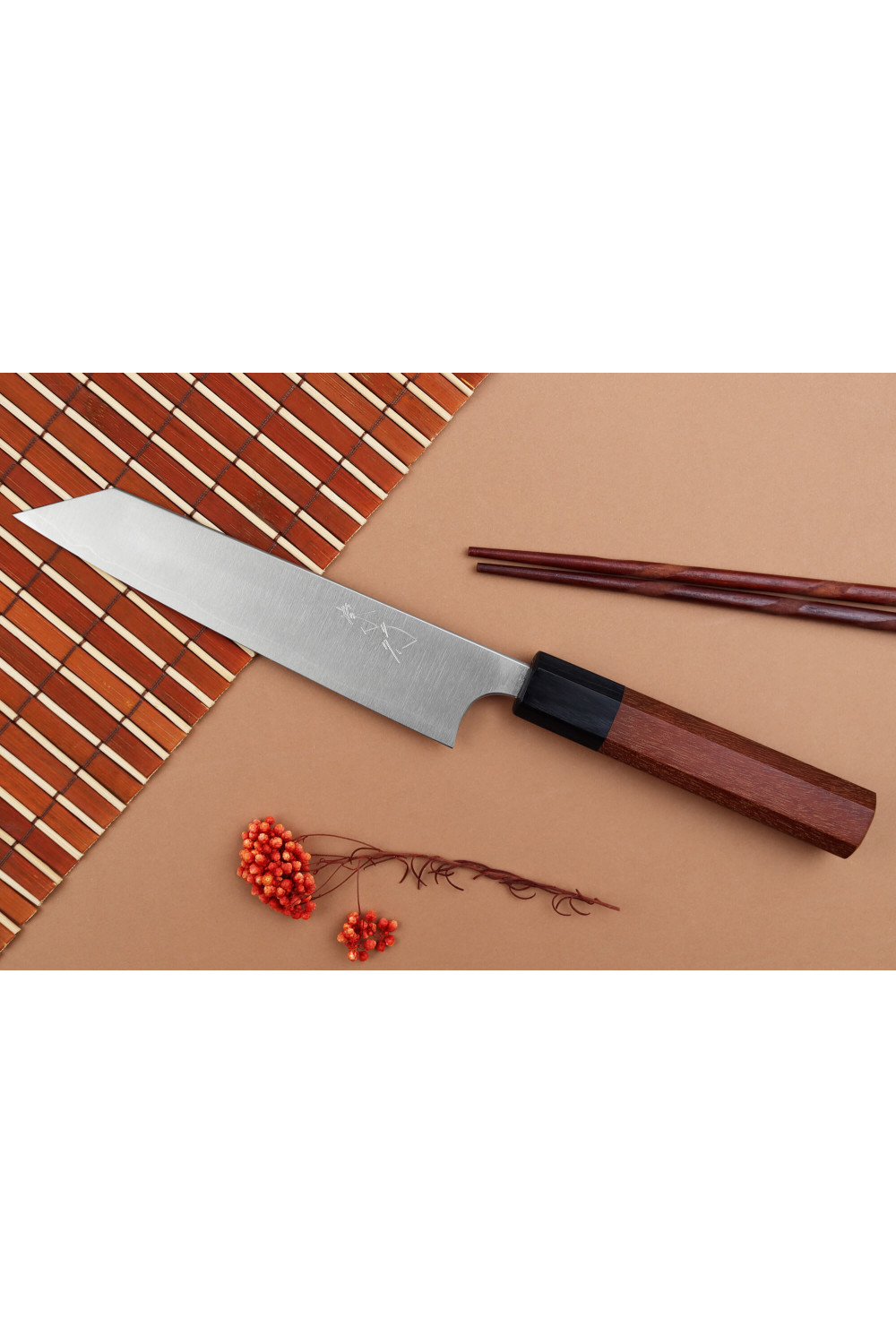
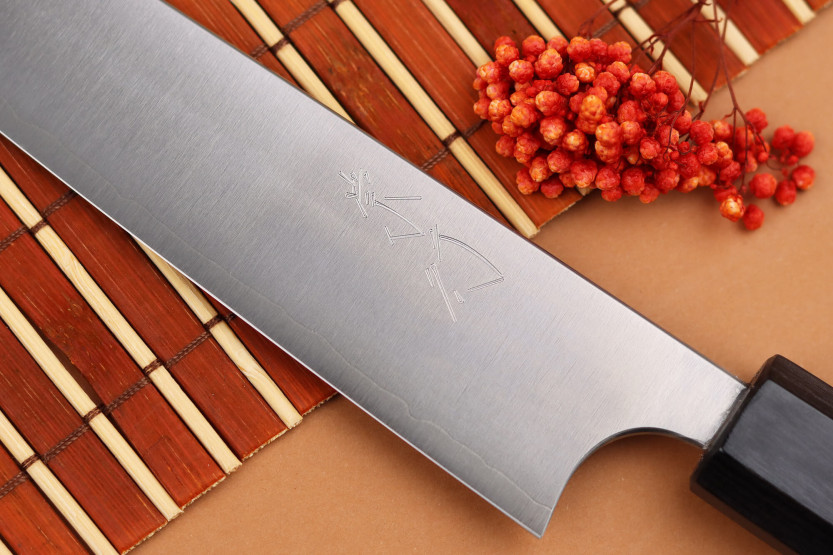
This universal kiritsuke knife features a San Mai structured blade, a typically Japanese method meaning "three layers". This technique involves the creation of a rigid steel core, covered by a softer, folded-over steel layer. The aim of this process is to protect the core of the blade while balancing its hardness to make it less brittle.
The core of this blade is forged fromR2 powdered Japanese steel, also known as SG2. This is a rare and expensive alloy, rarely used in cutlery due to the need for great expertise to use it without incurring significant losses.
R2 steel is characterized by a high carbon content, reaching 1.3%. This element is essential for increasing the blade's hardness, as increased hardness guarantees excellent edge retention. The hardness of this handcrafted Japanese knife is 63HRC on the Rockwell scale, providing a high-performance, long-lasting edge while remaining easy to sharpen as required.
Another advantage of this steel lies in its microstructure, described as "pure" because the micro-carbides that make it up are evenly distributed. This gives your Japanese kitchen knife greater resistance to the risk of micro-cracking and wear.
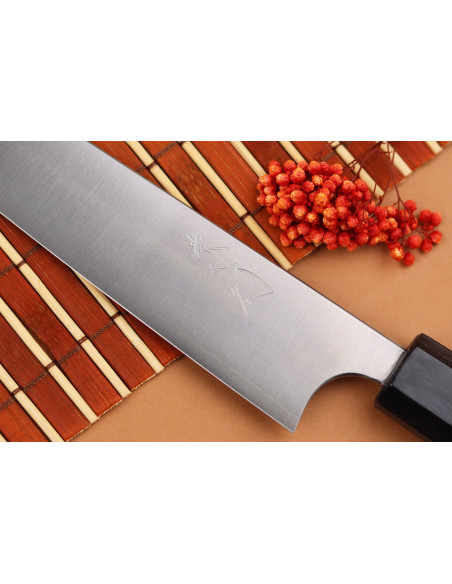
Finally, the core of the blade is enveloped in a layer of softer stainless steel, providing even greater protection. The superimposition of the different steels is visible all along the cutting edge, where a unique fine wave is formed. So every handcrafted Japanese knife is unique!
A sturdy, elegant wooden handle
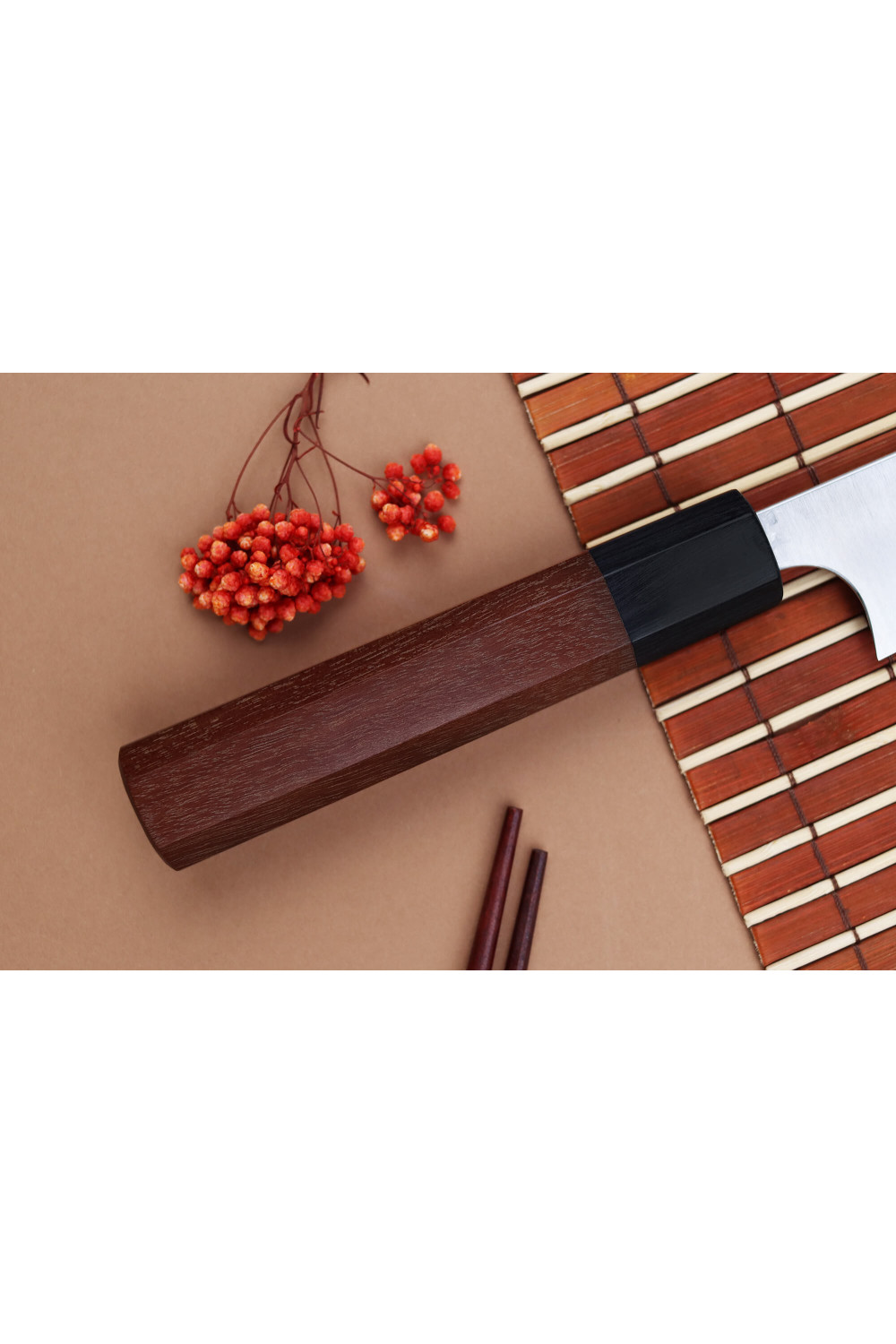
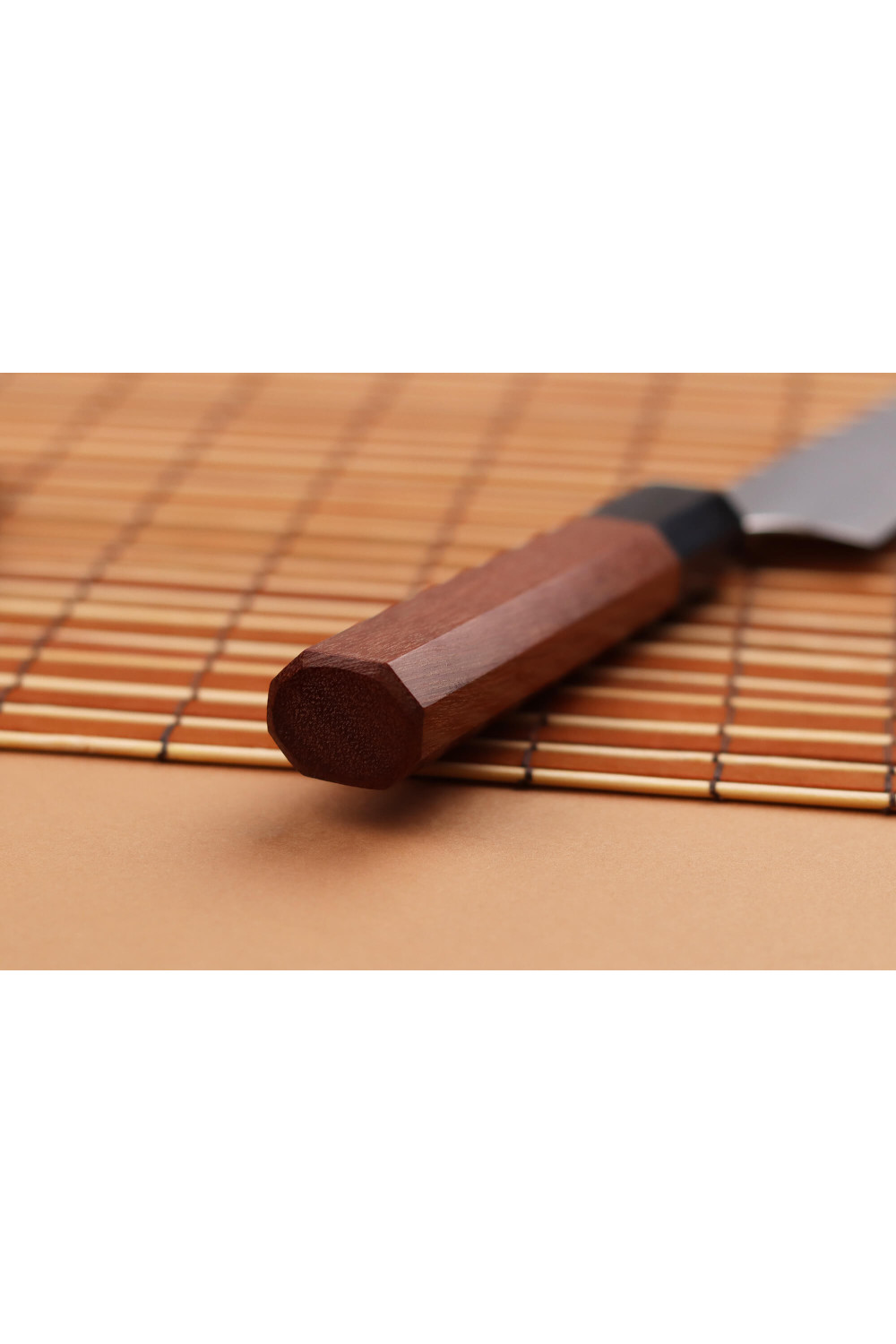
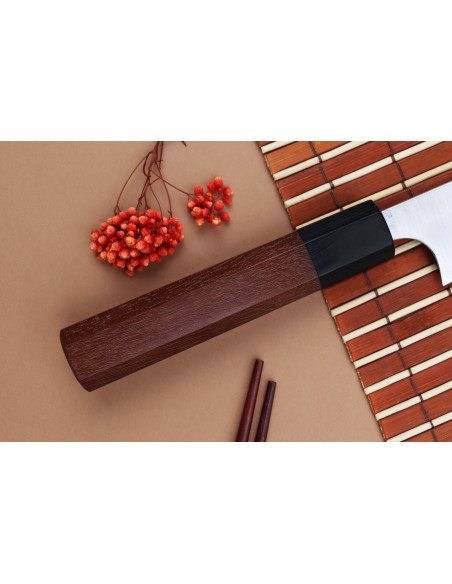
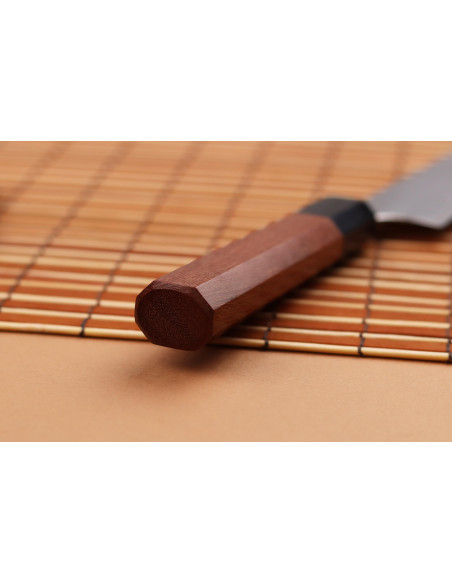
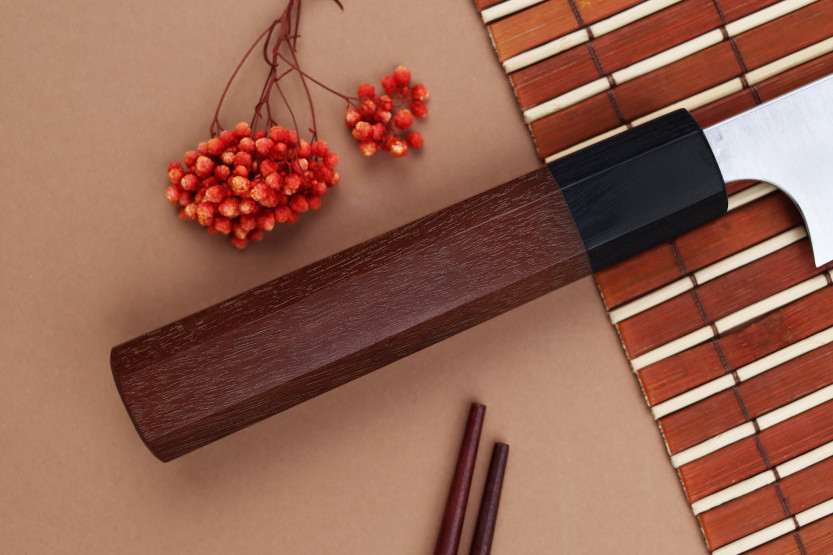
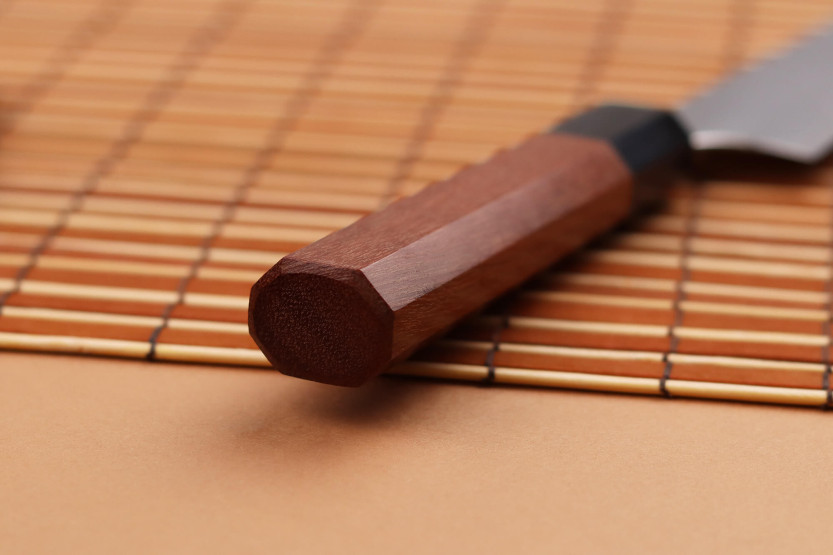
The handle of this handcrafted knife is made from tropical jarrah wood, a strong, durable species known for its resistance to humidity. Its brown hue, enhanced by warm nuances, gives your knife a warm, much-appreciated design.
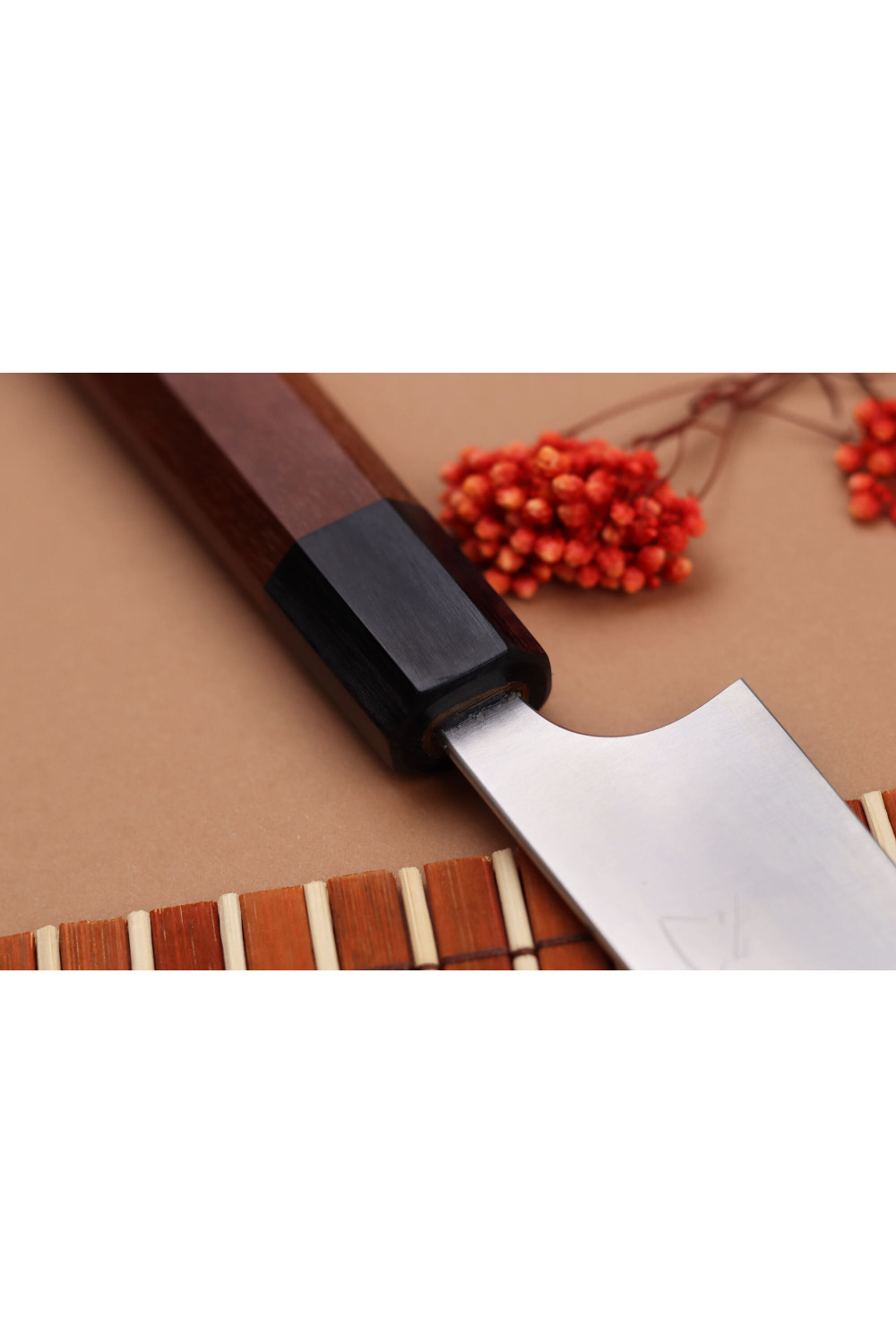
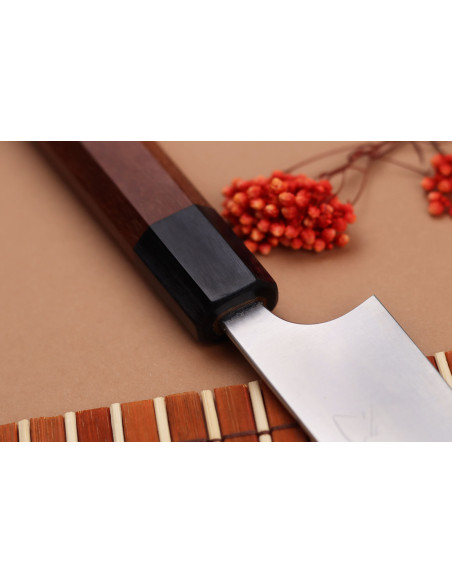
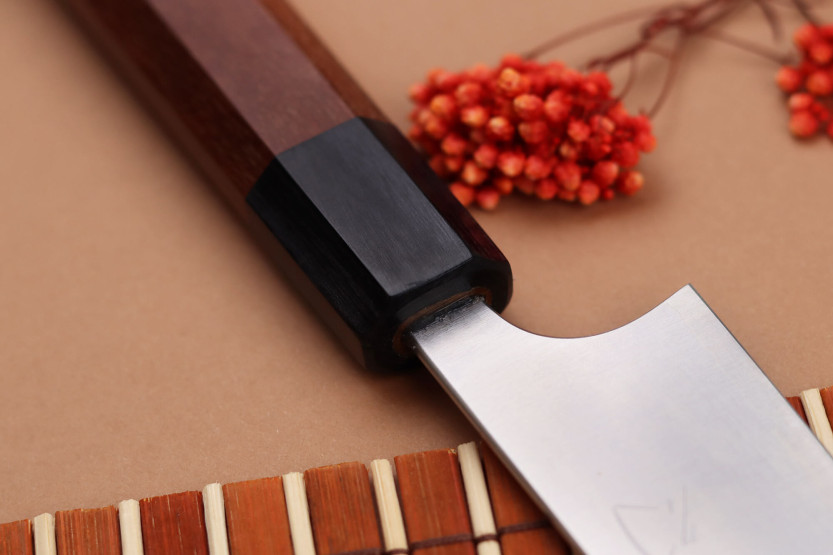
To complete the handle, a black pakka wood bolster is added. This is a composite material created from laminated wood and resin, all heat-hardened. The result is similar to wood, with a unique grain that adds a distinctive touch.
The handle is octagonal in shape to comfortably fit the hands of all cooks, whether right- or left-handed. This design offers an ergonomic grip ideal for prolonged use.
As a final step, wood paste is applied to fill the small gaps where the blade joins the handle. This technique ensures a complete seal, preventing any water infiltration.
To care for your Japanese kitchen knife, wash only by hand with a sponge and mild detergent, avoiding wetting the handle. Once washed, wipe dry immediately to keep it in a dry place, free from traces of moisture. Do not use the dishwasher, and do not soak it in the sink!
Discover many Japanese knives on KnifeLeader.eu!





 By buying this product you can collect up to