An exceptional Japanese knife
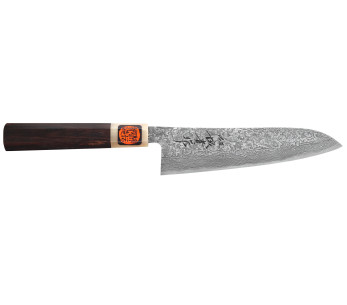
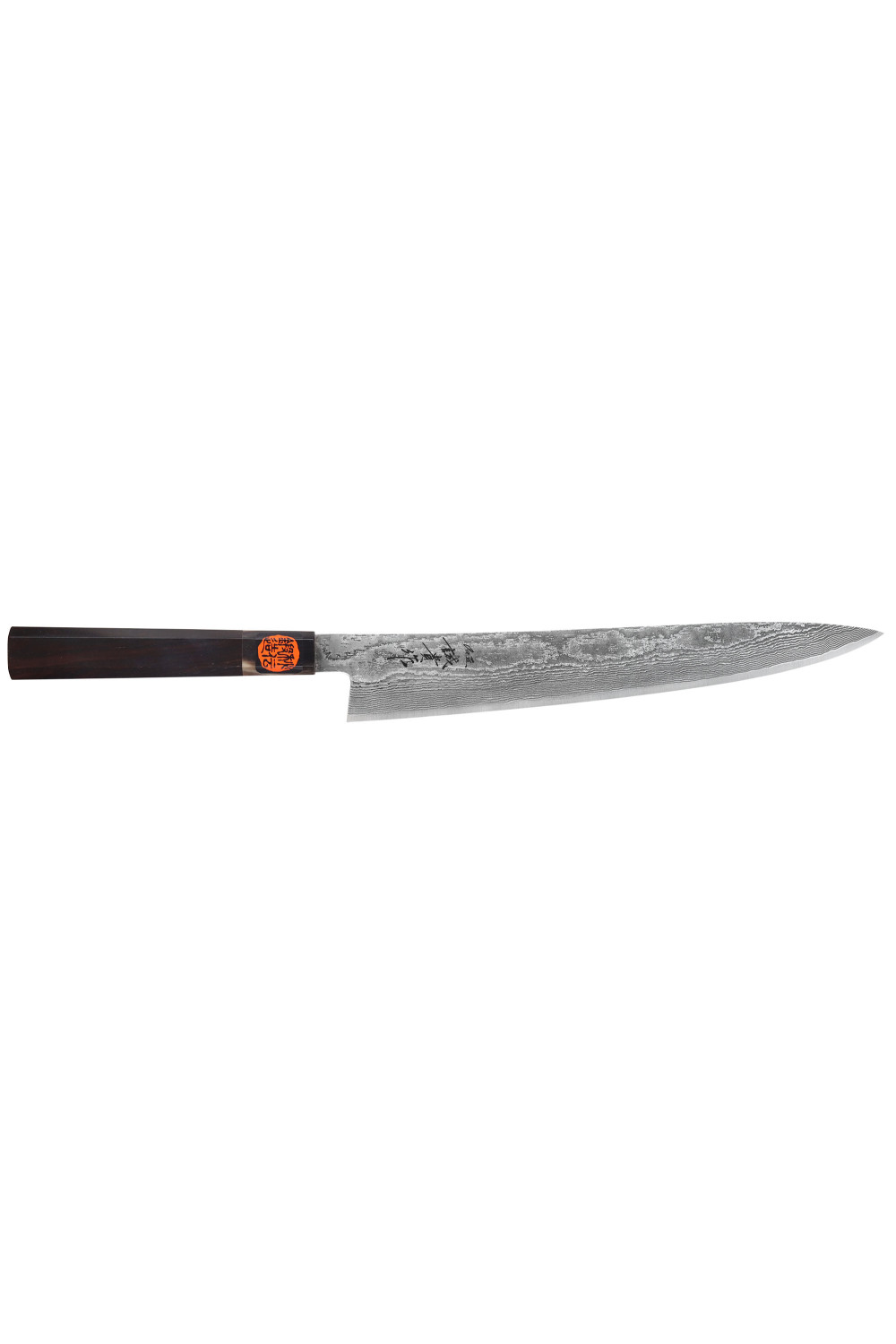
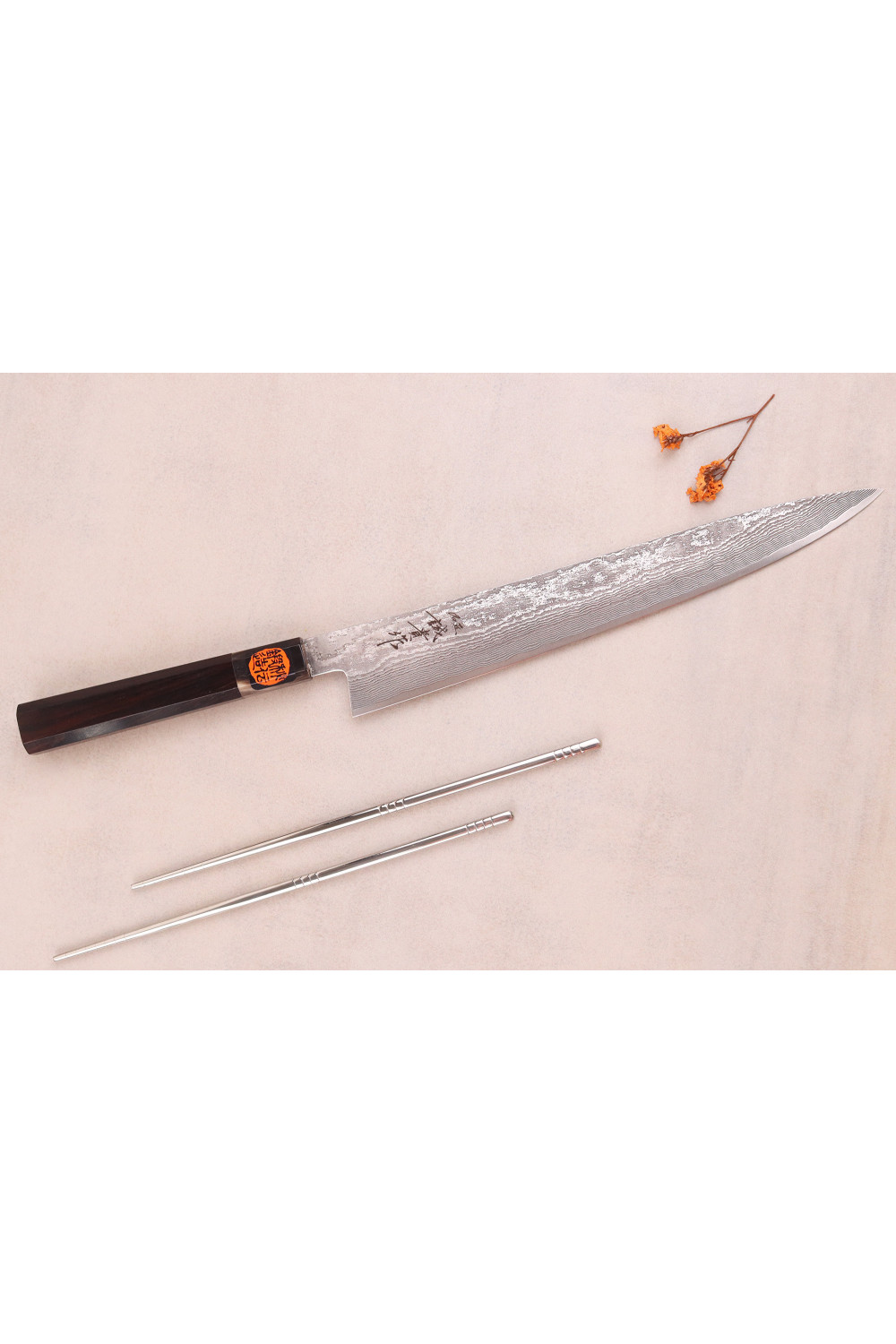
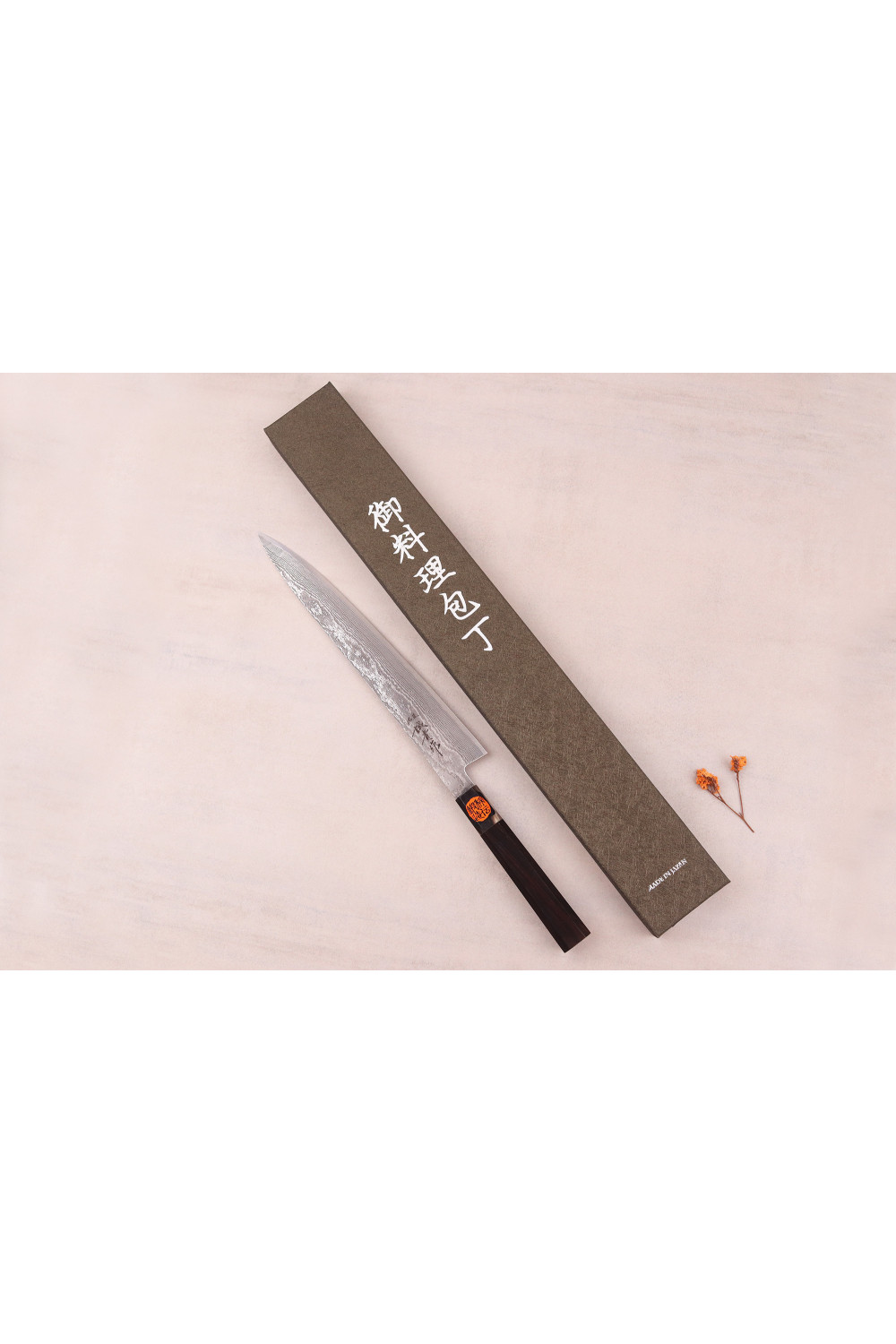
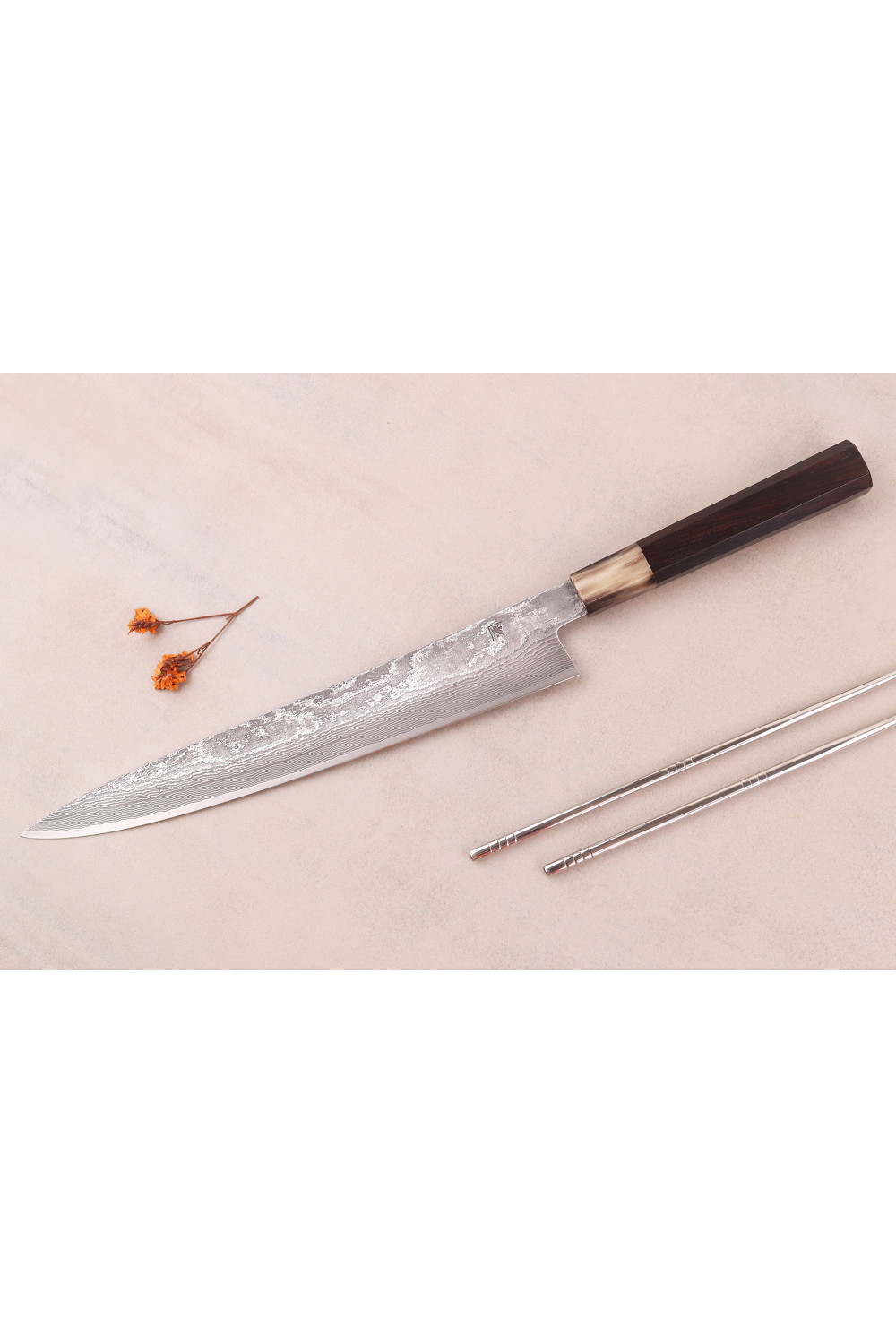
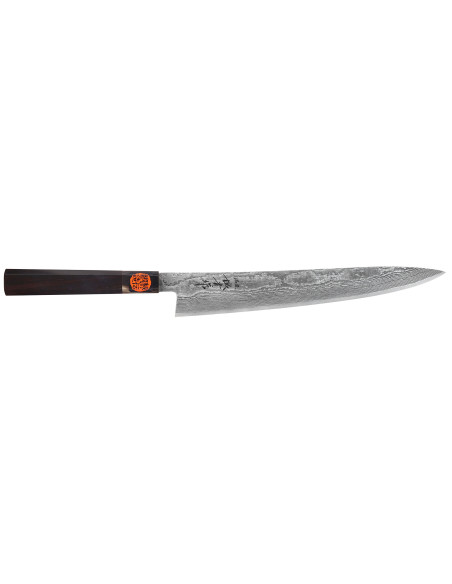
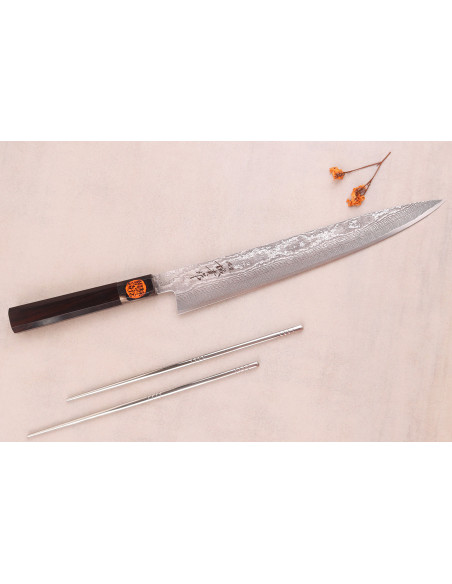
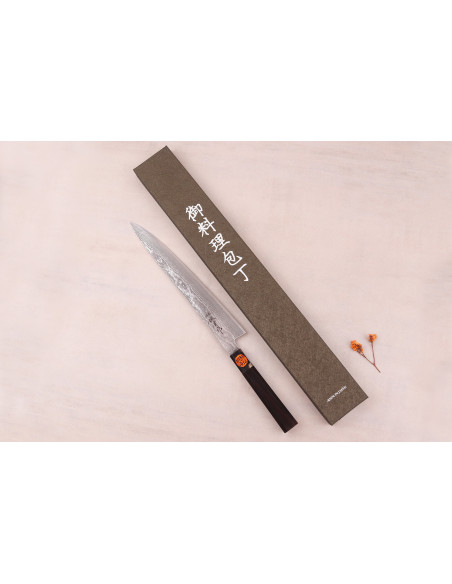
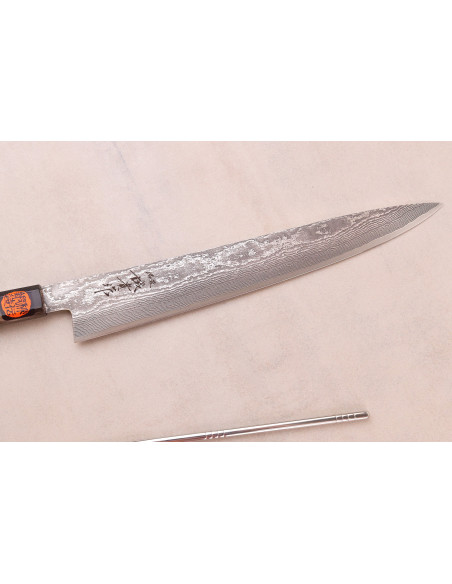
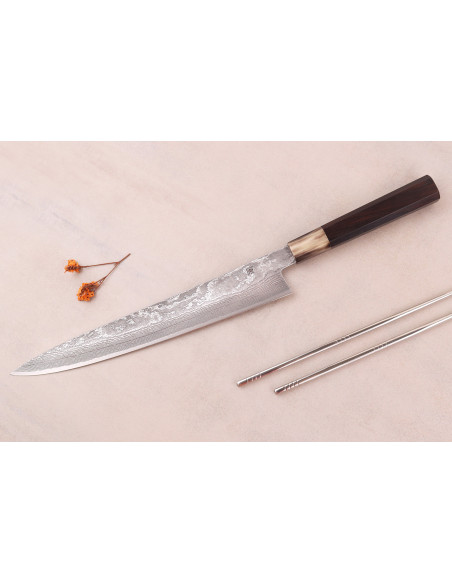
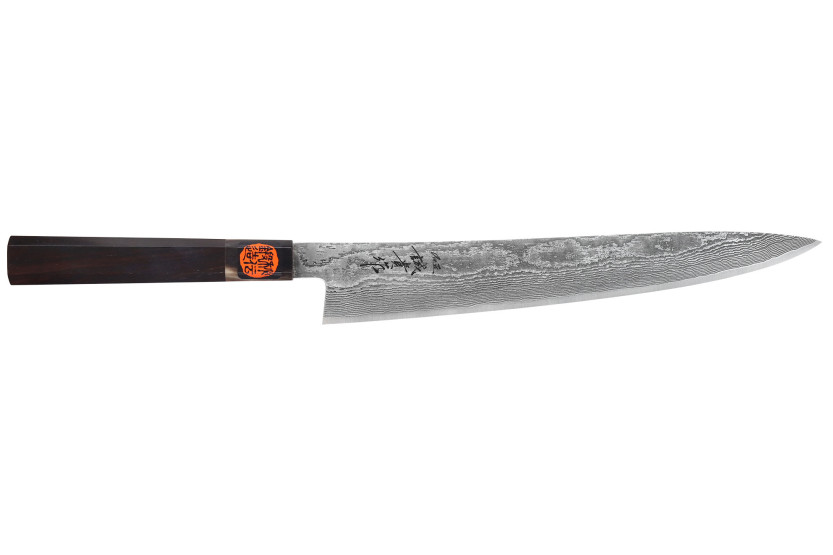
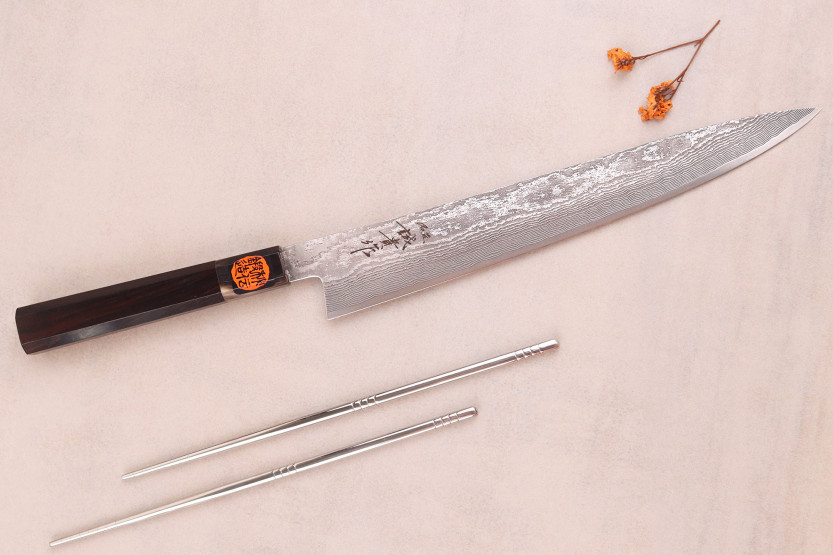
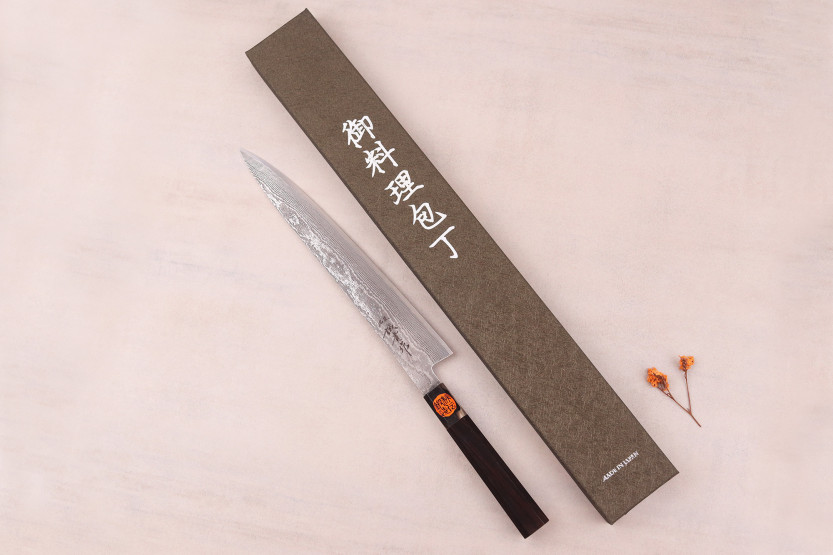
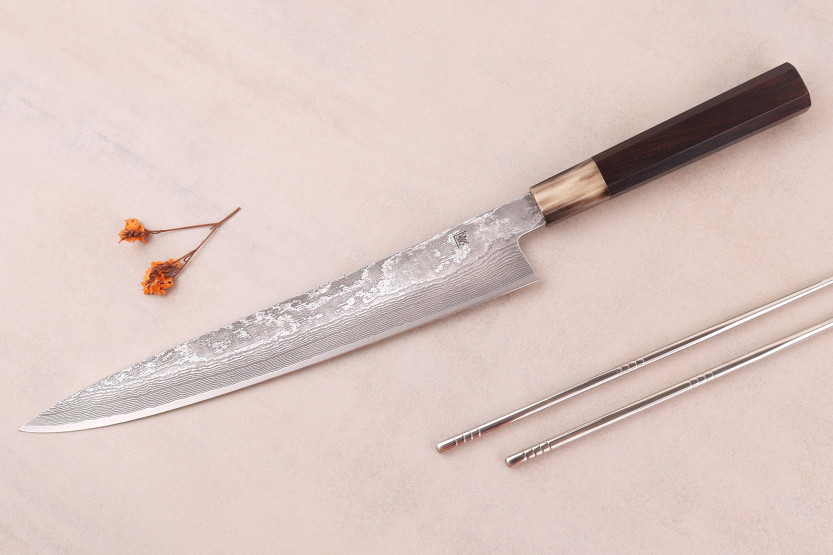
Handcrafted in Miki, in Japan’s Hyōgo Prefecture, this Shigeki Tanaka SG2 Kurozome Damascus sujihiki knife combines traditional craftsmanship, premium materials, and refined finishes. Its 27-cm blade is designed to produce clean slices of meat, fish, deli meats, or pieces of fruit and vegetables. The sujihiki’s straight shape facilitates a fluid cutting motion without excessive back-and-forth movements. Its black finish, damascene patterns, and engraved kanji characters give it a particularly refined look.
A precise and durable SG2 steel blade
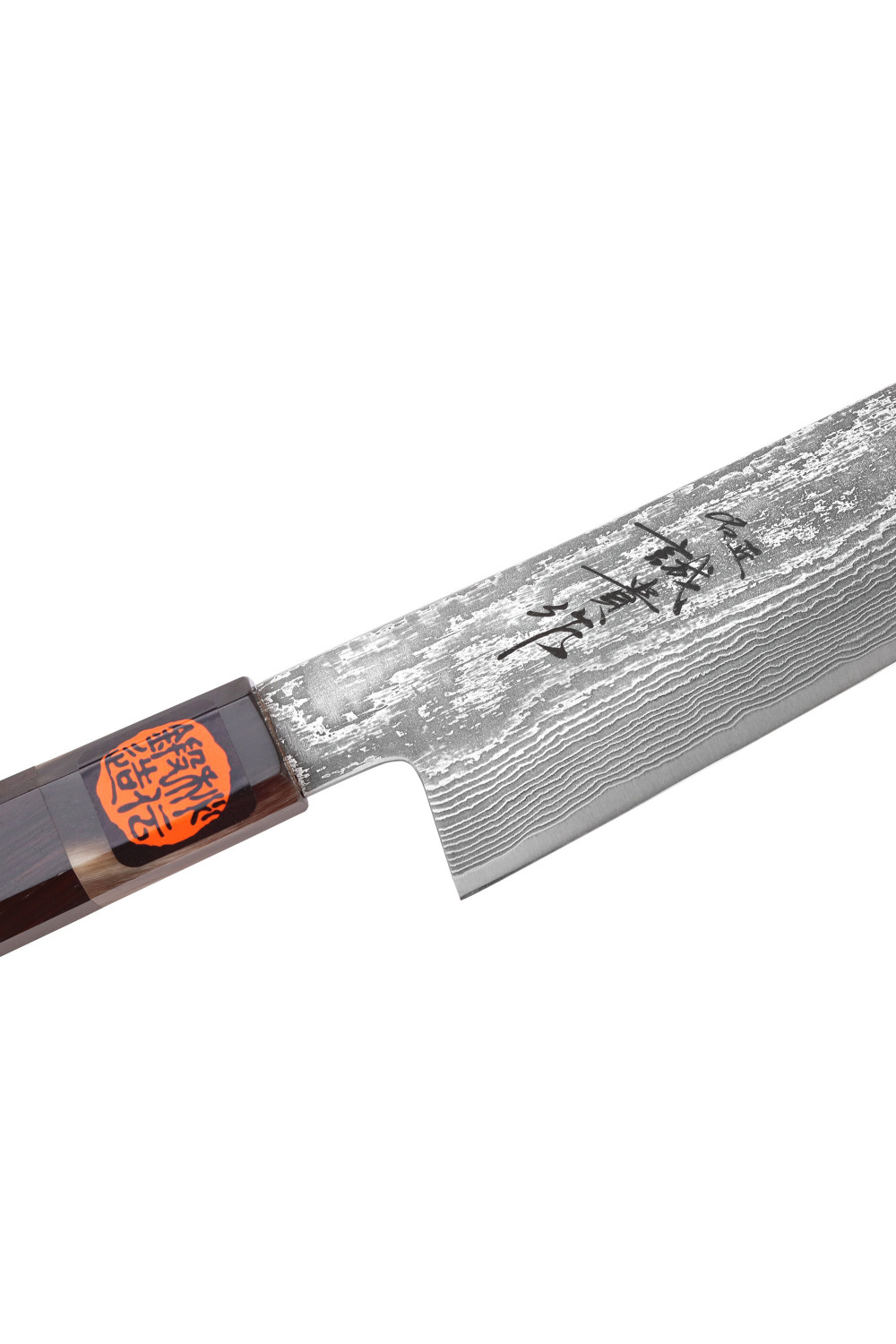
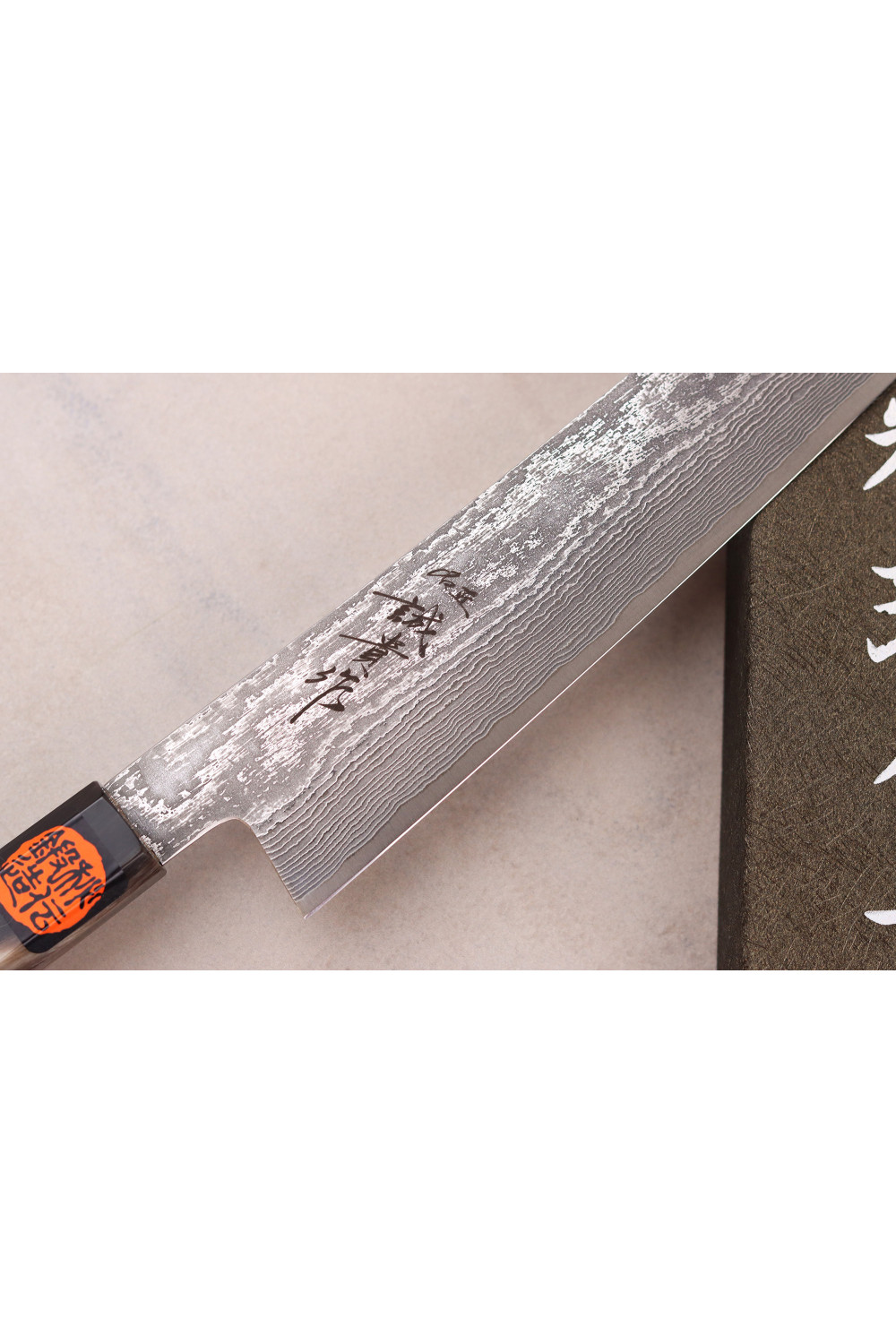
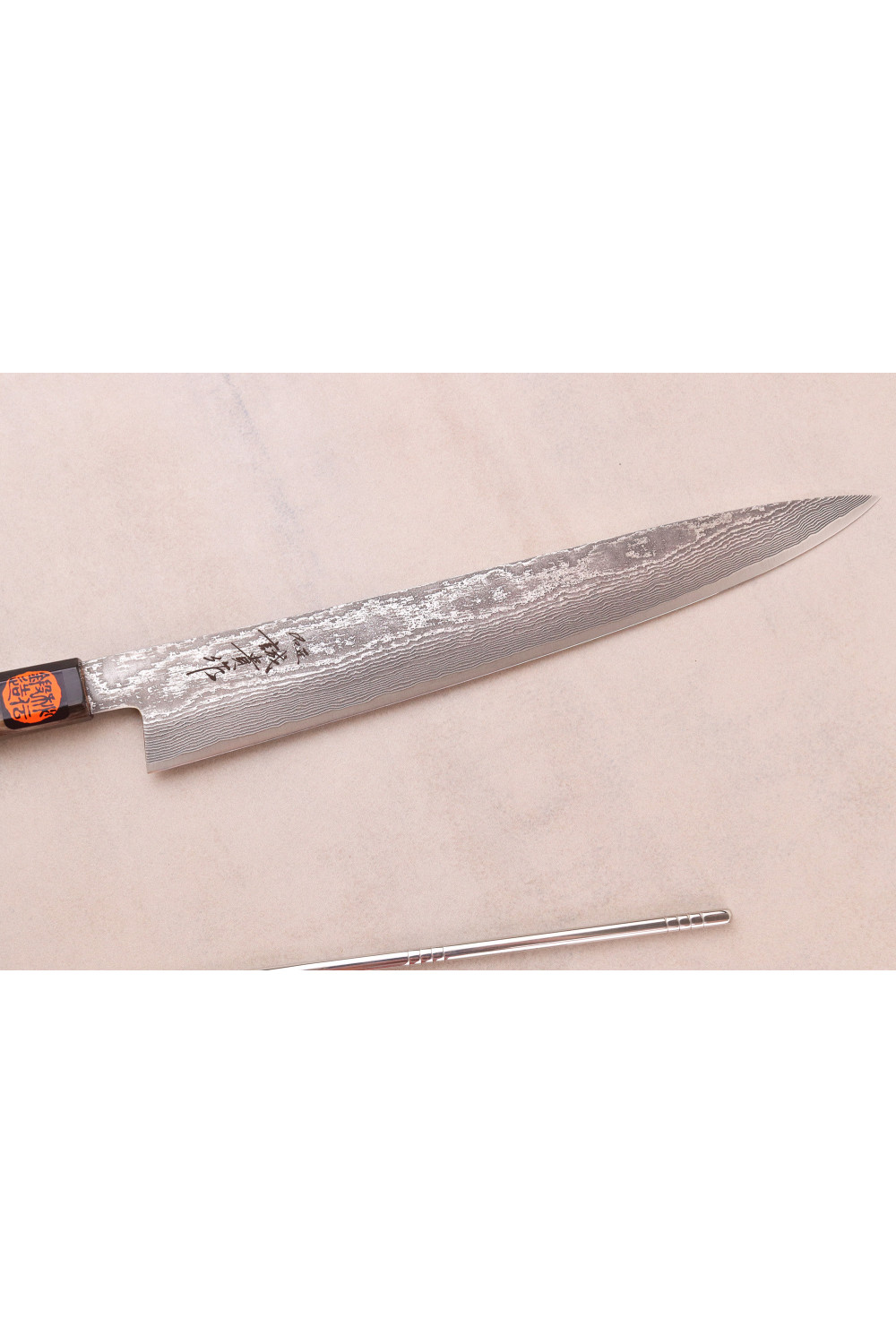
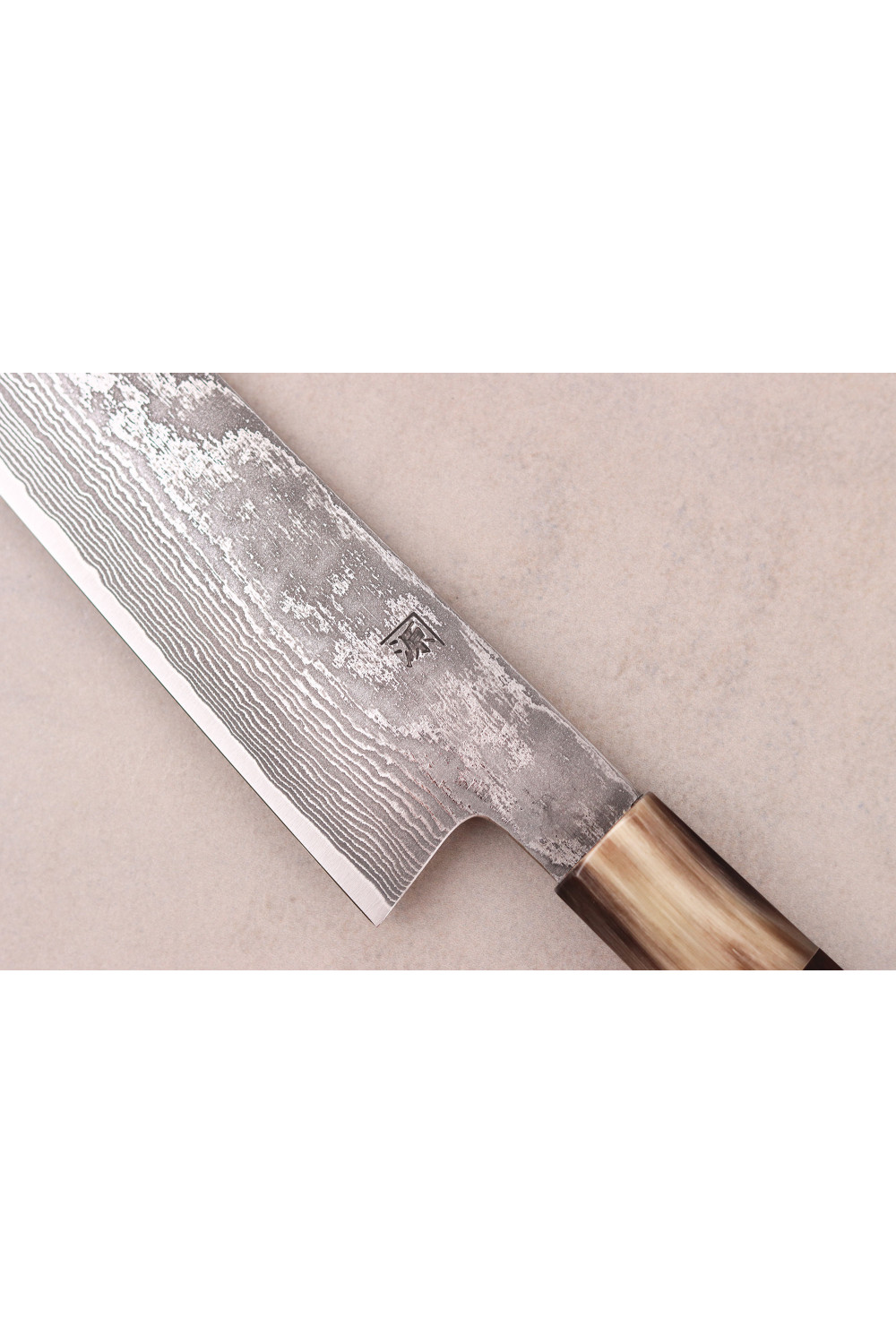
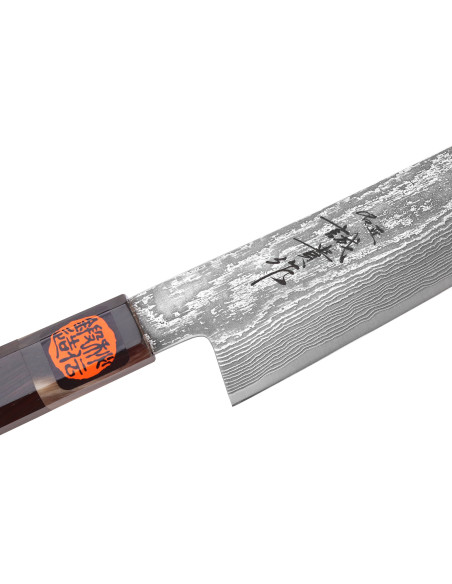
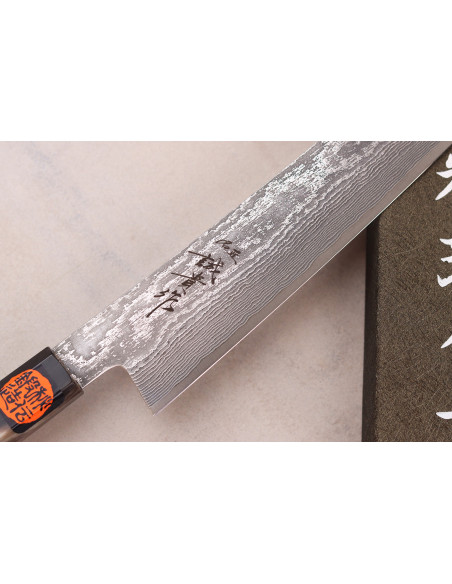
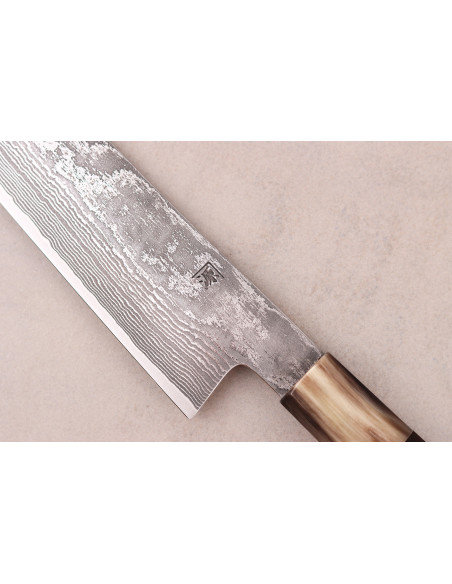
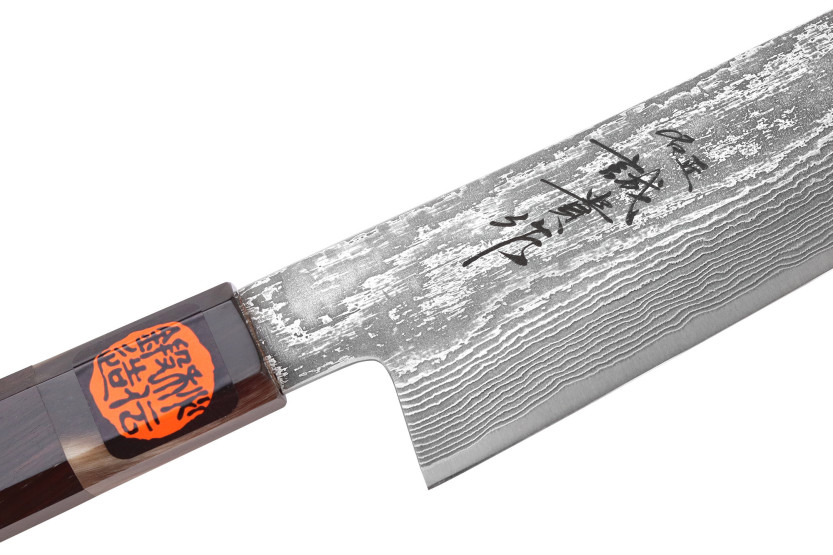
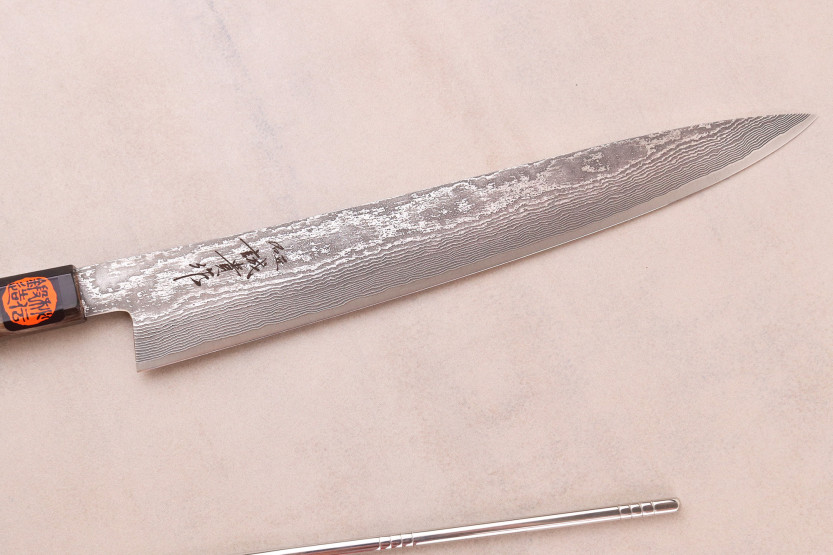
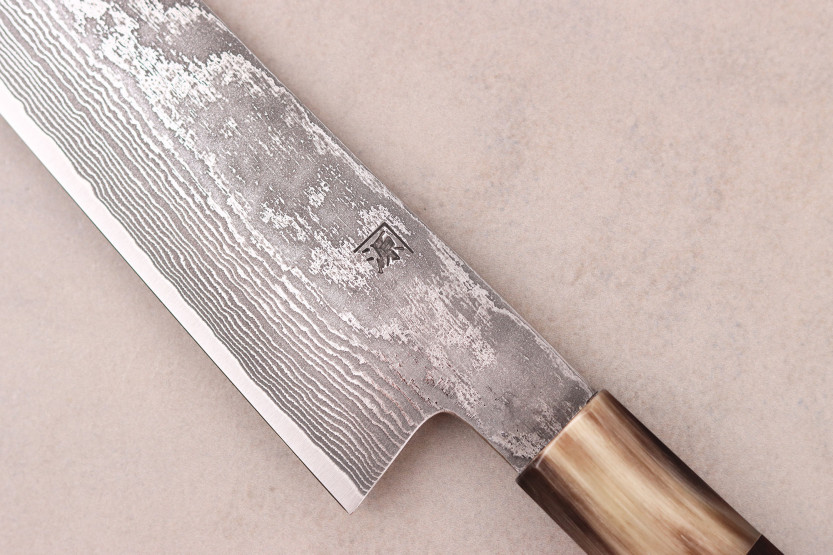
The 27-cm damascened blade is composed of 33 layers of steel stacked on top of one another. These layers encase a core of Japanese SG2 powder steel, a high-end alloy containing approximately 1.3% carbon—a carbon content that results in an extremely hard blade capable of retaining its edge for a long time. The outer layers are made of stainless steel, which makes it easier to maintain the sides of the blade.
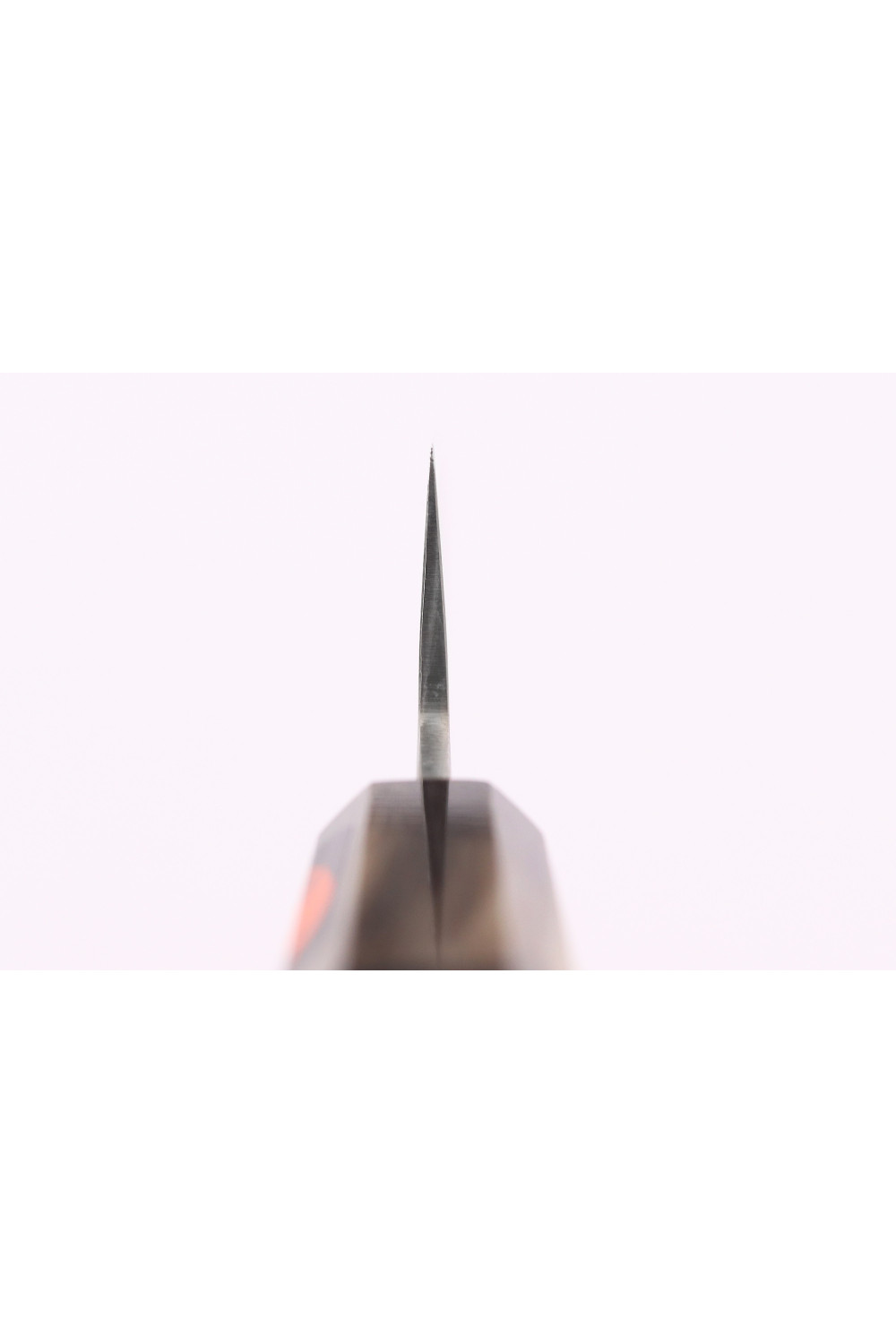
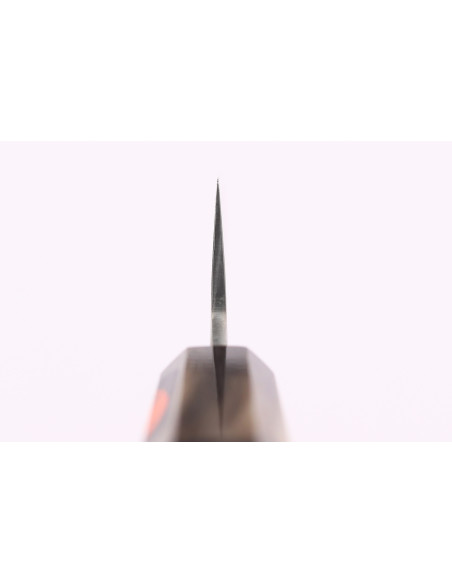
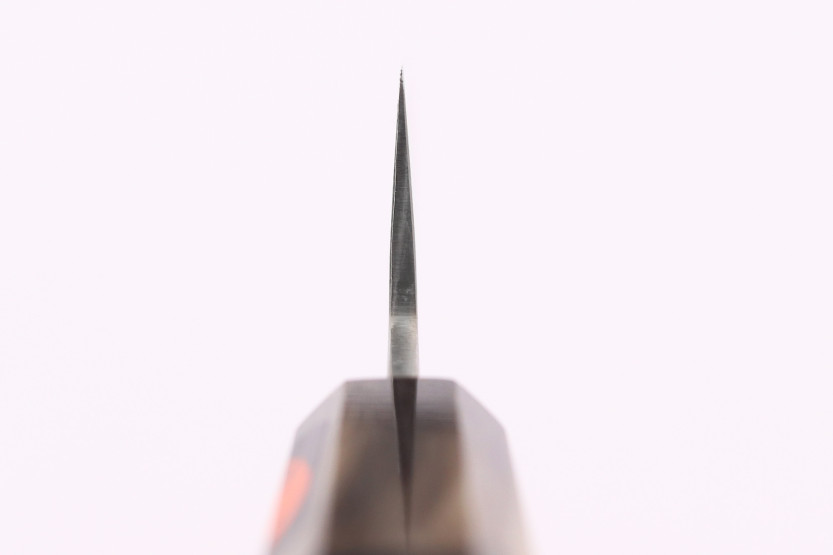
With a hardness of nearly 63 HRC, the cutting edge offers excellent wear resistance while still being suitable for sharpening on a whetstone.The flat grind provides a uniform geometry and precise contact with food. It is particularly well-suited for long, controlled cuts, typical of the sujihiki.
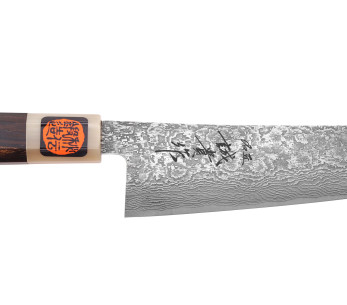
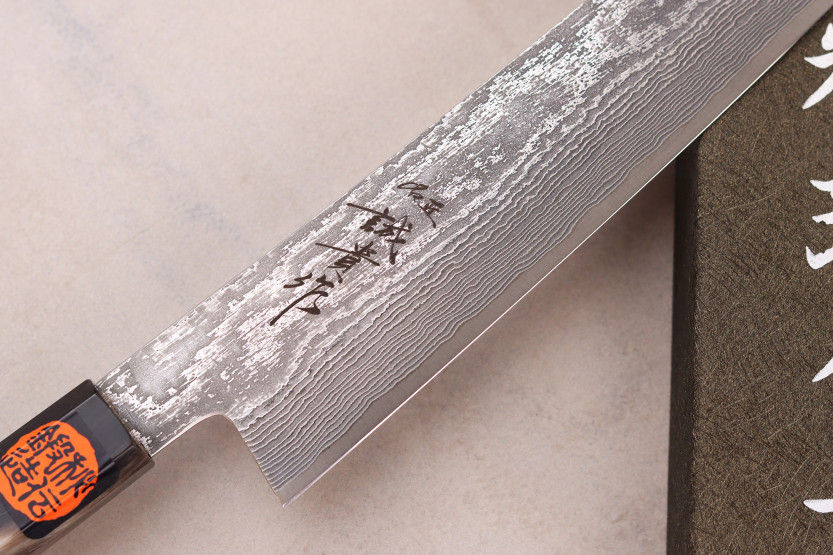
The Kurozome finish, which can be translated as “black dye, ” reduces glare from the steel and gives the blade a very elegant, dark appearance. It also provides additional protection against corrosion and helps extend the blade’s lifespan.
The engraved kanji characters complete this finish: the front bears an inscription referencing the work of the artisan Shigeki, while the back is marked “Minamoto.”
A unique ebony handle
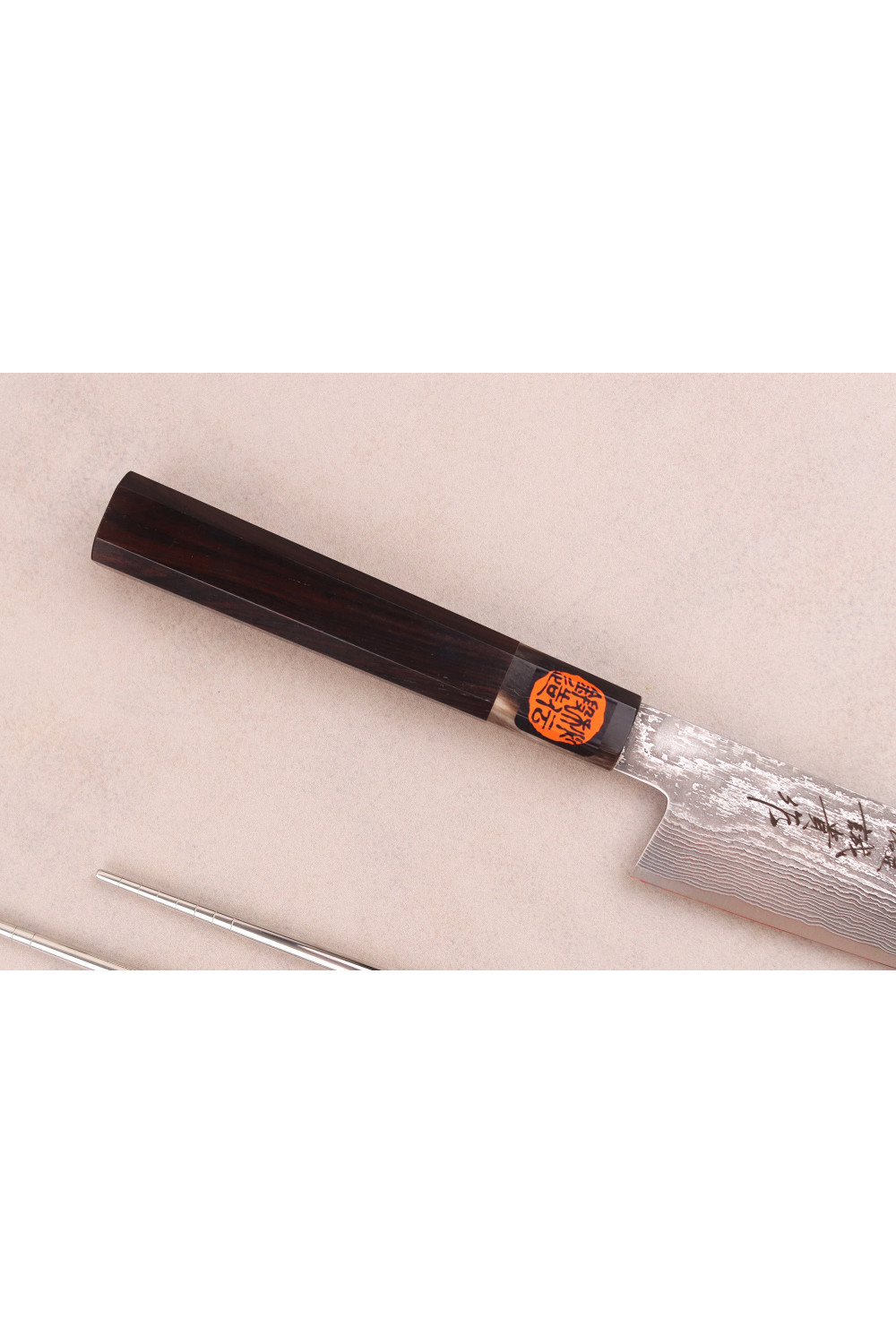
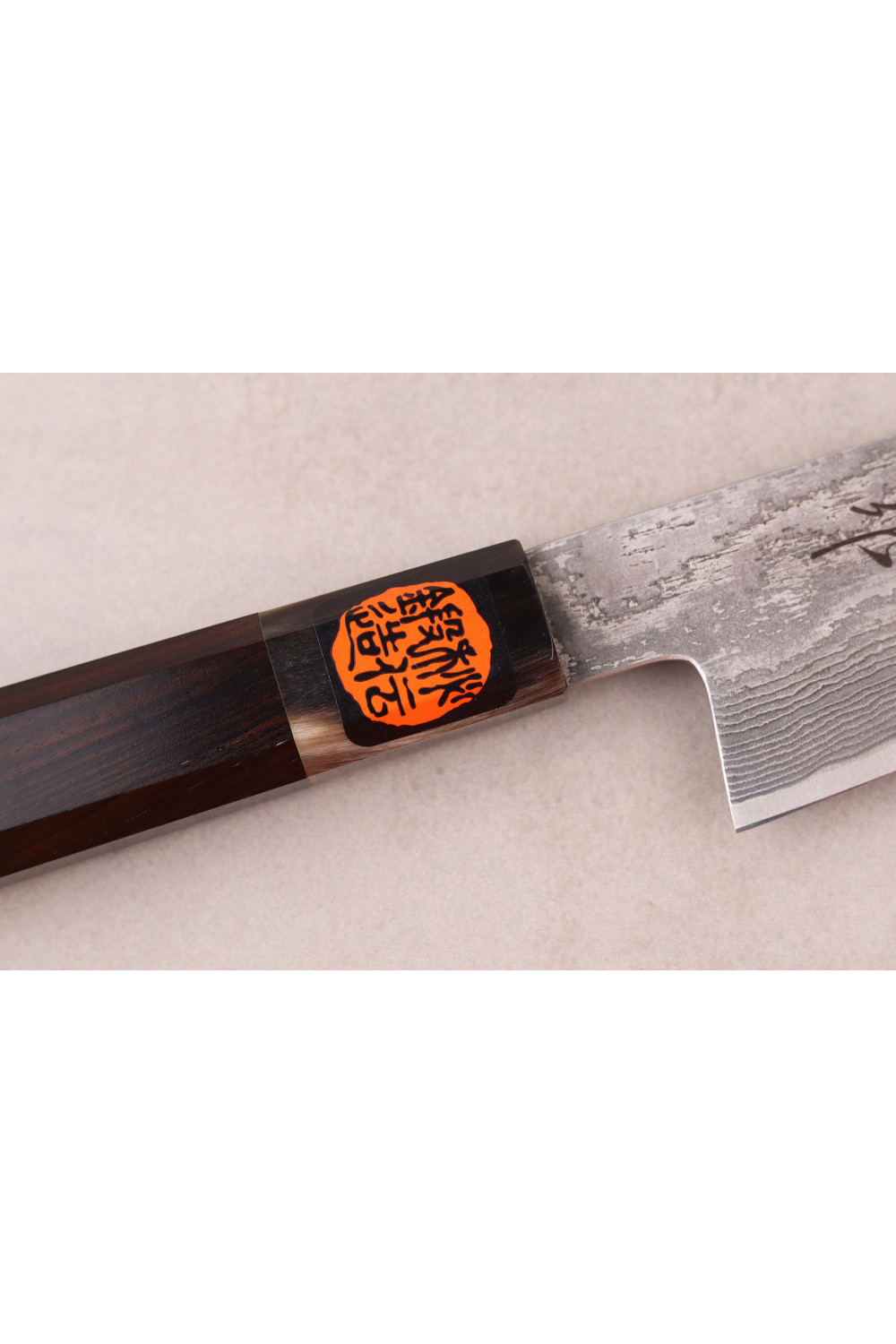
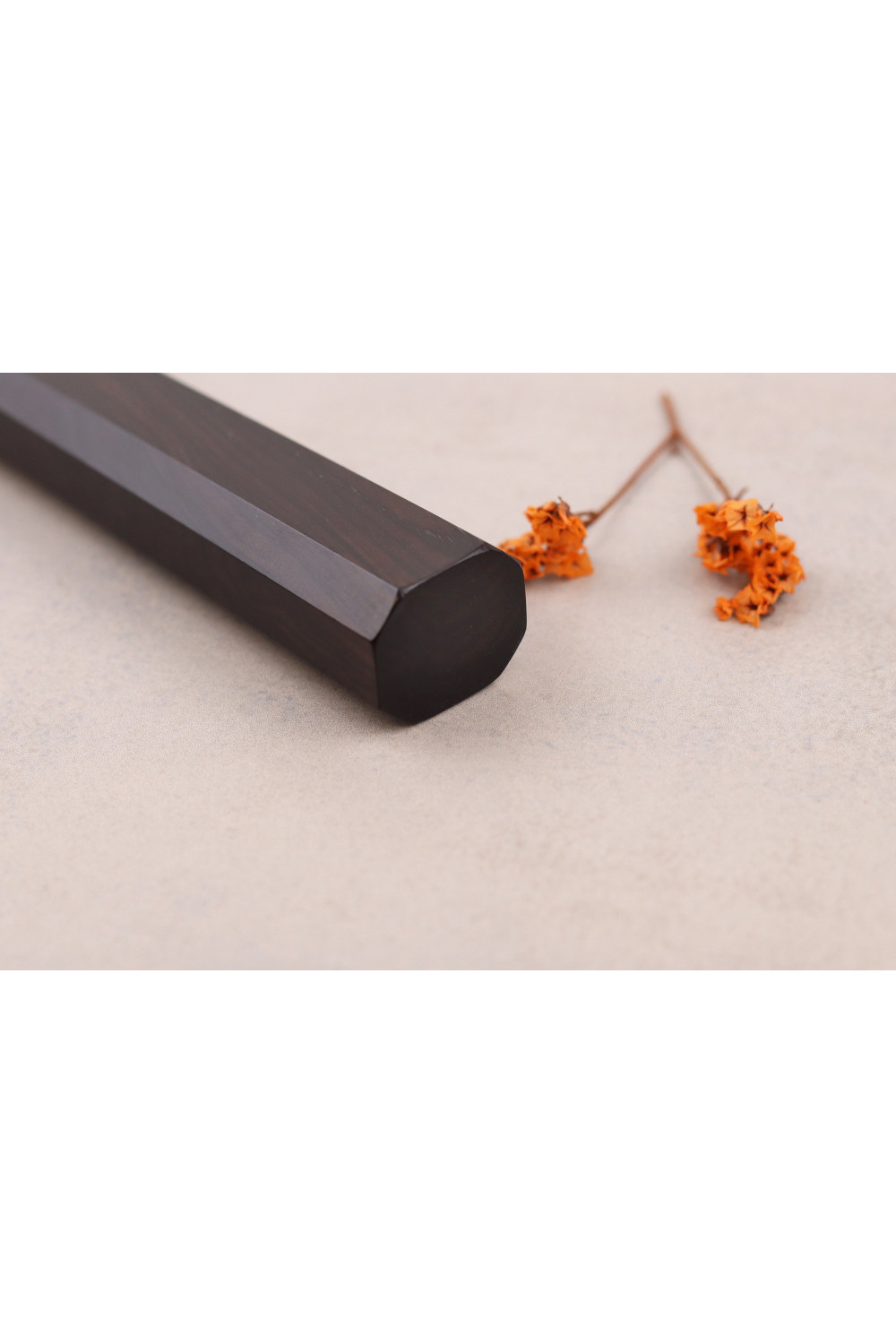
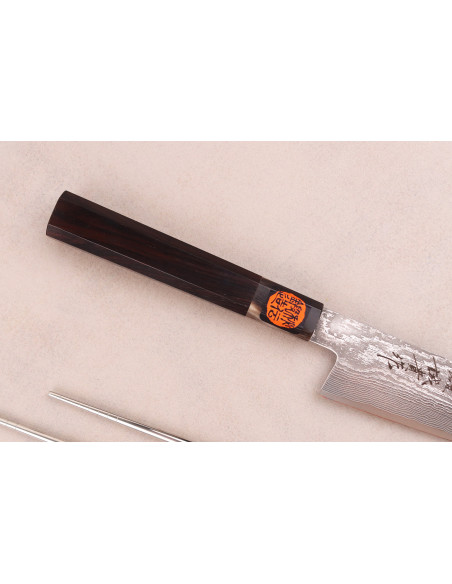
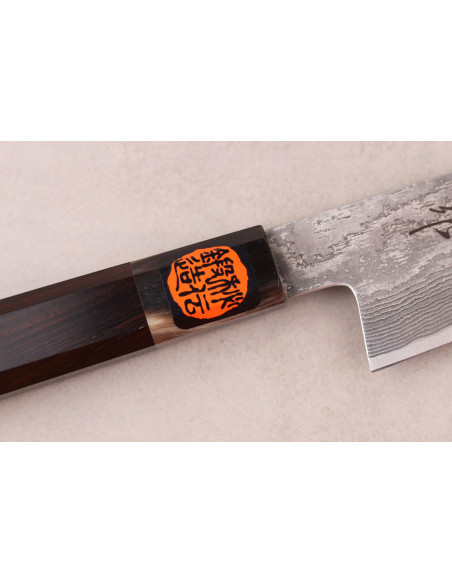
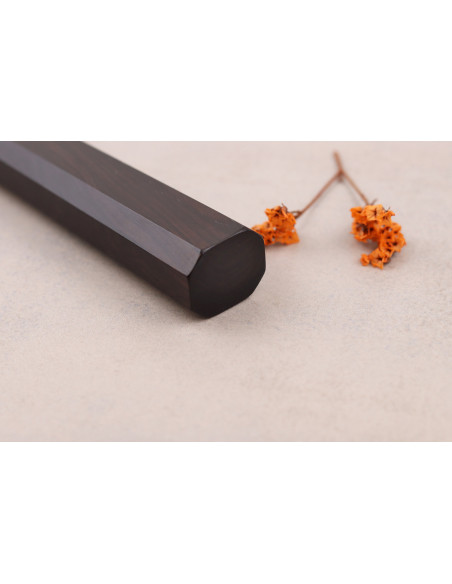
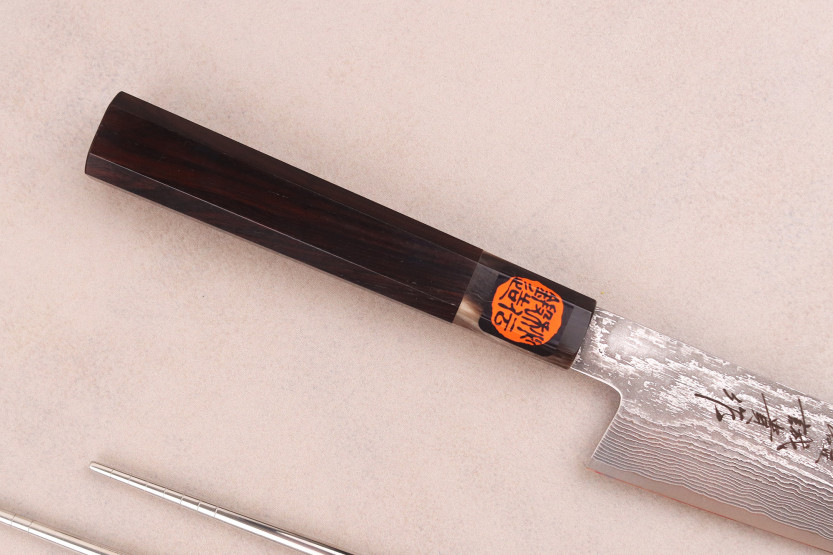
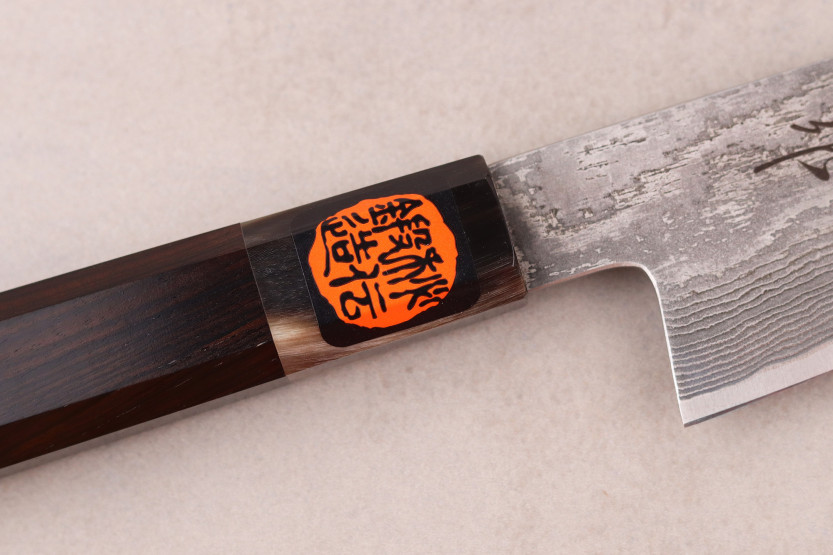
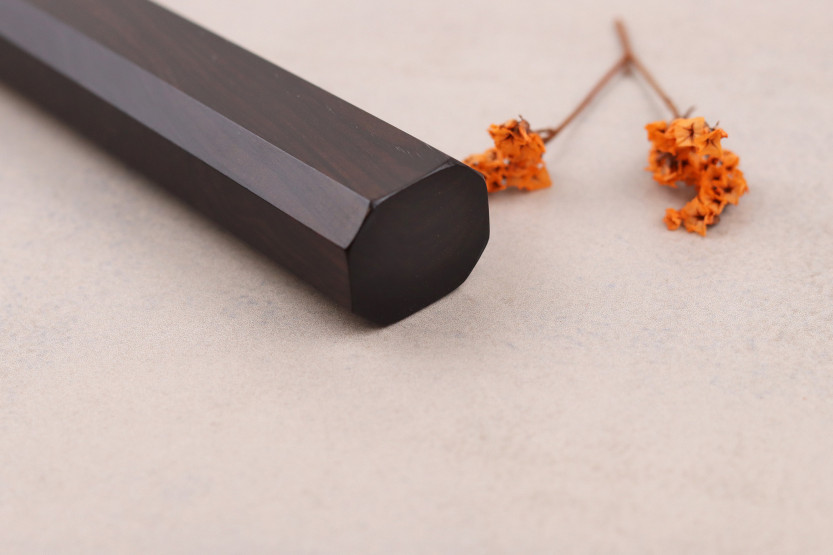
The handle is crafted from ebony, a premium natural wood prized for its density, visual depth, and variations in grain. Each piece thus has a distinct appearance. This uniqueness reinforces the artisanal character of this high-end, handcrafted Japanese knife.
The white buffalo horn bolster provides an elegant transition between the blade and the handle. This natural material also features nuances unique to each piece. The contrast between the dark ebony, the light horn, and the Kurozome blade creates a simple and harmonious whole.
The octagonal handle provides multiple points of contact with the hand. This design improves stability while cutting and is suitable for both right- and left-handed users. It also allows for easy orientation of the cutting edge and control of the blade along its entire length. The sujihiki thus remains easy to handle despite its long 27-cm blade.
Key Benefits at a Glance
-
- 27-cm blade: allows for long, even slices
- 33 layers of damask steel: provide visual depth and an intricate structure
-
- SG2 steel with approximately 1.3% carbon: promotes a long-lasting edge
- Hardness of 63 HRC: reduces the frequency of sharpening
- Flat grind: ensures a clean, controlled cut
- Kurozome finish: reduces glare and enhances protection
-
- Ebony handle: natural aesthetic unique to each piece
- White buffalo horn bolster: elegant transition
- Octagonal shape: ambidextrous grip
- Forged by Shigeki Tanaka: Japanese family craftsmanship
Usage and Care Instructions
Use this knife on a wooden or soft-surface cutting board. Avoid bones, frozen foods, and twisting motions, which can damage the blade edge. Wash the blade by hand with a soft sponge, then dry it immediately. Do not put it in the dishwasher, nor should you let it soak for long periods. Wipe the blade regularly while in use. A thin layer of mineral oil may be applied before storing the knife for an extended period. For sharpening, use a whetstone suitable for hard steels around 63 HRC.
The Expertise of Shigeki Tanaka
Shigeki Tanaka is a young fourth-generation Japanese blacksmith. The family’s history began during the Meiji era, when his great-grandfather Gentaro made sickles. His grandfather and father subsequently carried on this traditional craft.
Trained at the Takefu Knife Village in Echizen, Shigeki Tanaka joined the family workshop in Miki in 1999 after three years of apprenticeship. He then gradually began focusing on crafting kitchen knives. After his father’s passing, the workshop shifted its focus to handcrafted knives.
Located in Hyōgo Prefecture, the city of Miki has a long tradition of tool and blade making. In his workshop, Shigeki Tanaka works with a small team and performs various stages of production by hand: forging, shaping, sharpening, and finishing. His knives are available in several types of steel, patterns, and finishes, including models made of SG2 steel, damask steel, or with a Kurozome finish.
Find knives forged by Shigeki Tanaka at Knifeleader.eu!




 By buying this product you can collect up to