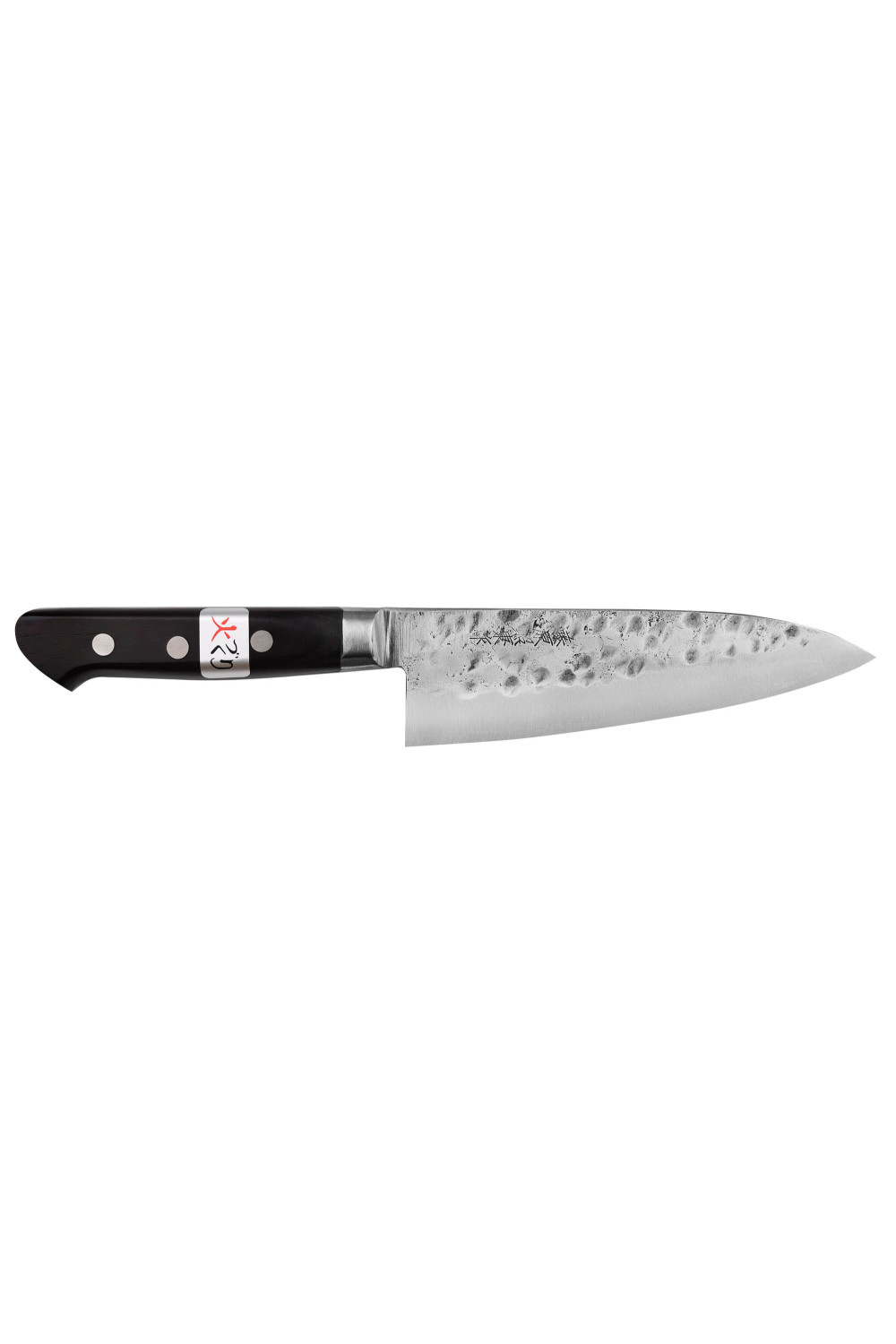
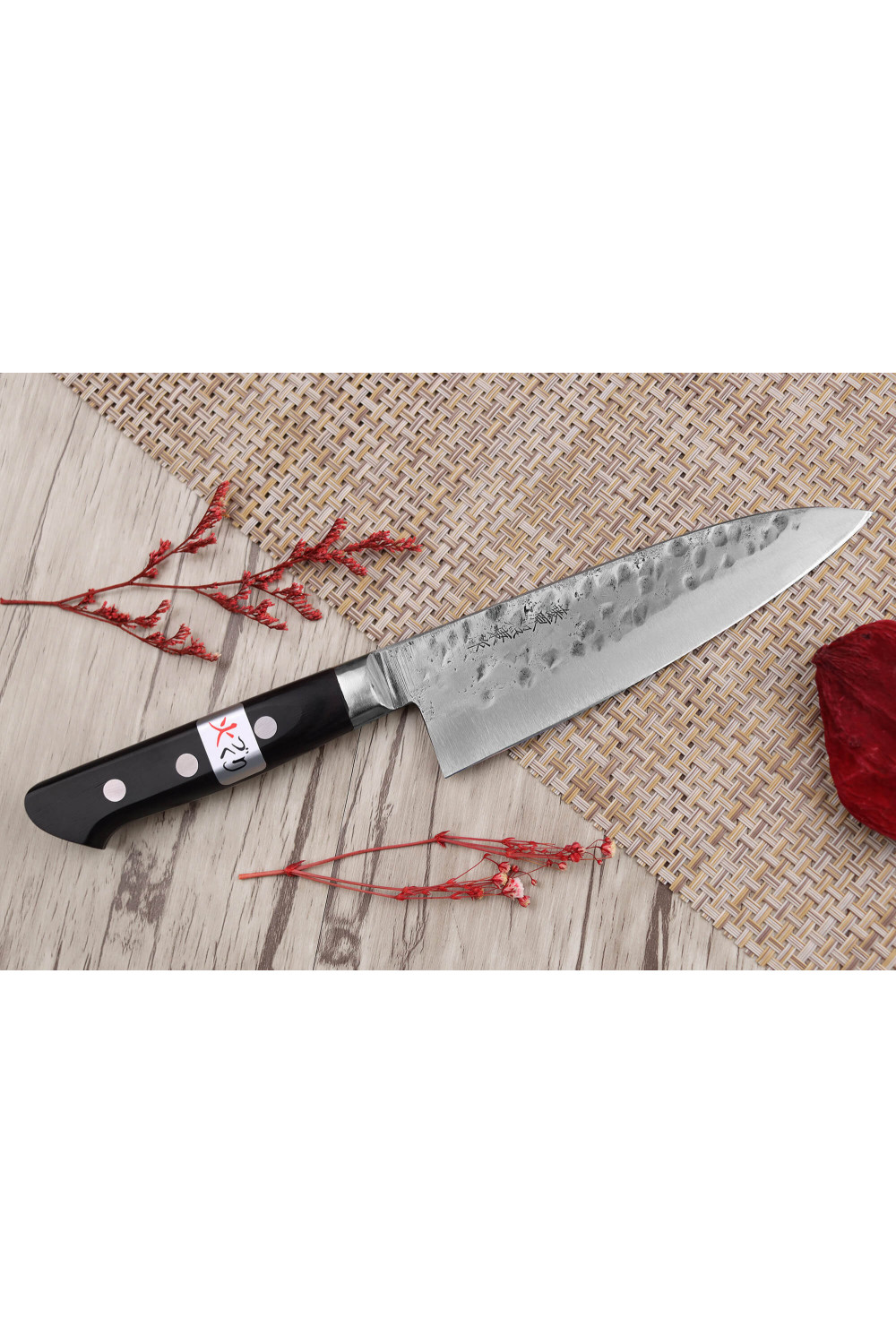
Fujiwara Teruyasu Japanese knives are famous both in Japan and internationally. Based in Tokyo prefecture, this blacksmith equips both professional chefs and passionate amateurs. Its knives are meticulously crafted, reflecting its commitment to performance. Fujiwara Teruyasu is a perfectionist who ensures that his knives are remarkably sharp, guaranteeing impeccable cuts.
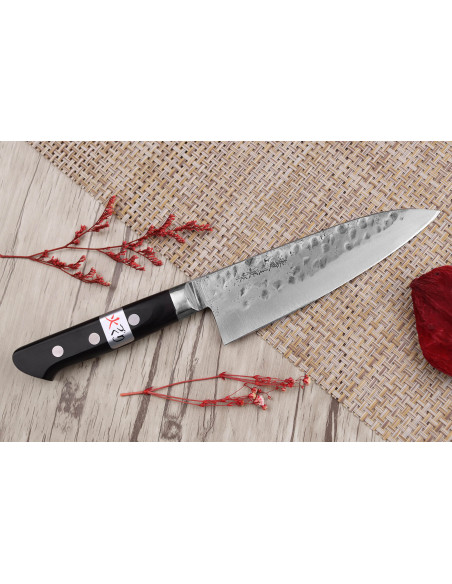
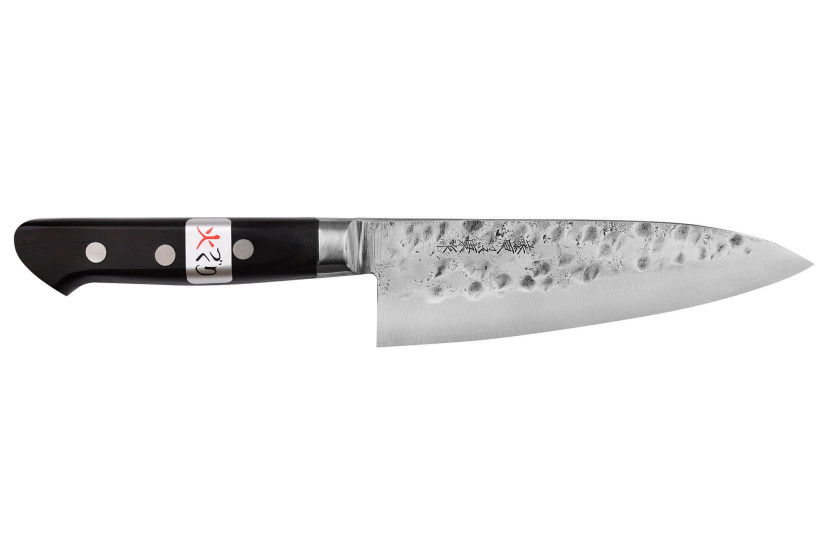
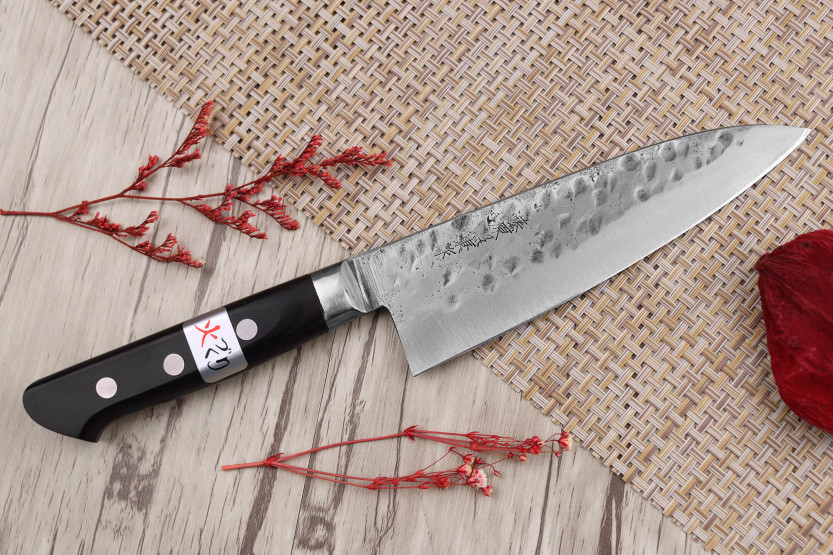
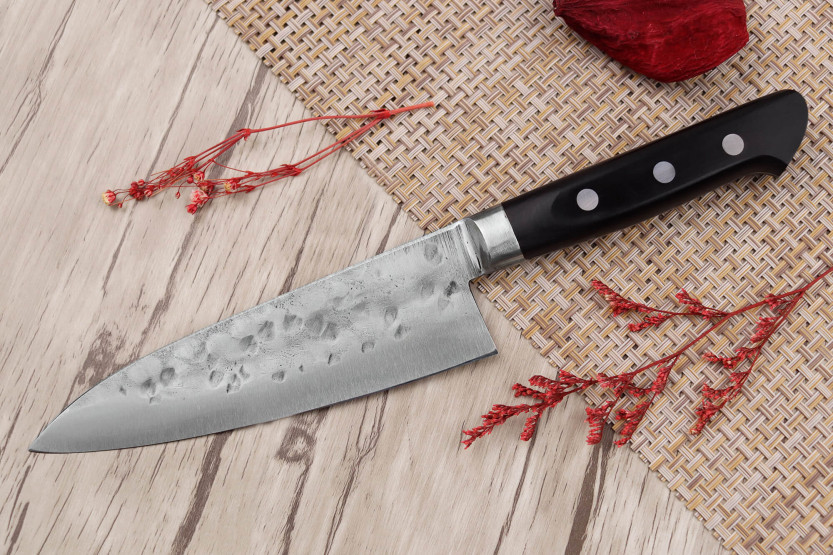
The Maboroshi Japanese chef's knife (also known as the gyuto knife) lets you effortlessly cut even the most difficult foods, such as tomatoes (with their tough skin and tender flesh). Versatile, this model can be used to slice, chop or mince meats, herbs and vegetables: a valuable addition to your equipment! However, it is recommended not to use it on ingredients that are too hard, such as squash, frozen foods, wheels of cheese, etc.
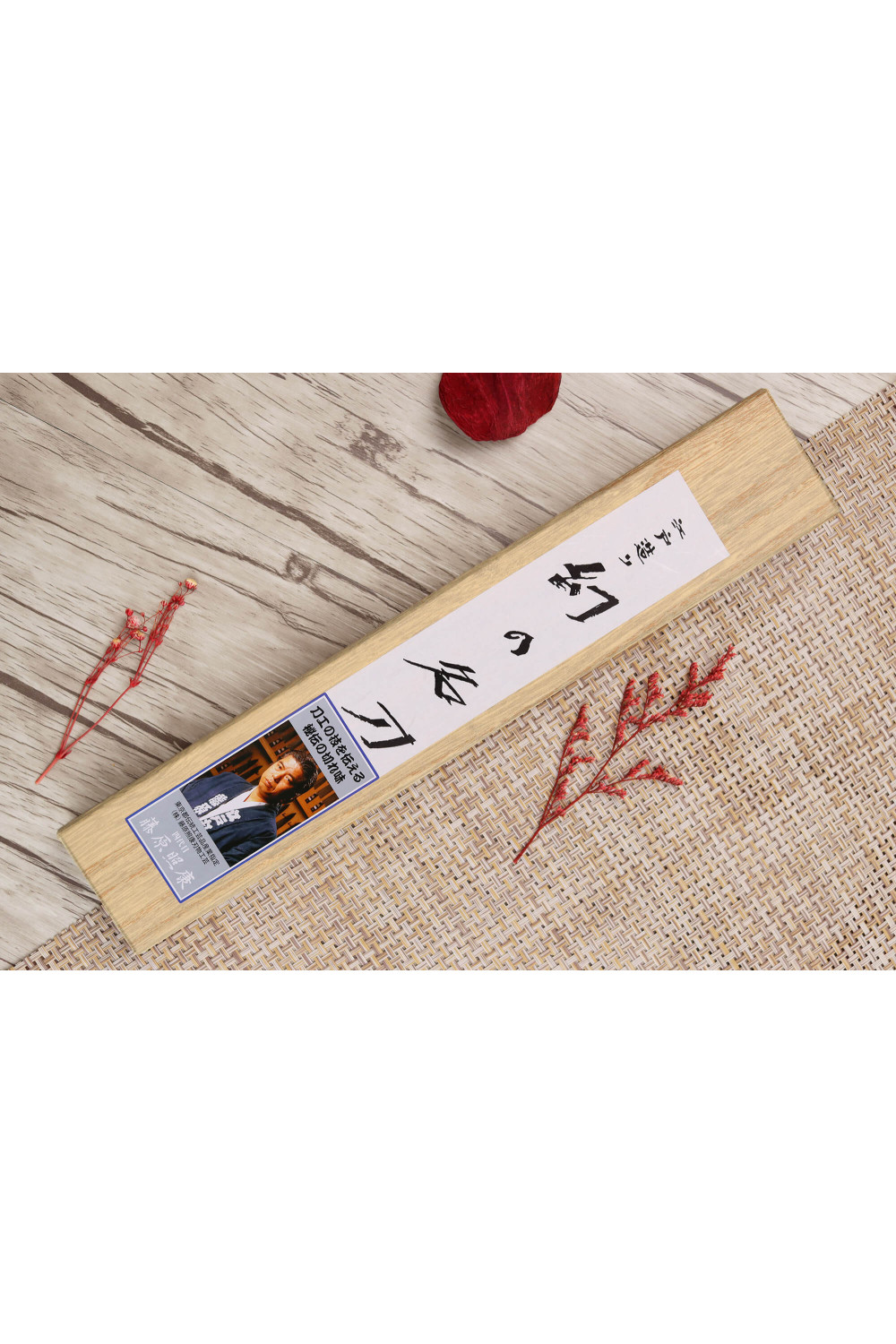
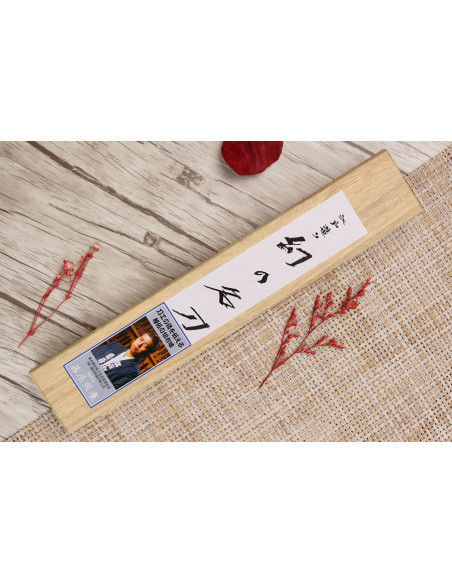
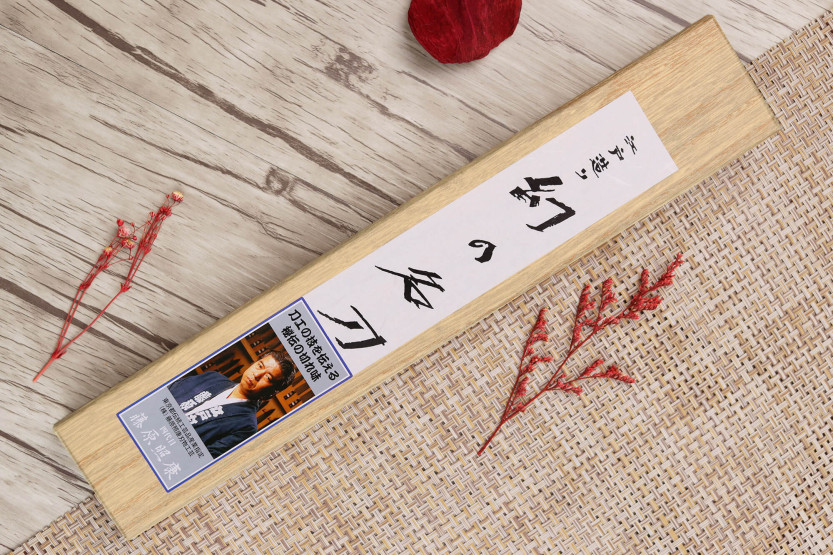
The name of the complete range of these knives is called Maboroshi no Meito, which can be translated as "The victorious visionary sword", reflecting their exceptional quality!
A handcrafted Japanese knife by a renowned blacksmith
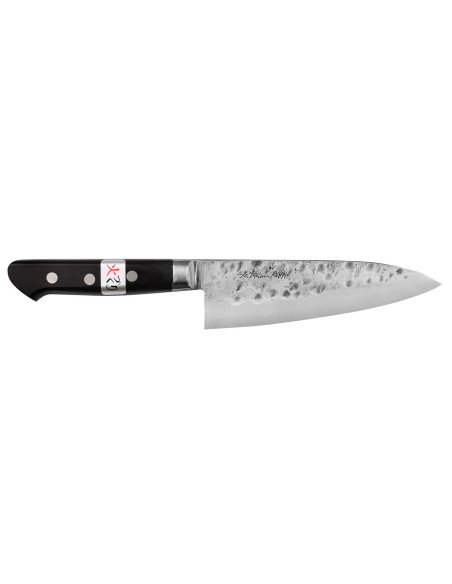
The blade of this handcrafted Japanese knife is called San Maï, which literally means "3 layers". This structure consists of a rigid steel core, surrounded by a softer layer (the second layer is folded, hence the "3 layers"). The result is a well-balanced blade, more resistant and effective over time.
At the heart of this structure isJapanese Shirogami 1 steel, a hard steel chosen by Fujiwara san. This alloy is produced by the prestigious steelmaker Hitachi, who supplies many blacksmiths. Shirogami steel (also known as White Steel) is packaged in white protective paper, hence its original name ("shiro" meaning "white"). It is enriched with approximately 1.3% carbon, giving it above-average hardness. It reaches 62HRC Rockwell, ensuring excellent edge retention despite repeated use.
Carbon is one of the main elements in the alloy, contributing to the blade's increased hardness. A rigid blade can maintain a sharp edge longer than a "softer" blade. This is a real advantage when it comes to spacing out sharpening sessions. It is important to note that a hard blade is not synonymous with an unbreakable blade. Contrary to what you might think, the harder a blade is, the more likely it is to break, as it is less flexible to absorb shocks. For this reason, we recommend that you do not use this handcrafted Japanese knife to cut food that is too hard, as explained above.
Shirogami is a steel that sharpens easily, whenever necessary. It is coated with a softer layer of stainless steel, adding suppleness to its hardness for pleasant use.
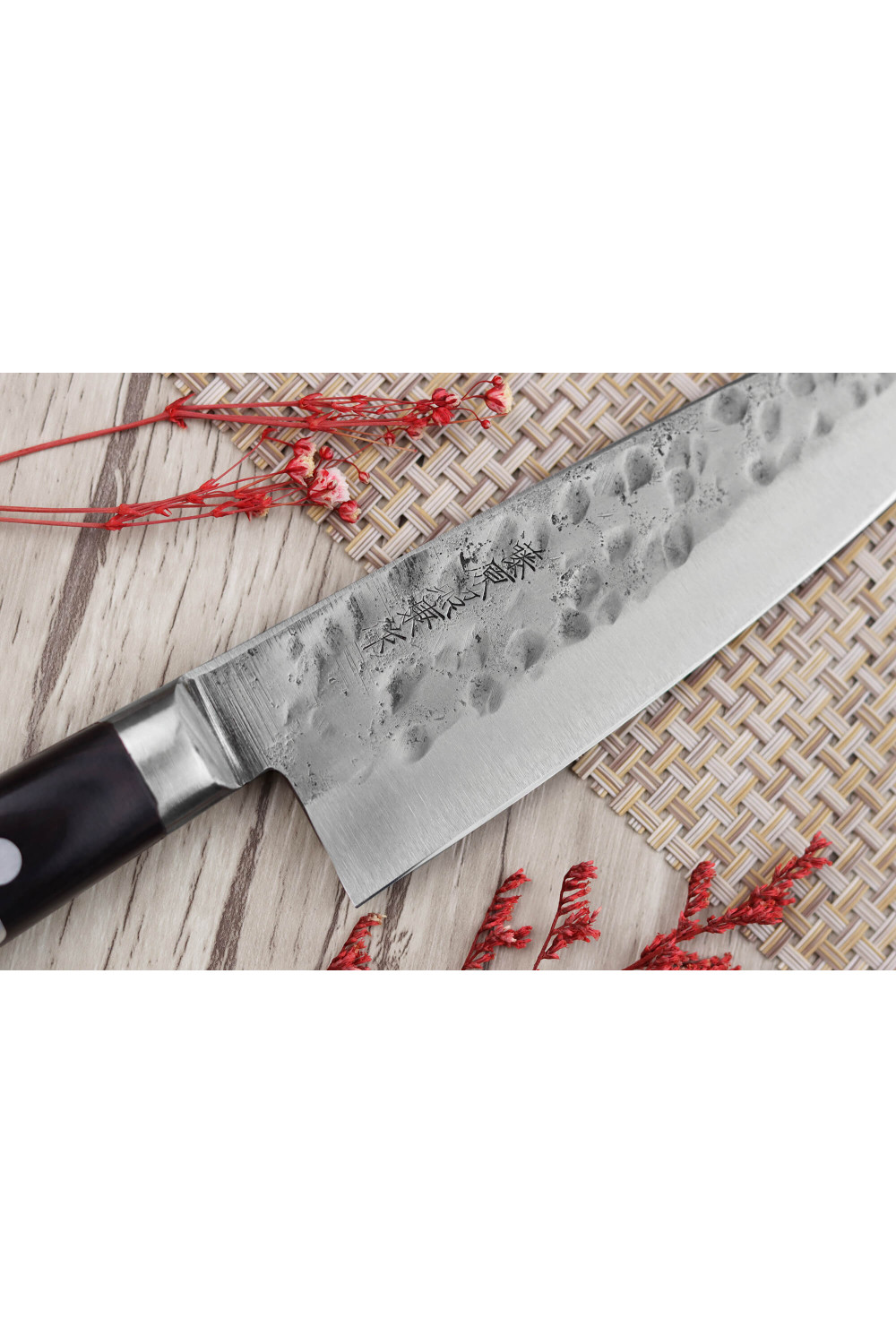
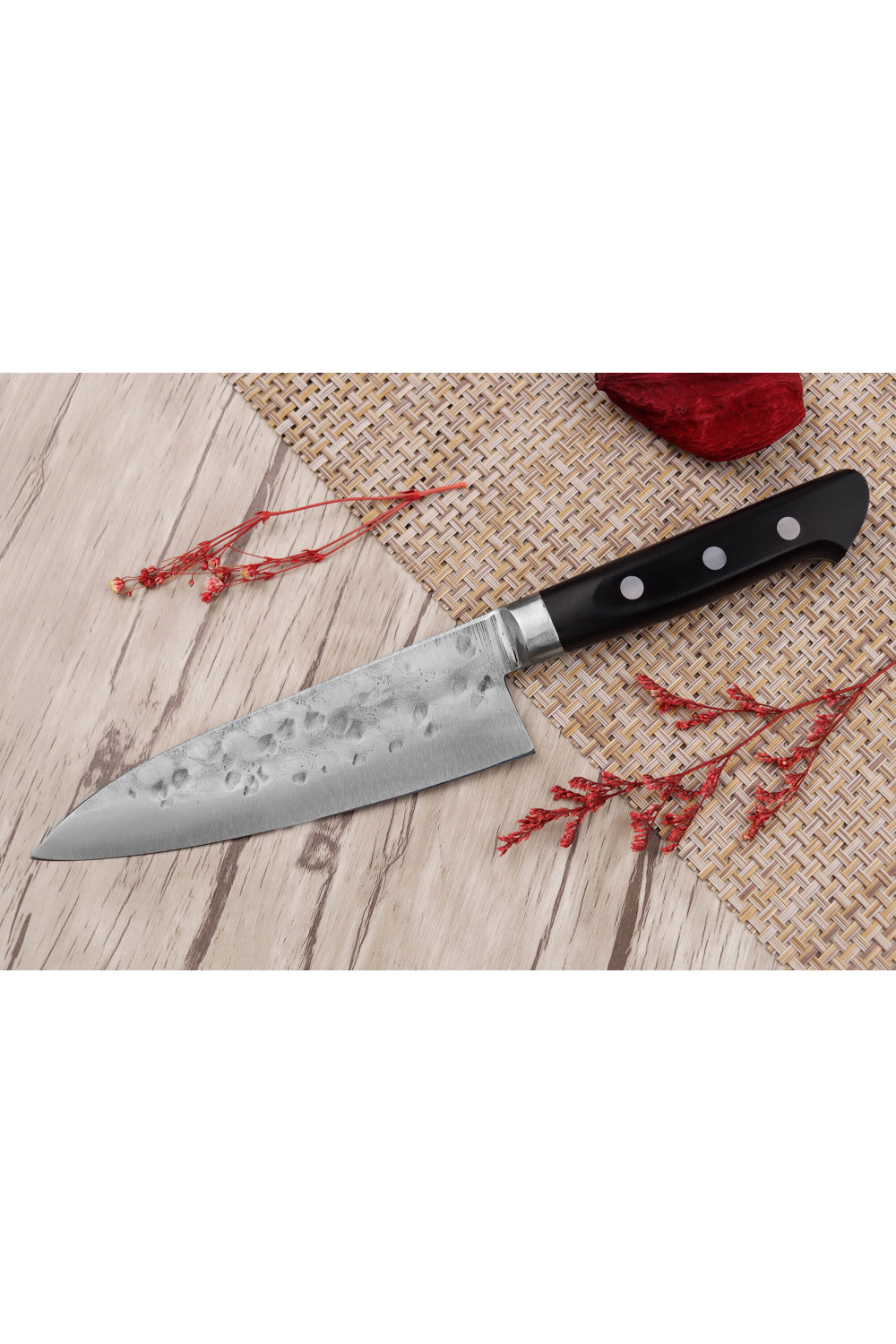
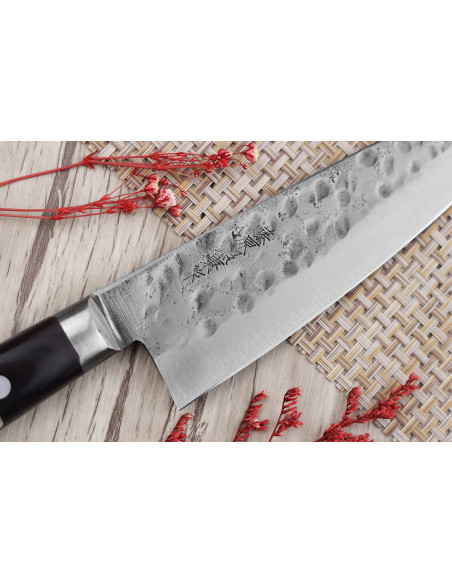
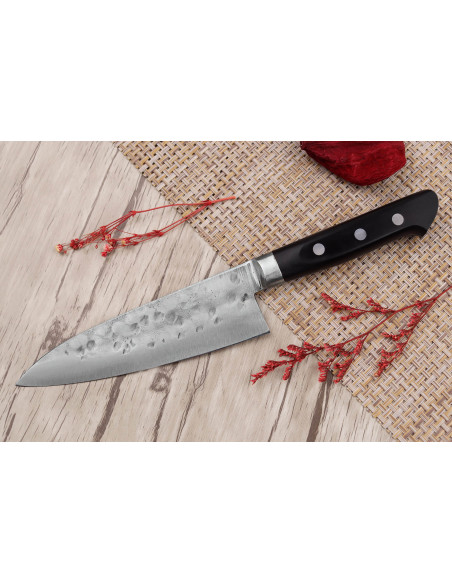
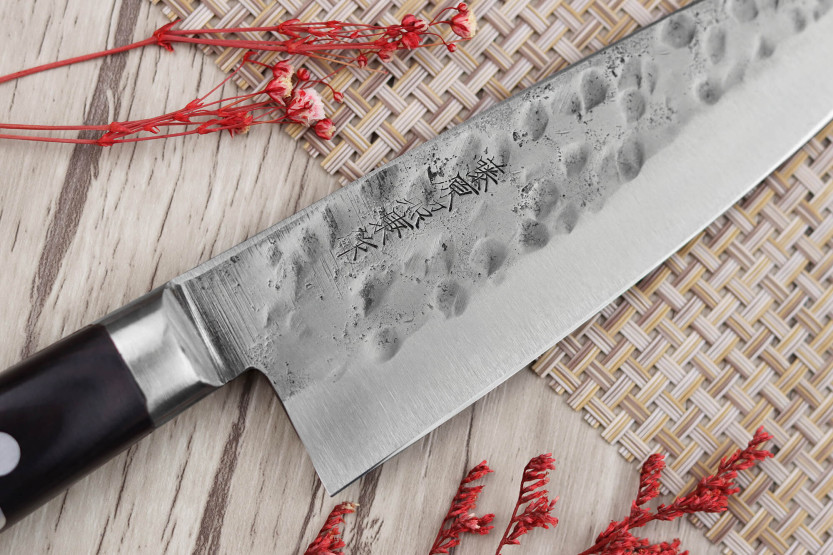
The outer layer has a Nashiji finish, giving it a slightly rough, rustic appearance. What's more, the blade of this Japanese kitchen knife has been hammered, adding even more character!
The kanji on the cutting surface are engraved with hammer and chisel directly by the blacksmith. They can be translated as "made by Teruyasu Fujiwara".
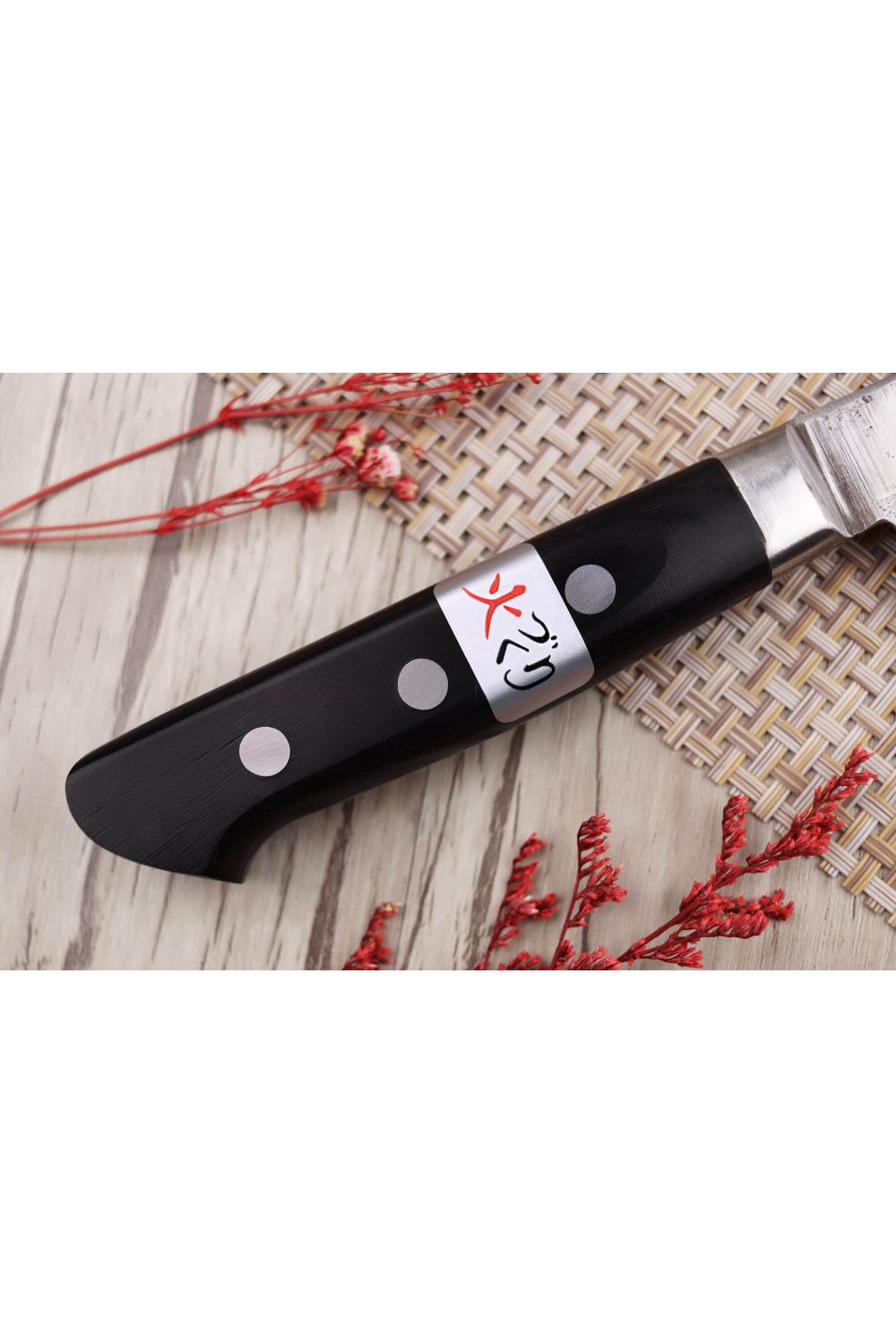
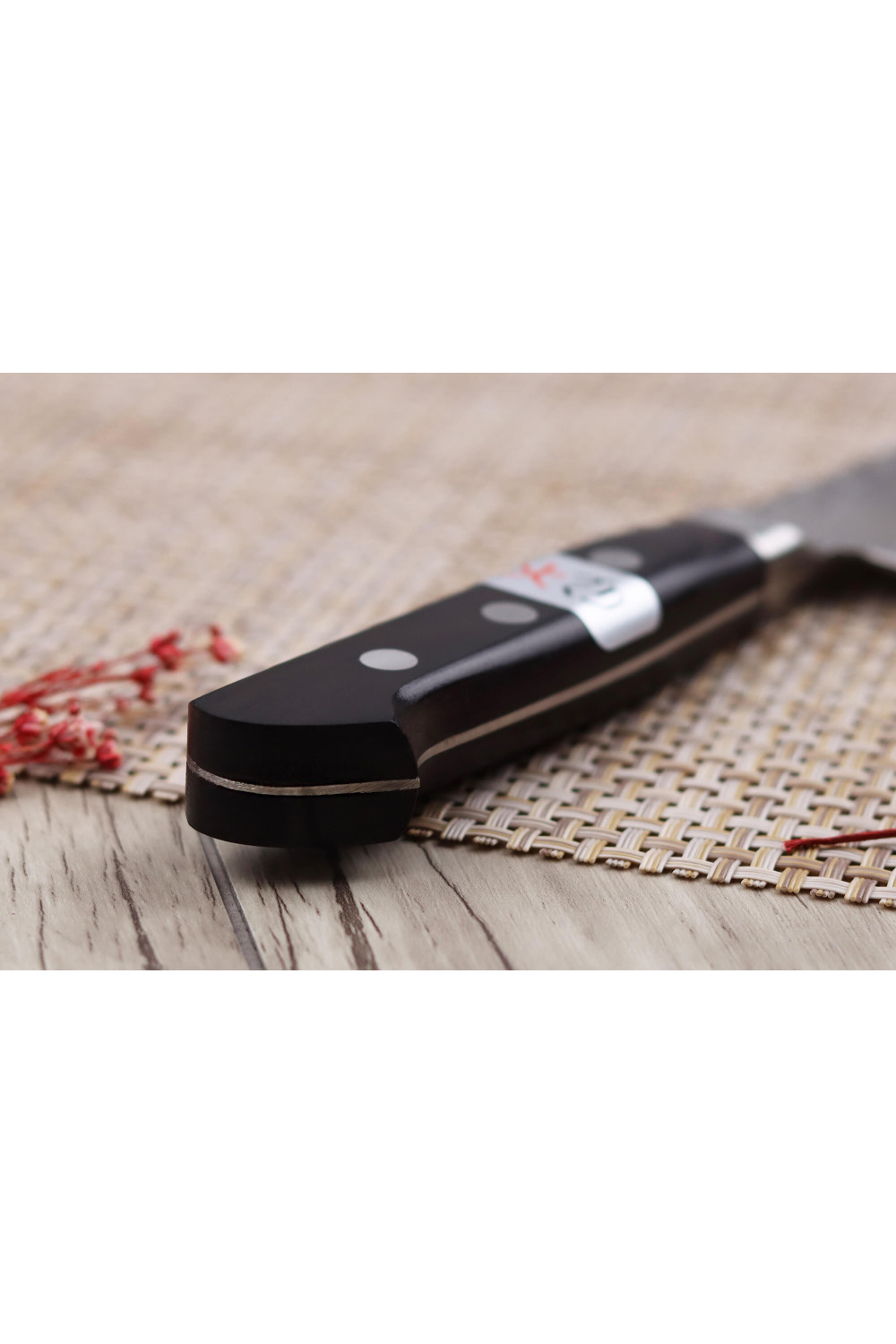
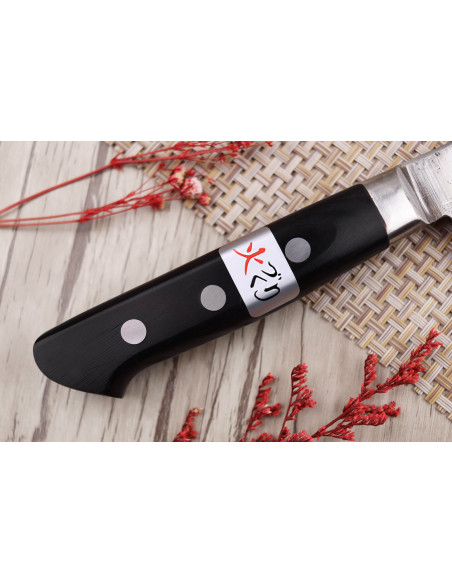
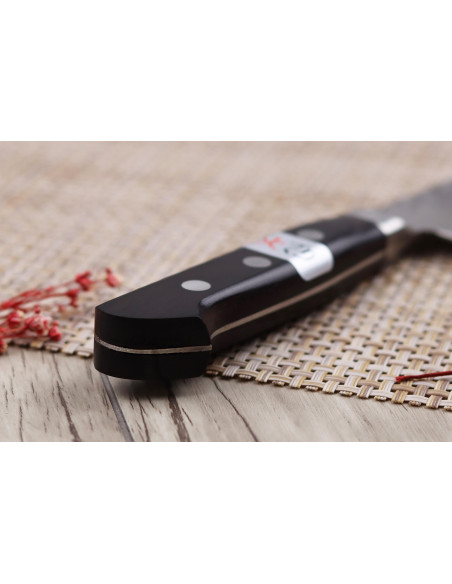
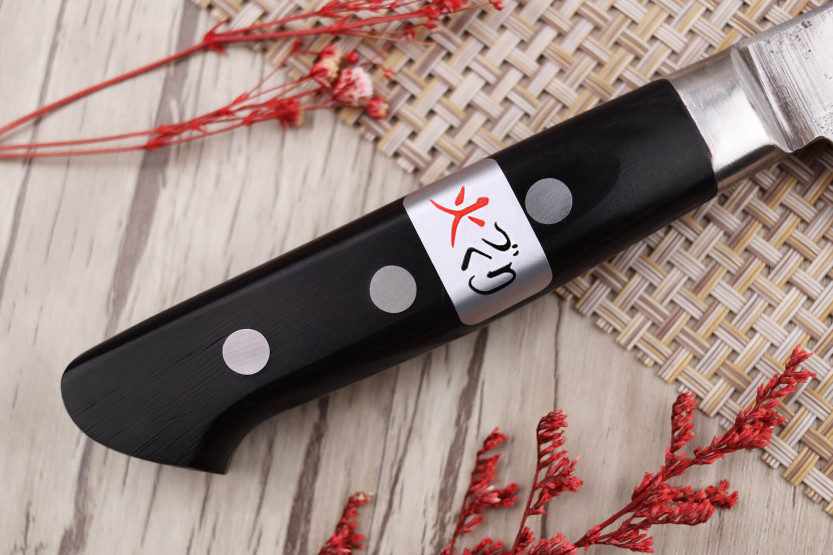
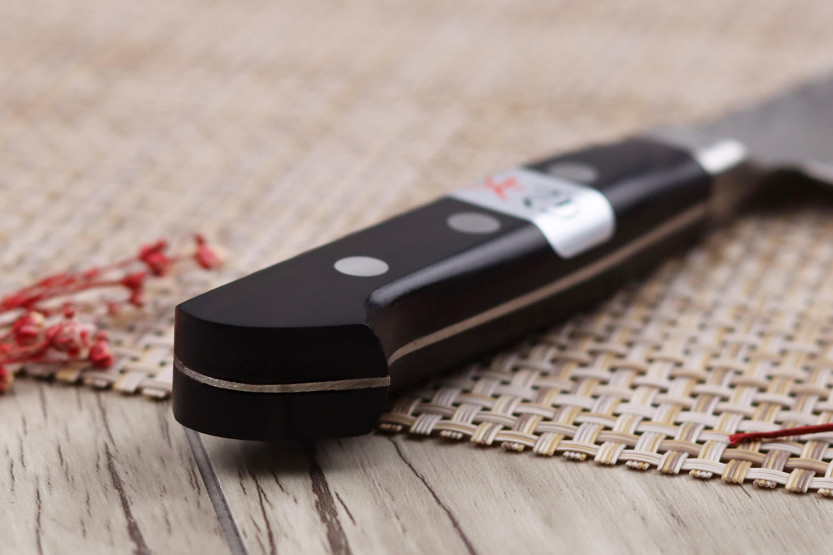
This Maboroshi knife features a Western-shaped handle, suitable for all users, whether right- or left-handed! Made from pakka wood, a tough and extremely durable composite material, it is composed of laminated wood and resin that are hot-pressed. This material is highly resistant to temperature variations, humidity and impact. It offers you a comfortable grip thanks to its marked base.
The handle is reinforced by 3 stainless steel rivets, which hold the materials together. As the blade is full tang, it extends all the way to the end of the handle and is fixed to the pakka wood by the rivets.
Caring for your Japanese kitchen knife
Your handcrafted knife is highly enriched with carbon, so it needs careful care to avoid corrosion. It should be washed only by hand with a non-abrasive sponge and mild detergent. Once washed, wipe dry immediately and store in a dry place, free from traces of moisture. Never use a dishwasher, and never leave your knife to soak in the sink!
Even so, the blade of your Japanese knife may change color over time: this is normal! This is a natural reaction of the carbon, caused by the humidity in the air and the acidity of the food being cut. We recommend keeping a paper towel handy to wipe the blade if there are a few minutes between cuts.
From time to time, you can also oil your blade with mineral oil to reinforce its protection.
Discover the rest of the Maboroshi range by Fujiwara Teruyasu on KnifeLeader.eu!




 By buying this product you can collect up to