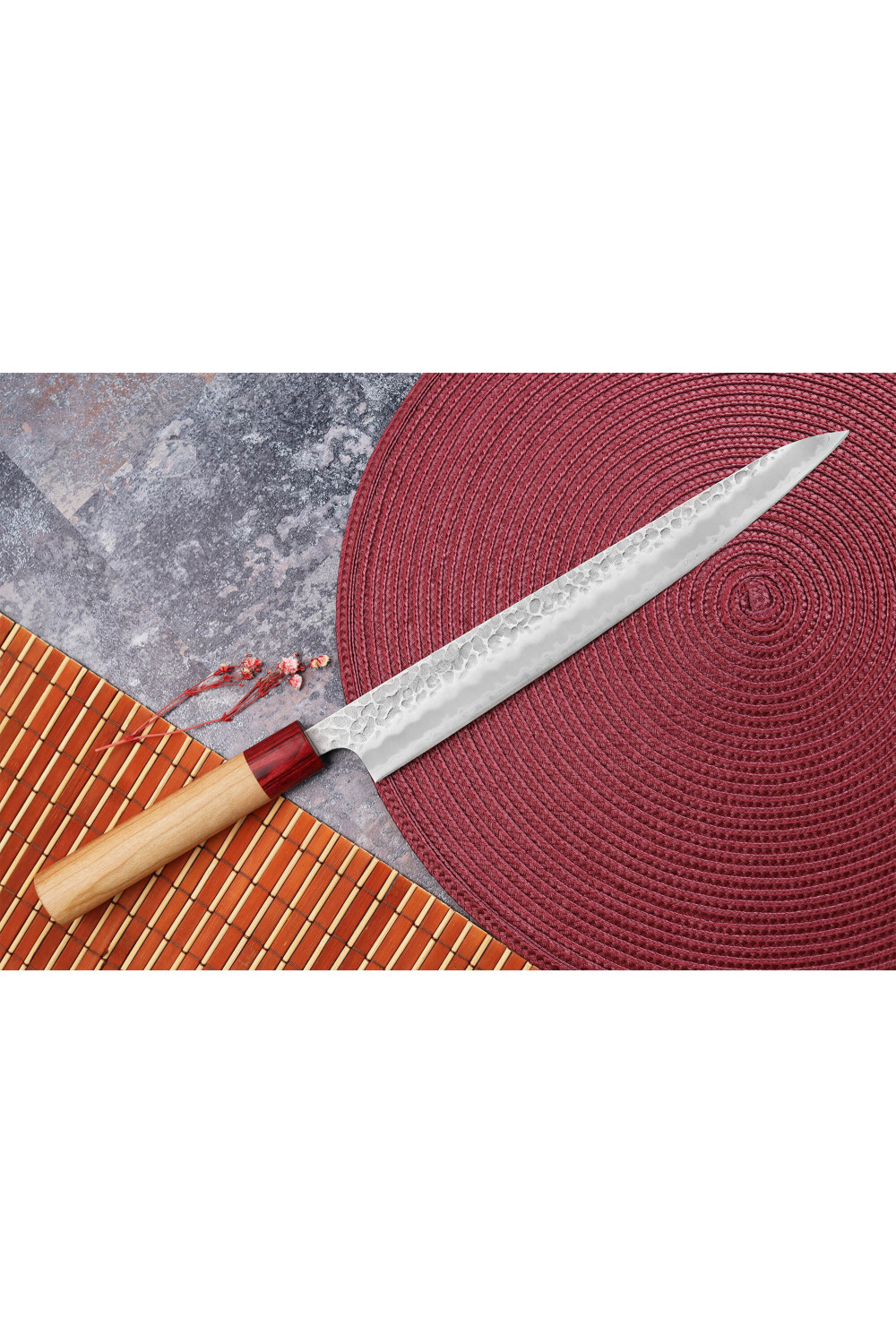
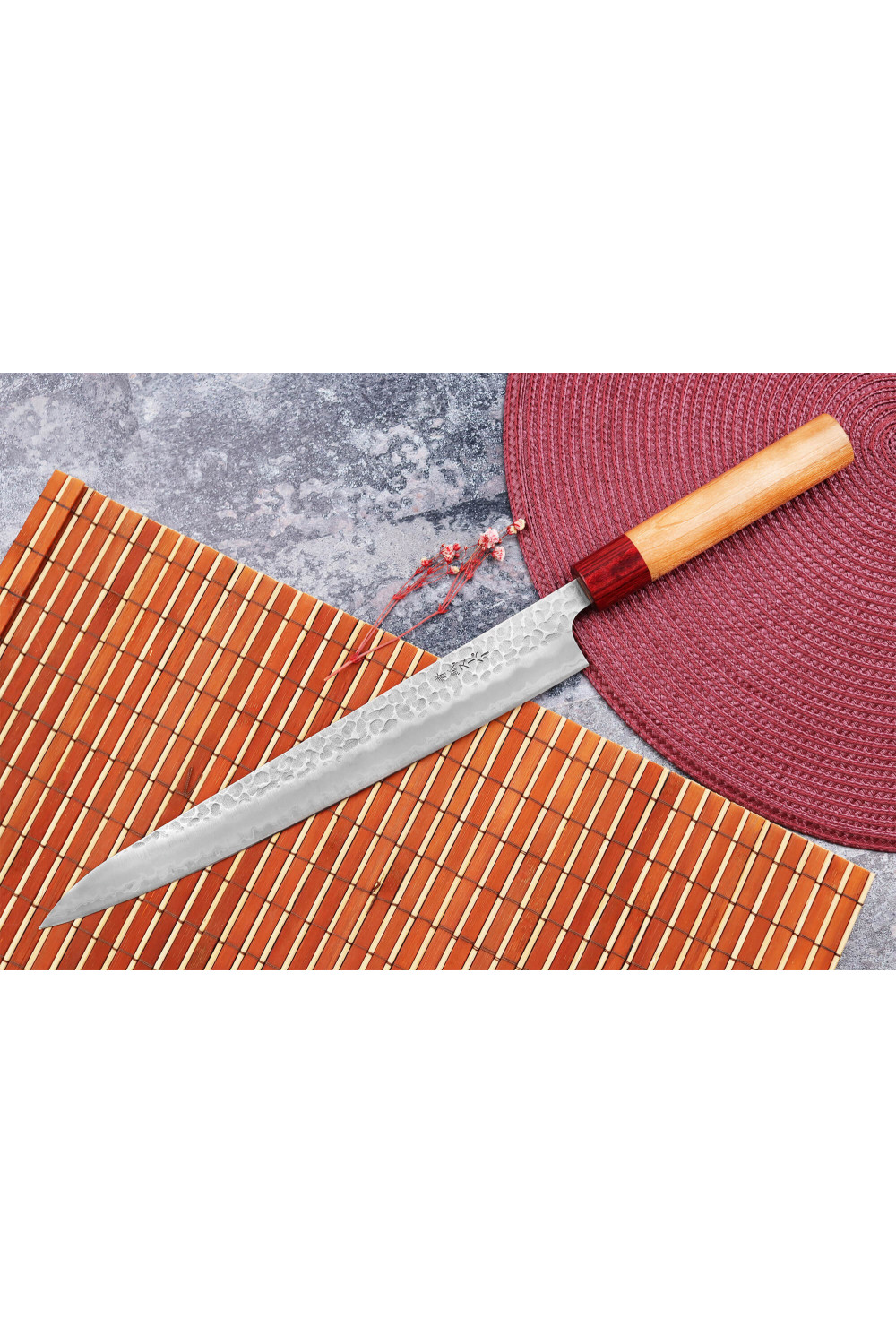
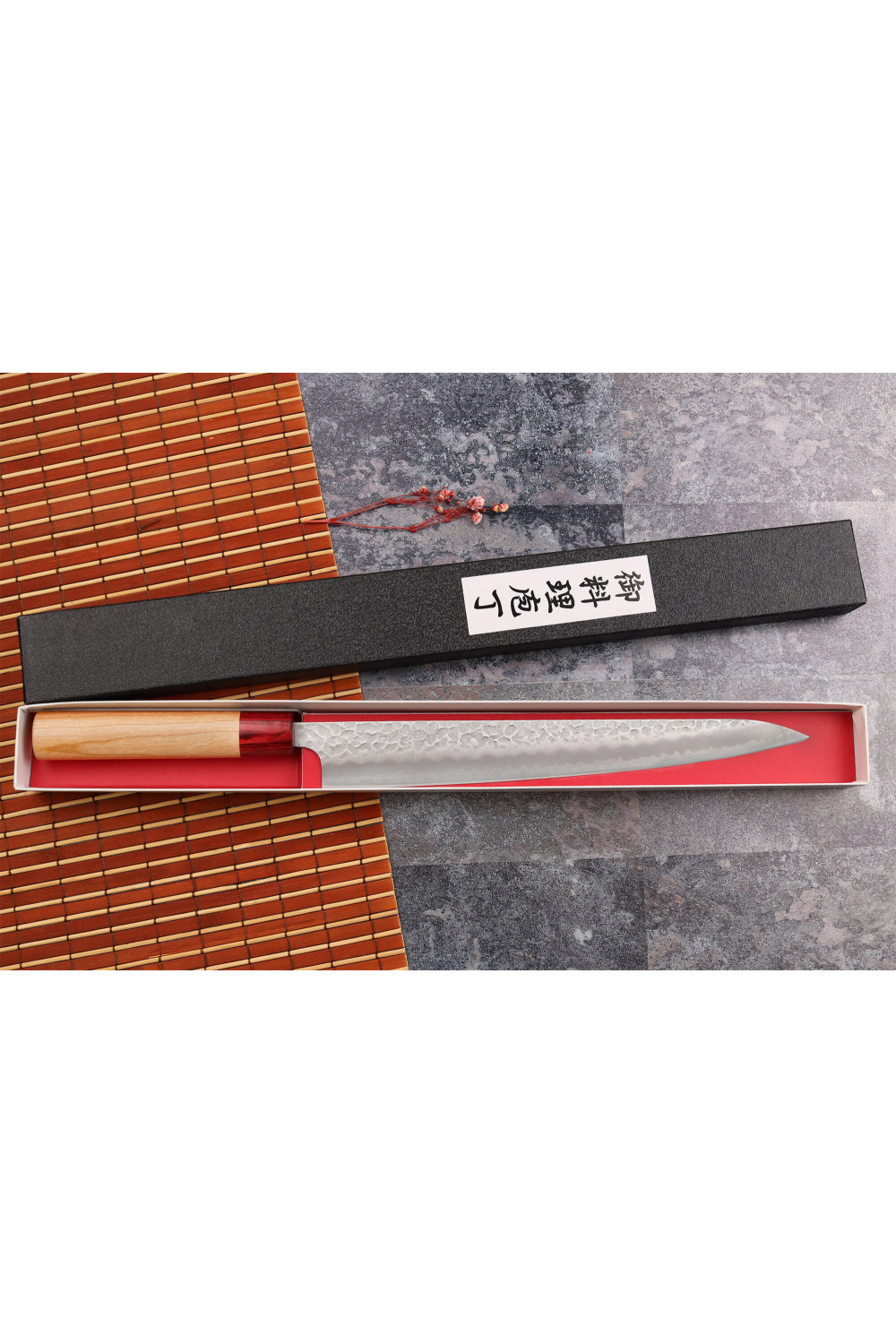
The kitchen knives in this range are forged by the Tsunehisa company. Professionals and amateur enthusiasts alike can benefit from their quality and longevity. It goes without saying that Japan is a country of tradition: many blacksmiths still use the methods of yesteryear, invented by the blacksmiths who created the katana, whose effectiveness is recognized the world over.
Function of the sujihiki knife
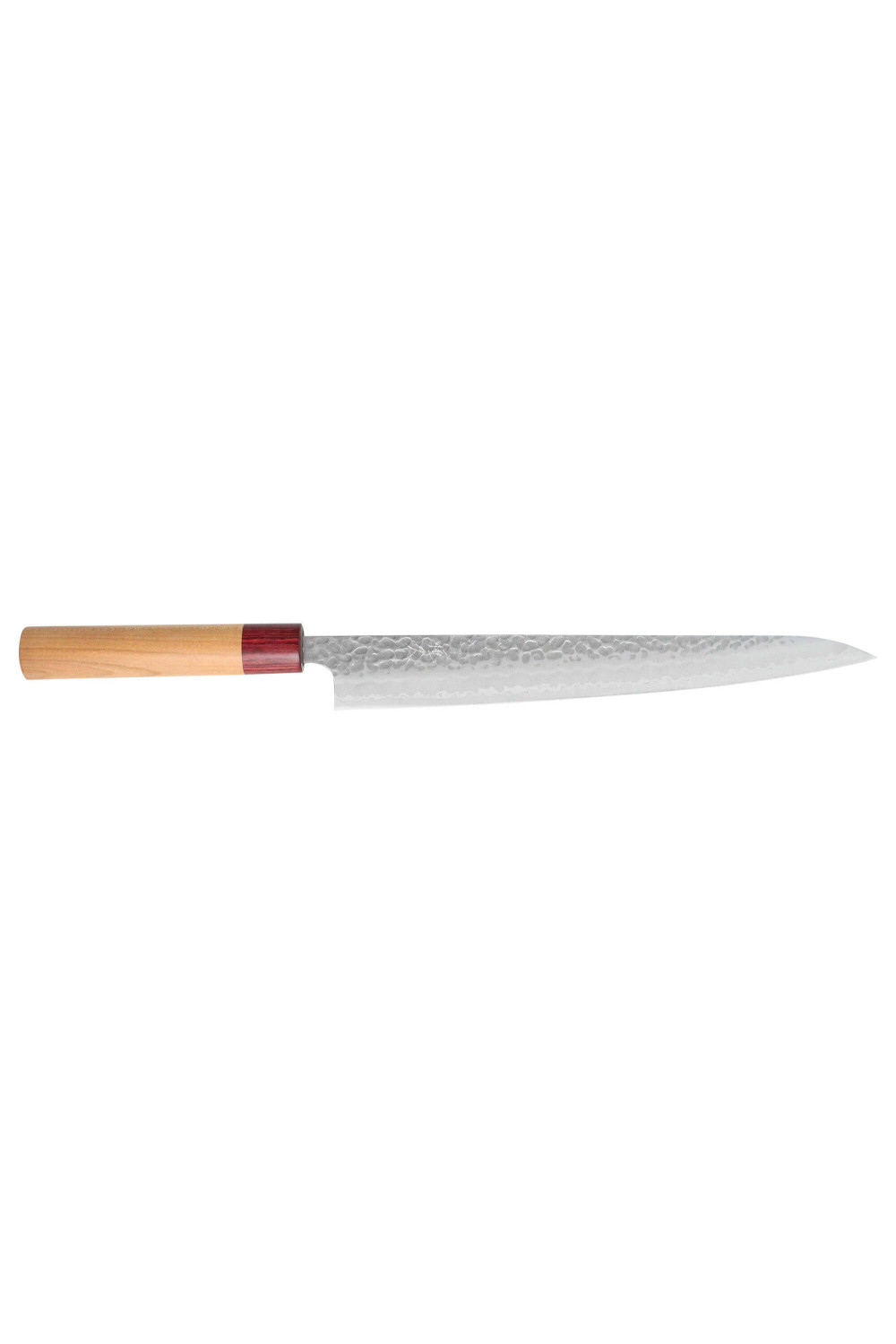
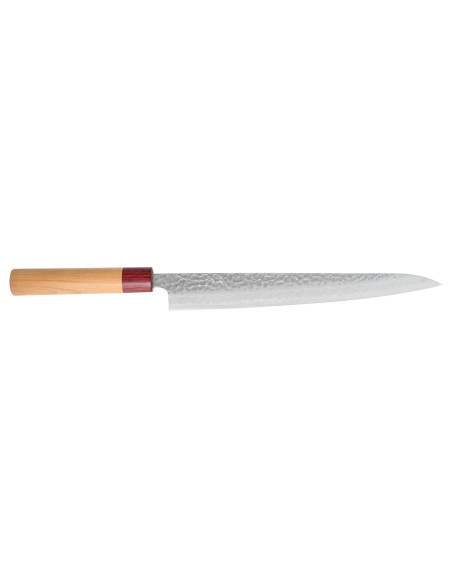
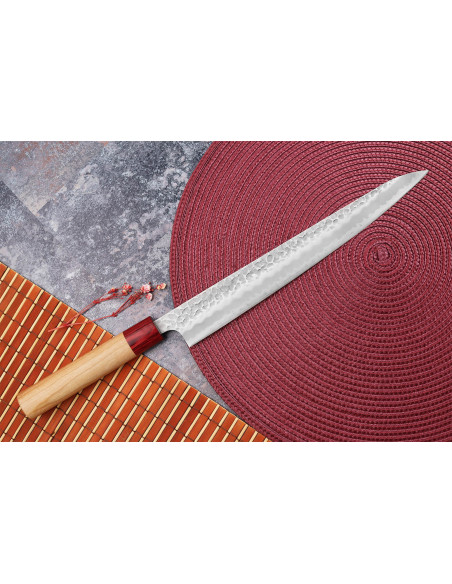
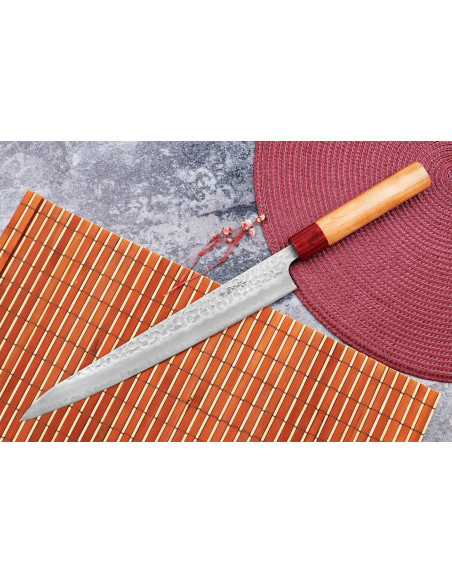
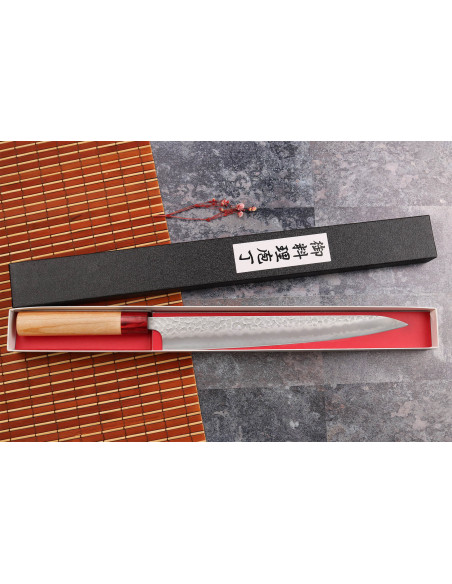
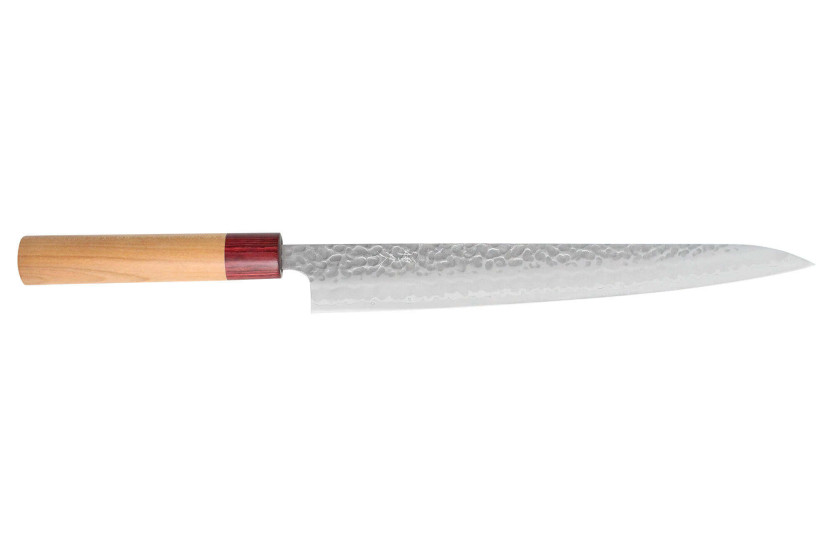
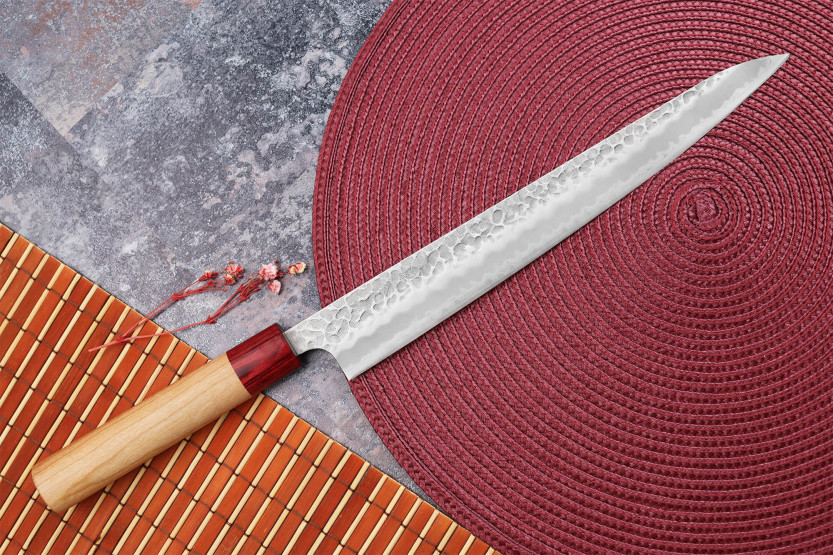
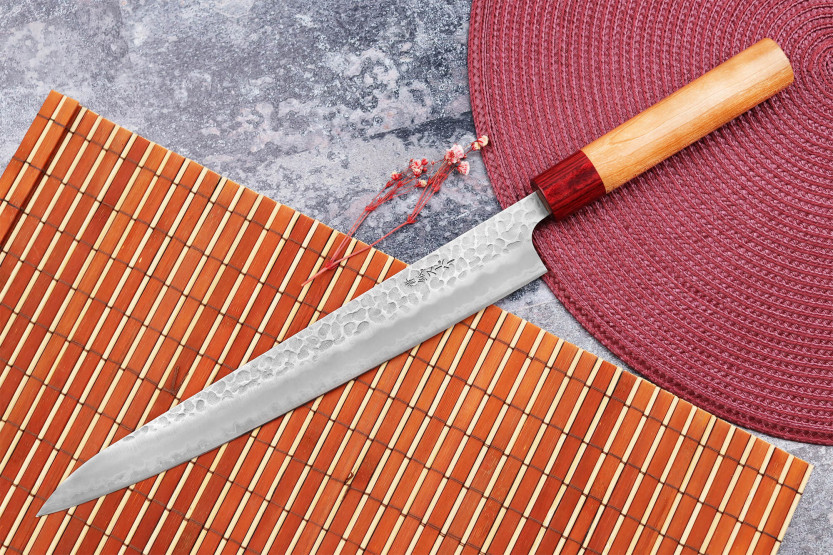
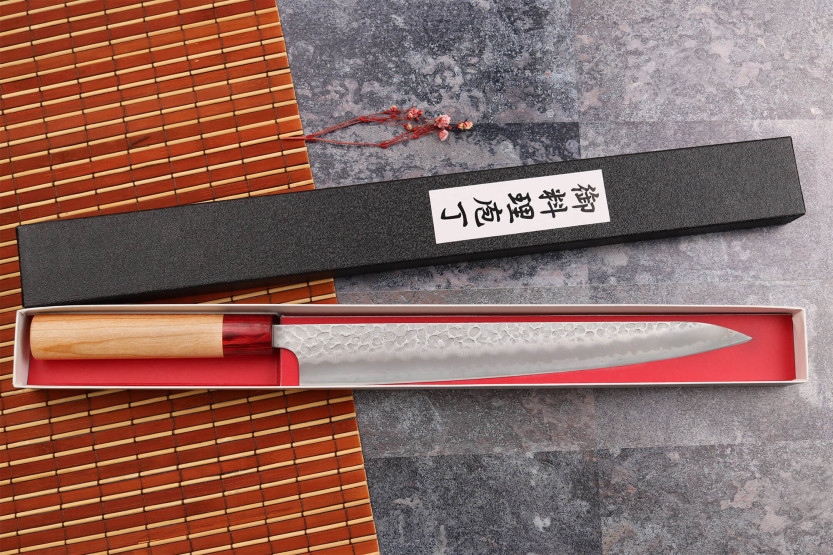
Given its size, the Tsunehisa AS 27cm sujihiki knife is recommended for experienced cooks. Its long, thin blade is ideal for cutting fine slices of meat or fish from large pieces (without bones, of course). The blade inserts effortlessly into the flesh for impeccable cutting.
Japanese Aogami Super steel
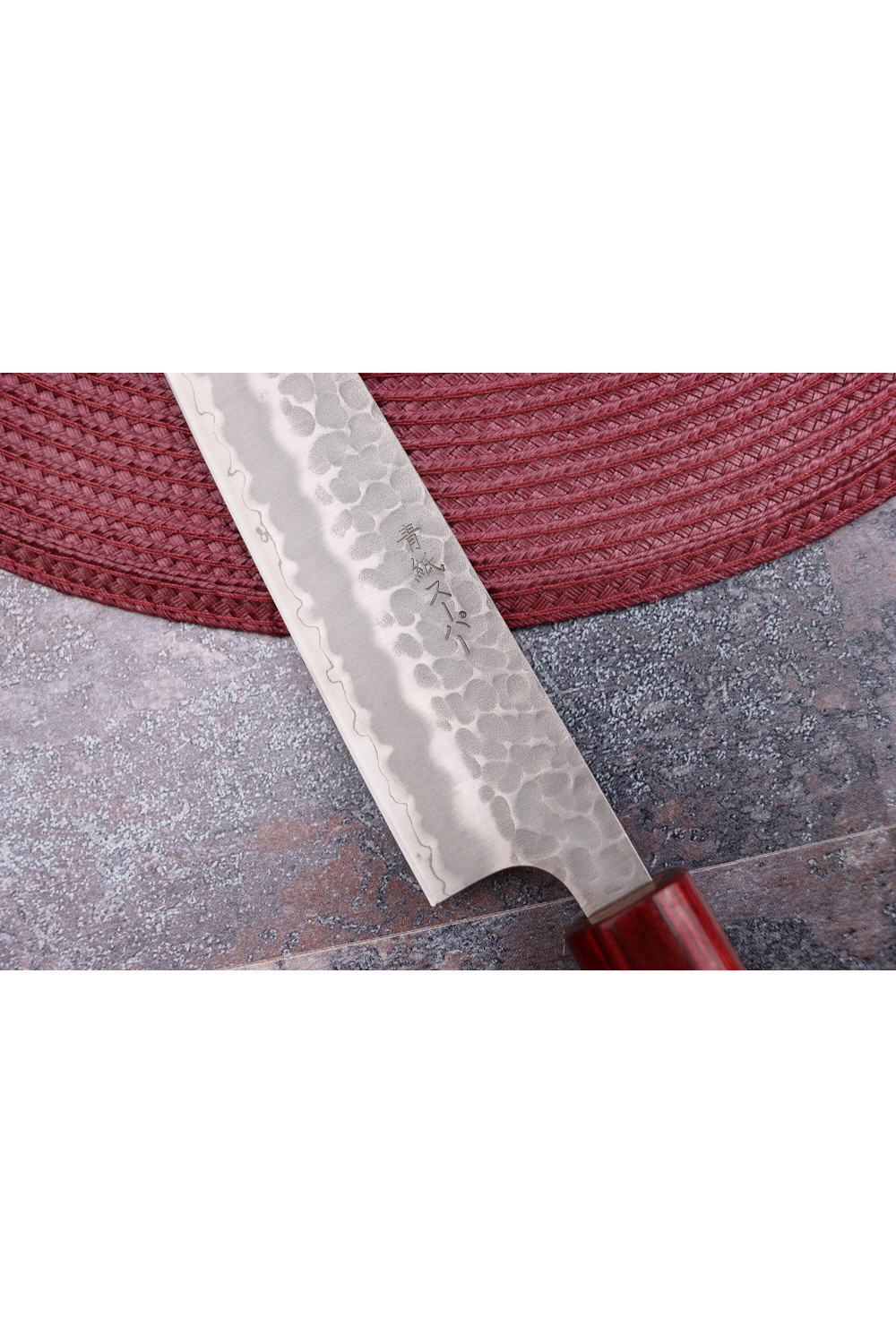
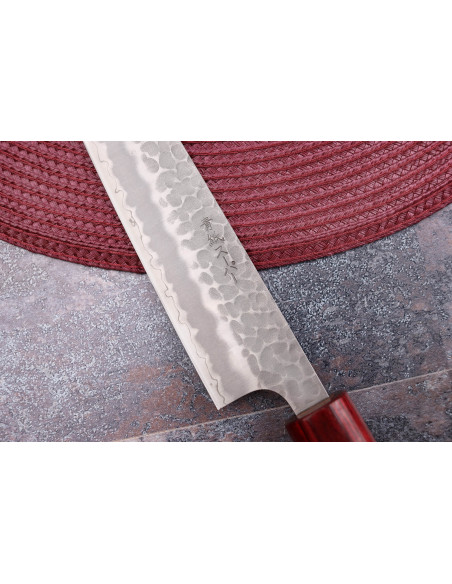
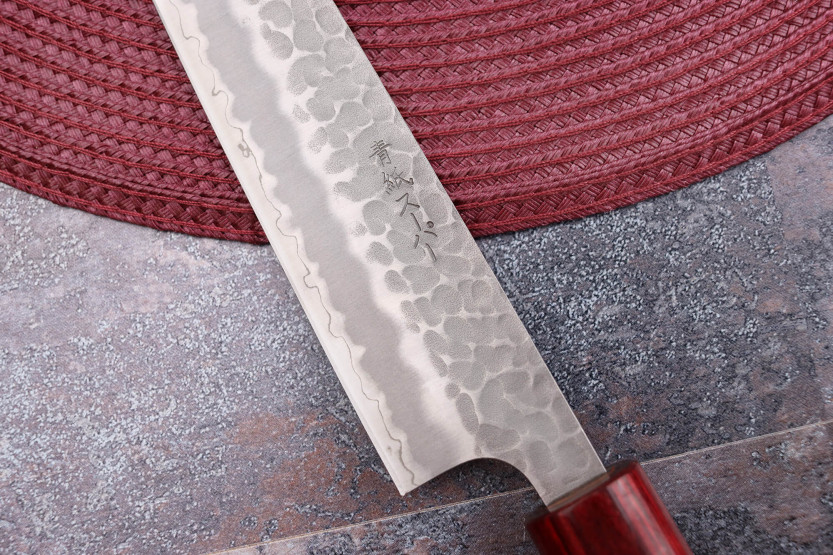
The tsunehisa knife features a San Maï blade structure: this term means "3 layers" in Japanese, and indicates that the blade has a harder core surrounded by a softer layer of steel that folds in on both sides (hence the 3 layers).
Aogami Super alloy has been chosen for the heart of the blade (also known as AS or Blue Paper Steel Super). It is produced by the famous Japanese steelmaker Hitachi, who supplies many blacksmiths in Japan.
It is an alloy with a very high carbon content, up to 1.5%. This essential element of a blade is there to increase the hardness of an alloy, knowing that a hard alloy will hold its edge more strongly. So it's a real advantage. As a result, the blade reaches 65 HRC on the Rockwell scale: a very good indication of its strength (the average Western knife is between 55 and 60 HRC).
This particular alloy is expensive, and few blacksmiths know how to work it. Indeed, if the blacksmith is not an expert in the field, losses are high, and therefore costly.
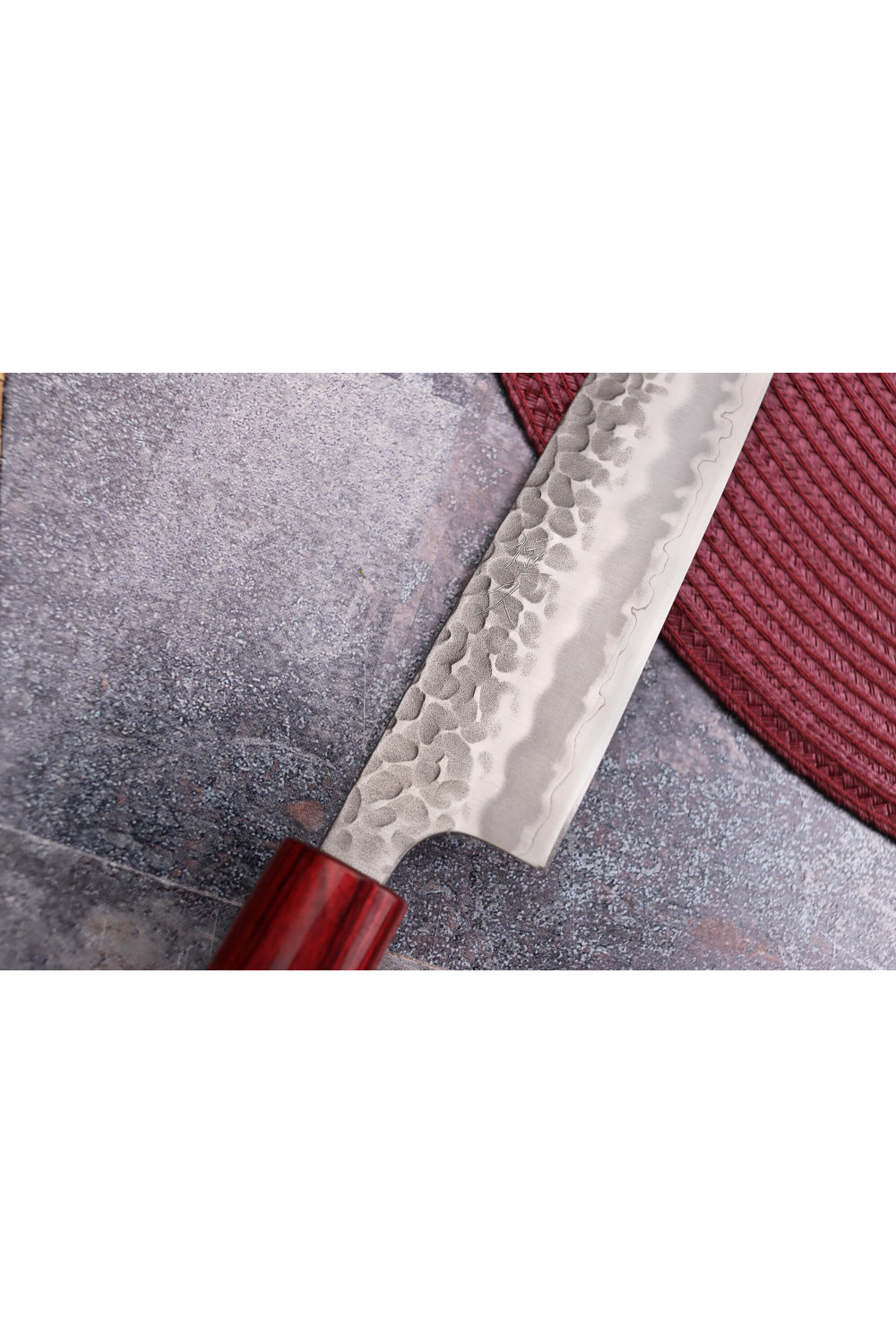
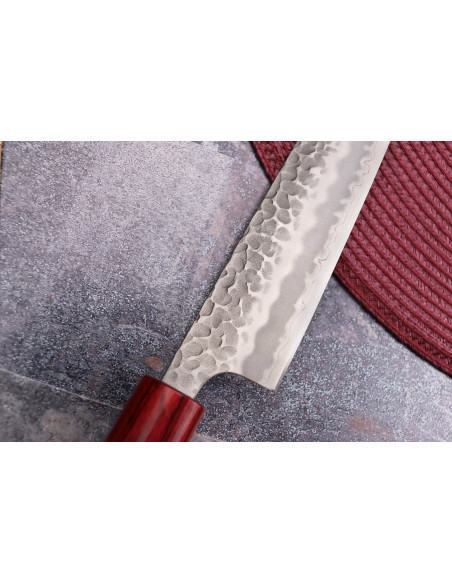
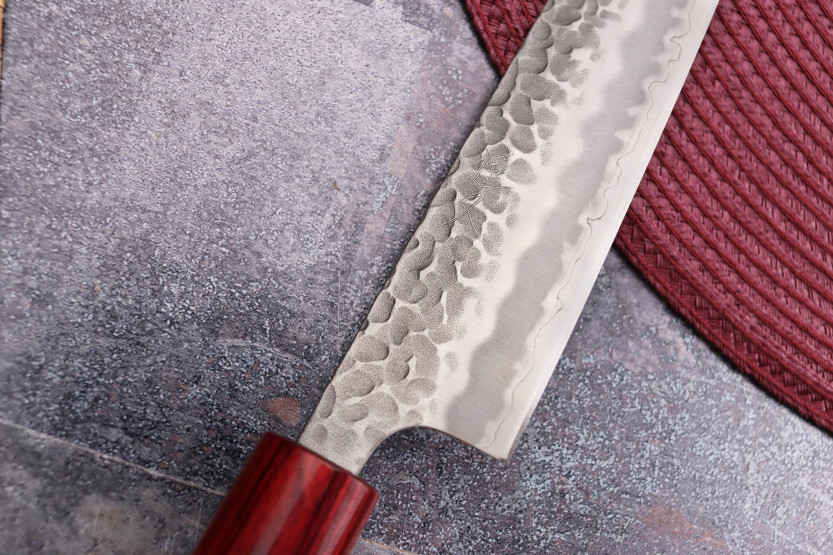
Once the Tsunehisa experts have shaped it, the AS is wrapped in a softer steel (in the sense of being less rigid), to protect it and balance its hardness. You can see where the steels meet at the cutting wire!
Finally, the Japanese carving knife has a beautiful hammered finish (called Tsuchime in Japanese). This gives it character, and the hammering is unique to each piece.
Cherry wood handle
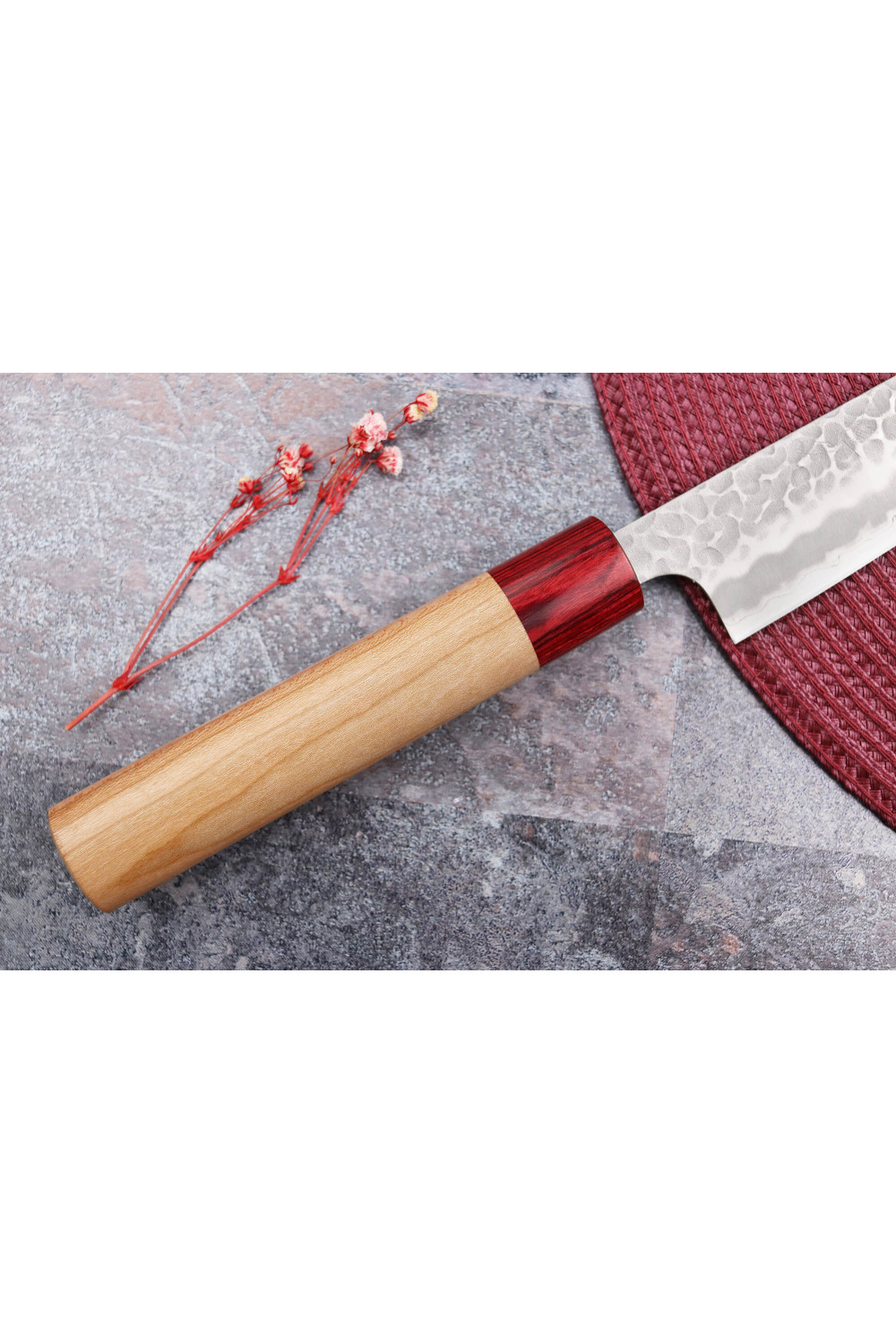
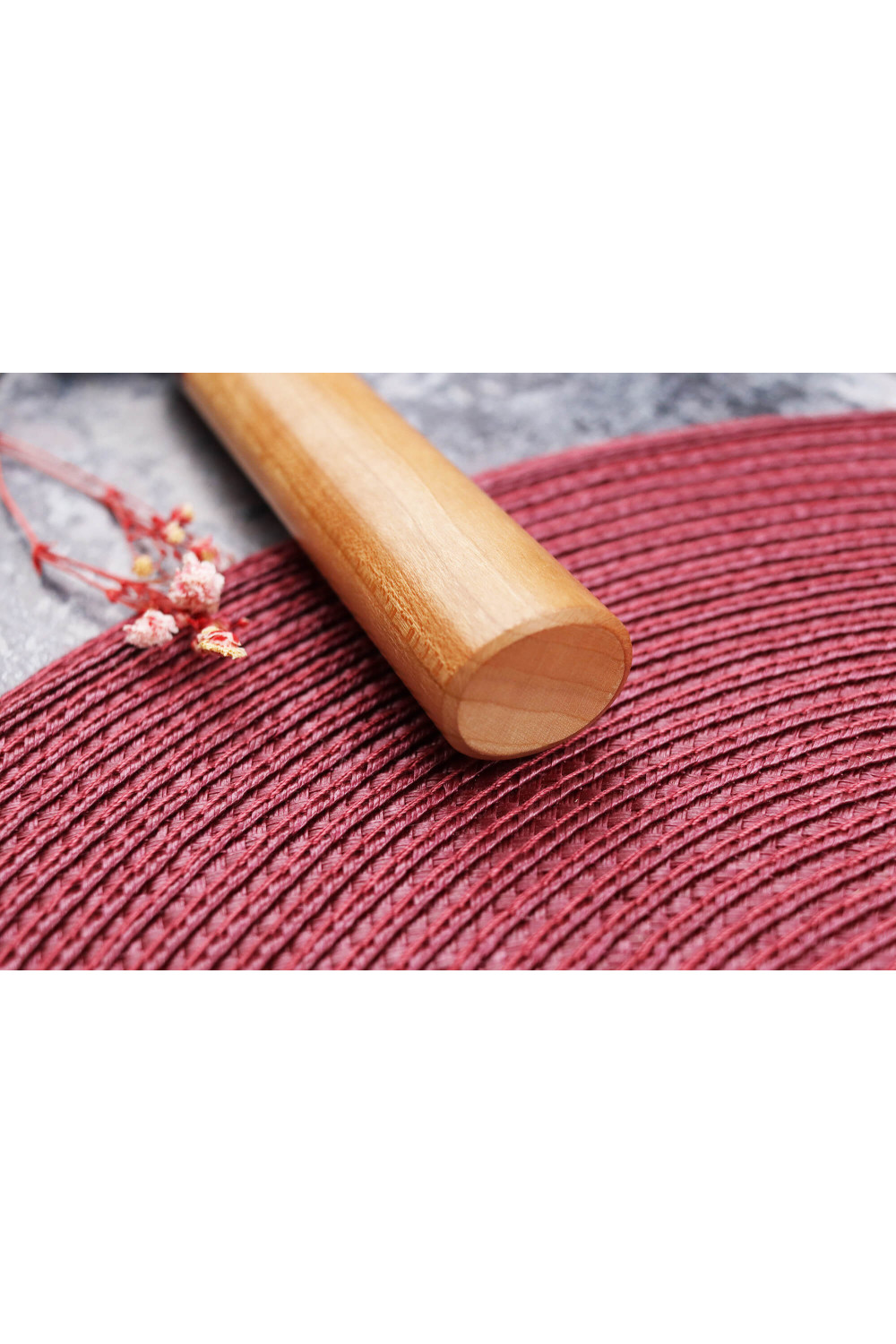
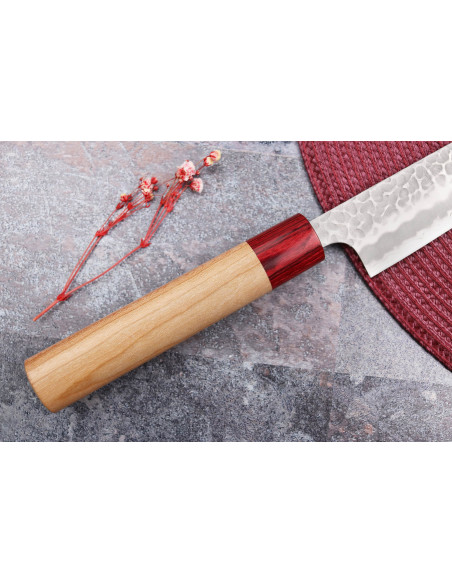
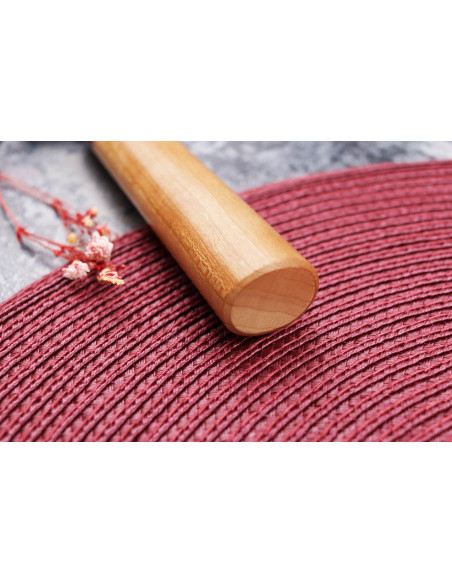
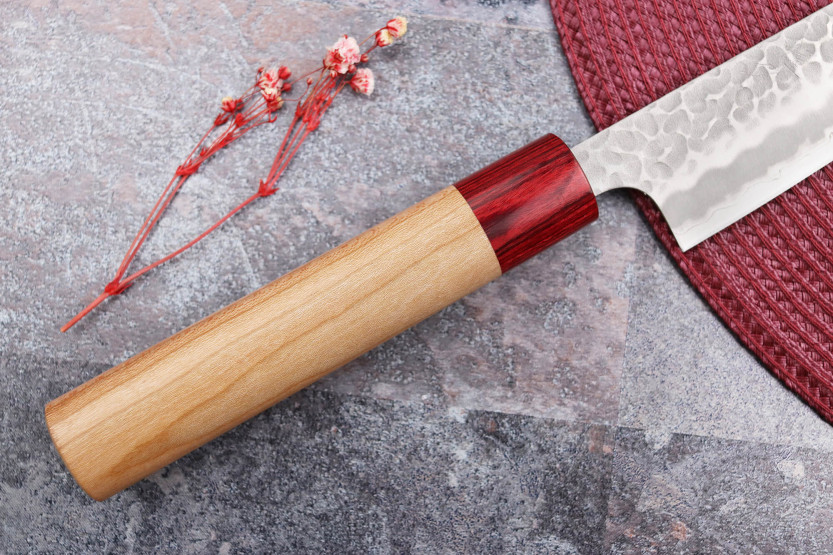
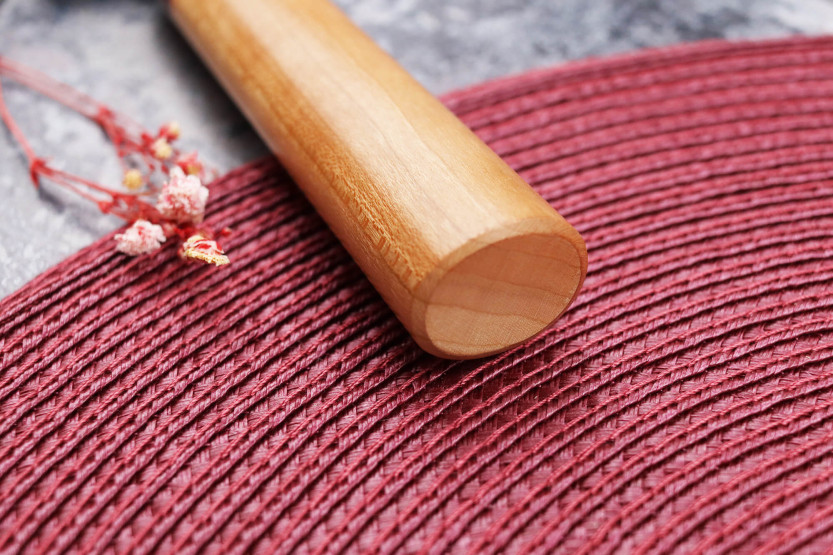
This sujihiki features a cherry wood handle. This species has a long life and a timeless aesthetic. The cherry tree is a sacred tree in Japan, found on the country's various peninsulas. It is a metaphor for the ephemeral nature of beauty, but also for life itself.
Its oval shape makes it ambidextrous.
The bolster is made from red pakka (or Pakkawood) wood. This composite material is appreciated for its strength and durability. It is created from resin and compressed wood, guaranteeing excellent resistance to humidity, temperature variations and impact.
Wood pulp fills the space between the pakka wood and the blade, making it watertight and hygienic (food cannot enter this small space).
We recommend washing the knife by hand in lukewarm water with a mild detergent. Then wipe the knife dry before storing. When washing, try to keep the handle as dry as possible, as wood does not like to be dampened.
Knives are considered oxidizable, so it's important to store them free of all traces of moisture. Also, as you cut, the blade may change color - a normal process! In fact, the acidity of food and the humidity in the air can have an impact on Aogami steel, and this is normal.
Find out more about all the Tsunehisa knife ranges we offer!


 By buying this product you can collect up to