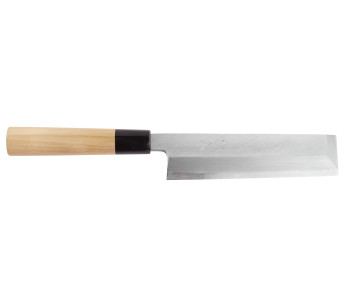
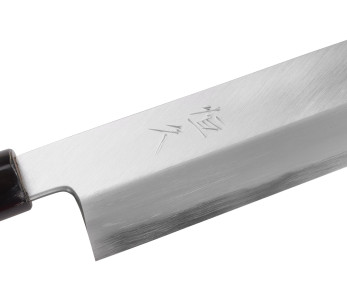
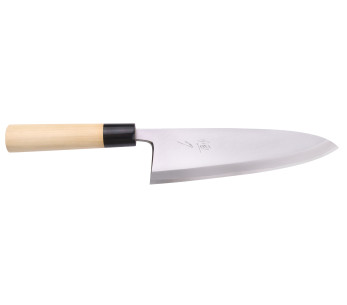
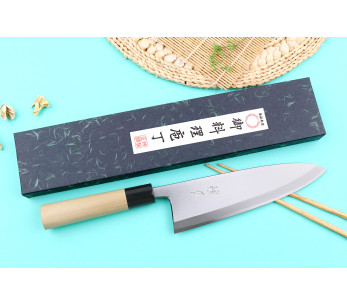
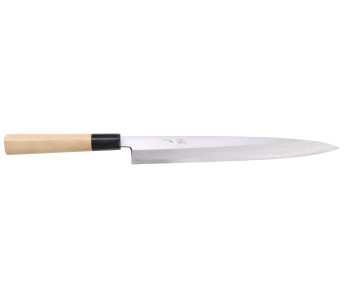
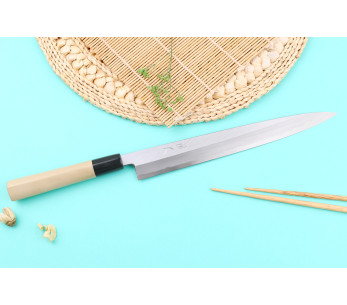
Japan is a country of tradition, and many blacksmiths still use manufacturing methods based on the ancient techniques of Samurai sword smiths. Tsunehisa Japanese knives are made there by a small team of skilled experts.
Note that the manufacturer emphasizes the efficiency of the cutting edge of its blades. It allows you to appreciate Japanese expertise while benefiting from an authentic, yet timeless design. Professionals and passionate amateurs alike will be delighted by the performance offered by Tsunehisa knives.
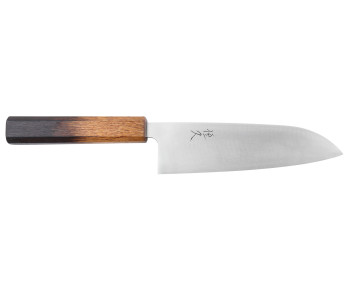
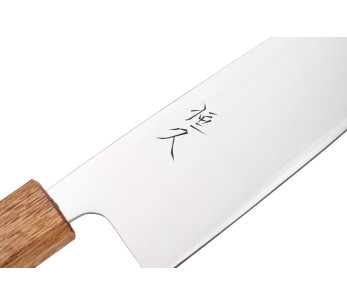
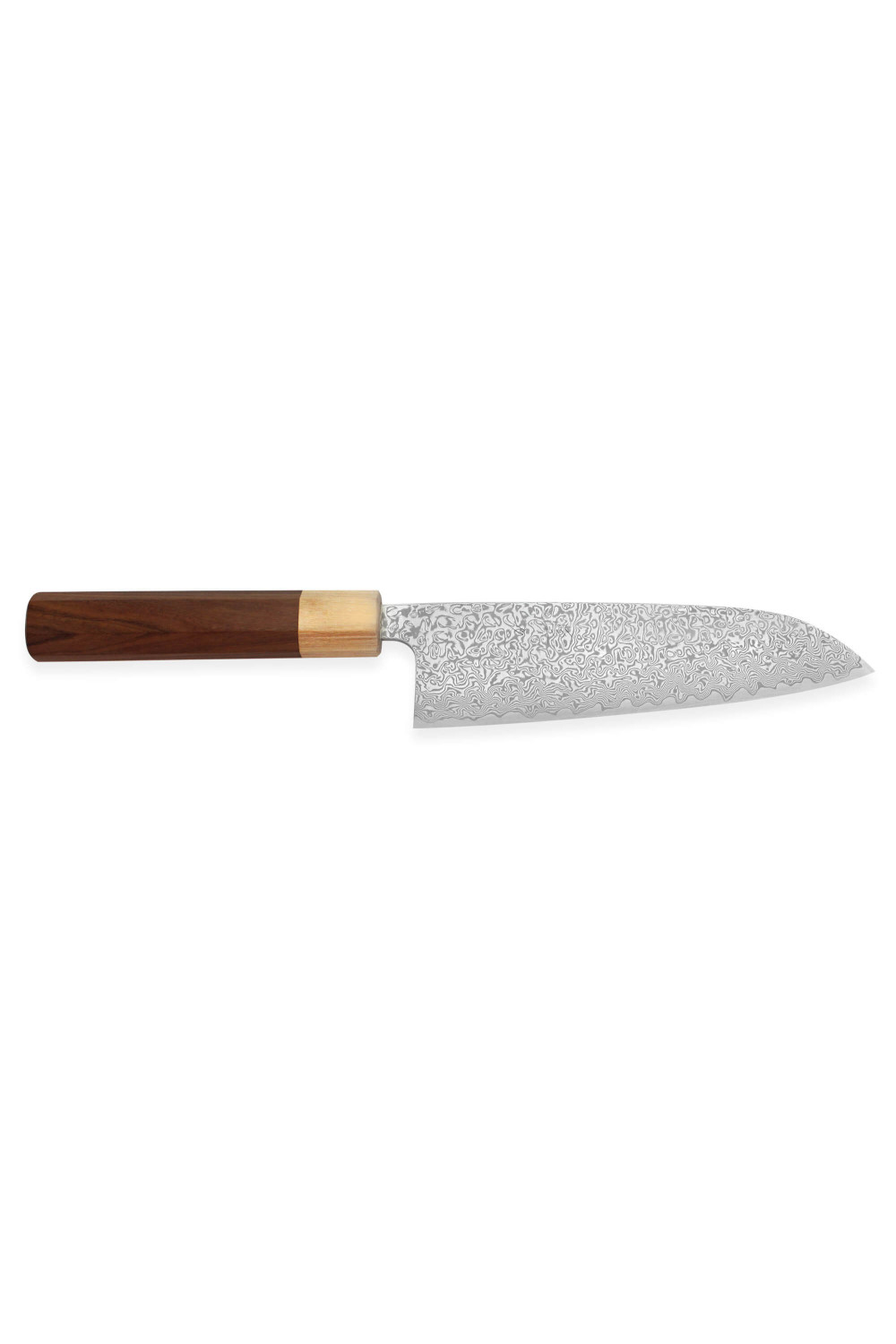
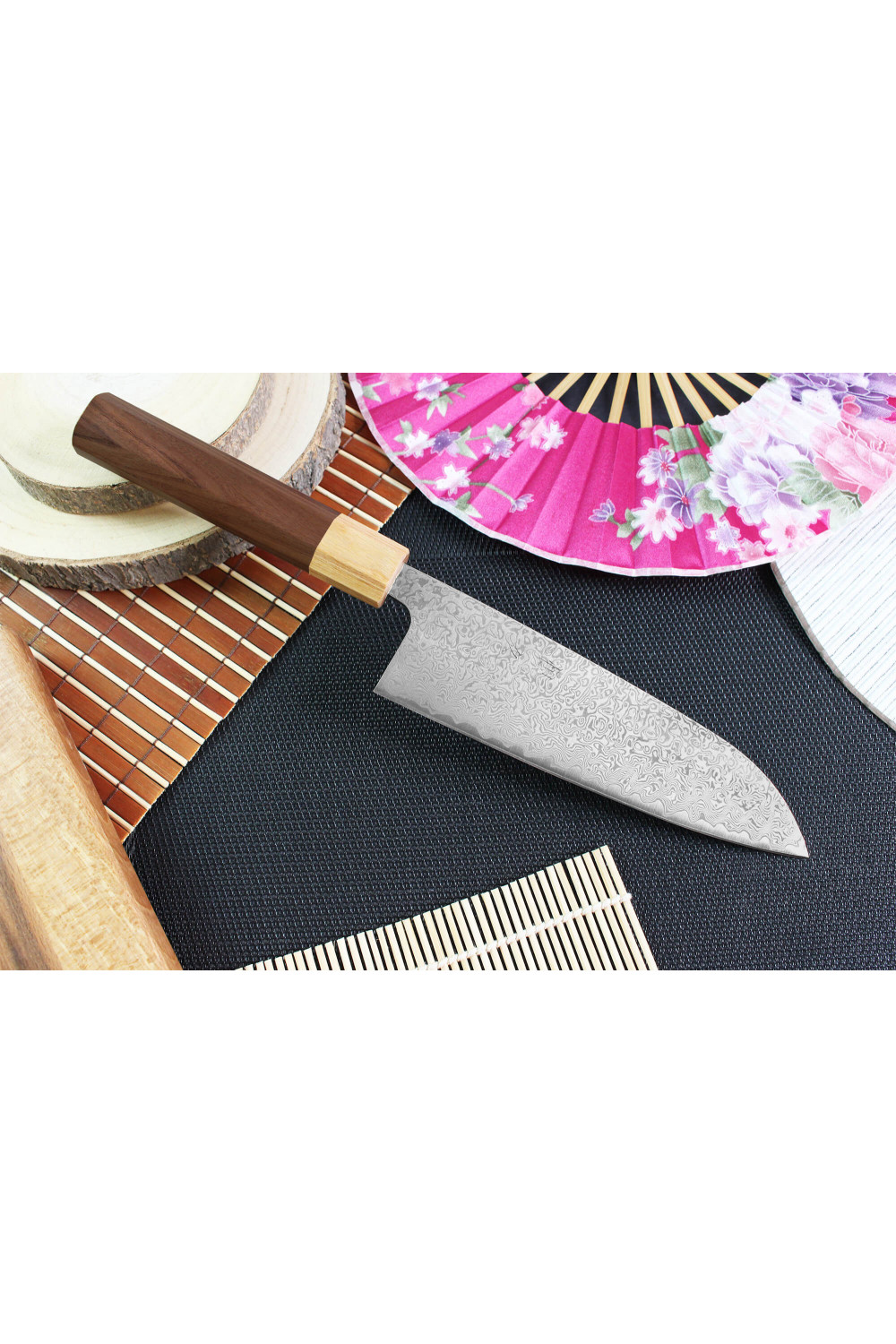
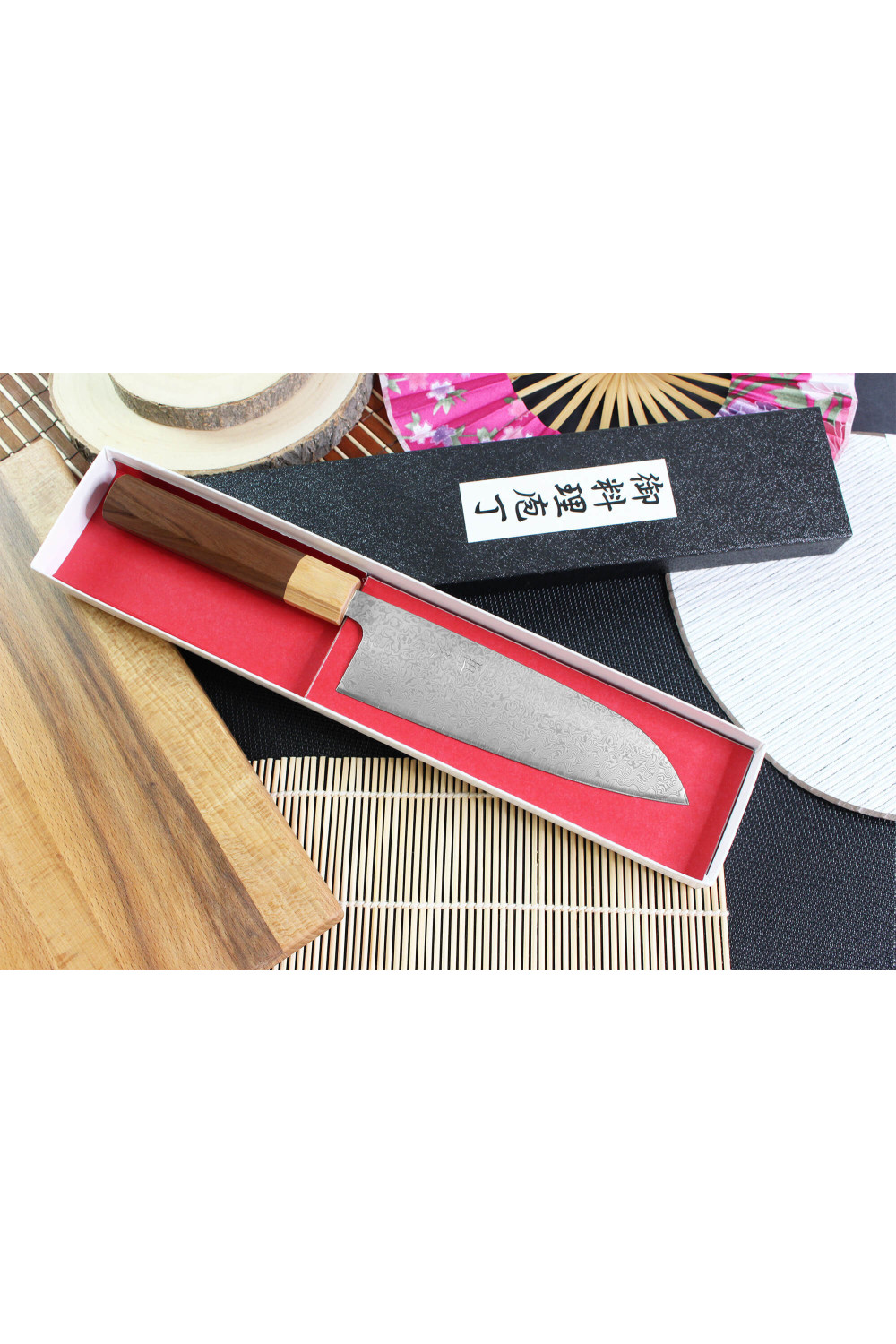
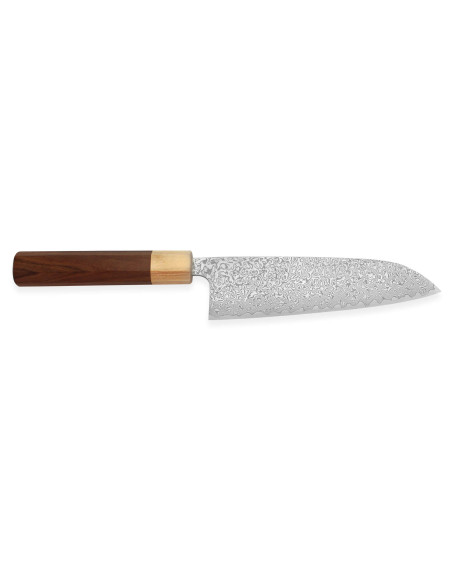
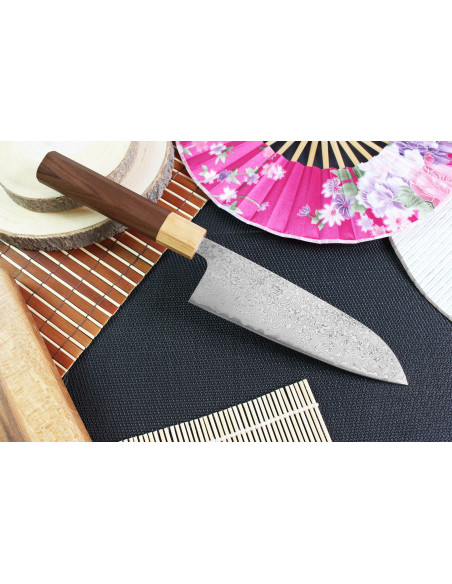
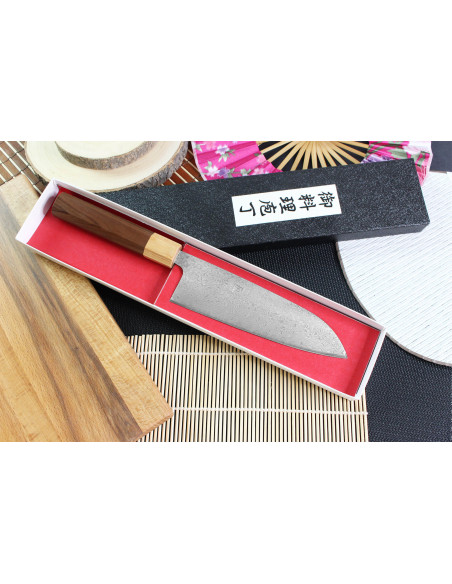
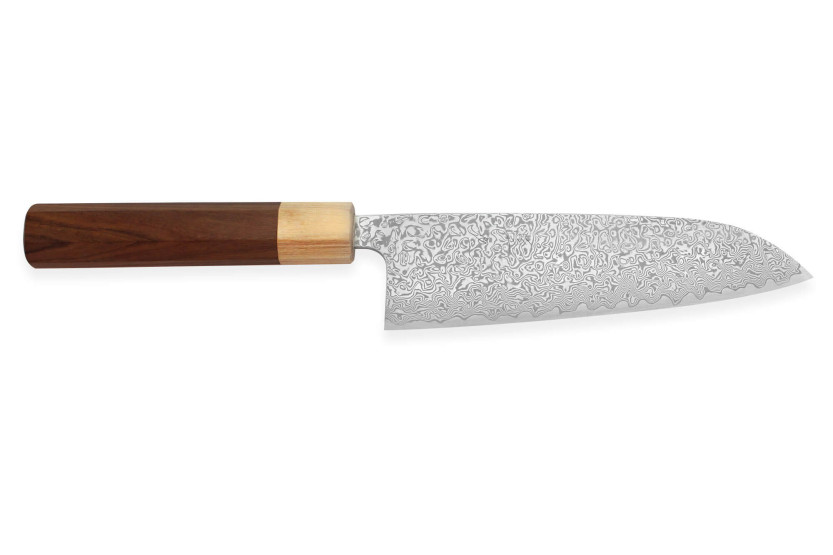
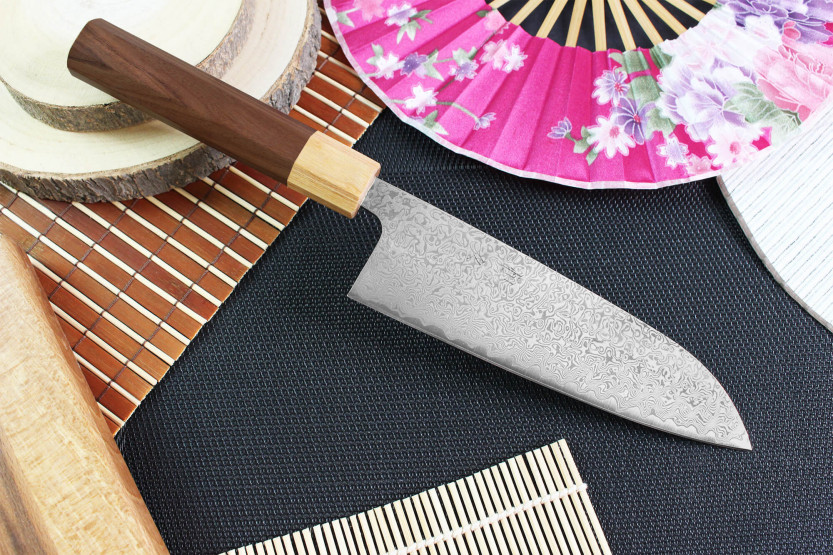
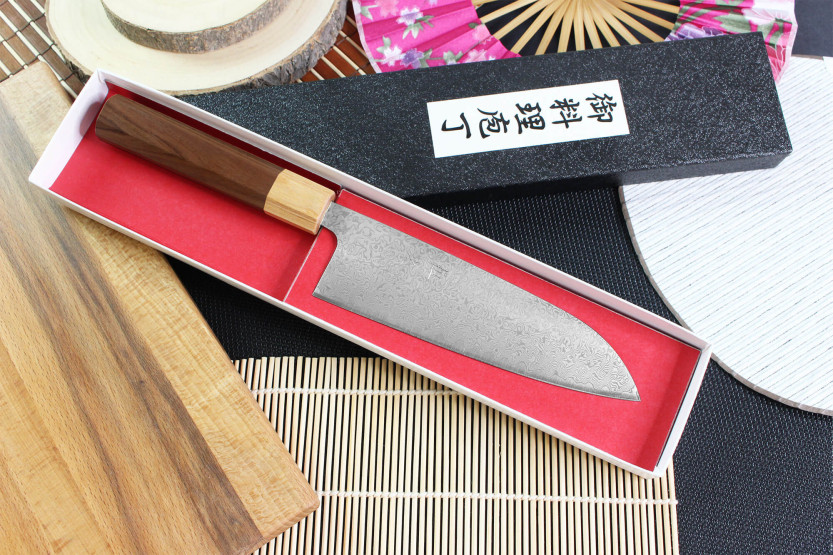
This Tsunehisa SLD Damascus 16.5cmsantoku knife is made from top-of-the-range materials, and will be with you for a long time, for clean and pleasant work in the kitchen.
It's considered an all-purpose knife, enabling you to cut, chop, chisel or mince with ease. The "Santoku" model is typically Japanese, and its blade, slightly more curved than a chef's knife, makes it particularly pleasant when chopping fresh herbs.
The blade
The blade has a core of Japanese SLD steel, produced by Hitachi steelworks (renowned in Japan, by the way). Basically, this is SKD11 alloy, a standard but very hard steel, used in machines that stamp metal parts, for example. It's popular for this kind of work because it doesn't crumble easily, even under regular pressure.
Hitachi has decided to modify it a little to make it perfect for kitchen use. To this end, it has modified its composition to achieve a carbon content of between 1.4 and 1.6%, which is very high compared to the Western average of 0.5%.
The impact of such a high carbon content is as follows: the knife has a very rigid edge, which enables it to retain its sharpness much longer. Also, it can withstand a razor-sharp finish, which you can achieve when you go to sharpen it: it will be able to hold up to such a degree of performance.
Also, the alloy has a chromium content of between 11 and 13%, and it is said that above 13%, a steel is considered stainless. Here, we're not talking about stainless steel, but about a steel that is nonetheless fairly resistant to oxidation, given its high carbon content.
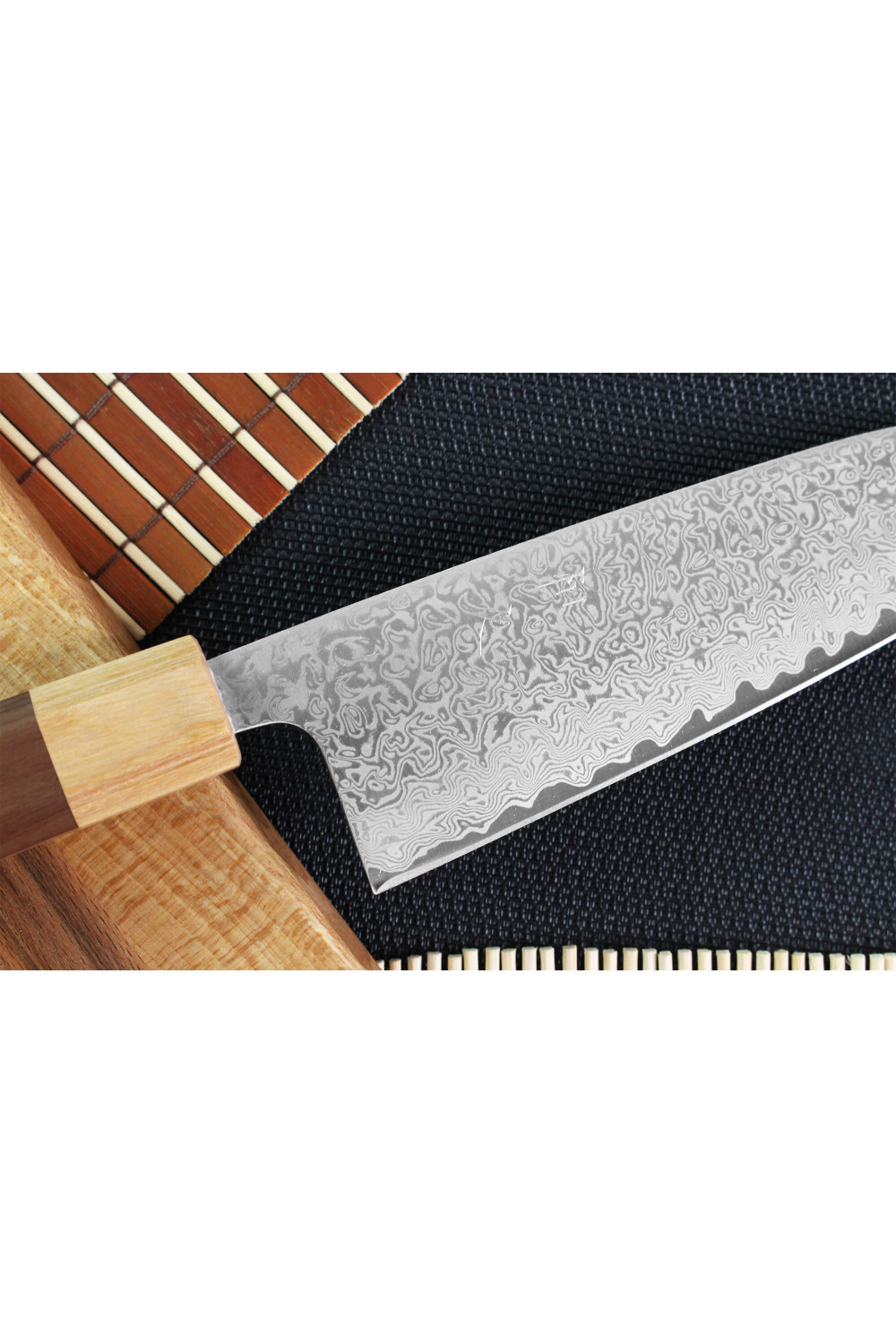
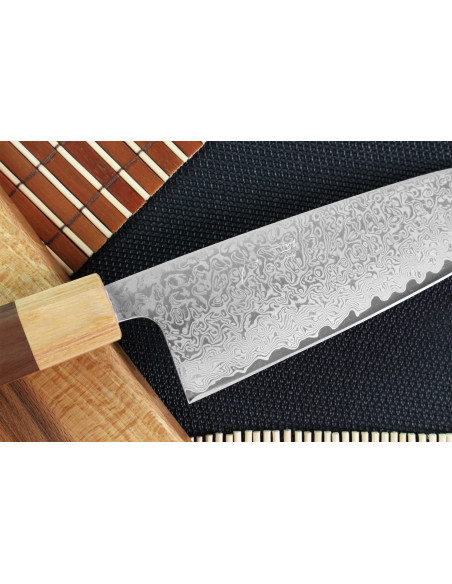
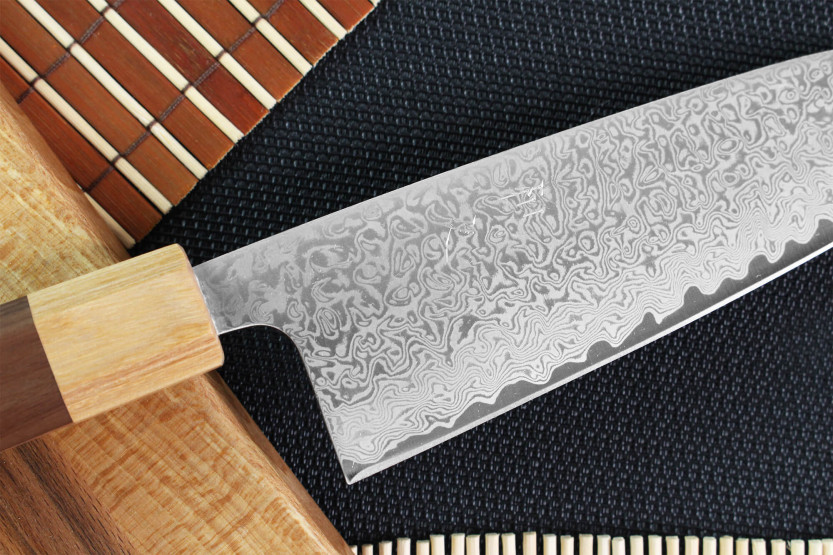
This SLD core is then surrounded by several interlocking layers of softer steels. This creates the damascus effect. The cutting surface is original, and the patterns unique to each knife. Beyond its aesthetic appeal, damascus balances the hardness of the core to give the blade a slight suppleness (it doesn't become flexible, but rather more resistant to impact).
All in all, the cutting performance of this knife's blade is close to that of a knife made from Aogami Super (one of the best steels available), while being slightly more resistant to corrosion.
Handle:
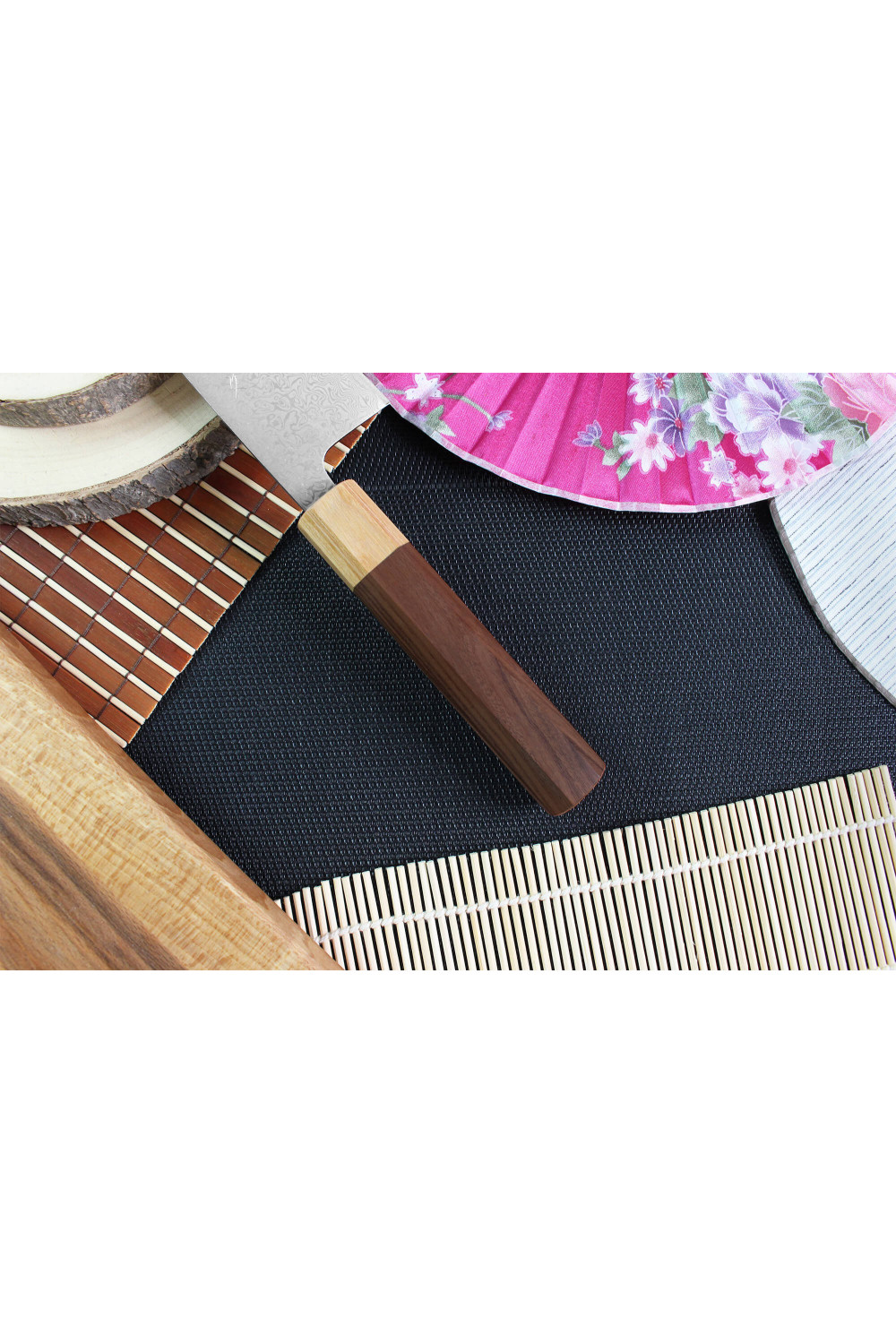
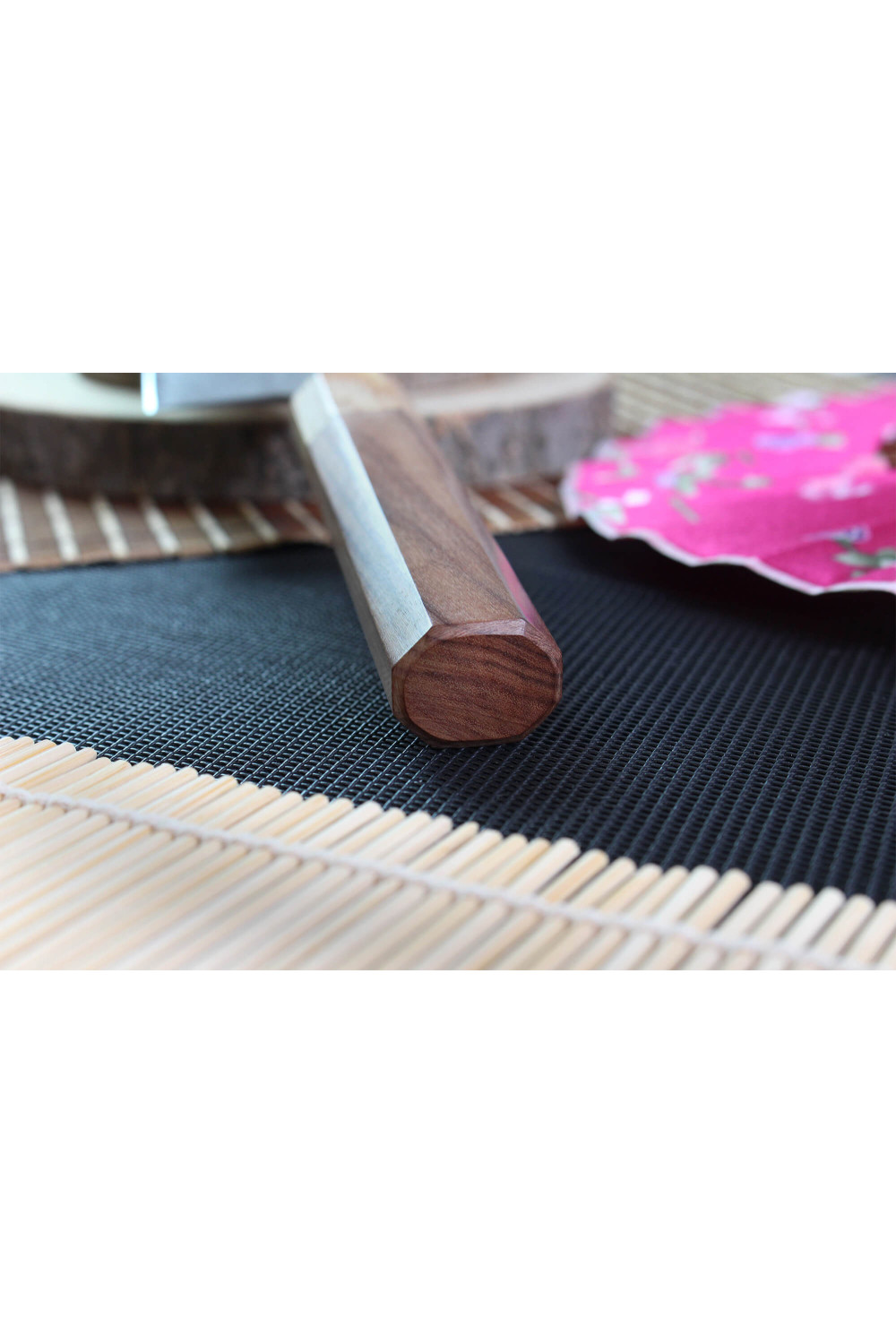
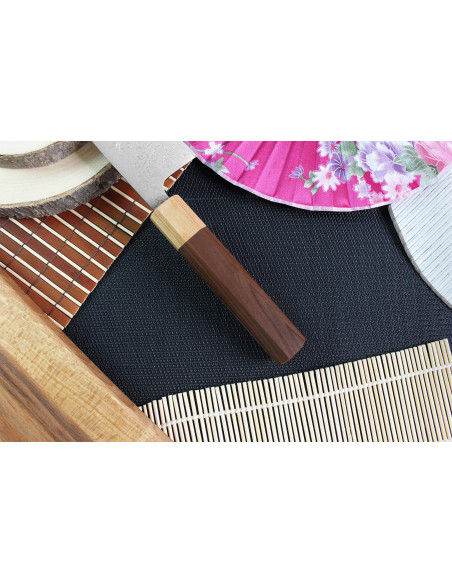
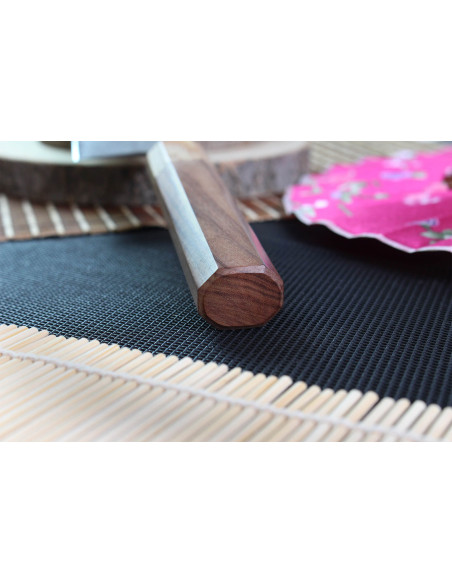
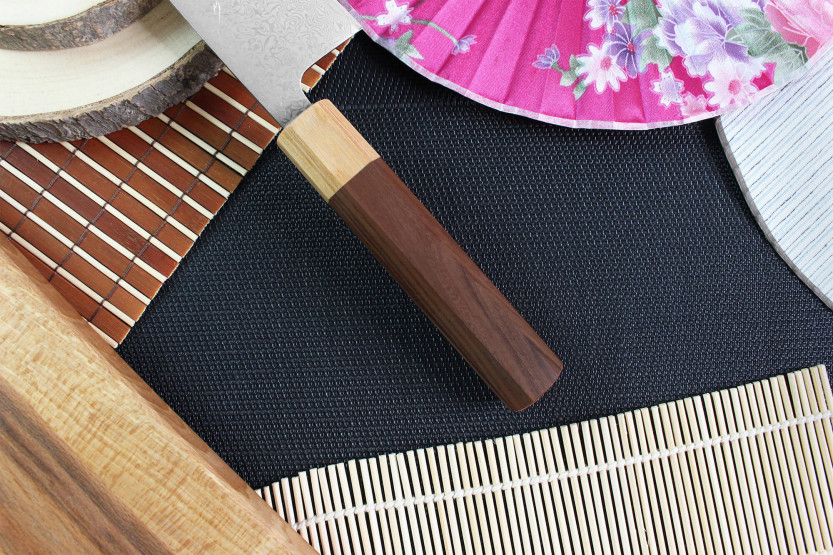
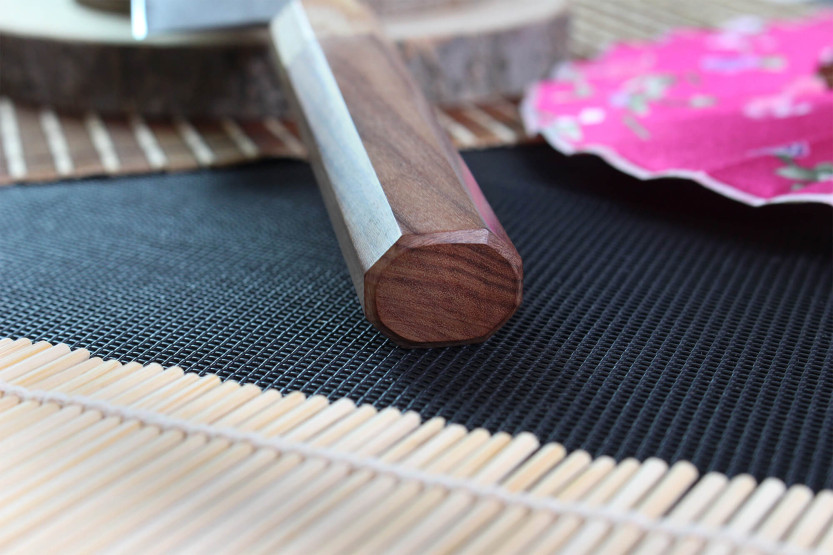
Made of Rosewood, a dense, hard wood. Its grit remains fine and its color varies in shades of warm brown. The veins you see are unique to each knife. Its octagonal shape makes it comfortable to hold, making it suitable for both right- and left-handed cooks. It's also lightweight, for ease of use over time.
A clear Pakkawood bolster links the blade to the handle. Pakkawood or Pakka wood is a highly resistant composite material, often used in the kitchen. It is considered antibacterial, and stands up well to temperature variations and humidity. Its light color contrasts perfectly with the warm wood and damask blade.
Finally, wood paste fills the gap between blade and handle, to prevent liquid or waste from seeping inside.
Care and maintenance :
Wash the knife by hand (dishwashers are forbidden, as is soaking it in the sink) and wipe it with a soft cloth immediately afterwards for complete care. This will ensure long-lasting preservation, as even though it has a good chromium content, it is nevertheless highly enriched in carbon (which is oxidizable).
It is also possible for the wire to become discolored with use, and this is perfectly normal, as carbon reacts to the acidity of cut food or the humidity of the air.
Discover all the Japanese knife brands we've selected for you!




 By buying this product you can collect up to