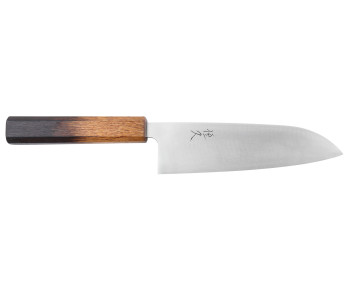
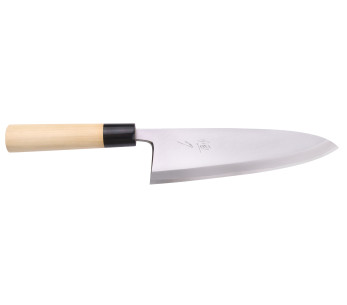
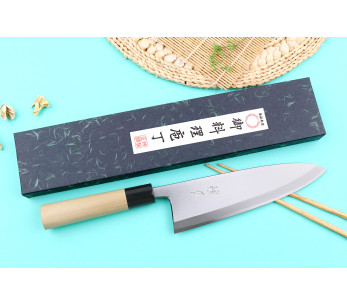
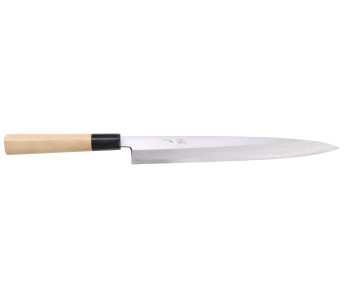
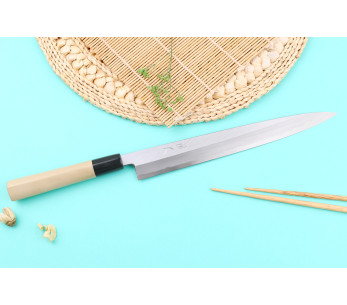
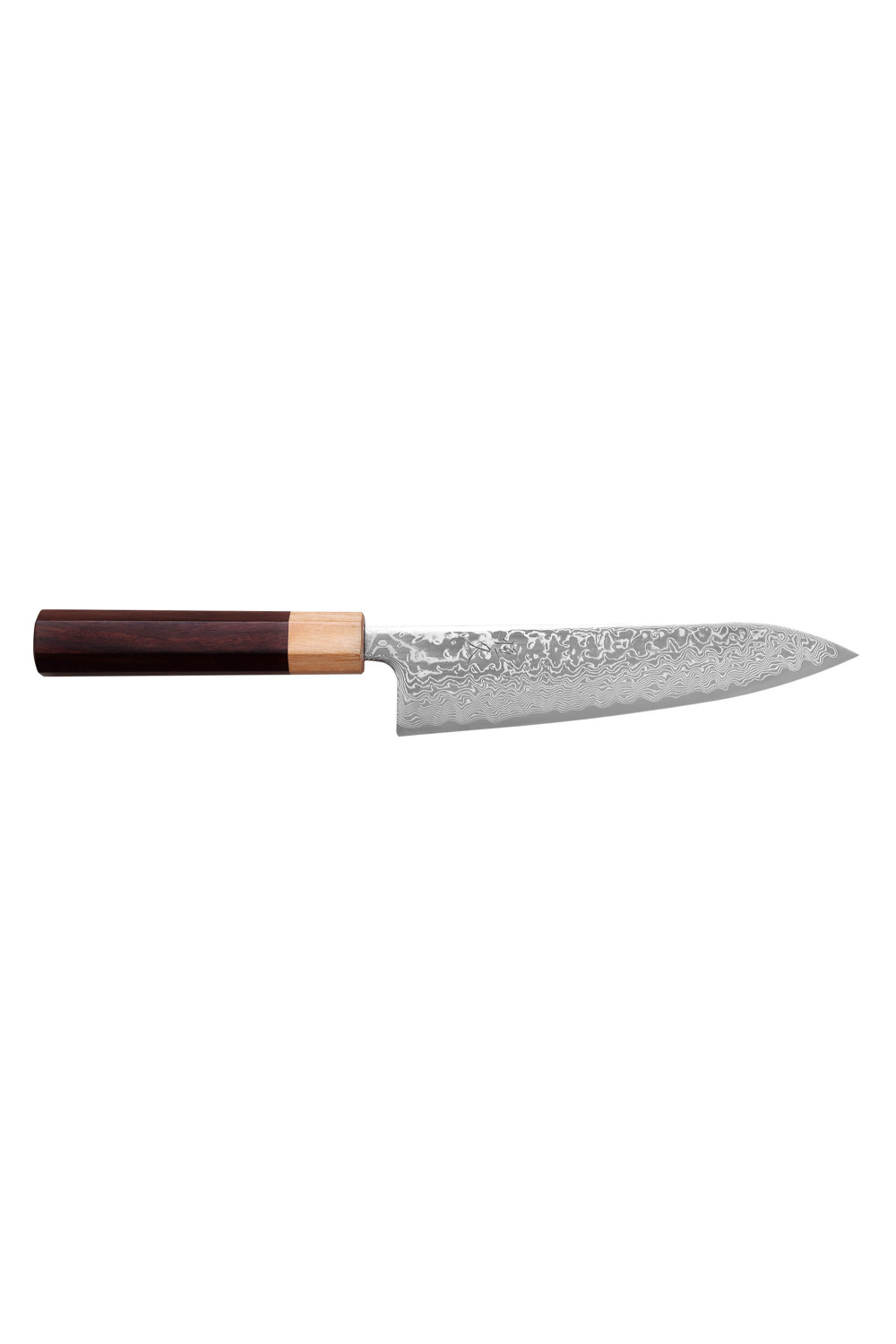
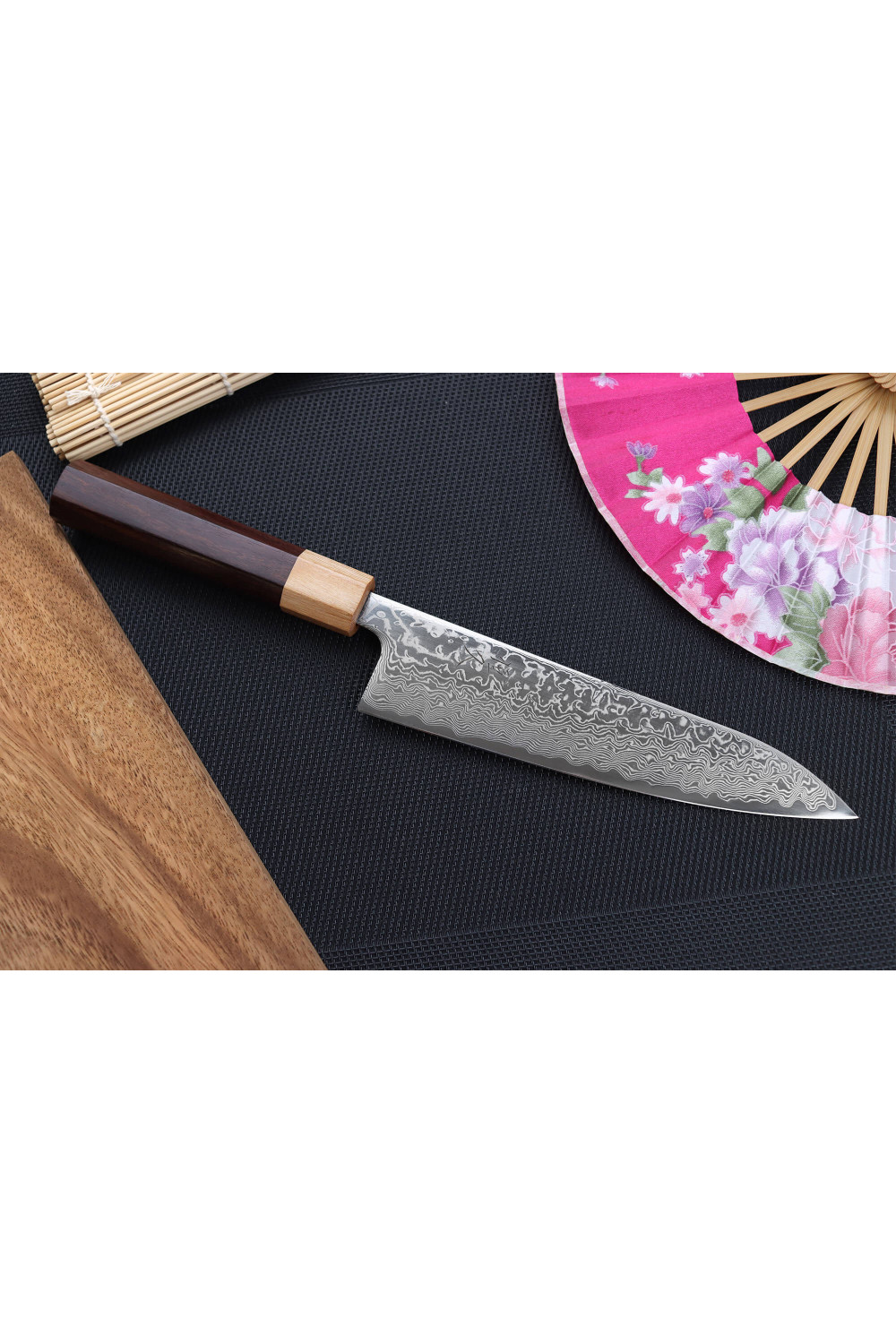
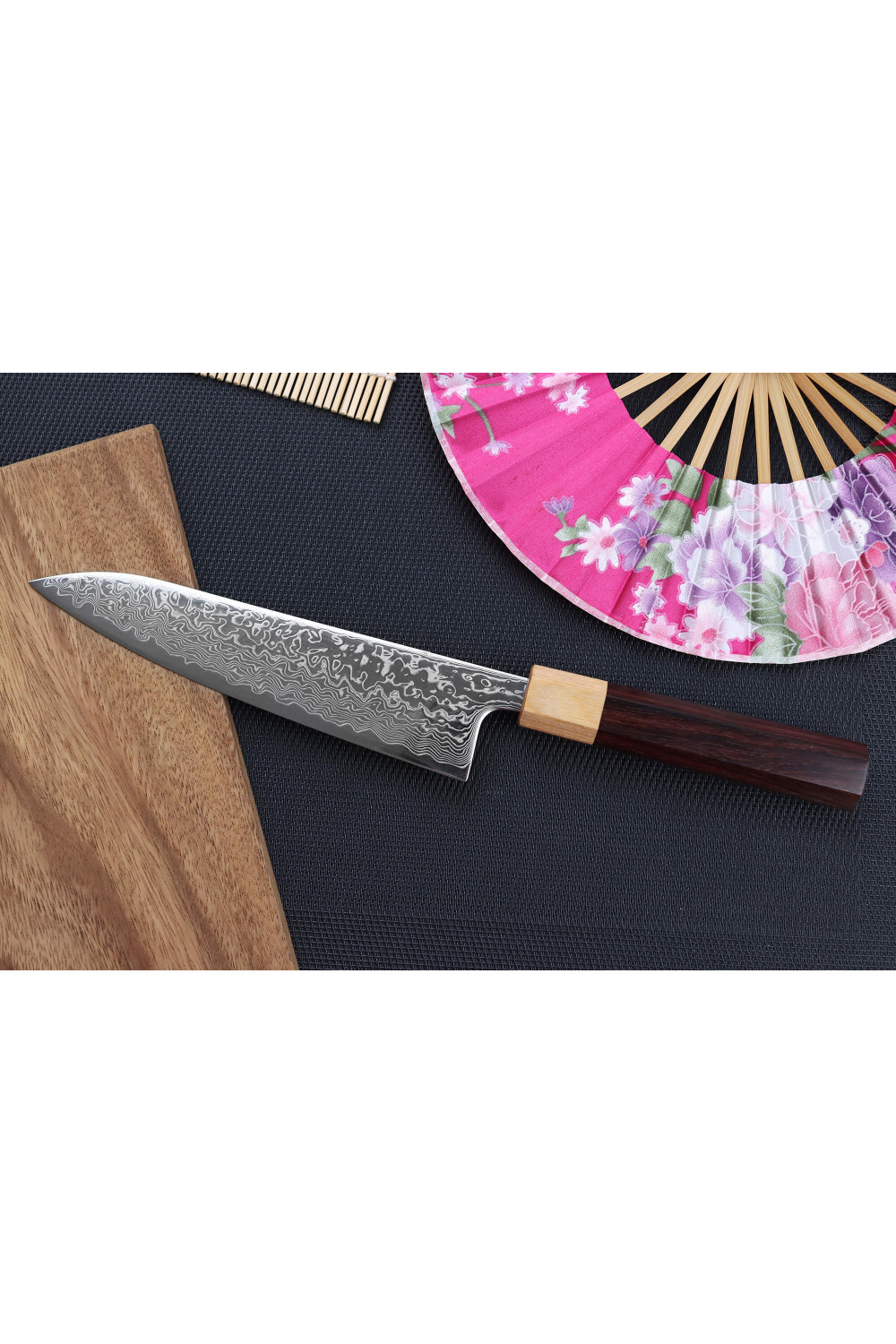
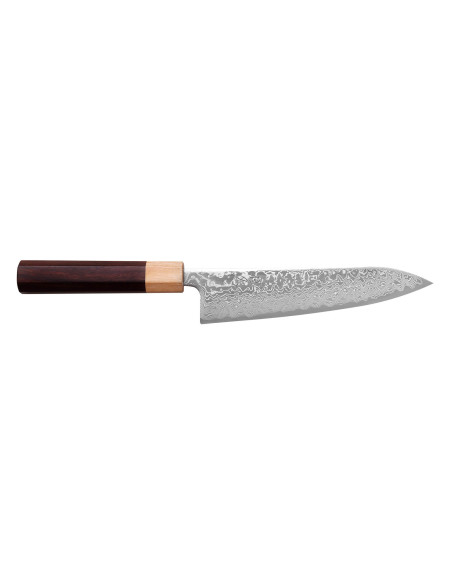
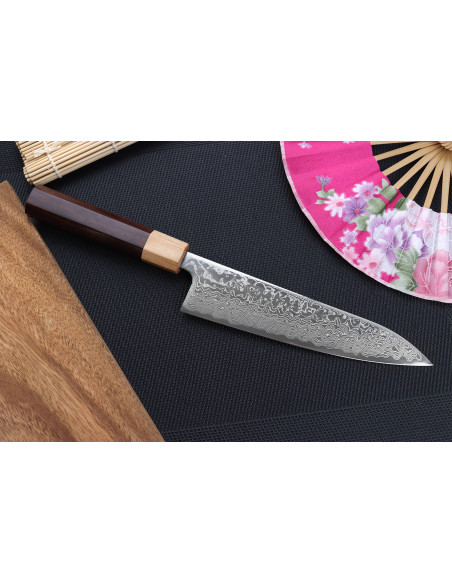
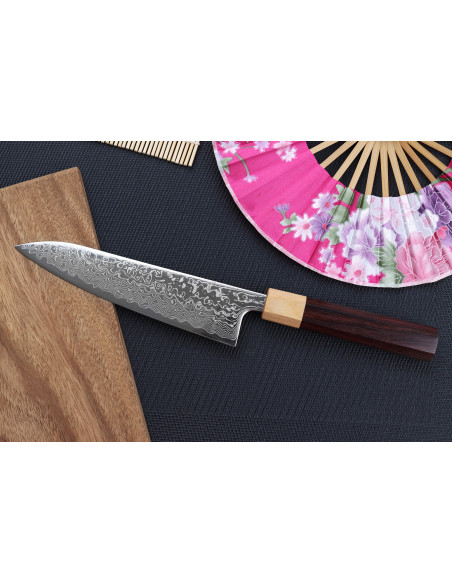
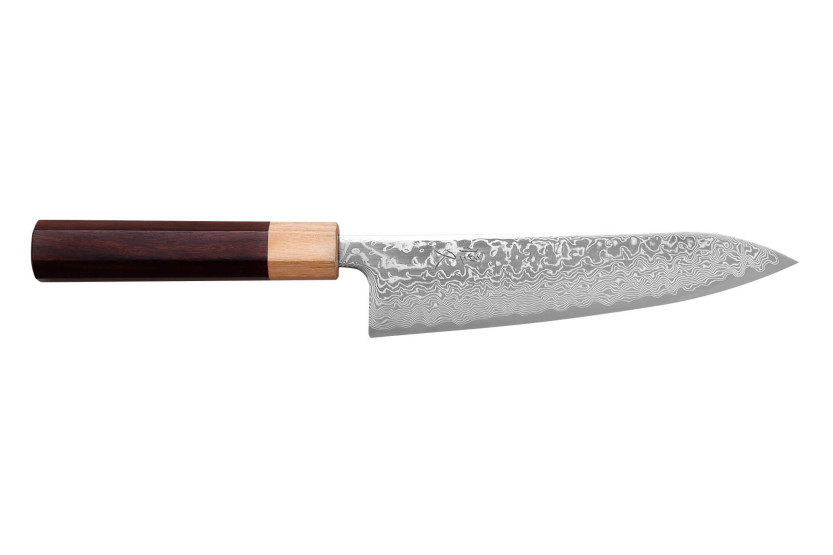
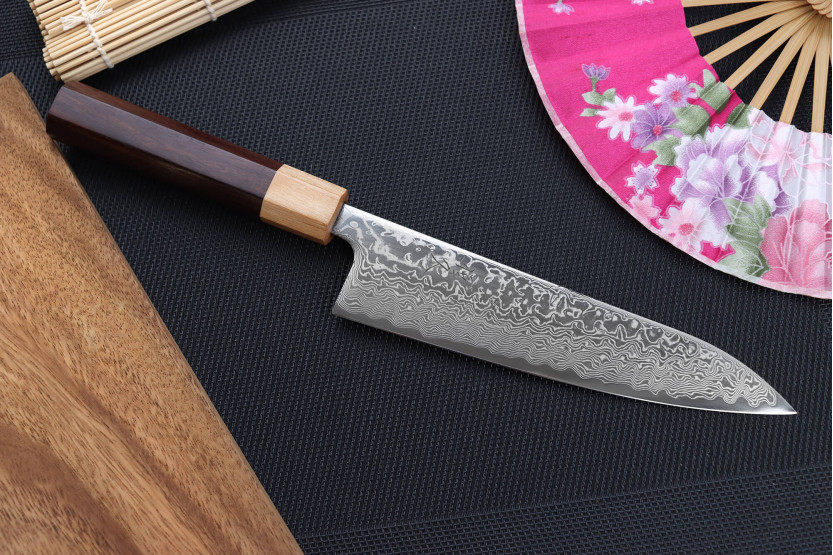
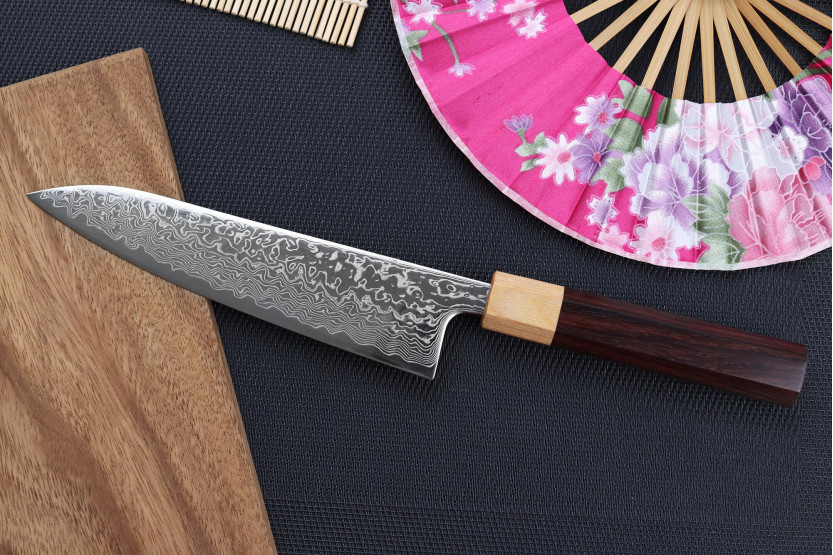
This Tsunehisa SLD Damascus 18cm chef knife is crafted from quality materials. It's designed to provide long-lasting support for efficient cutting in no time. This is the most versatile model in the kitchen. It expands your range of cuts: you can handle meat, vegetables, fish and even fresh herbs. The important thing is not to use it on materials that are too hard, to avoid chipping (pumpkin, wheels of cheese, bones, frozen food, etc.).
Here are our recommendations for its care: the dishwasher is forbidden, as is soaking it in the sink. Wash by hand and wipe with a soft cloth immediately afterwards. This will preserve it for a long time, because even though it has a good chromium content, it is highly enriched in carbon (which is oxidizable). In fact, it is possible for the wire to become discolored with use, and this is perfectly normal, as carbon reacts to the acidity of cut food or the humidity level in the air. In fact, we recommend wiping the wire between cuts, to reduce the acidic effect of the cut items before washing.
SLD Japanese steel blade
SLD steel has been chosen for the heart of the blade. It is manufactured by Hitachi, a Japanese steel mill with a very good reputation both at home and abroad.
SLD was originally another alloy, SKD11. This standard but very hard steel was used, for example, in machines that stamp metal parts (hence the importance of initial hardness). It was appreciated for this type of task, as it did not crumble easily, even under regular pressure.
Seeing its potential, Hitachi decided to modify it to make it suitable for kitchen use. Its composition was therefore modified to obtain a carbon content of between 1.4 and 1.6%, which is very high compared to the Western average of 0.5%.
This level of carbon has a positive effect on the rigidity of the knife's cutting edge, enabling it to retain its sharpness much longer. What's more, this rigidity gives the knife a razor-sharp finish, which you can achieve when you go to sharpen it.
Add to this the alloy's chromium content, which is between 11 and 13%, and we say that above 13% of this component, a steel is considered stainless. Here, we're not talking about pure stainless steel, but a steel that is nonetheless fairly resistant to oxidation. It's a hybrid steel.
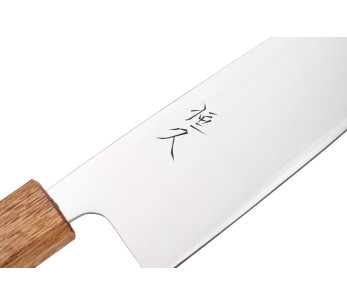
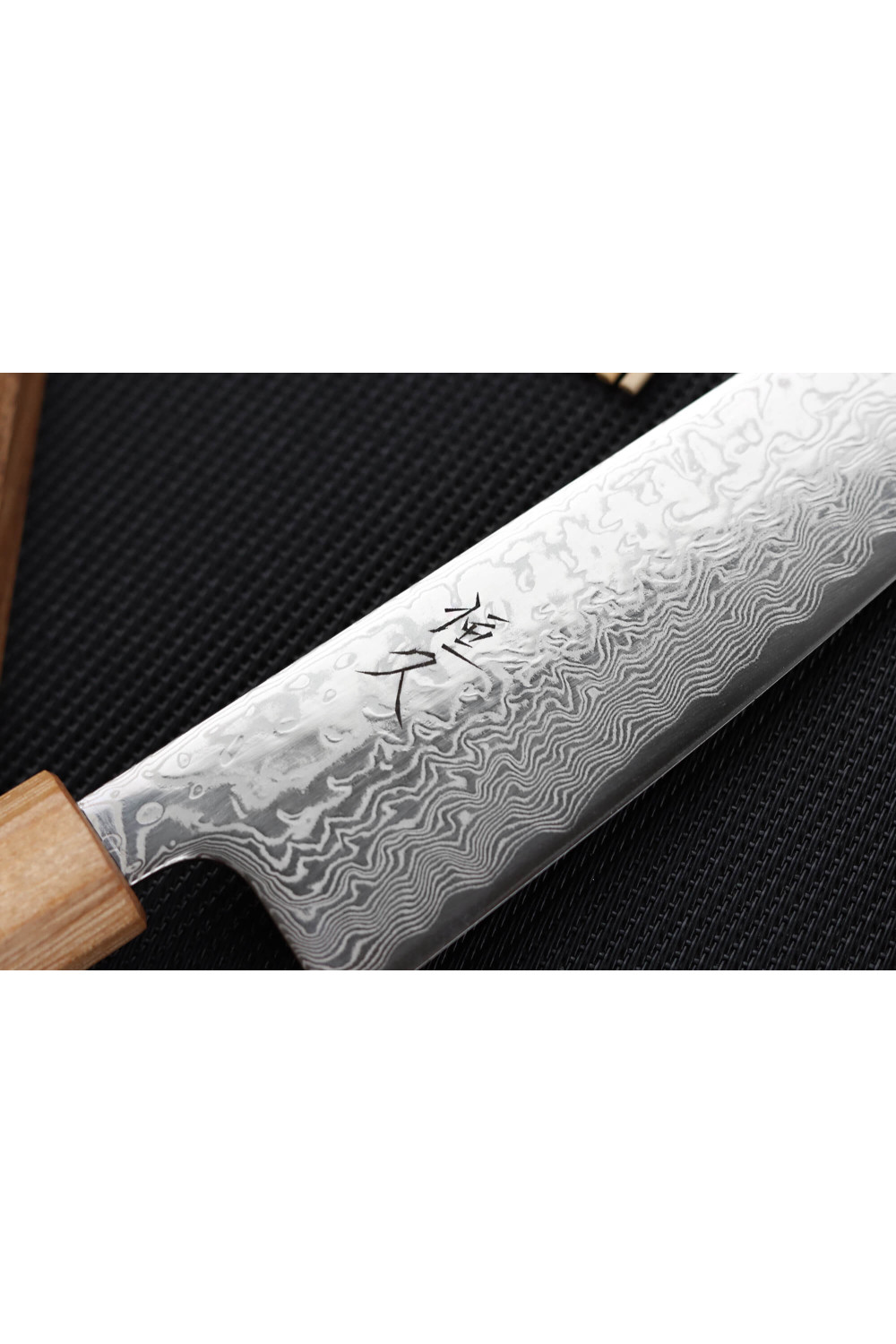
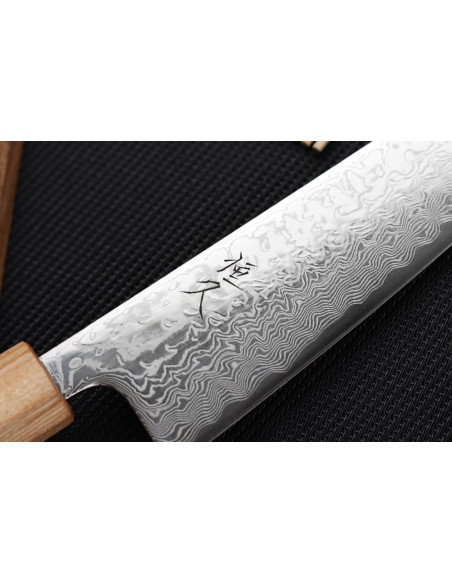
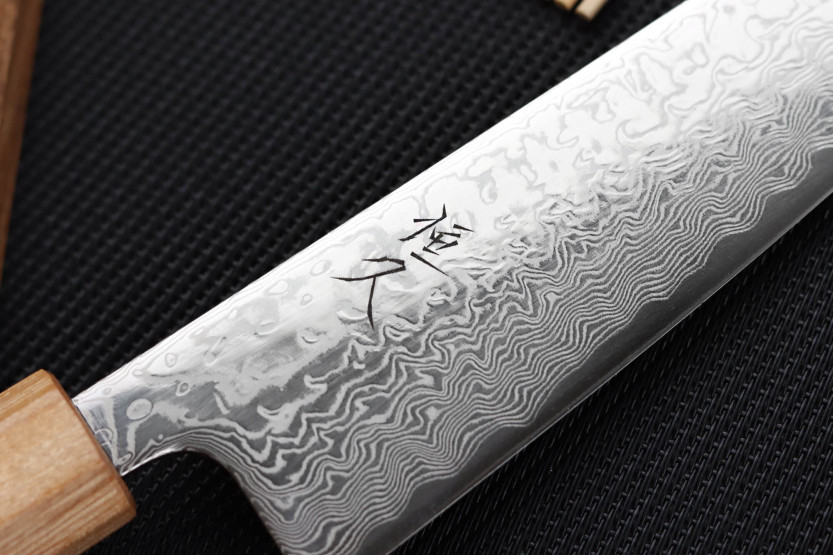
This SLD core is then surrounded by a multitude of softer steels. The result is damascus. The cutting surface is original, and the patterns unique to each piece.
In addition to adding a great deal of originality, damascus balances the hardness of the core to give the blade a slight suppleness (it doesn't become flexible, but rather more resistant to the risk of breakage).
All in all, the cutting performance of this knife's blade is close to that of a knife made from Aogami Super (one of the best steels available), while being slightly more resistant to corrosion.
A beautiful handle, suitable for all
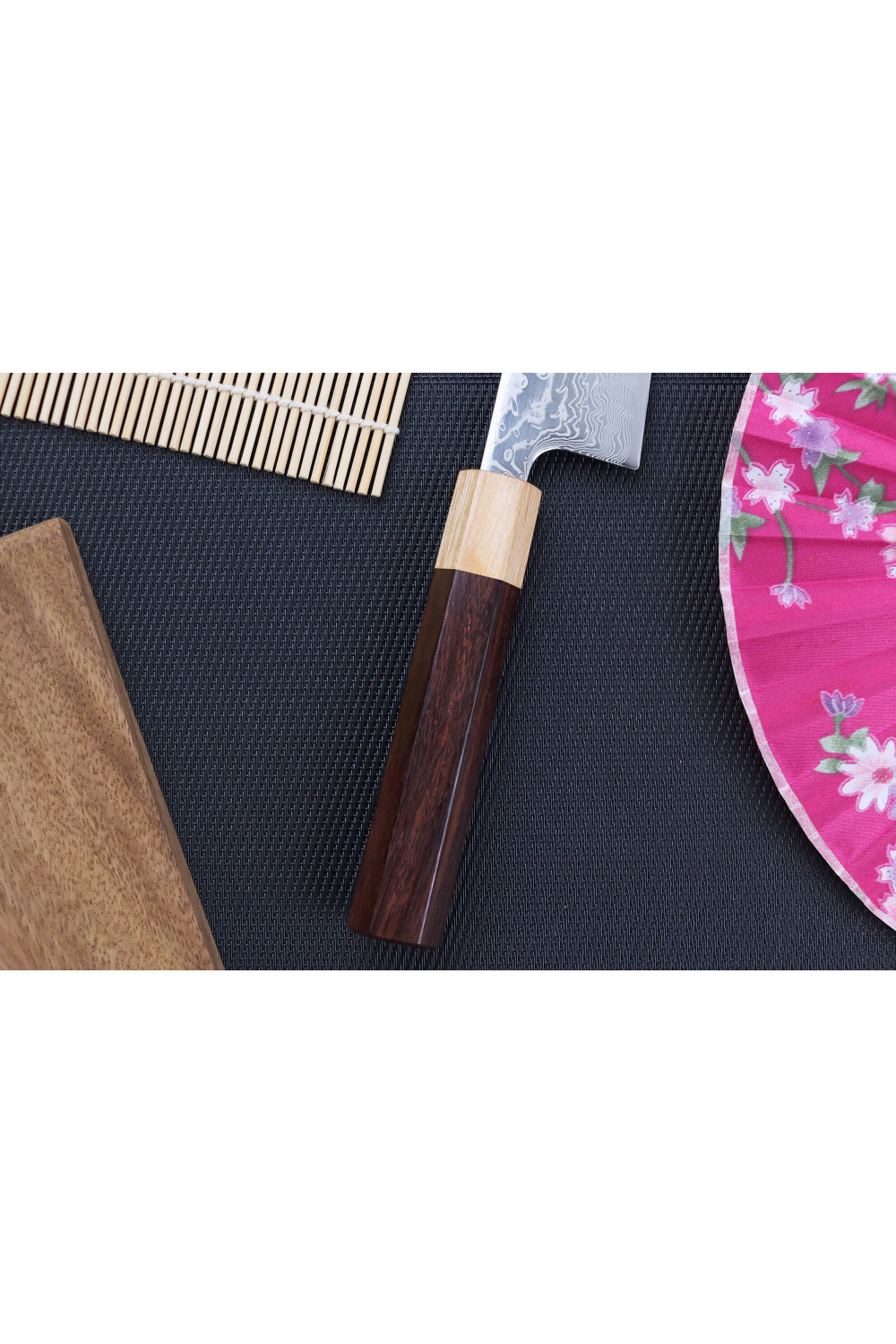
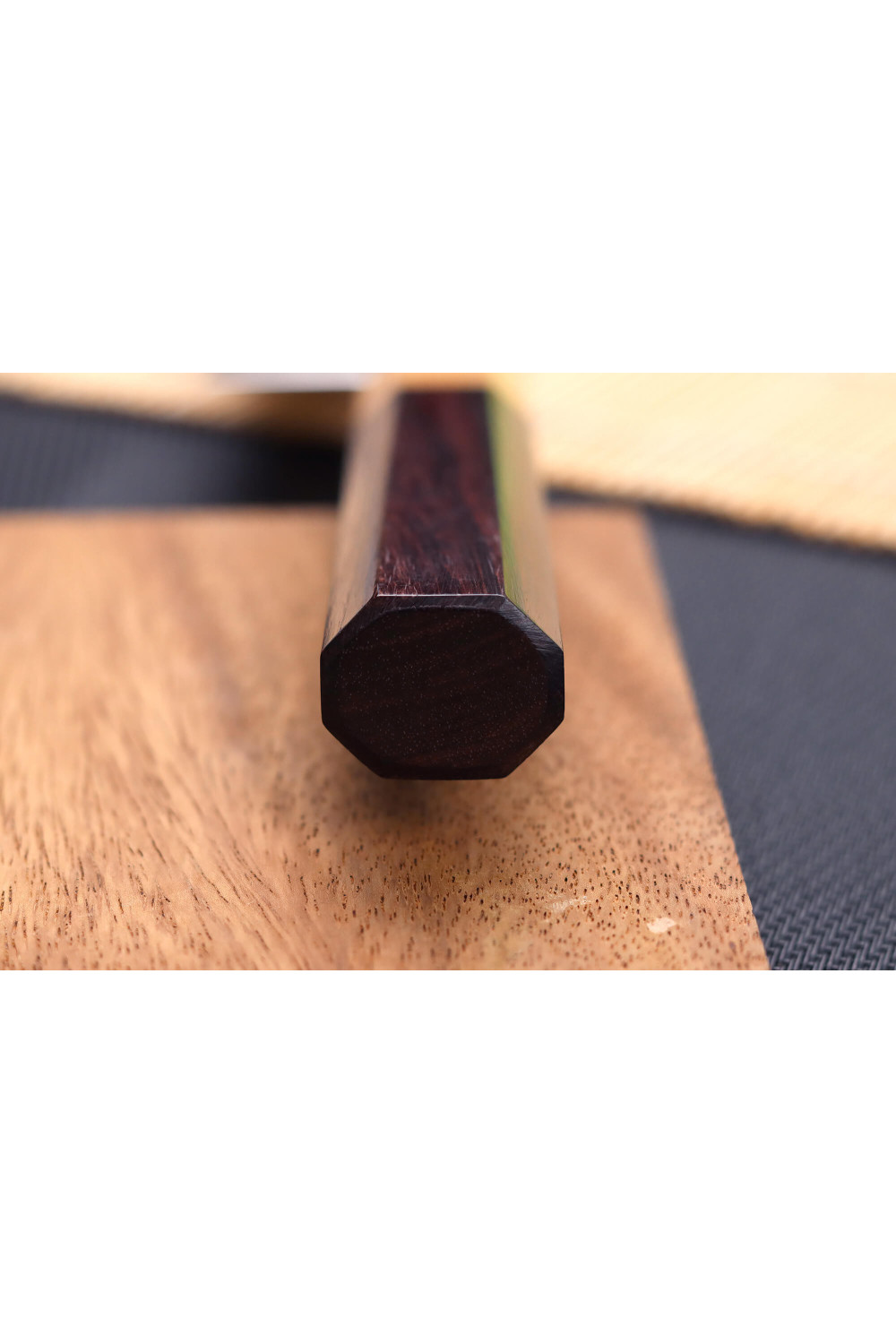
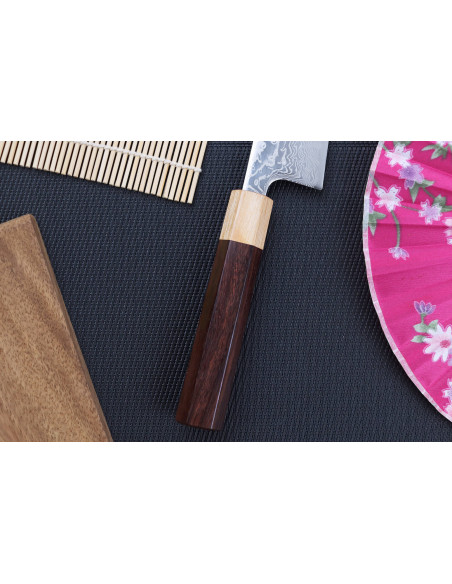
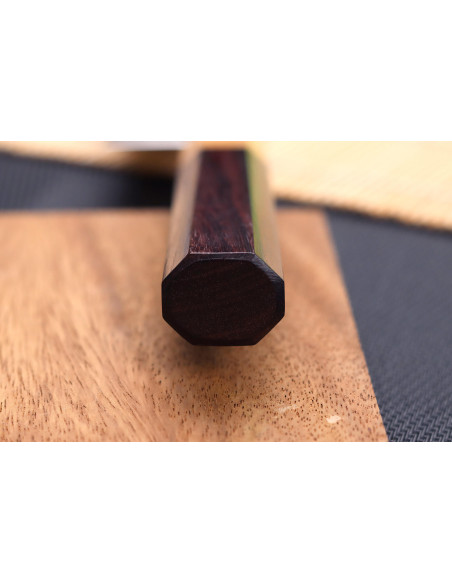
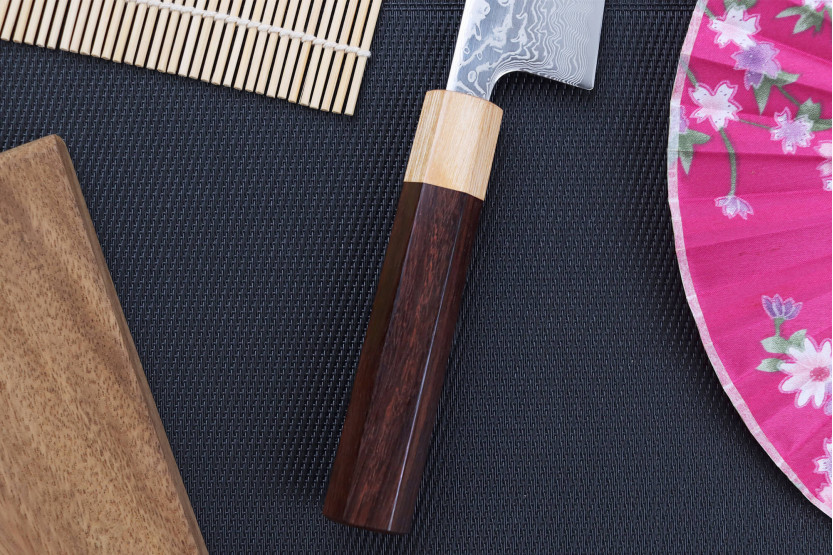
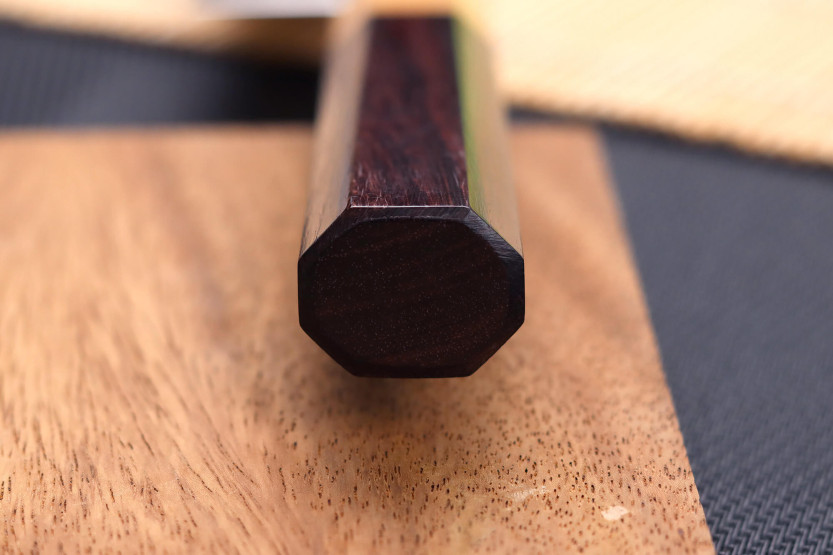
The handle of your tsunehisa knife is made of rosewood, a dense, non-porous exotic species. Its color oscillates in shades, but remains predominantly dark. The veins you see are unique to each knife. Its octagonal shape makes for a pleasant grip (for right-handers as well as left-handers). Lightweight, it's a pleasure to handle while cutting.
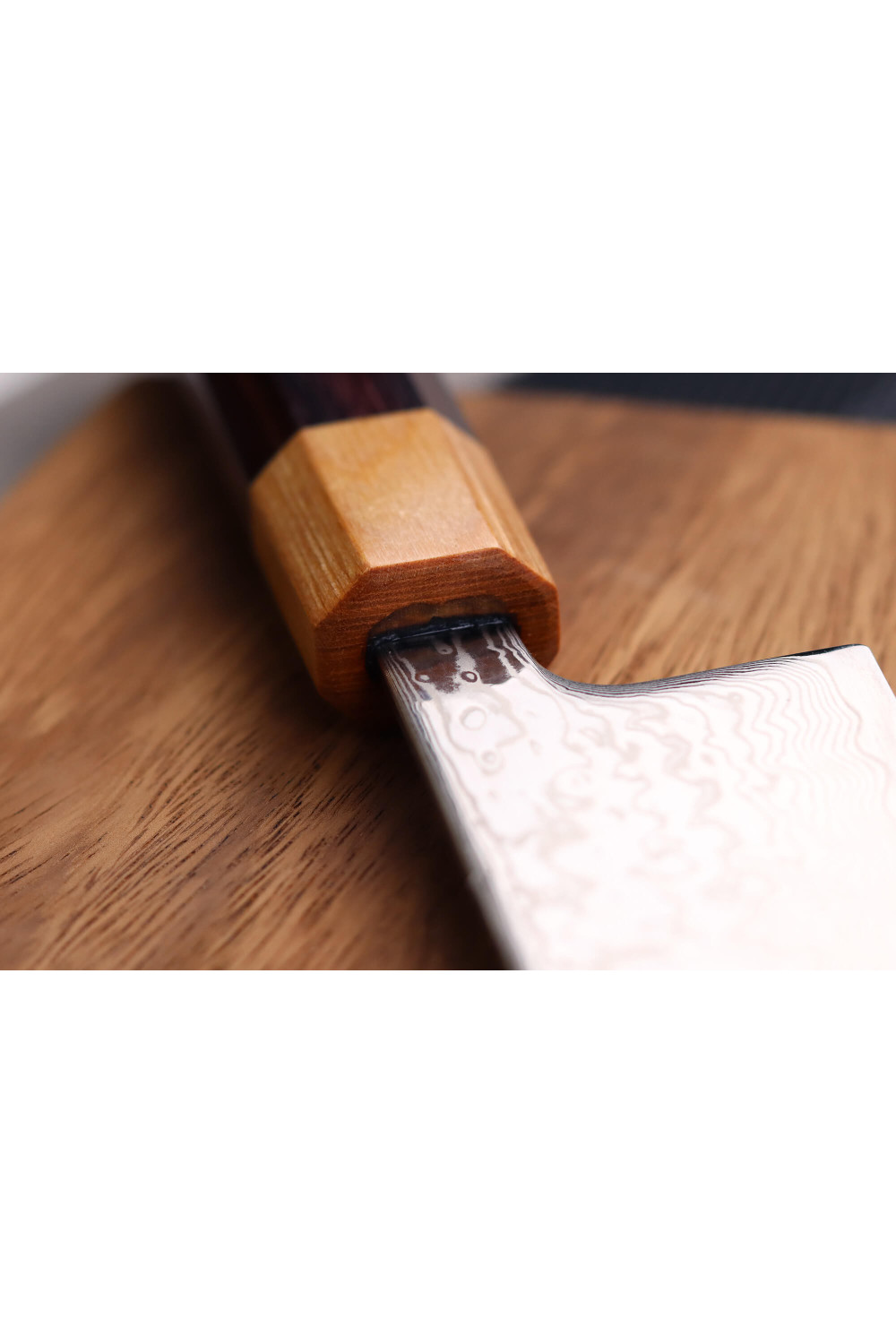
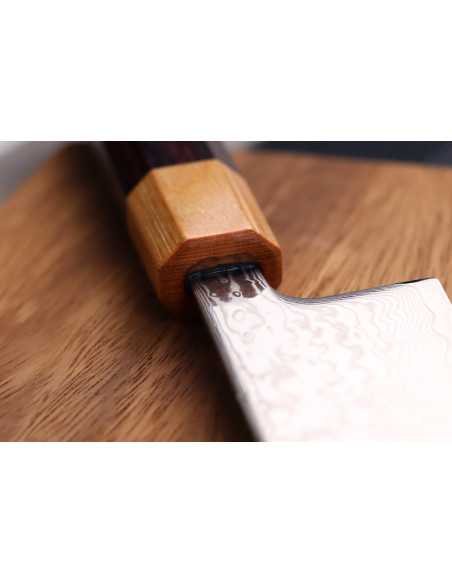
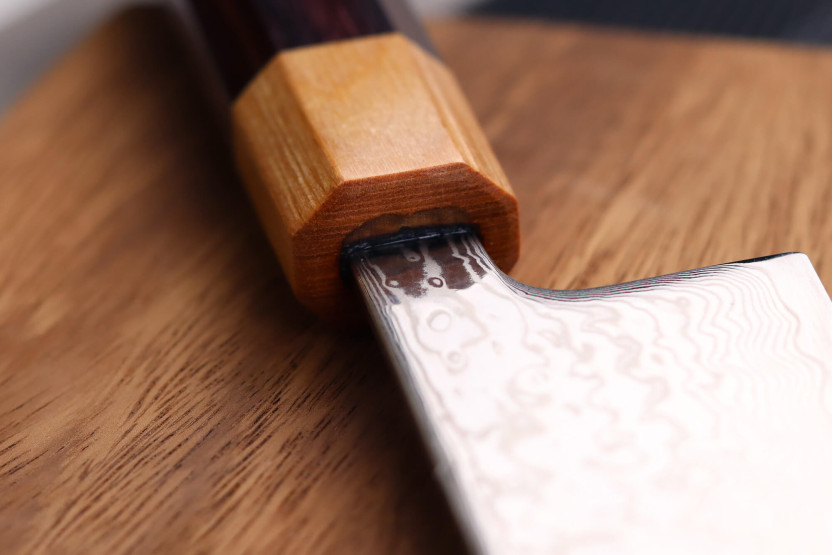
The bolster is made from light-colored pakka wood. Pakkawood or Pakka wood is a robust composite material often used in the kitchen (for Utensils handles, for example). It is considered antibacterial and virtually immune to temperature variations and humidity. Its light color contrasts perfectly with the darker shades of rosewood.
Finally, wood paste fills the gap between blade and handle, to prevent liquid or waste from seeping in.
Find out more about Tsunehisa
Japan is a country of tradition, and many blacksmiths still use manufacturing methods directly inspired by the blacksmiths of yesteryear. Tsunehisa knives are made by a small team of highly skilled experts.
Note that the manufacturer emphasizes the efficiency of the cutting edge of its blades. It allows you to appreciate Japanese expertise while benefiting from an authentic, timeless design. Professionals and passionate amateurs alike will be delighted by the performance offered by tsunehisa Japanese knives.
Discover our complete selection of sharpening stones to maintain it!




 By buying this product you can collect up to