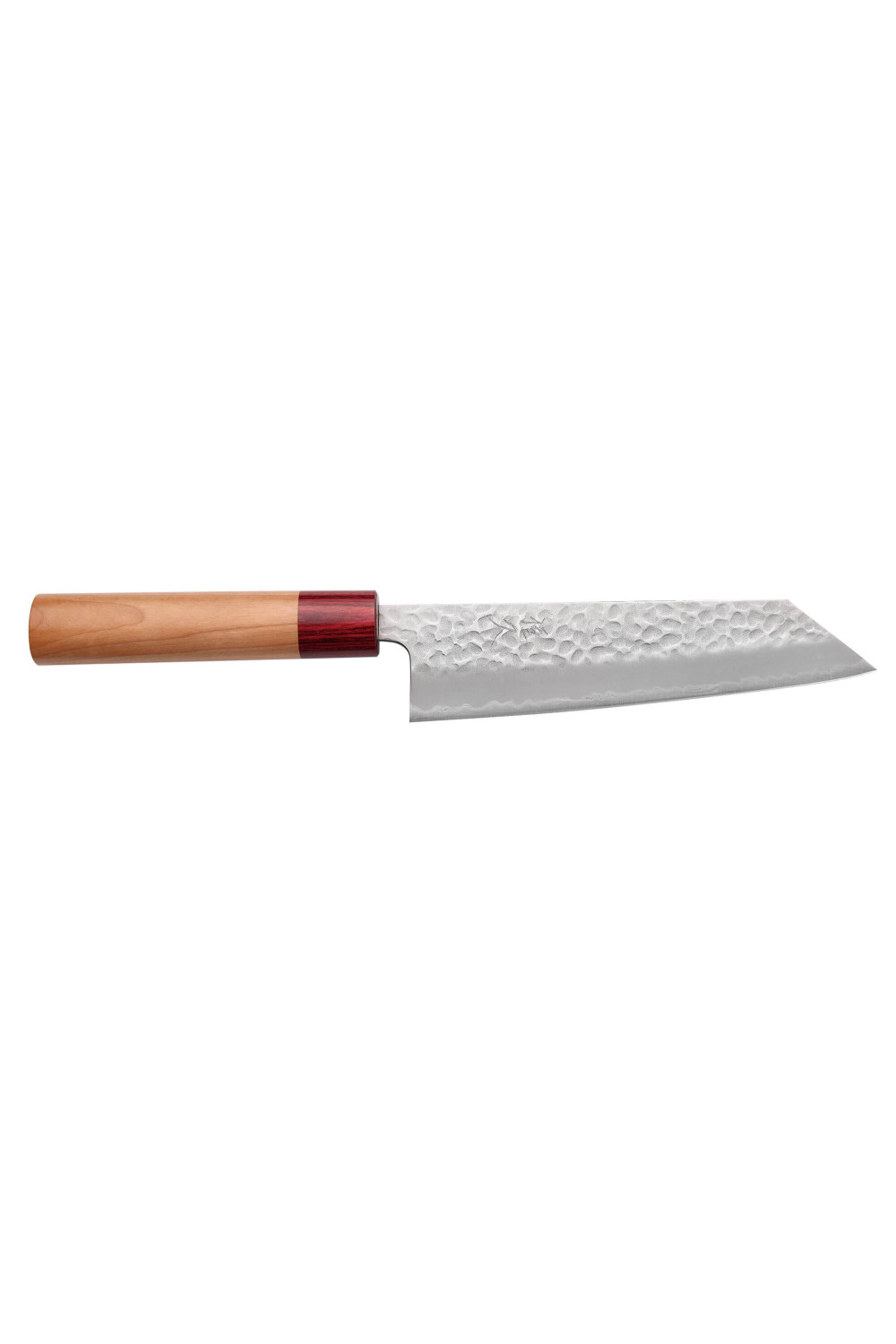
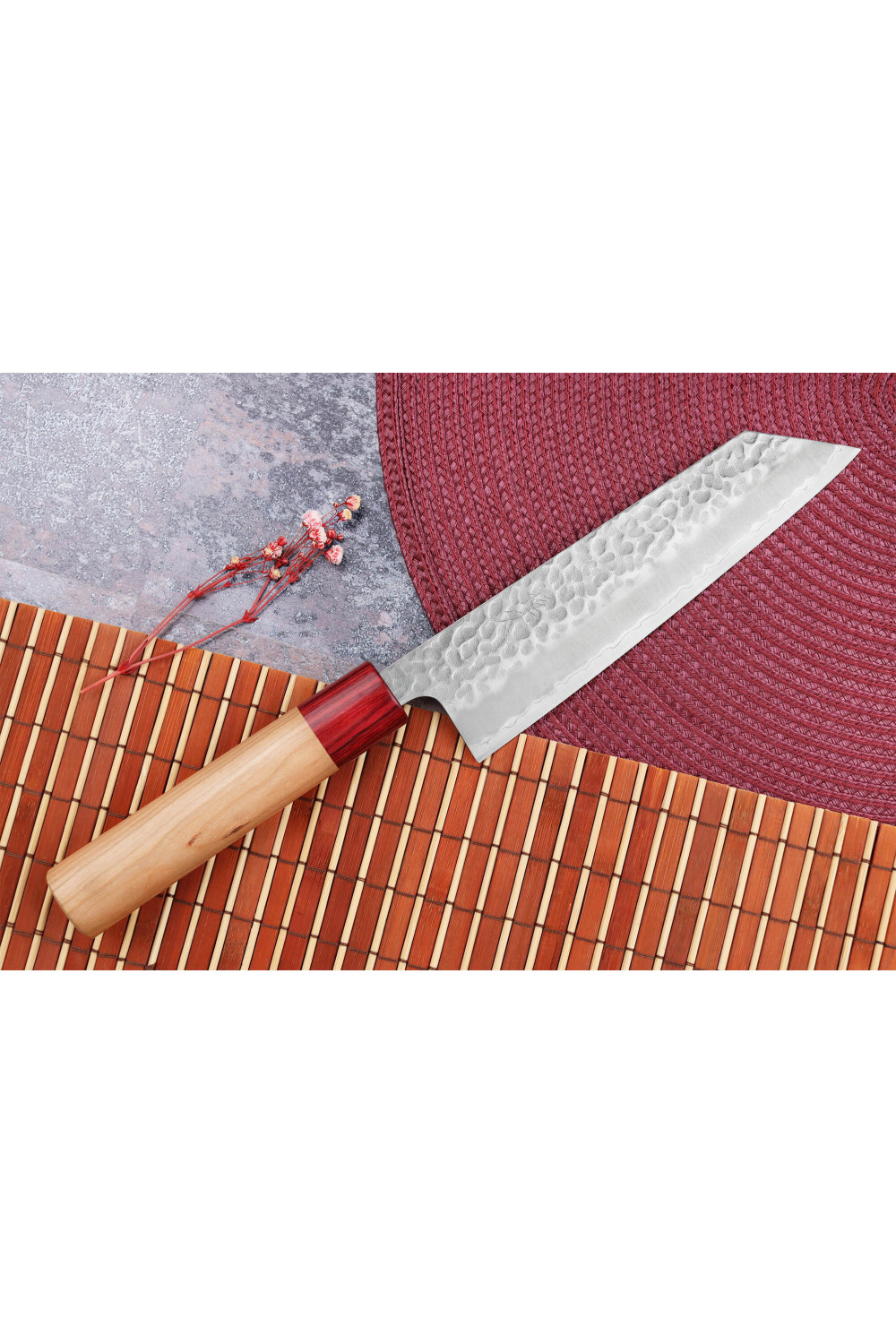
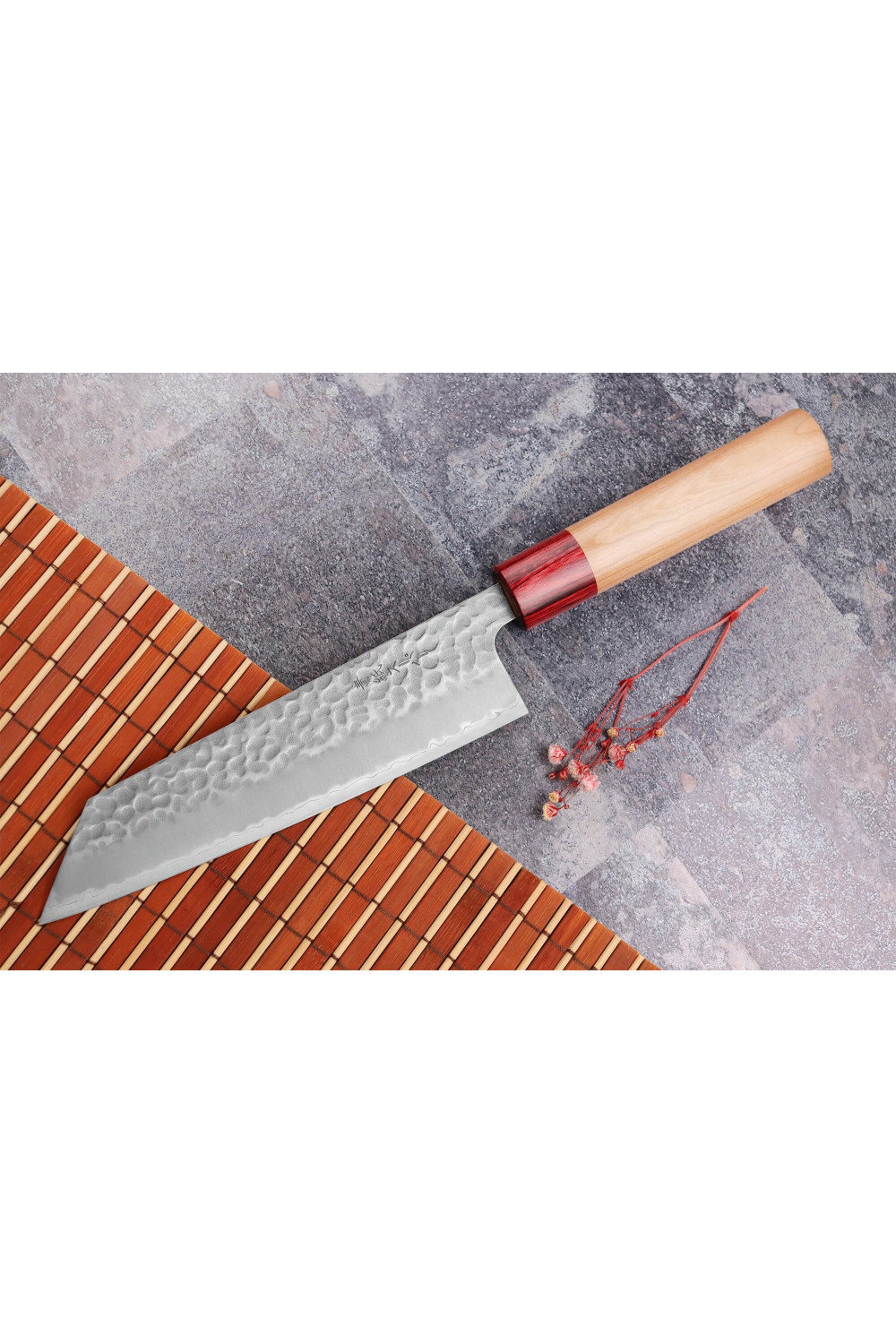
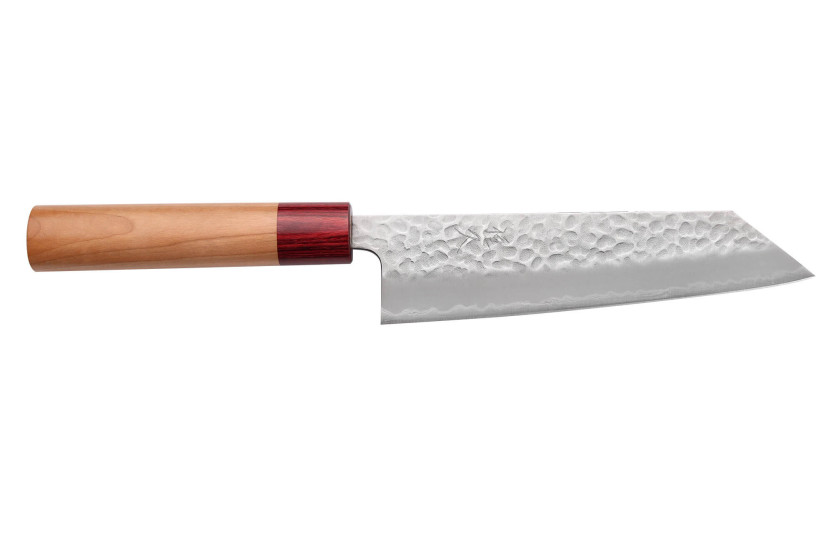
This Tsunehisa AS bunka knife has been forged by the eponymous Japanese cutlery manufacturer Tsunehisa. The brand offers quality, high-performance kitchen knives, suitable for both amateur and professional cooks. By blending today's technologies with the know-how of yesteryear, Tsunehisa knives are perfect for the long haul.
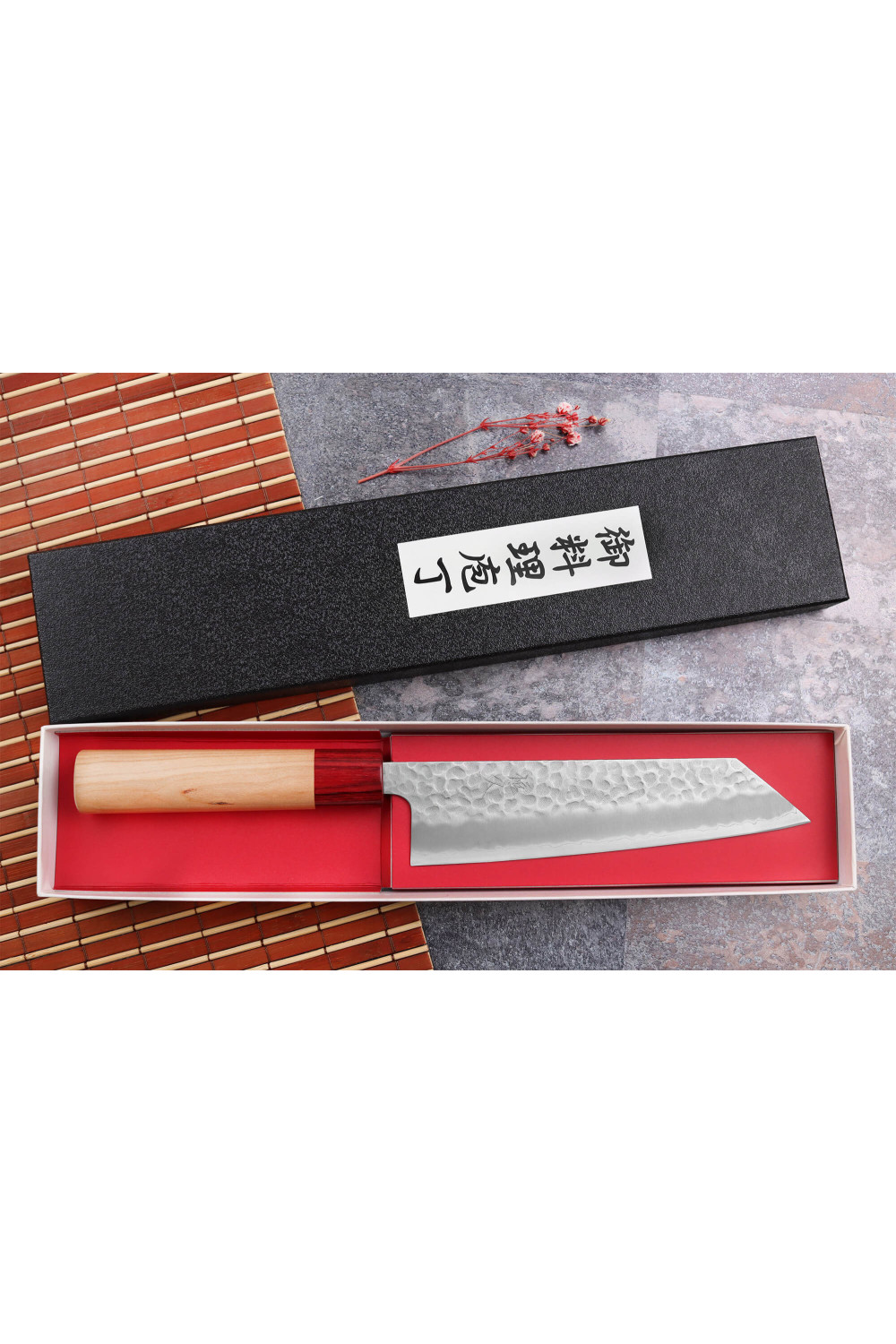
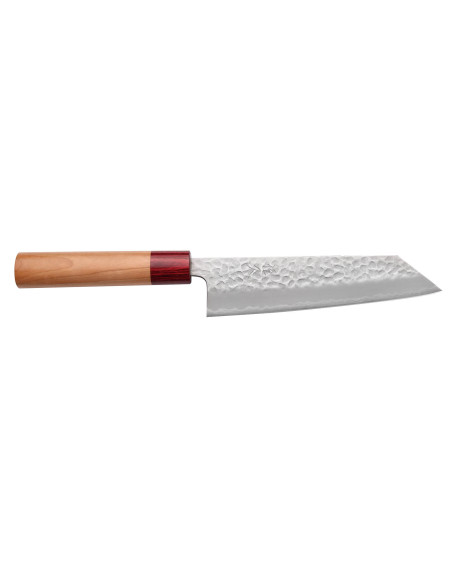
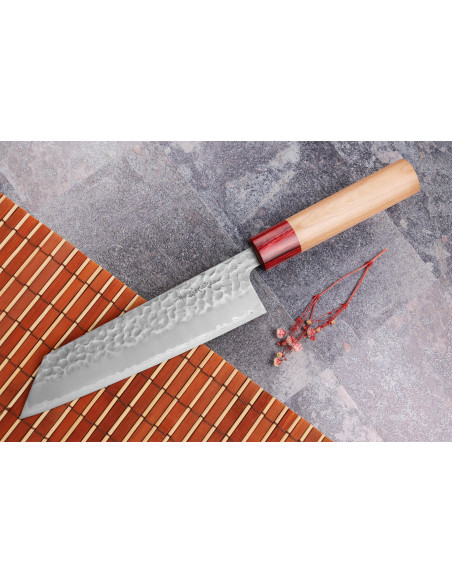
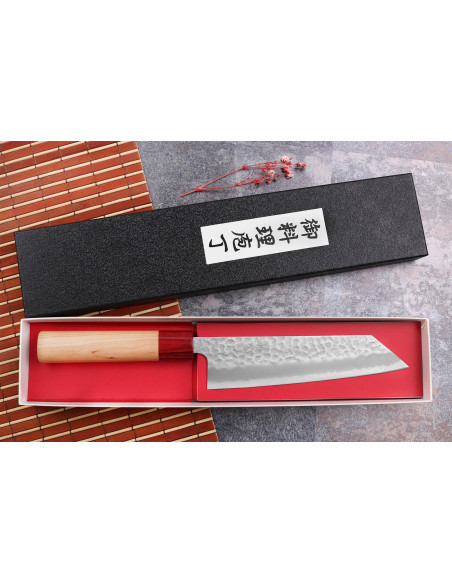
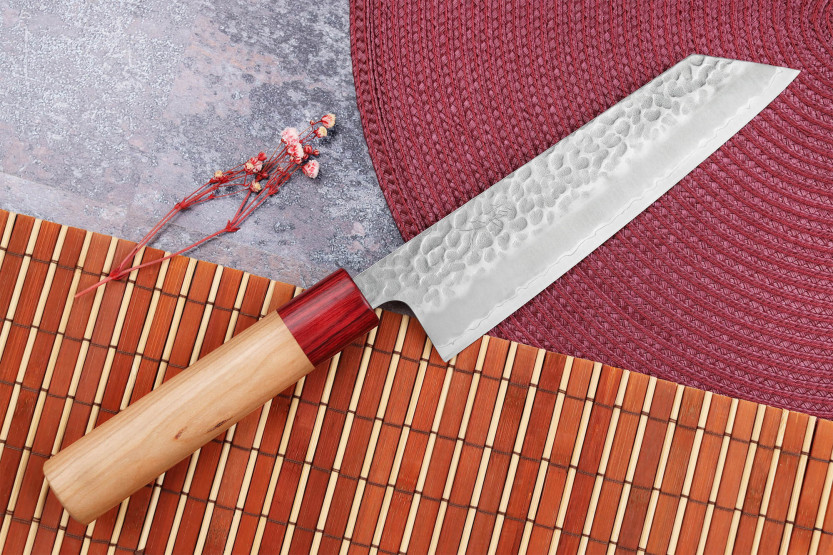
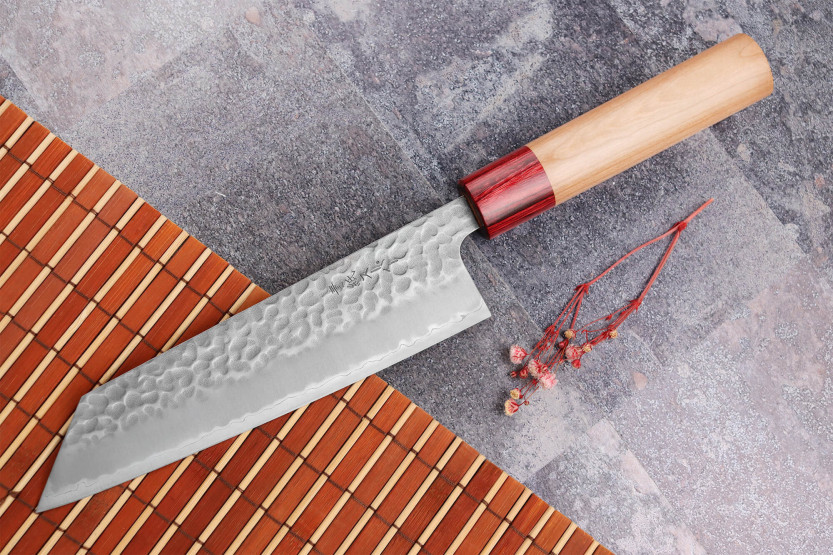
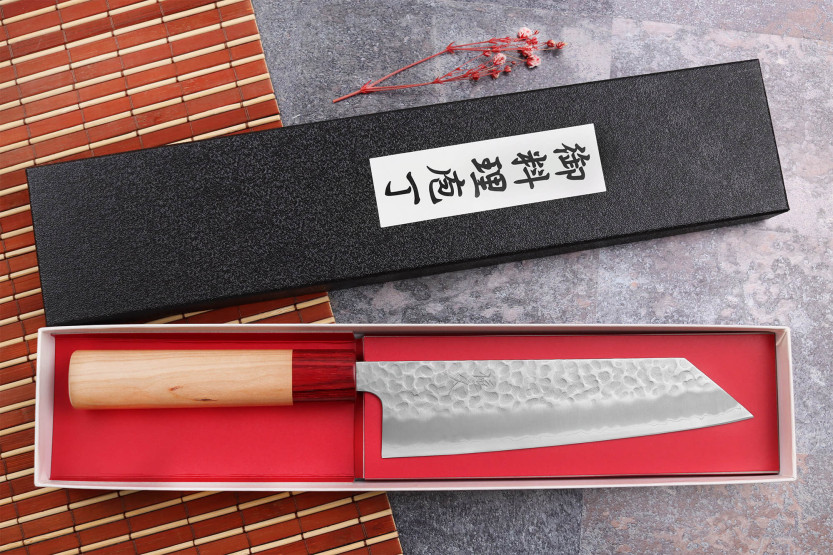
The 17cm AS bunka knife is a multifunctional knife for cutting vegetables, meat and fish. It's a bit like a santoku knife, but with a much sharper blade tip, and a broken angle on the back of the blade.
A hammered Japanese knife in carbon steel
This knife features a blade made from a San Maï structure, which means "3 layers" in Japanese. This means that the blade is designed with a rigid steel core that is covered by a softer, folded steel on either side of the core.
Tsunehisa chose Aogami Super steel for the blade core. Also known as AS or Blue Paper Steel Super, this steel is produced by the famous Japanese steelworks Hitachi, which supplies many blacksmiths in Japan.
Aogami Super contains a high carbon content of almost 1.5%. Carbon is the specific element that increases the hardness of steel, enabling it to hold its cutting edge even more strongly. An essential element, it represents a real advantage in the composition of steel. Thanks to it, the blade has a hardness of around 65 HRC on the Rockwell scale: a high figure that proves its great strength. In general, the average hardness of blades is between 55 and 60 HRC.
Blue Paper Steel is a special alloy with a high price tag, and is not easy to work. Only expert blacksmiths can work it, to avoid costly material losses.
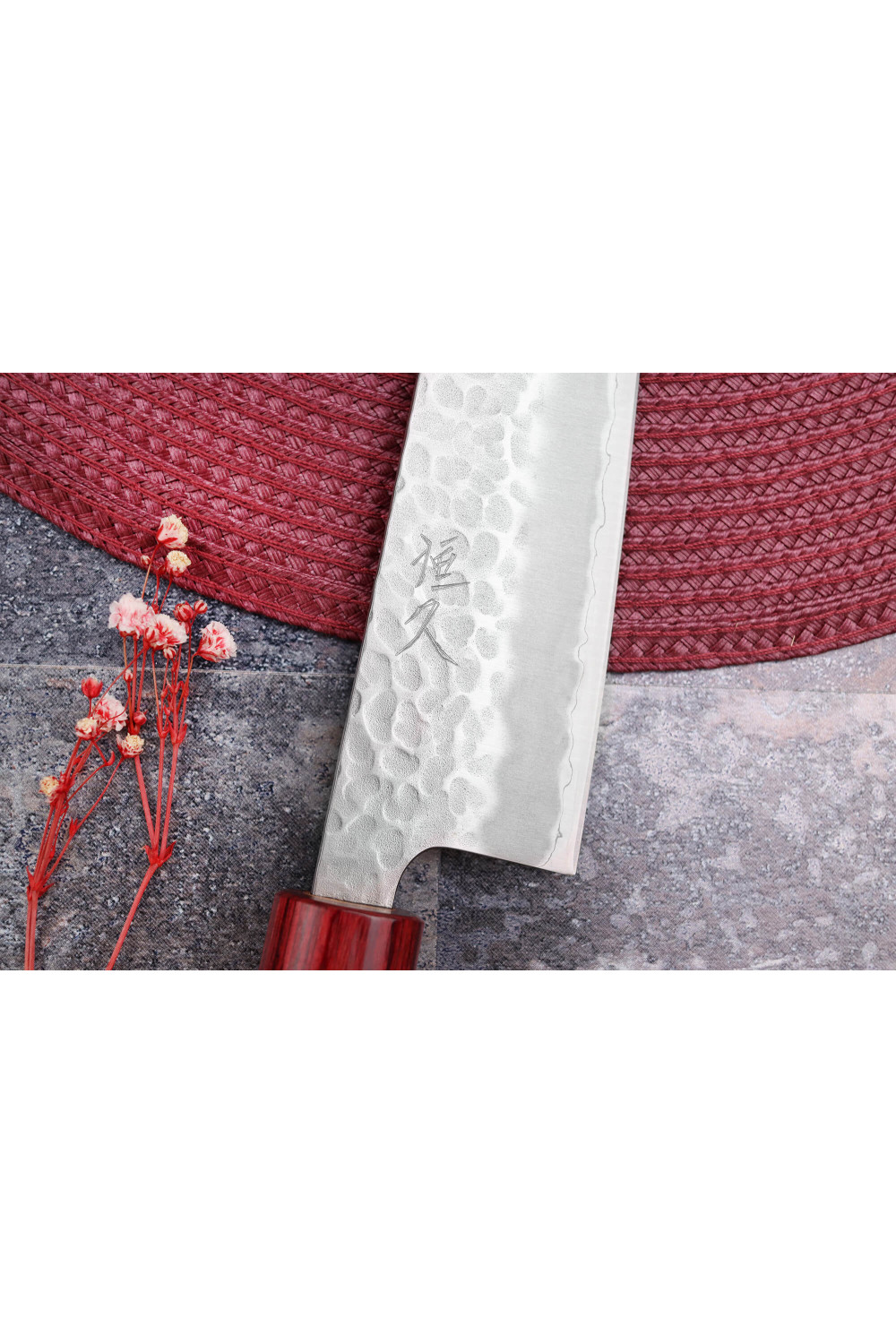
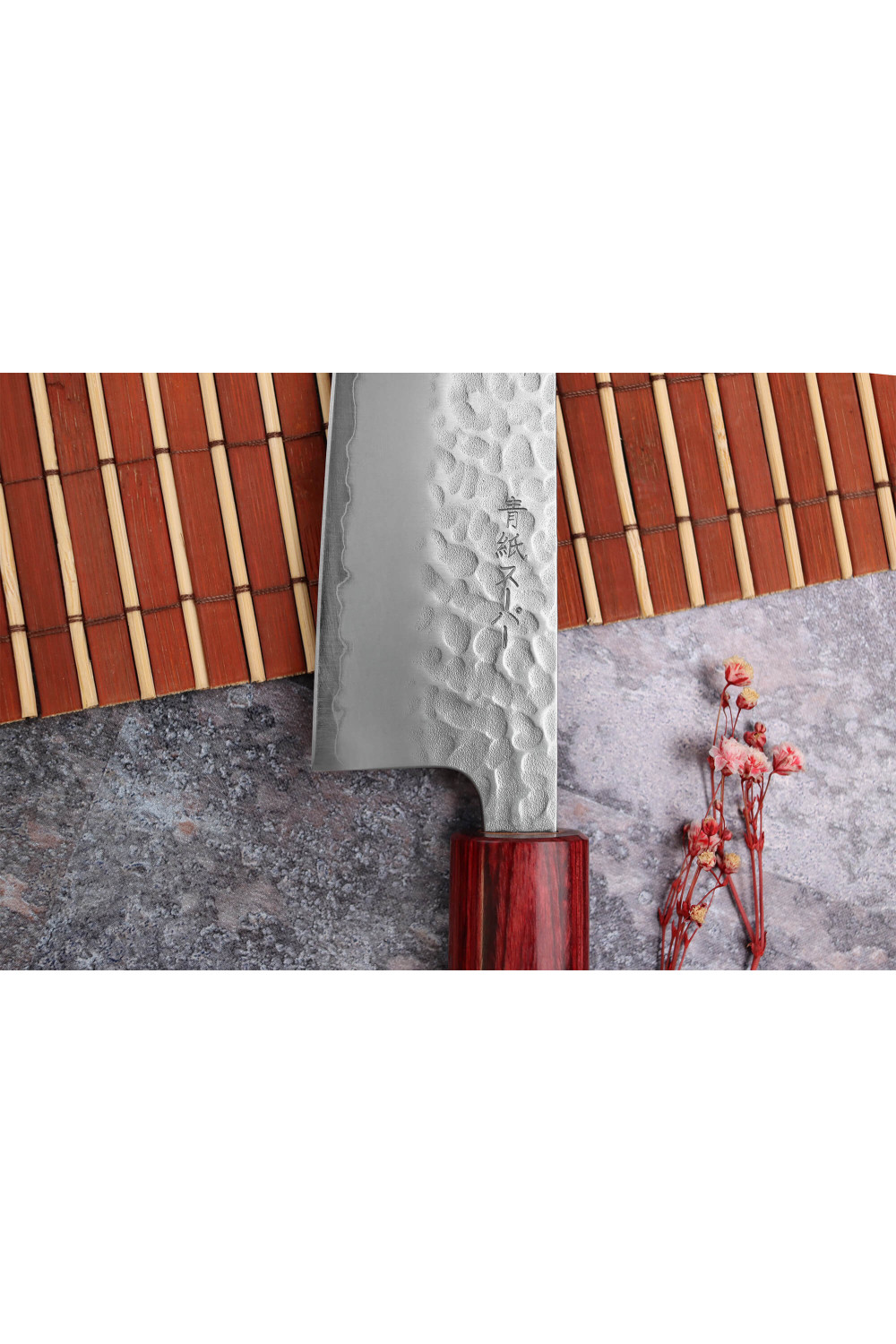
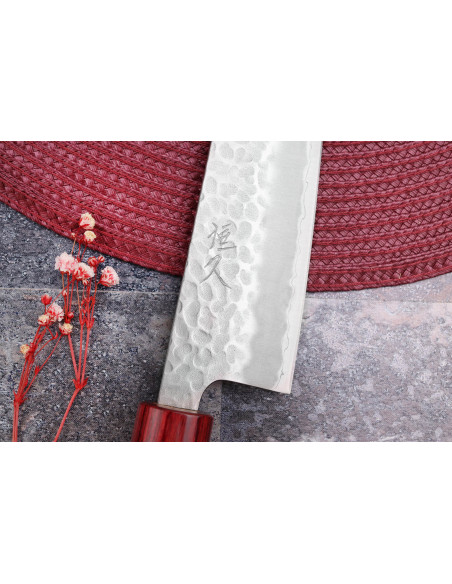
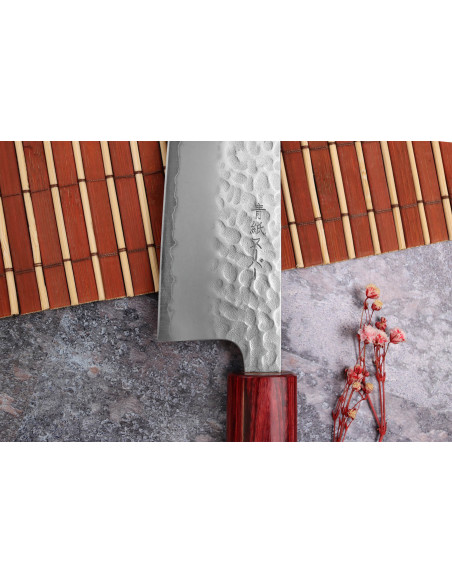
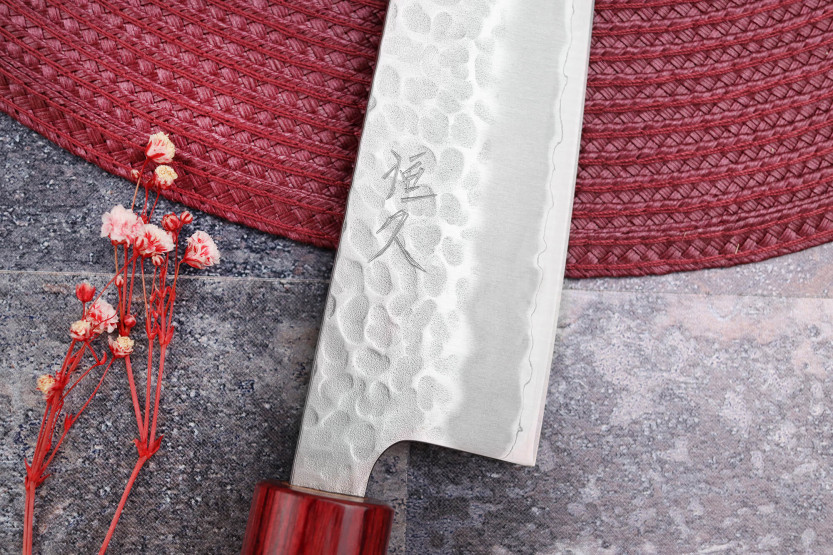
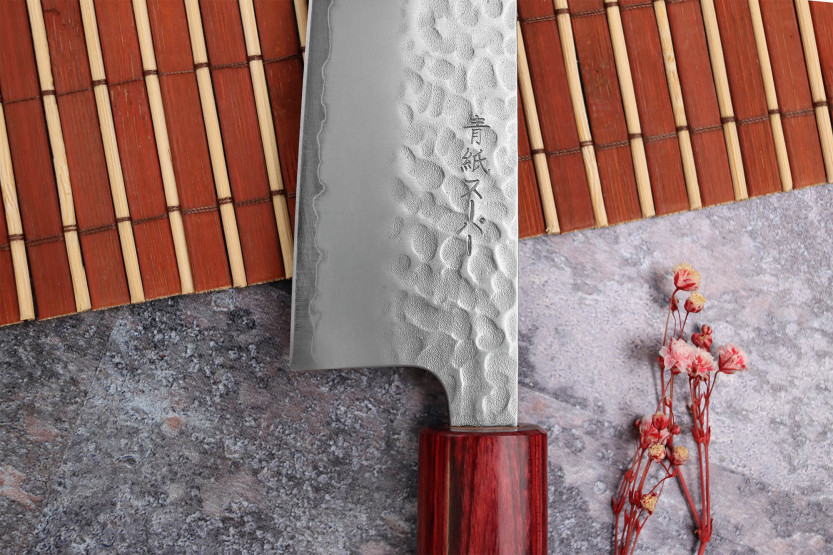
Once the steel has been shaped by the Tsunehisa experts, it is covered with a layer of softer, less rigid steel. This steel protects the heart of the blade and balances its hardness, making it less brittle in use. You can see the superimposition of steels on the bottom of the blade, characterized by the thin, clear wave that runs the length of the wire.
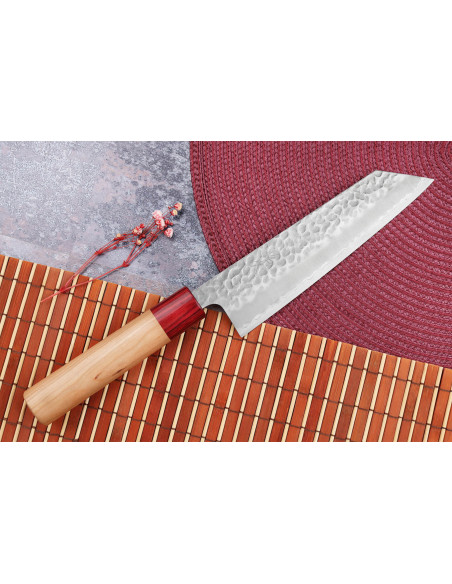
Finally, this bunka knife has been given a magnificent hammered finish. Also known as Tsuchime in Japanese, hammering adds character and originality to the knife, as it is unique to each model.
An ergonomic handle for this san mai knife
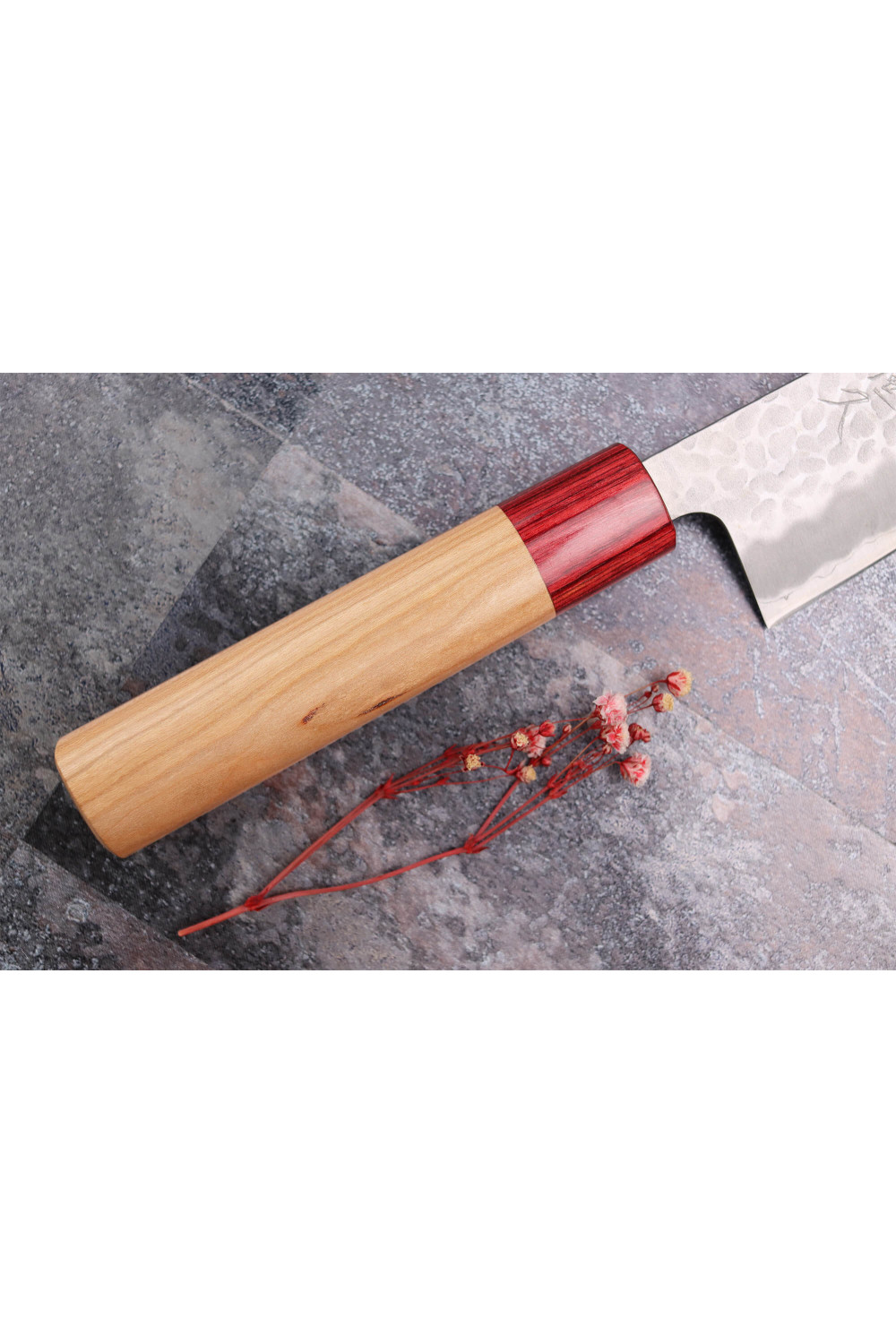
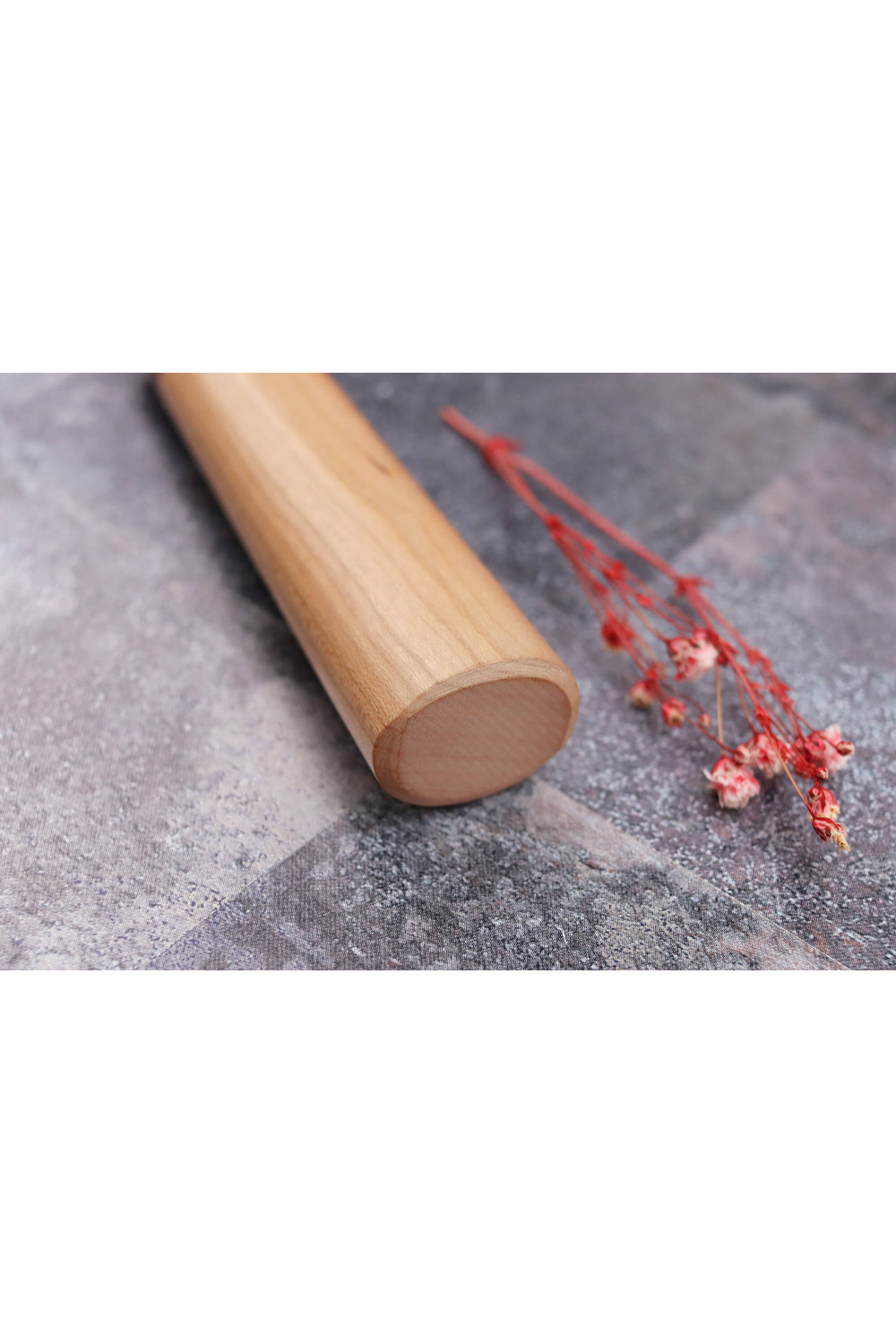
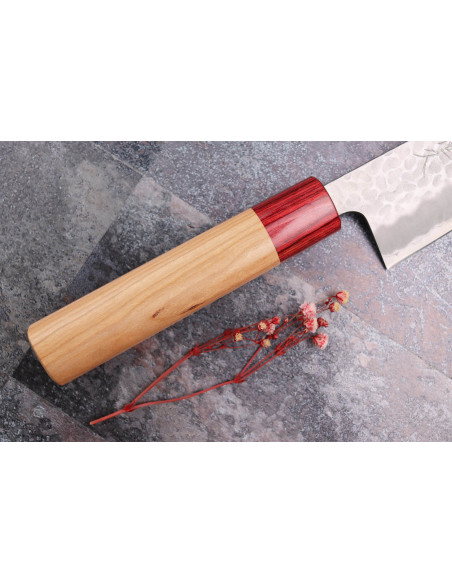
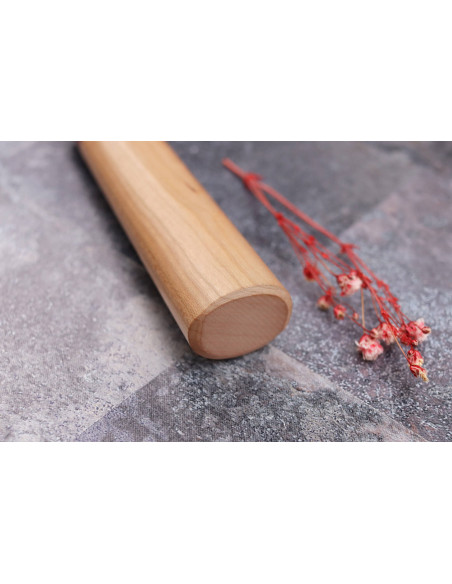
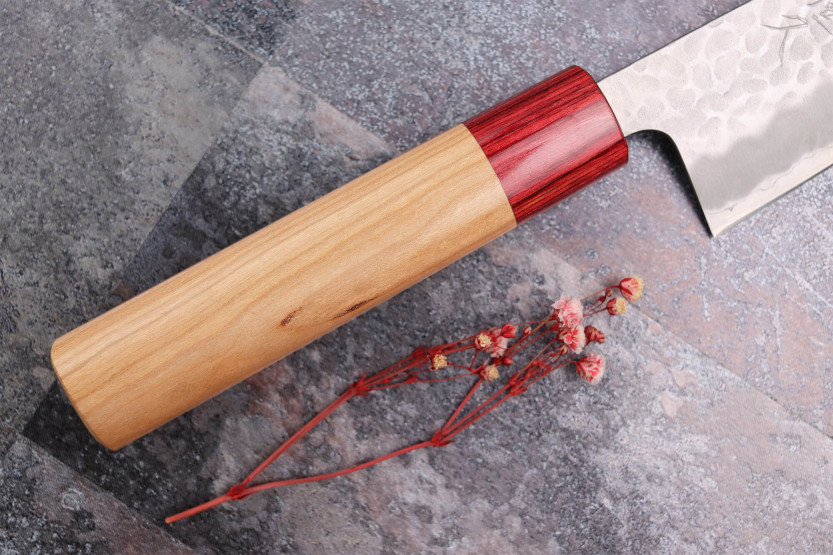
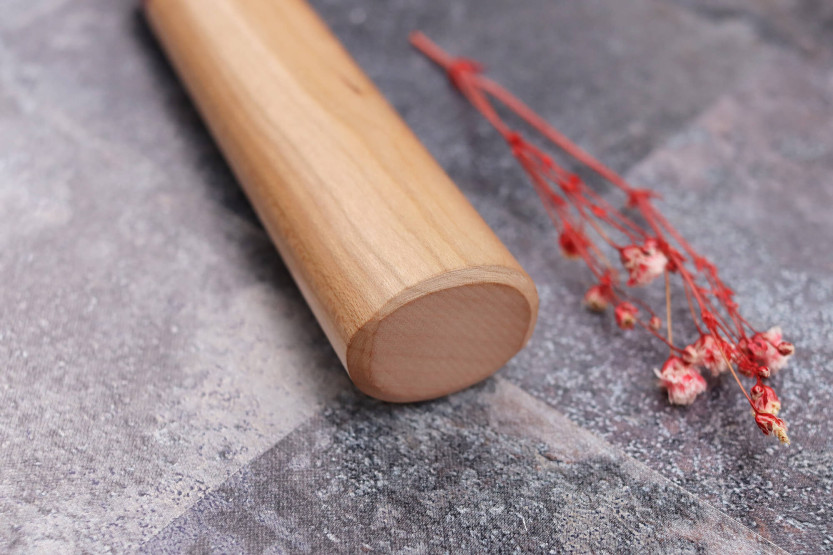
The bunka knife features a handle made from cherry wood, a durable species characterized by its simple yet effective visual appeal. Cherry is a sacred tree in Japan. It can be found on most of the country's peninsulas. It symbolizes the beauty of things, ephemeral nature and life itself.
Thanks to its oval shape, the knife is ambidextrous, making it suitable for both right- and left-handed users.
A red Pakka wood bolster has been added. Pakkawood is renowned for its strength and resistance. In fact, it was created from compressed wood and resin, making it highly resistant to shock, temperature variations and humidity.
Finally, wood paste fills the space between the blade and the Pakka wood. The whole unit is watertight and highly hygienic, as no washing water or food residues can enter.
Care and maintenance
To clean this knife, opt for hand washing, using a mild detergent under lukewarm water. Be sure to dry the knife immediately before storing it in a dry place. Be careful not to get the handle too wet when cleaning, as wood does not appreciate moisture.
This carbon knife is oxidizable, so it is very important that it is completely dry before storing. In addition, the blade may change color with use: this is perfectly normal! This shows that the steel is reacting. Acidity in the air and in food can have an impact on Aogami Super steel.
The Tsunehisa AS hammered range is available on our website!


 By buying this product you can collect up to