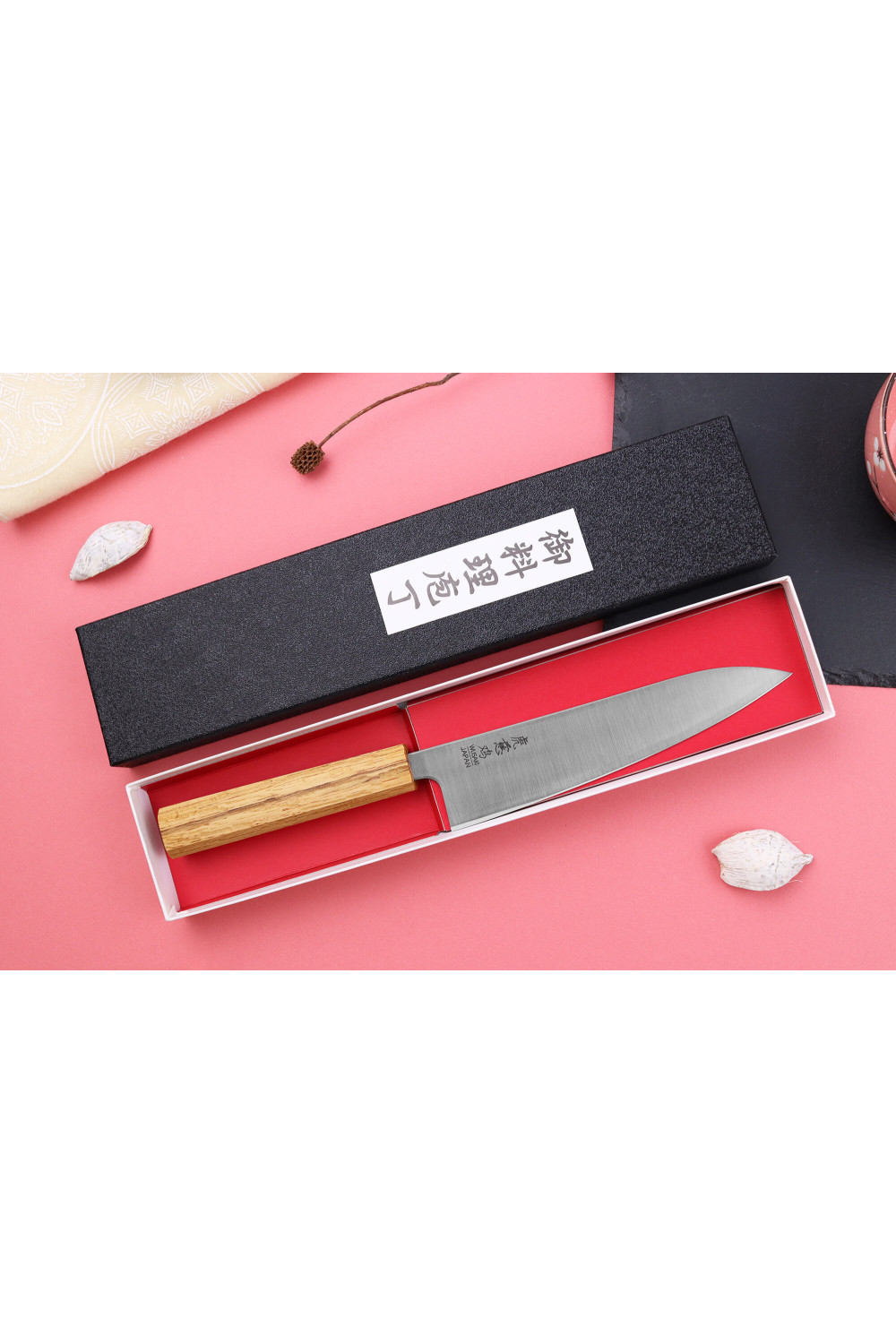
Wusaki Migaki Japanese knives are made by the Japanese cutlery company Tadafusa. This cutlery firm brings together a team of experts whose know-how is evident in the design of the pieces and the choice of materials.
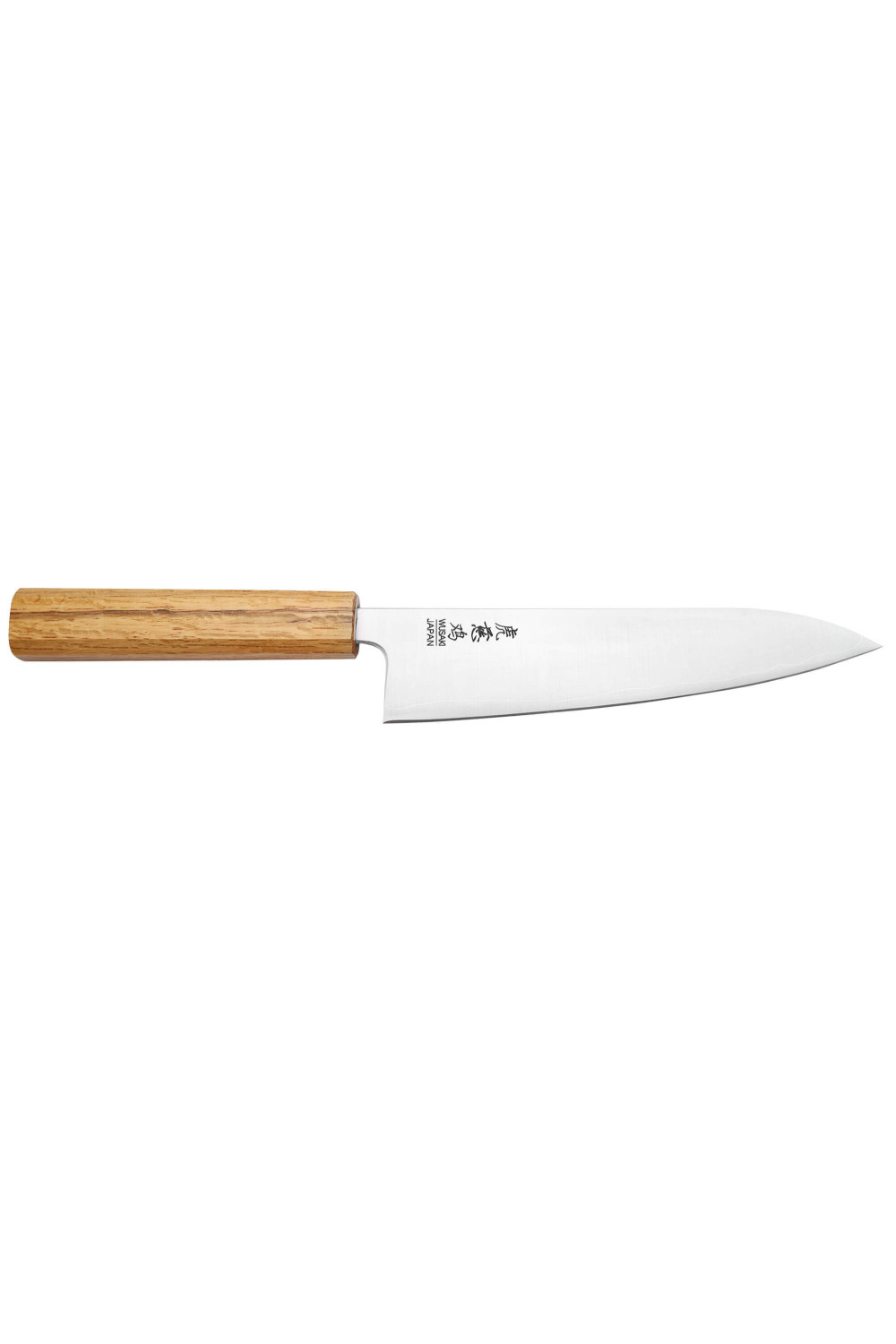
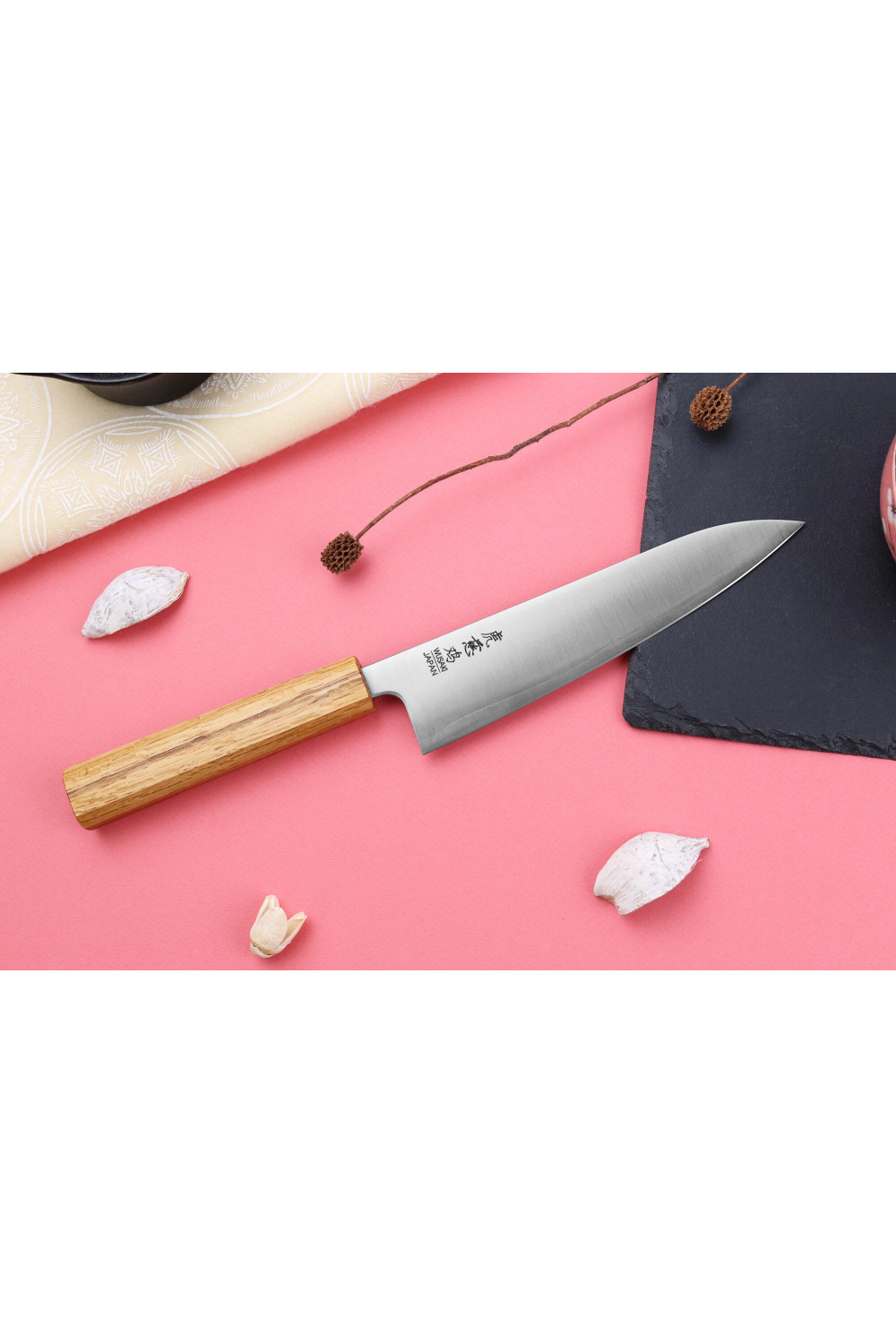
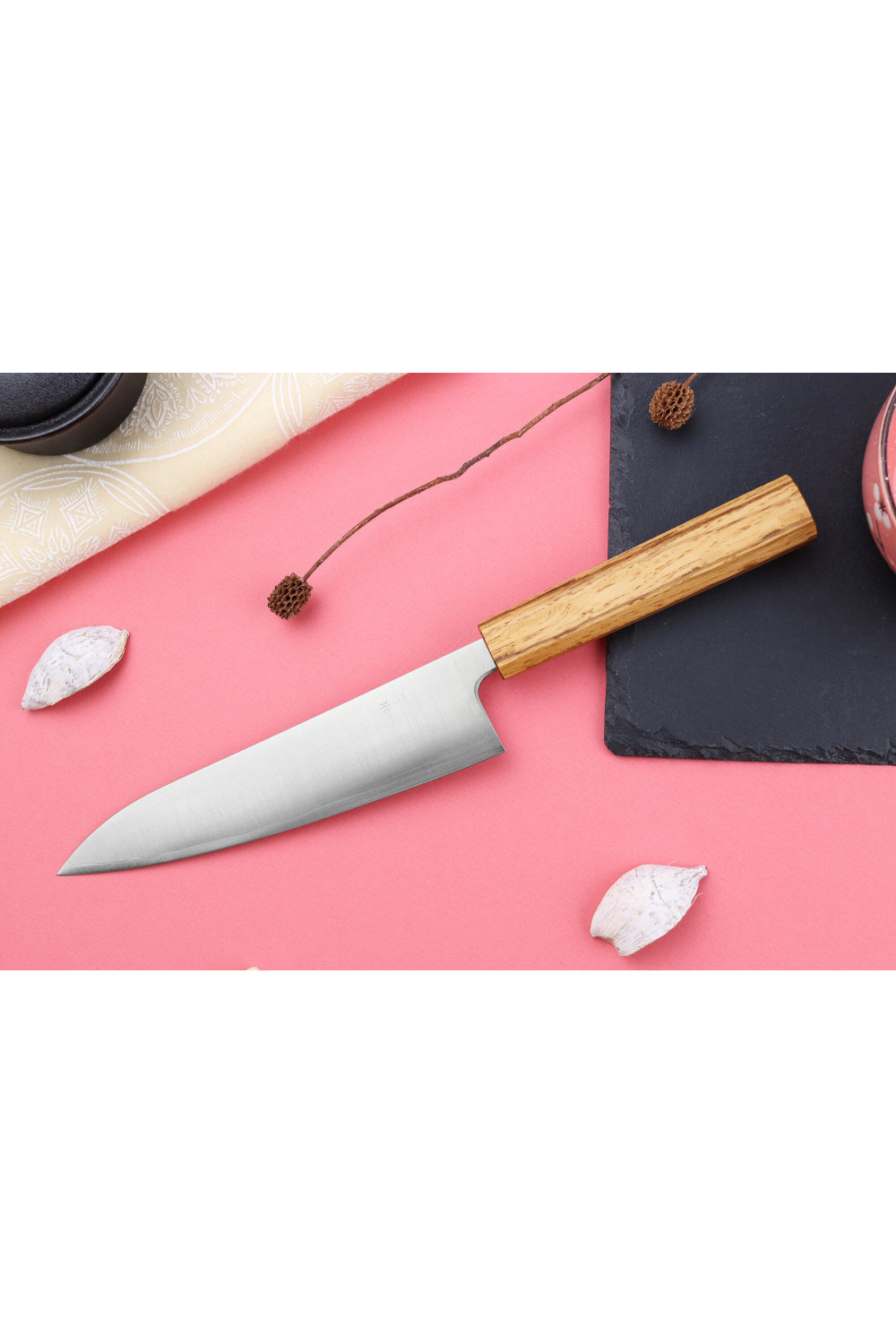
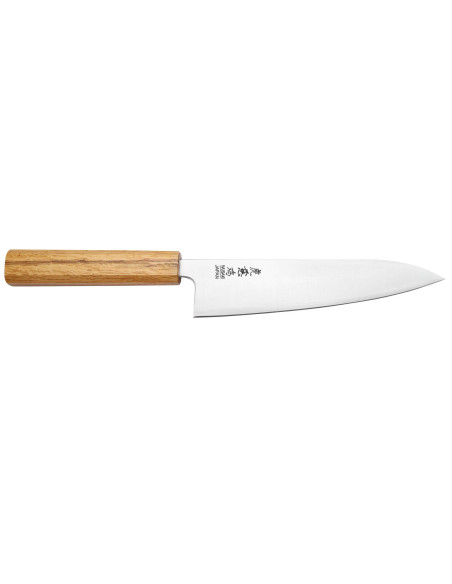
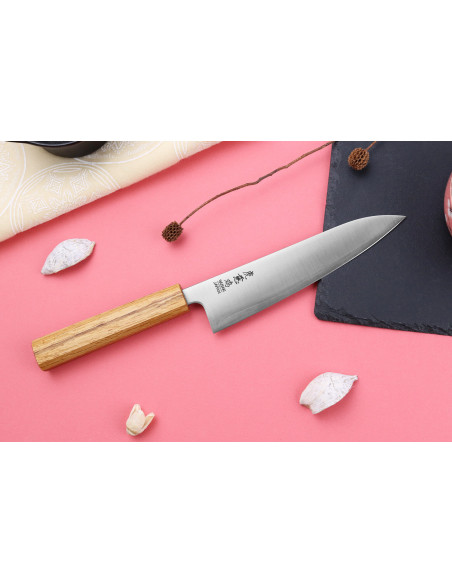
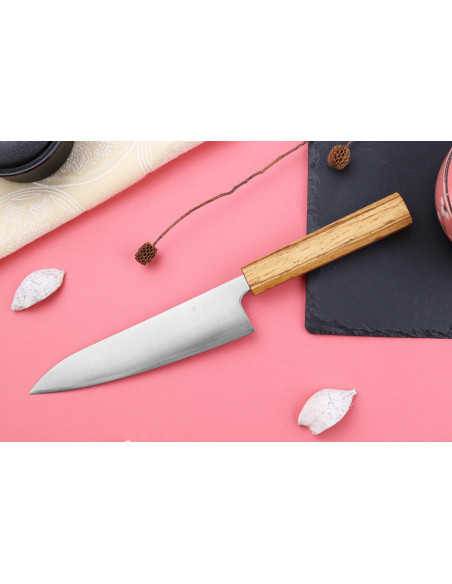
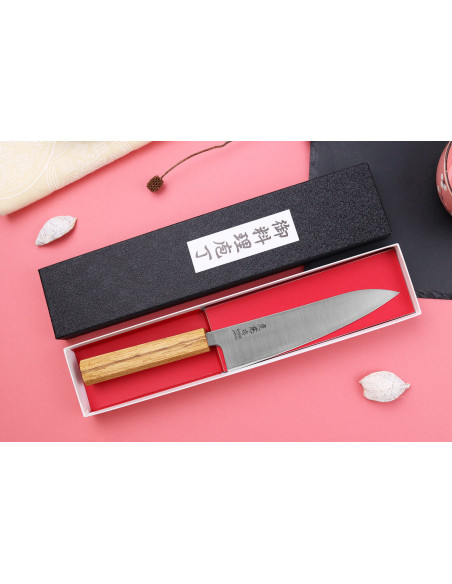
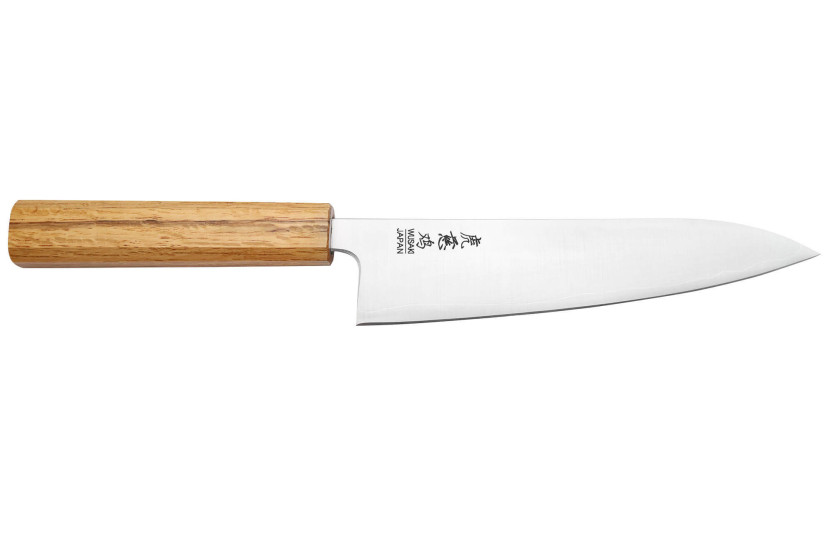
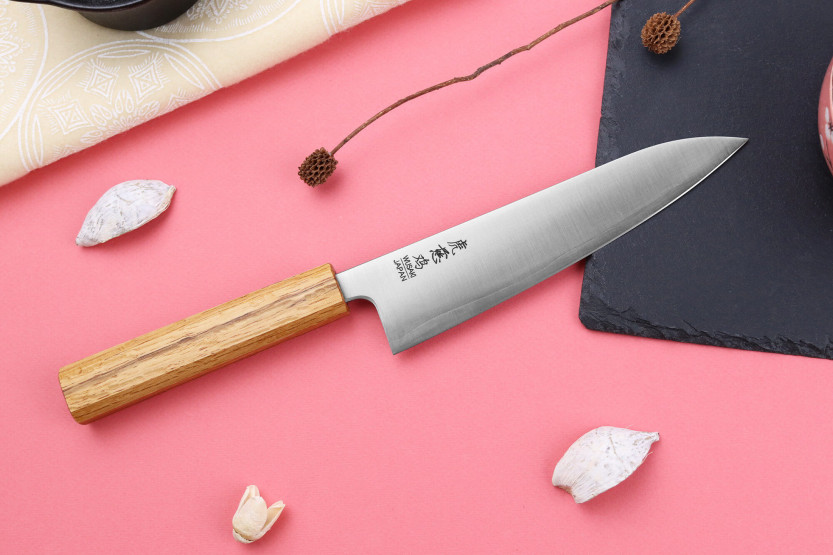
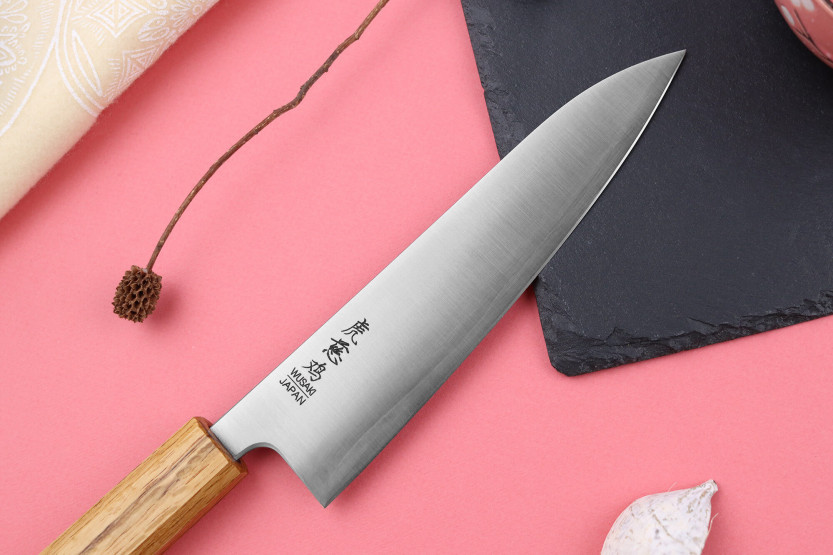
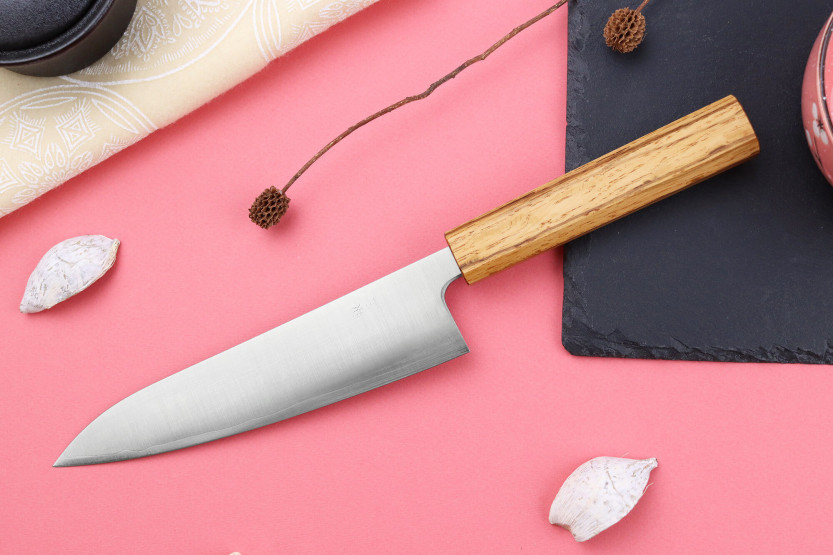
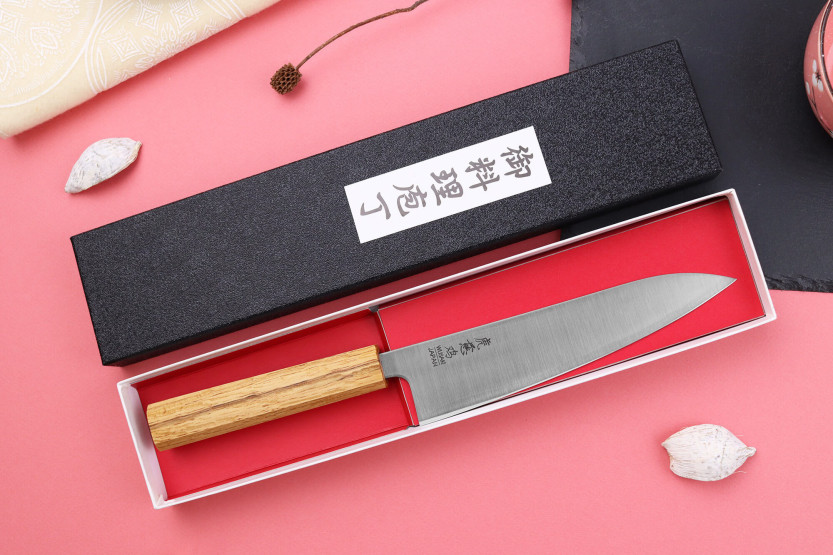
The Wusaski Migaki 18cm Japanese chef's knife is an absolutely versatile model. In fact, it's ideal for a wide range of cuts. With it, you can slice vegetables, chop herbs or cube pieces of meat. Be careful, however, not to cut too hard foods such as frozen foods, or pieces containing bones.
A Wusaki Japanese knife with San Maï blade
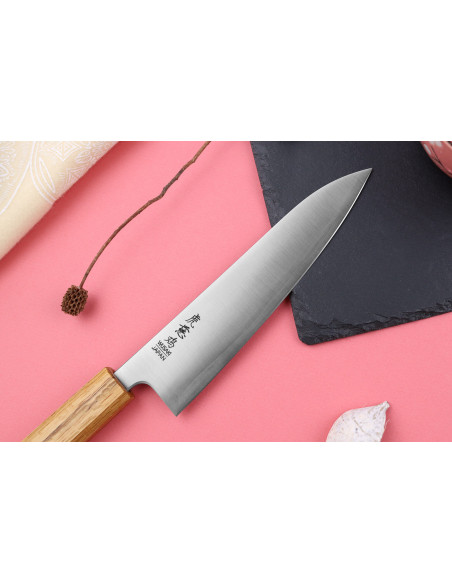
The blade is designed according to a typically Japanese structure called San Maï. This means that 3 layers of steel alternate. First, it contains a core of Ginsan steel, a Japanese alloy with a high carbon content of around 0.95%. As a result, the cutting edge is stiffer than average and lasts longer. The steel also contains a high chromium content, making it more resistant to corrosion.
Ginsan steel has a hardness of 60 HRC, enabling it to retain its cutting edge for a long time, while remaining fairly easy to sharpen. When the need arises, sharpening is easily done with a stone.
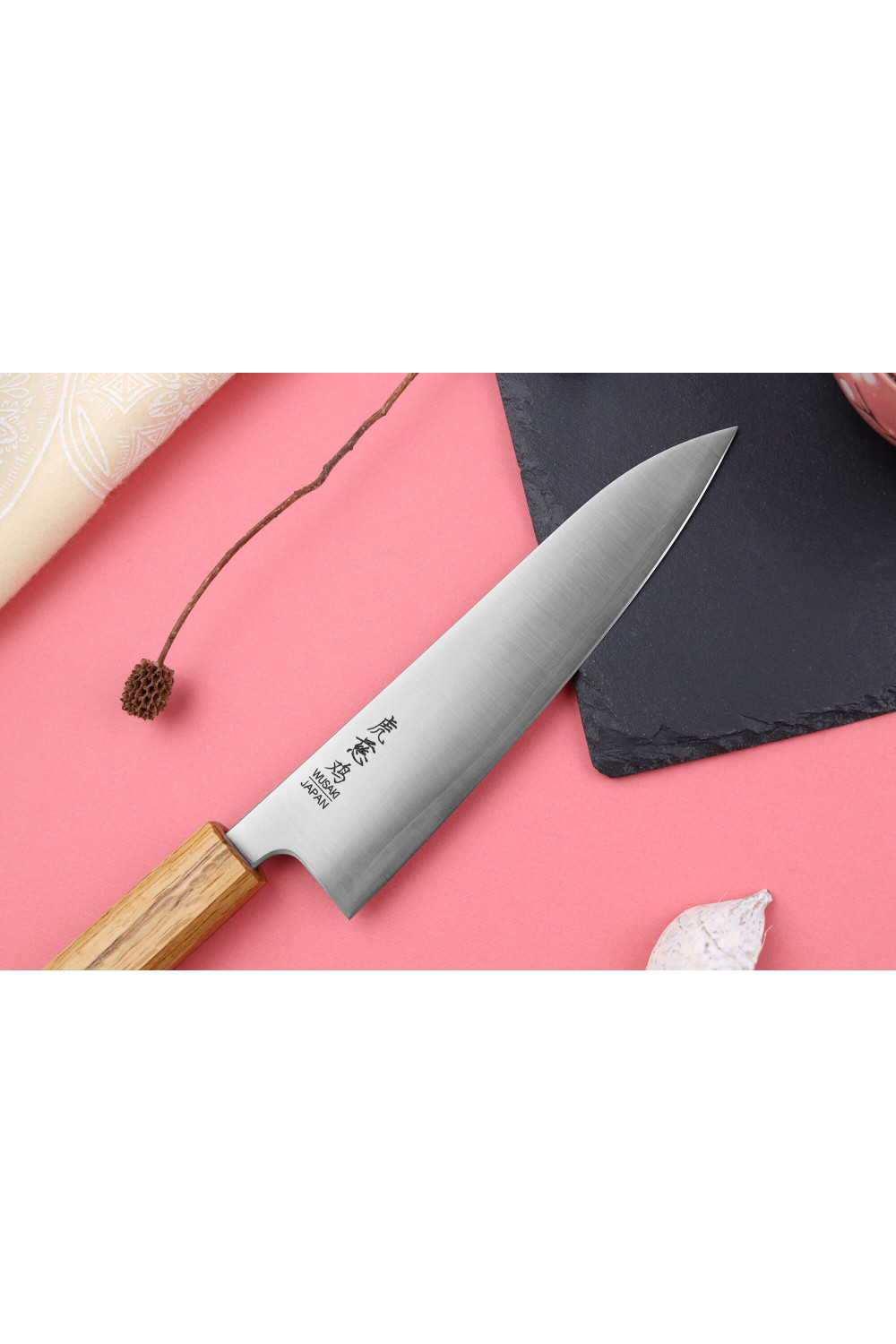
This rigid core is then surrounded by a layer of stainless steel, which protects and softens the blade, making it less brittle in use. The difference in steel layers is visible on the underside of the blade: along the cutting edge, a small random wave stands out.
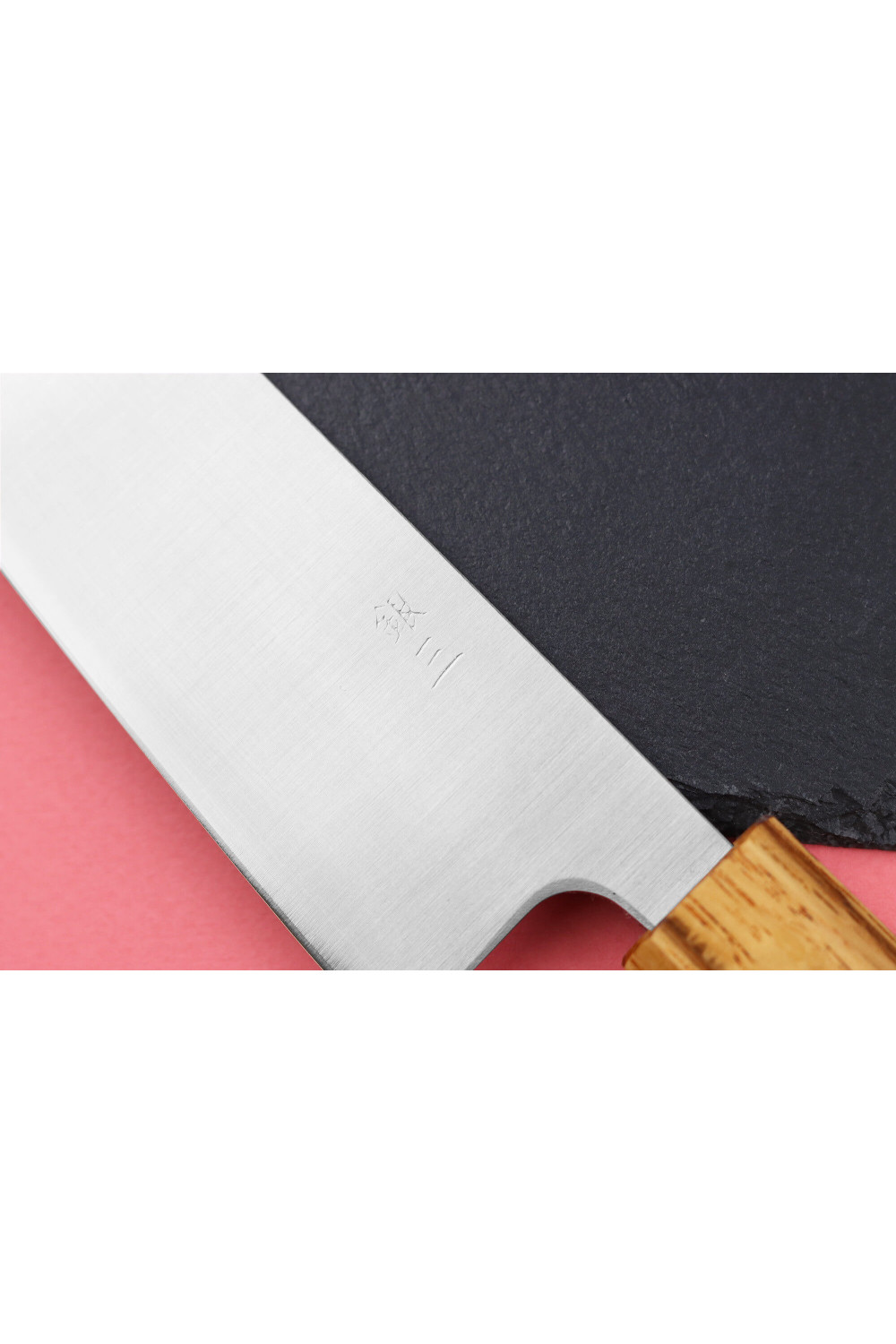
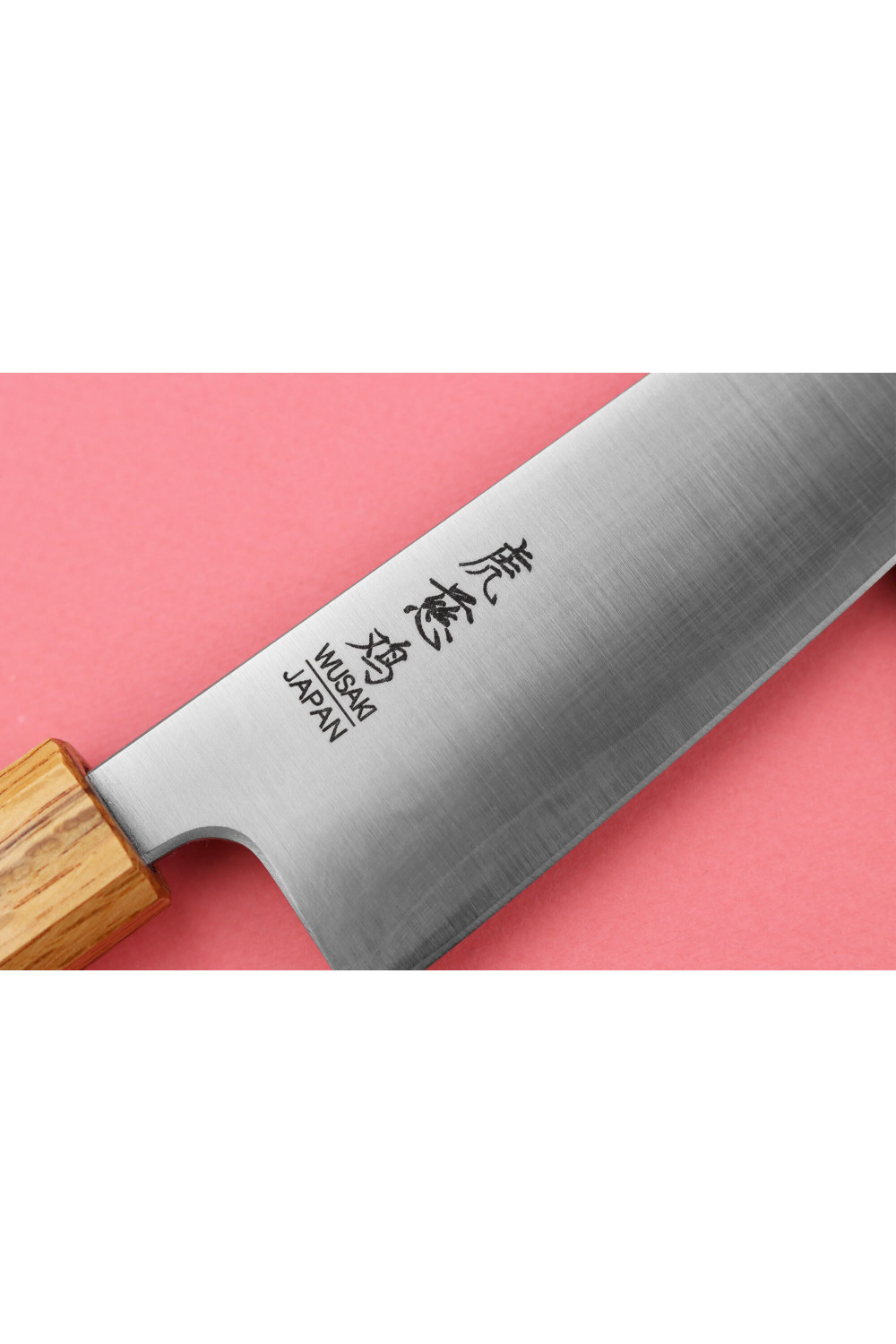
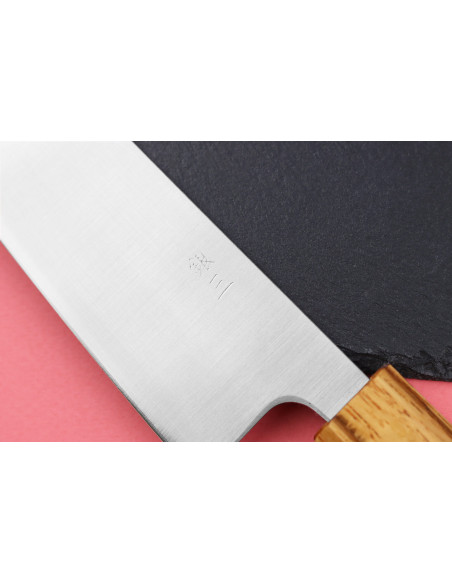
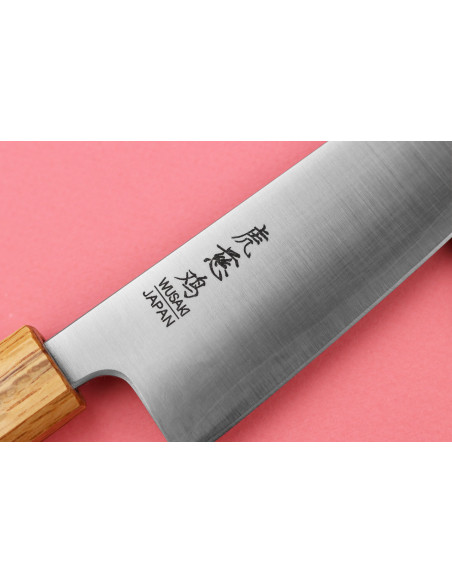
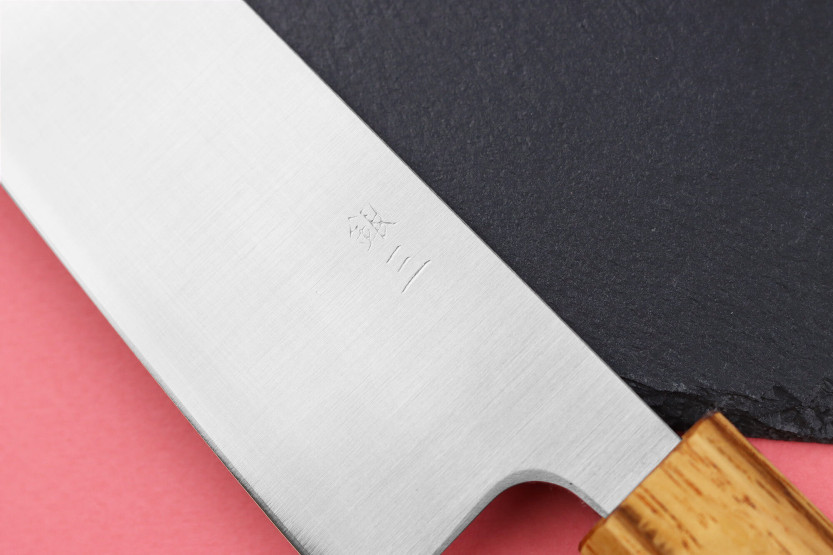
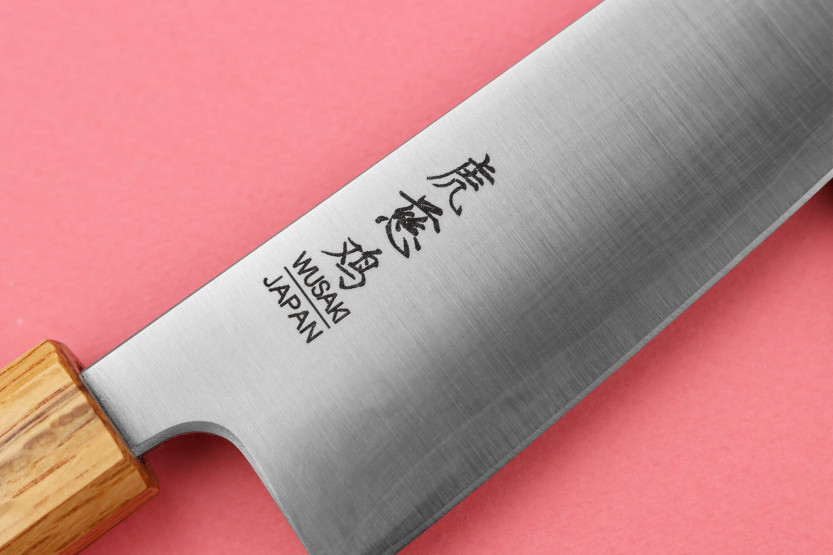
Finally, the blade is engraved with kanji on the back and the brand logo on the front, giving it a truly authentic character.
An ergonomic octagonal handle
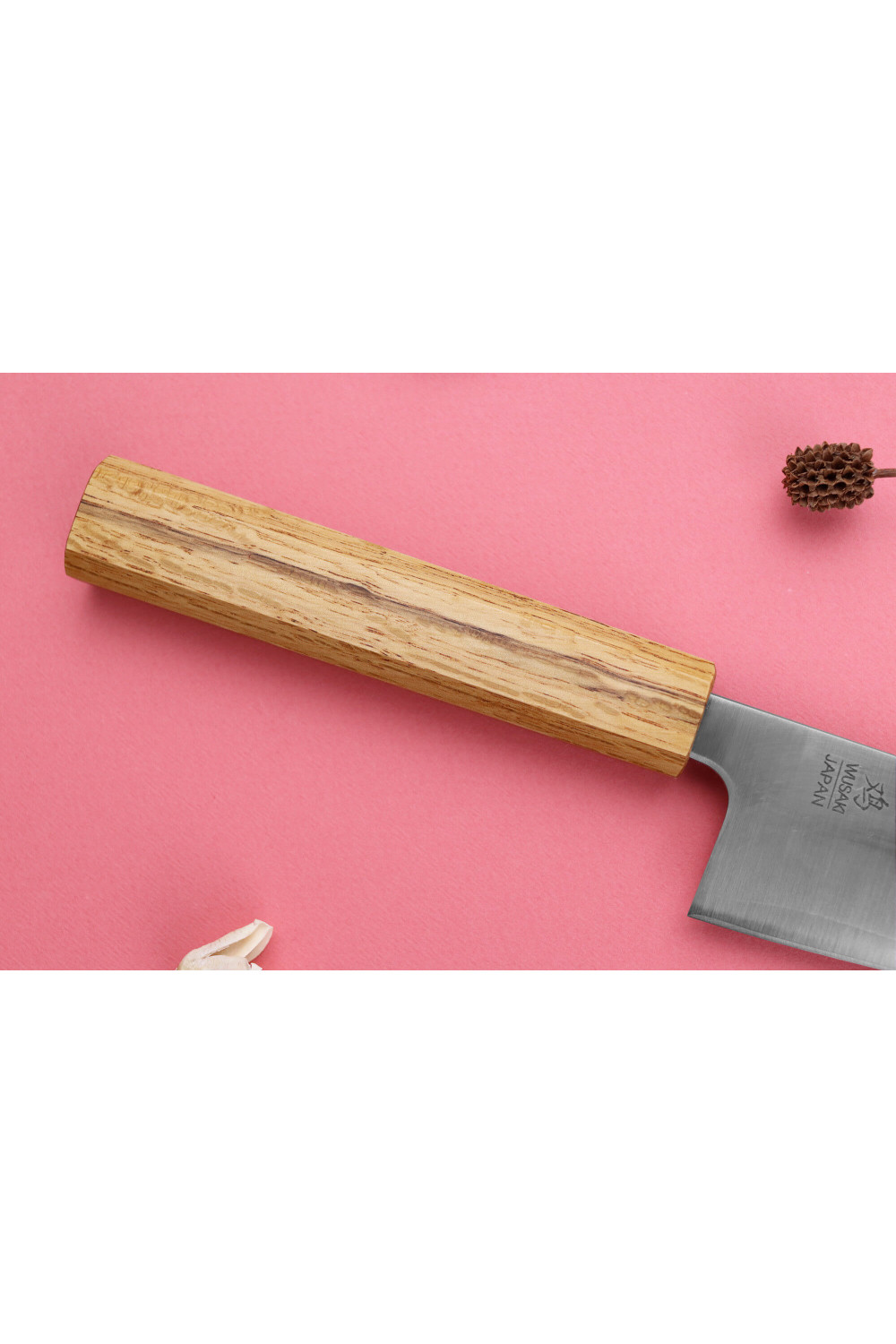
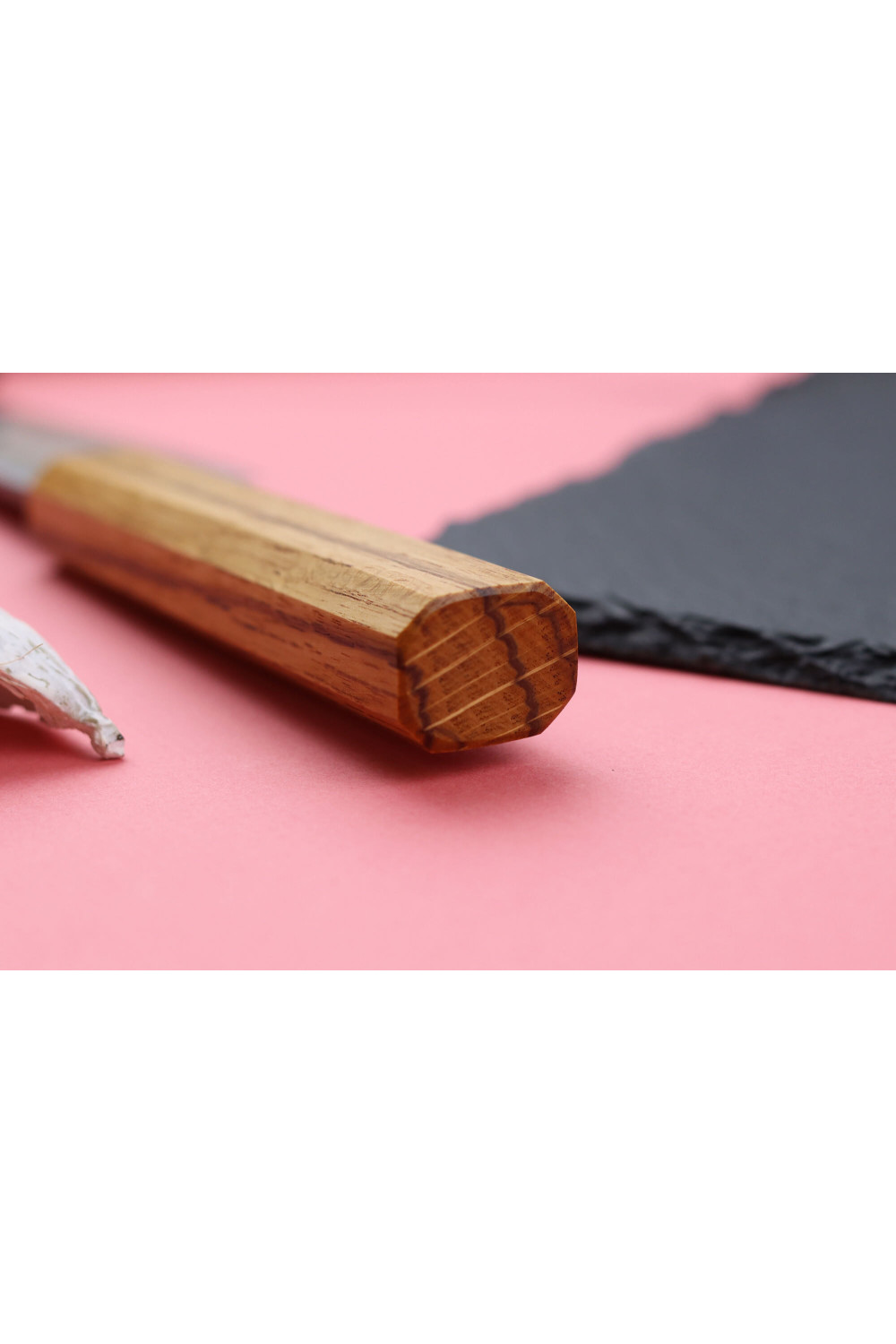
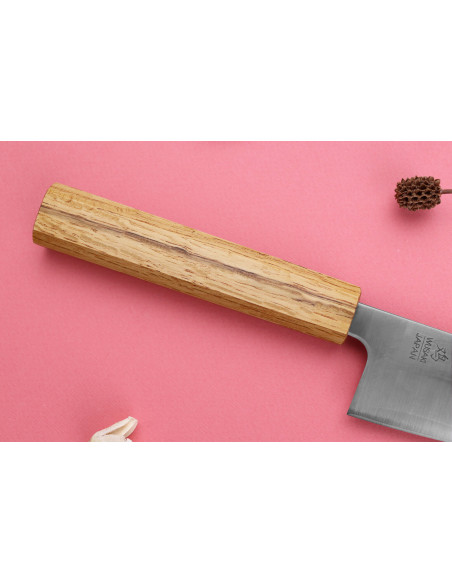
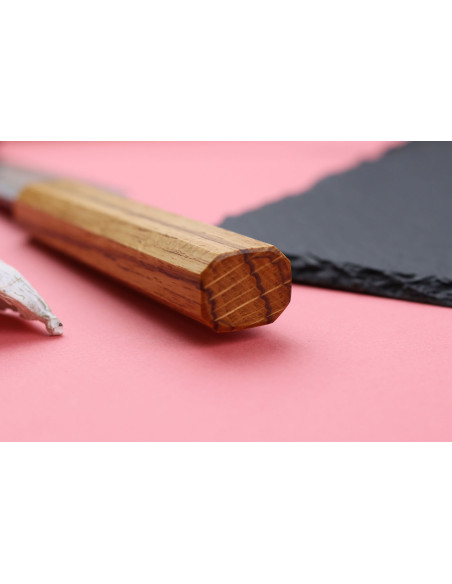
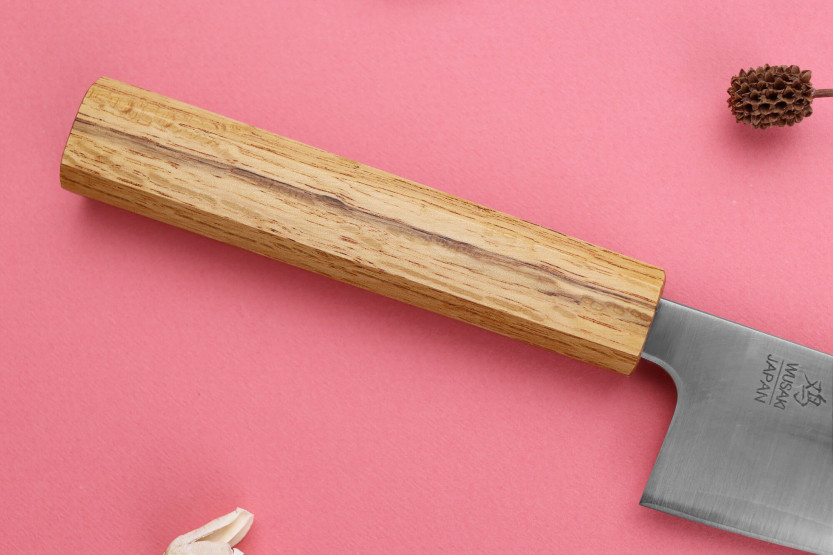
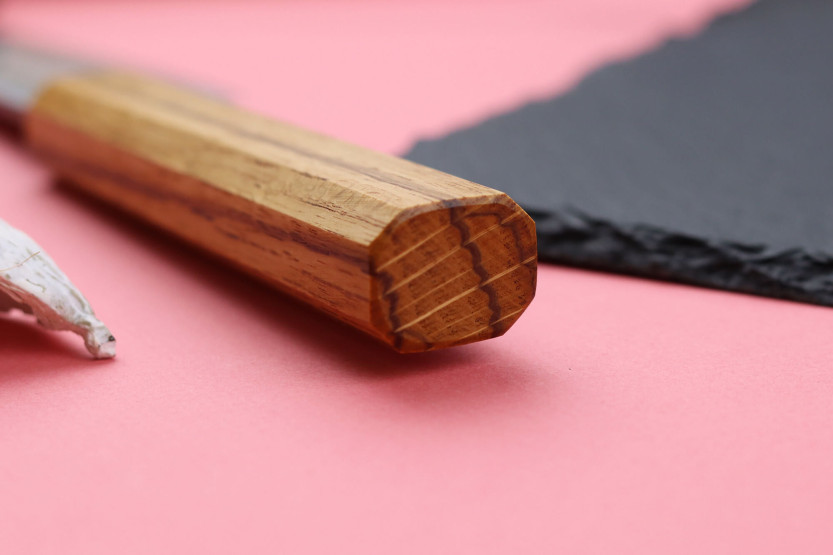
The knife's octagonal shape ensures a comfortable grip and easy handling. What's more, this shape is suitable for both right-handed and left-handed cooks.
Enju wood was chosen for the knife's handle. This species of Asian origin has a fairly robust appearance. The wood is light in color, with a unique, slightly darker grain. With its slight glossy sheen, enju wood gives the handle an elegant appearance.
Finally, a binder fills the gaps where the blade fits into the handle. Its purpose is to prevent water from seeping in and food from getting inside.
Taking good care of my Japanese knife
Your knife should be washed by hand, avoiding wetting the handle as much as possible. Dishwashing and soaking in the sink are not recommended.
To clean, use a non-abrasive sponge and a mild detergent. As soon as you've finished cleaning, dry the knife thoroughly so that it can be stored in a dry, moisture-free place. In this way, your knife will retain its original appearance.
The Wusaki Migaki G3 range is available on our website!




 By buying this product you can collect up to