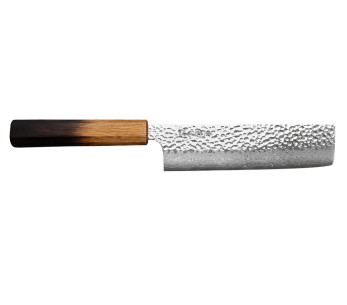
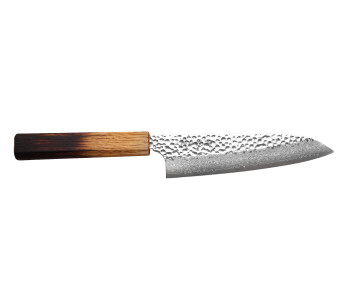
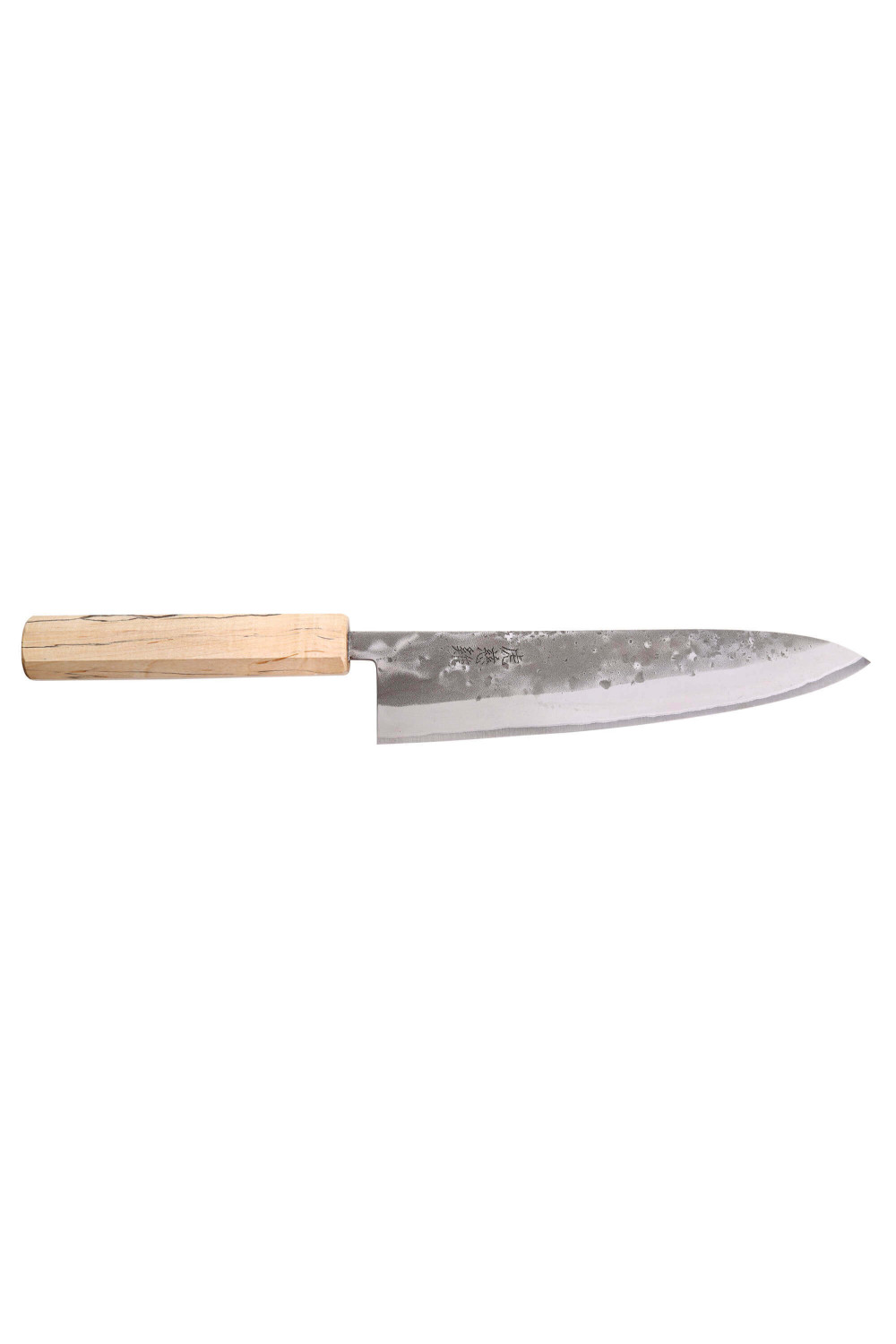
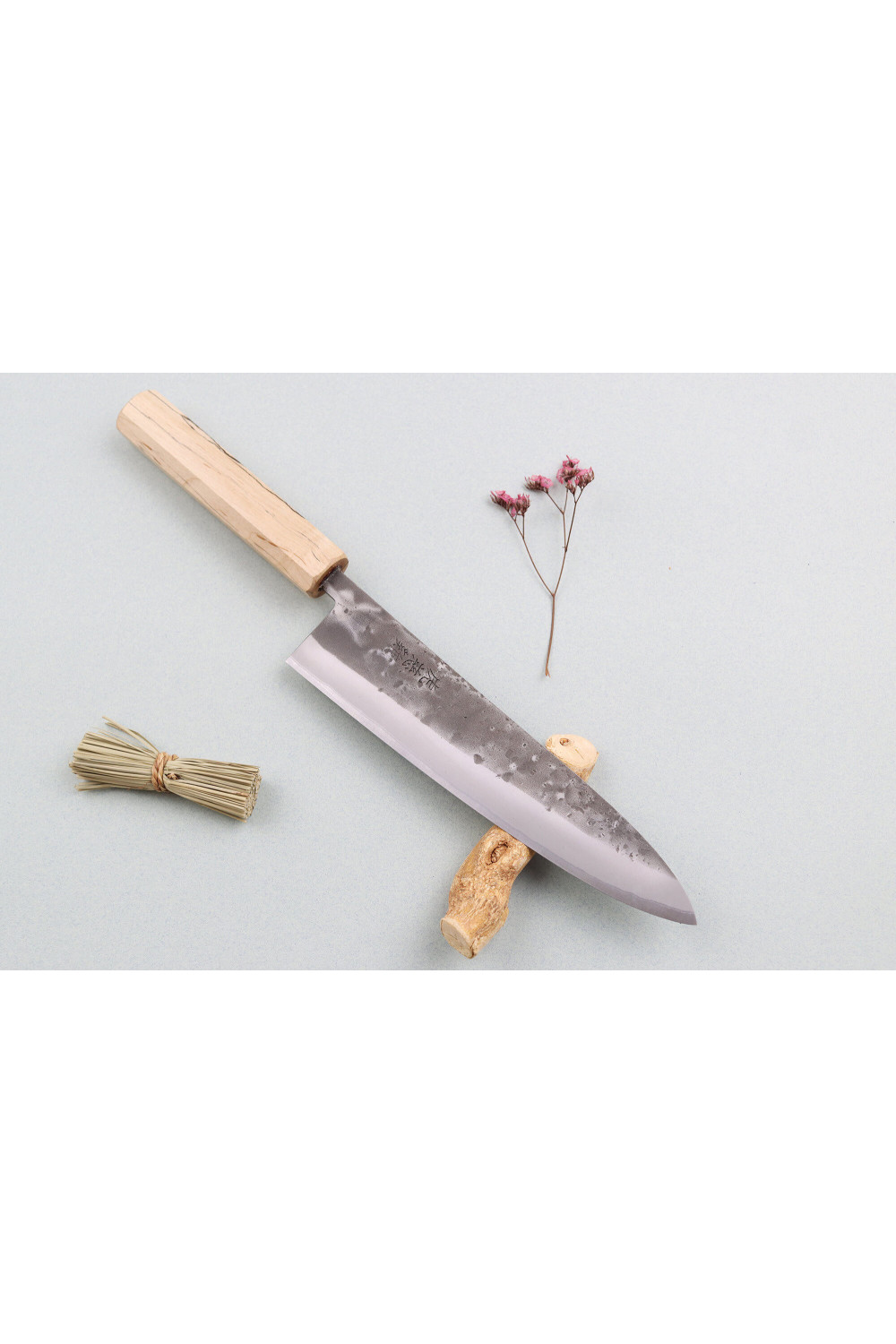
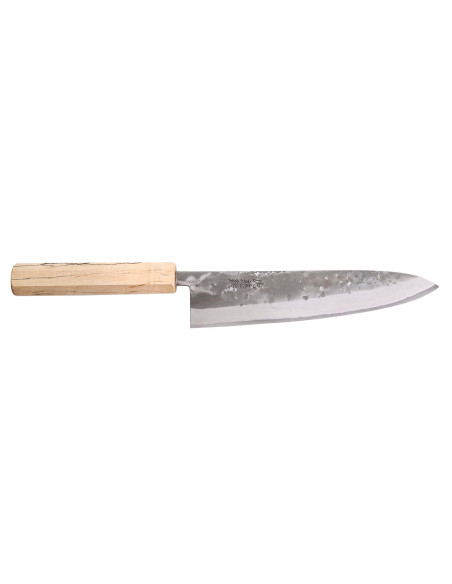
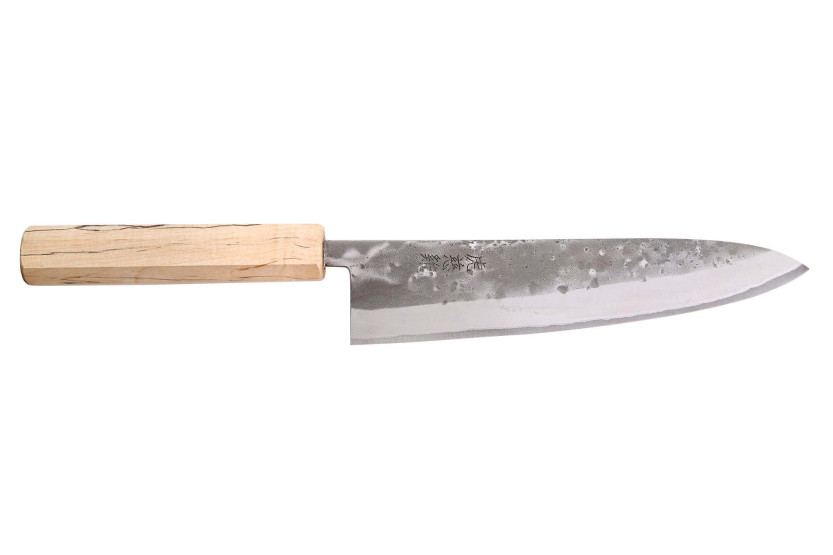
Wusaki Nakata BS2 kitchen knives are suitable for everyone. Made in Japan, they combine style and efficiency, to make everyday cutting easier.
Each Wusaki Nakata knife is produced by Tadafusa Cutlery. The company was founded in 1948, in the town of Sanjo (Niigata prefecture), a place renowned for its centuries-long history of blacksmithing. The town is also known as "The City of Blacksmiths".
An efficient blade
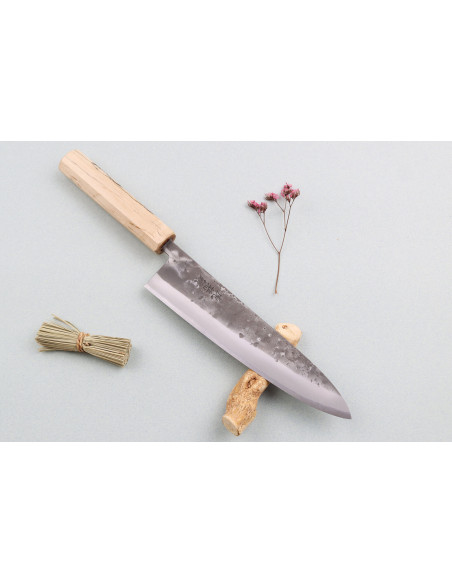
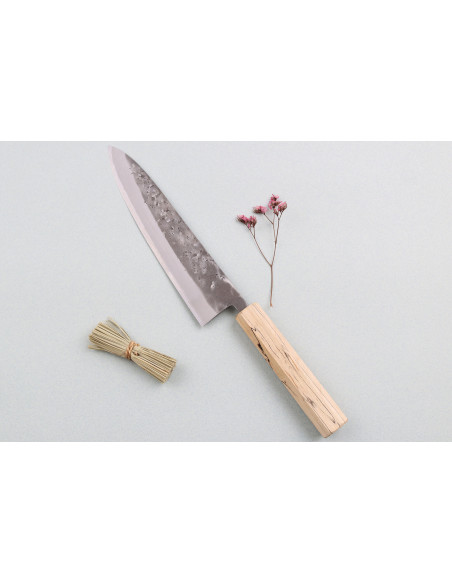
This Japanese knife features a blade forged according to the practices adapted from the ancient techniques of Japanese blacksmiths (the same ones who created traditional swords).
It features a San Maï structure (meaning "3 layers"): the blade has a hard steel core surrounded by a folded protective layer.
Japanese BlueSteel n°2(Aogami in Japanese) has been chosen for the center of the knife. This steel takes its name from the blue paper in which Hitachi (the steelmaker who developed it) packages it. It is enriched with carbon, tungsten and chromium. In detail, its carbon content is around 1.2%, higher than the average of 0.5 to 1% for Western and Japanese blades.
The high carbon content enables us to achieve a strength of around 62 HRC. This results in a fine blade edge, for enhanced cutting quality.
The second advantage of this level of hardness lies in the longevity of the cutting edge. Harder steel wears less quickly, so the cutting edge stays sharp longer and needs less sharpening.
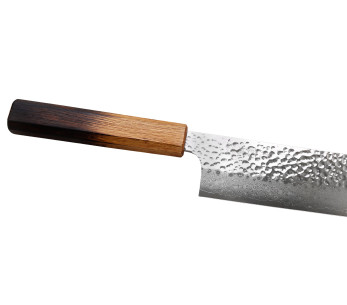
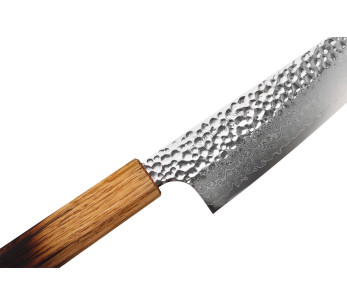
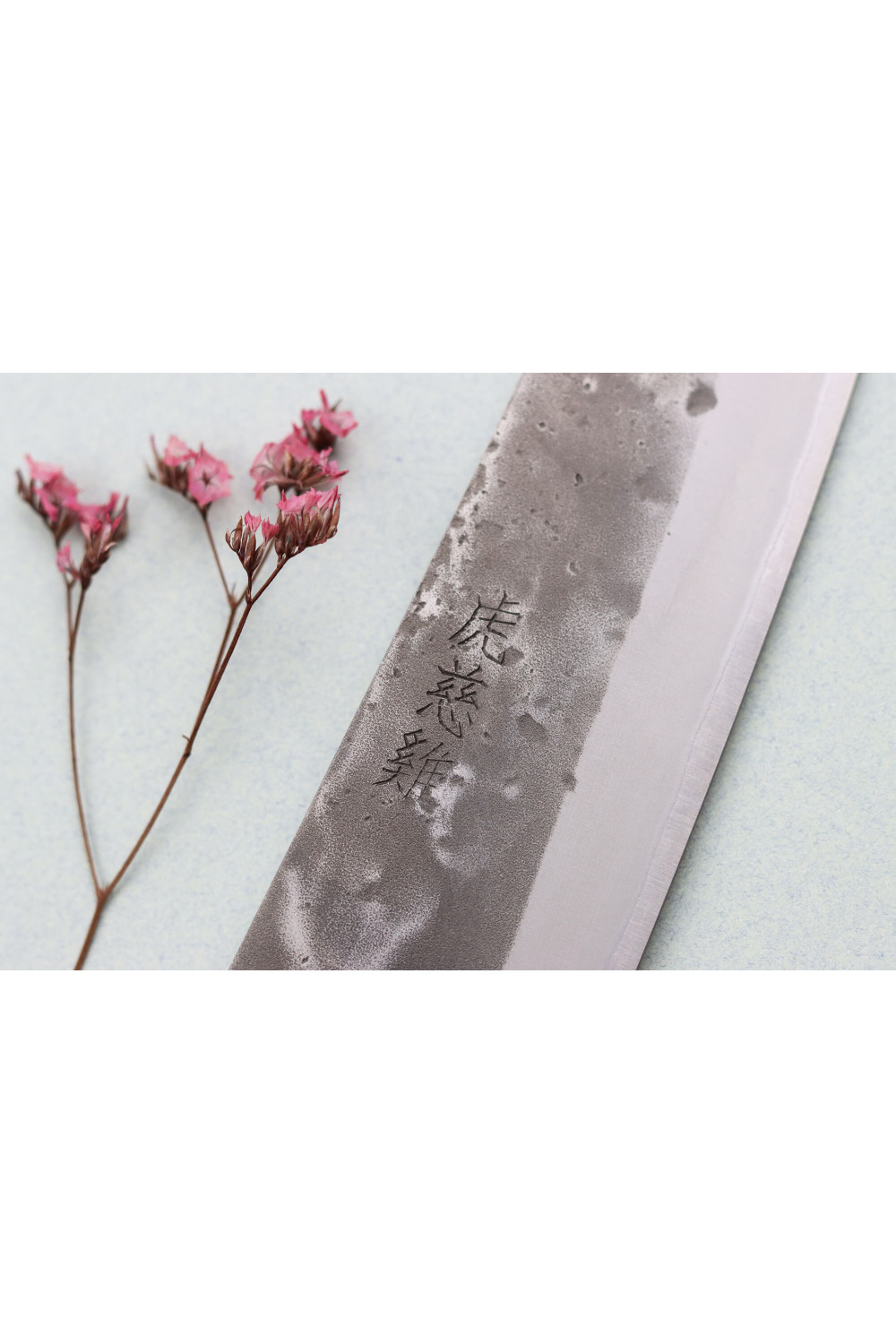
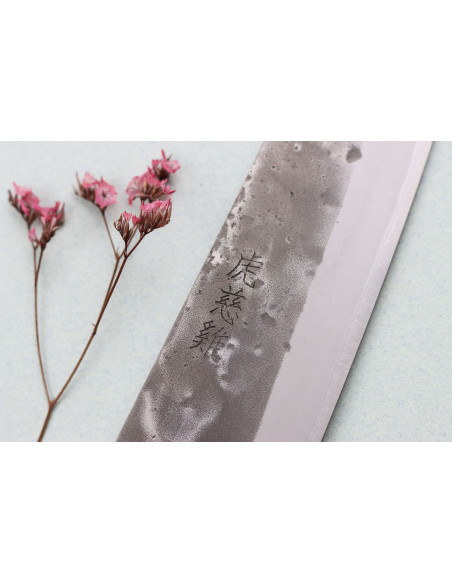
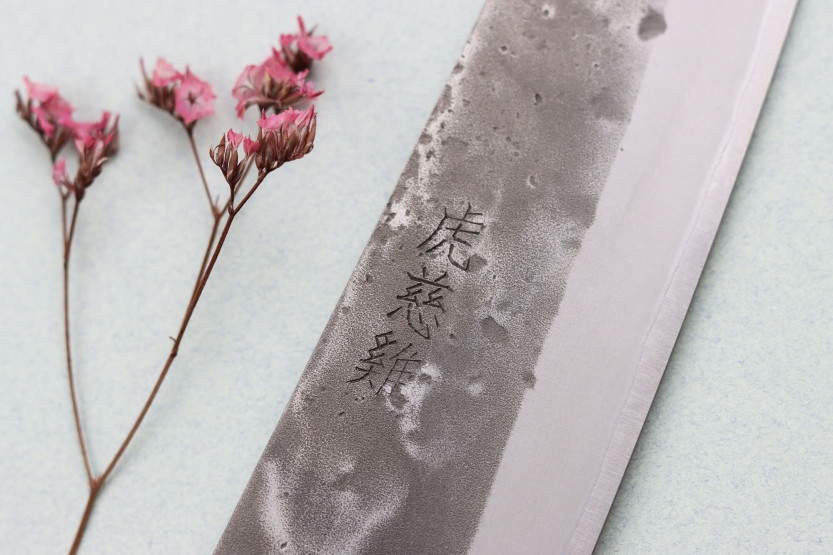
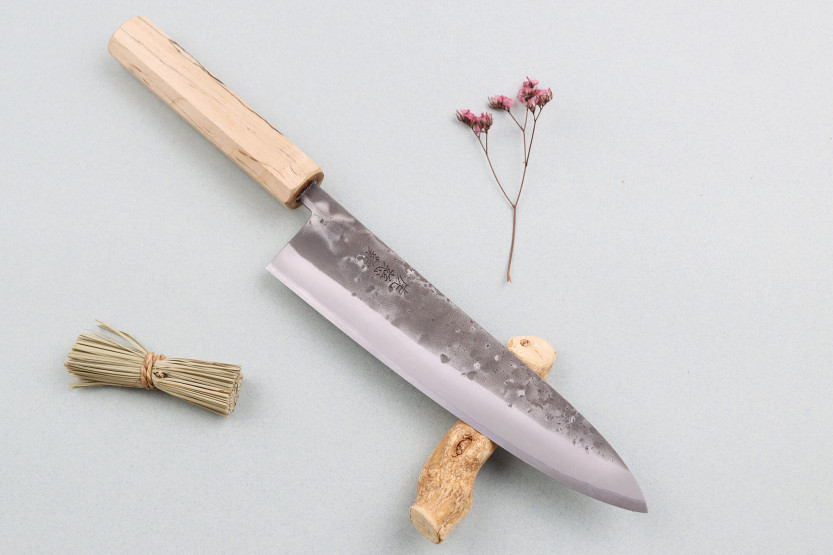
Surrounding the Aogami is a layer ofmild stainless steel (2 layers as it folds around the core = 3 layers), to provide light protection to the core. It's this layer of mild steel that provides the Nashiji finish across its entire surface. Incidentally, Nashiji is a technique that appears to leave the blade with a dull finish, but gives it a rustic edge much appreciated by traditional cooks.
The blade is sharpened on both sides at a very acute angle, further helping to minimize effort during use. In fact, when it comes to resharpening, Japanese carbon steels such as the Aogami #2 used for this range are highly prized in the Land of the Rising Sun for their ease of sharpening. In fact, despite their long-lasting cutting edge, they are very quick to sharpen and require very little time.
An ergonomic handle
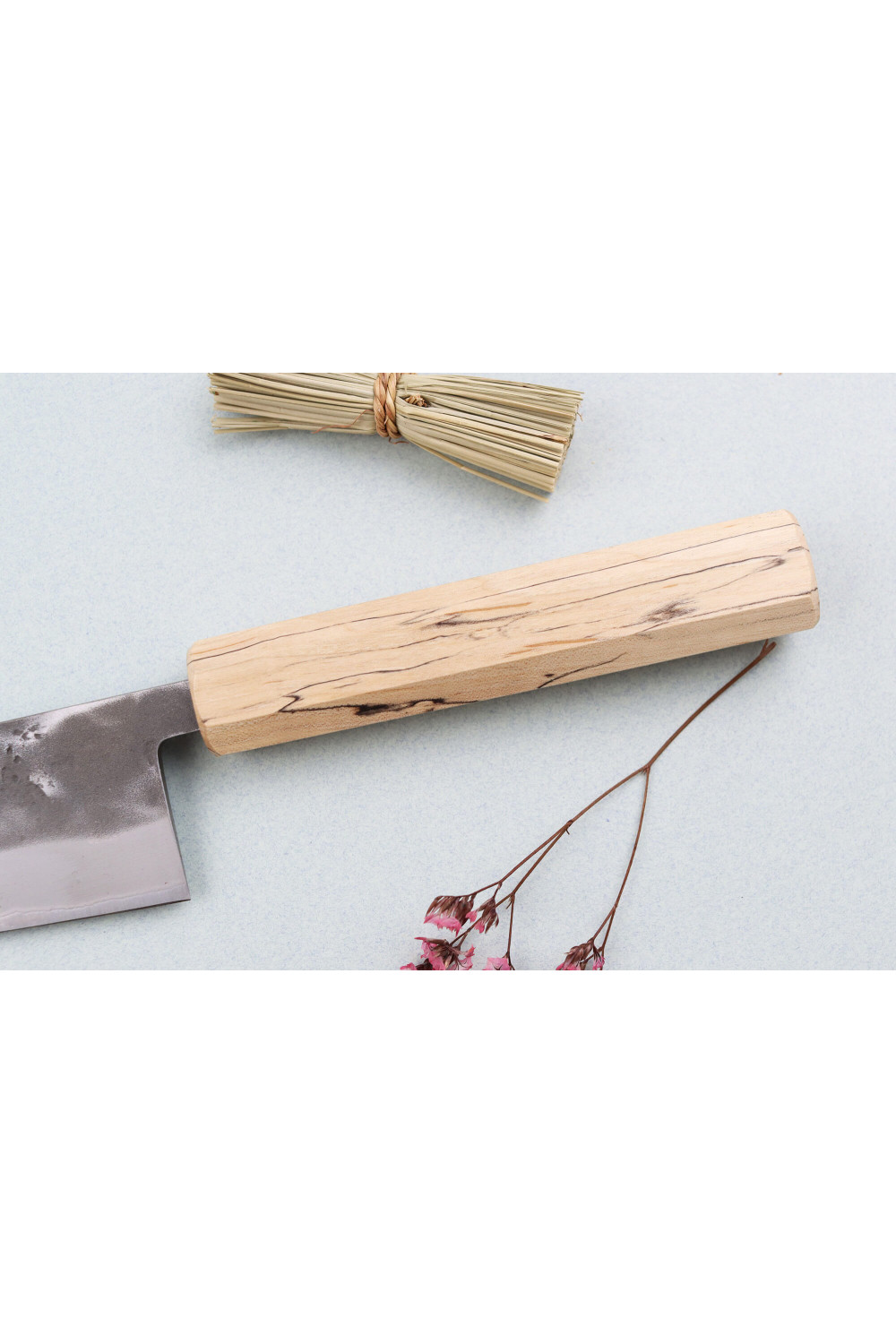
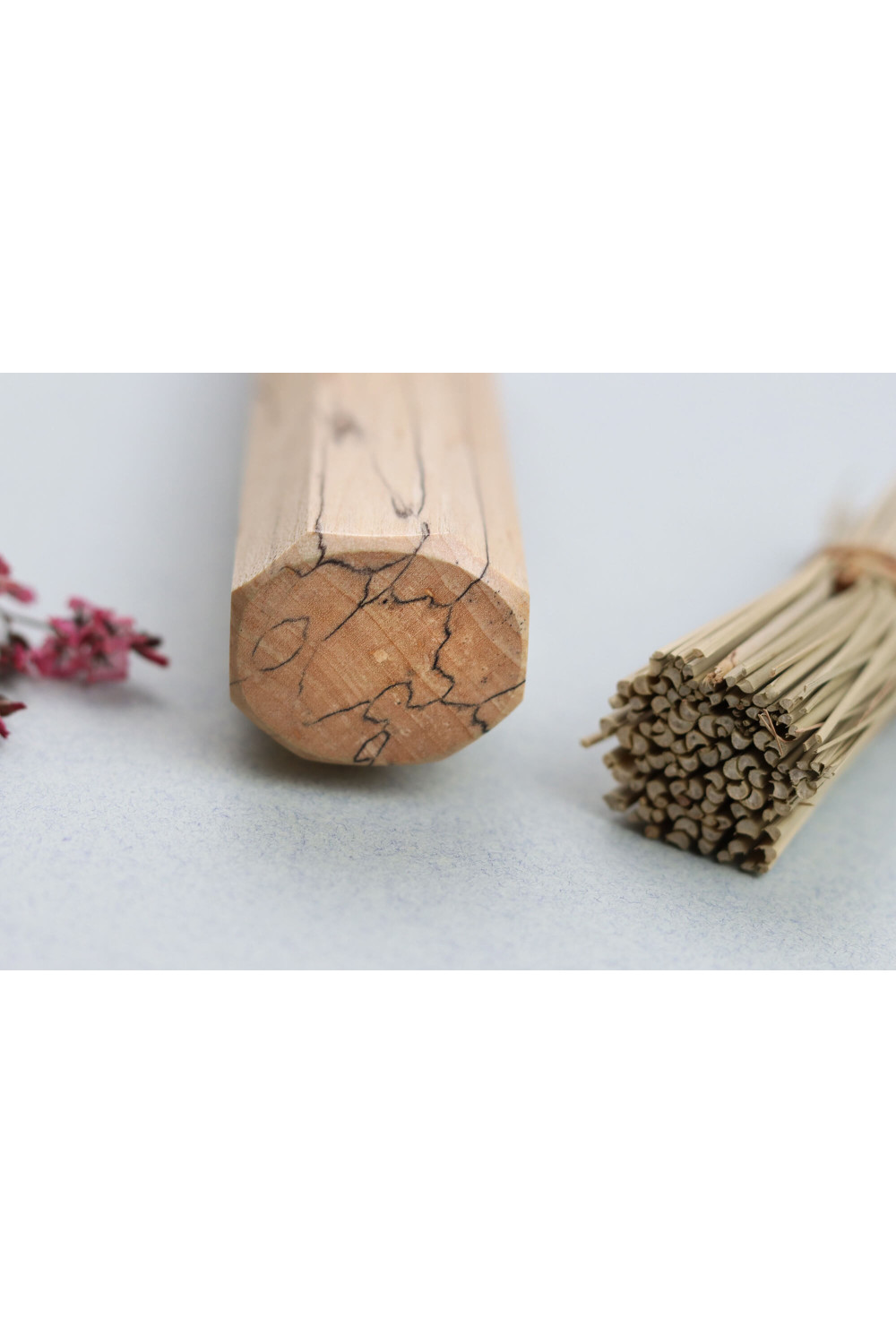
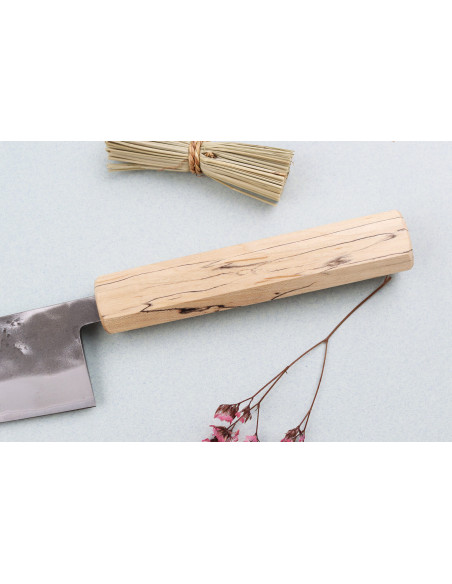
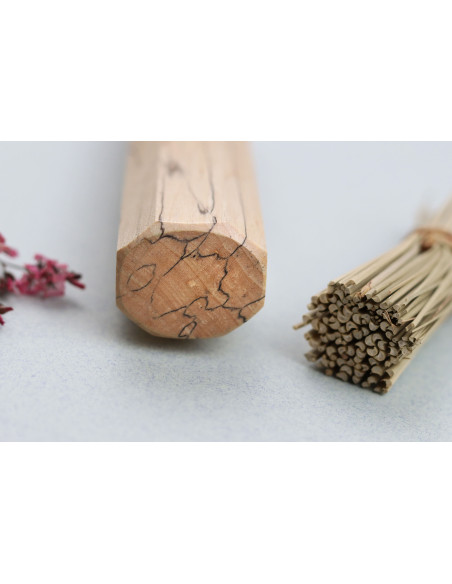
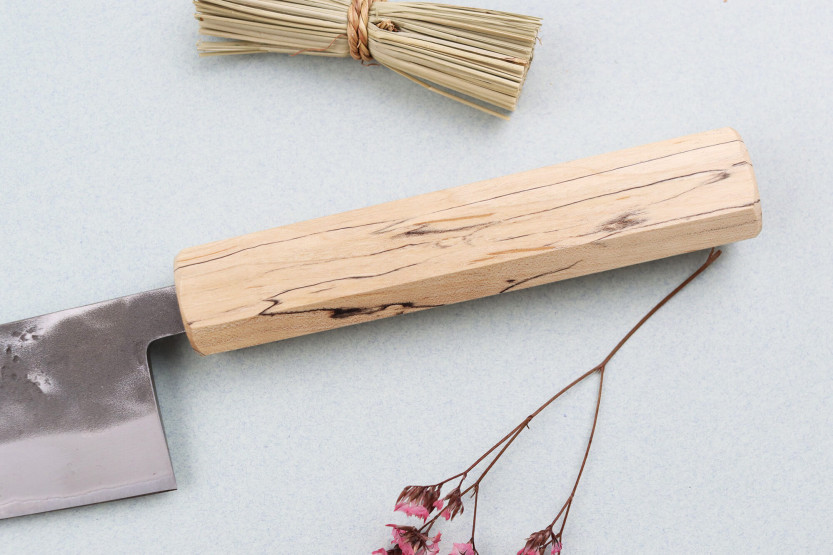
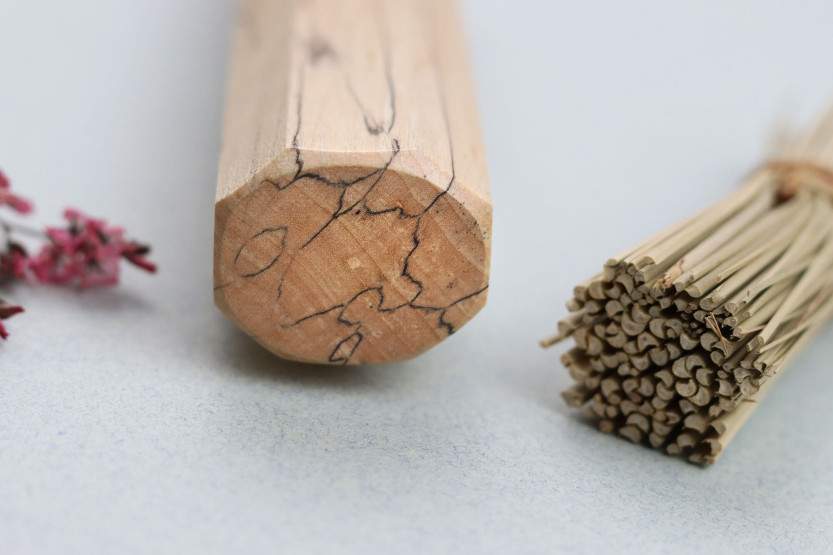
The handle is made oflight maple wood. This tightly grit wood does not split easily. It's a wood for everyday use, with excellent durability.
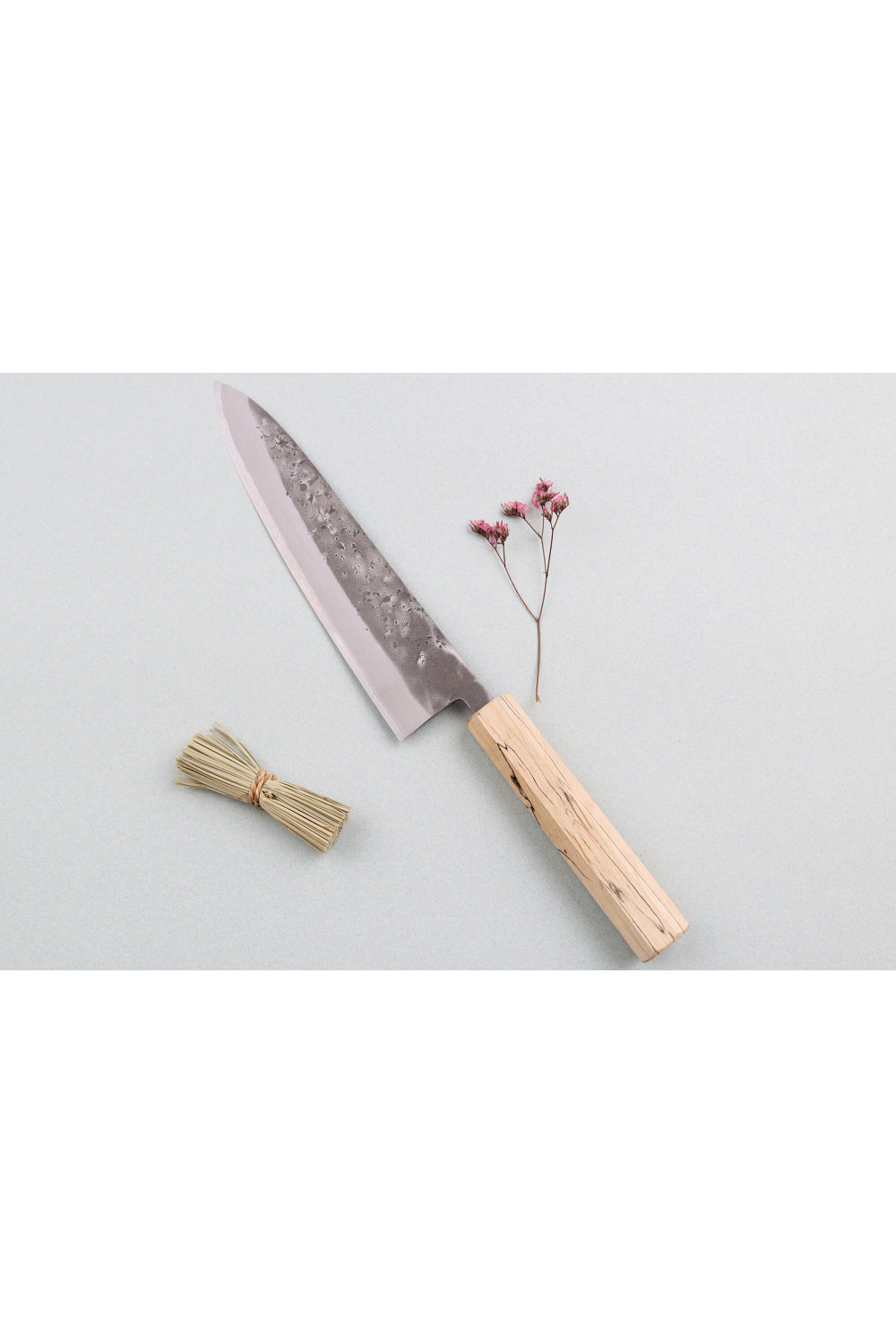
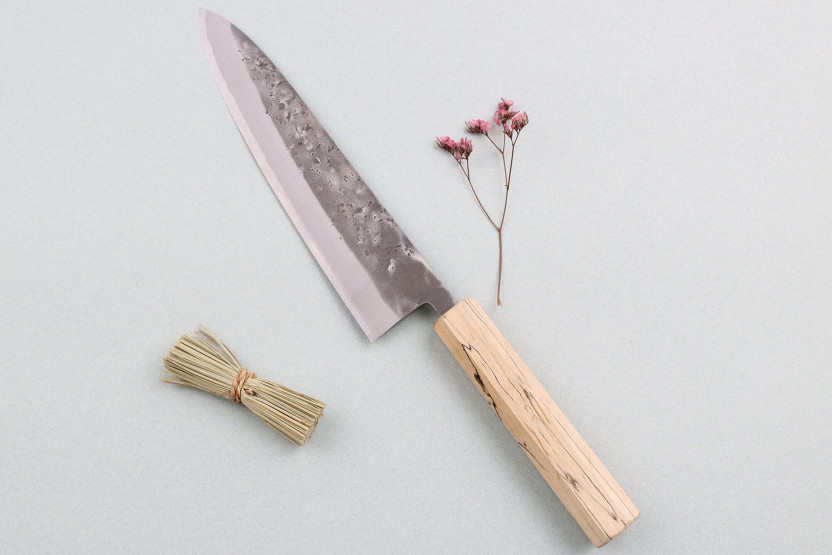
Its grain and color are unique to each knife produced. Produced in an octagonal shape, it is pleasant in the hand, for both right-handed and left-handed cooks.
Caring for your Japanese knife
Your chef's knife should be washed by hand after each use, using a mild detergent and a non-abrasive sponge. Wipe dry immediately after use. Do not put your knife in the dishwasher, soak it in the sink or let it air-dry.
The outer layer will better protect most of the blade against oxidation. Only the cutting edge (you can easily see the demarcation in the photos) leaves the carbon steel exposed, unprotected against oxidation. It's perfectly normal for this surface near the cutting edge to turn dark blue. This presents no danger whatsoever. It's just the elements of the steel reacting over time.
A wide choice of Wusaki knives here!




 By buying this product you can collect up to