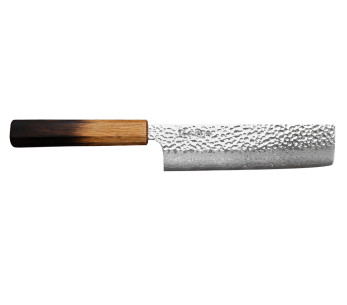
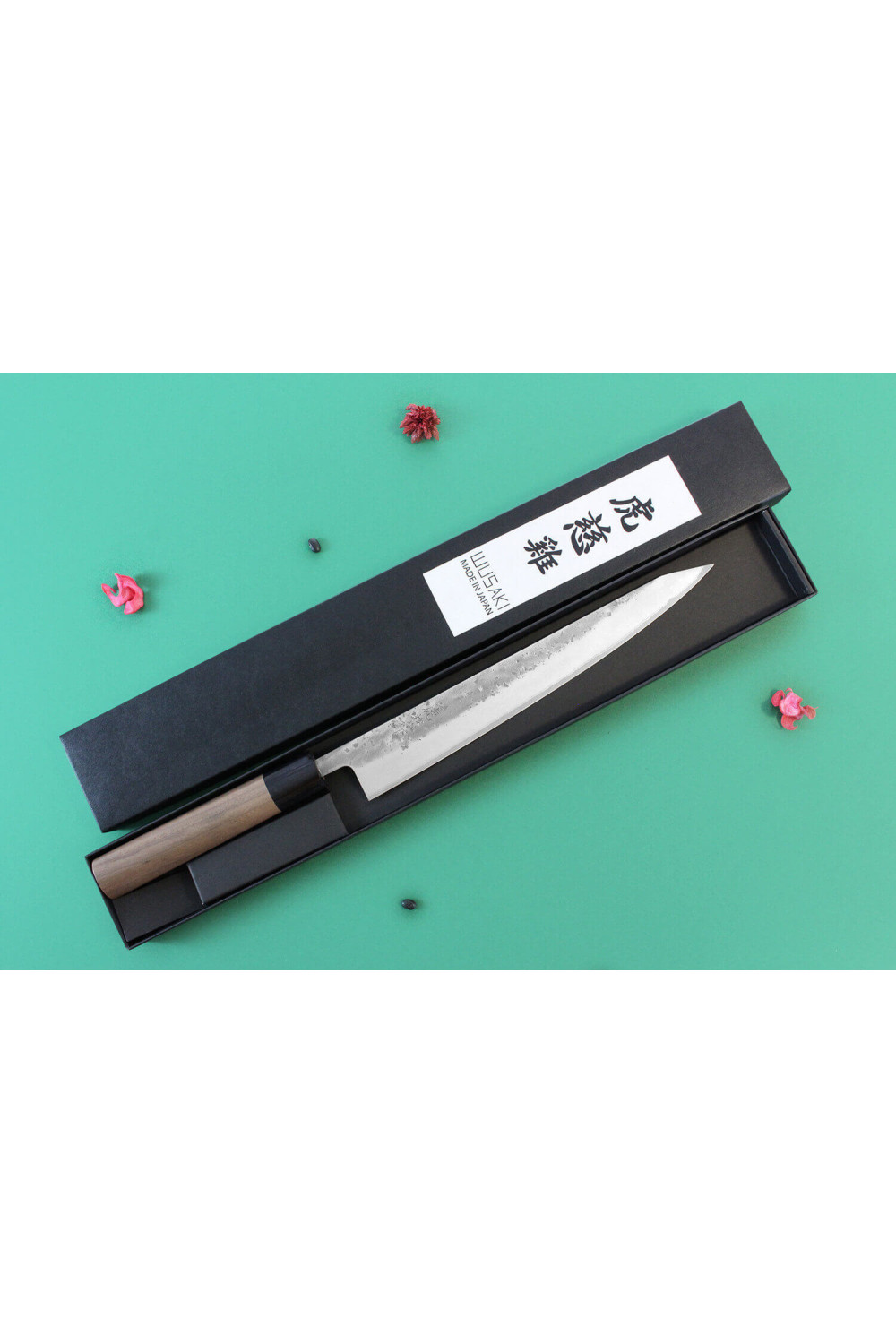
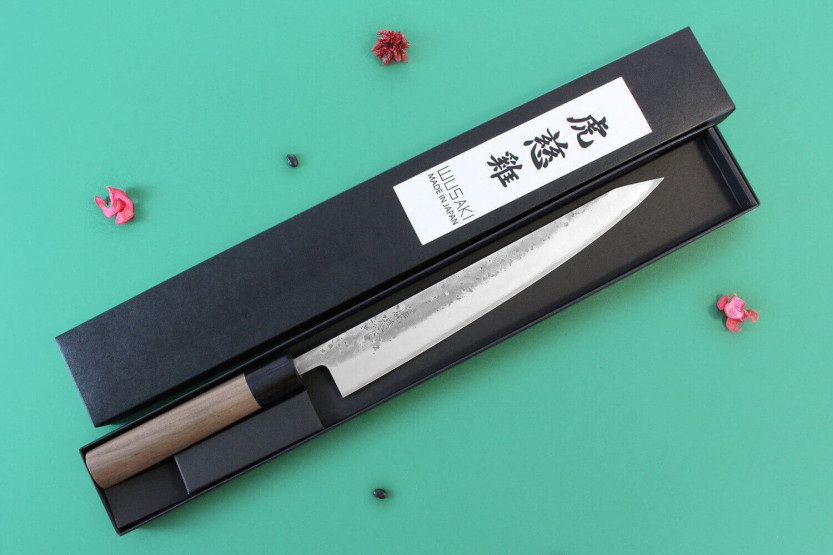
The Wusaki Nakata knife range is perfect for all lovers of Japanese blades. These knives combine considerable advantages such as outstanding cutting quality, long wire life and authentic design.
Made entirely in Japan:
Wusaki Nakata knives are entirely hand-forged in Japan. From blade forging and assembly to handle polishing and manual blade sharpening, the renowned Tadafusa cutlery factory takes care of everything. The cutlery factory was founded in 1948, in the heart of the town of Sanjo (Niigata prefecture),known for its 350-year history of blacksmithing. The town is also known as "The City of Blacksmiths". Each knife is handcrafted by experts. Tadafusa has won several awards for its impeccable workmanship, in the worthy tradition of the blacksmiths of yesteryear.
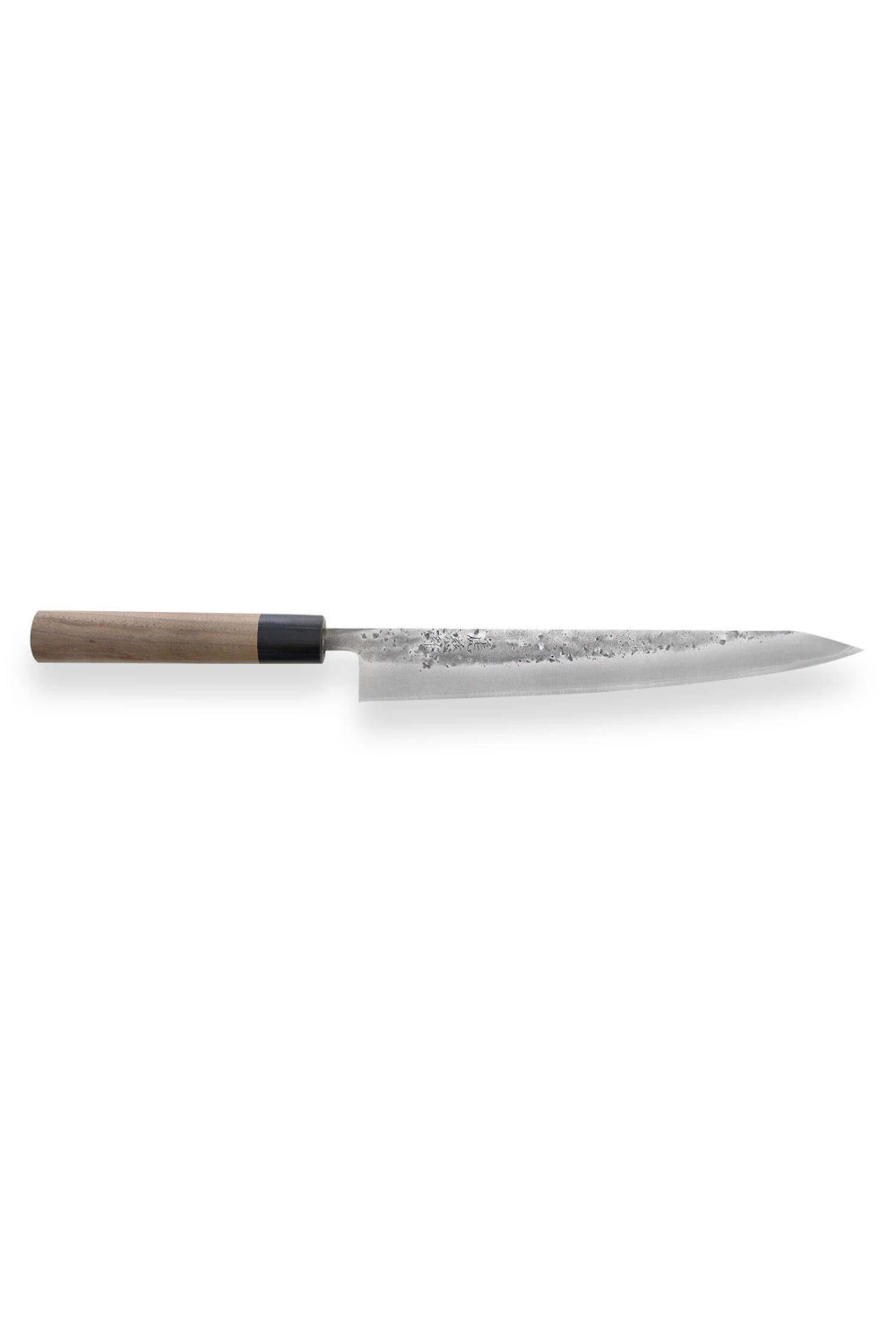
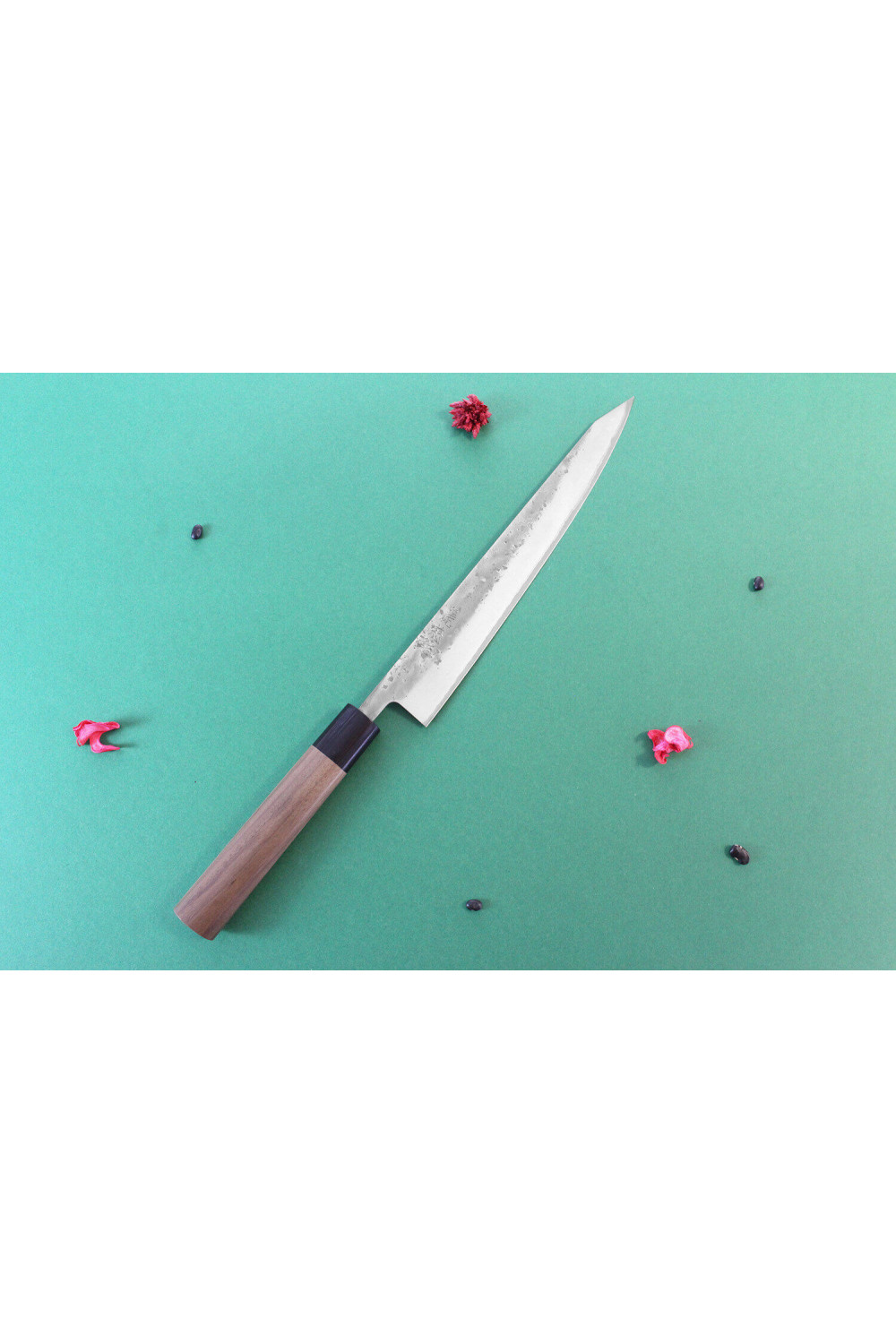
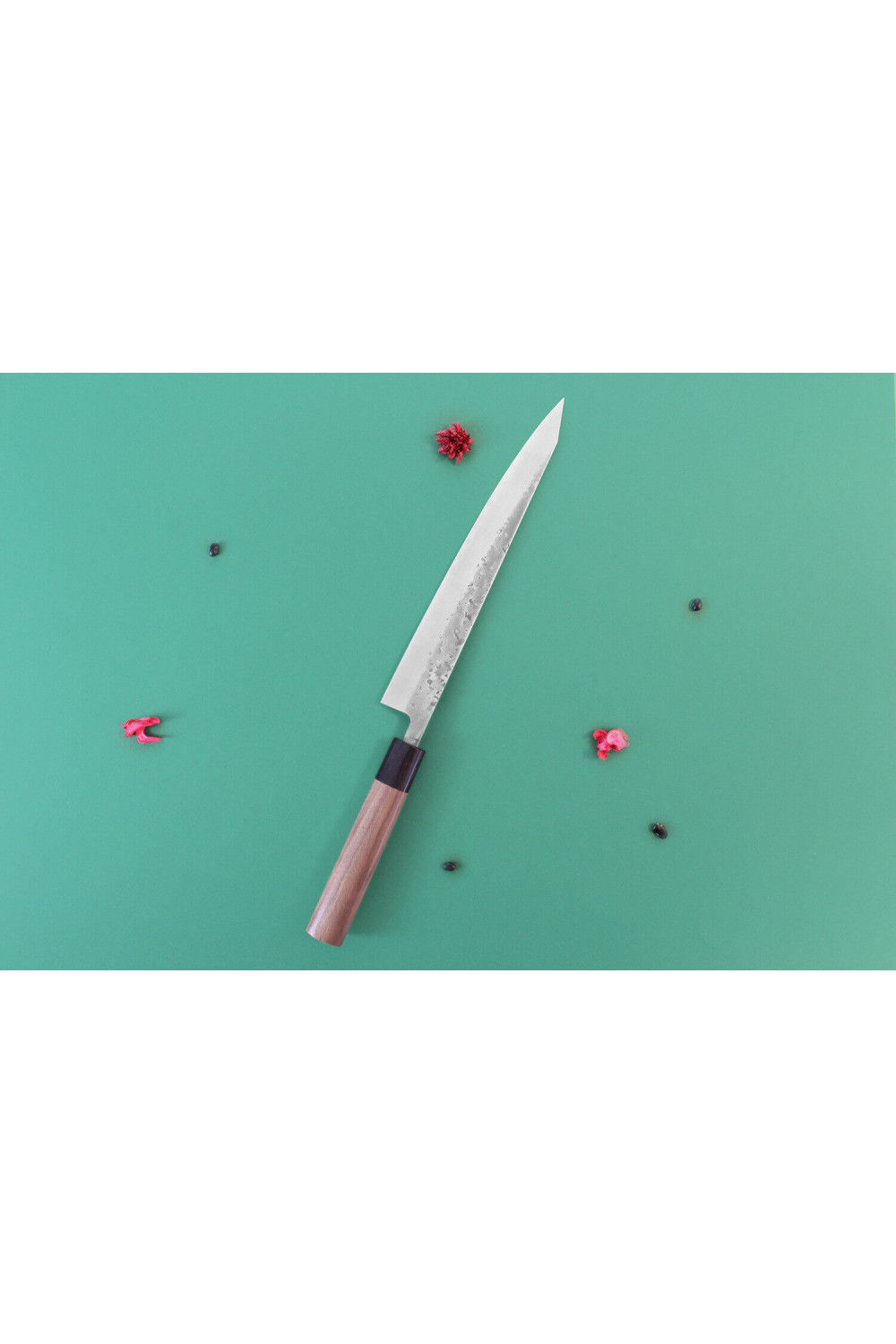
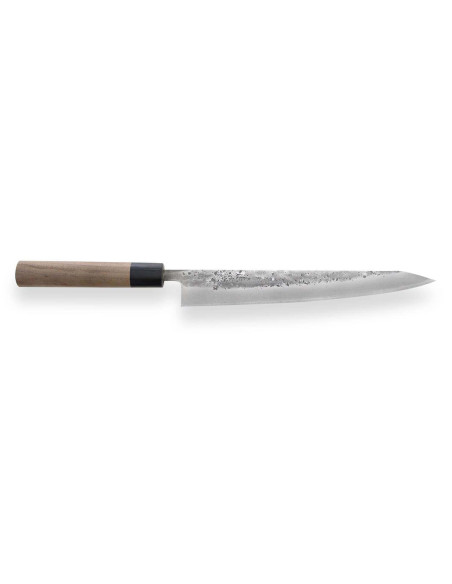
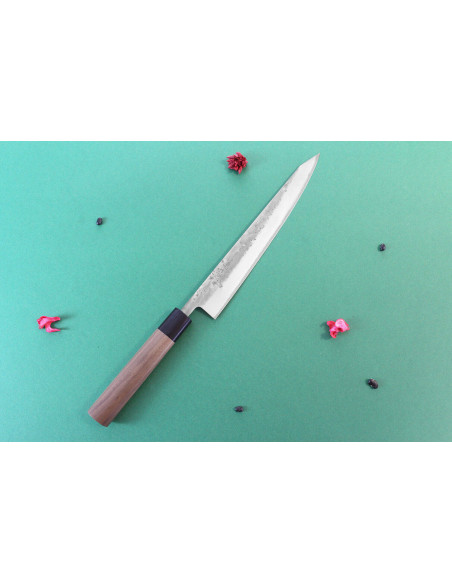
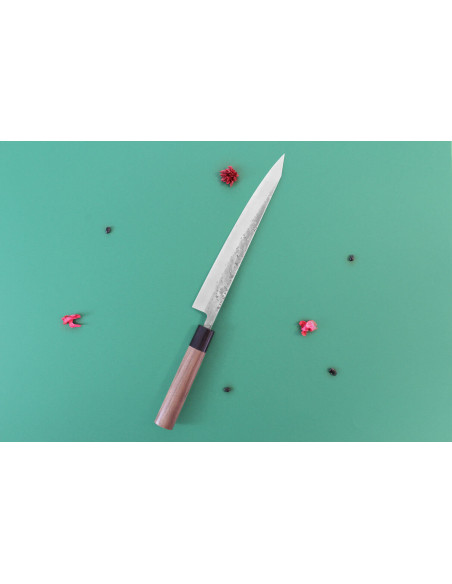
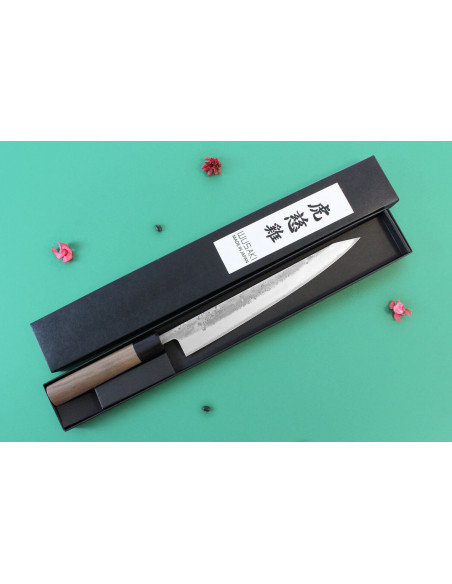
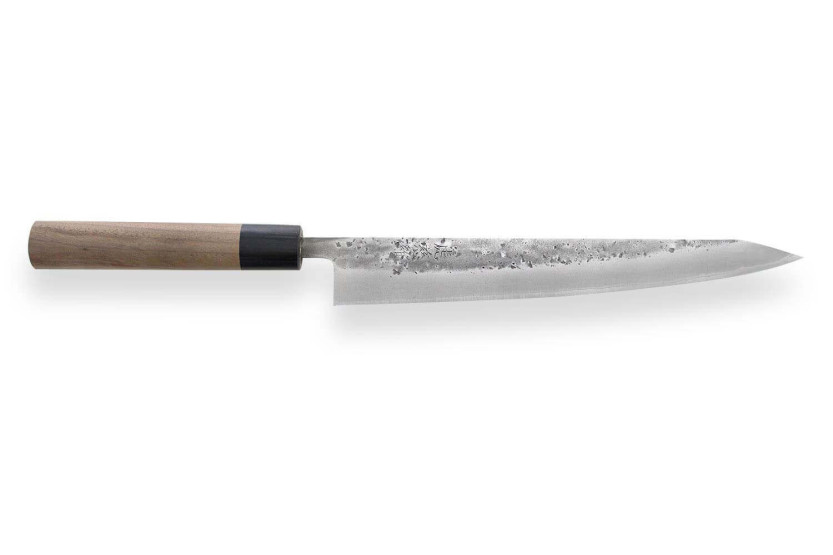
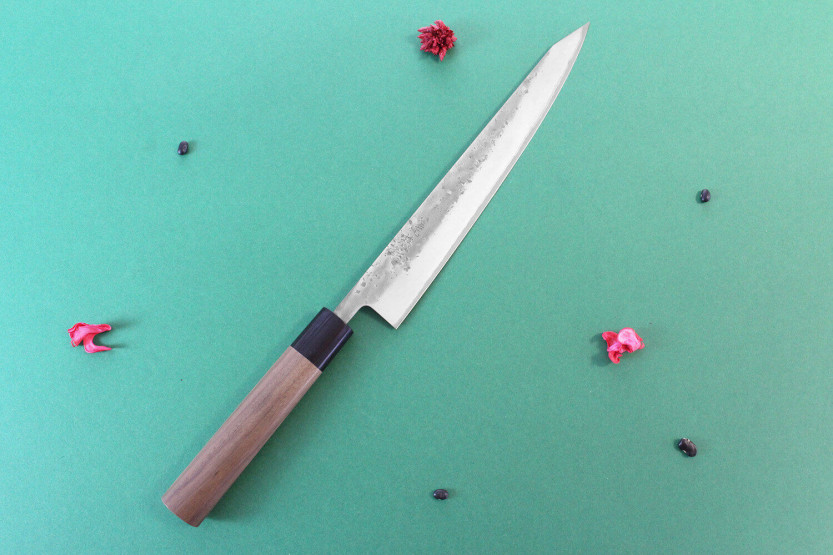
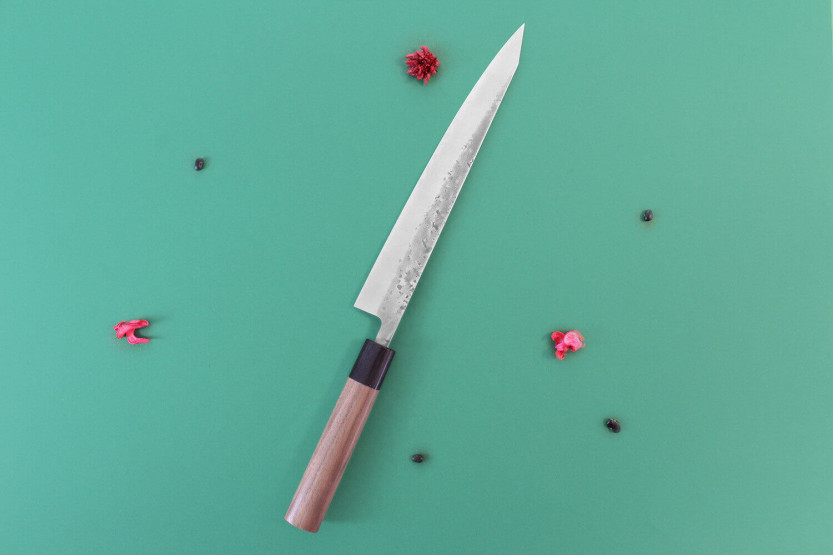
The 24cm blade of this Japanese sujihiki knife is hand-forged in Sanjo, Niigata province. It is produced using methods derived from ancient techniques (from the same people who created the katana).
A unique, handcrafted design: the authentic San Maï Nashiji
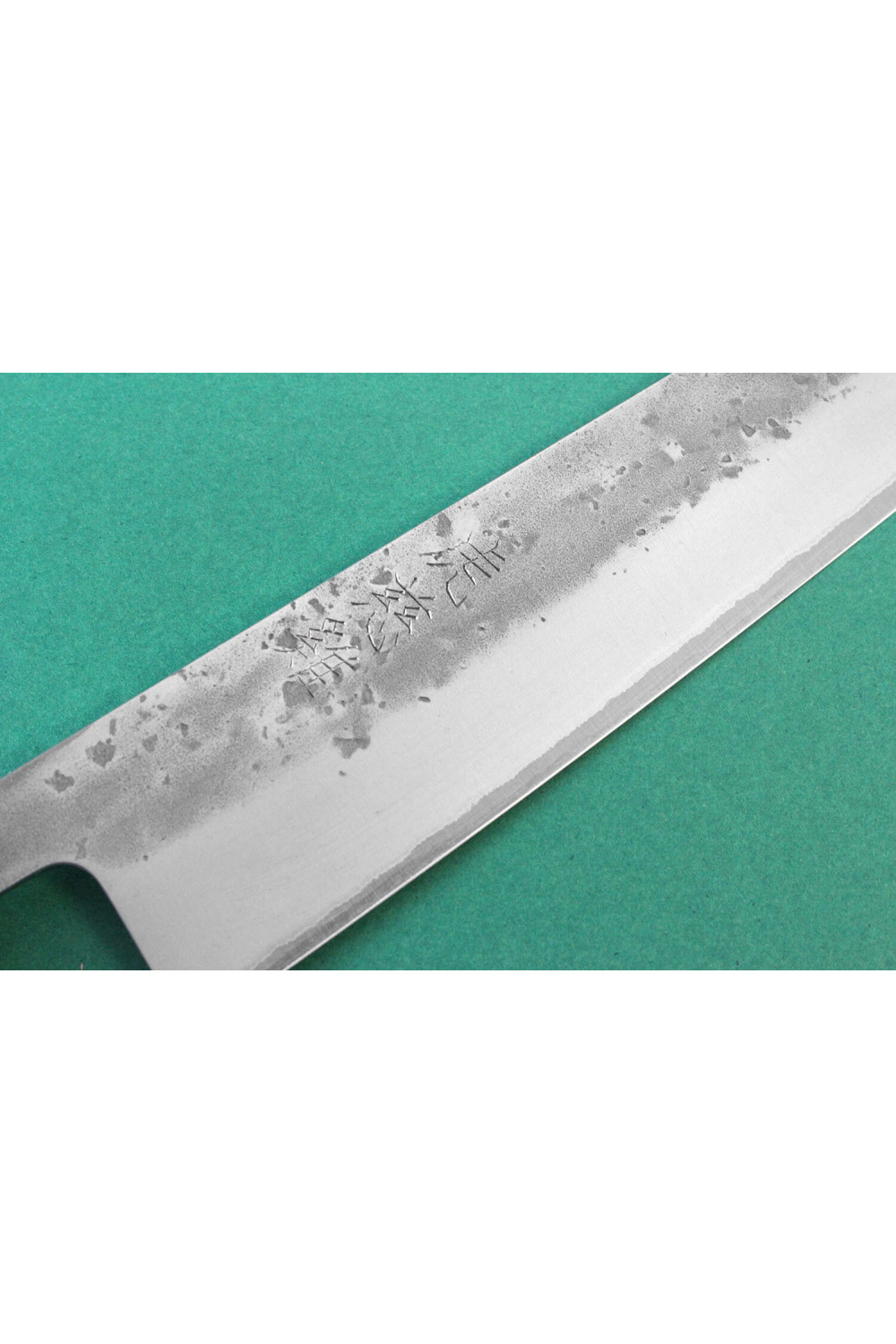
The blade is made of 3 interlocking layers of steel. This Japanese technique is called San Maï, which means "3 layers".
The core is made of Japanese Blue Steel n°2(Aogami in Japanese). This steel takes its name from the paper in which Hitachi packages it, which is blue. It comes from Hitachi steel mills, and its alloy is enriched with carbon, chromium and tungsten. In fact, its carbon content is around 1.2%, a very high level compared to the average of between 0.5 and 1% for Western and Japanese blades.
The Blue Steel core is then surrounded by a layer ofmild stainless steel on each side, to protect the blade from oxidation and prevent it from breaking easily.
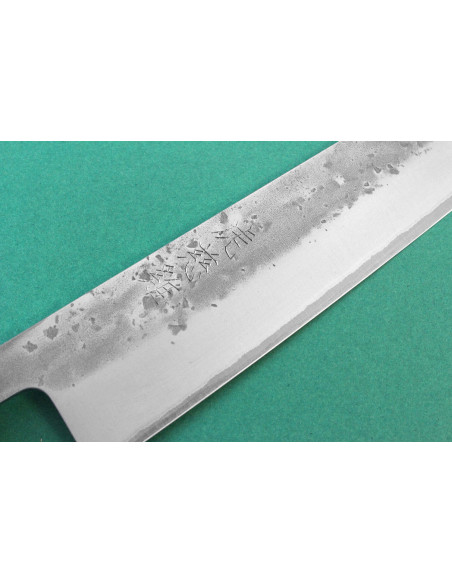
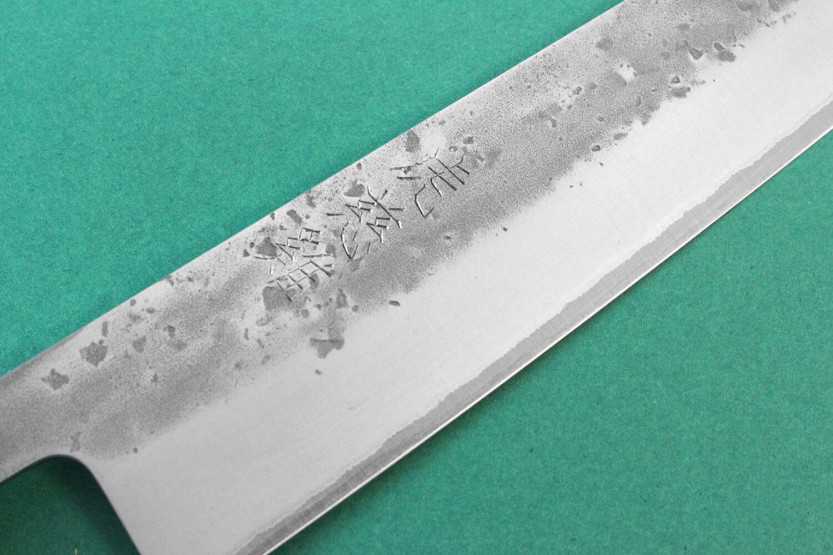
It is this layer of mild steel that gives the blade its full Nashiji raw finish.
All these techniques give this series a unique, handcrafted look that perfectly matches its manufacturing methods.
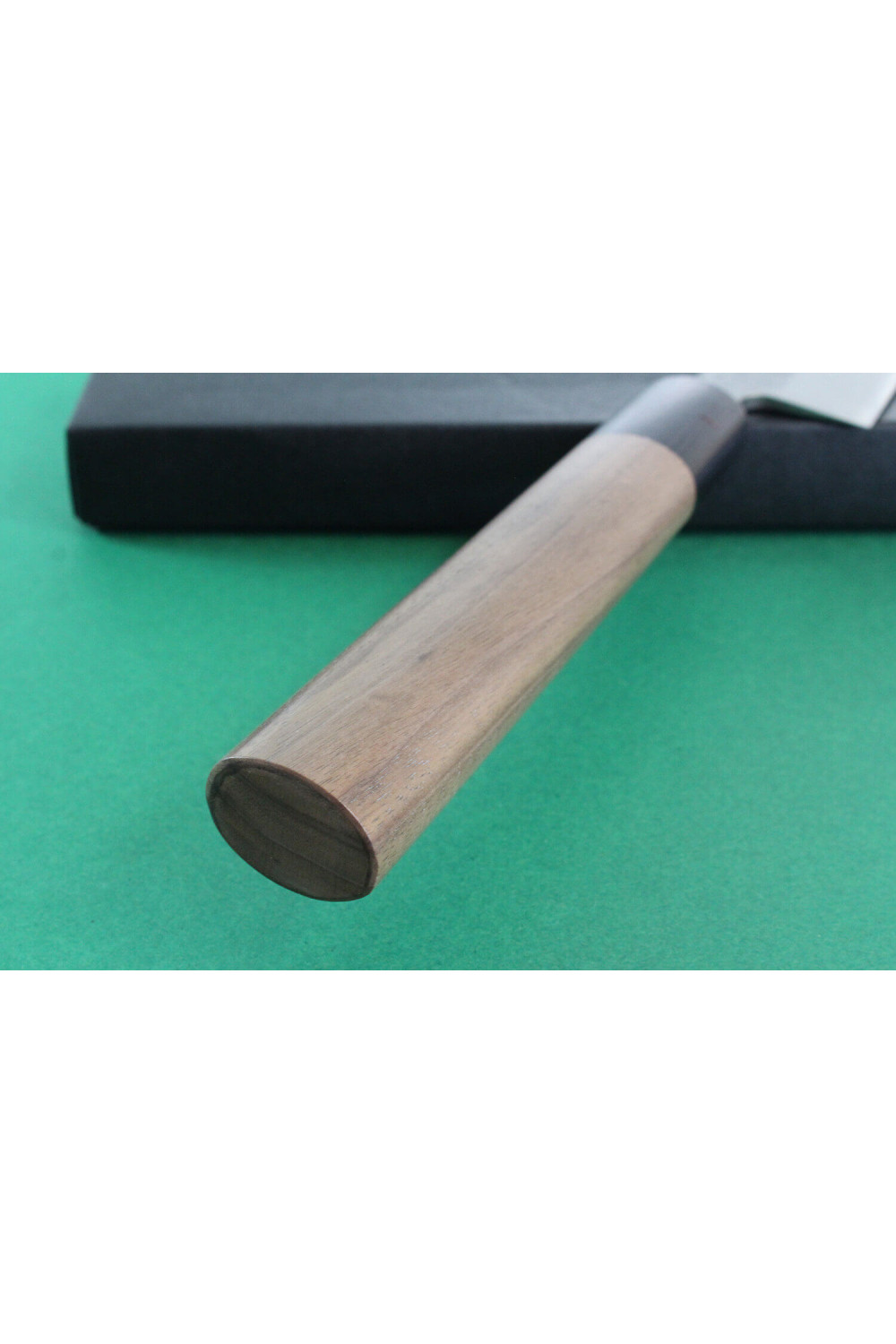
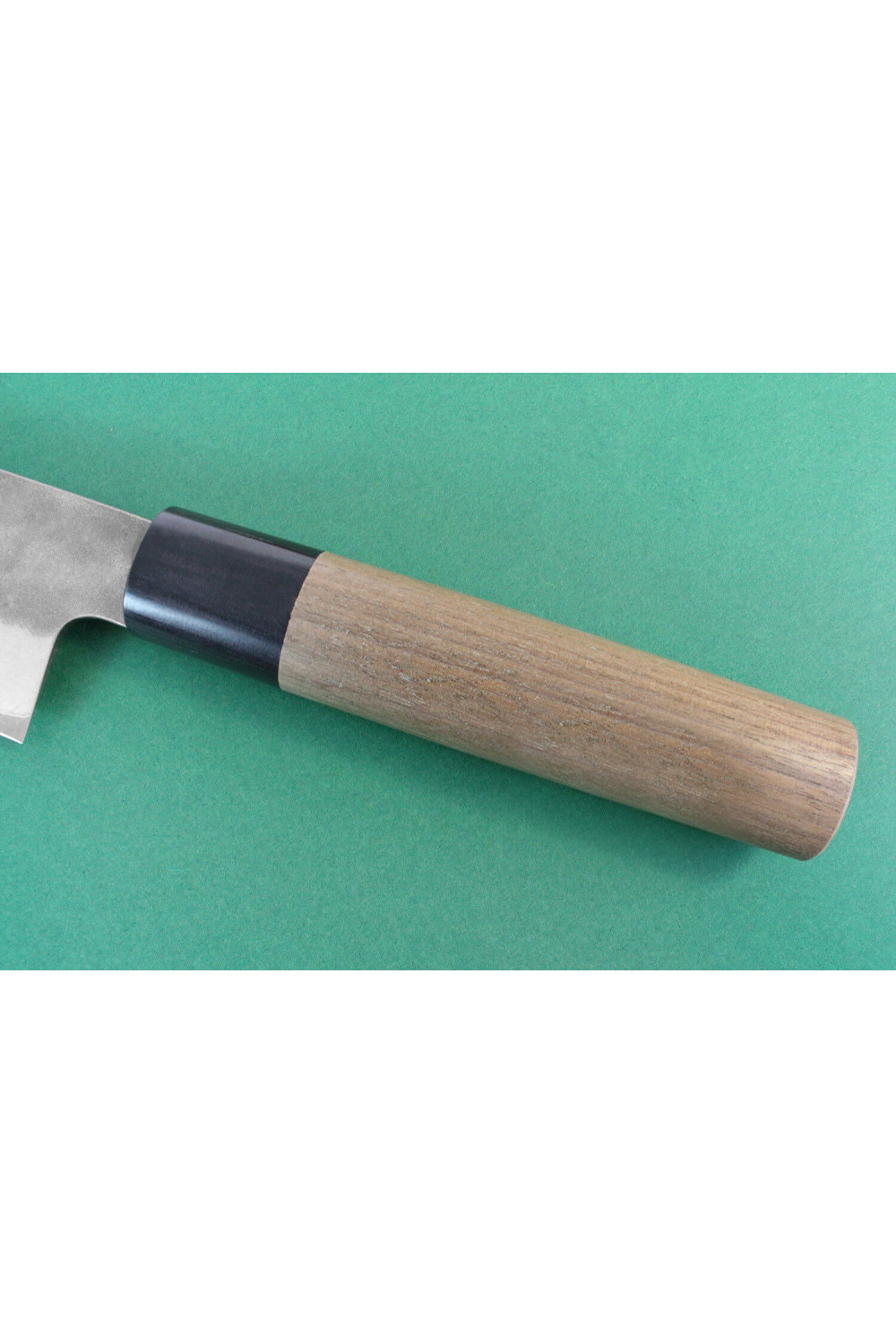
The rustic look of the wooden handle blends perfectly with the rough hammered blade.
A razor-sharp edge for quality cuts
The high carbon content of the blade's core makes it extremely strong, reaching 62-63 HRC. Thanks to this strength, the edge of the blade can be incredibly fine, for extreme cutting quality.
The blade is sharpened on both sides at a very acute angle, further minimizing cutting effort.
Little need for sharpening: long-lasting cutting edge
The second advantage of this level of hardness is the knife's edge retention. Harder steel wears less, so the edge stays sharp longer, and the need for sharpening is much less frequent.
For normal home use, it is not necessary to sharpen your knife more than 2-3 times a year.
Fast, easy sharpening compared to stainless steels
It is very rare to reach such a high level of hardness without making the knife difficult to sharpen. This is the case with high-carbon stainless steels, which are sometimes hard to sharpen and require a great deal of patience.
Japanese carbon steels such as the Aogami #2 used for this range are highly prized by the Japanese for their ease of sharpening. In fact, despite the durability of their cutting edge, they are very quick to sharpen.
Finally, the blade has no guard (a thick layer at the beginning of the blade to protect the fingers), so that sharpening is easy along the entire length of the blade.
Easier maintenance than traditional Japanese knives
Thanks to stainless steel outer layers, the vast majority of the blade is protected against oxidation. Only the cutting edge (you can easily see the demarcation in the photos) leaves the carbon steel exposed, unprotected against oxidation.
It's perfectly normal for the surface near the cutting edge to turn a darker shade of blue over time. This presents no danger.
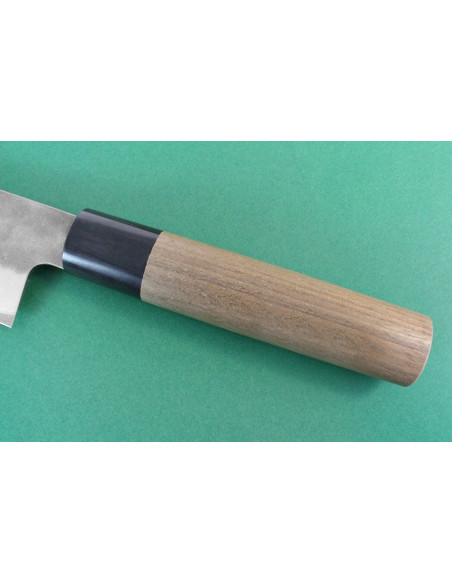
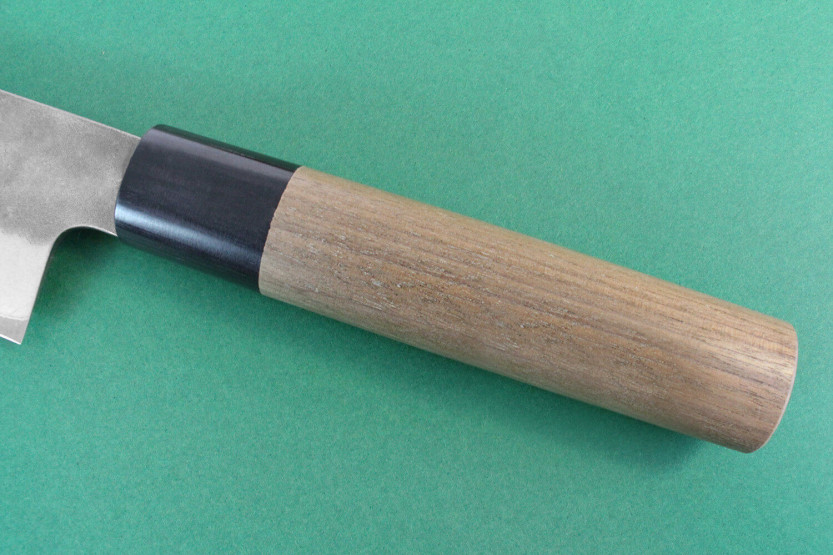
The stainless steel bolster, unlike traditional knives where the blade penetrates the handle, prevents any residue or moisture from entering the handle. This makes maintenance much easier. The grip is also improved, allowing you to get as close as possible to the blade.
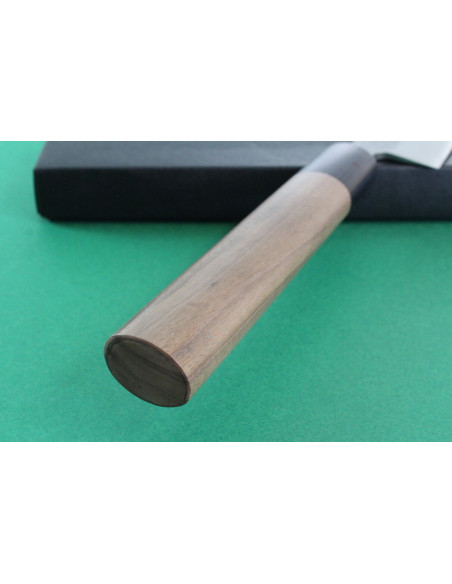
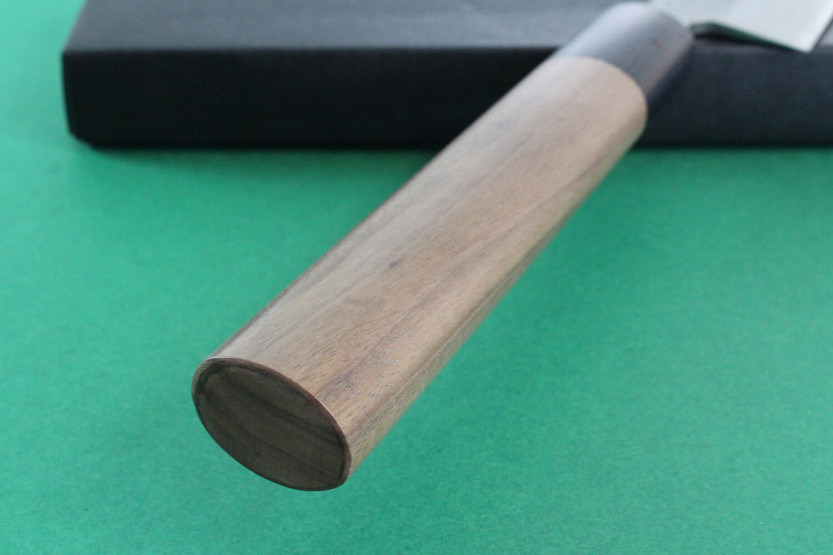
The walnut handle is highly resistant to moisture and heat. Its round shape and polished finish ensure a comfortable grip, for firm control of the knife as close as possible to the blade. Perfectly suited to both left-handed and right-handed users.
To care for this knife, simply wash by hand after each use with your dishwashing detergent and a soft sponge. Wipe dry immediately after washing to limit discoloration and prevent marks.
Do not wash in the dishwasher, soak in water or let air dry (even with stainless steel knives).
Find all Wusaki Japanese knives on our KnifeLeader website!
|
|
"To clean, wash by hand in lukewarm water and wipe immediately afterwards with a soft cloth! The knife must be kept away from humidity to keep all its splendor :) |




 By buying this product you can collect up to