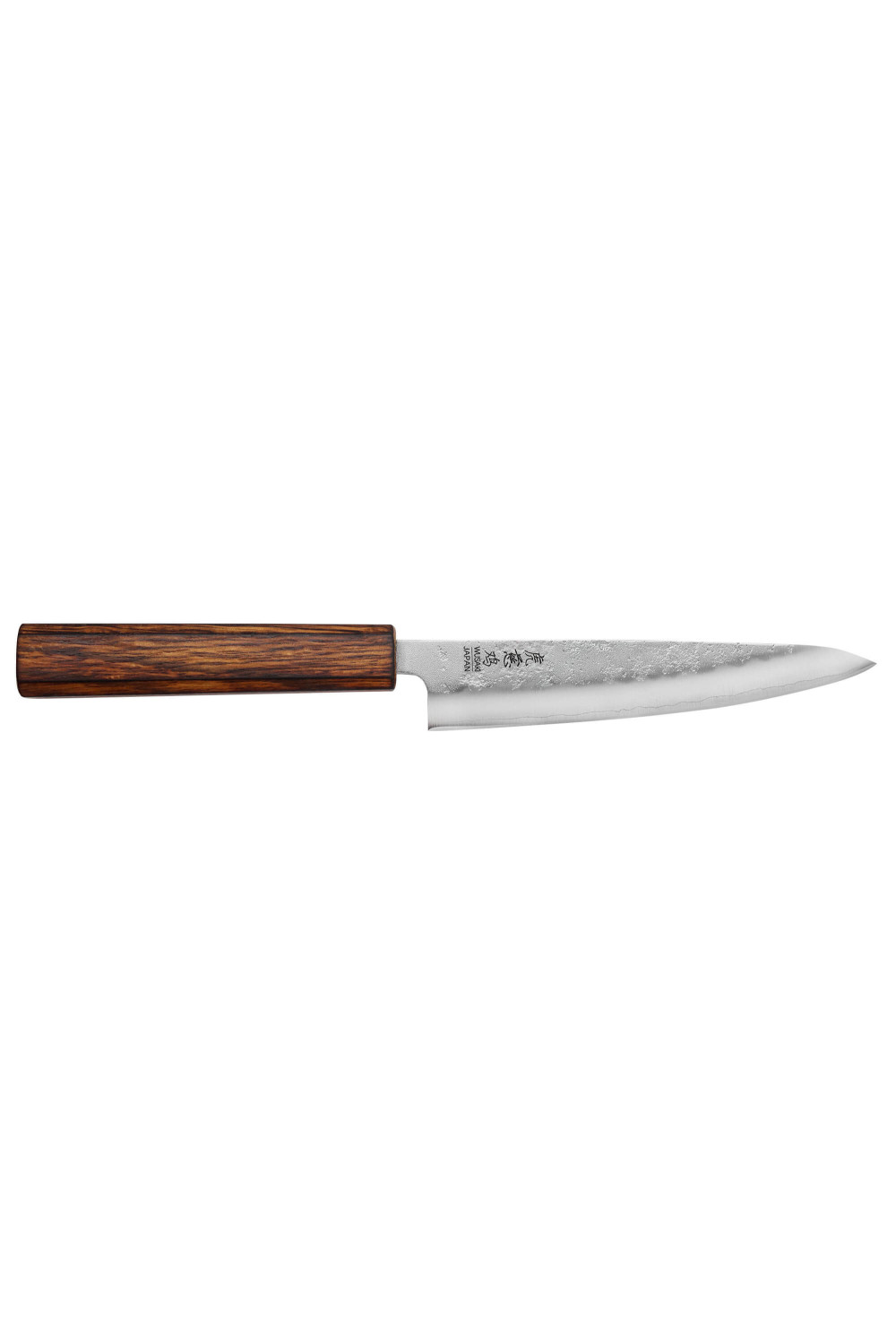
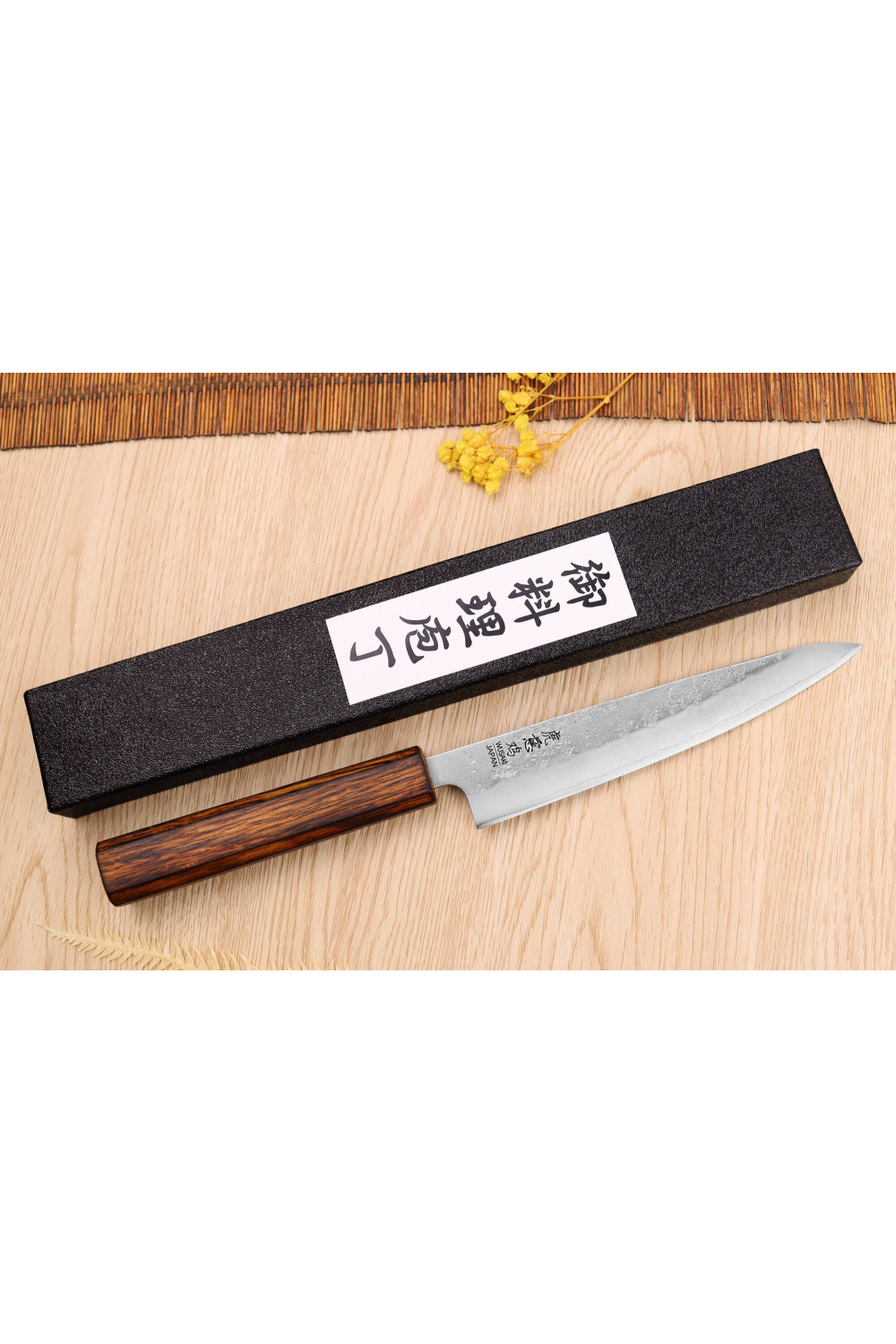
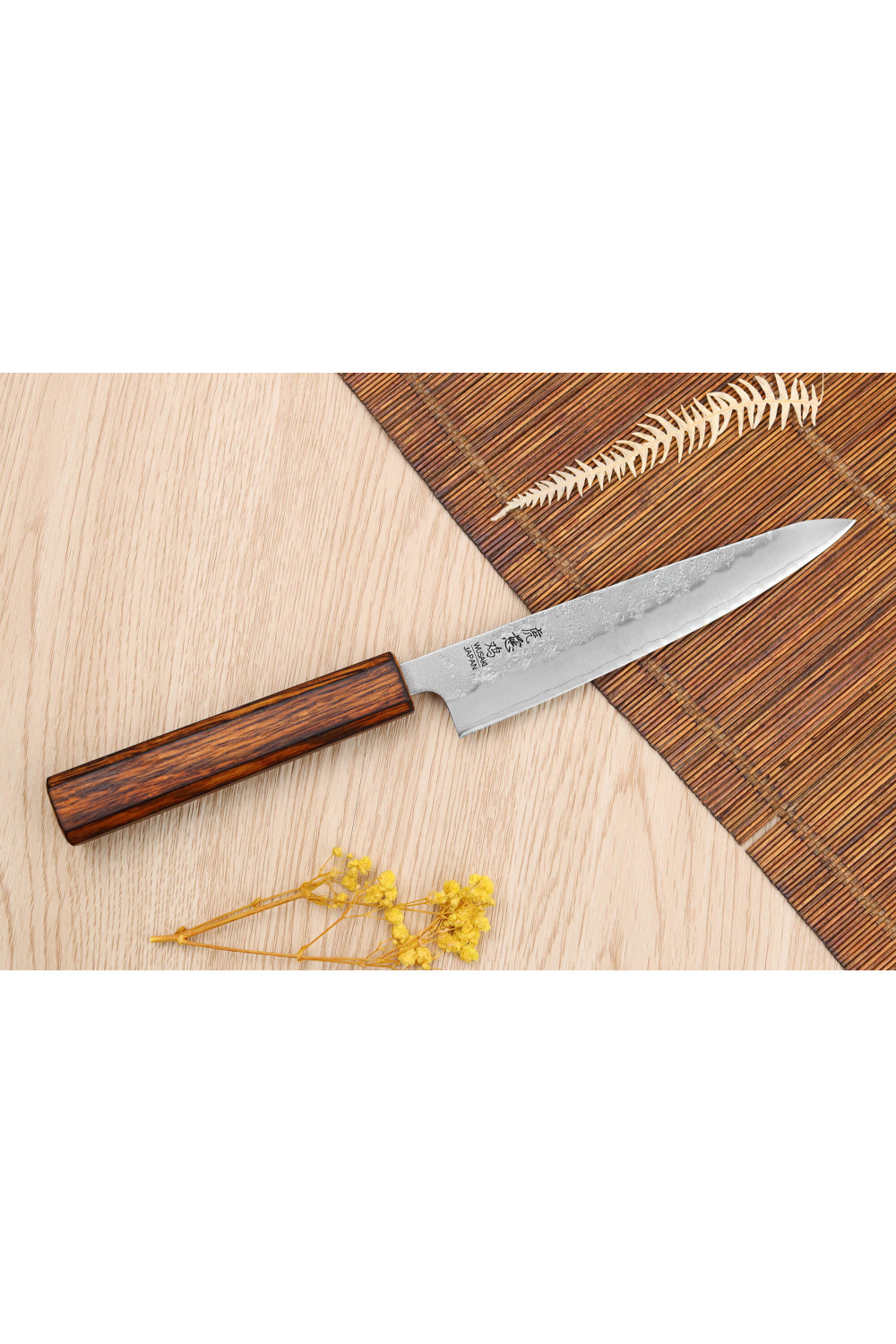
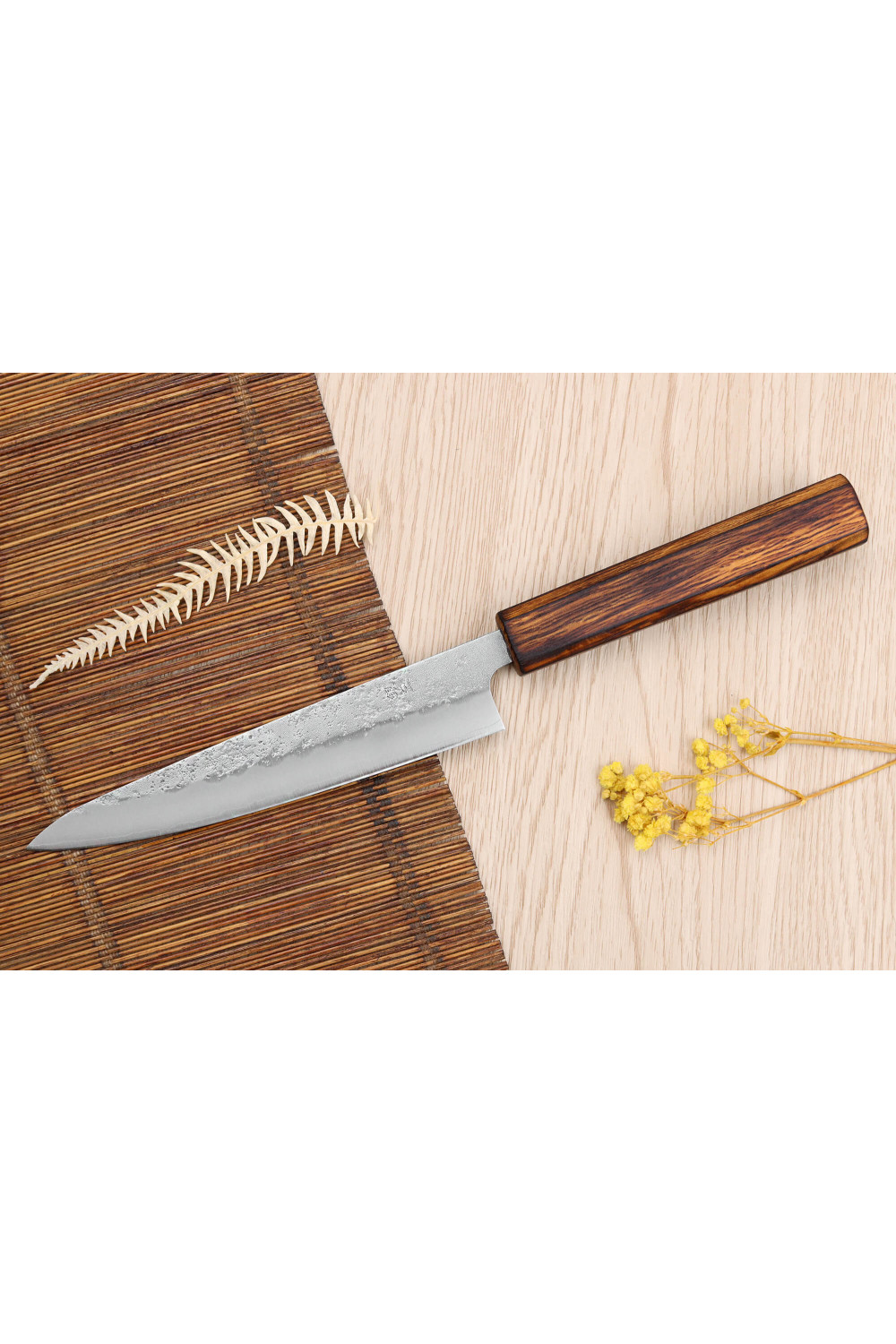
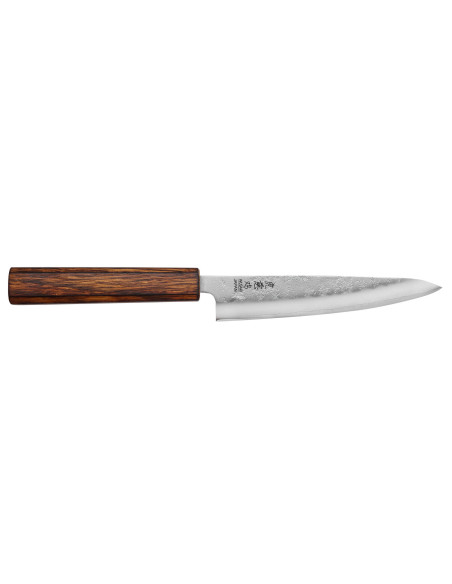
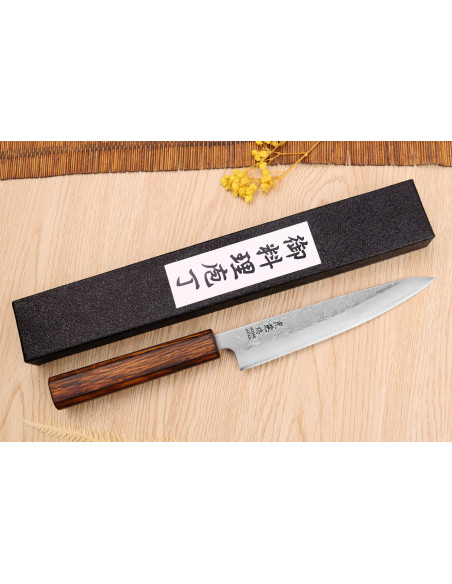
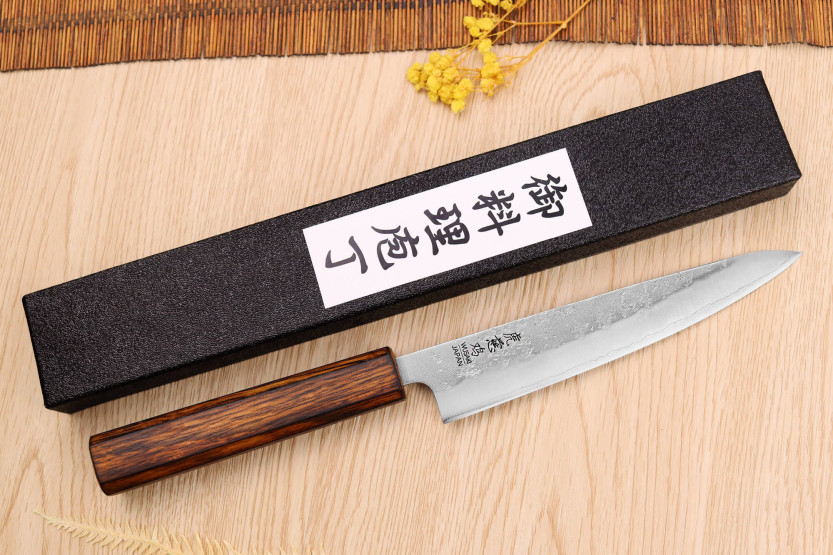
Wusaki Yoshi Japanese knives are made by the Tsunehisa cutler, who assembles a small team of experts to provide you with ergonomic, high-performance products for everyday use.
Blade :
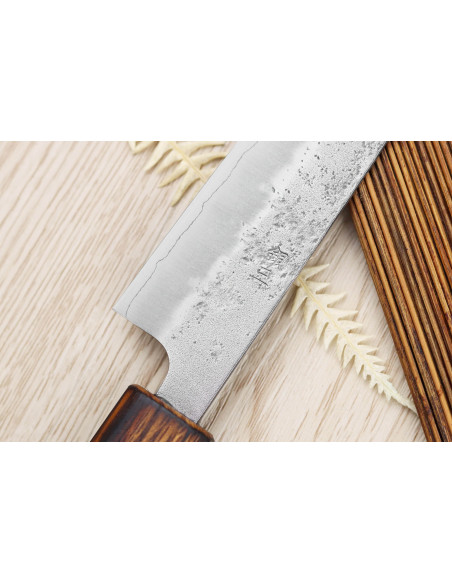
Designed with a San Maï base, meaning that 3 layers of steel alternate on its surface.
In the center, we have a core of Ginsan steel: this Japanese steel has 0.95% carbon, so that the wire is stiffer than average, and thus holds its edge better over time.
It also has a high chromium content, making it more resistant to corrosion. This is a definite asset in an environment such as the kitchen.
All in all, Ginsan achieves 59/60 HRC on the Rockwell scale, providing a good compromise in terms of ease of sharpening and edge retention. By the way, you can simply use a Sharpening stone when the need arises.
The Ginsan core is surrounded by a layer of stainless steel (hence the 3 layers counted in the end, you could say it's sandwiched). This protects it and makes the alloy more flexible, so that it is less brittle in use.
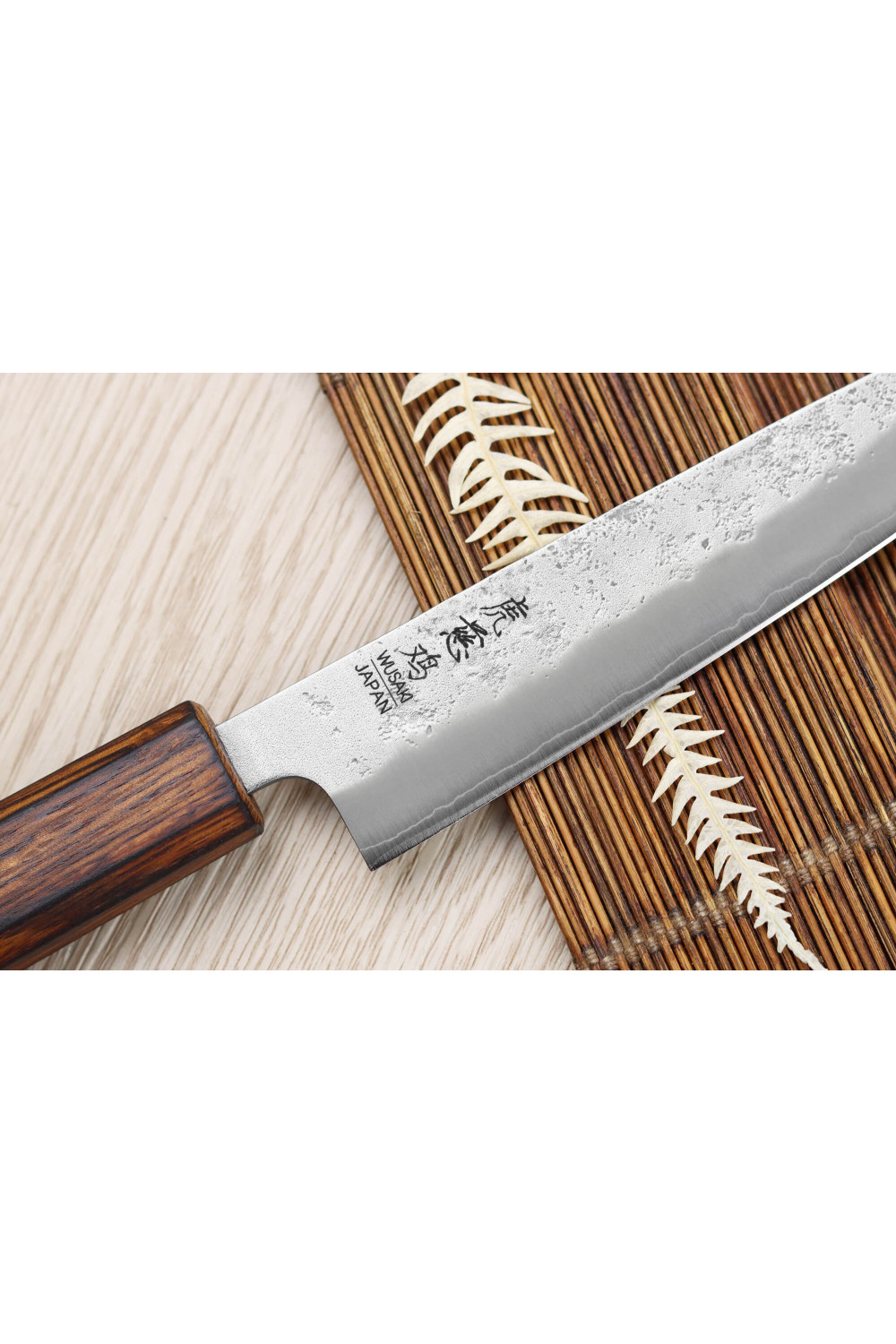
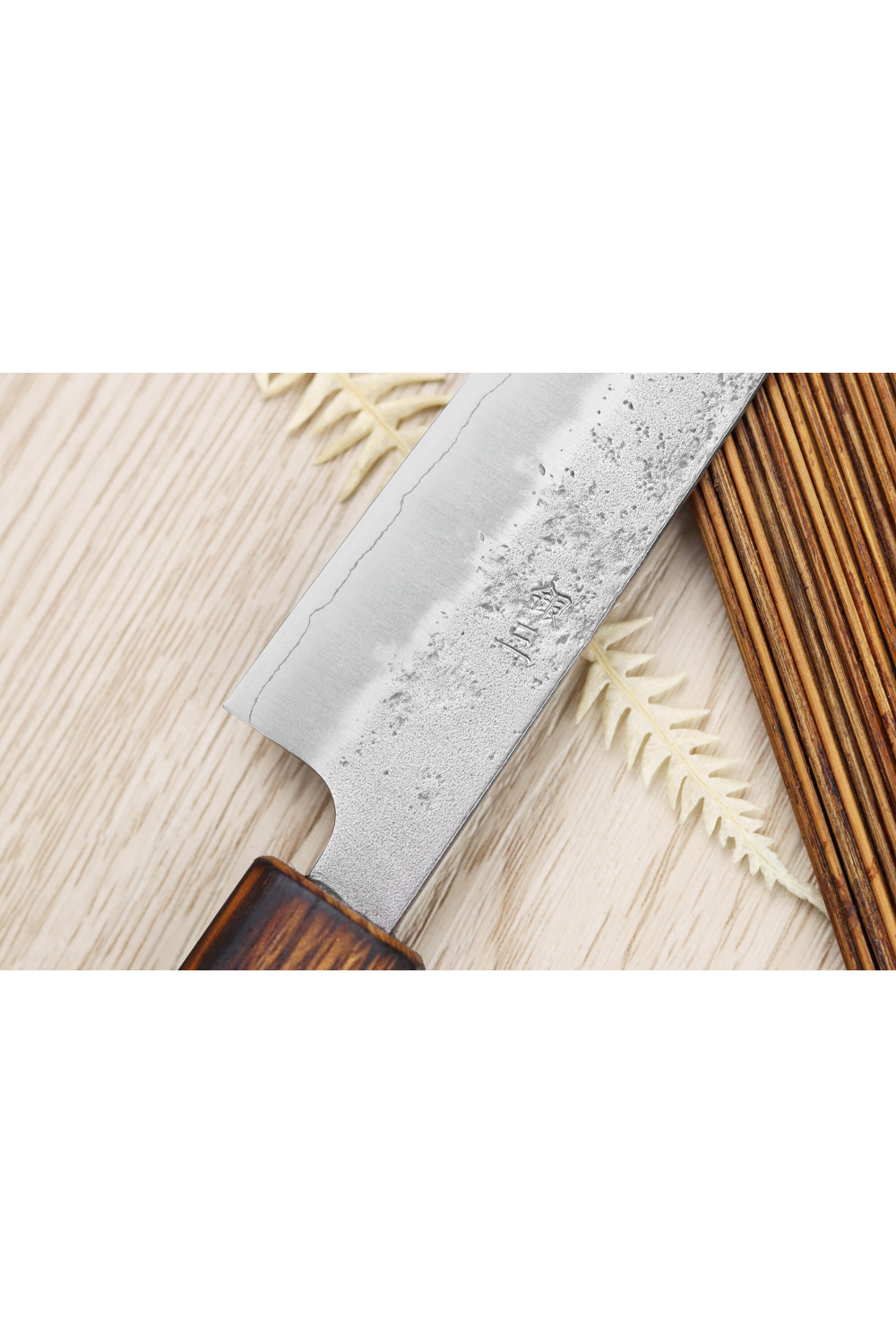
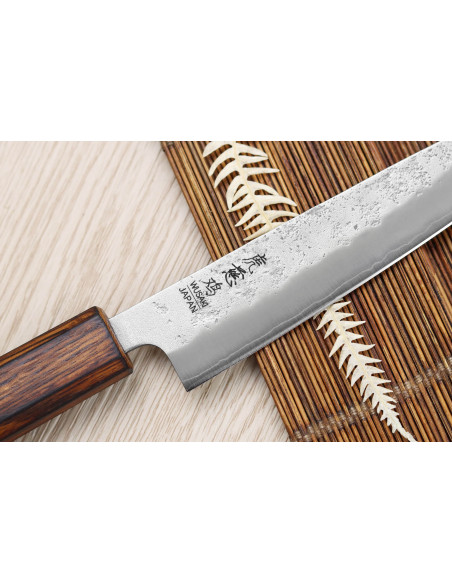
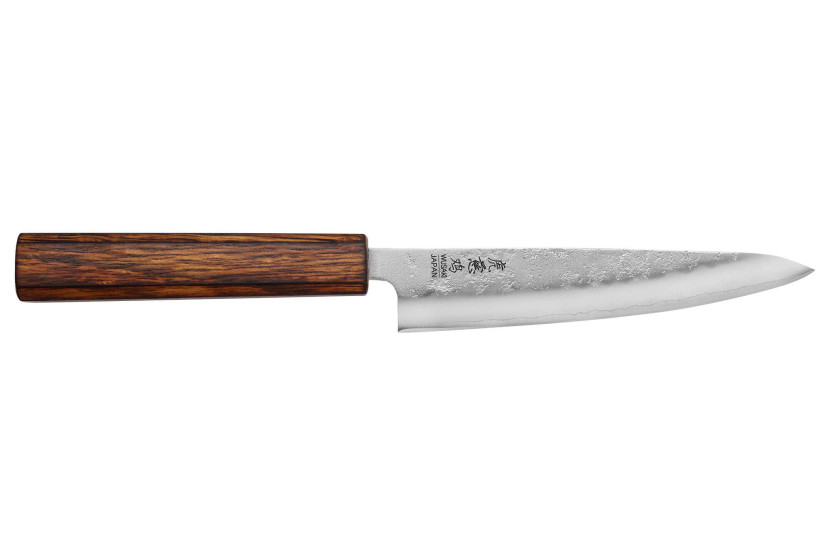
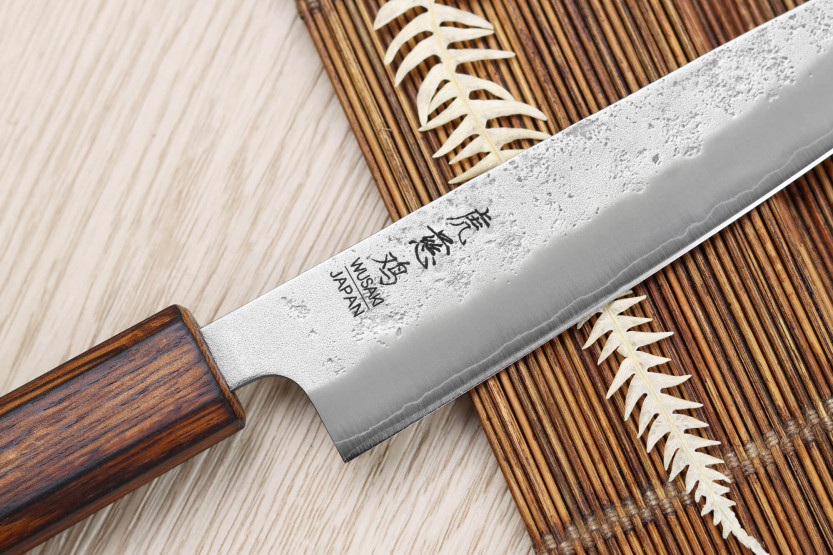
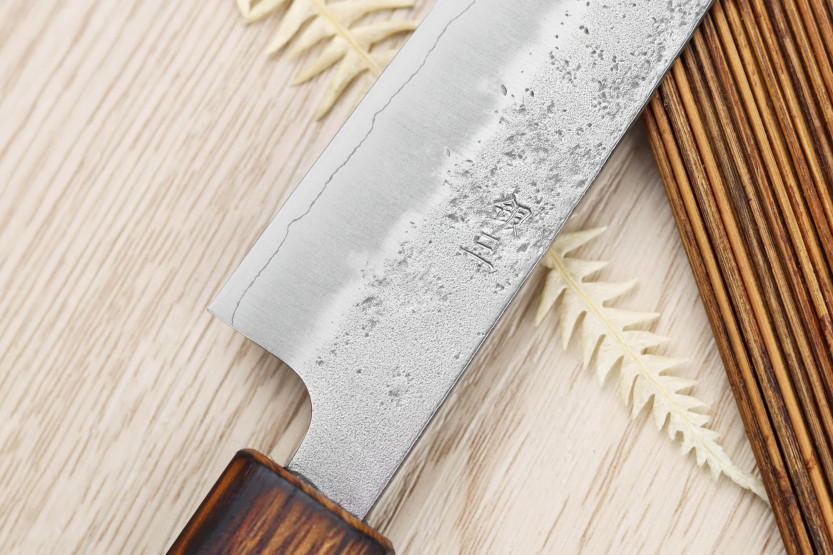
The difference between the steels can be seen on the bottom of the blade: a small wave runs along the cutting edge, marking the change in alloy.
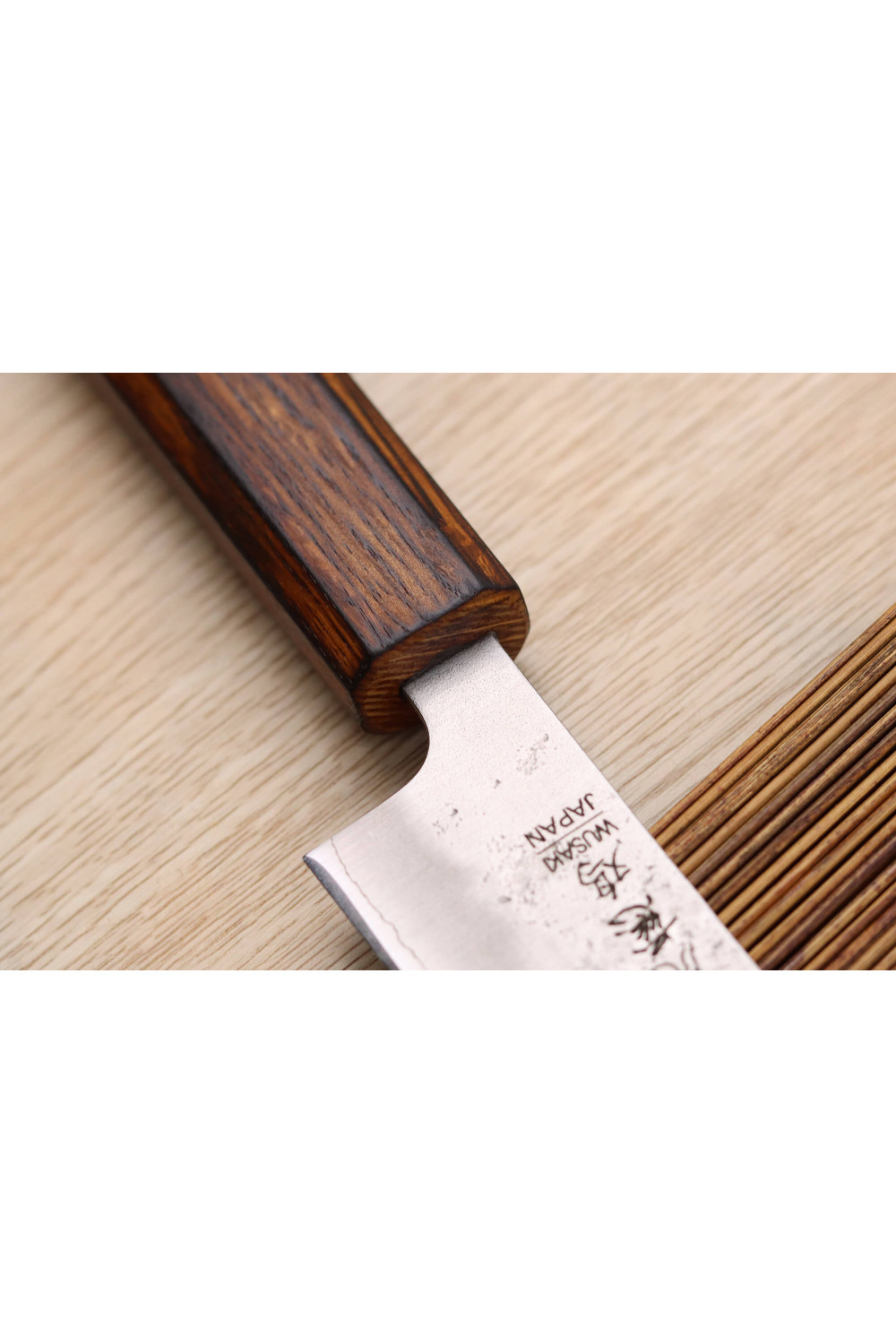
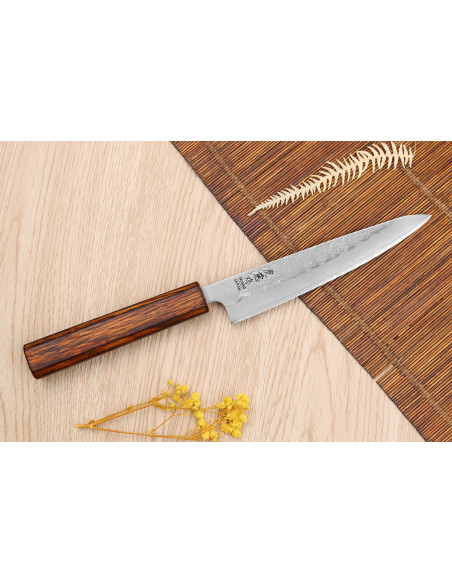
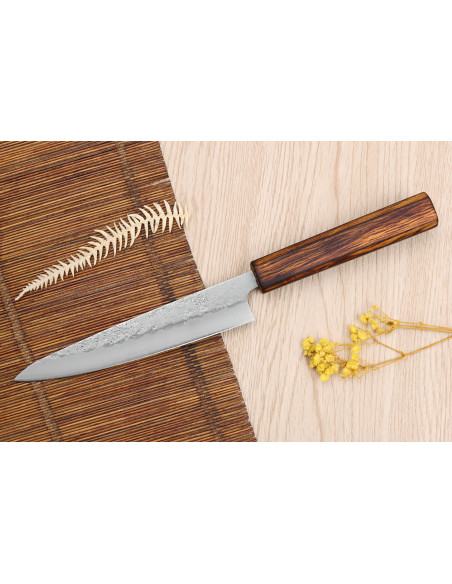
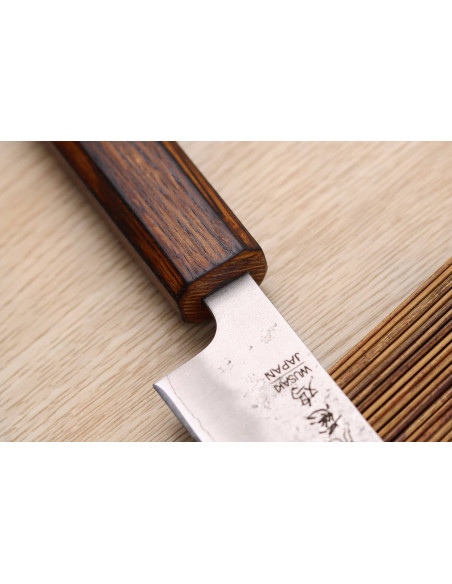
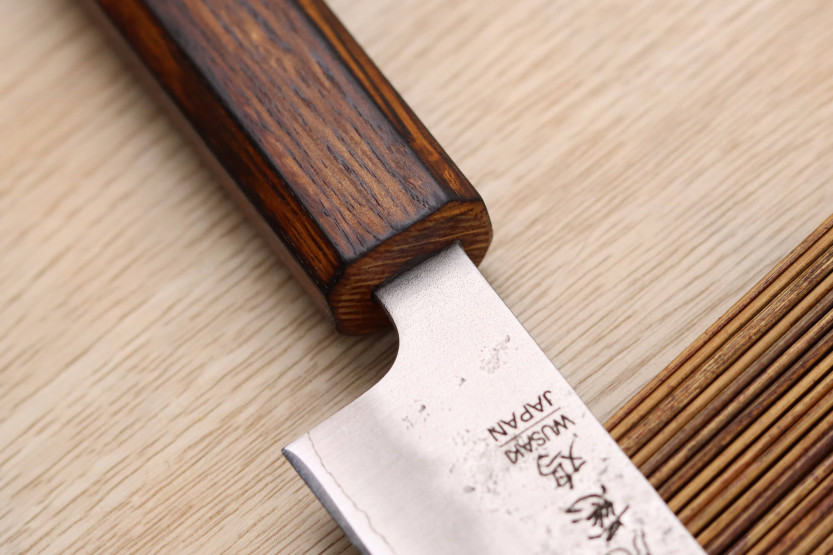
The logo is present on the front of the blade, while beautiful kanji have been finely engraved on the back, for even greater authenticity. Last but not least, the knife has been hammered in an original way, with attractive stencilled patterns, as if drops of water had splashed onto the cutting surface.
Handle:
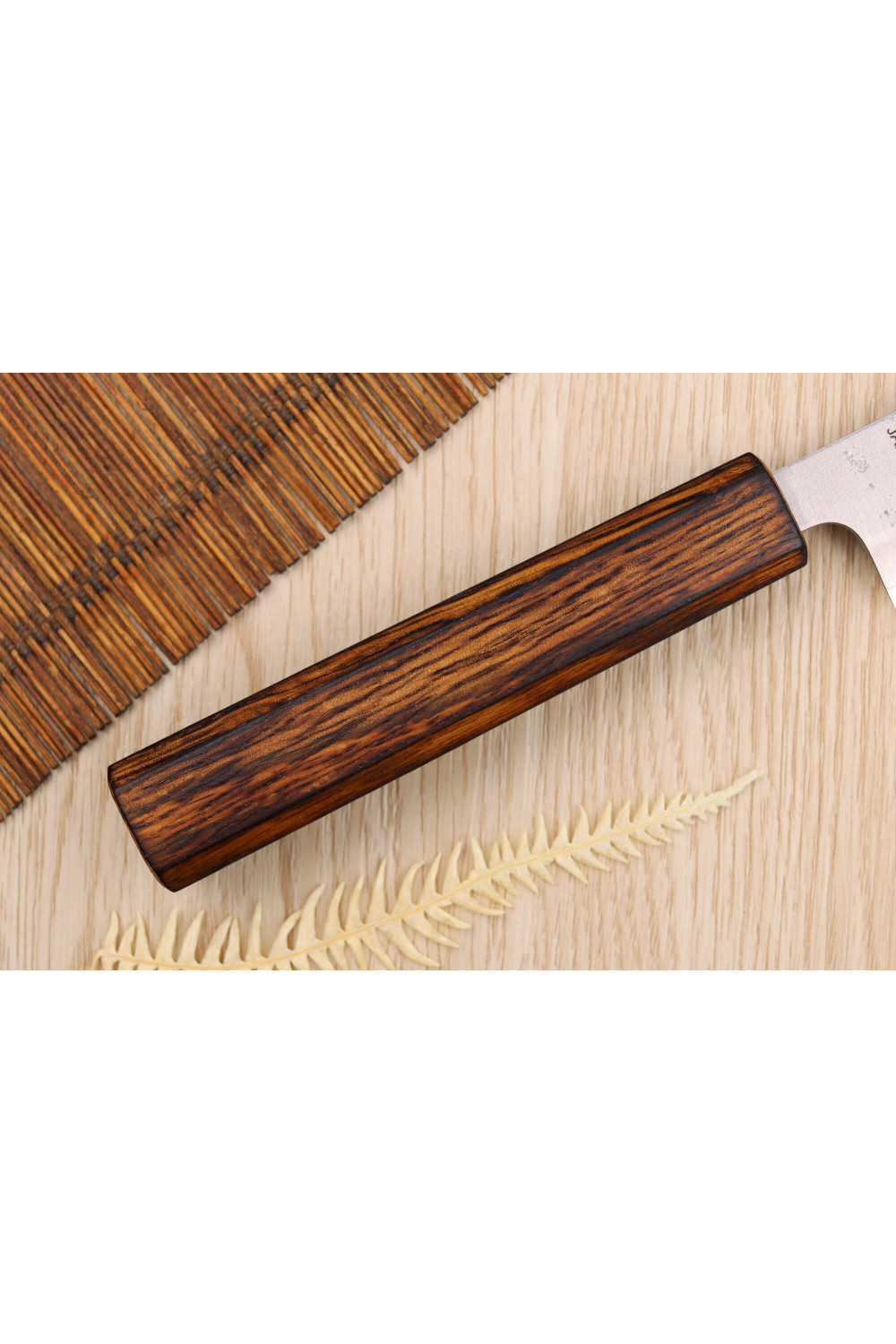
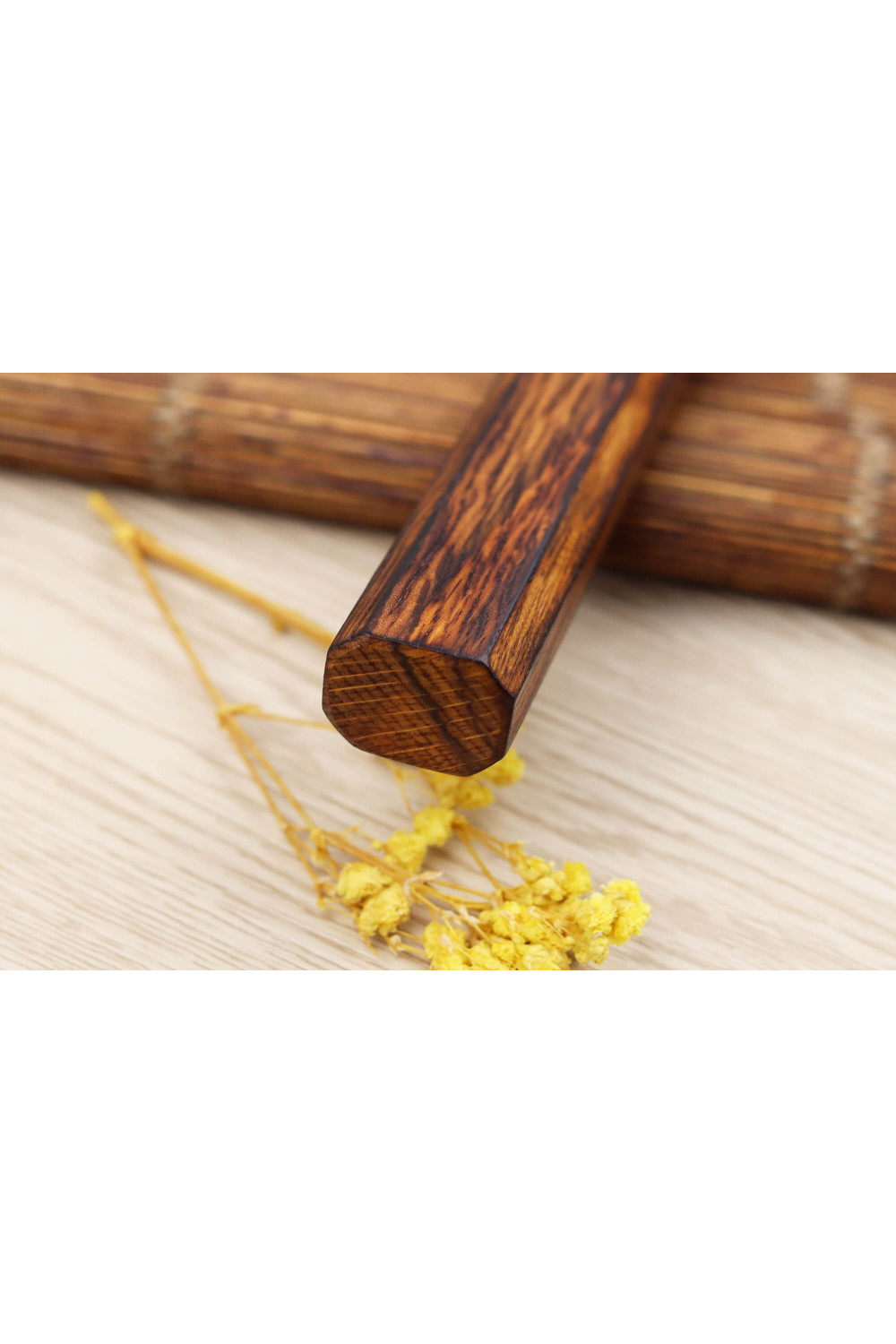
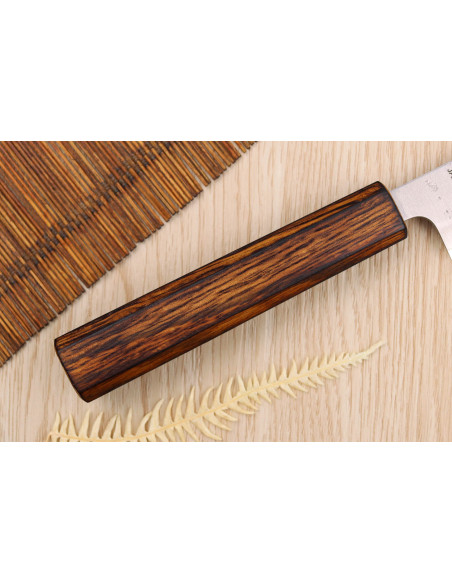
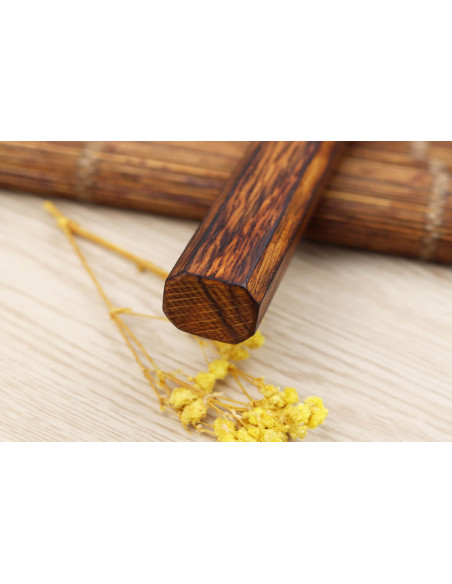
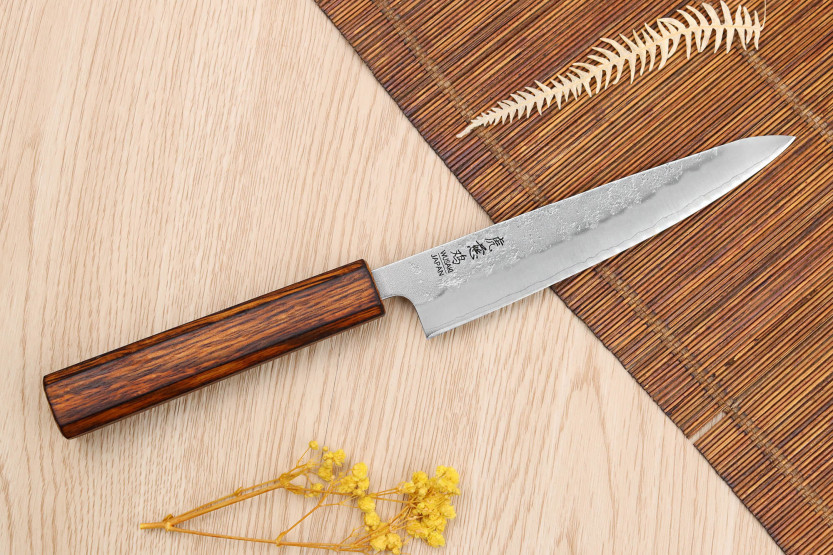
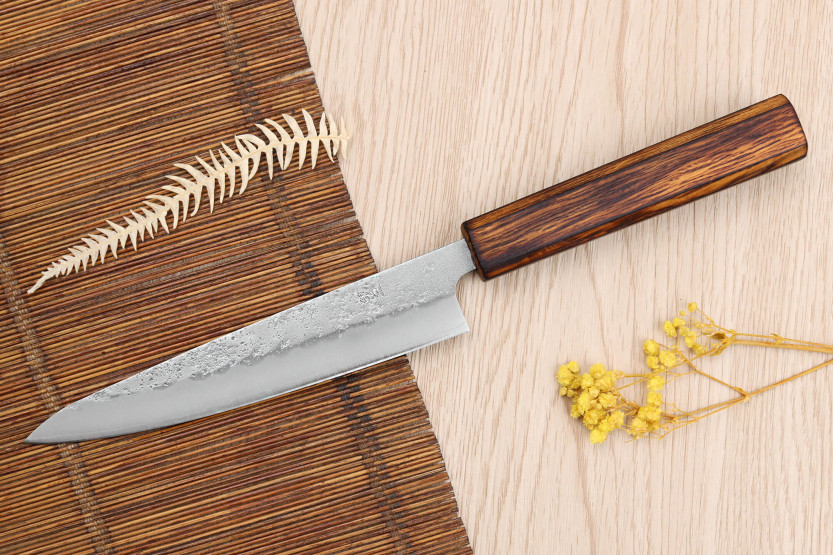
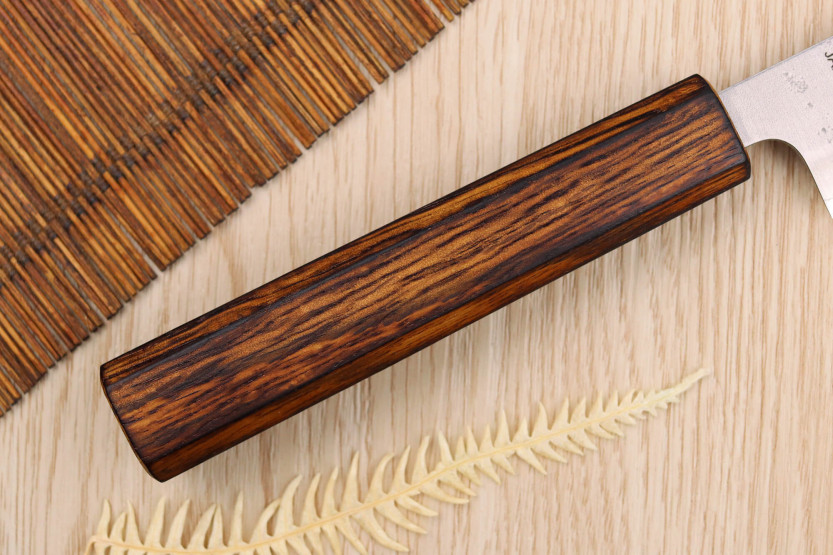
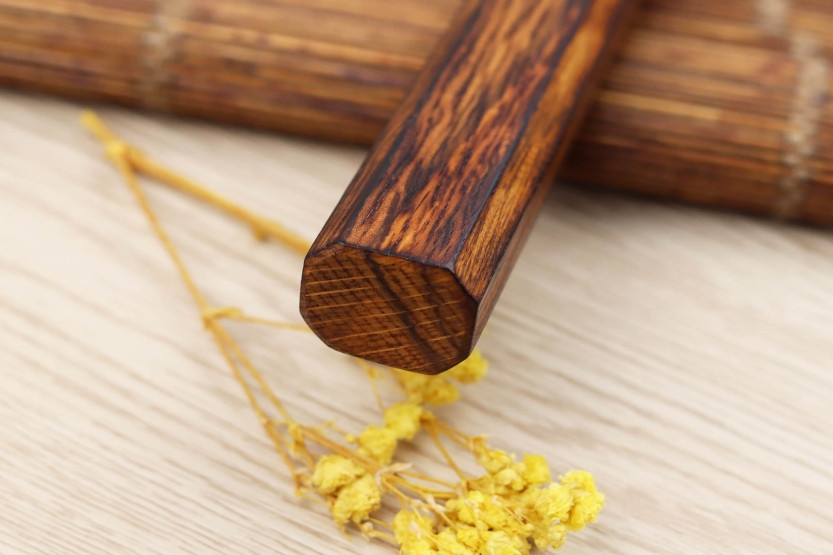
This handcrafted Japanese knife features a handle made from smoked oak wood, a durable, solid, high-density species that is therefore resistant to shock, vibration and humidity. The baikoku oak, which has undergone a smoking process, now has a dark hue that highlights its natural grain, adding character to your Japanese knife while intensifying its authentic appearance.
The handle has been octagonal-cut to provide an ergonomic grip that is suitable for all cooks, whether left- or right-handed. This design makes for perfectly controlled handling, particularly practical for prolonged use!
Wood pulp fills the space between the handle and the blade, making it watertight and hygienic (food cannot get into this small space).
Care :
The knife should be washed by hand (not under running water on the handle), and the dishwasher should be avoided. Also, don't leave the knife to soak in the sink. Then, once washed, you can wipe it with a soft cloth before putting it away, so that no trace of moisture remains. This way, you'll be able to appreciate its original appearance over time.
Come and discover the many ranges of Wusaki knives: you're bound to find one that's just right for you!




 By buying this product you can collect up to