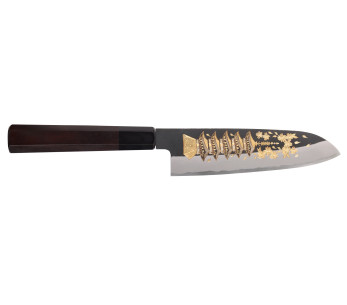
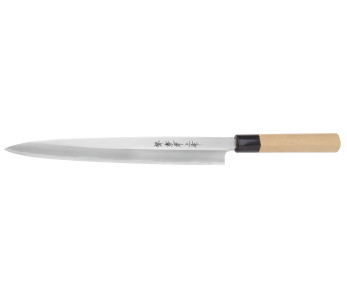
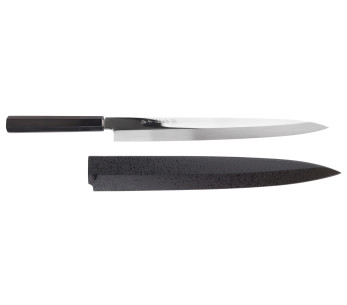
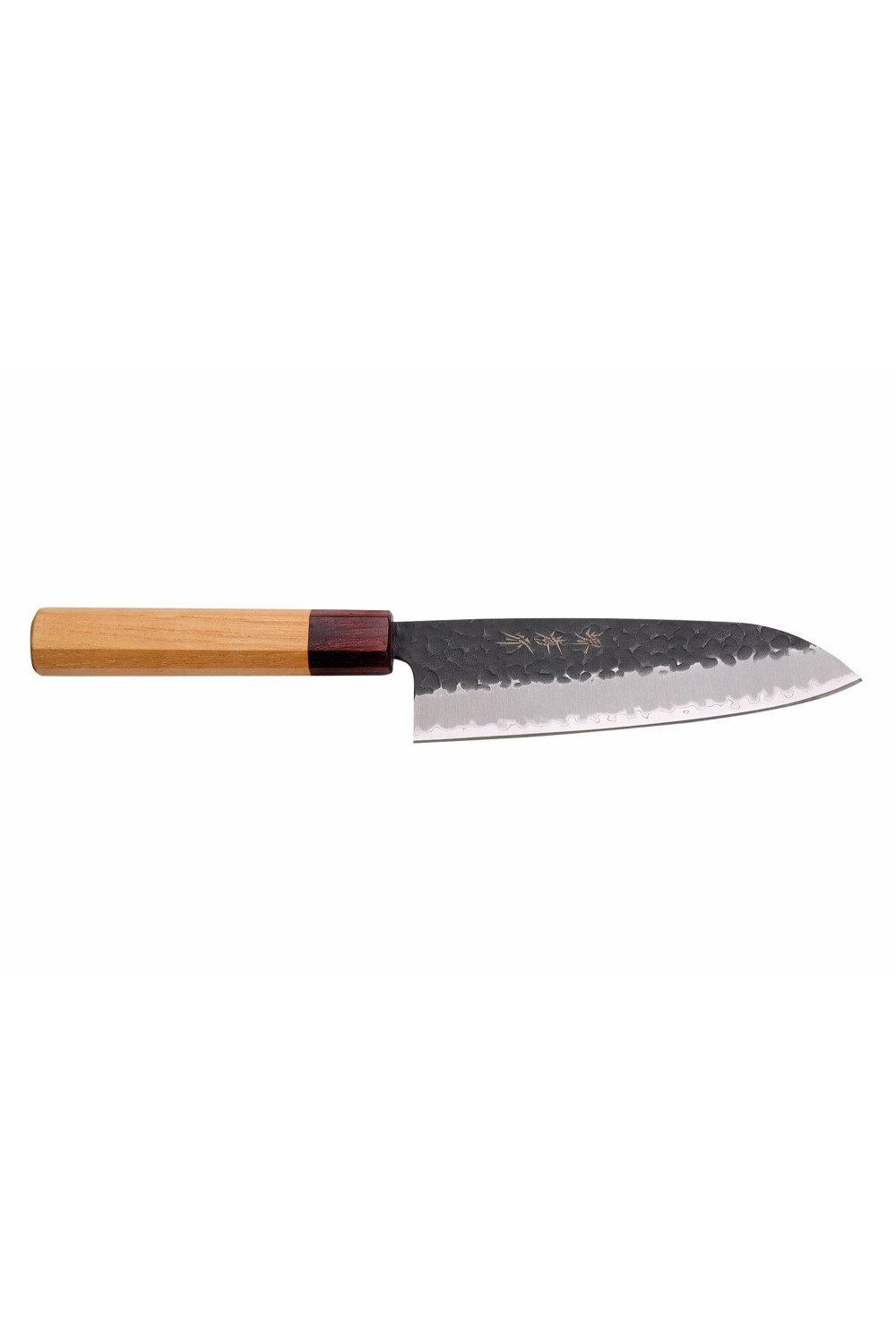
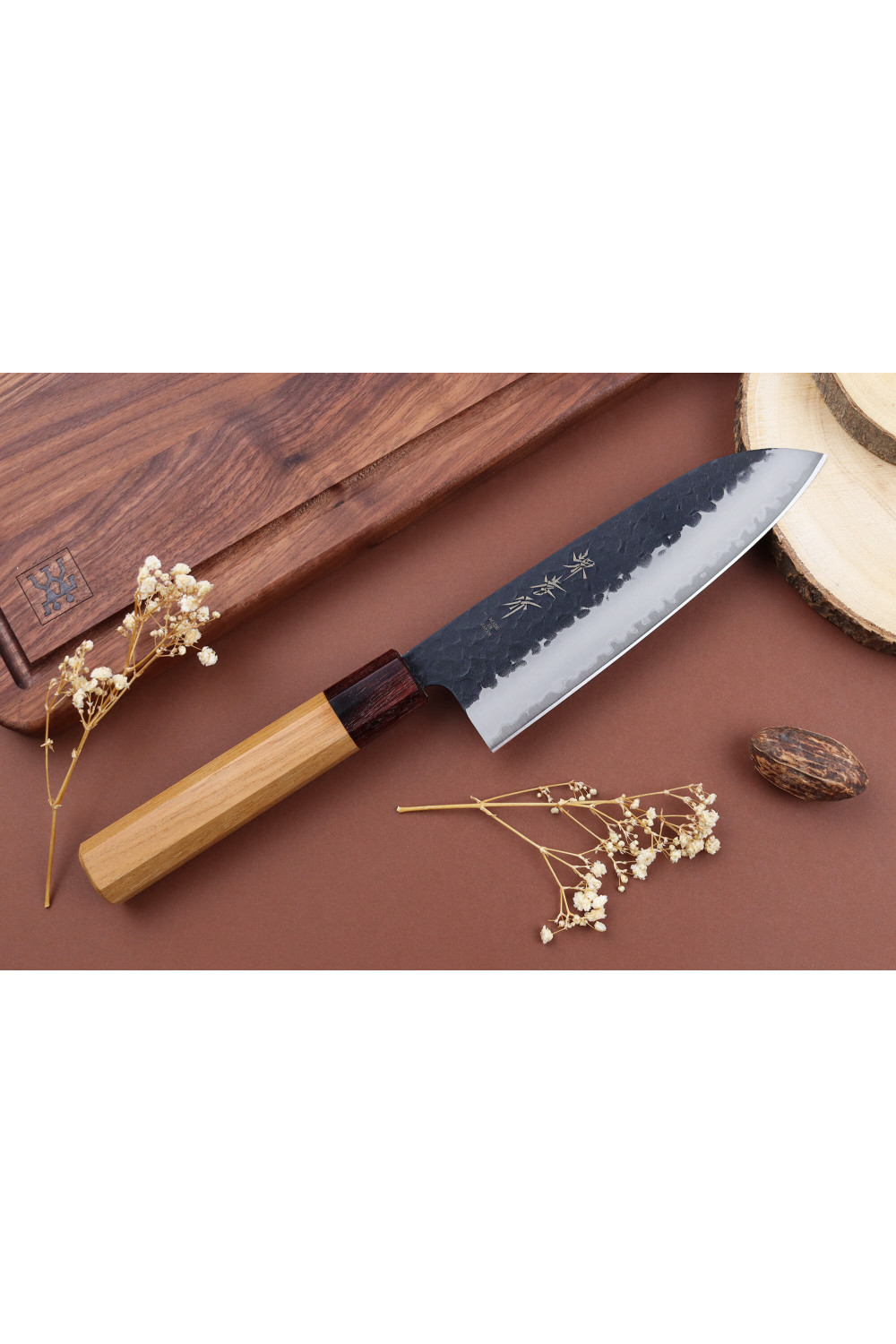
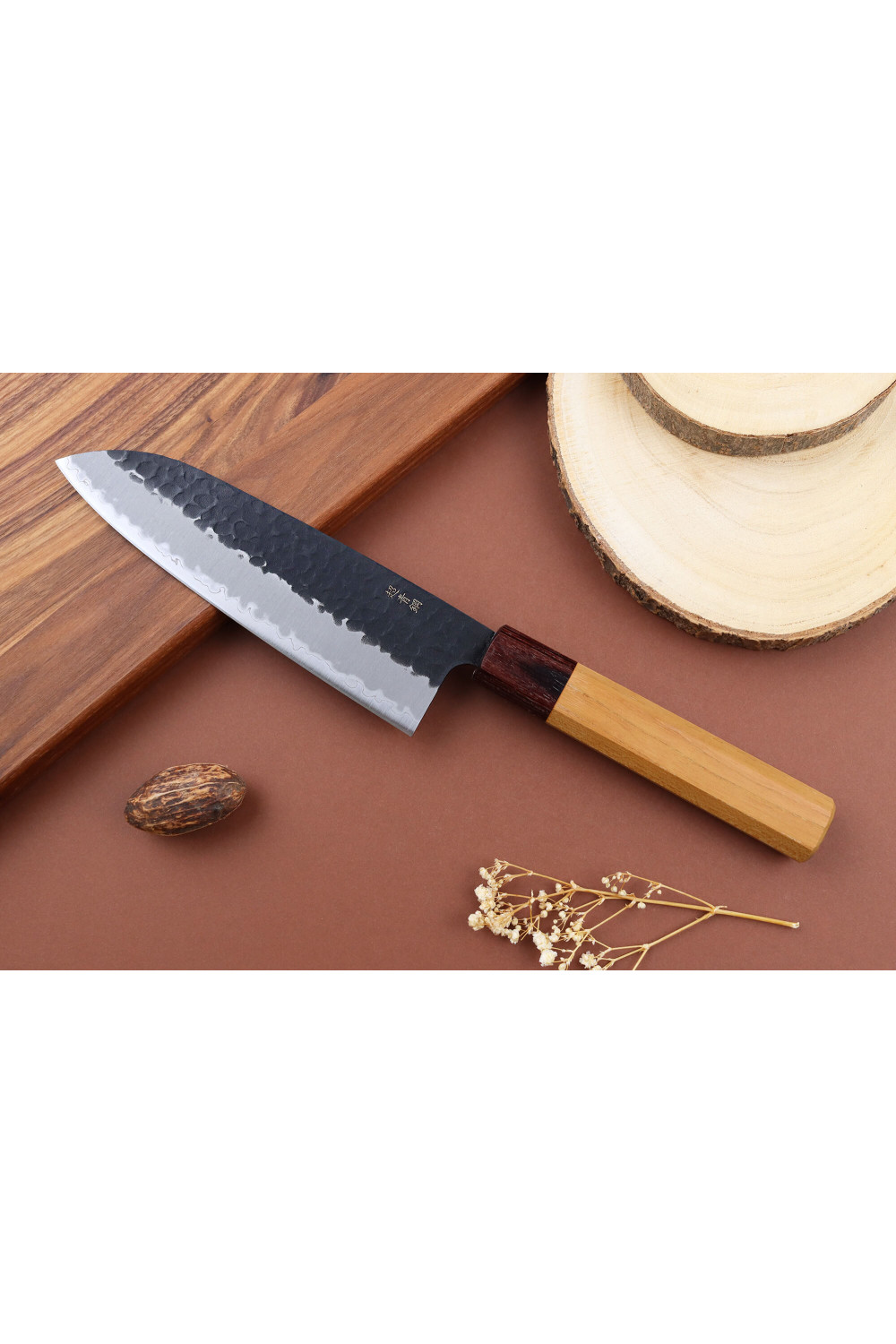
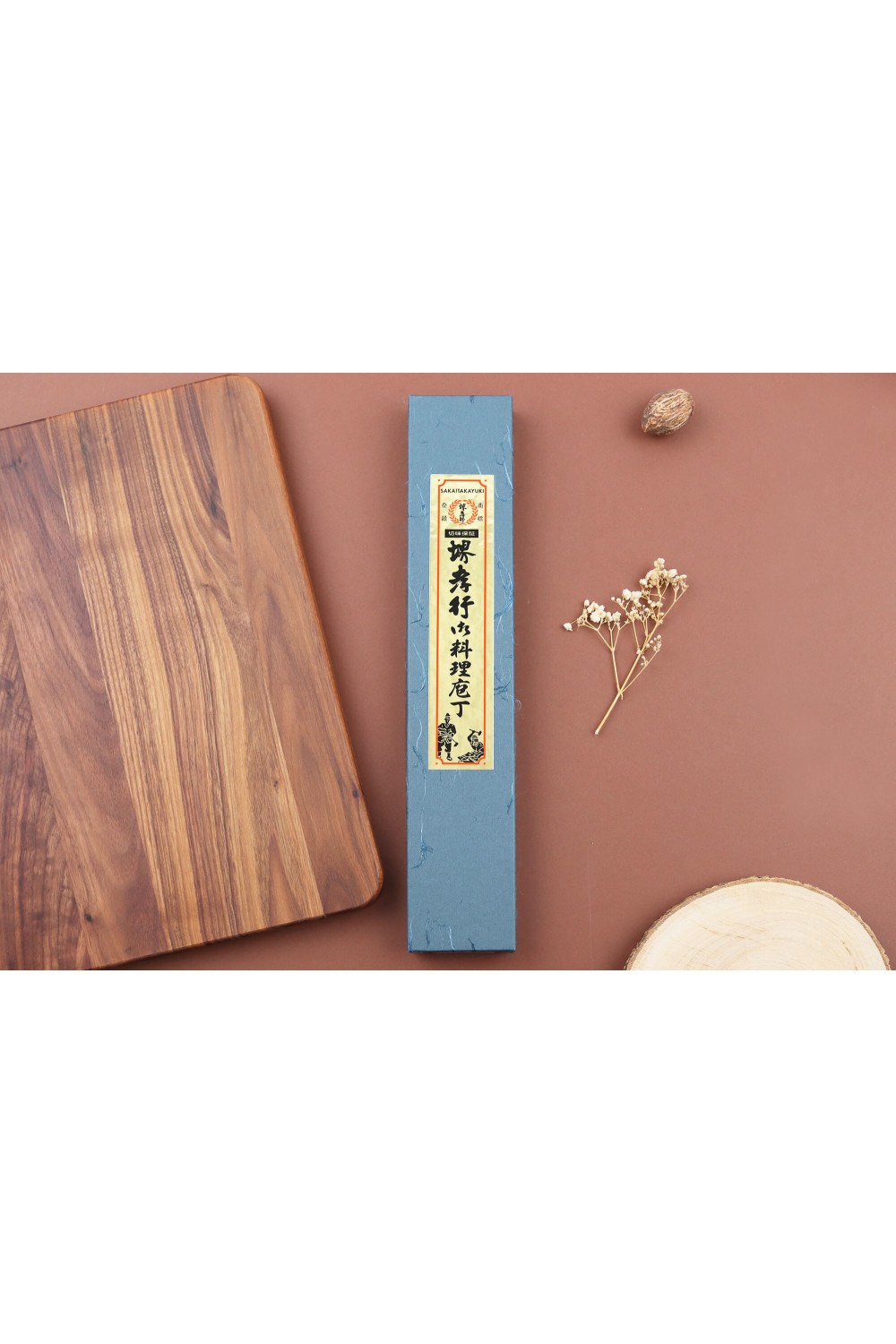
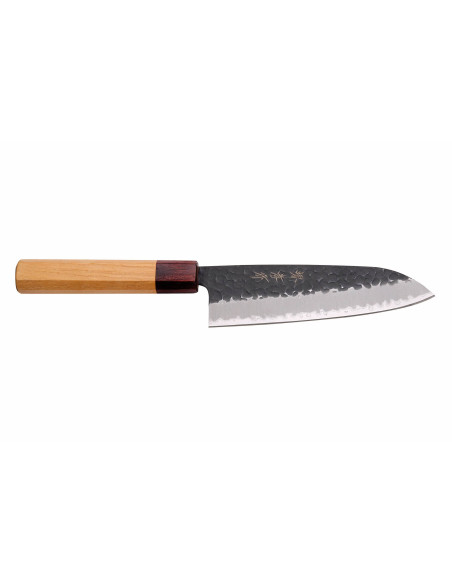
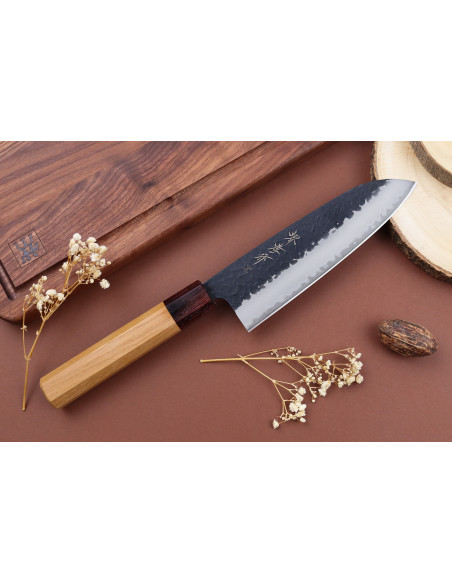
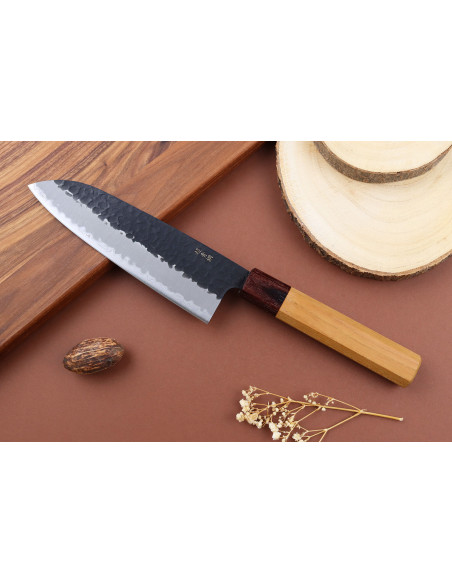
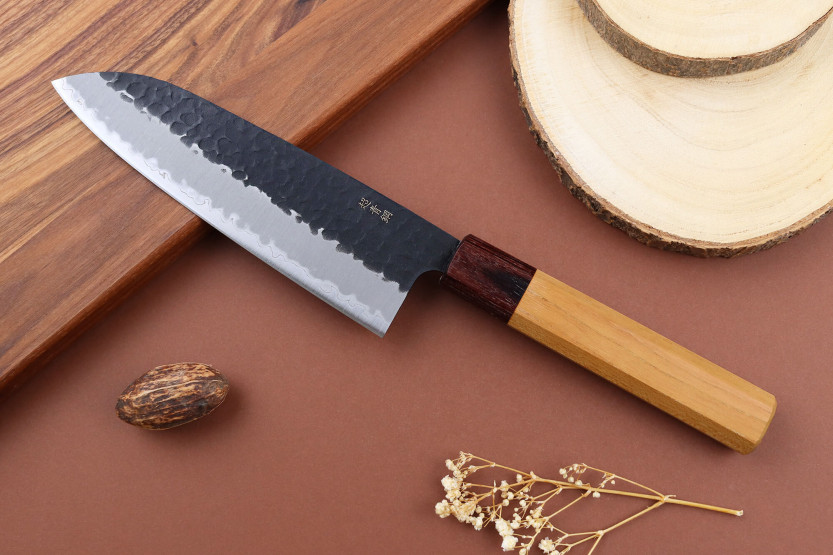
A santoku knife with a high-performance blade
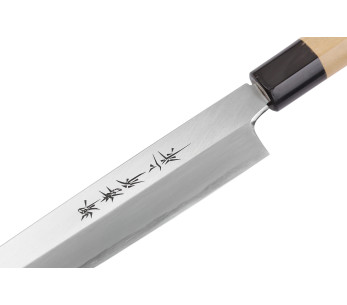
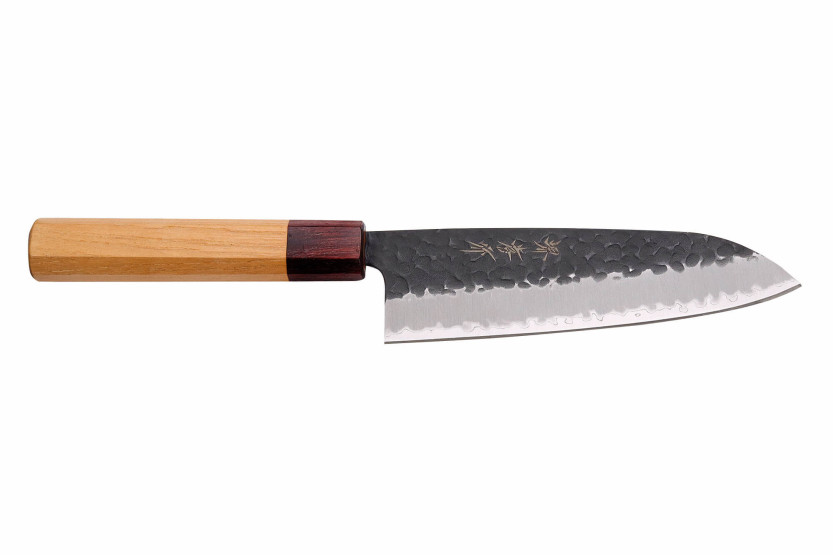
The blade of your Japanese knife is designed with a typically Japanese San Maï (meaning "3 layers") construction. This particular structure consists of forging a core of hard steel, which is then surrounded by a layer of softer steel. This process gives the blade optimum balance and protects its core.
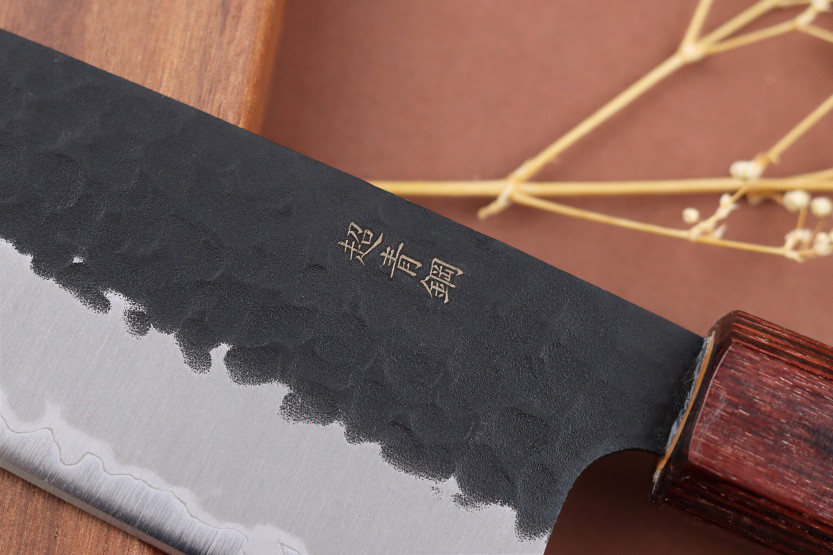
This blade features a core made from Japanese Aogami Super steel ( also known as Blue Super Steel). This alloy is produced by the internationally renowned steelmaker Hitachi.
Aogami Super alloy gives your knives a high-performance cutting edge! It has a high carbon content of up to 1.5% (the average for Western knives is 0.5%), ensuring high hardness. On the Rockwell scale, its hardness is 65HRC, and high hardness means a long-lasting cutting edge. Your Japanese knife has a cutting edge that is effective over the long term. This is very practical, as you can space out sharpening sessions while maintaining high cutting quality. When it comes to sharpening, Aogami steel is pleasant to work with.
Next, a layer ofstainless steel covers the core to form the 2 outer layers. In this way, they protect the core of the blade, but also balance its hardness so that it is less brittle in the event of micro-shocks.
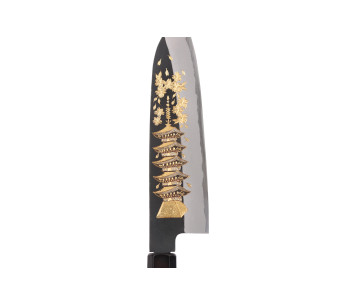
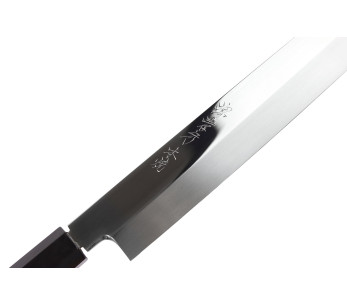
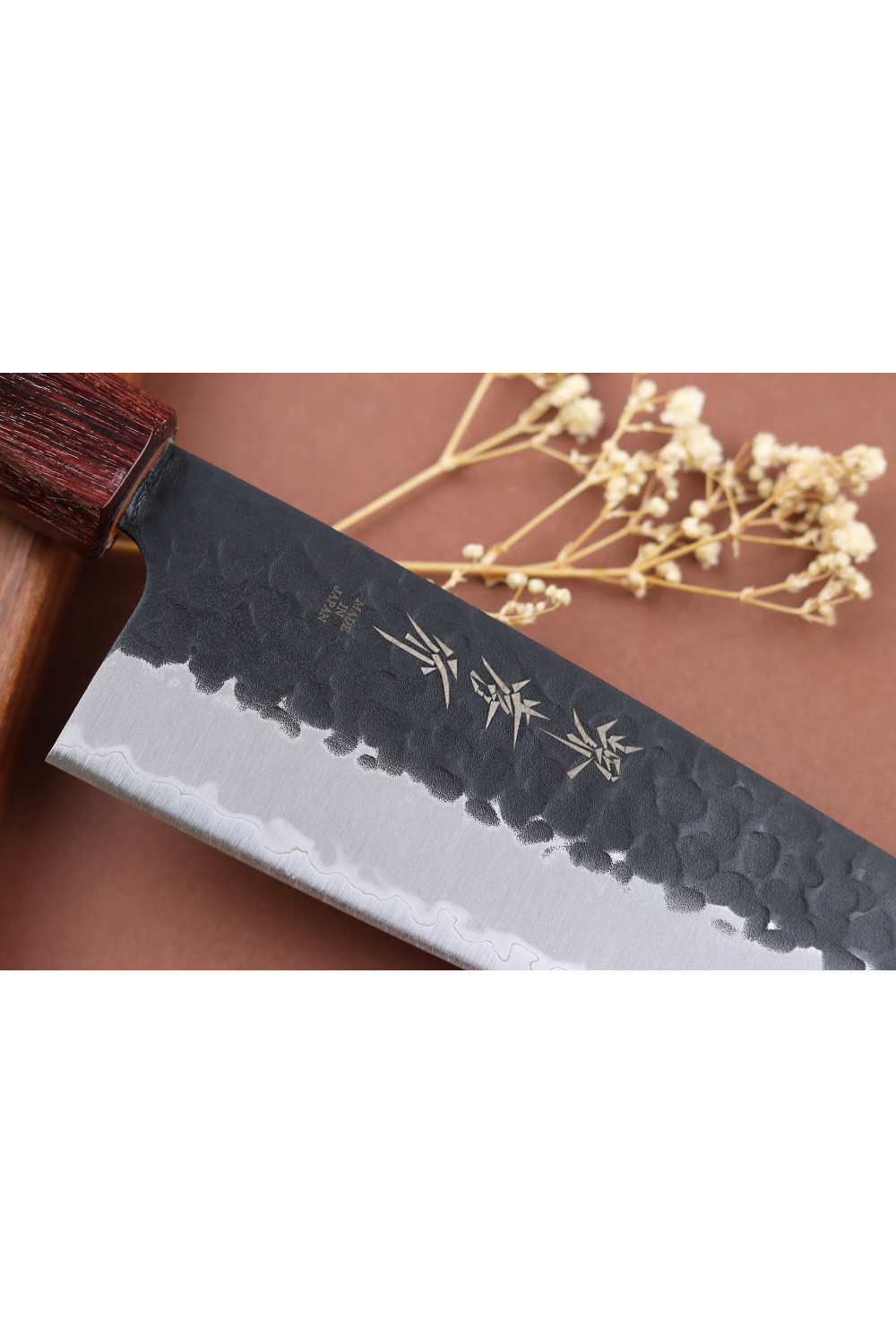
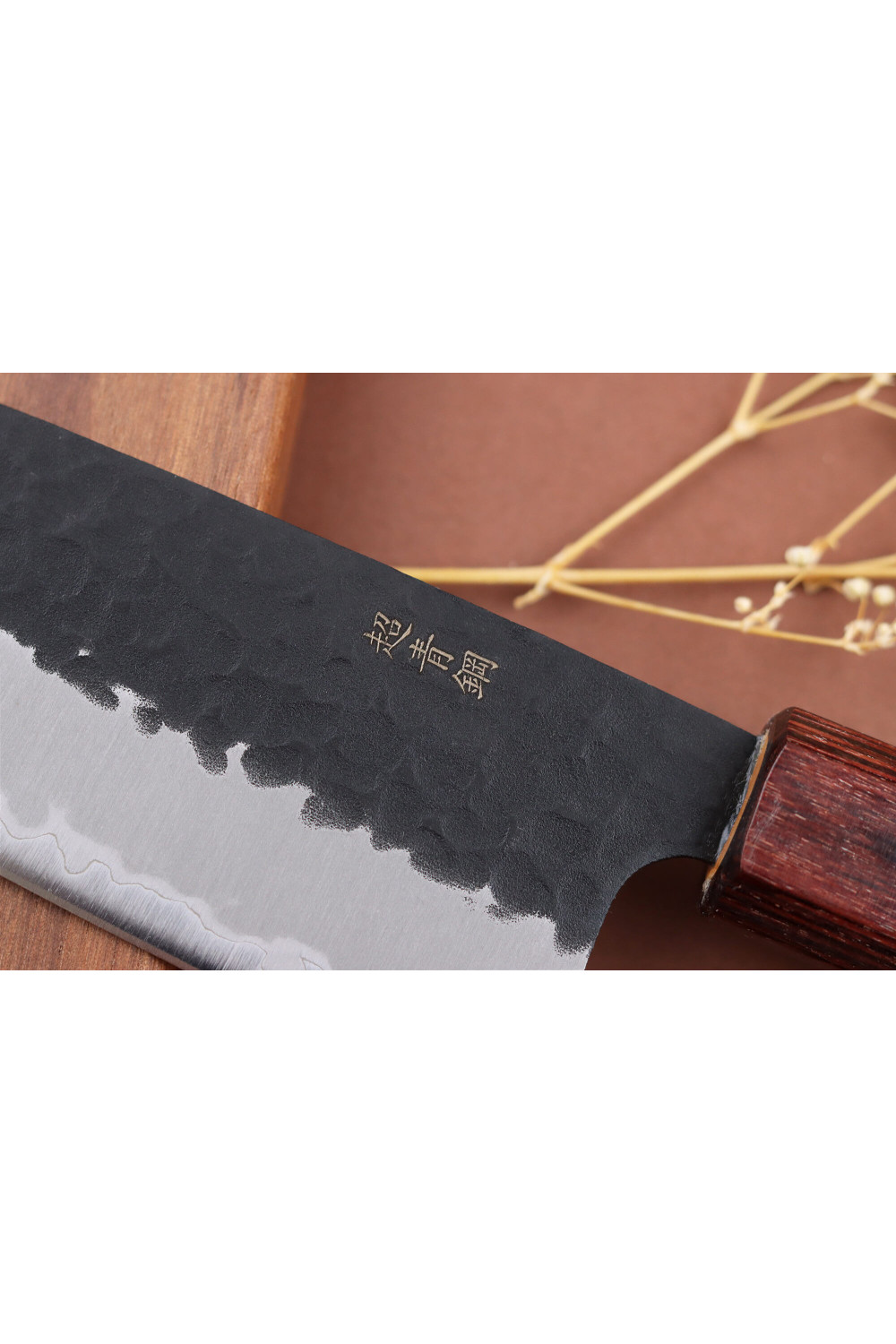
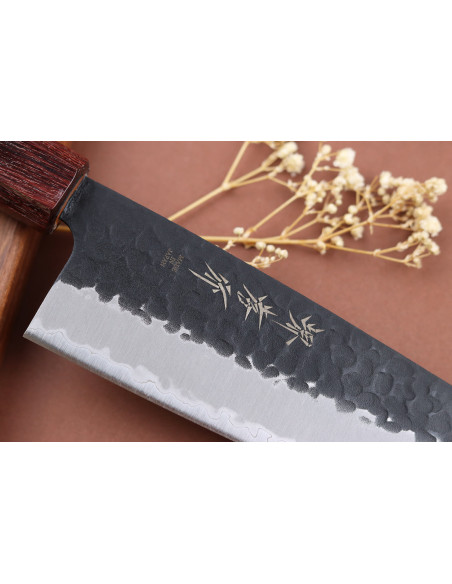
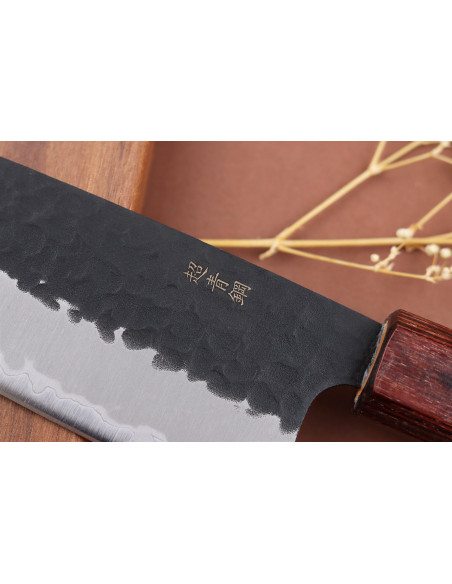
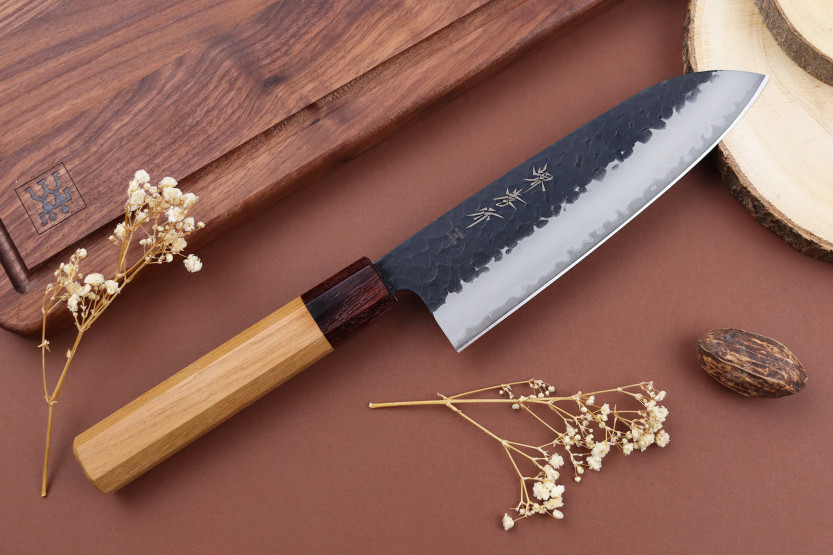
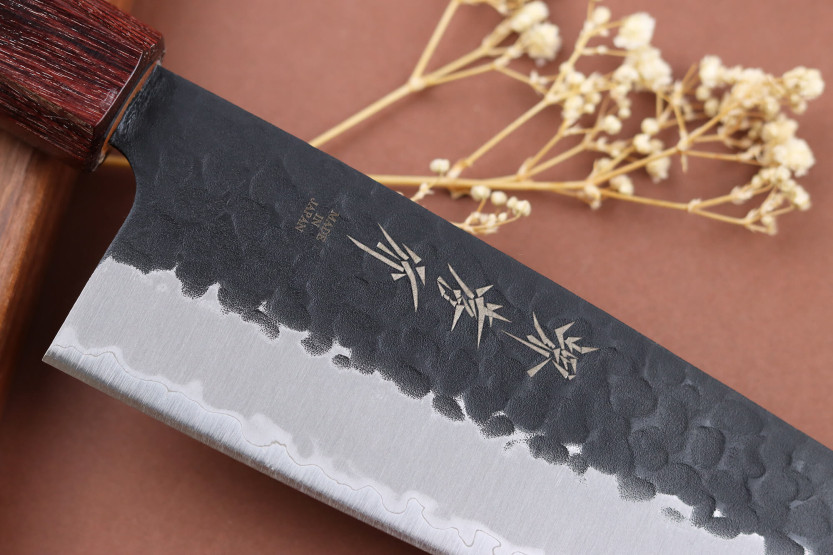
The superimposition of the different steel layers can be seen all along the blade. The different steels create a fine, randomly patterned wave that is unique to each piece!
Finally, the blade has a rough forged finish to add a touch of authenticity to your Japanese knife. It has also been hammered to give it even more character!
The Sakai Takayuki knife in Japanese wood
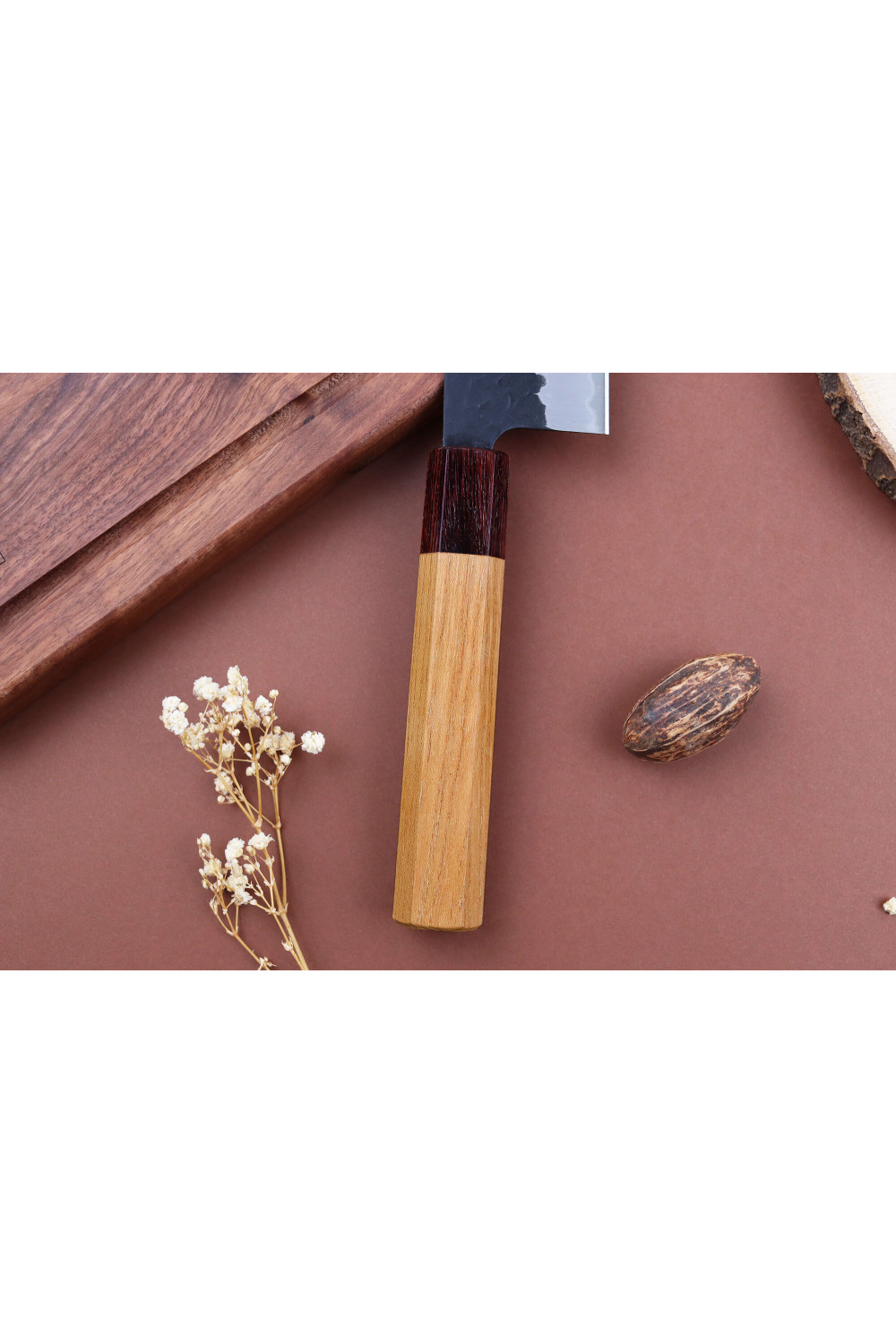
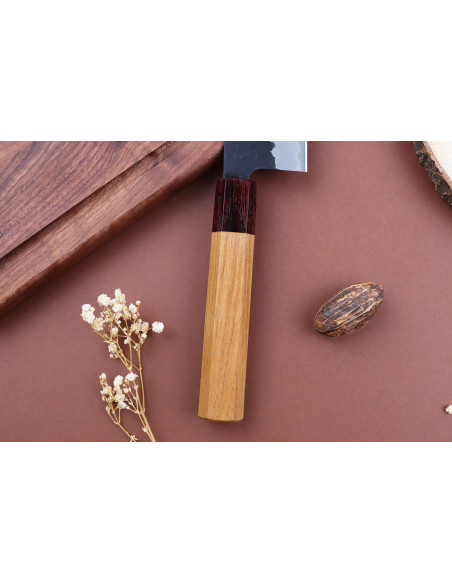
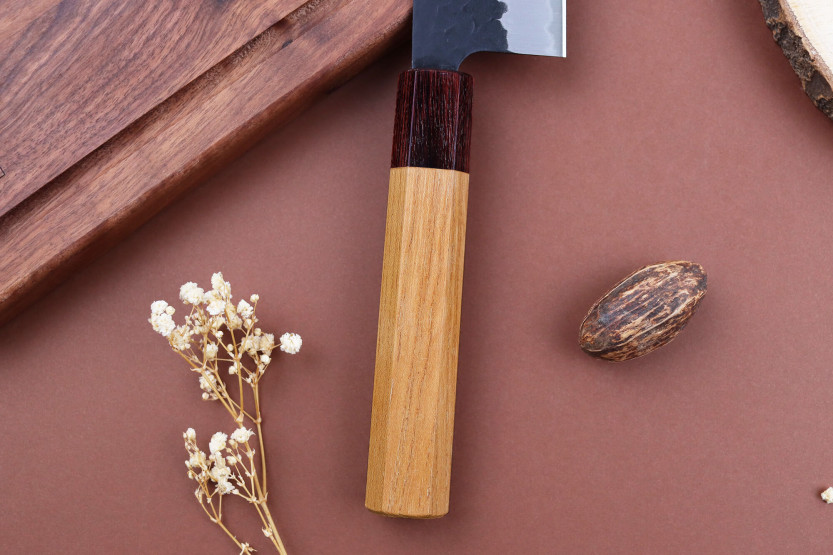
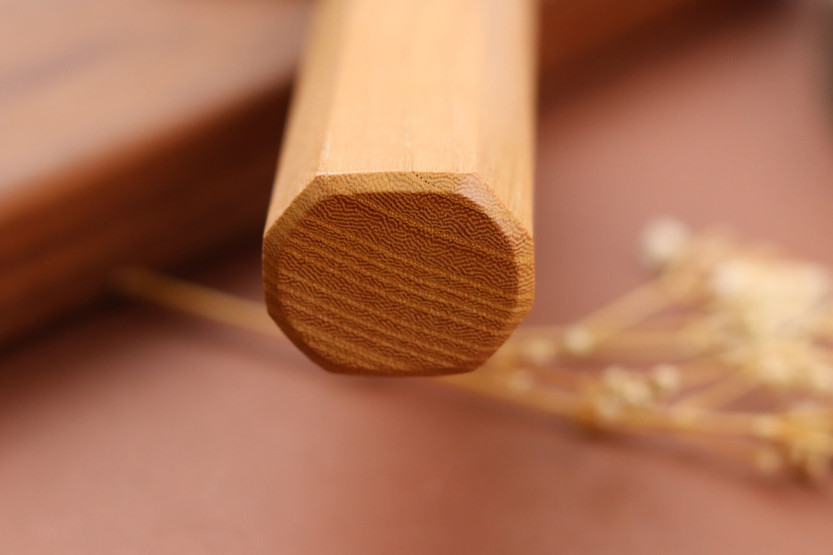
This santoku knife features a handle made from Japanese zelkova wood, a solid species similar to elm. This wood is often used to make luxury furniture, and is highly appreciated in Japan, where it decorates many parks.
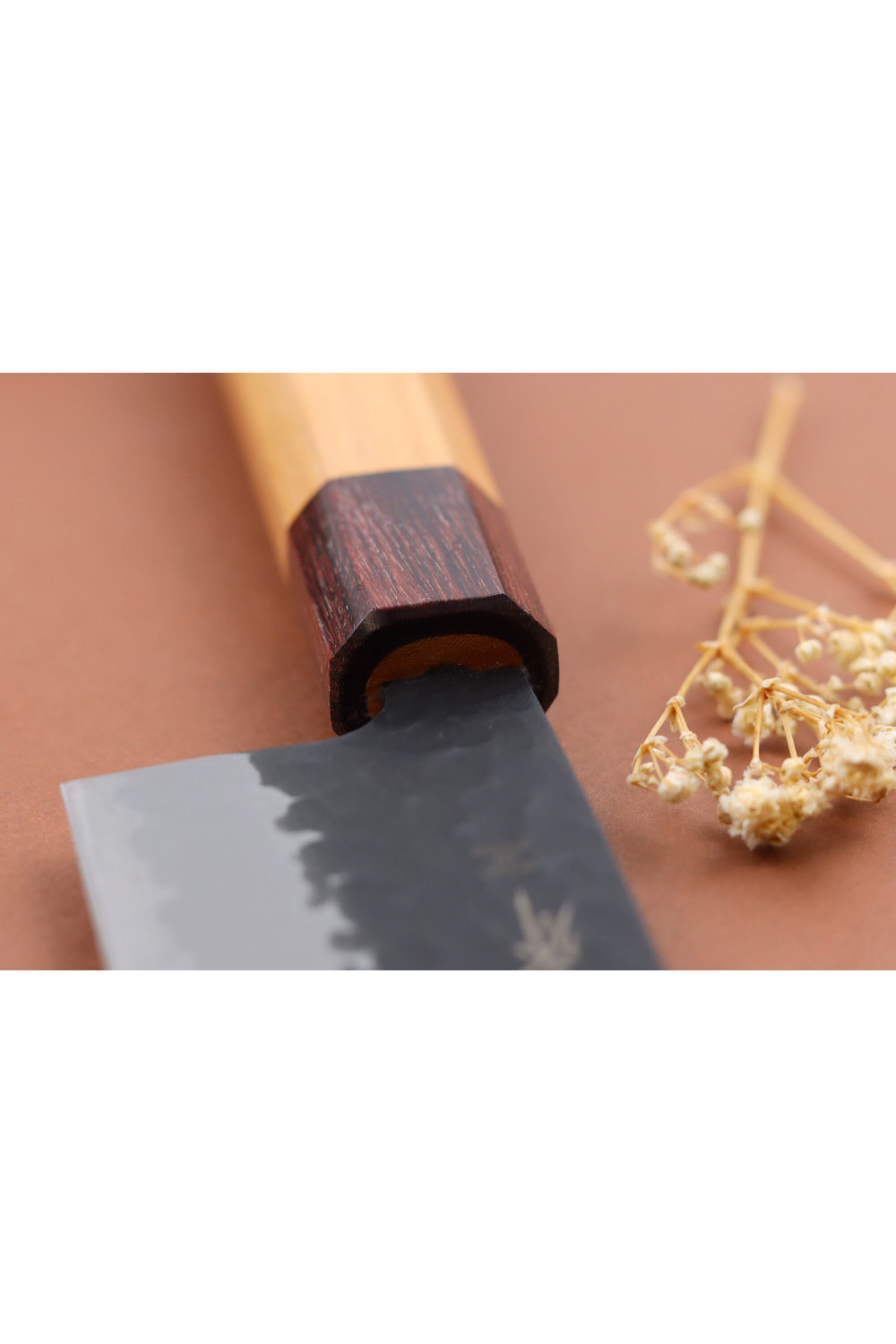
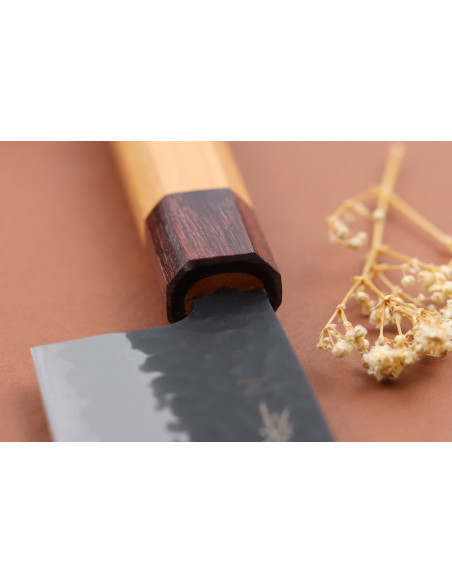
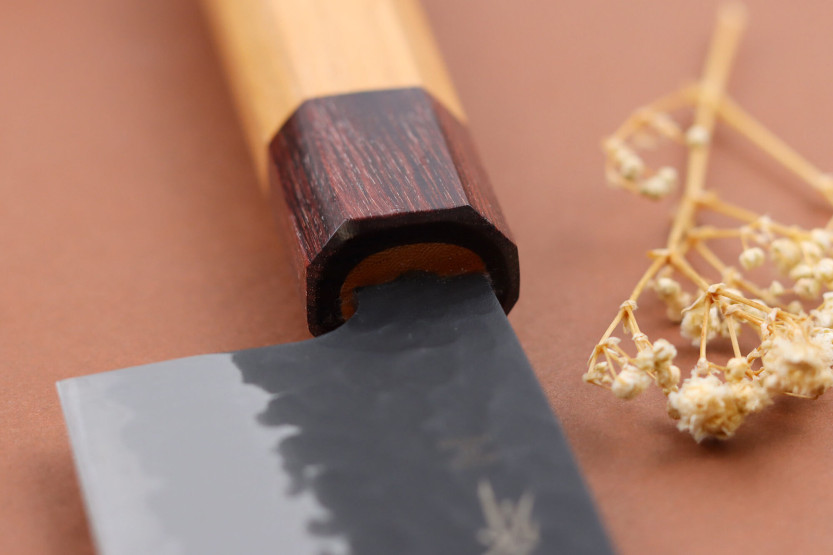
This handle also features a bolster made from pakka wood, a composite material made from resin and laminated wood. The result is natural, with wood-like veins forming. The handle is contrasted between the light shade of zelkova and the dark shade of pakka for a very pleasing look.
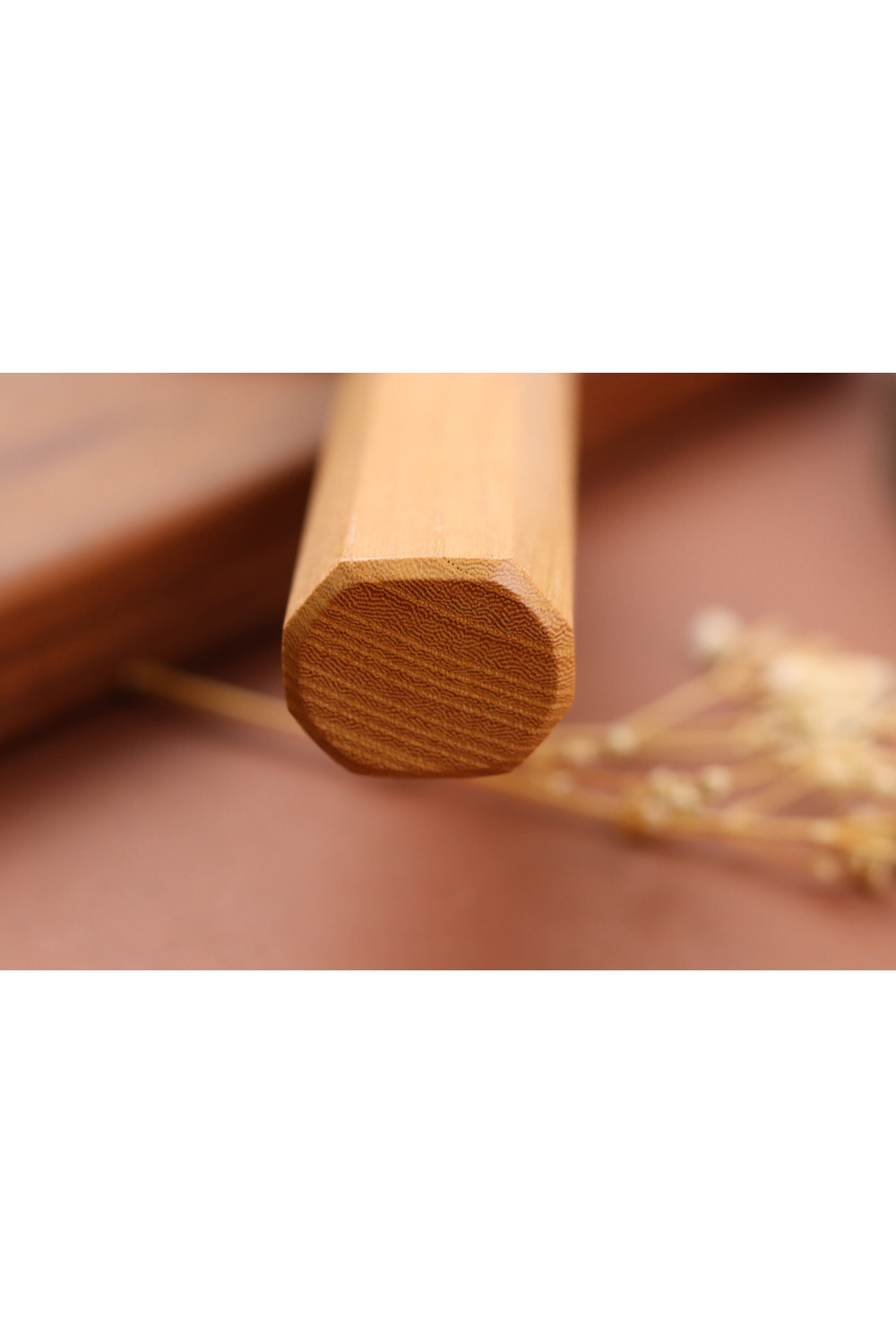
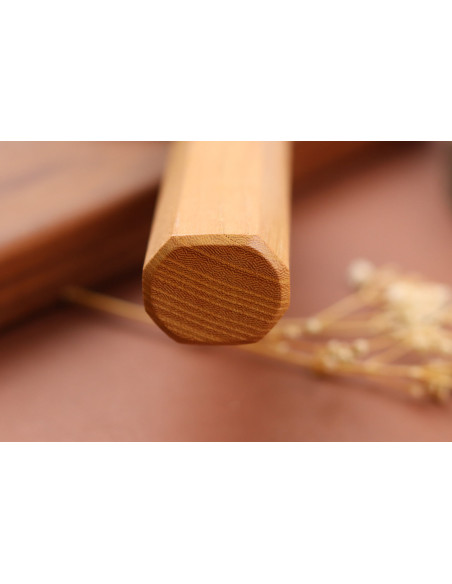
The octagonal handle of this Sakai Takayuki knife has 8 facets, making it ideal for both right- and left-handed cooks! Finally, wood paste has been added where the blade joins the handle to fill the gap and make the whole unit watertight.
Thissantoku knife is a multi-purpose model: make all kinds of cuts! It's the Japanese equivalent of our Western chef's knife. Use it to cut fruit, vegetables, meat and fish. Be careful not to use it on hard foods such as squash, bones, frozen foods, etc.
Founded in the 50s, Sakai Takayuki is a Japanese company based in the town of Sakai, from which it takes its name. With its many years of experience in the cutlery industry, this company has been able to appropriate the techniques inherited from the blacksmiths of yesteryear to create new ones, still in use today. Sakai Takayuki now offers you knives that combine modernity and Japanese tradition, for top-quality results.
How to care for your carbon knife
This Japanese knife should only be washed by hand with a non-abrasive sponge and mild detergent. It should not be left to soak in the sink or put in the dishwasher, as its high carbon content makes it oxidizable. Avoid getting the handle wet. Once washed, dry your knife immediately and store it in a dry, moisture-free place.
Over time, the blade may change color slightly: this is normal! It's the carbon that reacts to the humidity in the air and the acidity of the food you're cutting. That's why we recommend that you wipe your knife dry between cuts.
You can also use vegetable oil to protect the blade when not in use.
Find the rest of the Sakai Takayuki range in Aogami Super on KnifeLeader.eu!




 By buying this product you can collect up to