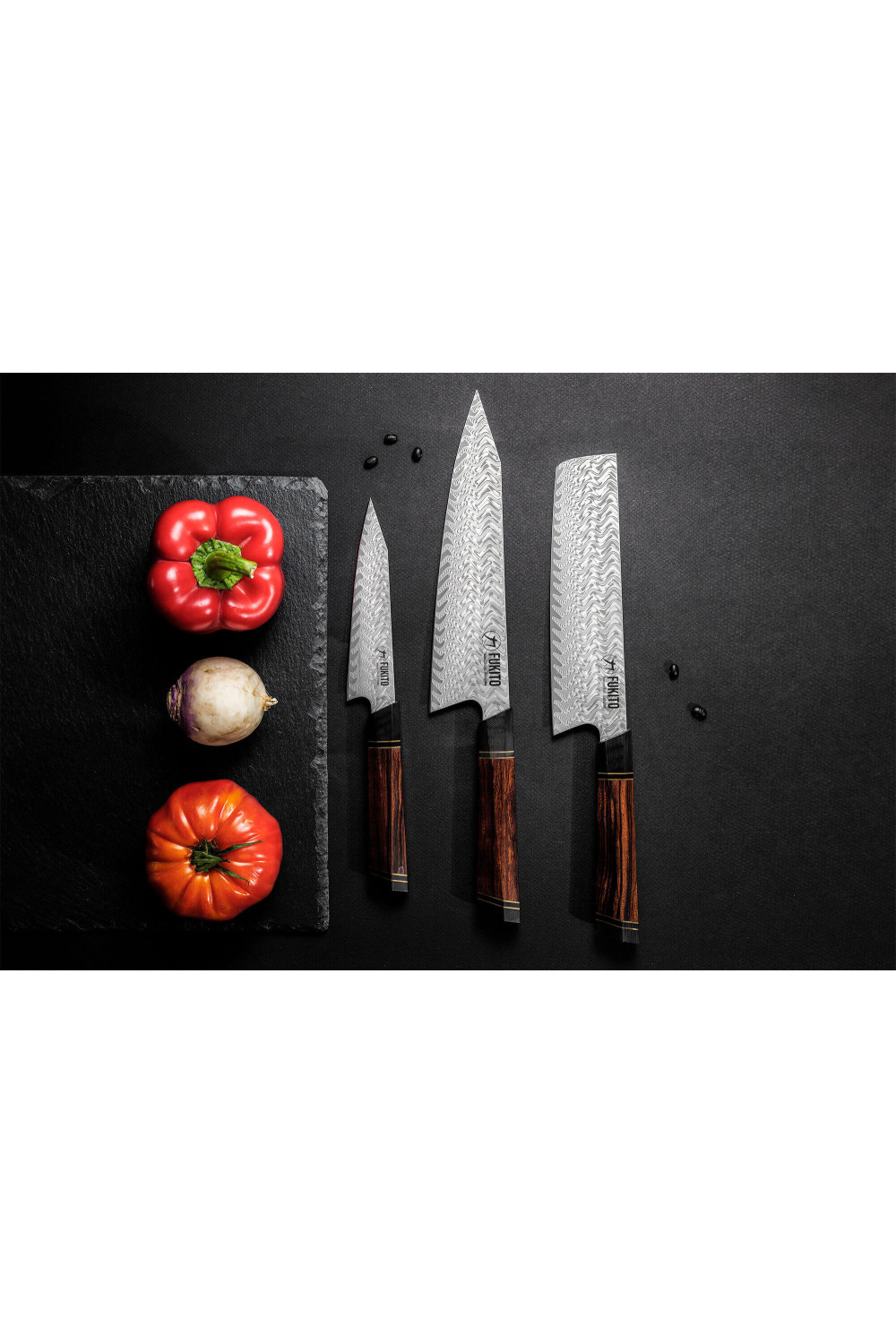
Fukito kitchen knives perfectly combine the practical with the pleasurable. In fact, they don't compromise on ergonomics, performance or visual appeal! To find out a little more, Fukito knives are made in Western China, in the province of Guangdong. This specific region has been a mecca for cutlery production for decades. Each Fukito knife is designed using techniques and materials that meet the manufacturing standards of French food industry professionals.
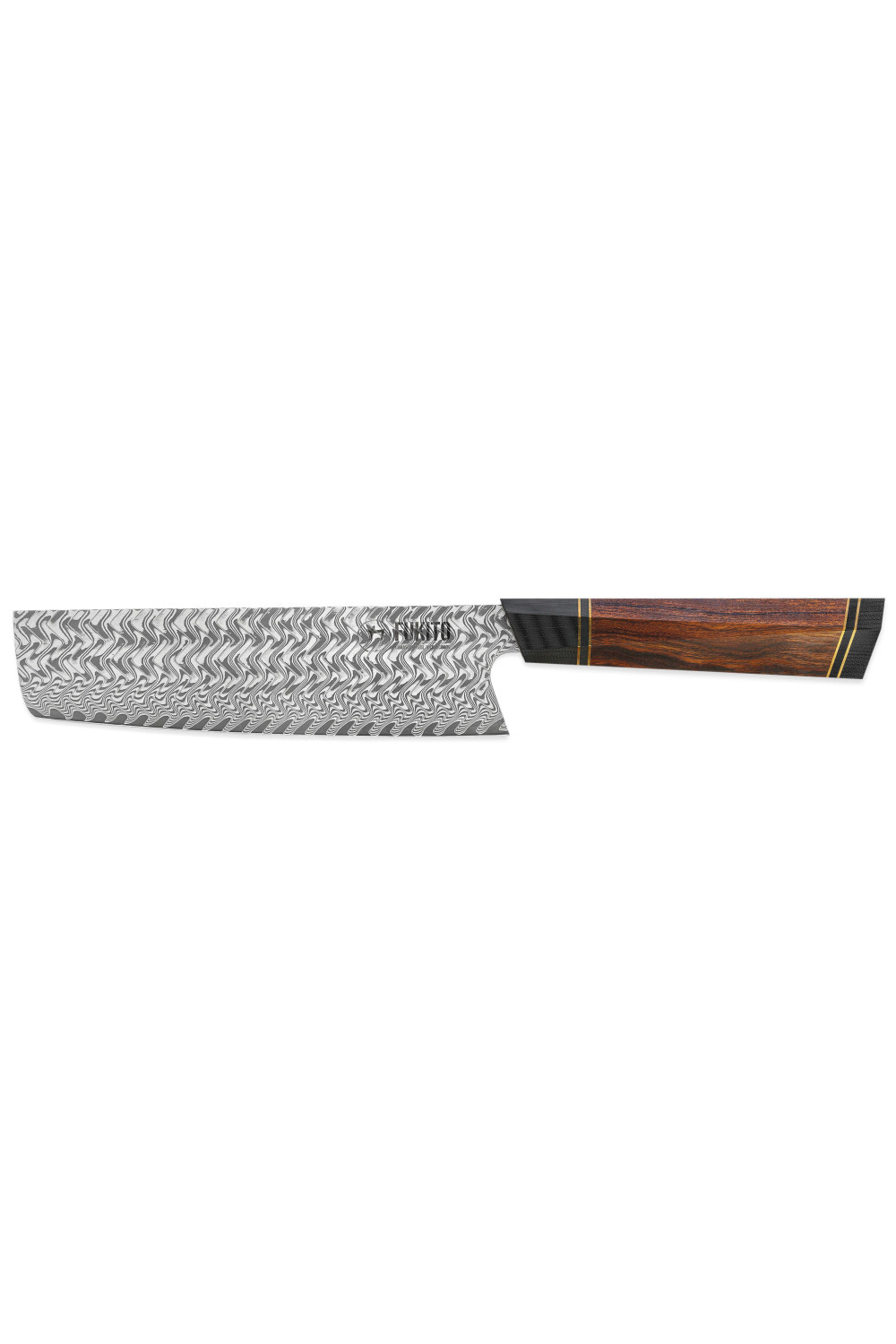
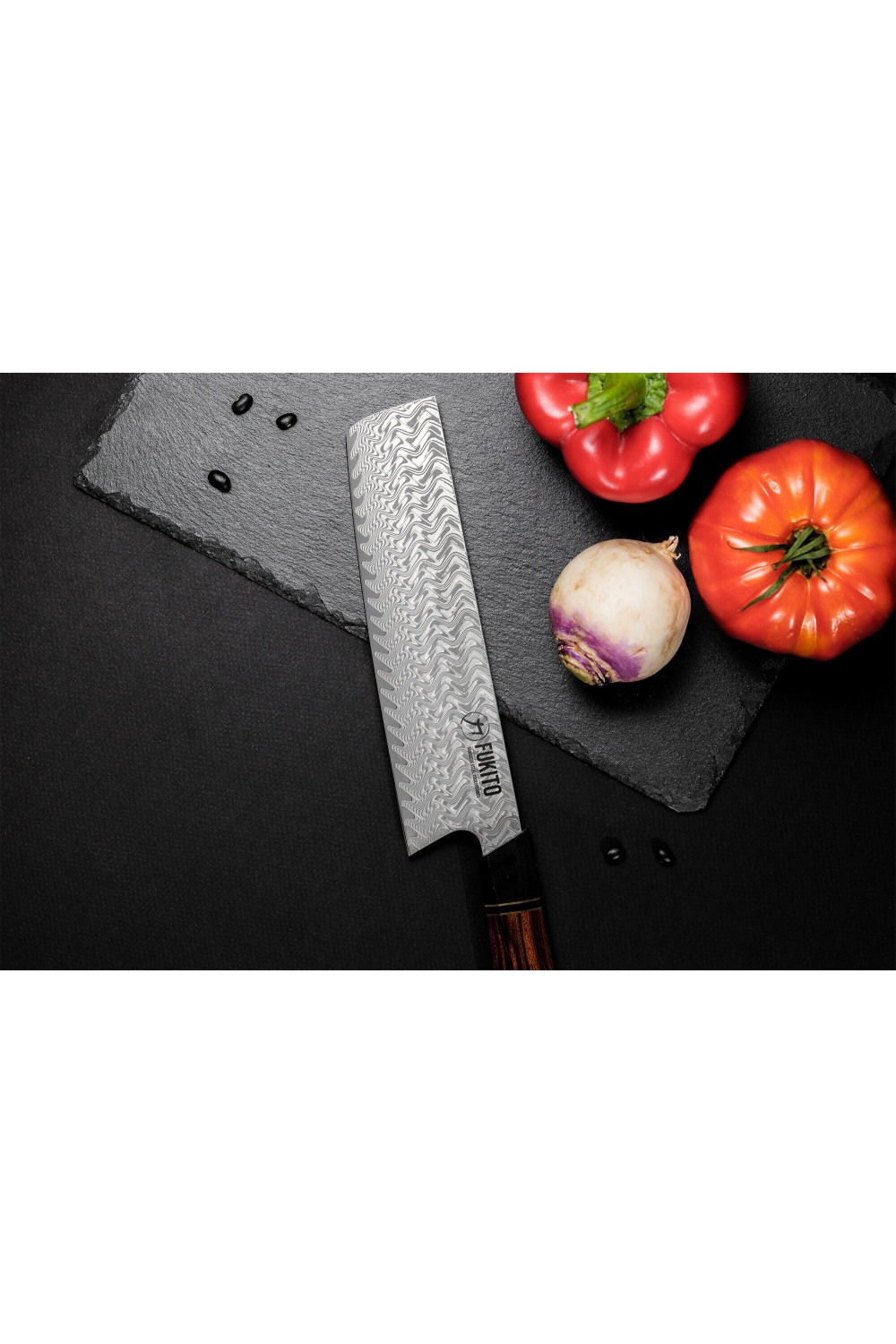
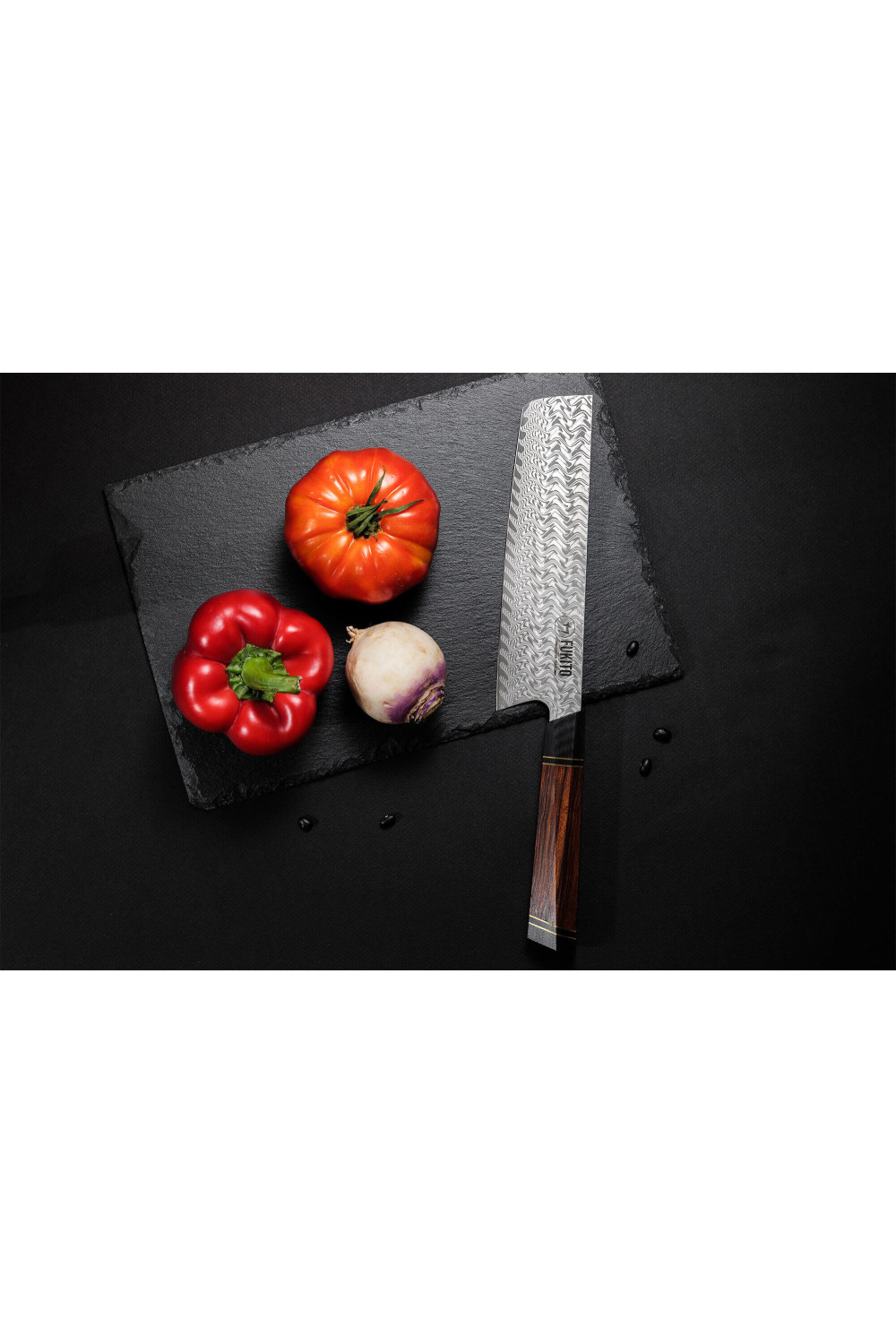
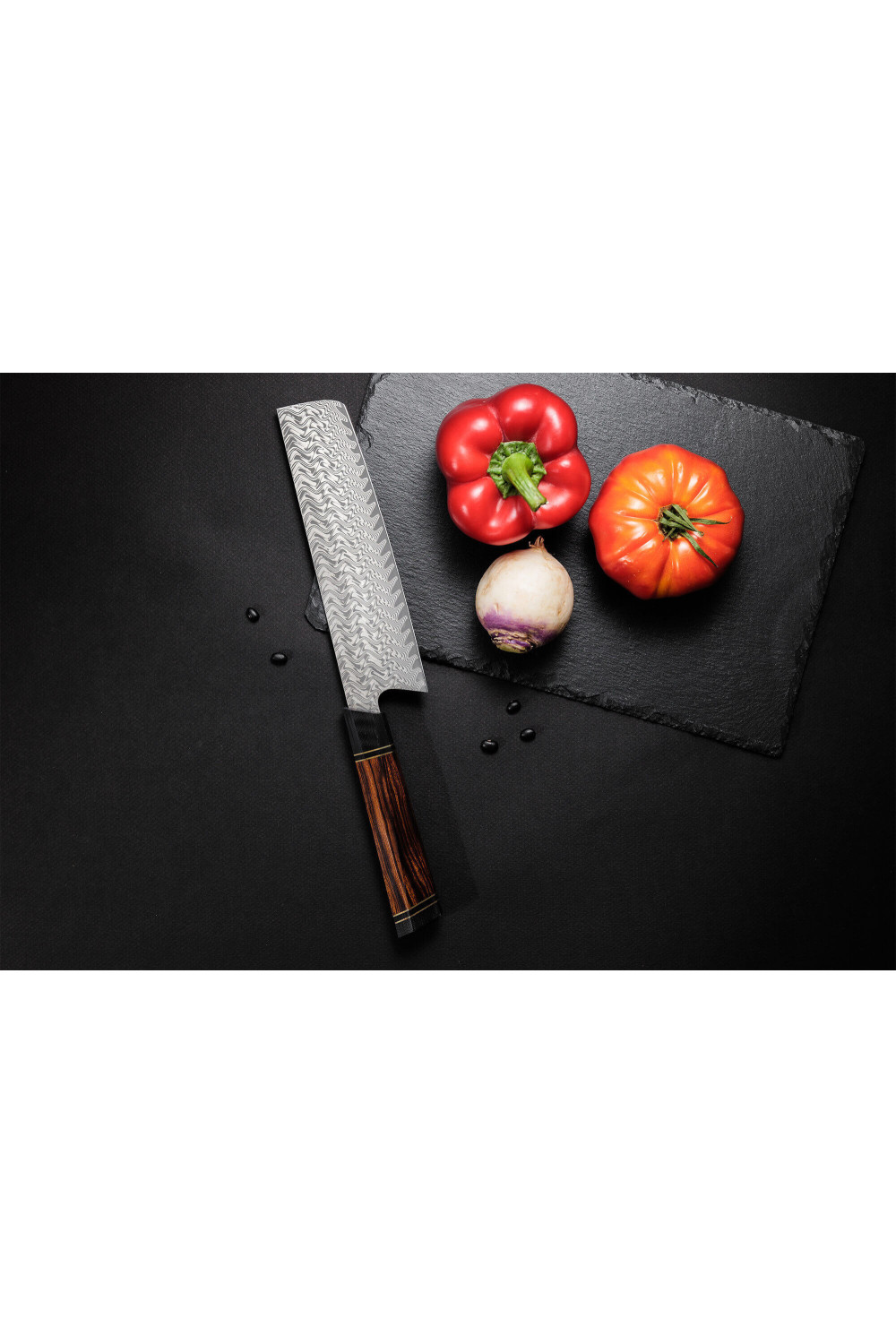
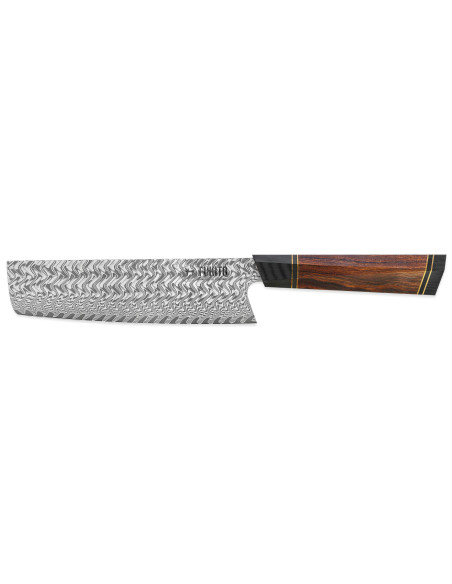
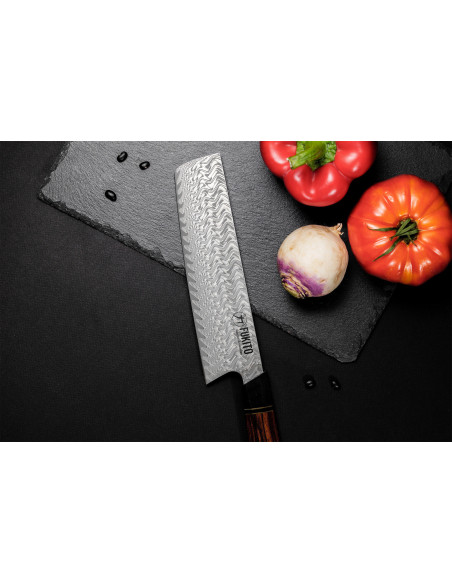
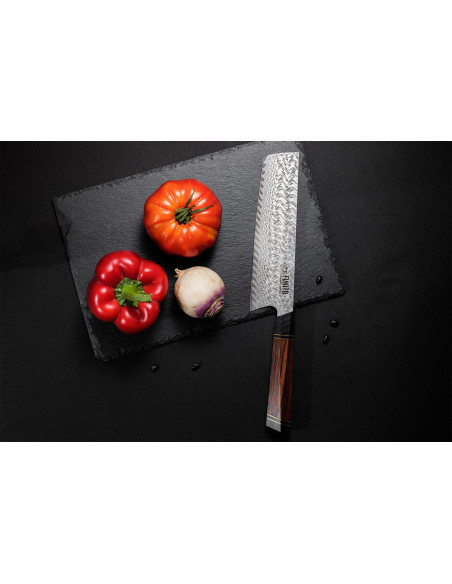
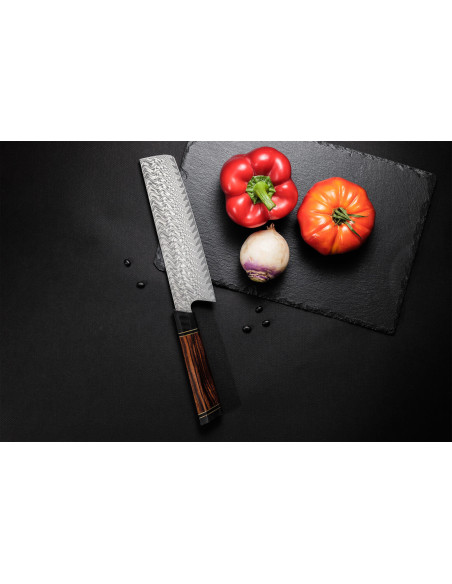
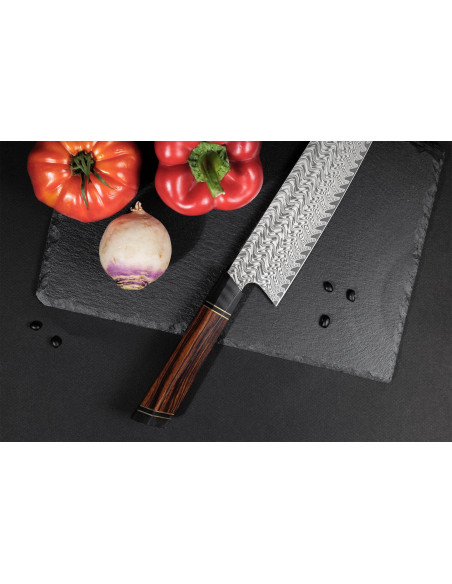
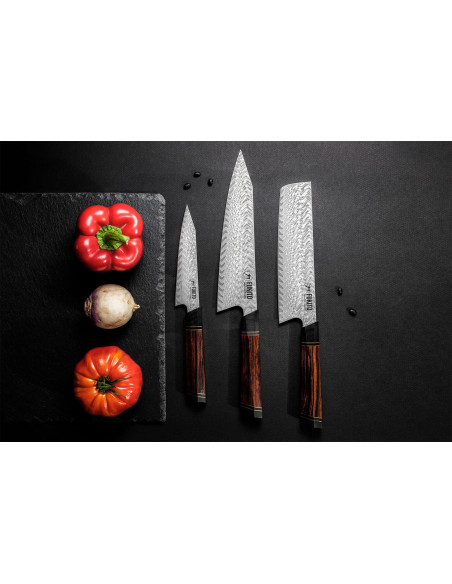
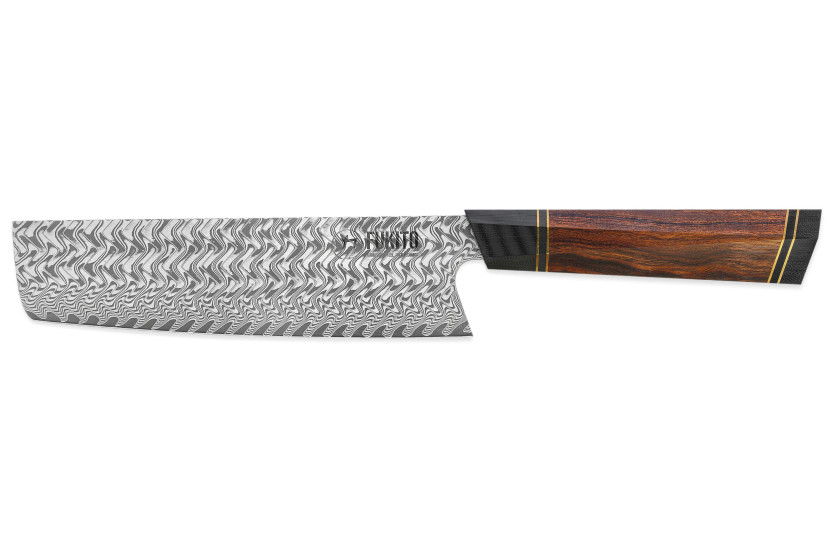
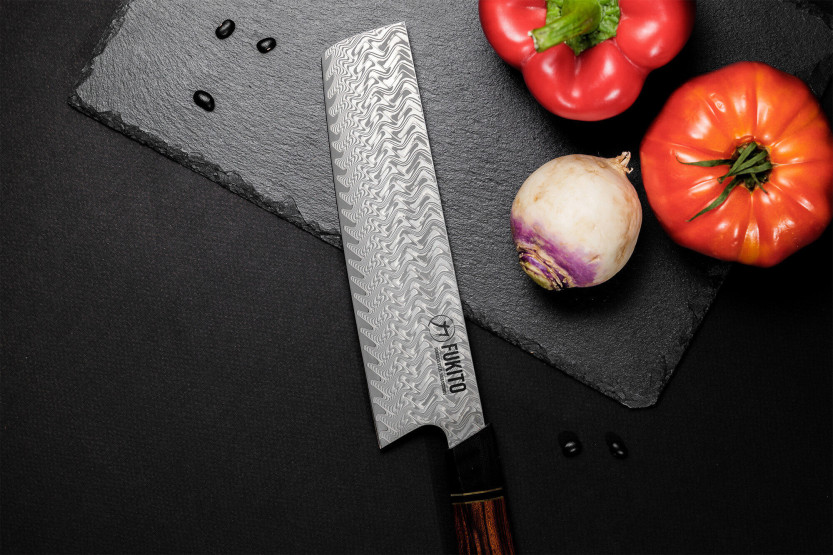
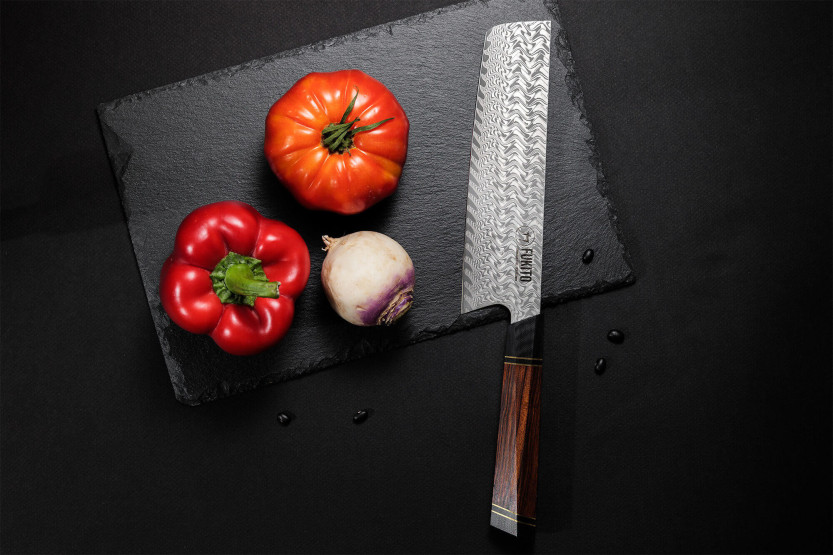
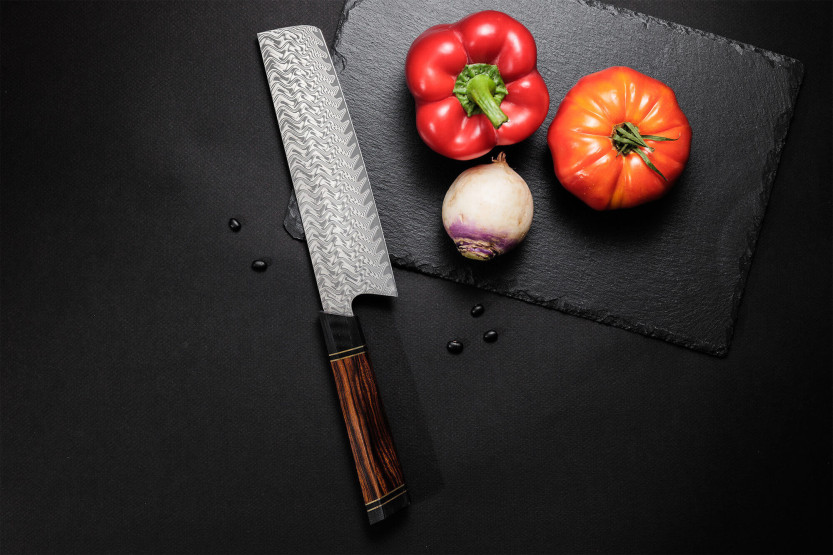
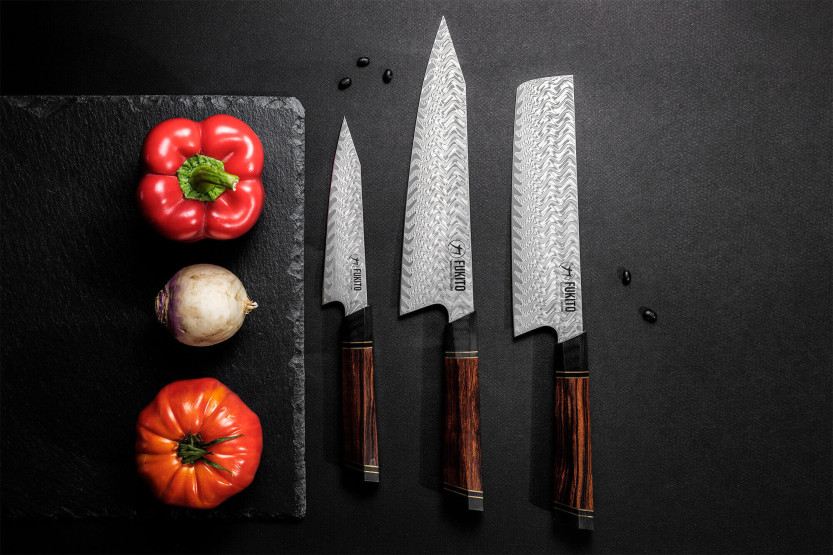
The Fukito Desert Damascusnakiri knife kiristuke knife features a rectangular blade. This shape comes straight from Japan, where the knife is used to cut vegetables with speed and precision. What's more, once the vegetables have been cut, you can use the blade as a small shovel to gently transfer the food from the board to a container (a Frying pan, for example).
The blade:
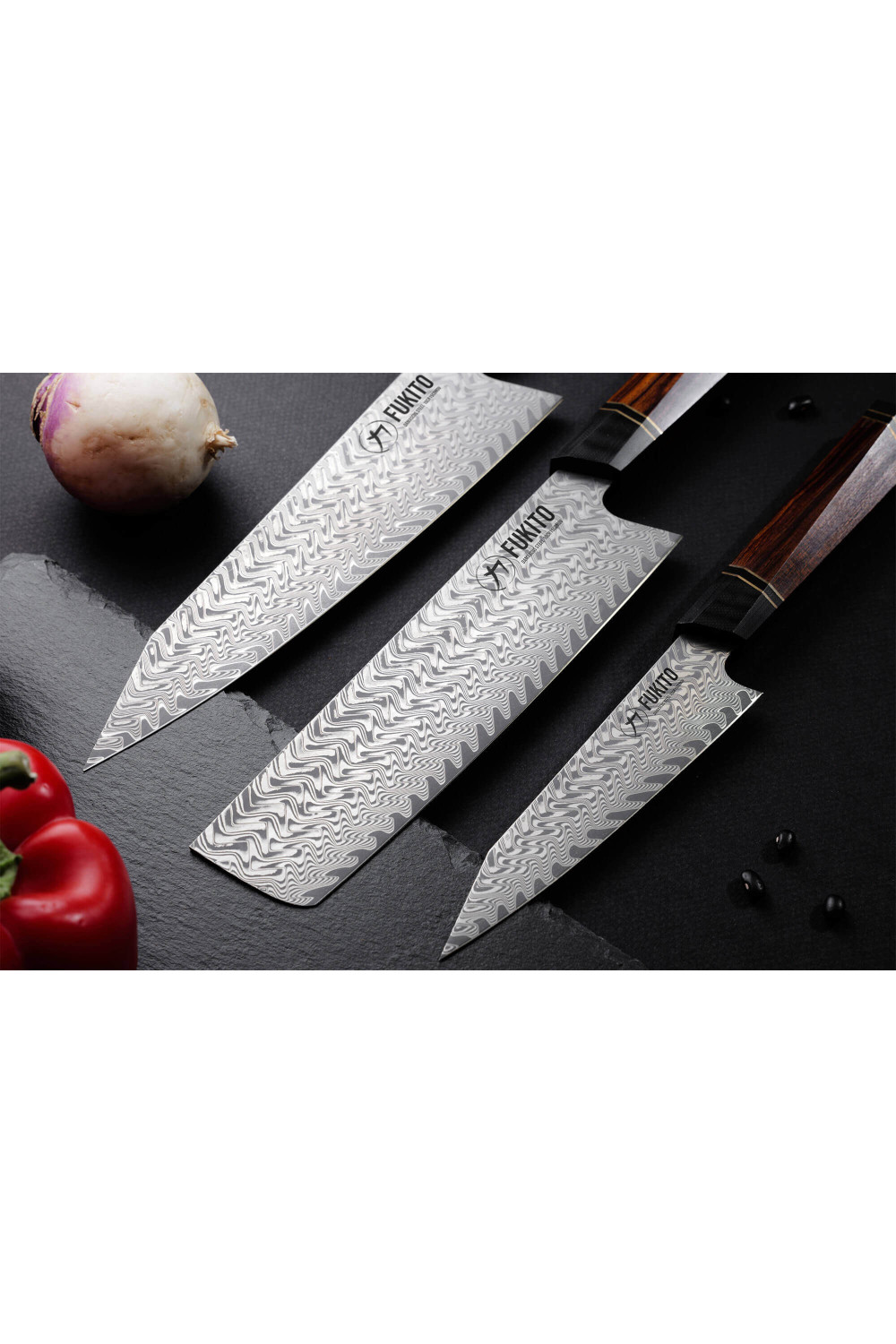
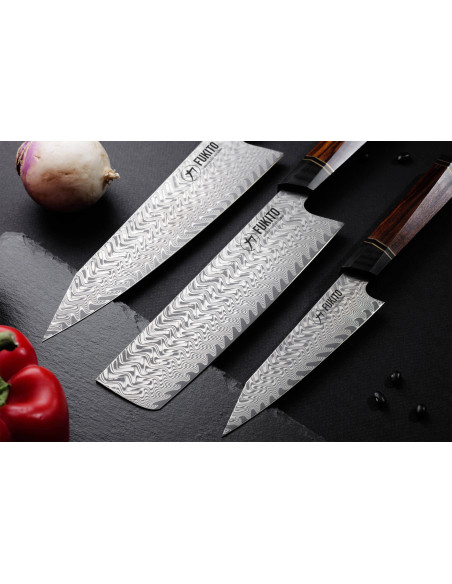
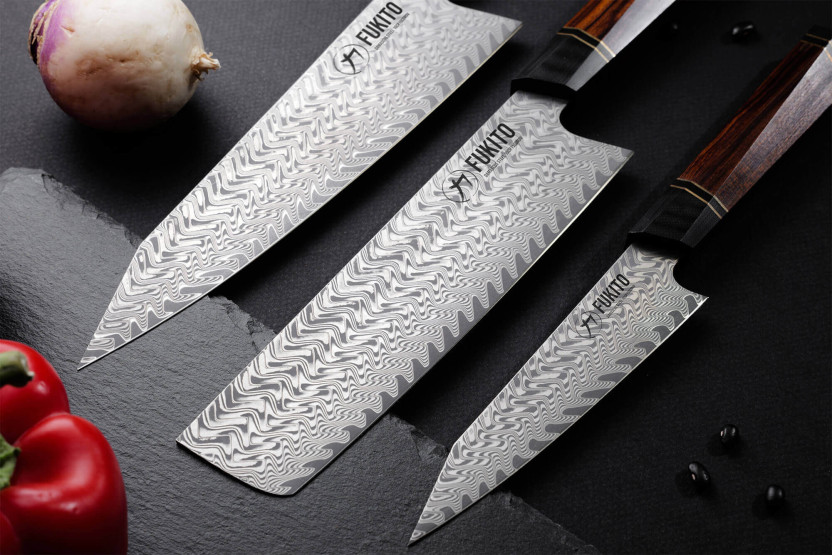
The blade is damascened, meaning that it is made of several alternating steels. Here, the color difference is created by the variation between stainless steel and nickel steel.
Damascus has a real impact on the blade's structural balance, as the different layers of steel are complementary, giving a good ratio between hardness and suppleness (not in the literal sense, by which we mean that the knife will absorb micro-shocks better). Beyond its technical aspect, damascus is also ideal for adding character to a knife: the alternating layers create superb patterns all over the cutting surface.
The core of the blade is 10Cr15CoMoV stainless steel, which is very similar to VG10 steel. Like VG10 steel, it has a higher-than-average chromium and carbon content, which enhances its capabilities:
- Carbon (1.05%) is used to improve the steel's rigidity, so that it holds its edge longer. The result is a hardness of +-60HRC on the Rockwell scale.
- Chromium (15.5%) improves corrosion resistance, among other things. This is important for a part that comes into contact with humidity, as is often the case in the kitchen.
This core is then surrounded by stainless steel and nickel steel, giving it contrast, both structurally and visually. Note that the blade logo becomes more or less visible depending on angle and light.
Handle:
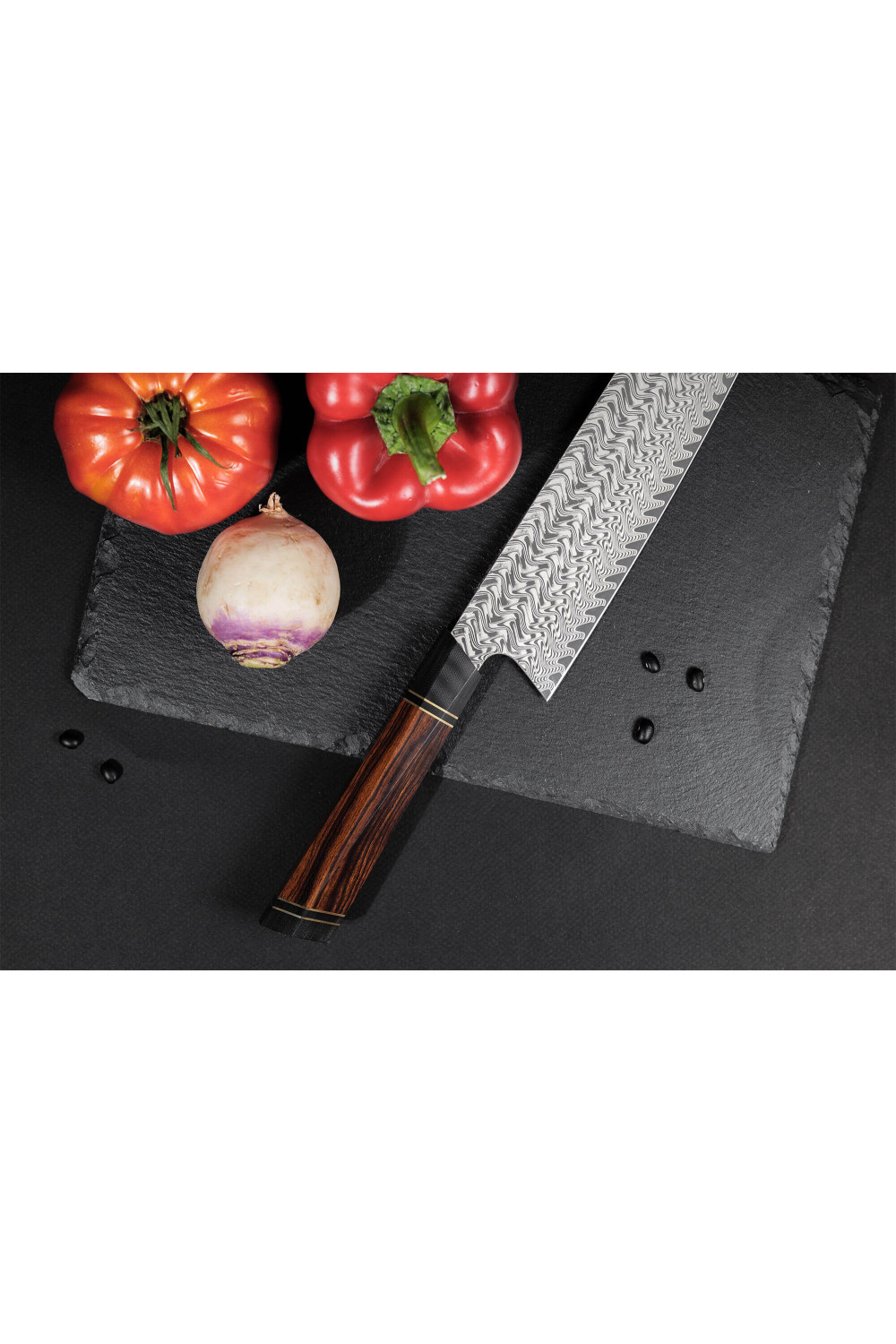
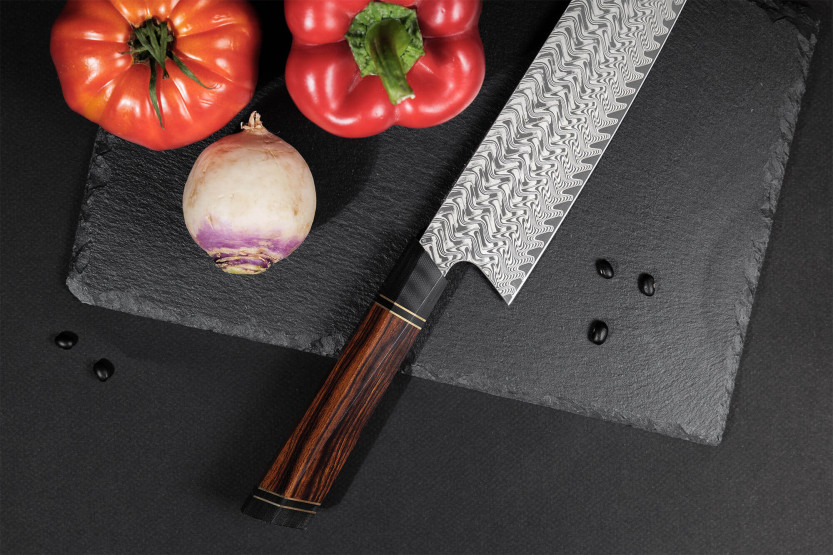
It features an original octagonal shape that is equally suitable for right- and left-handed cooks. In addition to having 8 different angles, the octagon that represents its handle is full-length, with an unusual streamlined effect.
It's bi-material. It mixes G10 and wood, and 4 gold edgings reveal the colors of these two elements.
What is G10? It's a synthetic material renowned for its durability and hardness. It's made of tempered fiberglass with added resin. The assembly is compressed to increase hardness. G10 has the advantage of being durable, resistant and lightweight. It is used on the bolster and base of the knife.
The central part of the handle is made of ironwood from the Arizona desert. Its color is naturally dark, with attractive contrasting lighter accents. Its grain is also very pronounced: wood being a living material, no two handles will be the same! It's a dense wood, and as its name suggests, very hard (a reference to iron).
The knife comes in a magnetic case, so you can store it when not in use, or give it as a gift to a passionate cook.
For proper care, wash the knife by hand, without soaking it in the sink or putting it in the dishwasher. Once you've washed it, wipe it dry with a soft cloth, then put it away.
Find all Fukito Desert Damascus knives on our site!




 By buying this product you can collect up to


 (4)
(4) (0)
(0) (0)
(0) (0)
(0) (0)
(0) (0)
(0)