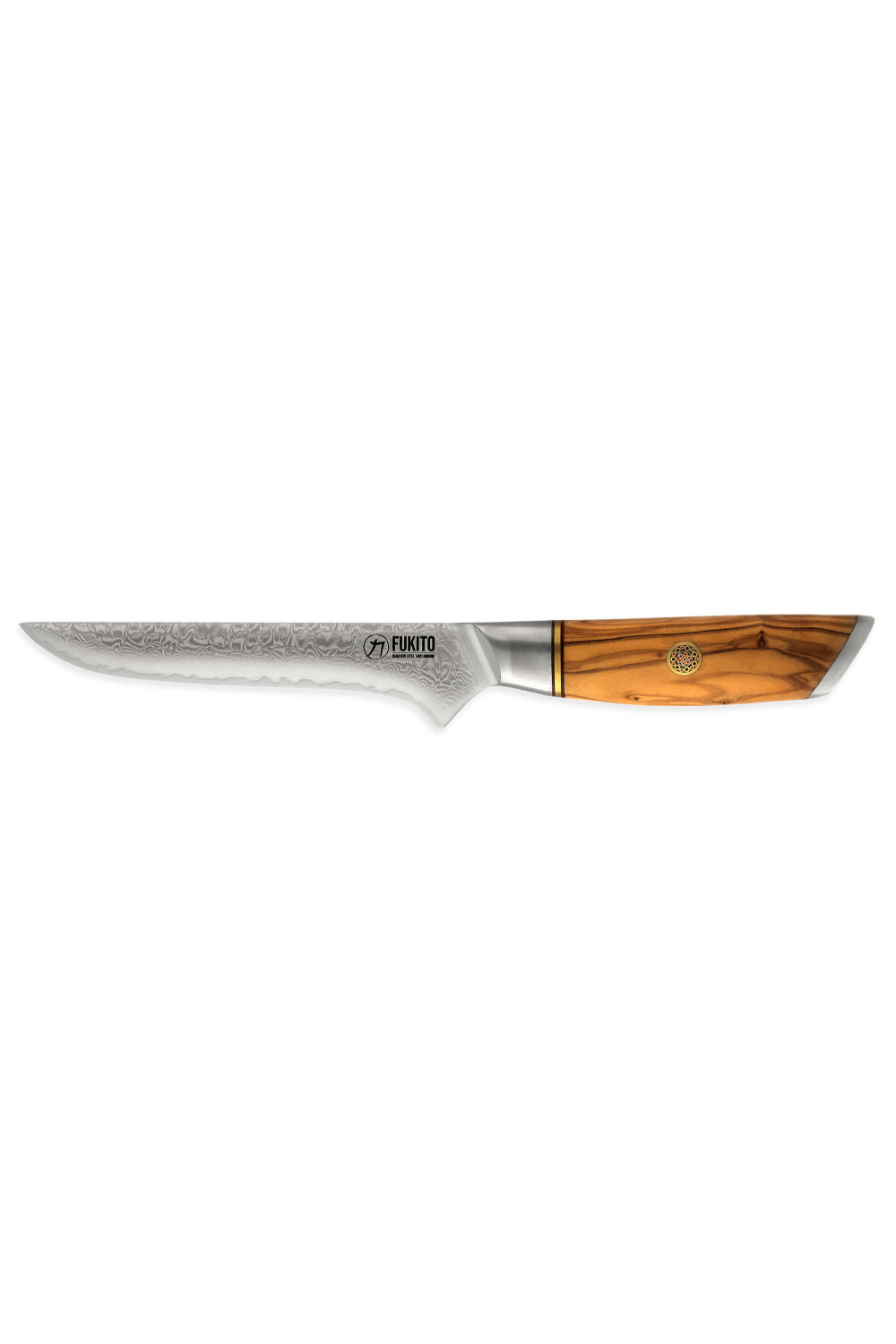
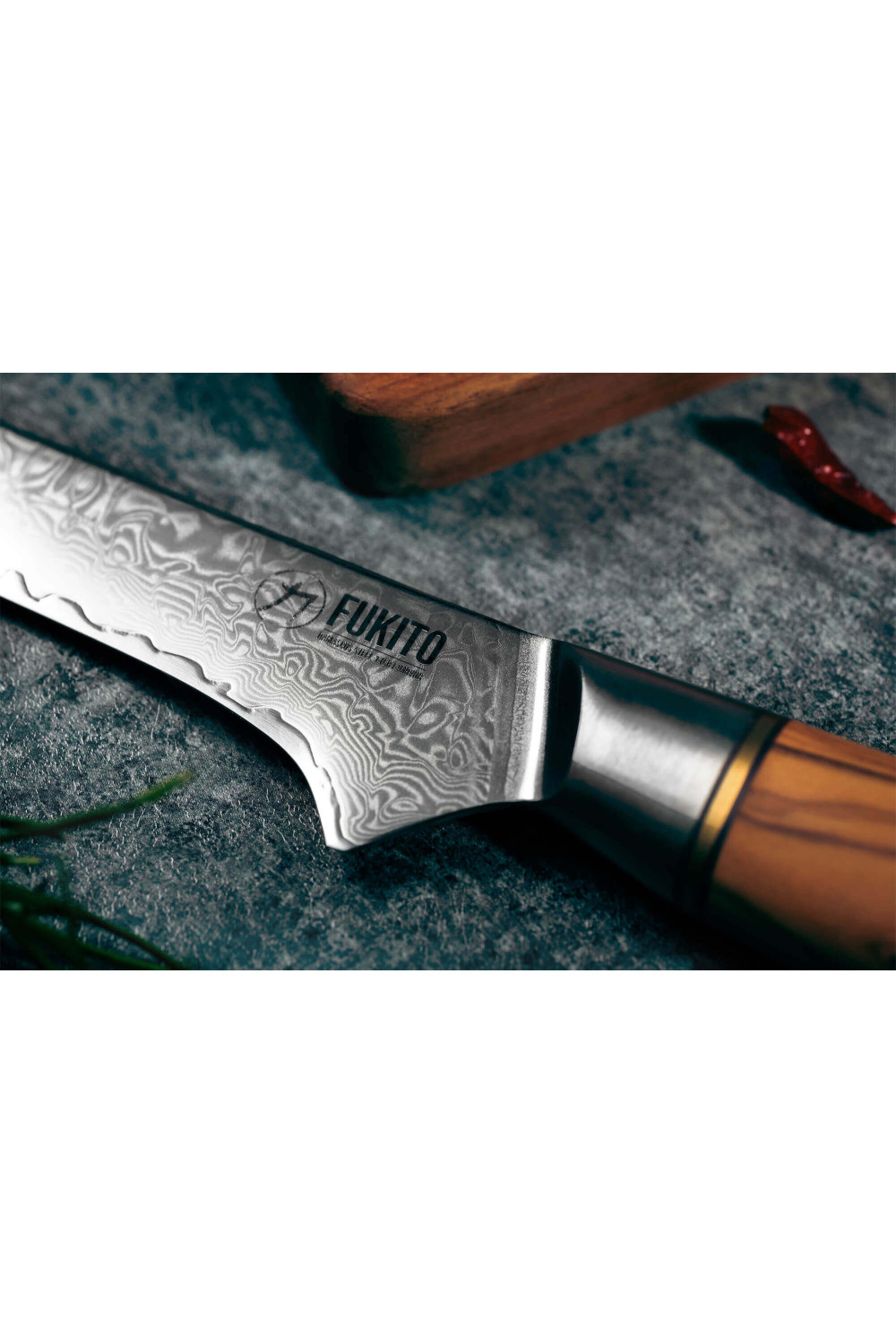
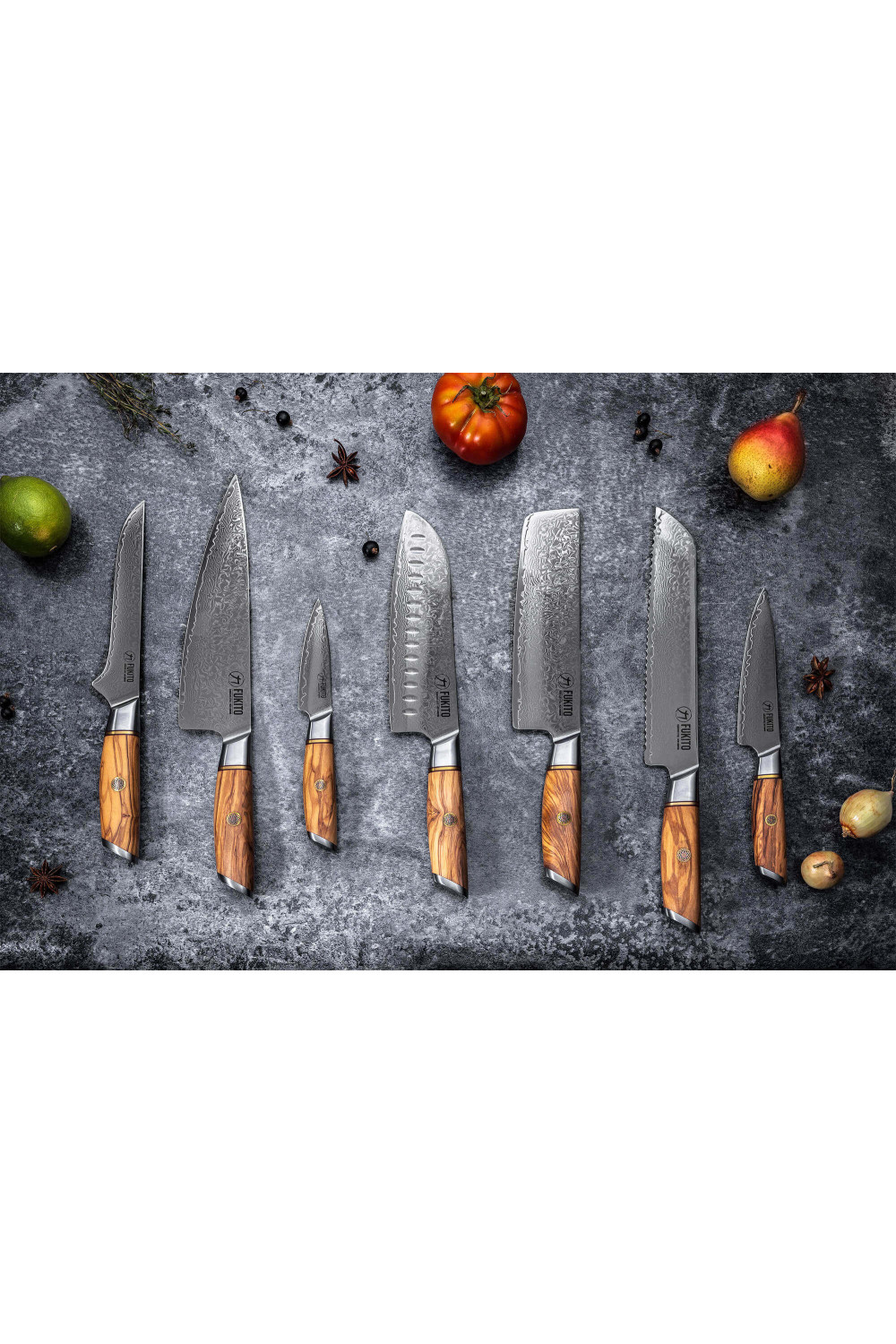
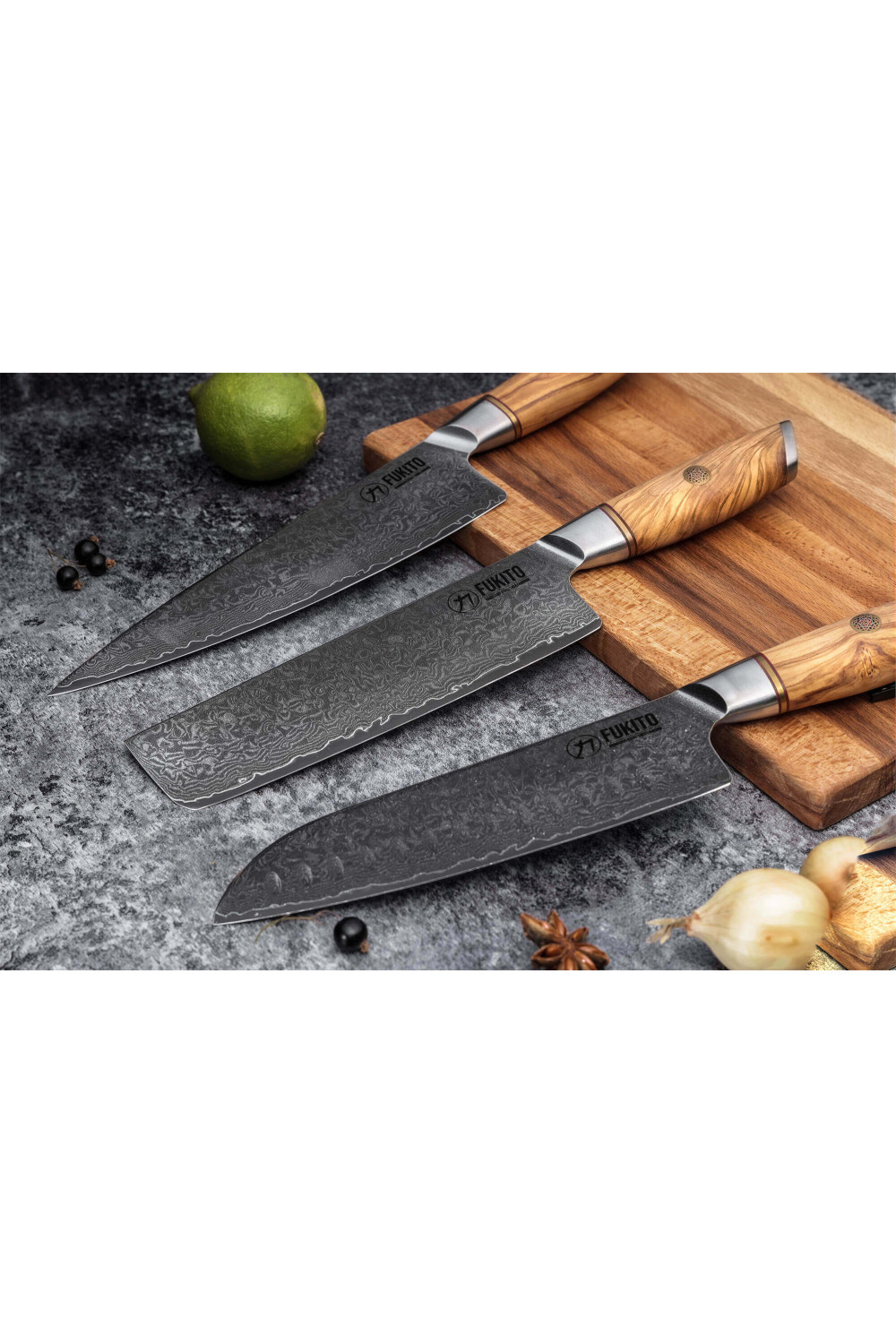
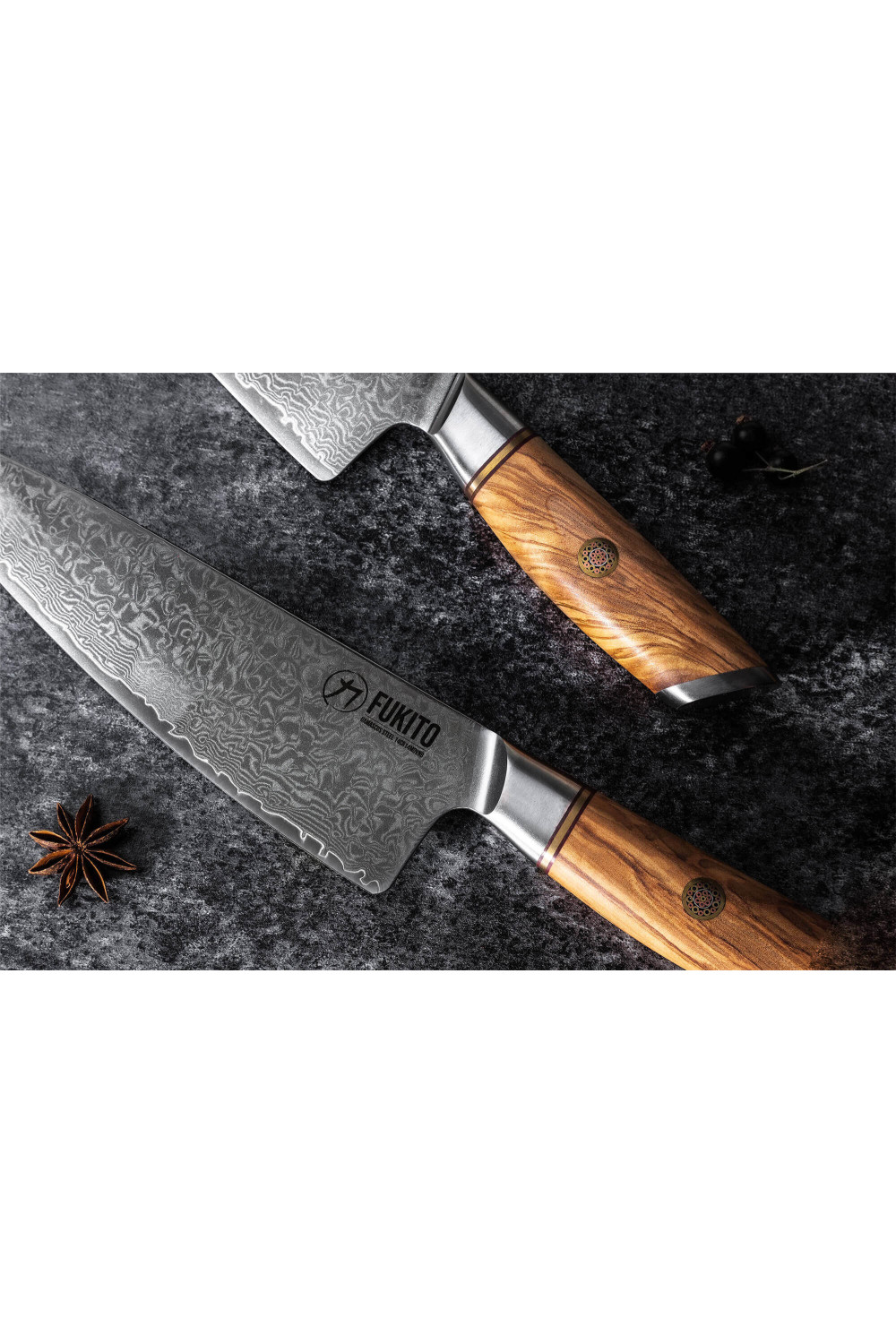
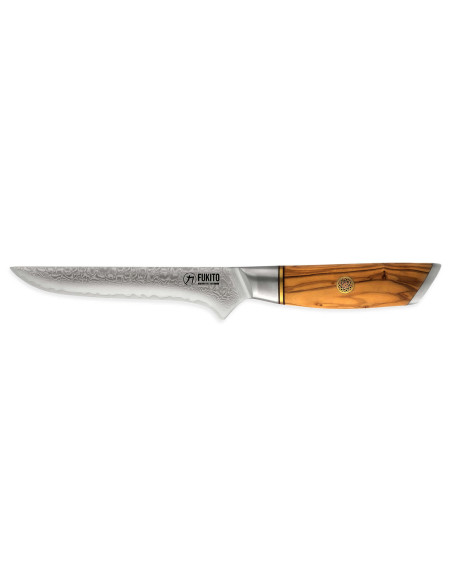
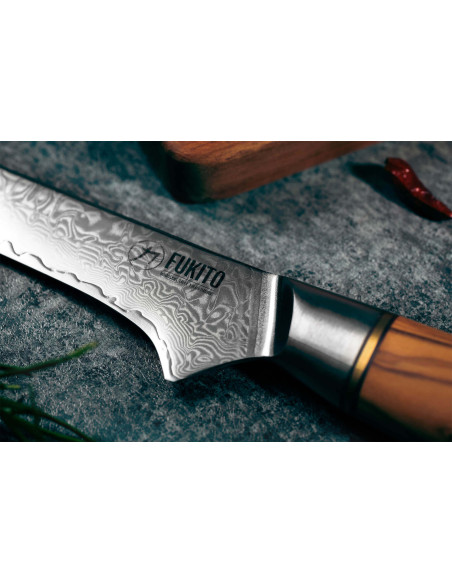
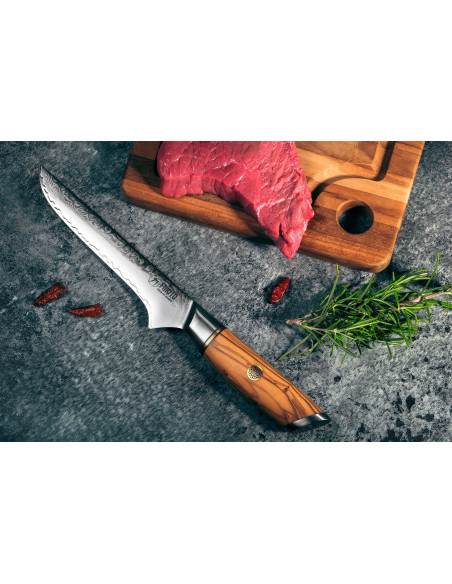
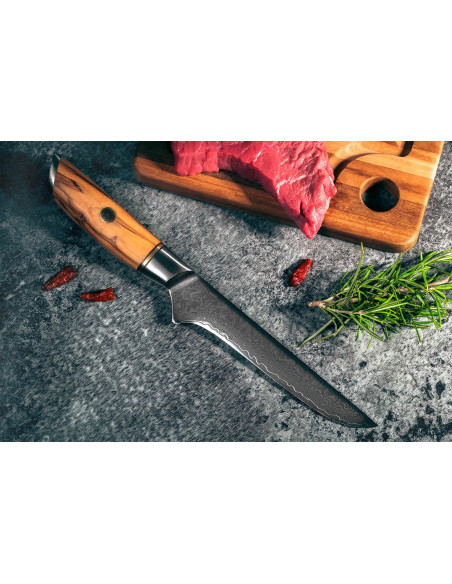
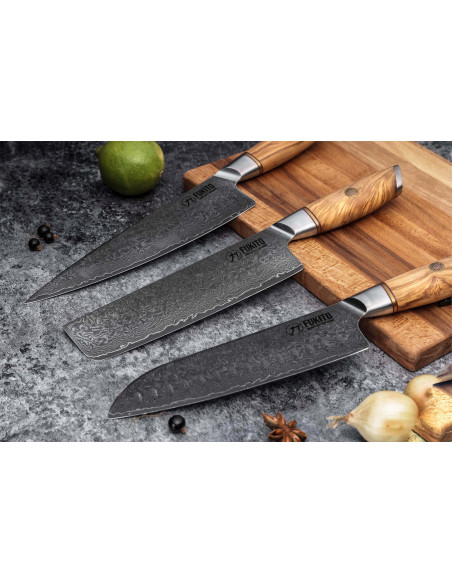
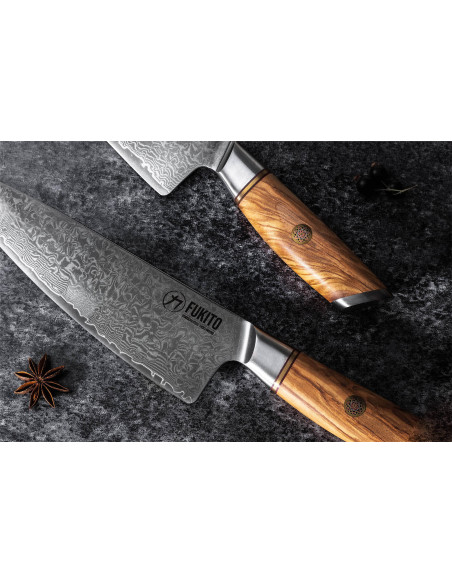
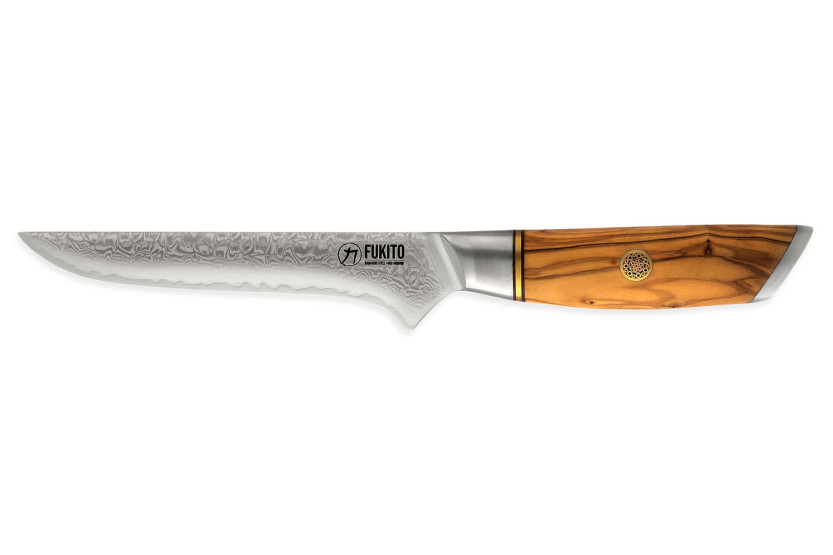
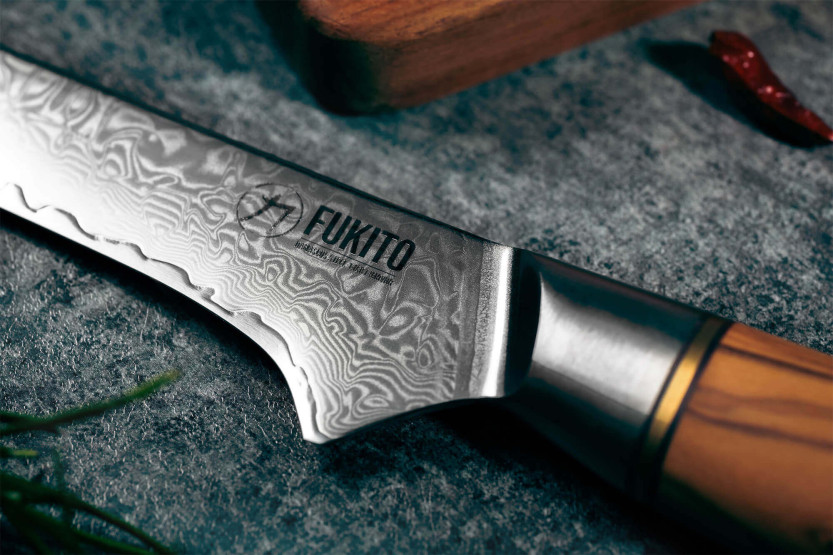
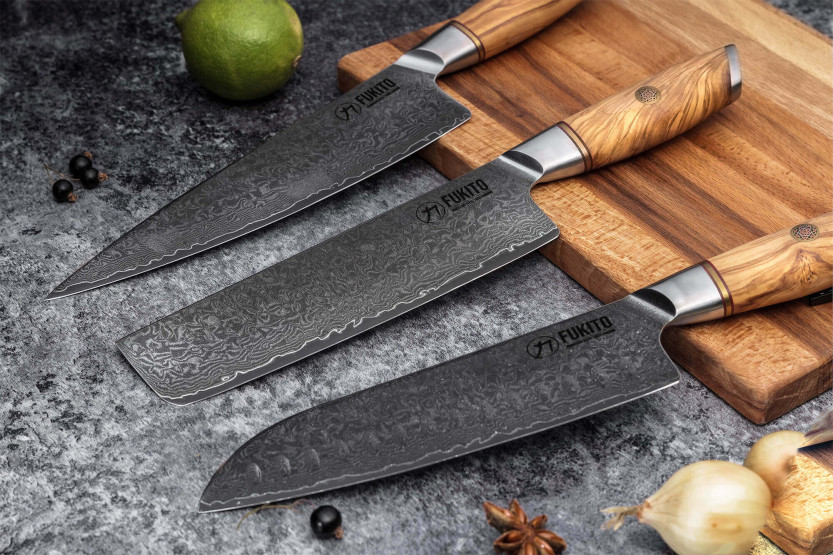
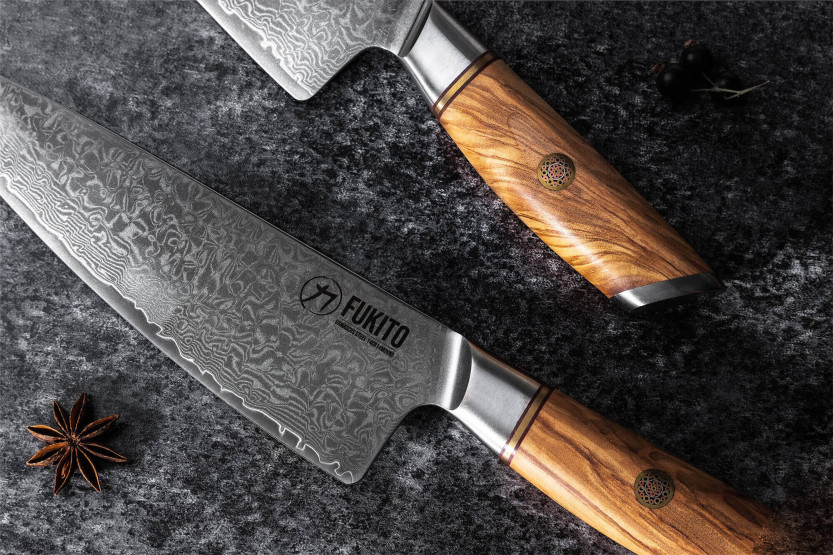
This Fukito Olive Damascus 14Cr 15cm boning knife features a beautiful damascus blade. What is damascus? In fact, it's a blade built with a rigid core which is then surrounded by different layers of less rigid steel, to balance this rigidity. So, as well as giving the knife a beautiful look, damascus is also interesting in terms of technical features.
The core of this blade, made from 14Cr, is powder-metallurgically processed (unlike solid steel). This requires special know-how: metal particles must be ground, and other alloying elements added little by little. The whole is then compacted using hydraulic presses, then sintered (with the addition of a high-temperature heat treatment). The end result is more homogeneous than standard steel, making it more resistant in the long term, especially to breakage.
This alloy contains two important elements in particular:
- Carbon (1.4%), which increases the alloy's rigidity, making its edge stronger and razor-sharp. Carbon also enables the knife to retain its sharpness for longer, so that sharpening sessions can be spaced out. This particular alloy achieves 62/64 HRC on the Rockwell scale.
- Chromium, at 14%, makes the alloy more resistant to corrosion.
The core is then sandwiched by several layers of less rigid stainless steel, to balance the core, as previously mentioned. This makes it softer, but not more flexible. We're talking about a "softness" that prevents breakage too easily (in fact, a very rigid steel can chip more quickly because it's not flexible, which is why it's interesting to add a softer alloy to balance it out).
Specific heat treatment:
The blade has been vacuum heat-treated. This process is interesting because, during standard heat treatment, certain elements present in the air can react with the metal. Oxygen and hydrogen, for example, can have an impact on the blade. Here, heat treatment takes place in a protected atmosphere. As a result, the blade can be optimally treated and will retain its full potential.
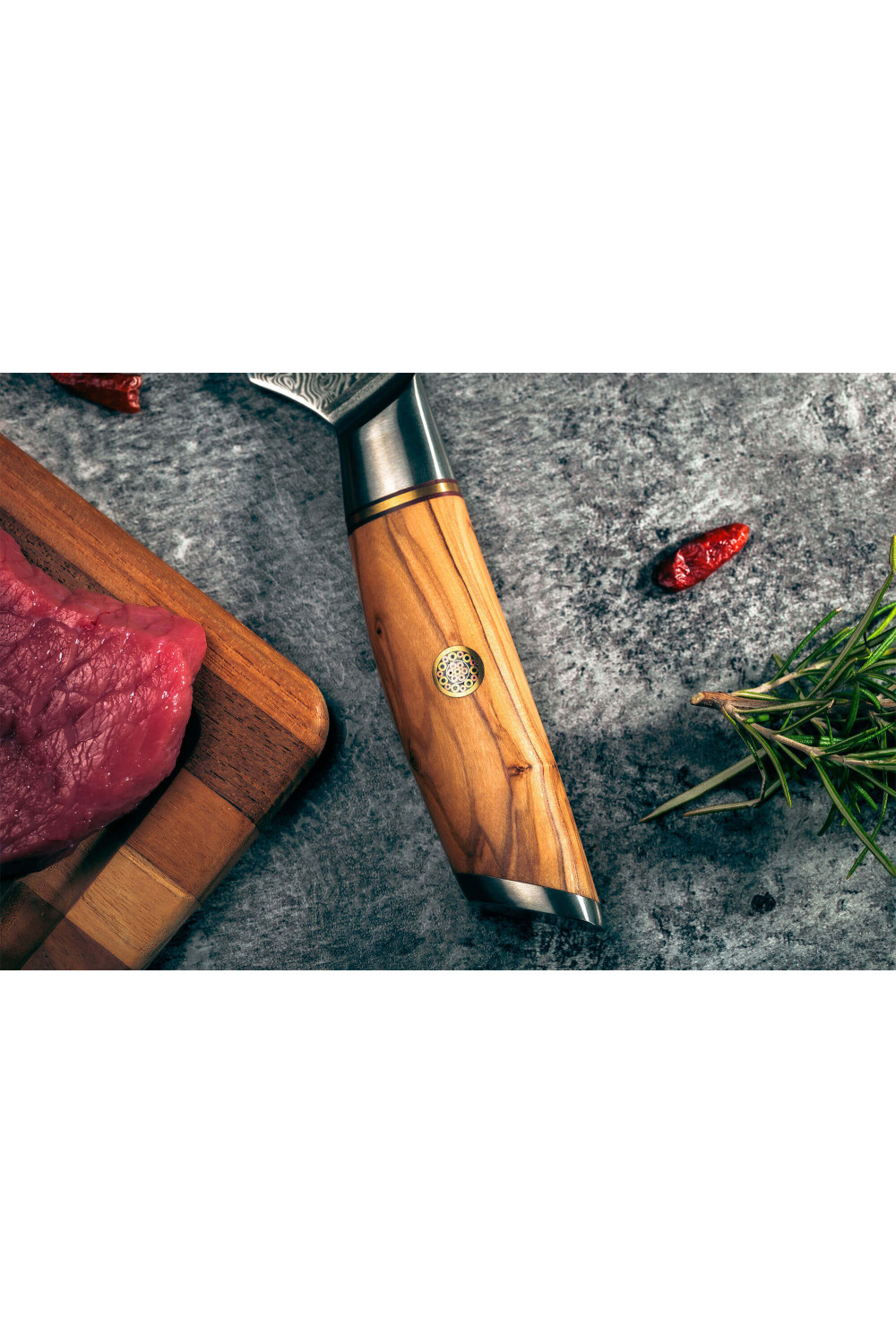
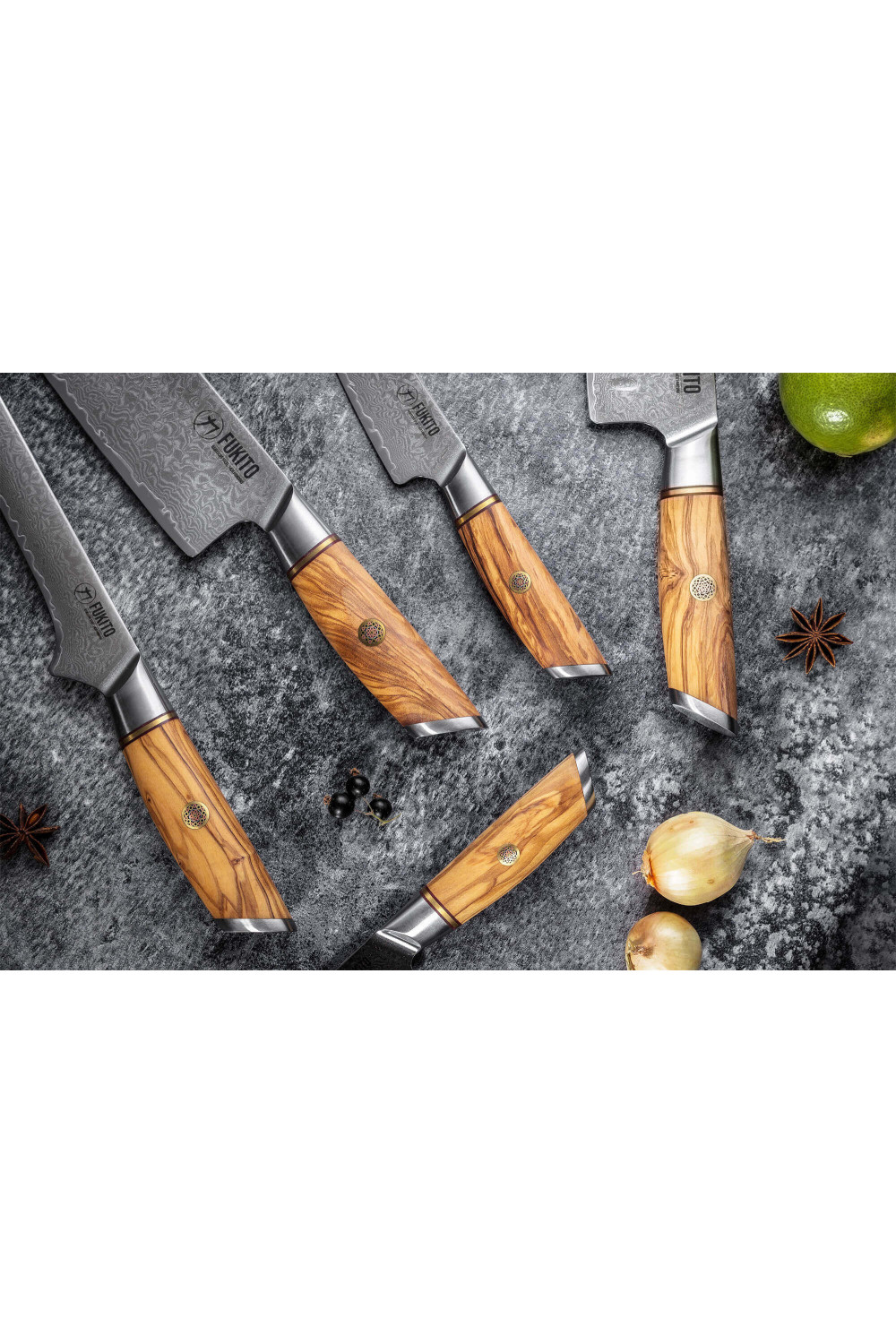
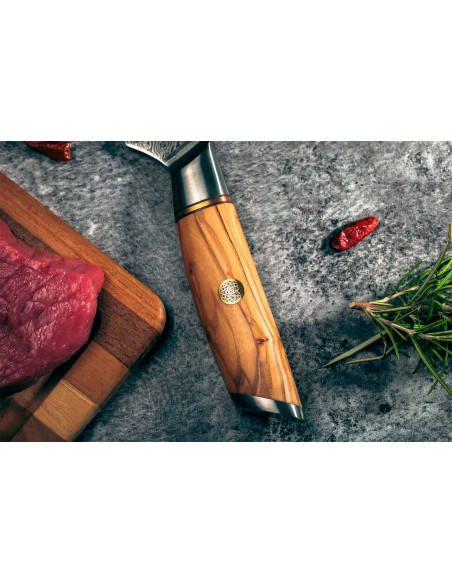
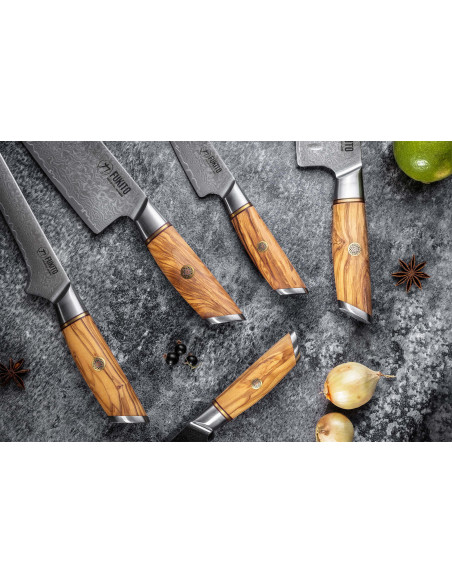
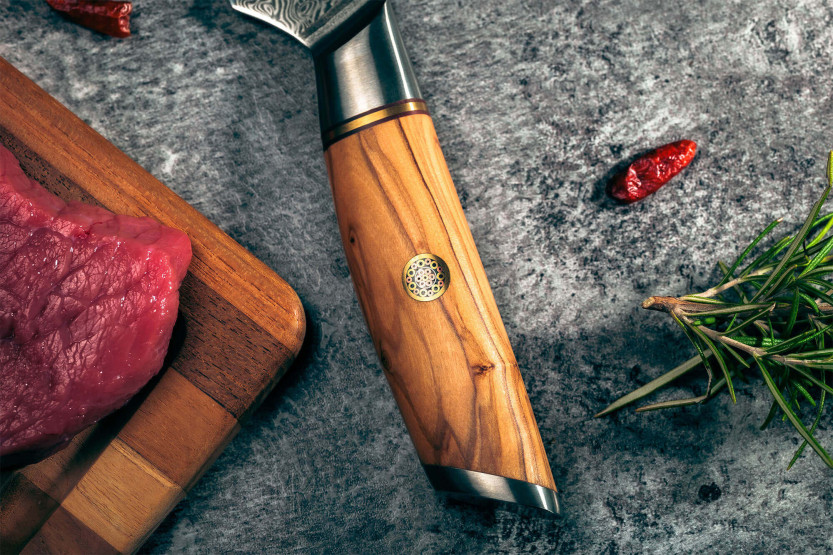
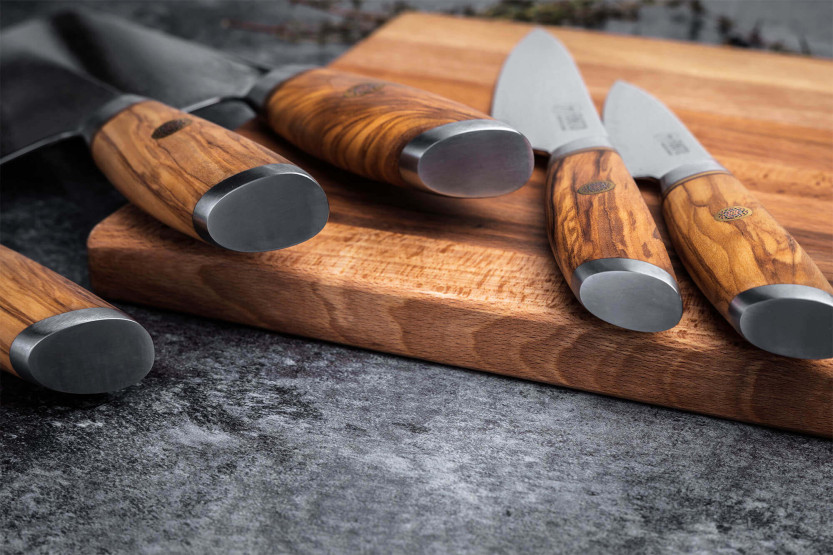
After the blade, let's talk about the handle! First of all, there's the stainless steel bolster that links the two elements. It has a soft, polished edge for a pleasant grip when cutting.
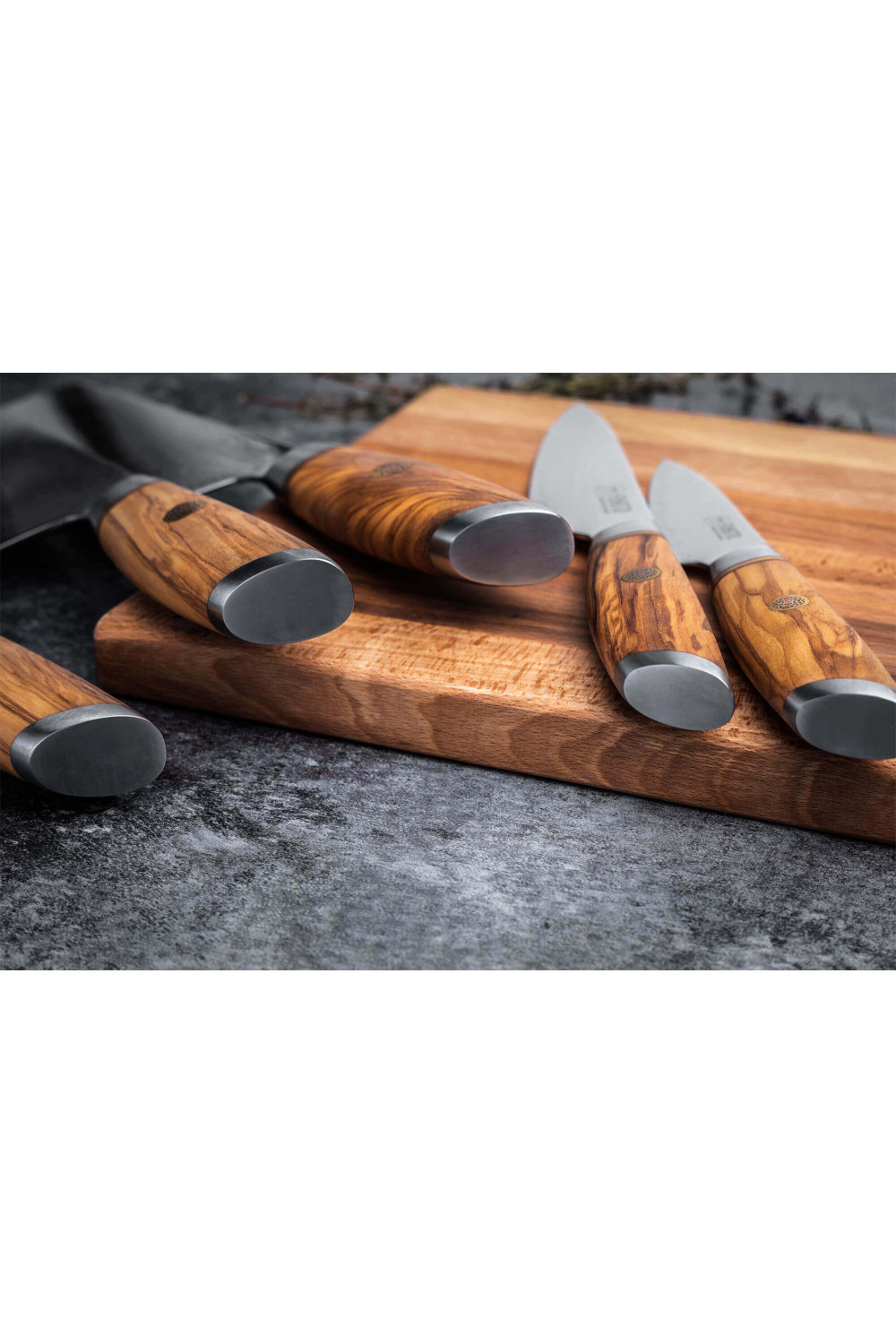
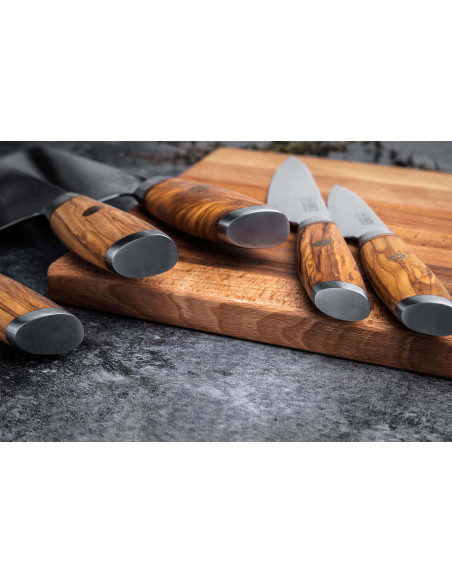
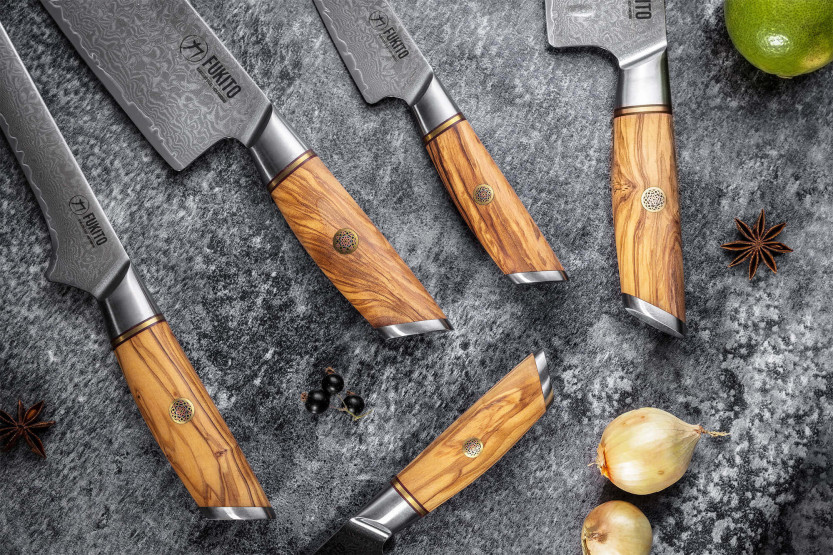
The handle is made from olive wood, a species much appreciated for its beautiful colors and distinctive scent. The veins on each knife are unique, as wood is a living material. Olive wood is also reputed to be "immortal", making it particularly suitable for use in the kitchen. Its density makes it highly resistant. In fact, it has few pores, so it doesn't absorb liquids and is more resistant to breakage. Finally, it is considered an antibacterial wood, making it far more hygienic than other types of wood. A beautiful gold and red border links the olive wood to the steel of the blade. There's also a superb mosaic rivet in the center of the handle, for even more originality. Finally, a steel cap finishes off the handle and brings balance to the piece.
It comes in a magnetic box for easy storage or gift-giving.
Model:
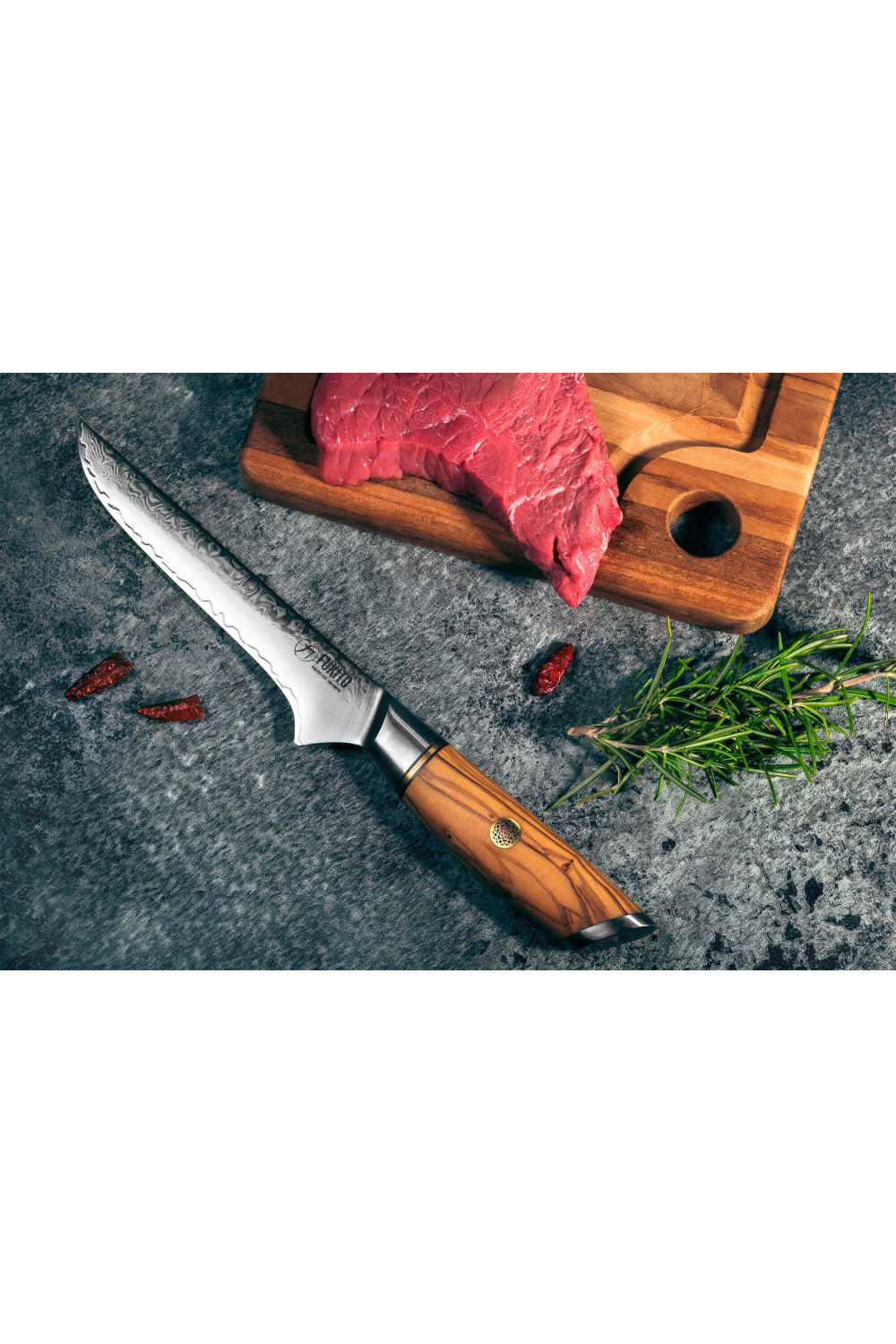
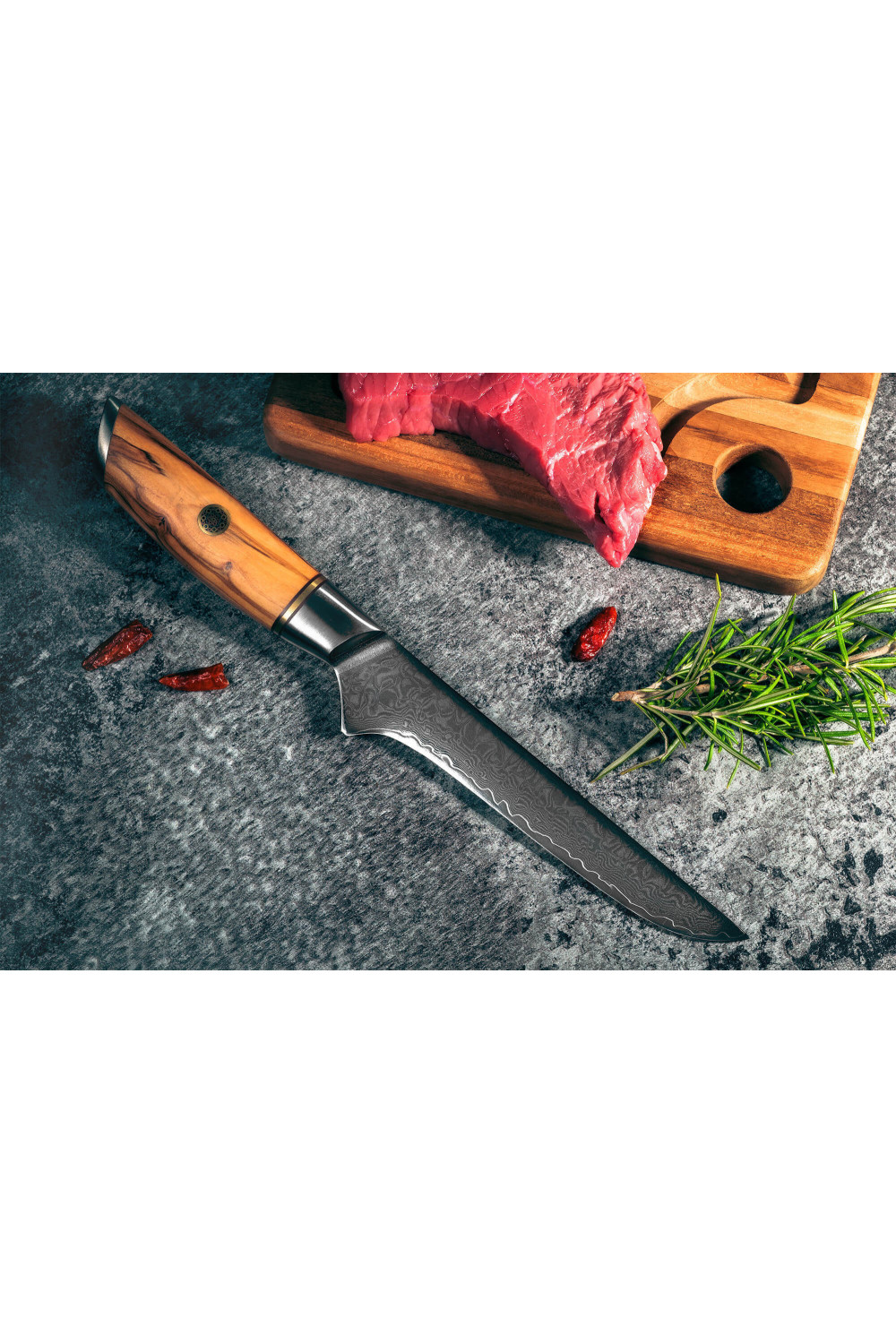
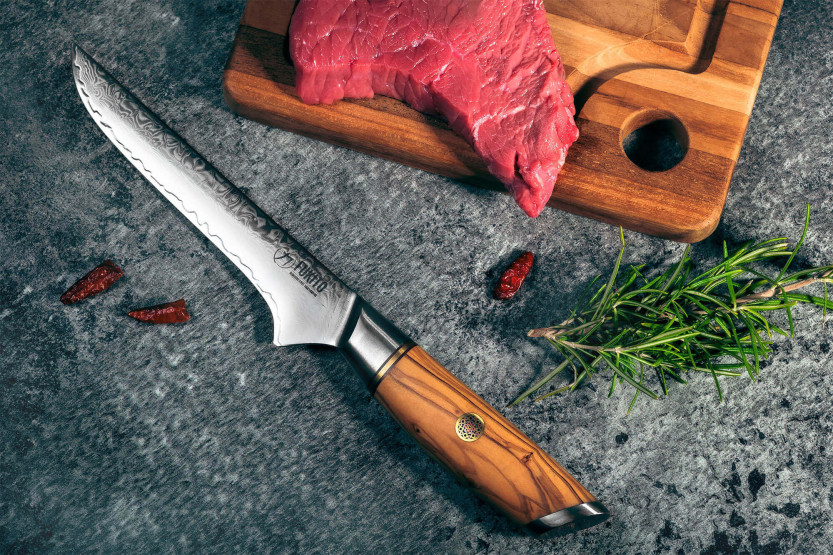
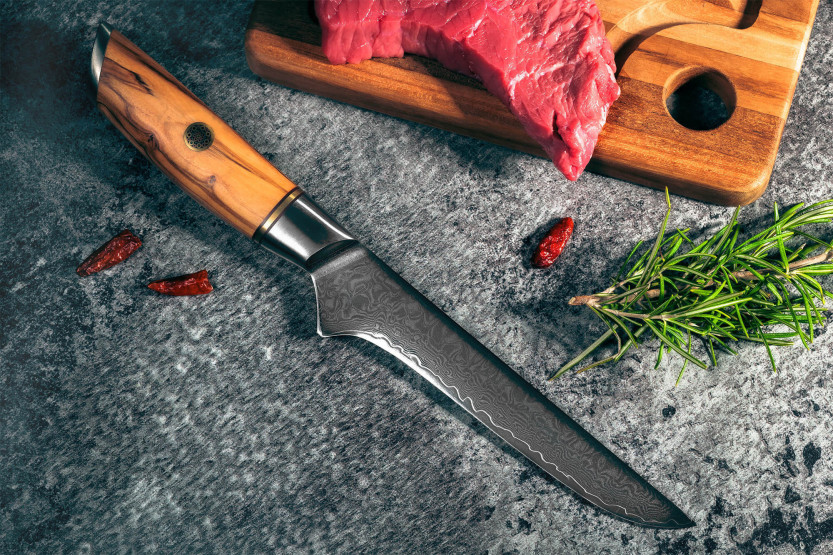
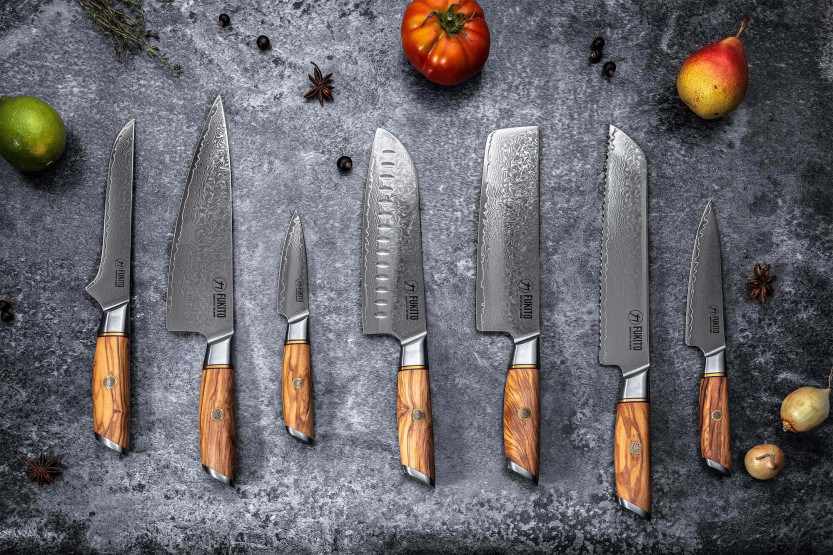
The boning knife is useful for removing meat from around the bones so it doesn't go to waste. Its fine, developed blade is perfect for this task. Note that this boning knife features a rigid blade.
Care and maintenance :
The knife should be hand-washed with a sponge and mild detergent. Do not put in the dishwasher or soak in the sink. Once clean, wipe dry and store.
Find out more:
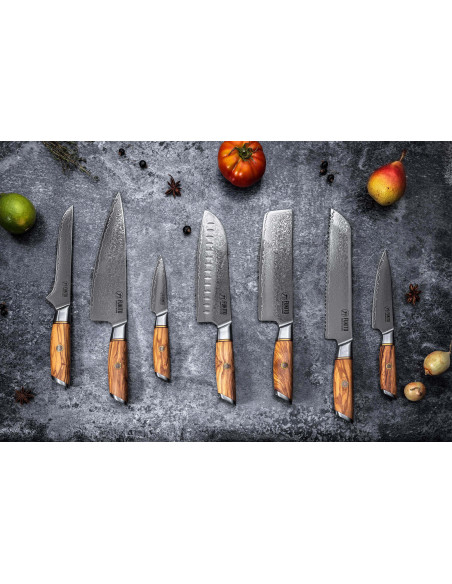
The knife, like all other Fukito knives, is carefully crafted in Western China, in the province of Guangdong. This location has been associated with cutlery production for decades. The materials and techniques used to create Fukito knives meet the manufacturing standards of French food industry professionals.
Find other Fukito knives on KnifeLeader.eu!




 By buying this product you can collect up to
.png)