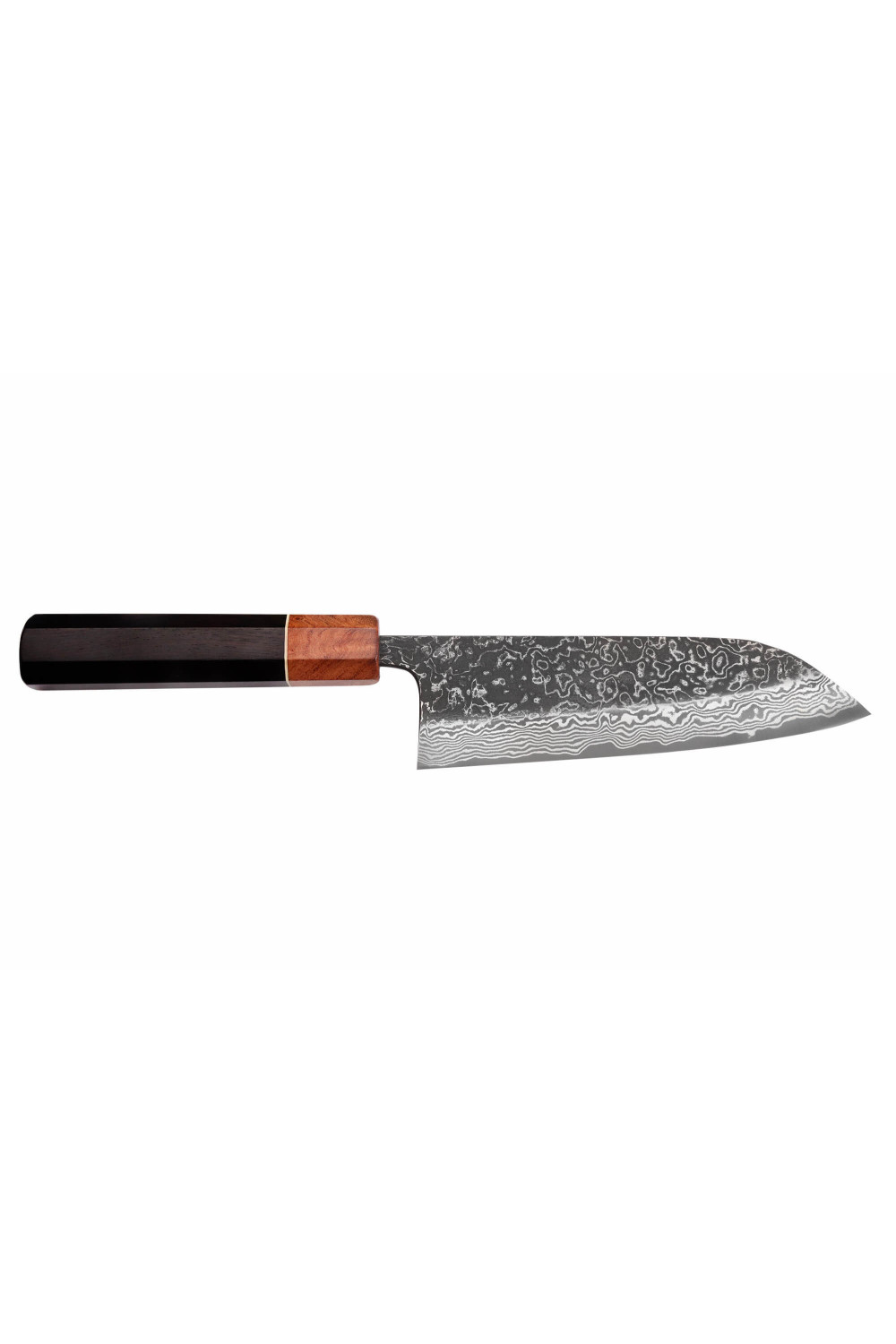
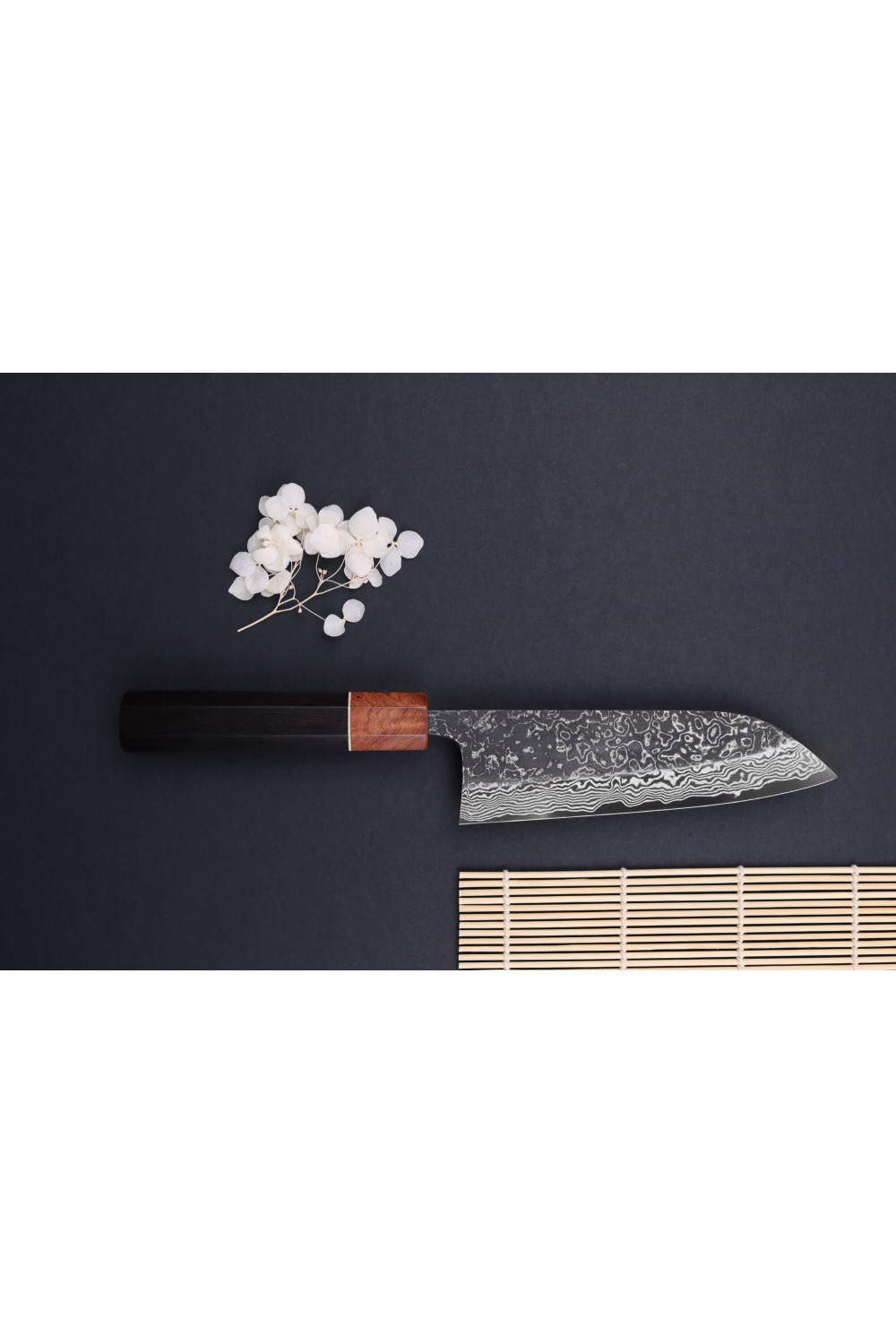
A typical Japanese knife blade
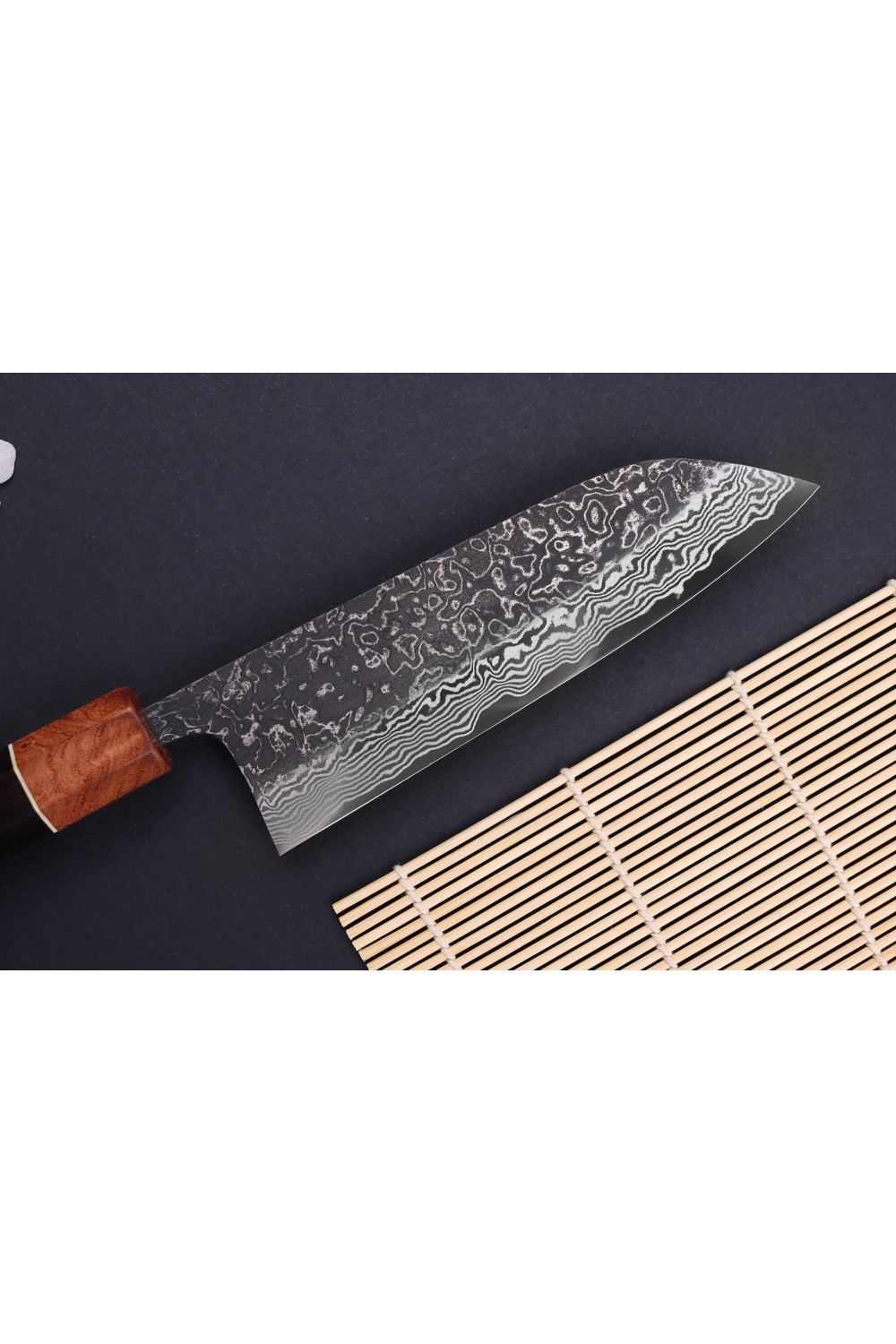
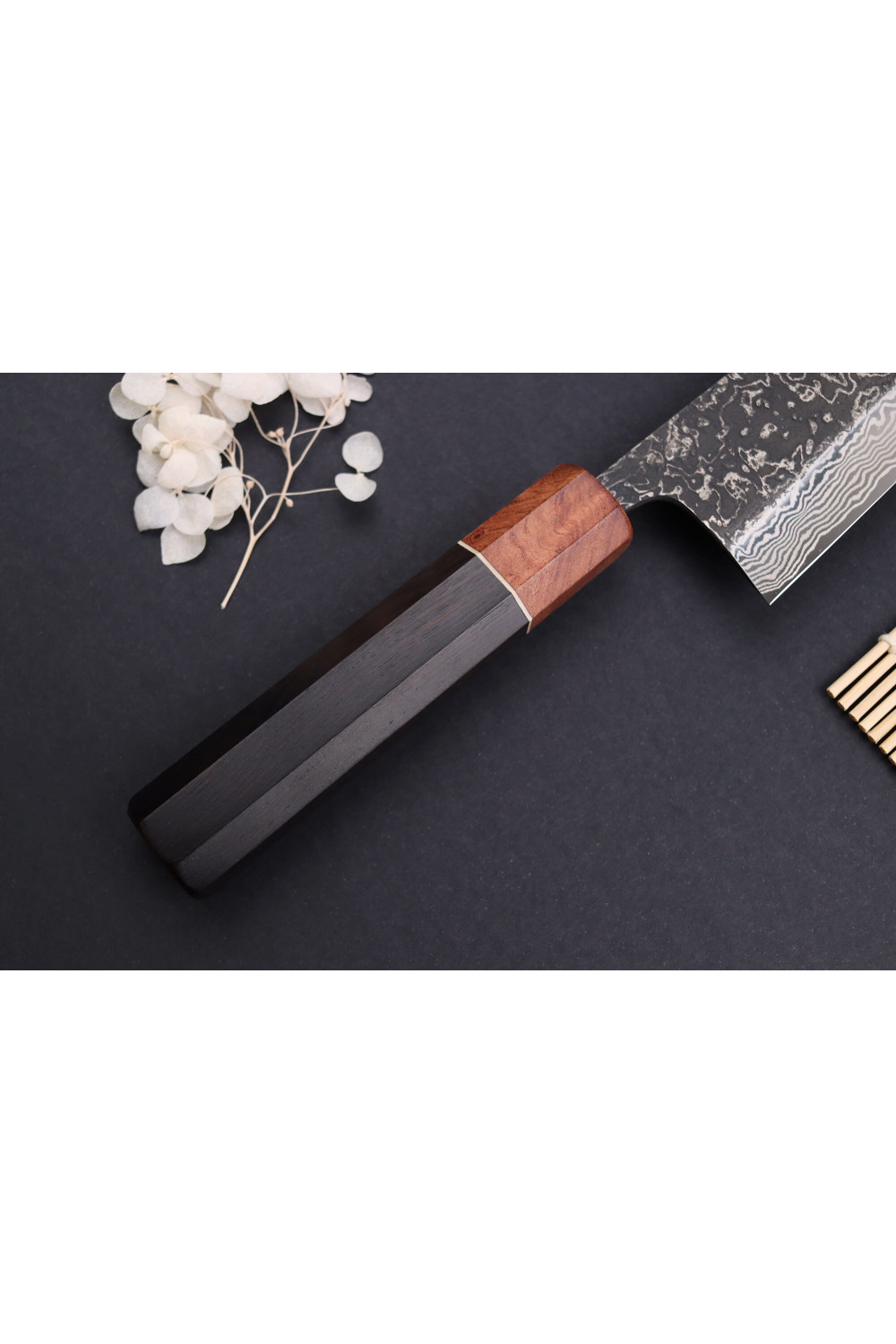
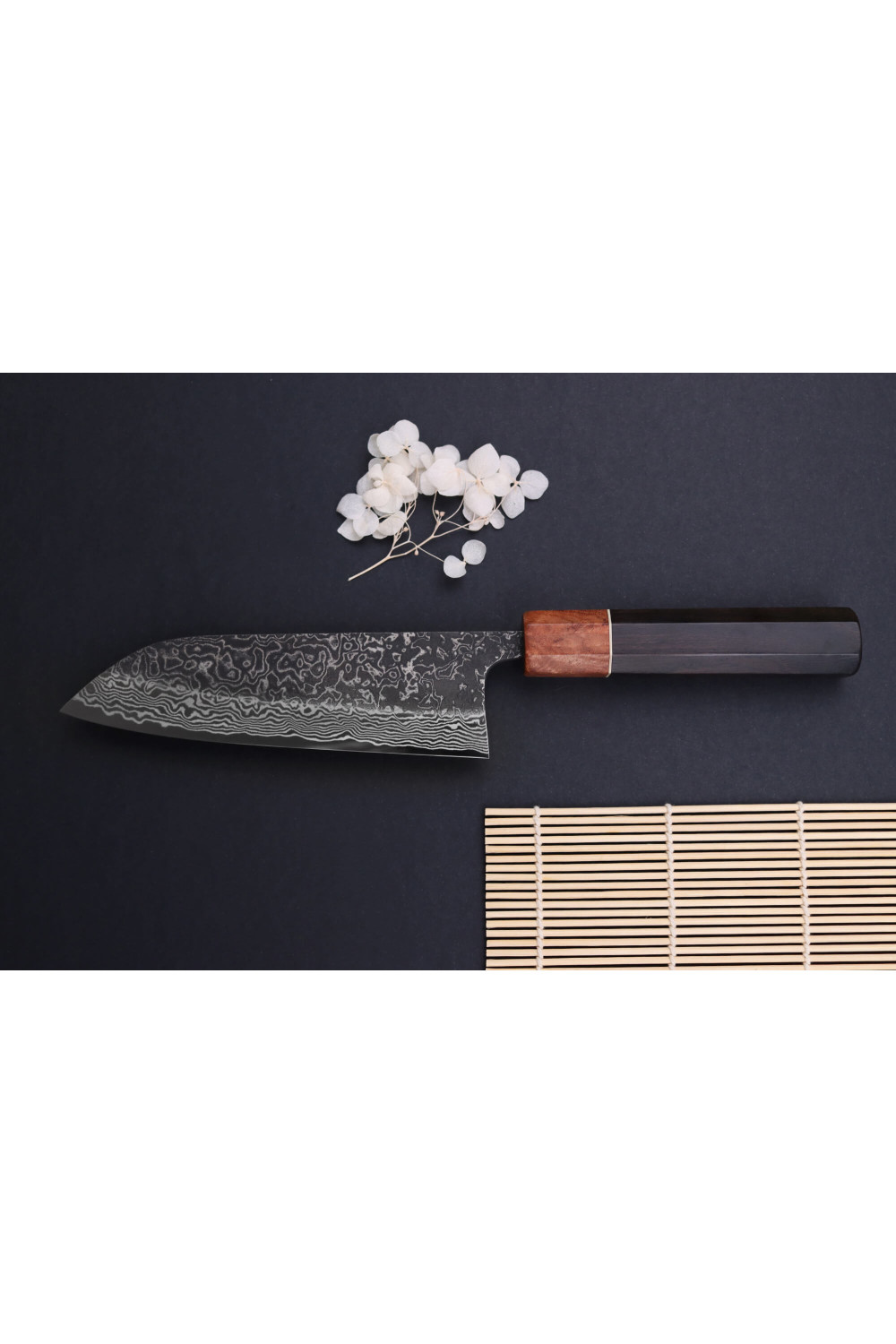
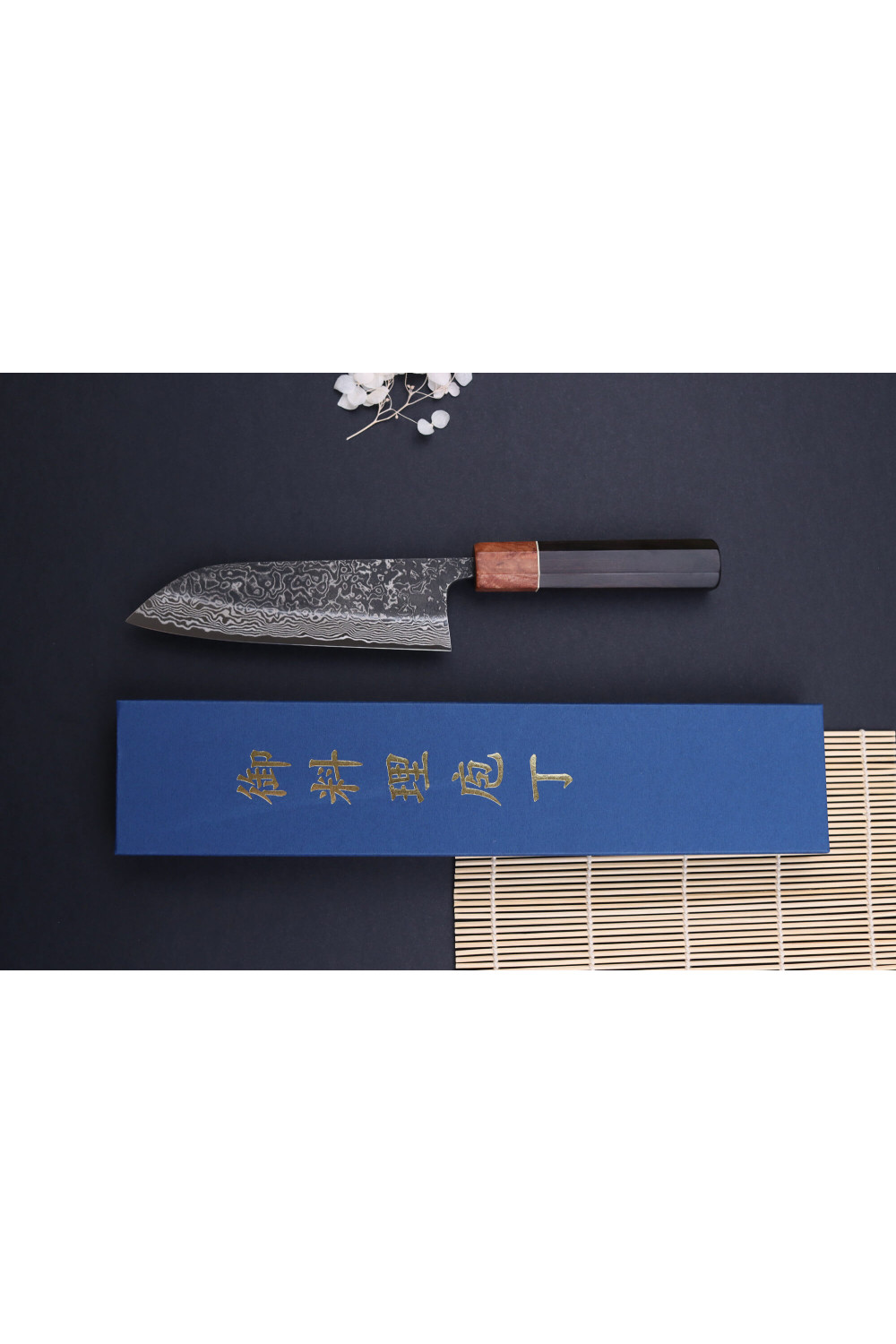
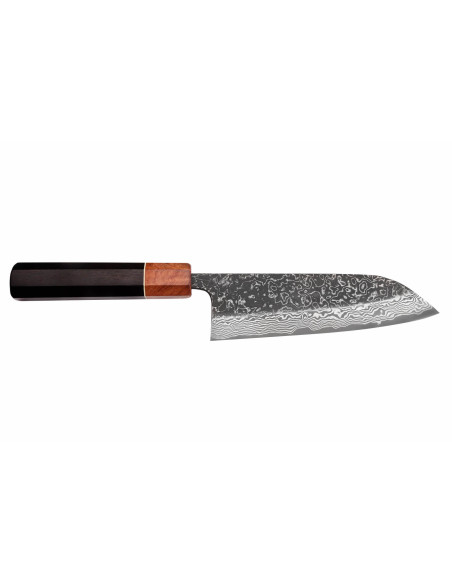
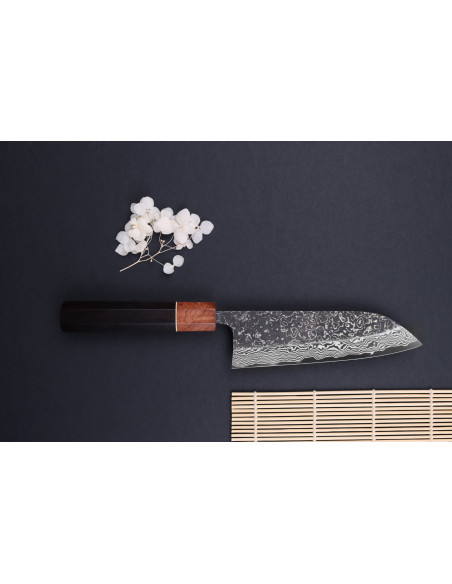
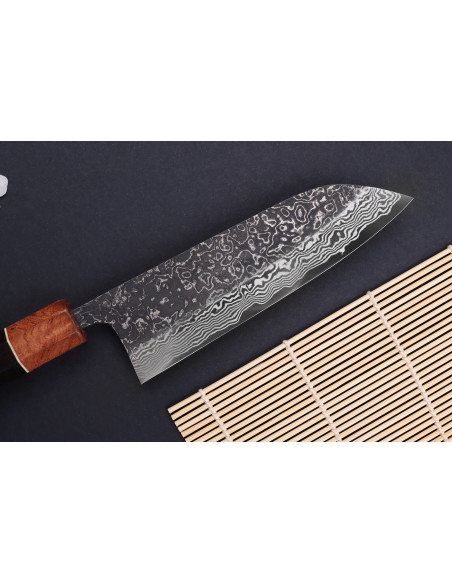
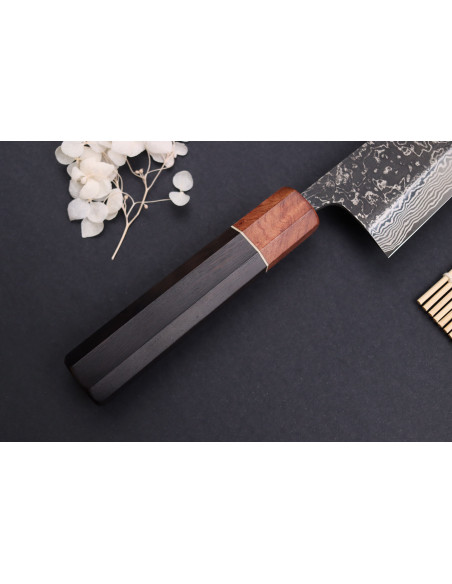
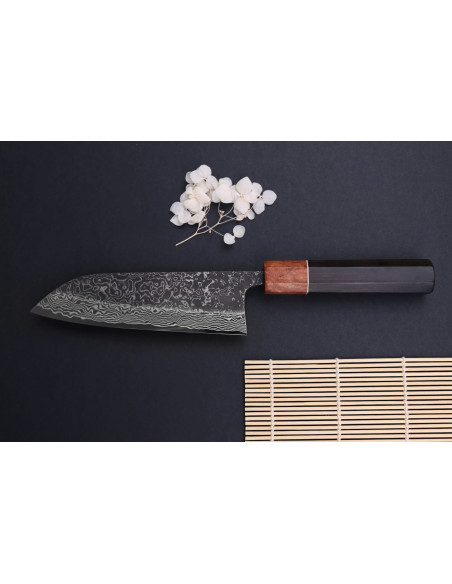
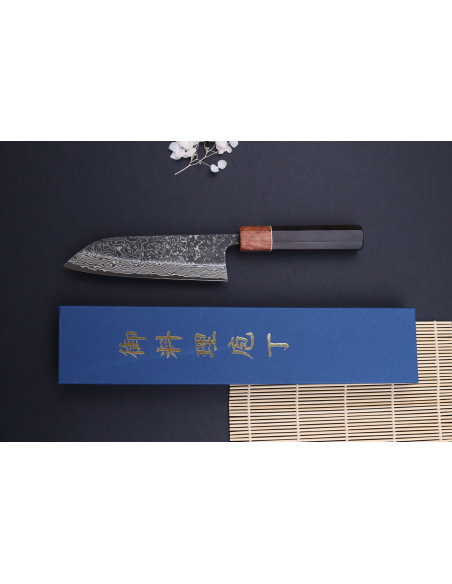
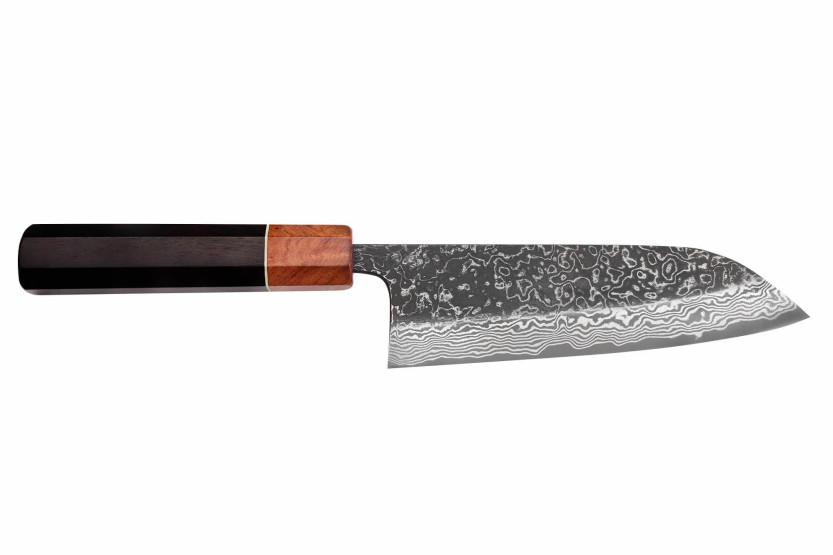
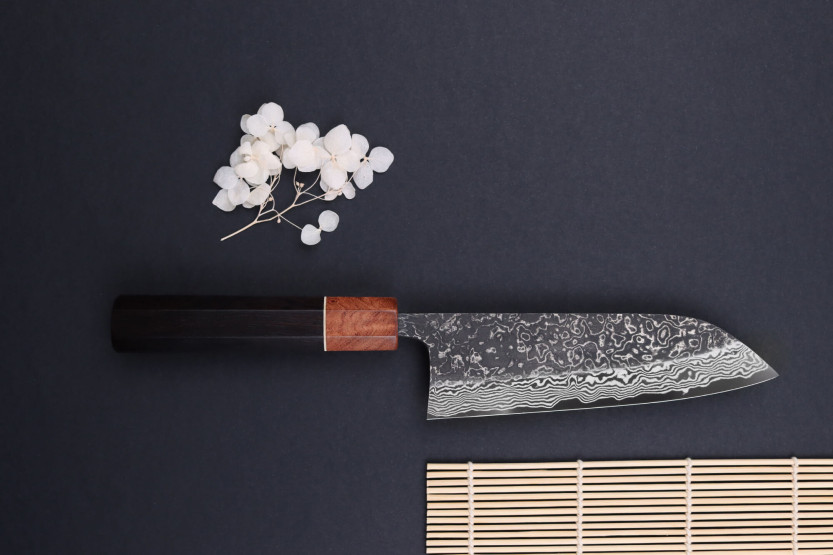
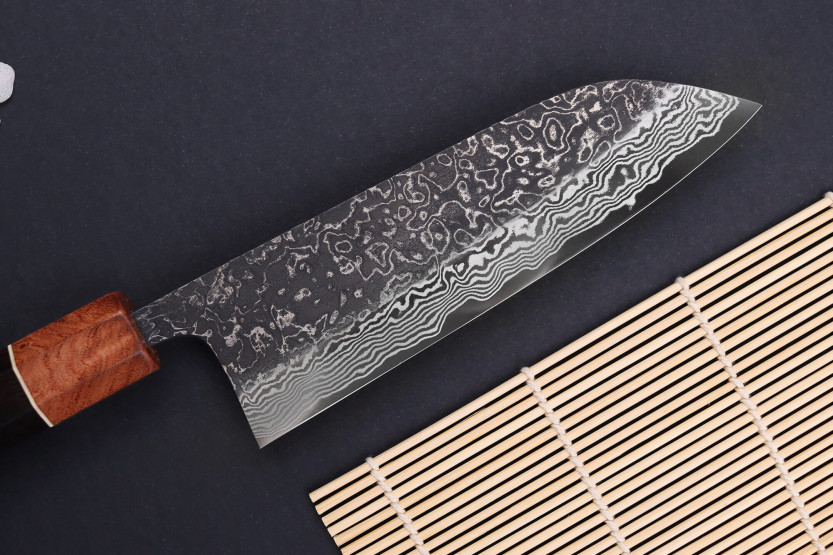
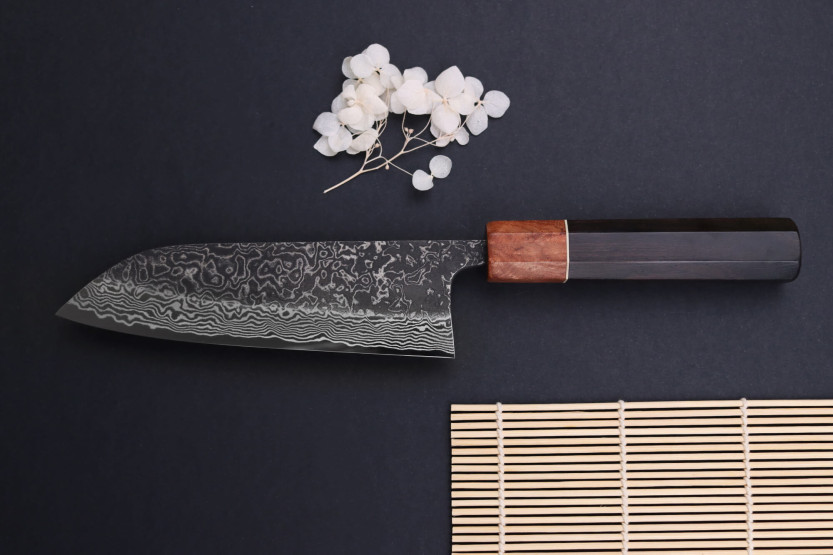
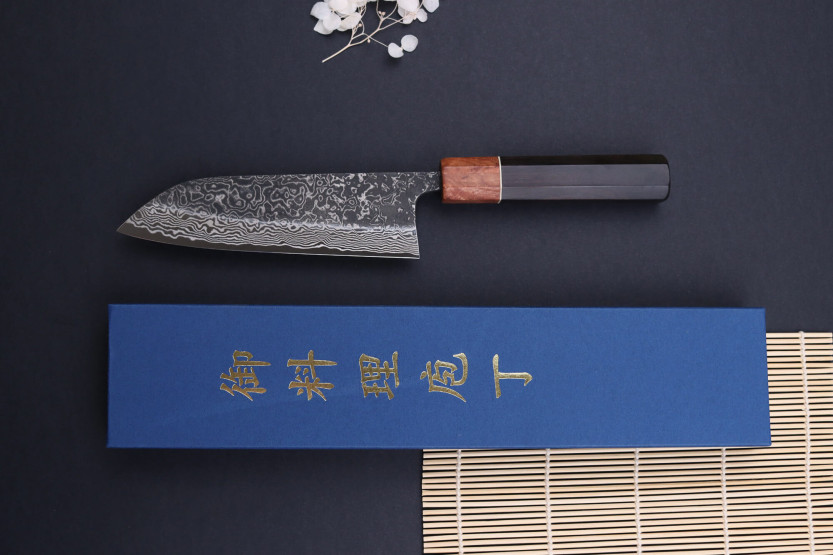
This Masashi knife features a beautiful damascened blade. To make it, a complex process must be followed. First, the blacksmith chooses a high-capacity steel to form the core. This core is then surrounded by several alternating layers of steel. The steel used to make up the upper layers is softer than the steel in the center of the blade, to balance it out.
SLD Kuro Japanese knives have a core of SLD steel. This is a Japanese alloy, developed by the world-renowned Japanese steelmaker Hitachi.
This top-of-the-range alloy has a high carbon content of around 1.6%. Carbon is the element of choice for increasing the hardness of an alloy. A hard steel is one that will keep its edge for a long time, so it's a real asset in this respect. In fact, the blade reaches 63 HRC on the Rockwell hardness scale.
In addition to a high carbon content, this alloy also has a good chromium content, at 13%. It should be noted, however, that despite this high chromium content, the knife is not considered to be completely stainless (because the chromium makes this possible). It's more a hybrid steel, and in view of its high carbon content, it's more sensible to apply the care instructions for carbon knives (see below).
The alloy's structure is also a real asset: it is very well balanced, and the micro-carbons are evenly distributed. This increases its resistance to wear and micro-cracking.
Note that Masashi Yamamoto knives have a thinner tip than the average knife. In fact, the thickness of the blade narrows as you reach its tip, making it more flexible and therefore easier to cut, with a more pleasant, natural feel in use. This is further proof of this outstanding blacksmith's expertise. However, be careful not to press too hard, as flexibility has its limits!
Once the SLD core is established, it is surrounded by several layers of softer steel, which protect it and balance out its high rigidity. This surface steel is enriched with nickel, which is what creates the color difference between the different damascus layers.
For added character, the upper part of the blade is darker than the rest. This is why the name of the knife indicates "kuro", which means "black" in Japanese.
A precious ebony handle
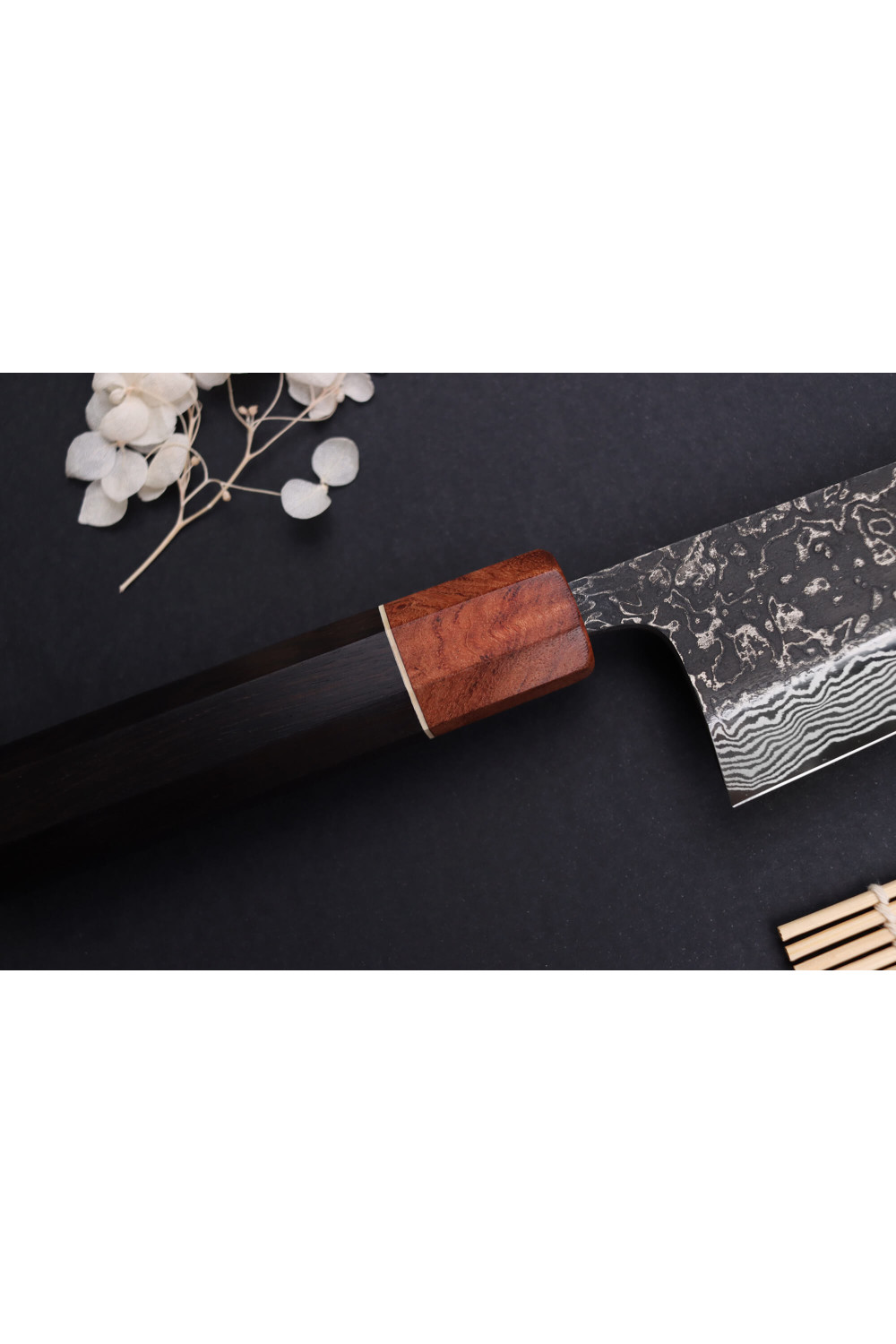
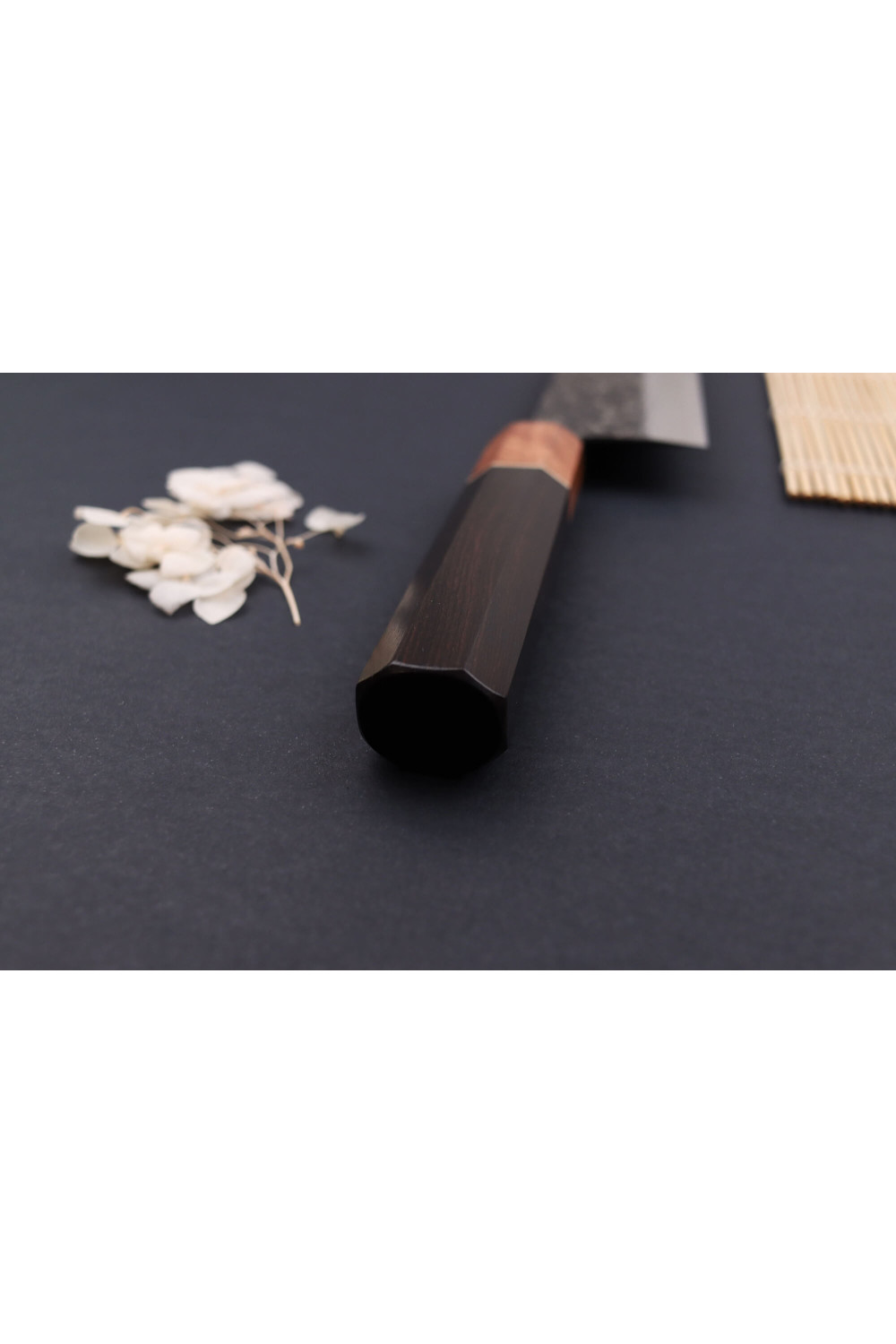
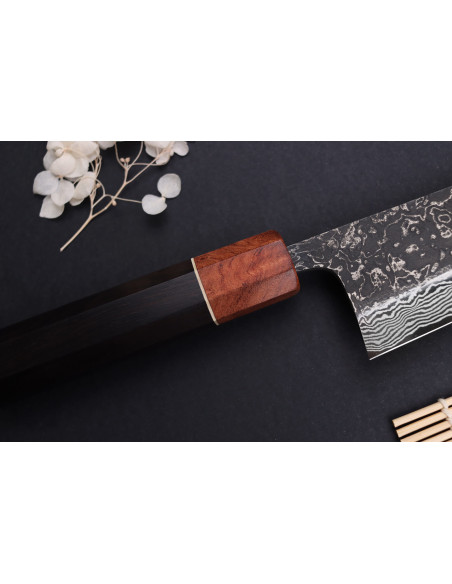
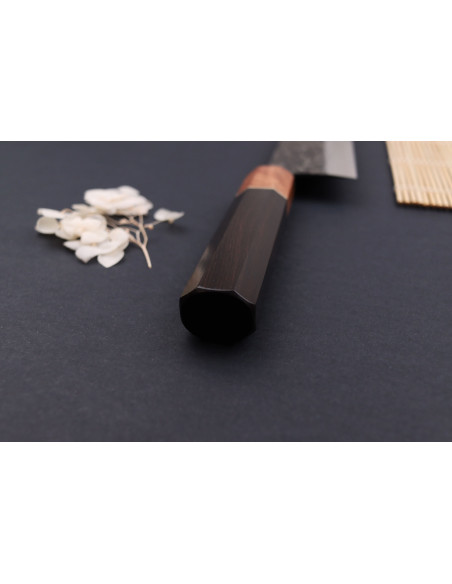
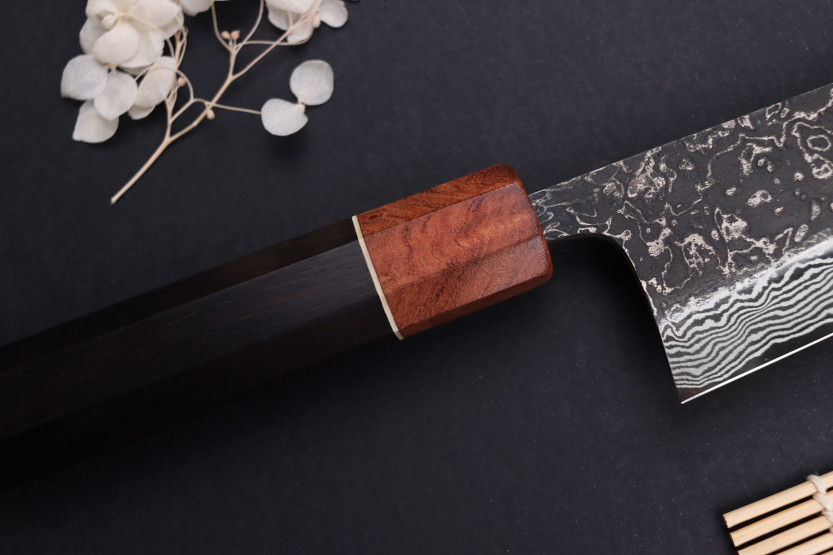
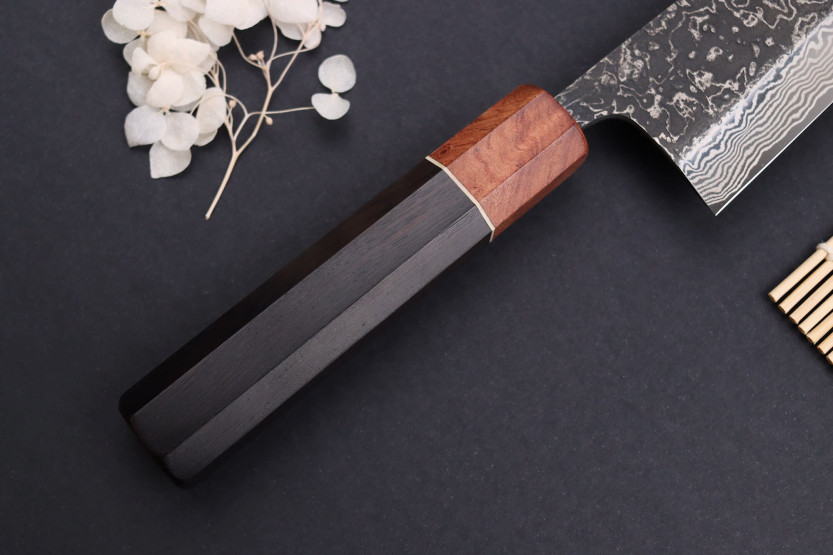
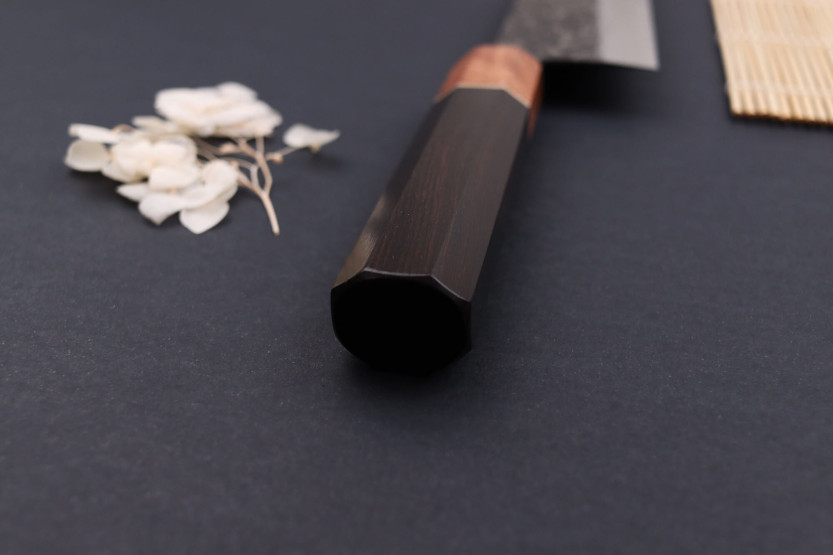
The knife's handle is made of ebony wood. This beautiful, warm-toned species is considered dense, which makes it more resistant to cracking. It is ideally suited to regular, even daily use. It's durable, which is an asset in the kitchen! With its octagonal shape, it suits all cooks.
It's complemented by a bolster in quince, a resistant wood that also adapts well to temperature changes. Its lighter shade contrasts well with the darker appearance of ebony. A white micarta ring links the two woods, adding a touch of elegance.
Finally, wood putty fills the space between the different materials to prevent water from seeping in, or the small food items you cut up as you go along.
Your Japanese knife is made from top-of-the-range materials. So don't wash it in the dishwasher or leave it to soak in the sink with the rest of your crockery. Instead, wash it by hand immediately after use, and wipe it dry. And don't soak the handle too much, as wood doesn't like water. Finally, you can store it in a dry place after checking that there are no traces of moisture.
As previously mentioned, knives are considered oxidizable (via carbon), so it's important to store them without any trace of moisture. Also, over time, the blade may change color, and this is perfectly normal! In fact, the acidity of food and the humidity of the air can have an impact on its color.
Learn more about blacksmith Masashi Yamamoto
The person who forged this superb handcraftedsantoku knife is none other than the famous Masashi Yamamoto san. He's a modern-day blacksmith who learned the trade from his older brother. Once ready, he developed his workshop in 2013.
The knives he designs and creates are superb pieces with an impeccable finish. He is also known for the hardness of his blades, which he achieves through special, technical heat treatments. Despite his youth, he now teaches his skills to two apprentices! His unique style is also emblematic: he forges in flip-flops, often with a cigarette in his mouth. He's got a style all his own.
Need a Sharpening stone to maintain your knife? We've got it!




 By buying this product you can collect up to