History of the manufacturer :
MAC manufactures kitchen knives in Seki, a Japanese town renowned for its quality cutlery production over many centuries. The brand was created in the 60s, after its founder had studied in the USA, where he worked as a part-time cook to supplement his studies. It was there that he had the opportunity to test knives that were not necessarily to his taste.
As an anecdote, he was using a heavy, very sharp, blunt German knife when he dropped it on the floor, narrowly missing stabbing himself in the foot. Instead, the knife stuck in the ground, and when he tried to remove it, about 3cm of the point had broken off. To fix this, he took a sharpening stone to the blade, making the point "rounder". Gradually, he realized that this modification had significantly increased the knife's efficiency, and with it his own output.
This experience gave him the idea of founding the MAC company on his return to Japan, with the aim of producing knives with a formidable cutting edge that would be safer, longer-lasting and easier to use.
The brand now boasts several patents to its credit, and is known the world over. For the record, the name MAC comes from the word "Macrocosm", which in simplified terms means "immense universe" (reflecting the founder's ambition to equip every country in the world with his knives). He chose to retain the first 3 letters of the word.
The knife in detail:
The MAC Professional series of kitchen knives has been developed for chefs who need to work fast and well. These knives make no compromises on sharpness or ease of use. They save you time, while remaining pleasant to handle, even over prolonged use.
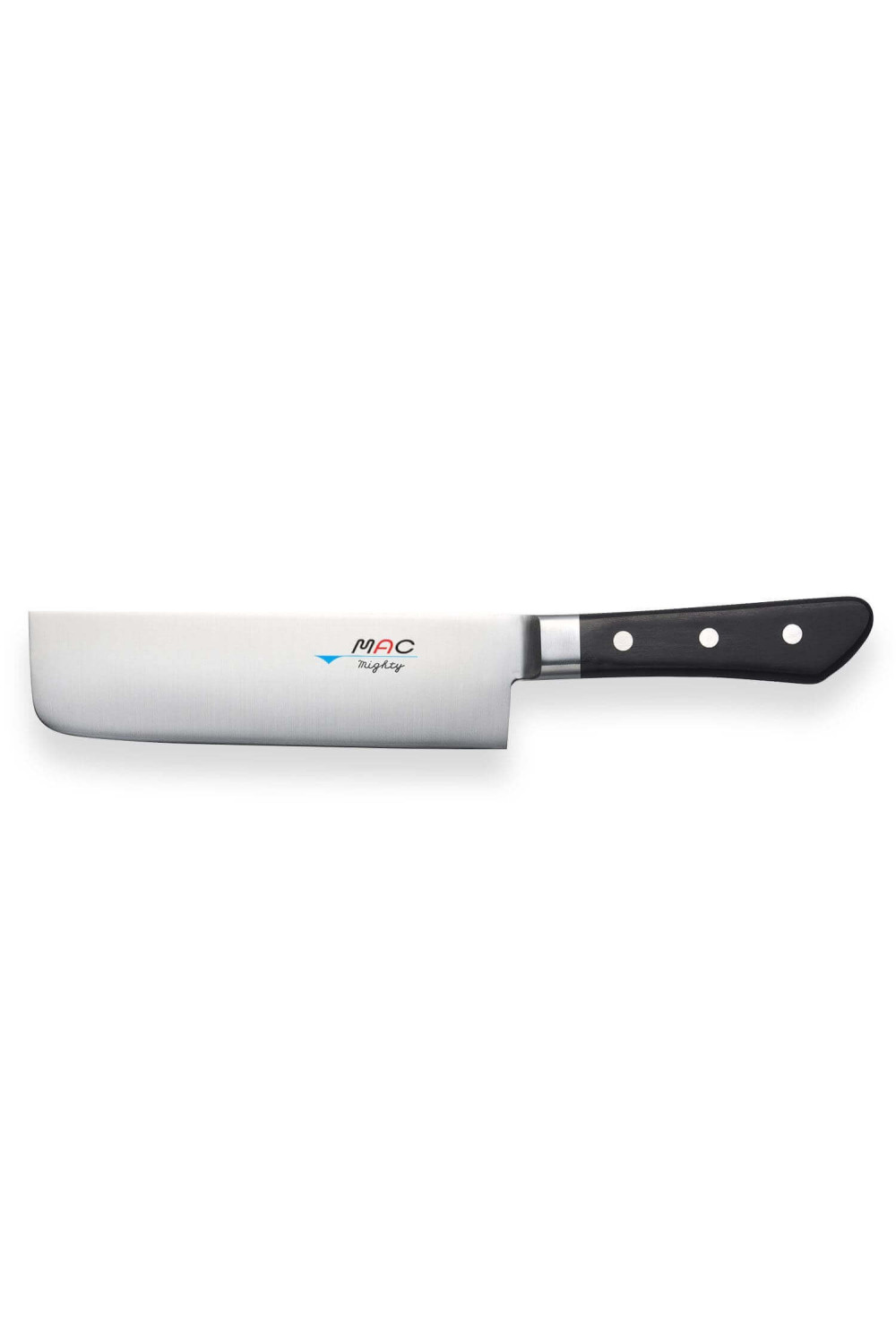
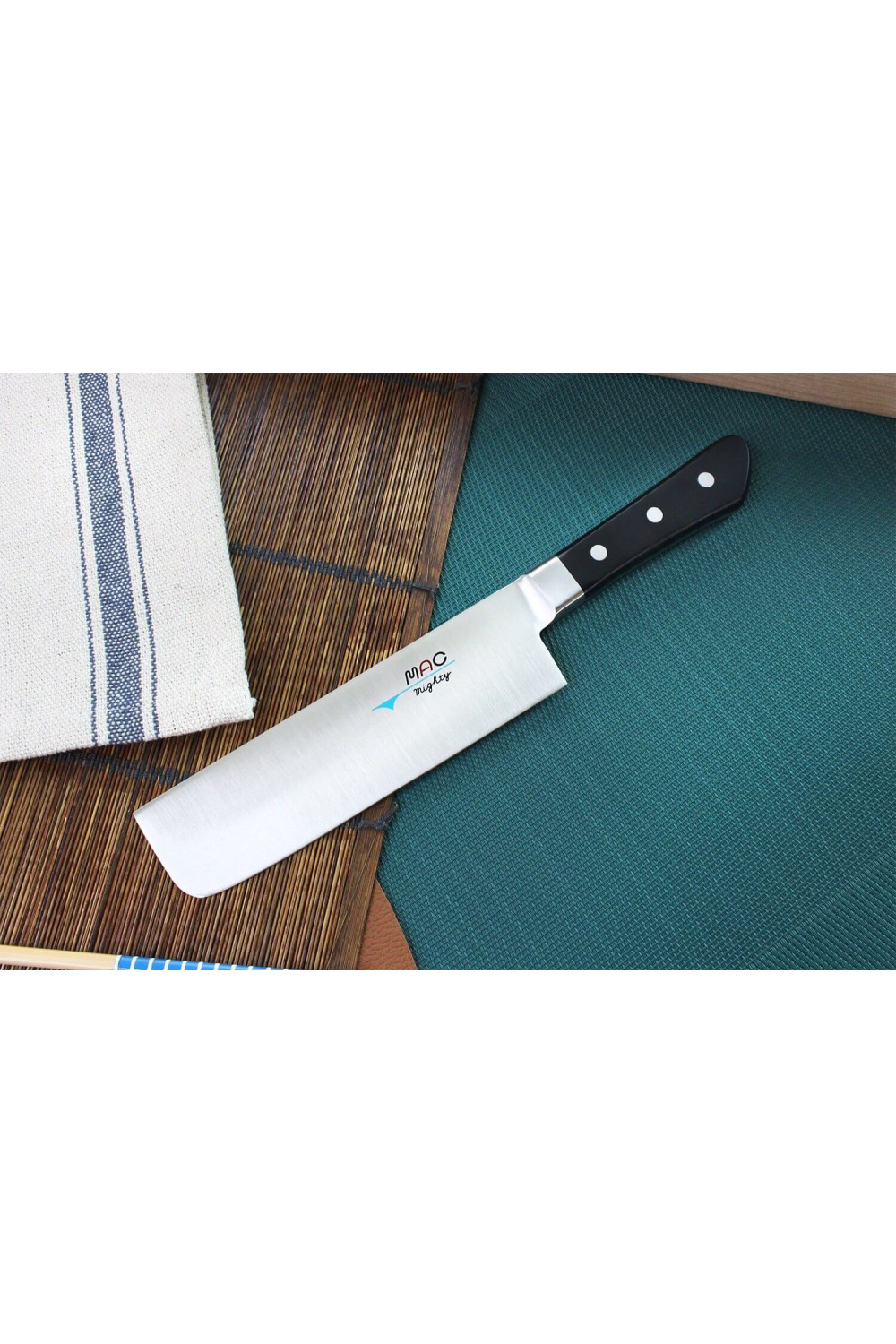
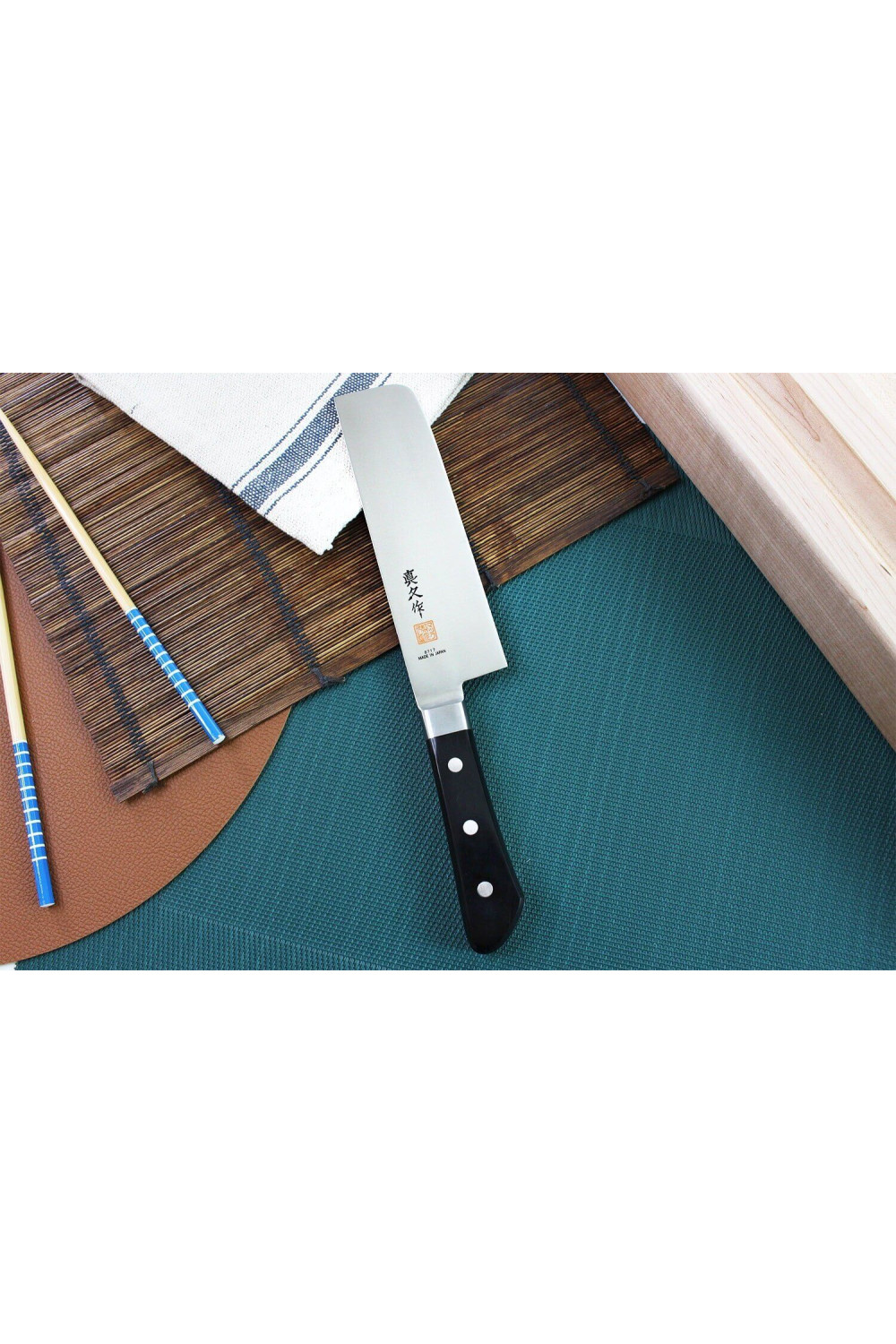
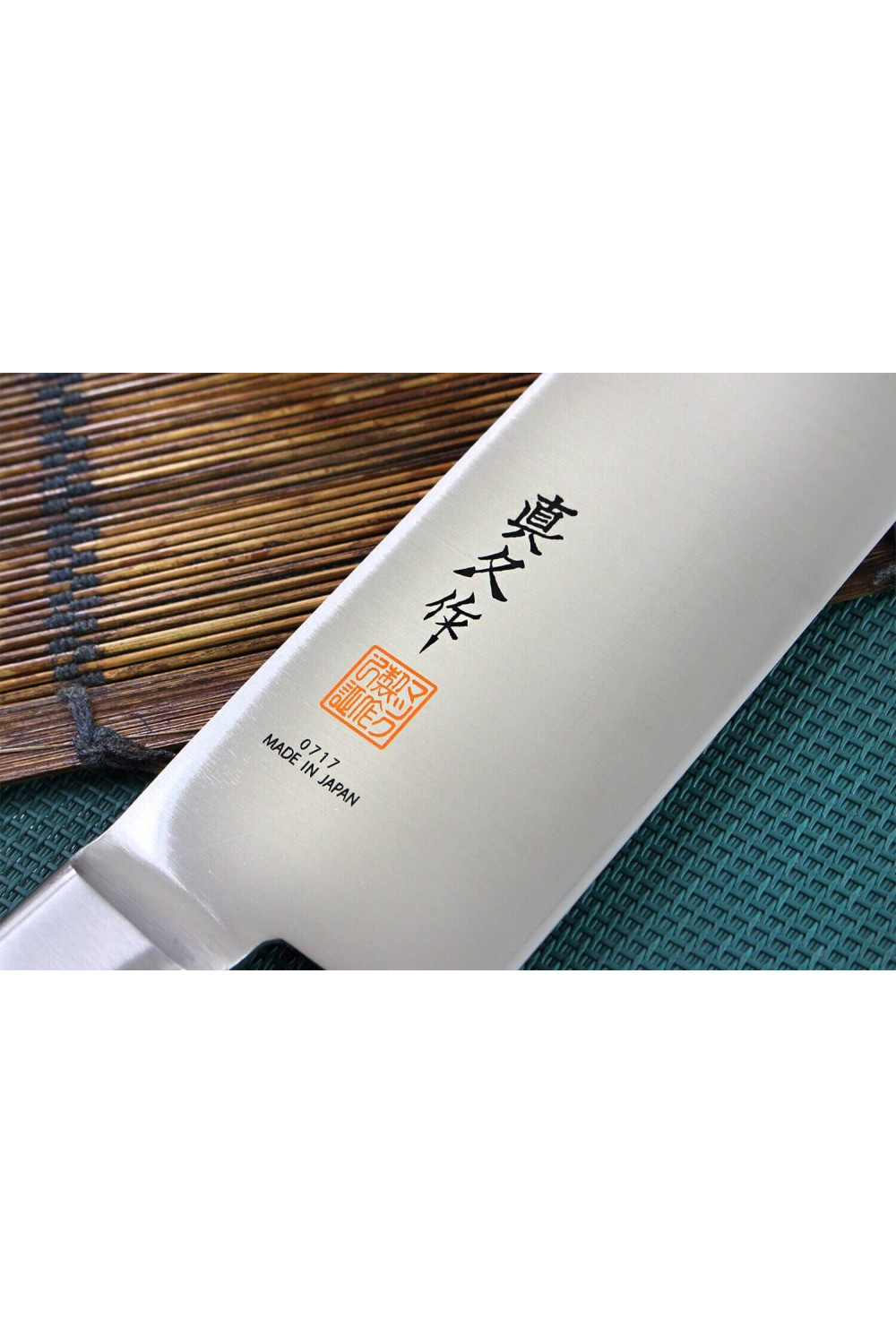
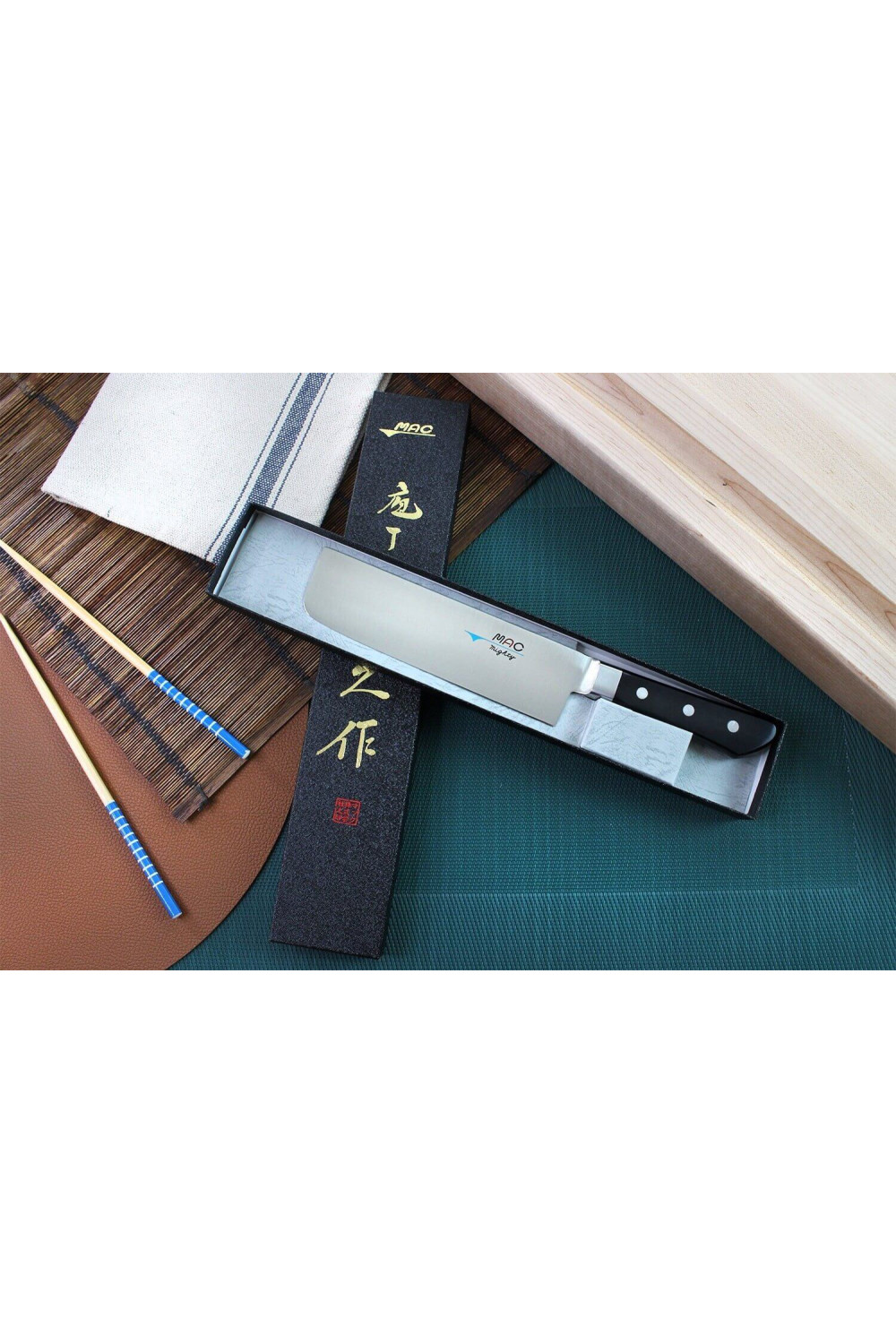
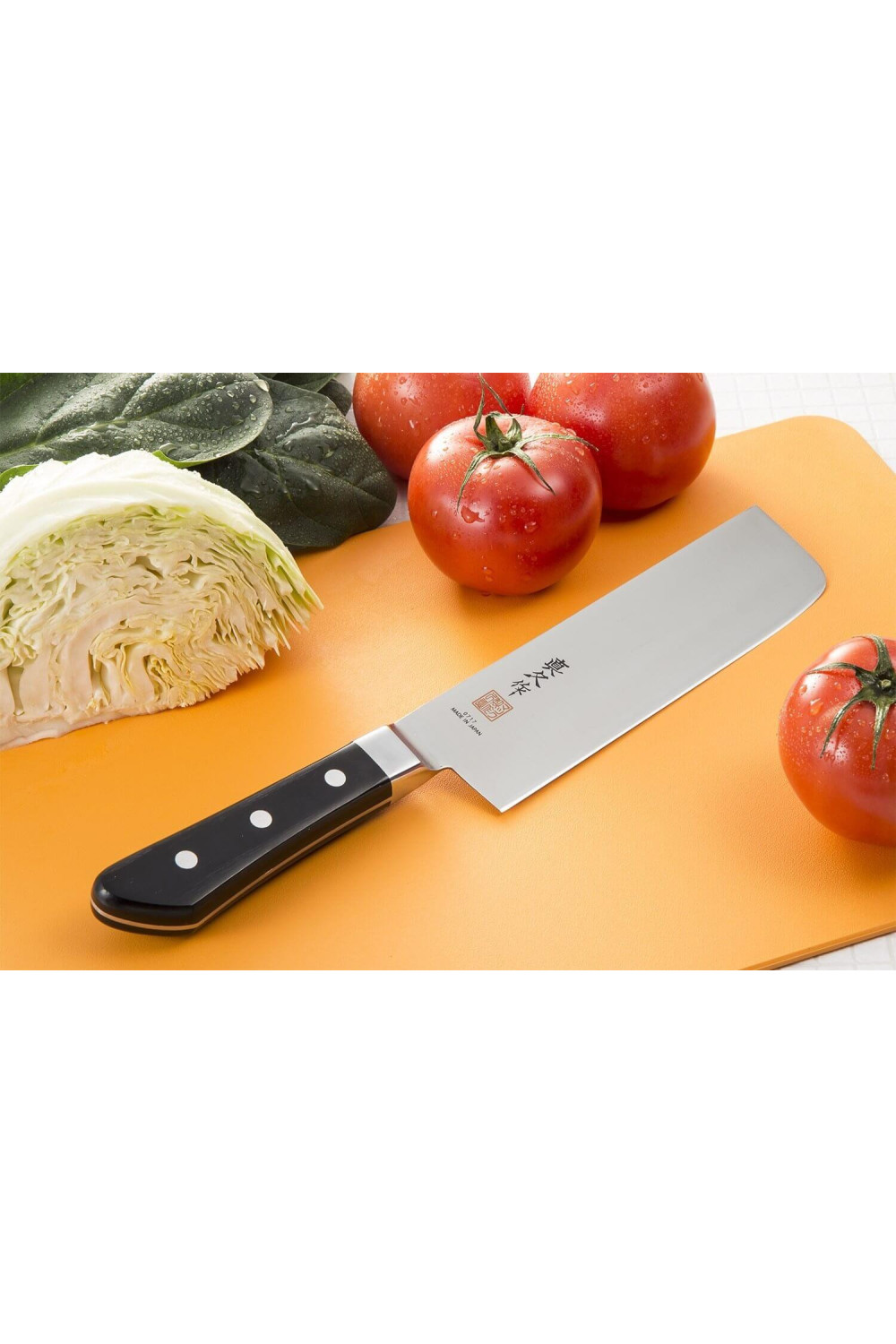
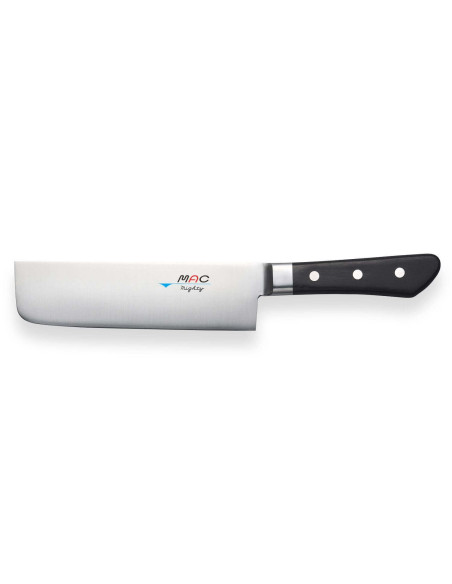
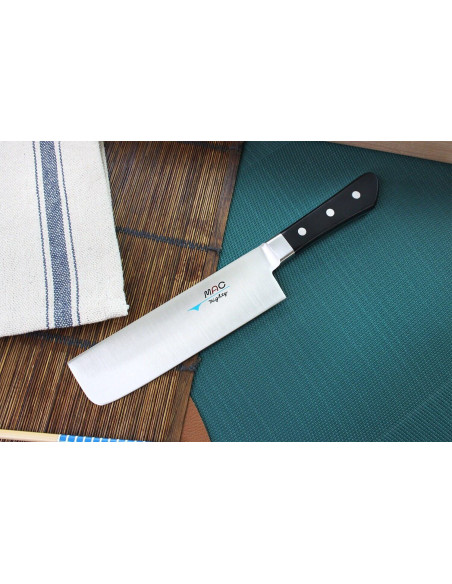
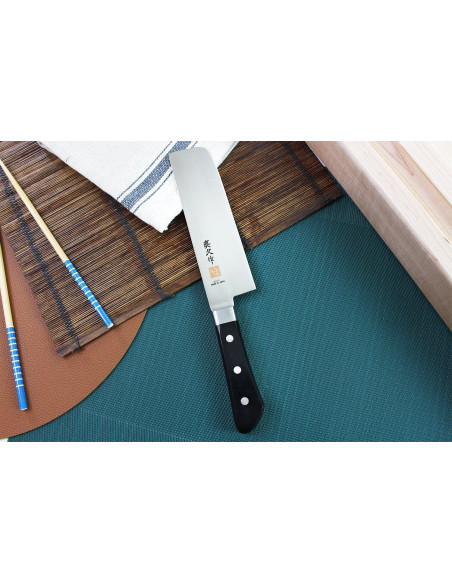
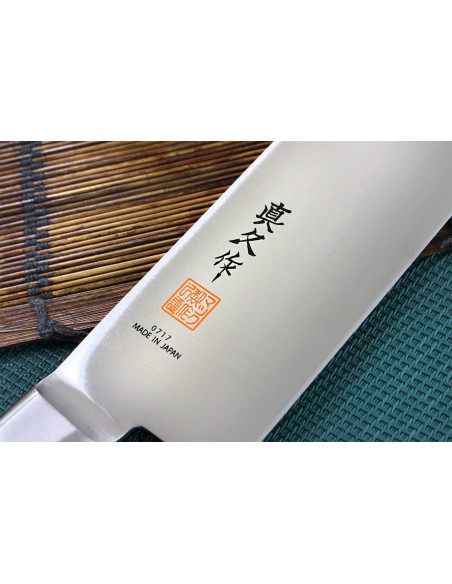
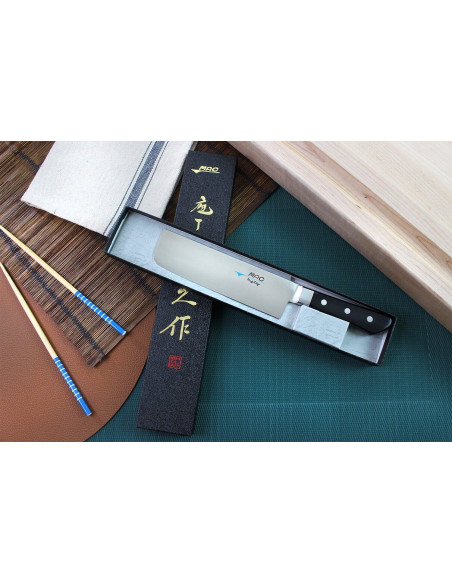
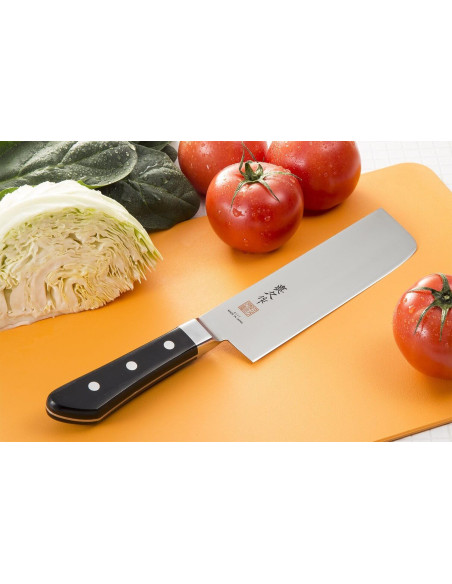
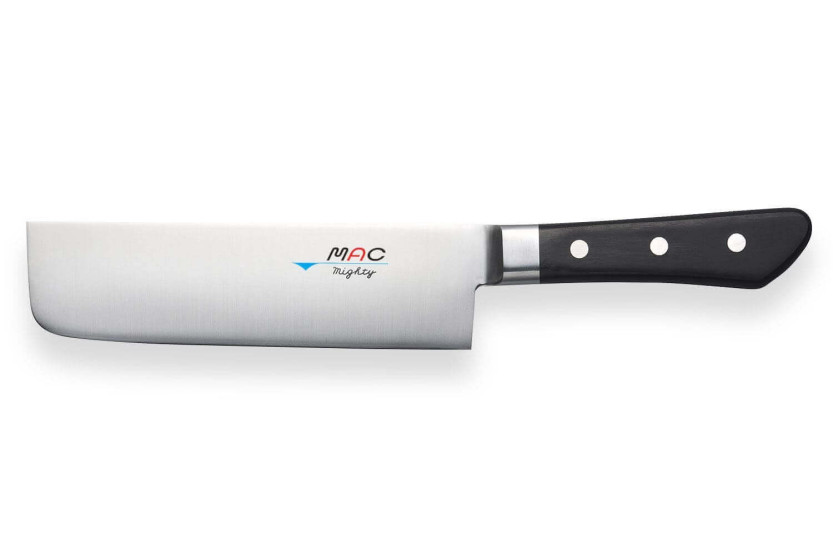
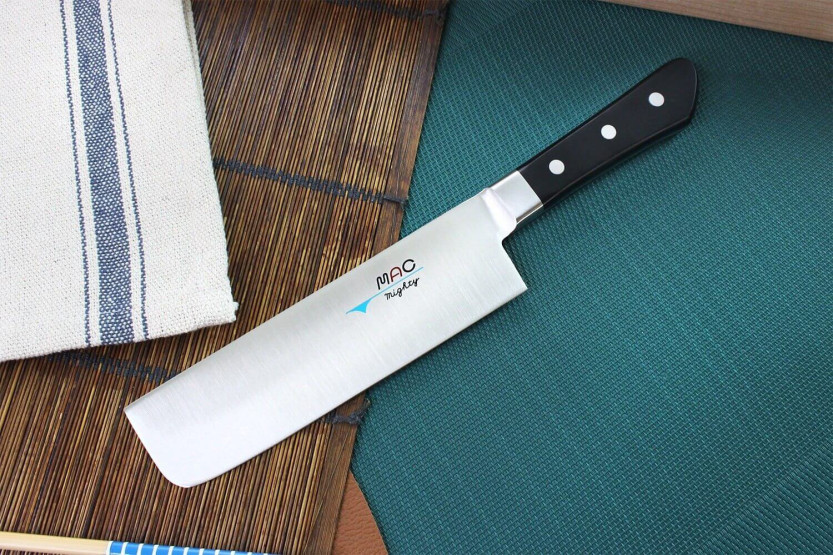
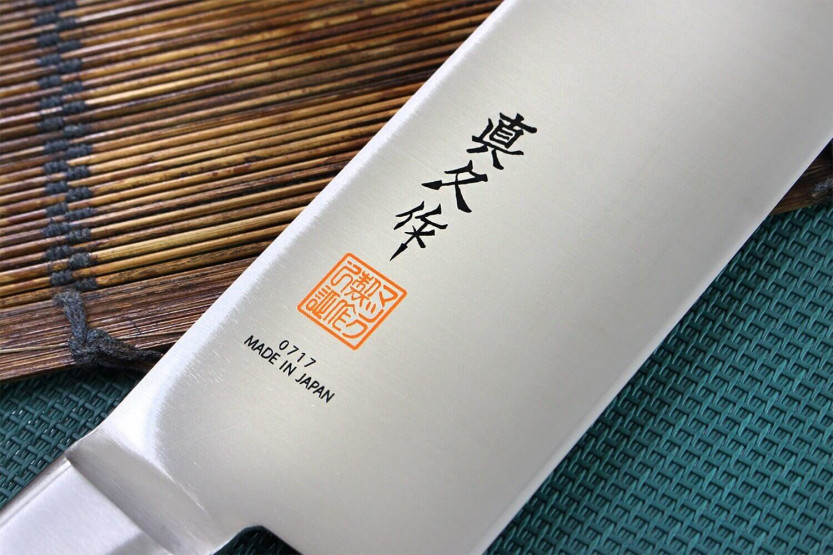
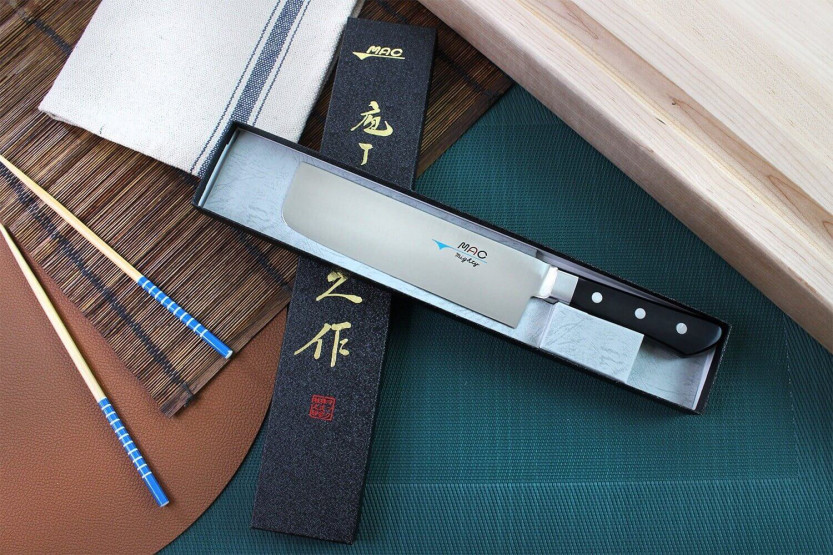
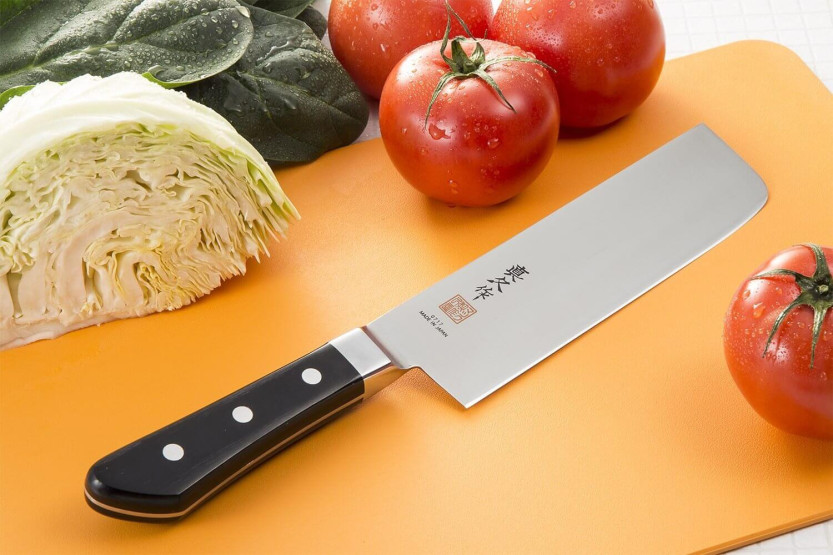
The MAC Professional 17cm nakiri knife lets you easily cut vegetables and fruit of various sizes. Its rectangular blade is ideal for fast, efficient slicing. Its straight cutting surface makes full contact with the food, and in just a few precise strokes, you're done! What's more, thanks to its wide cutting surface, you can use it as a small shovel to gently move sliced food from your cutting board to a container. In Japan, it's also used to make katsuramuki, a cutting technique that consists of making a thin continuous slice from a cylindrical vegetable.
Made of AUS-8 stainless steel, its alloy is enriched with carbon, tungsten, molybdenum and vanadium:
- Carbon and tungsten are important elements in determining the blade's hardness. The more carbon, the stiffer the blade, and a stiff blade will hold its cutting edge for a long time. What's more, you can work the edge to a razor-sharp finish, since steel is capable of holding such a finish.
- Molybdenum and vanadium also have a slight impact on rigidity. Vanadium increases the alloy's elasticity and thus its resistance to impact, while molybdenum increases its resistance to corrosion.
The steel used in this MAC Professional knife is both high-performance and durable. This alloy is also easy to work with, so you can easily maintain it with a whetstone when the need arises.
Final sharpening is carried out by hand, on a water stone. The craftsman's skill ensures a razor-sharp edge from the very first use.
In addition, the cutting edge has a hybrid shape, combining a Japanese angle (unilateral) and a Western angle (symmetrical). This particular angle gives the knife the perfect combination of formidable cutting edge and longevity.
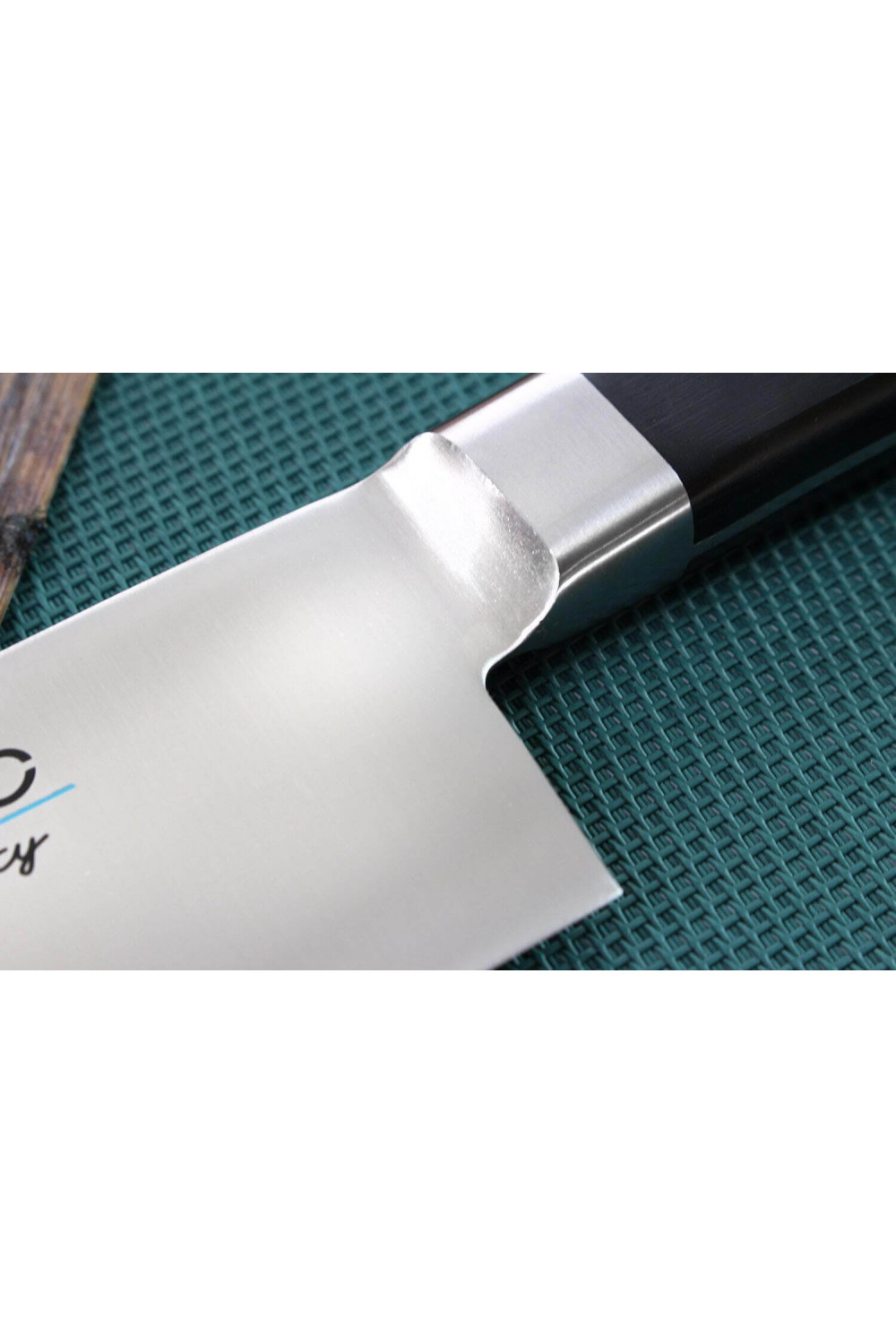
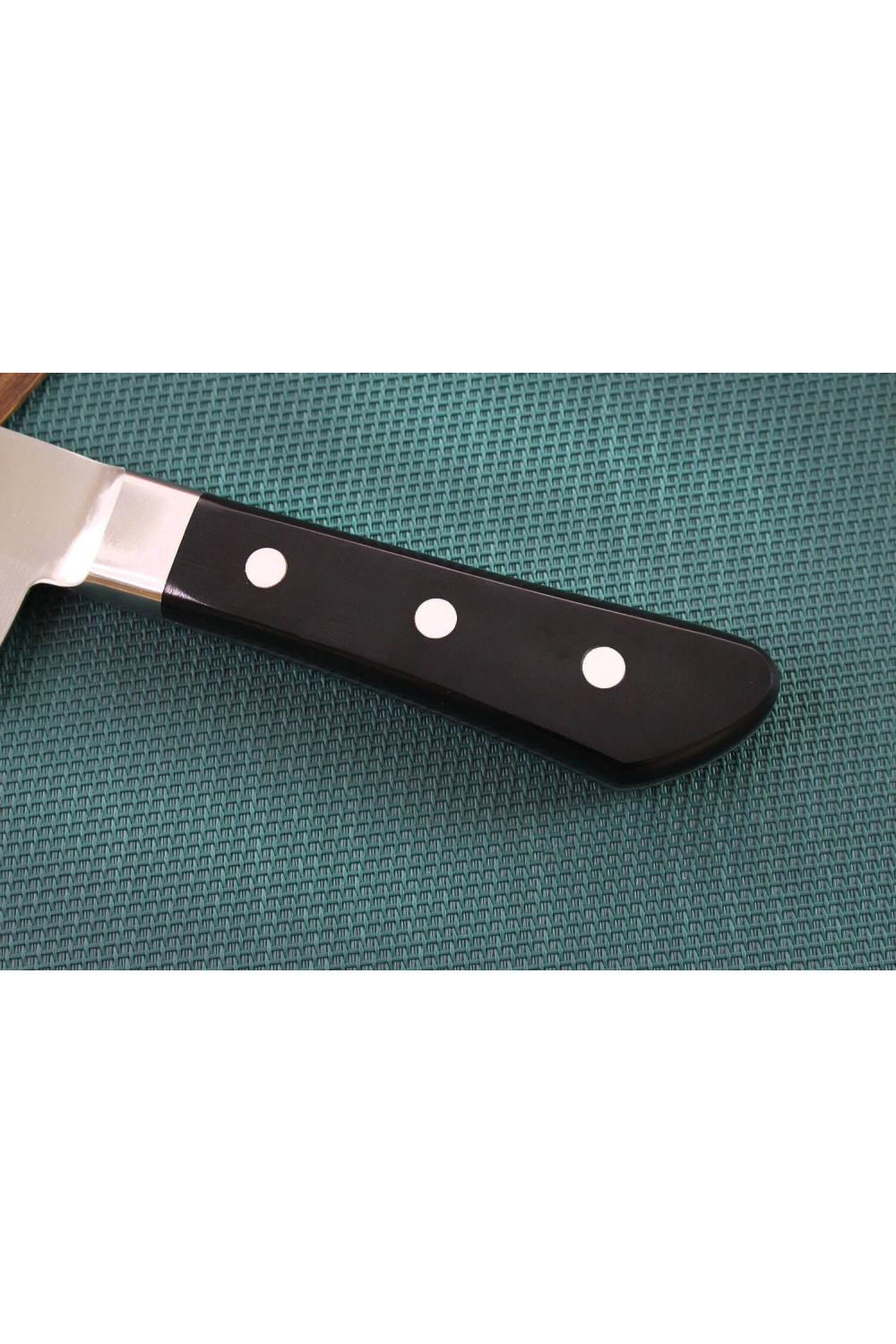
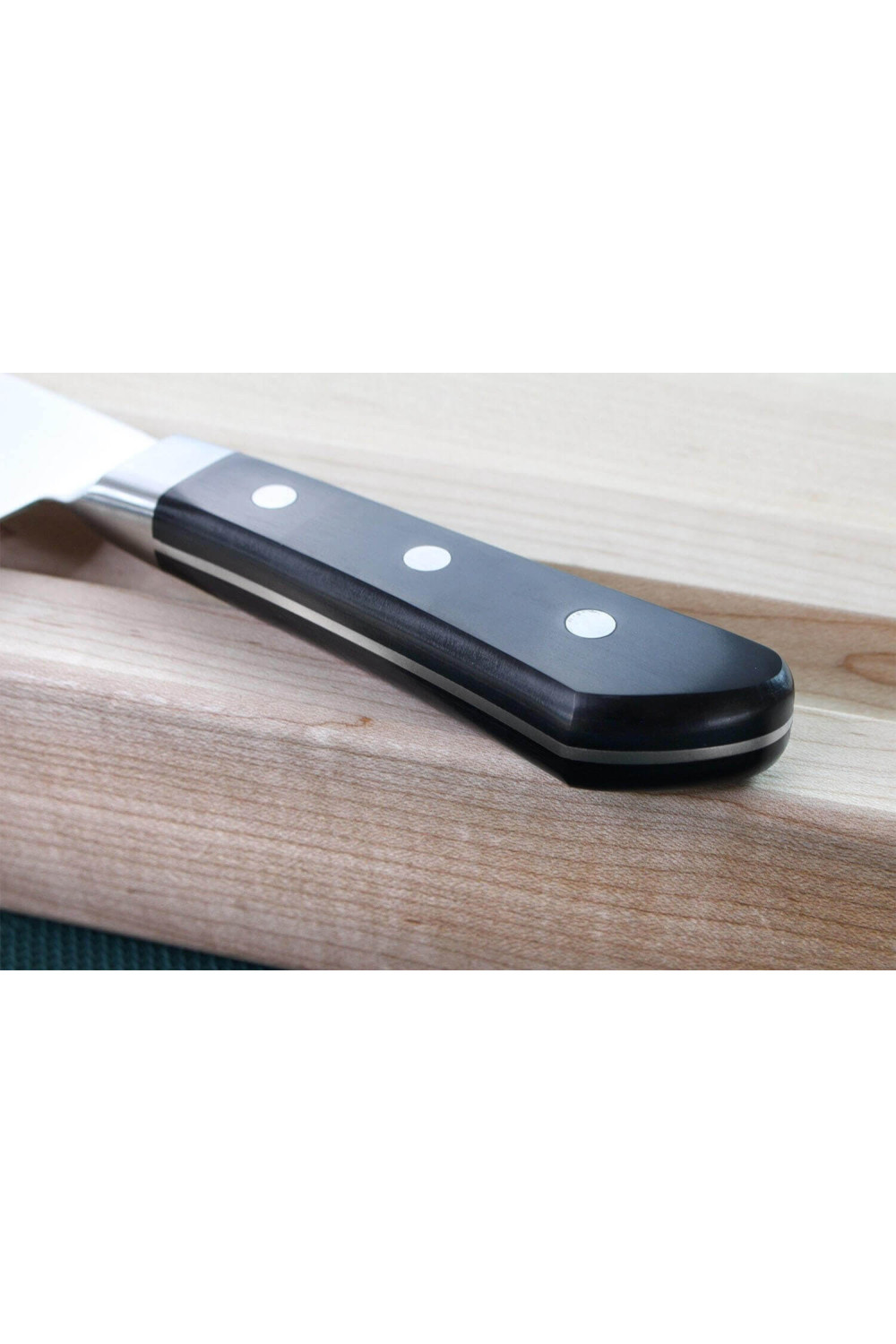
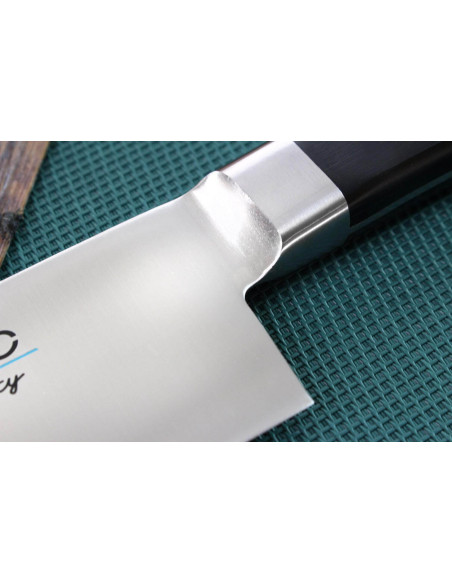
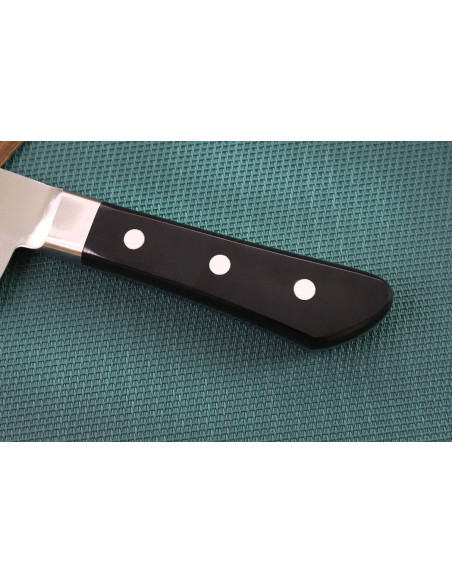
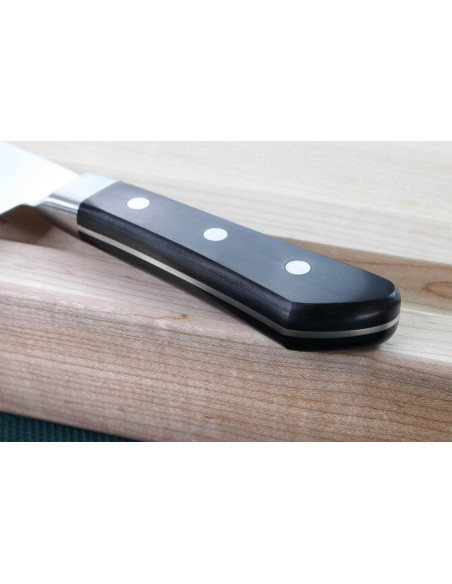
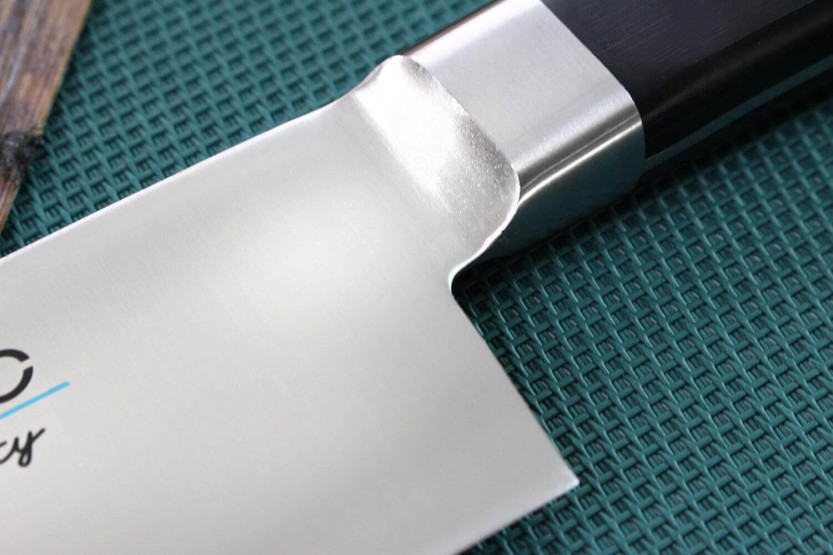
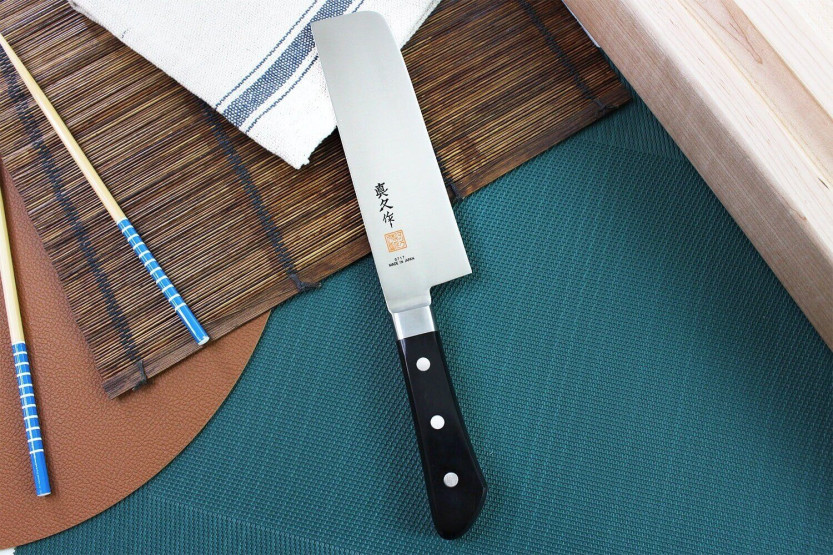
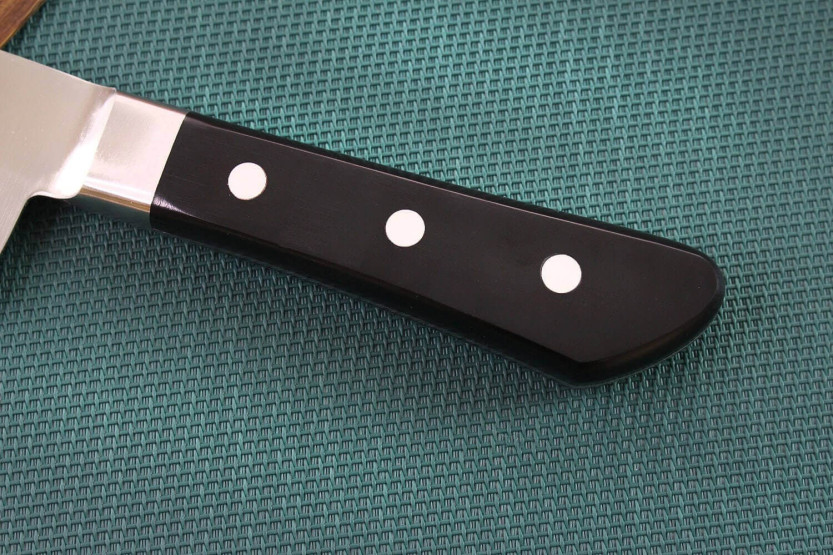
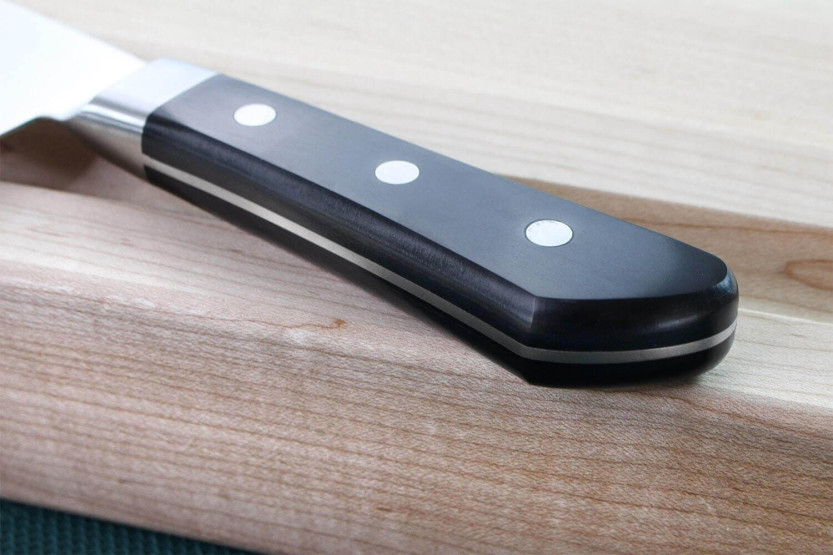
The handle is made of 2 plates of Pakkawood, a composite material combining laminated wood and resin compressed under heat, to resist moisture, shock and temperature variations. It is completed by 3 rivets that hold the Pakkawood to the full tang blade. A steel bolster links the blade to the handle.
The grip is pleasant and perfectly suited to Western use.
To care for your knife, wash it by hand in lukewarm water with a soft sponge. Dry immediately with a soft cloth, leaving no trace of moisture on the surface. In this way, you'll retain its original performance and appearance for a long time to come.
Discover other MAC Professional knives on our website!




 By buying this product you can collect up to