Sakai Takayuki's know-how and expertise
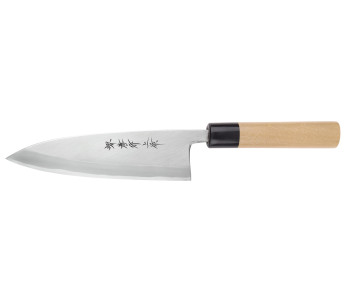
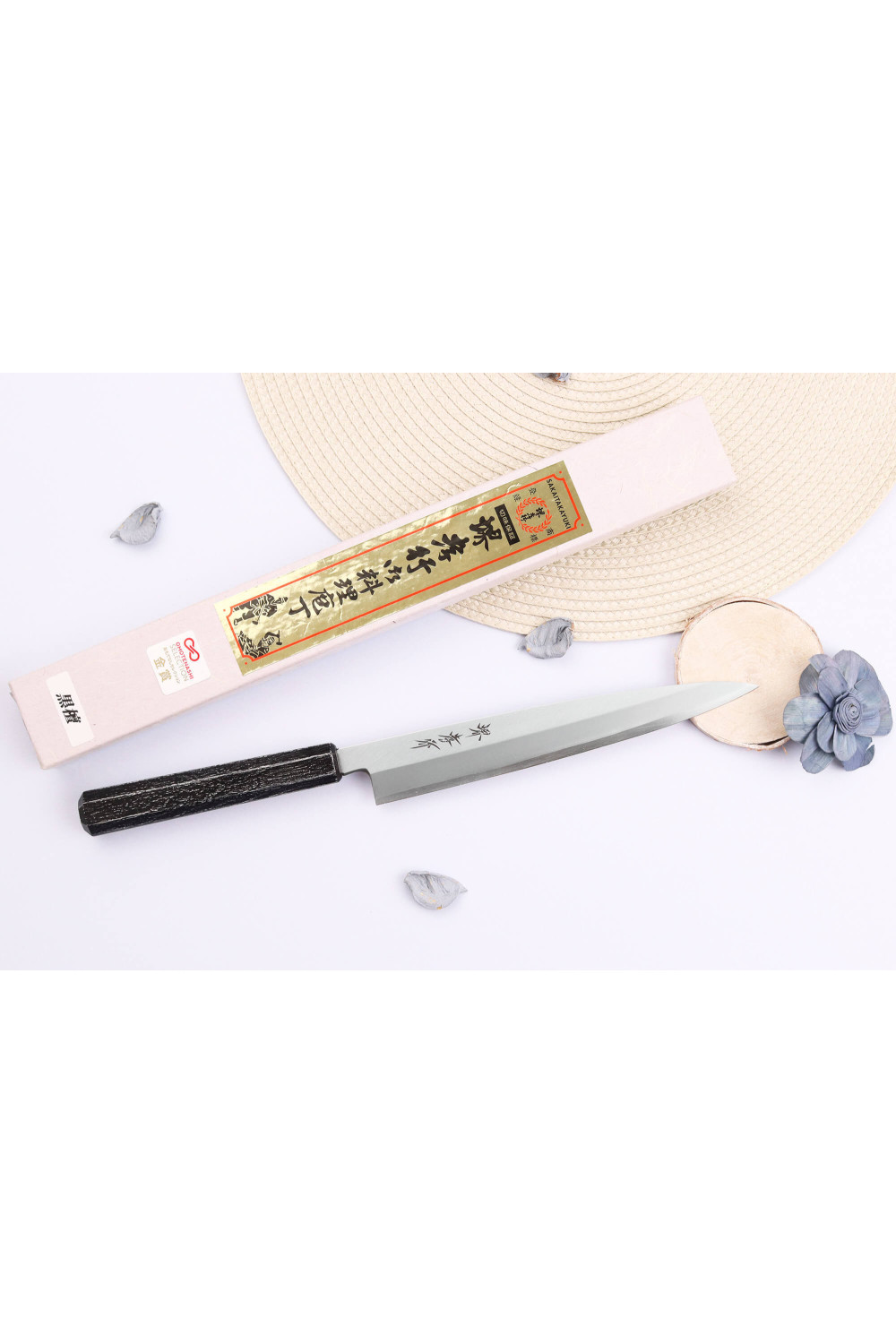
Sakai Takayuki is a Japanese company founded in the 1950s in Sakai. That's why it includes the town's name in its title. The company's many years of experience, combined with the know-how it has inherited, enable it to offer you quality Japanese knives. Indeed, Sakai is a stronghold of Japanese cutlery: this is where samurai katanas were once forged. The blacksmiths of the time made a point of passing on their techniques to subsequent generations, techniques that have been passed down to Sakai Takayuki. Today, the brand offers knives that combine traditional methods with modern visuals.
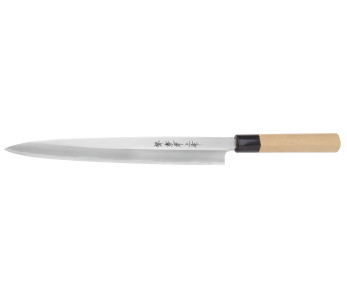
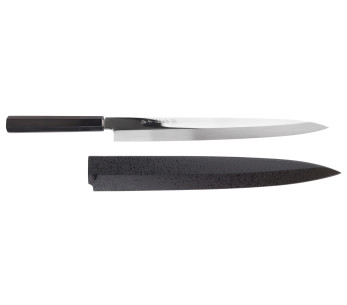
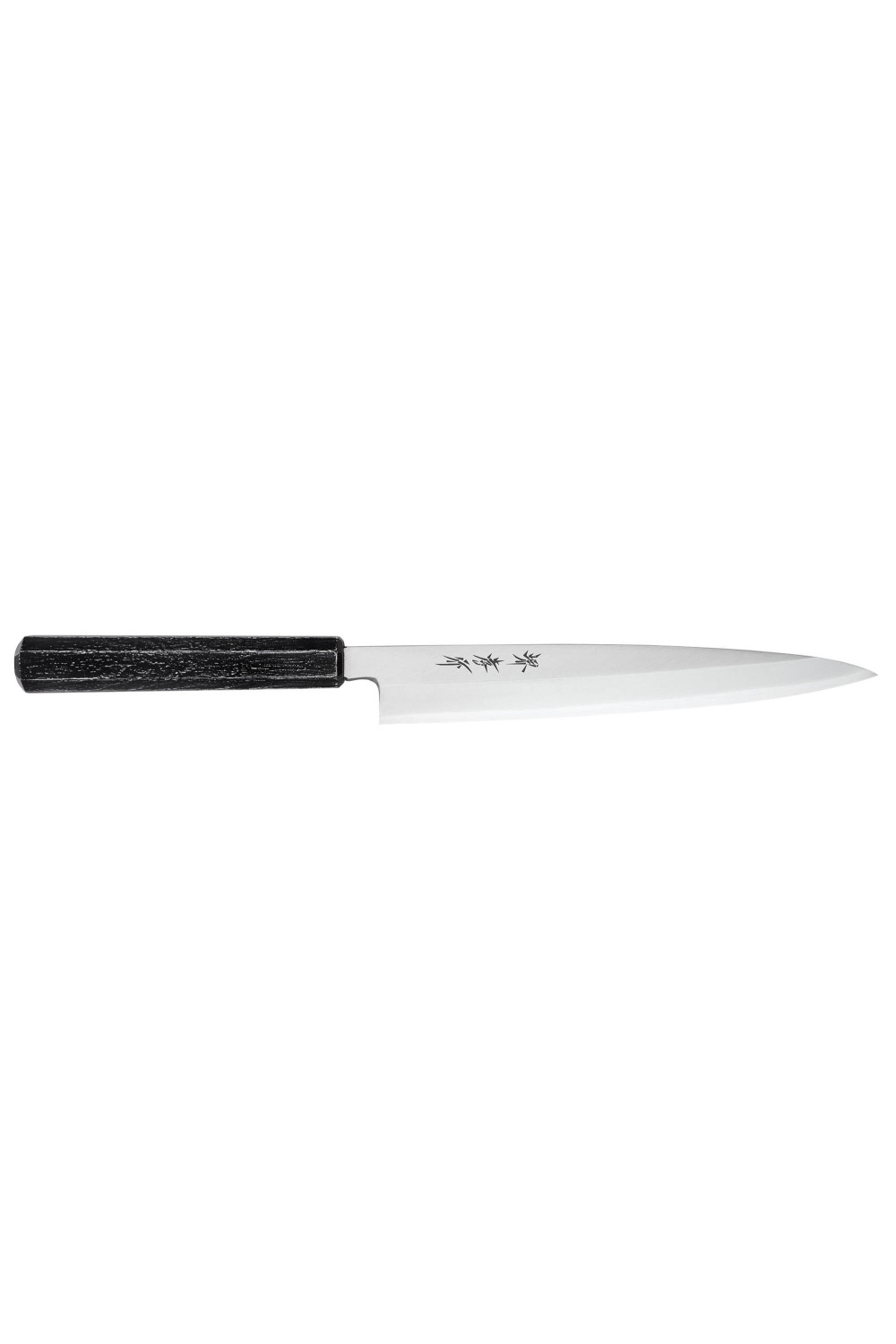
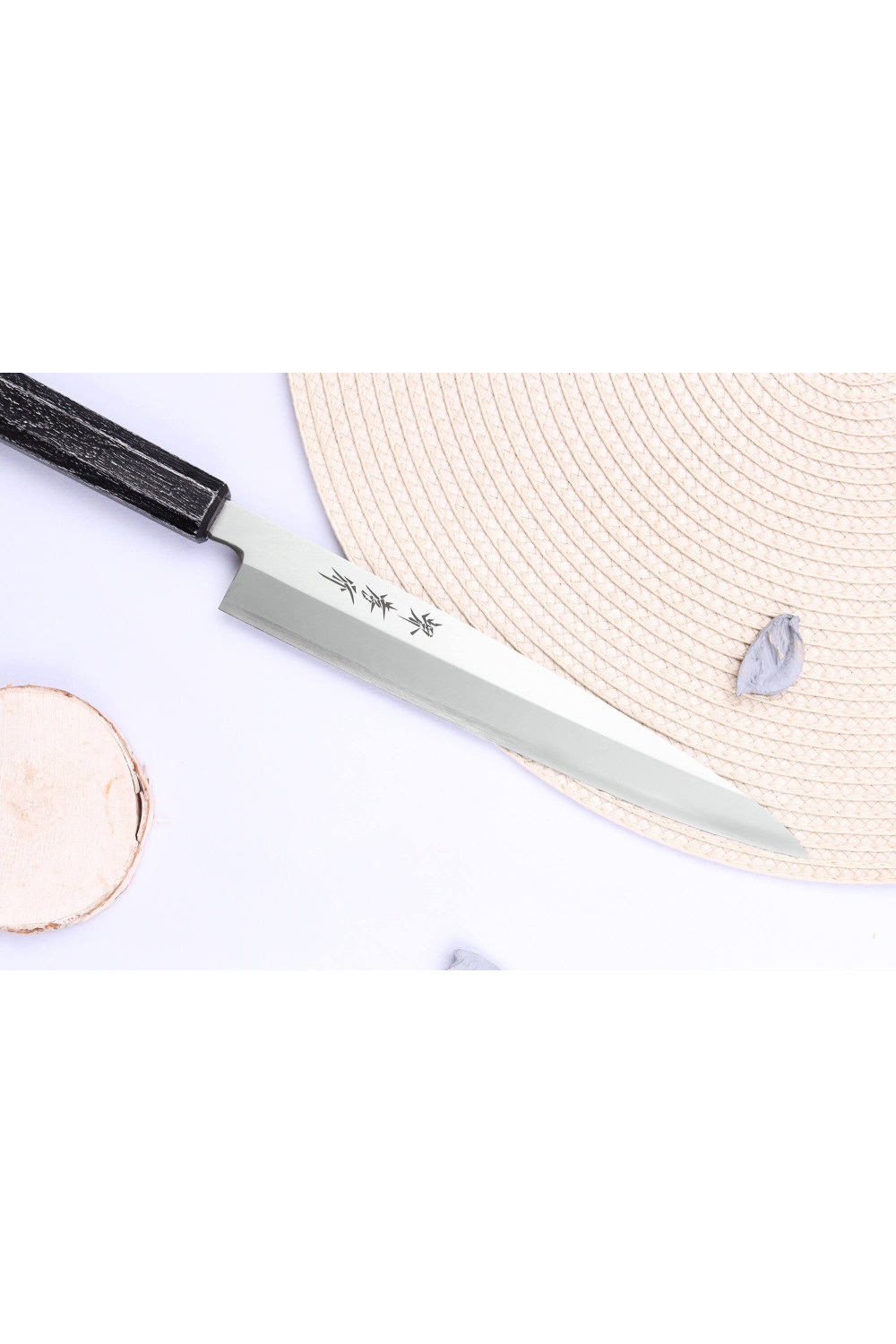
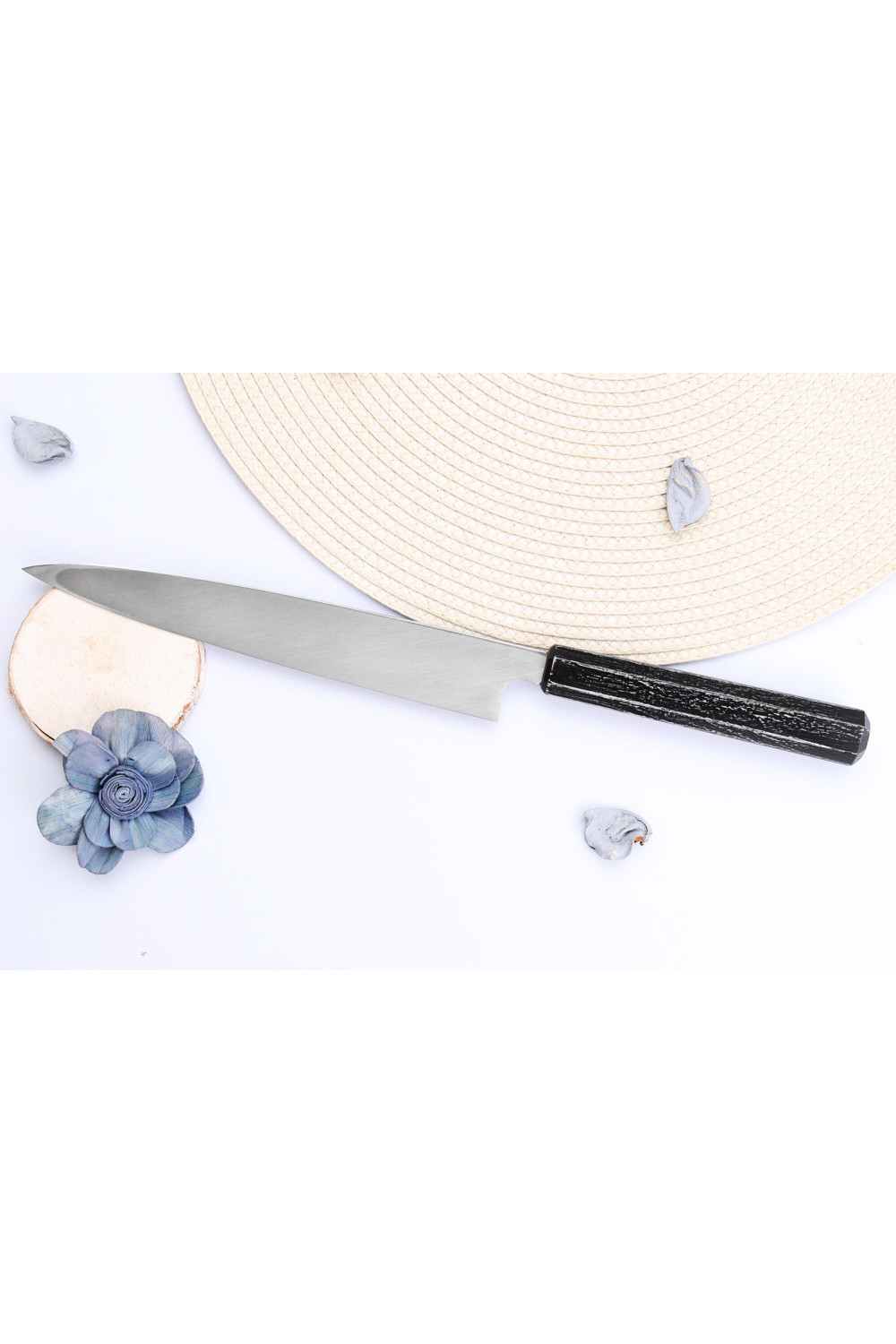
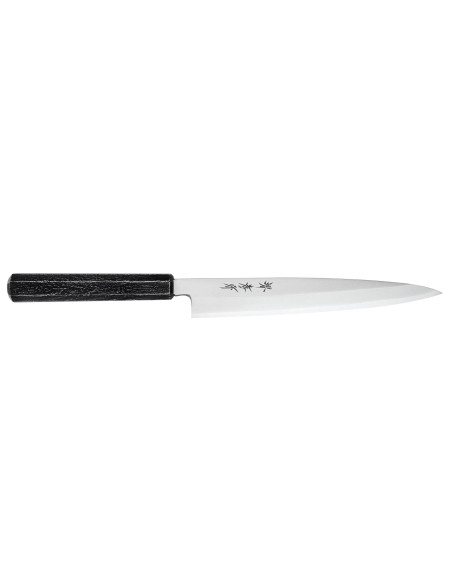
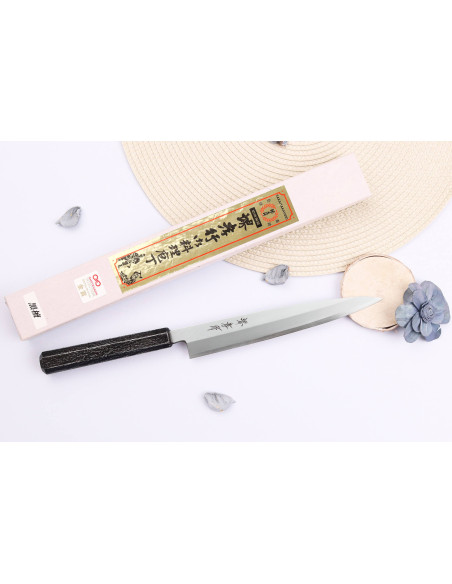
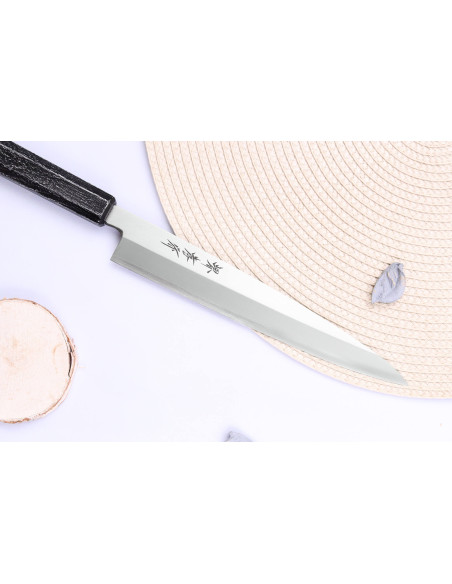
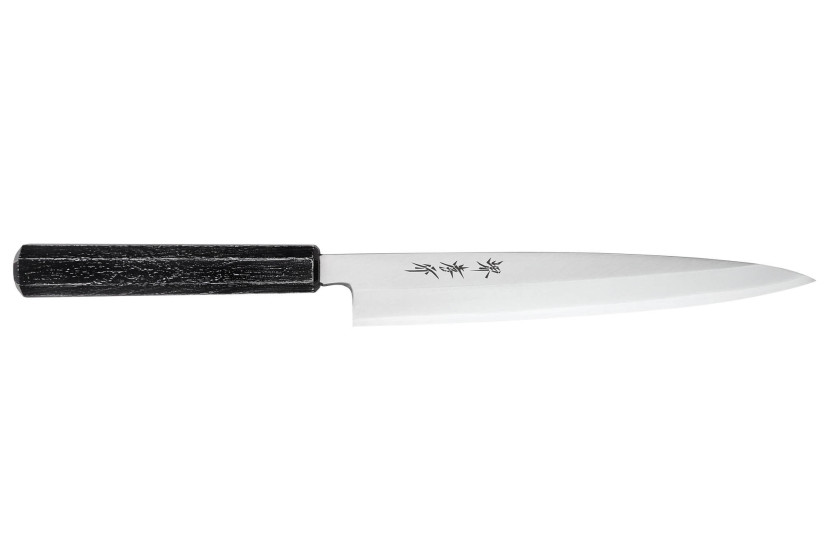
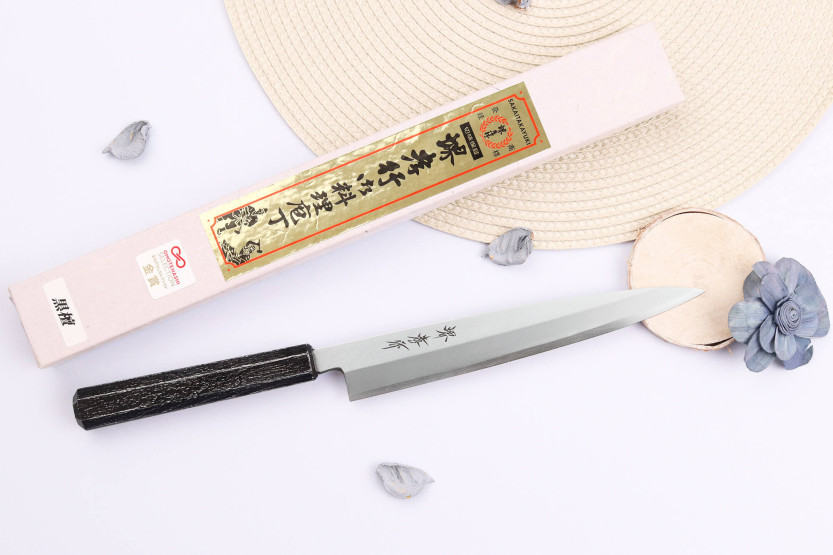
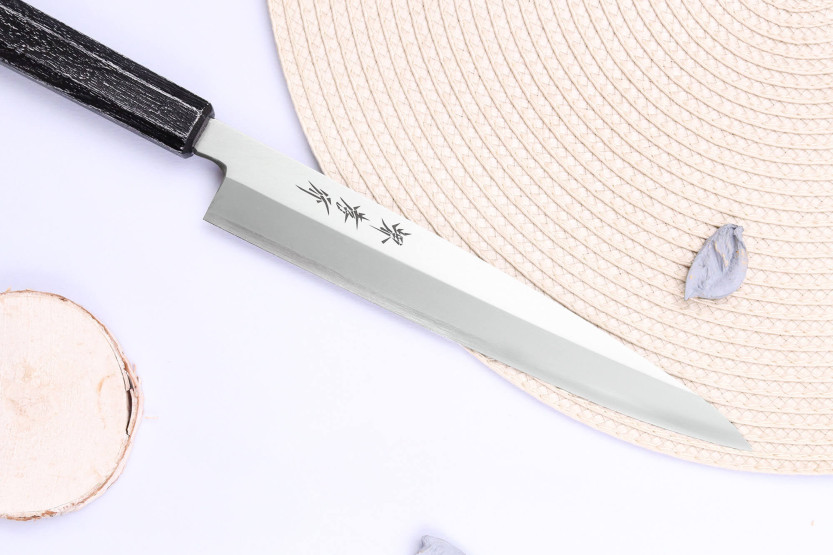
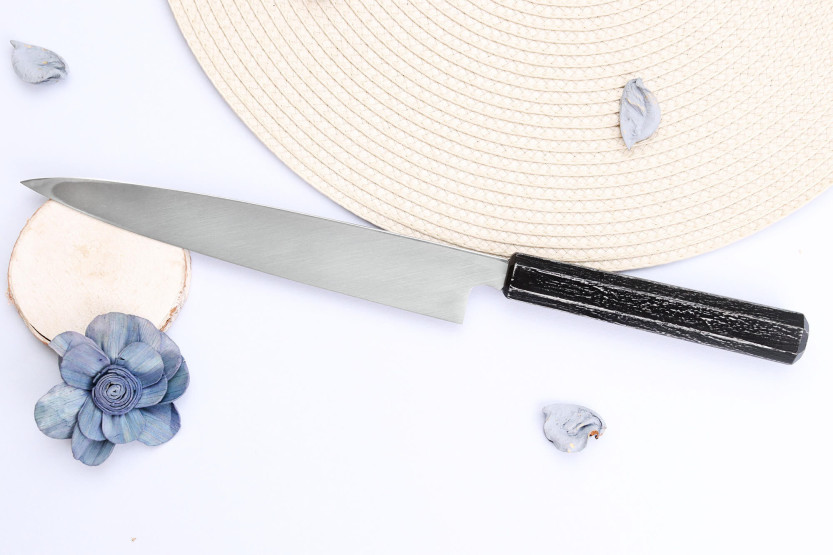
The yanagiba knife is widely used in Japanese cuisine. It is indispensable for preparing sushi and sashimi, as its long blade makes it easy to slice raw fish.
A Japanese knife with a San Maï blade
Your Nanairo 21cm yanagiba features a San Maï blade, a typically Japanese construction. The term San Maï means "3 layers" in Japanese, and clearly indicates how the blade is designed. It contains a core of rigid steel which is covered by a layer of softer steel, folded over the core to sandwich it: the 3 layers are formed. The result is a well-balanced blade with a protected core.
Here, the blade core is made of Japanese AUS-8 steel, an alloy containing important elements. It contains around 0.8% carbon, essential for increasing hardness. The other interesting element in its composition is chromium, present at around 14.5%. Chromium is the element that enables steel to resist oxidation, so AUS-8 steel is considered stainless. AUS-8 steel also contains molybdenum, which reinforces its resistance to humidity.
The knife blade achieves a hardness of 59 HRC on the Rockwell scale, ensuring a long-lasting cutting edge while remaining easy to sharpen when the need arises.
On top of this core is a layer of softer steel that folds in on either side. This stainless steel counterbalances the slight rigidity of the core and protects it. With this top layer, the blade offers greater resistance to micro-shocks and therefore to breakage during cutting.
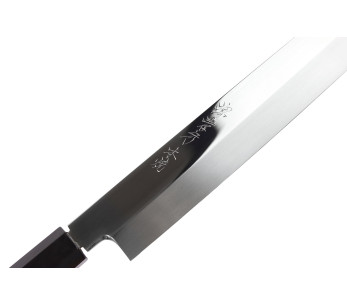
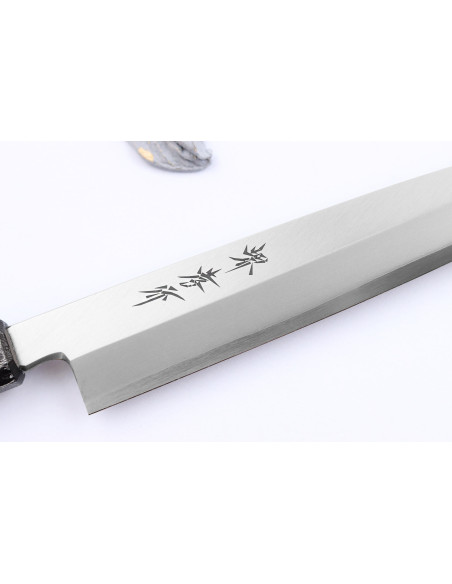
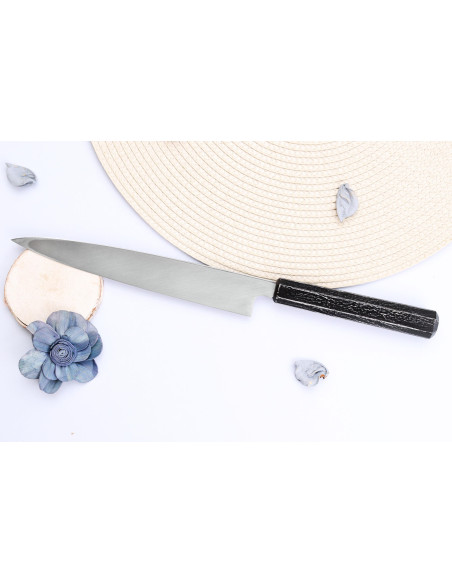
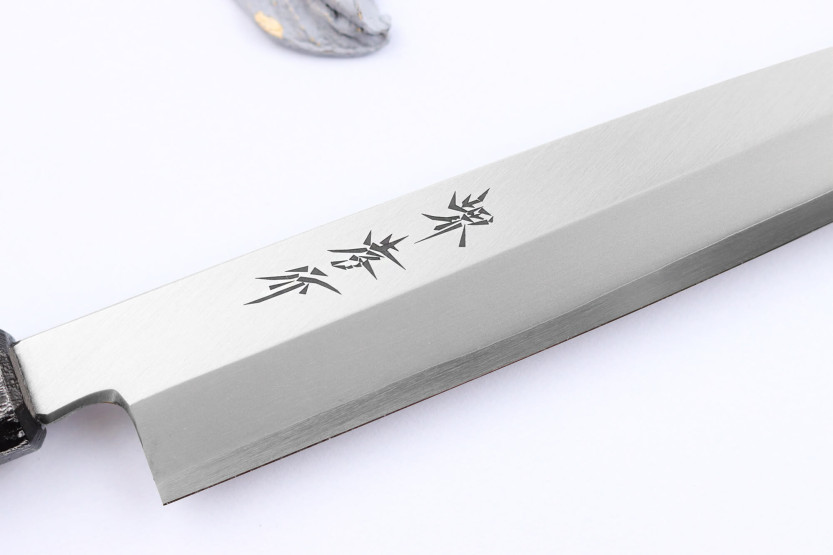
Note that the blade is beveled, i.e. sharpened on one side only, the sharpening having been done by hand. This knife is therefore suitable for right-handed cooks. A beveled edge is ideal for offsetting slices of cut food. The back of the blade also features a hollow cutting edge that allows a little air to pass between it and the food, making it easier to loosen.
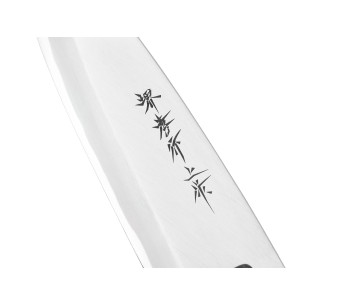
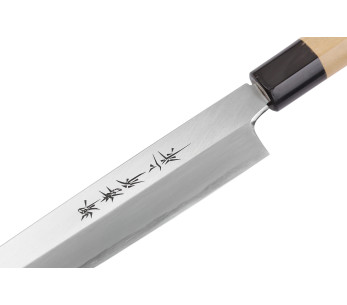
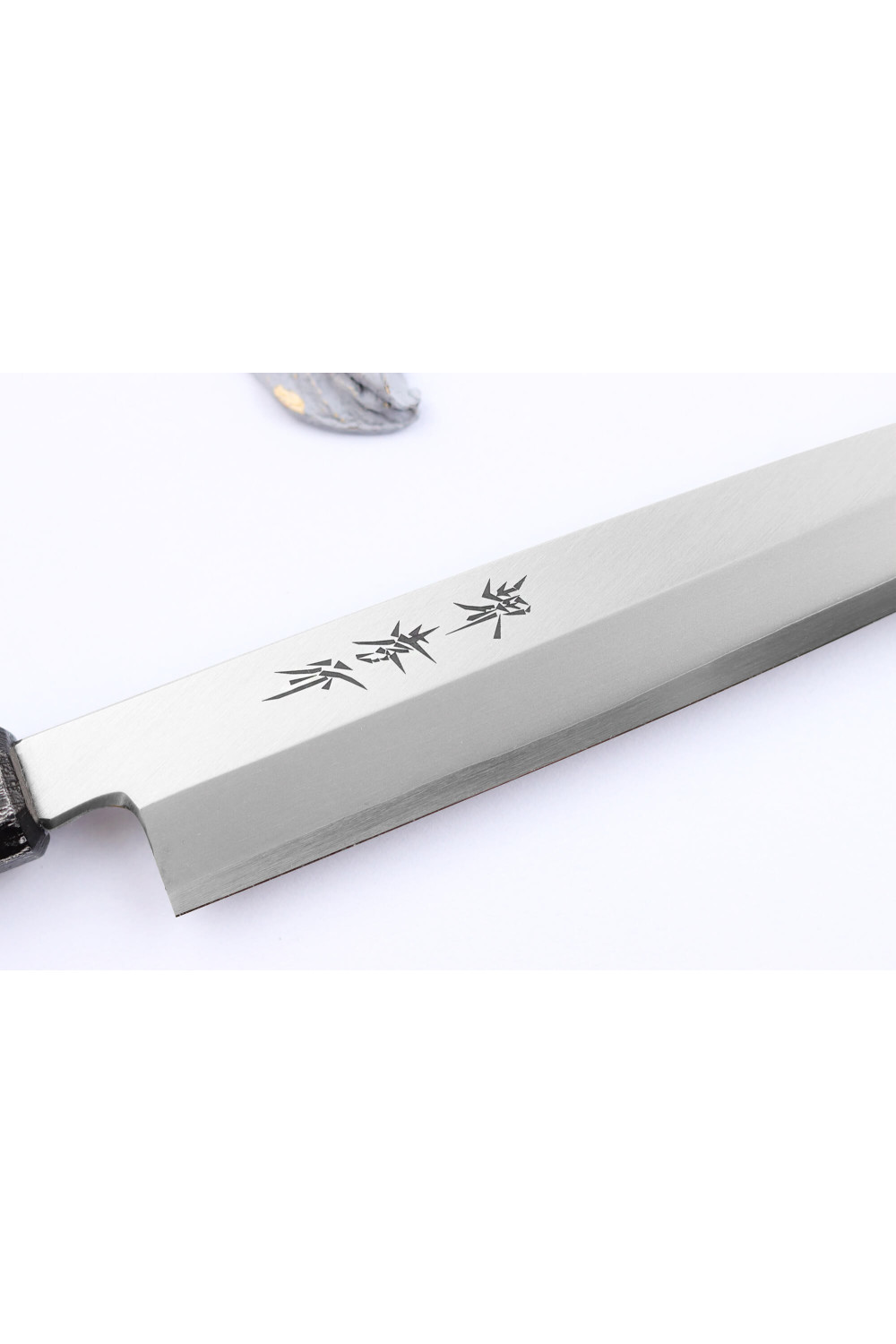
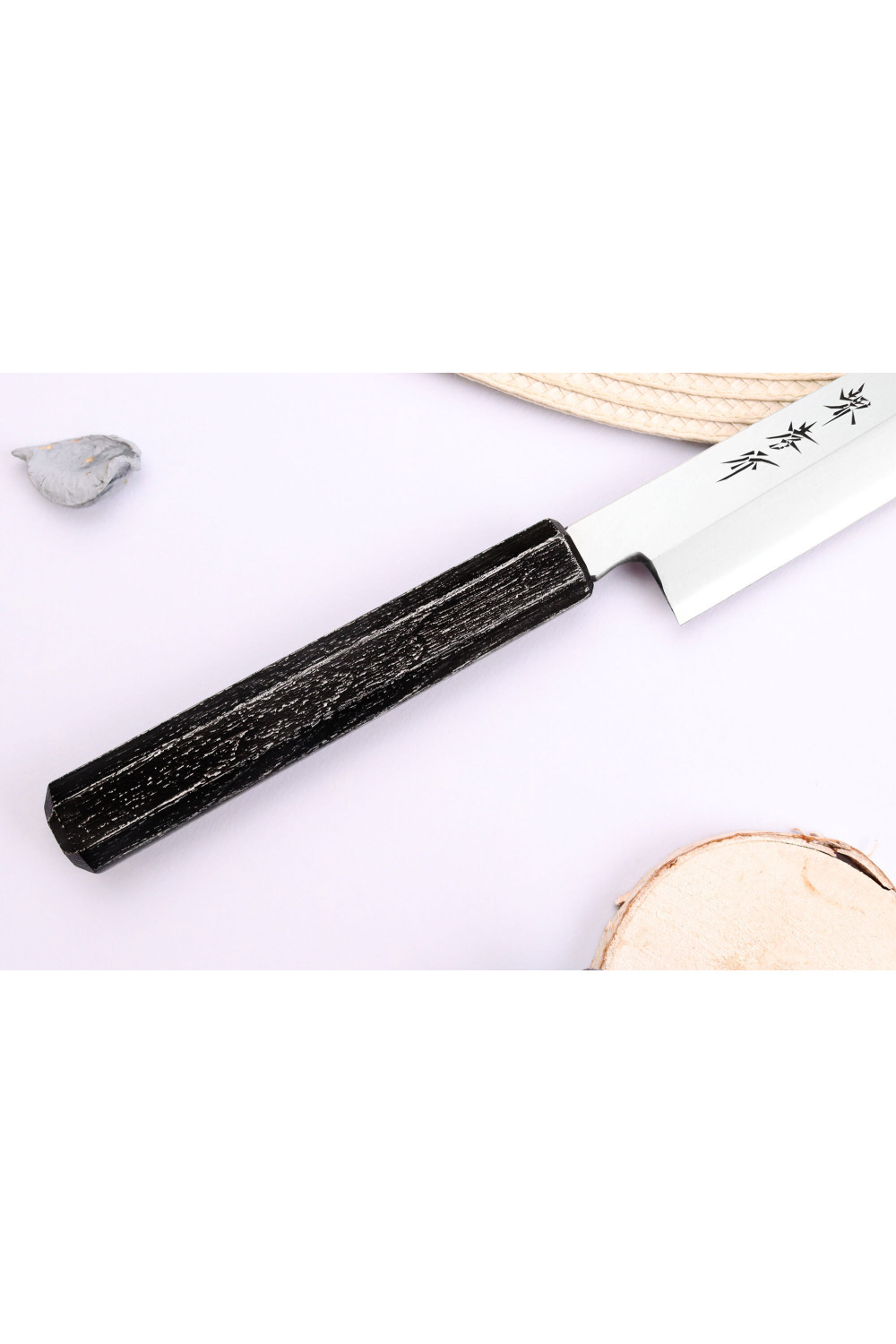
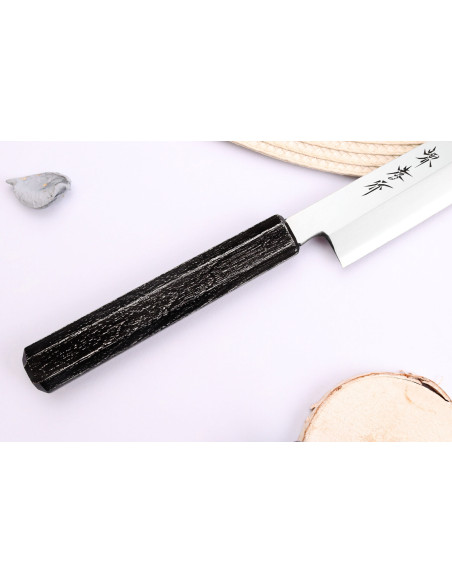
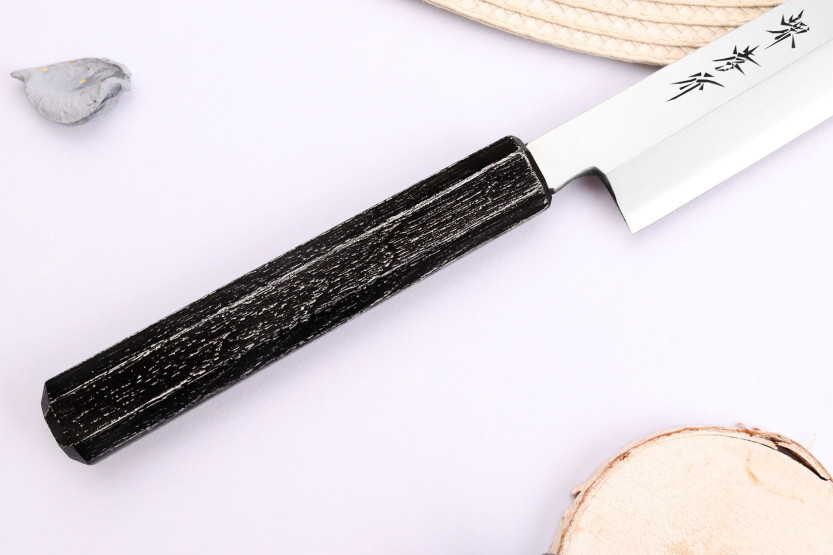
Last but not least, kanji are visible on the upper part of the blade, adding a touch of authenticity to the knife.
A comfortable, sturdy octagonal handle
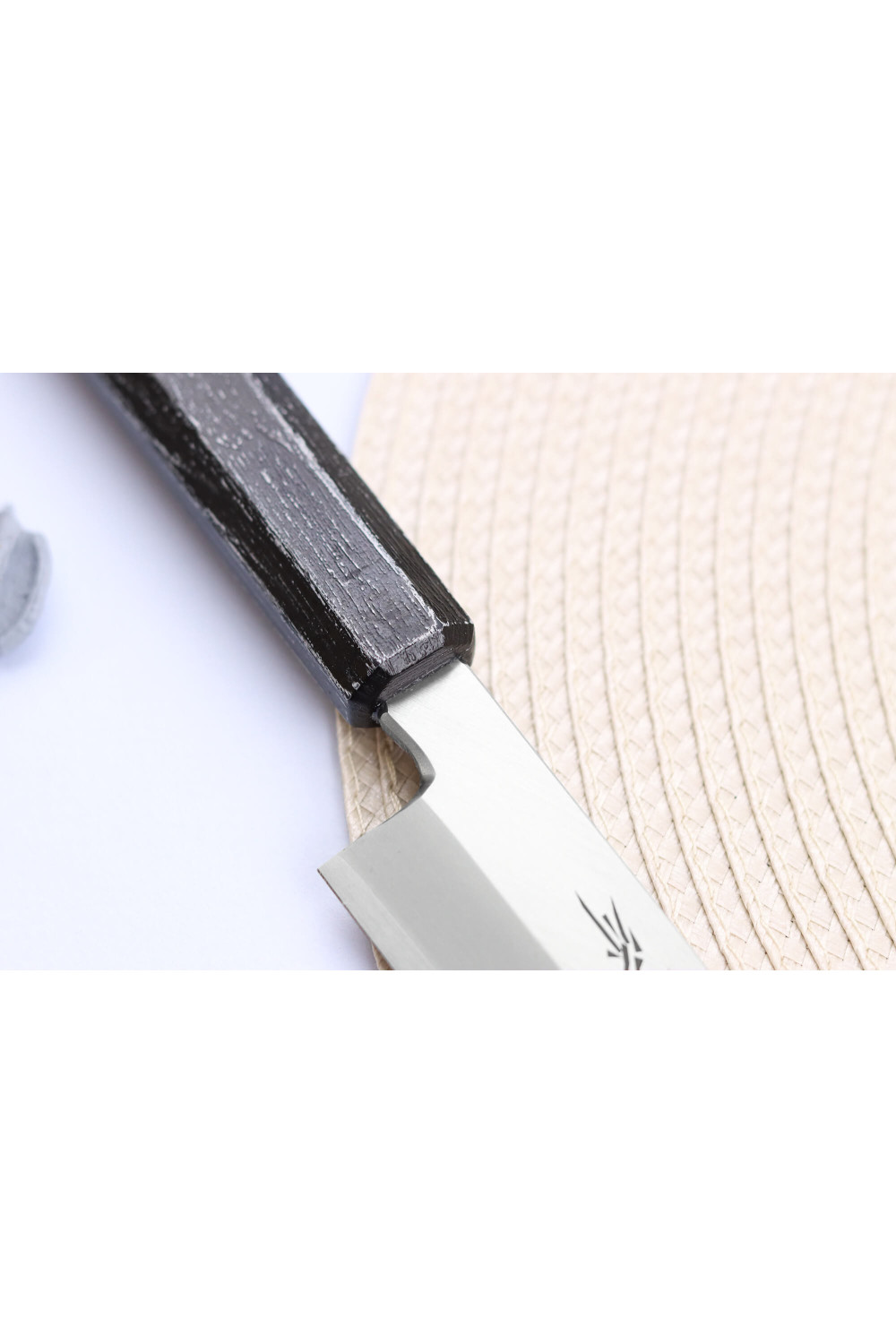
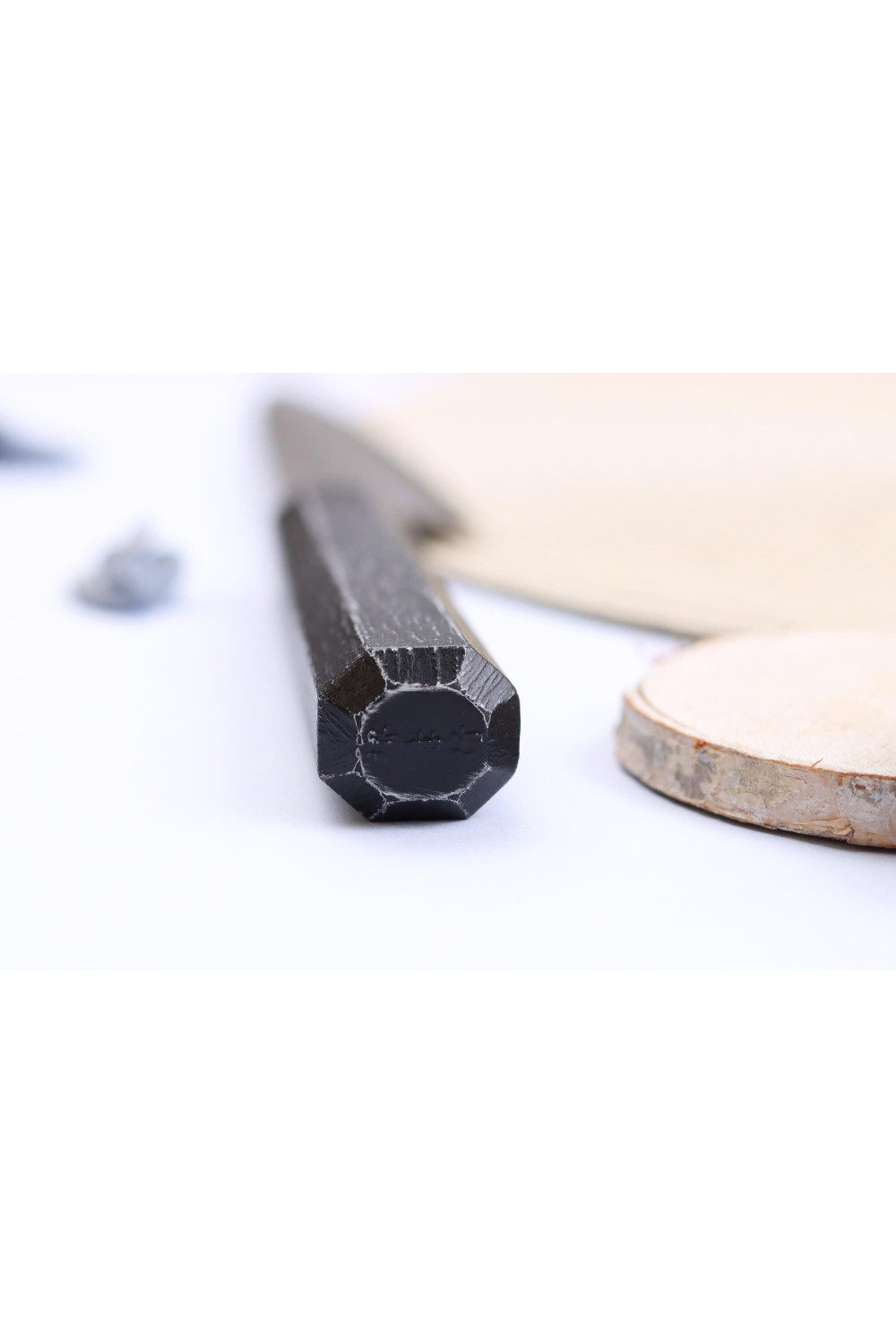
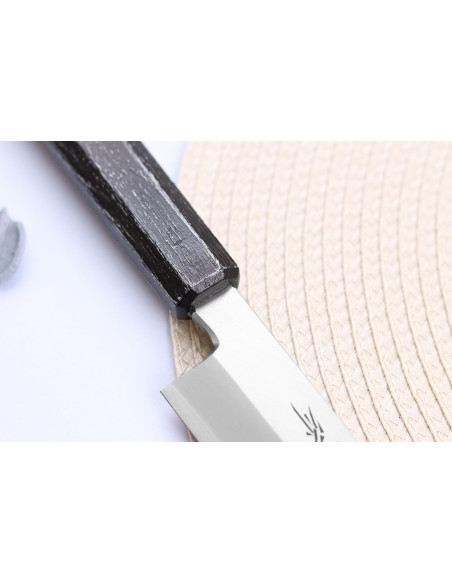
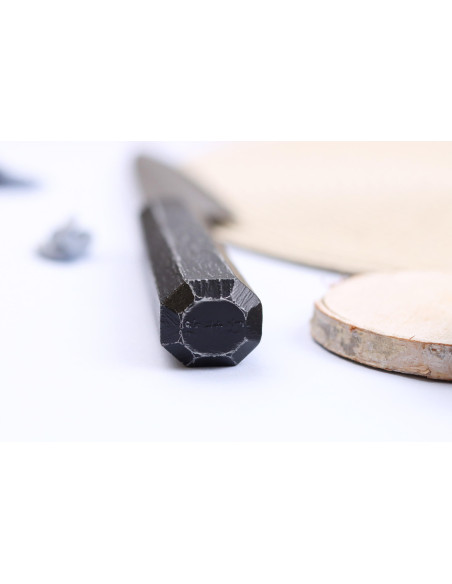
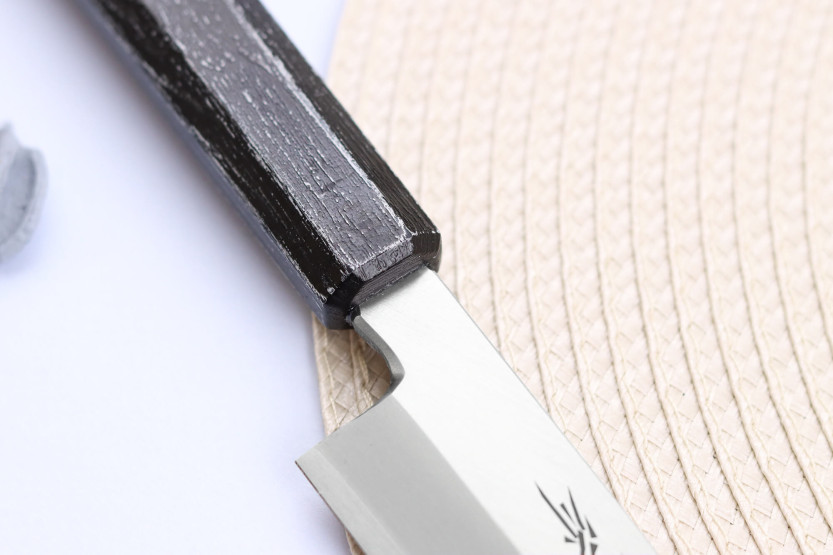
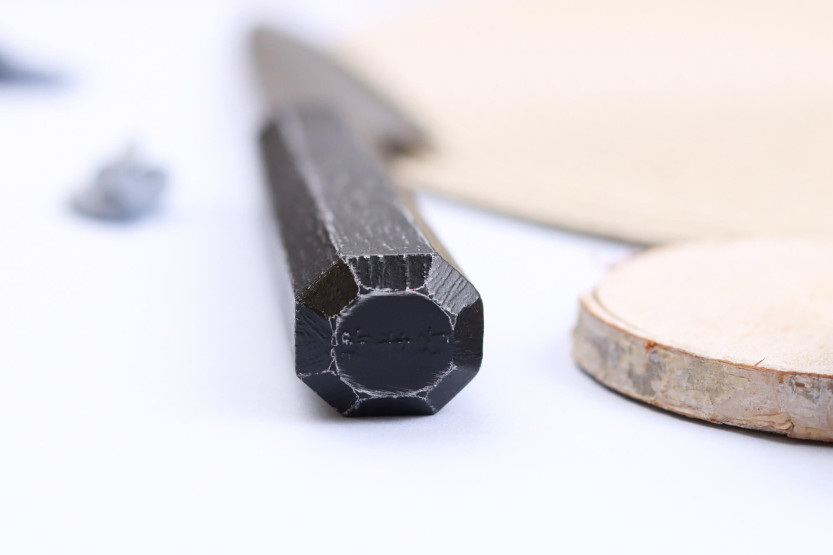
The handle of this yanagiba knife is octagonal in shape, giving you an ideal, comfortable grip. You can cut for a long time, and the risk of fatigue is reduced.
The handle is made of ABS resin, an abrasion- and shock-resistant material. This resin is lightweight, making it perfect for designing a knife handle. It is also easy to color. In fact, the handle has an attractive black color which is lacquered to give it an authentic wood effect.
The machi of the knife is also slightly visible. The blade doesn't seem to fit entirely into the handle, but this gap is deliberate. It plays on the knife's center of gravity to give it better balance. This technique is unique to the Sakai region.
Knives should be washed by hand only, not in a dishwasher or sink. Use mild soap and a non-abrasive sponge to clean it, avoiding over-wetting the handle.
Once you've washed the knife, dry it immediately, taking care to remove all traces of moisture. You can then store it in a dry place.
Sakai Takayuki Nanairo knives are waiting for you on our site!




 By buying this product you can collect up to