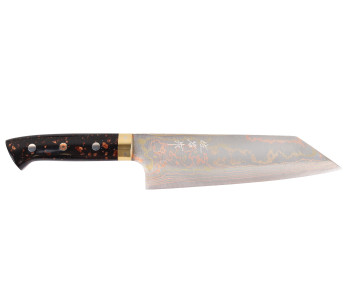
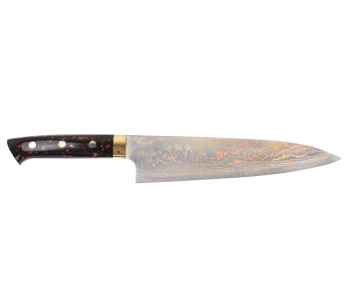
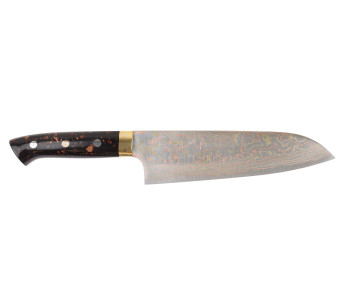
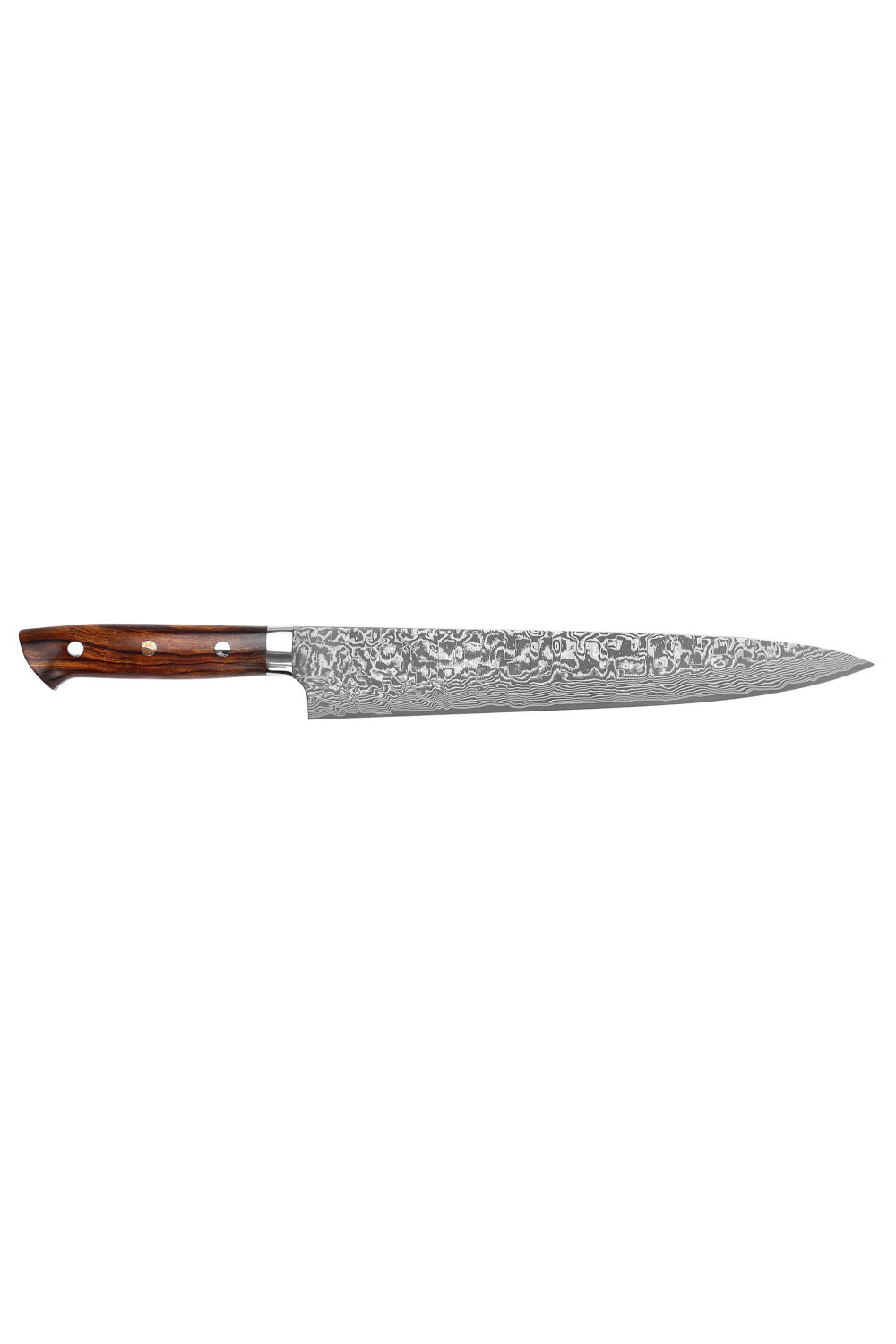
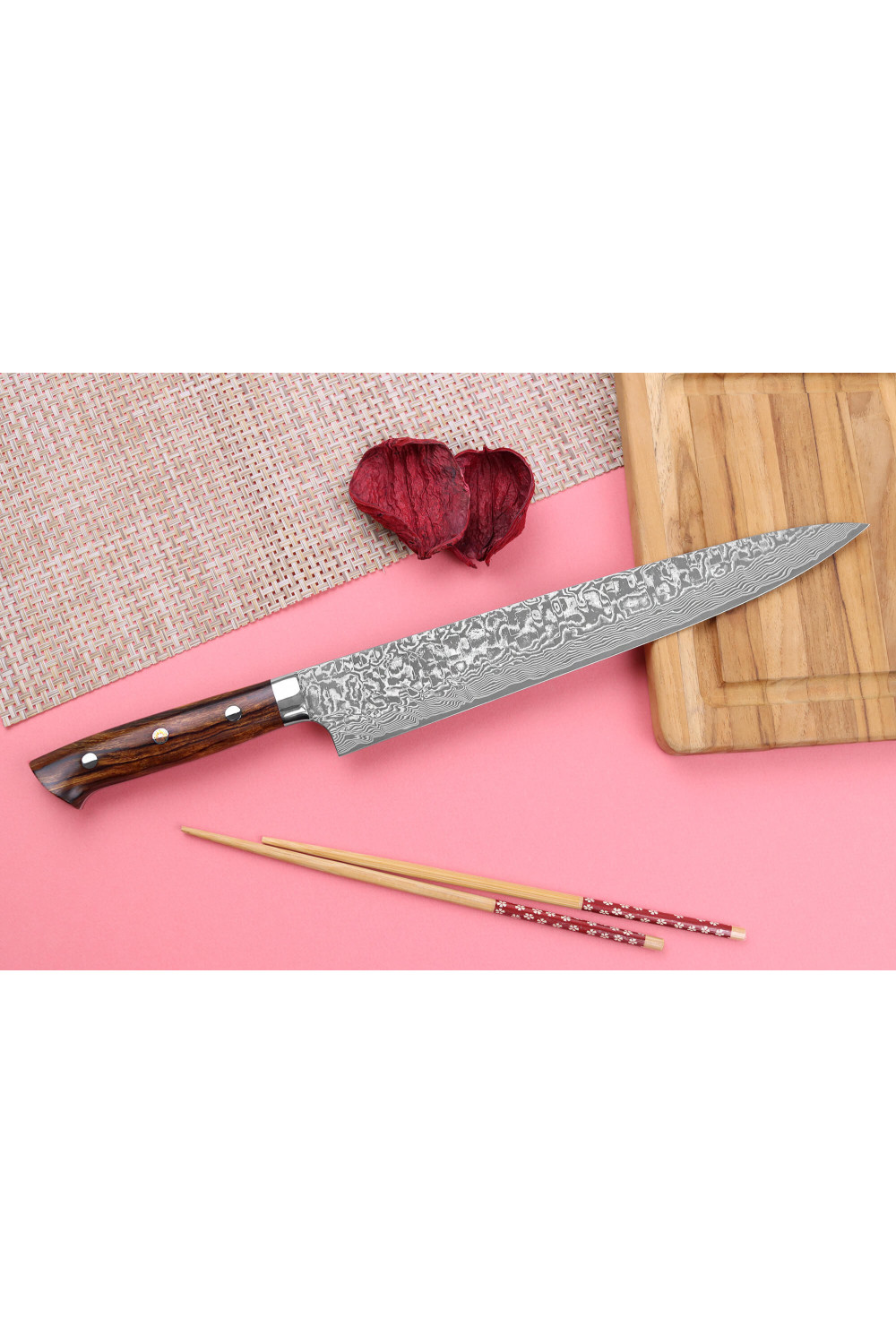
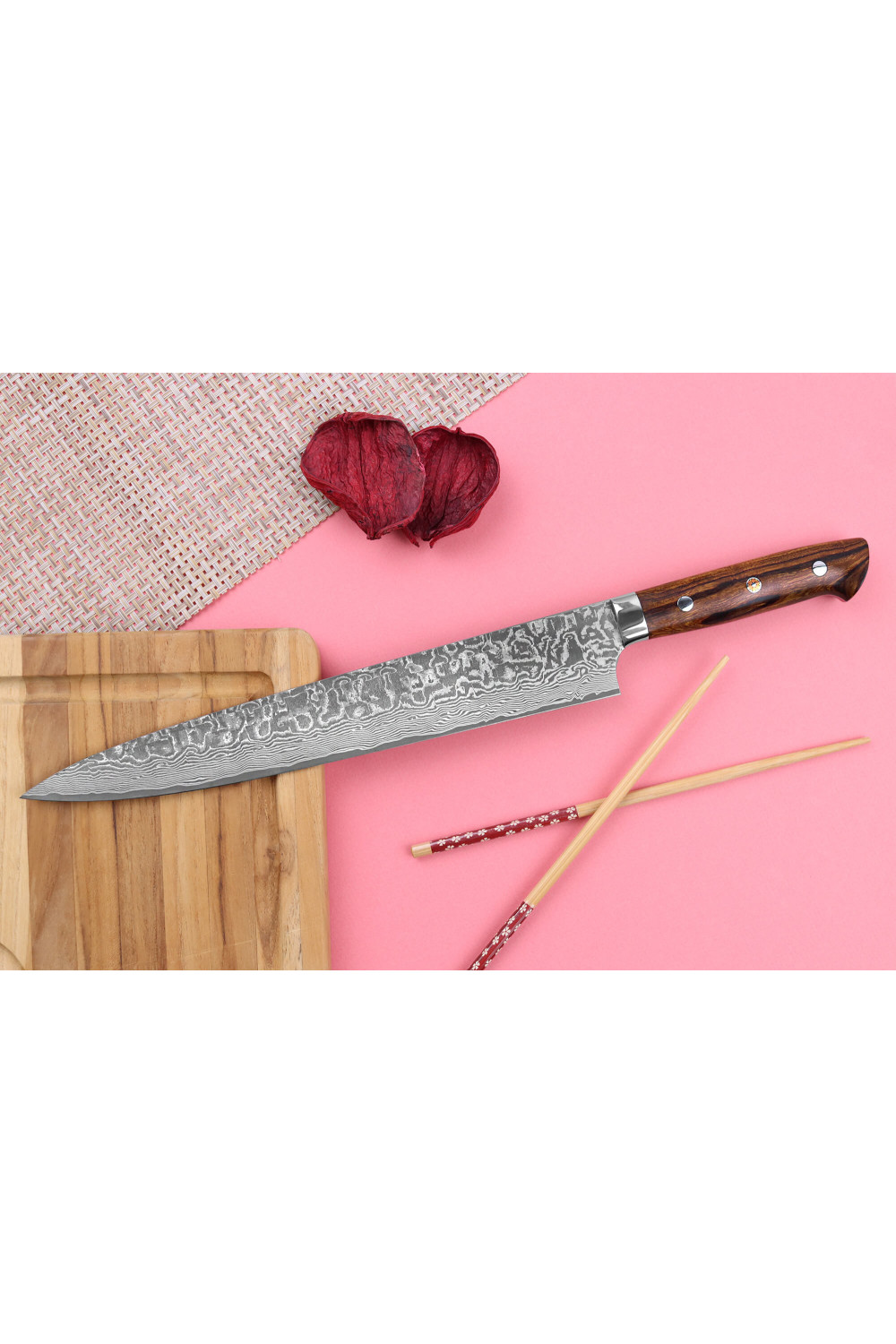
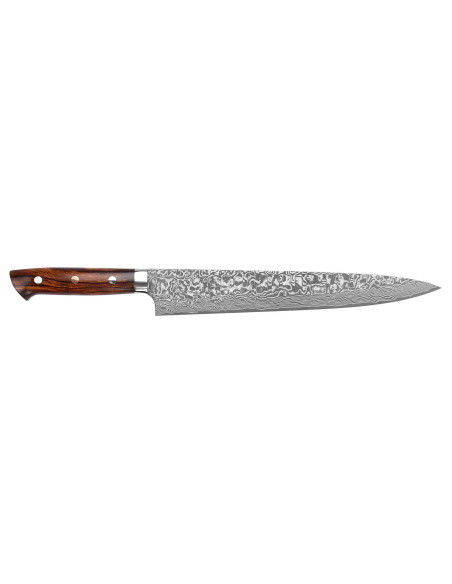
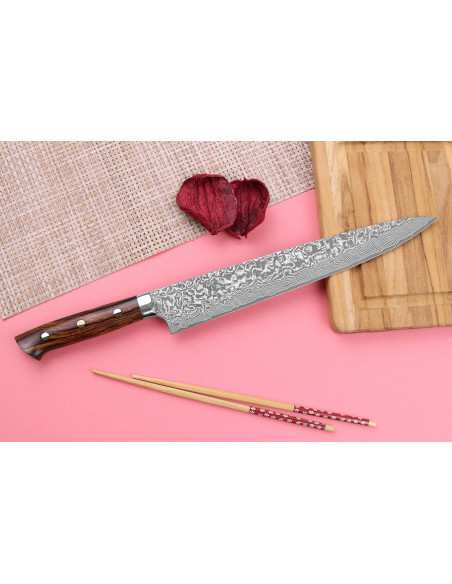
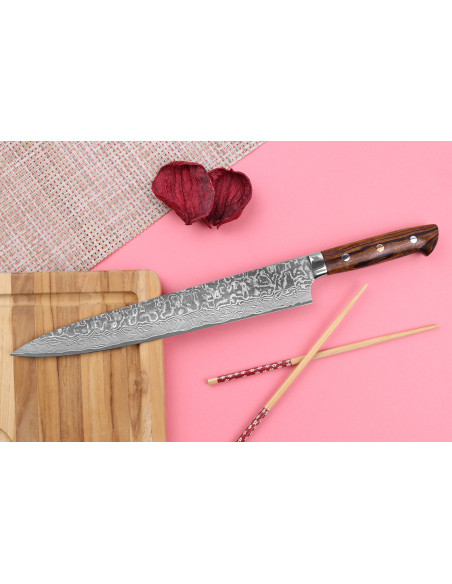
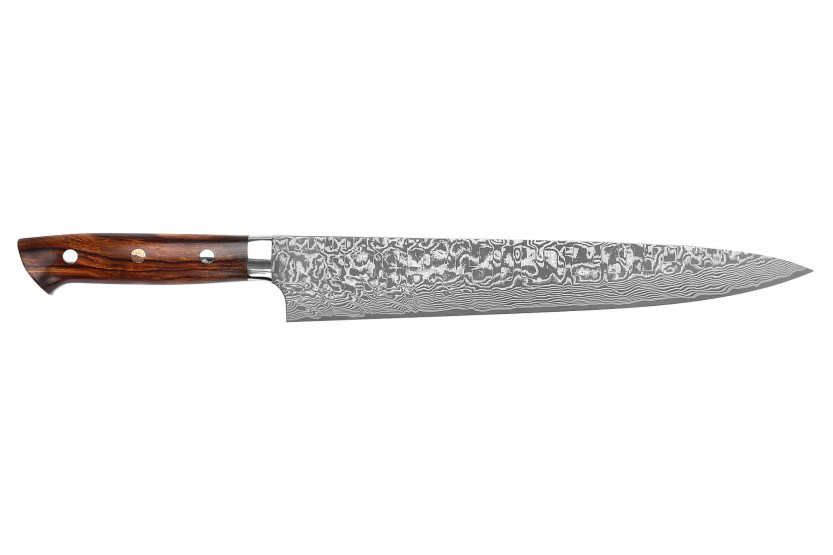
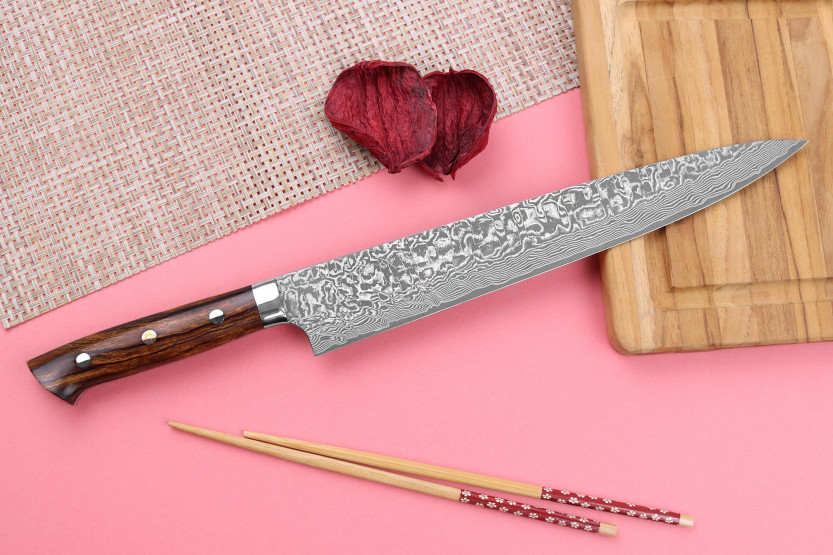
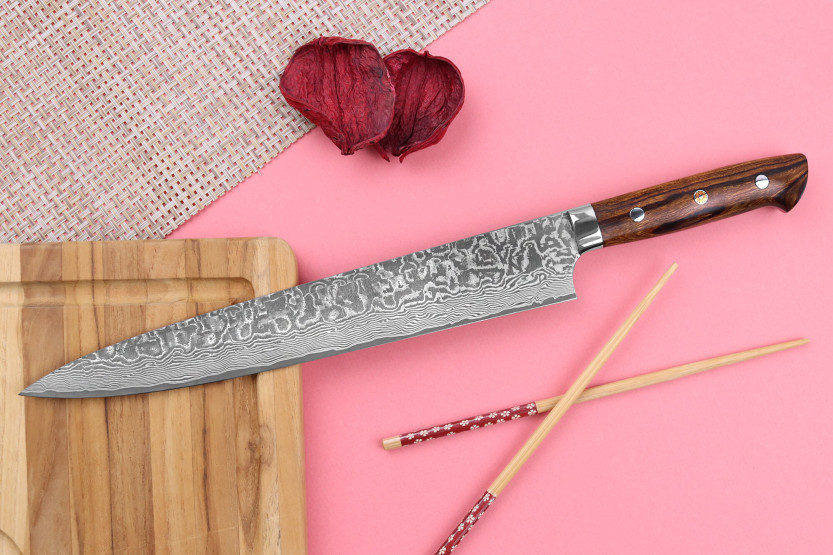
This sujihiki knife has a large blade that produces thin, even slices in a single movement! It allows you to slice food such as meat or fish with ease.
The damask knife in high-end materials
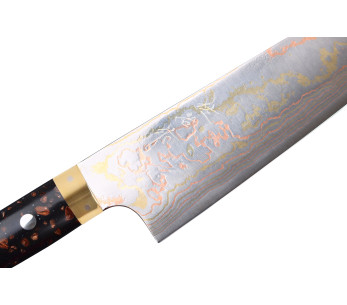
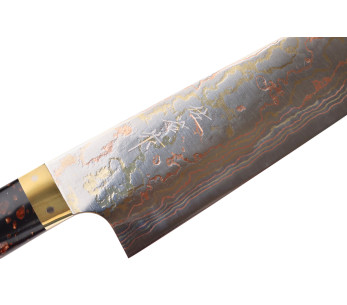
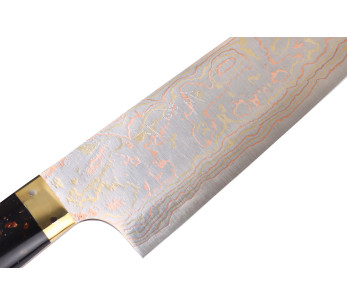
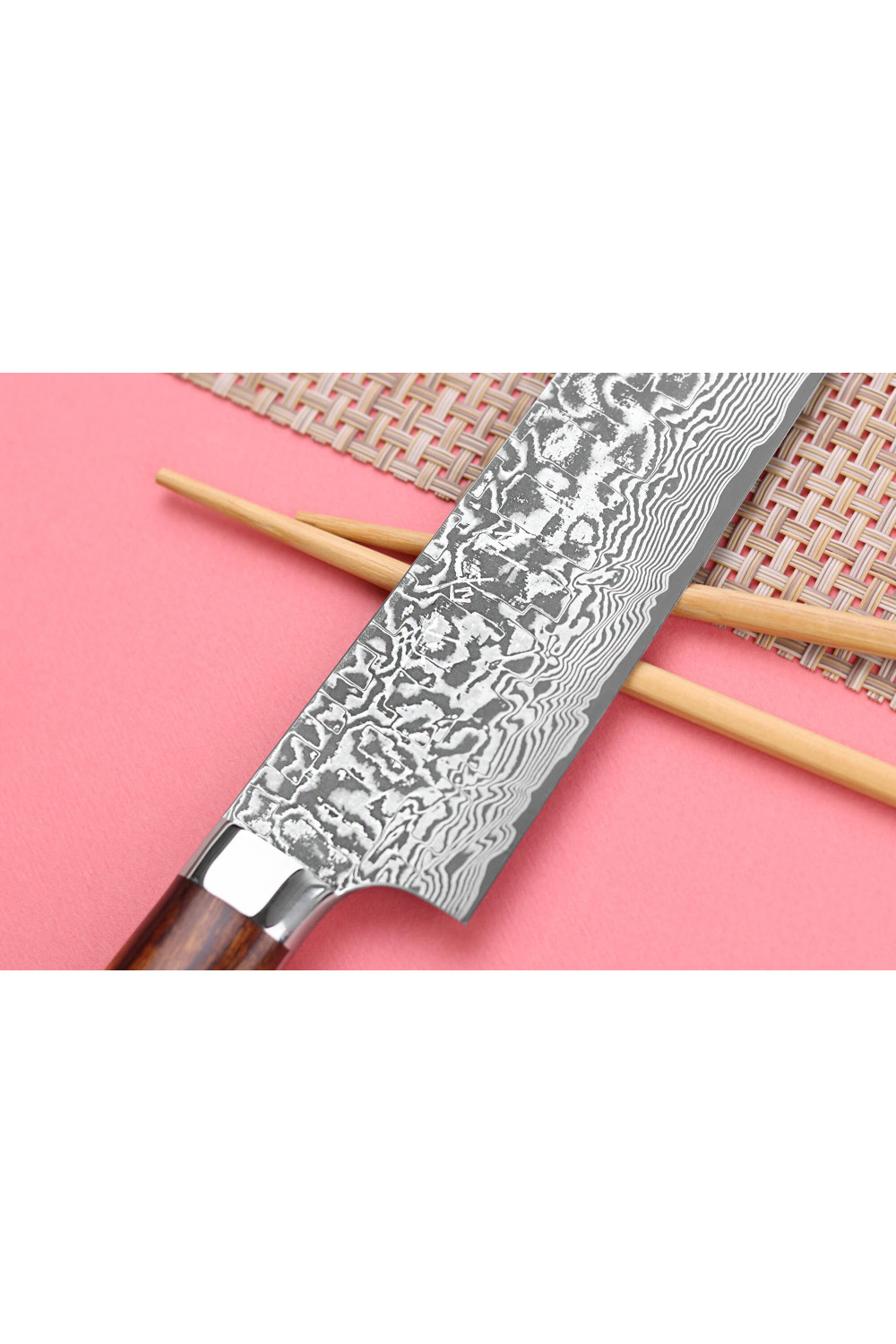
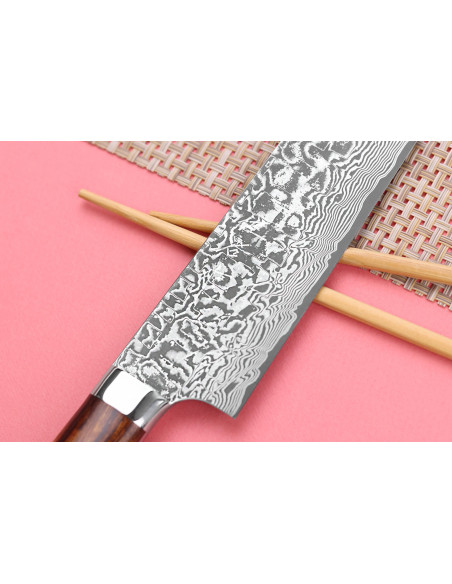
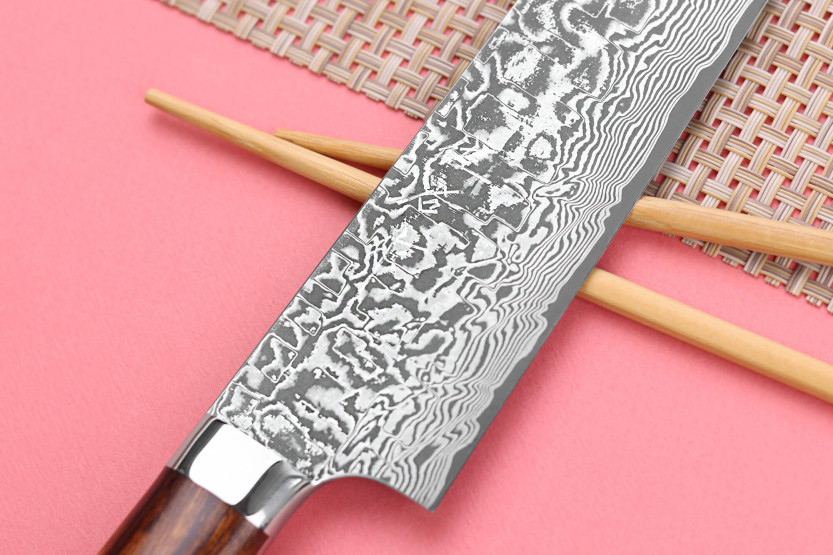
This Japanese knife features a damascened blade resulting from the superimposition of several alternating layers of steel. At the heart of the blade is a core of stronger steel, surrounded by multiple layers of softer steel. This design balances the blade's flexibility, reducing the risk of breakage with frequent use.
For this forged knife, the blade core is made fromJapanese R2 steel, also known as SG2. This stainless steel is obtained through powder metallurgy, making it a rare and precious material, uncommon in the cutlery industry. Artisan blacksmiths appreciate R2 steel for its ease of handling, while end-users appreciate its excellent performance.
On the Rockwell scale, R2 steel has a hardness of 63HRC, ensuring a durable cutting edge that is perfectly suited to prolonged use. Despite its high hardness, this alloy is easy to stone-sharpen when necessary.
Another remarkable advantage of this steel is its purity. On a microscopic scale, its structure is uniform, giving it increased strength and reducing the risk of chipping during use.
To complete the damascus structure, the core is surrounded by several layers of stainless steel and nickel steel to balance its high rigidity. This superimposition of steels gives the blade an original, unique design with a strong character.
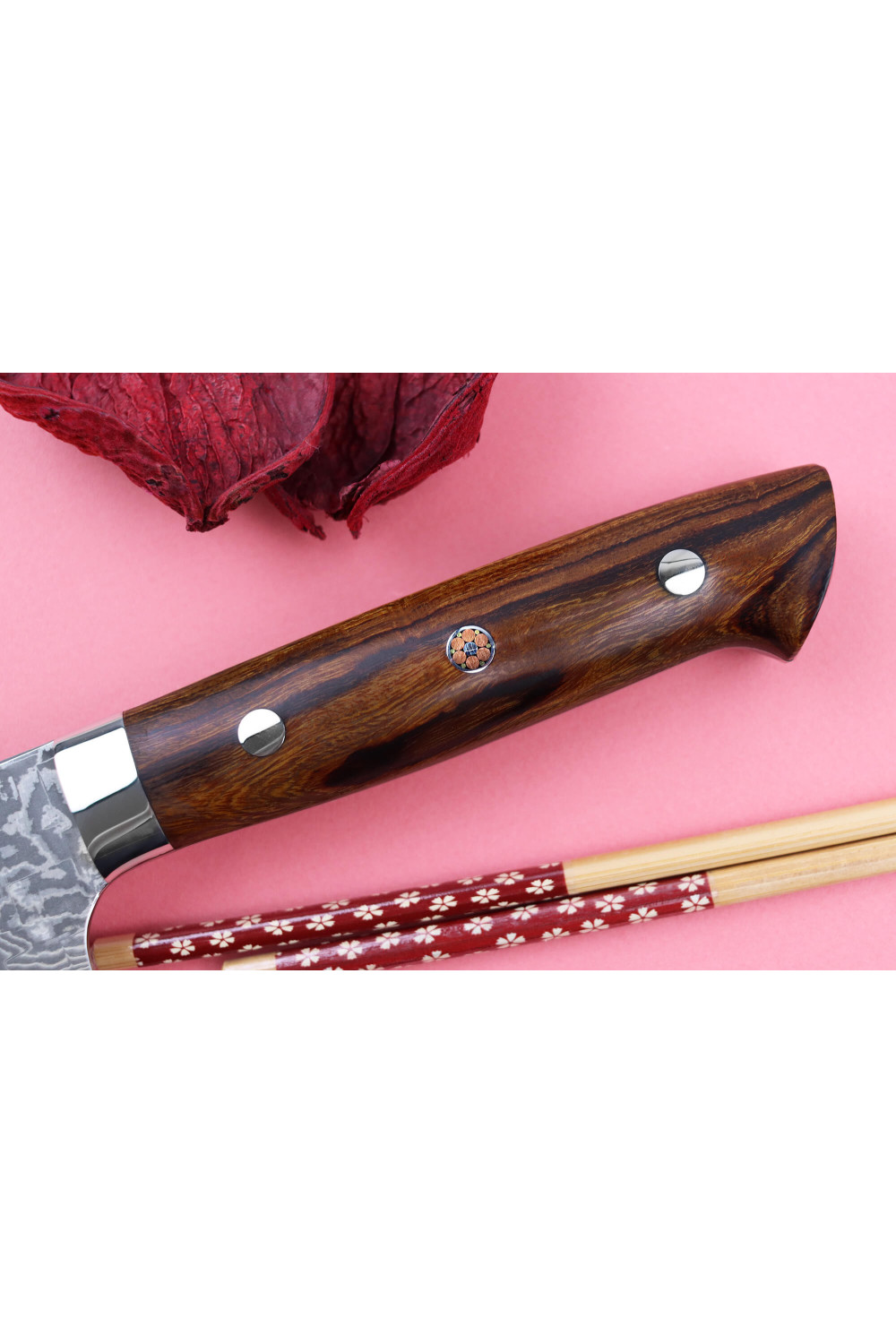
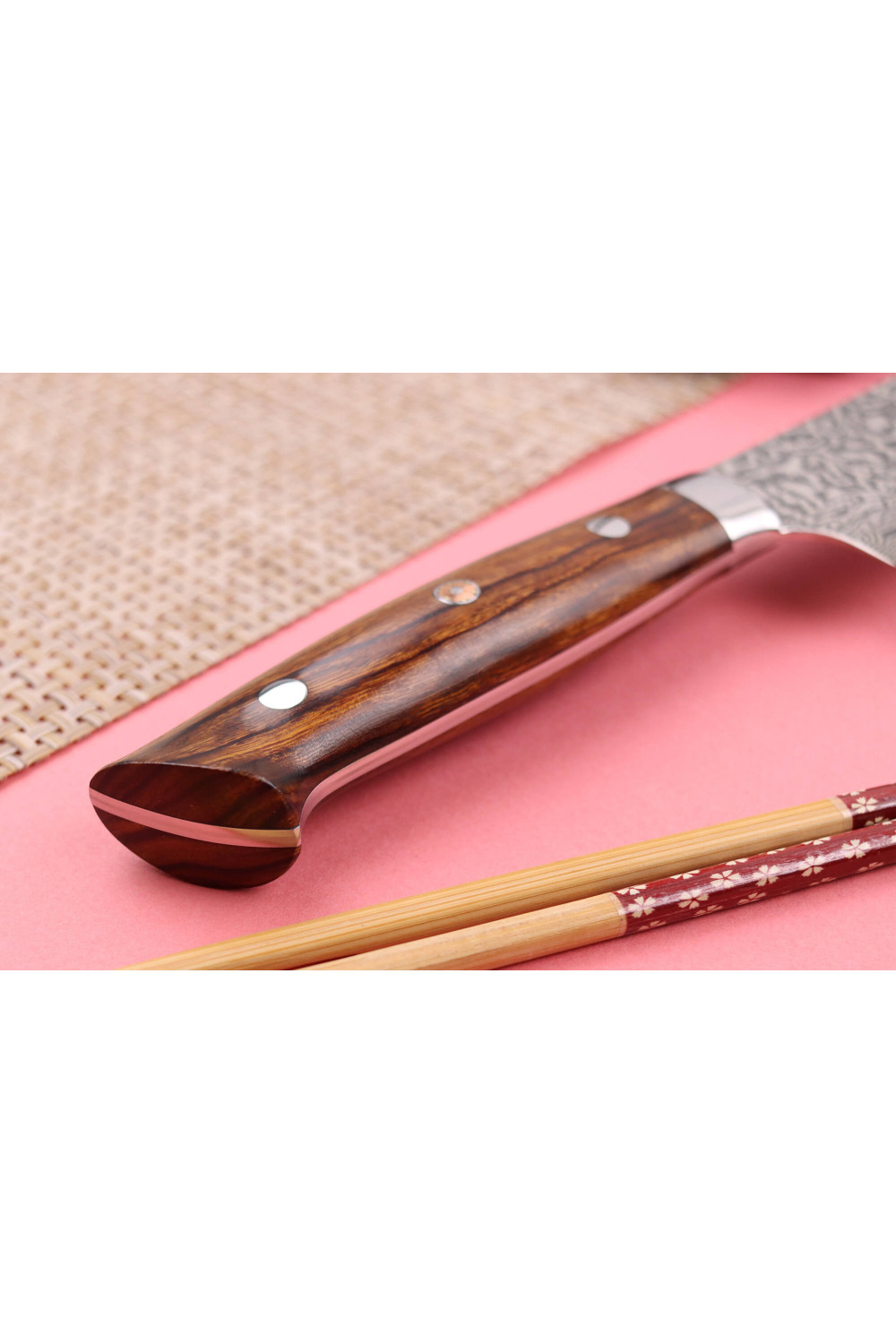
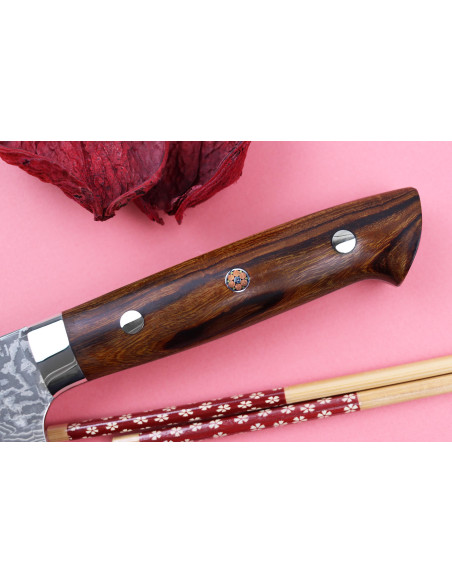
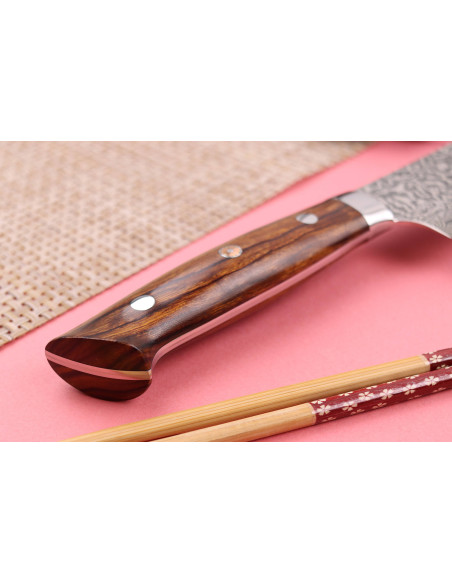
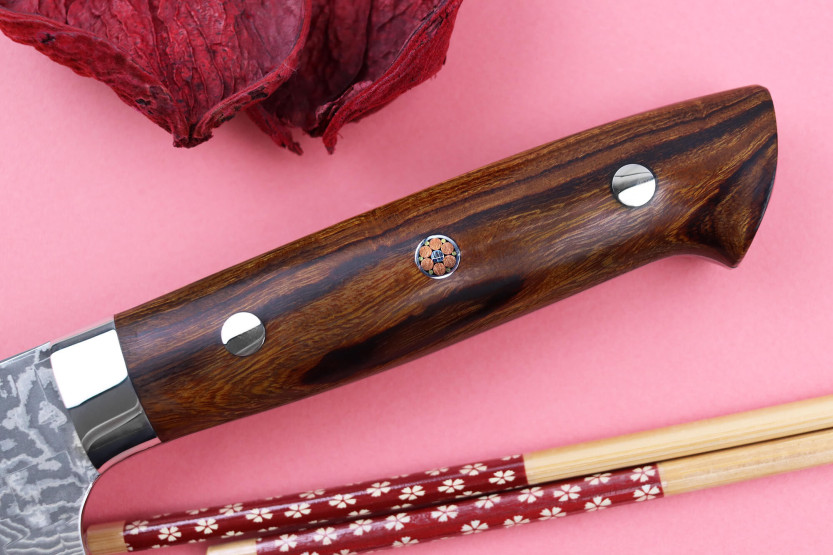
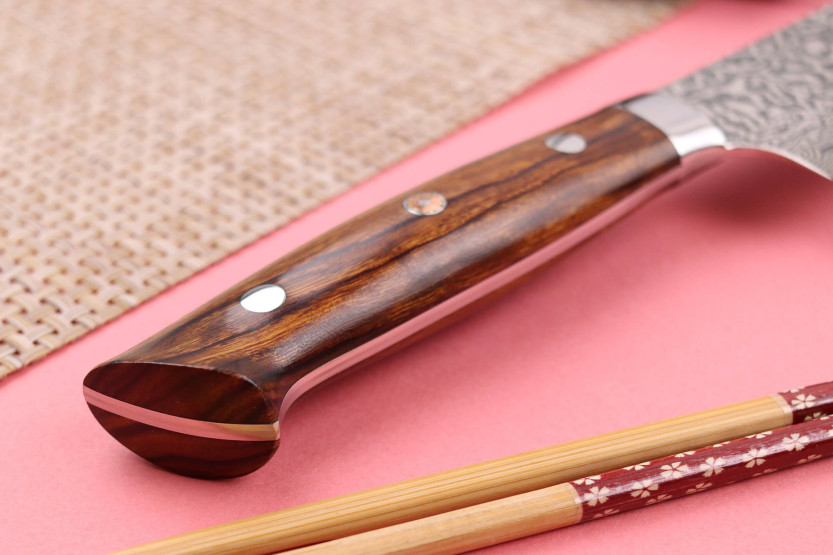
The handle of this Japanese kitchen knife is made of ironwood, a species renowned for its density and strength. Ironwood features warm hues with slight lighter nuances, for an authentic visual appearance. Note that the wood grain varies from knife to knife, making each piece truly unique.
The full tang blade is firmly attached to the handle by three rivets. The central rivet features a mosaic pattern for a distinctive visual effect, creating a highly successful contrast with the darker hue of the ironwood.
What's more, a stainless steel bolster has been added to provide the link between blade and handle. With its ergonomic shape, this handcrafted knife is suitable for all cooks, whether left- or right-handed.
Our tips for caring for an artisan knife
It is essential to clean this damask knife exclusively by hand, using lukewarm water, a soft sponge and mild soap. Do not put it in the dishwasher, nor leave it to soak in the sink. After cleaning, be sure to wipe the knife dry to remove any residual moisture, then store it carefully in a dry place.
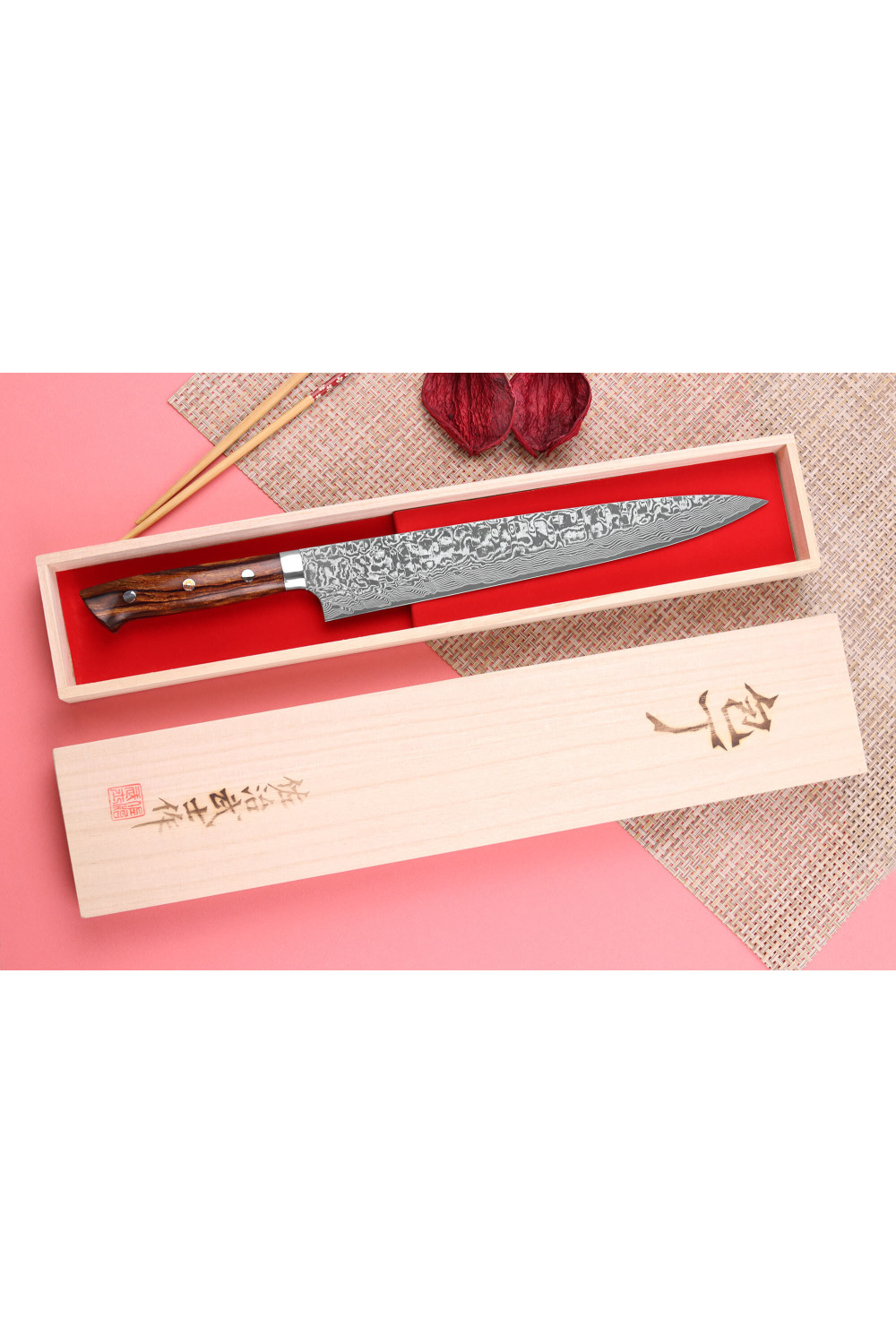
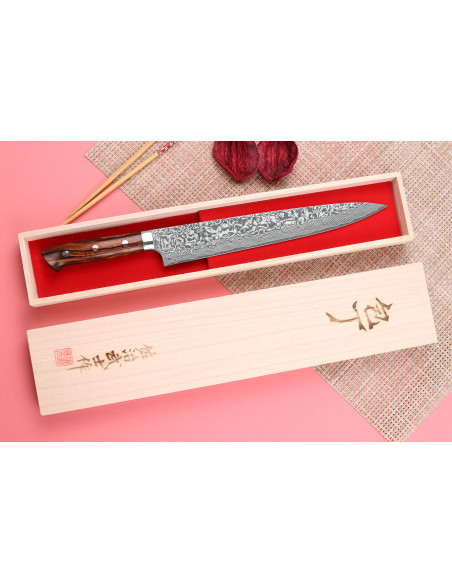
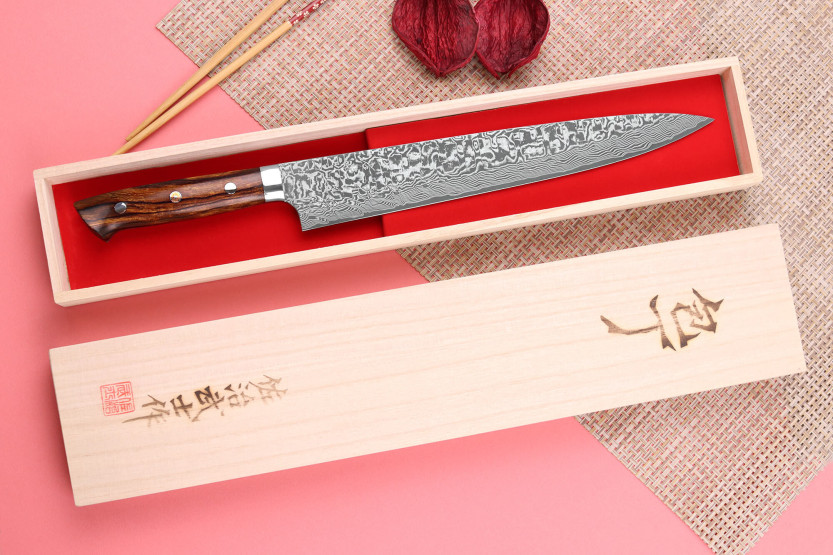
For elegant storage and to give this superb Japanese knife as a gift, you can place it in its beautiful wooden box, which is included.
Takeshi Saji is a renowned Japanese master blacksmith.
This handcrafted Japanese knife is the work of Takeshi Saji san, a cutlery expert who has been practicing his passion for over five decades. His reputation in the field is indisputable, and he owes this recognition to his vast experience.
Takeshi Saji's Japanese knives are renowned for their aesthetics and finesse. He succeeds in combining age-old traditional techniques with timeless designs, offering pieces that marry performance and elegance. He was awarded the title of "master traditional craftsman" in the 90s: a distinction that testifies to his undisputed expertise.
Takeshi Saji san works in his workshop in the Takefu Cutlery Village, a renowned place where traditional blacksmiths gather to share their techniques and preserve the precious know-how inherited from their ancestors. They train the next generation by passing on precious craft traditions.
Because these knives are entirely handcrafted by the blacksmith and because of their provenance, the quantities available of this model are limited.
Find the rest of the Takeshi Saji R2 Damascus Mosaic range on KnifeLeader.eu!




 By buying this product you can collect up to