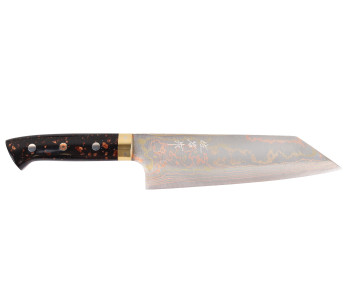
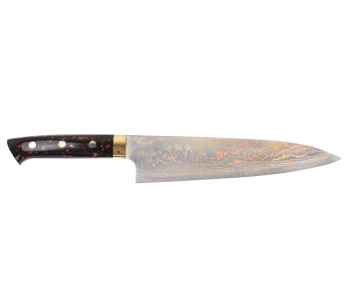
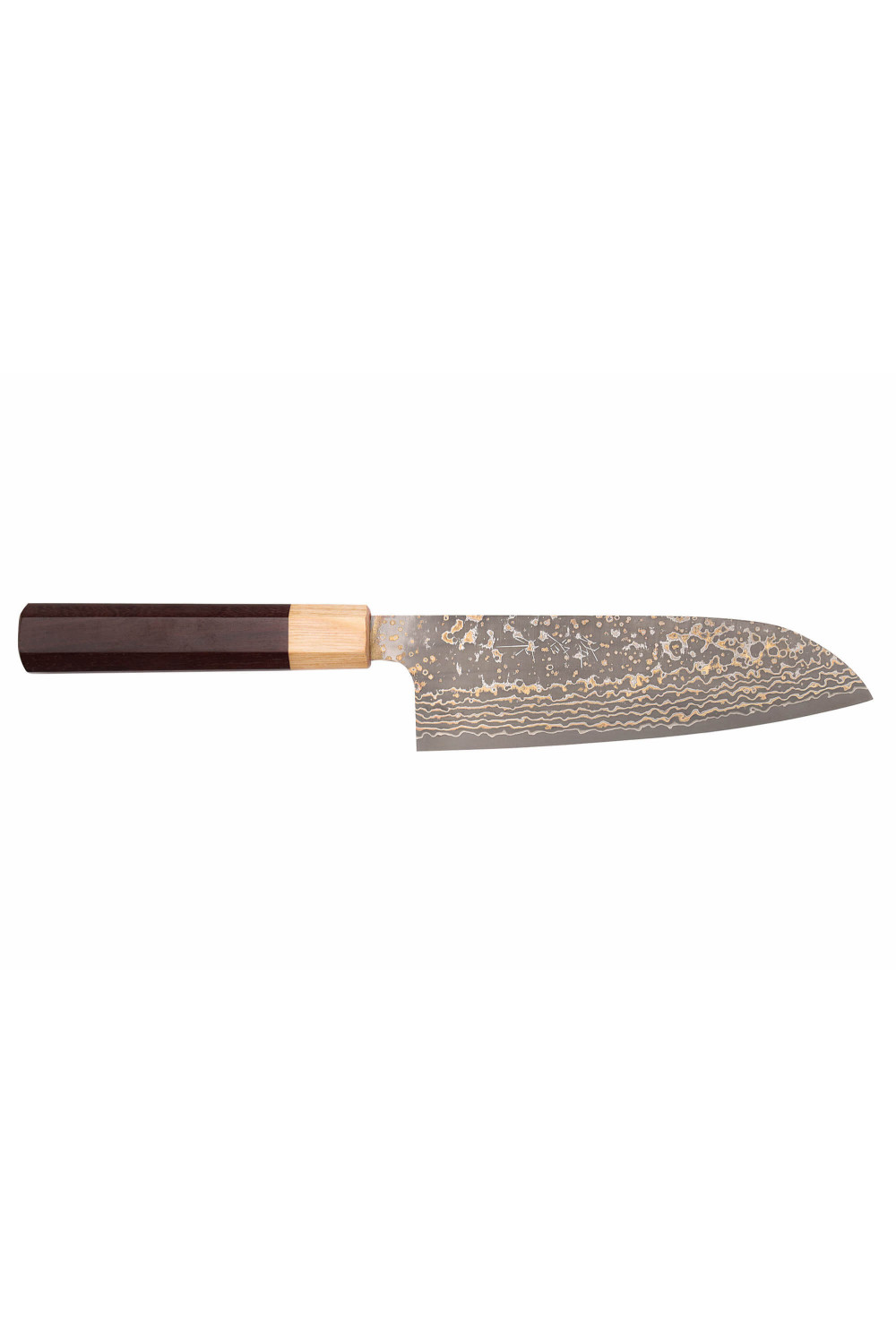
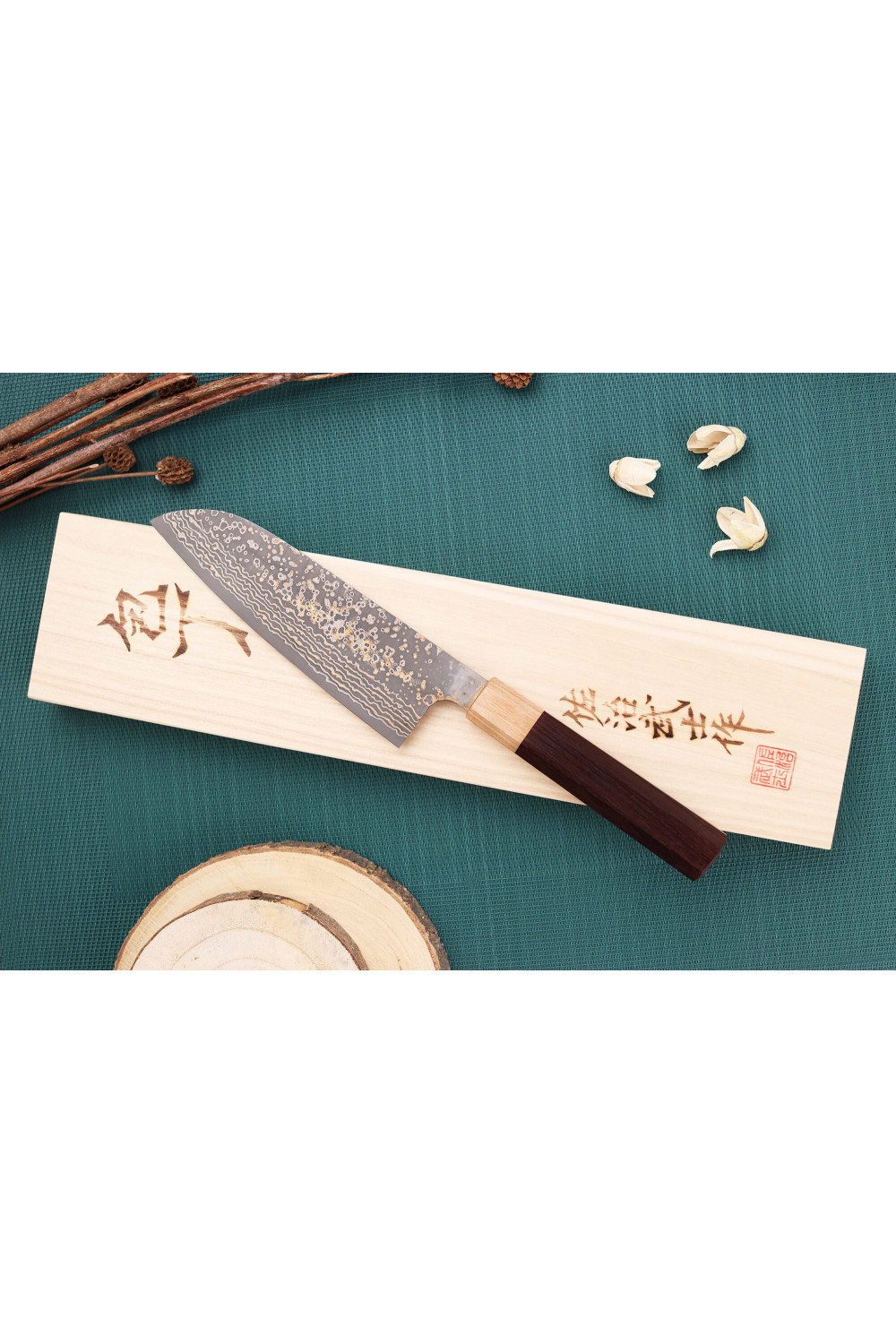
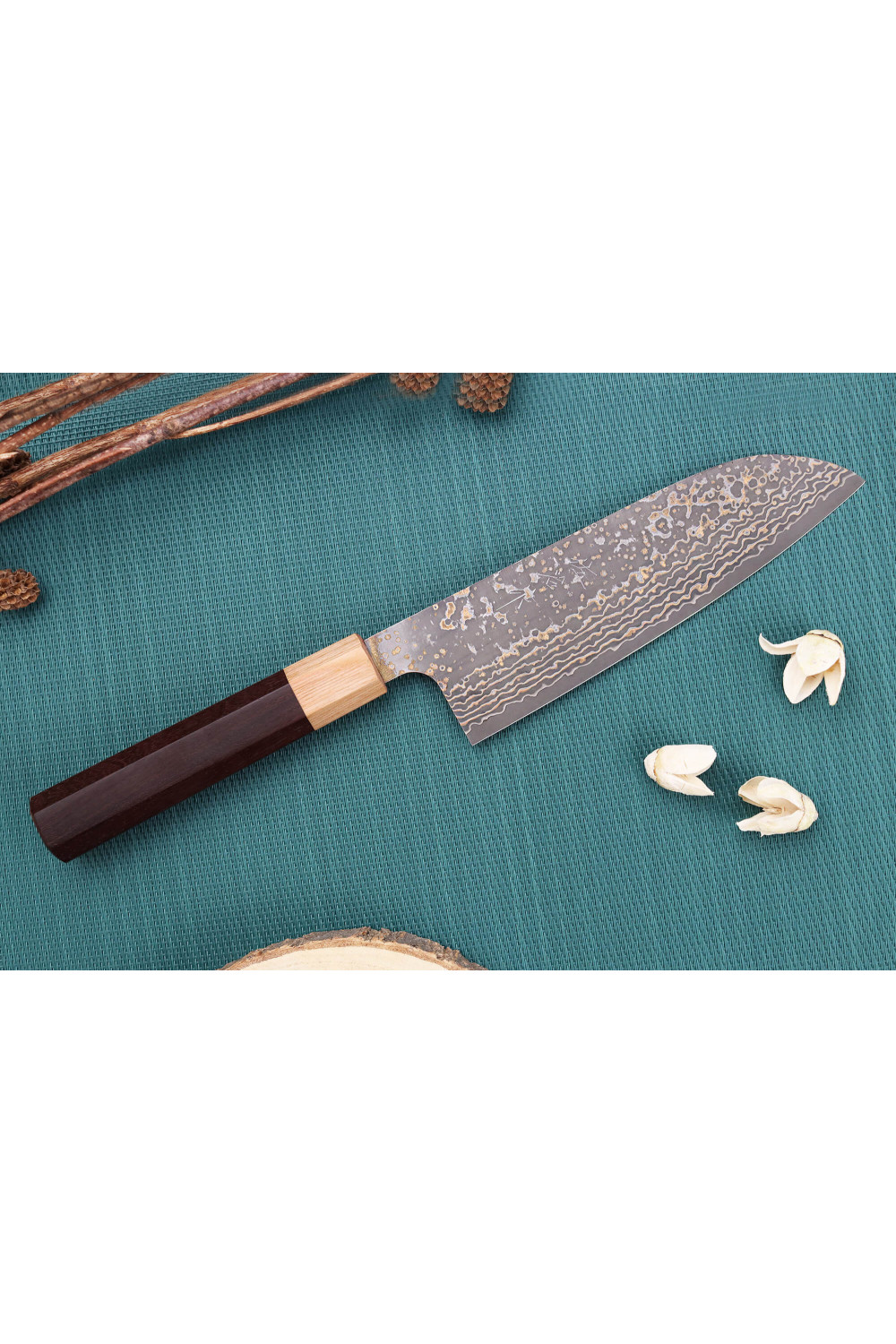
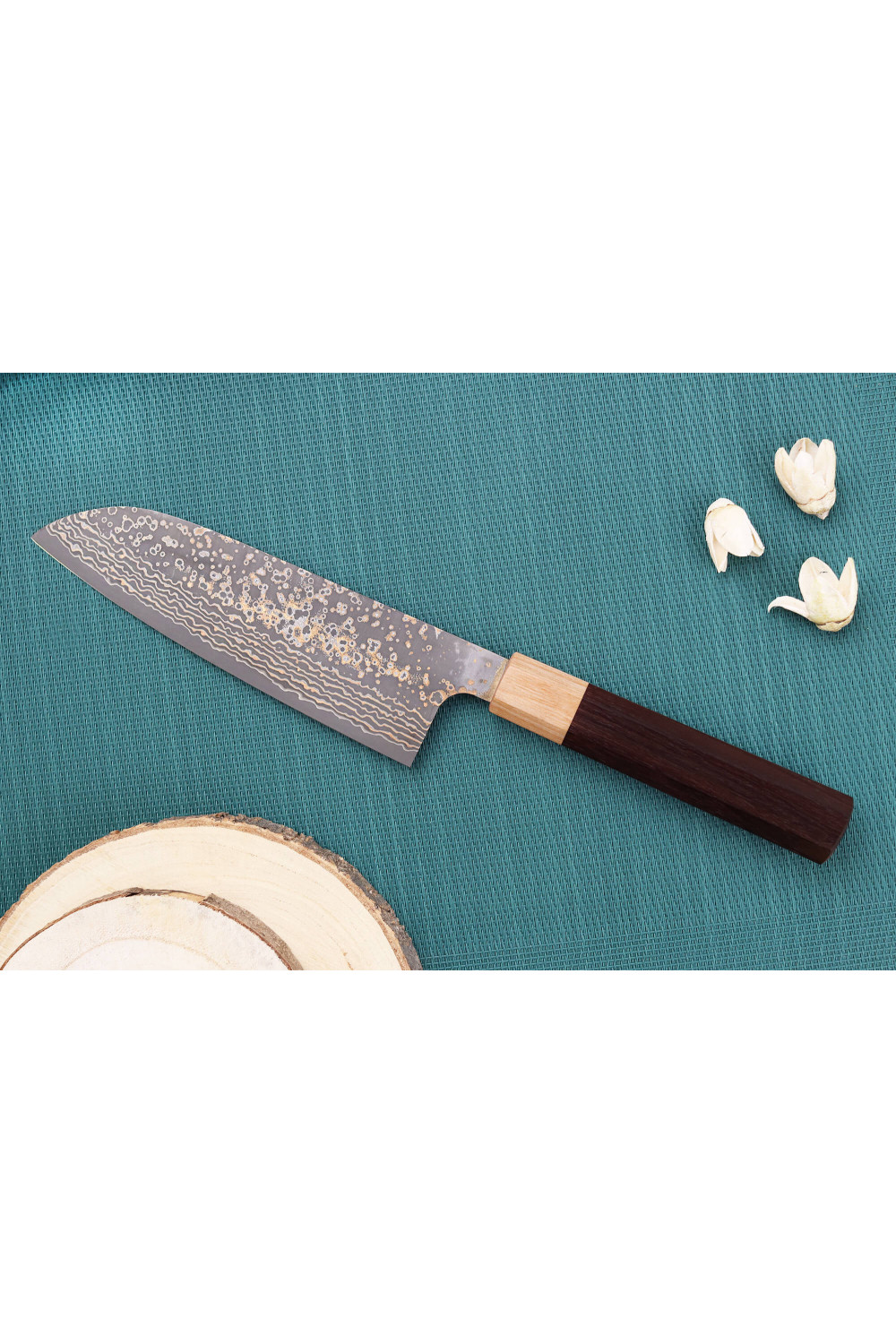
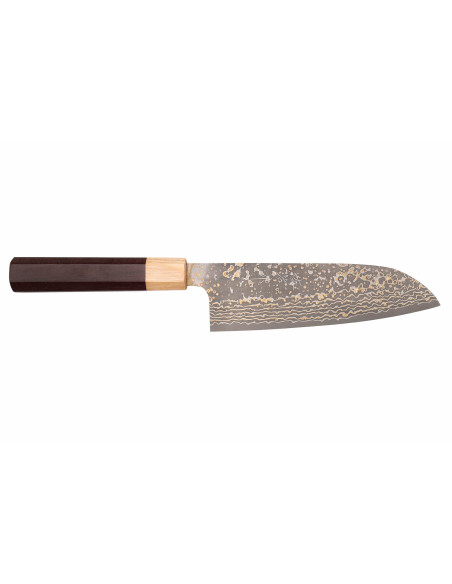
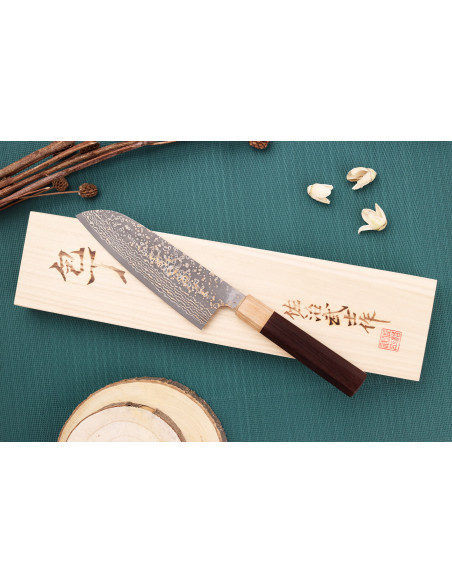
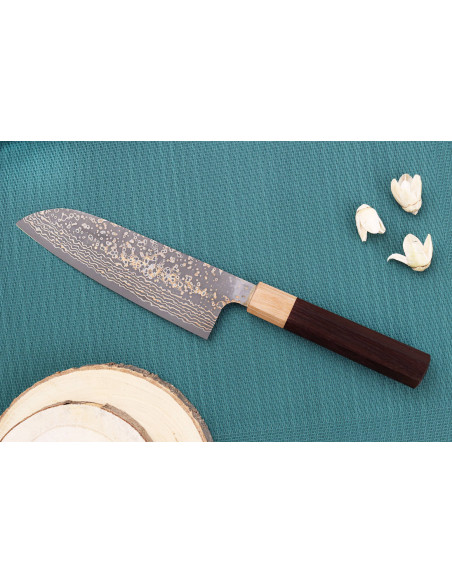
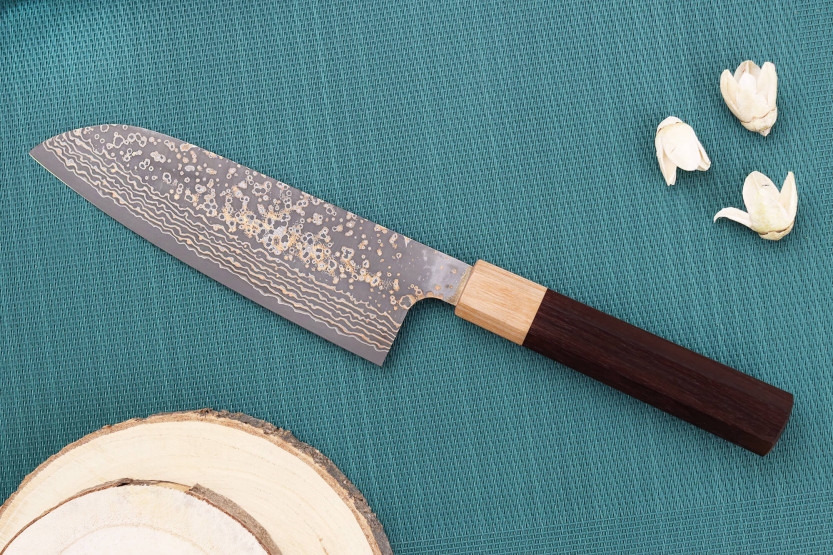
The santoku knife is an indispensable multi-purpose kitchen knife, the Japanese equivalent of our Western chef's knife. It's the Japanese equivalent of our Western chef's knife, and can be used for a wide range of cutting tasks, from slicing vegetables and mincing meat to chopping herbs. Its efficient blade can be used to cut a wide variety of foods!
Find out more about Japanese blacksmith Takeshi Saji
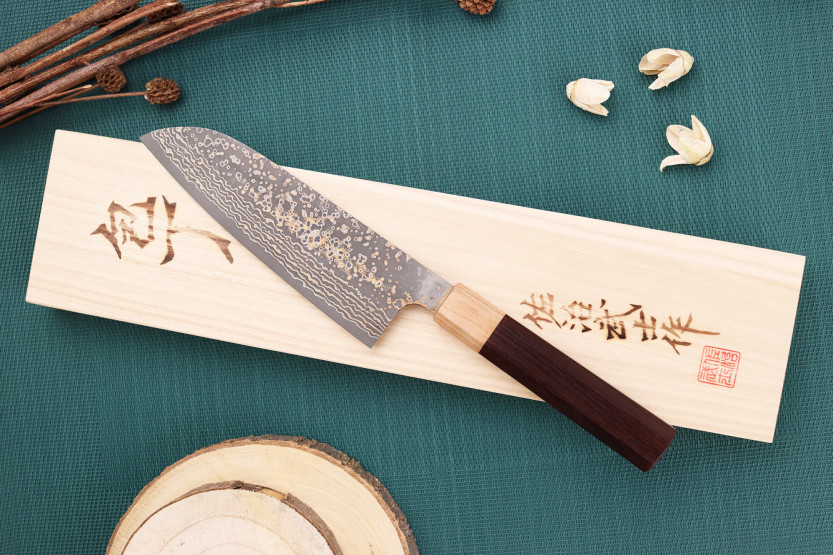
This santoku knife is part of the VG10 Gold range , handcrafted by Takeshi Saji, a renowned Japanese blacksmith. His knives are highly appreciated for their elegance and finesse. Takeshi Saji san manages to combine ancestral forging techniques with original designs that appeal to many cooks. In fact, since the 1990s, Takeshi Saji san has been certified as a "traditional master craftsman".
His workshop is located in the Takefu Cutlery Village: a place dedicated to the manufacture of Japanese kitchen knives. It's here that excellent master blacksmiths gather to preserve the tradition by sharing their experience, techniques and equipment. This ancestral know-how is passed on to apprentices who, in turn, carry on the tradition.
A traditionally crafted knife
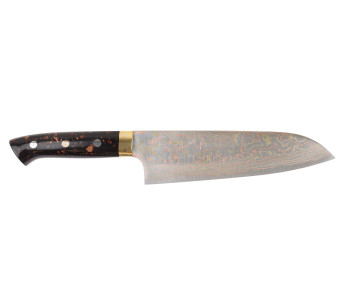
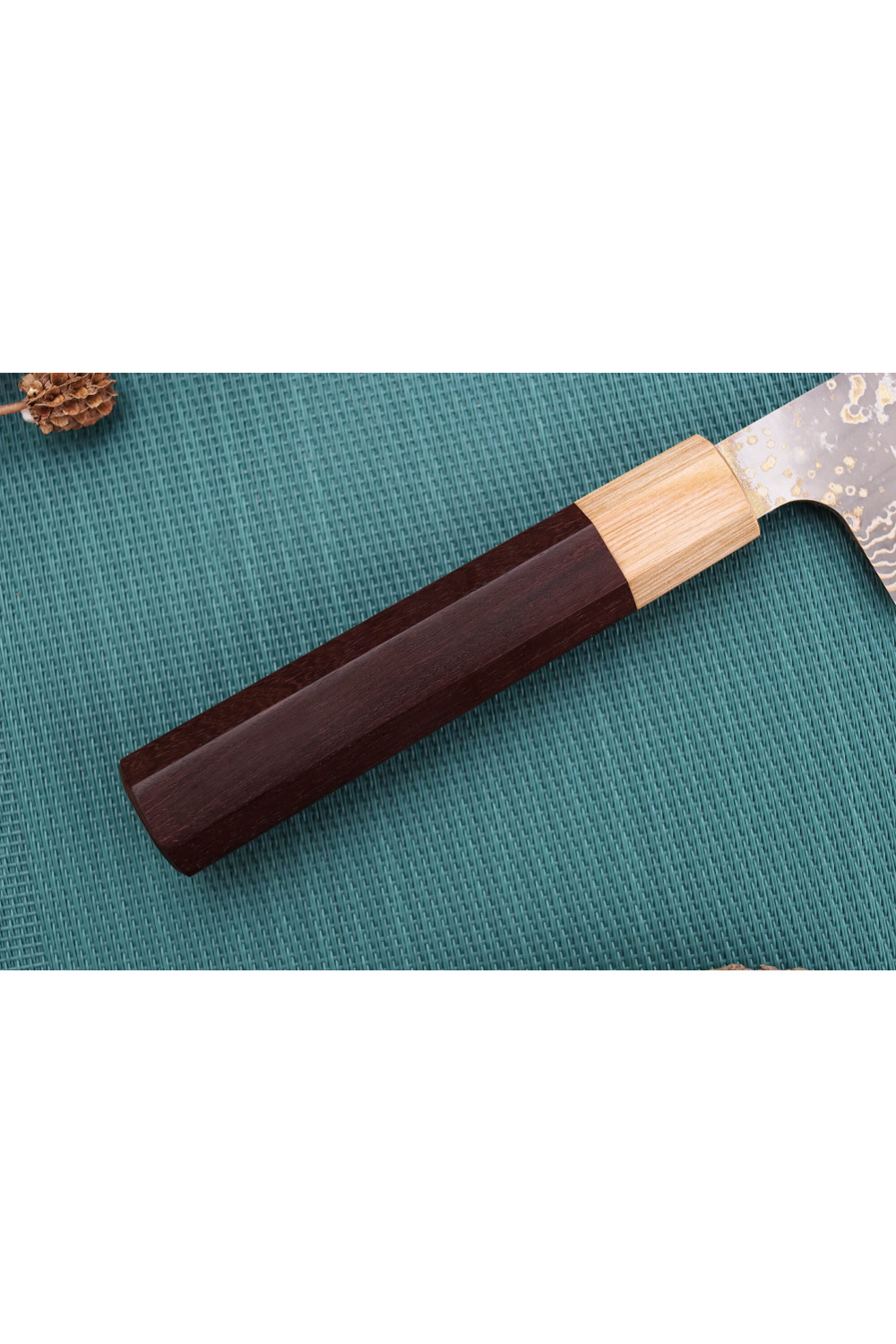
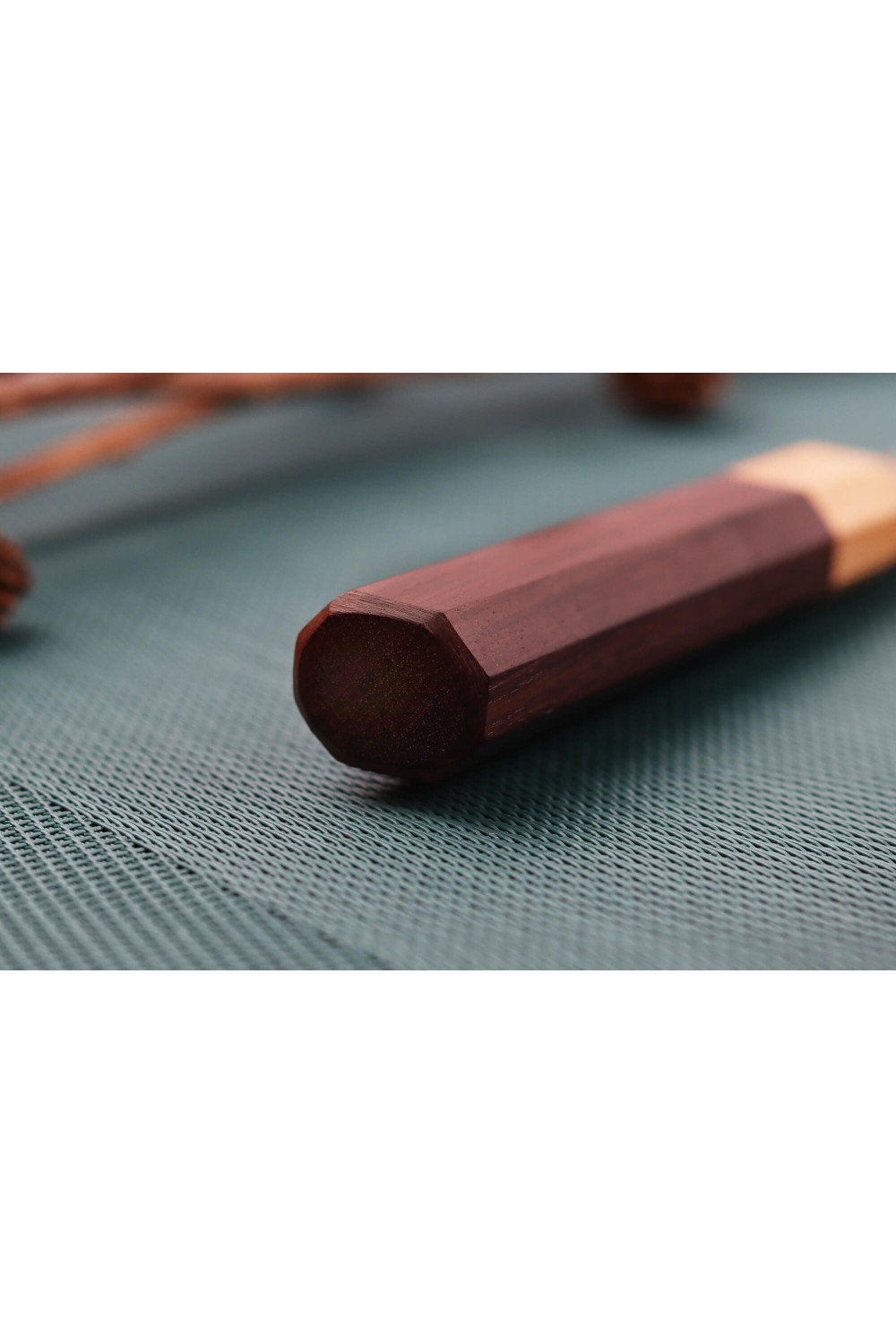
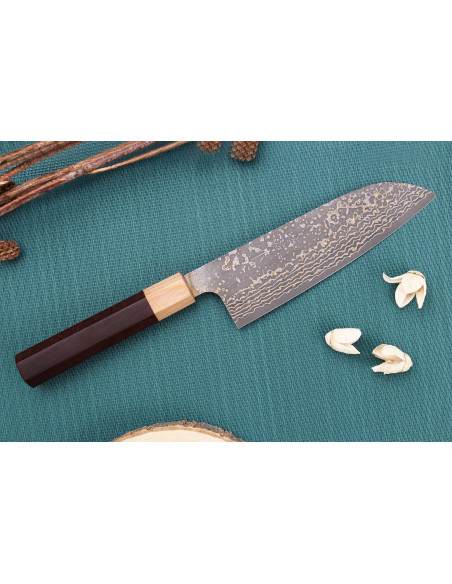
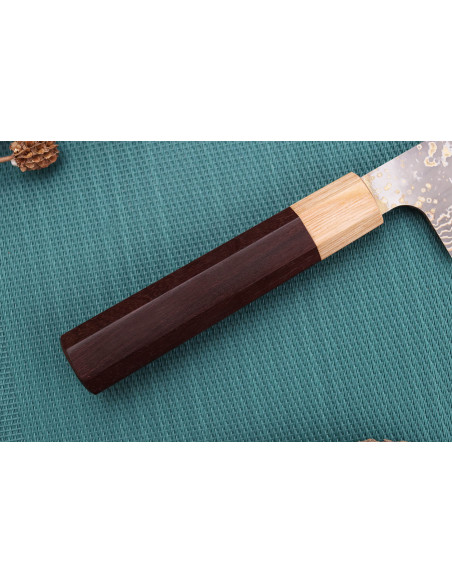
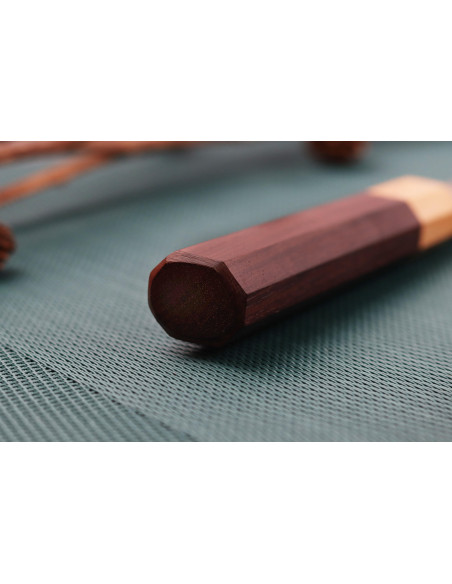
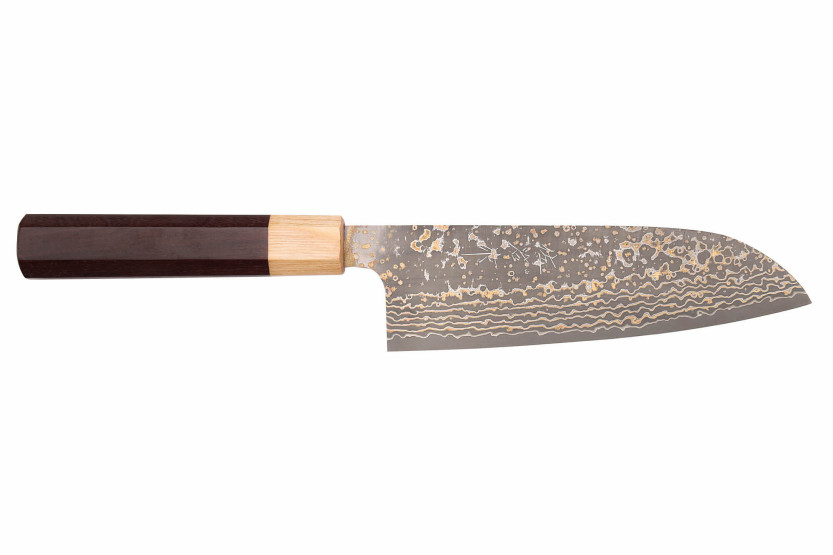
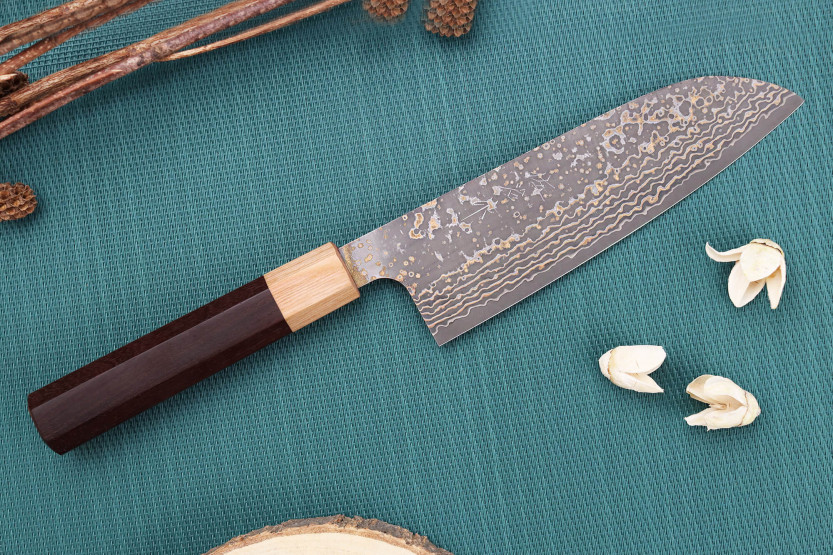
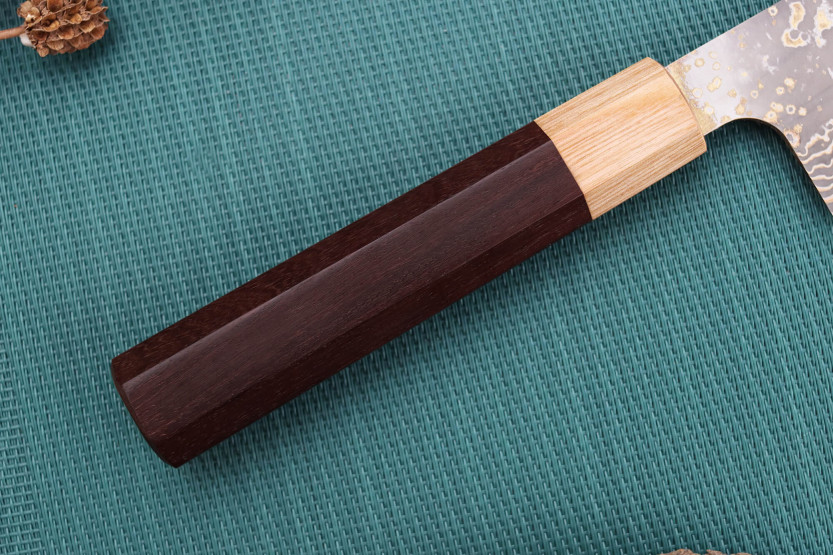
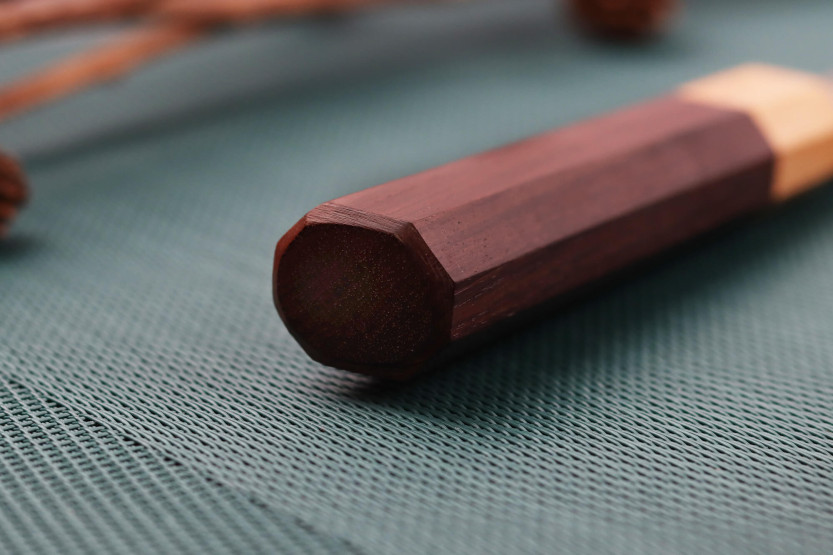
The handle of this santoku knife is made from rosewood: a robust species that is resistant to humidity. The different shades of brown make it unique to each knife!
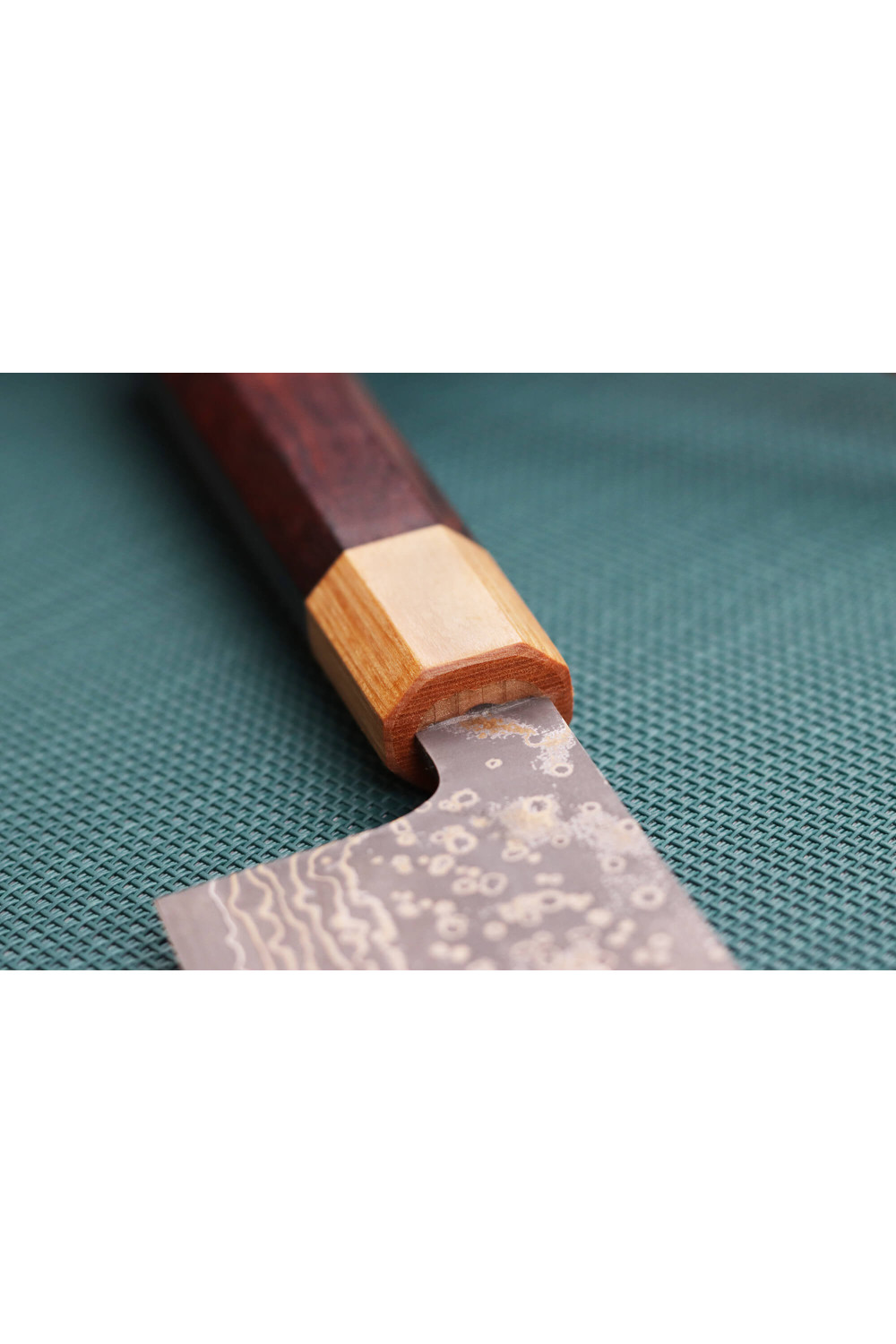
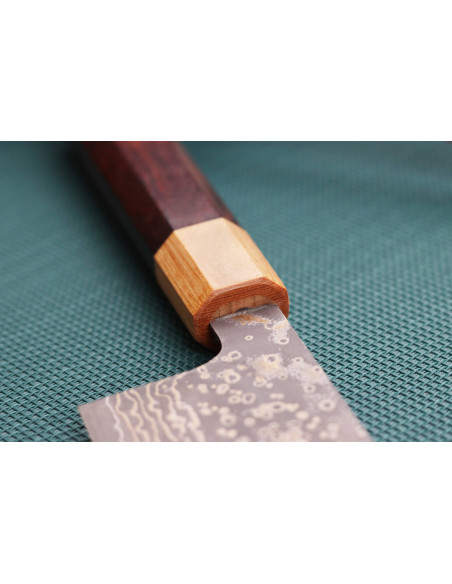
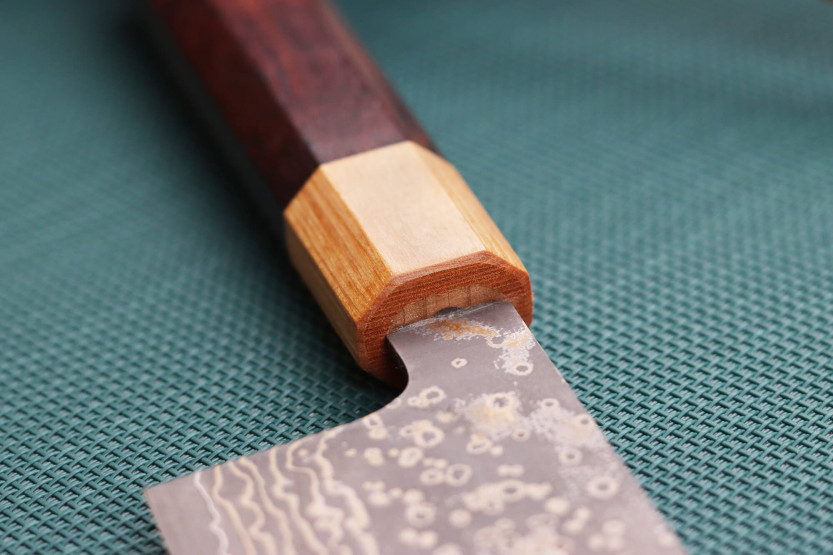
A white pakka wood bolster completes the handle. This is a composite material made from resin and laminated wood, all heat-hardened. This material is renowned for its resistance to temperature changes and humidity. Its white color blends elegantly with the darker rosewood for a striking contrast.
This handcrafted knife handle is octagonal in shape to suit the hands of all cooks: left- and right-handed alike!
The small gaps are filled with wood paste to make the whole thing watertight. As a result, no food or water can seep inside.
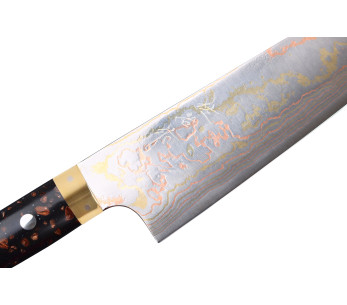
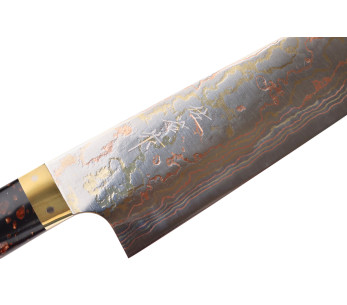
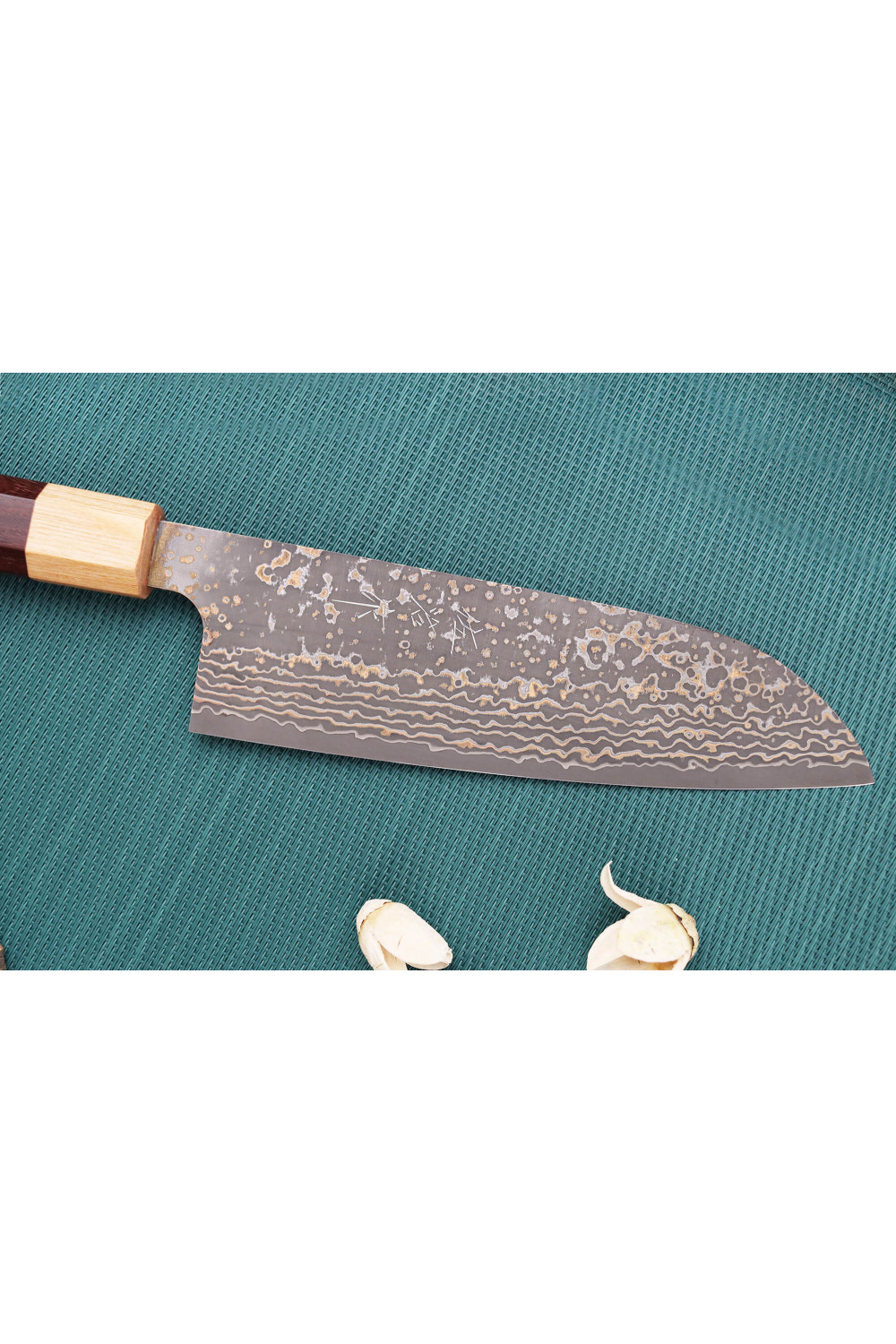
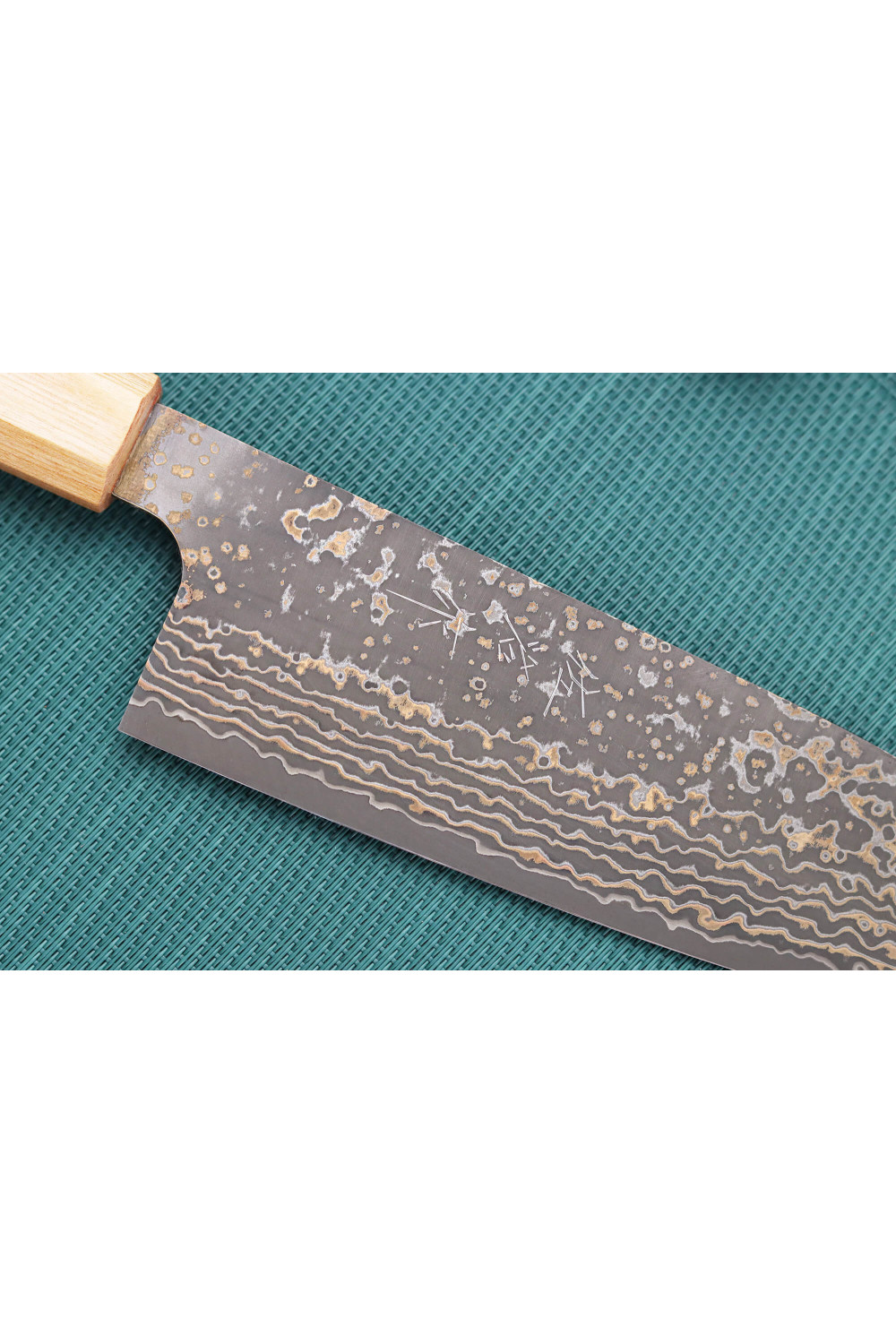
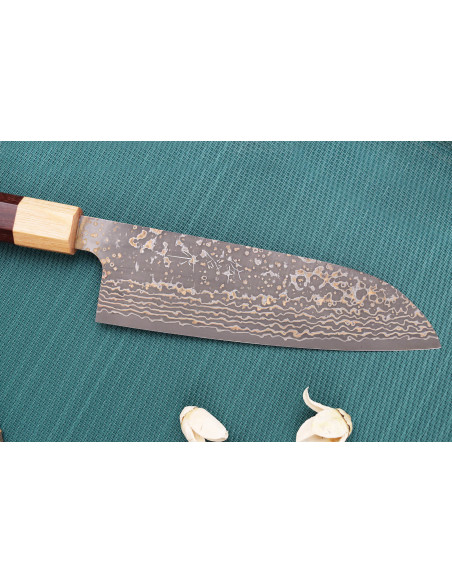
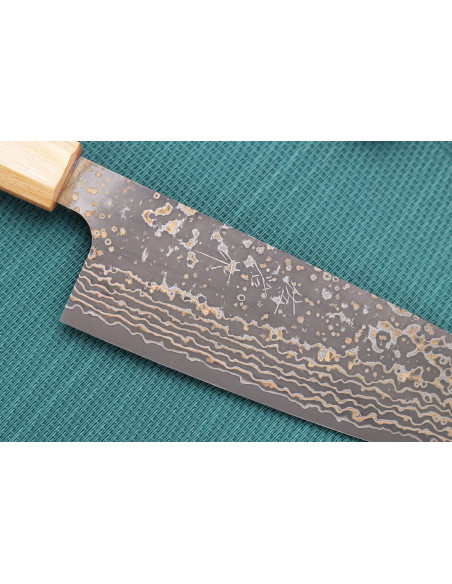
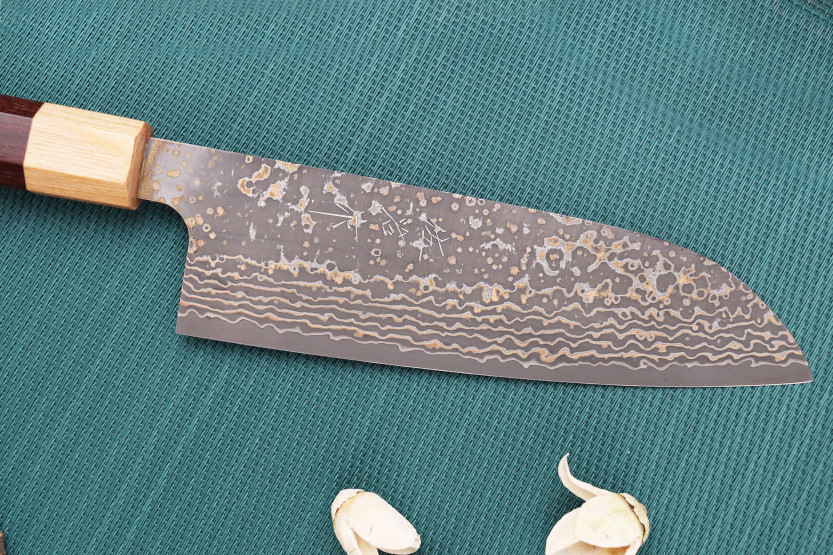
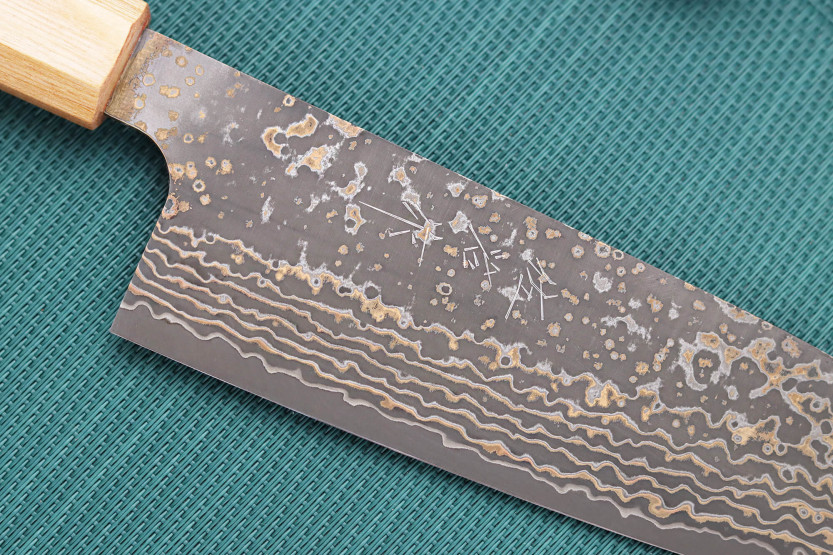
The blade of your Japanese knife is damascened. This technique consists of forging a rigid core which is then covered with several layers of softer steel. These protect the core and balance out its rigidity, making your blade less brittle.
The core of this blade is made of VG10 steel: a high-quality Japanese alloy with excellent cutting properties. It contains around 1% carbon, which gives it a high degree of hardness. Indeed, on the Rockwell scale, its hardness reaches 60HRC. It's a blade with a long-lasting, high-performance edge that lets you space out sharpening sessions while maintaining a razor-sharp finish.
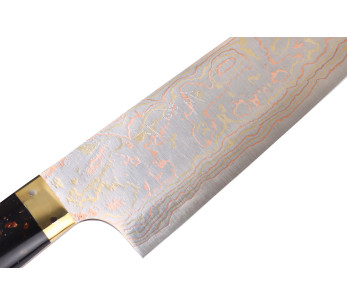
Next, the core is surrounded by several superimposed layers of steel to form the damask pattern. The different layers can be seen all over the surface of the blade, where they create fine, random waves: patterns unique to each knife! This damascus differs from other types in that it has a slightly coppery hue.
Caring for your damascus knife
This handcrafted knife should not be put in the dishwasher or soaked in water. It should only be cleaned by hand with a non-abrasive sponge and a mild detergent. Once washed, dry immediately and store in a dry place away from moisture.
Quantities of this knife are limited, as they depend on its provenance and the smith's ability to make it. Indeed, to obtain a perfect result, these entirely handmade knives require a great deal of time.
Find many quality Japanese knives on KnifeLeader.eu!




 By buying this product you can collect up to