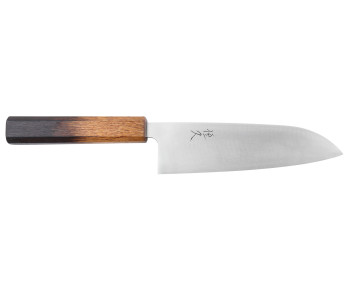
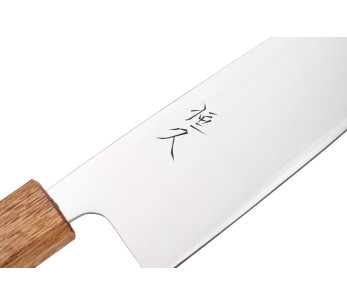
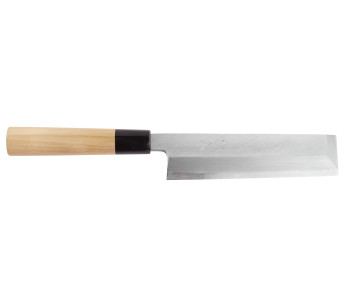
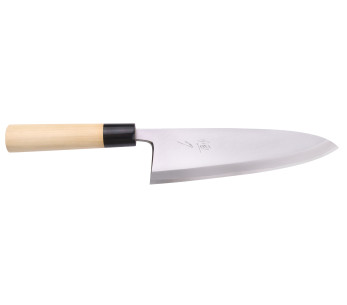
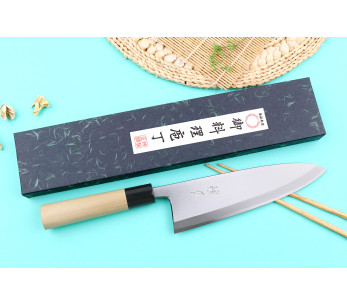
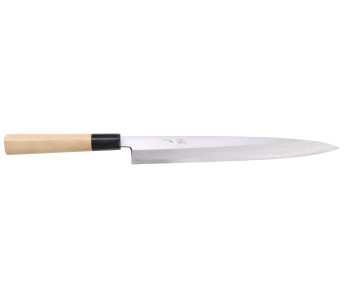
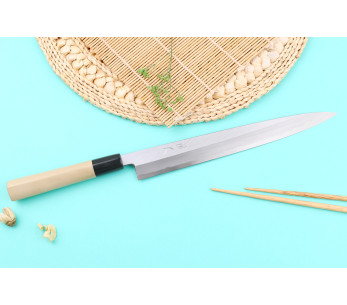
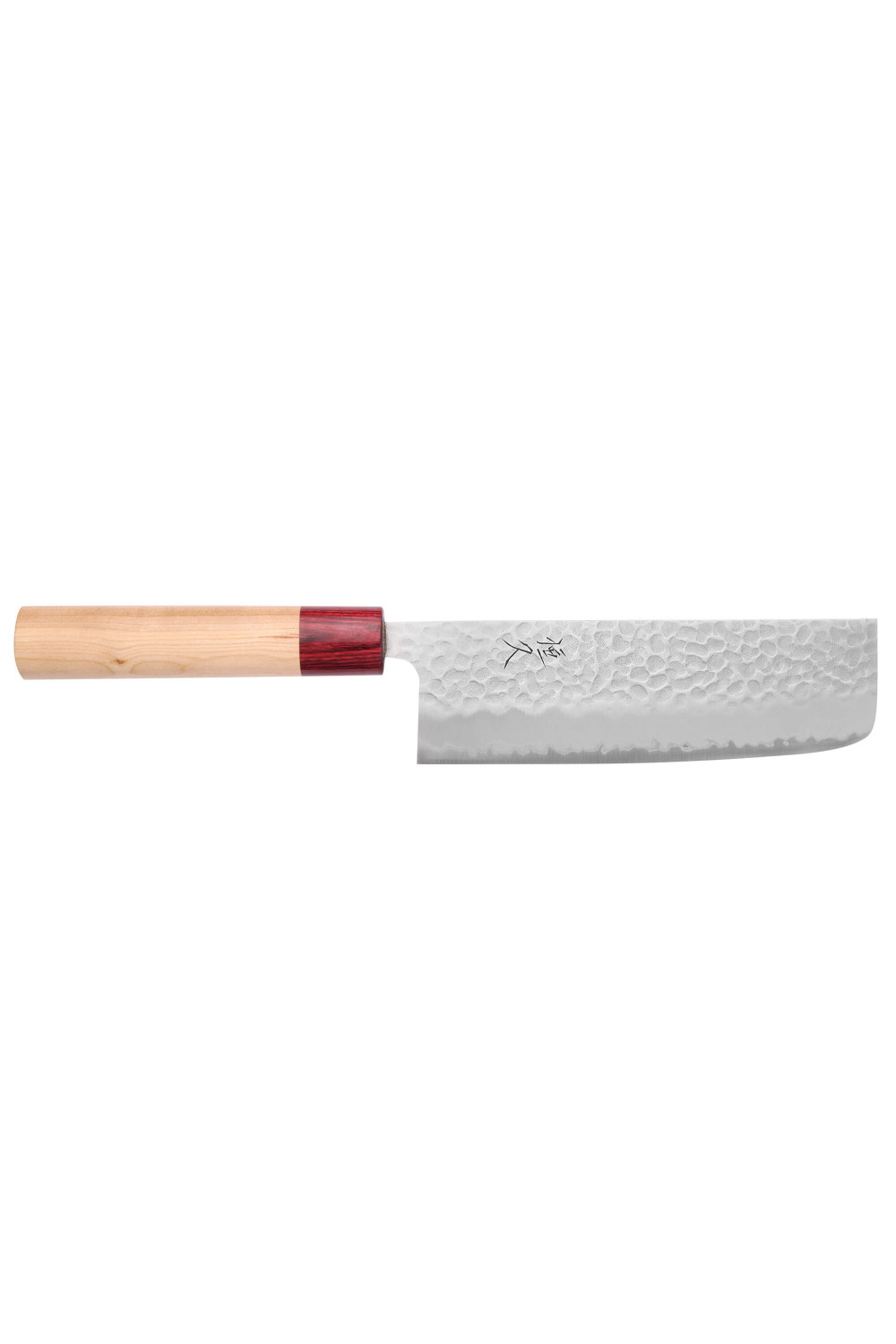
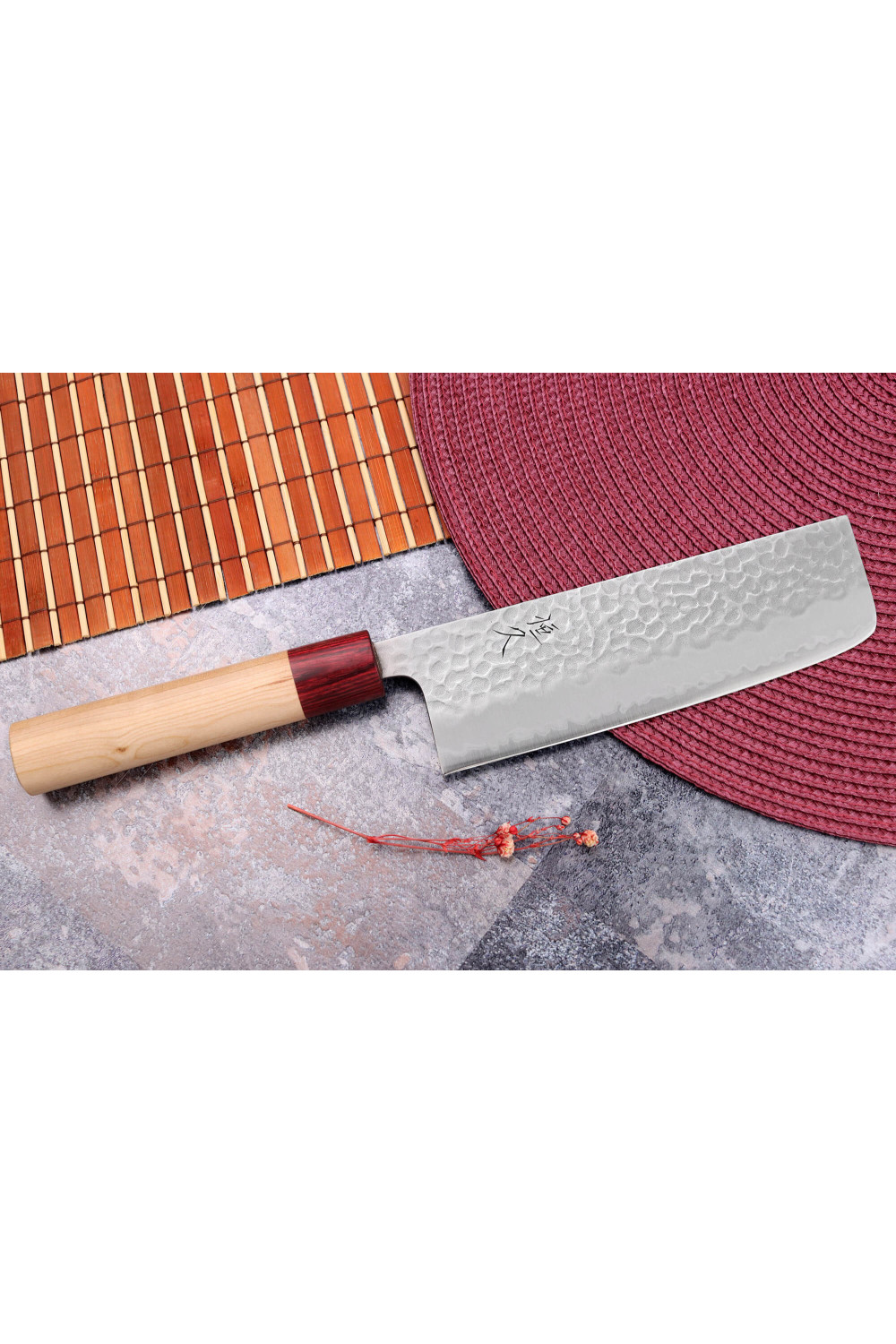
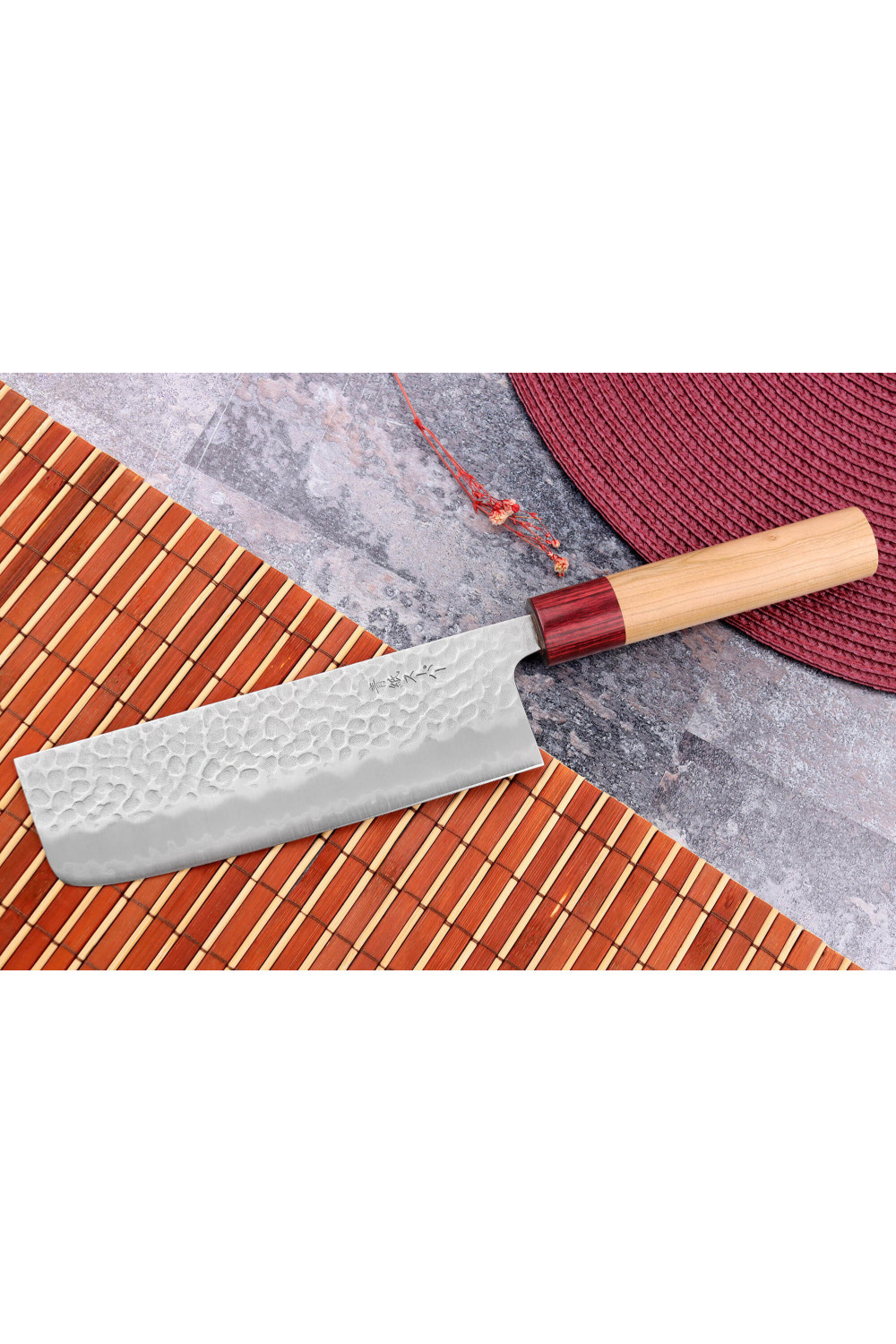
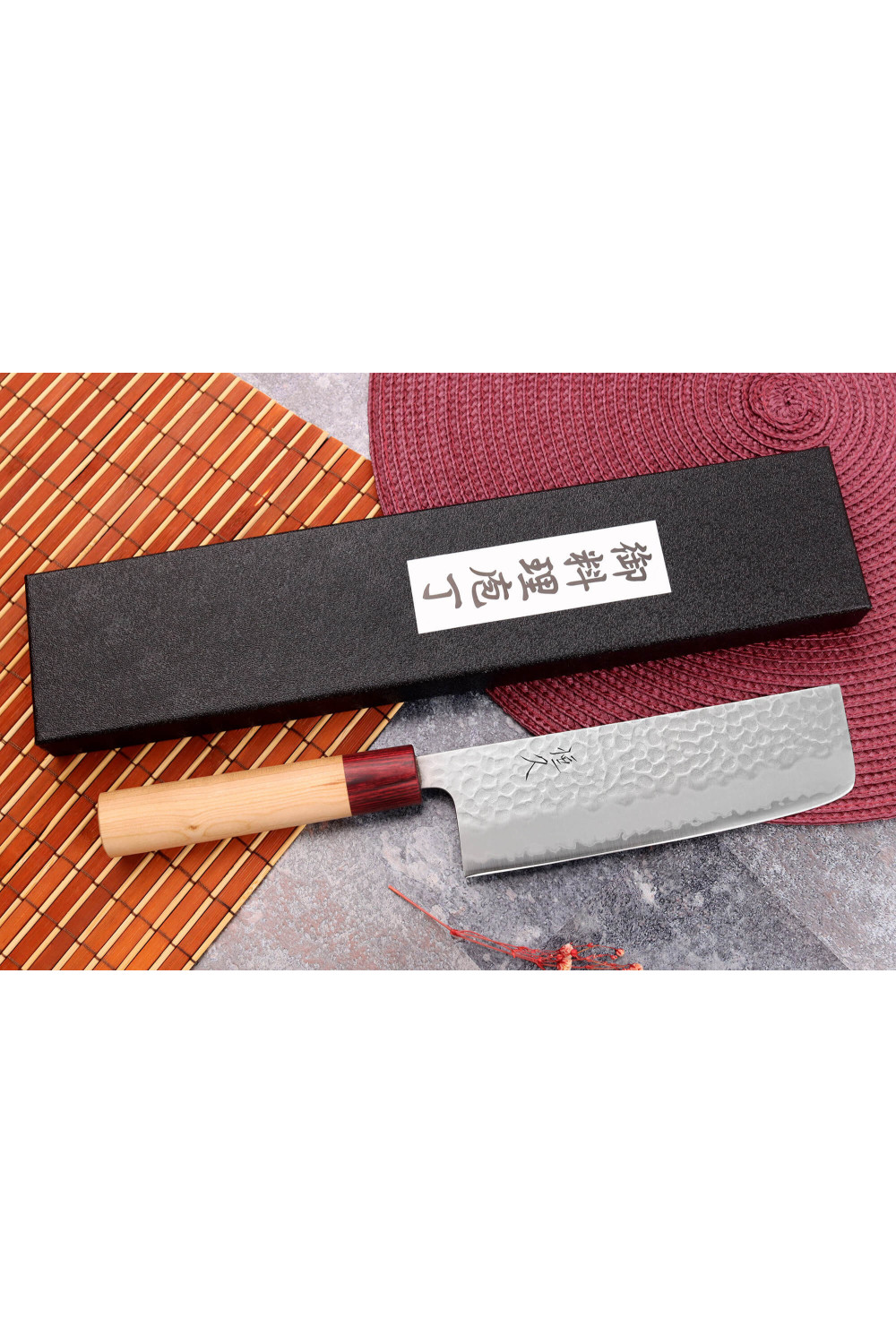
This range of knives is forged by Tsunehisa Cutlery, renowned for its craftsmanship. Appreciated by amateur and professional chefs alike, these Japanese knives combine performance and durability. Their manufacture is based on traditional expertise, inherited from the ancient Japanese blacksmiths who designed the famous katanas!
The practical Japanese knife for cutting
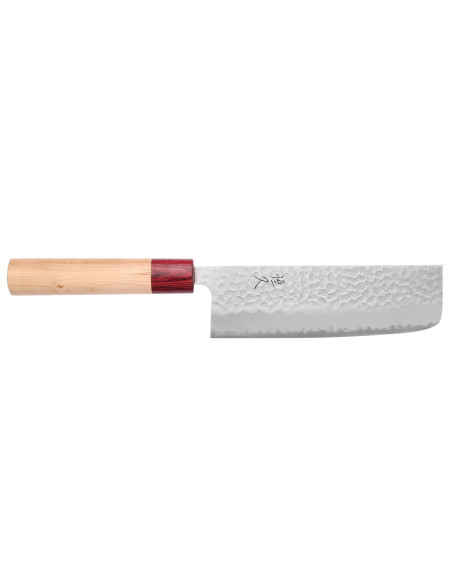
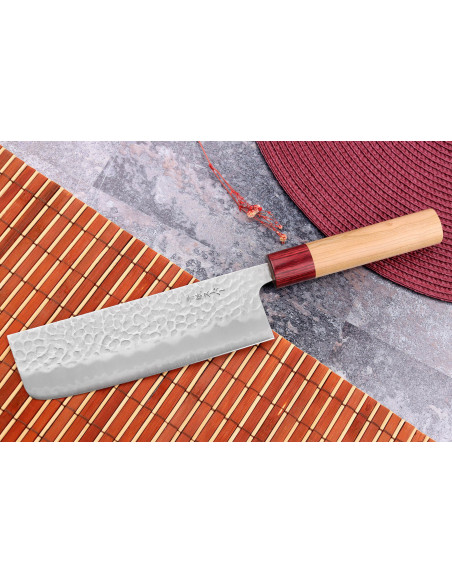
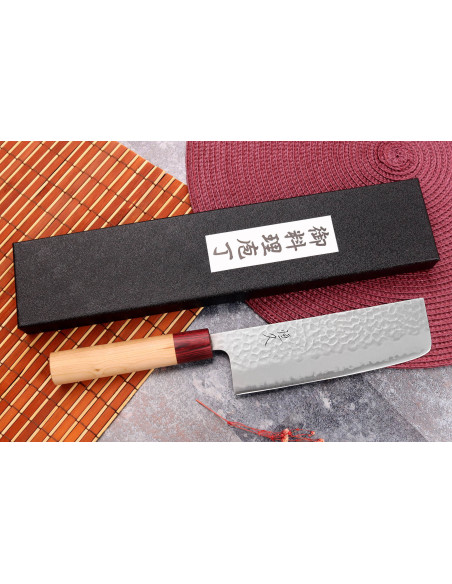
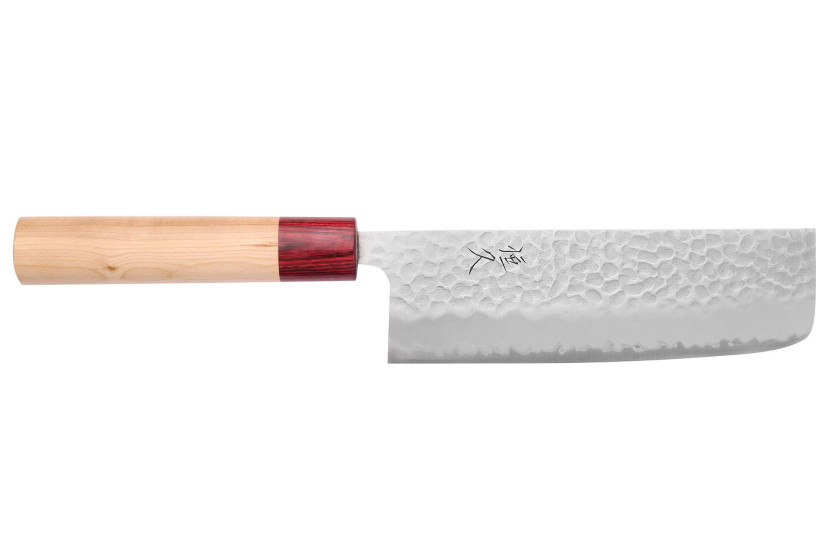
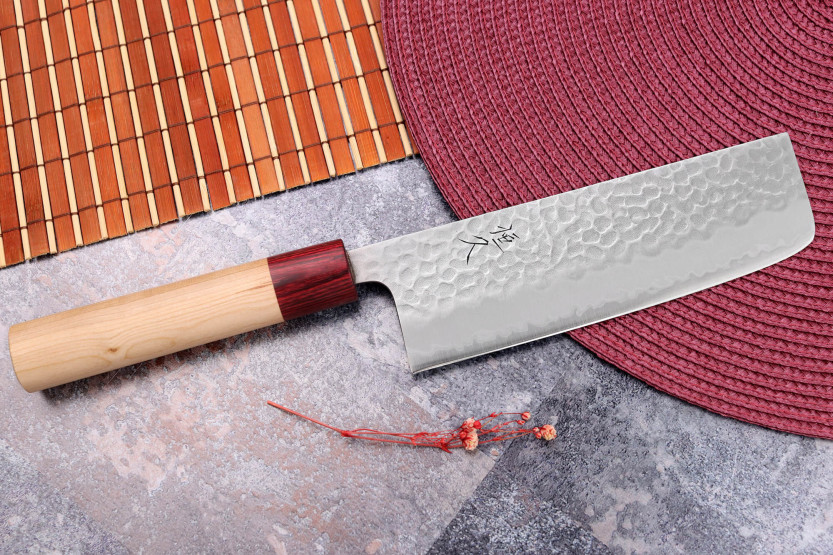
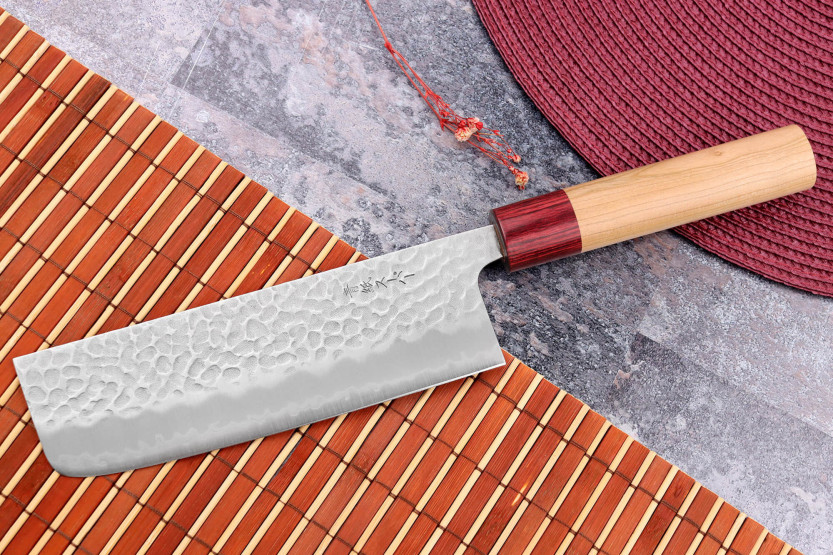
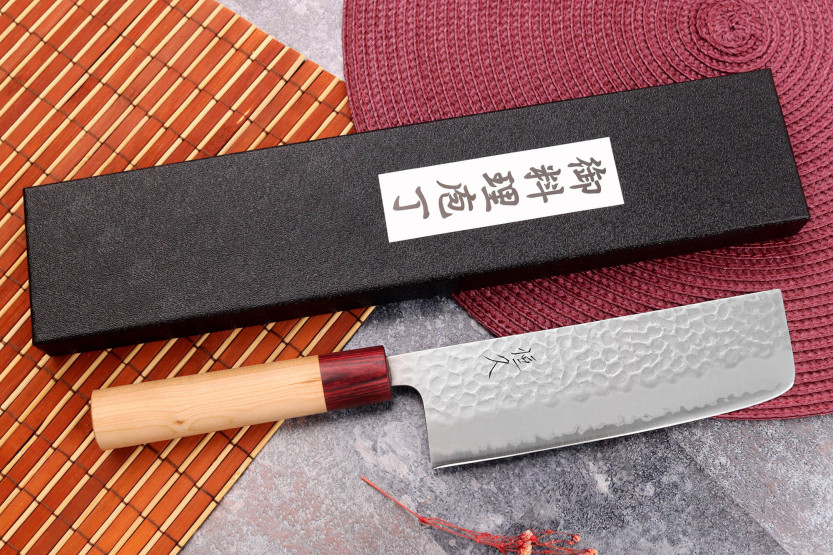
This nakiri knife is ideal for cutting fruit and vegetables! Its wide blade enables you to make a wide range of cuts: cubes, slices, sticks and more. Be careful not to use it on hard foods such as squash or frozen foods.
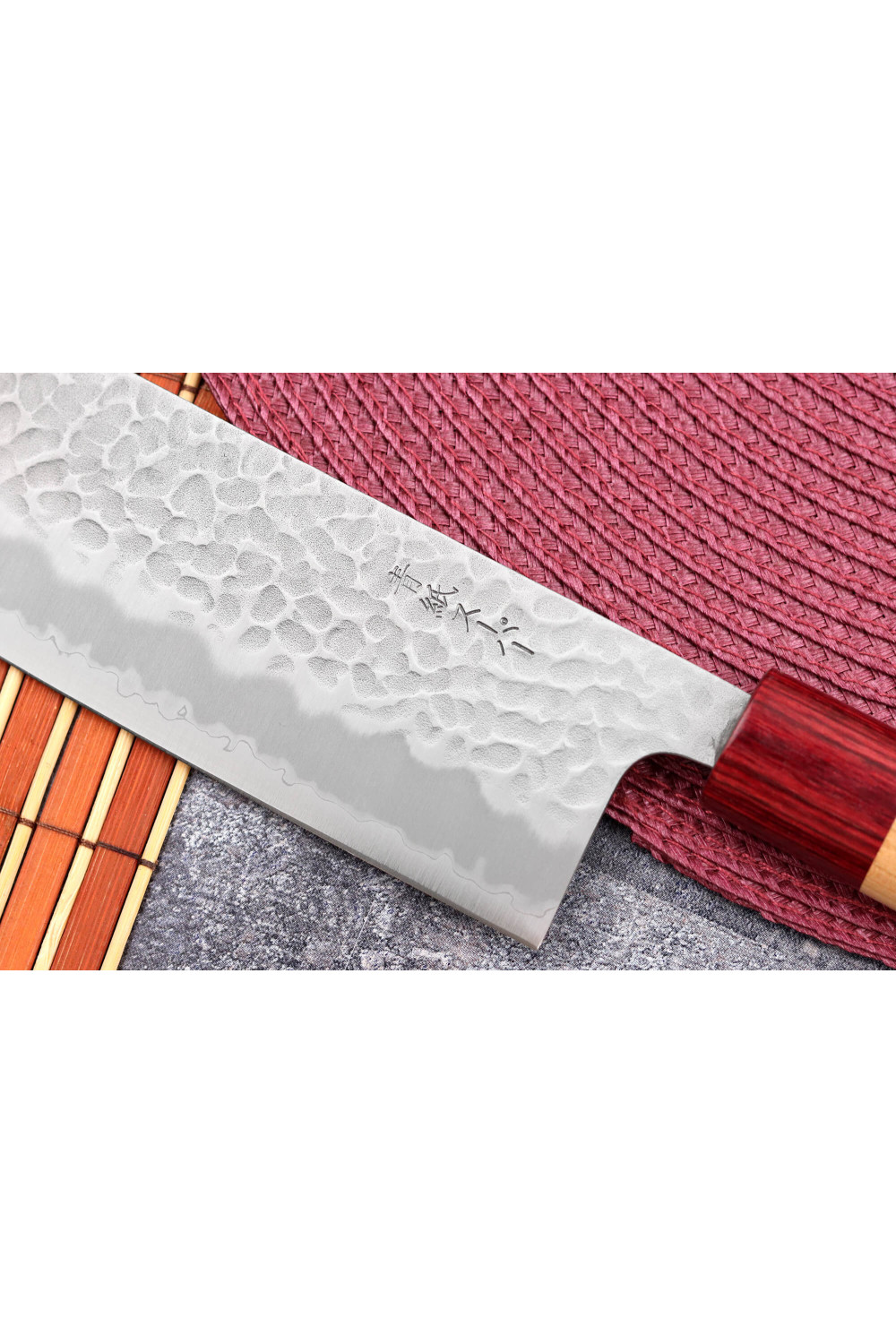
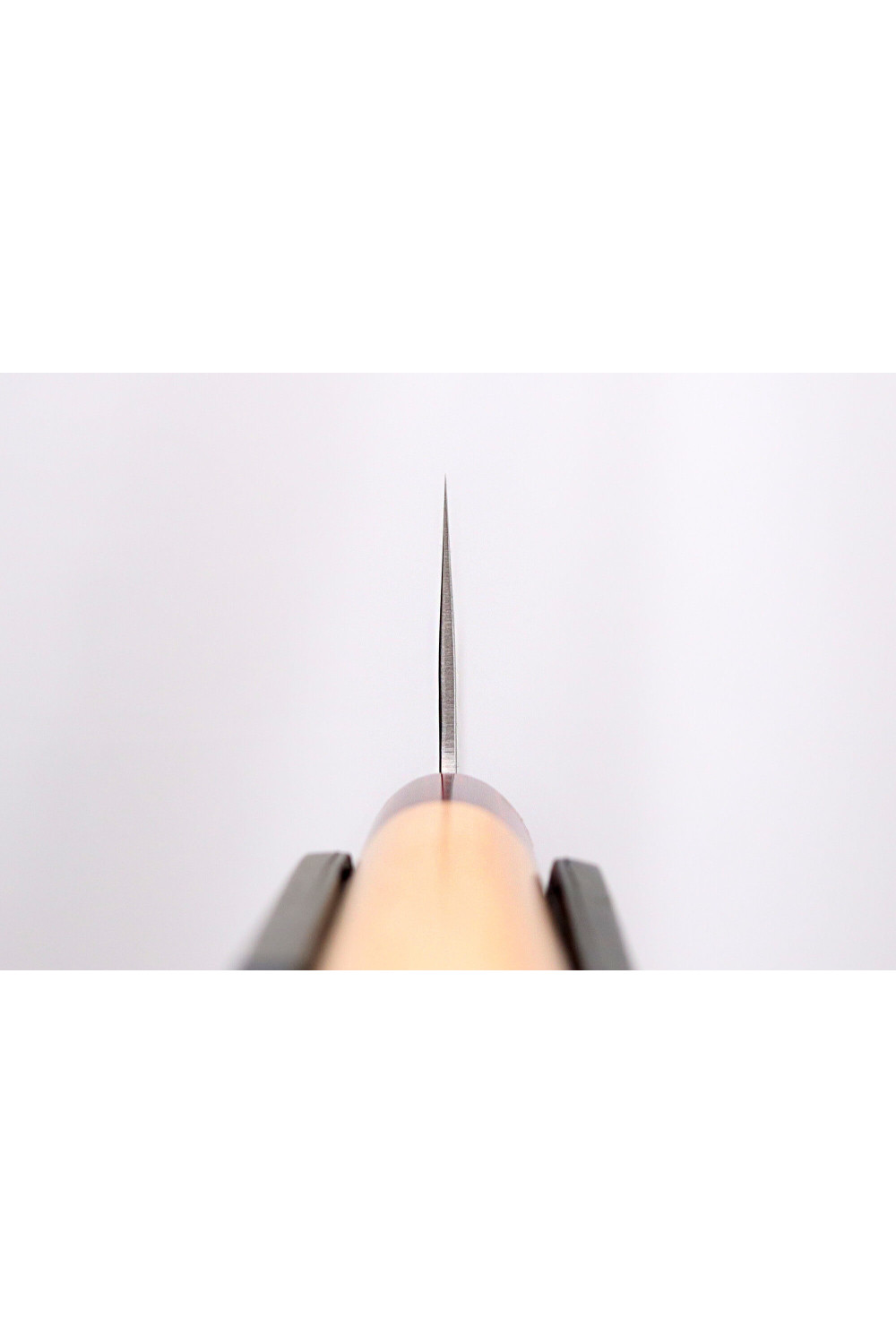
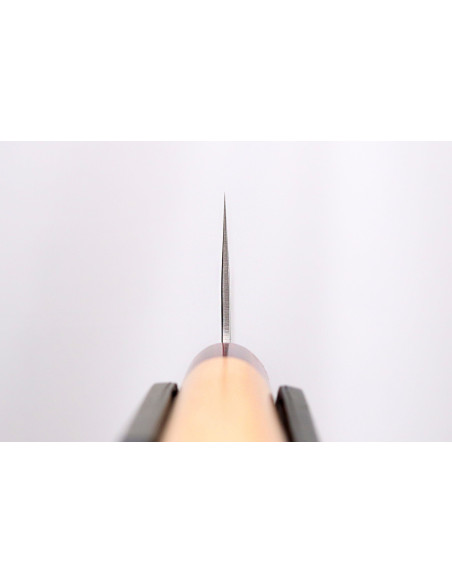
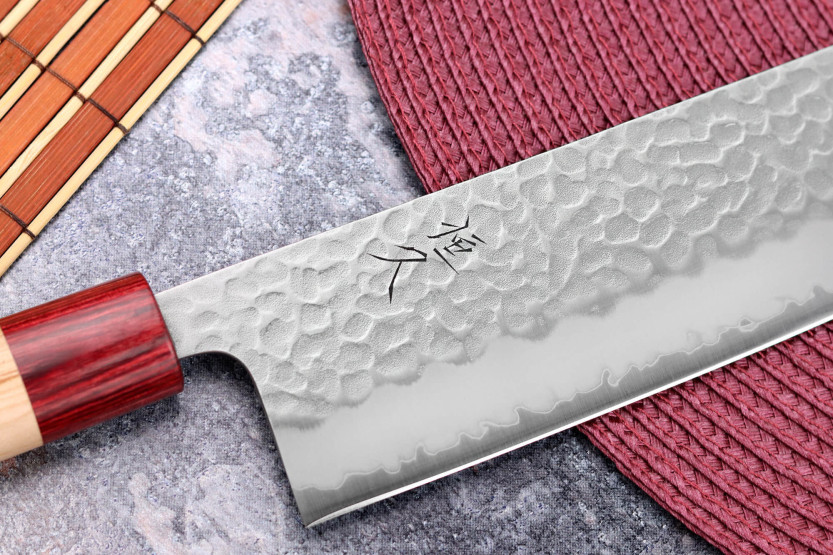
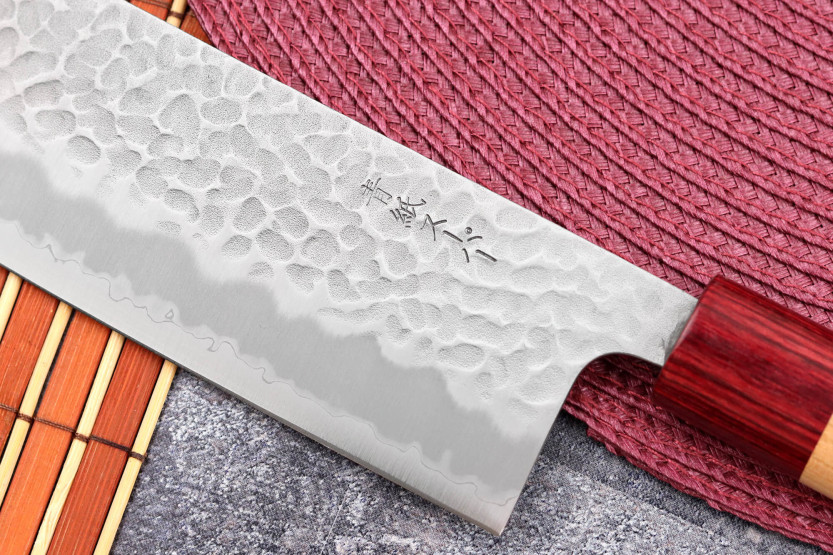
Manufactured using a traditional Japanese San Maï structure (meaning "three layers"), this Japanese kitchen knife benefits from an ingenious design. The blade's core, in rigid steel, is enveloped by two layers of softer steel, created by folding. This construction ensures an optimal balance between strength, flexibility and cutting performance.
This kitchen knife features a core of Japanese Aogami Super steel, also known asAS or Blue Paper Steel Super, a high-quality alloy created by renowned steelmaker Hitachi.
With a carbon content of up to 1.5%, this steel stands out for its remarkable hardness. Carbon, a key element, reinforces the steel's strength and enables the cutting edge to last longer. Thanks to this composition, the blade achieves a hardness of 65HRC on the Rockwell scale, well above the average for Western knives, generally between 55 and 60 HRC. Your blade therefore benefits from excellent edge retention!
This top-of-the-range alloy is rare and costly, as its working requires great expertise. Only experienced blacksmiths can handle it without major losses, making it a material reserved for the most skilled craftsmen.
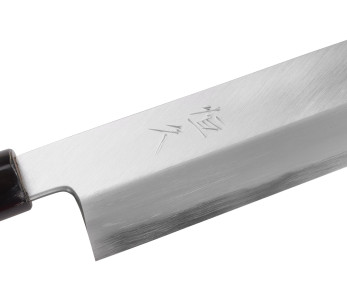
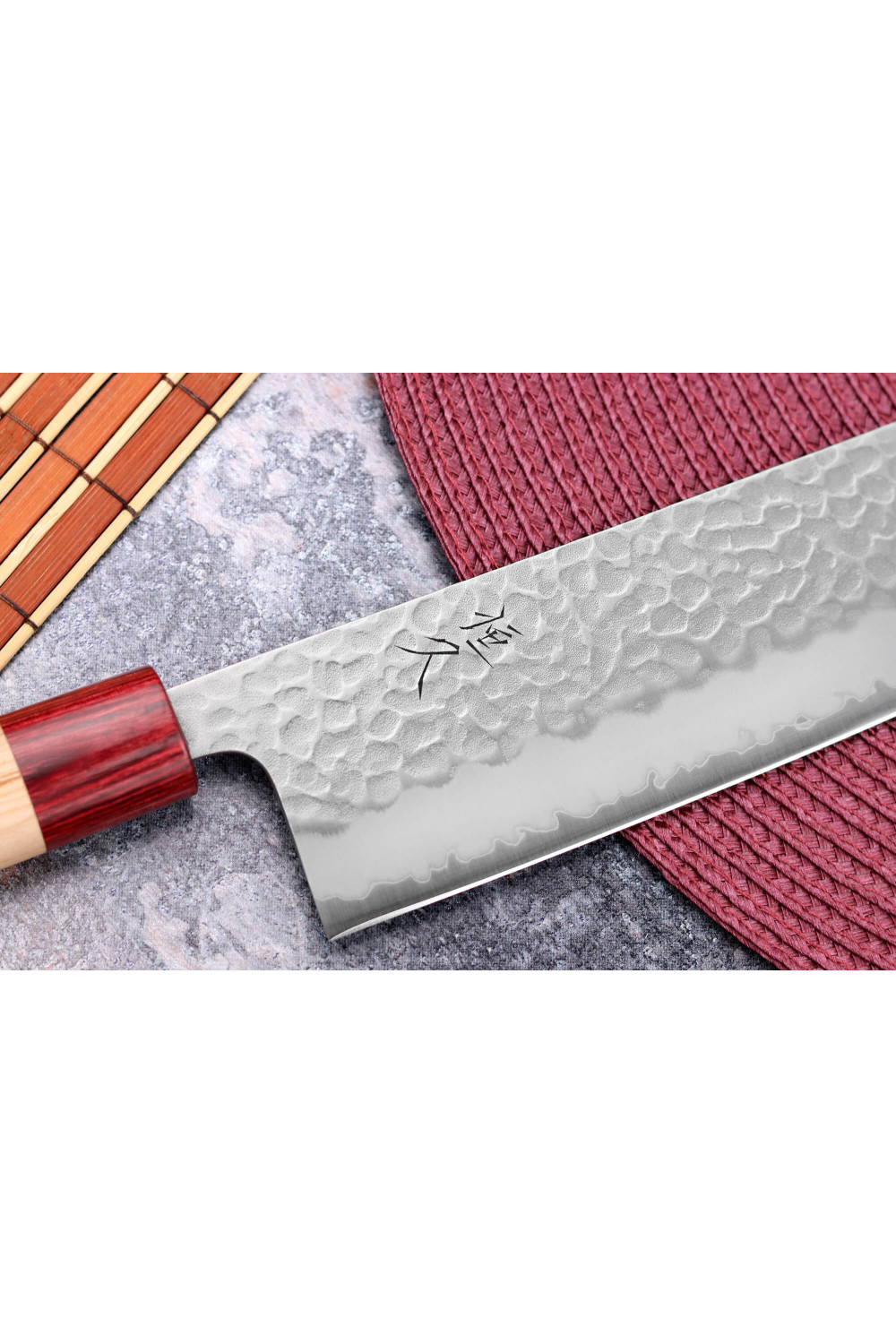
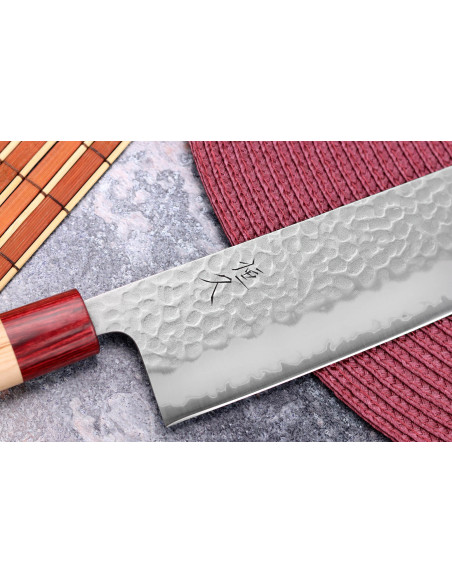
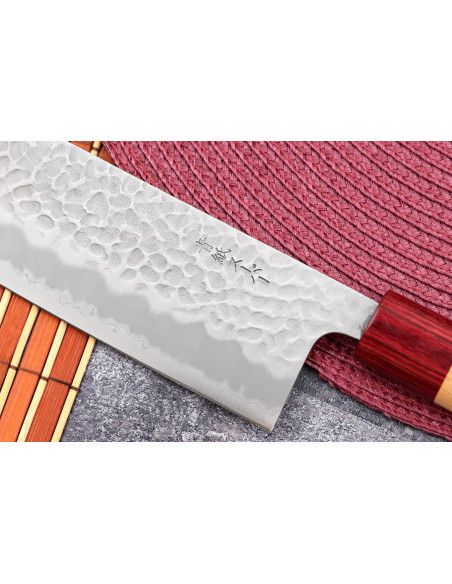
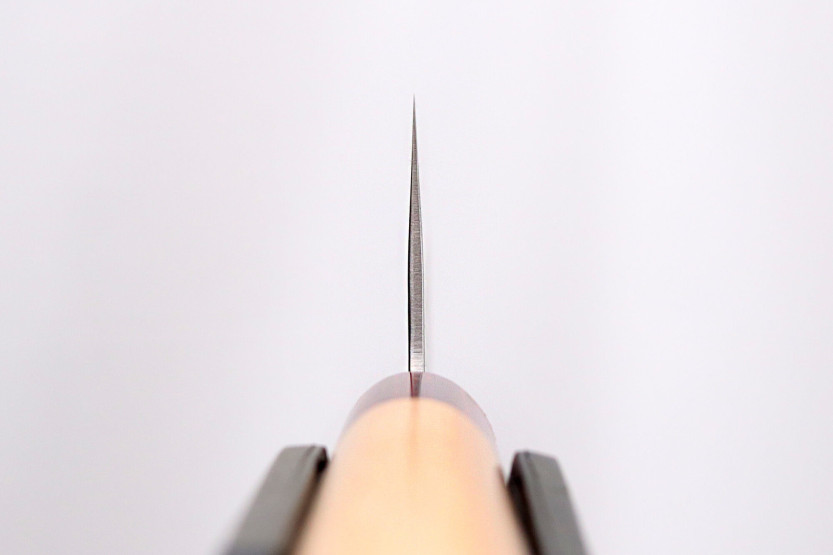
Once the core has been manufactured, it is wrapped in a layer of softer steel, which improves the blade's balance and offers better protection. This structure is visible at the bottom of the blade, where a unique wave is formed by the superimposed layers of steel.
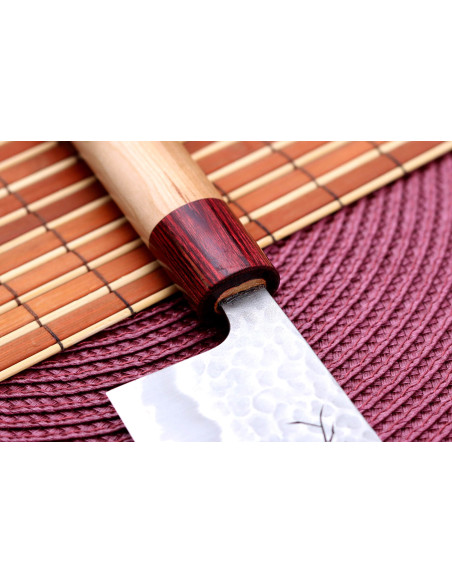
In addition to its performance, this Tsunehisa knife is distinguished by its remarkable finishes, including a rough-forged look and meticulous hammering that gives each piece a unique character! In addition to its aesthetic appeal, this hammering is practical: it limits the adherence of food to the blade during cutting.
An ambidextrous handle for your nakiri knife
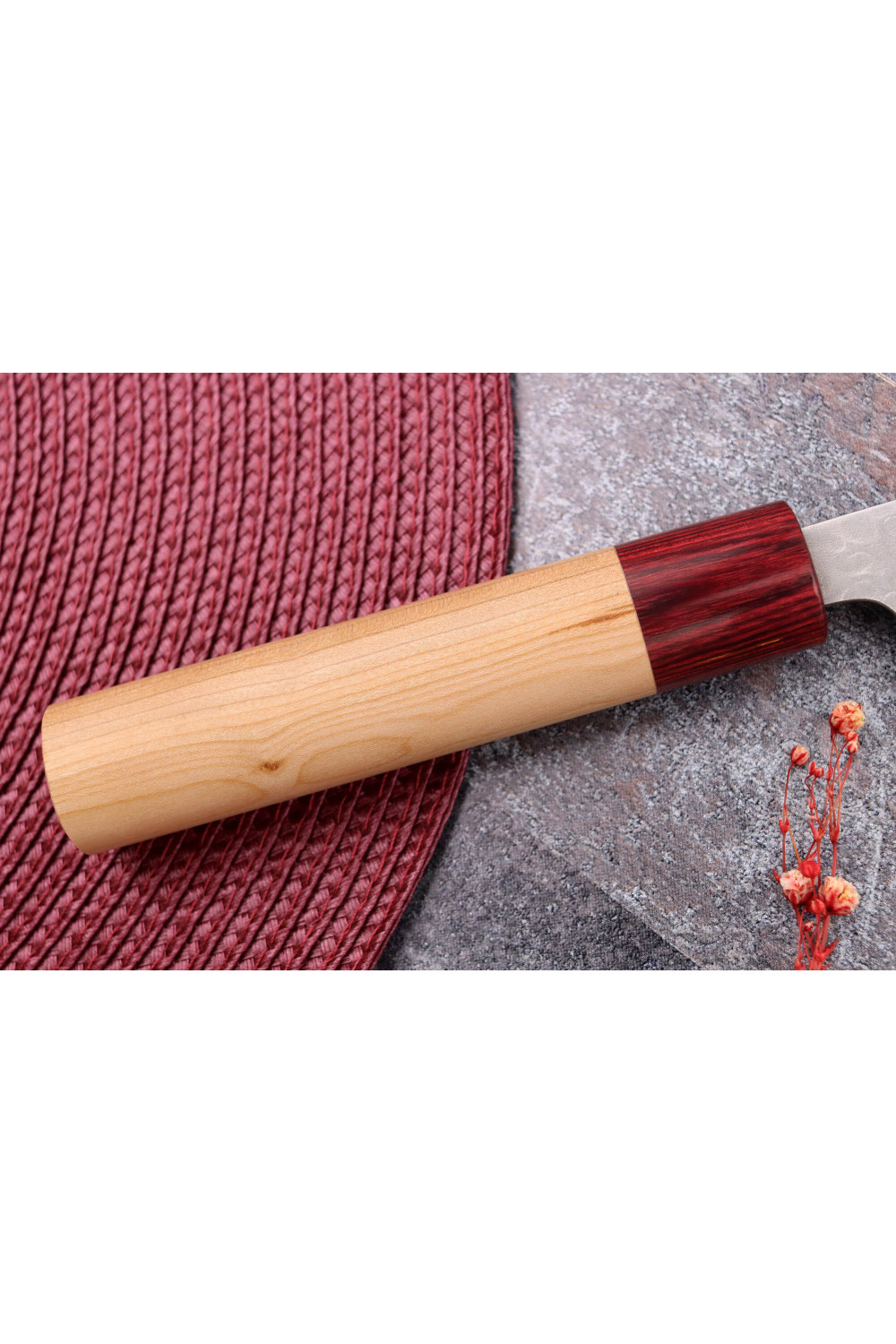
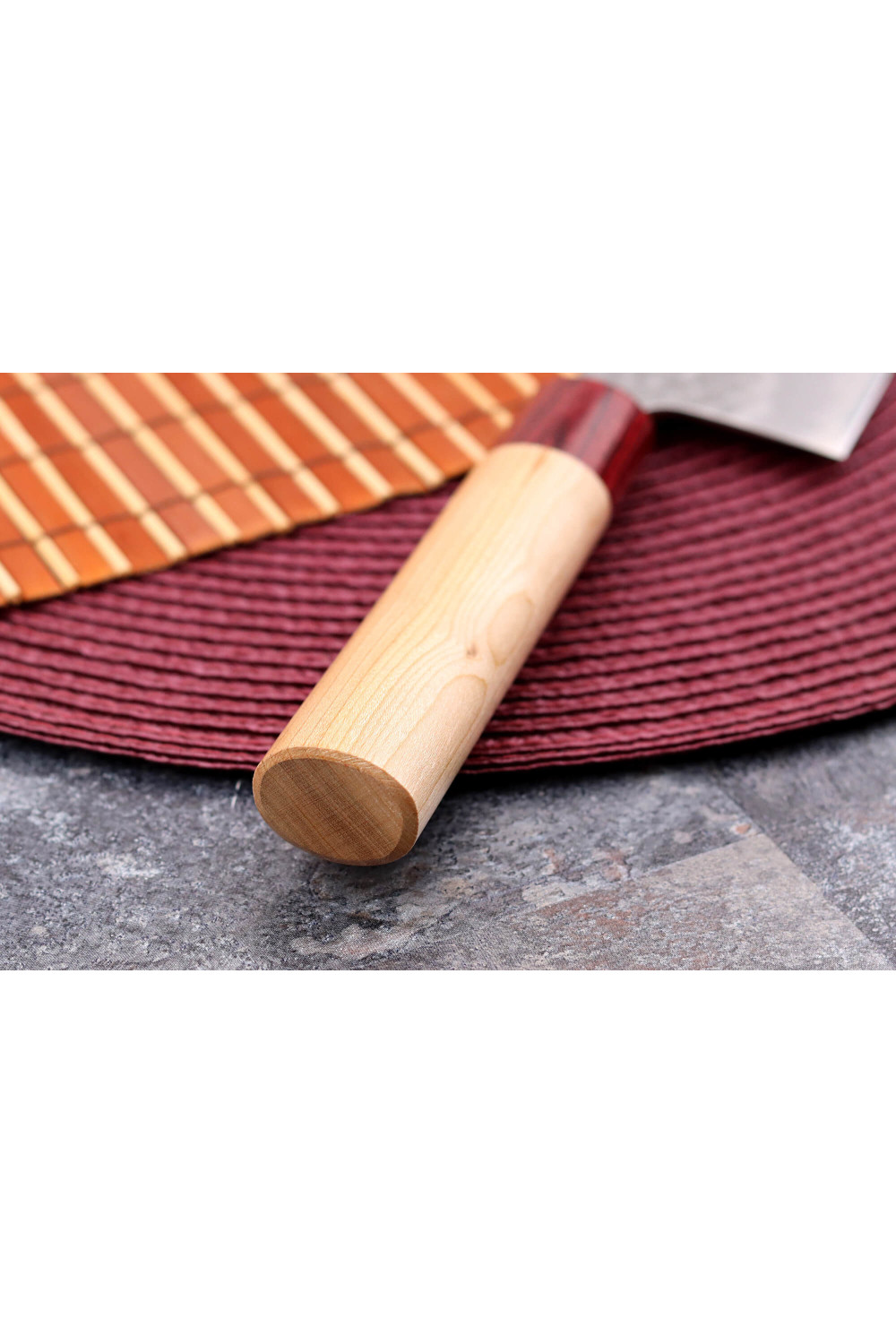
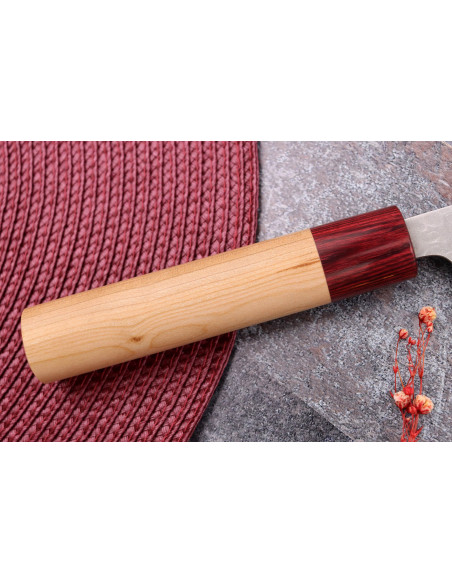
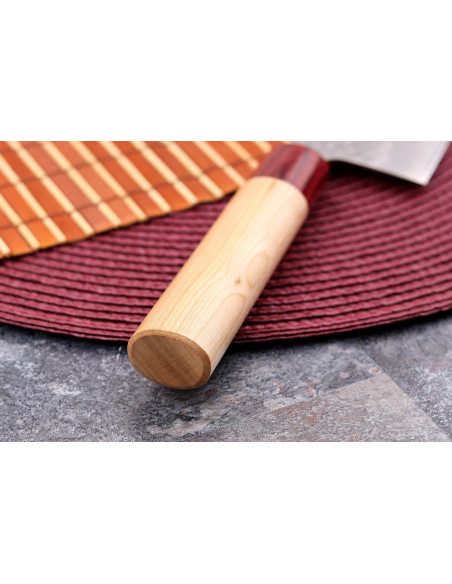
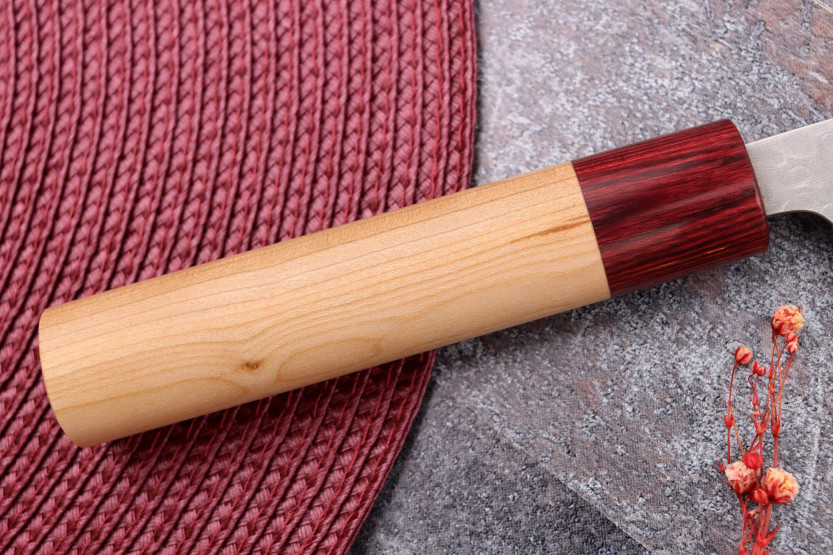
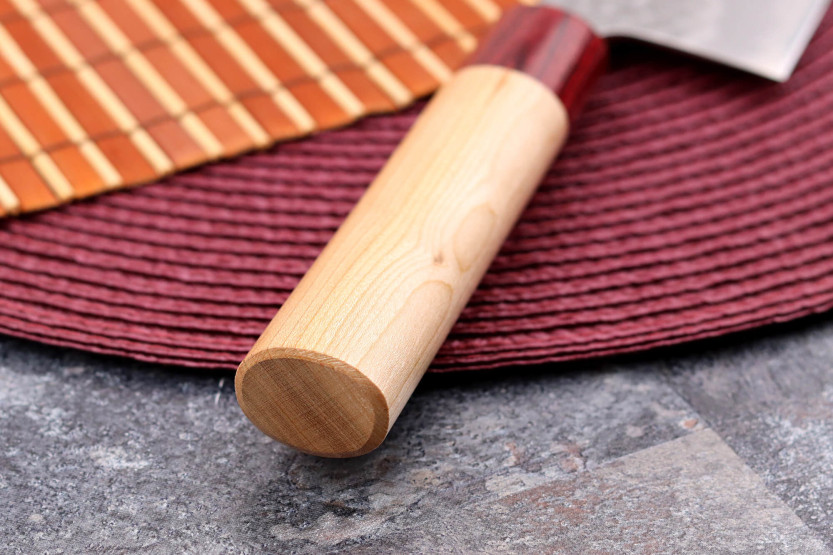
The handle of your handcrafted Japanese knife is made from light cherry wood, a species renowned for its durability and aesthetic appeal. In Japan, the cherry tree is a sacred tree found throughout the archipelago, symbolizing ephemeral nature, beauty and the cycle of life.
Its oval shape is designed to suit both right- and left-handed users, providing an ergonomic and comfortable grip, even during prolonged use!
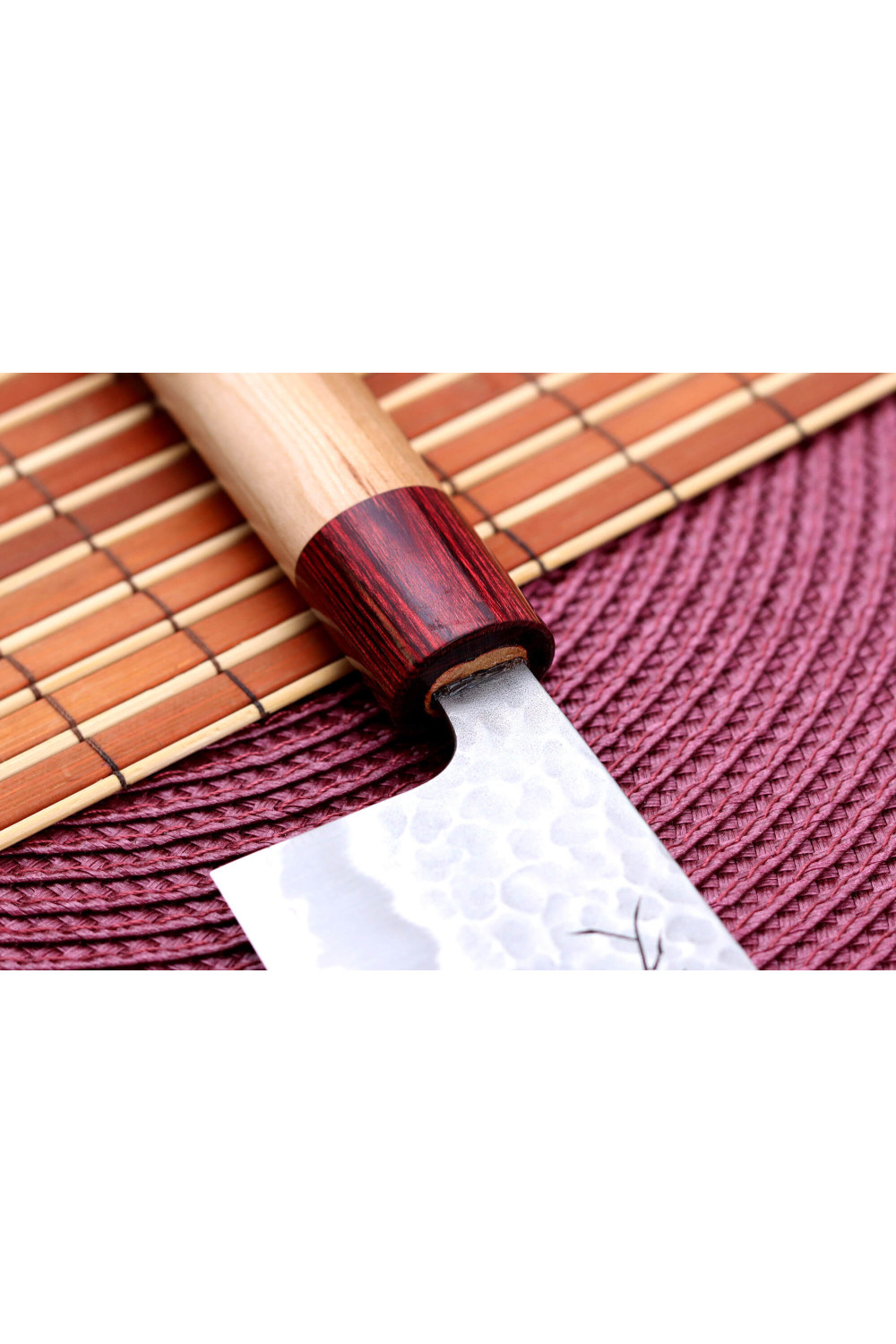
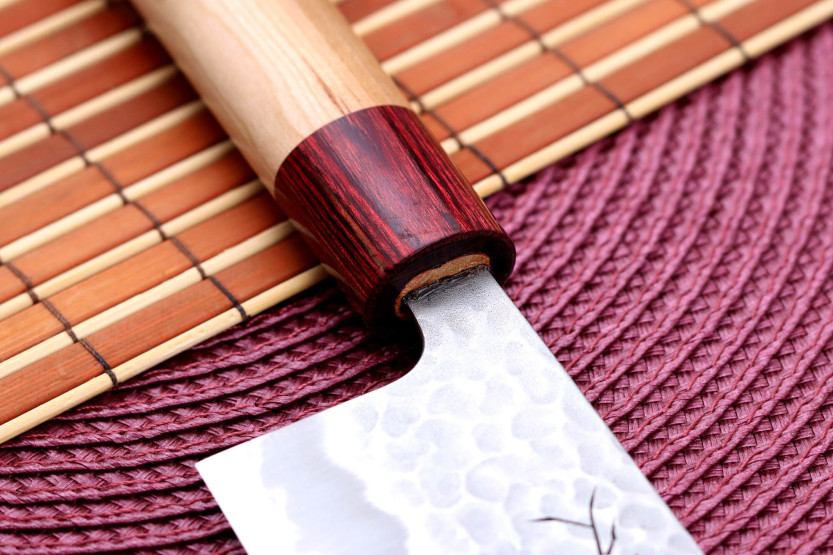
The bolster is made from red pakkawood, a composite material of laminated wood and compressed resin. This blend gives it excellent resistance to humidity, temperature variations and impact, guaranteeing enhanced durability, while retaining its natural grain.
To ensure a meticulous finish, wood paste has been applied where the blade fits into the handle. This makes the whole unit watertight and hygienic, preventing the infiltration of water or small food residues.
Caring for a carbon knife
To best care for your Japanese kitchen knife, it should be washed only by hand with a sponge and mild detergent, avoiding getting the handle wet. Once washed, wipe dry immediately to remove all moisture and store in a dry place. Do not leave to soak in the sink, nor put in the dishwasher.
With the passage of time, your blade may change color slightly: this is normal! This is a natural carbon reaction caused by the acidity of the food you're cutting and the humidity in the air. This in no way affects the use of your Japanese nakiri knife!
Discover a wide range of sharpening stones to maintain your cutting edge on Knifeleader.eu!




 By buying this product you can collect up to