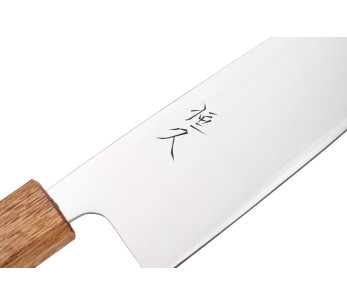
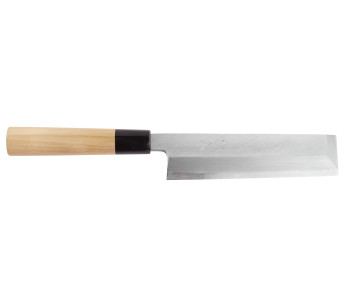
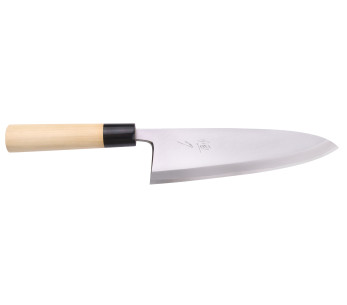
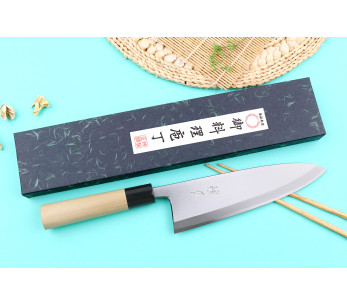
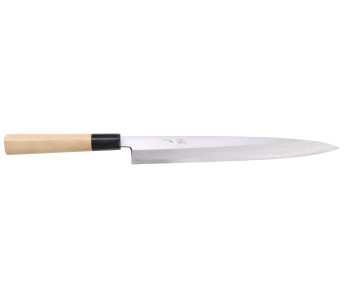
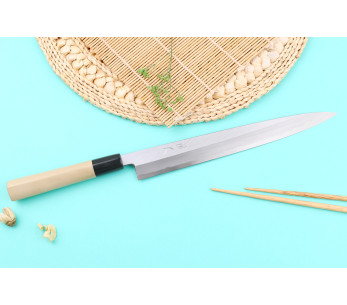
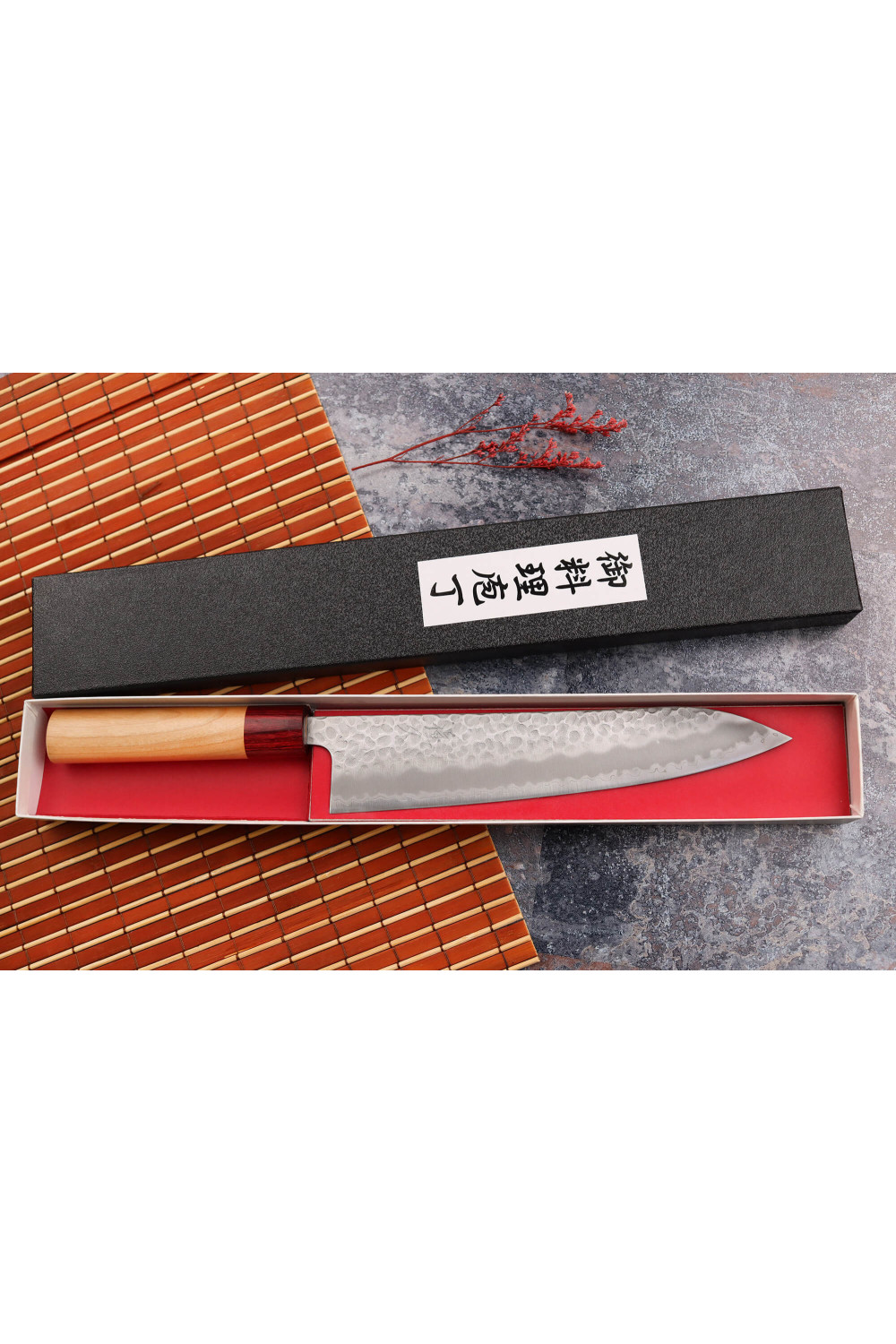
This range of knives is forged by Tsunehisa cutlery. Amateur and professional chefs alike can appreciate their performance and durability. These knives are made using authentic craftsmanship, derived directly from the knowledge of the ancient blacksmiths who created the katana.
A chef's knife made of quality materials
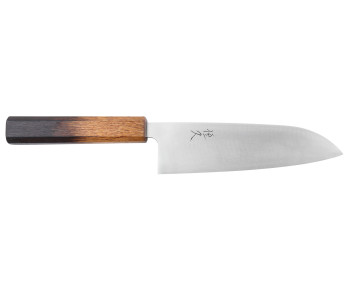
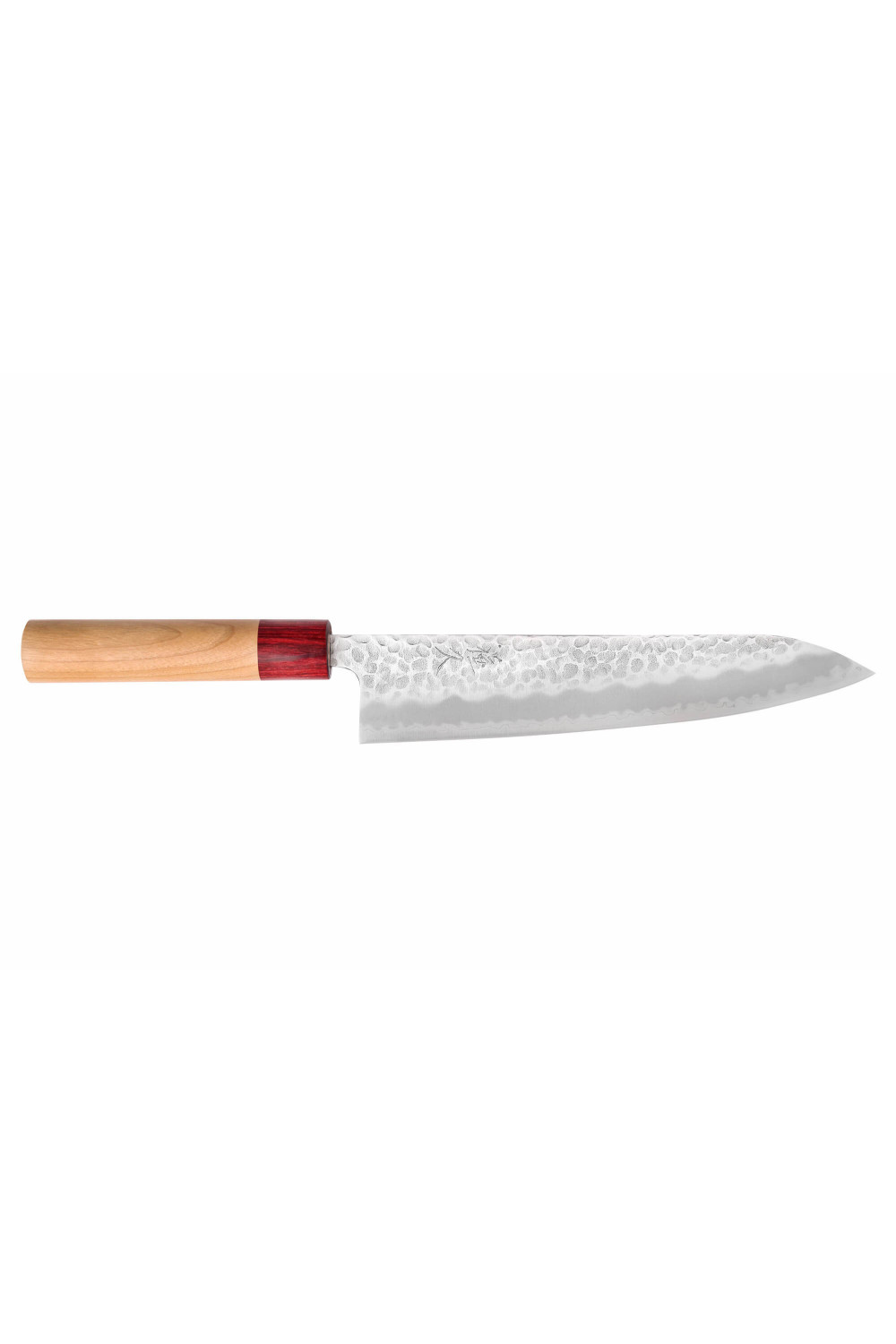
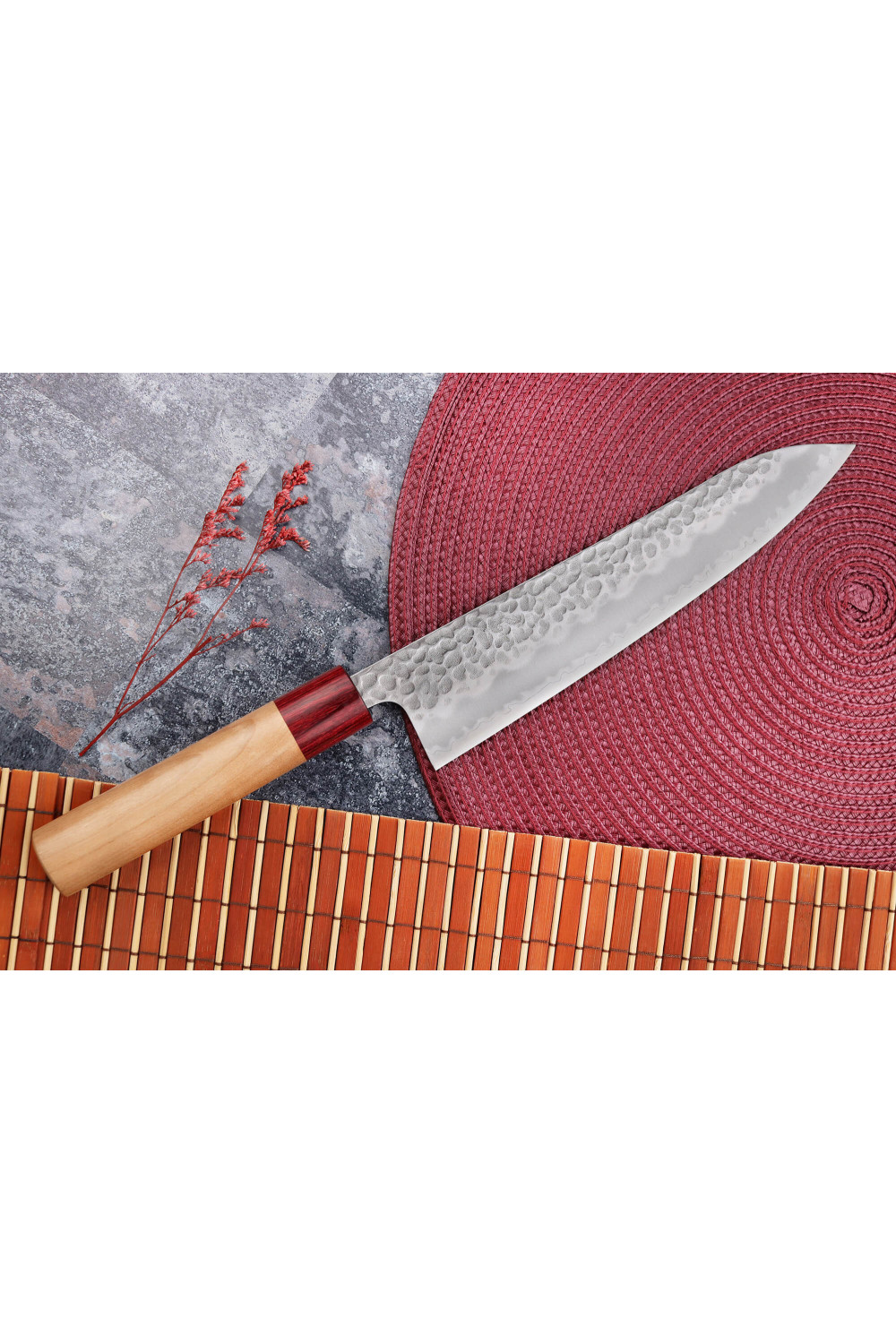
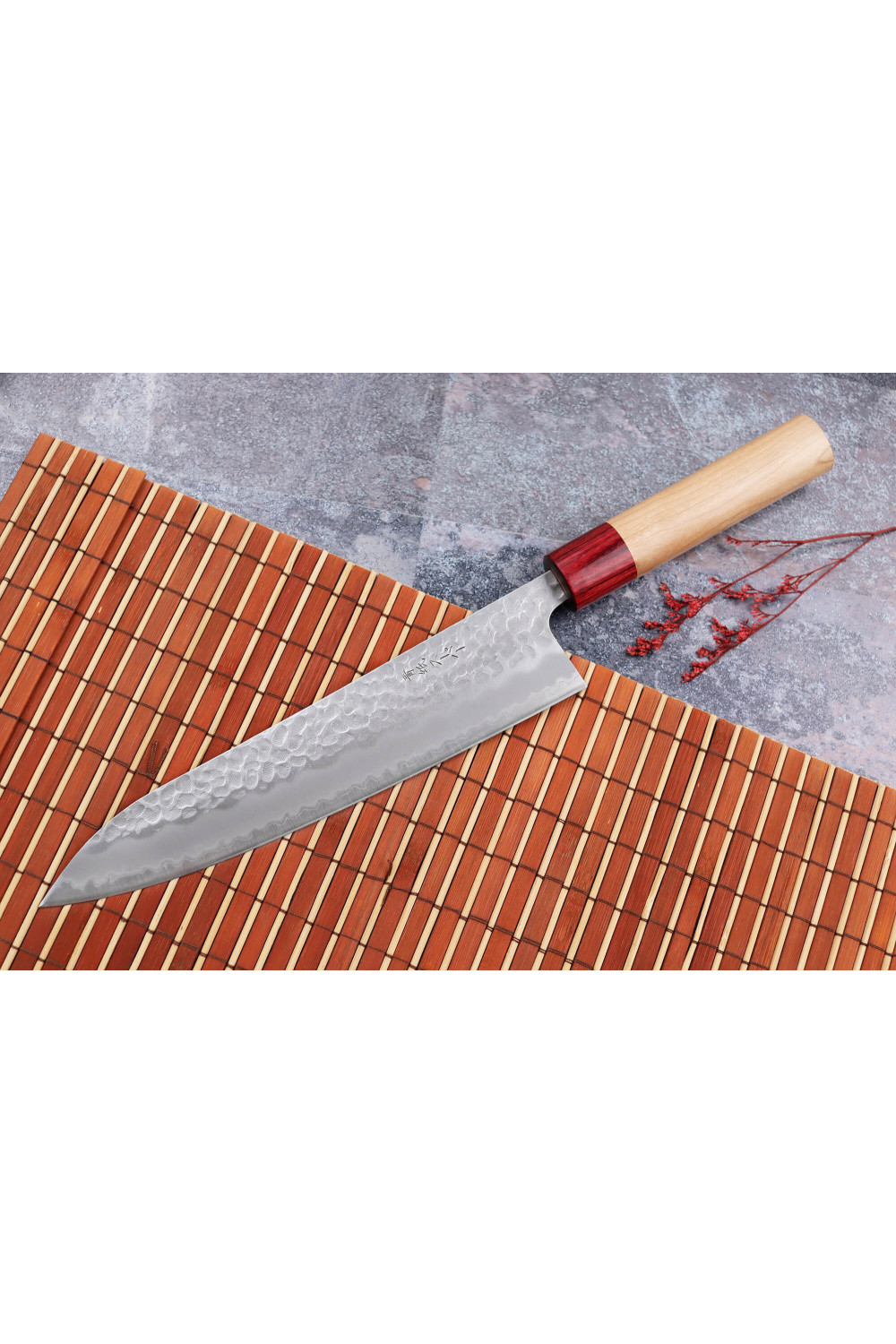
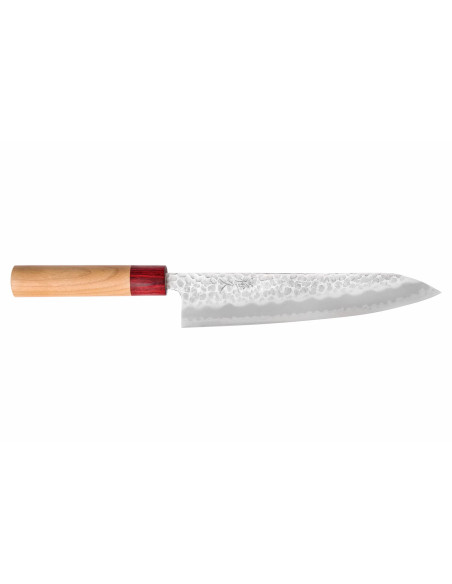
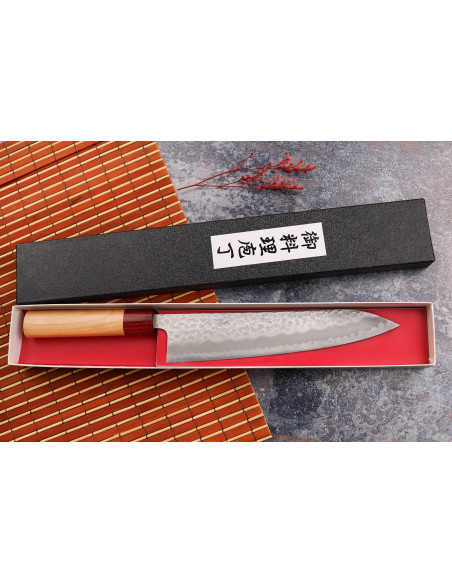
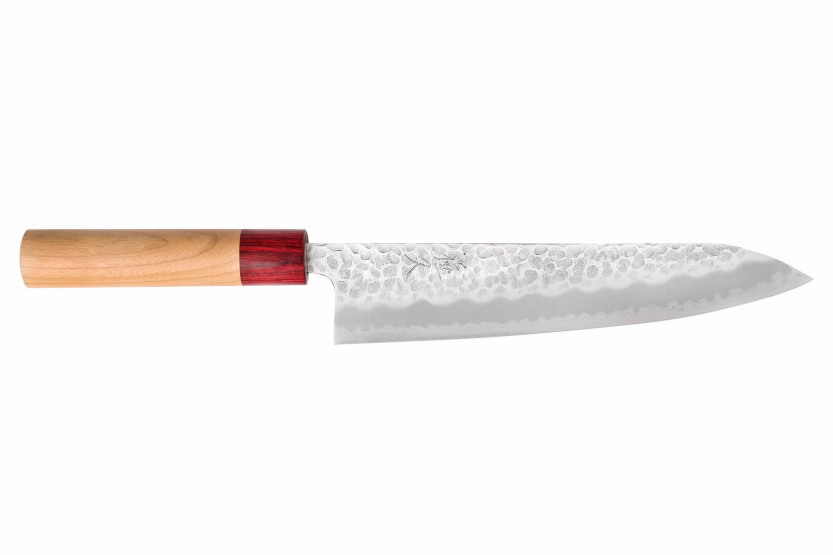
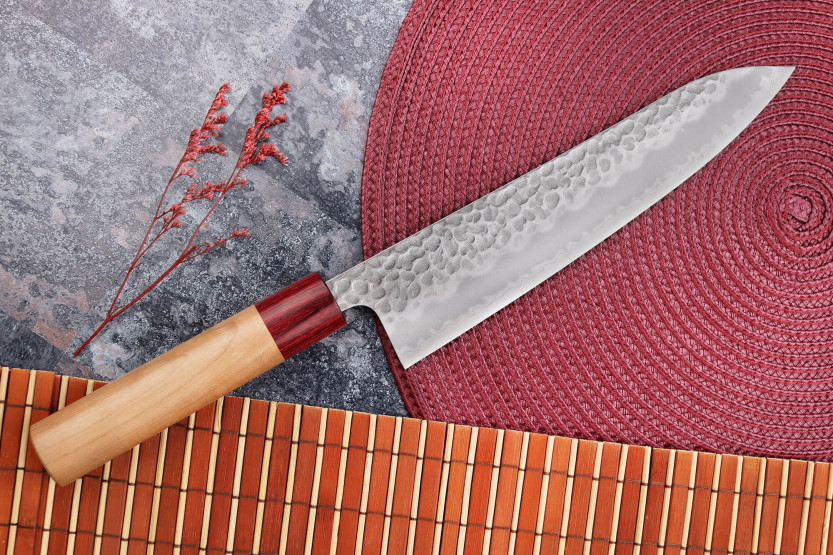
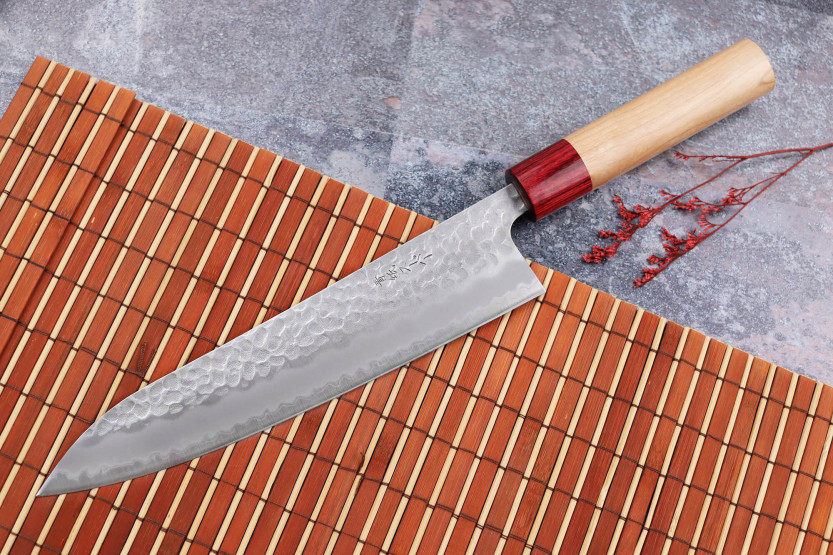
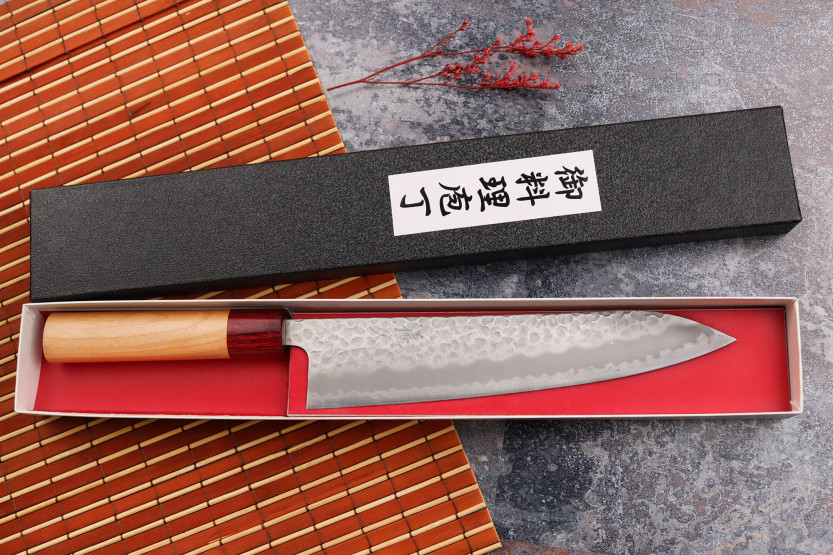
This chef's knife, also called"gyuto" in Japanese, is a versatile model! With its large blade, you can make a wide variety of cuts: slice your vegetables, chop your meats or chop your herbs. It's perfectly suited to large cuts or jobs requiring a little more precision.
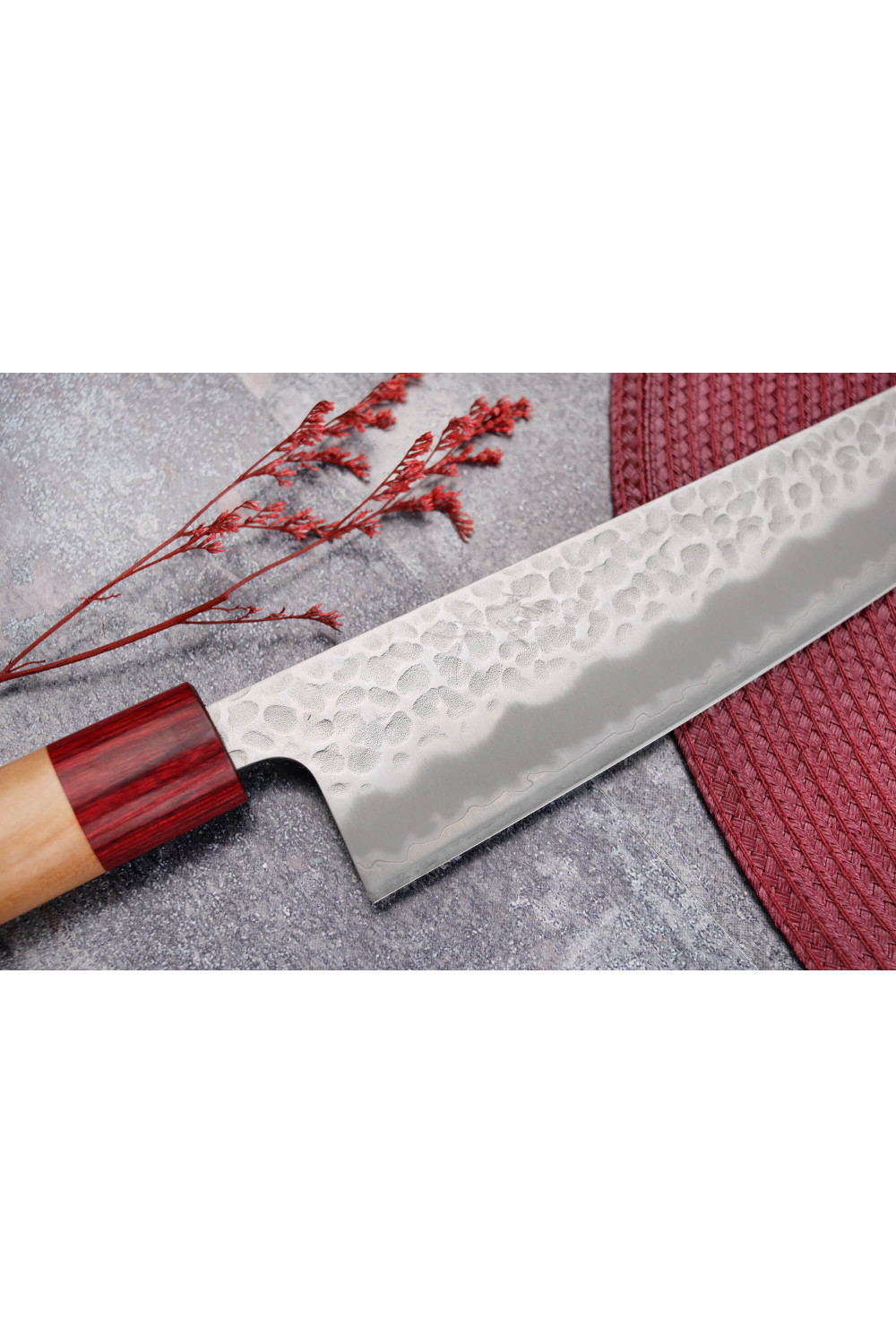
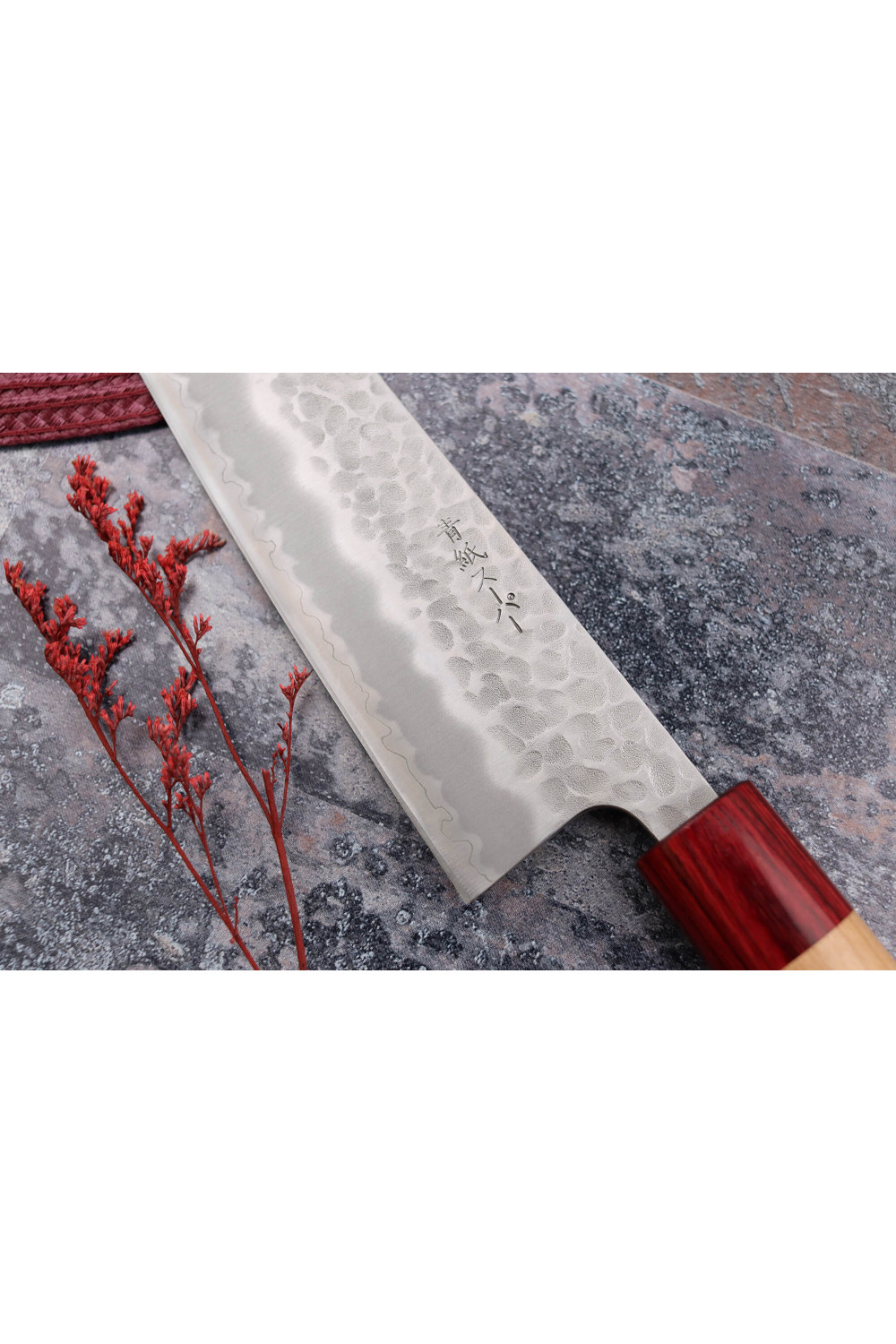
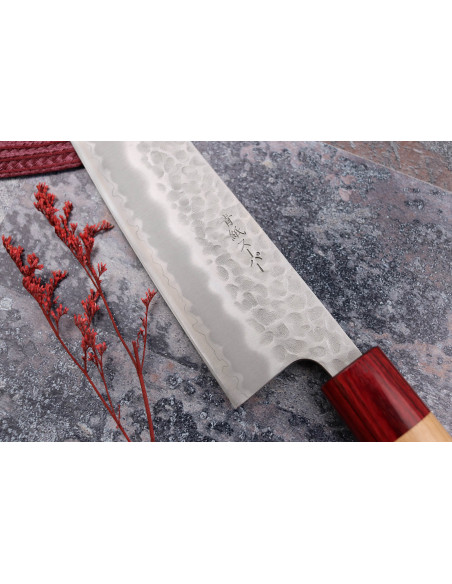
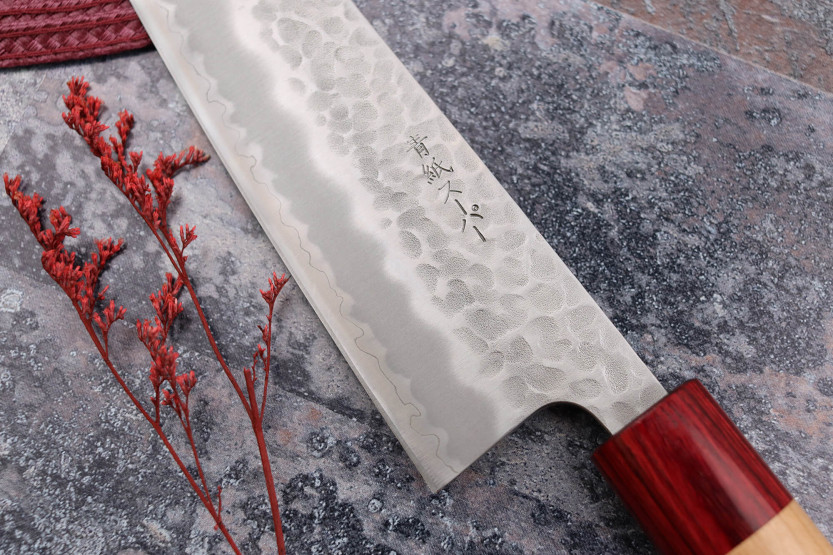
This gyuto knife is built in a typically Japanese San Maï (meaning "3 layers") structure. The blade has a core of rigid steel which is covered by a layer of softer steel, which is folded to form the 2 layers, to create optimum balance.
For this kitchen knife,Japanese Aogami Super steel (also known as AS or Blue Paper Steel Super) is used to make the core. This alloy was invented by the world-renowned steel manufacturer Hitachi.
It has a high carbon content of up to 1.5%: this is the essential element for increasing the hardness of a steel, since high hardness retains its cutting edge for a long time. With this high carbon content, your knife has a hardness of 65HRC on the Rockwell scale: proof of its strength, since the average Western knife is between 55 and 60HRC.
This alloy is particularly expensive, which is why few blacksmiths know how to work it. Indeed, if the blacksmith is not an expert, losses are inevitable, and therefore costly.
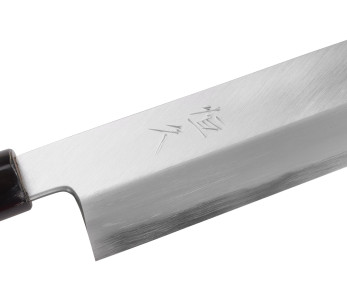
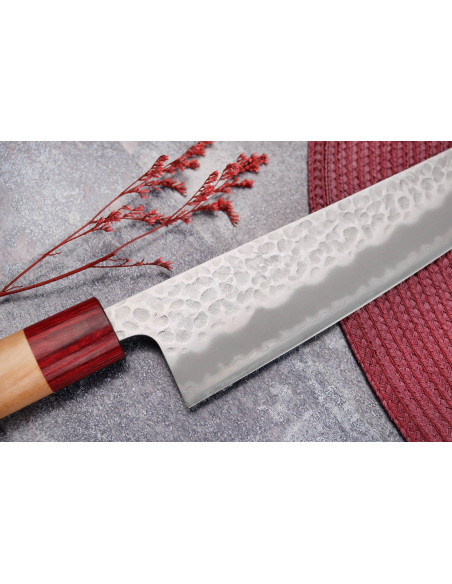
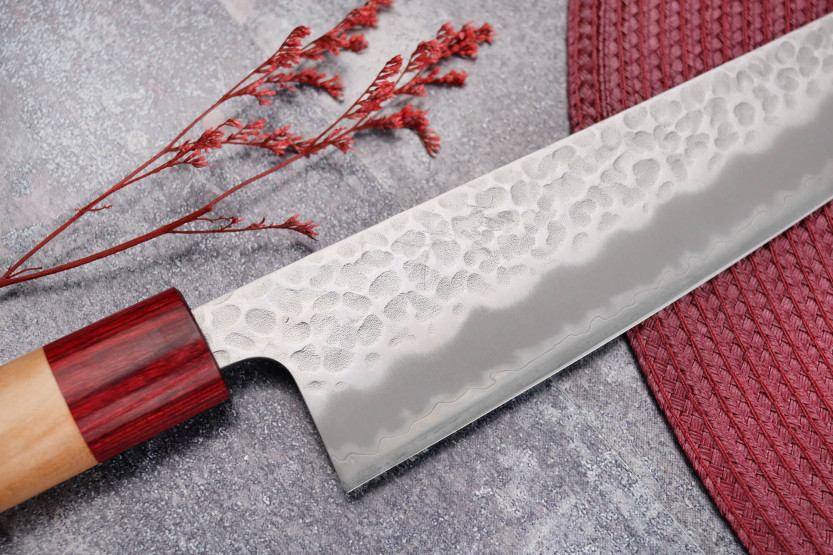
As explained above, once the core has been formed, it is surrounded by a layer of softer steel to balance it and provide better protection. You can see the superimposed layers on the bottom of your blade in the form of a randomly patterned wave.
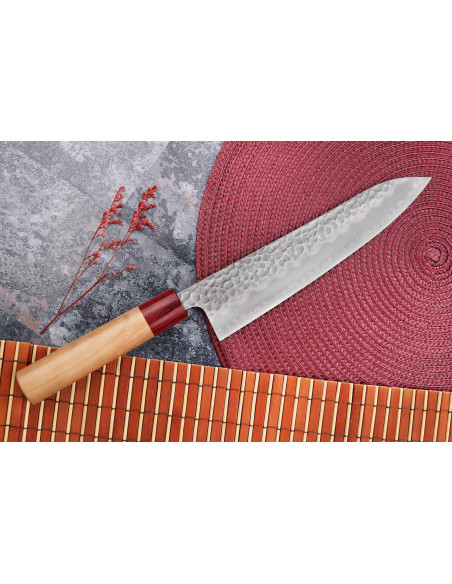
Your Japanese knife is beautifully finished with quality hammering, unique to each knife. This gives it character and, when cutting, prevents food from sticking to the sides.
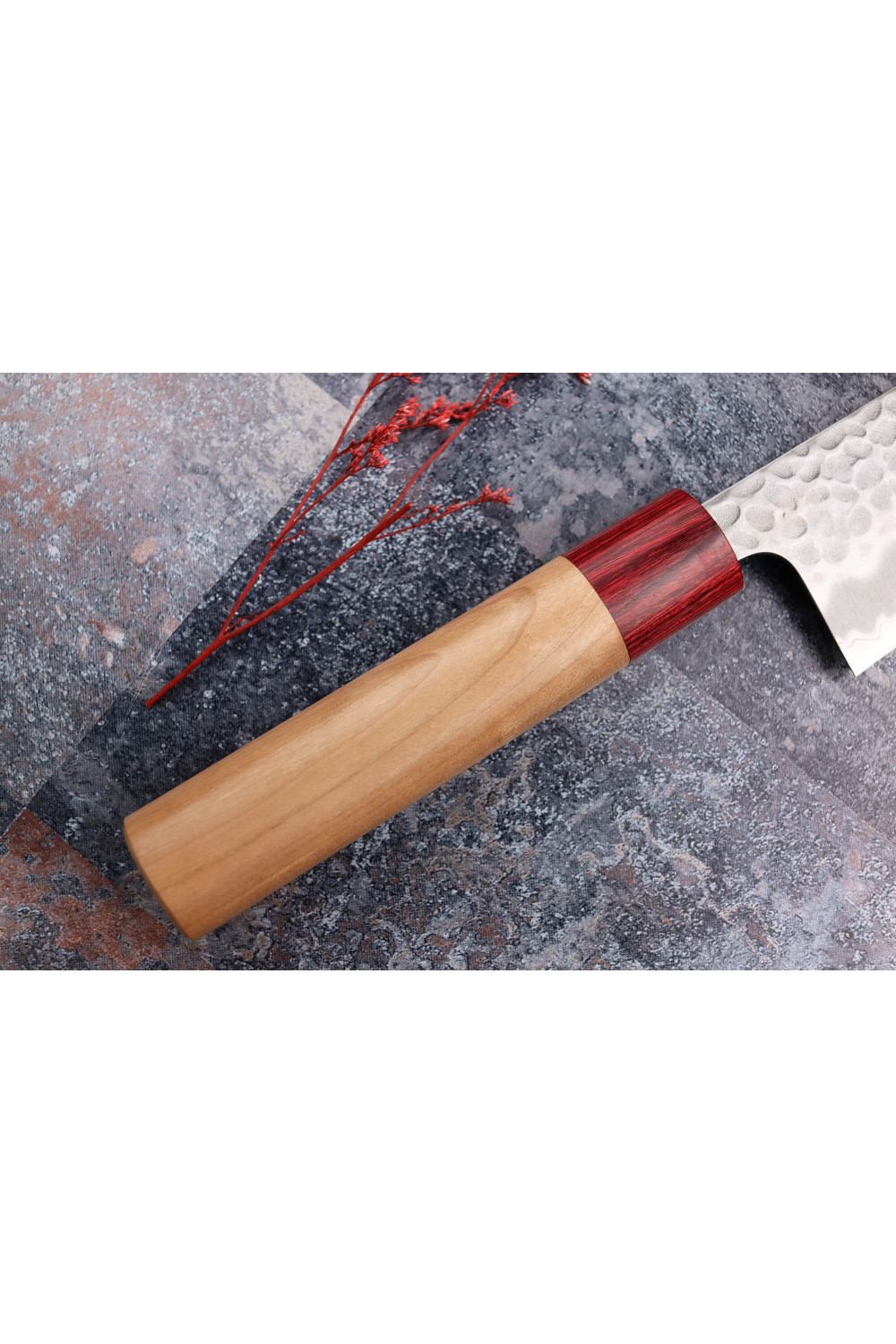
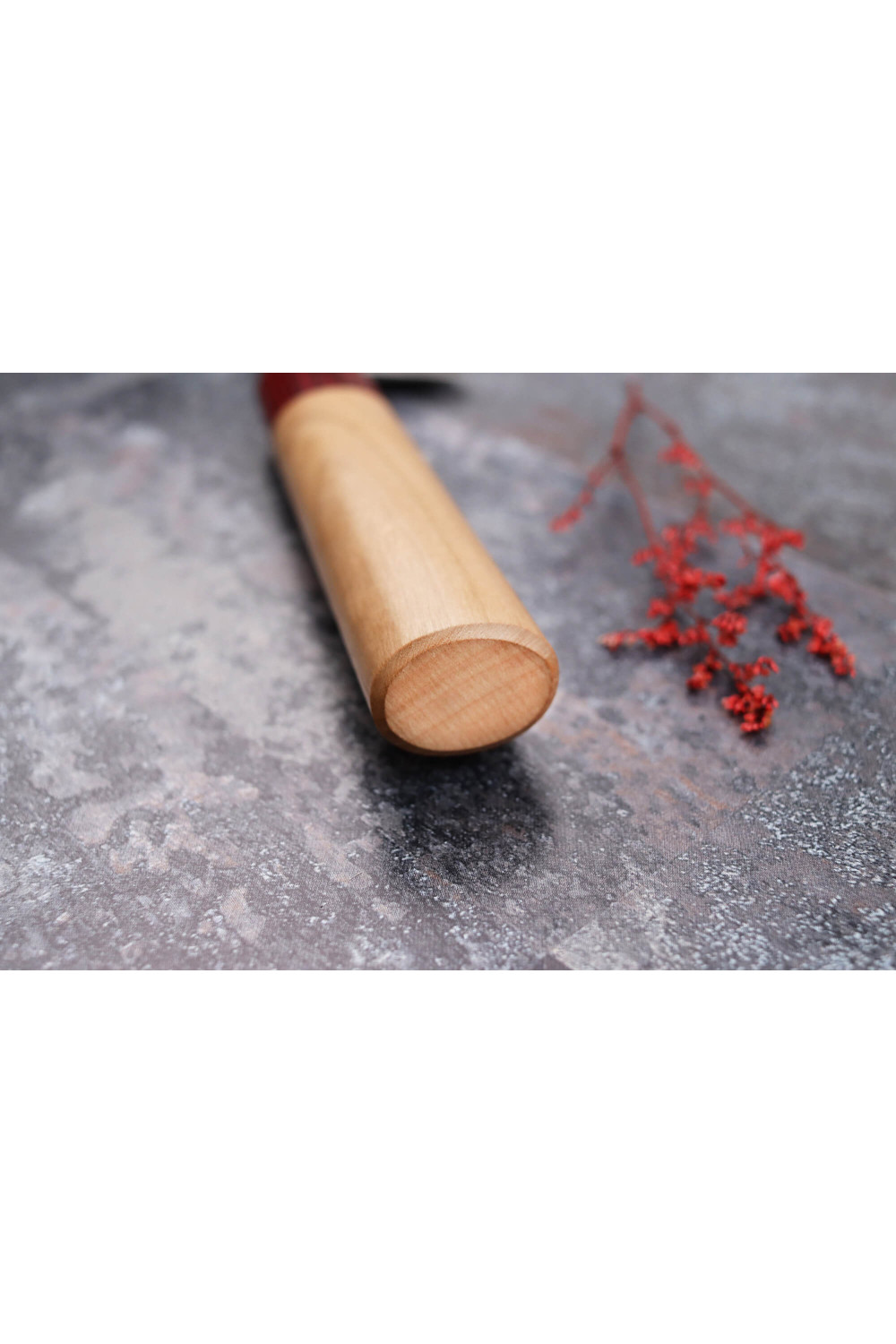
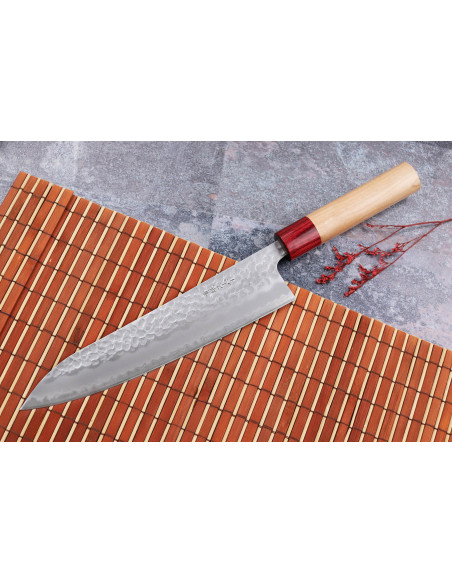
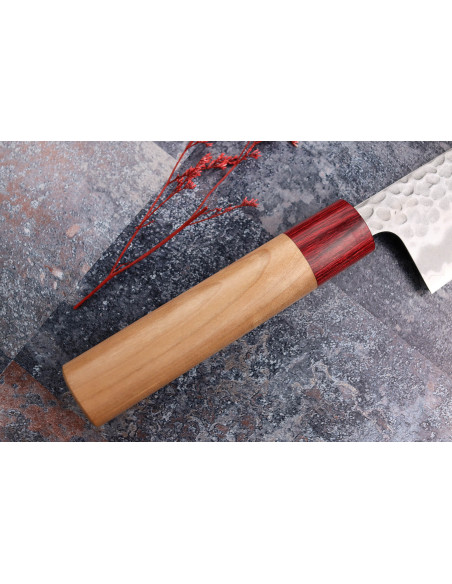
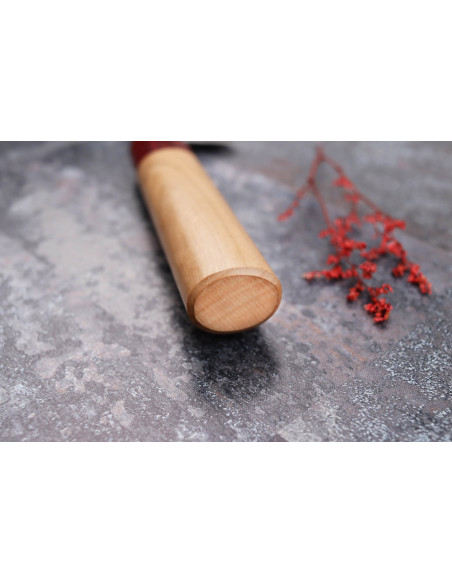
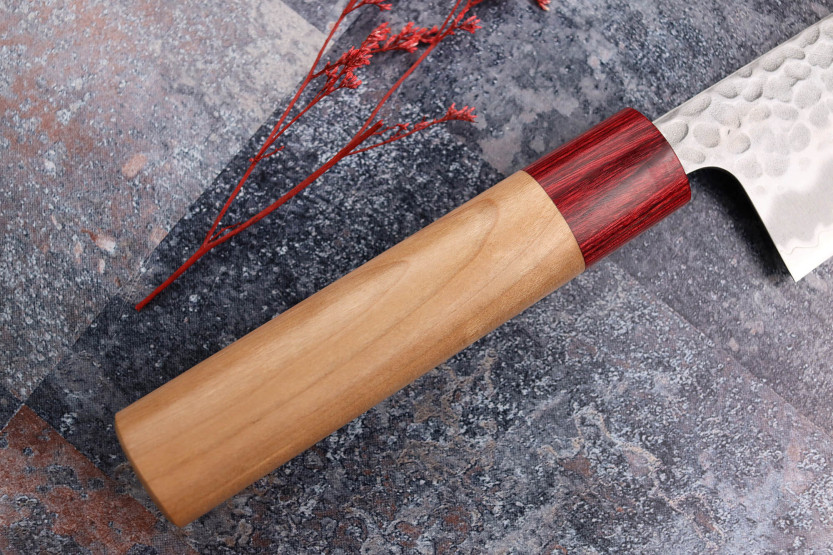
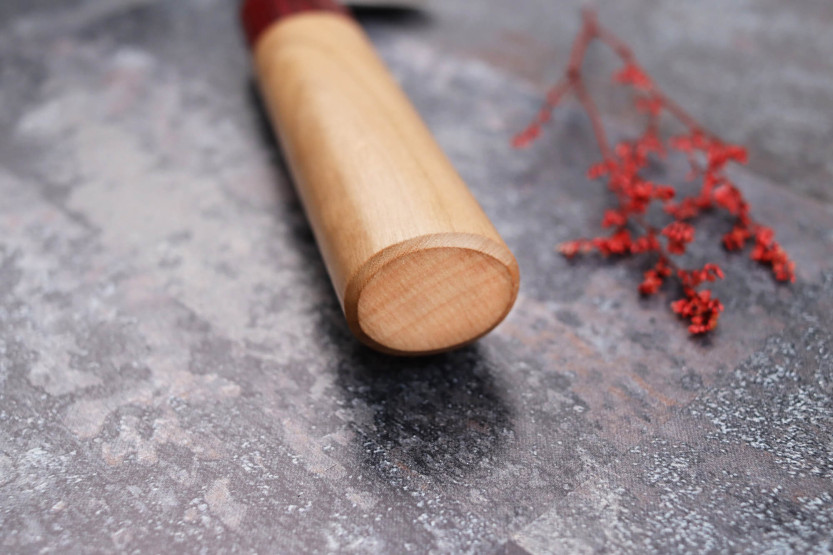
The handle of your handcrafted knife is made from light cherry wood, a highly durable species whose aesthetic appeal is much appreciated. In Japan, the cherry tree is a sacred tree found throughout the archipelago. It is a metaphor for nature, which is ephemeral, for the beauty of things, and for life itself.
The handle is oval-shaped to suit all cooks: right- or left-handed! It offers an ergonomic, comfortable grip, especially for prolonged use.
The bolster, meanwhile, is made from red pakka wood, a composite material created from resin and laminated wood. This material offers excellent resistance to humidity, temperature variations and impact.
Wood paste is used to fill the small gaps where the blade fits into the handle. This makes it watertight and hygienic, preventing water or small foodstuffs from slipping through.
Caring for your carbon knife
For optimum care, we recommend washing your knife by hand only, using a sponge and a mild detergent. Dry your knife immediately and store it in a dry place. As the knife is considered oxidizable, it should be kept free of all traces of moisture.
Over time, the blade may change color: this is normal! This is a natural carbon reaction caused by the acidity of the food you're cutting or the humidity in the air.
Find everything you need to maintain your blades on KnifeLeader.eu!




 By buying this product you can collect up to