Japan is known as a country of tradition. There are still many blacksmiths who keep alive the ancestral techniques invented by the blacksmiths who made the famous katana, whose effectiveness is known to be formidable.
The knives in this range are forged by Tsunehisa Cutlery, a small team of qualified experts. Enjoy Japanese know-how and expertise combined with superb design! The brand's knives are suitable for all cooks: whether you're a passionate amateur or a seasoned professional, you'll enjoy their performance.
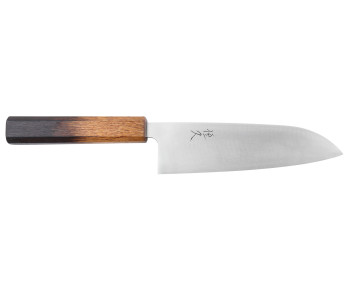
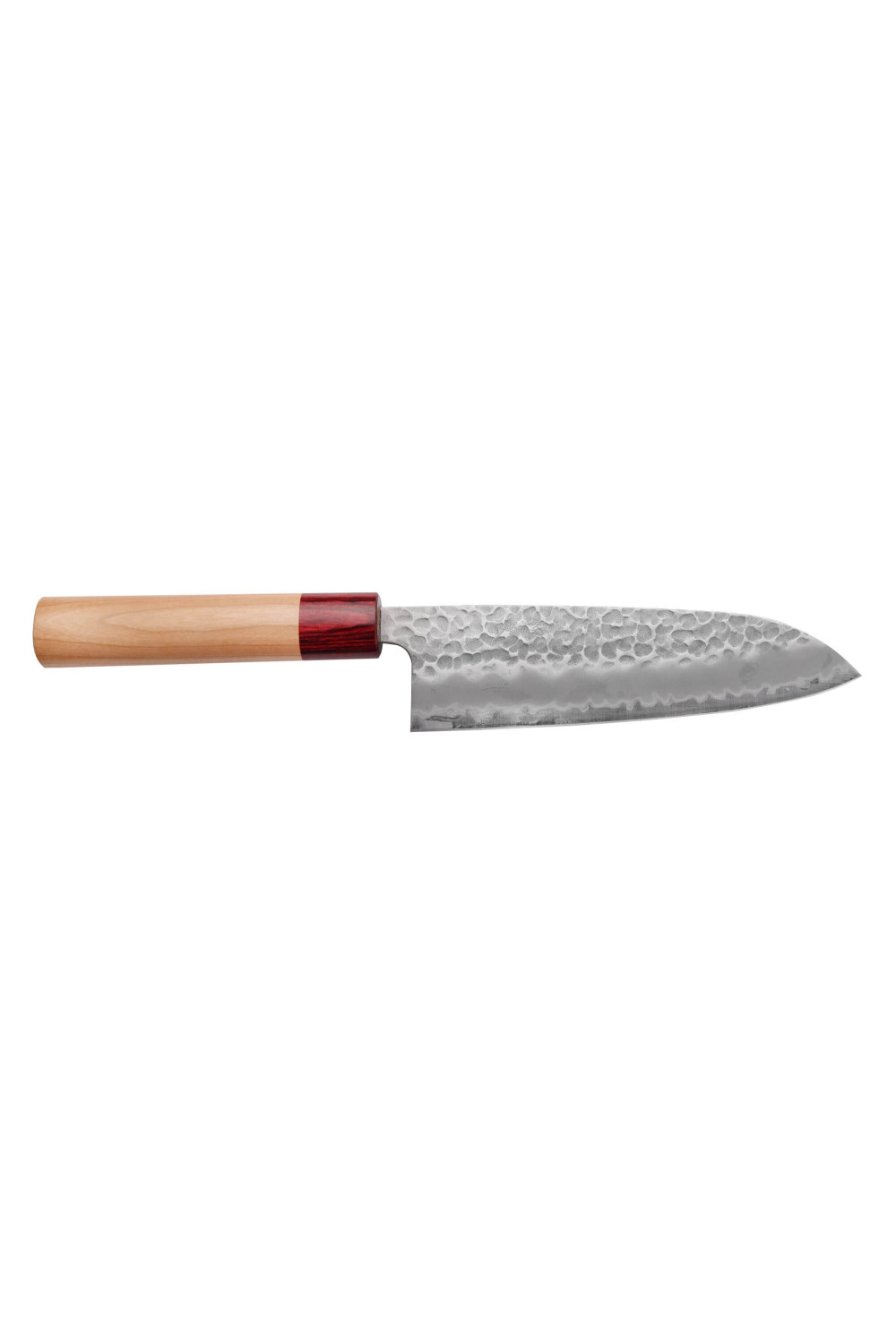
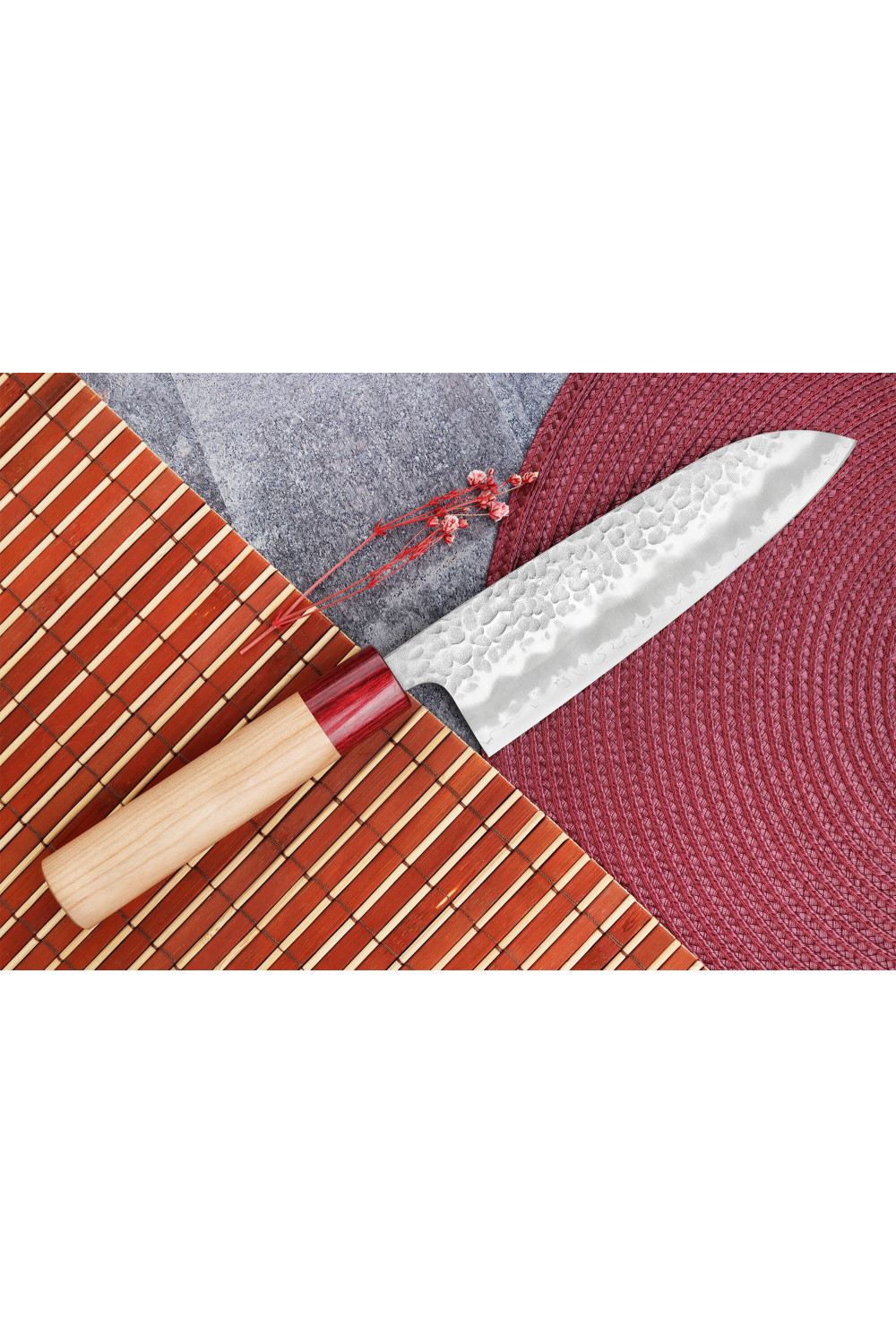
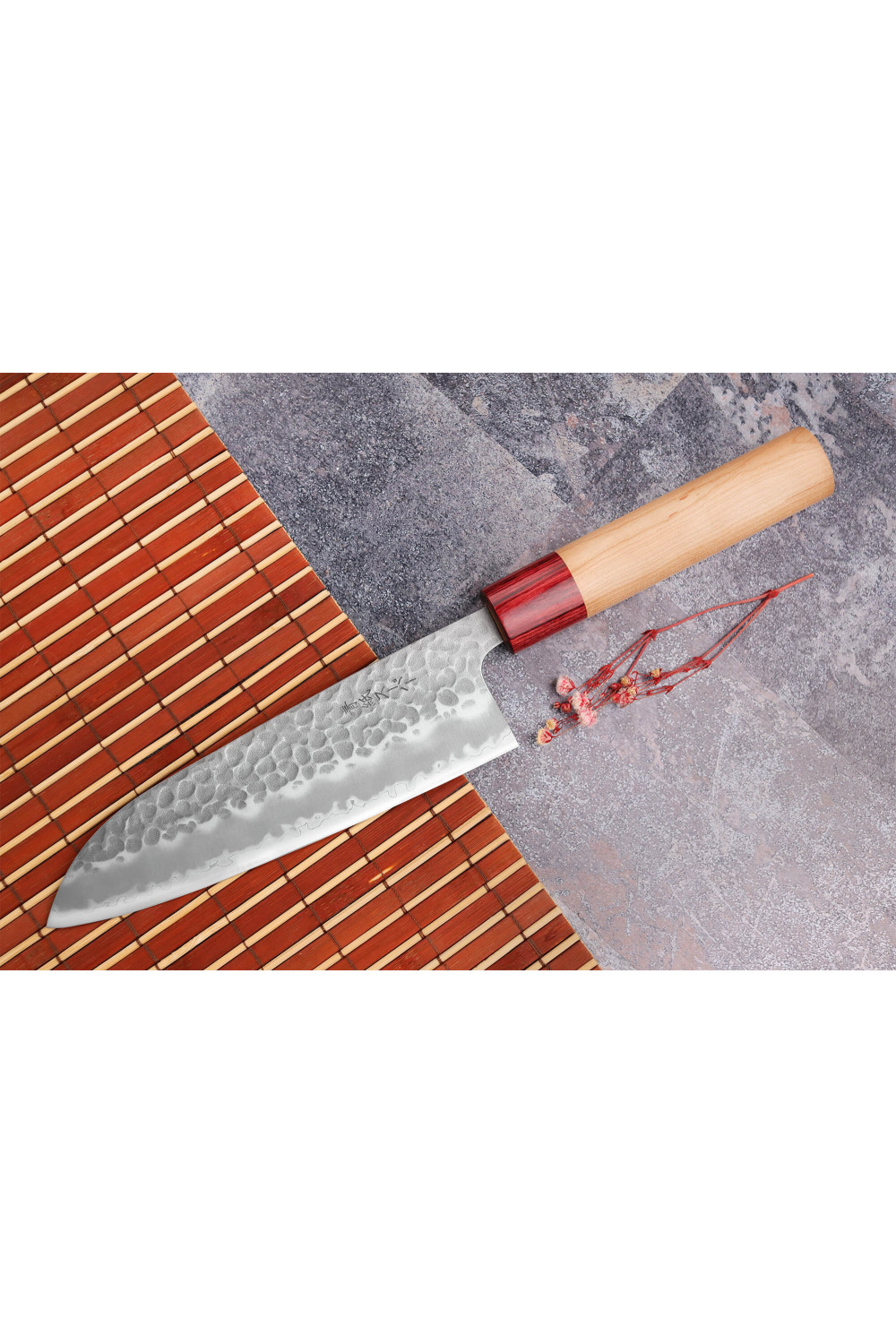
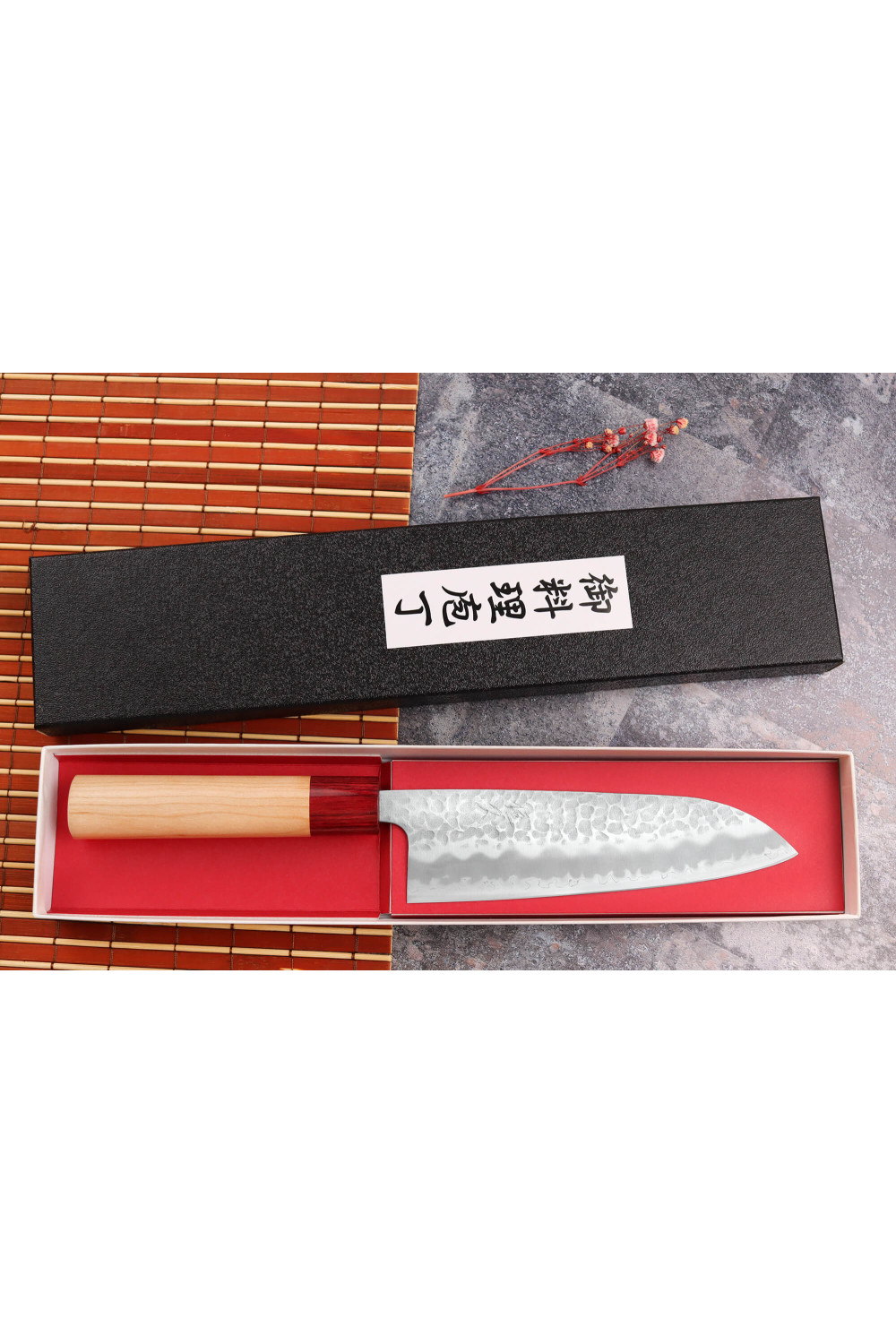
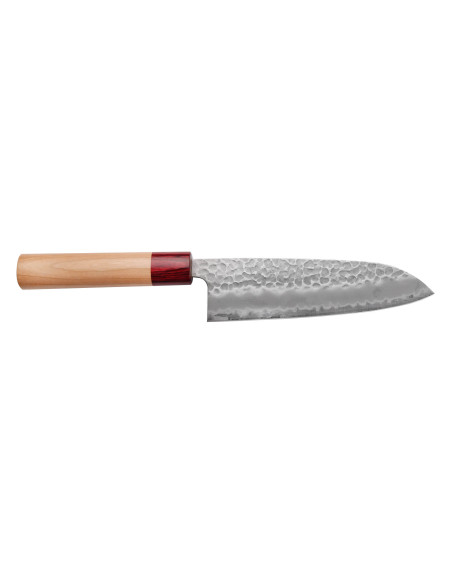
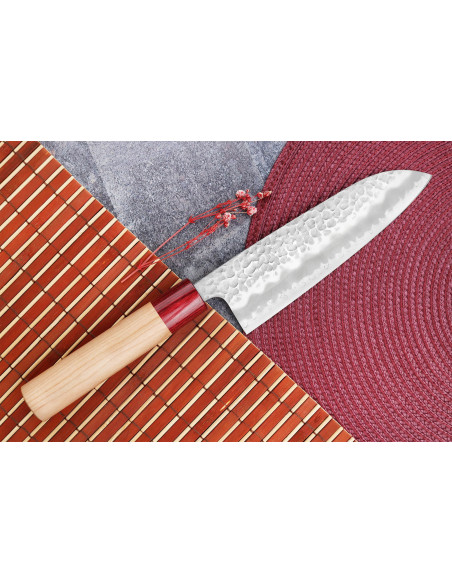
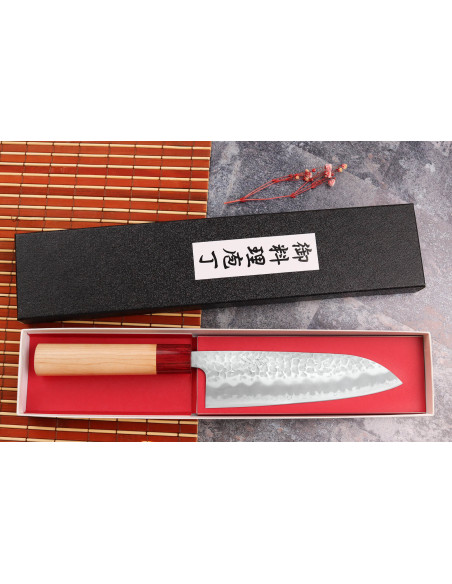
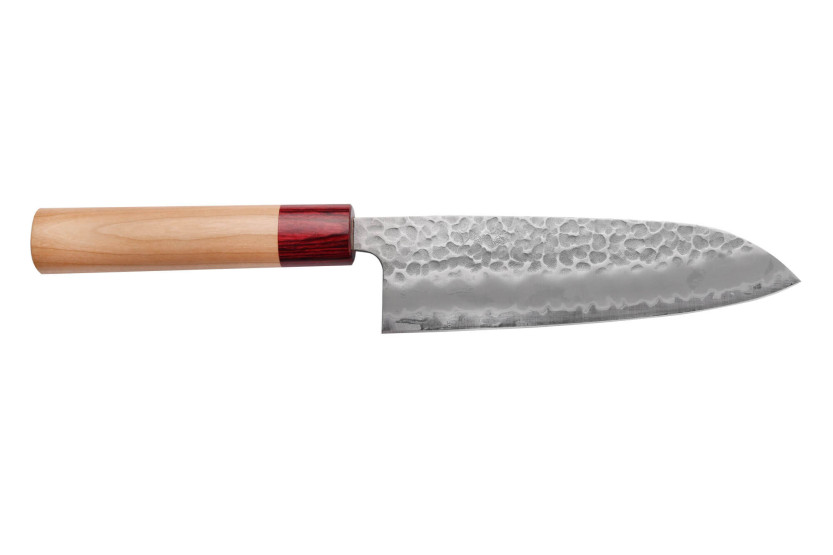
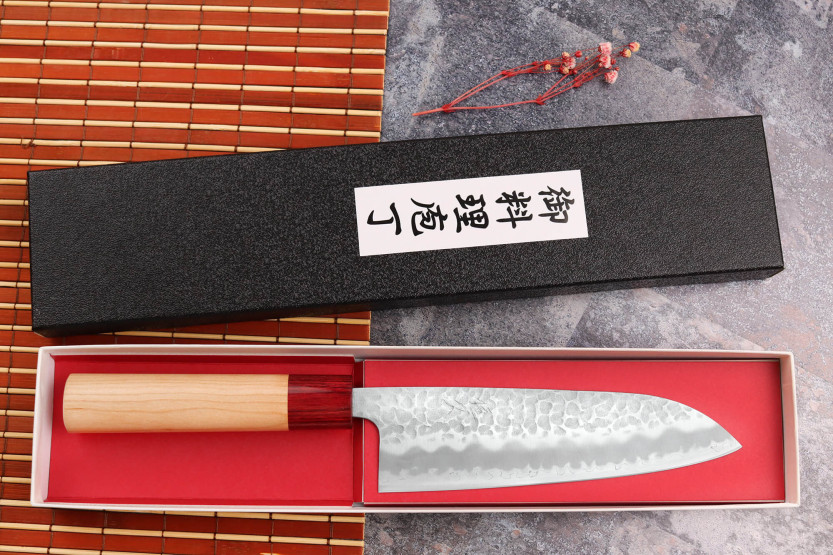
This 16.5cm Tsunehisa ASsantoku knife knife is a highly versatile kitchen knife. Its curved blade ensures a pleasant rocking effect, making it ideal for chopping, mincing and slicing a wide range of foods.
Its high-quality Japanese steel blade
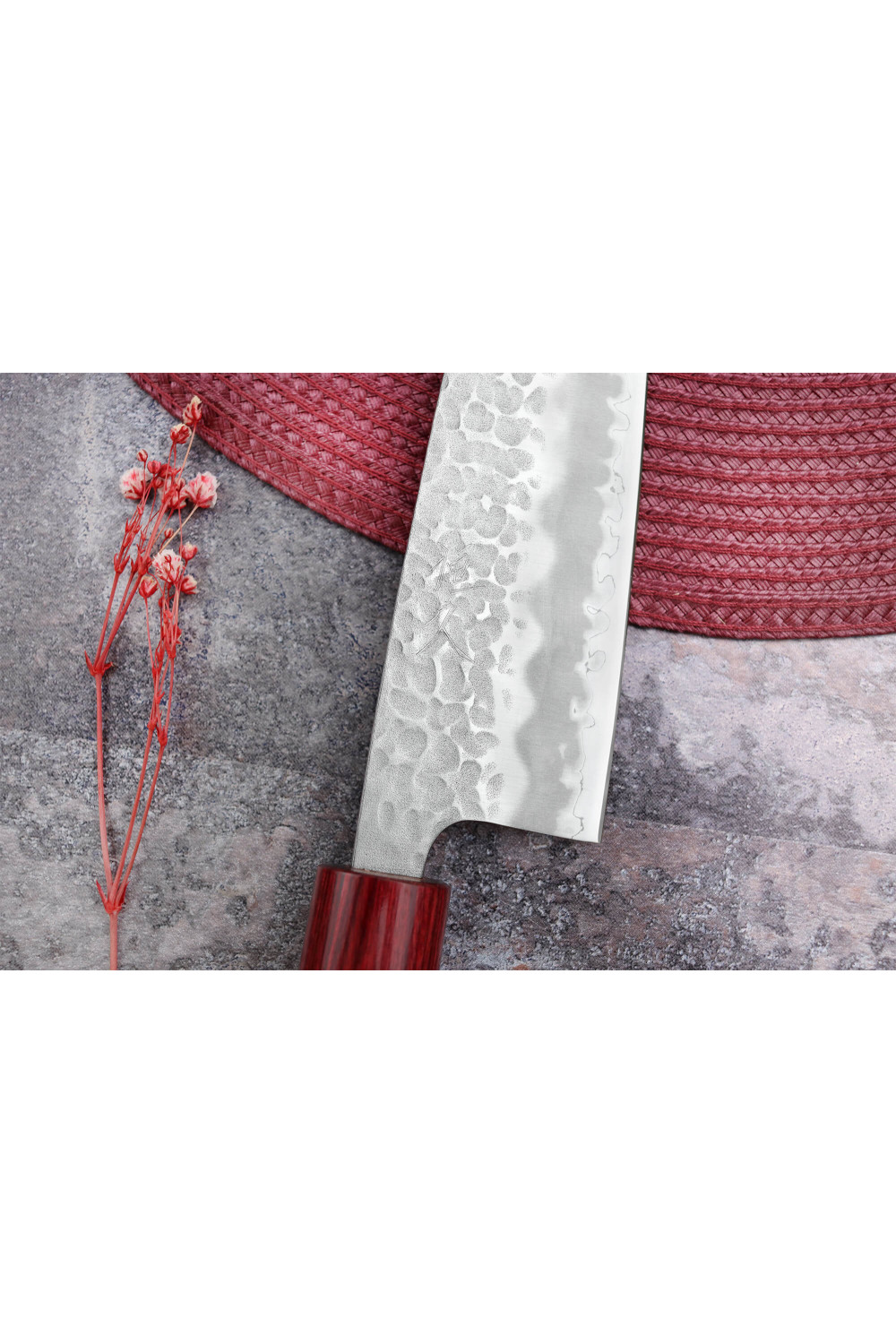
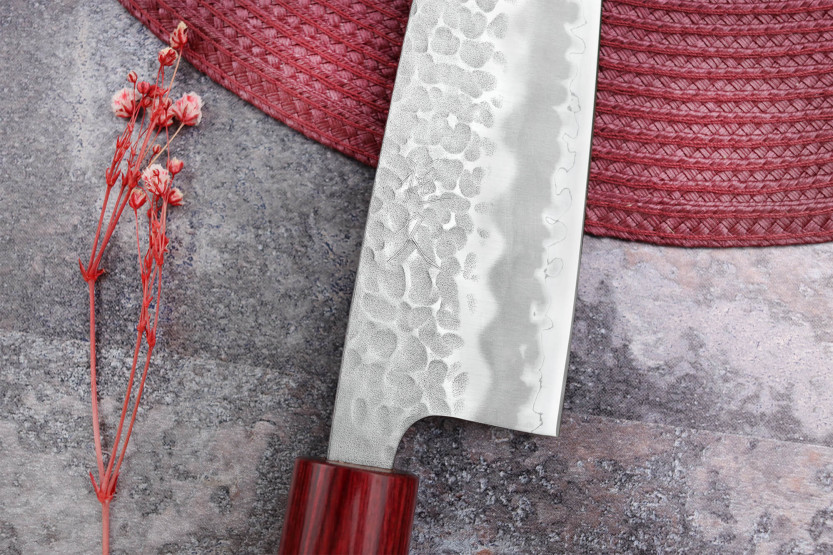
This Japanese santoku knife features a so-called San Mai blade: a term that means "3 layers" in Japanese, meaning that the blade has a rigid core surrounded by a softer layer of steel that folds in on either side.
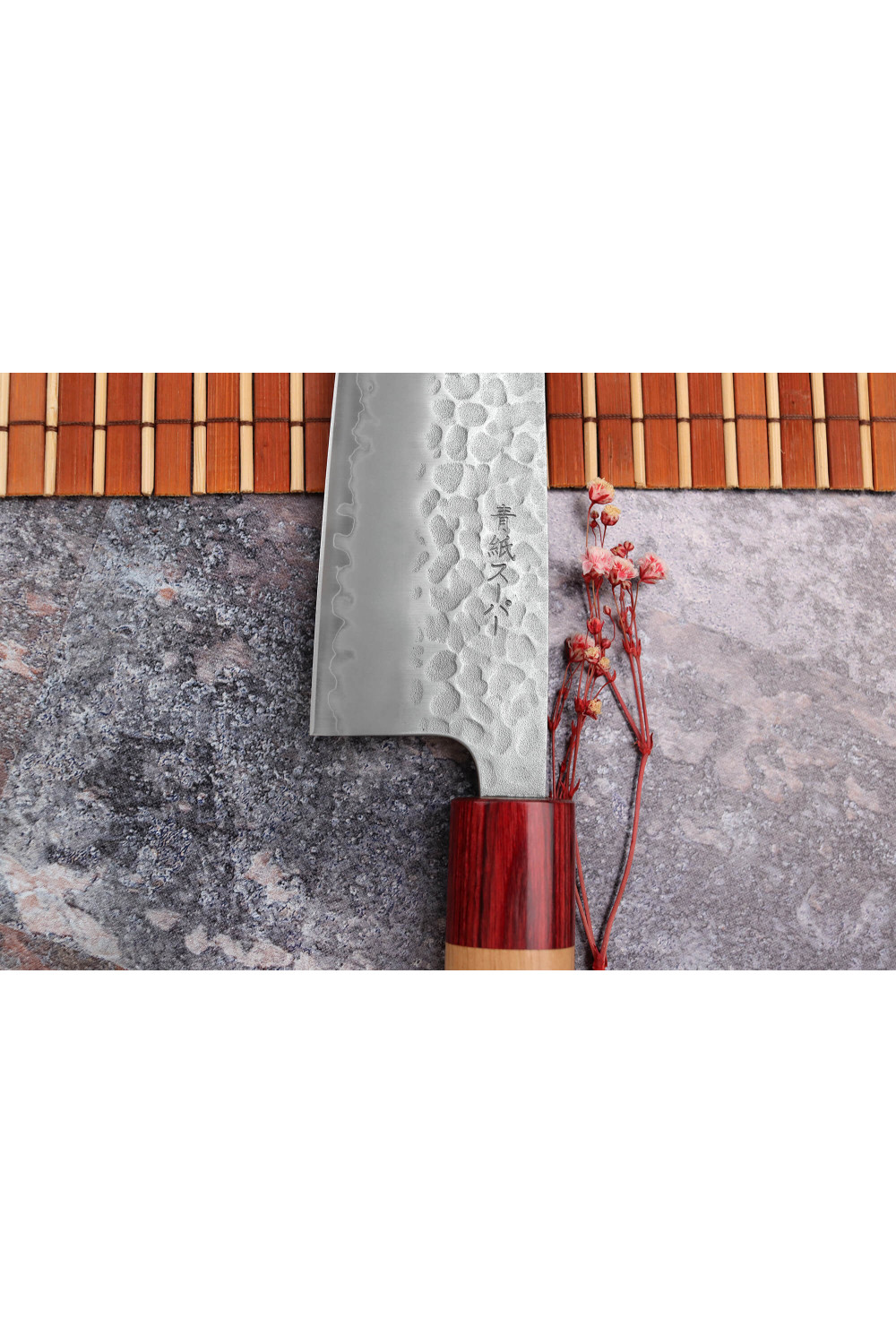
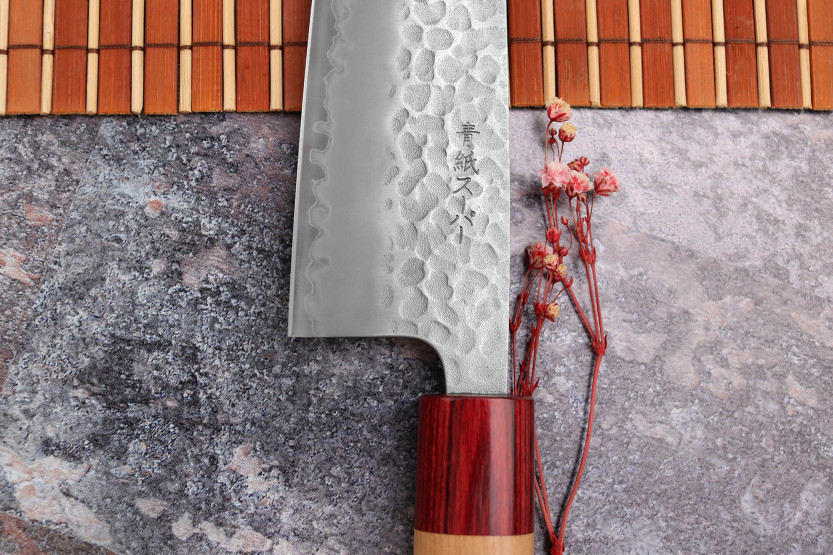
Tsunehisa has chosen Japanese Aogami Super steel for the core of this blade. It is not uncommon to see it also referred to as Blue Paper Steel Super or AS. It's a steel produced by the world-renowned steelmaker Hitachi.
Aogami Super is an alloy with a high carbon content, close to 1.5%. It is the essential element for increasing the hardness of an alloy. A hard alloy will also hold its edge better over time, which is a real advantage. As a result, the blade reaches around 65 HRC on the Rockwell scale, demonstrating its very high hardness. Indeed, the average for Western knives is between 55 and 60 HRC.
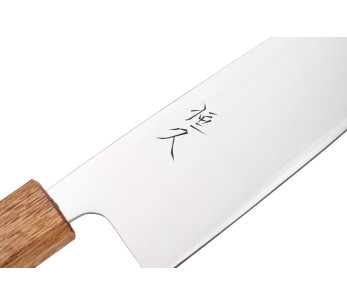
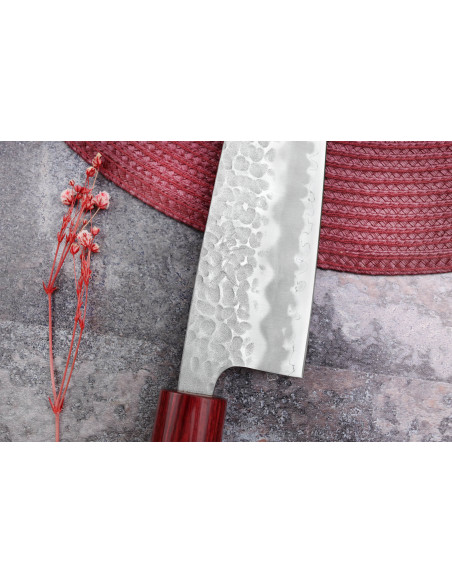
It's an expensive alloy, and few blacksmiths know how to work it. Indeed, you need to be an expert to work it, as otherwise, material losses would be significant and therefore costly. Once the Tsunehisa experts have finished shaping the Aogami Super steel, they surround it with a layer of softer steel to protect it and balance its hardness. On the bottom of the blade, you can see the alternating layers of steel forming a small metallic wave.
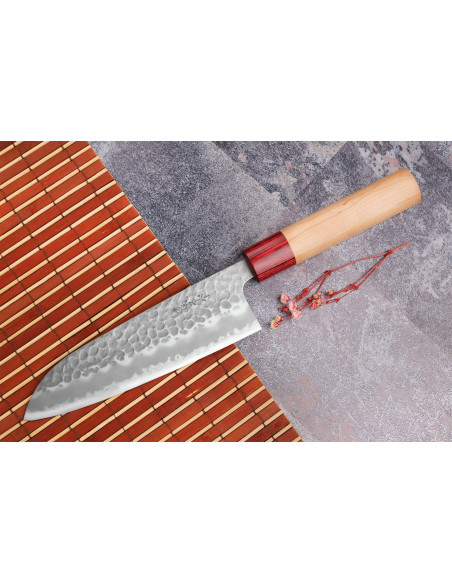
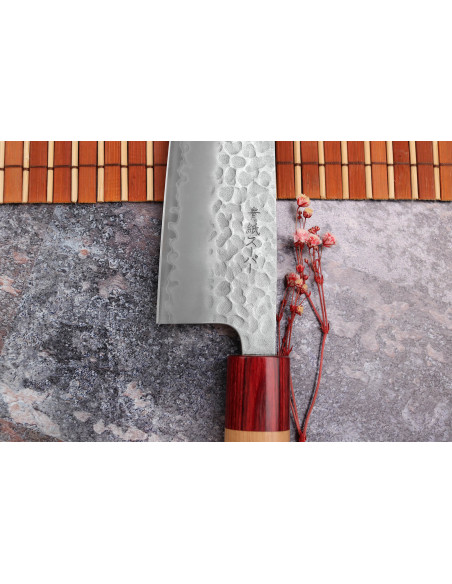
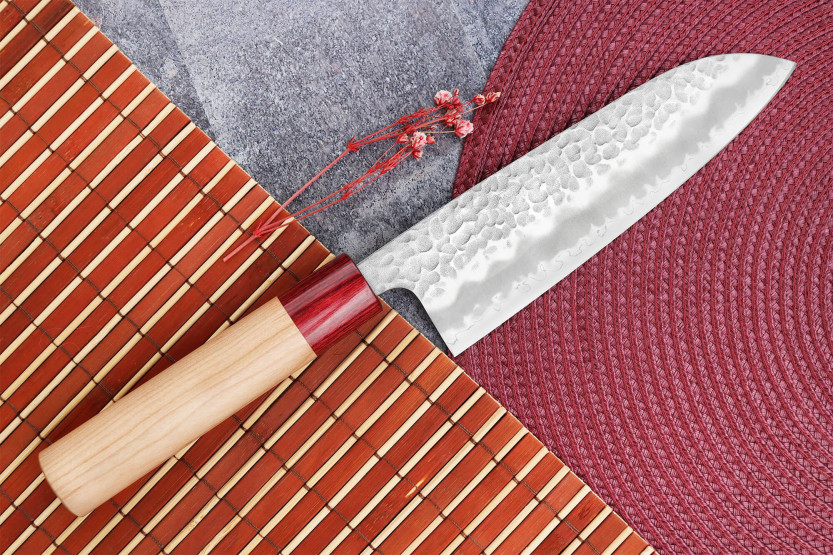
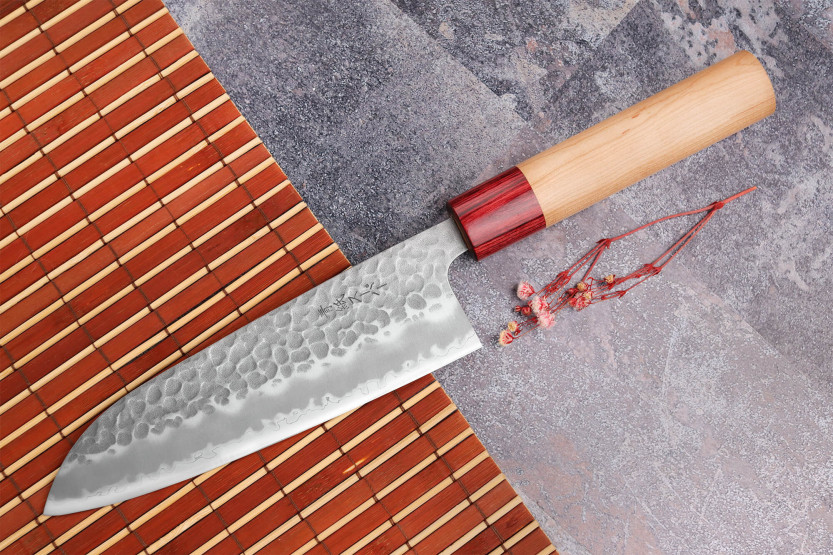
Finally, the blade features a superb hammered finish, also known as Tsuchime in Japanese. The hammering is unique on each blade, while adding a great deal of character.
Ergonomic cherry wood handle
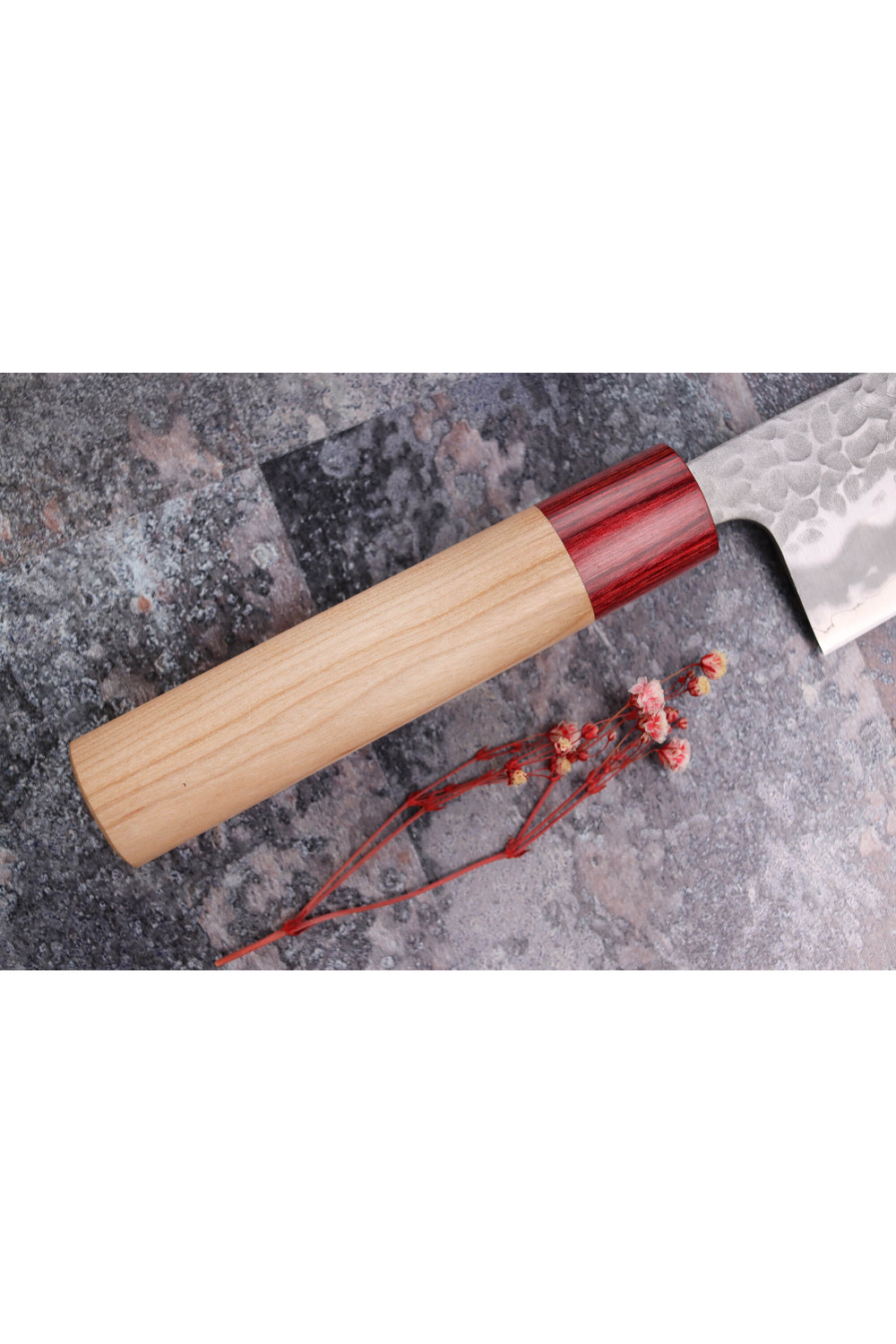
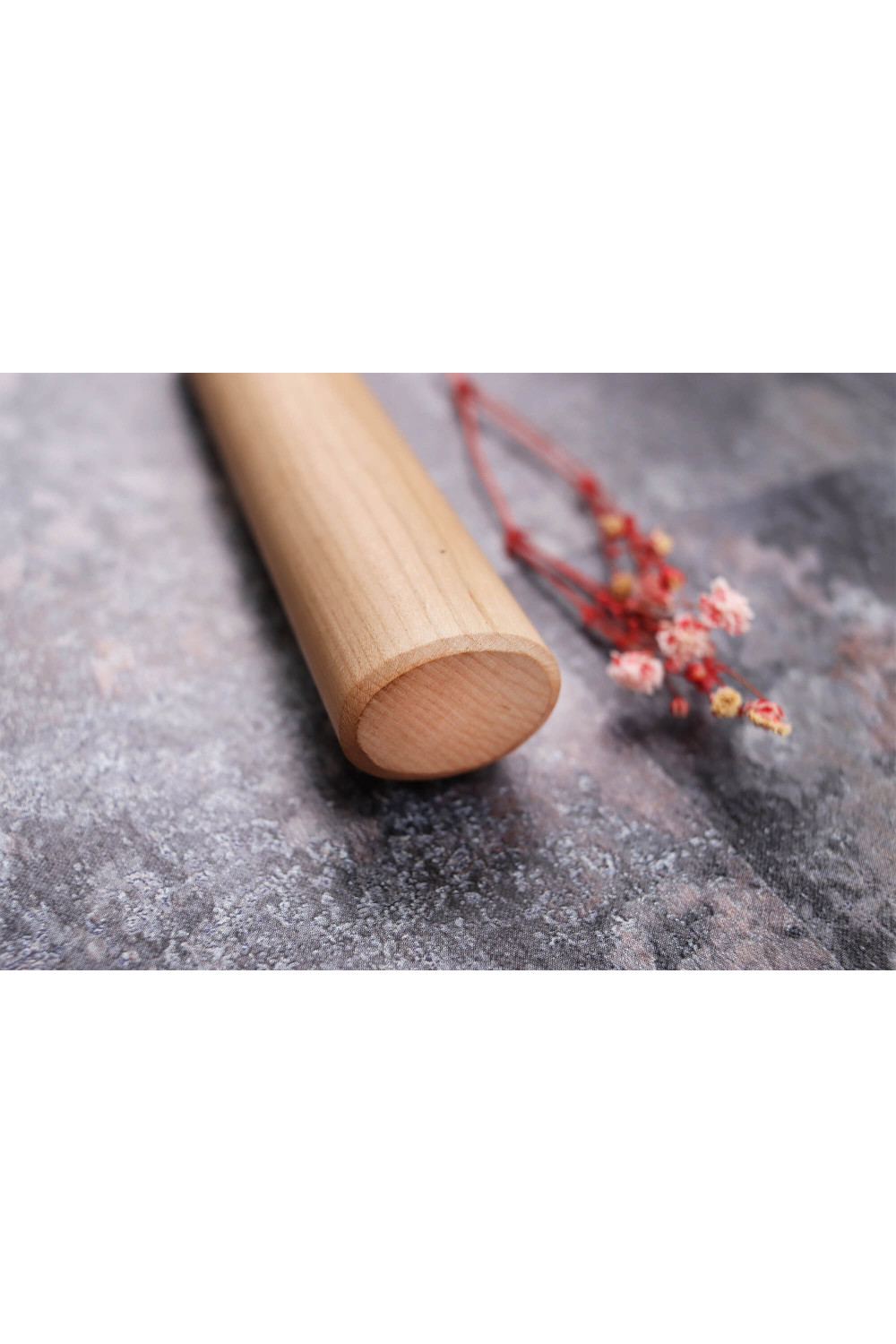
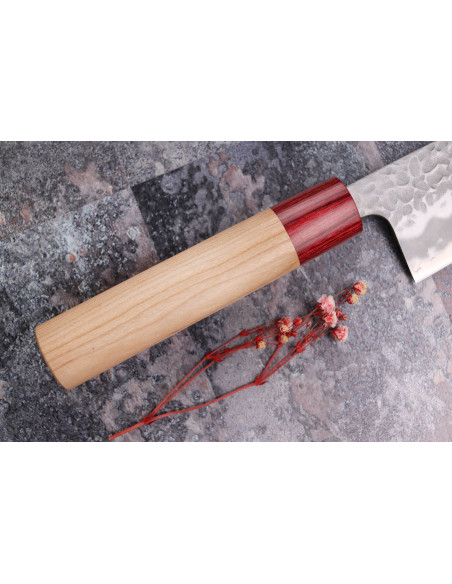
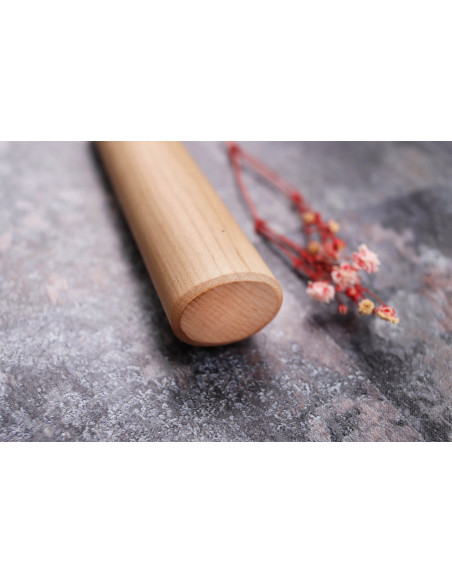
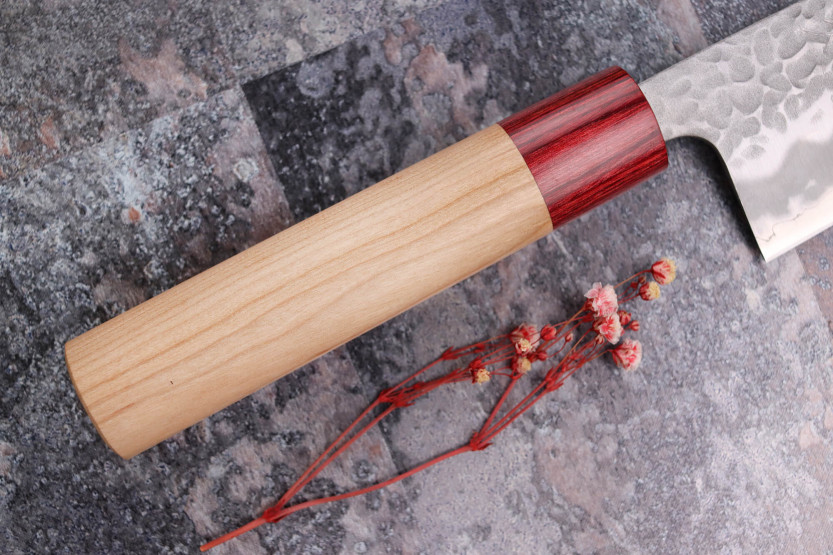
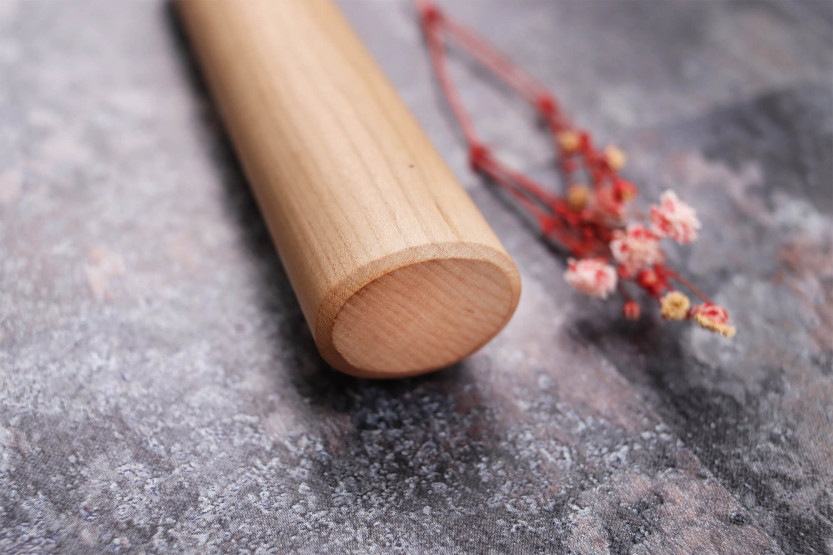
This handcrafted Japanese knife features a cherry wood handle. Cherry is an aesthetically pleasing light-colored wood with excellent holding power. In fact, cherry is a sacred tree in Japan, found on the country's various peninsulas. The cherry tree is a metaphor for ephemeral nature and the beauty of things, as well as for life itself.
With its oval shape, the handle is suitable for all cooks, whether left- or right-handed.
A red Pakkawood bolster links the handle and blade of this knife. Pakka wood is a composite material made from resin and compressed wood. Pakkawood is widely used in the kitchen, as it is long-lasting and highly resistant to humidity, shock and temperature variations.
Wood pulp has been added to fill the space between the blade and the Pakkawood handle, making the whole perfectly watertight and hygienic. This prevents food residues and water from entering the gap.
How to care for this carbon knife
We strongly recommend washing your knife by hand, using a mild dishwashing detergent and lukewarm water. Then wipe the knife dry so that you can store it in a dry place. Try to keep the handle as dry as possible when washing, as wood doesn't like moisture.
This knife belongs to the family of oxidizable knives, so it's essential to store it in a dry place. Note also that the blade may change color over time: this is normal! It's the steel reacting. Acidity in the air and in food can have an impact on Aogami Super steel.
Choose your new paring knife at KnifeLeader.eu!




 By buying this product you can collect up to