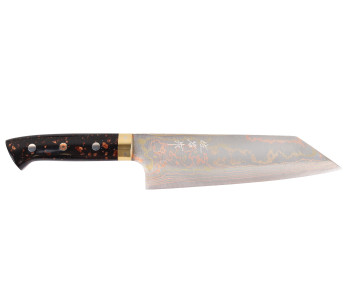
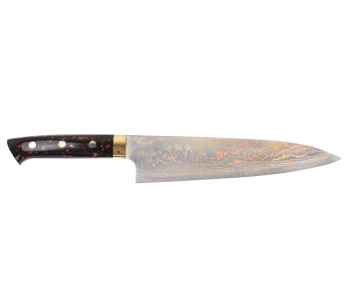
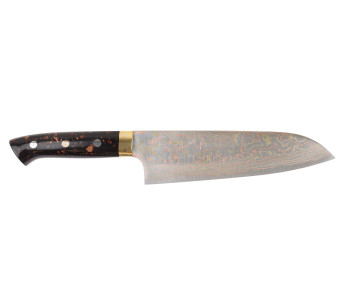
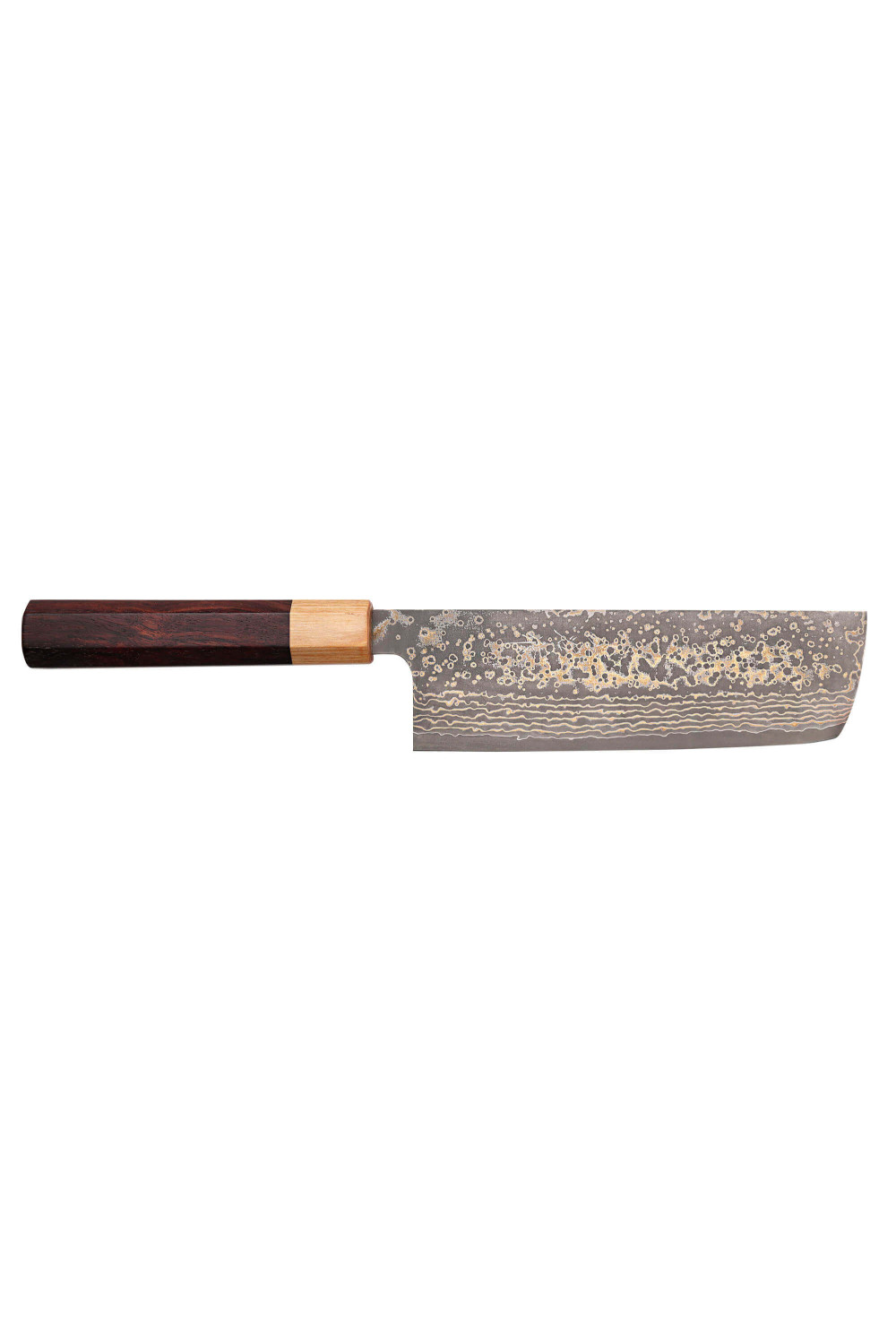
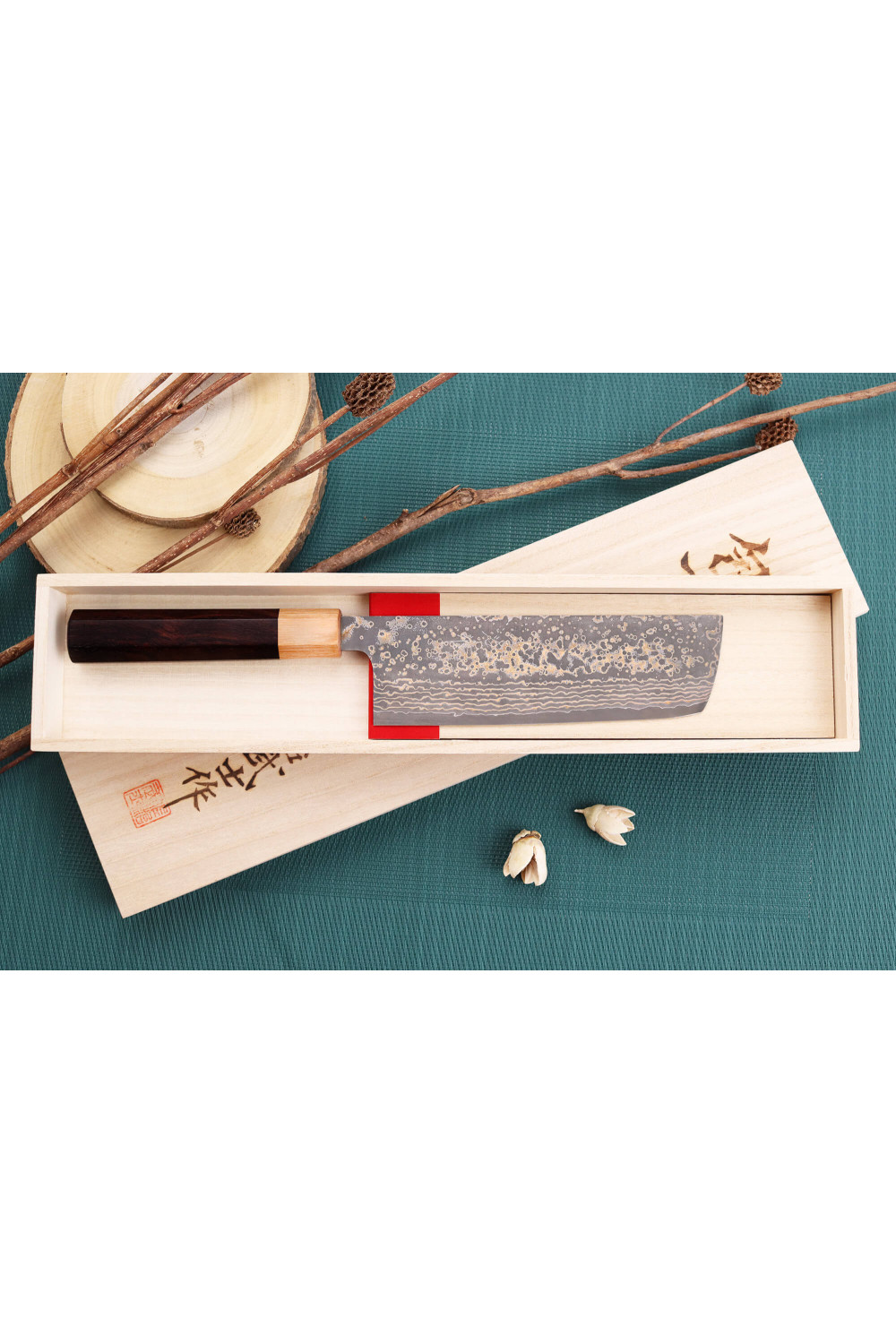
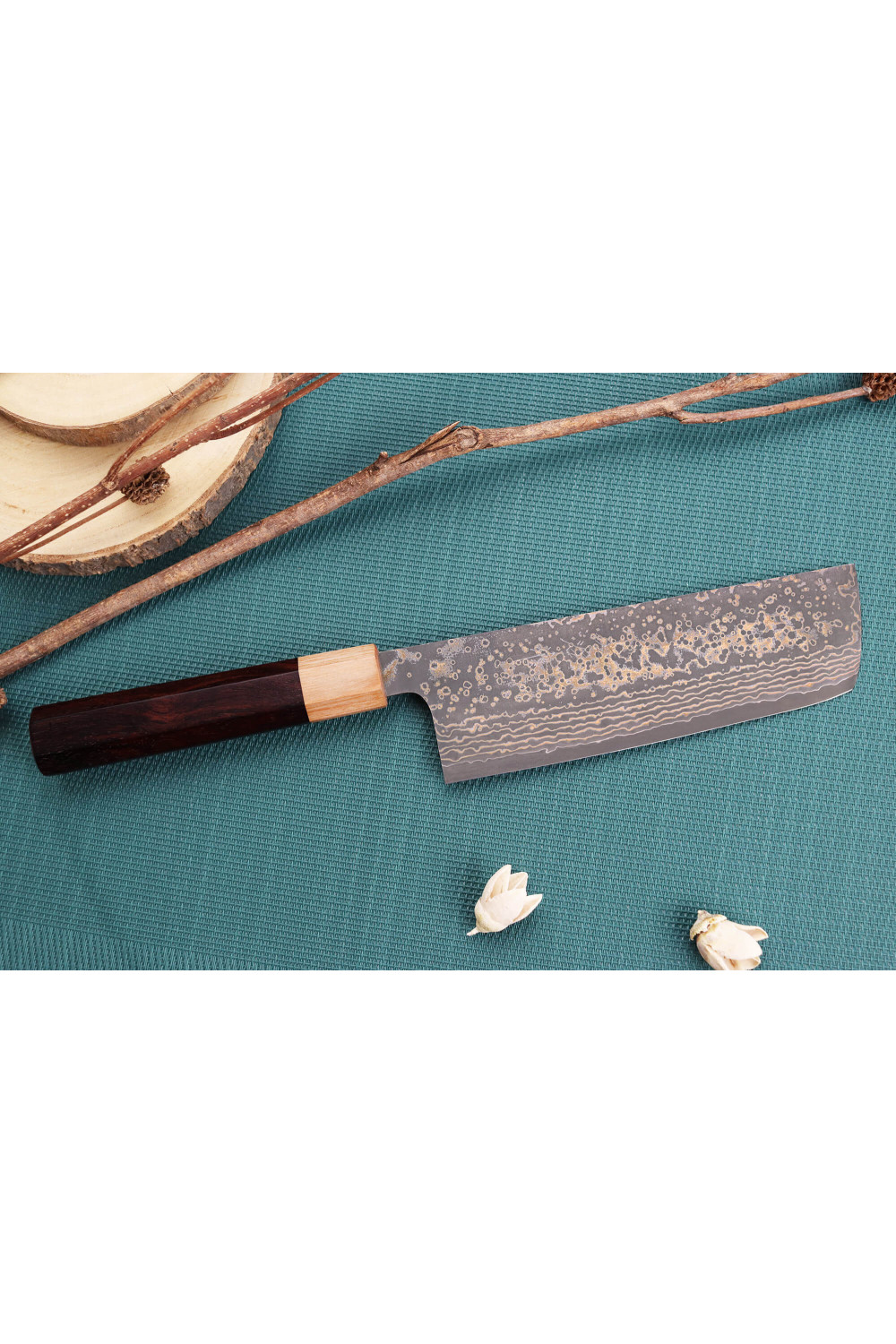
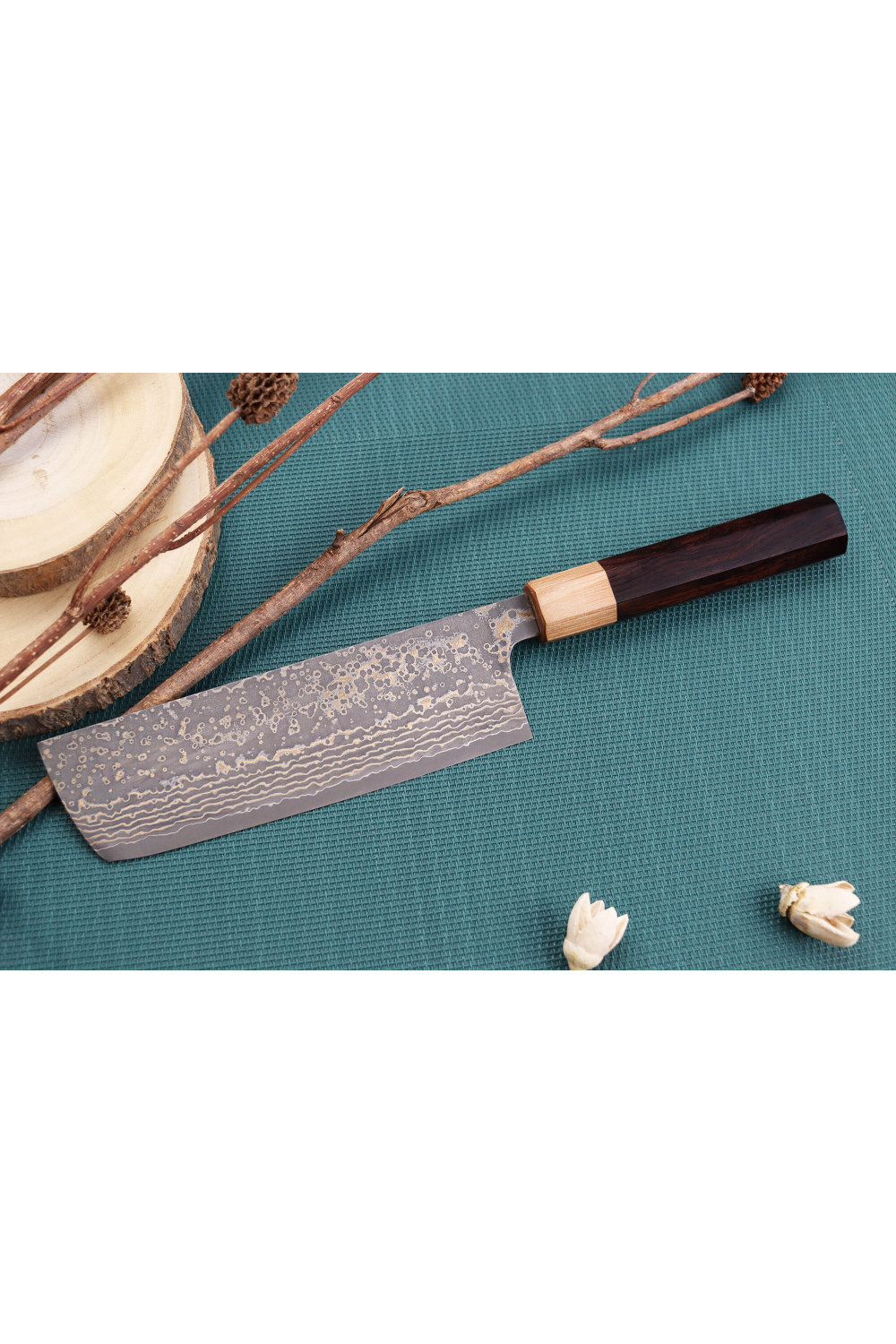
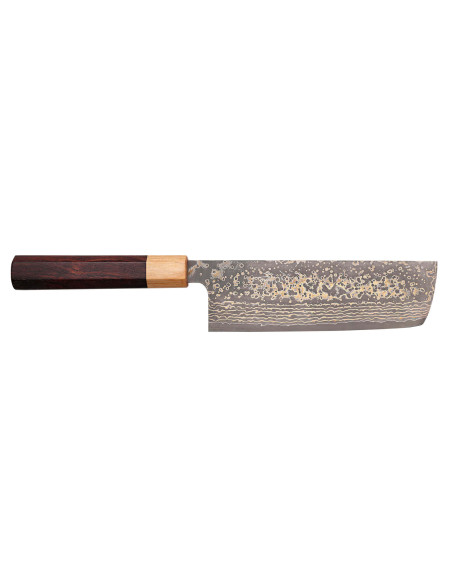
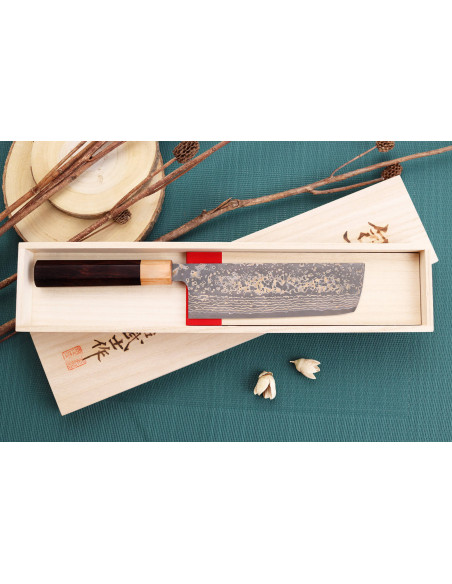
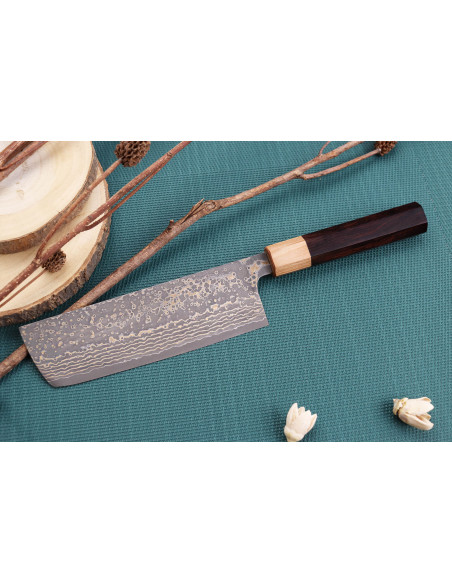
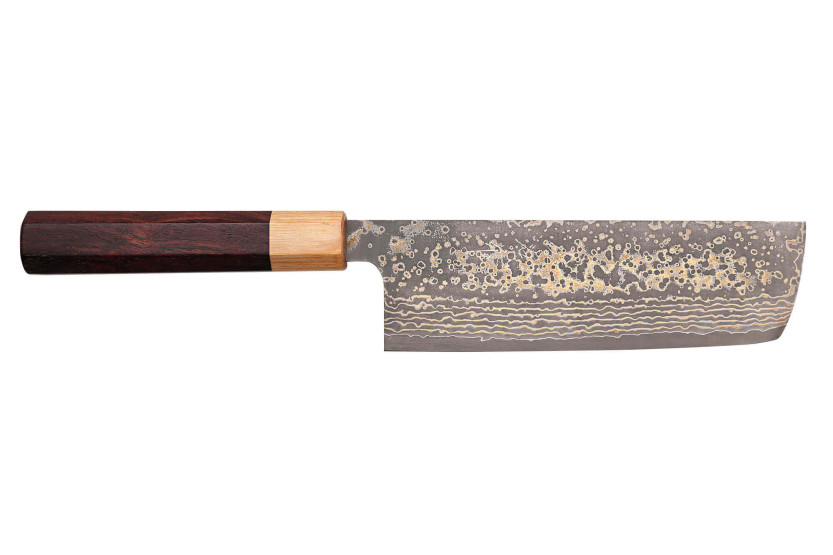
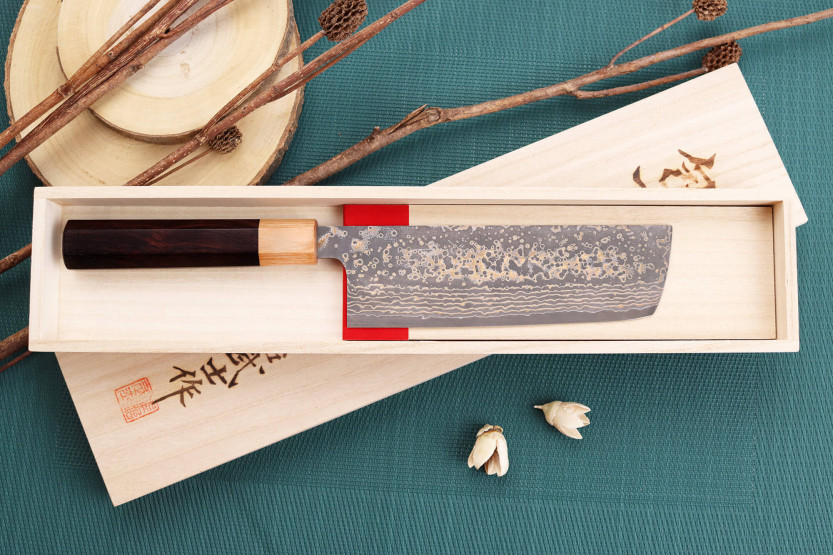
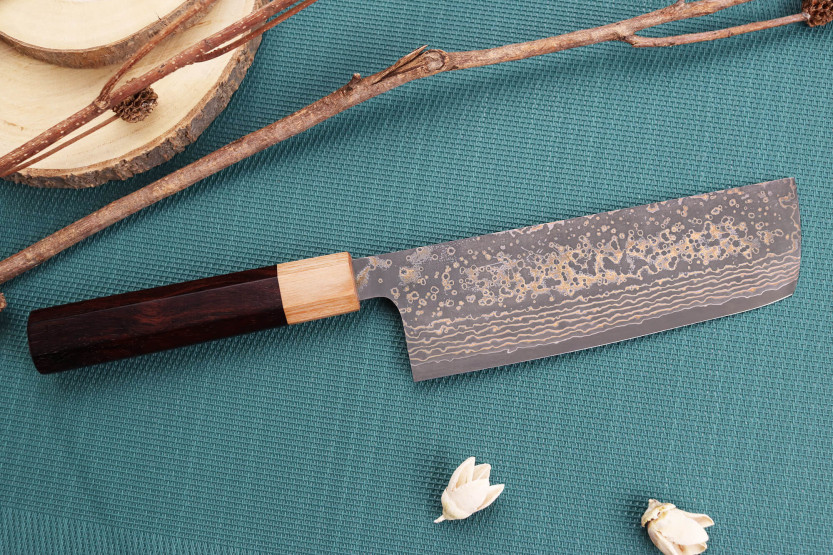
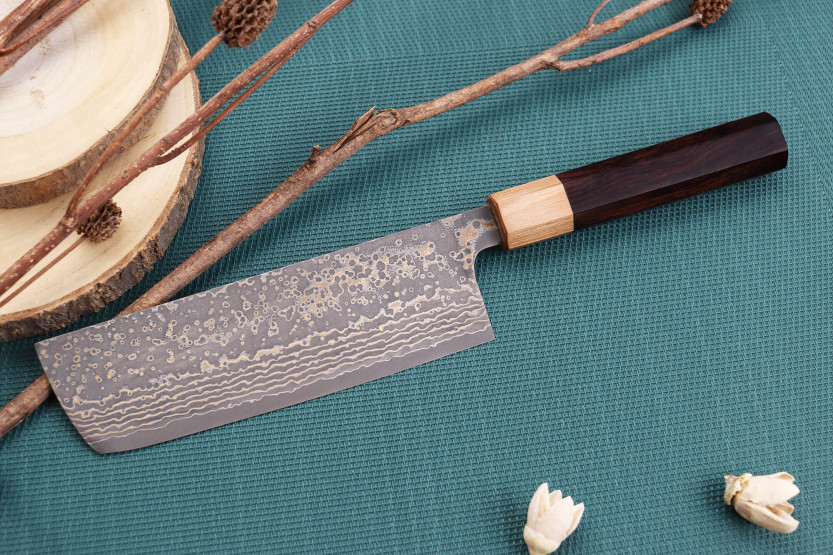
The VG10 Goldnakiri knife by Takeshi Saji is specially designed for cutting vegetables, fruit and herbs. With it, you can dice, stick or slice many vegetables with ease: apples, peppers, eggplants, mushrooms, bananas... Its high blade is ideal for serving and moving the food you've just cut.
Discover the Japanese blacksmith
This knife was handcrafted by Takeshi Saji, one of Japan's most renowned blacksmiths. His knives are acclaimed for their elegance and finesse. Indeed, he cleverly combines ancestral forging techniques with original visuals, appealing to all cooks. Since the 90s, Takeshi Saji san has been certified as a "traditional master craftsman".
Takeshi Saji works at Takefu Cutlery Village, a Japanese stronghold for the manufacture of kitchen knives and cutting Utensils. Many excellent traditional blacksmiths are to be found here, ensuring that ancestral know-how continues to flourish. Gathered in the same place, they can share their materials and ideas to train the new generation who will perpetuate traditional techniques.
Blade features
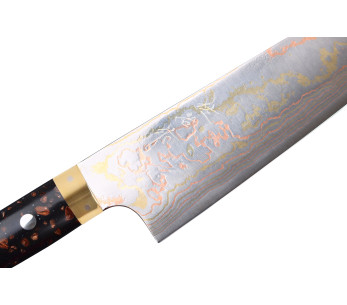
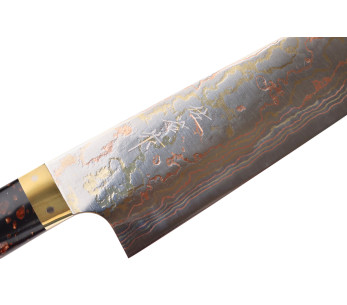
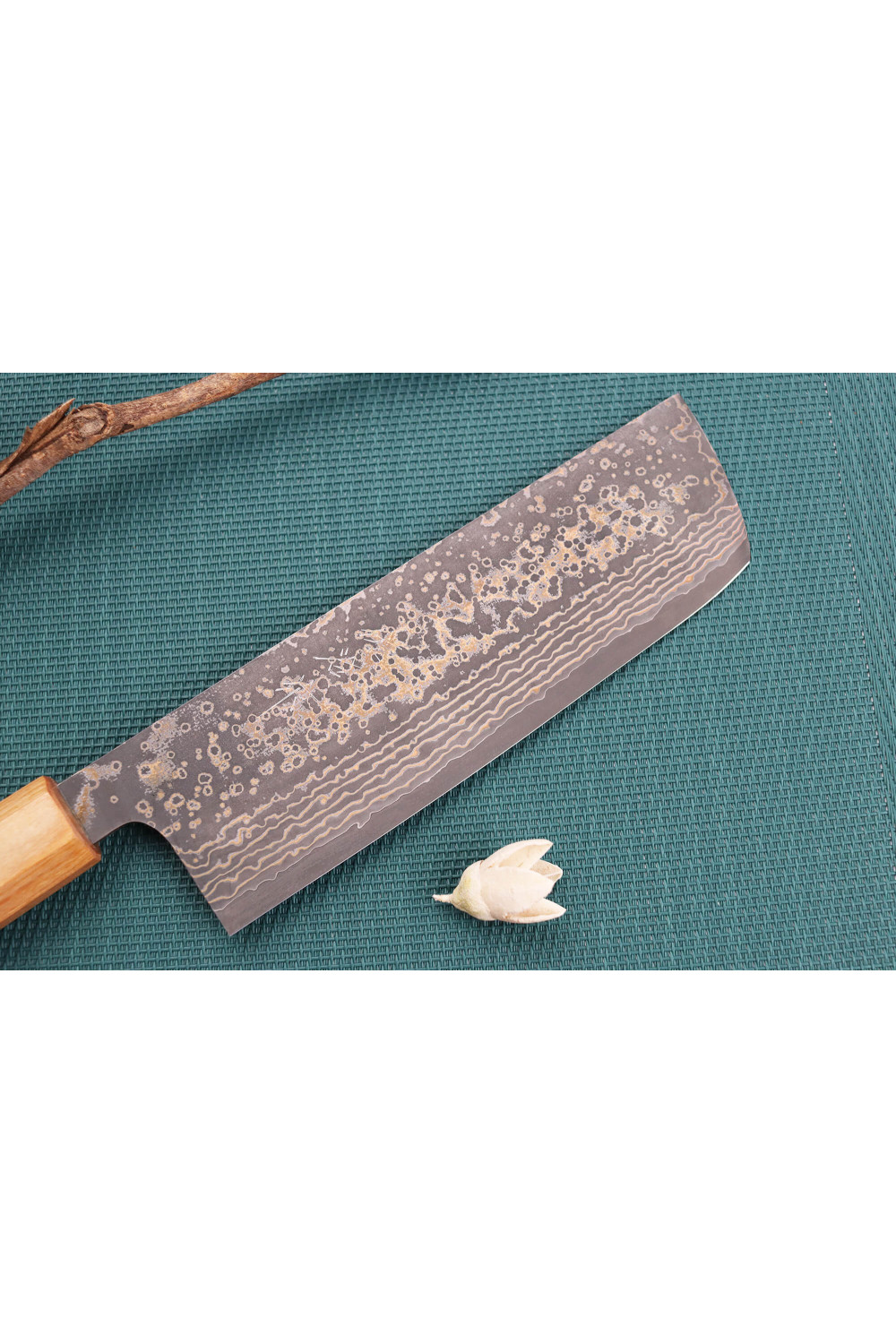
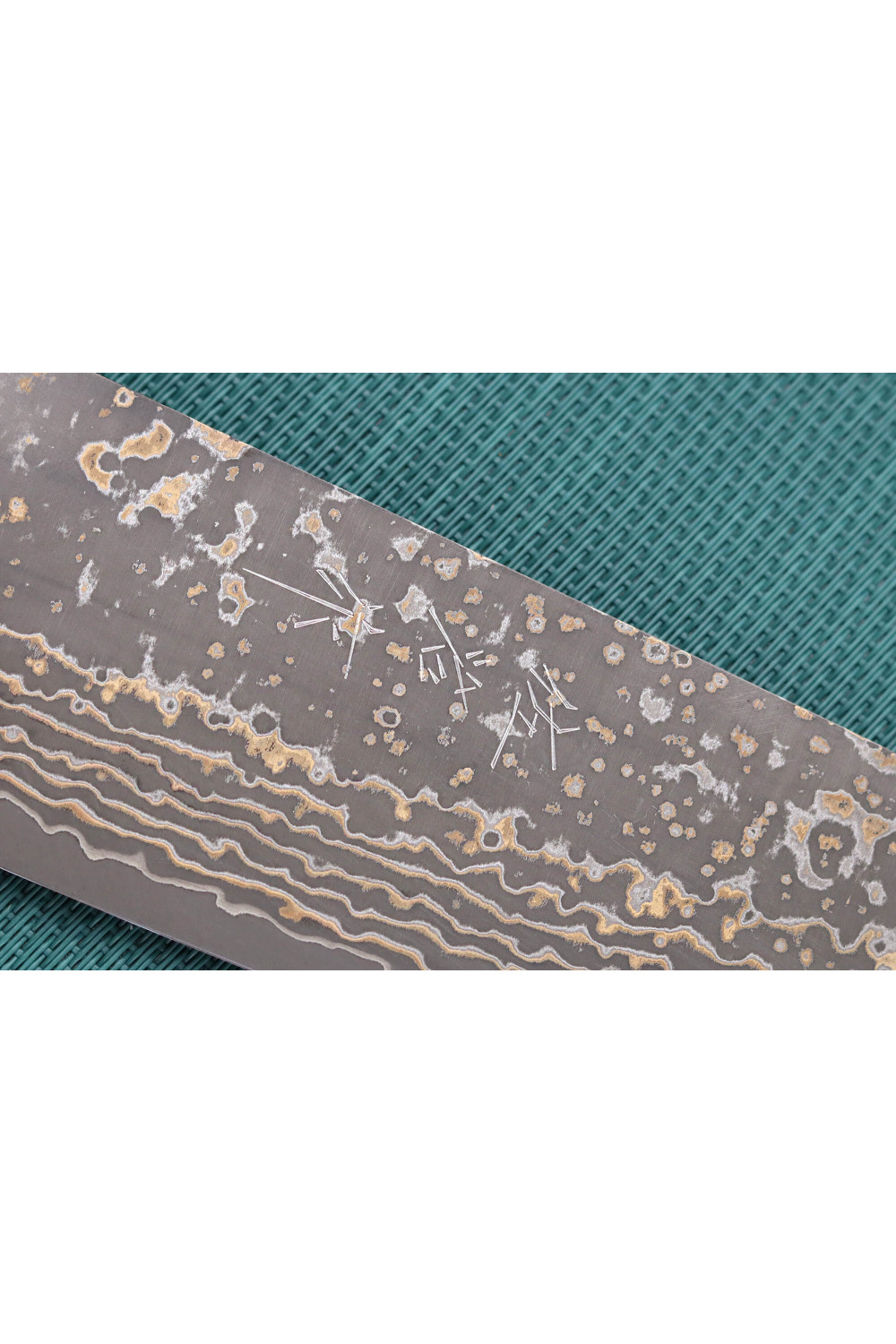
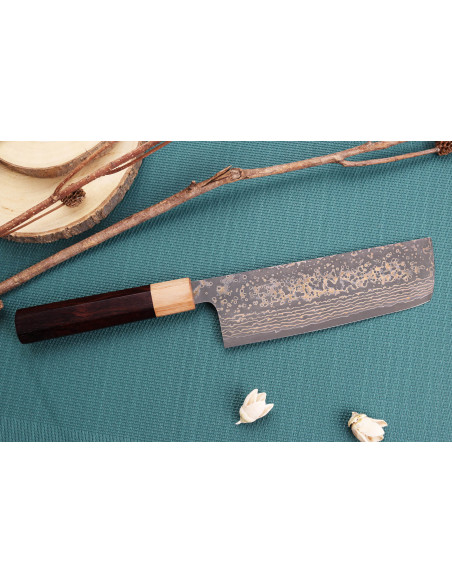
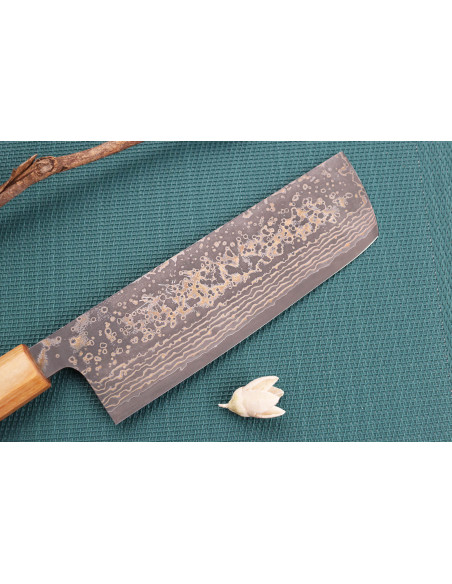
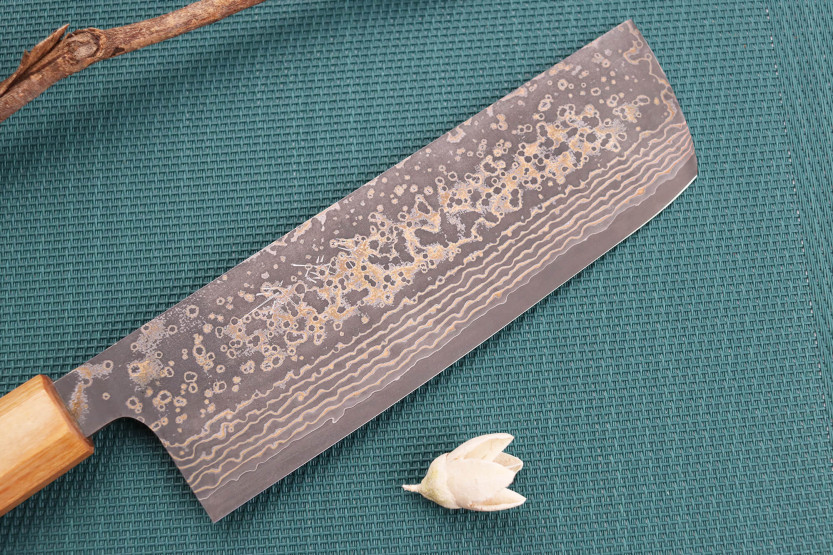
The blade of the Japanese nakiri knife is constructed from several interlocking layers of steel, with a rigid core: this is a damascened blade. Mild steel surrounds the rigid core, making it more supple and less brittle in use.
The core of the blade is made of VG10 steel, a Japanese alloy offering excellent durability and cutting capacity. With a carbon content of almost 1%, it achieves a hardness of around 60 HRC on the Rockwell scale. This gives the blade a sharp, long-lasting edge, as VG10 allows you to space out sharpening sessions. Note also that this steel supports a razor-sharp finish.
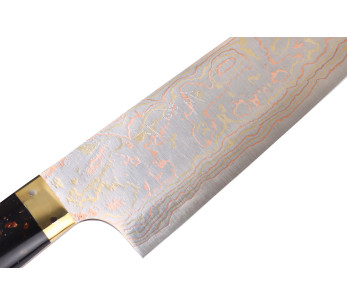
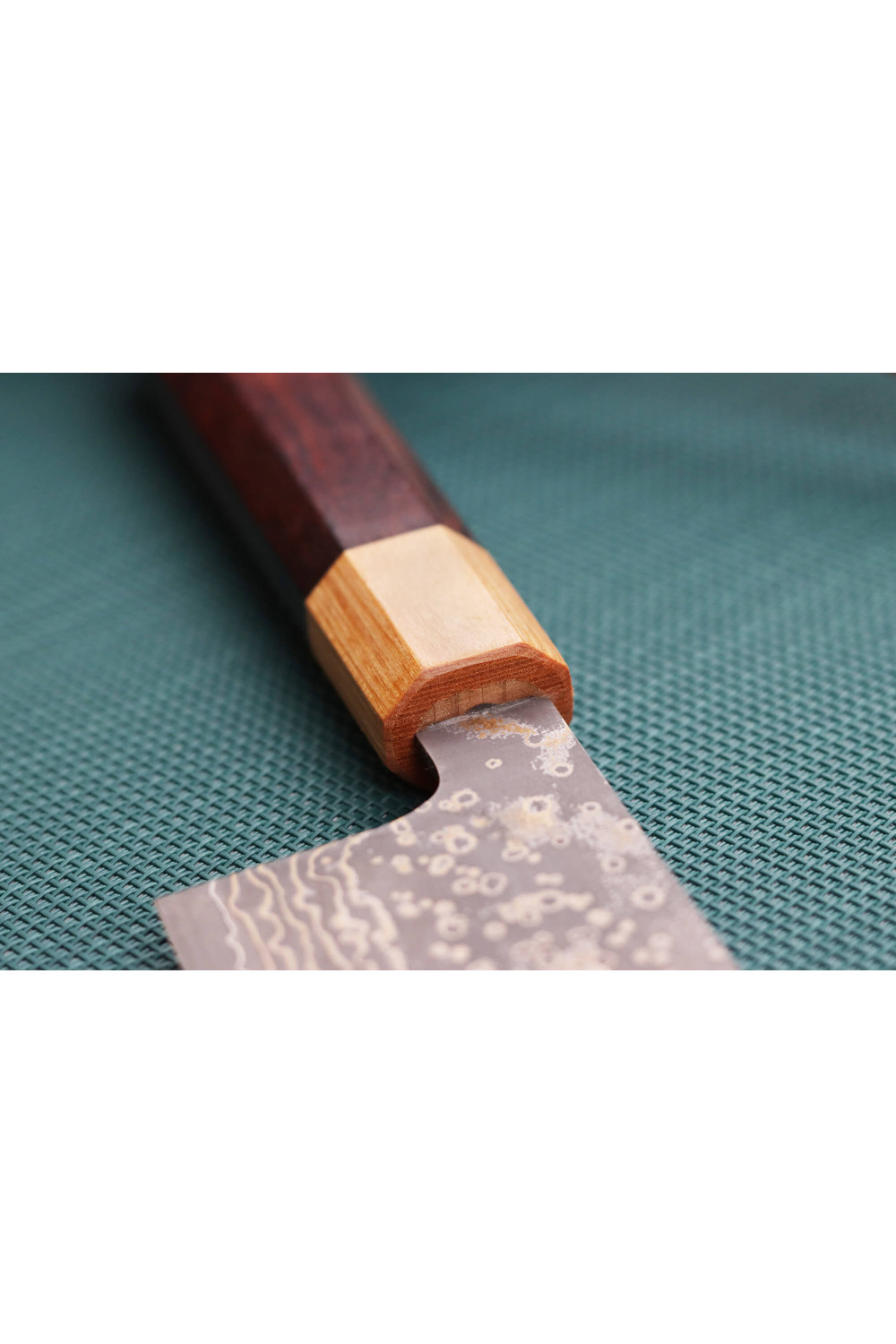
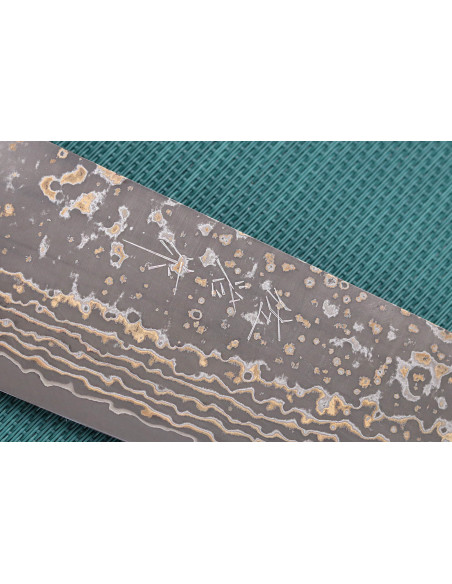
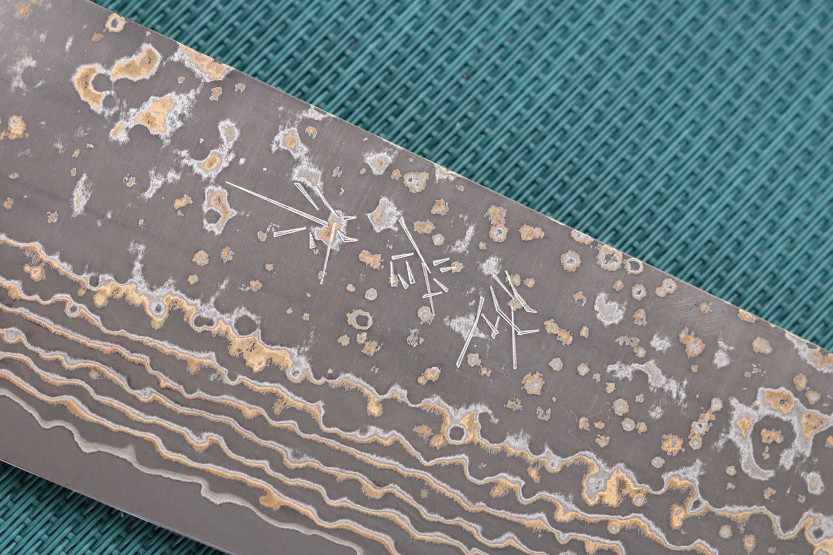
This core is then surrounded by several alternating layers of steel to form the damascus. You can see the layers on either side of the blade, forming waves across the entire cutting surface. In addition to its technical characteristics, damascus gives the blade a highly aesthetic appearance, with attractive patterns. This type of damascus stands out from other types with its superb, slightly coppery hue.
Handle features
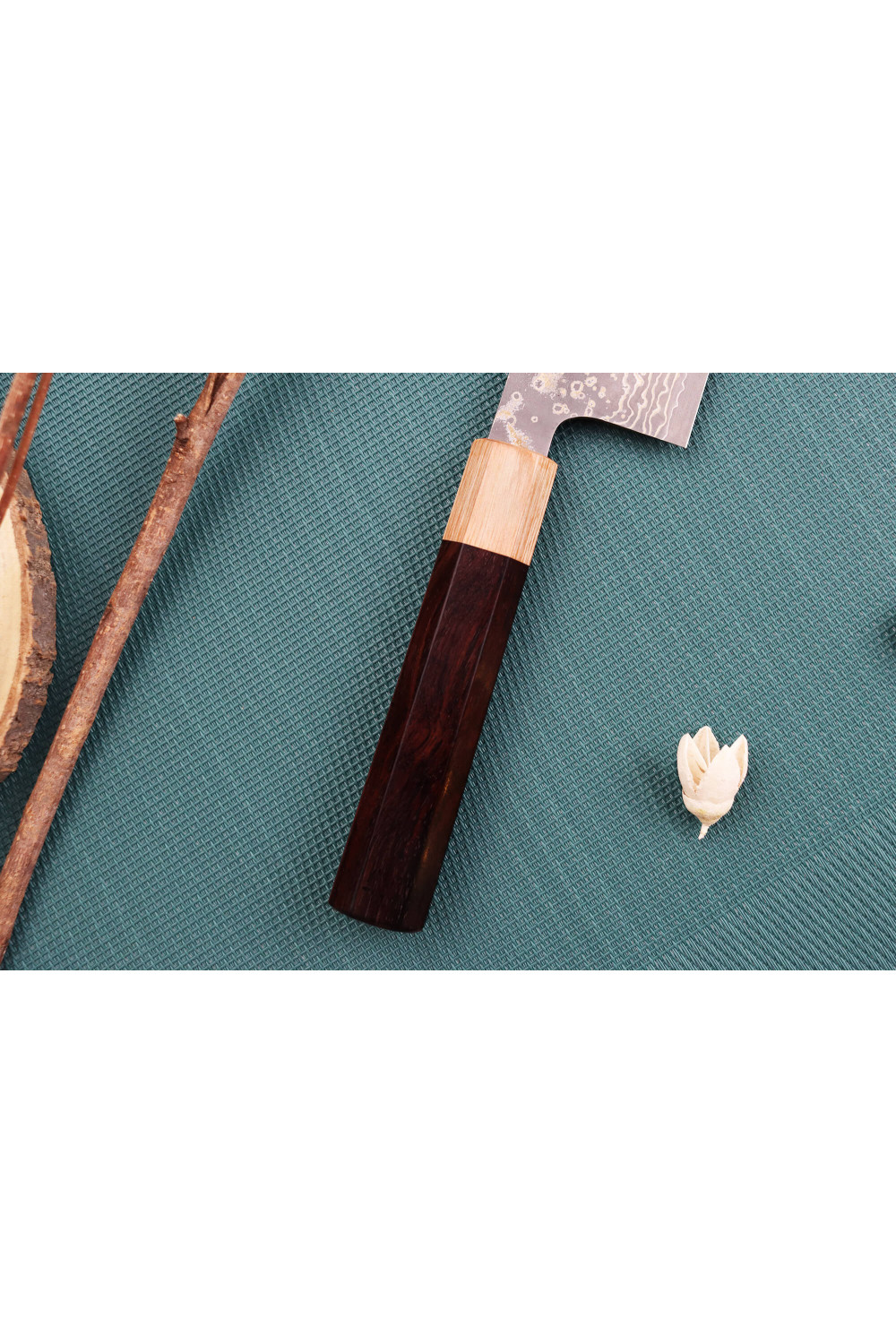
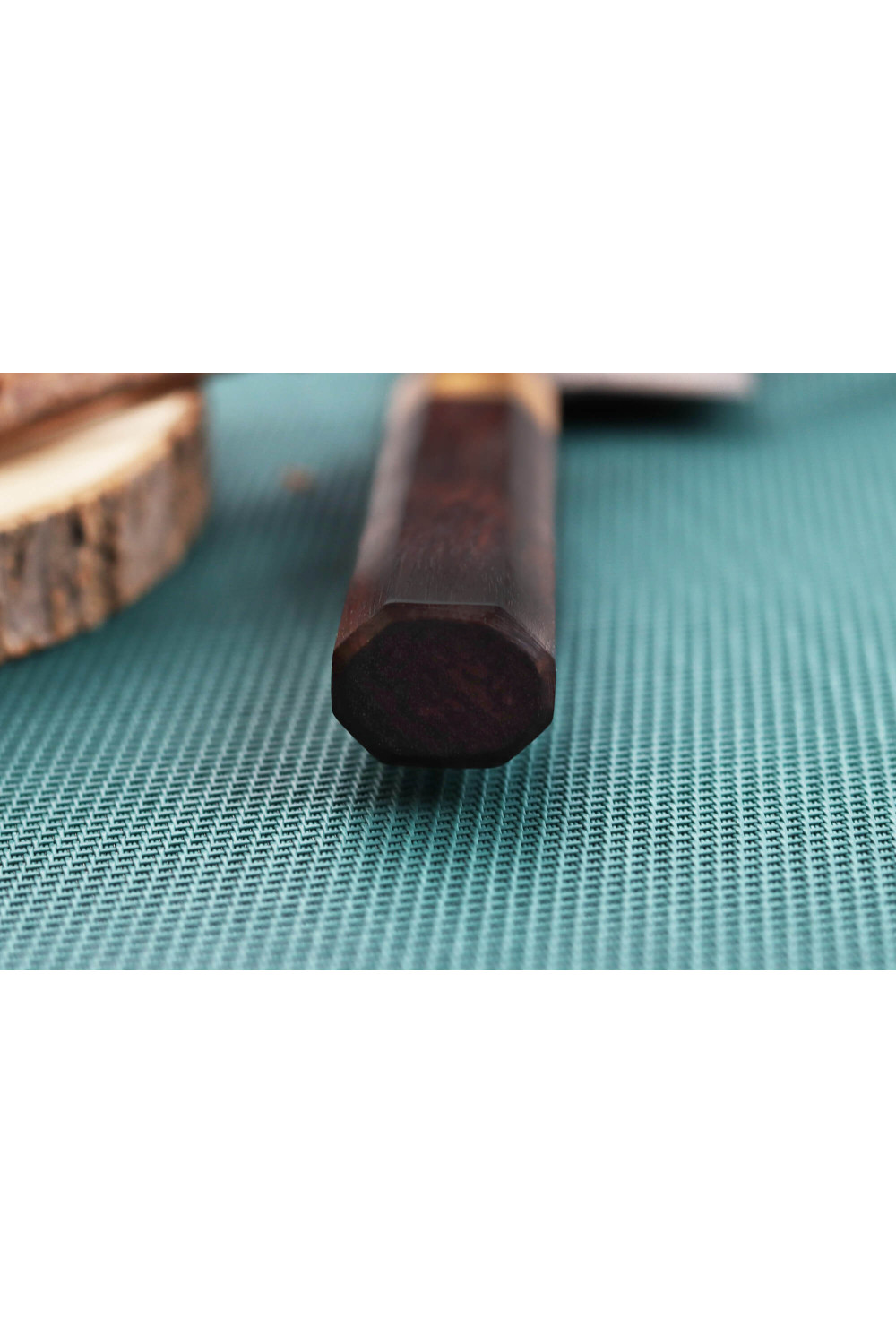
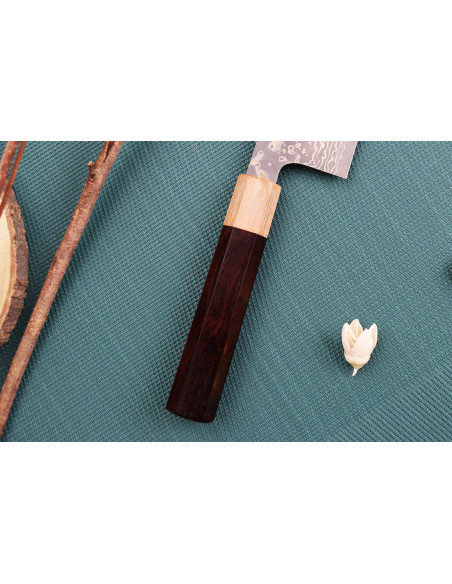
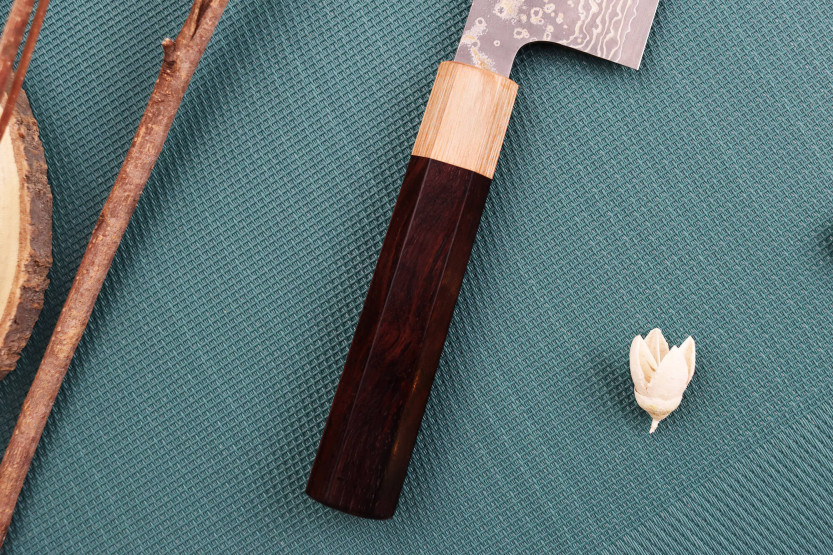
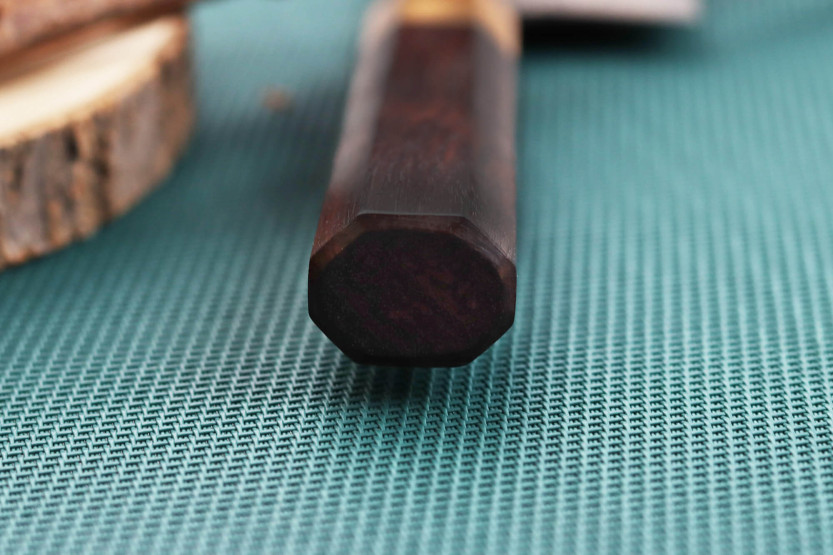
The knife's handle is made of rosewood, an exotic wood renowned for its strength and resistance to moisture. With its elegant shades of brown, rosewood gives the handle of each knife a unique look.
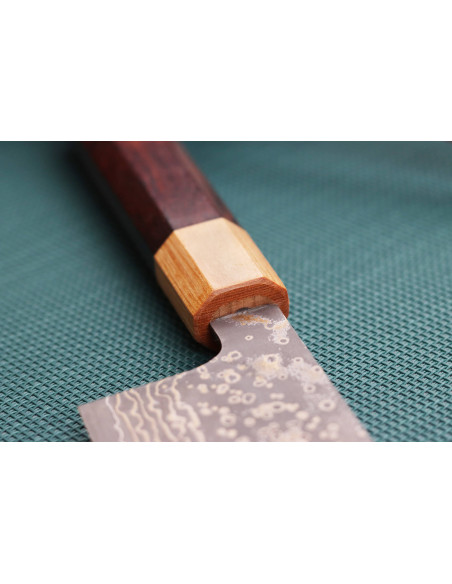
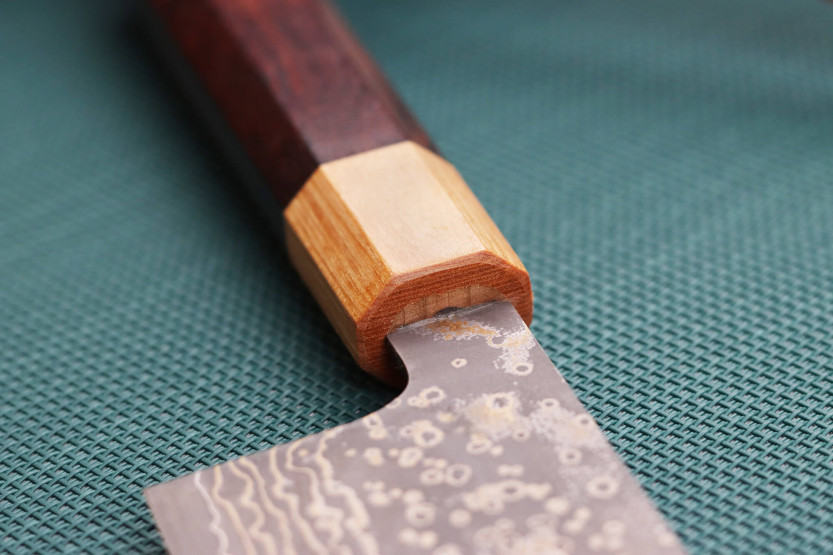
A Pakka wood bolster sits between the blade and handle. This composite material, made from compressed wood and resin, is ideally suited to humidity and temperature variations, and is antibacterial. The attractive white bolster contrasts elegantly with the knife's darker blade and handle.
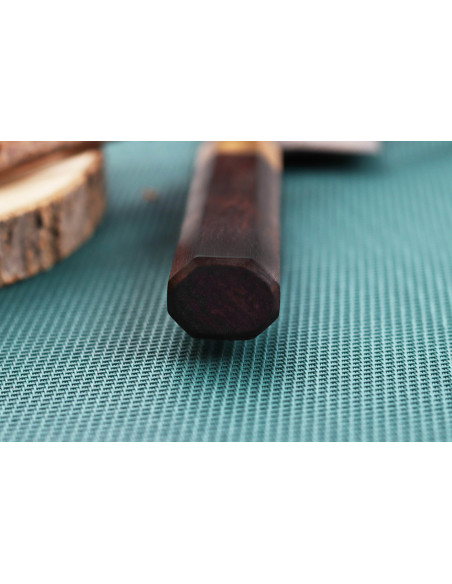
The handle of the handcrafted nakiri knife is octagonal in shape, offering an ambidextrous grip: both right- and left-handed users can use the knife.
Finally, the space between the blade and the handle is filled with wood pulp to make it watertight. This is also very hygienic, as food residues and cleaning water cannot get into the handle.
How to care for your nakiri knife damascus nakiri knife
This handcrafted knife should never be put in the dishwasher. It should be washed by hand in lukewarm water using a non-abrasive sponge and a mild detergent.
Once washed, dry immediately with a soft cloth to remove all traces of moisture. Finally, store it in a dry place.
Finally, stocks of this knife are limited, as they depend on its provenance and the blacksmith's ability to produce it. What's more, the knife is made entirely by hand, which requires a great deal of time to produce perfect knives.
Find all Takeshi Saji knives on KnifeLeader.eu!




 By buying this product you can collect up to