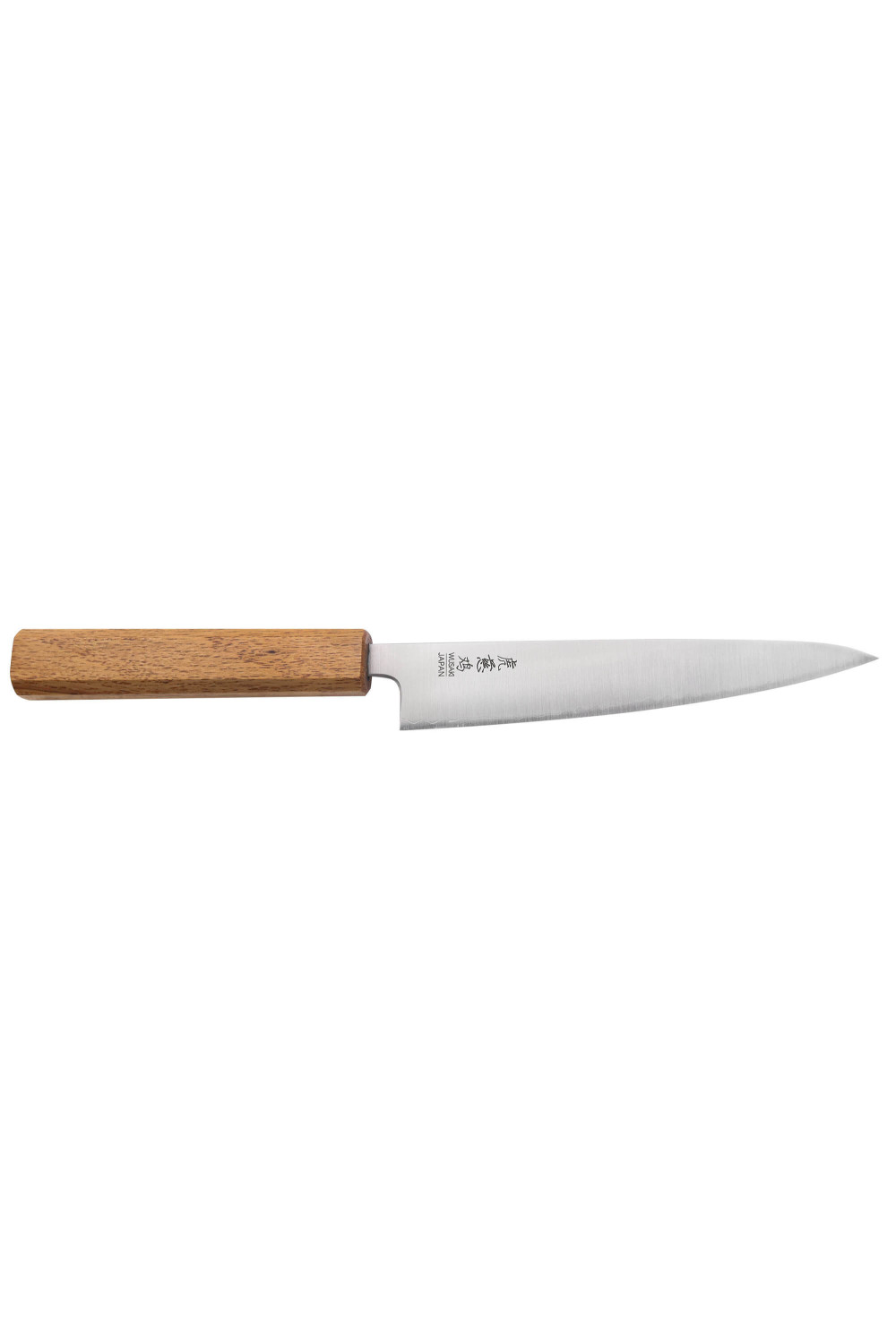
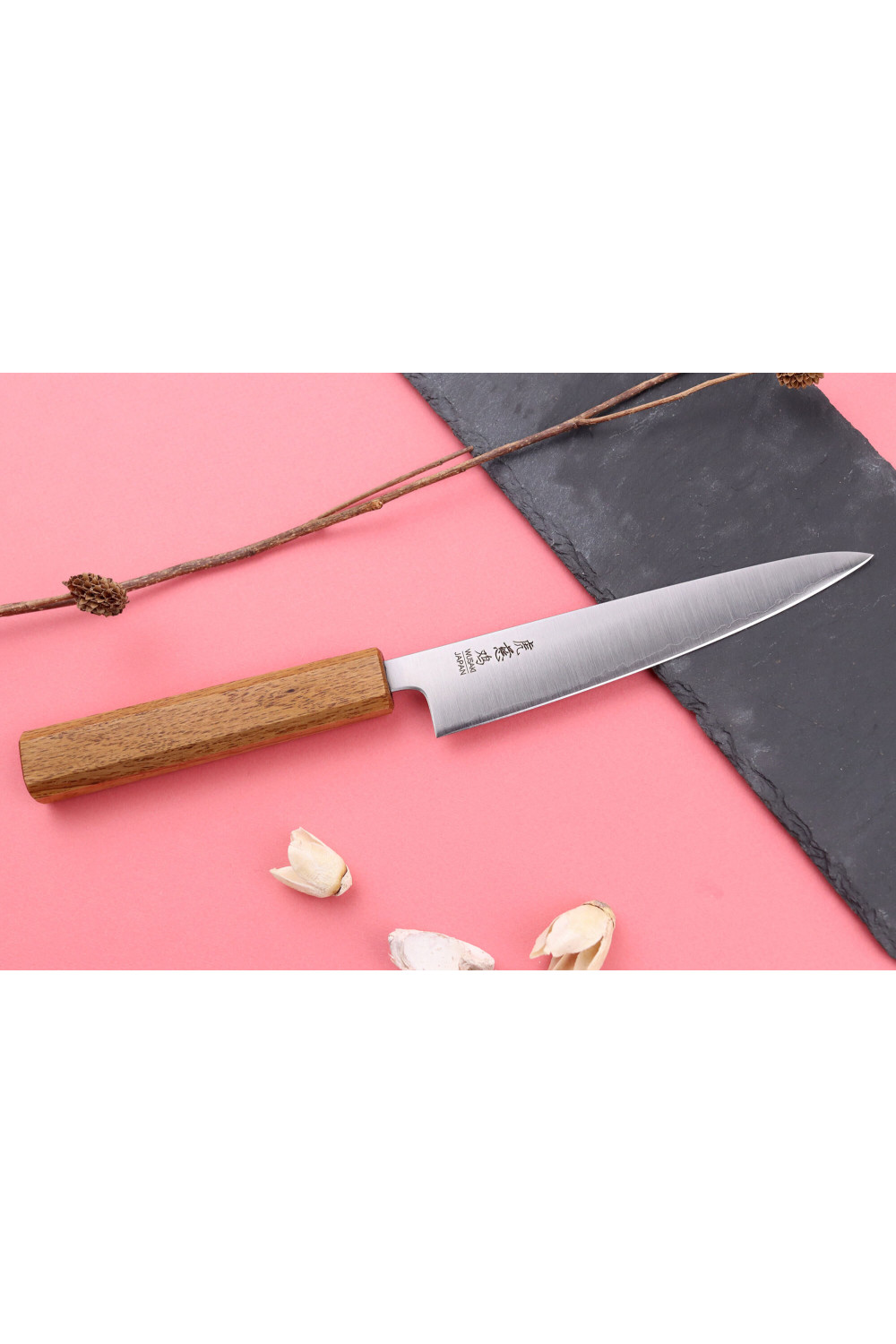
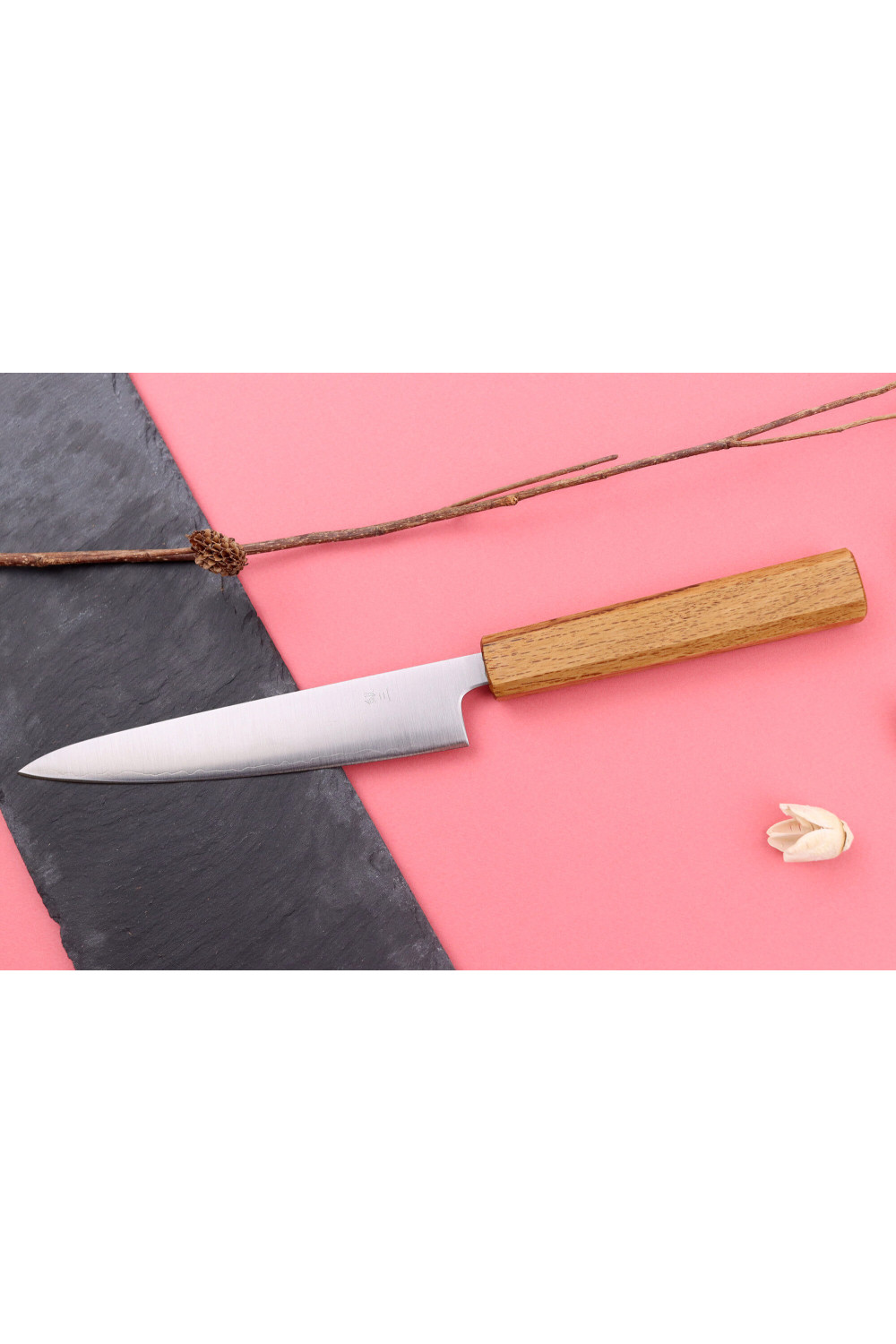
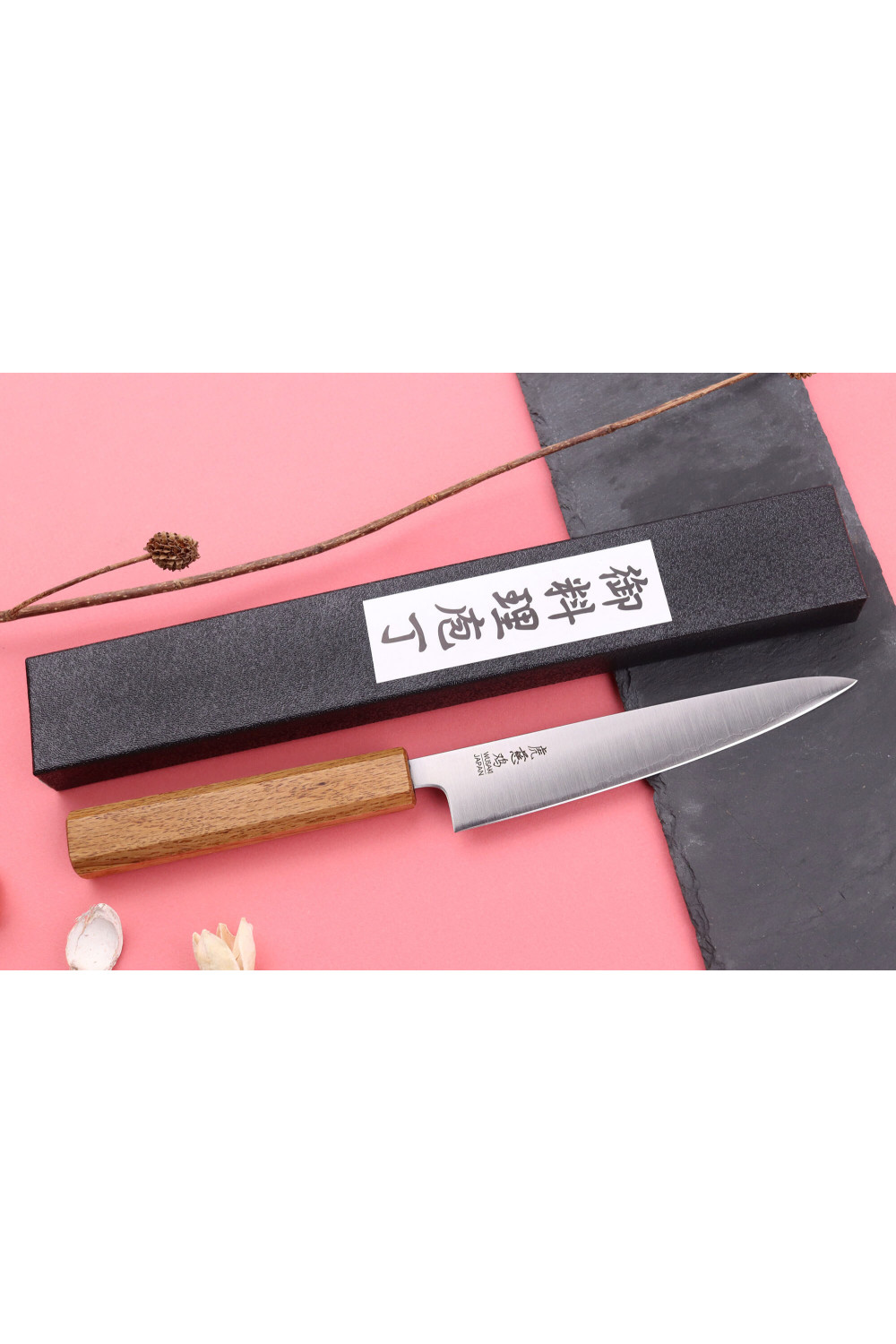
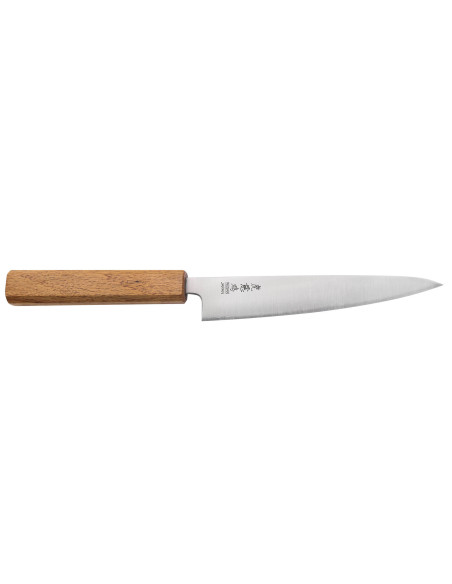
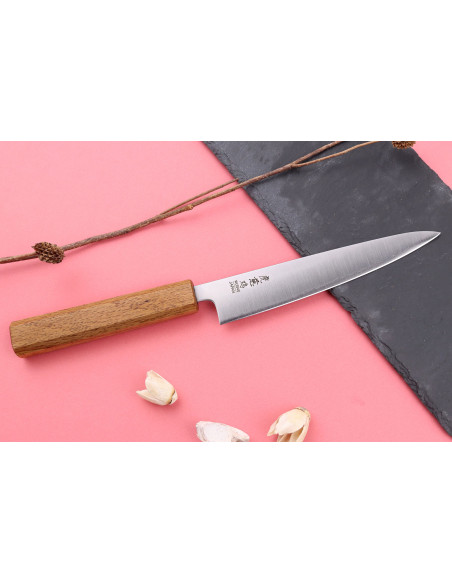
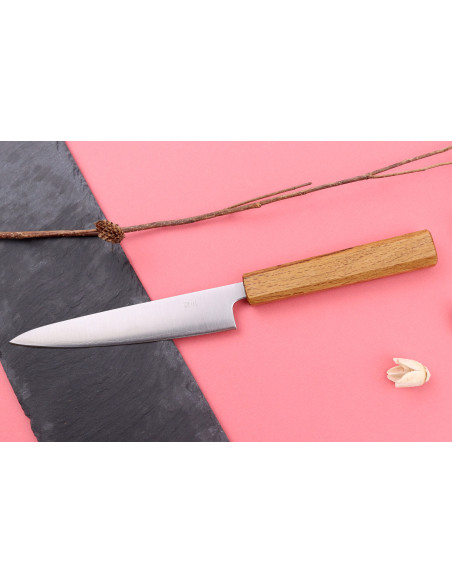
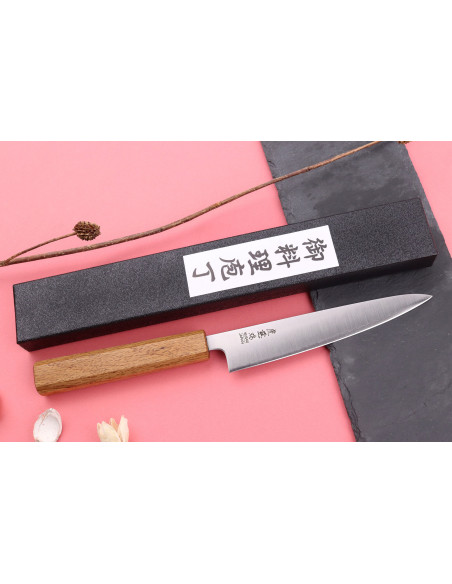
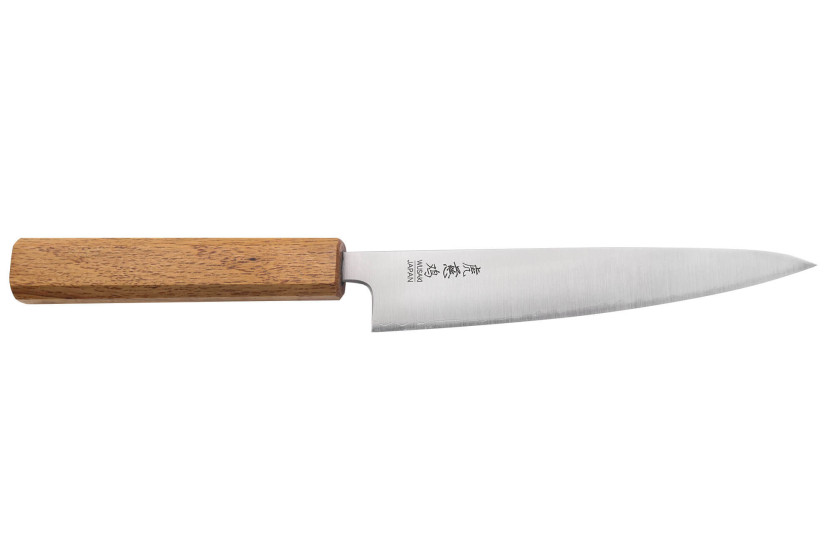
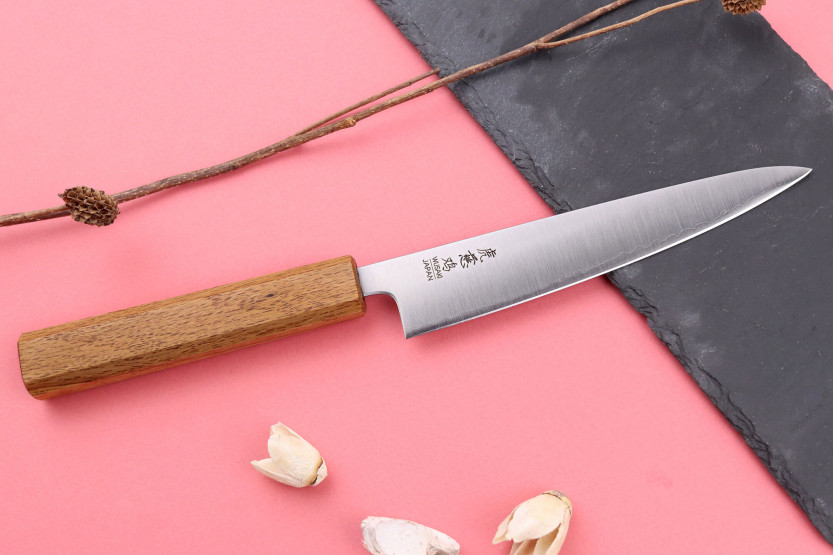
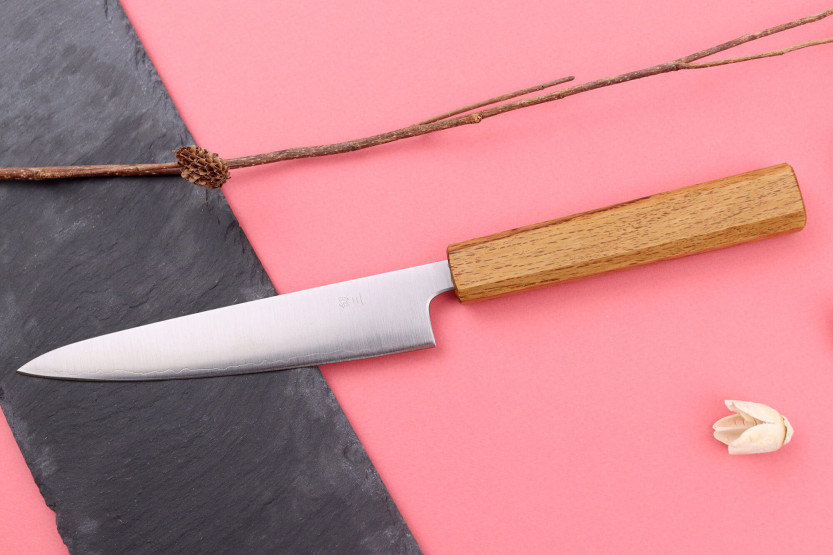
The universal knife is a versatile tool, ideal for a wide range of cutting tasks! Thanks to its small blade, it makes precise cuts, perfect for fruits and vegetables, as well as for slicing small pieces of boneless meat. Ideal for small jobs on a wide range of foods!
Wusaki Migaki knives are handcrafted by the Japanese cutlery company Tsunehisa.
A Japanese knife with a Ginsan steel blade
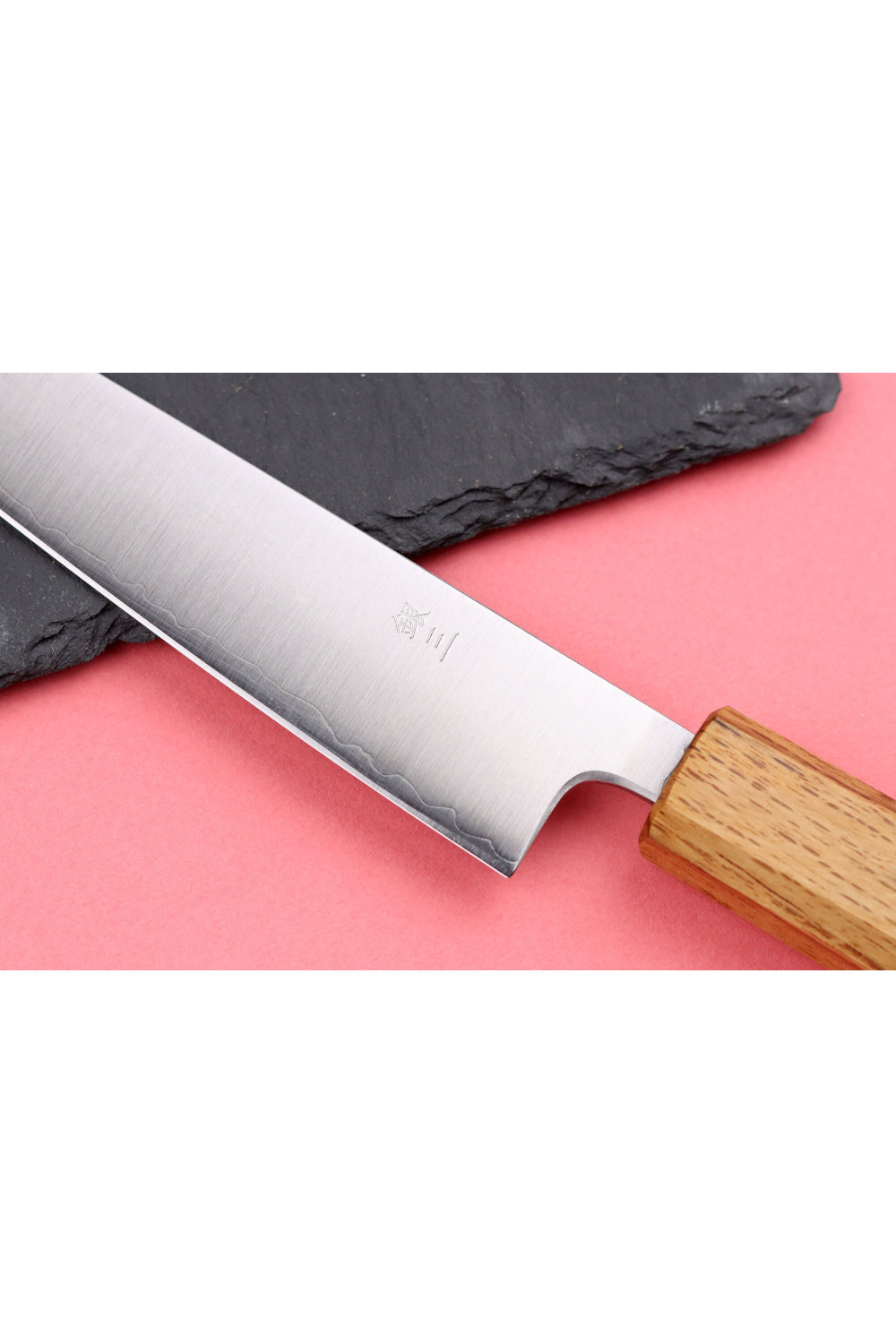
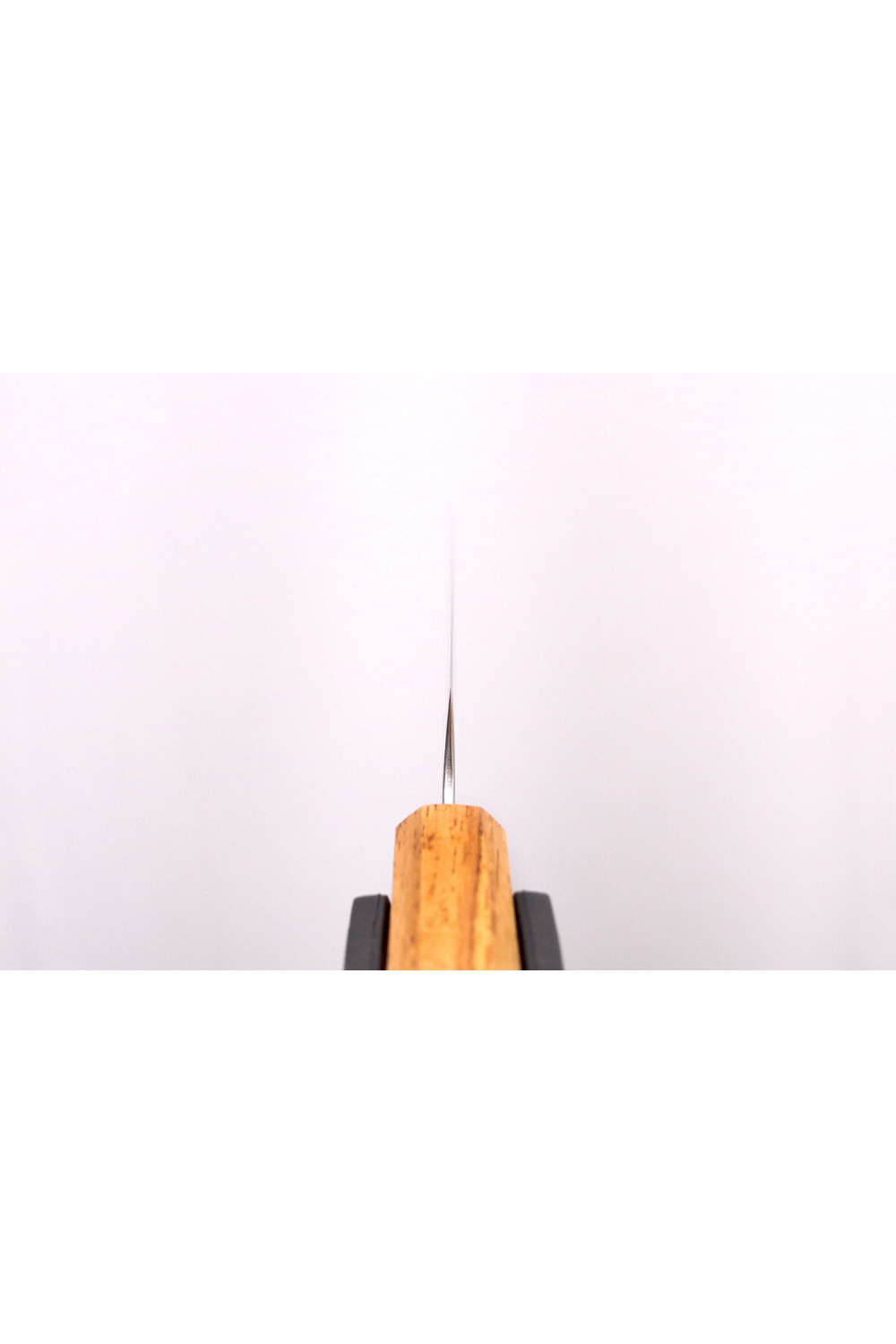
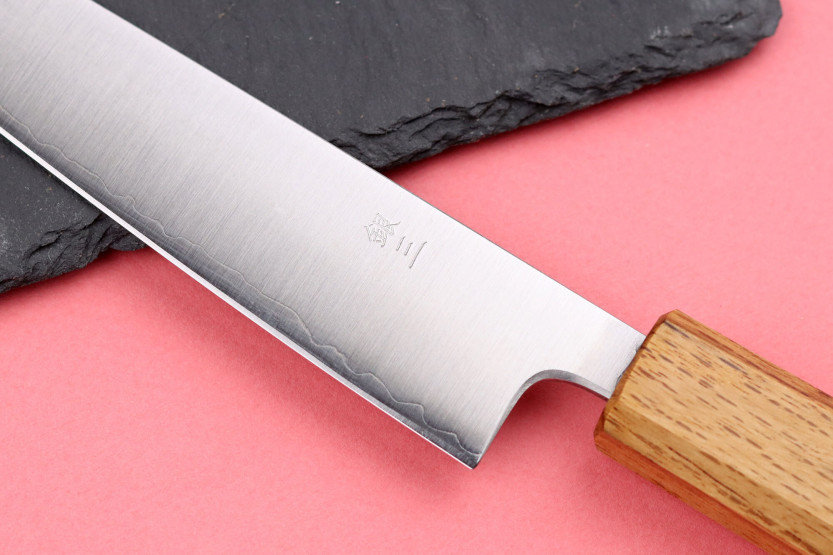
The blade of this Japanese kitchen knife features a San Maï structure, a traditional Japanese technique. It consists of forging a hard steel core, then wrapping it in a layer of softer, folded-over steel.
The core of this blade is made of Japanese Ginsan steel, an alloy enriched with 0.95% carbon, an element that gives your blade superior rigidity for a long-lasting edge!
This alloy also contains a high level of chromium, offering enhanced protection against corrosion. However, this Japanese knife remains sensitive to oxidation and therefore requires careful maintenance to prevent oxidation.
Ginsan steel has a hardness of around 60HRC on the Rockwell scale, guaranteeing a long-lasting cutting edge. To maintain this performance, the use of a whetstone is recommended when the need for sharpening arises.
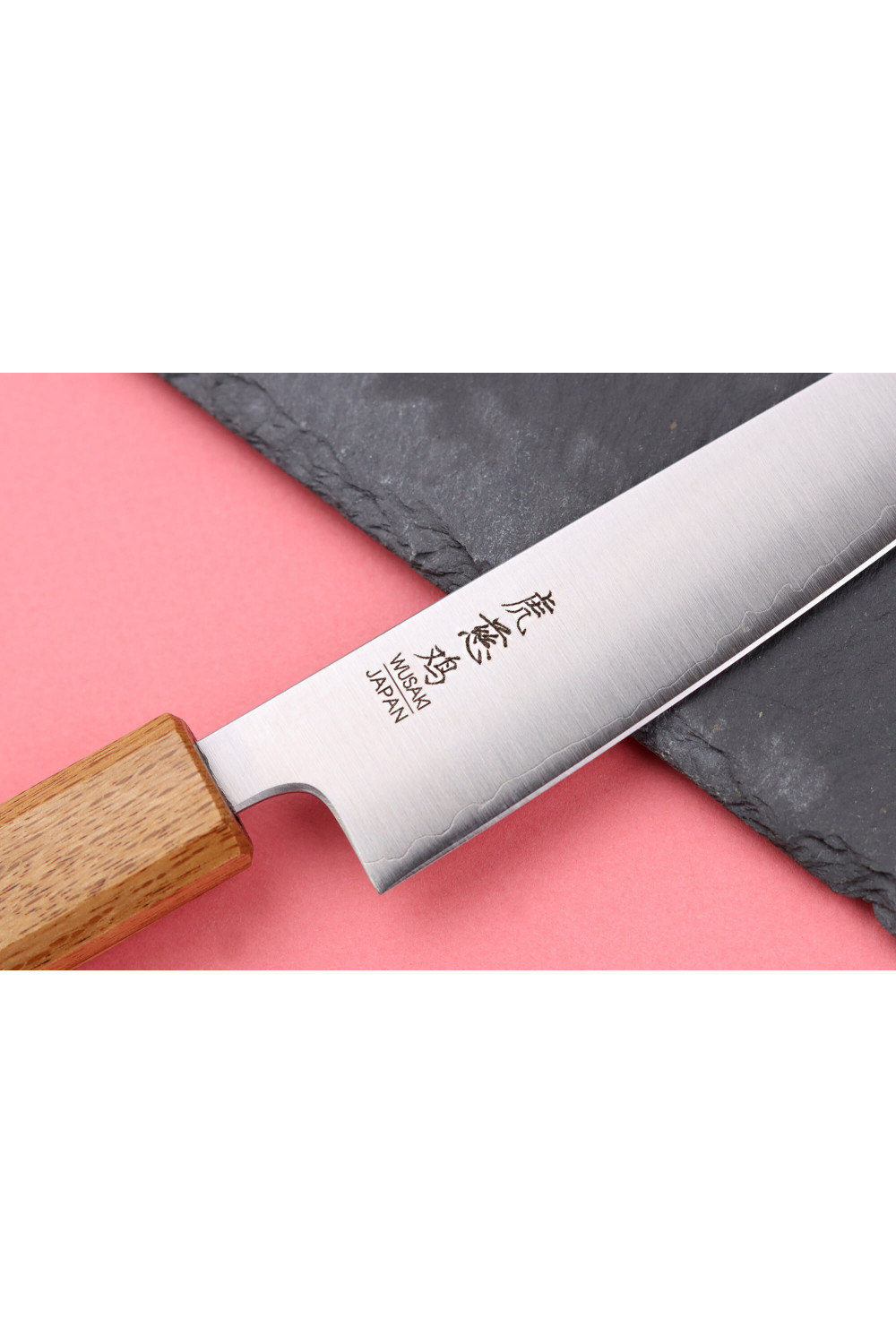
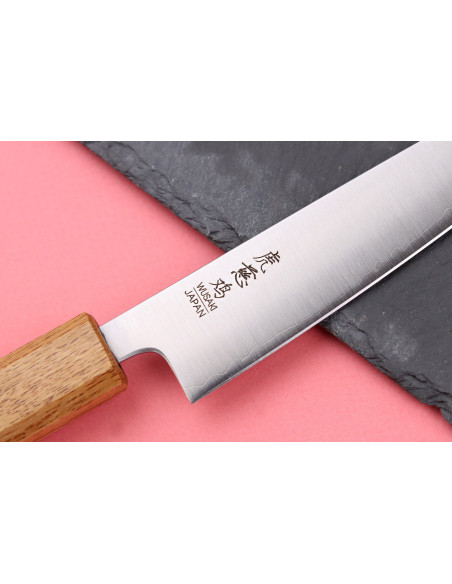
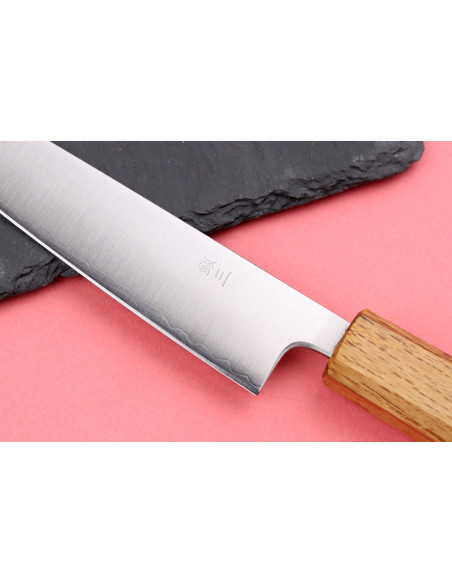
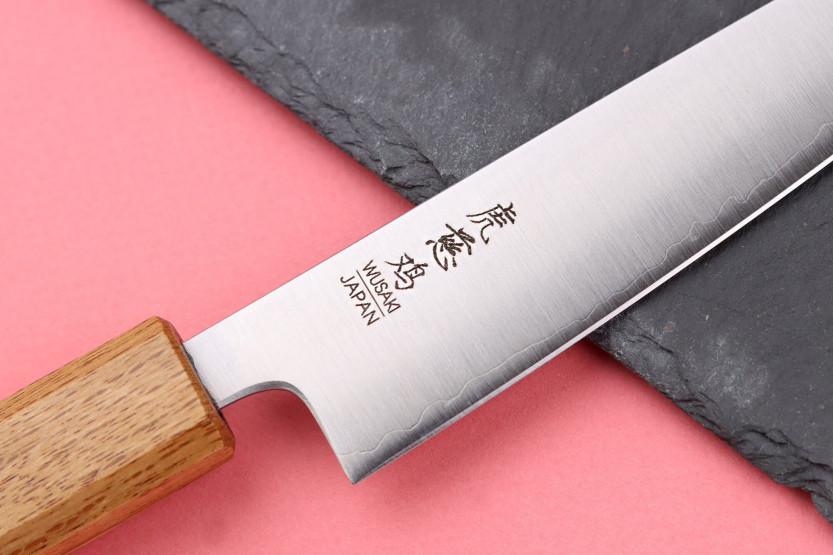
As mentioned above, the Ginsan core is enveloped in a layer of stainless steel that provides protection and flexibility to avoid the risk of breakage during use. The superimposition of these different layers is visible along the edge, where a characteristic fine wave appears.
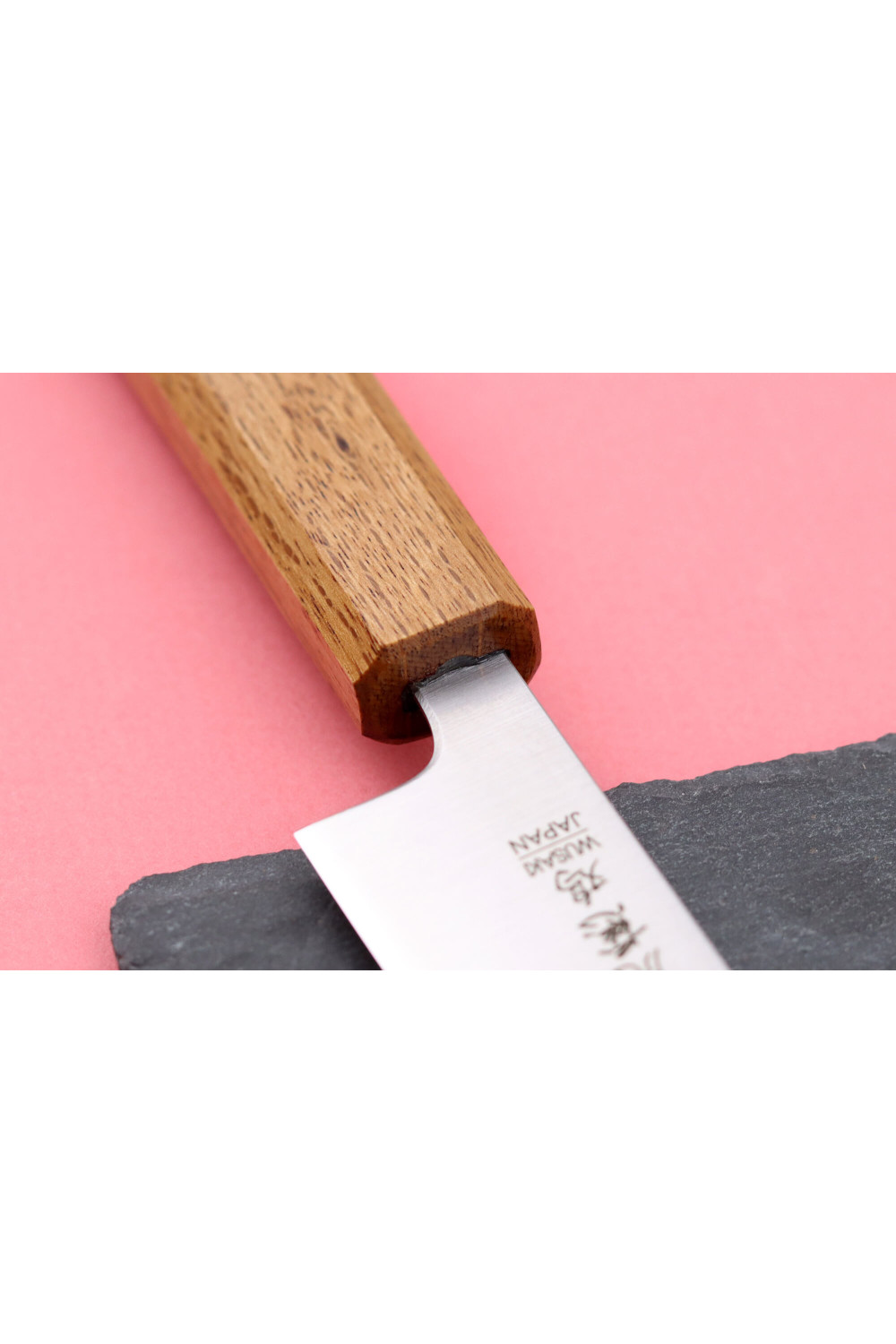
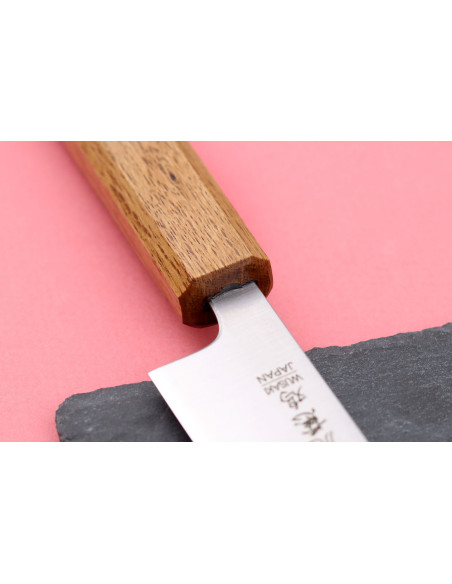
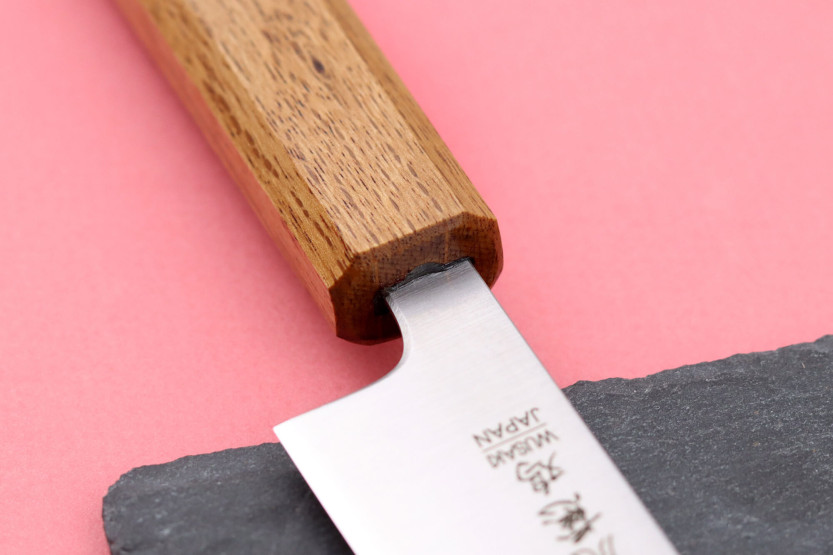
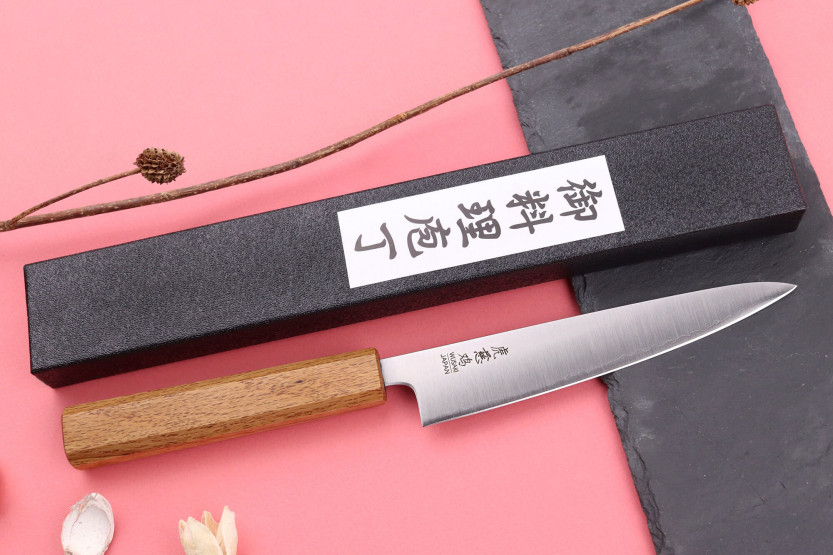
Finally, the logo on the top of the blade and the kanji engraved on the back attest to the authenticity of this handcrafted Japanese knife and add character!
A solid wooden handle for this handcrafted Japanese knife
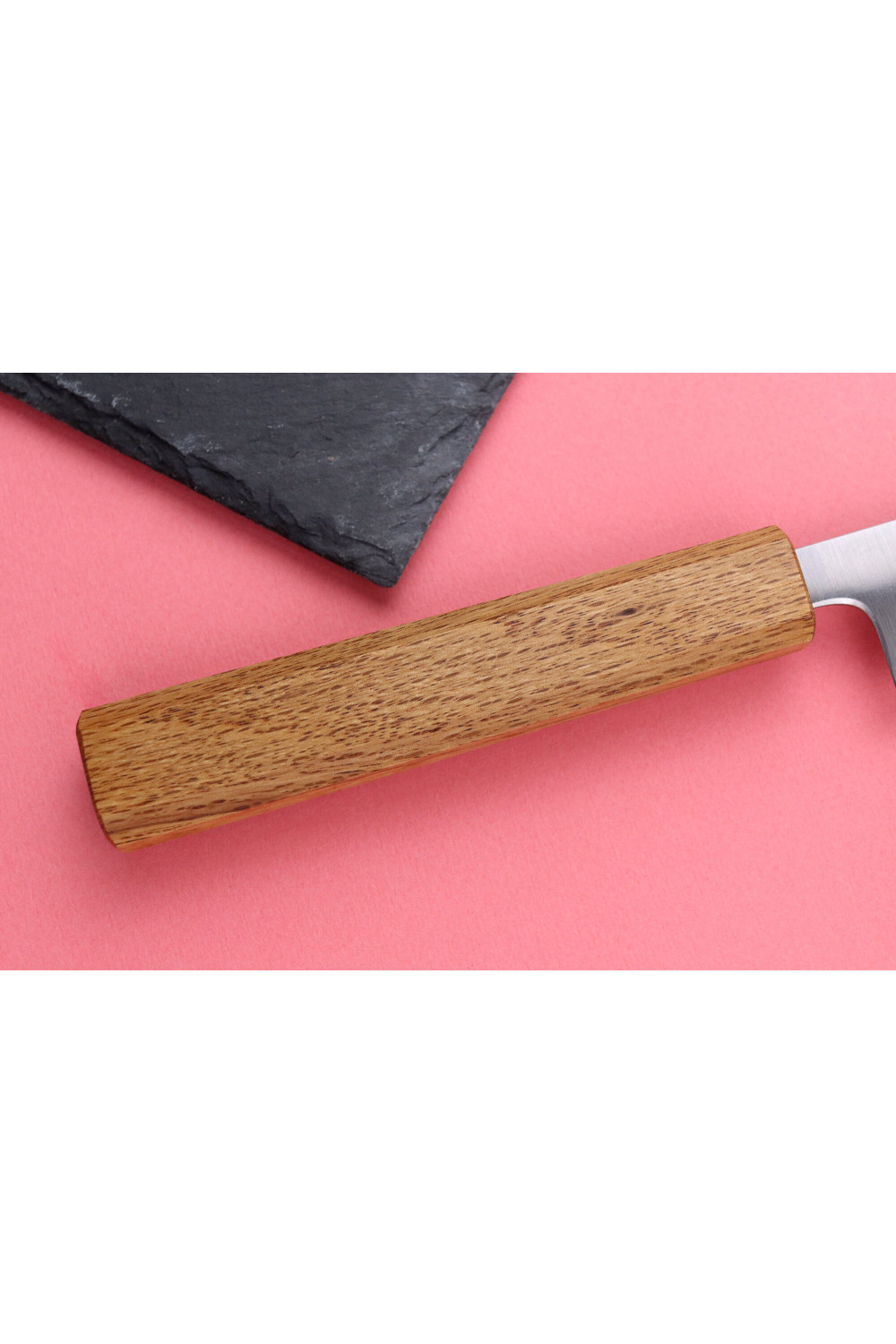
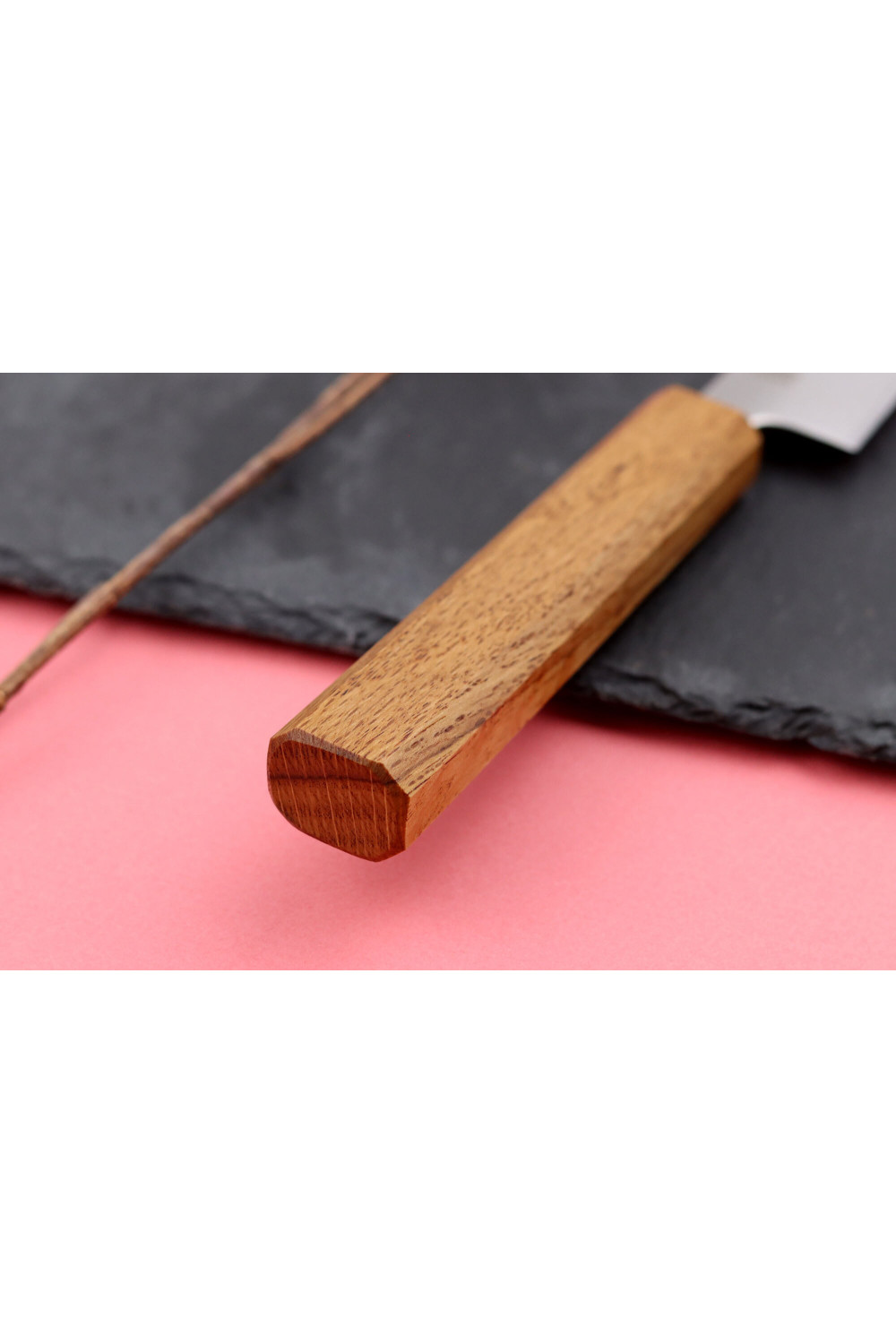
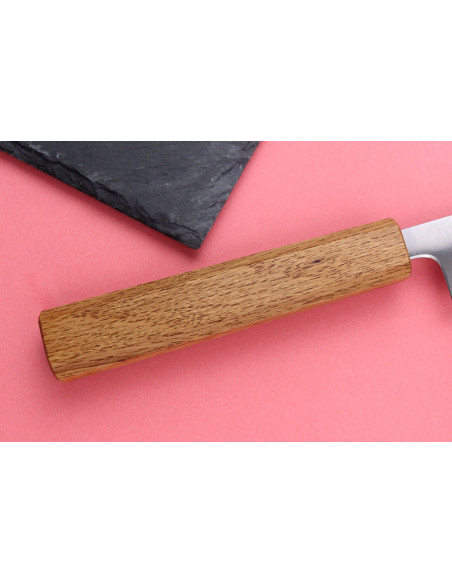
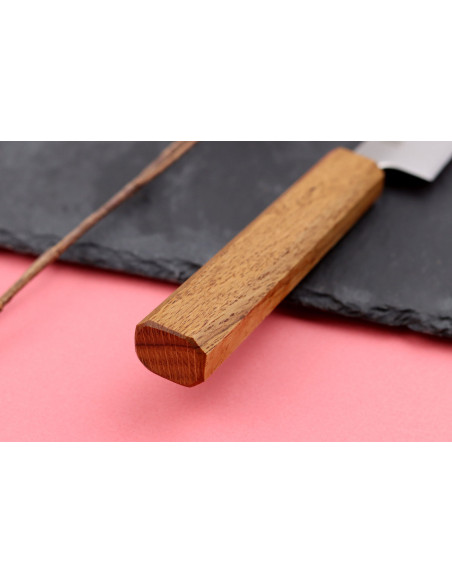
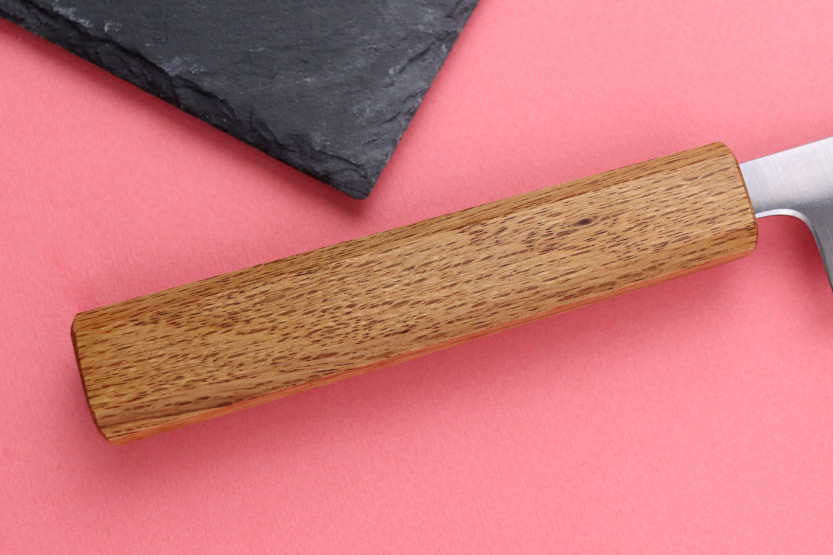
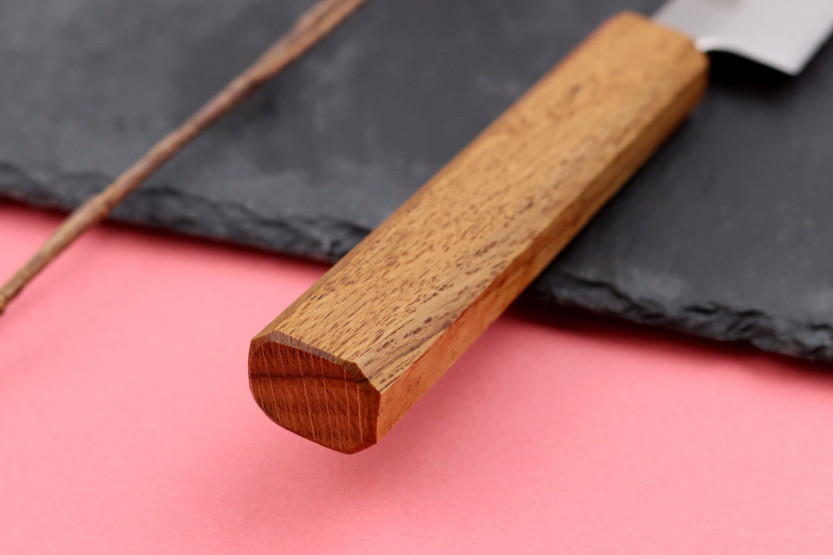
The handle is made from enju wood, a sturdy Asian species with light, warm tones and a unique grain. Its slightly glossy finish adds a touch of elegance to the whole.
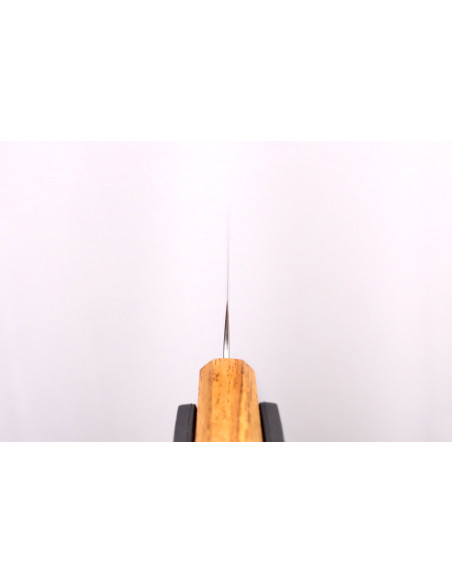
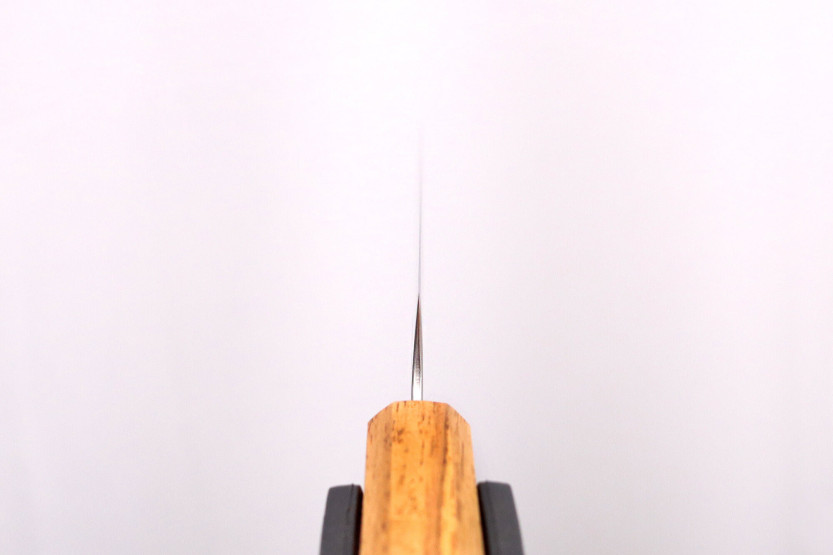
Octagonal in shape, this handle is designed to suit both right- and left-handed users! Lightweight, it offers excellent maneuverability and optimum comfort, even during prolonged use in the kitchen.
To ensure a watertight seal, wood paste has been applied to the junction between blade and handle. This fills small gaps and prevents water from seeping in.
This Wusaki knife should only be washed by hand with a soft sponge, taking care not to wet the handle. After each wash, it should be dried immediately to remove all traces of moisture, then stored in a dry place. Do not use the dishwasher, and never leave the handle to soak in the sink.
Discover a wide range of handcrafted Japanese knives on Knifeleader.eu!




 By buying this product you can collect up to