Your sakai takayuki universal knife, a real asset for your cuts
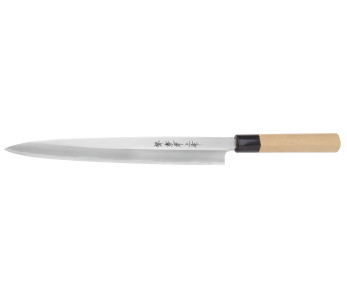
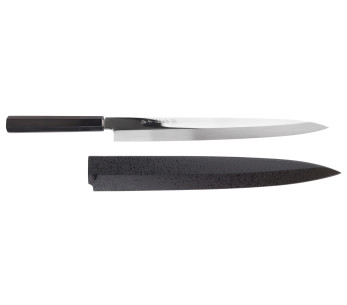
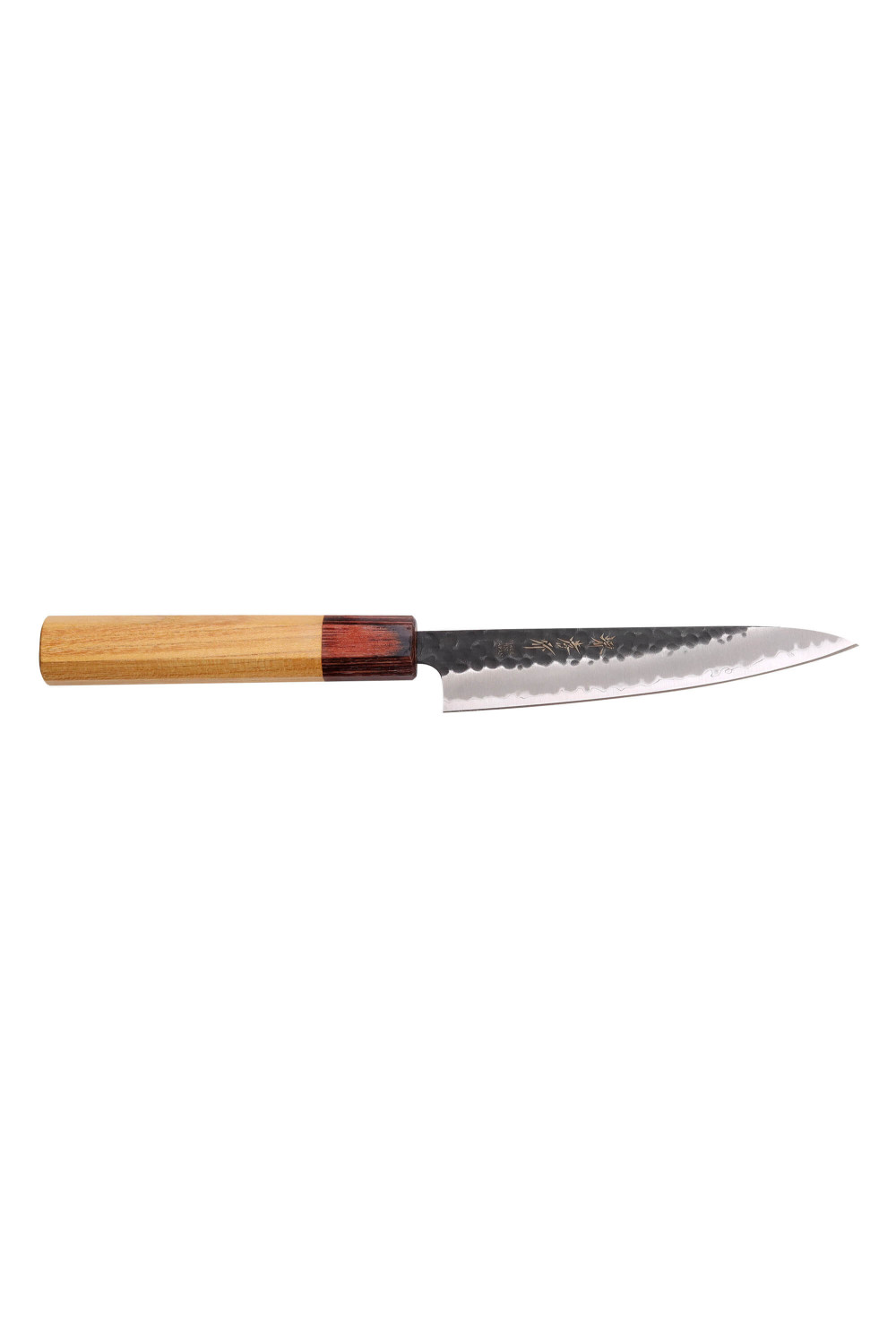
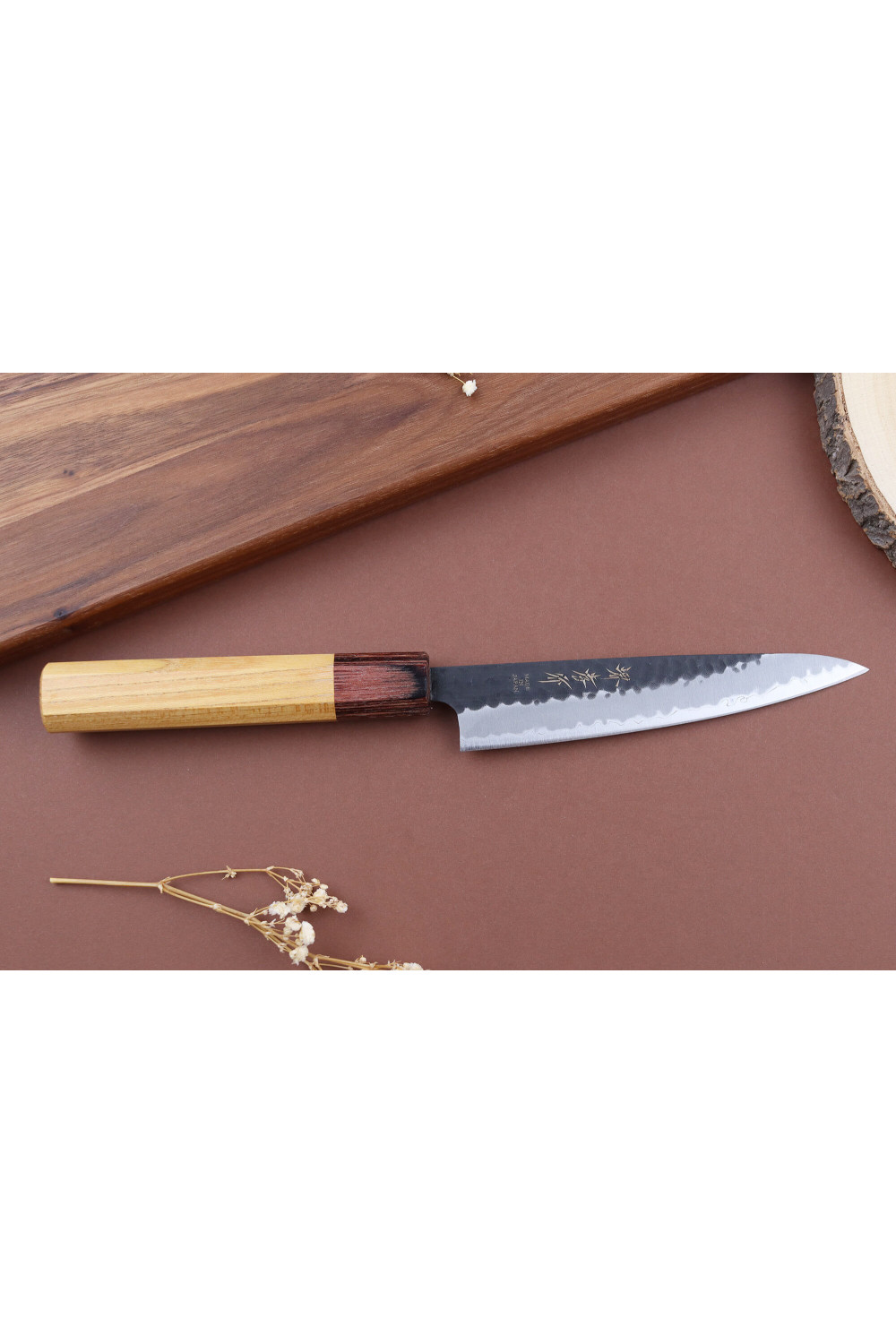
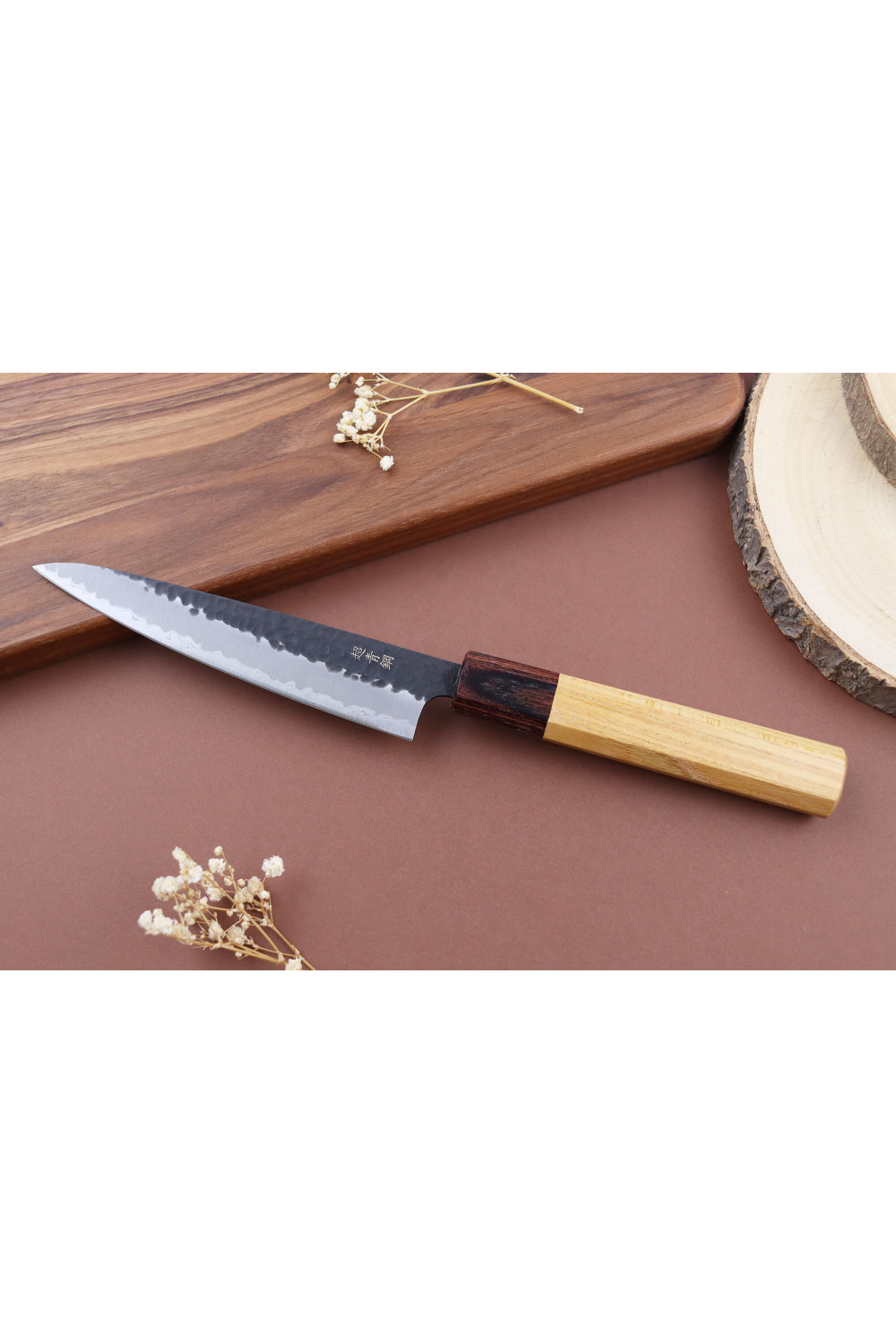
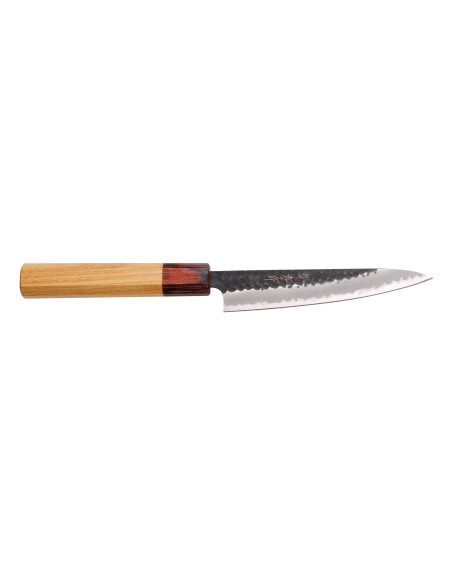
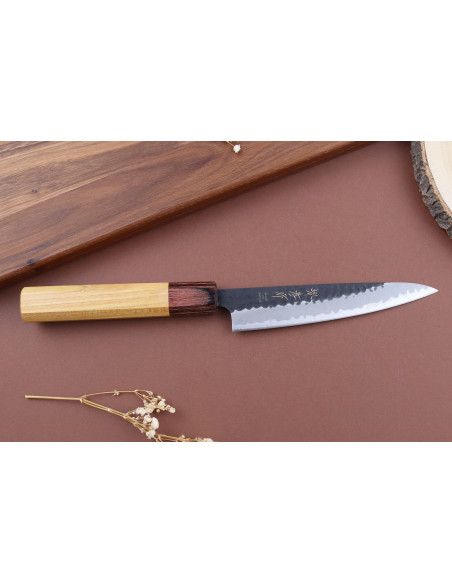
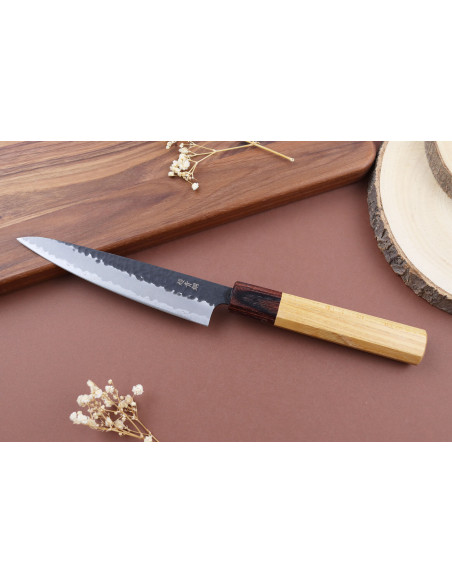
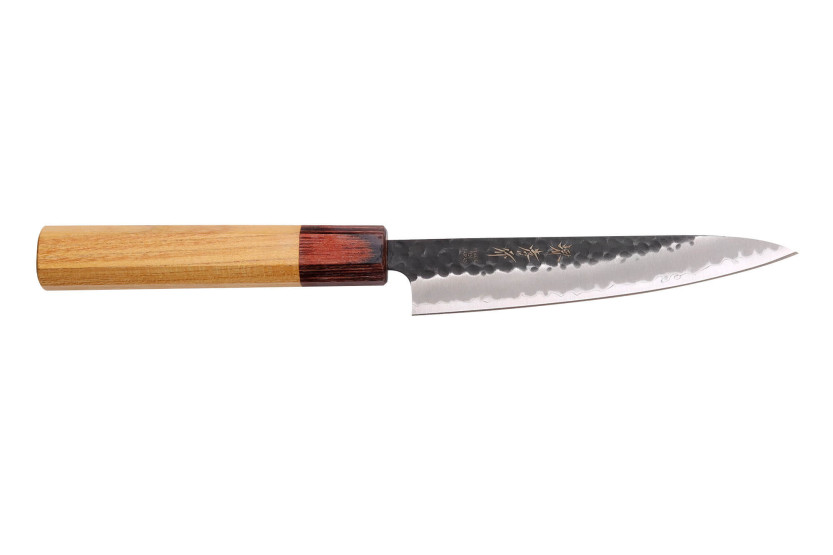
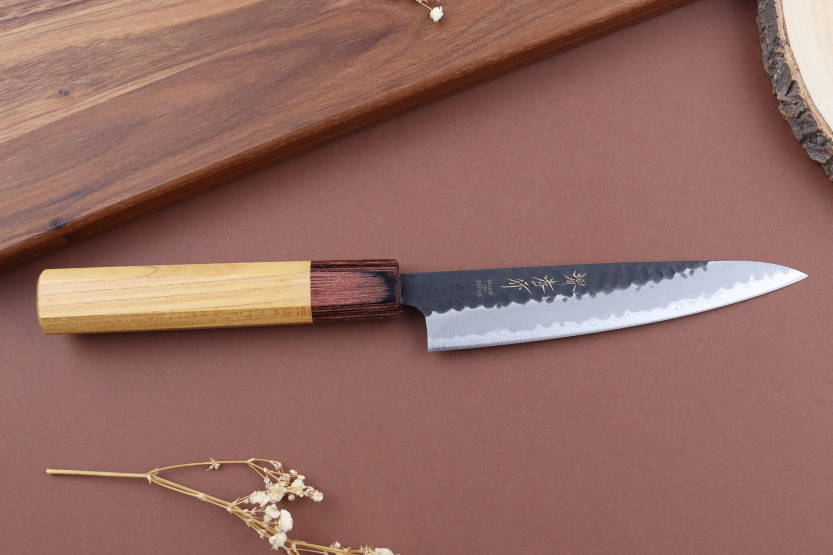
The Universal knife can be used for a variety of cutting tasks. It's great for cutting medium-sized fruit and vegetables, but can also be used for mincing boneless cuts of meat (small pieces, since its blade is only 13.5cm long). Pleasant to handle, it is recommended for all cooks. You'll be able to cut with precision and efficiency.
Top-of-the-range carbon blade
The Sakai Takayuki Universal knife features a typically Japanese San Mai structure. This process consists of choosing a rigid steel to form the blade core, then wrapping it in a layer of softer steel to protect it and balance its hardness.
This knife features an Aogami Super core (also known as Blue Super Steel). It was developed by Hitachi, the Japanese steelworks whose alloys are renowned both in Japan and internationally. They supply a large number of blacksmiths.
Aogami Super is an excellent choice because it is a high-performance, long-lasting steel. It has a very high carbon content: at least 1.5% (compared to the average 0.5% for Western knives), making it much stiffer than most steels, reaching 65 HRC on the Rockwell scale. A blade's rigidity directly affects its ability to hold its edge: your knife will therefore hold an effective cutting edge over time, despite wear and tear, and you'll have less need to sharpen it. When necessary, however, note that this Japanese alloy has the advantage of remaining pleasant to work with.
Stainless steel has been chosen to surround this top-of-the-range core. This protects it and balances out its extreme hardness, making it less brittle (as explained above).
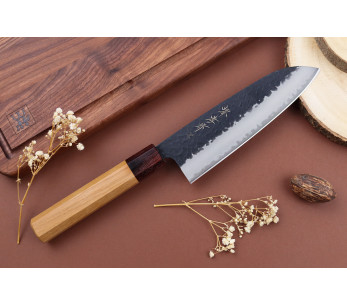
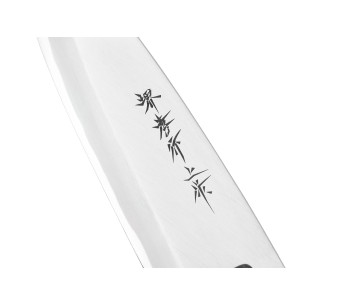
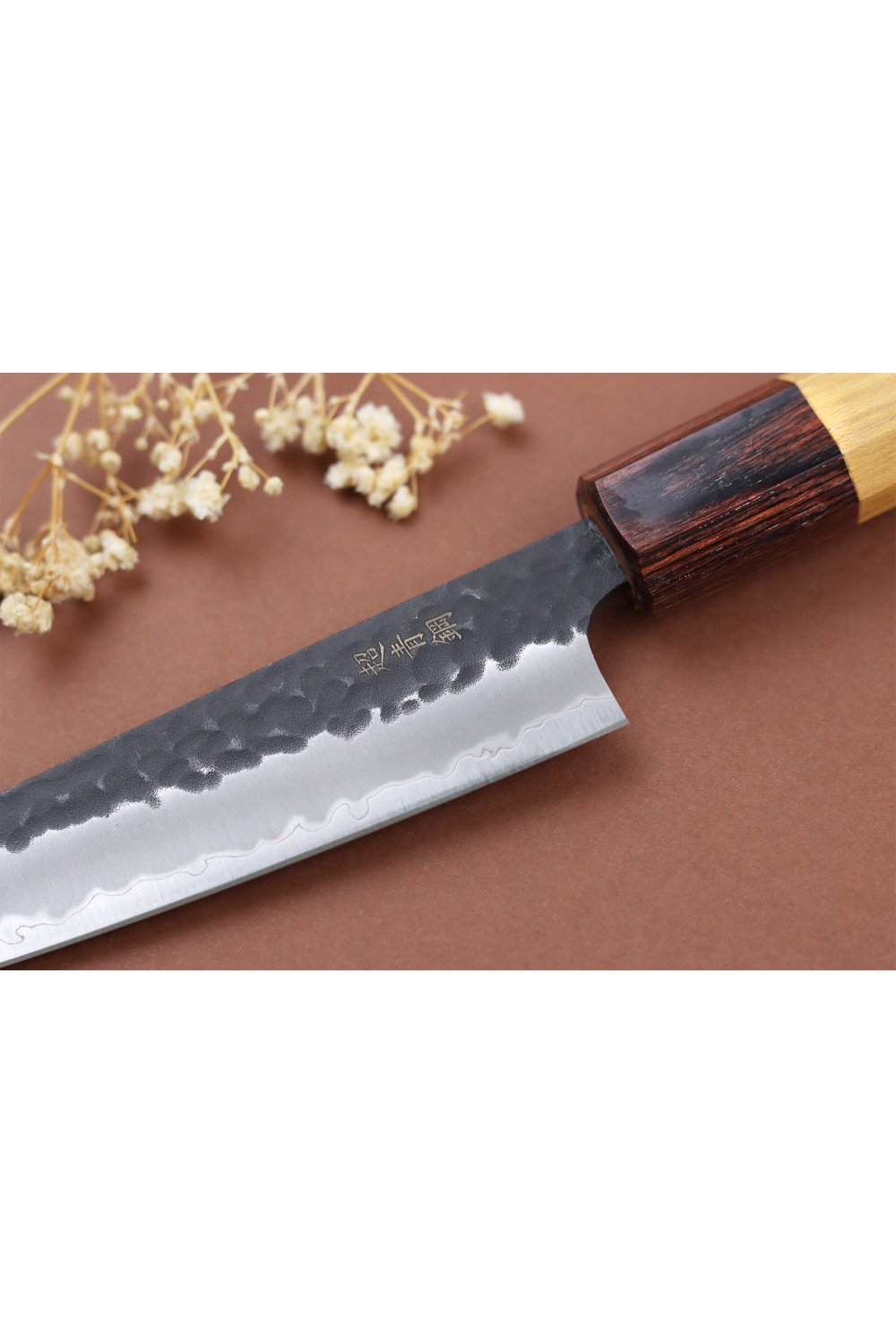
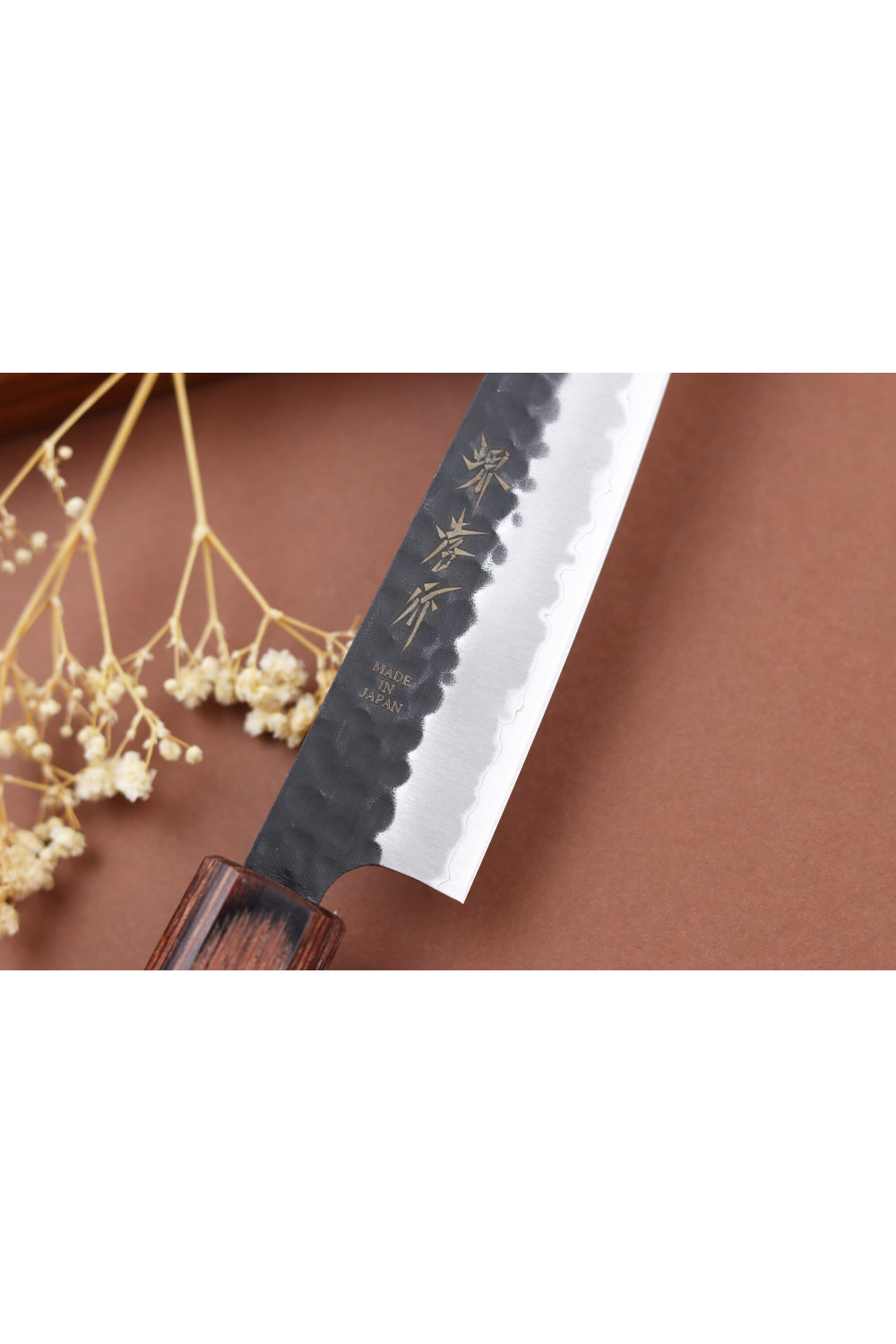
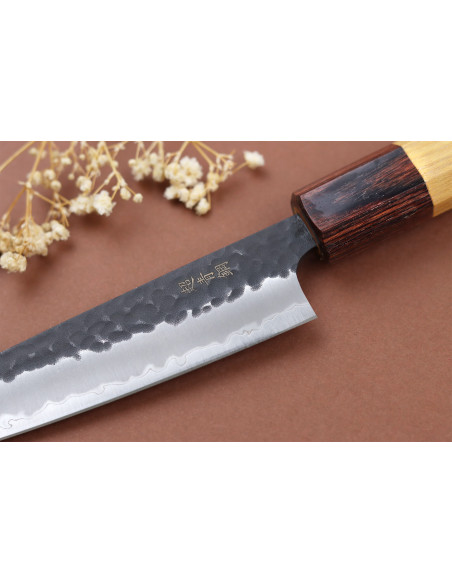
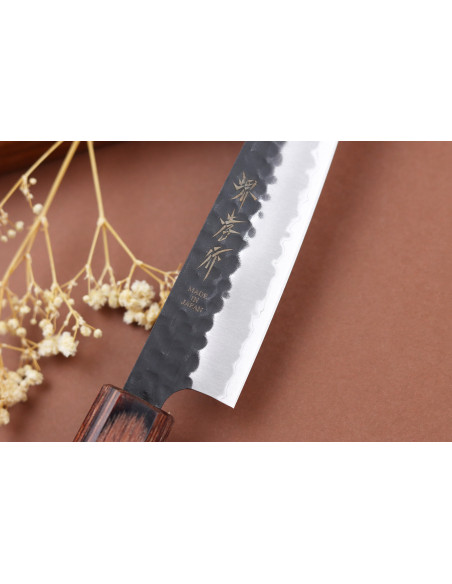
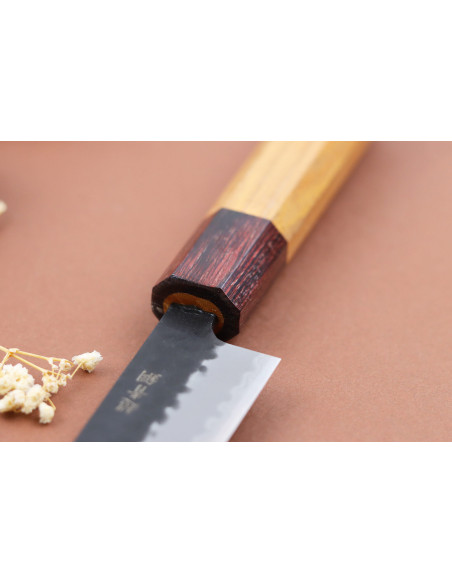
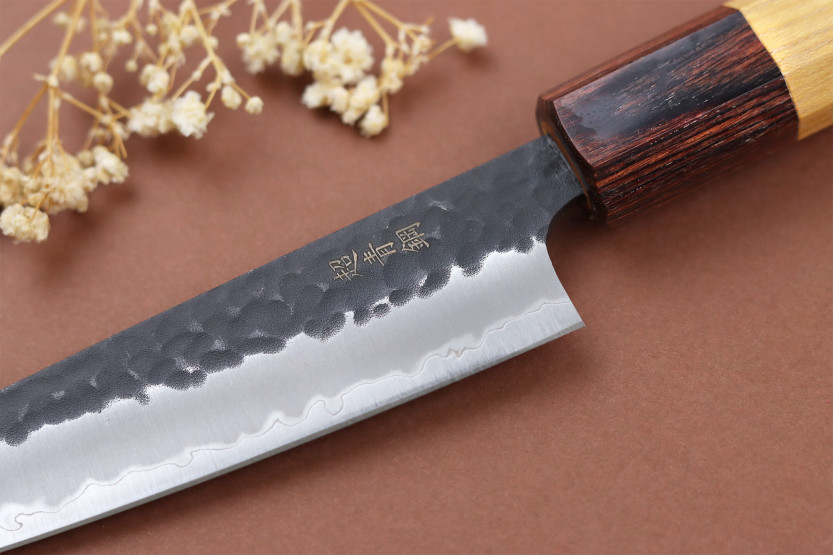
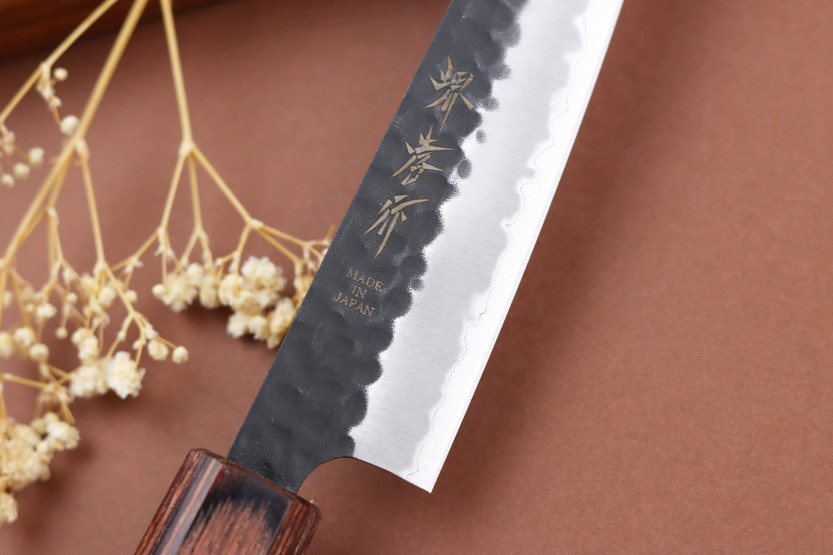
Need proof of the difference in alloys? You can see it on the bottom of the blade: a fine, subtle wave runs close to the cutting edge. It's unique to every knife!
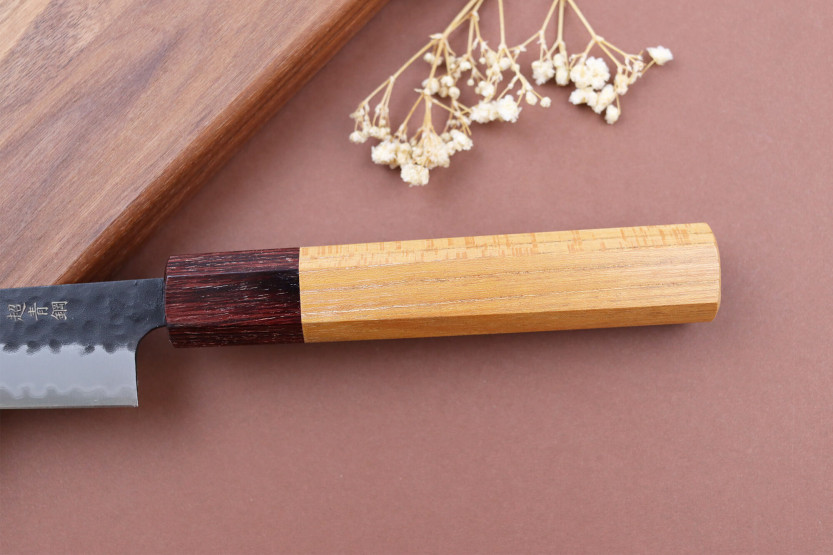
For an even more emblematic look, your kitchen knife has a rough forged finish. Add hammering to the mix, and the knife becomes a true piece of character.
A pleasing, emblematic handle
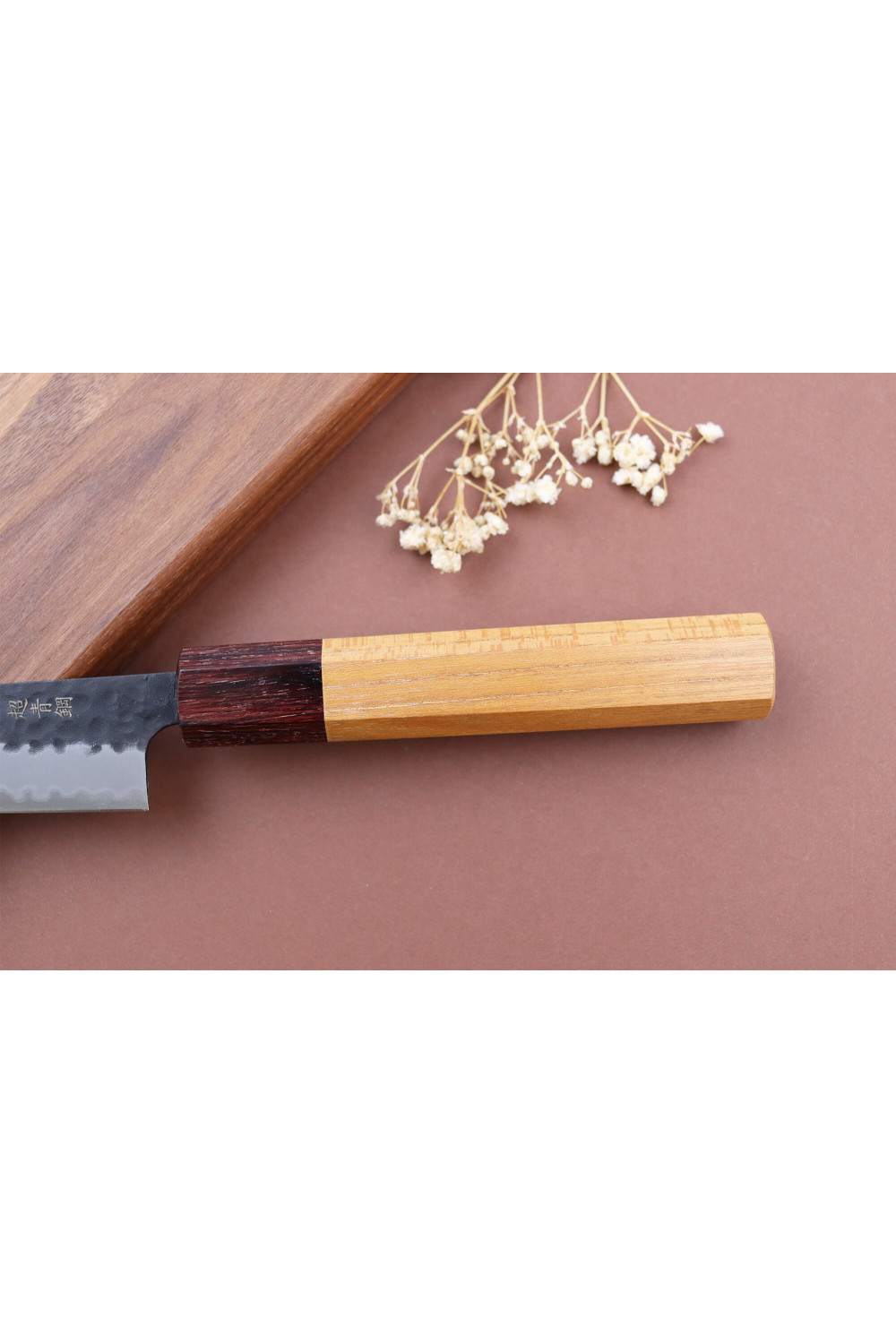
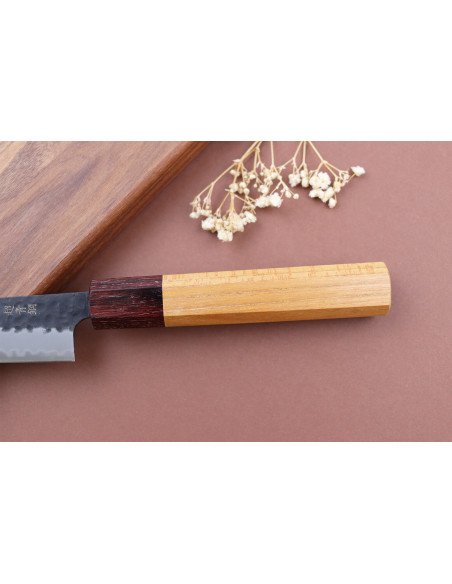
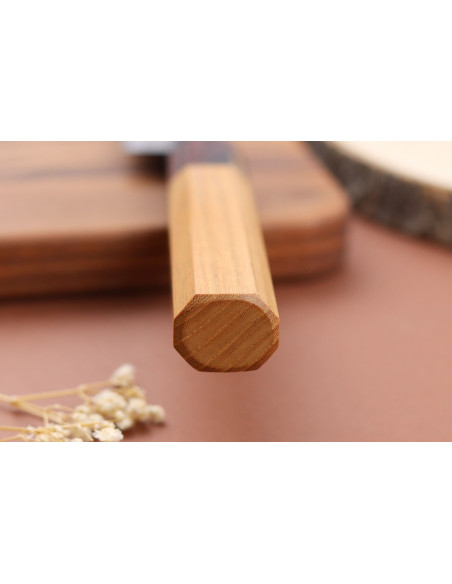
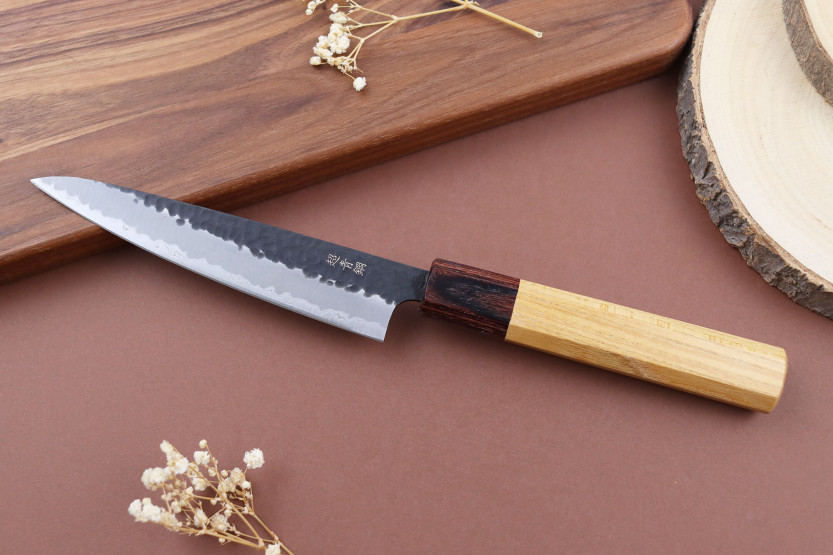
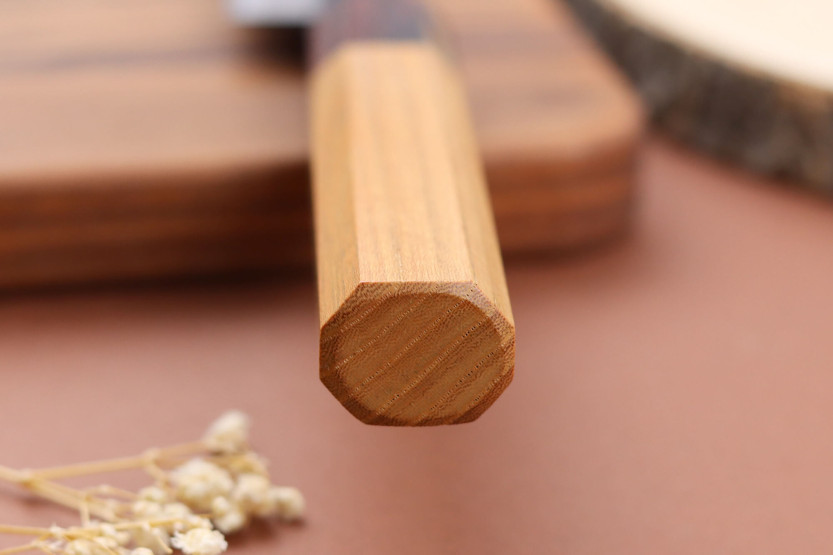
The handle is made of Japanese zelkova wood. This robust wood is often compared to elm. Its quality and lovely light hue mean that it is often used to create luxury furniture. It is also much appreciated by the Japanese for decorating parks and gardens.
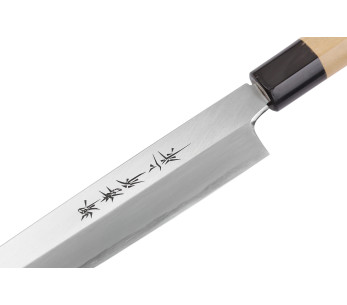
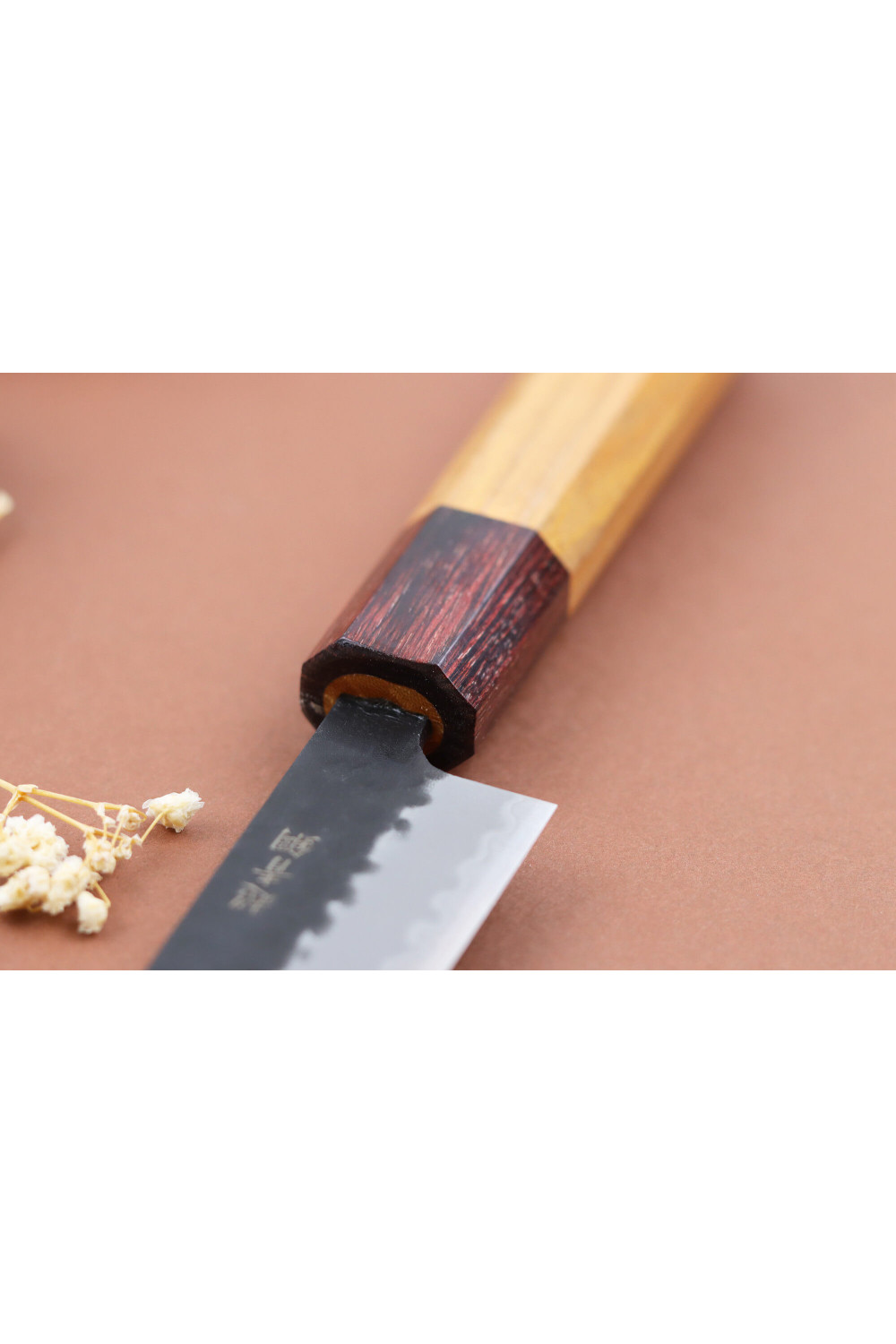
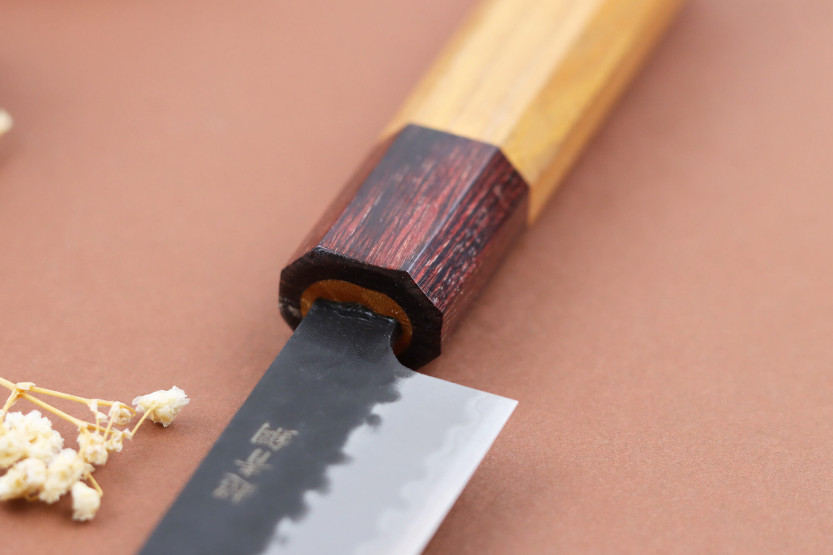
A pakka wood bolster forms the link between the zelkova and the blade. This is a composite material combining resin and laminated wood, all heat-hardened. The final result resembles wood thanks to the wood grain. The color contrast between the zelkova's light aspect and the bolster's deep hue is a great success.
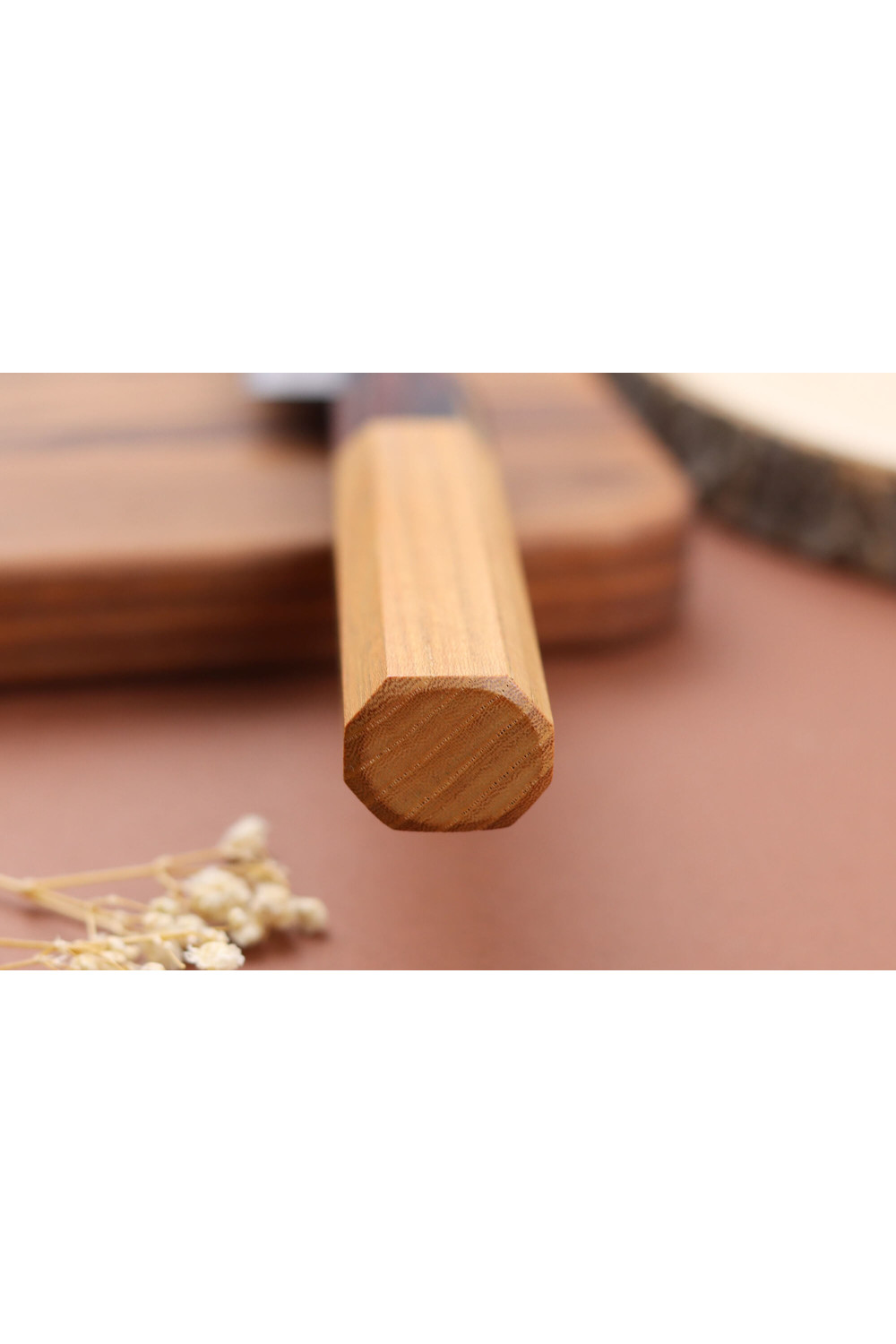
Wood paste has been introduced where the blade fits into the handle to lock it in place and make it watertight. Finally, the octagonal shape of the handle is perfect for both right- and left-handed users.
Here's how to care for your knife:
We recommend hand-washing with a mild detergent and a non-abrasive sponge. As the knife is oxidizable, do not put it in the dishwasher or soak it in the sink. Avoid getting the handle wet.
Once you've washed the knife, you'll need to dry it immediately and thoroughly, before storing it again, free of all traces of moisture.
Note that over time, the blade may vary in color, and this is normal as its steel is highly reactive (humidity in the air, acidity of the food being cut). We also recommend wiping the blade between cuts before washing, to avoid prolonged contact with acidic foods.
Coat it thinly with vegetable oil to protect it when not in use.
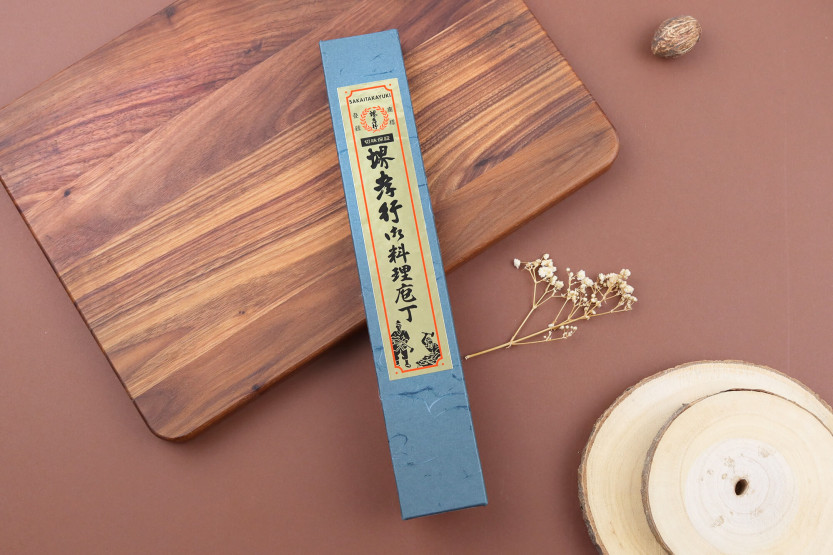
Sakai Takayuki has been in business since the 50s. It takes its name from the town where it is based: Sakai, Japan. With decades of experience behind it, Sakai Takayuki now offers you 100% Japanese knives that are both high-performance and aesthetically pleasing. This manufacturer applies techniques perfected by the blacksmiths of yesteryear, combined with modern technology.
Find the Japanese knives we offer among the best brands!




 By buying this product you can collect up to