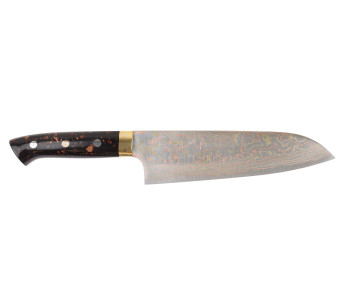
A good kitchen knife is a lasting companion! Such is the case with this one, which is produced in Japan according to the ancestral traditions of the blacksmiths of yesteryear, the same ones who designed the swords of combatants. Its effectiveness is therefore unquestionable, given the excellent reputation of Japanese blades.
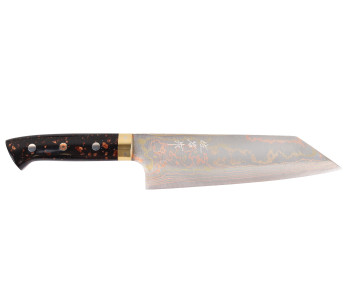
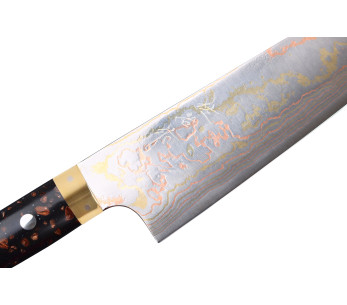
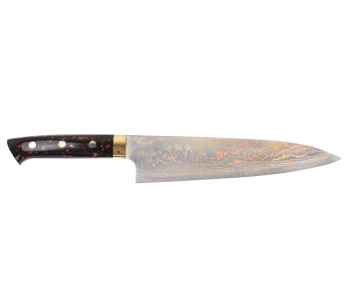
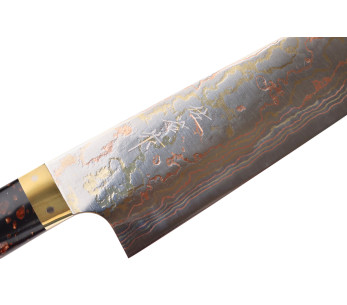
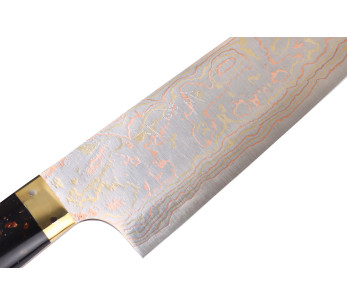
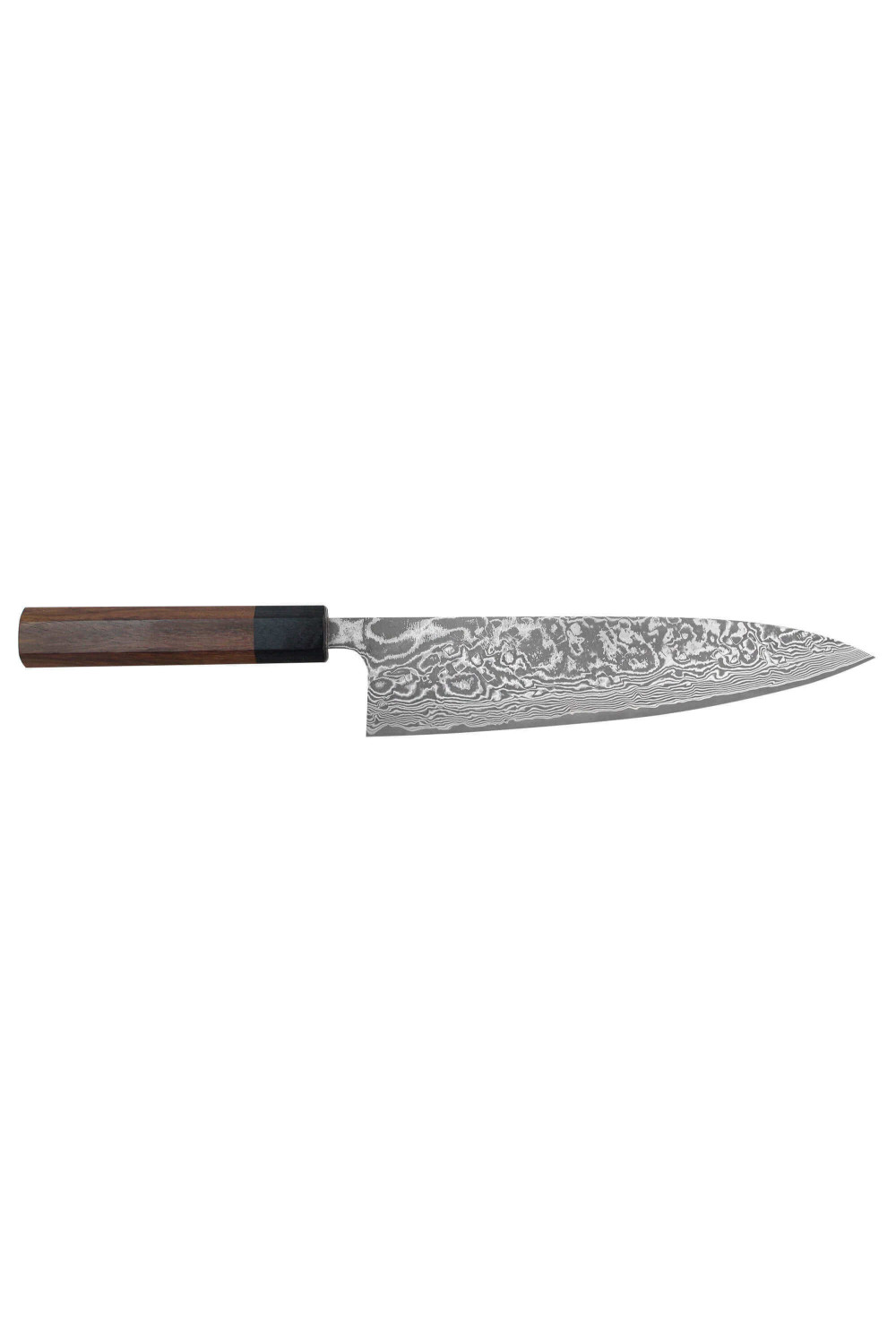
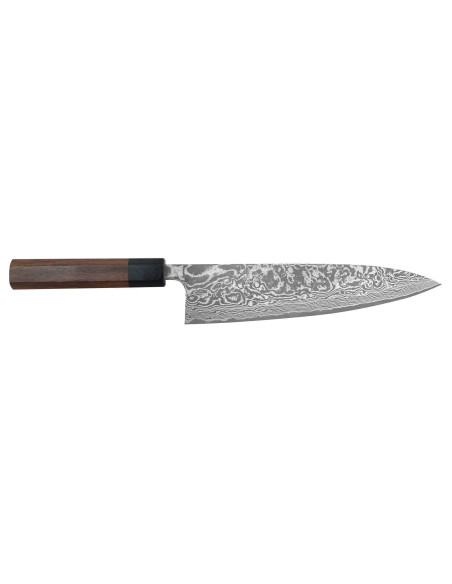
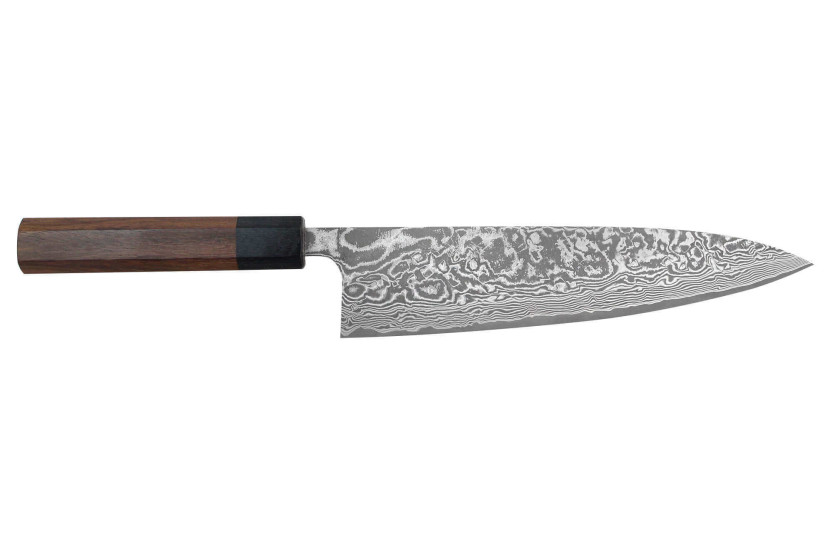
This knife features a damascened blade, the core of which is made from Japanese R2 steel (also known as SG2): a stainless alloy created through powder metallurgy. It has a Rockwell rating of 63 HRC, ensuring long-lasting sharpness. Despite this, the alloy is easy to sharpen, and can be maintained with a whetstone. A final plus: if you take a closer look at its structure (with a microscope), you'll see that it's very homogeneous, an advantage that reduces the risk of chipping.
Secondly, this core is enveloped by layers of stainless steel and highly nickel-enriched steel (the darker color of which is visible on the blade). This blend creates a beautiful visual contrast!
The handle is made of deep-toned sandalwood. This wood is highly resistant to bacteria and, depending on the maturity of the tree, is even considered precious. These veins are unique to each knife. Its octagonal shape means it can be used by both right- and left-handed cooks.
It is complemented by a bolster in black Pakkawood, a composite material resistant to humidity and temperature variations. Wood pulp fills the space between blade and handle. This makes it watertight and prevents small scraps from getting inside.
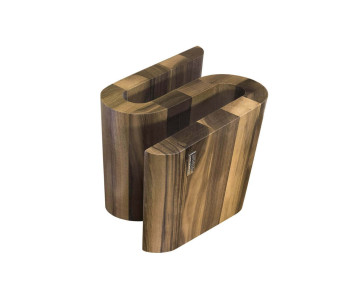
The knife comes in an elegant wooden case. This also makes it easy to give as a gift.
For best results, wash the knife by hand under lukewarm running water, using a sponge and a mild detergent (no dishwashers or prolonged soaking in the sink). When finished, wipe with a soft cloth to remove all traces of moisture, then store in a dry place.
It was made by blacksmith Takeshi Saji san. This blacksmith is a master at combining ancestral forging techniques with innovative designs, enabling him to appeal to the widest possible audience. In the 90s, he was elected "master traditional craftsman".
His workshop is located in the Takefu Knife Village, one of Japan's leading knife and cutting utensil manufacturing centers. This renowned site brings together traditional blacksmiths, enabling them to keep ancestral know-how alive. A new generation of apprentices is being trained here.
(We see the blacksmith at work in his workshop)
Find the brand's knives here!




 By buying this product you can collect up to