Shibata knives are renowned for their remarkable efficiency in the kitchen! Each model is designed for a specific use, offering solutions adapted to the needs of each user. The materials used are carefully selected according to the requirements of each type of cutting. Manufactured in the famous cutlery village of Takefu, these knives pass through the expert hands of Takayuki Shibata, who personally sharpens them before carrying out a meticulous inspection.
At the same time, Shibata-san has also worked as a master sharpener for Masakage knives, also produced under his supervision. Thanks to his expertise, Masakage knives are renowned for their exceptional precision and performance!
The Shibata Koutetsu range takes its name from the famous Japanese ship Koutetsu, built in 1864. This ship, an emblematic figure in the Japanese fleet, was renowned for its efficiency, thanks in particular to its inclined hull, which enabled it to strike and dominate other vessels. It is in tribute to this performance that this series of knives bears this name.
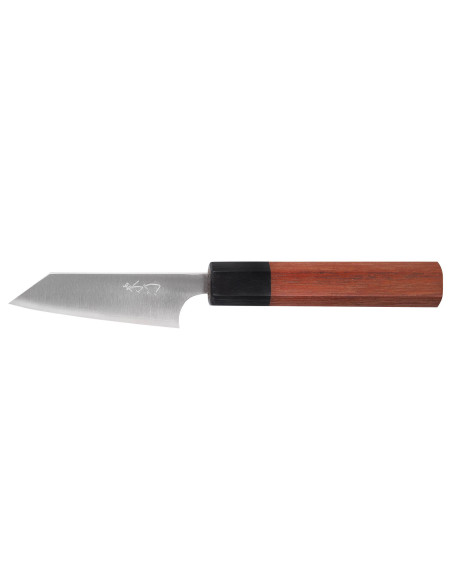
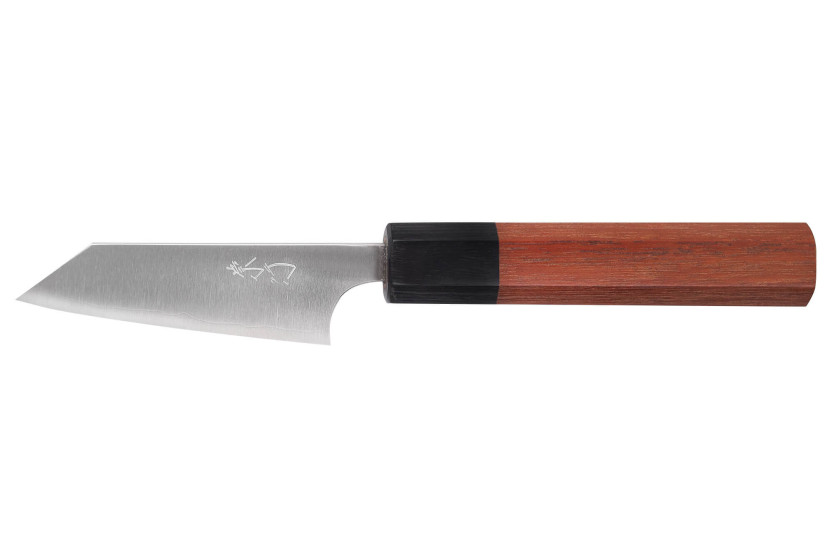
A Japanese kitchen knife made of quality materials
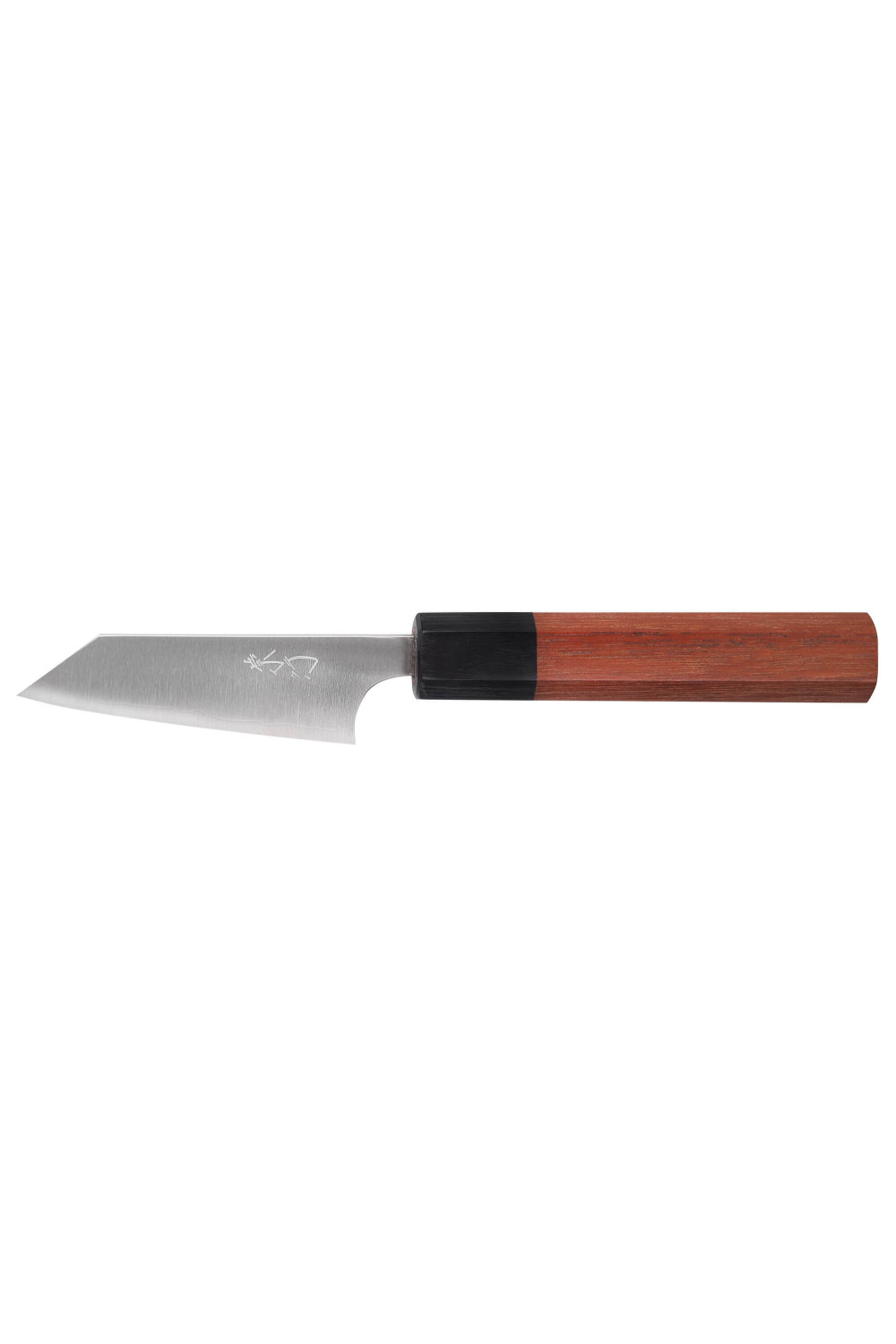
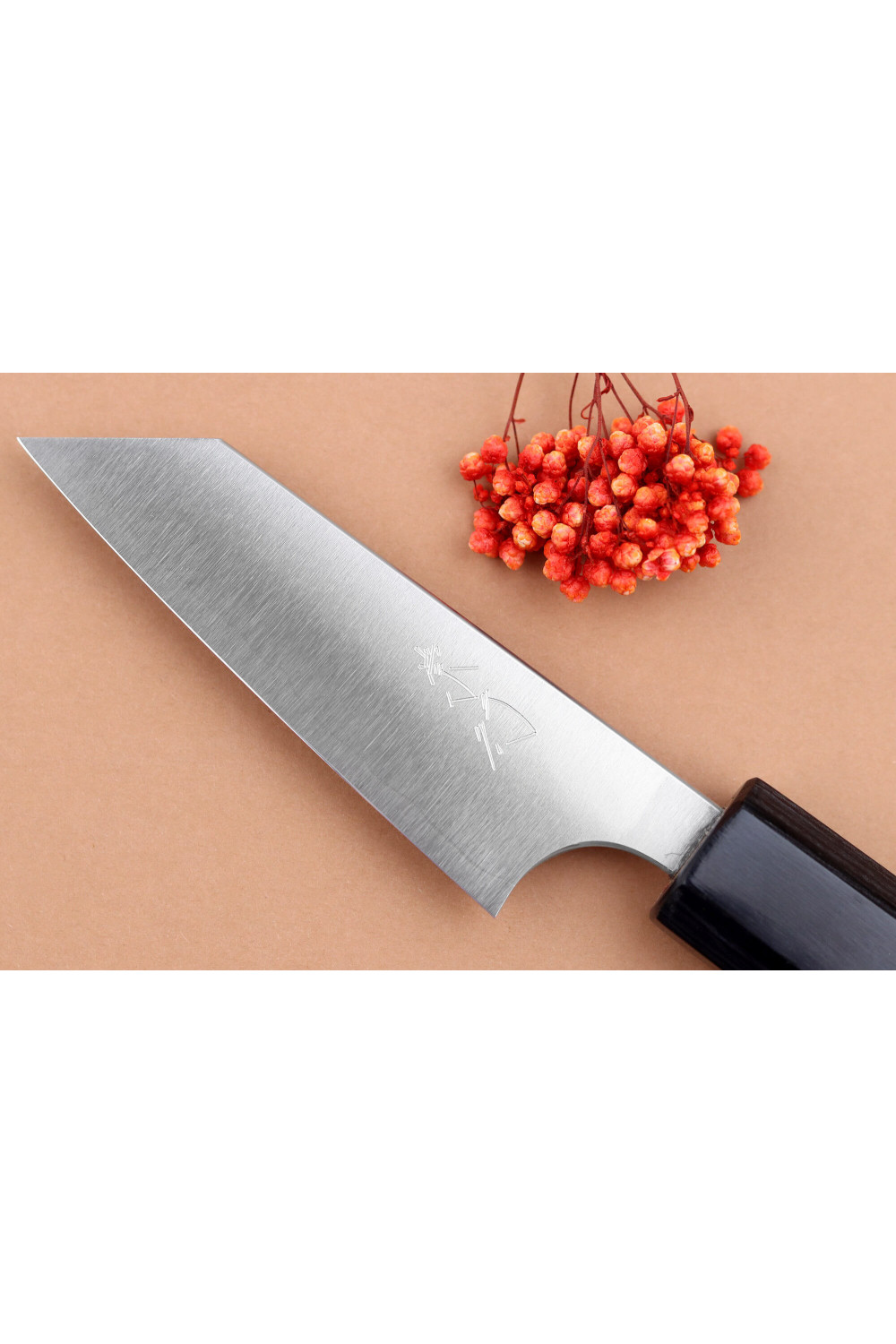
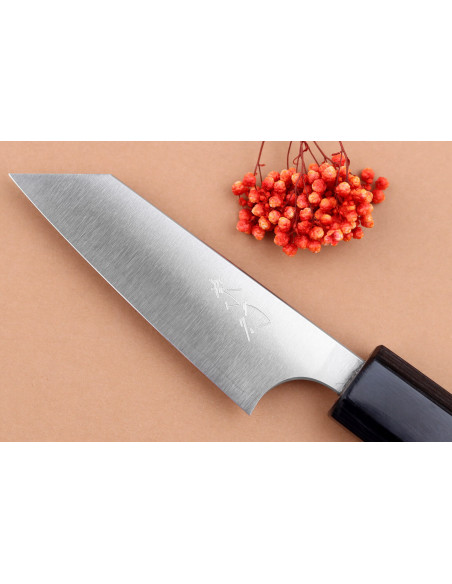
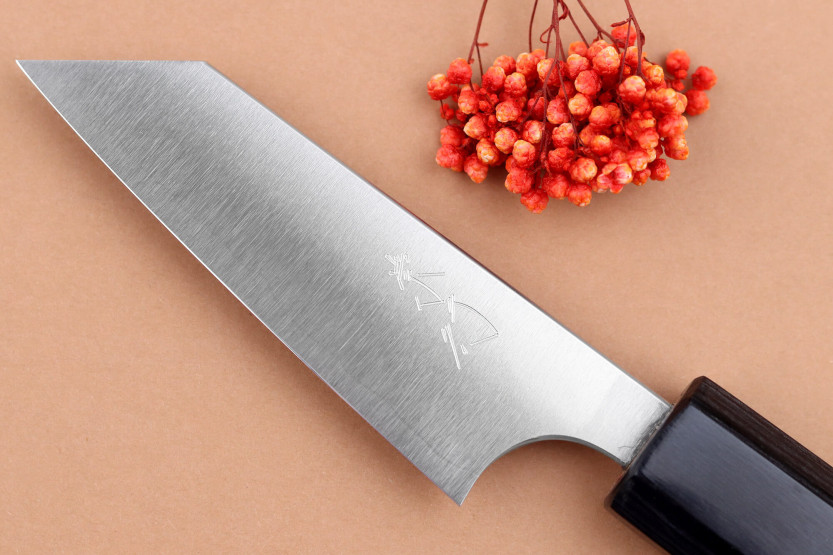
This paring knife features a blade designed using the traditional Japanese San Maï method, meaning "three layers". This technique consists of forging a core of hard steel, then wrapping it in a layer of softer steel folded upon itself. This process offers optimum protection to the core of the blade while balancing out its hardness, thus reducing the risk of breakage during use.
The core of this blade is made from R2 Japanese powdered steel, also known as SG2. This rare and precious alloy is rarely used in cutlery due to the complexity of its work, mastered only by highly skilled blacksmiths to minimize waste.
R2 steel has a high carbon content of up to 1.3%, a key element that increases the blade's hardness. Greater hardness ensures better edge retention. This Japanese kitchen knife boasts a hardness of 63HRC on the Rockwell scale, guaranteeing a long-lasting, high-performance edge, while remaining easy to sharpen when necessary!
Another major advantage of R2 steel is its particularly homogeneous microstructure. Thanks to the uniform distribution of micro-carbides, the blade benefits from increased resistance to micro-cracking and wear, enhancing its longevity and reliability.
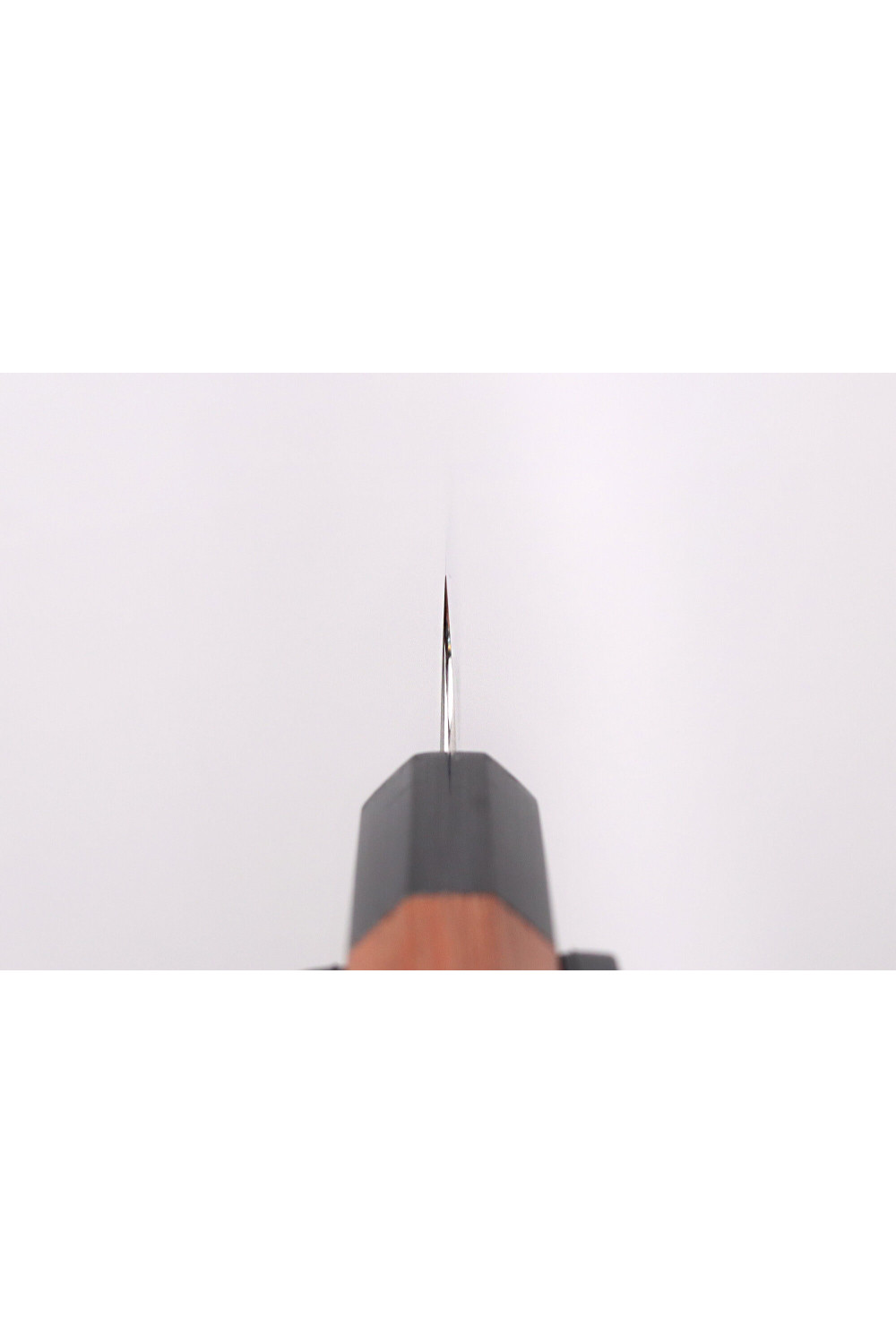
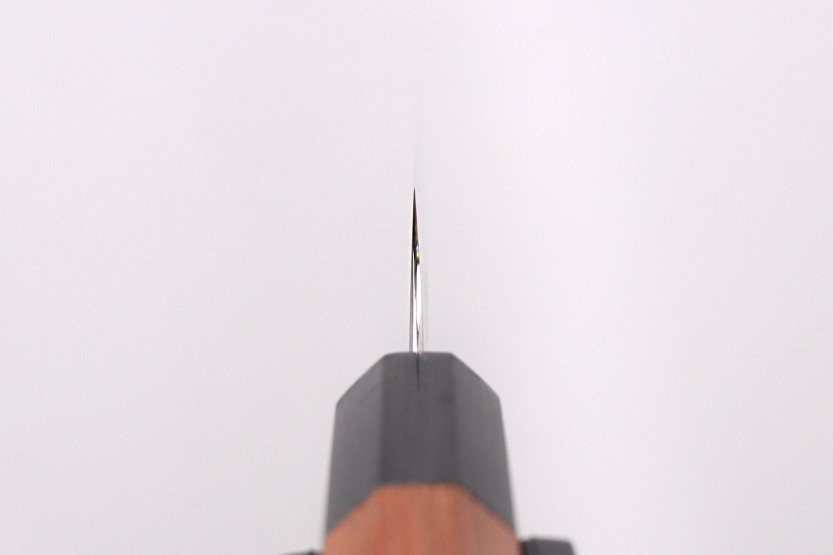
Finally, the core of the blade is covered with a softer layer of stainless steel, offering additional protection. This superimposition of materials is visible along the cutting edge, where a delicate wave emerges, making each Shibata Koutetsu knife unique thanks to its distinctive patterns!
An elegant blade with a warm wooden handle
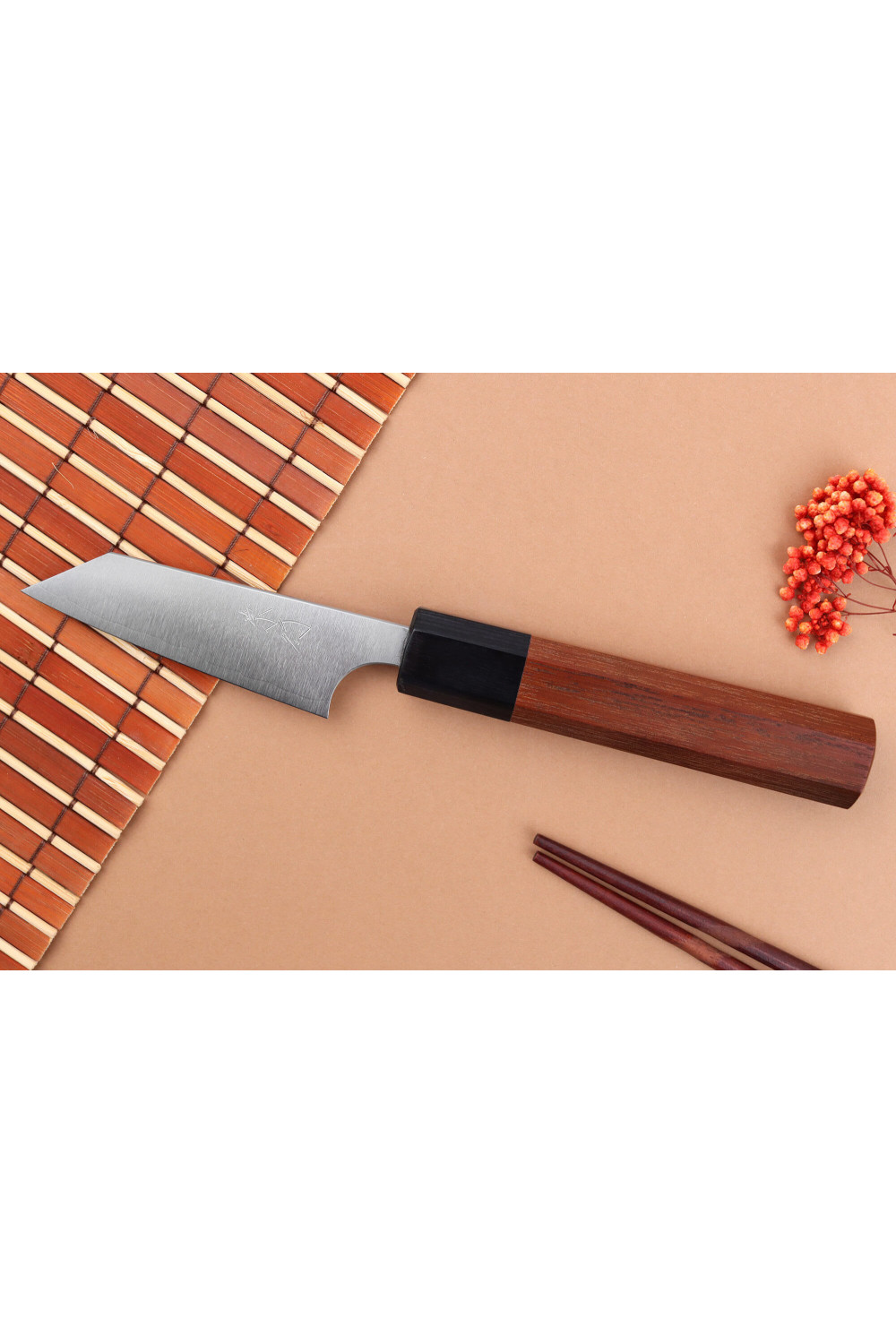
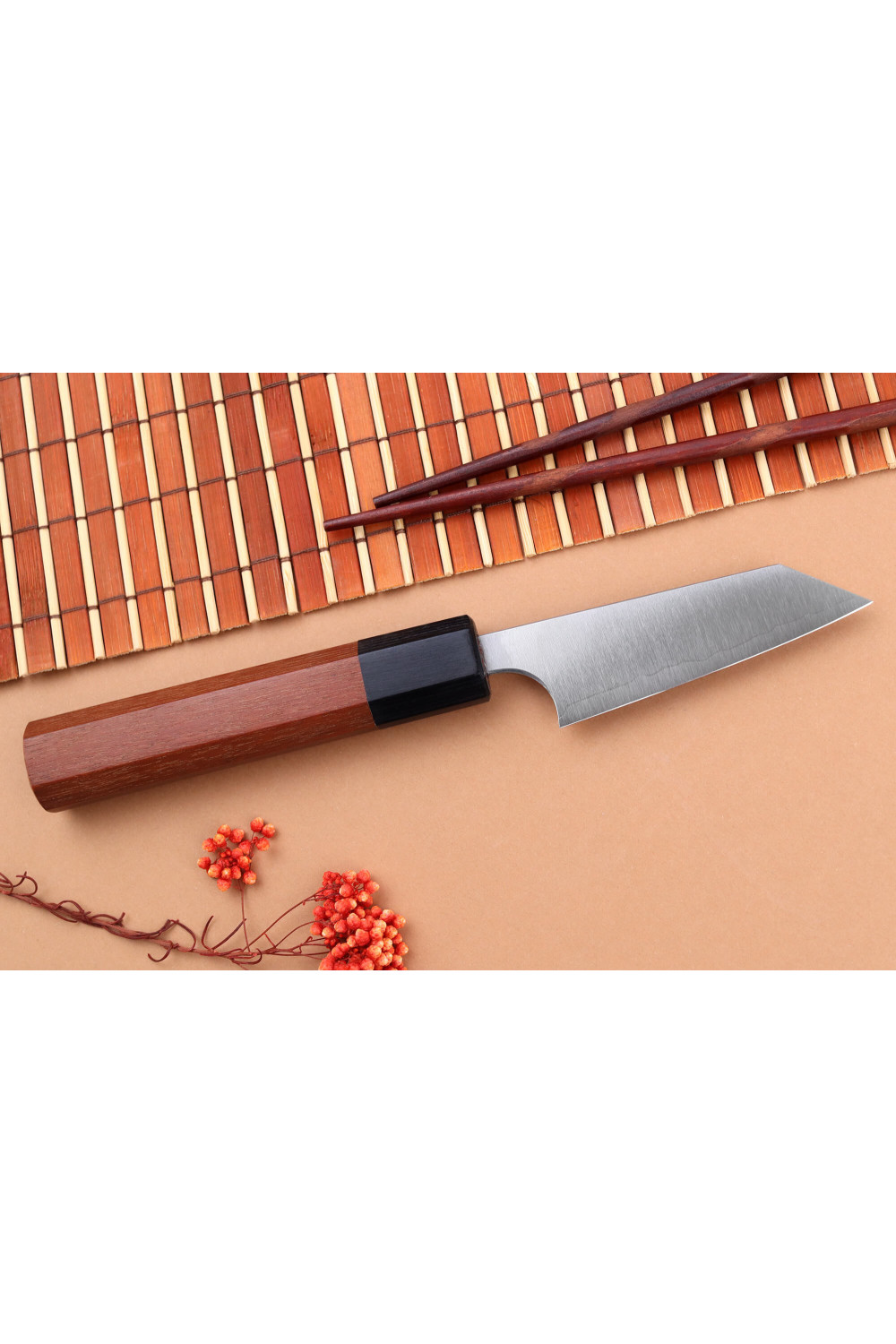
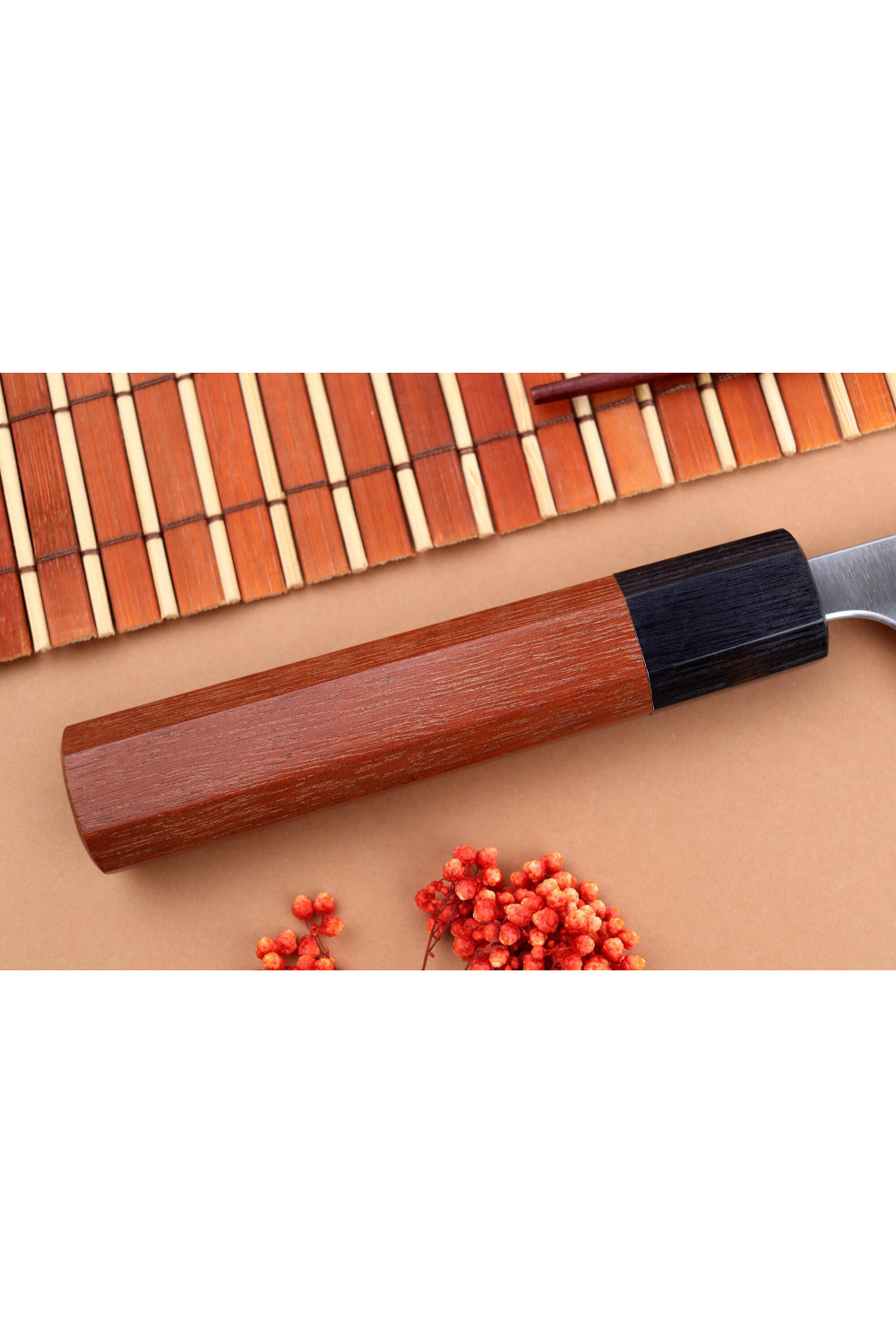
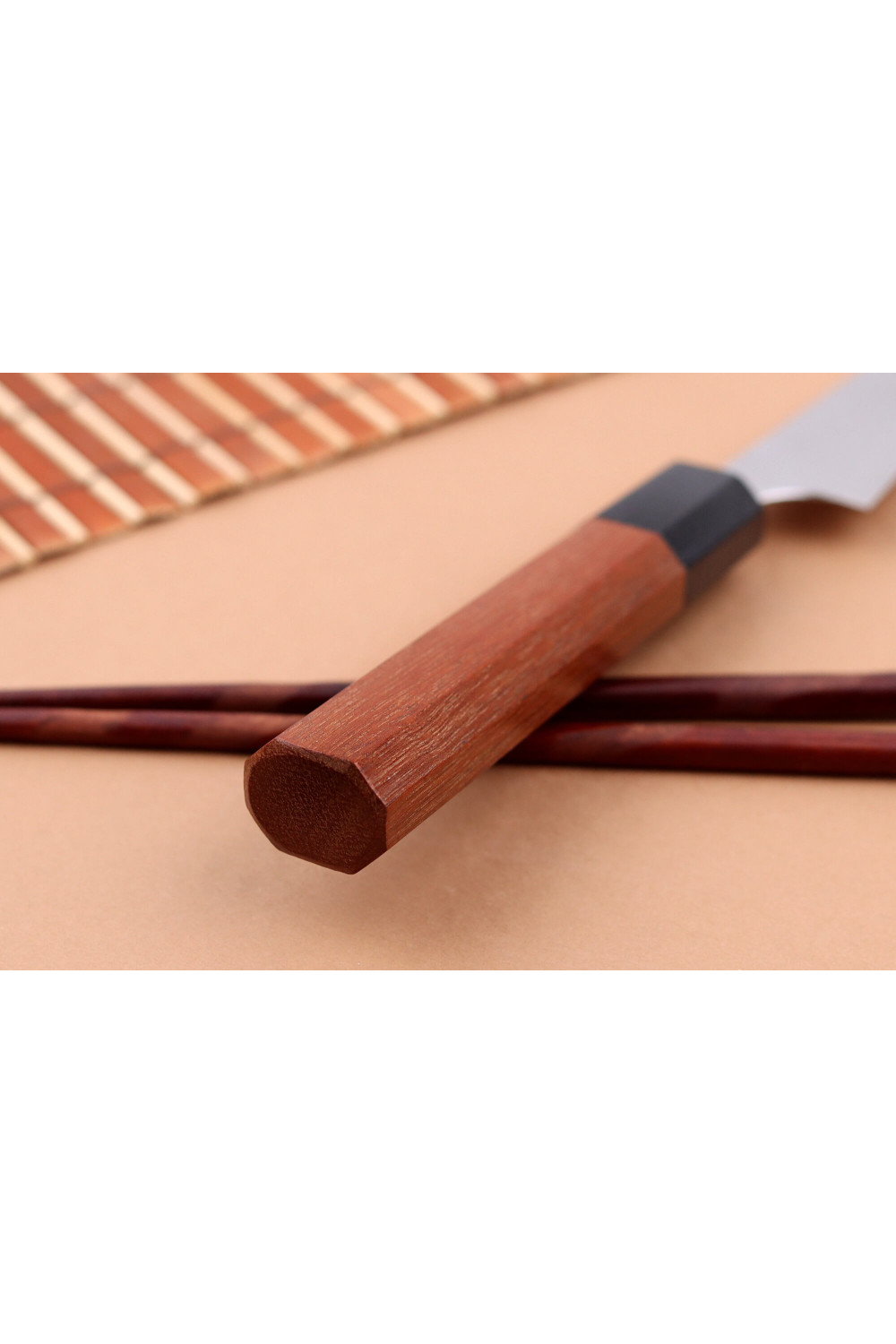
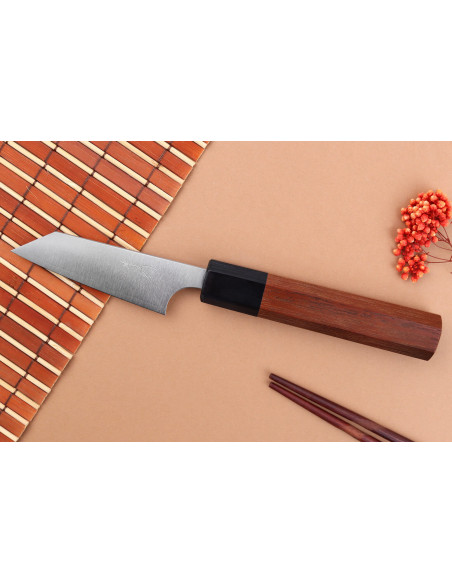
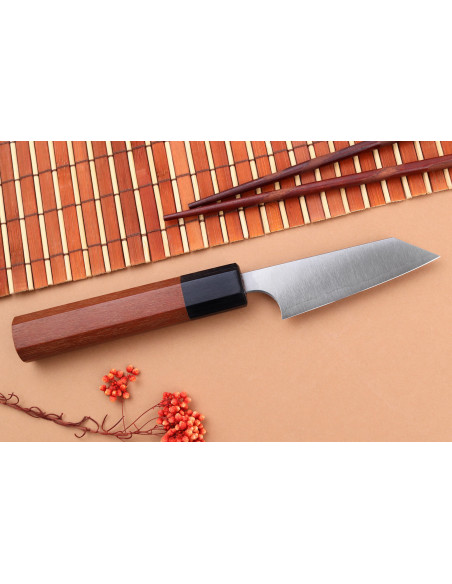
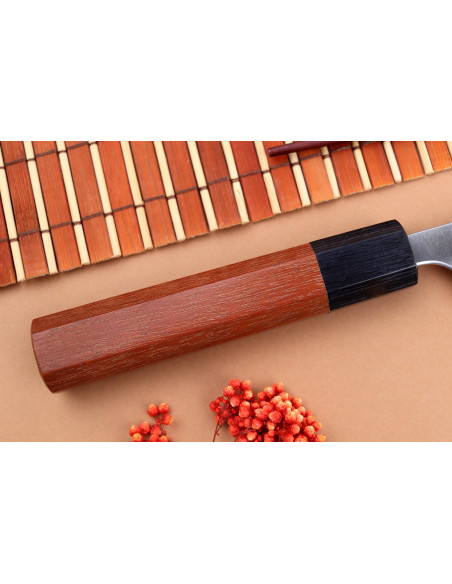
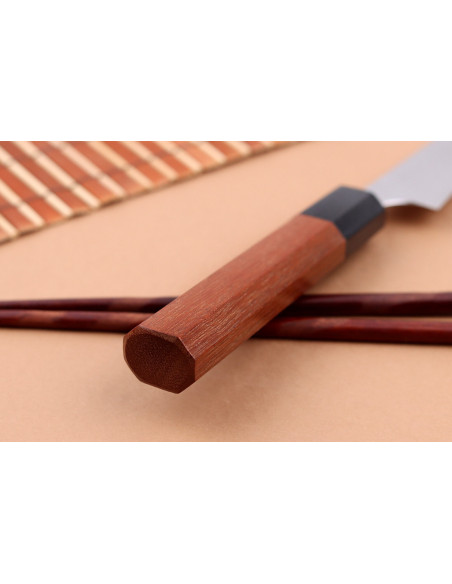
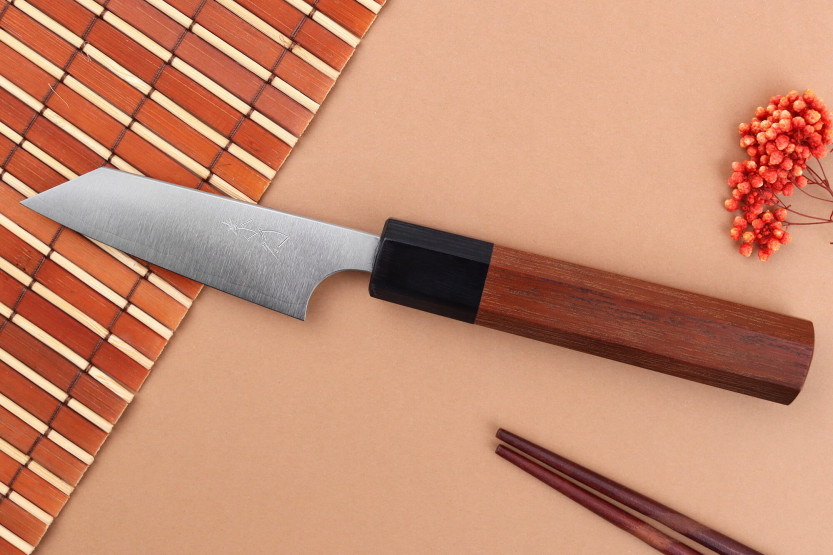
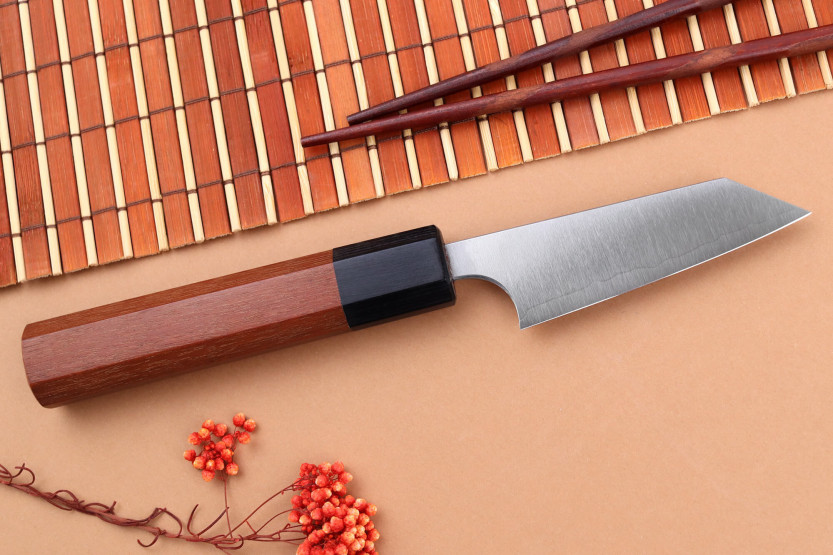
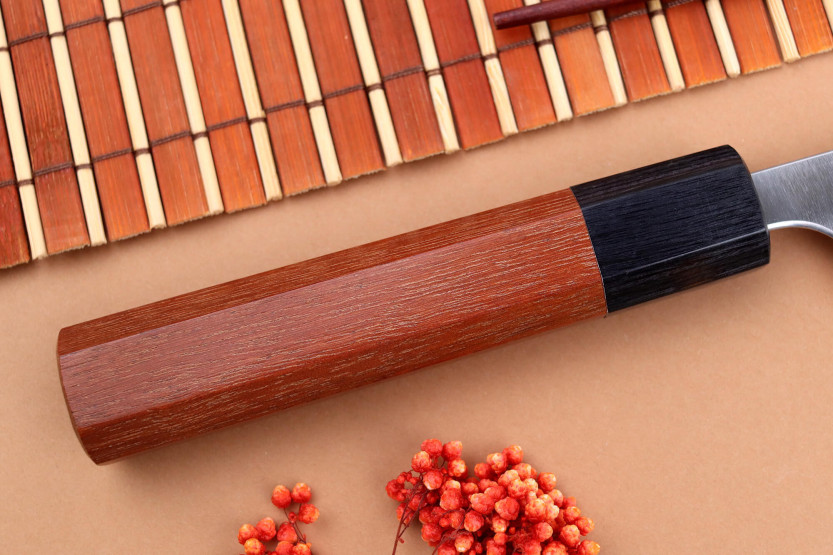
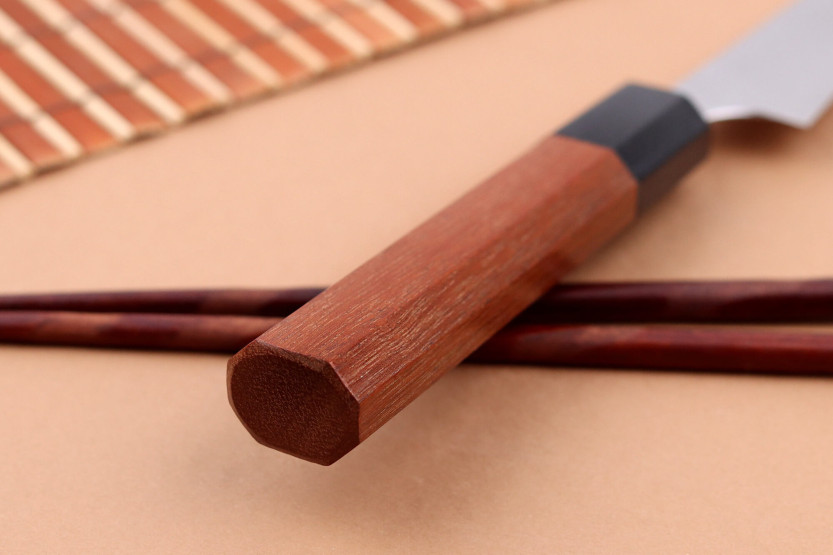
The handle of this Japanese kitchen knife is made from tropical jarrah wood, a species renowned for its strength and durability, and particularly resistant to humidity. Its warm brown hue adds a touch of warm, natural elegance, much appreciated by fans of artisanal cutlery.
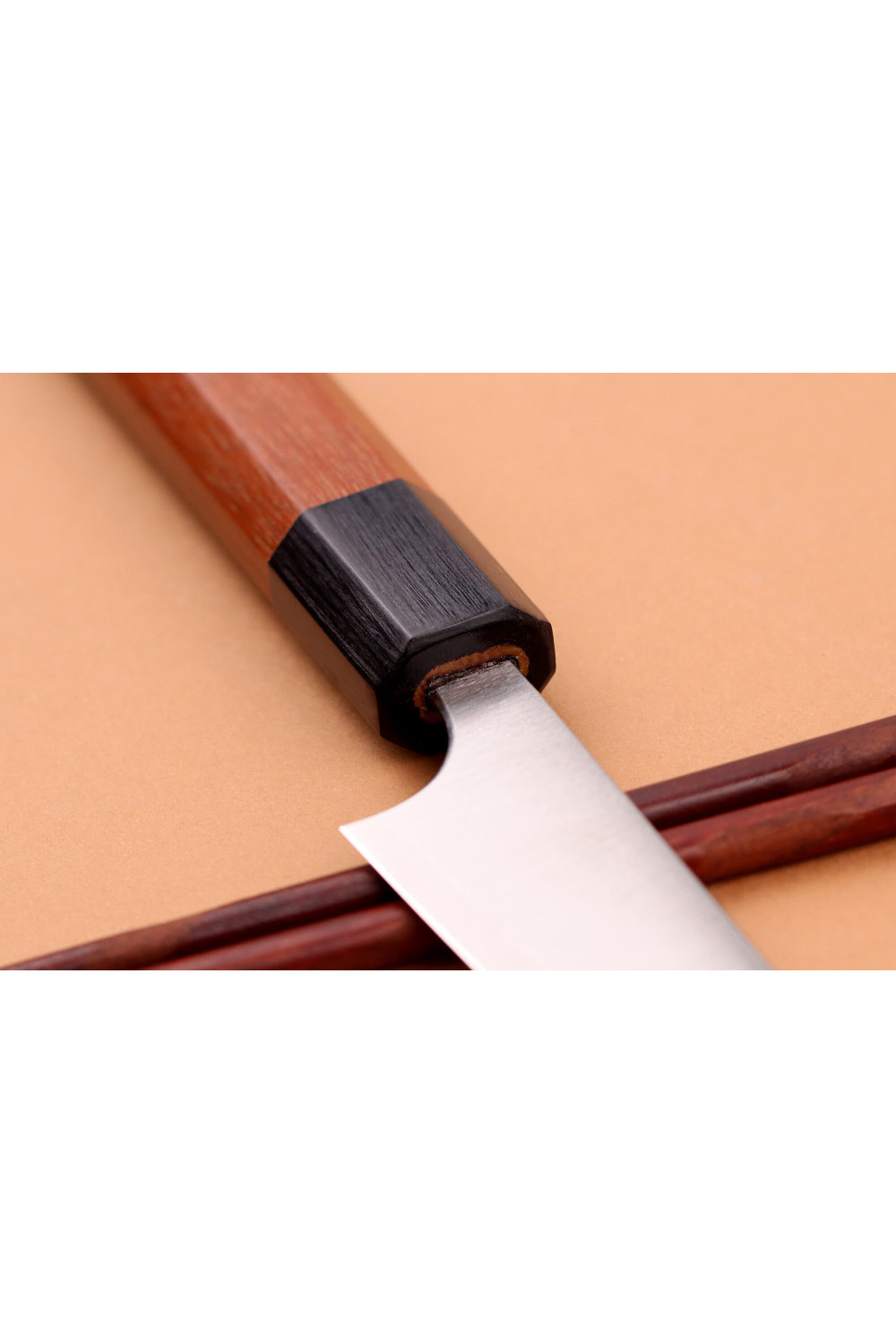
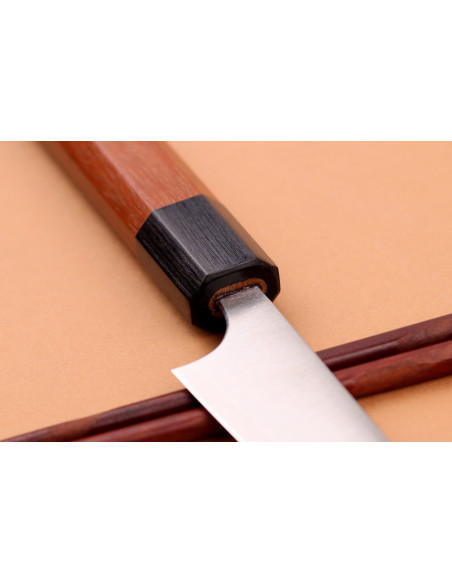
It is complemented by a bolster in black pakka wood, a composite material created from laminated wood and resin, hardened under high temperature. This unique blend gives the bolster a look close to that of natural wood, with a distinct grain that enhances its charm!
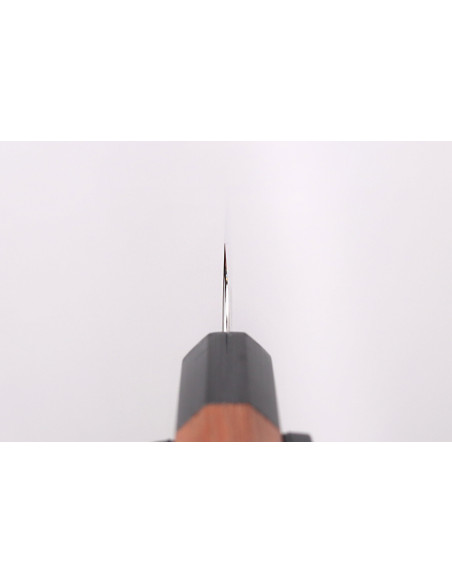
The handle is octagonal in shape, designed to provide a comfortable grip for all cooks, whether right- or left-handed. This ergonomic design ensures pleasant use, even during long cooking sessions.
What's more, wood paste is applied to the junction between blade and handle to fill any gaps. This finish guarantees a perfect seal, preventing any infiltration of water or food residues.
To preserve your handcrafted Japanese knife, wash it exclusively by hand with a soft sponge and a non-abrasive detergent, avoiding wetting the handle. Once clean, dry immediately before storing in a dry place. Do not use the dishwasher, or leave the knife to soak in water.
Discover the rest of the Shibata Koutetsu knife range on Knifeleader.eu!





 By buying this product you can collect up to