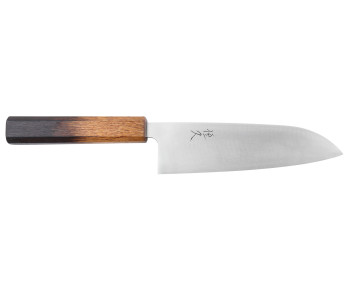
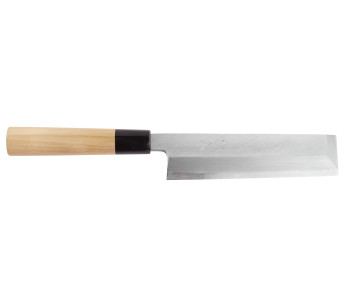
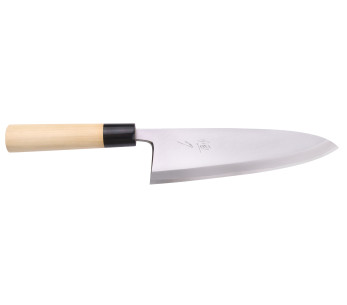
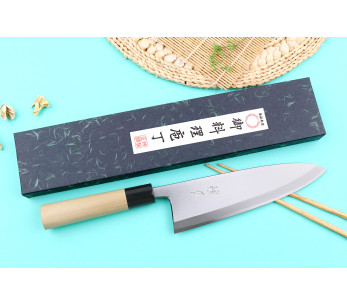
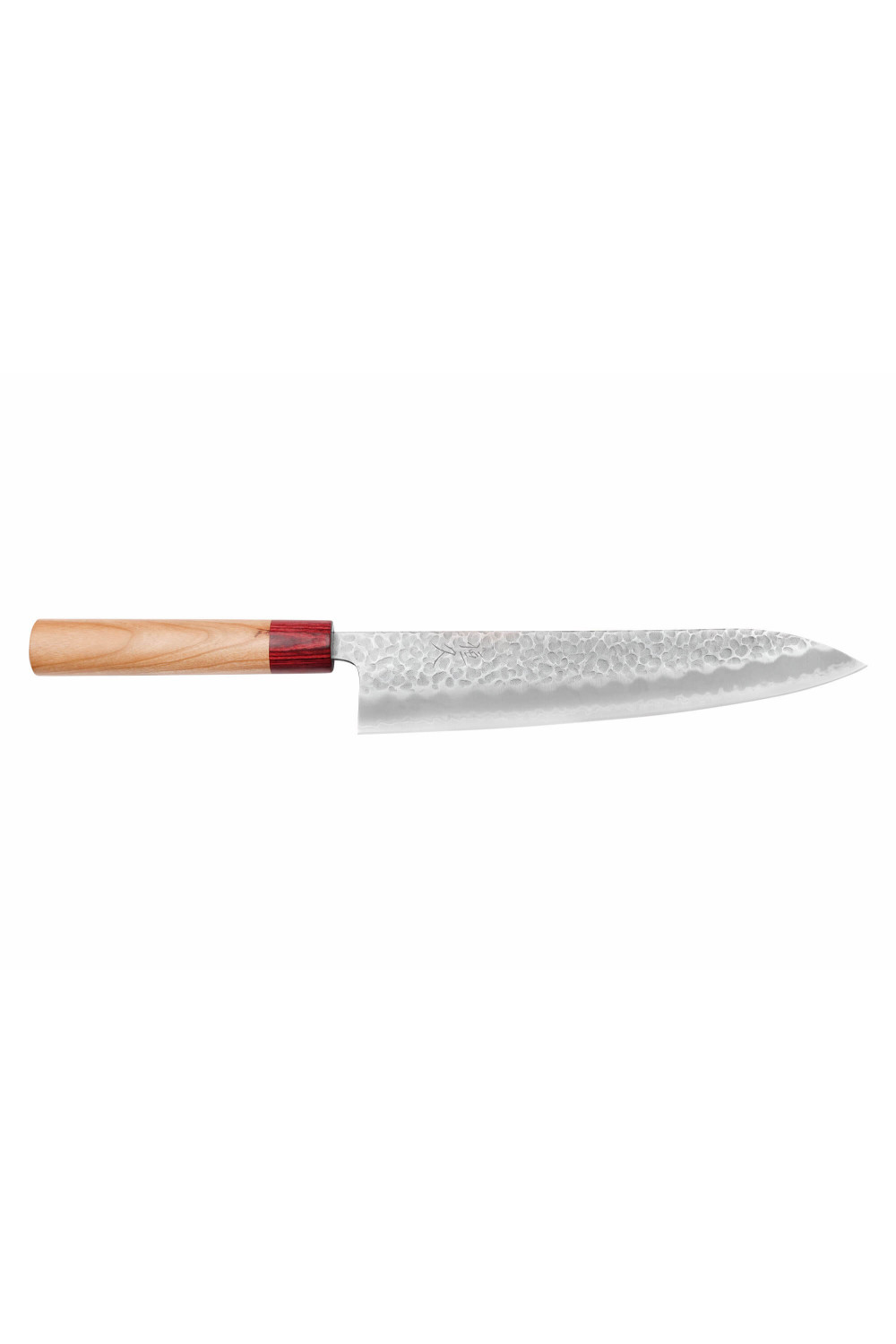
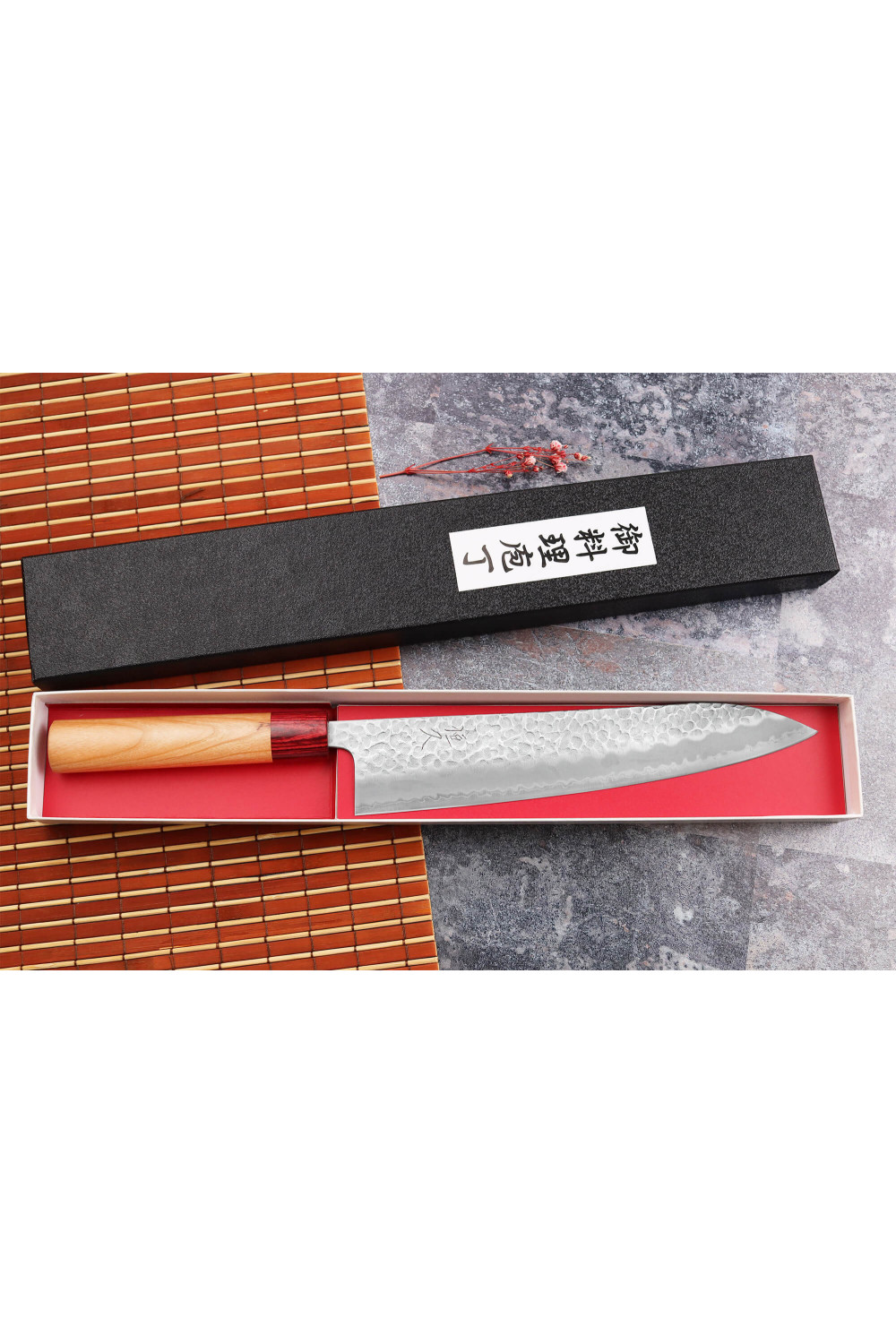
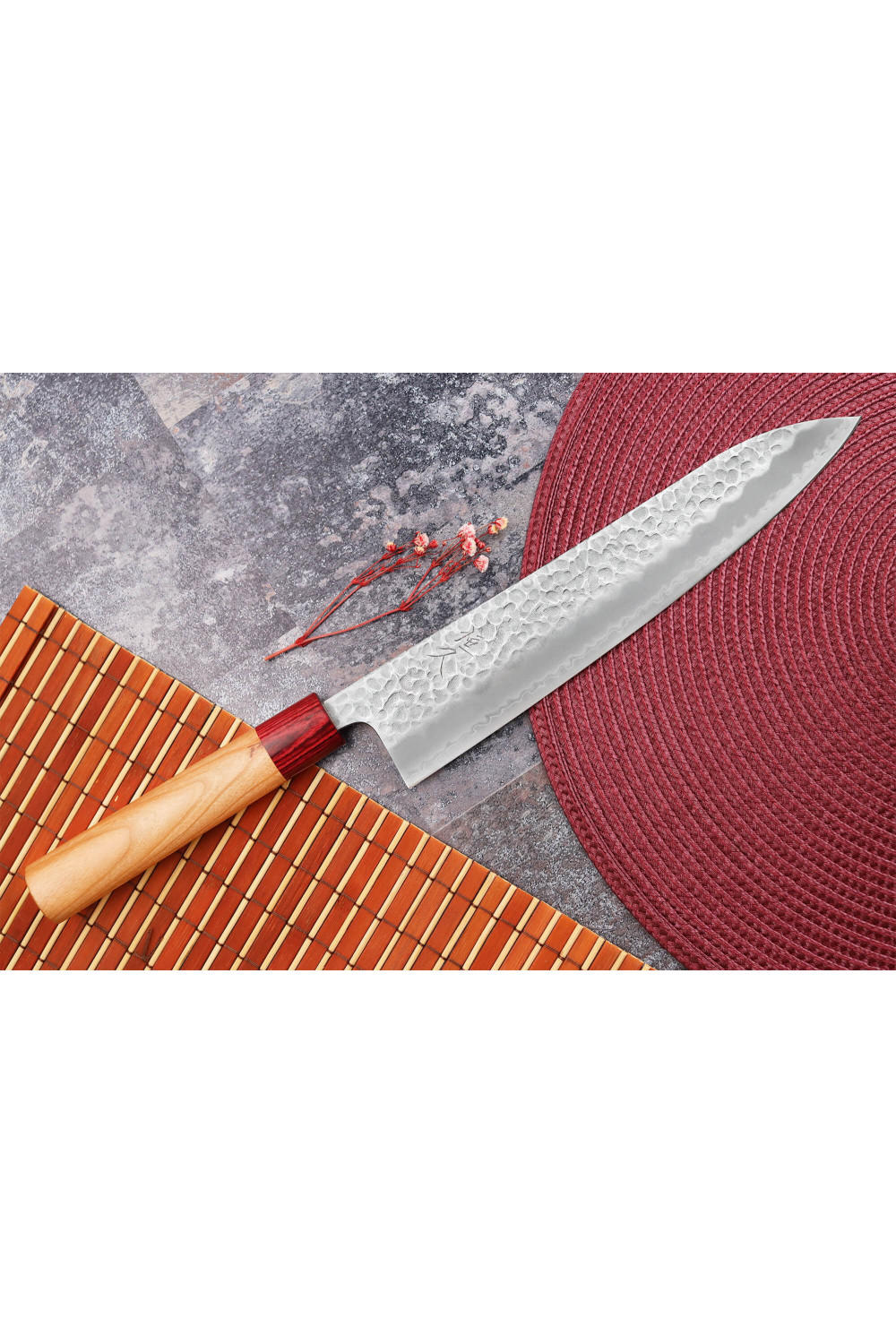
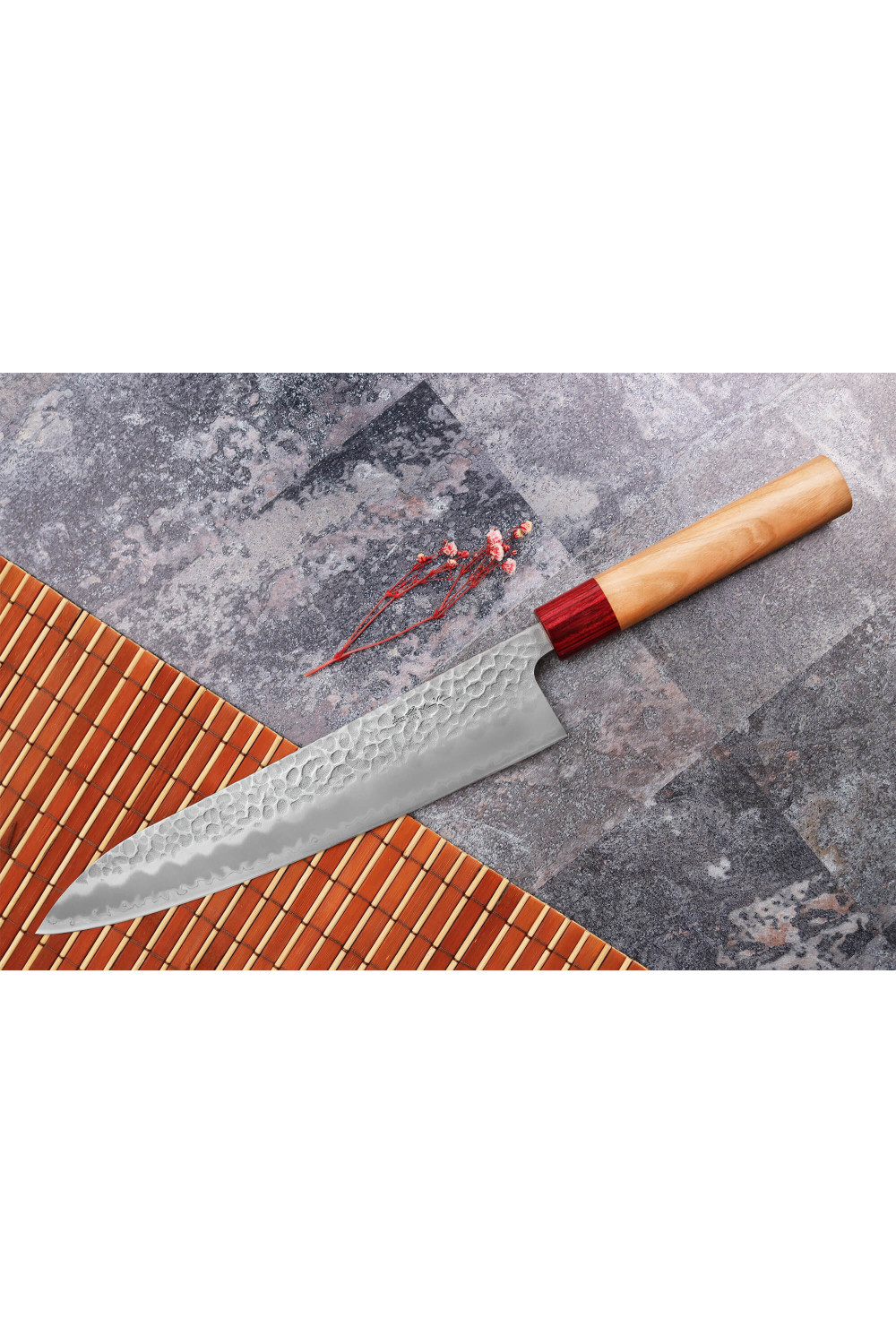
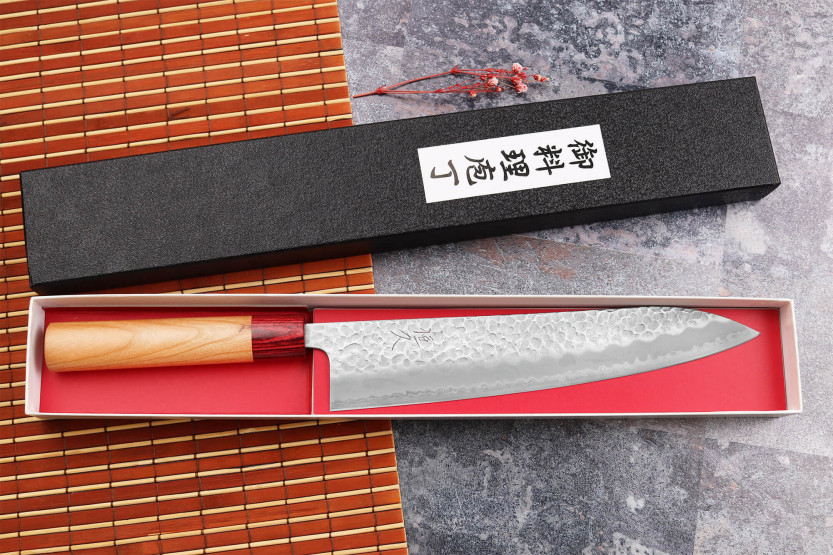
The kitchen knives in this series are made by the Japanese forge Tsunehisa. They are designed to appeal to professionals as well as enthusiasts who wish to add a quality piece to their collection. These models stem directly from Japanese tradition: blacksmiths have acquired their know-how through ancient methods, already used by katana makers of the time.
How to use a Japanese chef's knife
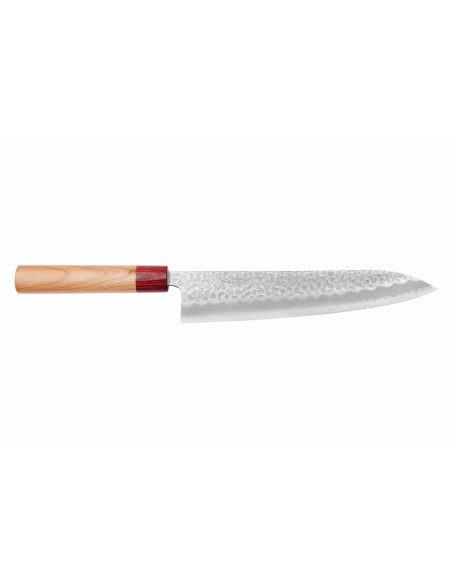
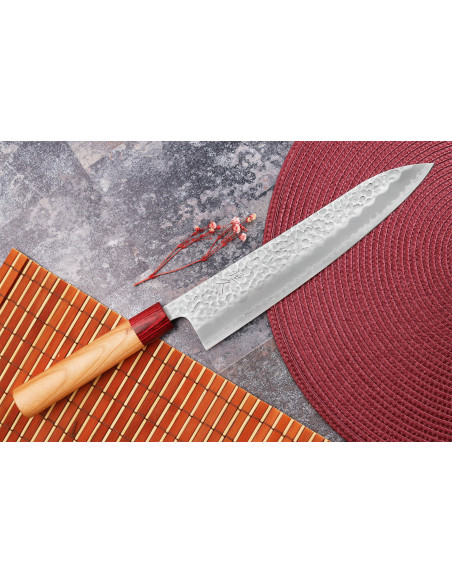
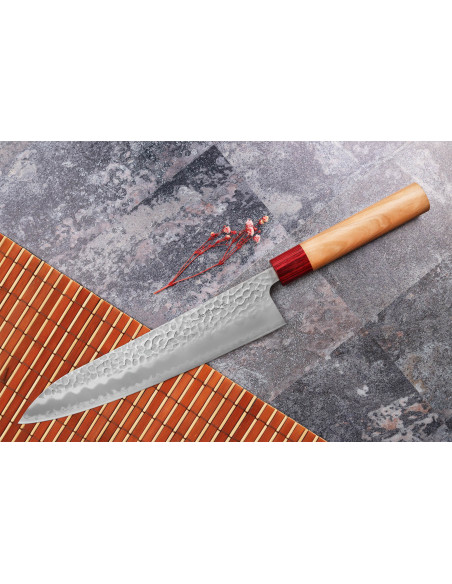
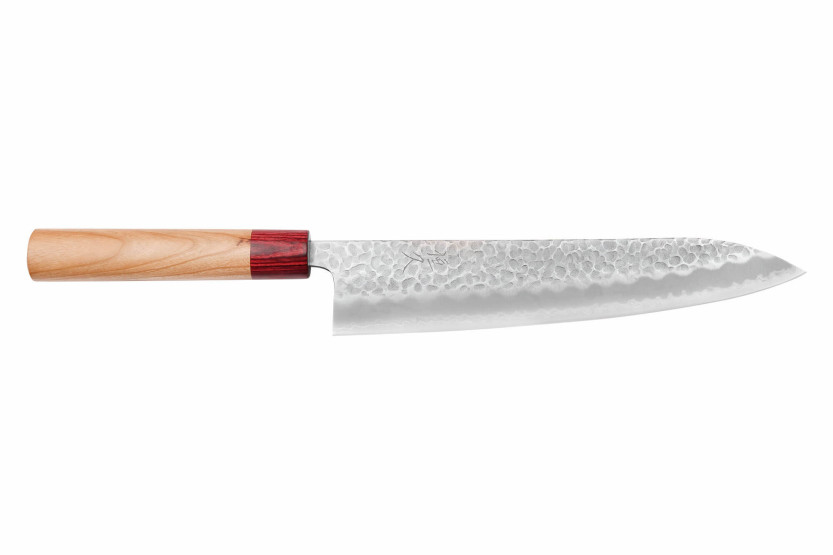
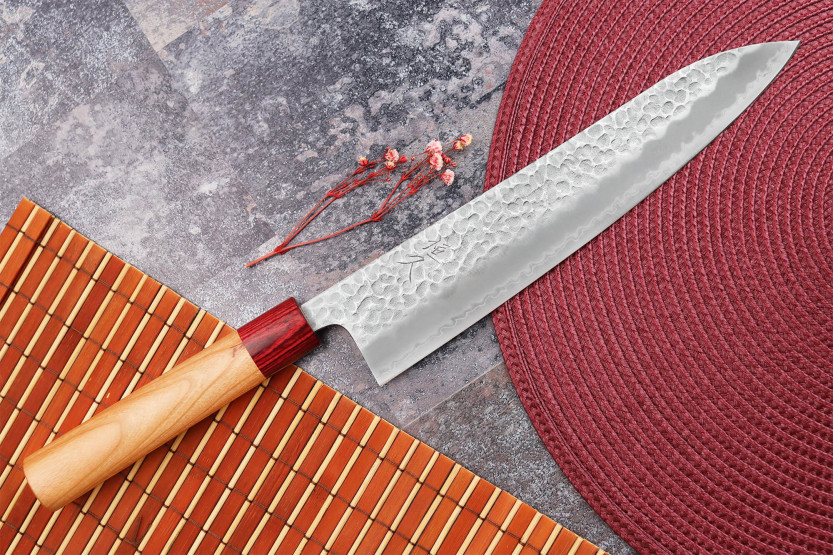
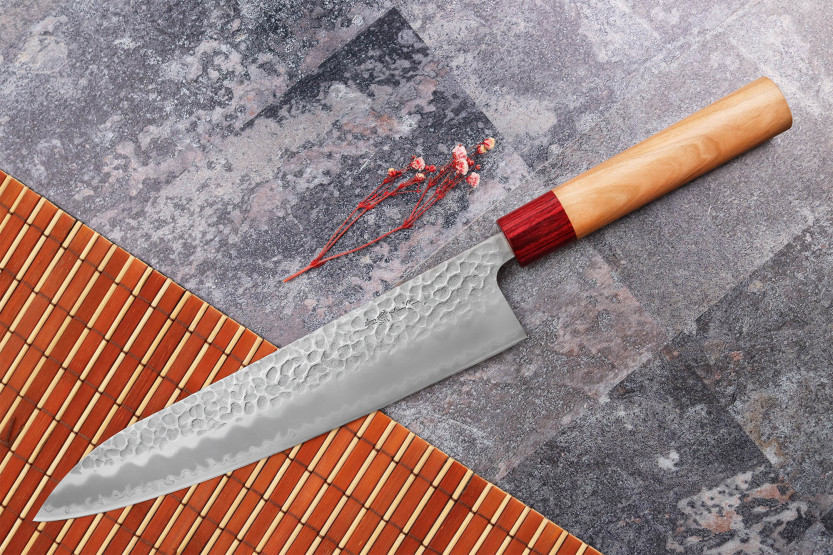
This gyuto knife is the Japanese version of our Western chef's knife. Just like it, it's versatile, enabling you to make a wide range of cuts! With this Tsunehisa knife, you can slice your vegetables, mince your meat and chop your herbs - all with ease! It can be used on all kinds of food, but be careful not to cut too hard foods such as squash or bones.
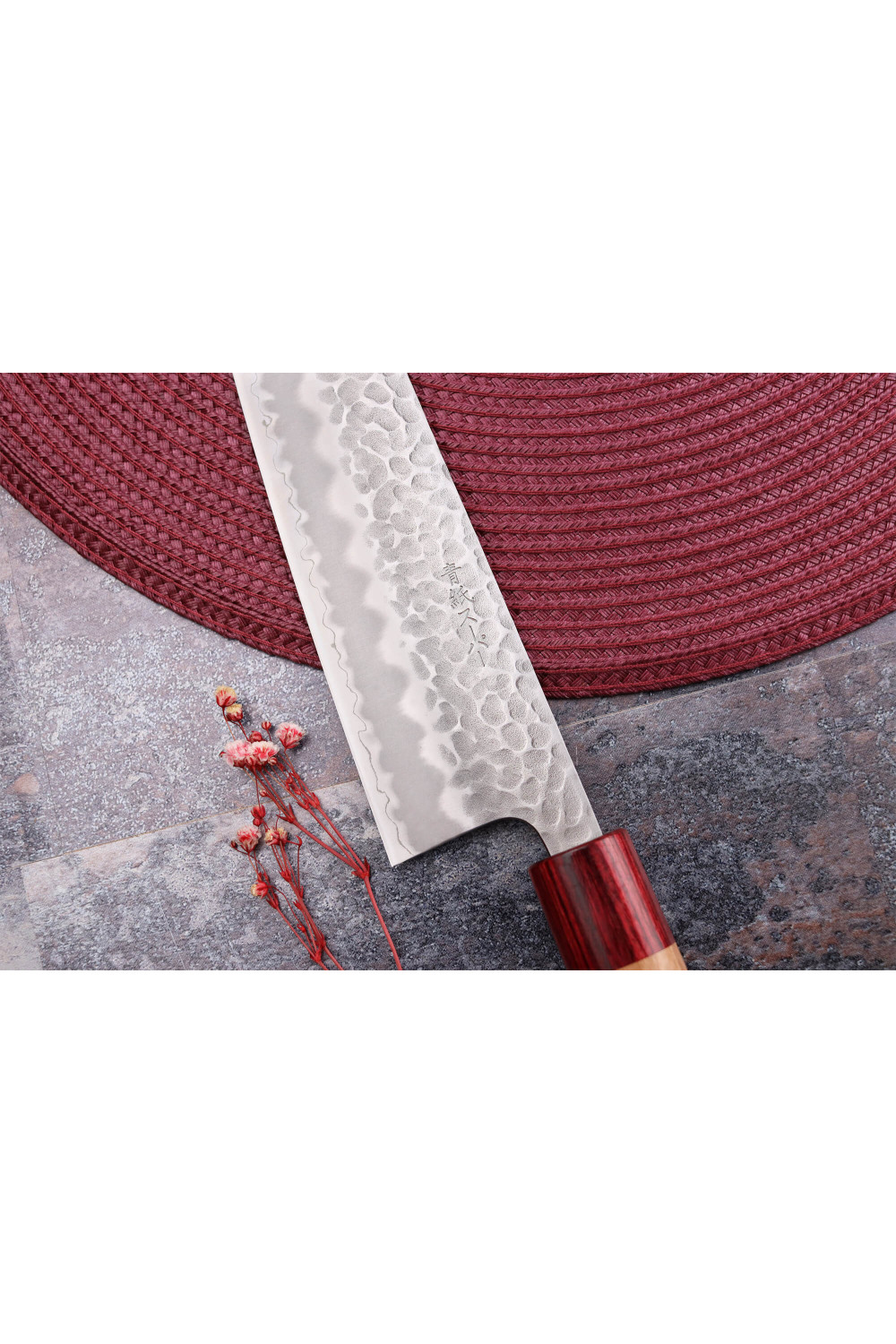
Aogami Super steel knife
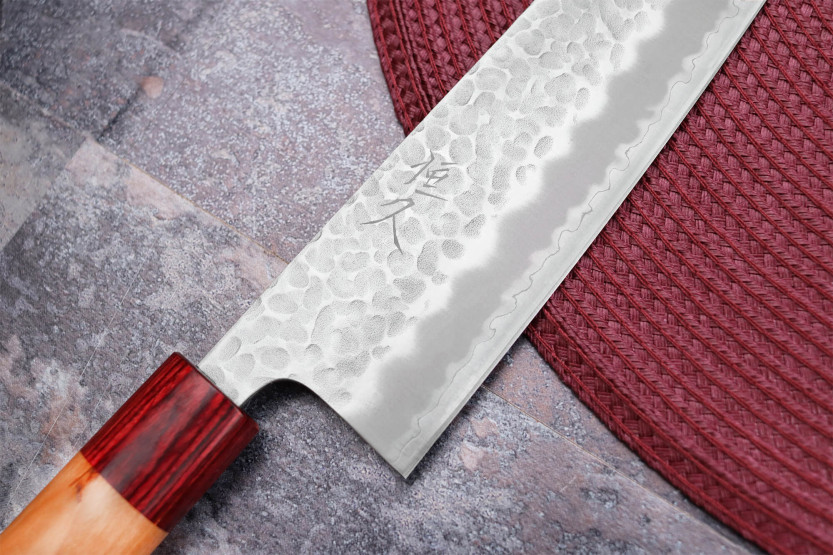
This Japanese chef's knife is designed with a typically Japanese San Maï (meaning "3 layers") structure: it is built with, at its base, a hard steel core that is covered by a softer layer of steel that folds in on itself. This provides optimum balance, while the top layer protects the core.
For the core of the blade,Japanese Aogami Super (also known as AS or Blue Paper Steel Super) is used. It is produced by the internationally renowned steelmaker Hitachi.
This alloy has a high carbon content of up to 1.5%: this is the element that is essential for increasing the hardness of a steel, bearing in mind that high hardness means excellent edge retention. Your blade therefore has a hardness of 65HRC on the Rockwell scale, which is proof of its strength (given that the average Western knife is between 55 and 60HRC).
This is a particularly expensive alloy, and therefore not widely used by blacksmiths. It's only the experts who work with it, since they have fewer losses thanks to their know-how.
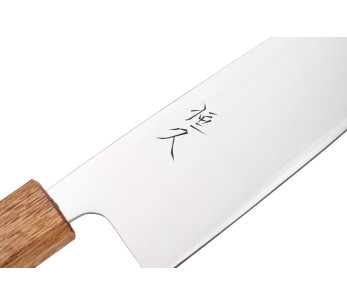
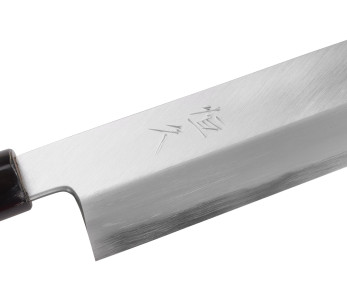
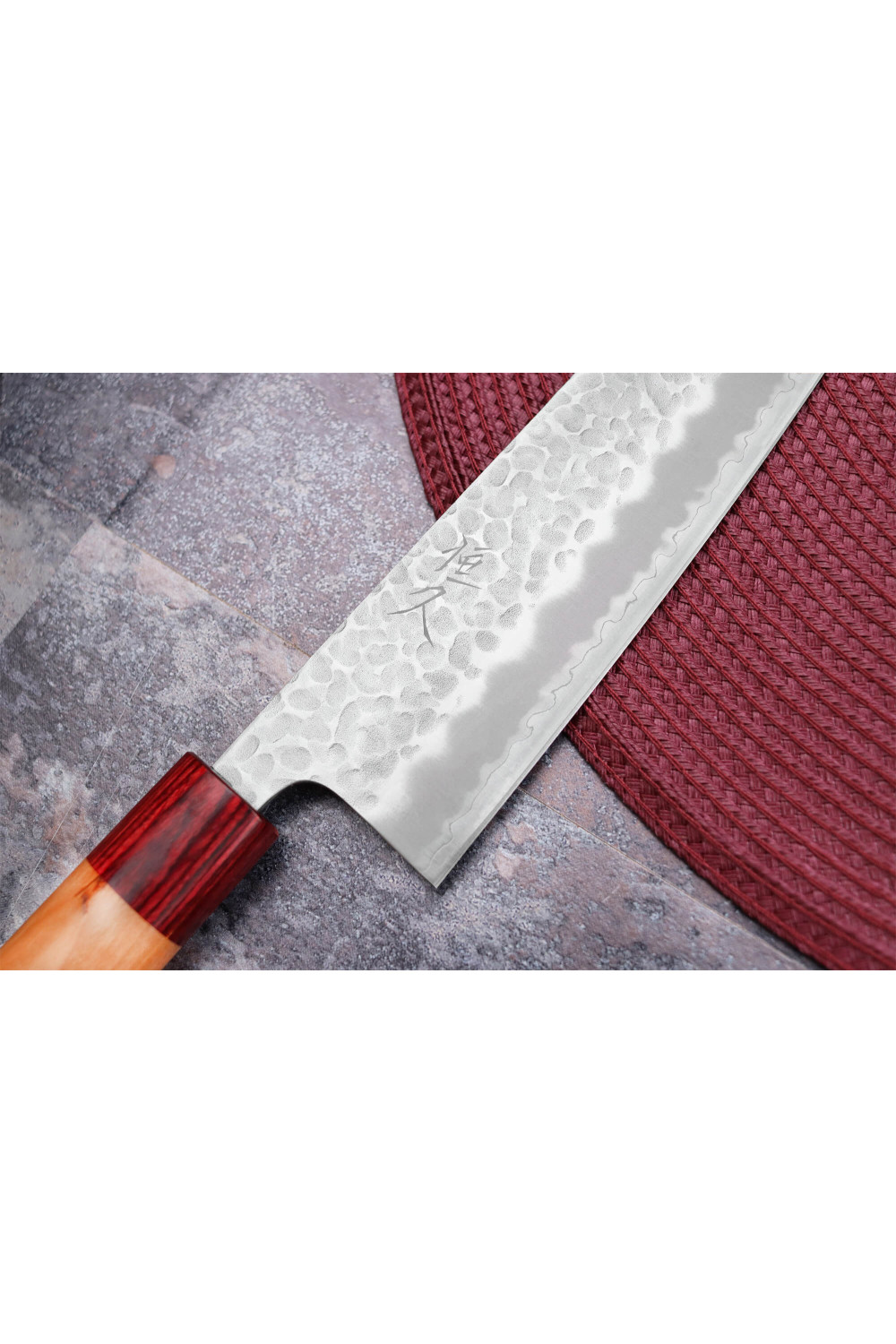
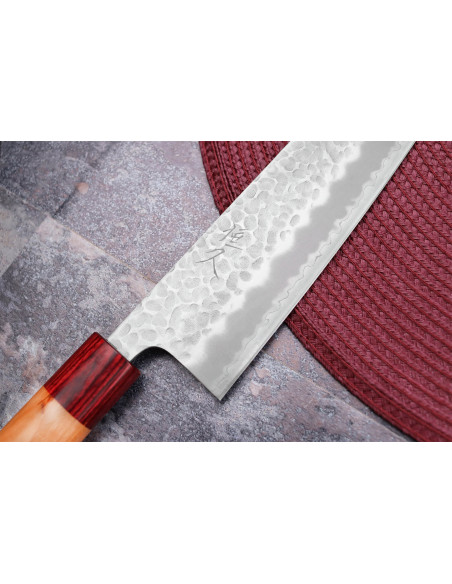
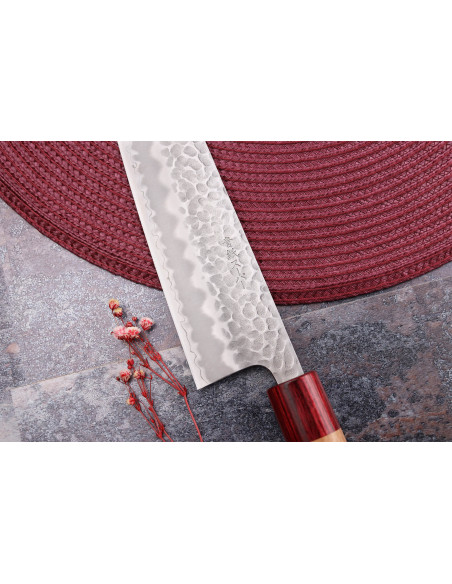
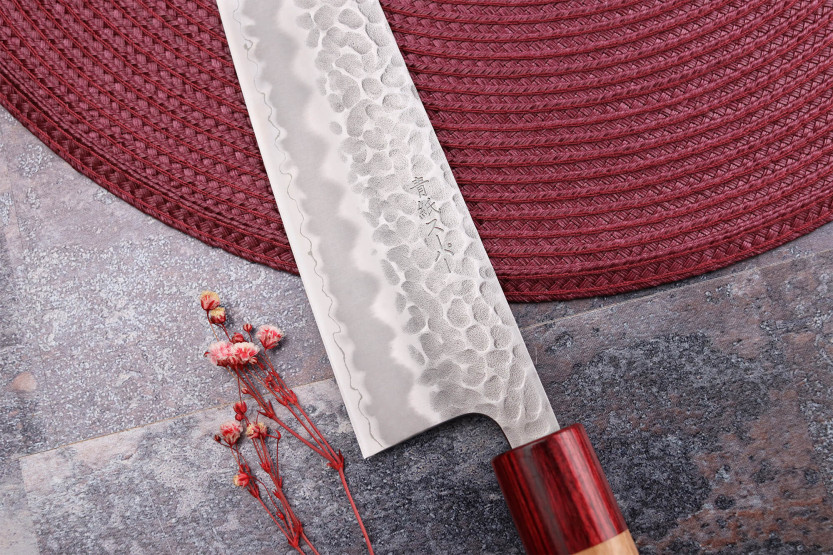
As explained above, once the core has been forged, it is covered by a layer of softer steel to balance out its hardness and add suppleness so that the blade is less brittle. As a matter of fact, you can see the superimposition of layers all along the cutting edge.
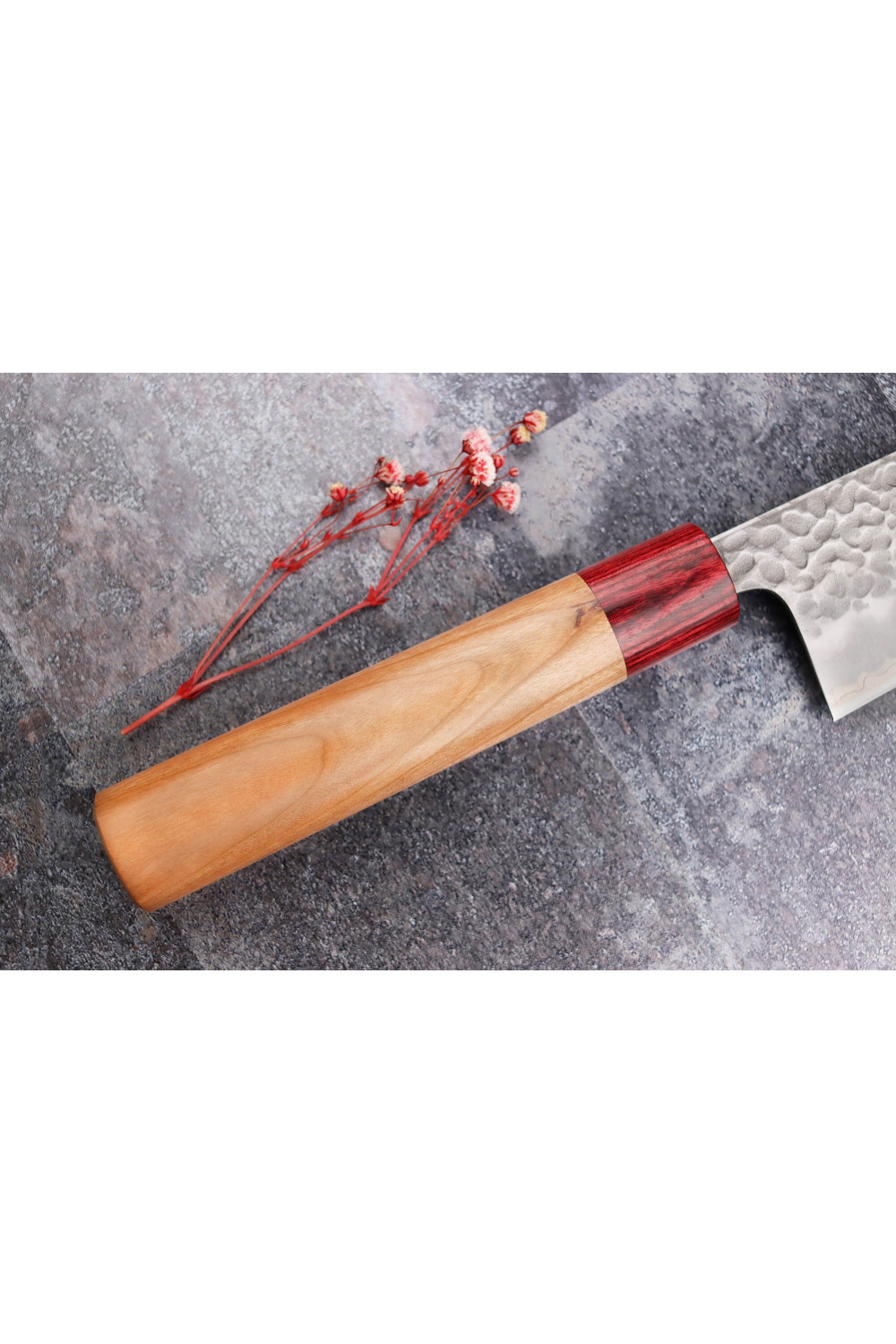
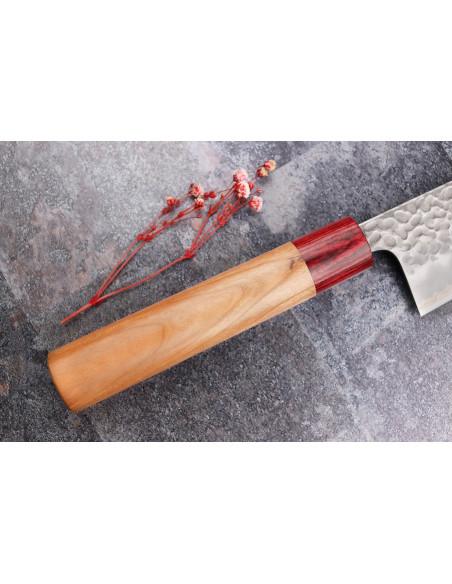
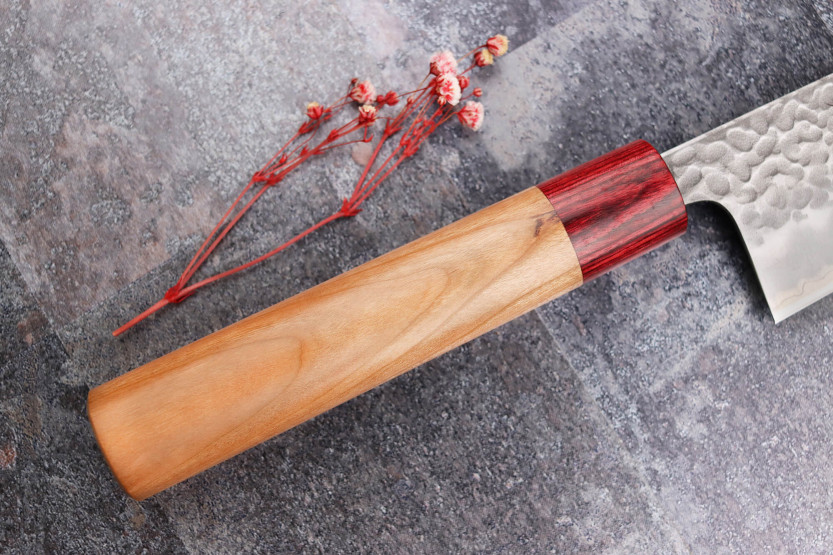
Your Japanese knife has an attractive hammered finish (called Tsuchime) that gives it character! What's more, the hammering is unique to each piece.
A knife handle in cherry wood
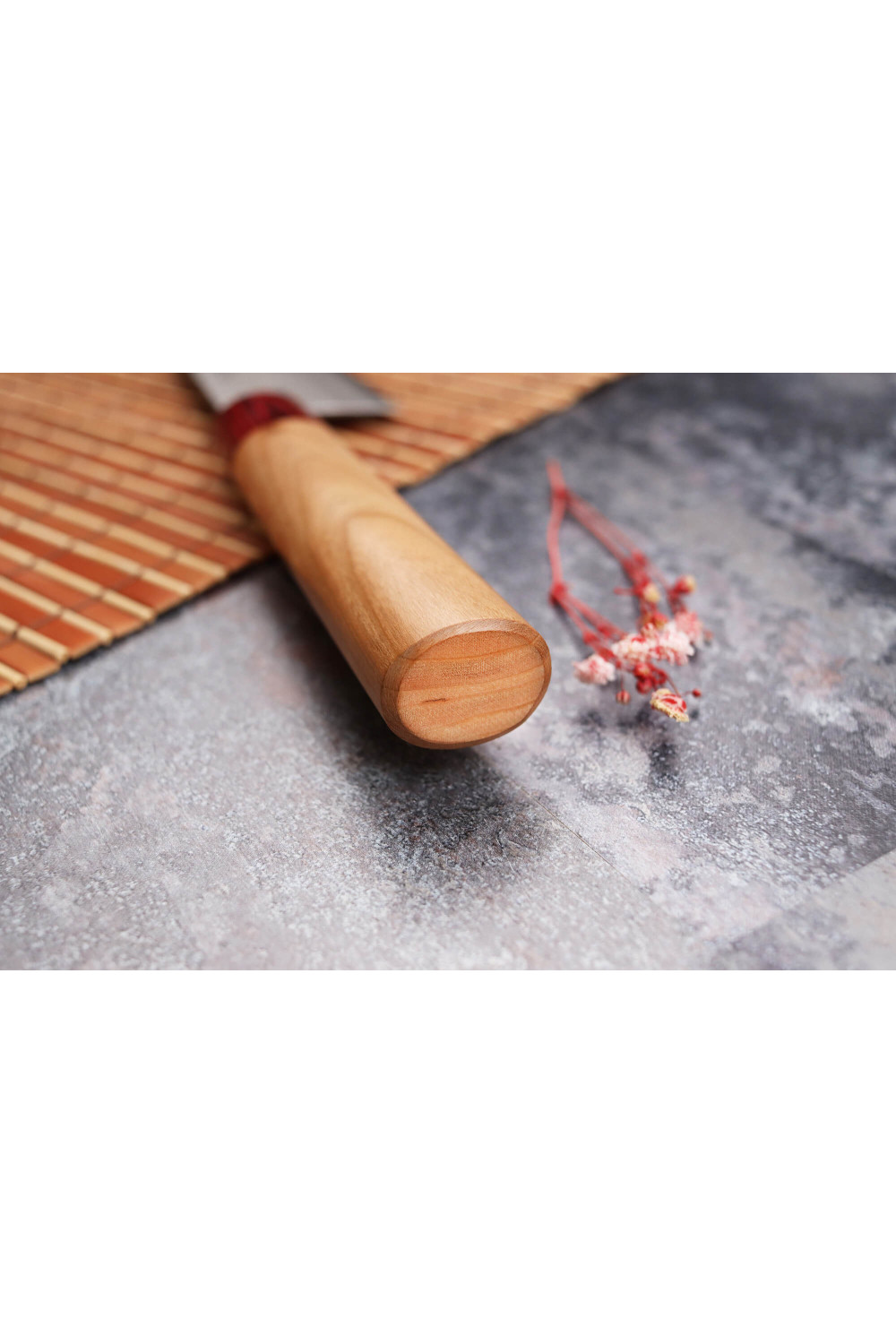
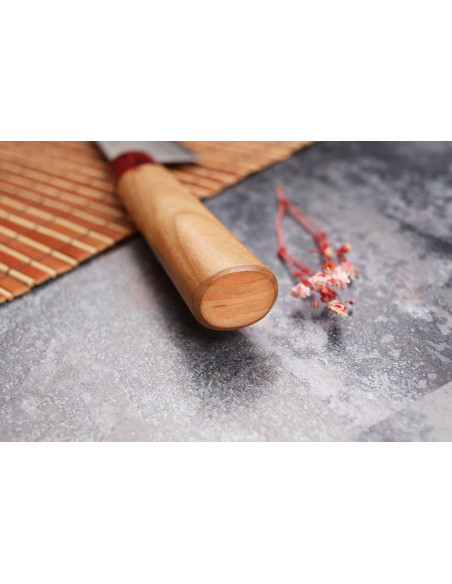
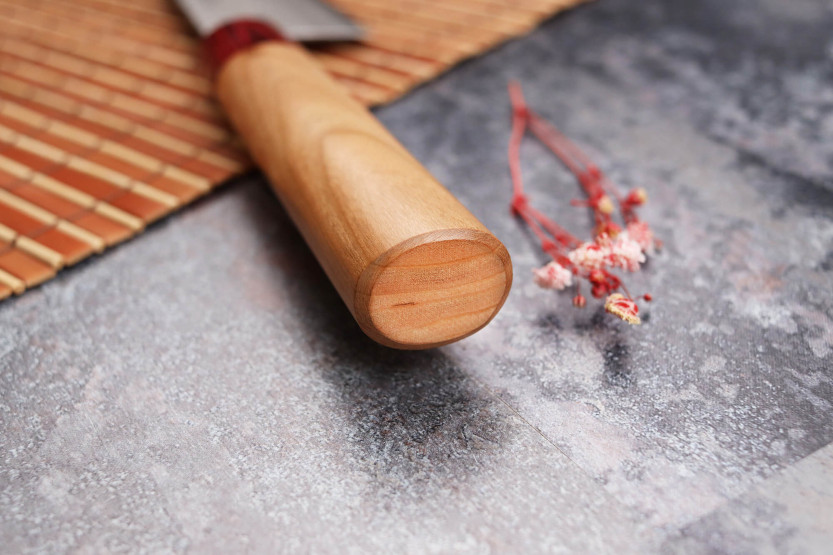
The handle of this kitchen knife is made from light cherry wood, a durable and resistant species. In Japan, the cherry tree is a sacred tree found throughout the archipelago: it is a metaphor for ephemeral nature, the beauty of things and of life.
It's oval-shaped to suit all cooks, whether left- or right-handed! Its ergonomic grip makes it easy to handle.
The bolster is made from red pakka wood, a composite material created from resin and laminated wood. It is appreciated for its resistance to humidity, shock and temperature variations.
To fill the gap where the blade meets the handle, wood putty is added. This makes it watertight, preventing water or small foodstuffs from seeping through.
To best care for your carbon knife, we recommend washing it only by hand with a sponge and mild detergent. Once washed, wipe dry immediately to keep it in a dry place.
With the passage of time, the blade may change color: this is a normal reaction of Aogami steel! This phenomenon is caused by the humidity in the air and the acidity of the food you're cutting.
Find everything you need to care for your knives on KnifeLeader.eu!




 By buying this product you can collect up to