Sakai Takayuki benefits from ancestral know-how
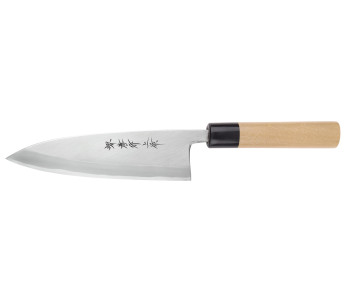
The Japanese company Sakai Takayuki was founded in the 1950s, in Sakai, the town from which it takes its name. Sakai is reputed to be a hotbed of Japanese cutlery: it was here that the blacksmiths of yesteryear made katanas for the samurai. Sakai Takayuki has inherited this ancestral know-how, as the blacksmiths' techniques have been handed down from generation to generation.
Sakai Takayuki takes advantage of this know-how and combines it with modern visuals to bring you quality Japanese knives. With expertise dating back more than 60 years, the brand designs knives to suit a wide range of consumers and chefs alike.
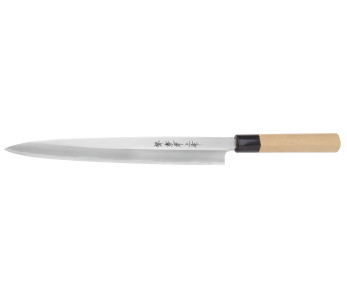
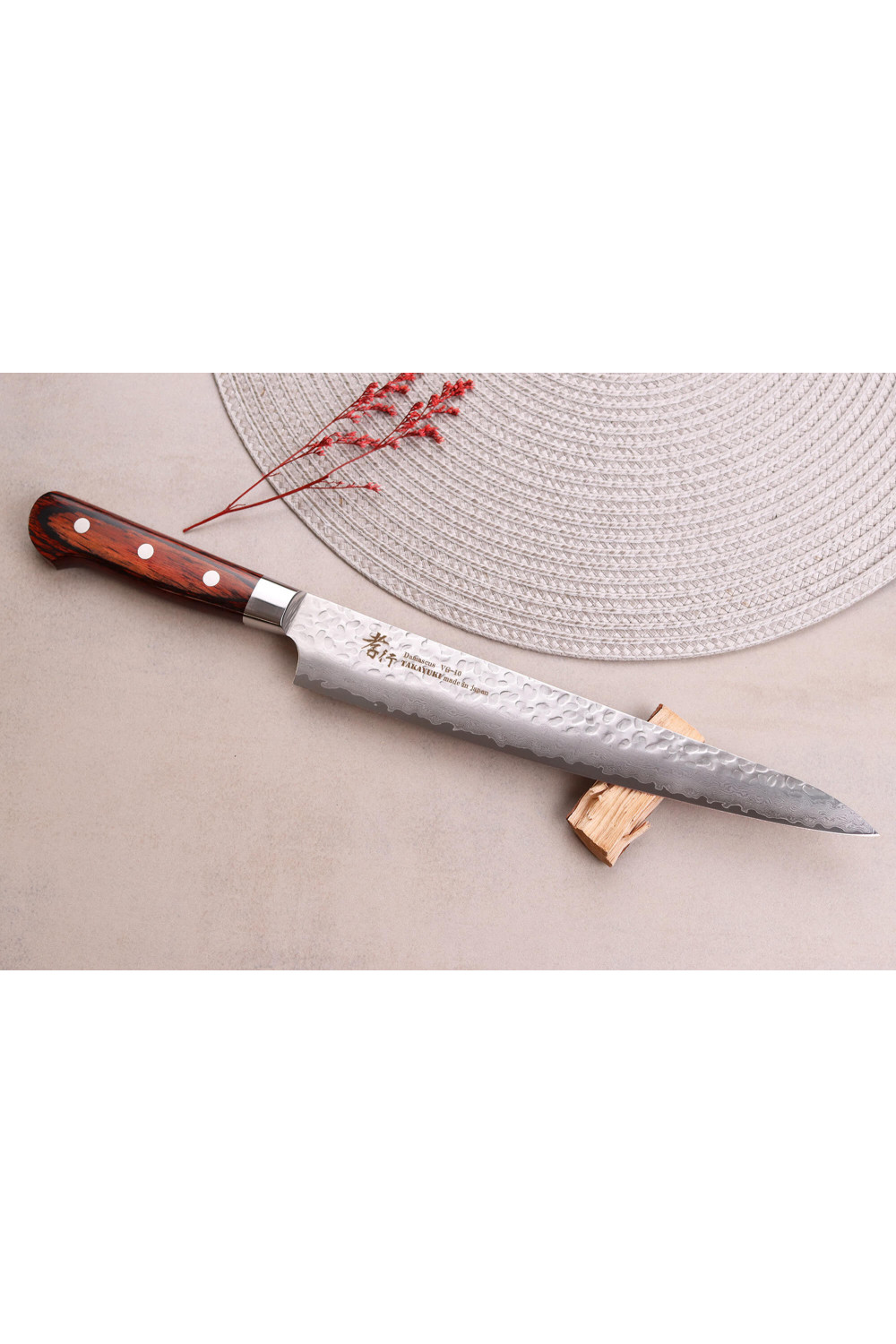
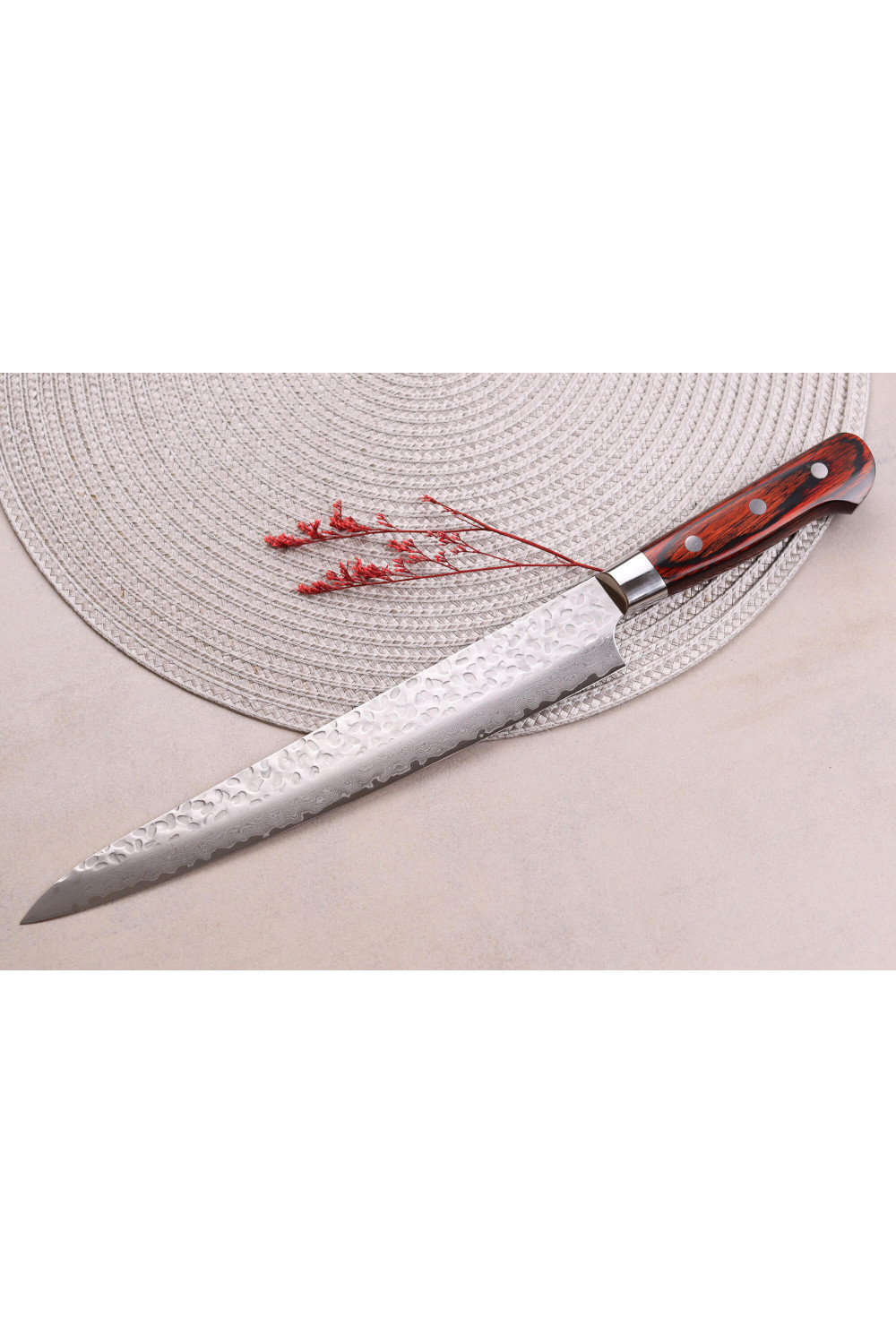
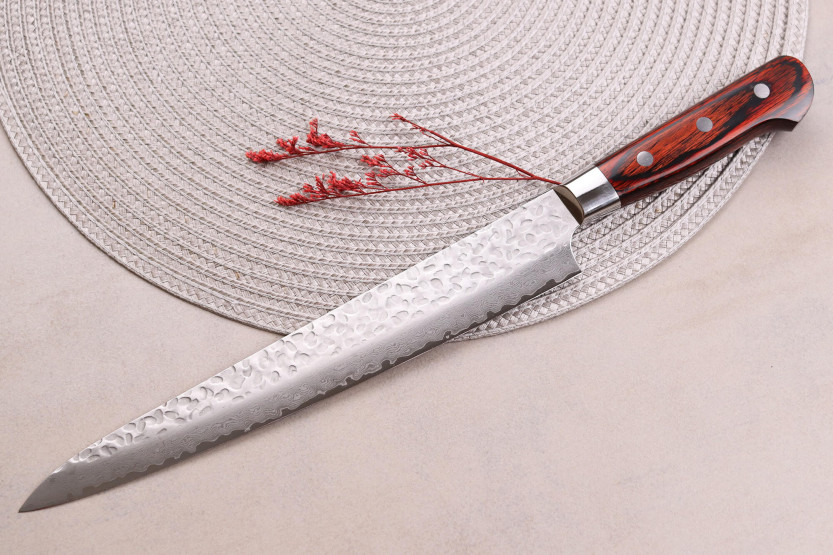
A sujihiki knife with a damask blade
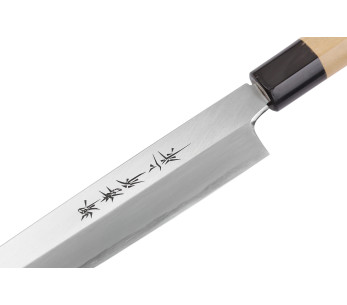
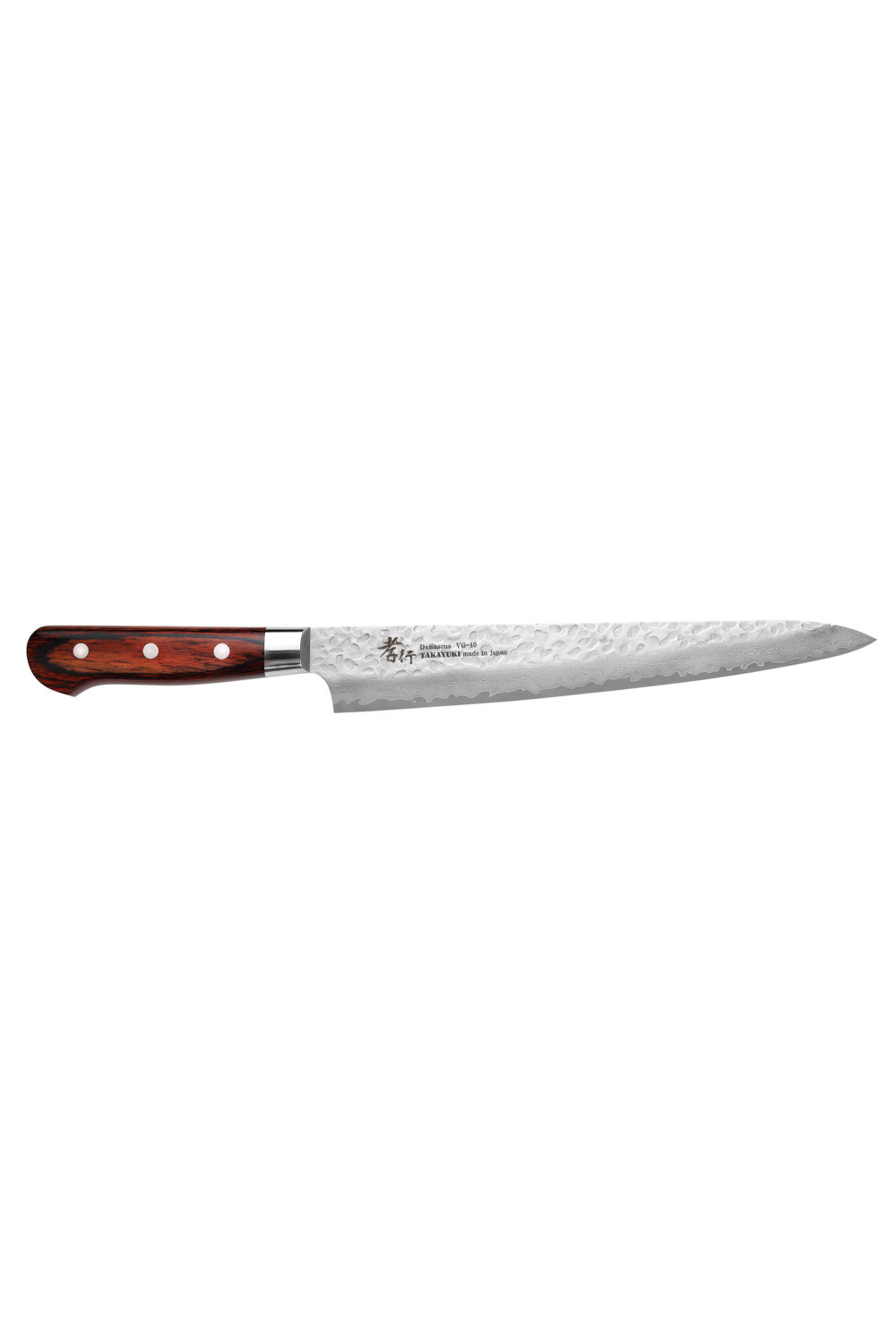
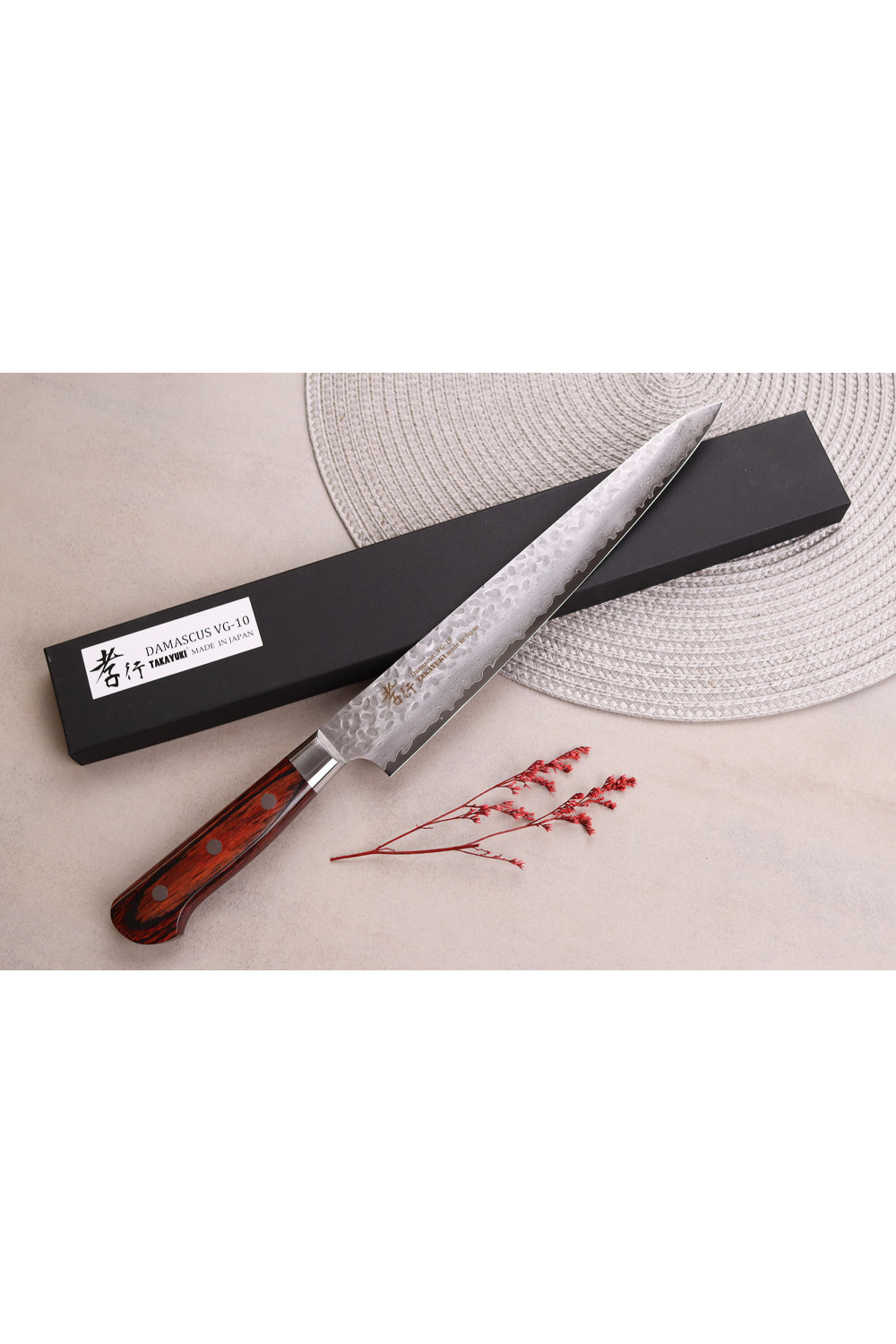
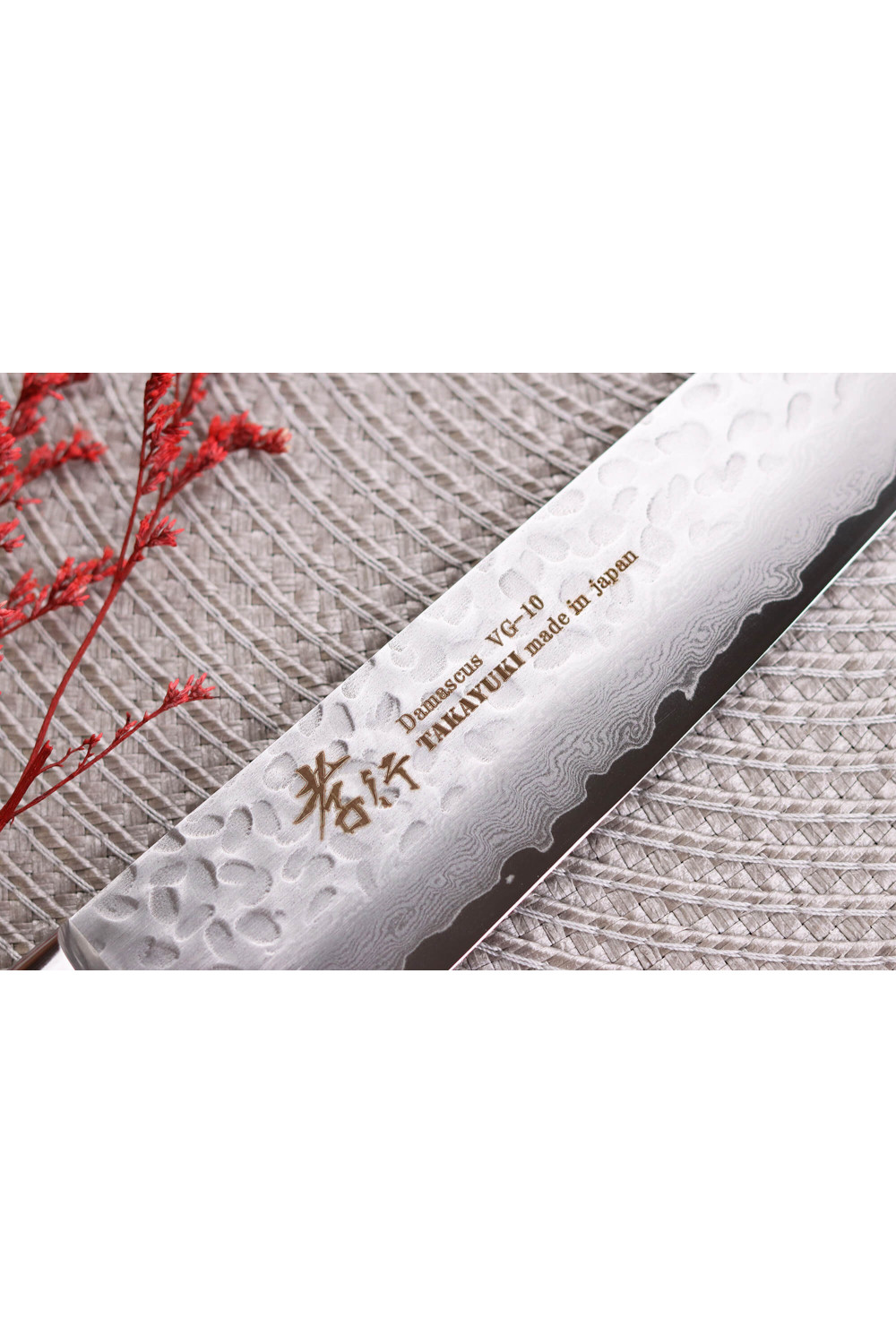
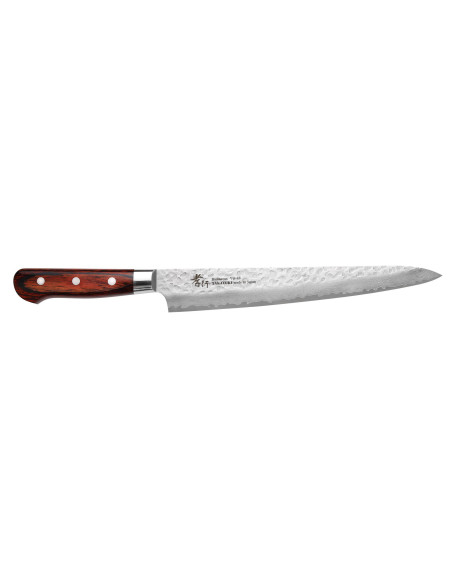
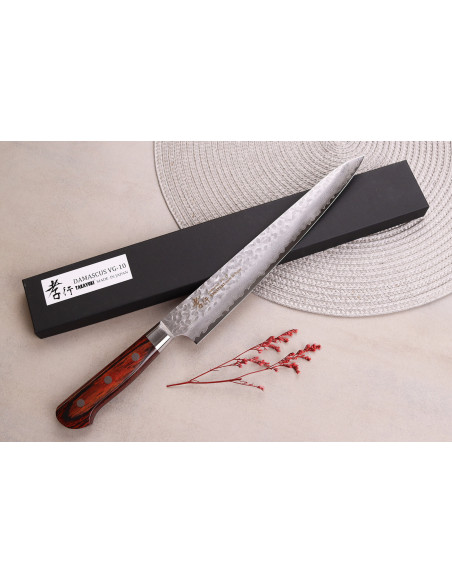
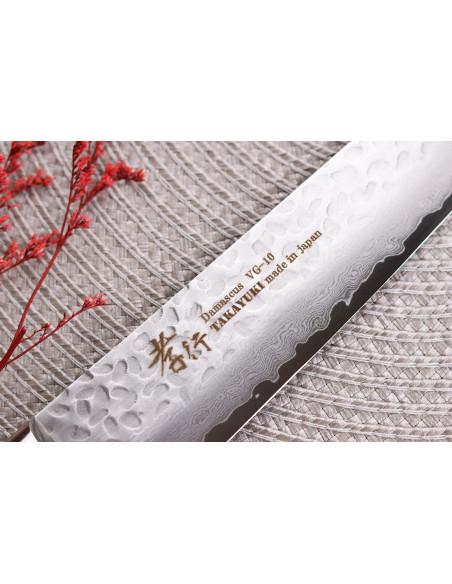
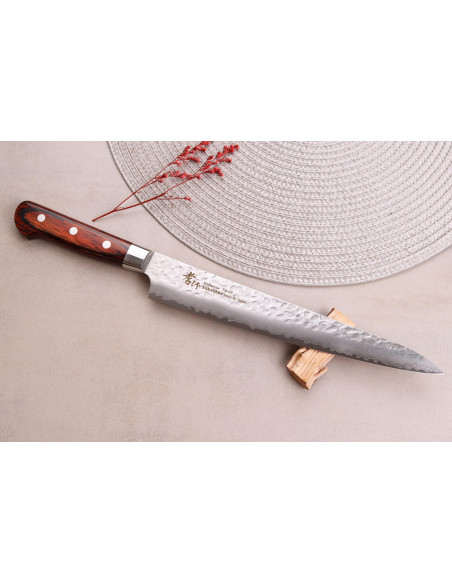
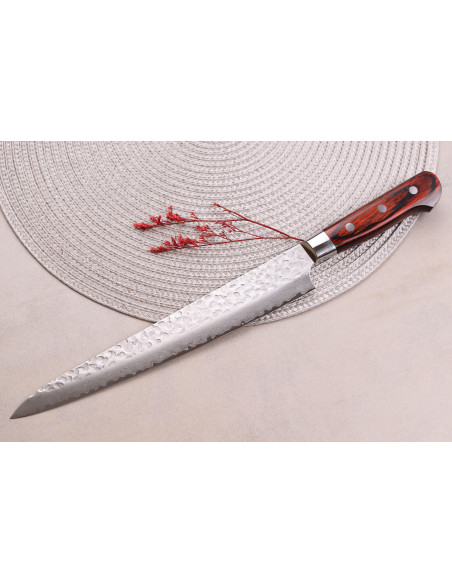
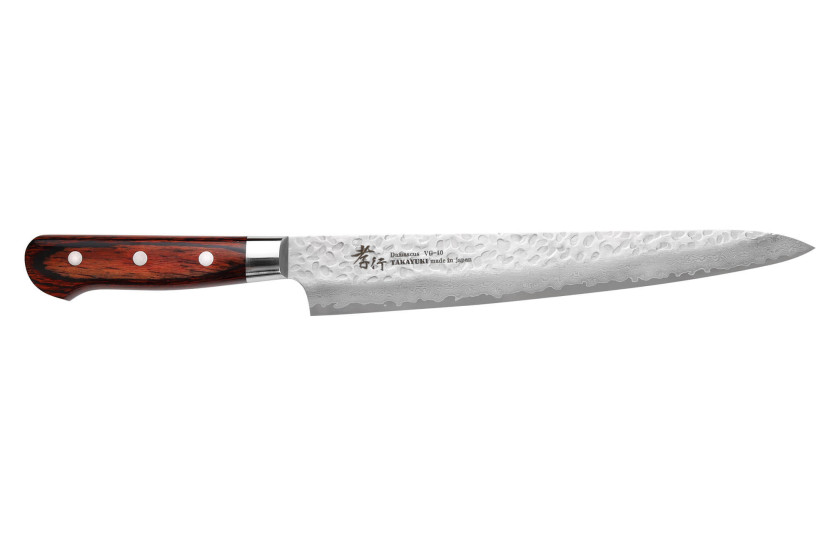
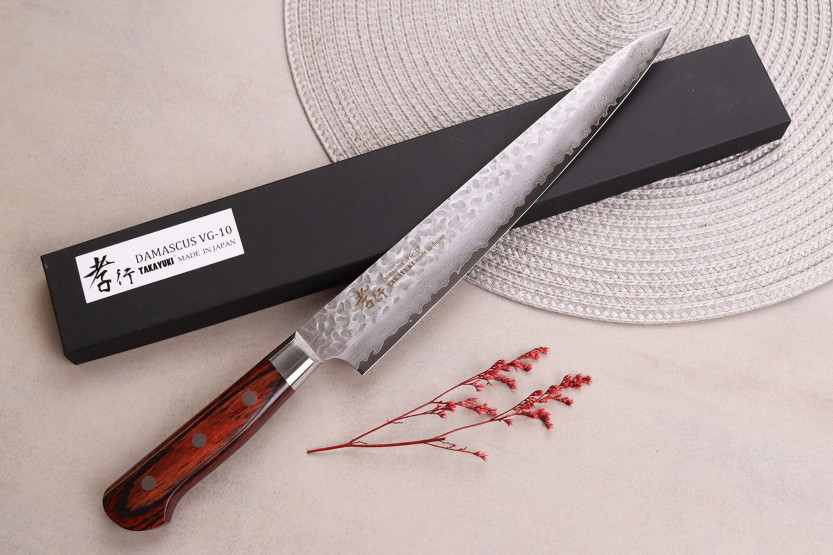
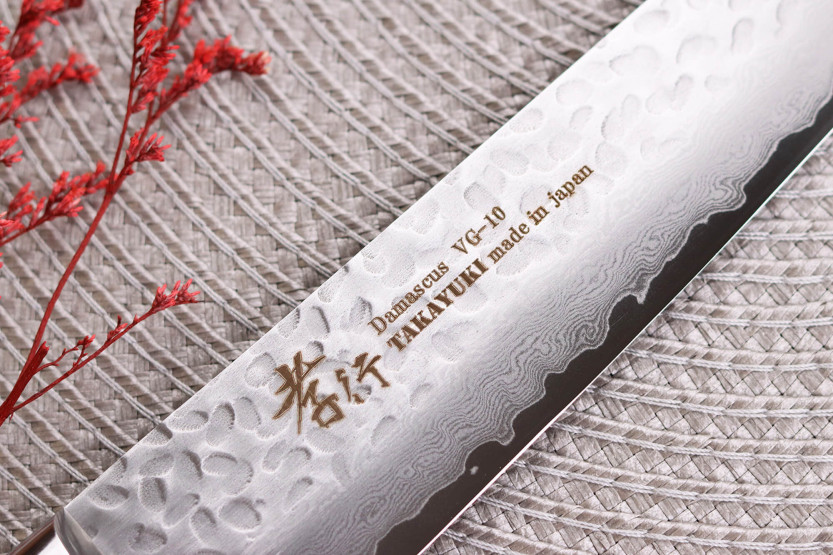
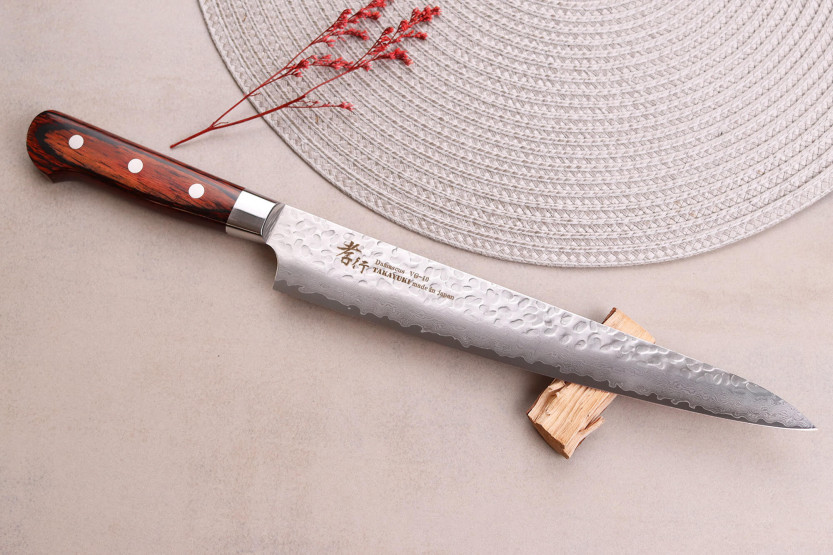
This 24cm Damascus Western sujihiki features a damascened blade, which means it has a core made from a rigid alloy overlaid with several alternating layers of softer steel. Unique ripples form on the surface of the blade, which is full of character.
The damascus is not only aesthetically pleasing, but also gives the blade good balance. The heart of this blade is made from VG10 steel, a 1% carbon-enriched Japanese steel that has been ice-hardened. Carbon is the element that ensures the hardness of an alloy and, coupled with ice-hardening, gives VG10 steel a hardness of 60 HRC on the Rockwell scale.
Thanks to these characteristics, the steel gives you a sharp, long-lasting blade that doesn't require regular sharpening sessions.
The alloy also contains around 15% chromium, the element that enables it to resist corrosion. Note, however, that due to its high carbon content, the alloy requires careful maintenance to prevent the blade from oxidizing.
This VG10 core is then covered with 33 alternating layers of softer steel: this is how the blade is damascened. This balances the rigidity of the blade's core with its suppleness. The blade does not become flexible, but rather flexible in the sense that it is more resistant to the shocks encountered when cutting, and therefore to breakage. Rigid steel tends to break more easily because it lacks flexibility: damascening compensates for its hardness.
The top of the blade is beautifully hammered, contrasting with the layers of damascus. As well as reinforcing the character of your blade, the hammering has a practical aspect as it works in the same way as honeycombs: it is non-stick and therefore prevents your food from sticking to the blade.
Mahogany wood for knife handles
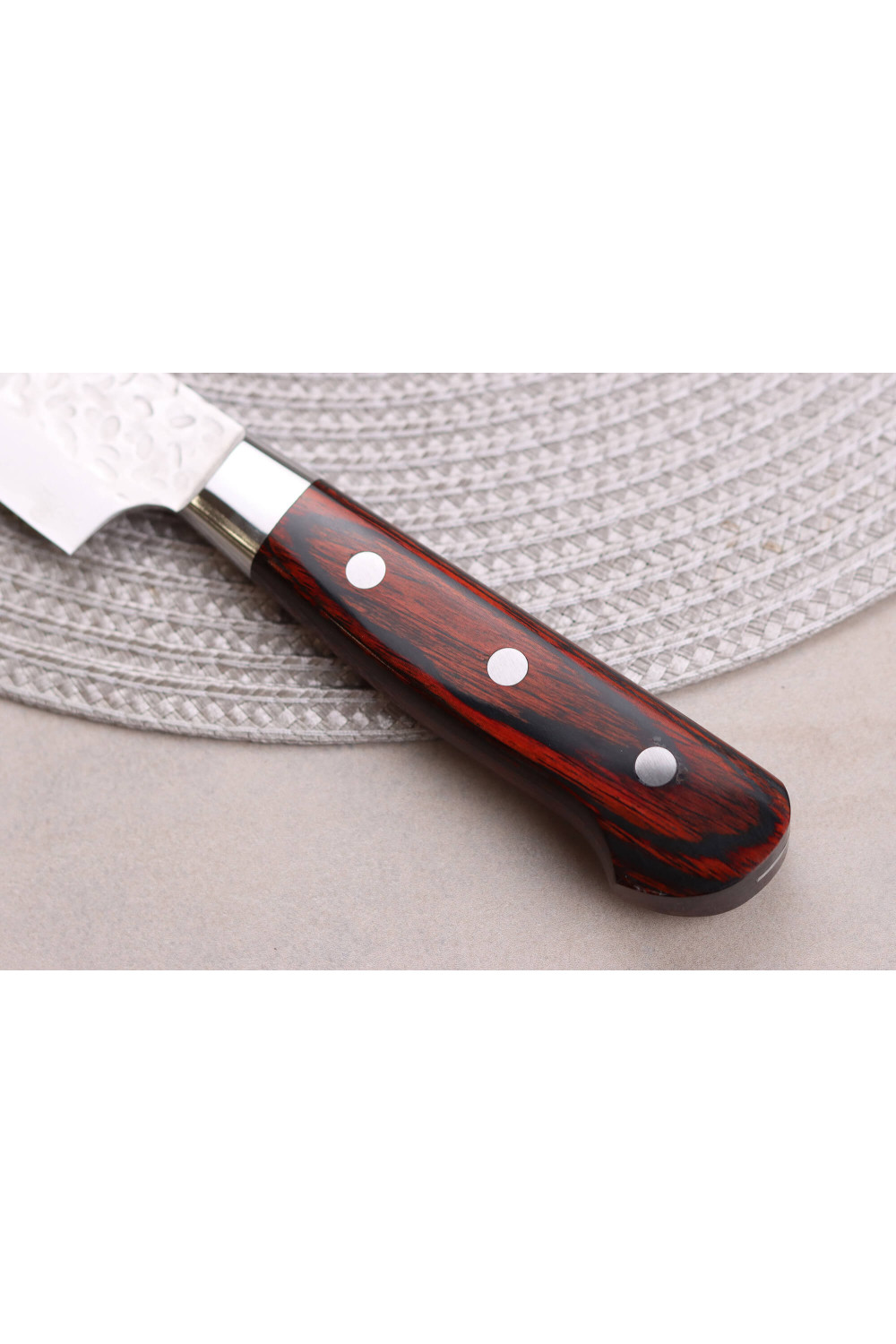
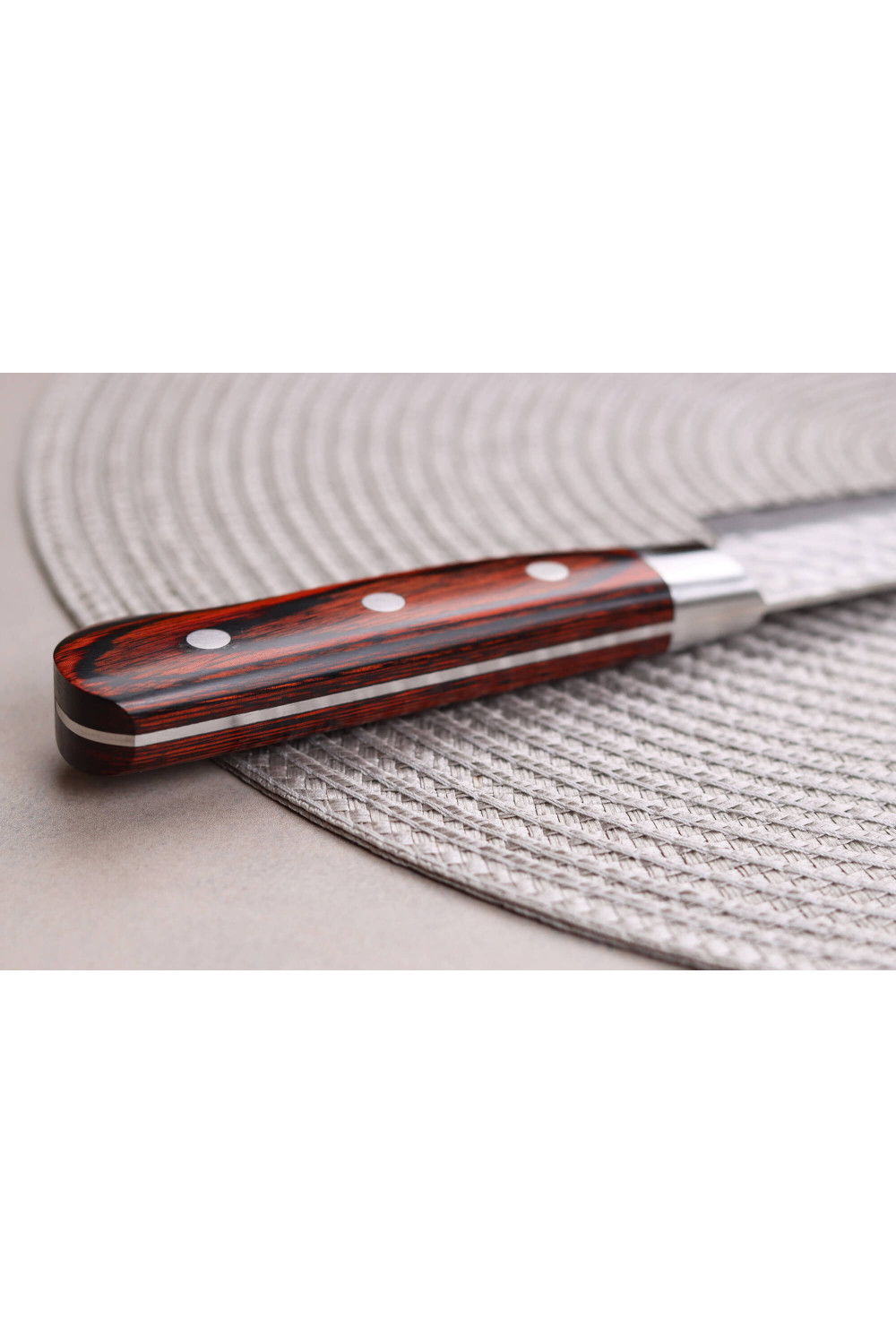
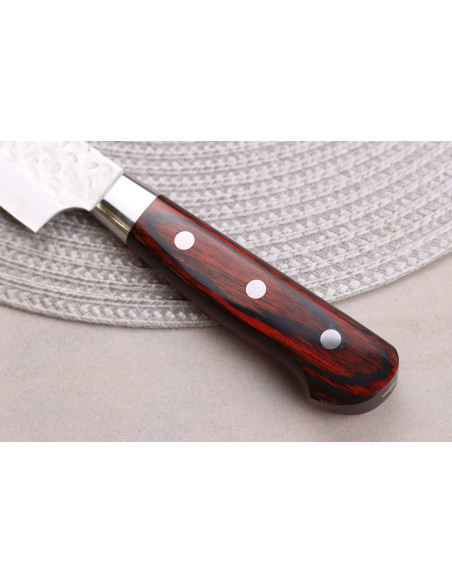
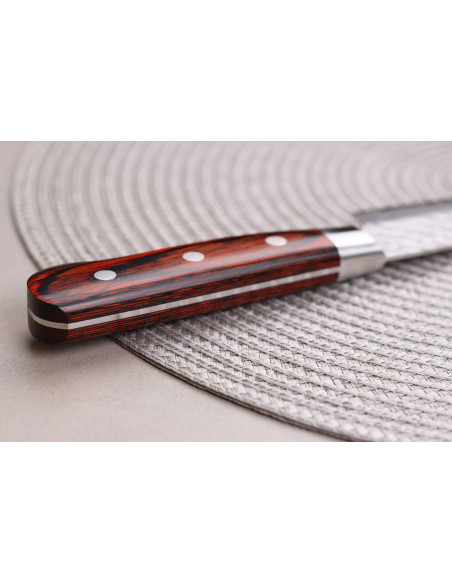
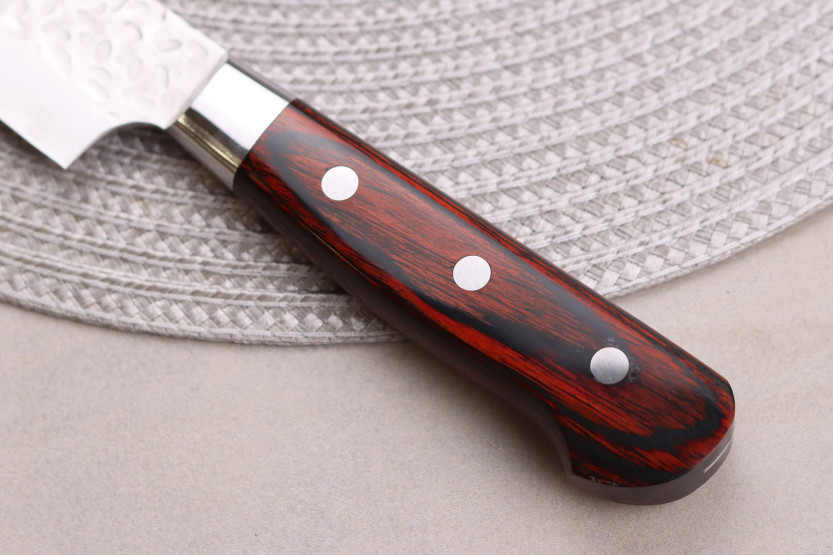
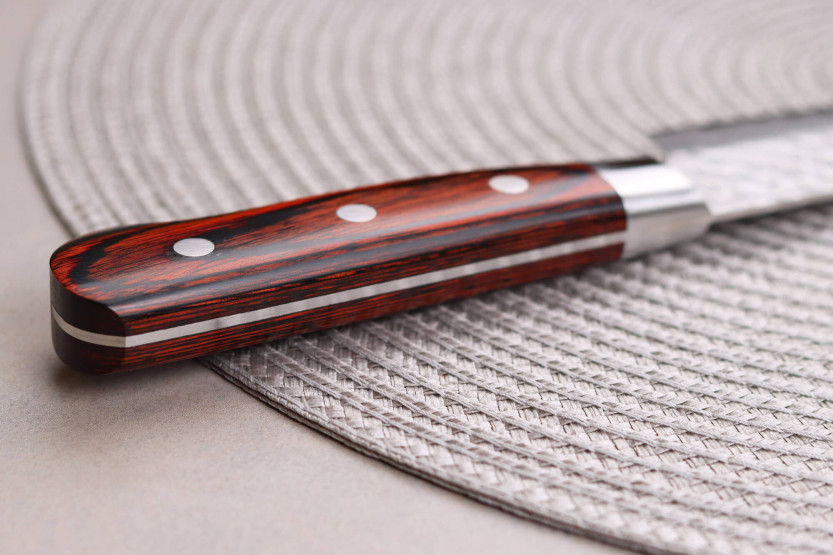
Your Japanese slicing knife boasts a magnificent handle made from Spanish mahogany, a wood renowned for its durability and easily recognized by its slightly reddish-brown hue. As wood is a living material, its grain is unique to each piece. Mahogany is a light wood that stands up well to impact. A transparent glaze is applied to protect the wood.
The handle has a Western shape for excellent grip. In fact, you can see a finger rest at the bottom of the heel, which is particularly useful when cutting, especially when cutting for long periods.
The handle is attached to the full tang blade by 3 stainless steel rivets, giving you a sturdy, reliable knife. The bolster is also made of stainless steel, linking the blade to the handle.
The knife requires manual cleaning, and should not be washed in the dishwasher or soaked in the sink. Do not wet the handle when washing, and use a mild soap and a non-abrasive sponge. Once you've washed your knife, you can dry it immediately and store it in a dry, moisture-free place.
Find Damascus Western knives on our site!




 By buying this product you can collect up to