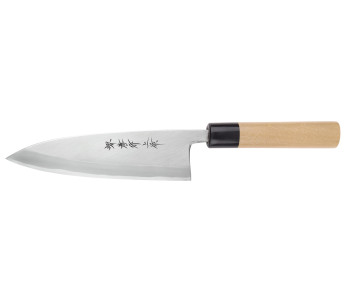
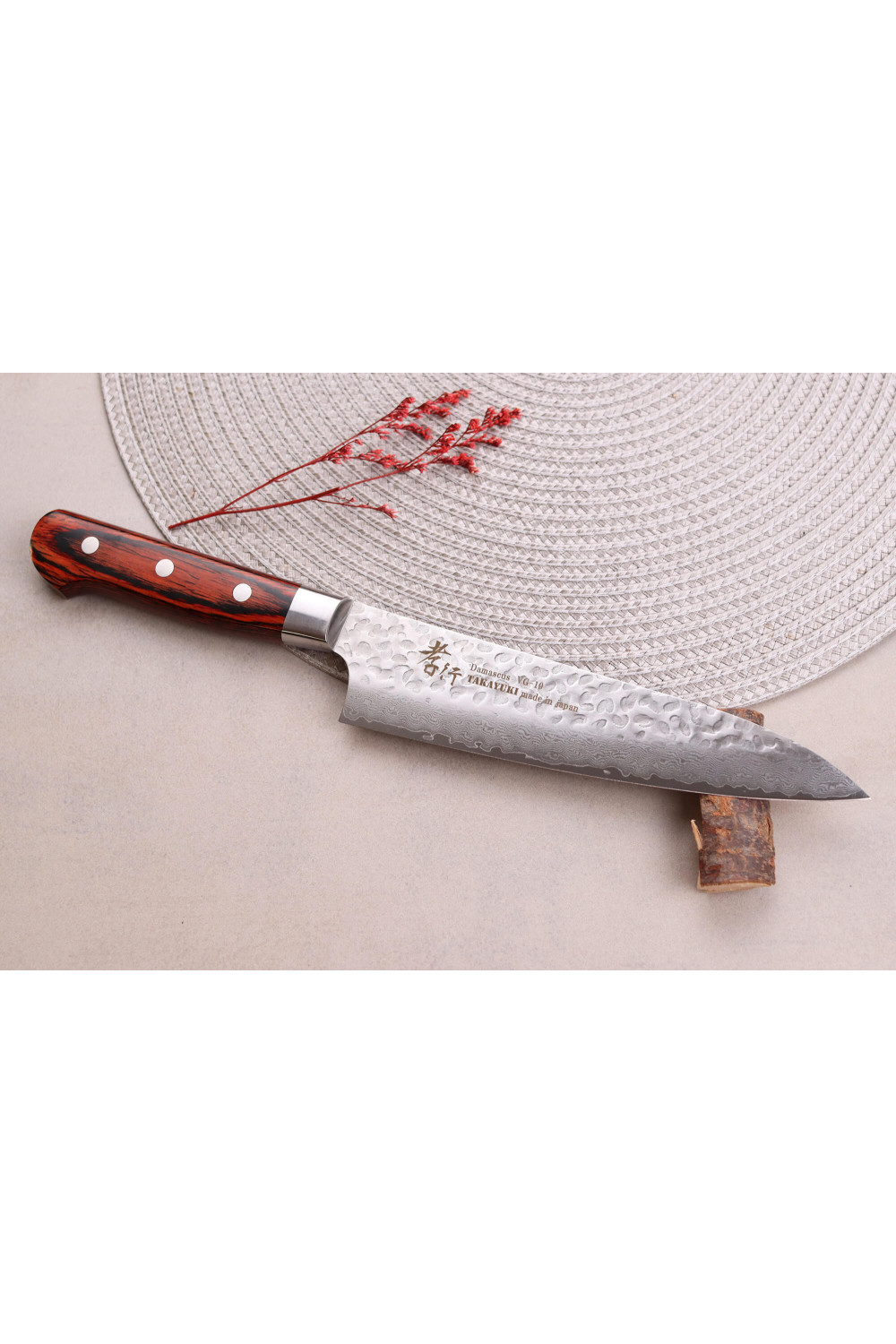
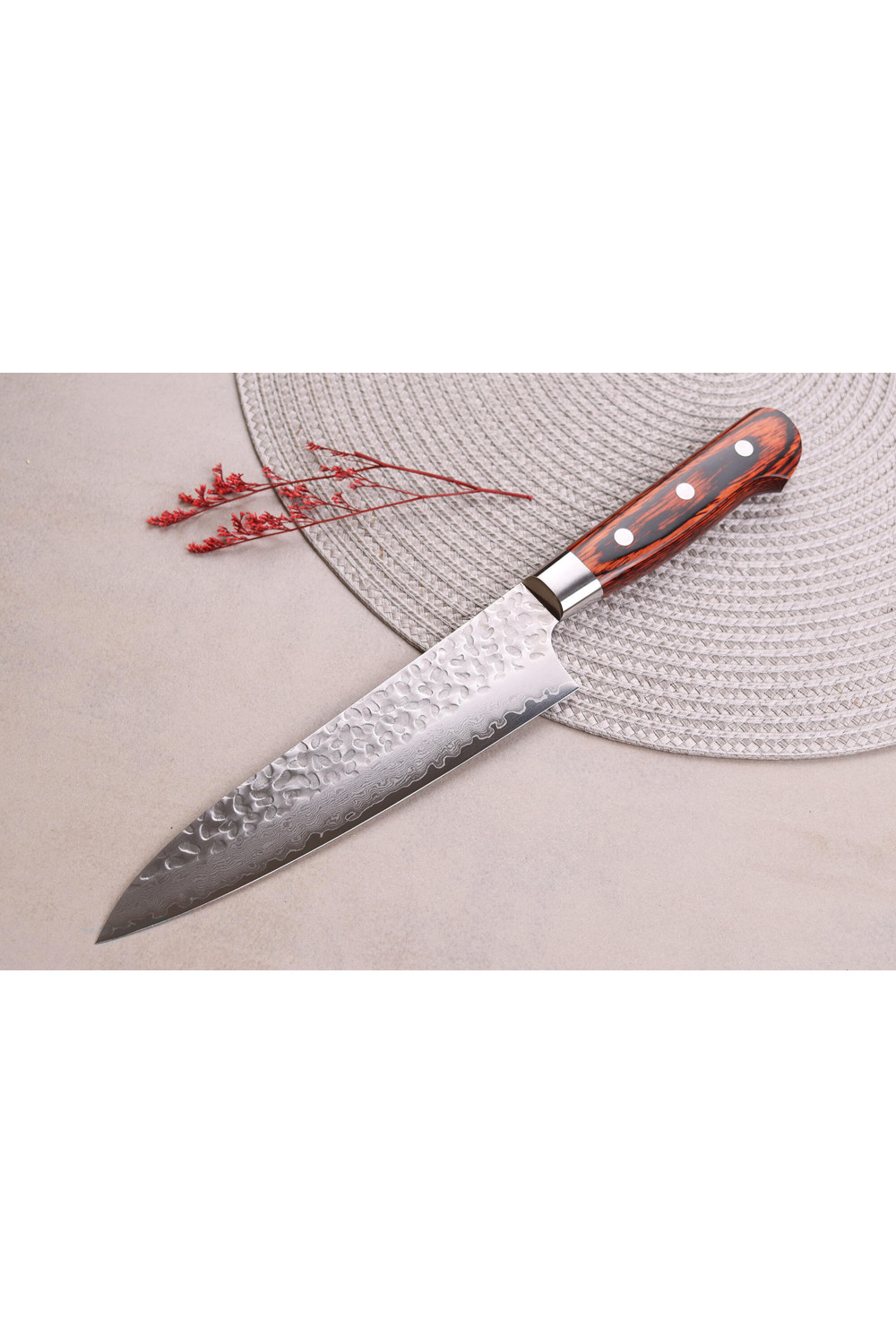
A damask blade for this Japanese chef 's knife
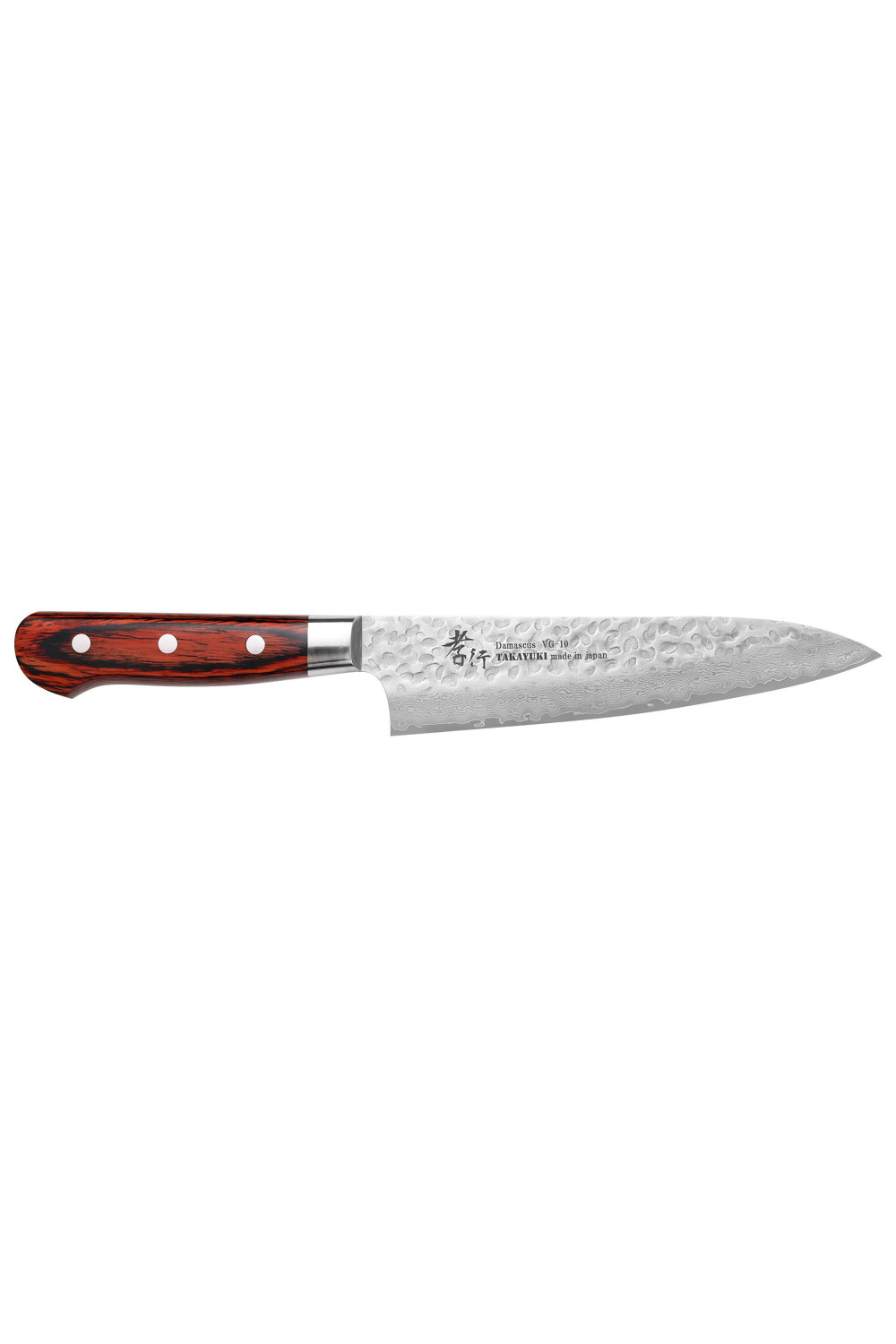
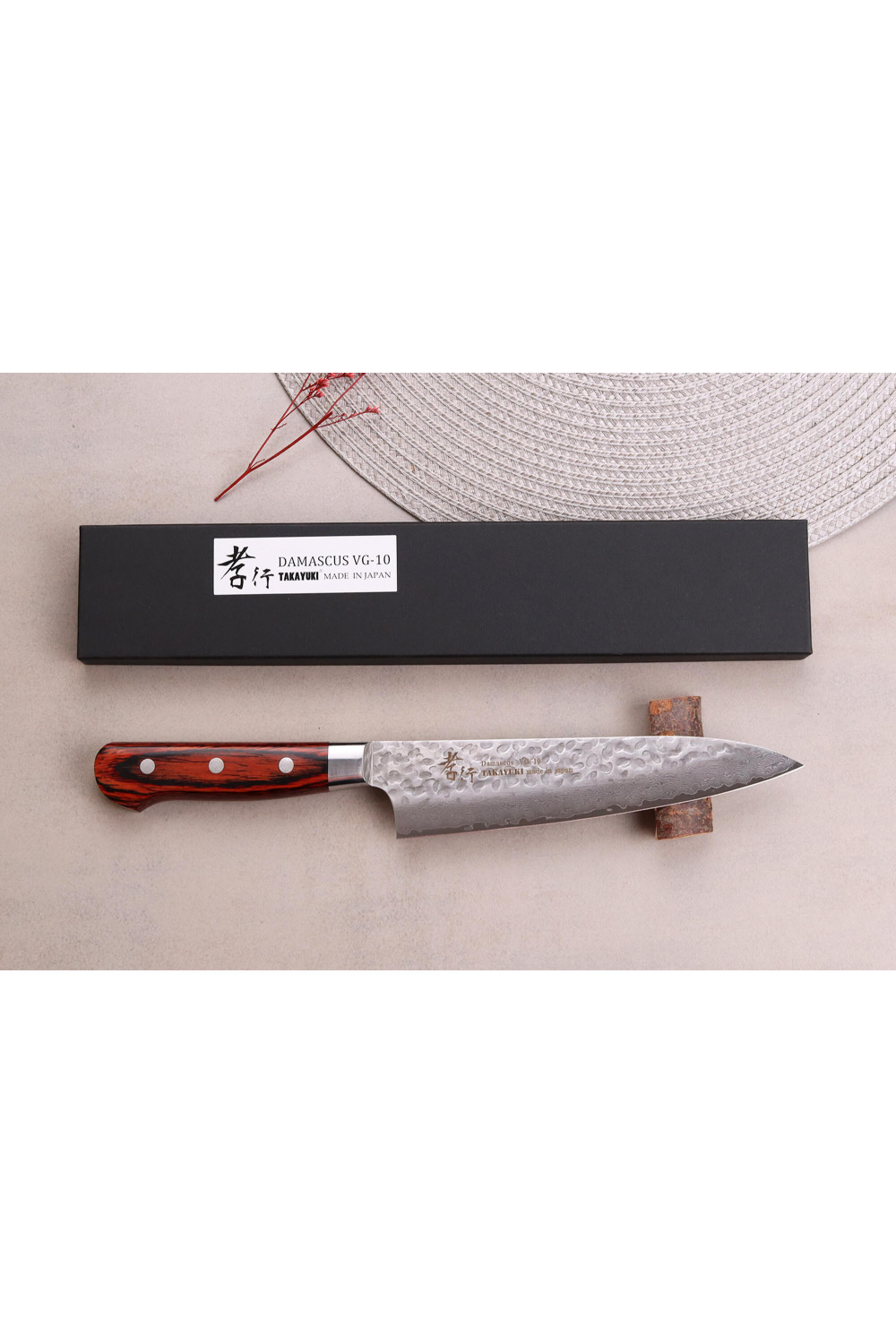
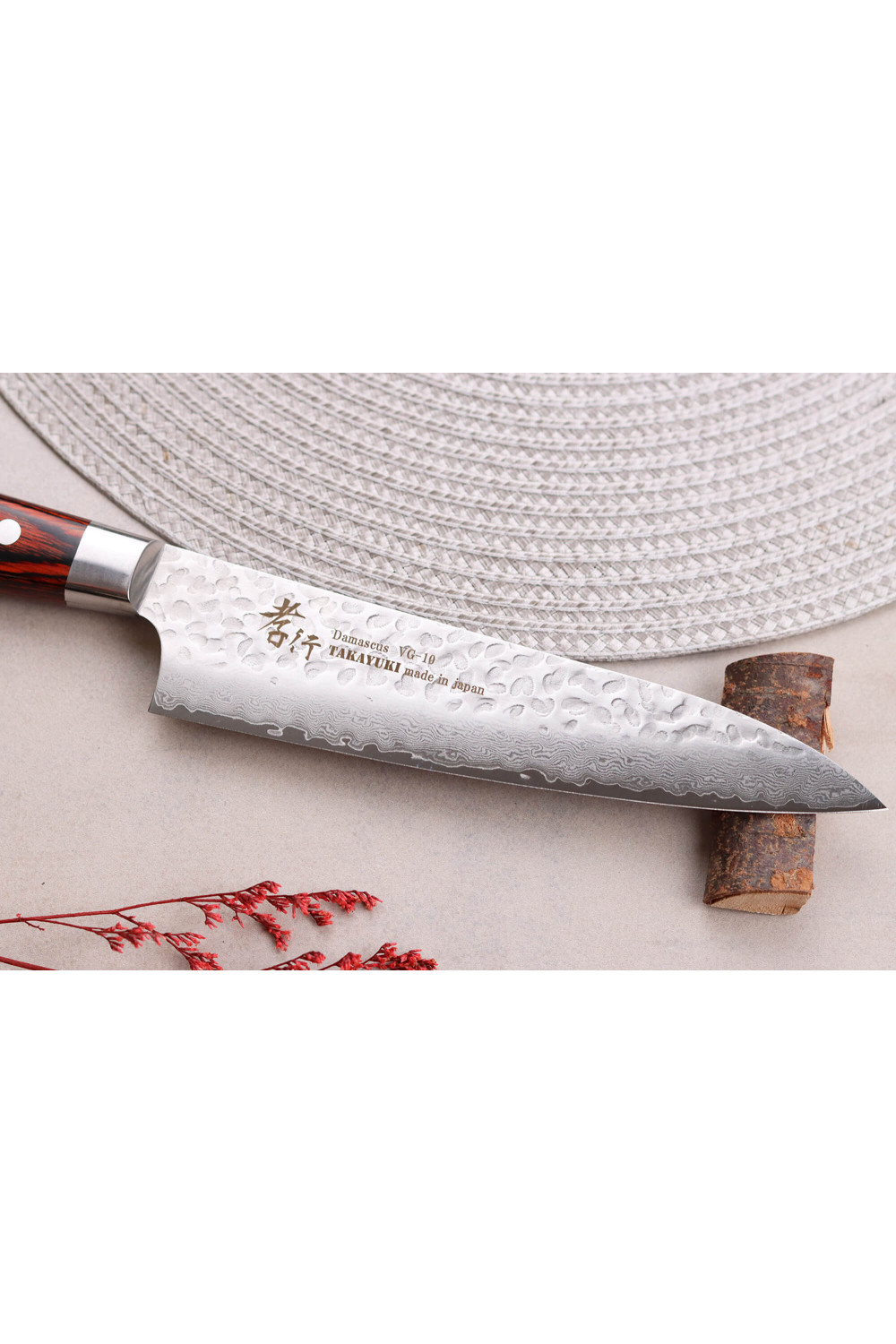
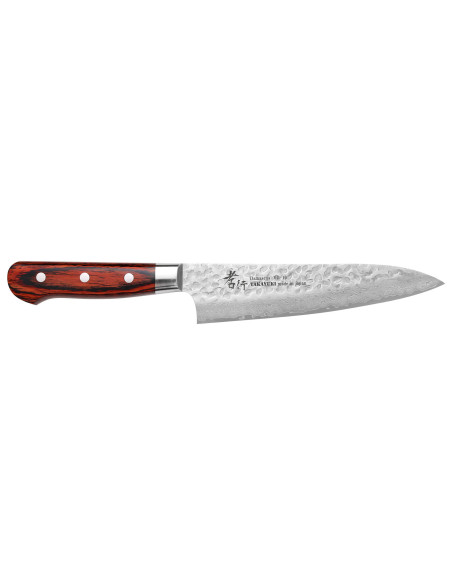
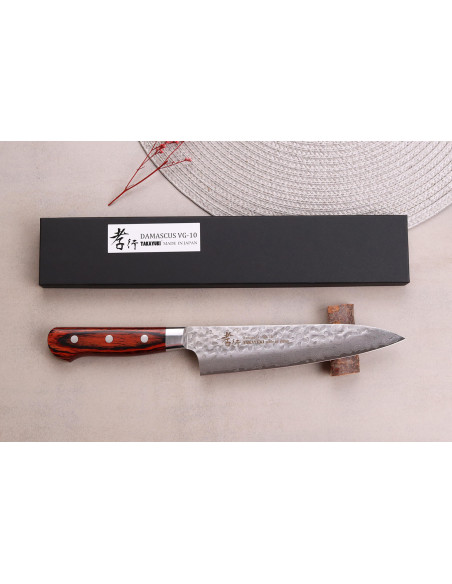
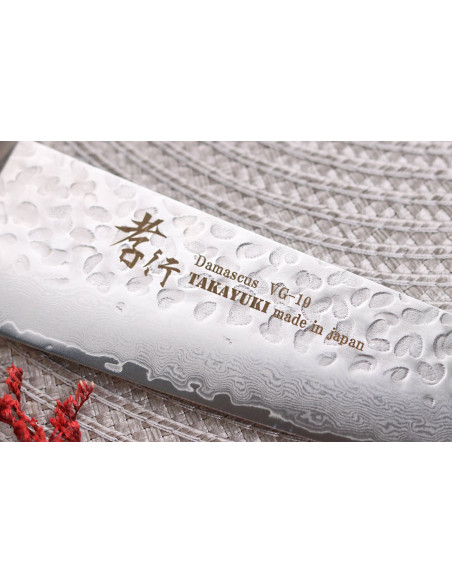
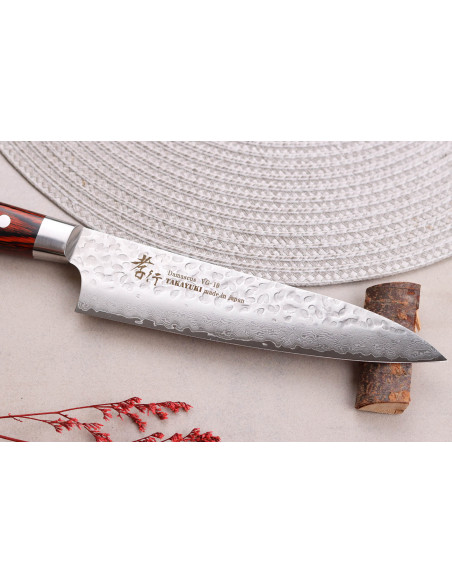
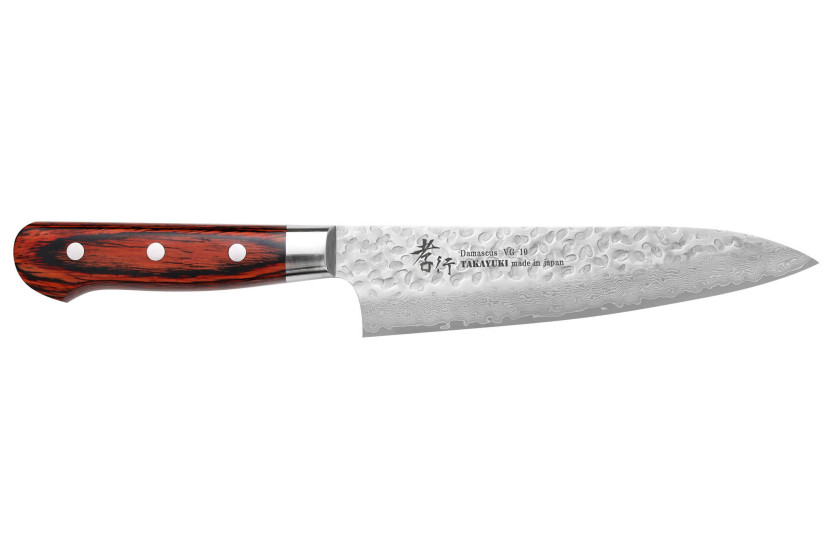
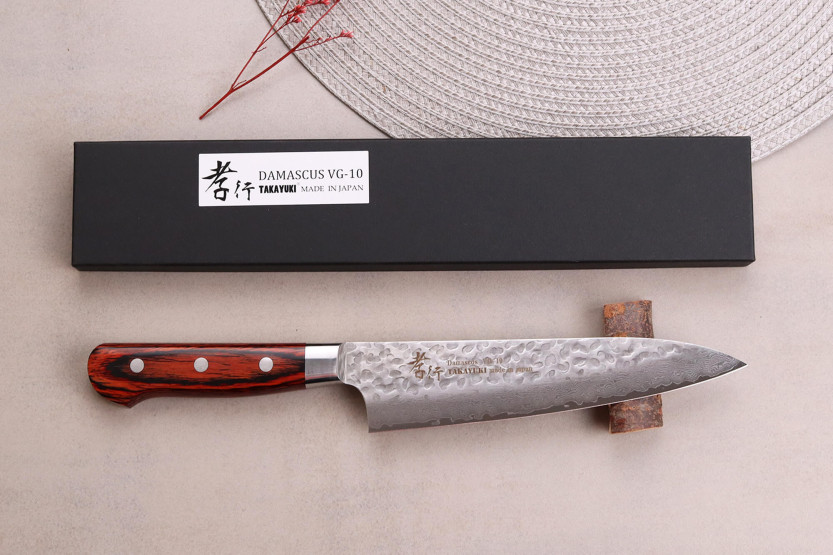
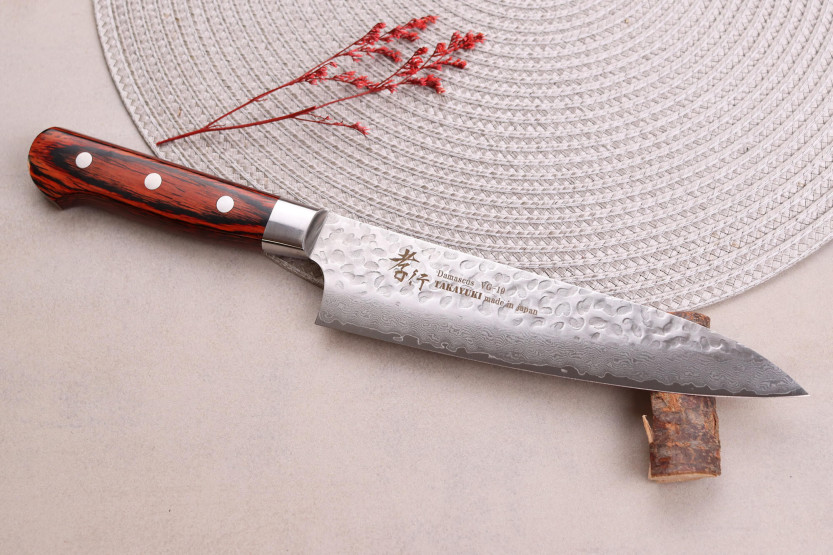
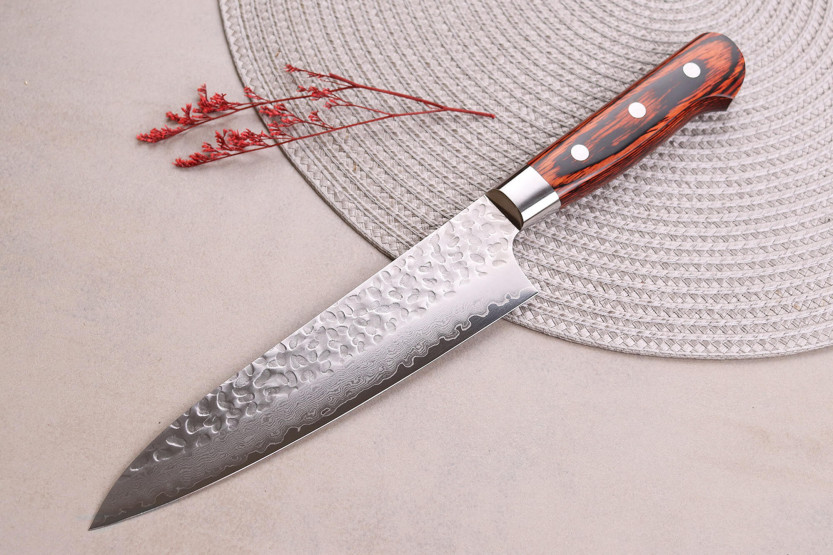
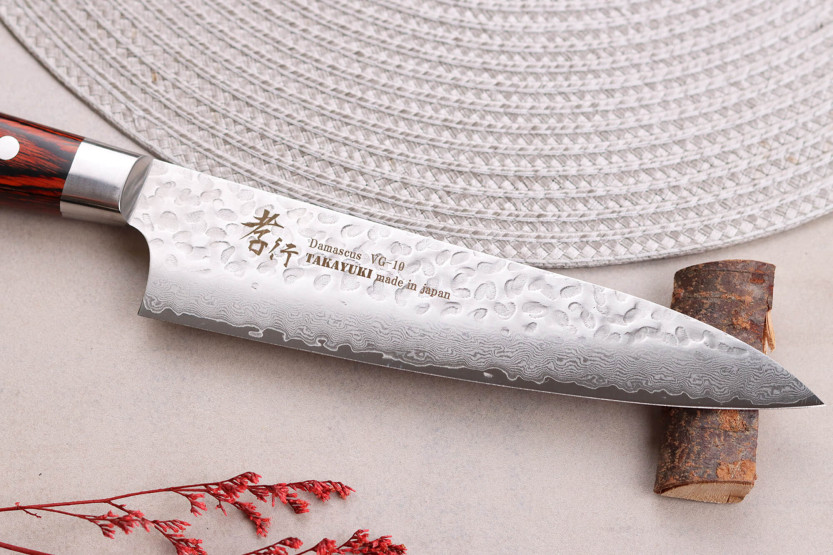
This gyuto 18cm Damascus Western knife features a damascened blade, which means that it contains a rigid steel core that is covered by several alternating layers of softer steel. This gives the knife a distinctive look and character.
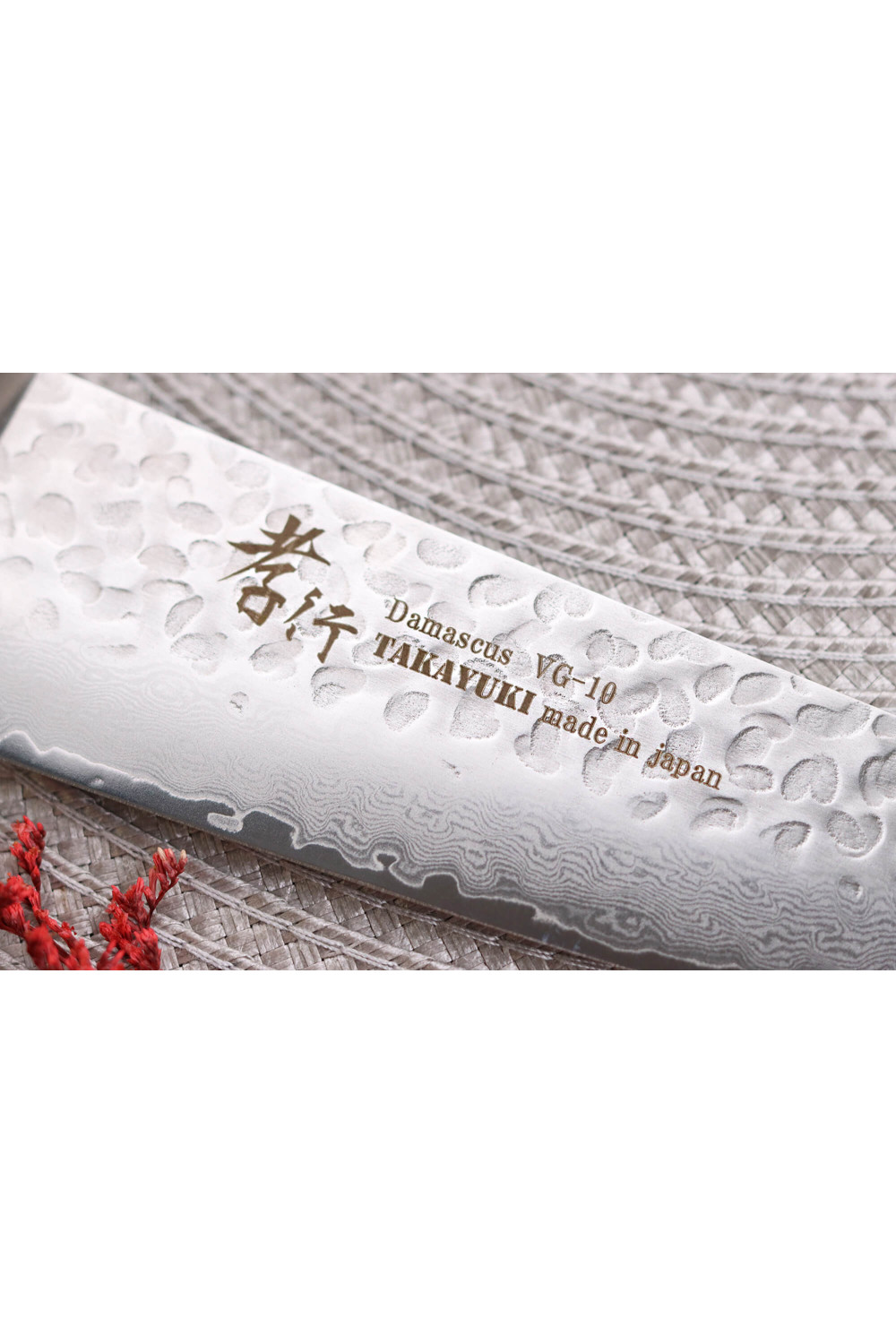
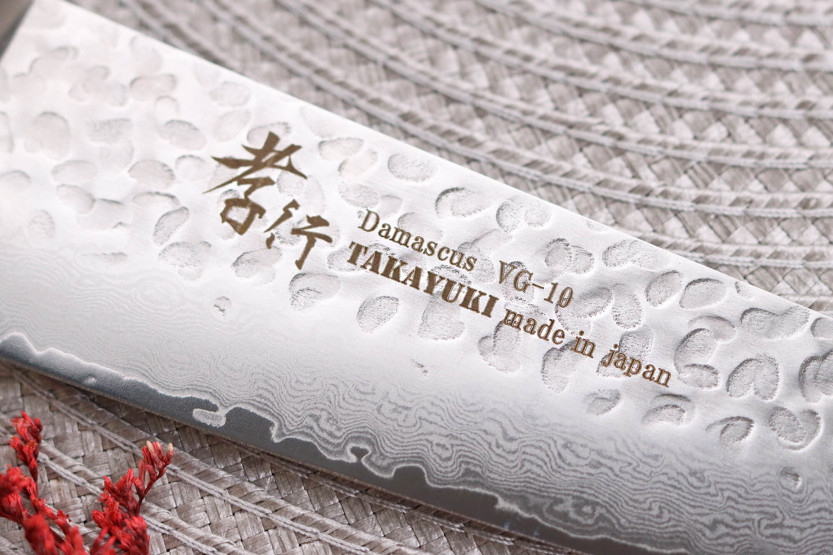
In addition to enhancing the blade's aesthetic appeal, damascening ensures a well-balanced blade. Here, the core is made of Japanese VG10 steel, a high-quality alloy enriched with 1% carbon and ice-hardened. Carbon is the essential element for increasing the hardness of an alloy, and its ice-hardening ensures a hardness of 60 HRC on the Rockwell scale for your blade.
With properties like these, the alloy gives you a sharp, long-lasting blade that doesn't need to be sharpened too regularly.
VG10 steel also contains around 15% chromium, the element that enables it to resist corrosion. However, due to its carbon enrichment, the alloy will require careful maintenance to prevent the blade from oxidizing.
Next, this rigid core is covered with 33 alternating layers of softer steel: damascus is born. This process balances the strong rigidity of the blade's core, giving it suppleness without making it flexible. Rather, it makes the blade less sensitive to impact and less likely to break. In fact, very rigid steel tends to break more quickly because it lacks flexibility. Damascening compensates for this hardness.
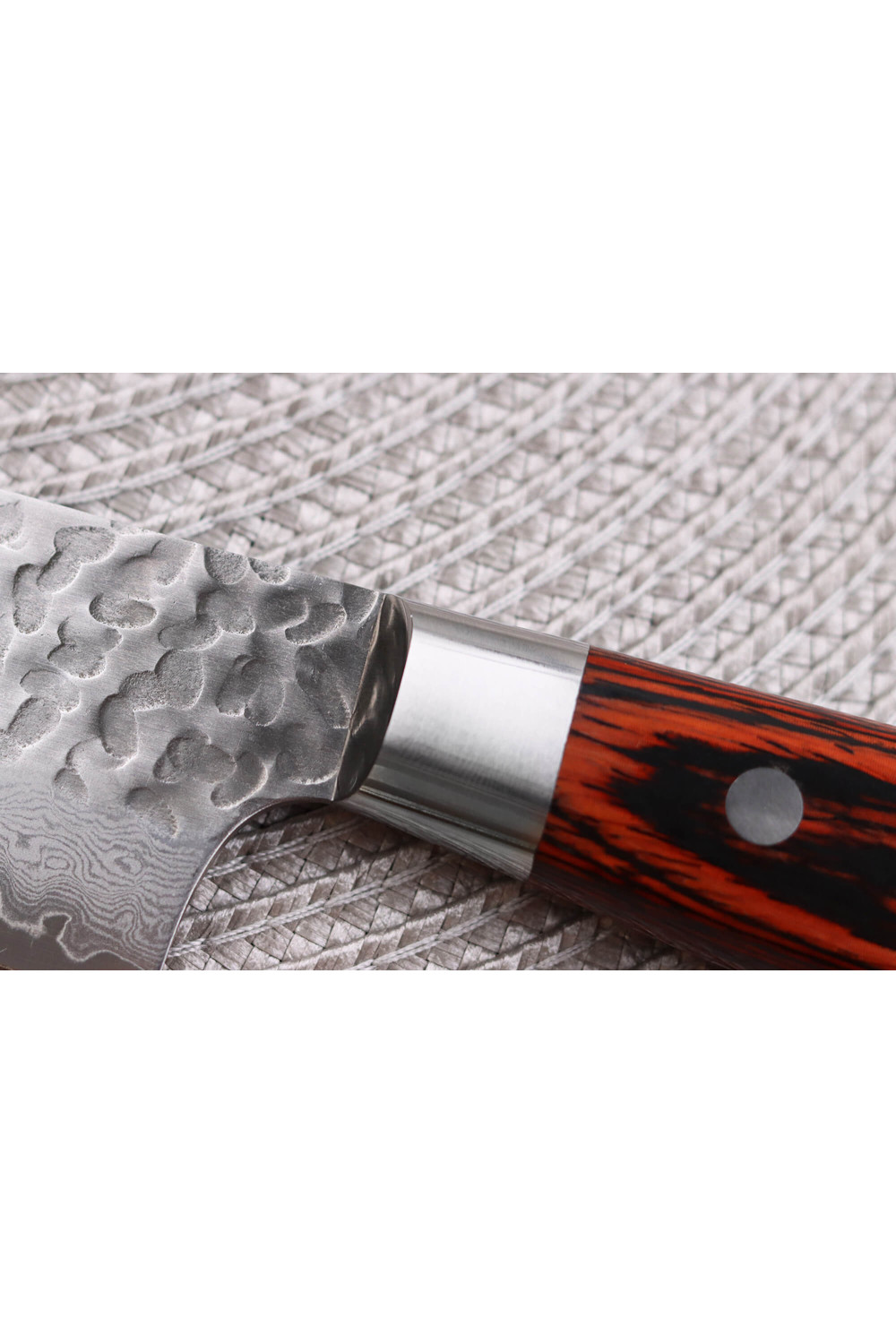
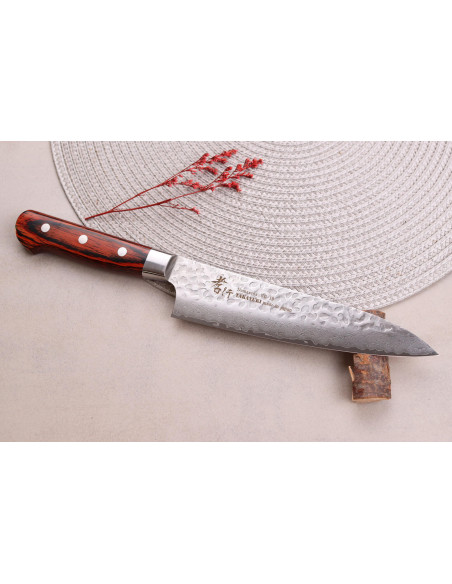
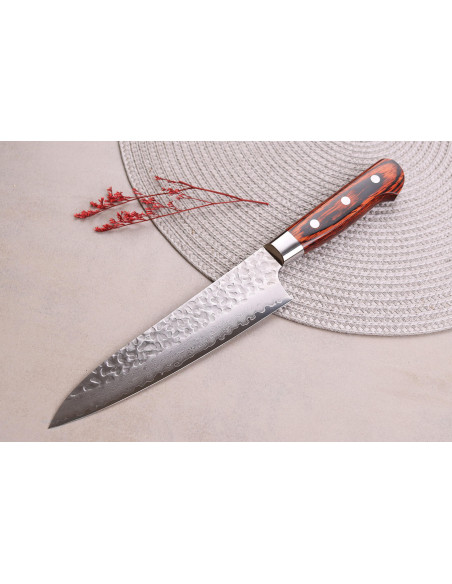
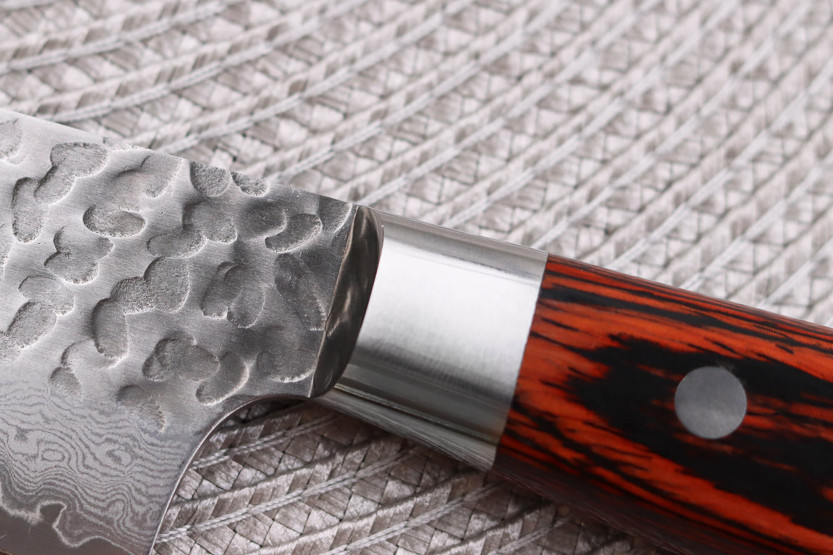
The upper part of the blade is then hammered, providing a nice contrast with the damascus layers. But here again, the hammering has more than just a visual aspect, as it prevents your food from sticking to the blade by acting like honeycombs.
An elegant handle in Spanish mahogany
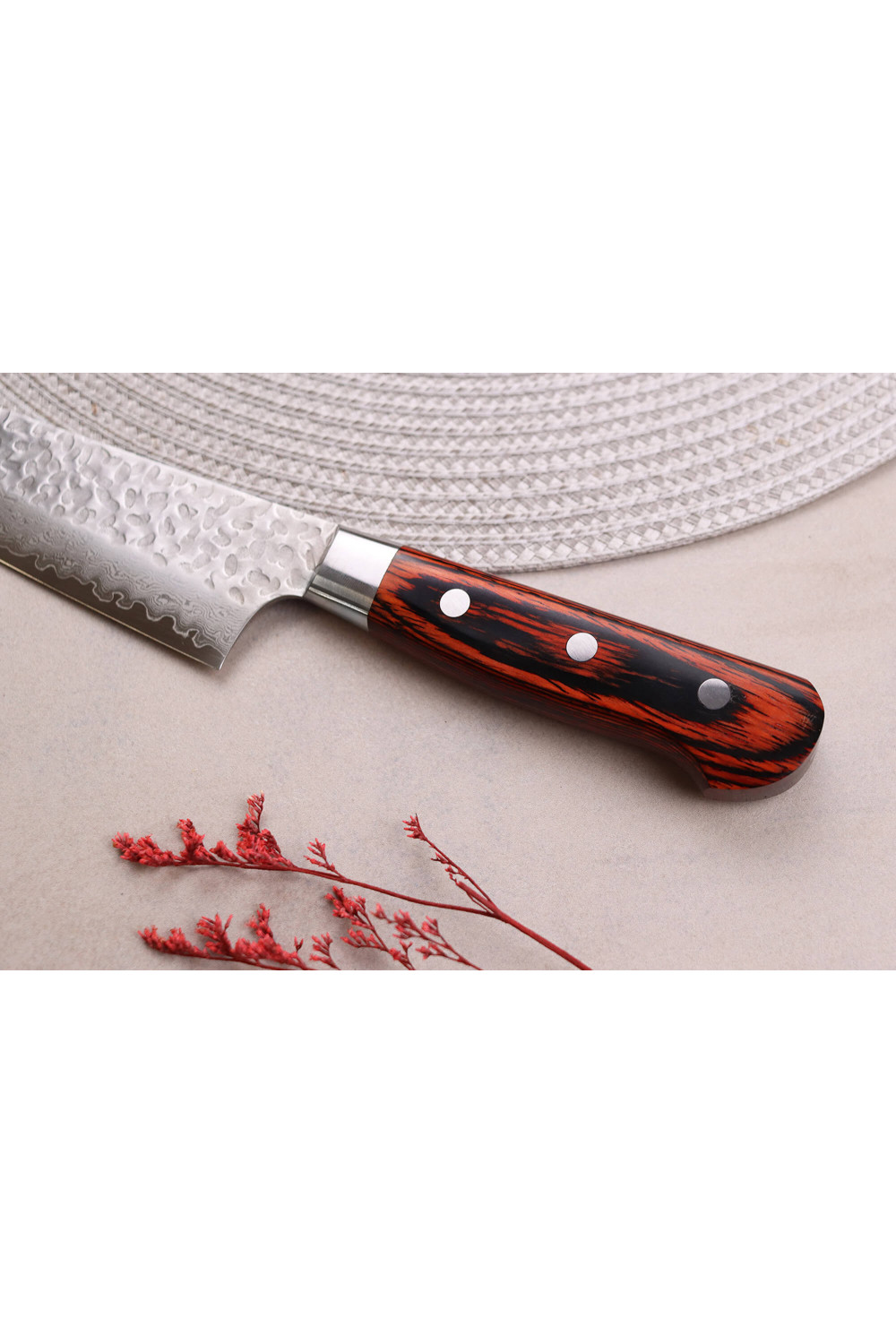
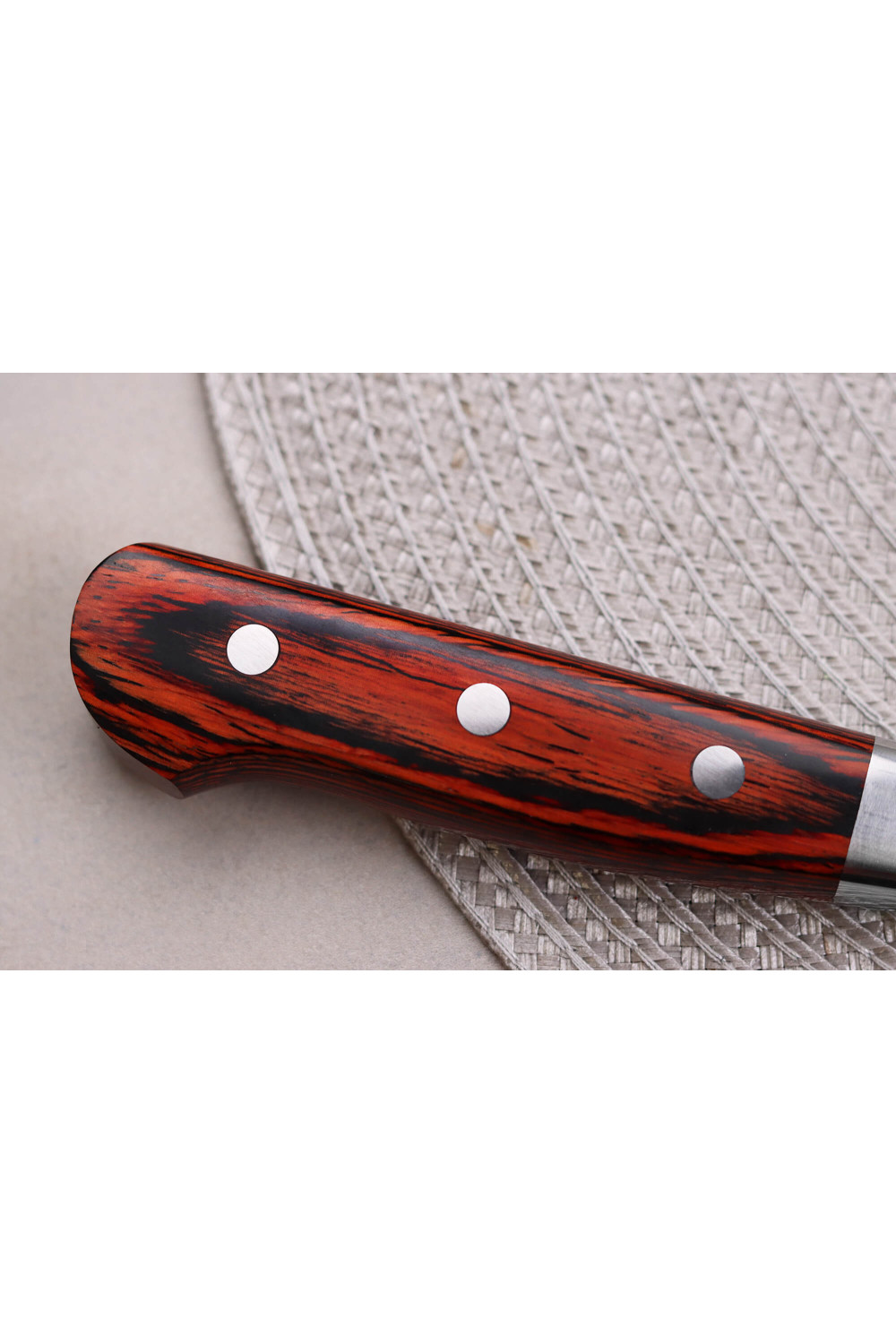
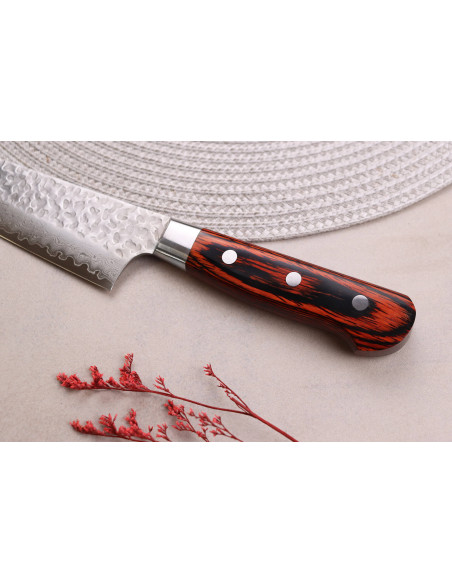
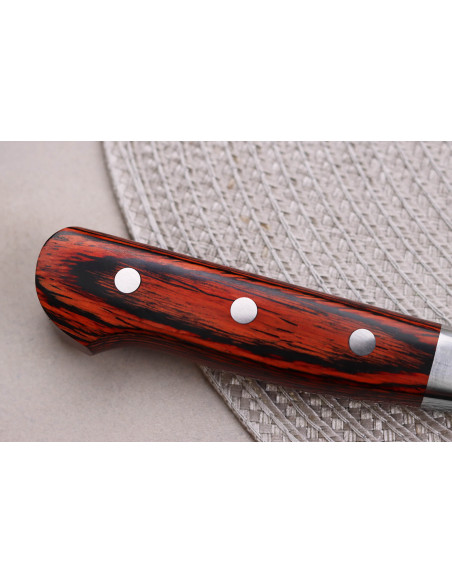
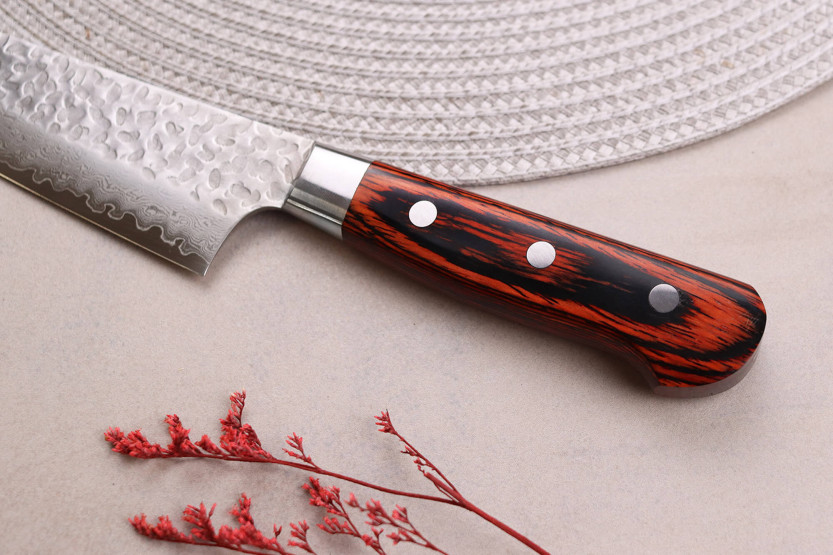
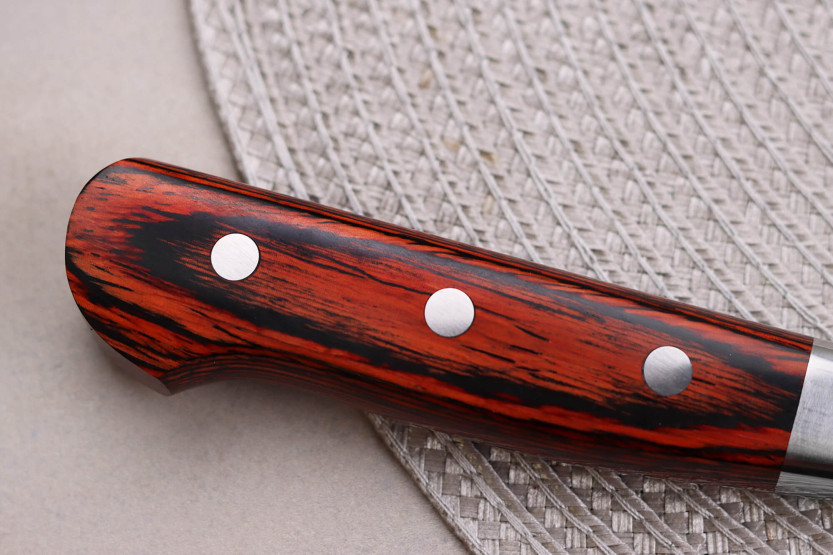
The handle of your chef's knife is made of Spanish mahogany, a durable species recognized by its superb brown hue with glowing red accents. As wood is a living material, its grain is unique to each knife. Mahogany wood is light but highly resistant to impact. To protect it, a transparent glaze has been applied.
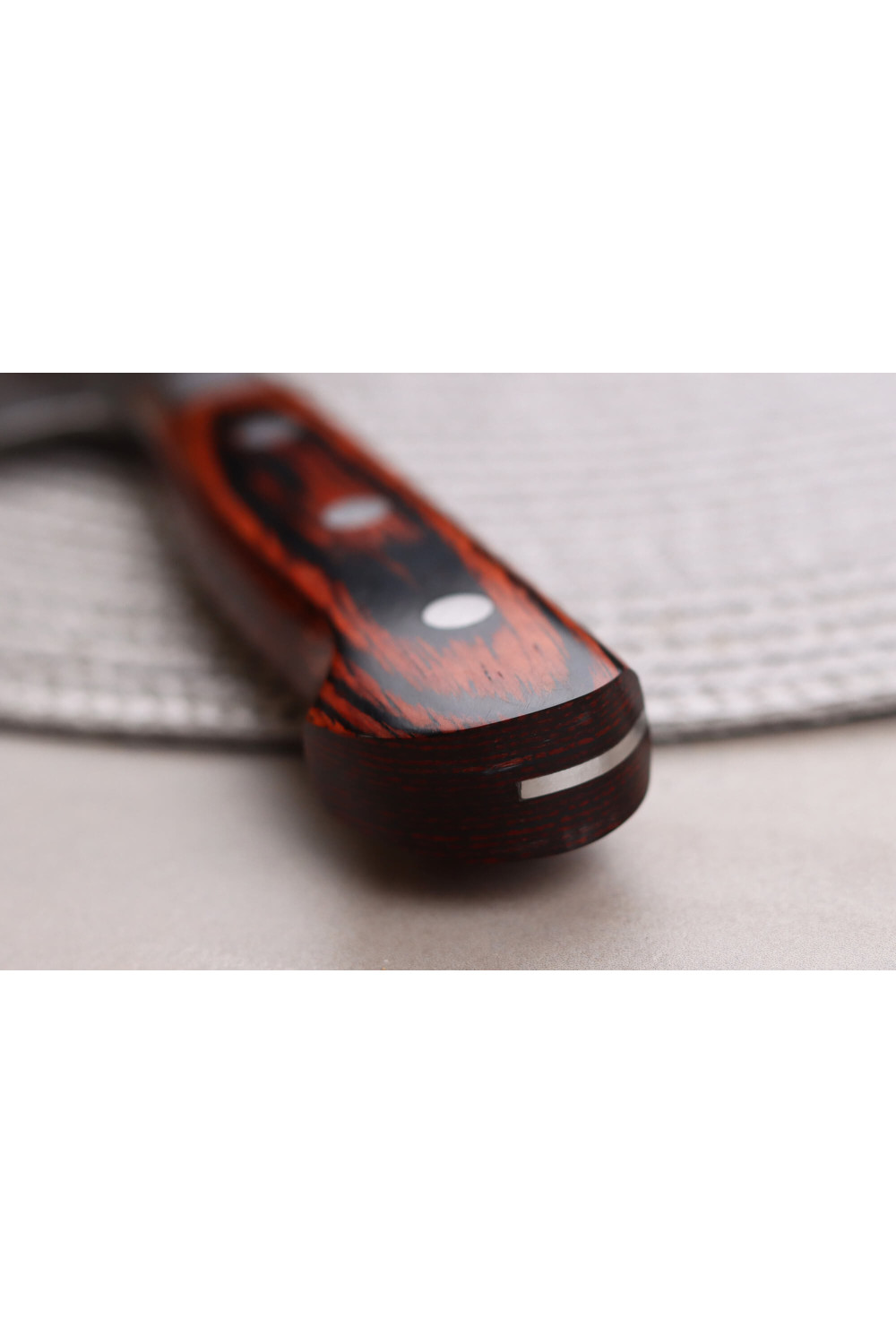
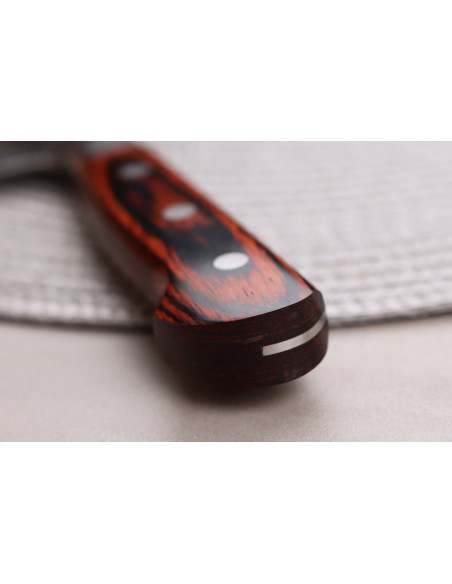
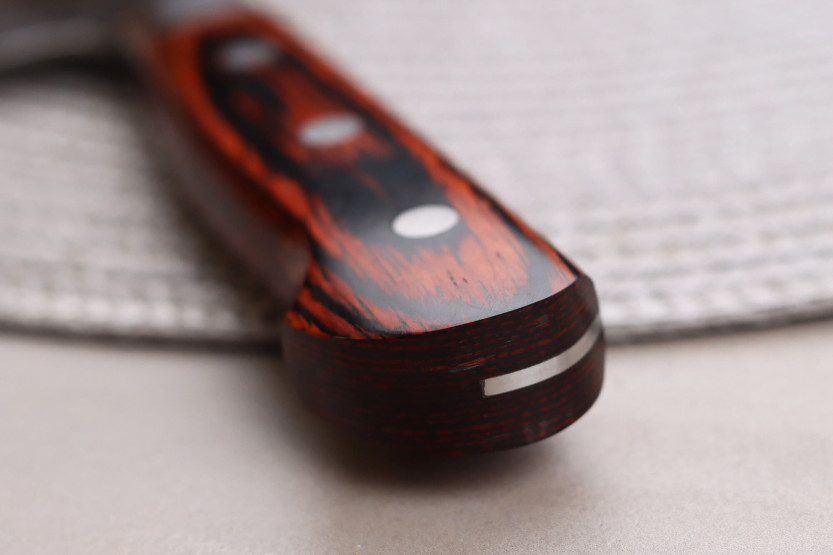
The handle has been carved into a Western shape for a comfortable grip. In fact, at the bottom of the heel of the blade is a small finger rest which is particularly useful for prolonged use.
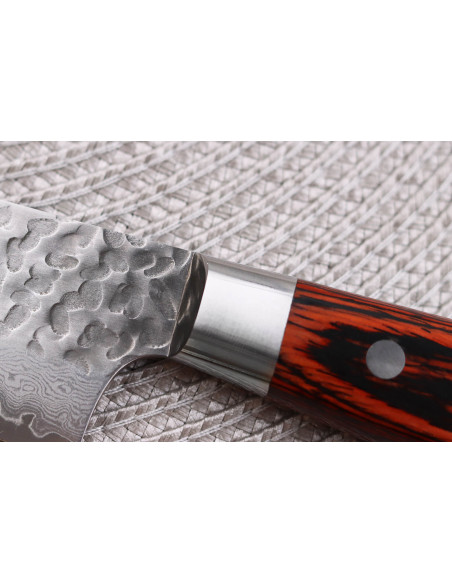
The handle is attached to the knife's full tang blade by 3 stainless steel rivets, guaranteeing a solid, reliable component. A stainless steel bolster links the blade to the handle.
Your knife should be washed by hand, but not in the dishwasher or sink. Take care not to get the handle wet, and use a non-abrasive sponge and mild soap. Once washed, the knife can be dried immediately to remove all traces of moisture and stored in a dry place.
Sakai Takayuki's ancestral Japanese know-how
Sakai Takayuki is a Japanese company founded in the 1950s and based in Sakai, the country's cutlery capital. The company's expertise stems from the town's precious heritage. Indeed, the area was once home to the great blacksmiths who made katanas for the samurai.
These blacksmiths were able to pass on their skills to recent generations, like Sakai Takayuki. She uses all her expertise to offer you quality Japanese knives, combining ancestral know-how with modern visuals that appeal to the widest possible audience.
All Sakai Takayuki knives can be found at KnifeLeader!




 By buying this product you can collect up to