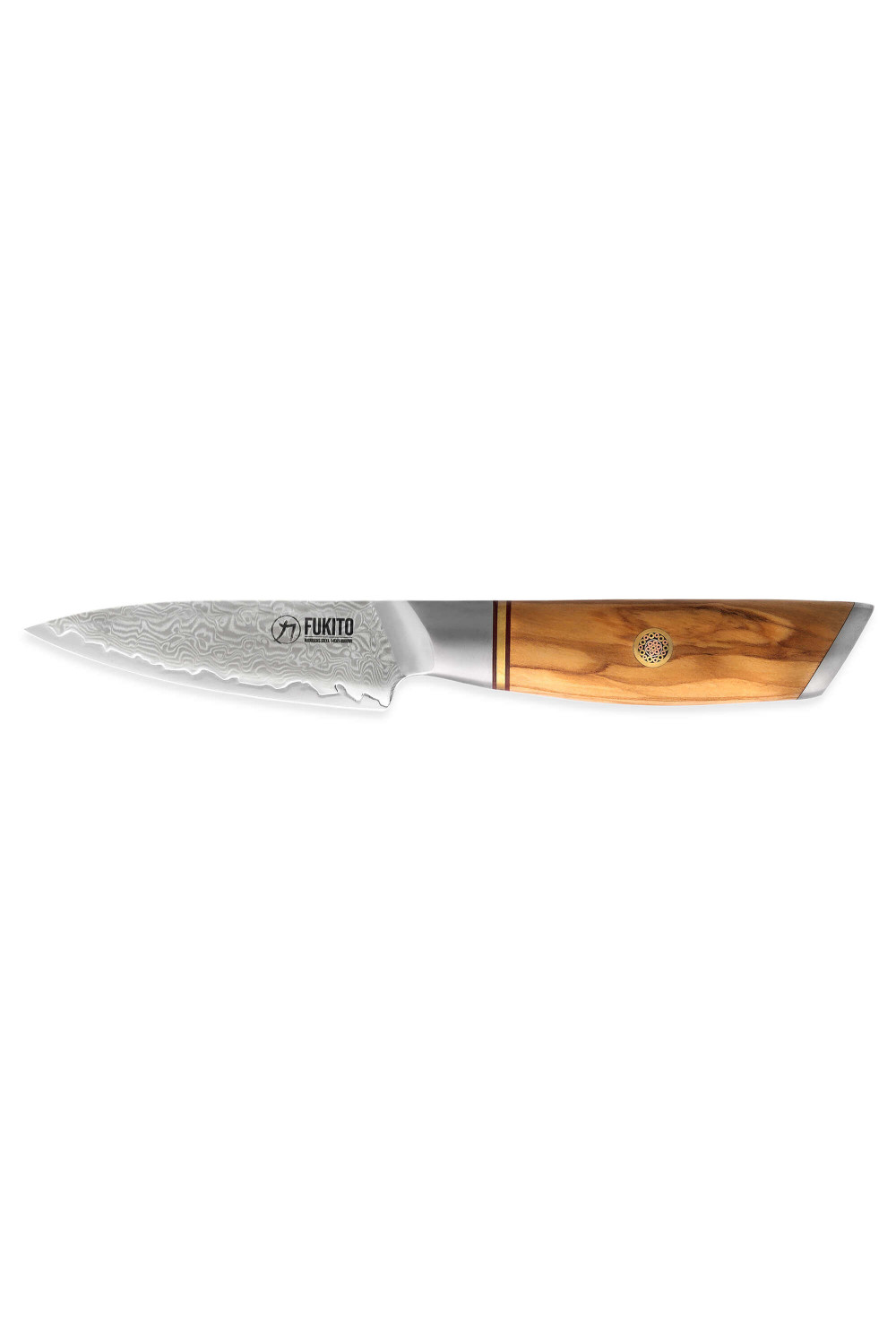
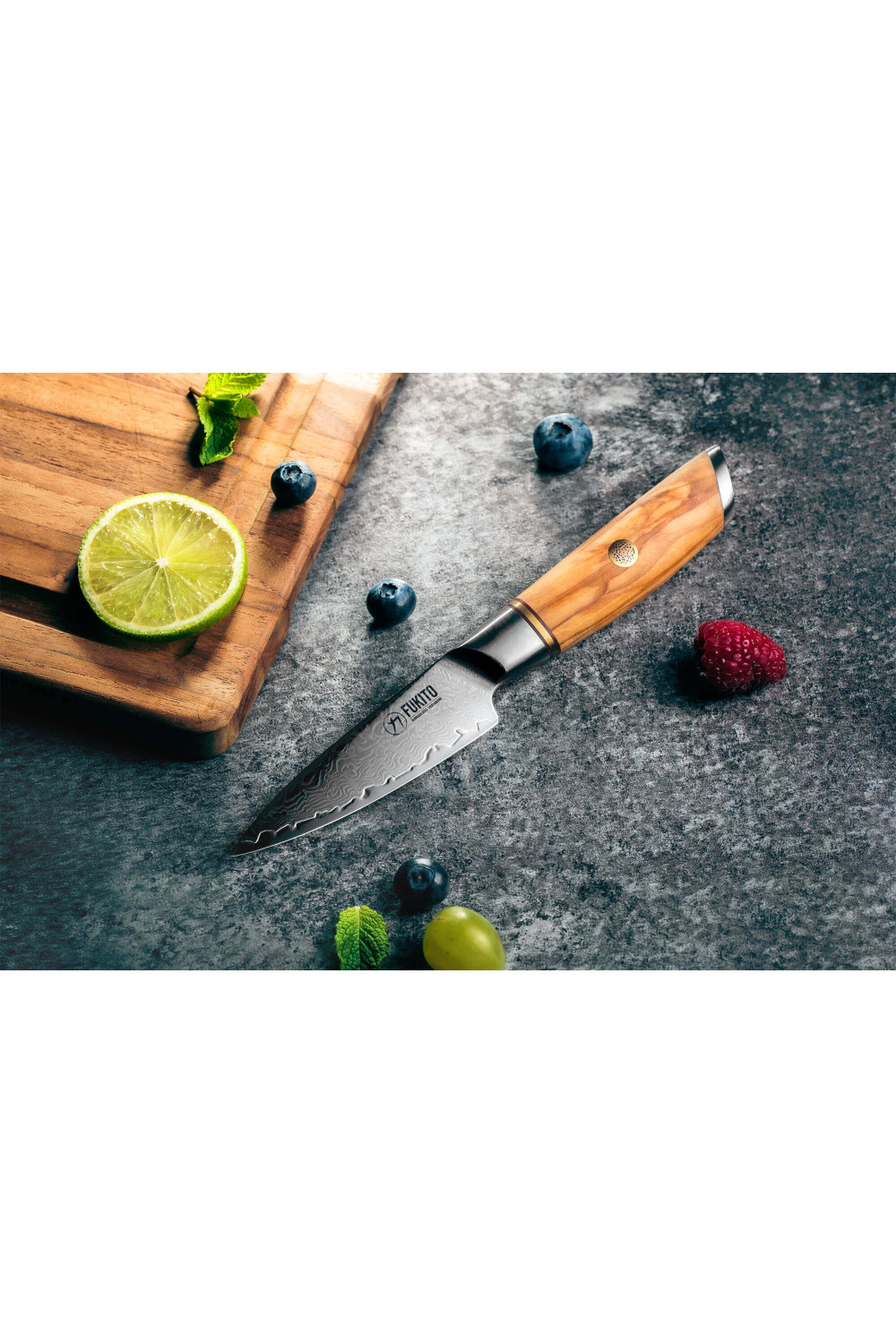
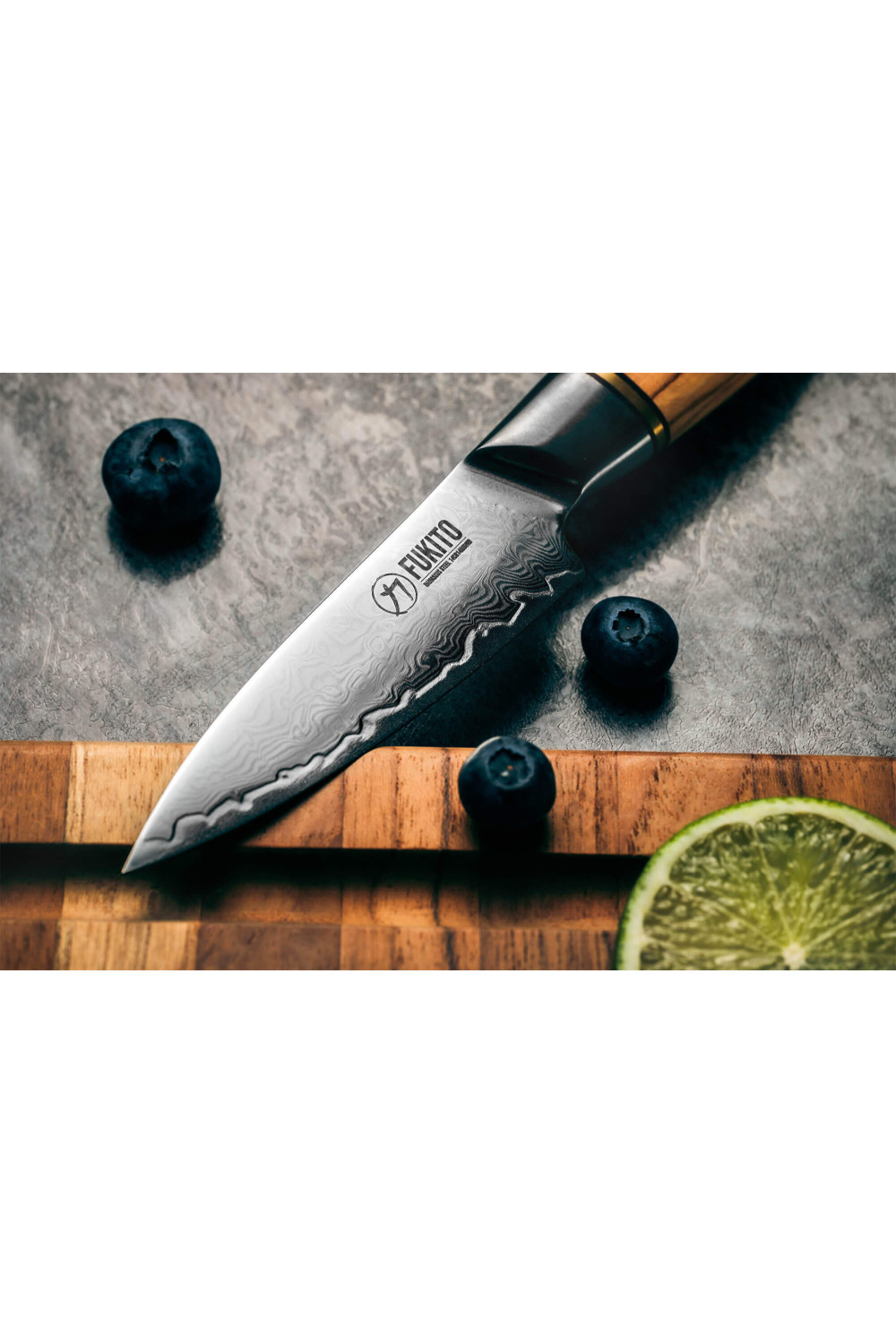
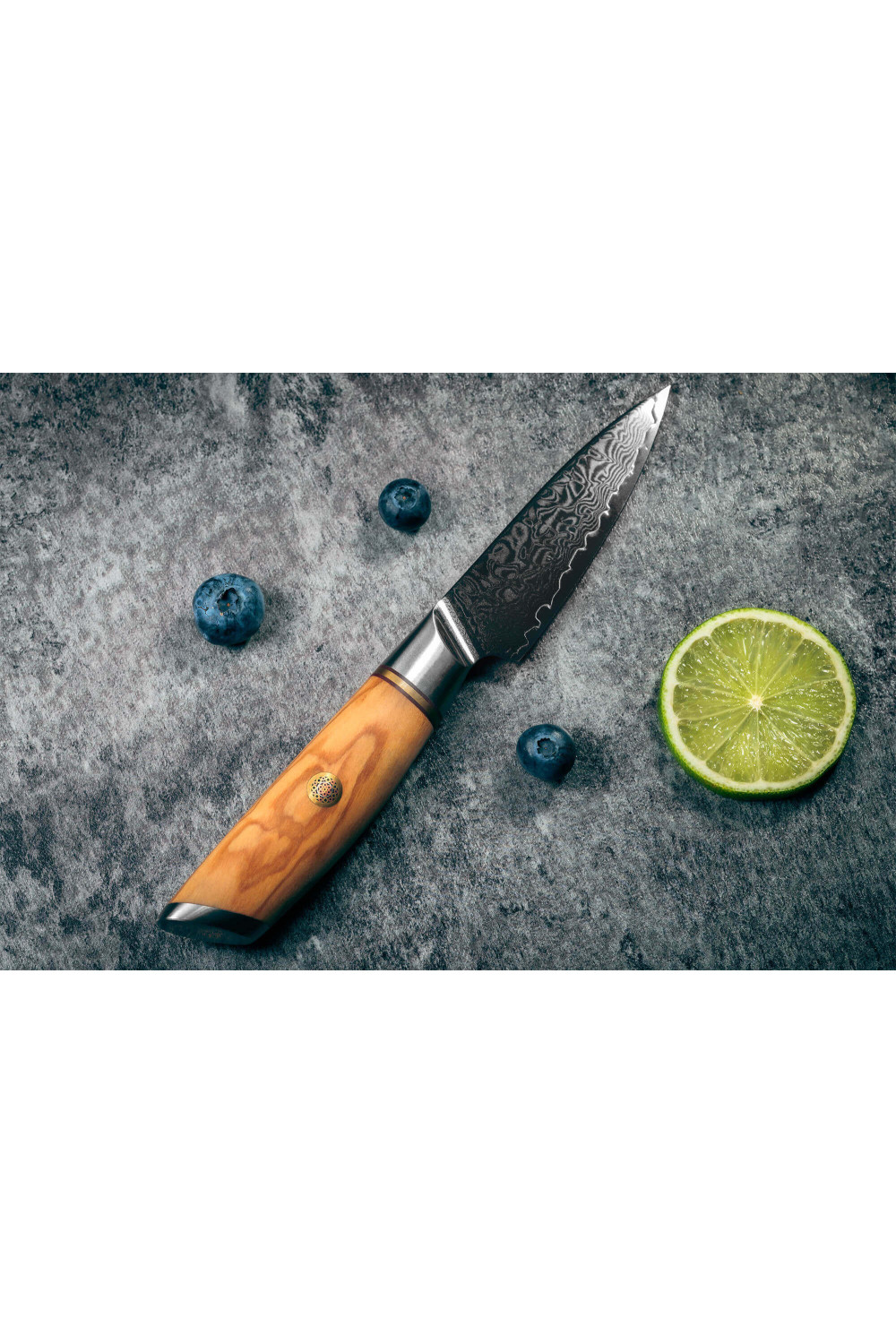
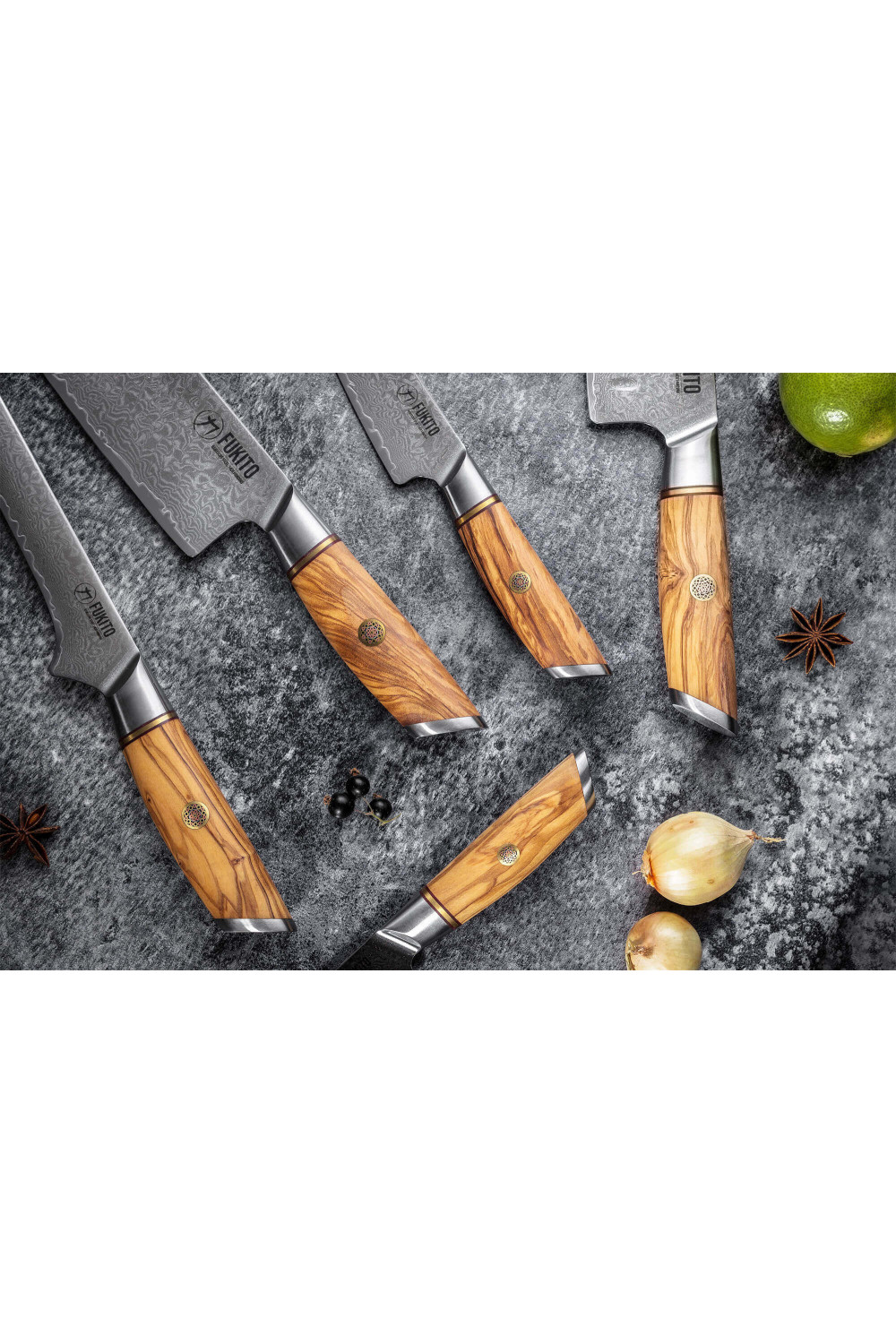
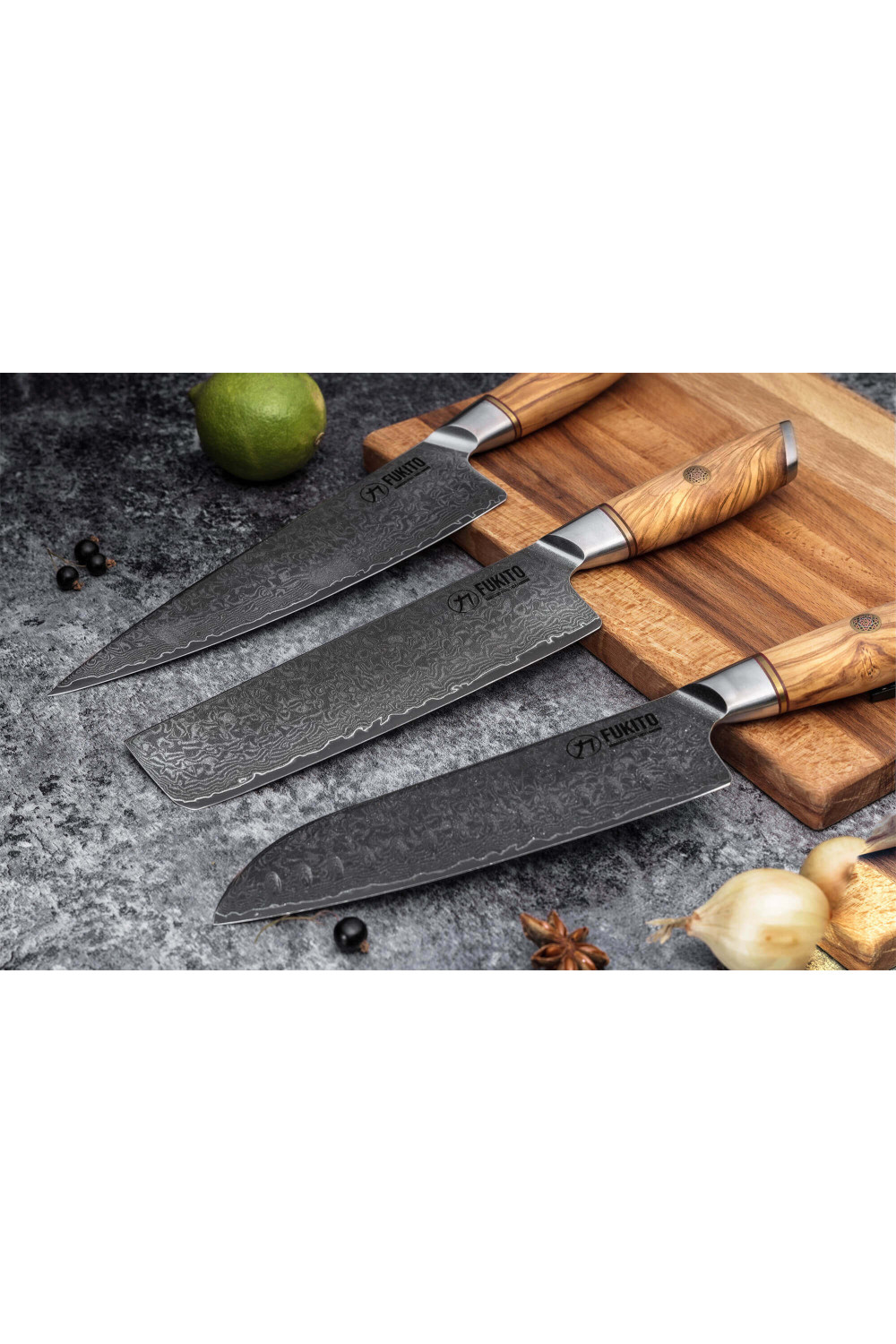
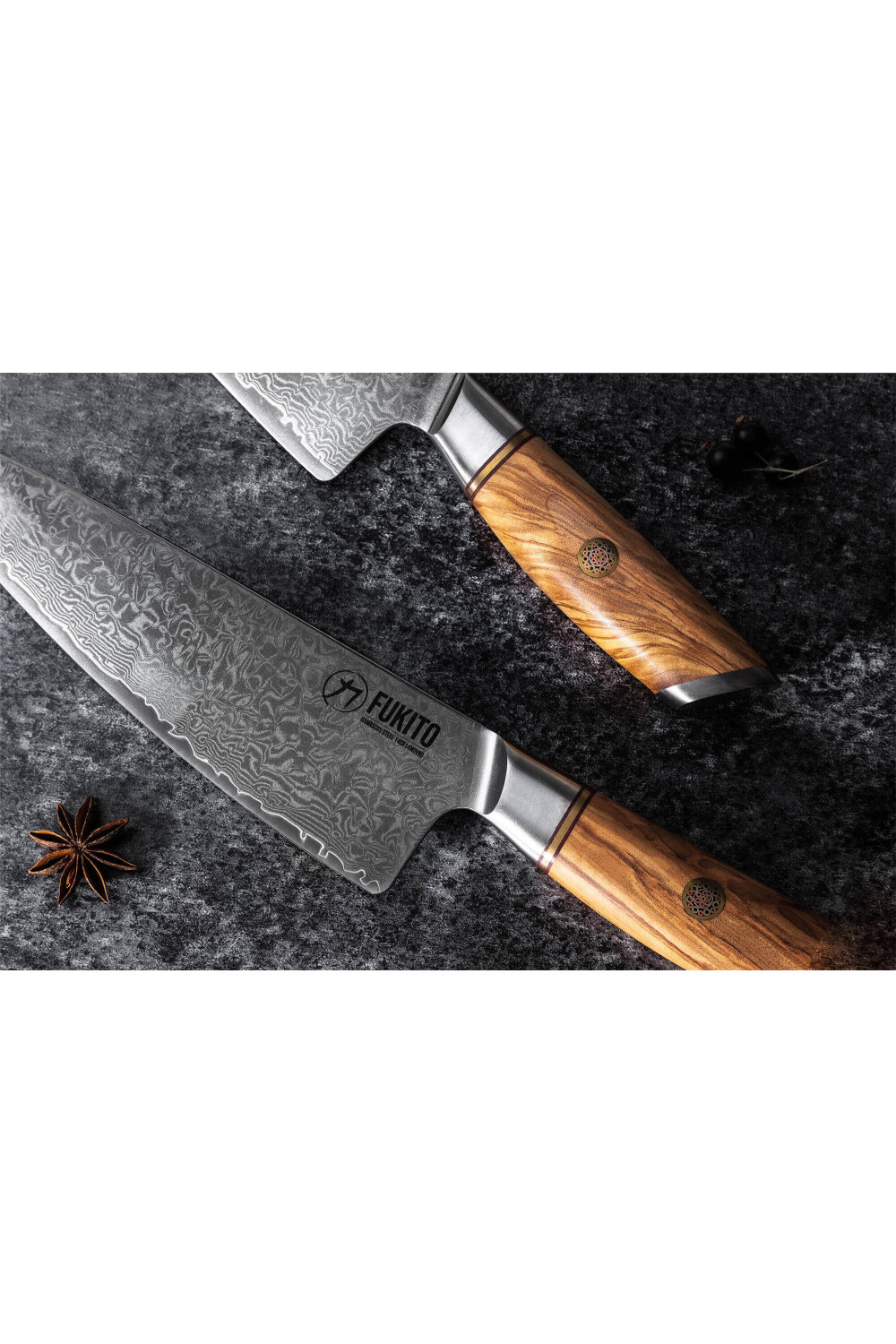
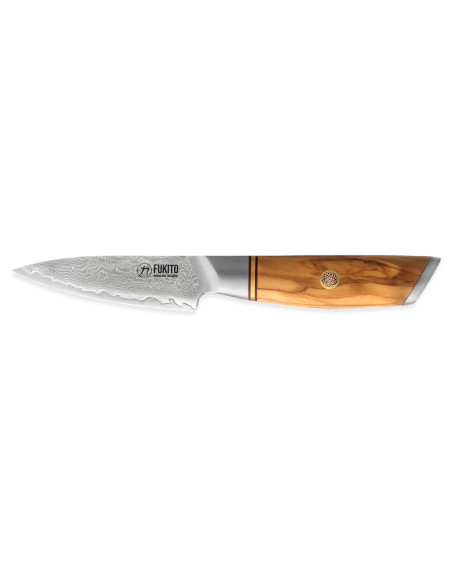
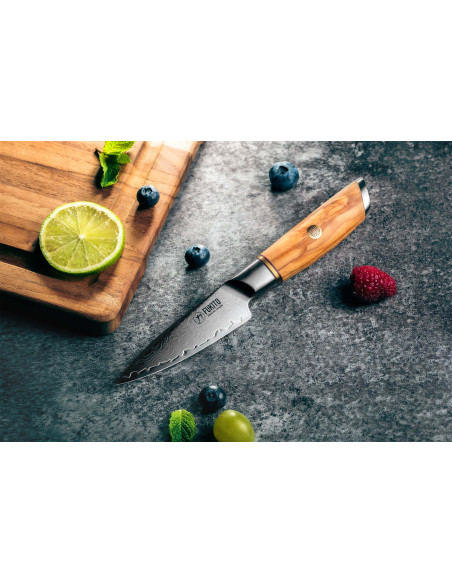
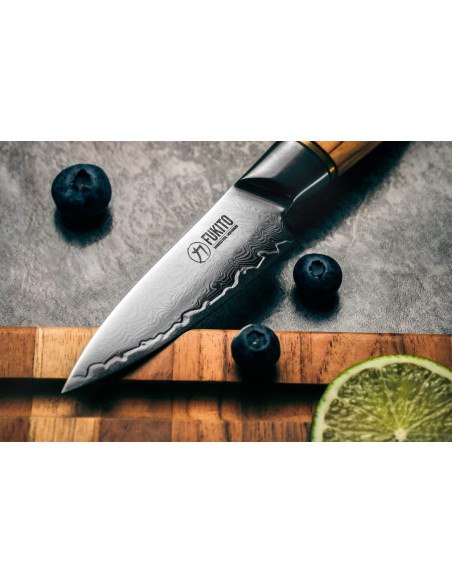
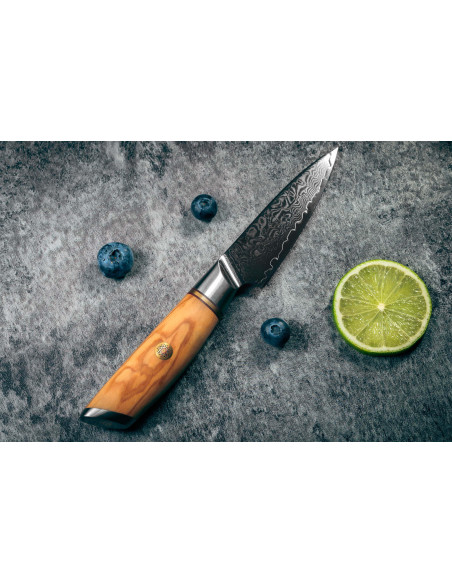
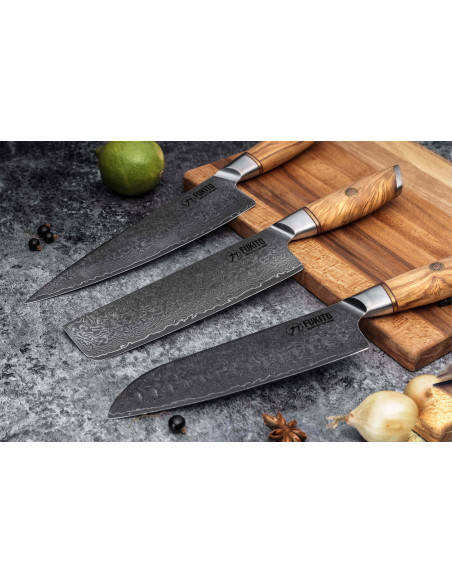
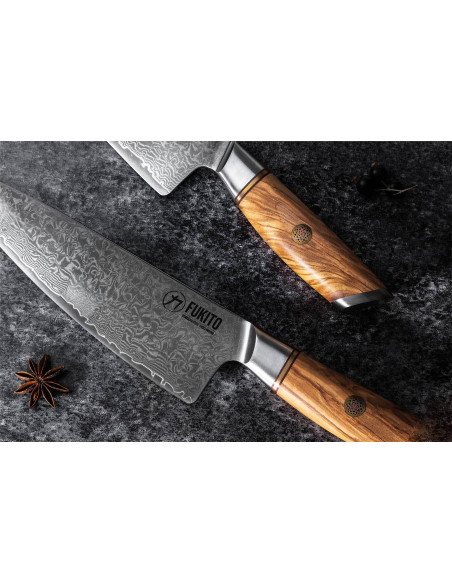
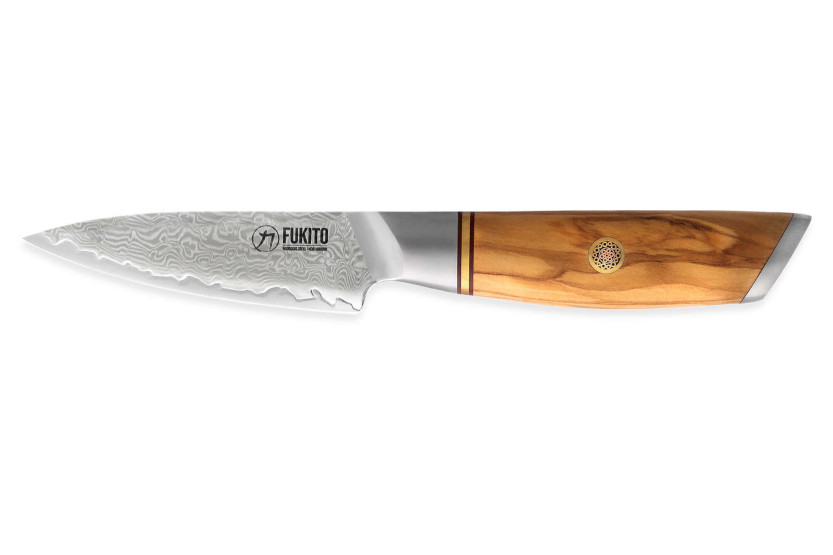
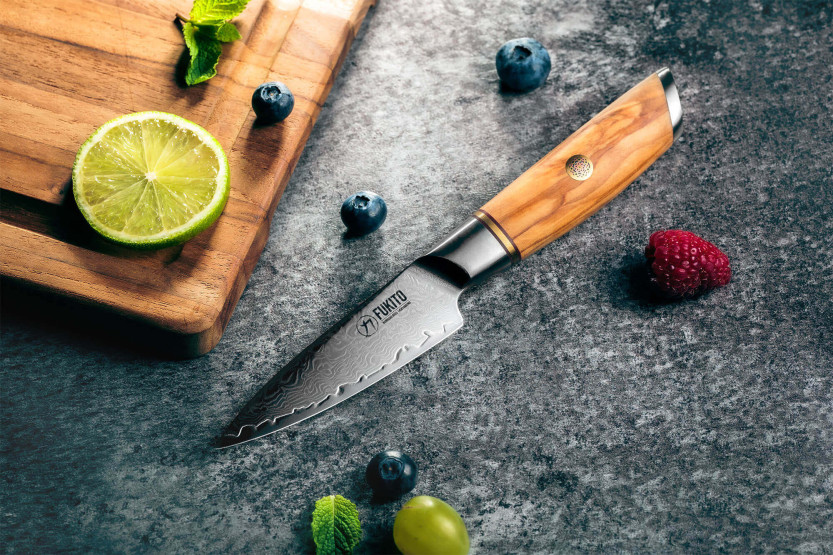
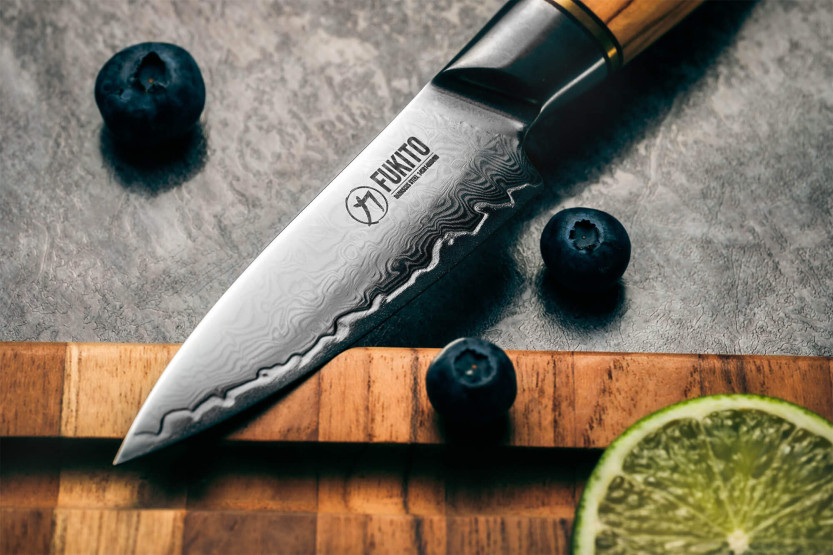
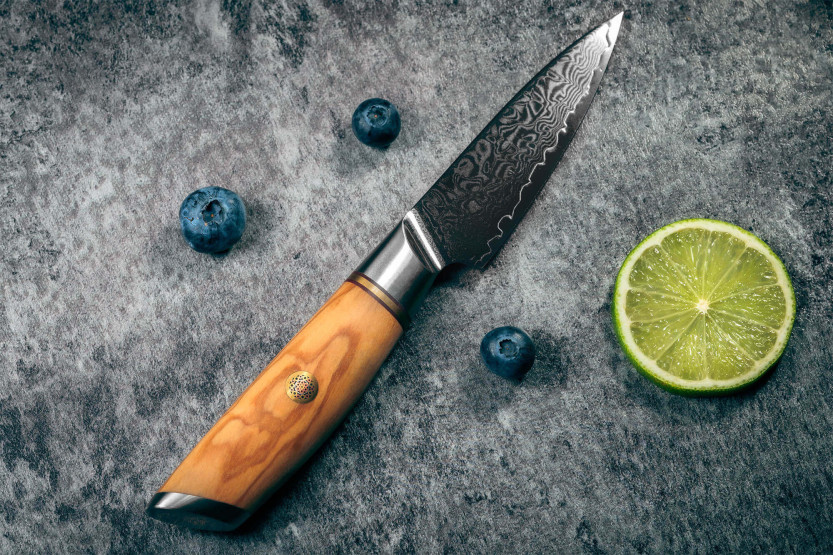
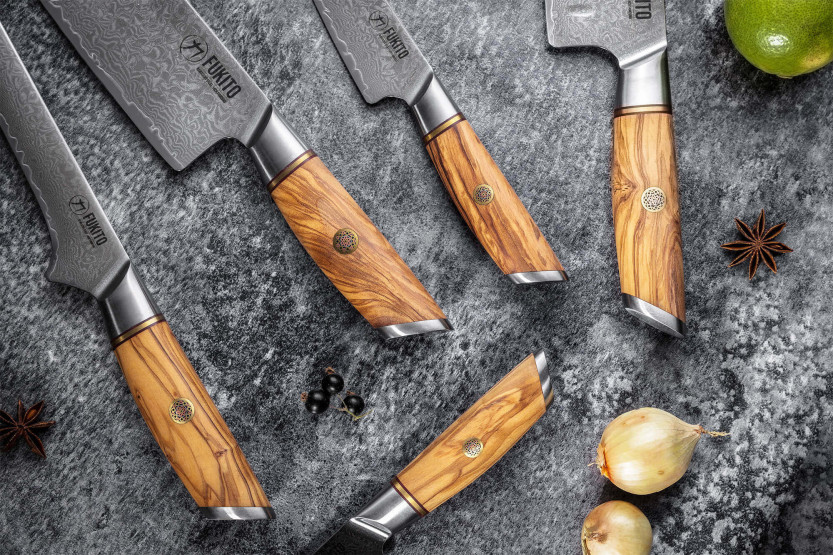
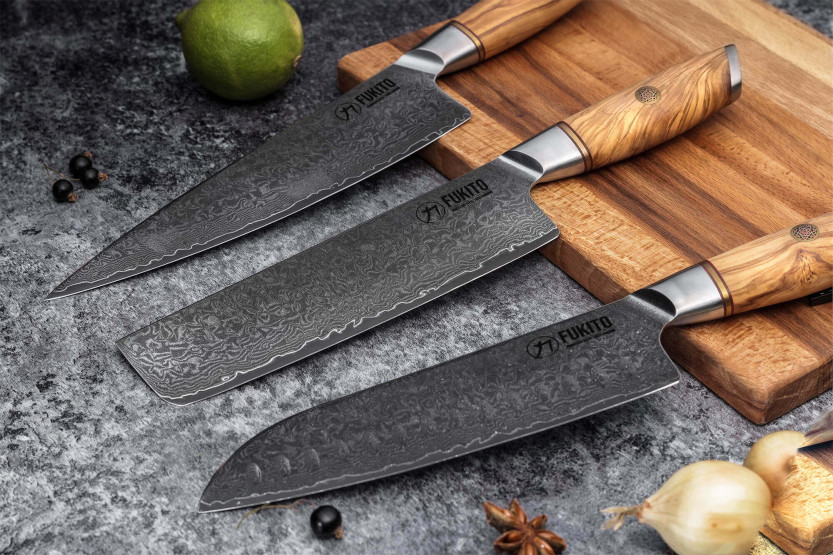
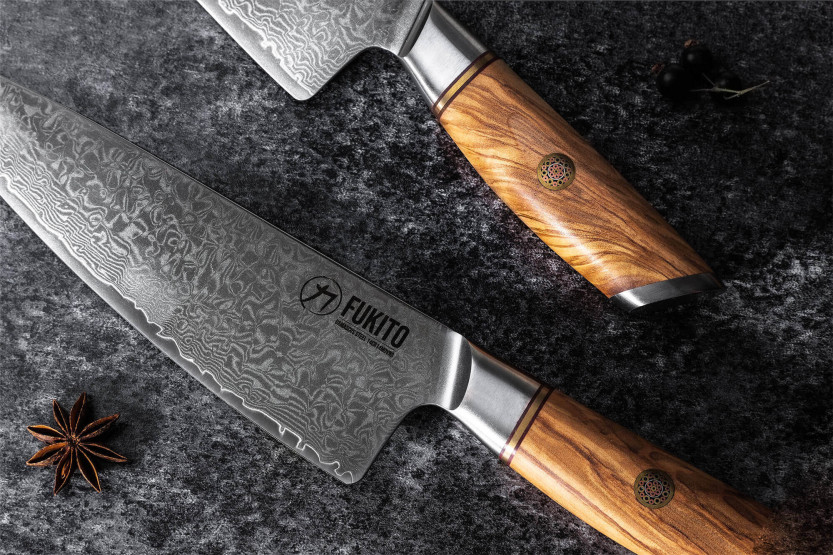
The Fukito Olive Damascus 14Cr 9cmparing knife features a damascened blade, i.e. a hard core of rigid steel surrounded by several layers of "softer" steel. This is a real plus, both in terms of technical capabilities and visual appeal!
To go into more detail, the blade has a powder-metallurgy core (unlike solid steel), 14Cr. To produce such a steel, metal particles are ground, and other alloying elements are gradually added. Hydraulic presses are then used to compact and "sinter" the steel (adding a high-temperature heat treatment). The end result is more homogeneous than standard steel, making it more durable and resistant to breakage.
14Cr is enriched with carbon and has a final content of 1.4%, which is very high considering that the general average for knives on the European market is 0.5%. This element is useful for increasing the rigidity of an alloy, so that its edge is stronger and can withstand extensive sharpening to obtain a razor-sharp edge. Carbon also enables the knife to keep its edge for longer, so that sharpening sessions can be spaced out. This particular alloy achieves 62/64 HRC on the Rockwell scale.
The high chromium content (14%) makes the alloy more resistant to oxidation.
This top-of-the-range core is wrapped in several layers of less rigid stainless steel, precisely to balance the core. This makes it more supple, without making it flexible. By flexibility we mean resilience to shocks that could cause breakage.
The blade also benefits from vacuum heat treatment. This process is advantageous because, during standard heat treatment, certain elements present in the air can react with the metal, even during quenching. This is the case, for example, with oxygen, hydrogen... And this can have an impact on the blade. Here, heat treatment takes place in a protected atmosphere, free from all elements. As a result, the blade can be processed to its full potential.
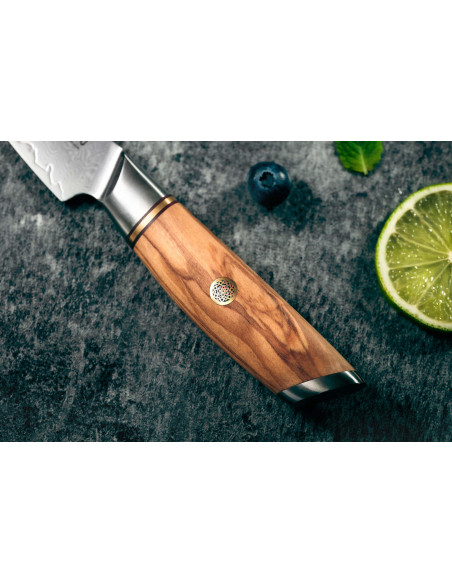
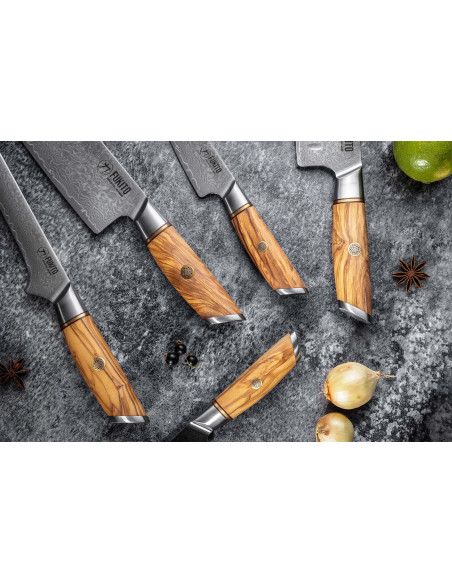
Between the blade and the handle is a stainless steel bolster with a soft, polished edge for a pleasant grip when cutting.
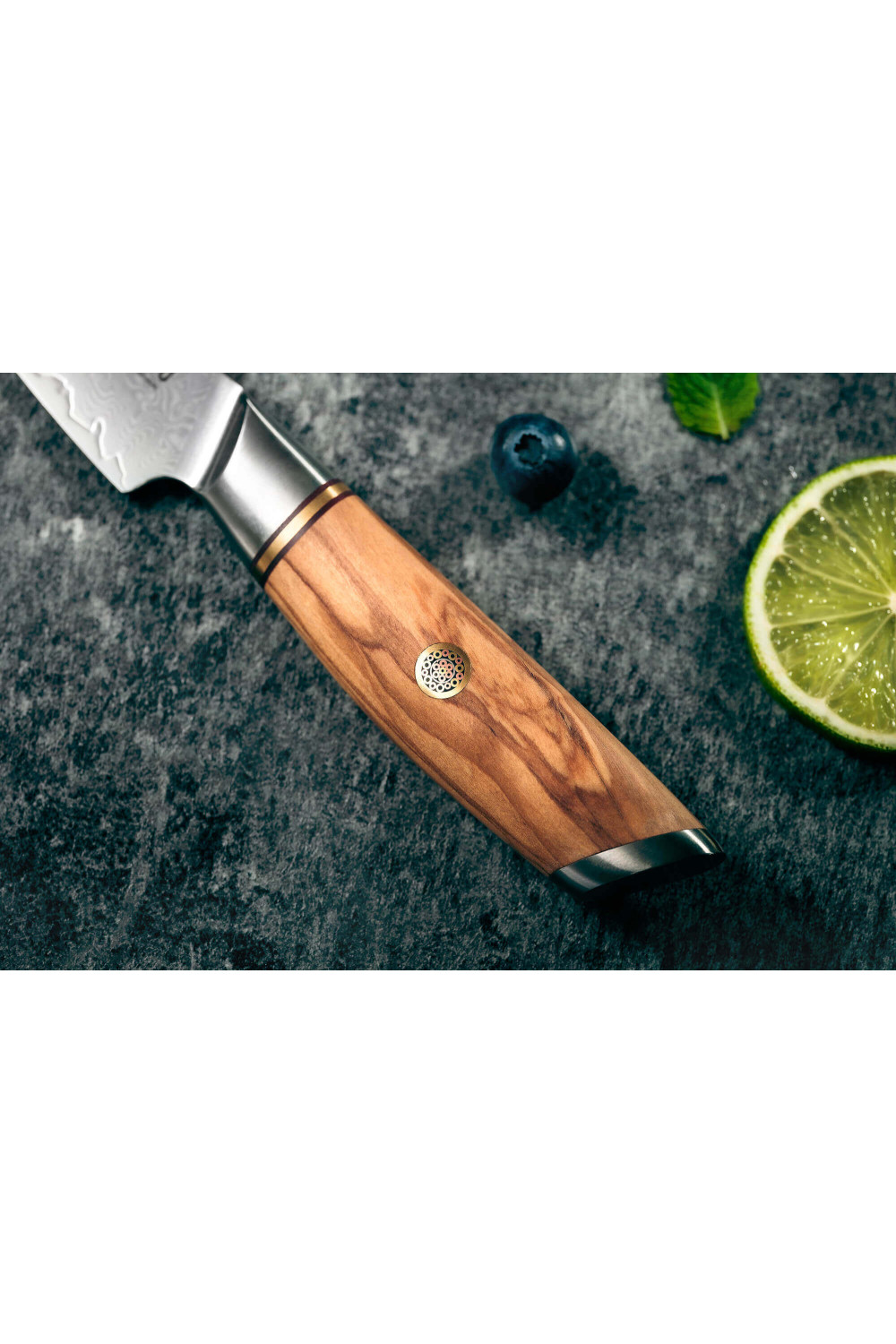
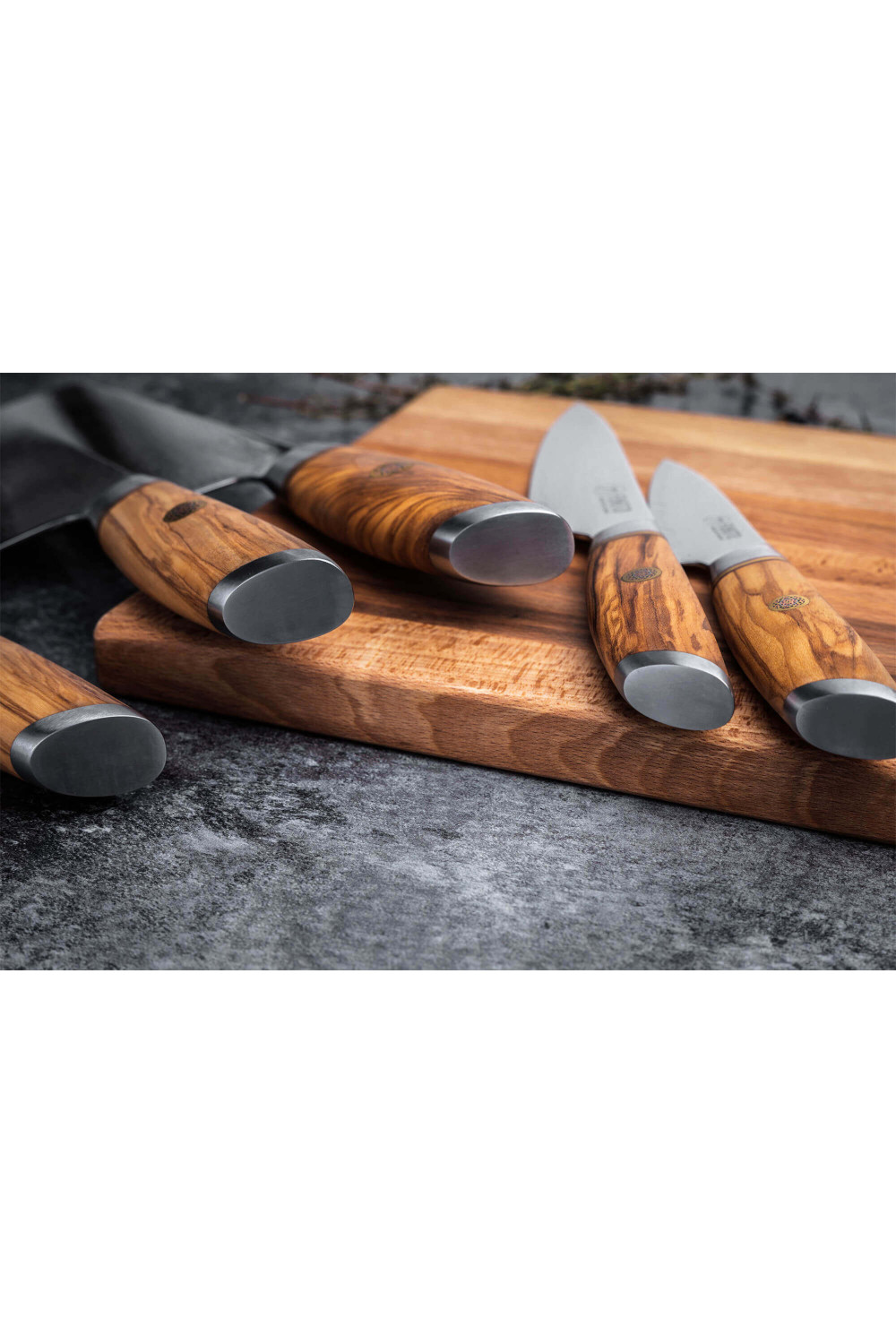
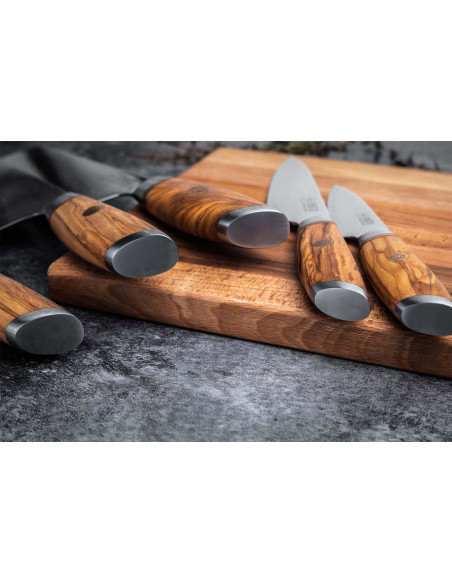
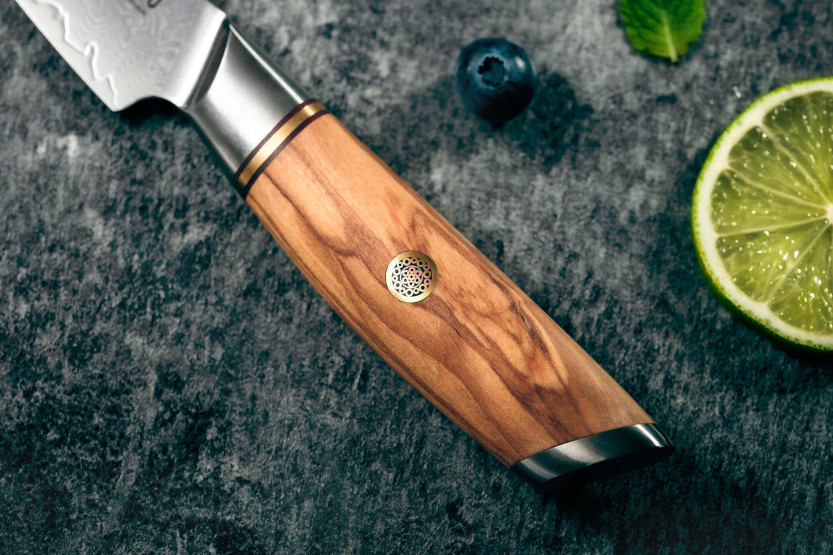
Olive wood has been chosen for the handle. This species is highly appreciated for its warm color and distinctive scent. The veins are unique on each knife, as wood is a living material, so you won't get the same knife twice.
Olive wood is also reputed to be "immortal", making it particularly suitable for use in the kitchen. Its density is a guarantee of sturdiness. In fact, it has few pores, so it doesn't absorb liquids and is better equipped to resist breakage. Finally, it is considered an antibacterial wood, making it far more hygienic than other types of wood.
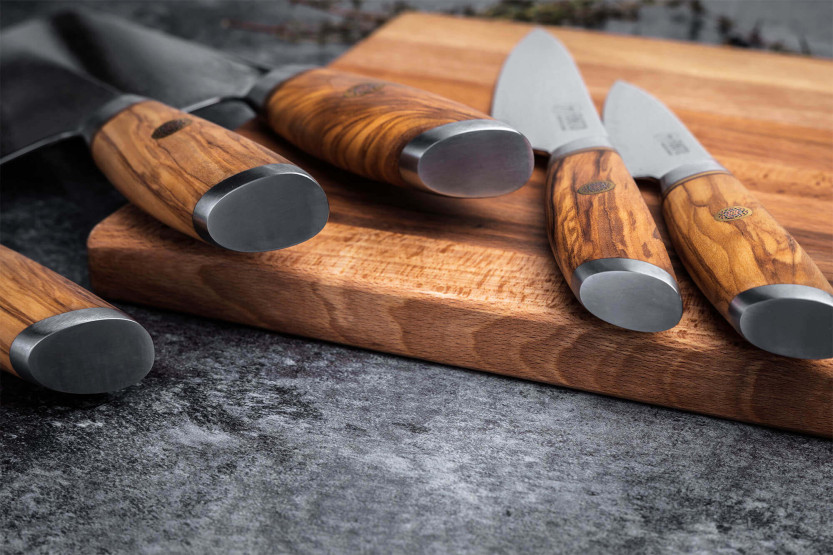
A triple gold/red border links the olive wood to the steel of the blade. There's also a superb mosaic rivet in the center of the handle. Its refined pattern adds a touch of originality to the knife. Finally, a steel base finishes off the handle and brings balance to the piece.
Care: the knife should be washed by hand, using a sponge and mild detergent. Do not put it in the dishwasher or soak it in the sink. Once clean, wipe dry and store away from moisture.
It comes in a magnetic box so you can store it or give it as a gift!
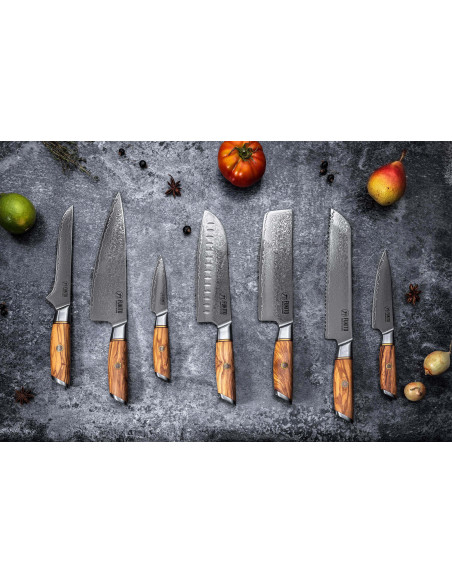
The knife, like all Fukito knives, is carefully crafted in Western China, in the province of Guangdong. This location has been associated with cutlery production for decades. The materials and techniques used to create Fukito knives meet the manufacturing standards of French food industry professionals.
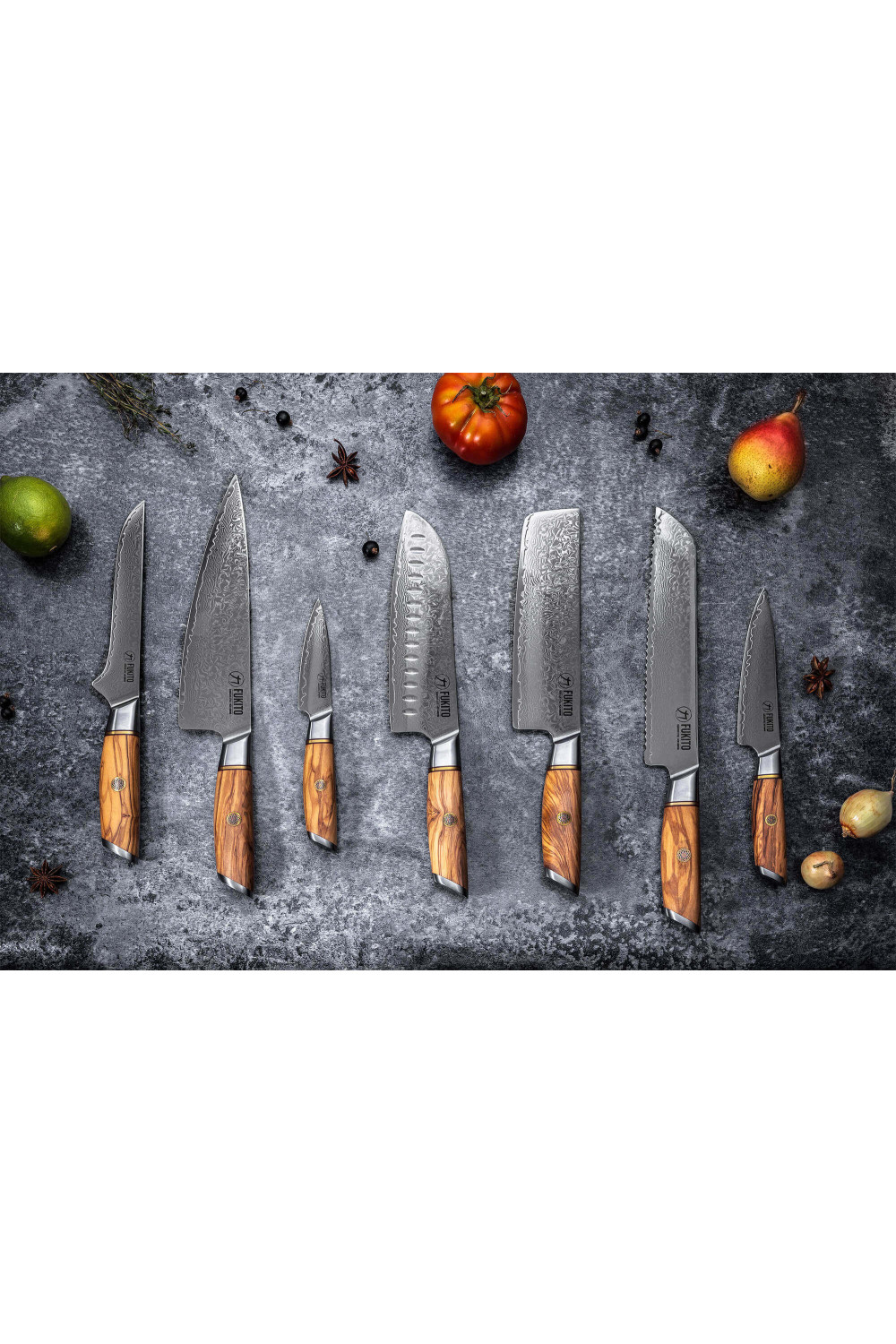
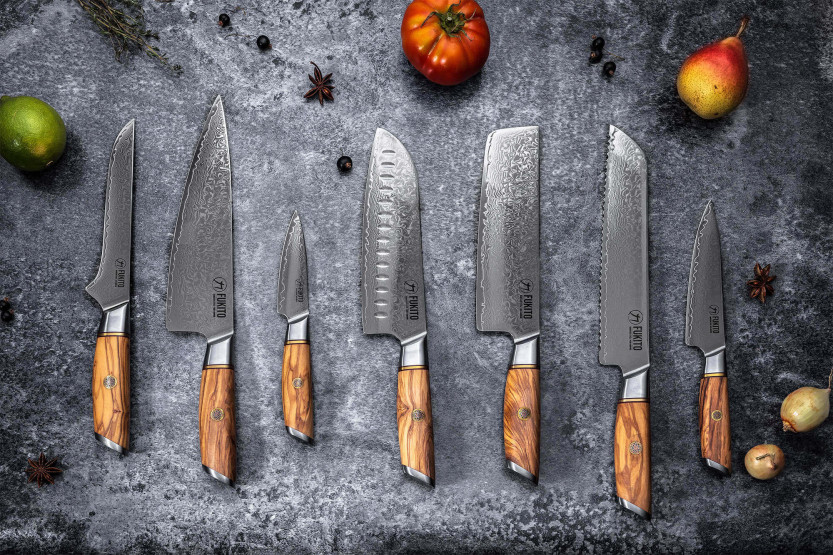
Find all the kitchen knives we have to offer on KnifeLeader!




 By buying this product you can collect up to
.png)