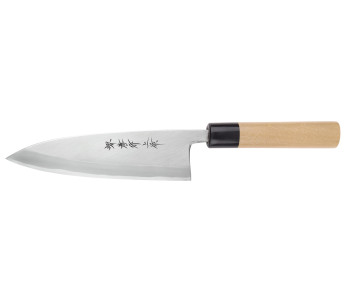
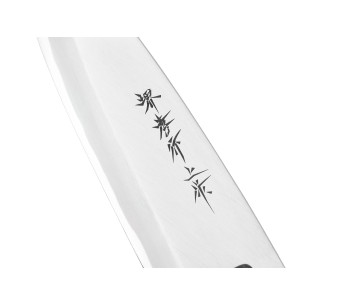
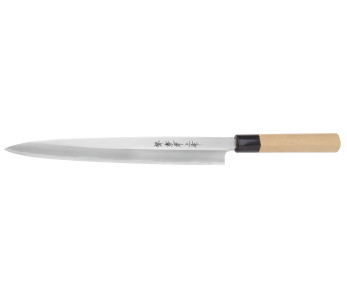
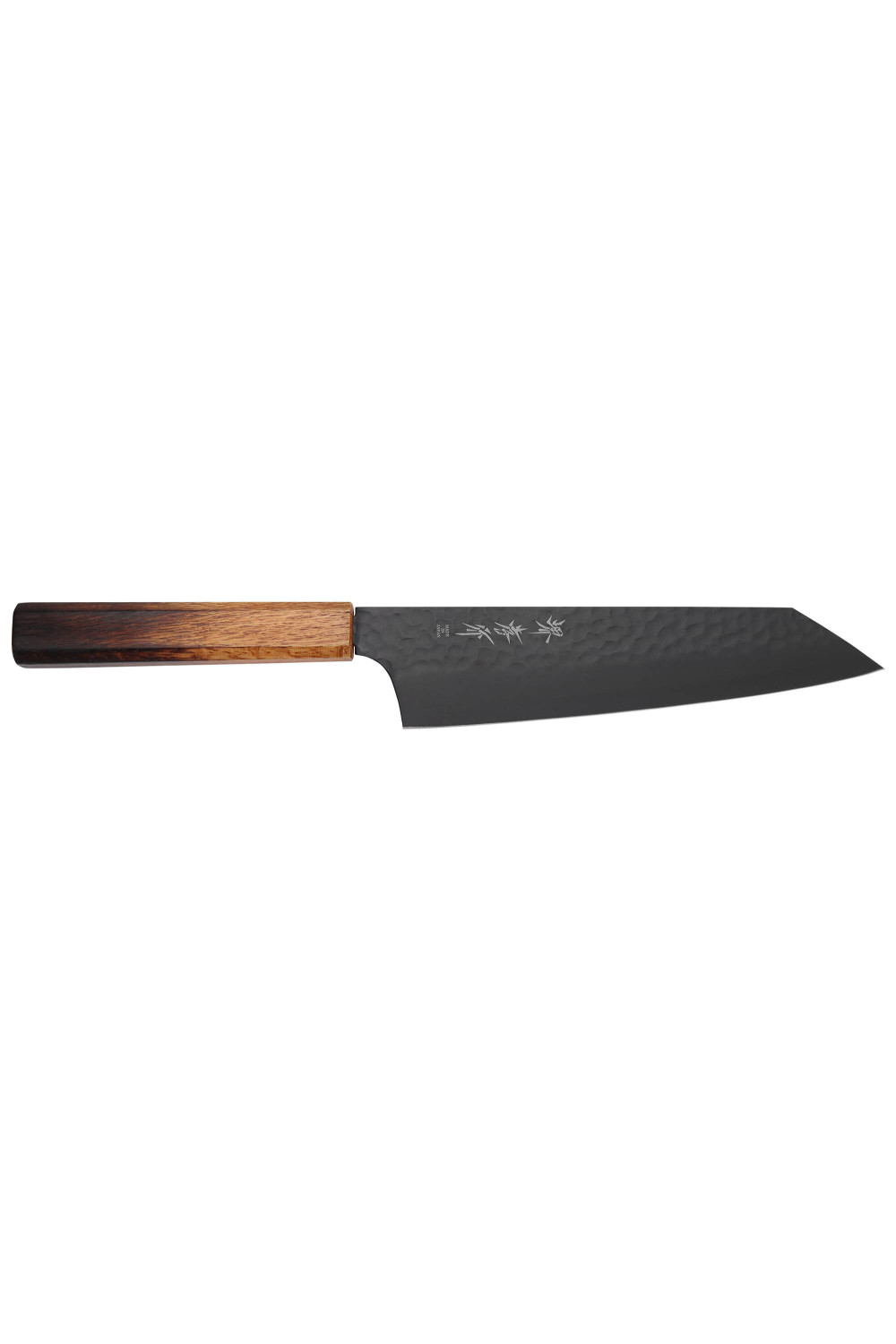
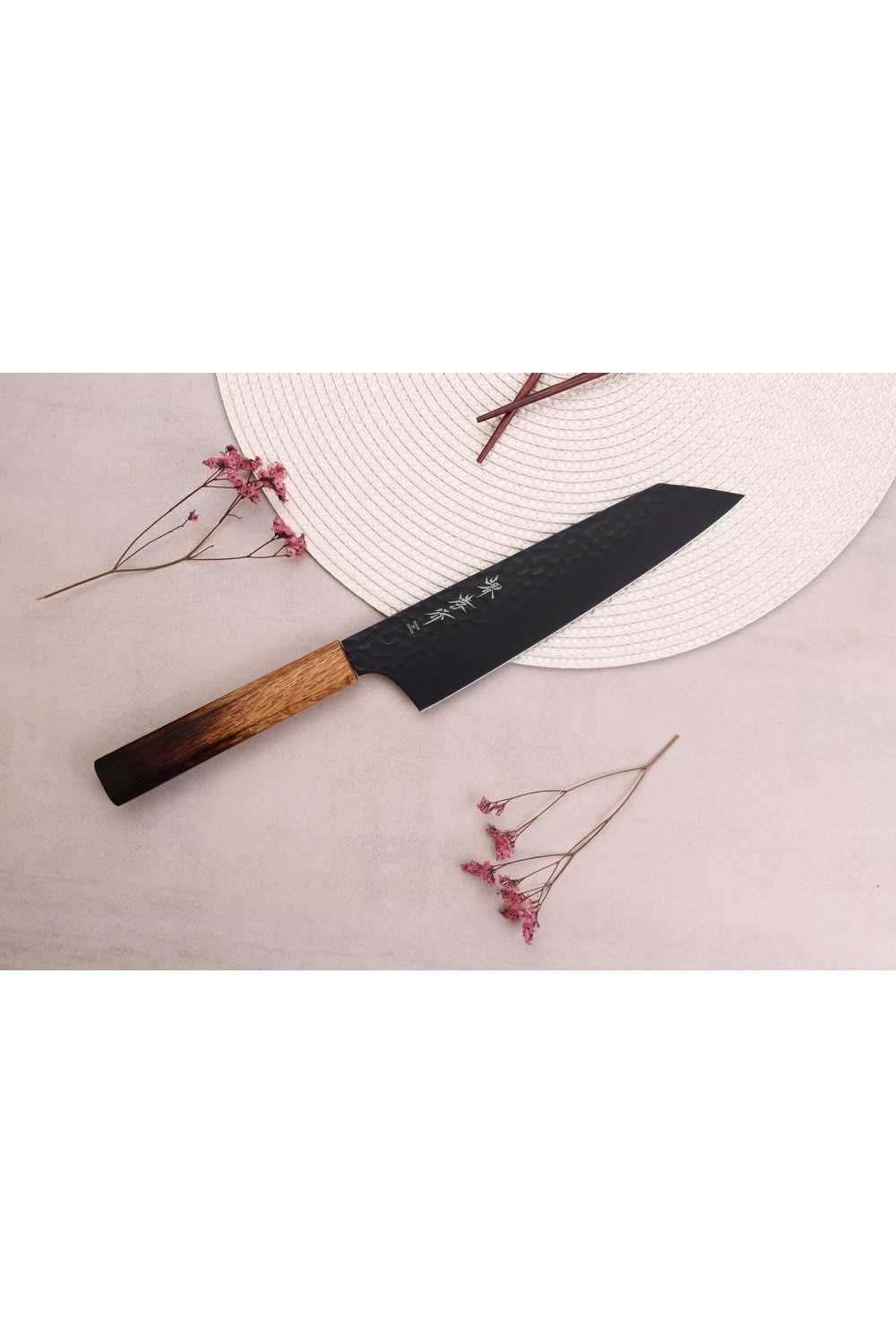
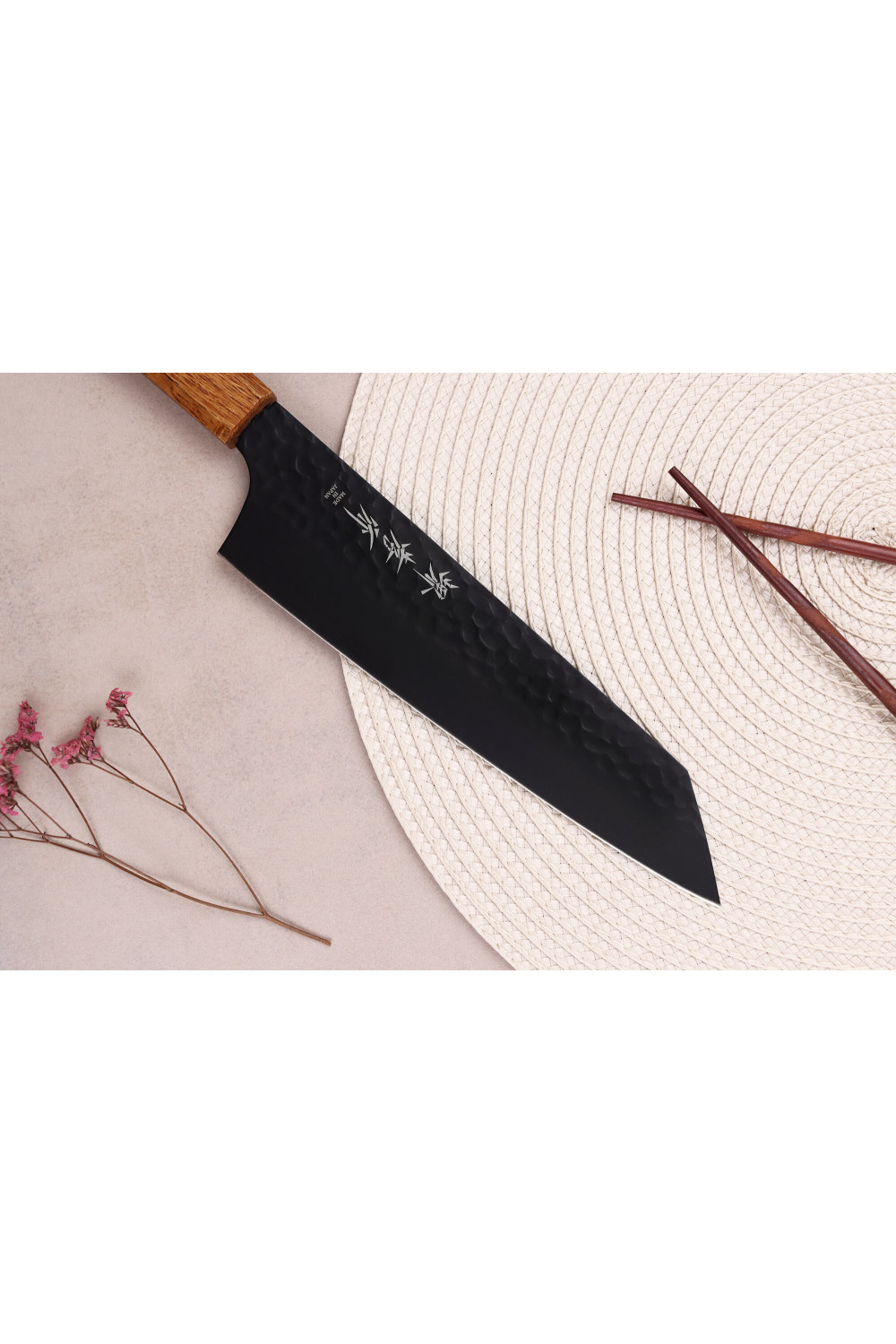
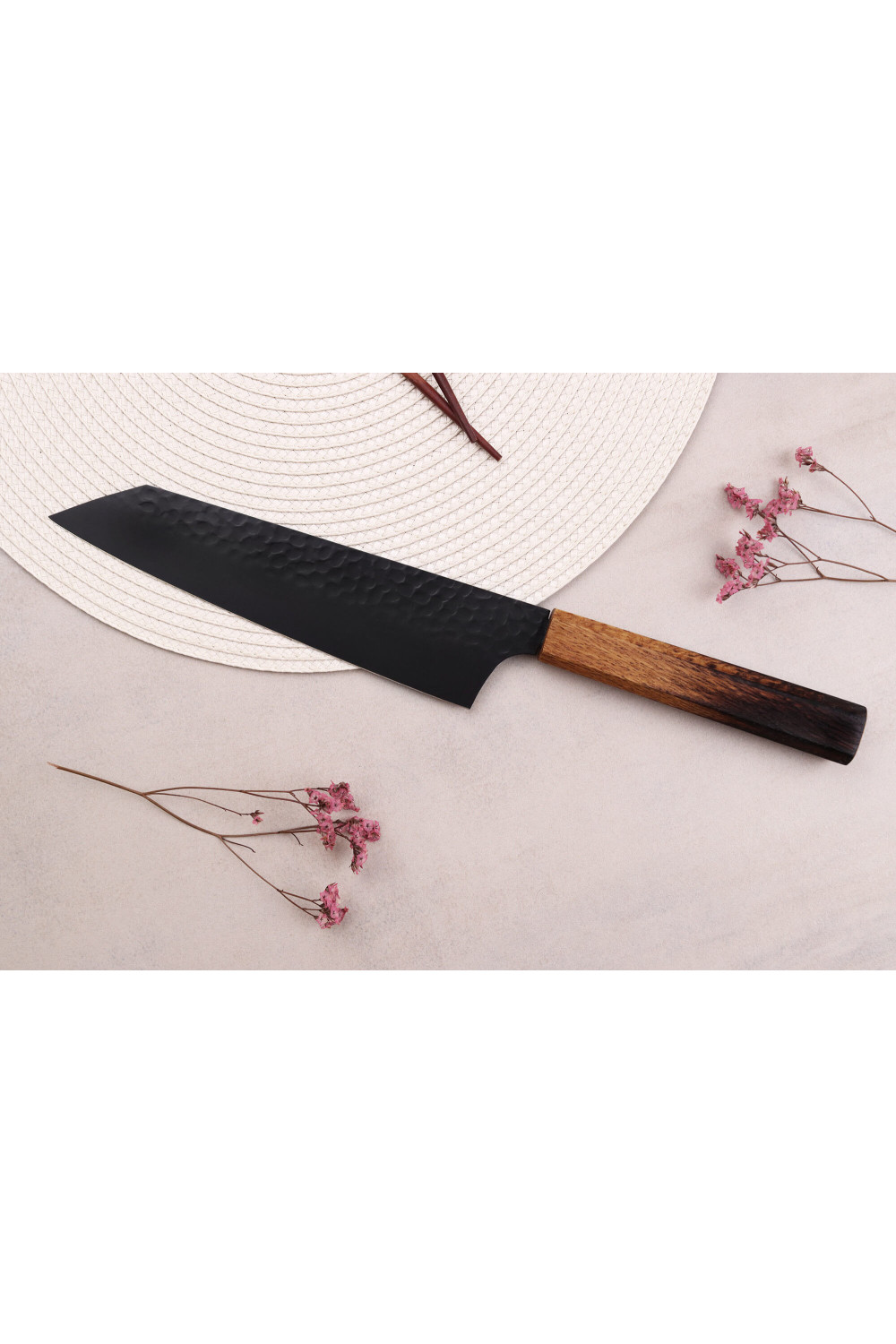
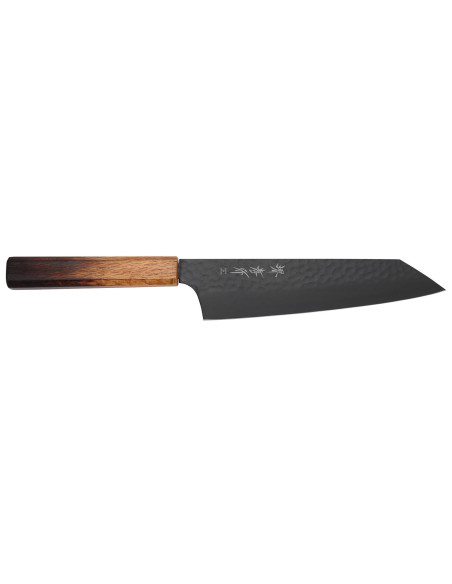
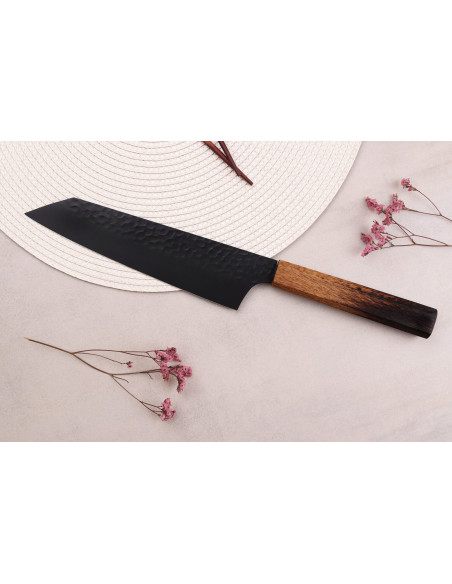
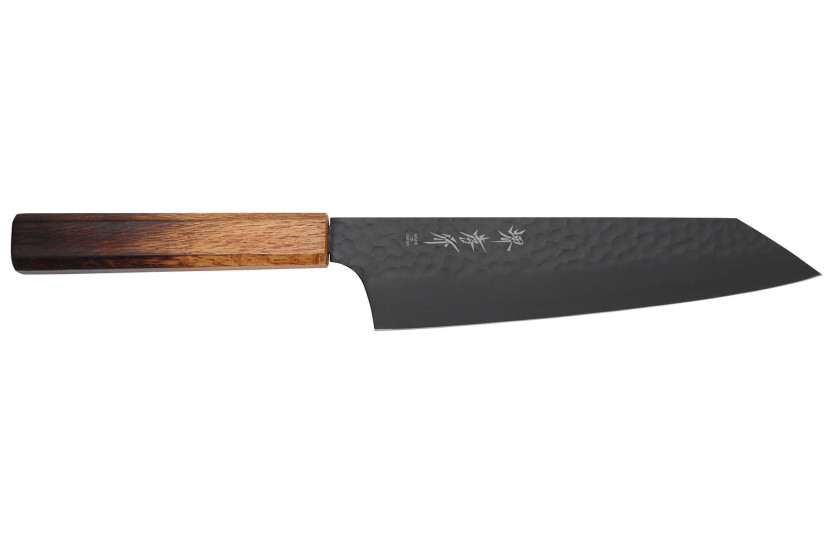
This kiritsuke has a blade with a VG10 core.
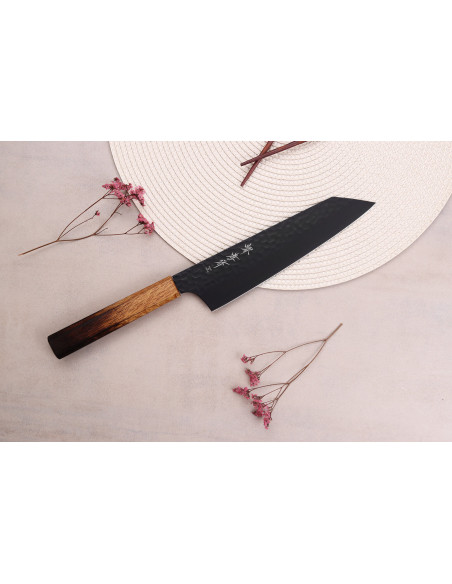
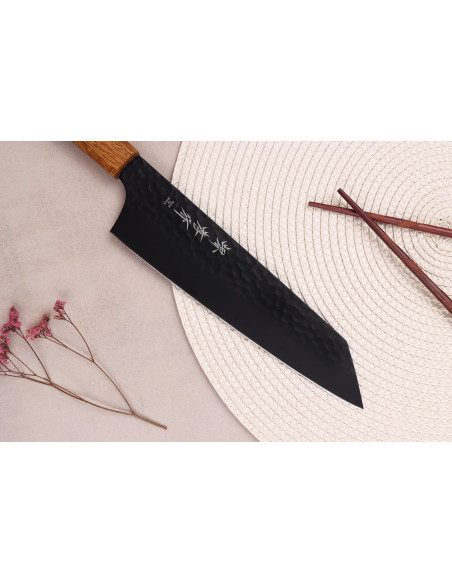
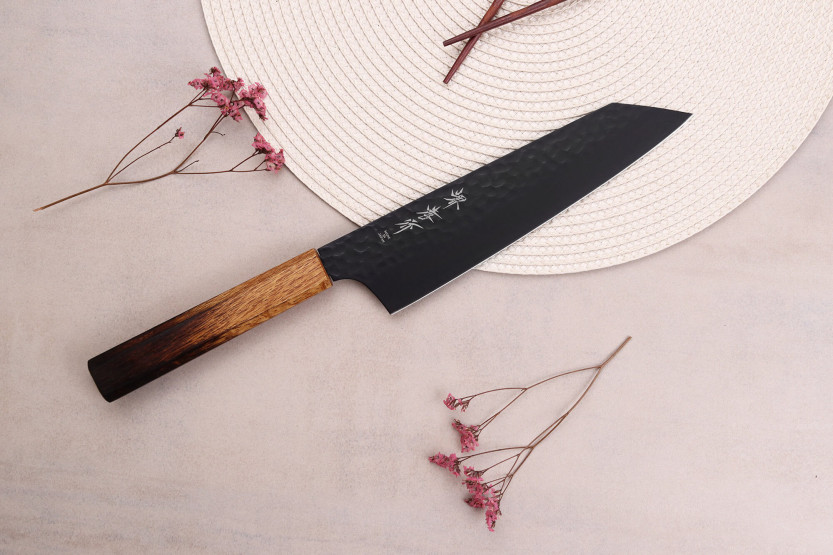
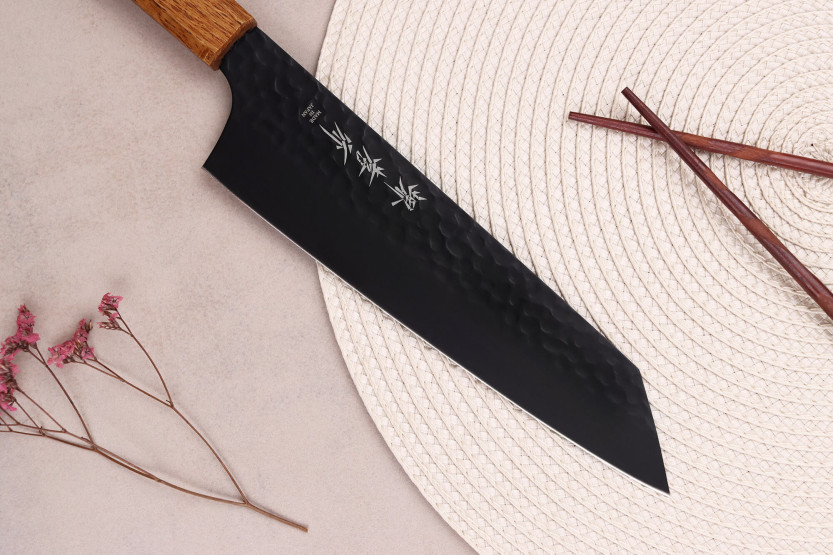
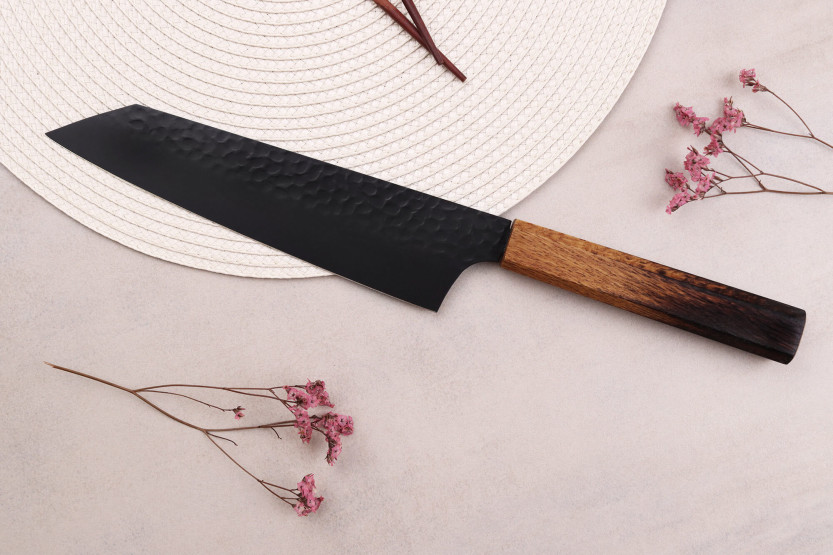
This Kiritsuke knife has a 19cm blade with a San Maï structure ("3 layers" in Japanese). This is a typically Japanese blade design: the blade contains a core made from a rigid steel that is surrounded by a layer of softer steel, sandwiching it. All 3 layers are present.
The core of your knife's blade is made of VG10 steel, a top-quality Japanese alloy enriched with 1% carbon. Carbon is the crucial element for increasing a blade's hardness. A hard blade will hold its edge longer.
The blade of this knife has a hardness of 60 HRC on the Rockwell scale, demonstrating that it has a high-performance cutting edge that lasts.
The alloy also contains almost 15% chromium, ensuring good resistance to corrosion. However, despite its carbon enrichment, VG10 steel requires careful maintenance to prevent the blade from oxidizing.
This rigid core is then surrounded by a layer of softer steel that protects and balances it. As a result, your blade is less susceptible to breakage and shocks encountered during use.
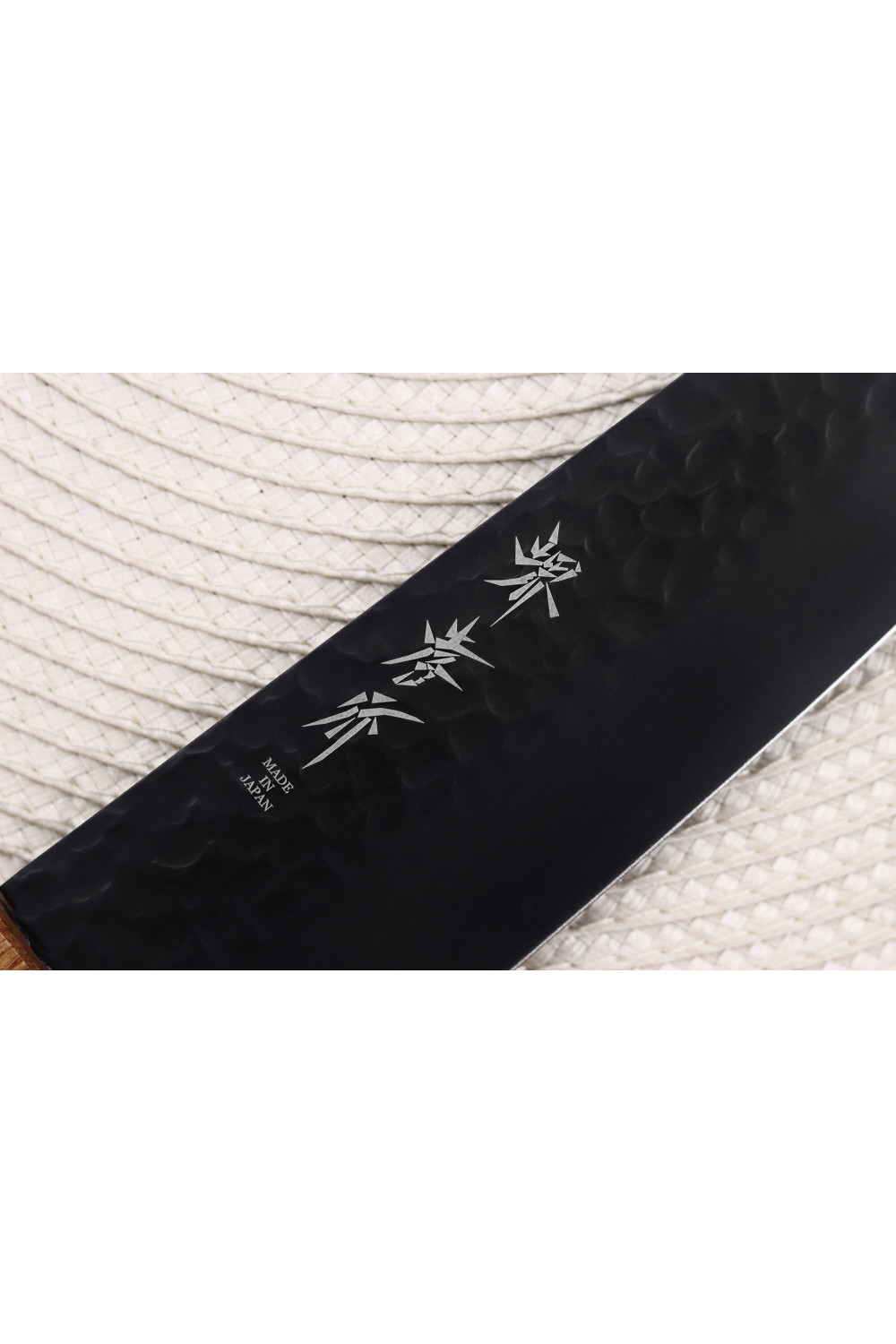
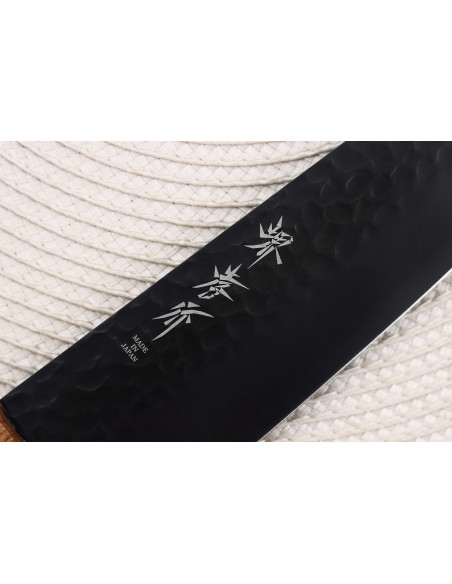
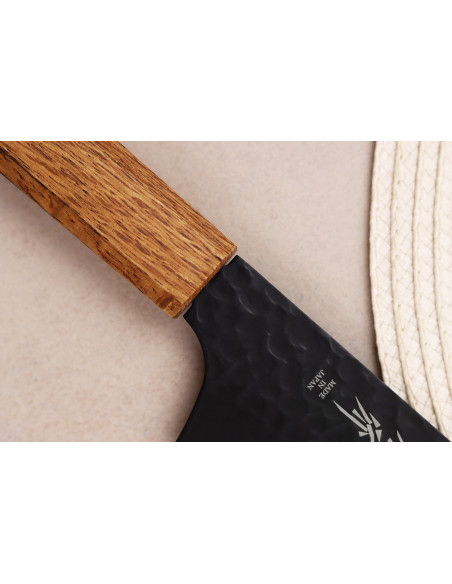
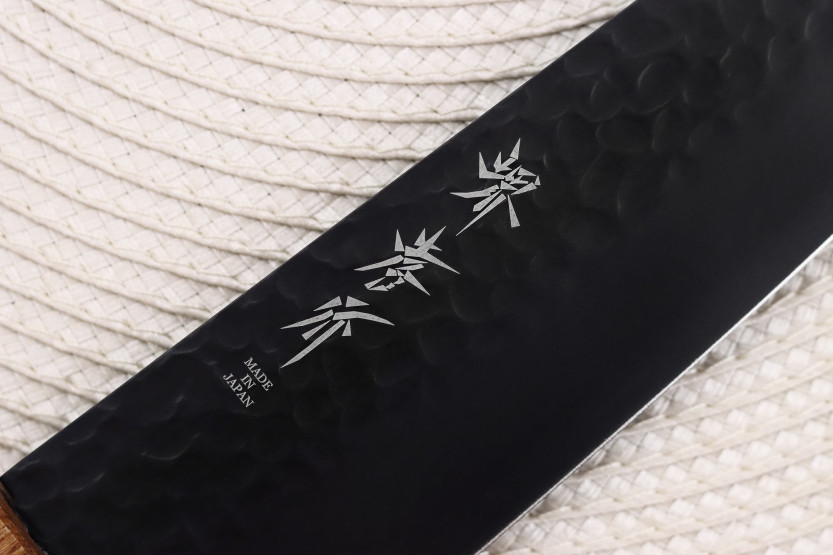
A Teflon coating gives the blade its attractive black hue. The coating enhances the blade's resistance to corrosion, strength and non-stick properties. Thanks to Teflon, your food won't stick to the blade.
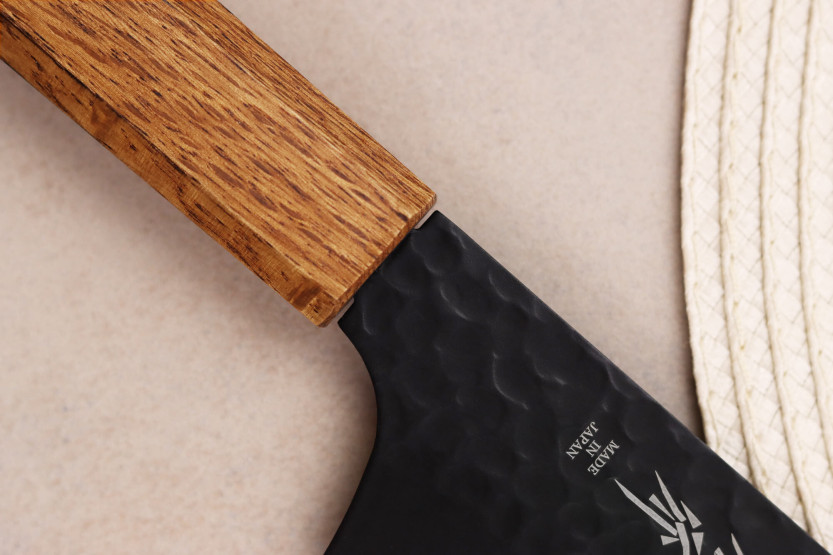
Finally, hammering has been applied to the entire top of the blade. In addition to its aesthetic appeal, this enhances the blade's strength and non-stick properties. The blade of this knife shows great character and delicately combines modernity and tradition.
A robust handle in burnt oak
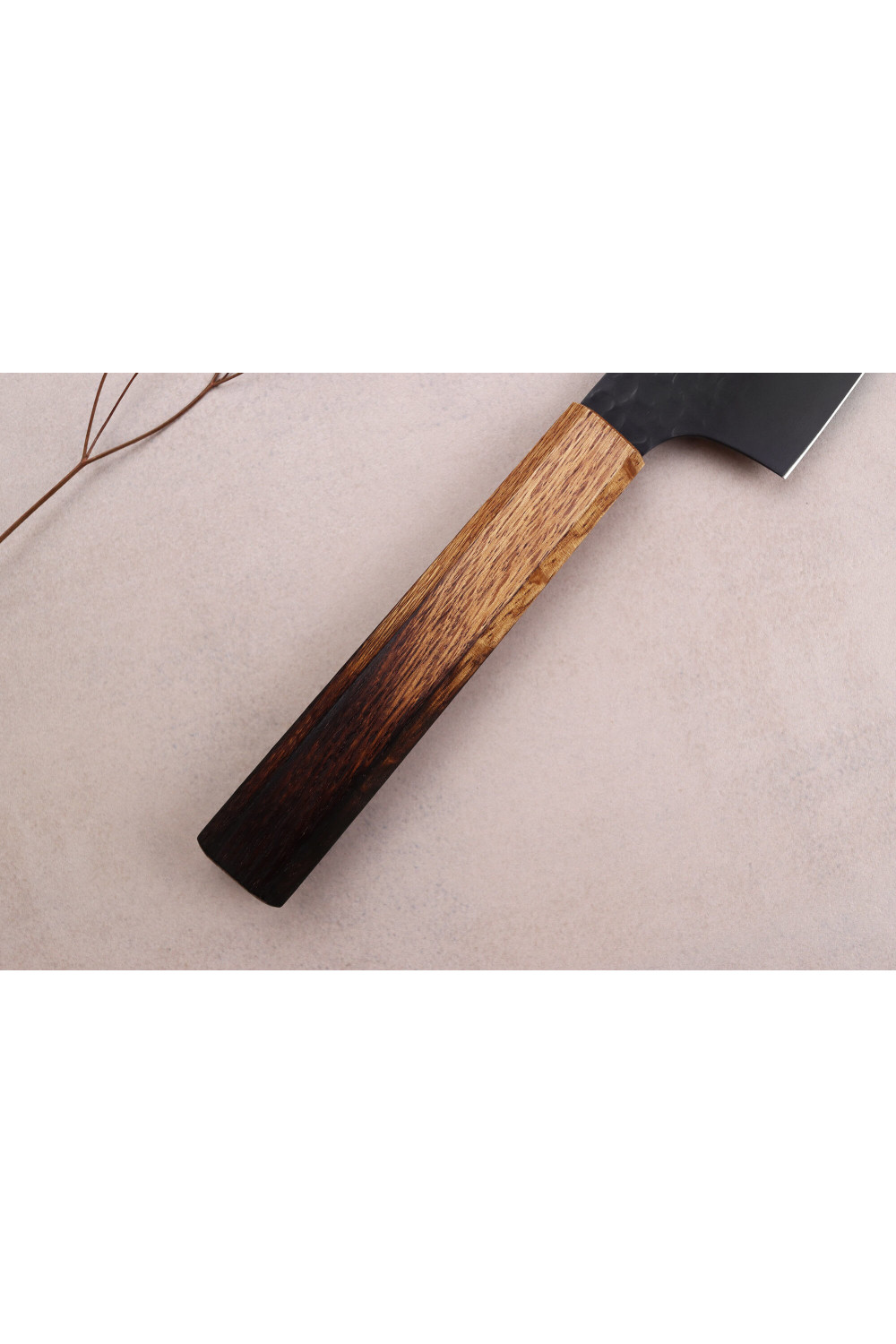
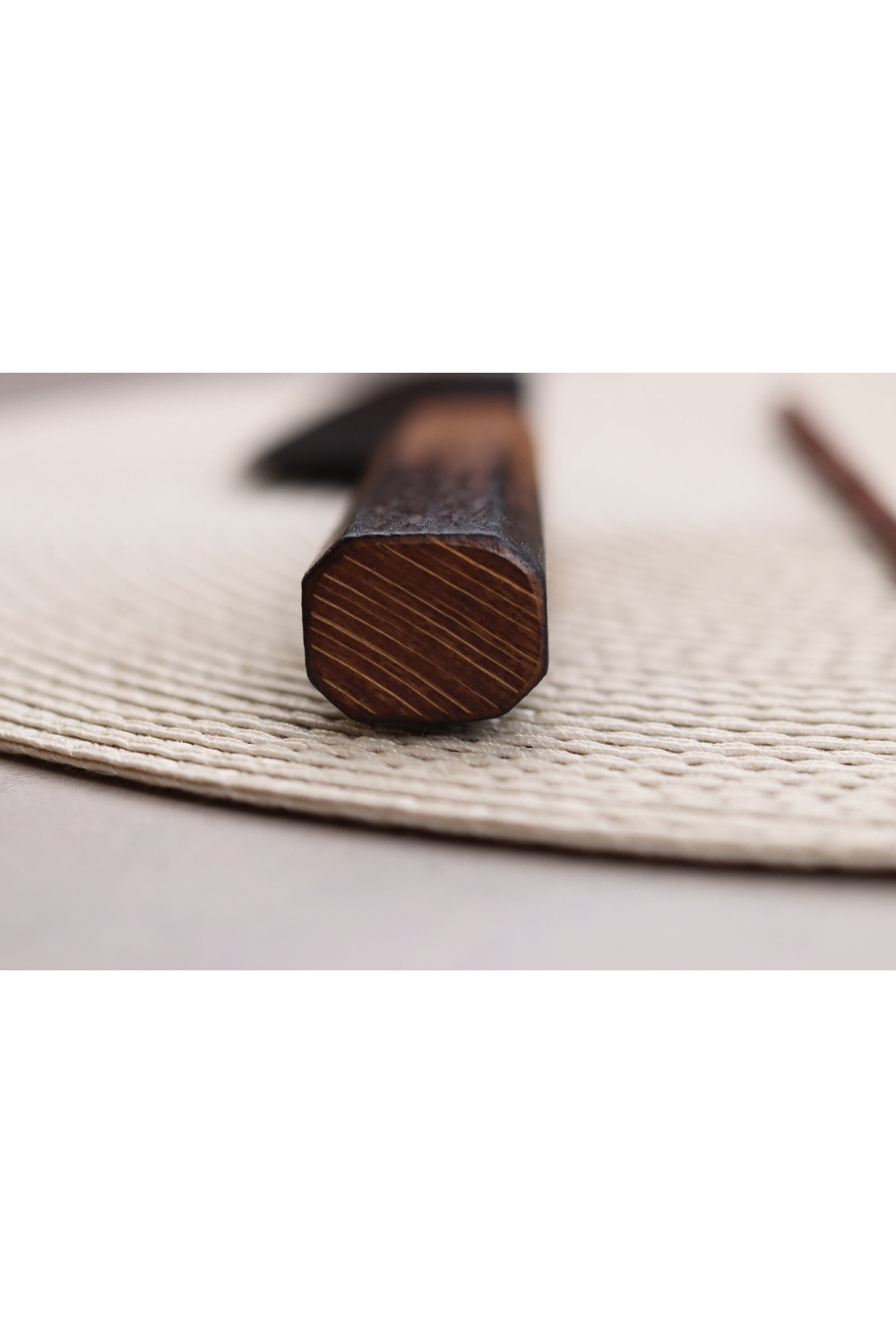
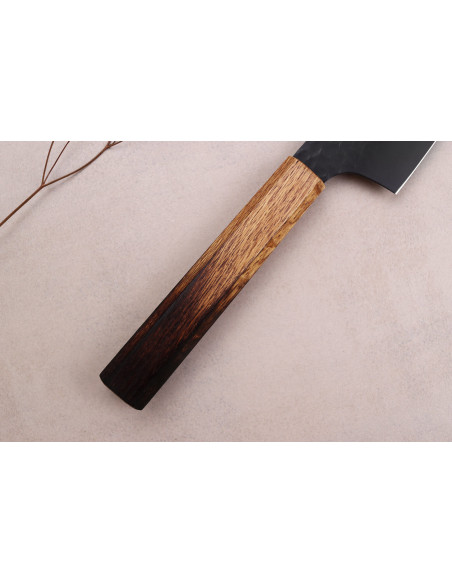
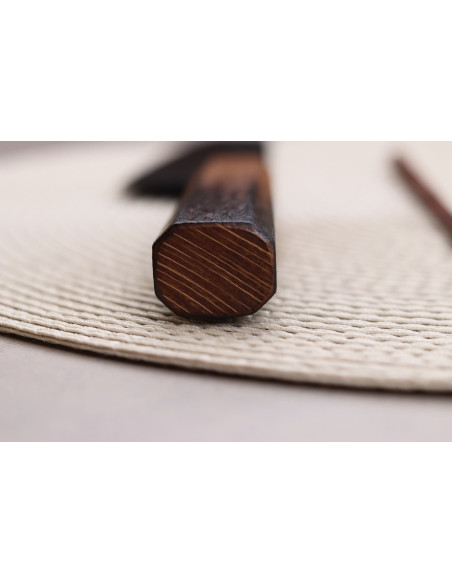
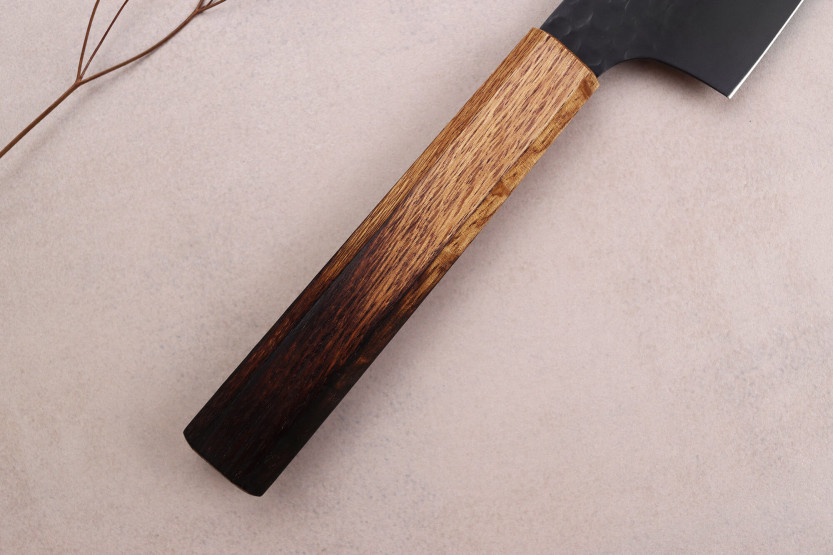
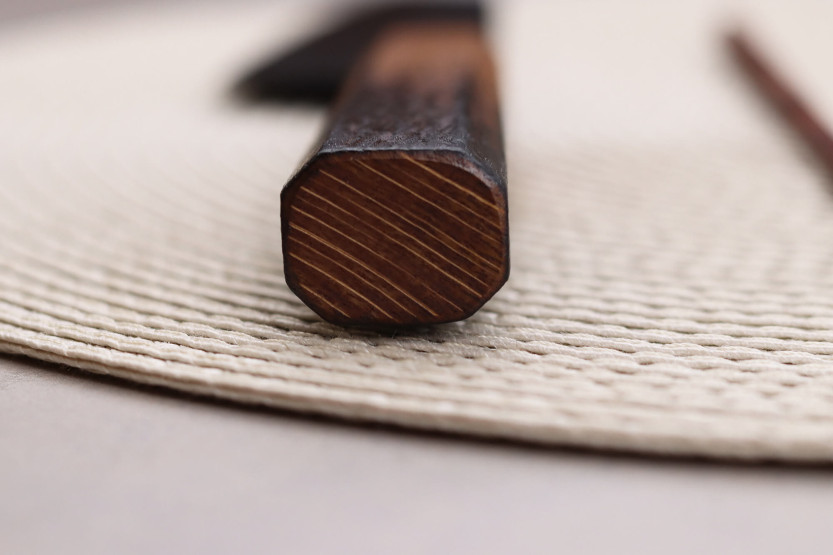
Oak has been chosen for the handle of this Japanese knife. Oak is a durable wood that resists moisture, vibration and shock. This wood does not warp easily, which is why it is found in kitchens and cabinetry. The oak has been burnt at the end of the handle, adding character to the knife and increasing the wood's strength.
The handle is octagonal in shape, suitable for both left- and right-handed cooks. It's a handy, light and pleasant handle that you can use even during long cutting sessions.
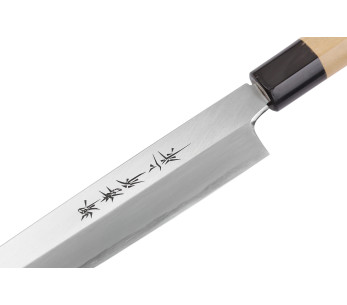
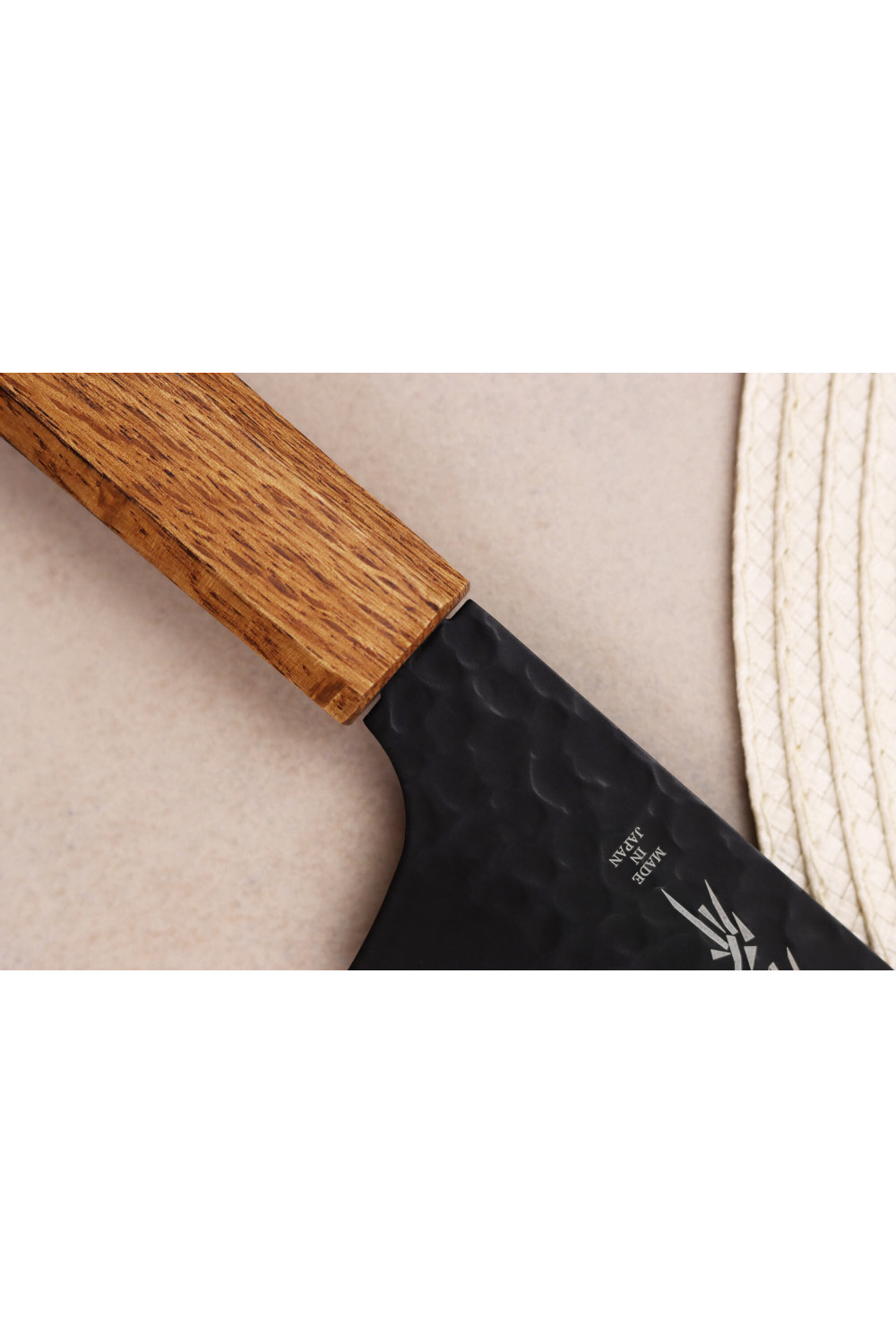
Also, you can see that the machi is visible on this knife. You'd think the blade wouldn't fit properly into the handle, but it doesn't - the gap is deliberate! It's a Sakai tradition that adds to the knife's balance by adjusting its center of gravity.
Wood pulp has been added to the space where the blade fits into the handle to make the knife watertight. Cutting food and cleaning water cannot get in.
To clean your knife, wash by hand with a mild detergent and a non-abrasive sponge. Soaking it in the sink or putting it in the dishwasher are not recommended. Avoid getting the handle wet.
After washing, dry the knife immediately and thoroughly, so that it can be stored without any trace of moisture.
A Japanese knife full of know-how
The Kiritsuke knife is a versatile kitchen knife that can be used for mincing or slicing boneless meat and boneless fish, as well as for chopping herbs and mincing vegetables. It's the equivalent of a Western chef's knife, ensuring precision cuts.
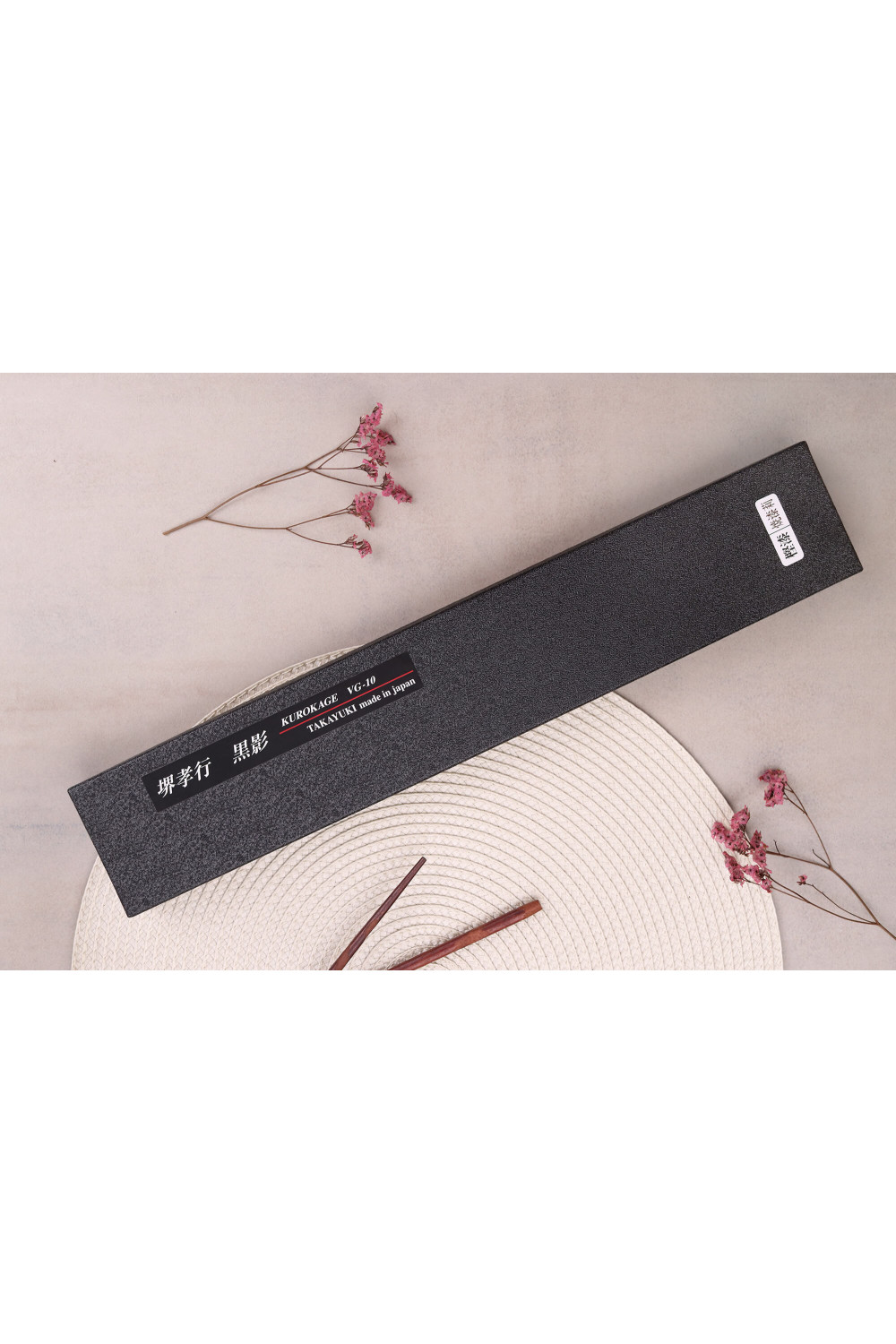
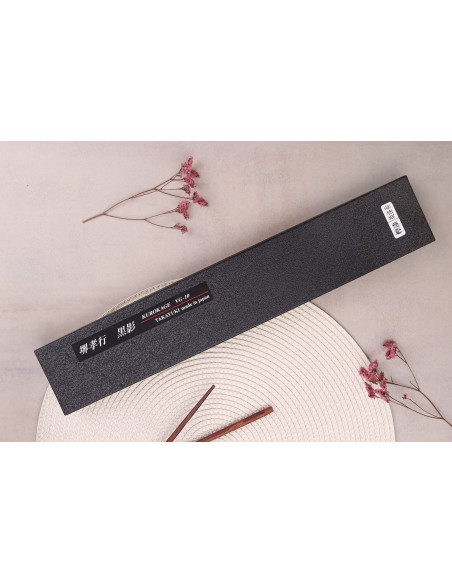
It was manufactured by the Sakai Takayuki company, which has been in existence since the 1950s. It takes its name from the town where it is based: Sakai in Japan. With its long history, the company has a great deal of expertise in the art of cutlery, expertise it has acquired thanks to its know-how derived from the traditional methods of the blacksmiths of yesteryear. Sakai Takayuki applies techniques that were used to make samurai swords. This traditional know-how, combined with modern visuals, enables the company to offer you quality Japanese knives.
Discover Sakai Takayuki knives on our website!




 By buying this product you can collect up to