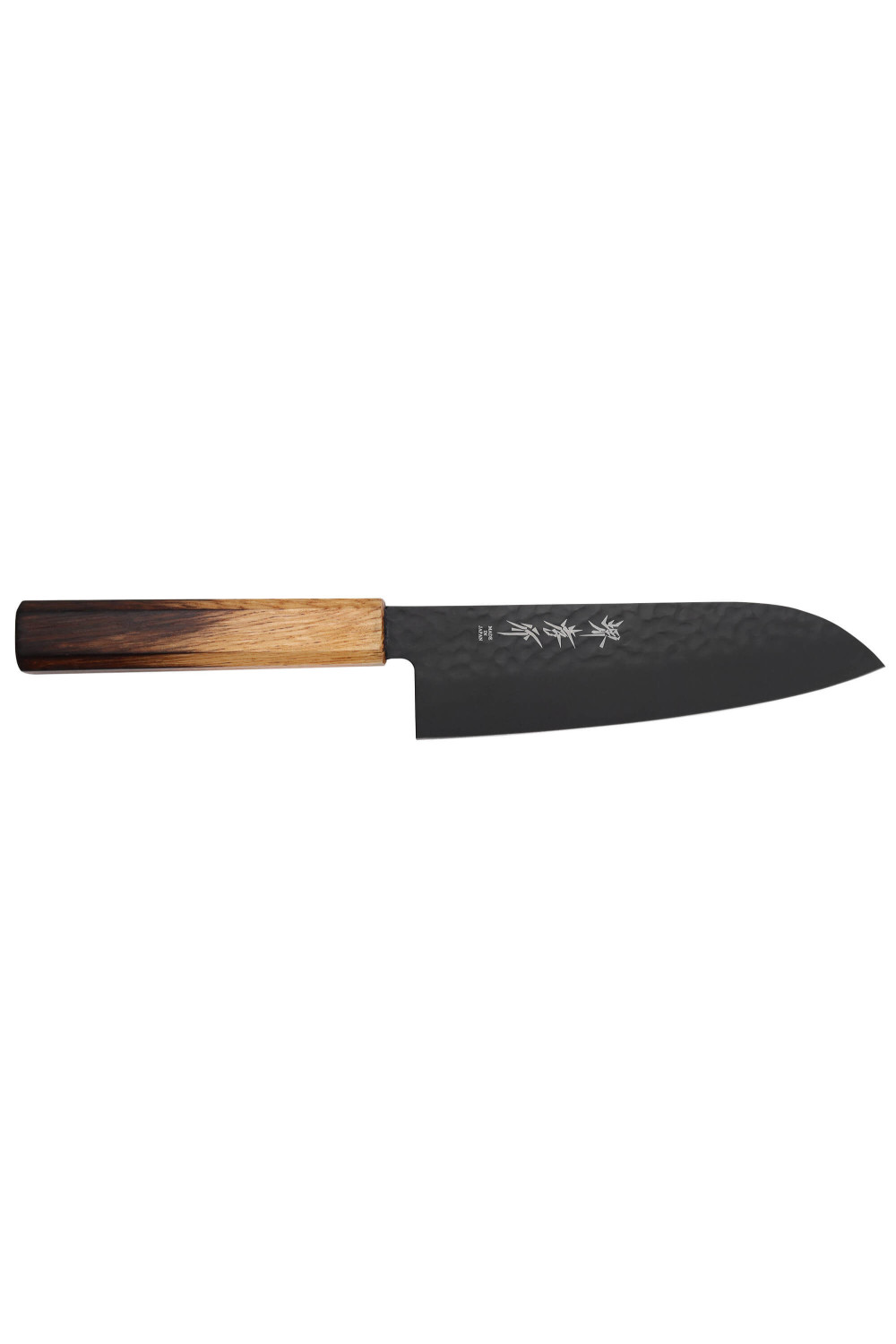
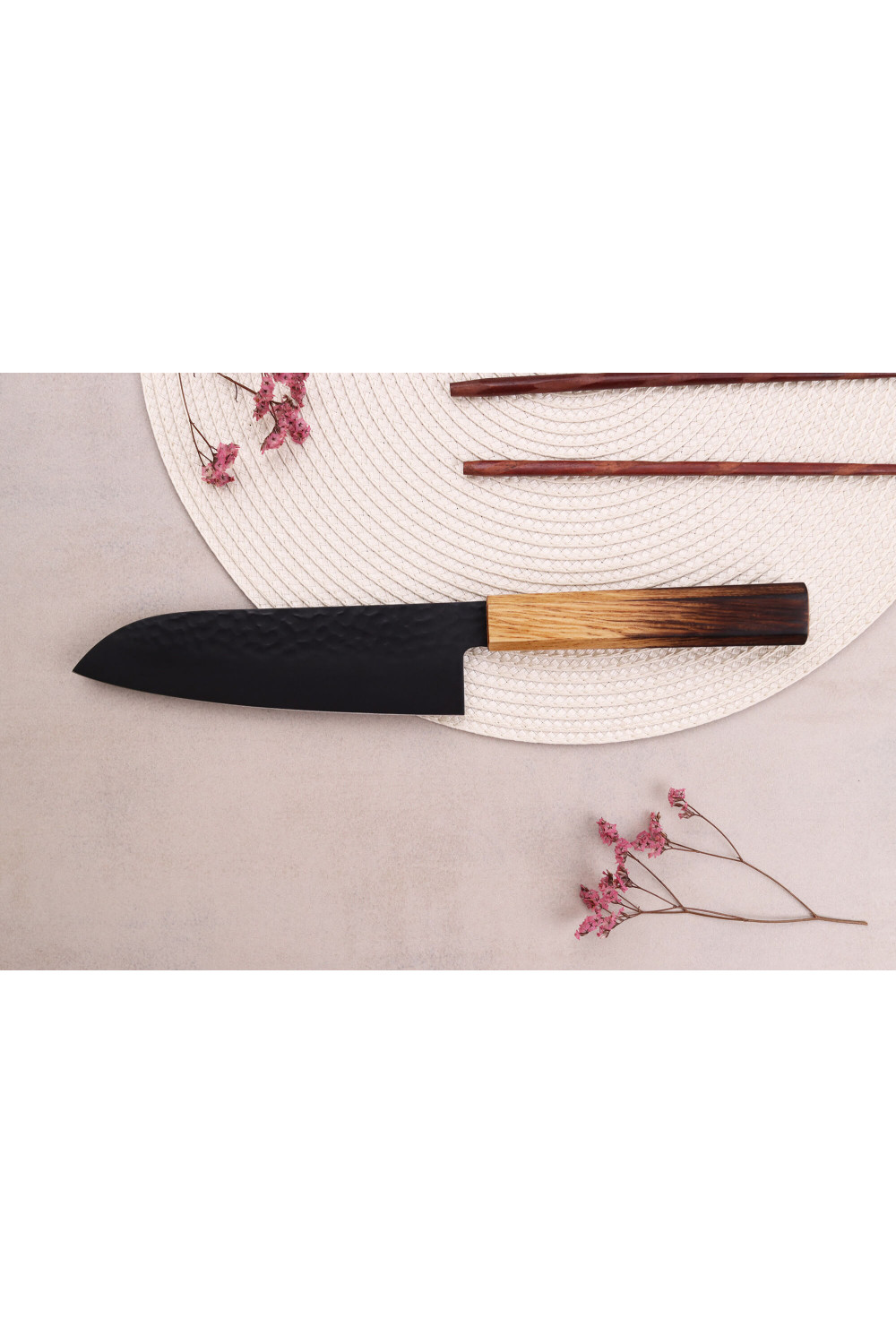
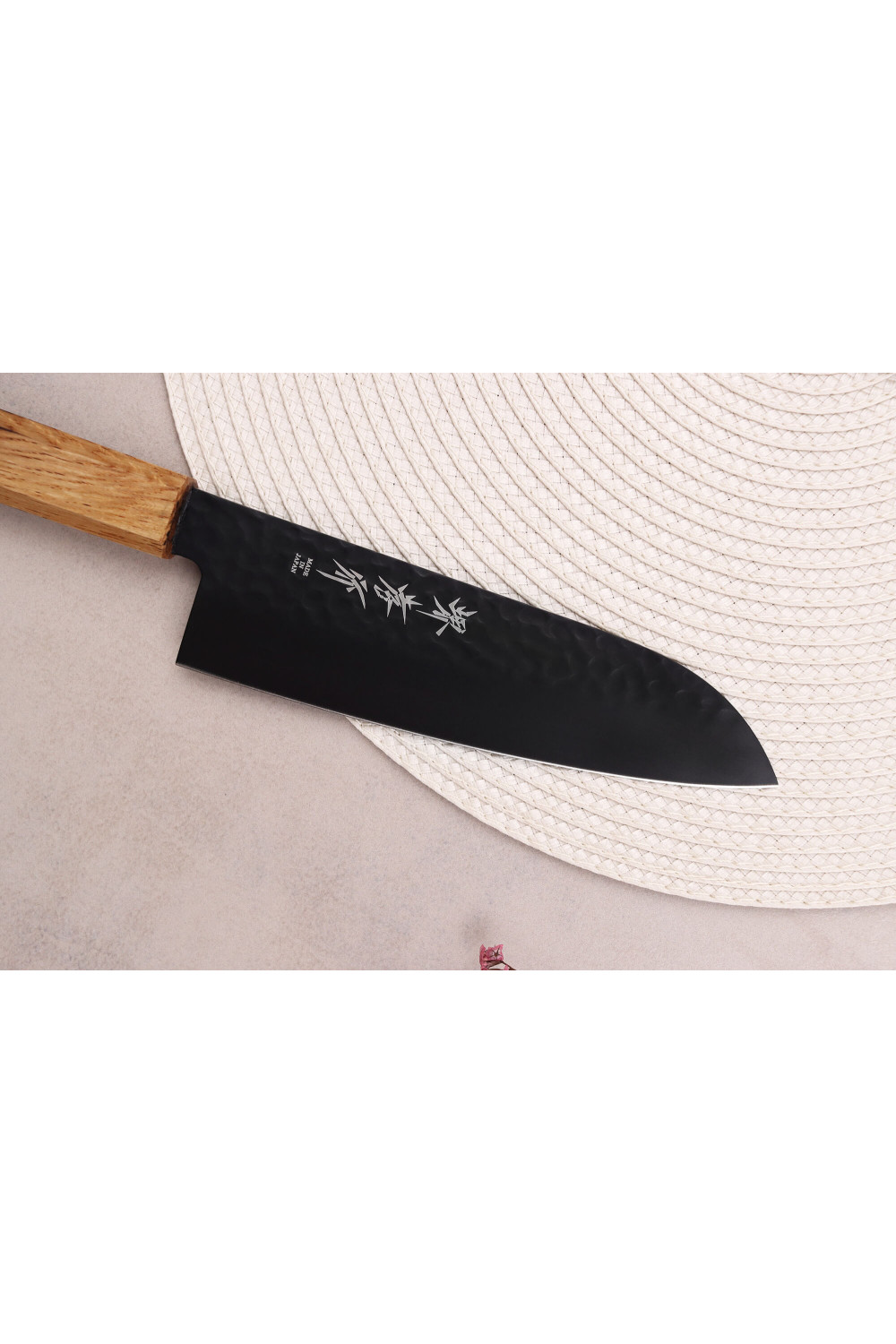
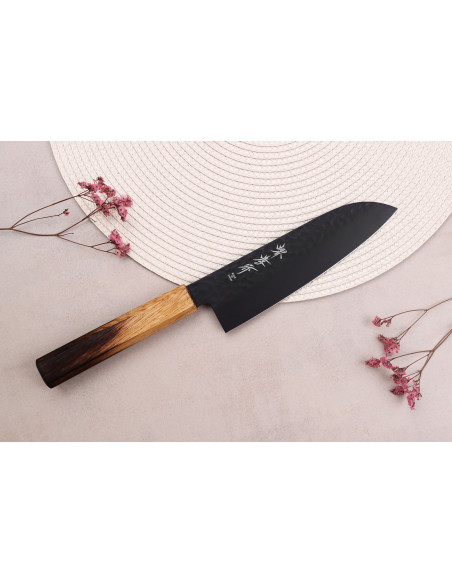
This Japanese santoku knife combines performance and craftsmanship
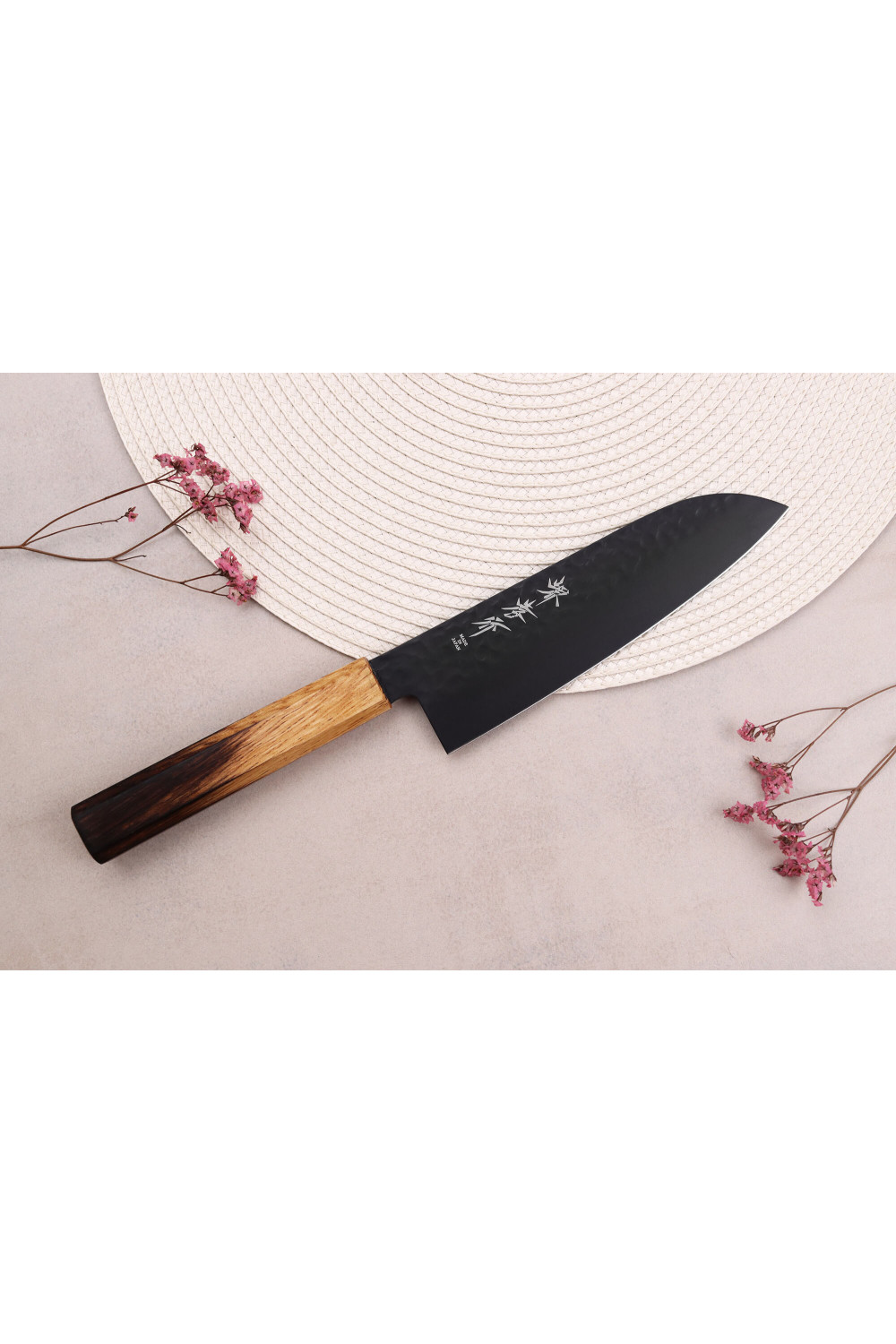
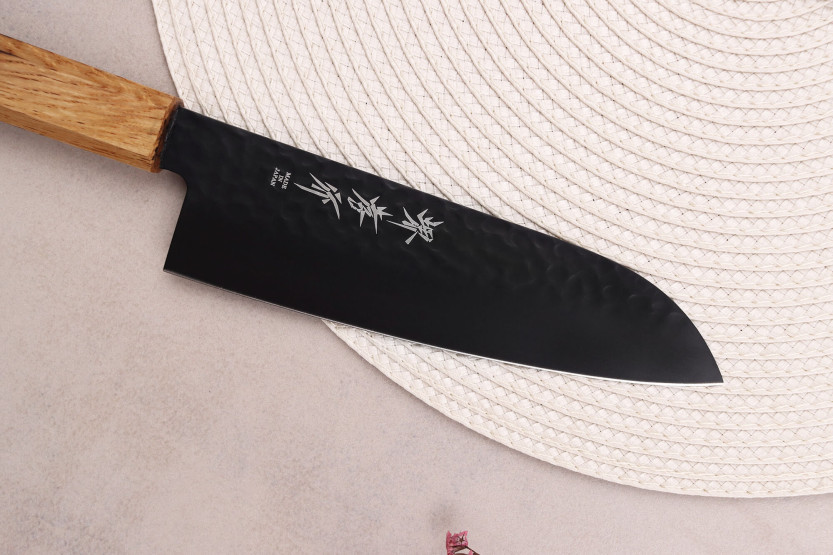
The santoku is a highly versatile knife widely used in the kitchen. It is effective on meat, vegetables, fish and all non-hard foods. You can cut, slice and chop effortlessly and precisely thanks to its vertical use. It's a versatile knife that chefs and home cooks alike will enjoy using every day!
Sakai Takayuki was founded in the 1950s, and is based in the town of Sakai, from which it takes its name. It draws its know-how from the traditional methods used by the blacksmiths of yesteryear who made the famous katana, and has a wealth of expertise acquired over the years. With its know-how inherited from ancestral techniques, Sakai Takayuki designs high-quality knives that intelligently blend tradition and modernity.
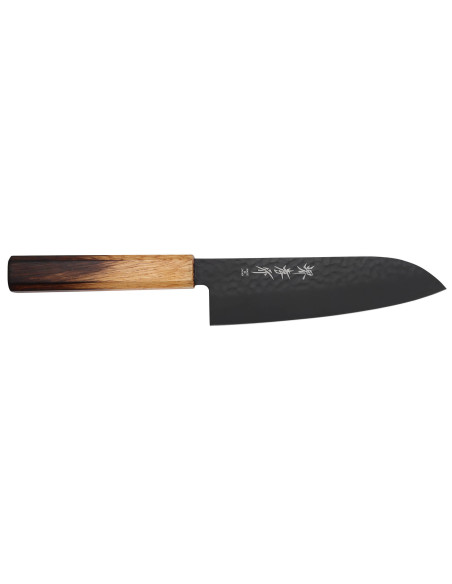
A Japanese santoku with a San Maï blade in VG10
This santoku knife features a blade with a San Maï structure ("3 layers" in Japanese). This means that it features a core of rigid steel, covered on each side by a layer of softer steel. As the core is sandwiched, it is protected and balanced, and all 3 layers are present.
The core of the blade is made of VG10 steel for this knife. This is a top-of-the-range Japanese steel enriched with carbon, since it contains around 1%. Carbon is the essential element for increasing the hardness of an alloy, and the harder it is, the longer it enables the blade to retain its sharpness.
The blade of this knife has a hardness of 60 HRC on the Rockwell scale. Its cutting edge is efficient, clean and long-lasting.
Another advantage of VG10 steel is its high chromium content, which is close to 15%. Chromium helps resist corrosion. However, since carbon is so present in steel, your santoku blade will need special care to prevent oxidation.
Next, this rigid core is surrounded by a layer of stainless steel that sandwiches it. This steel is softer to protect the core and balance its rigidity. The knife blade is more resistant to the shocks encountered when cutting, and therefore to breakage.
The blade also features a Teflon coating to enhance its robustness. The blade is even better protected against corrosion, while also boasting non-stick properties to prevent food from sticking to it.
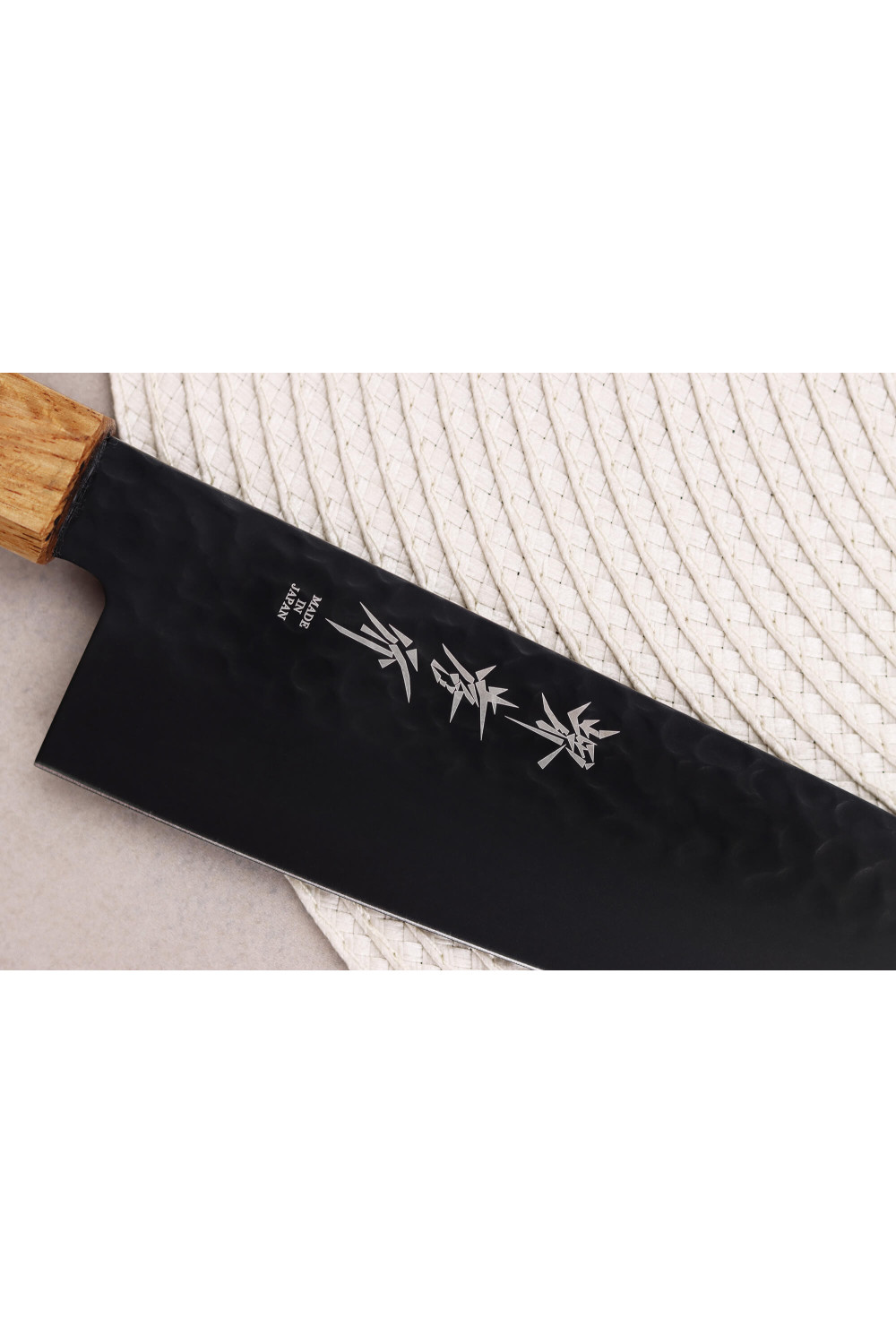
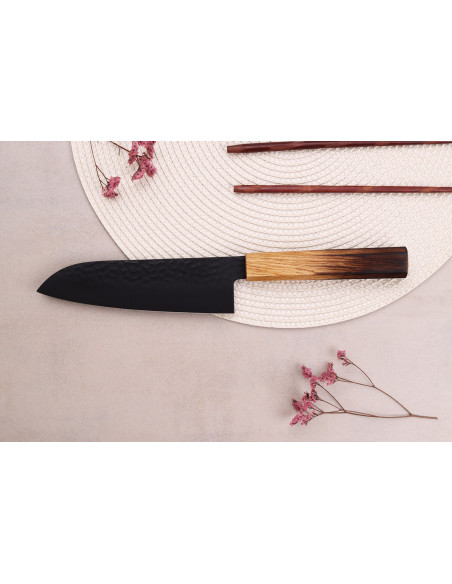
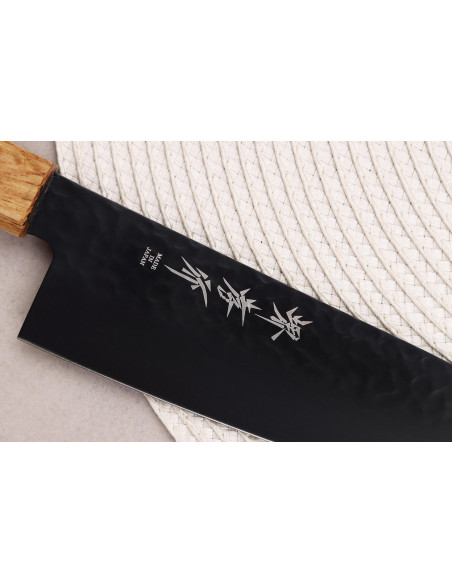
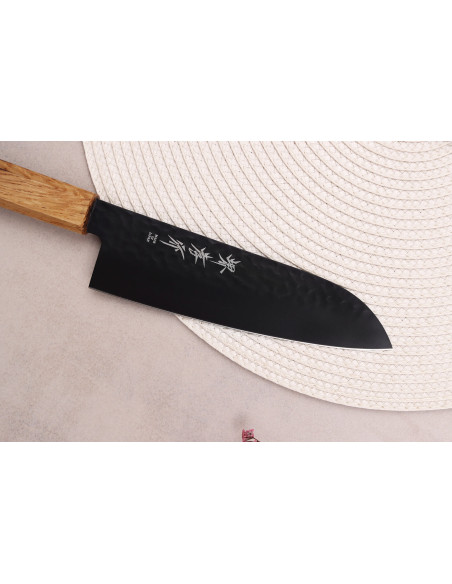
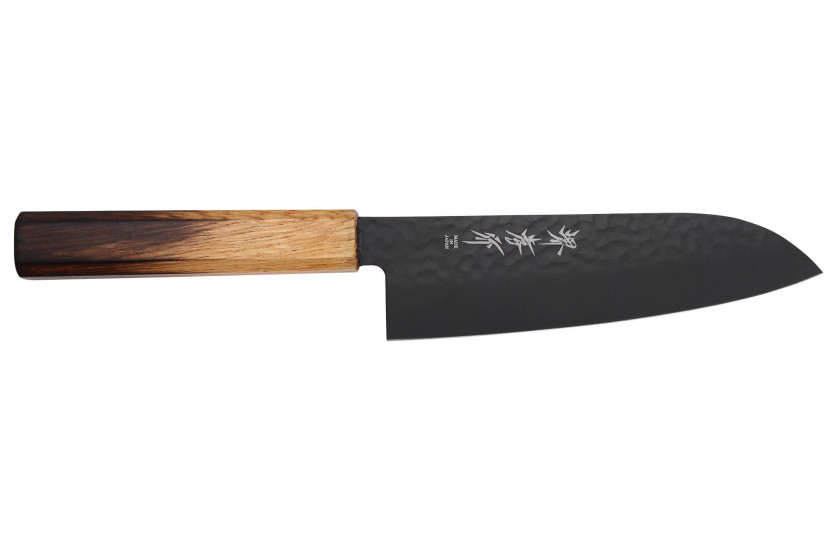
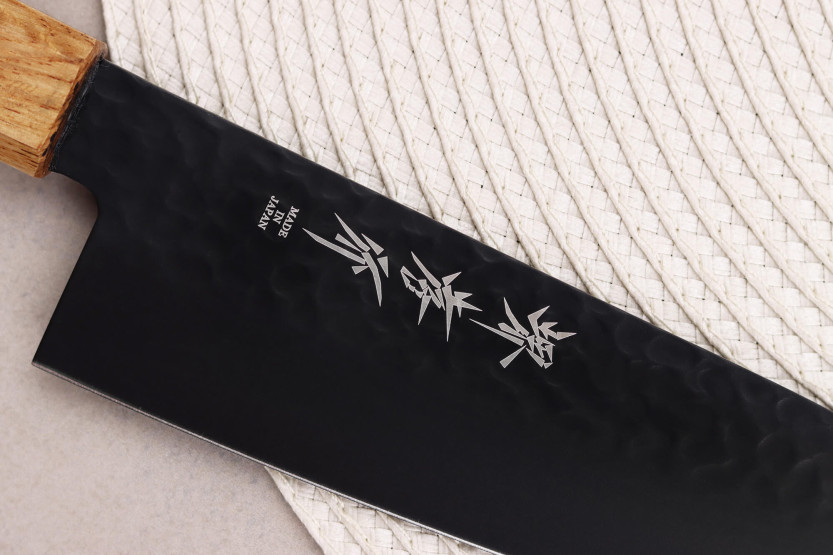
Finally, the coating gives the blade a superb matte-finish black hue, and hammering has been applied to its upper part. The latter reinforces the blade's sturdiness and gives it plenty of character for a style that blends modernity and tradition.
An elegant, sturdy burnt oak handle
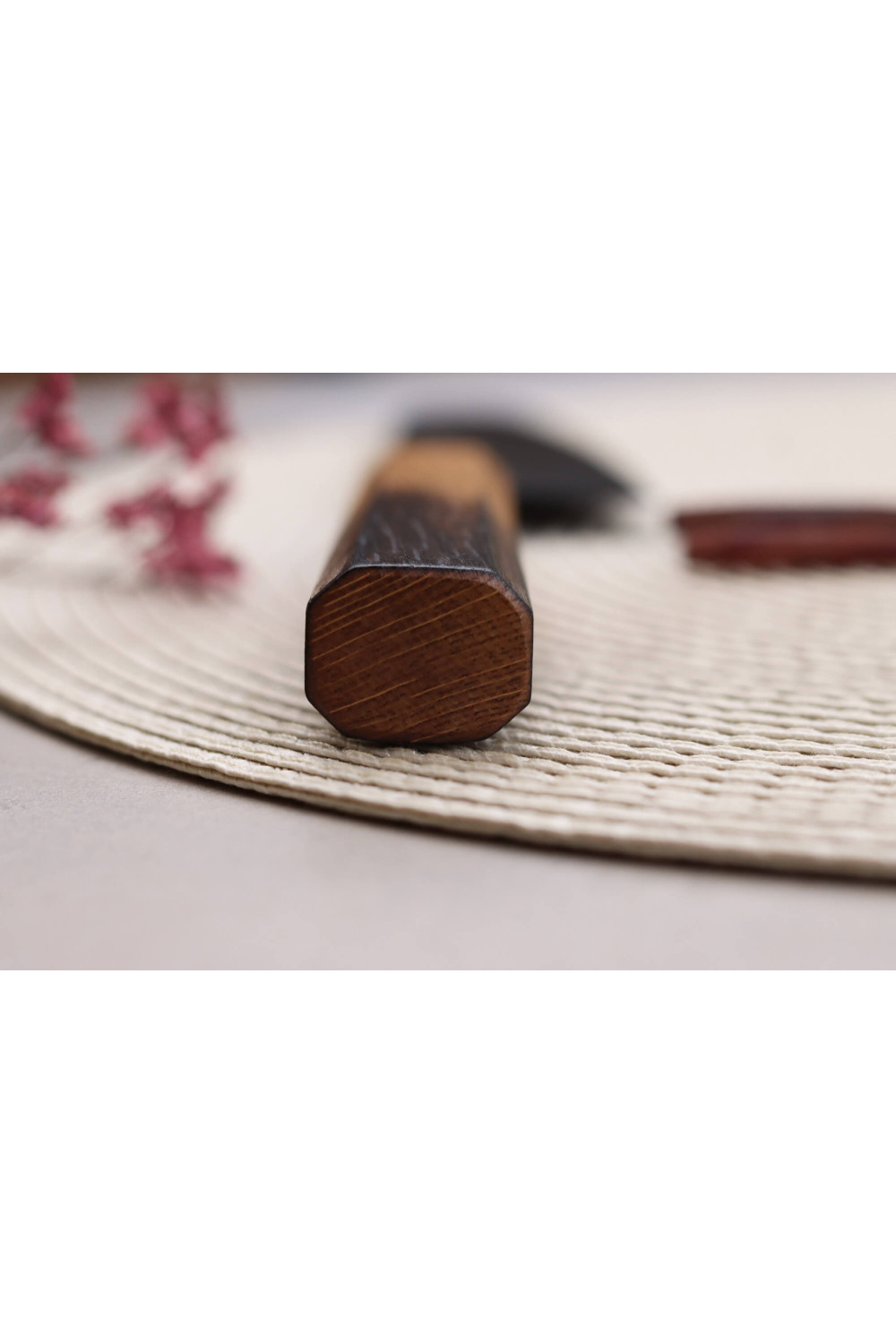
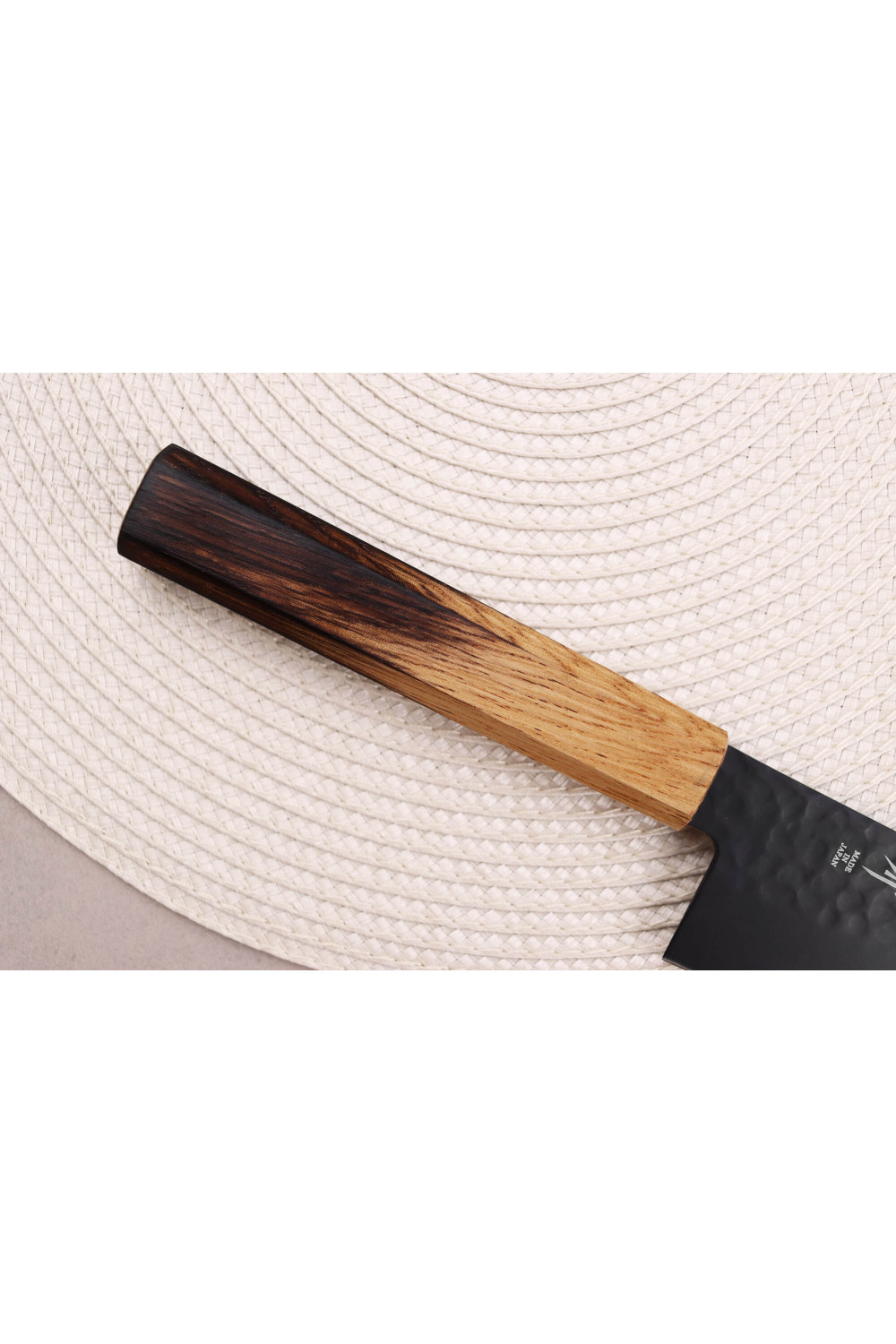
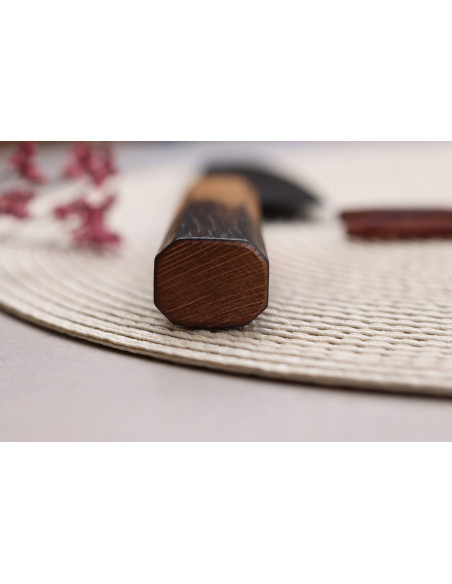
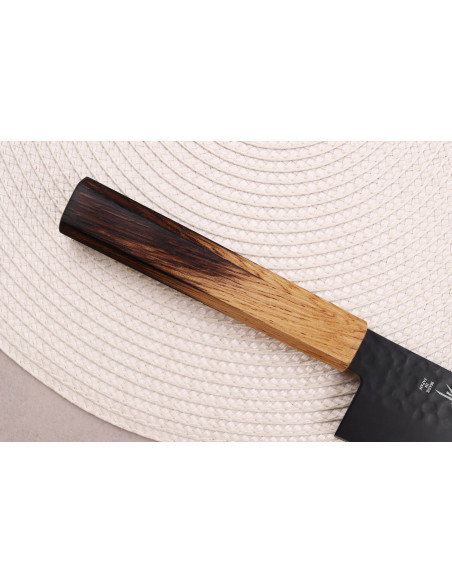
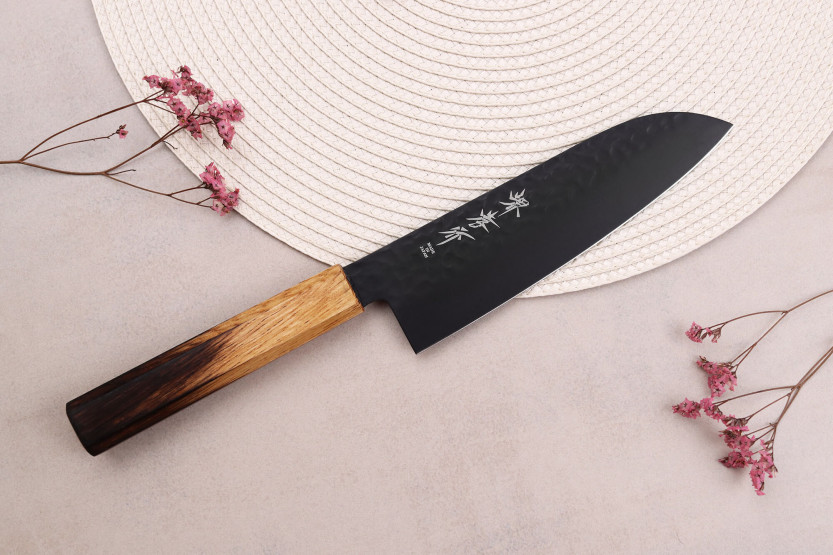
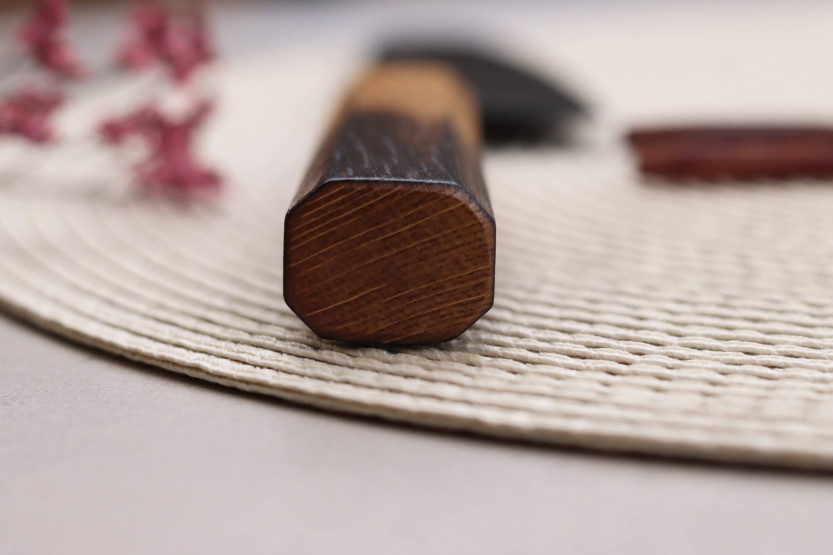
Sakai Takayuki chose oak for the handle of this knife. Oak is an ideal wood for kitchen use, as it is durable, resistant to humidity, shock and vibration. It is also difficult to warp, which is why it is also used to make furniture. In the case of this santoku, the end of the handle has been burnt. This increases the strength of the wood, while providing an original and elegant visual effect.
Octagonal in shape, the oak handle is suitable for right- and left-handed use. It is also ideal for prolonged cutting, as it offers a comfortable grip.
The space where the blade fits into the handle is filled with wood pulp to seal the knife. As a result, small pieces of food and water from cleaning cannot get inside.
The knife should only be washed by hand. Putting it in the dishwasher or leaving it to soak in the sink is not recommended. Clean the knife without wetting the handle with a non-abrasive sponge and mild soap, and dry it immediately after washing.
You can then store the knife in a dry place, ensuring that no trace of moisture remains.
A wide range of handcrafted Japanese knives is also available on our website!






 By buying this product you can collect up to