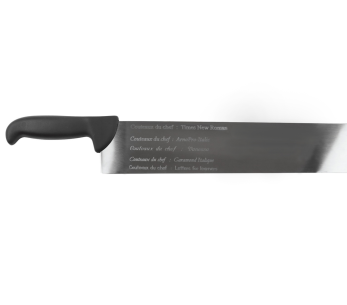
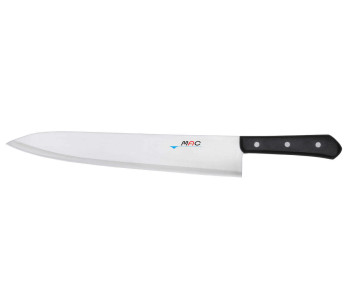
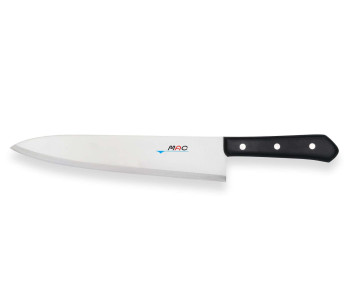
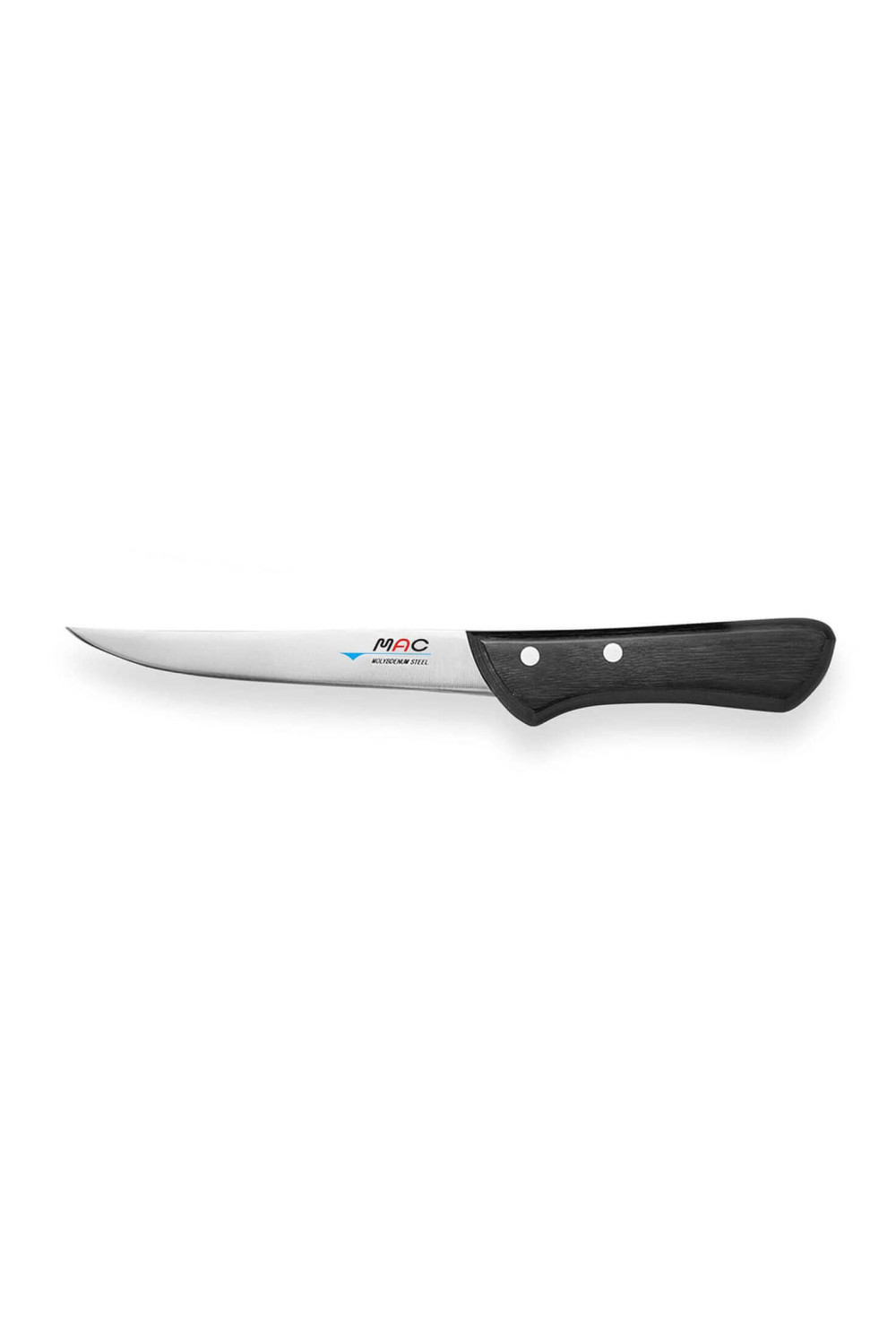
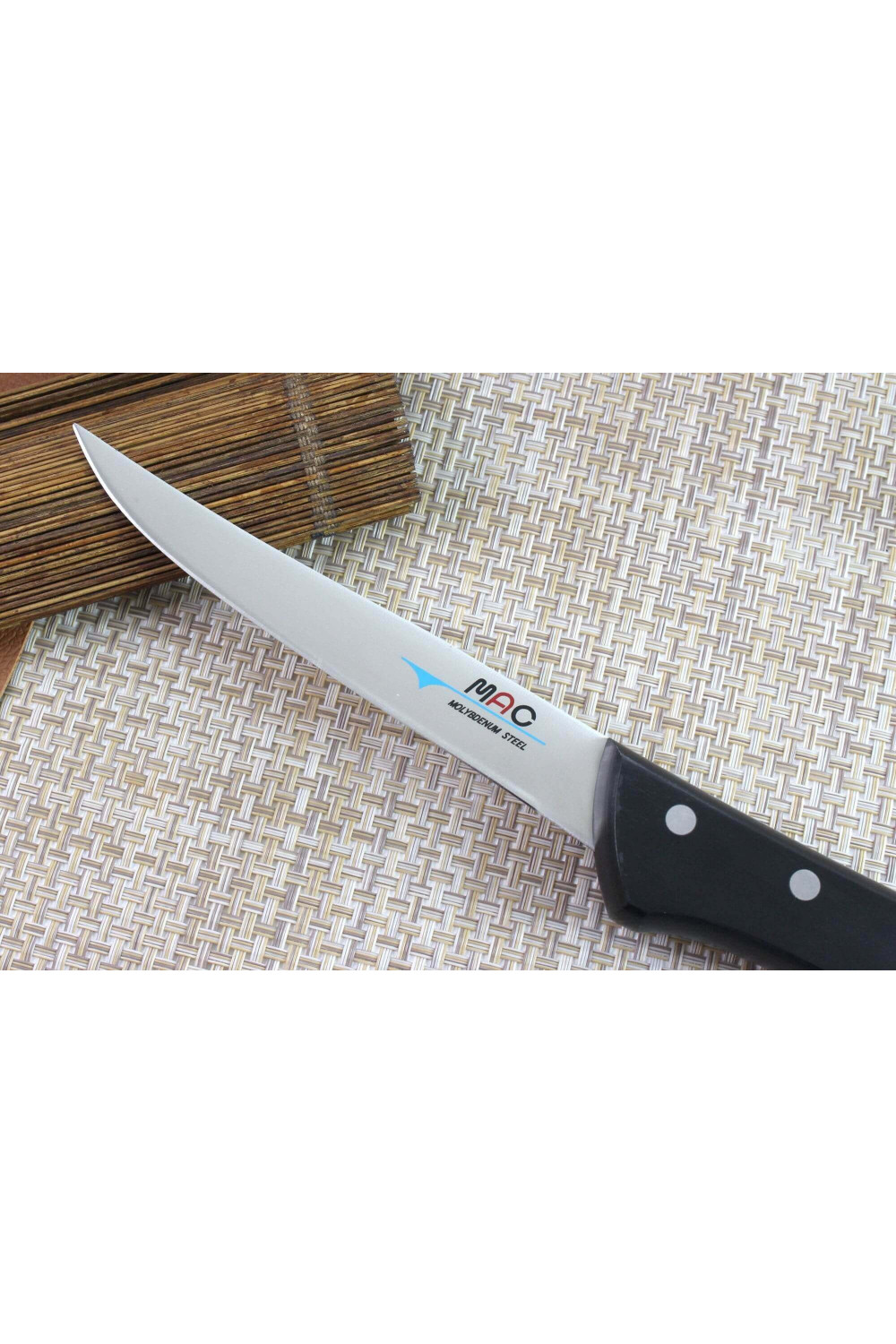
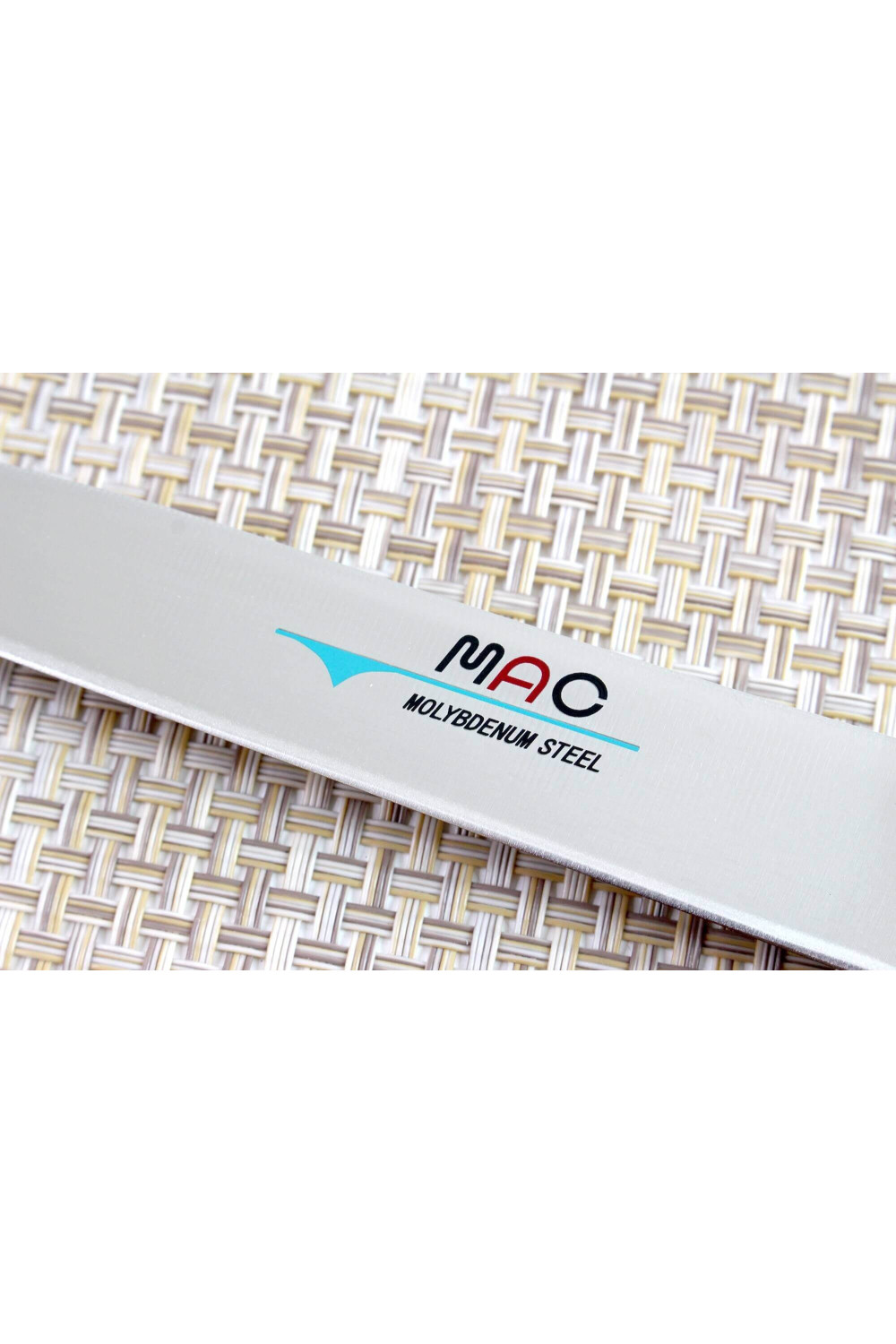
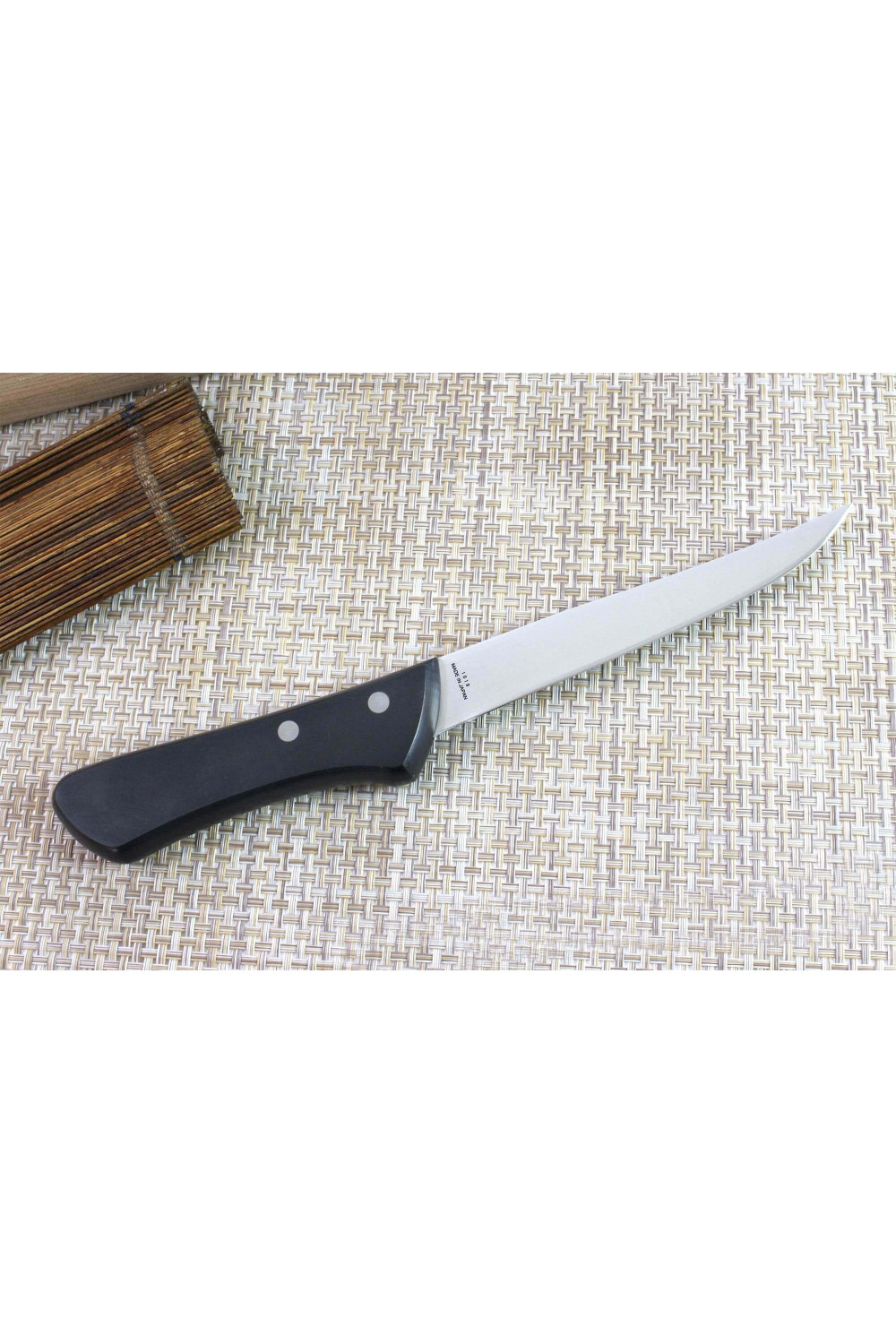
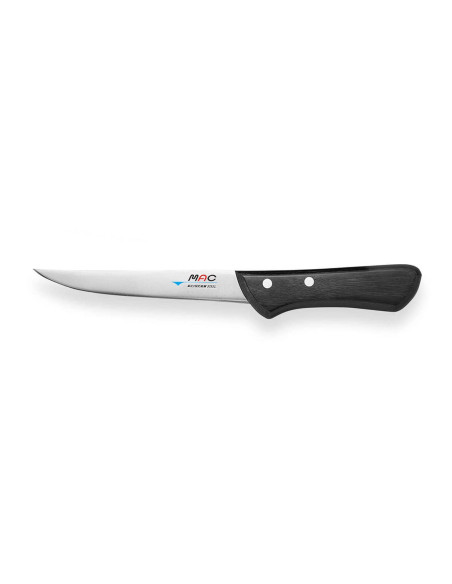
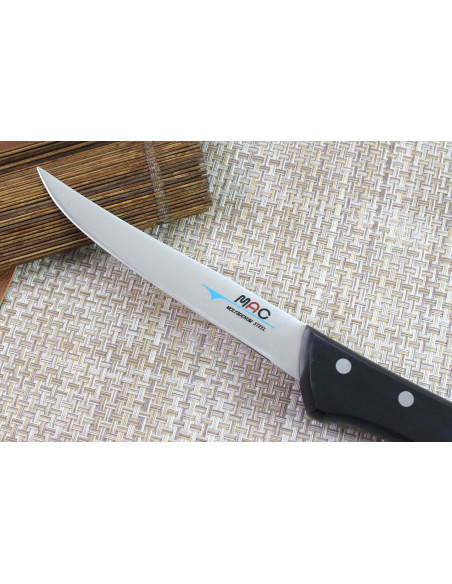
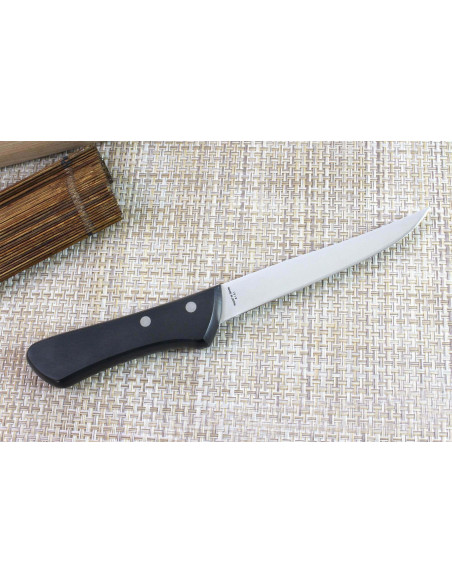
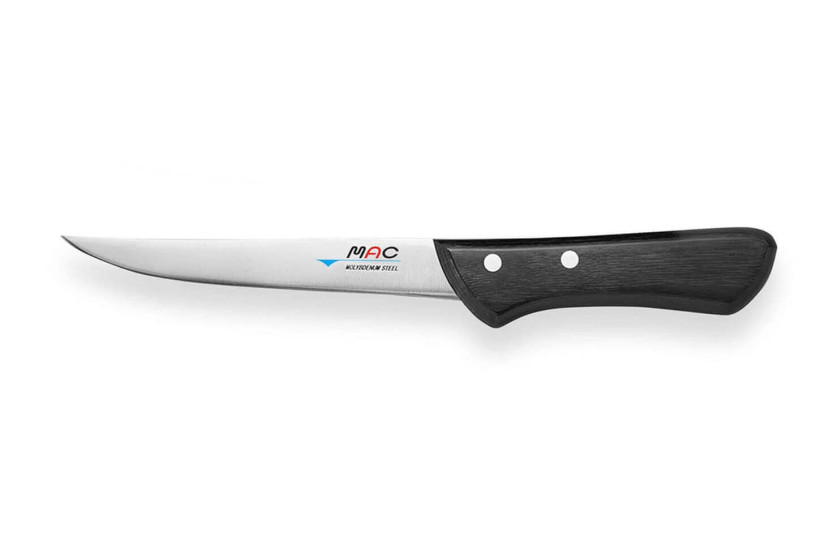
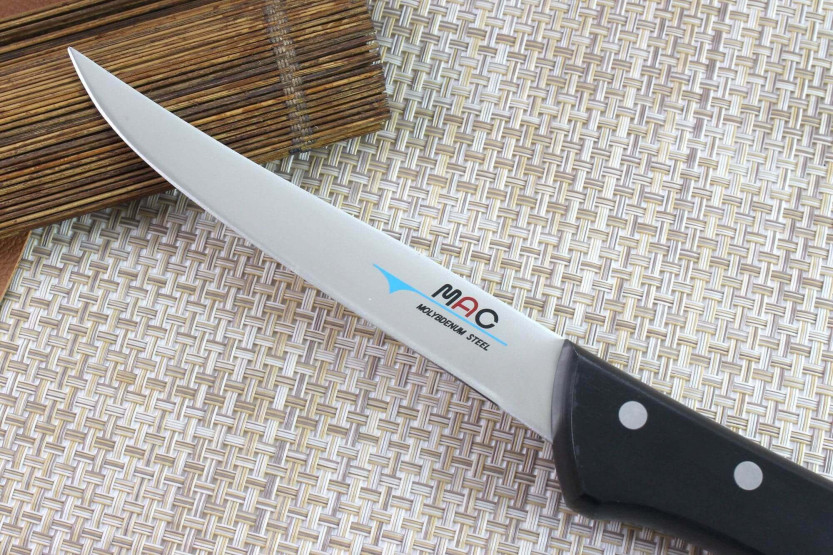
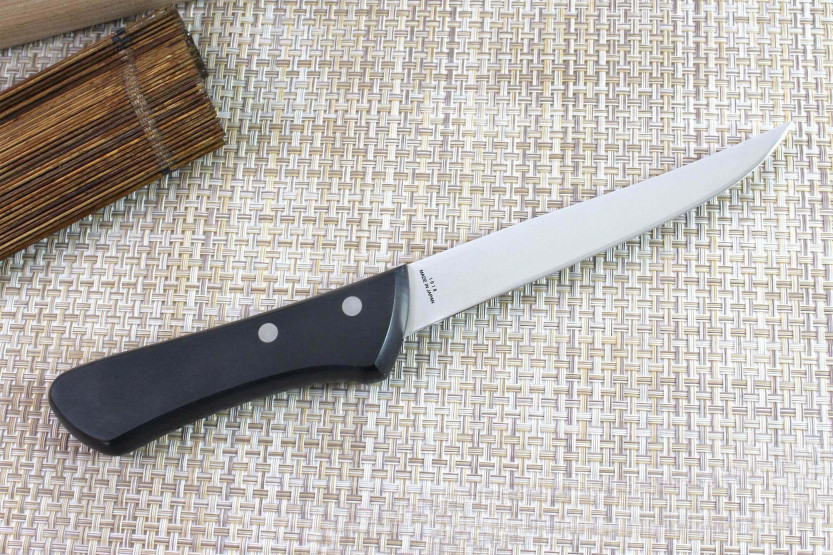
This MAC Chef 16cm filet de sole knife features a blade considered rigid for this type of model. With it, you can delicately carve fish flesh thanks to a high-performance cutting edge.
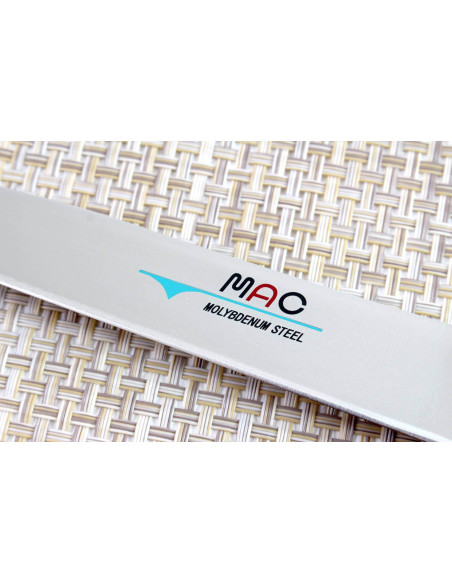
The blade is made of AUS-8 Japanese stainless steel, enriched with carbon, tungsten, molybdenum and vanadium:
- The first 2 elements affect the blade's hardness, making it more rigid. A rigid blade is one that will hold its edge over the long term, and on which you can work a razor-sharp edge.
- The last 2 elements also have a small impact on hardness, but while vanadium increases the alloy's elasticity and shock resistance, molybdenum increases its resistance to corrosion. The result is a high-performance, long-lasting alloy that's a pleasure to use.
Its composition makes this alloy easy to work with, so you can easily maintain it with a whetstone when you feel the knife is losing its edge.Sharpening is done by hand, on a water stone, by an expert in the field. The craftsman's know-how ensures a razor-sharp edge from the very first use.
Finally, the edge has a hybrid shape, between a Japanese angle (unilateral) and a Western angle (V-shaped symmetrical). This gives the knife the perfect combination of performance and edge life. What's more, the finesse of the cutting edge ensures clean penetration that reduces fatigue over the long term (no need to force to slice).
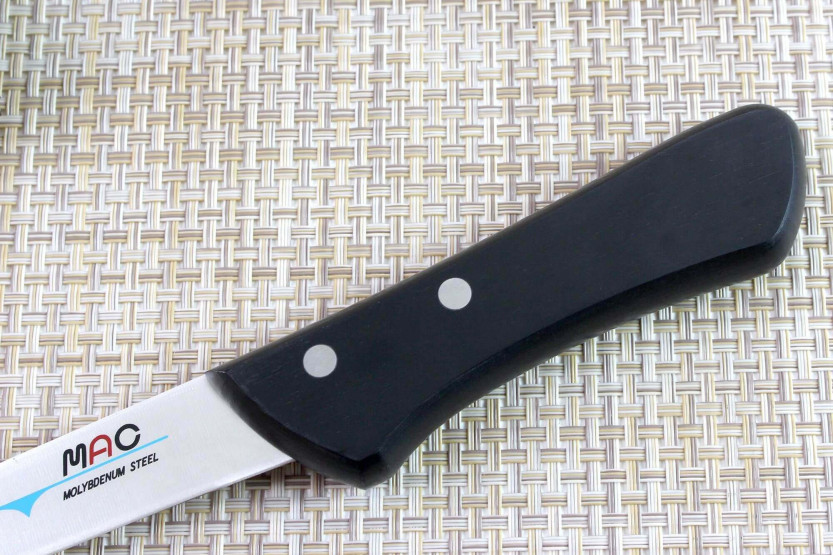
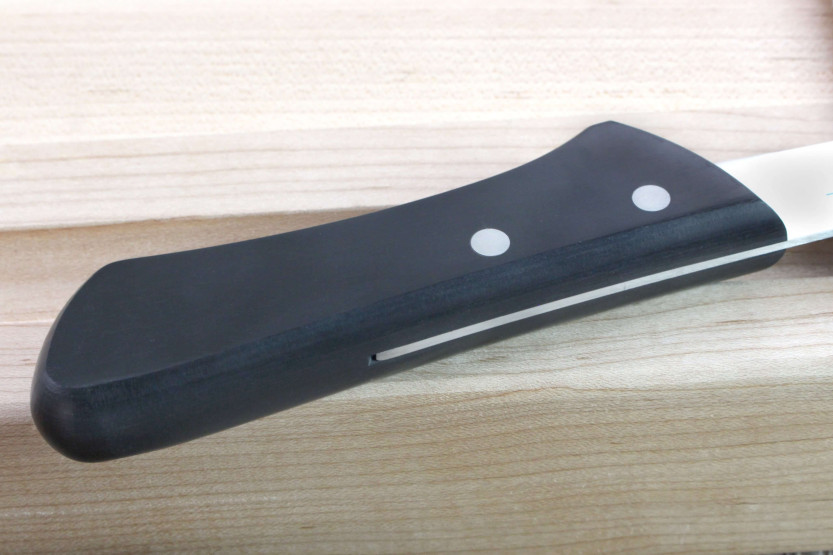
The handle, meanwhile, is made from Pakkawood, a composite material formed from laminated wood and hot-compressed resin. This particular material is resistant to humidity, shock and temperature variations.
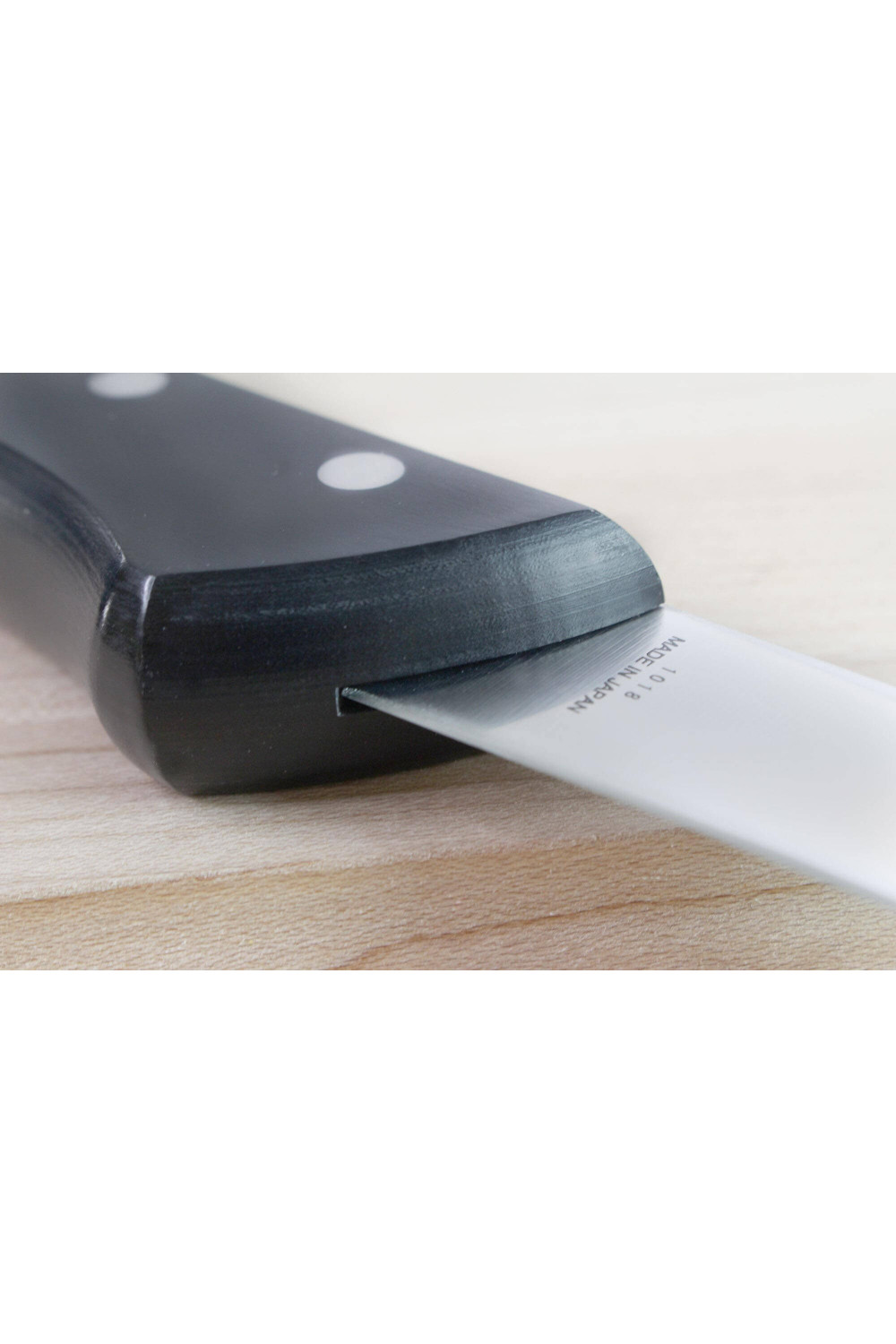
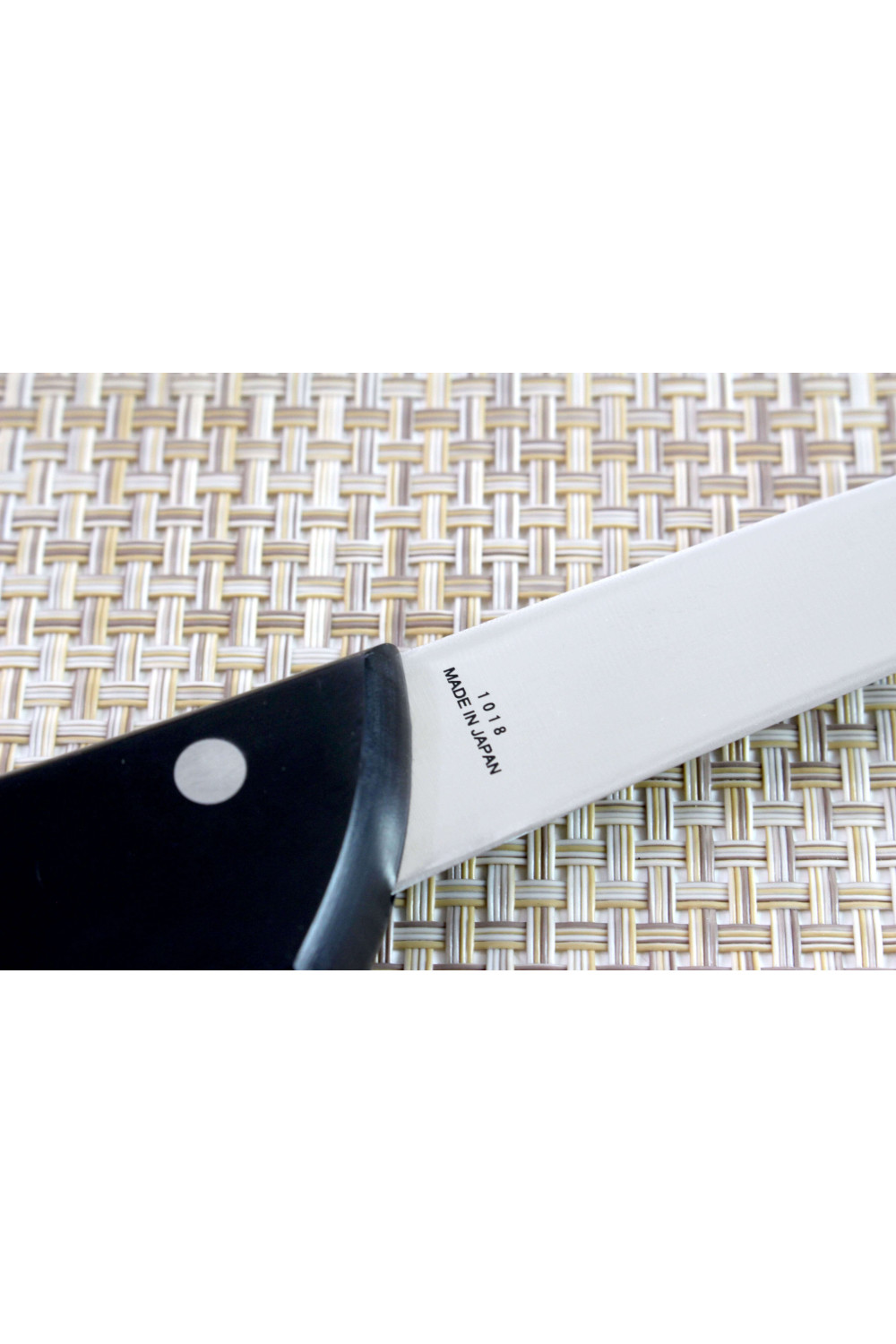
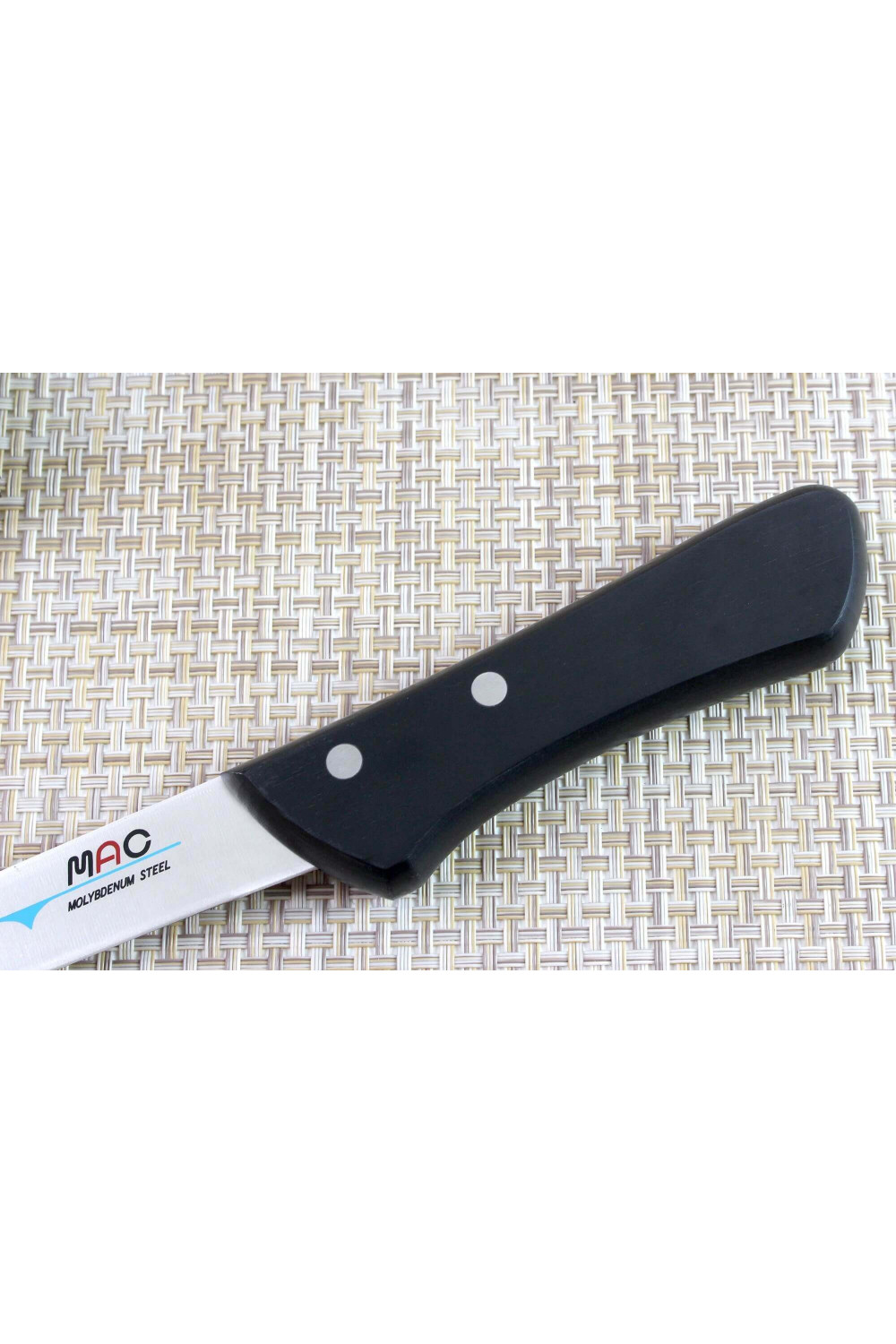
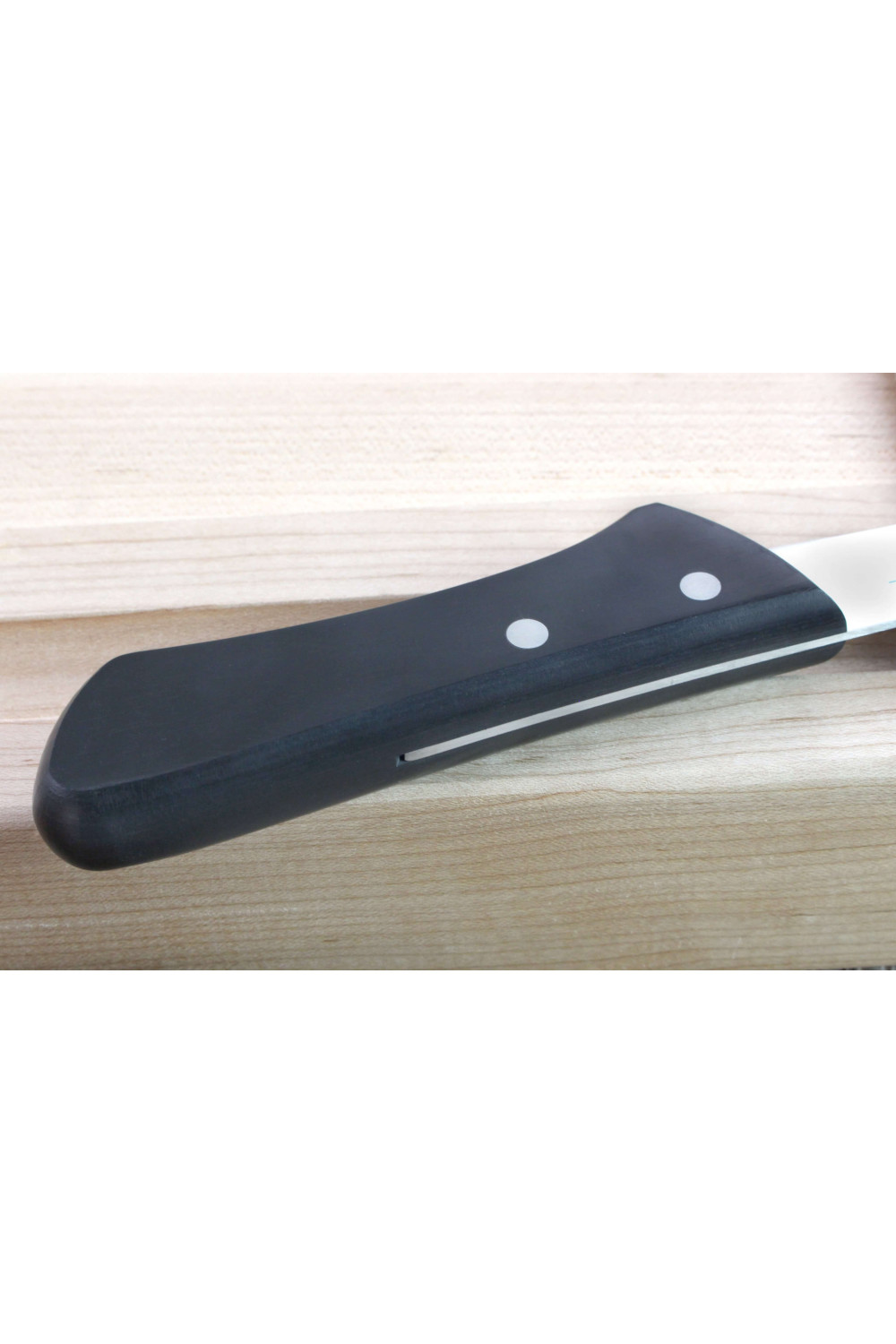
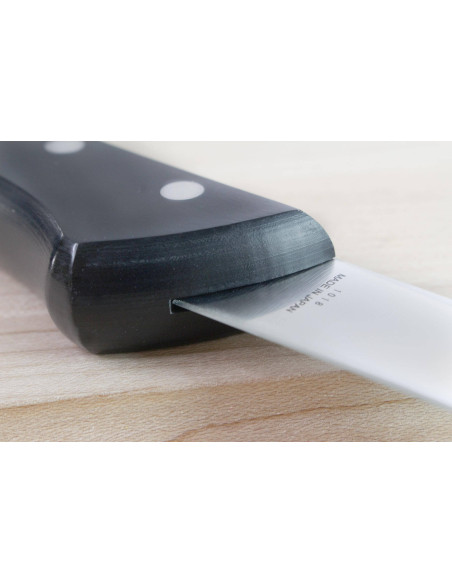
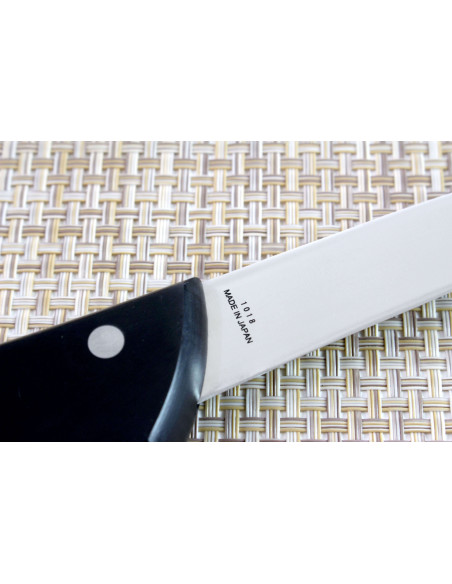
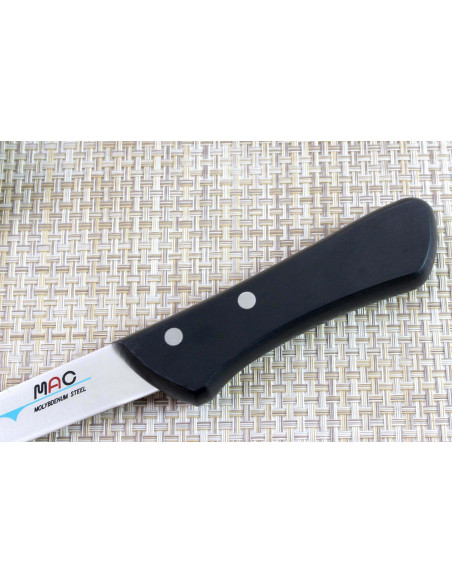
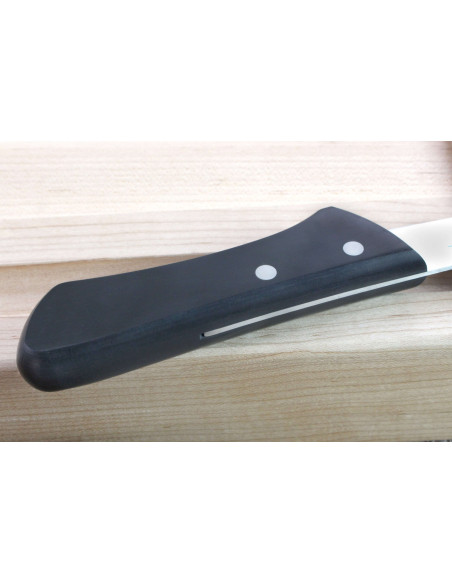
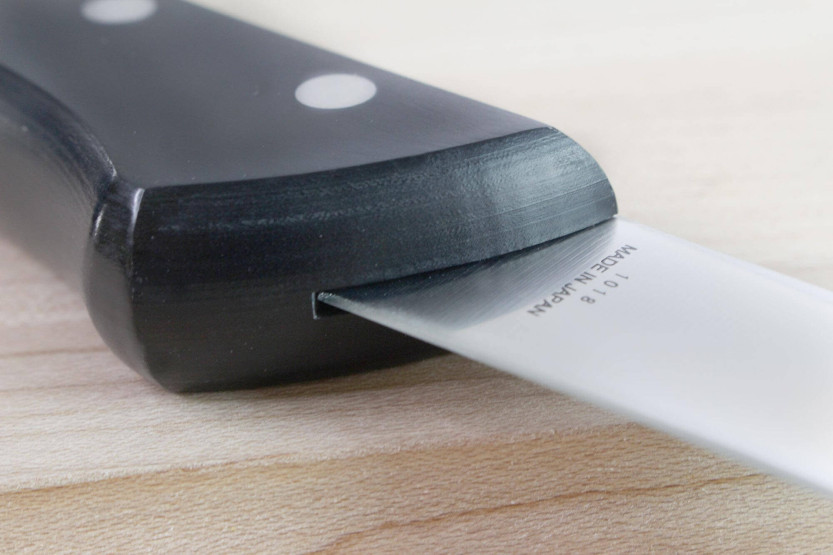
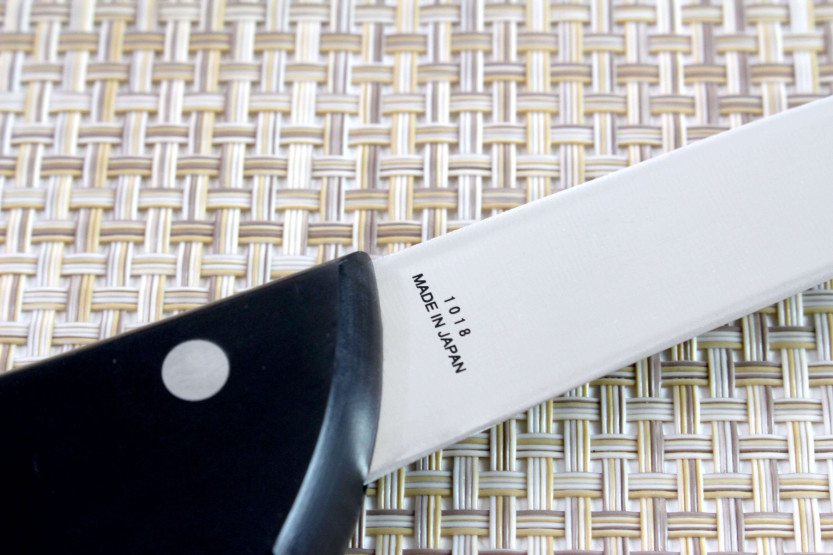
It is completed by 2 rivets that hold the Pakkawood to the half-silk blade. Despite its imposing size, the Pakkawood remains light (thanks in particular to the absence of a bolster), making it more pleasant to use over time. Its wide structure is also designed to ensure a comfortable grip.
Wash the knife in your sink with lukewarm water and a soft sponge. Then dry it with a soft cloth, leaving no trace of moisture on its surface. In this way, you'll maintain its original performance and appearance over time.
About the manufacturer:
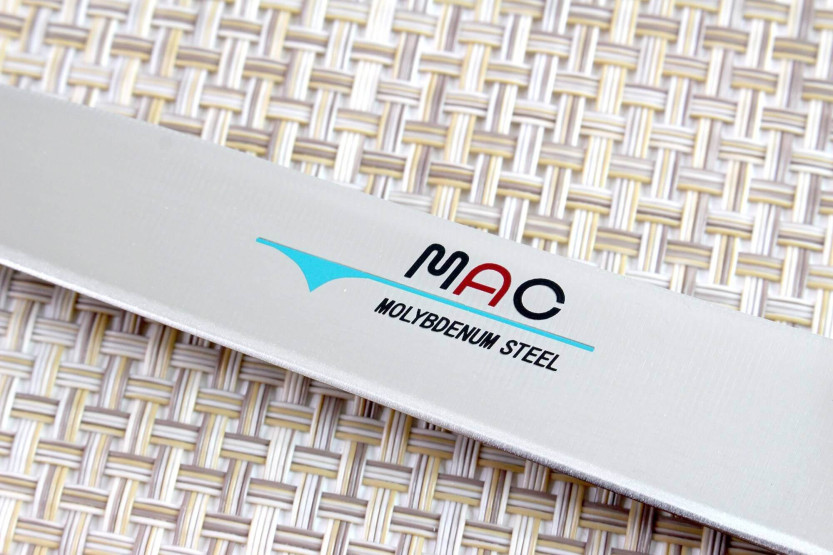
For the record, the name MAC comes from the word "Macrocosm", which in simplified terms means "immense universe" (linking it to its founder's ambition to equip every country in the world with his knives). He chose to retain the first 3 letters of the word.
MAC is a knife manufacturer based in Seki, a Japanese town renowned for its quality cutlery production since the Middle Ages. The brand was created in the 60s, after its founder studied in the United States. He worked as a part-time cook to supplement his studies. It was there that he had the opportunity to test kitchen knives that were not necessarily to his taste.
Using a dull, heavy and very sharp German knife, he dropped it, narrowly missing planting it in his foot. Instead, the knife stuck in the ground, and when he tried to pull it out, about 3cm of the tip broke off. To fix this, he resharpens the blade with a whetstone, making the tip "rounder". Gradually, he realizes that this modification increases the knife's efficiency, and thus his own yield.
On his return to his homeland, this experience gave him the idea of founding the MAC company, with the aim of creating knives with a formidable cutting edge that would be durable, safer, lighter and therefore easier to use. The brand now boasts several patents to its credit, and is known the world over. It is particularly aimed at professional chefs who need high performance and efficiency.
Discover our selection of sharpening stones to maintain your equipment!




 By buying this product you can collect up to