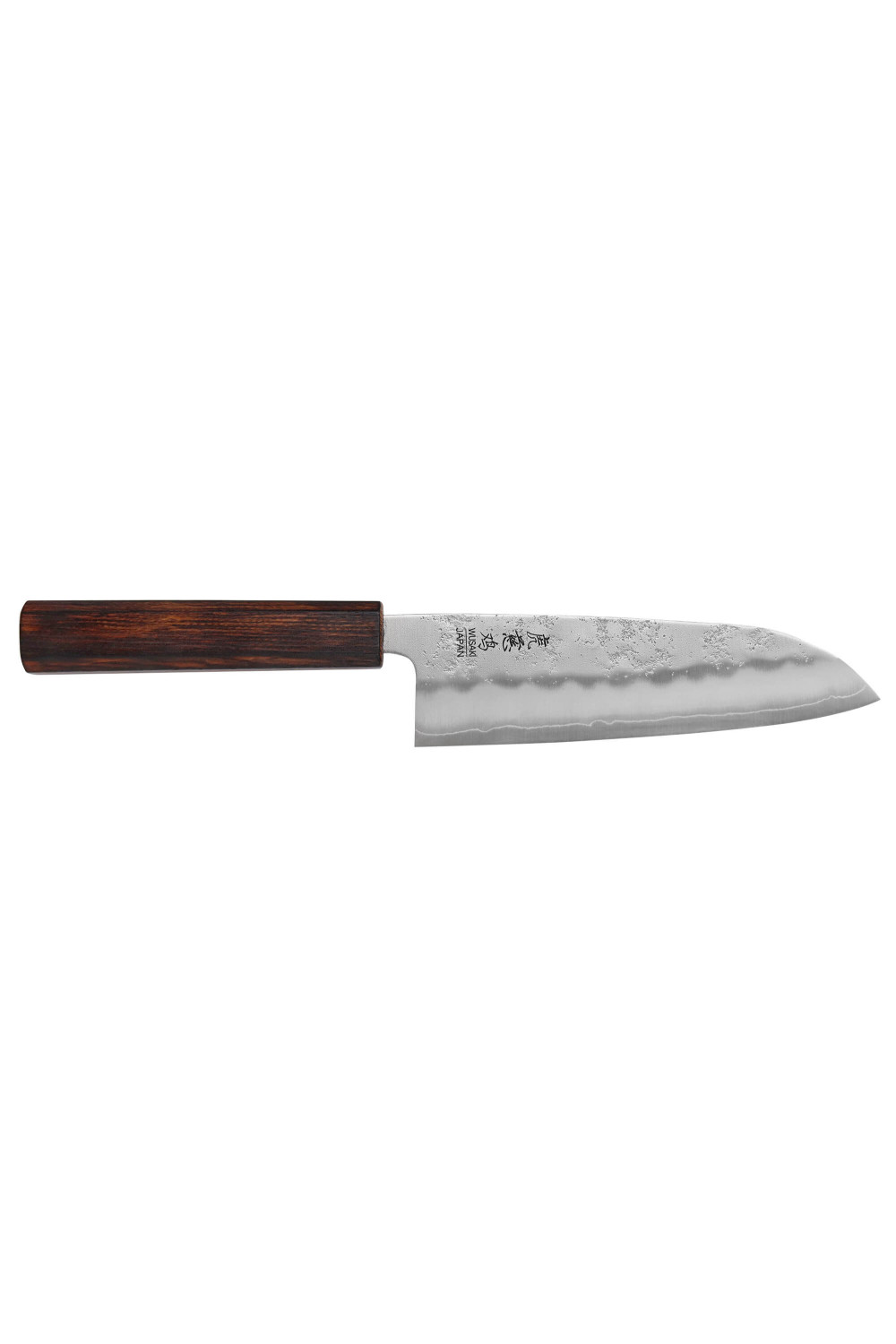
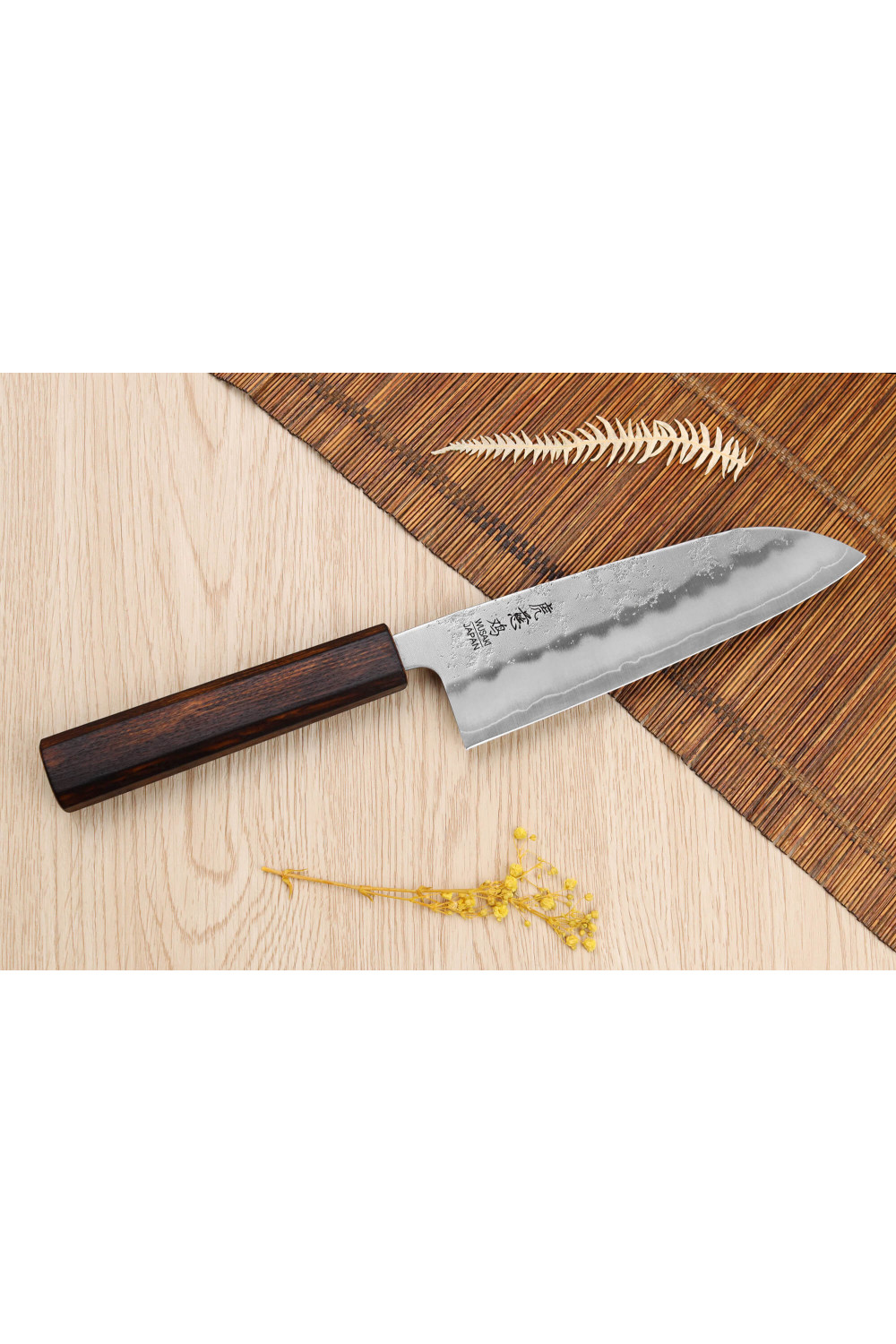
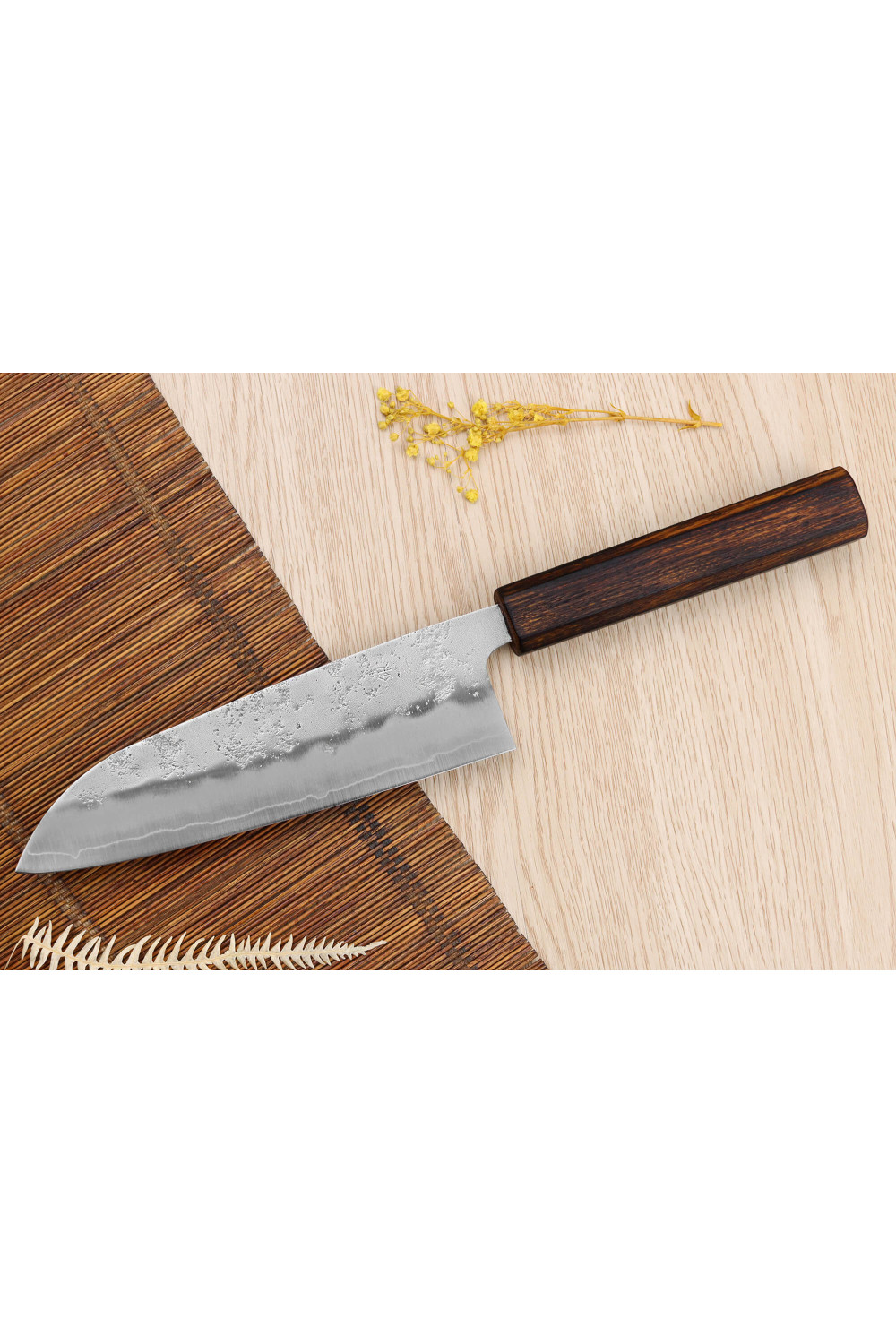
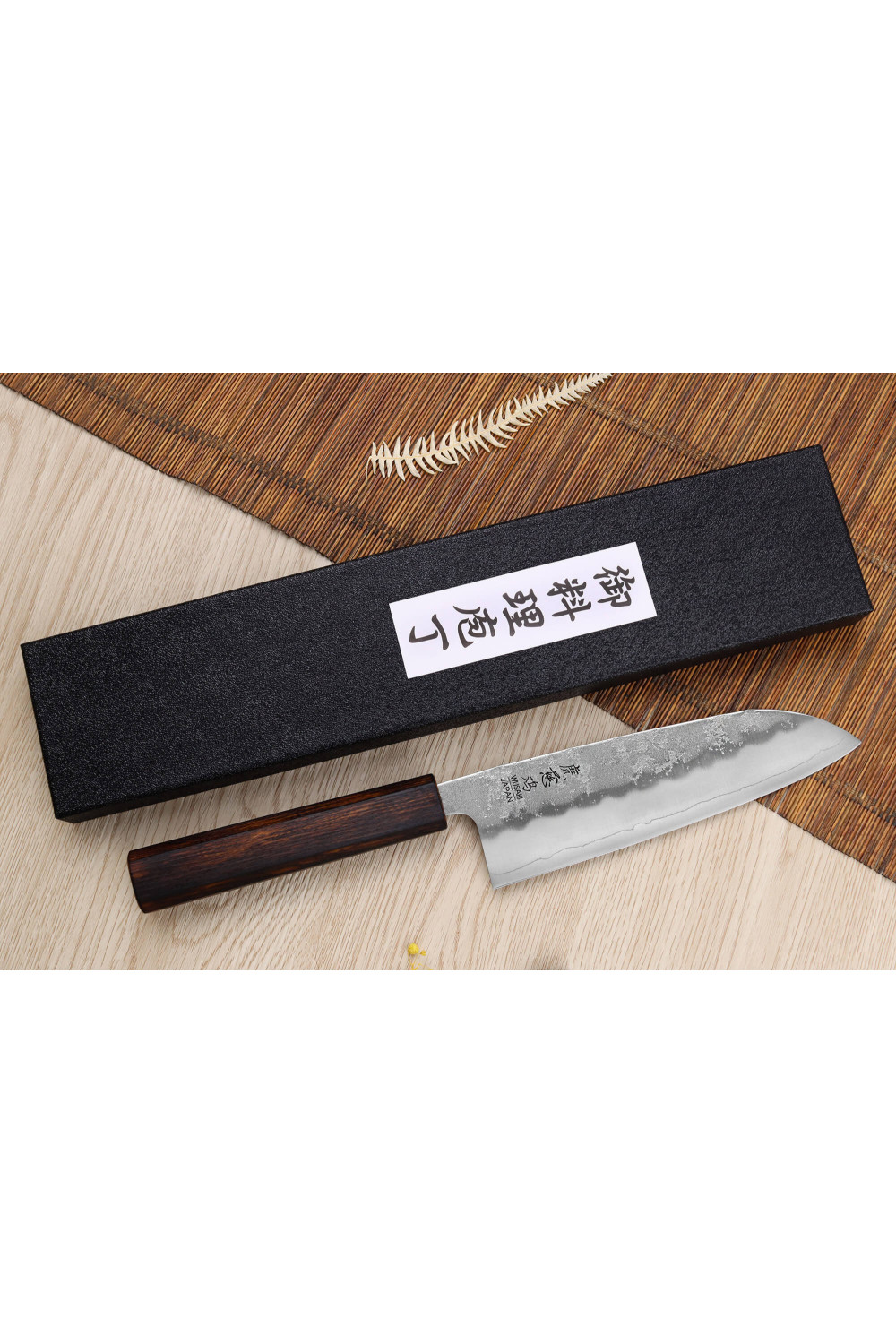
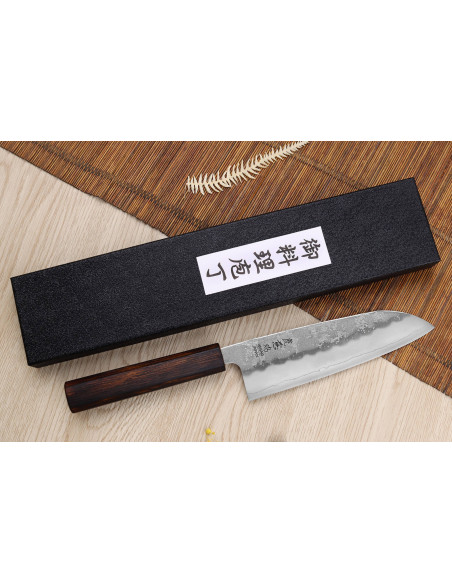
Wusaki Yoshi knives are made by the Japanese cutler Tsunehisa, who brings together a small team of highly skilled cutlery experts.
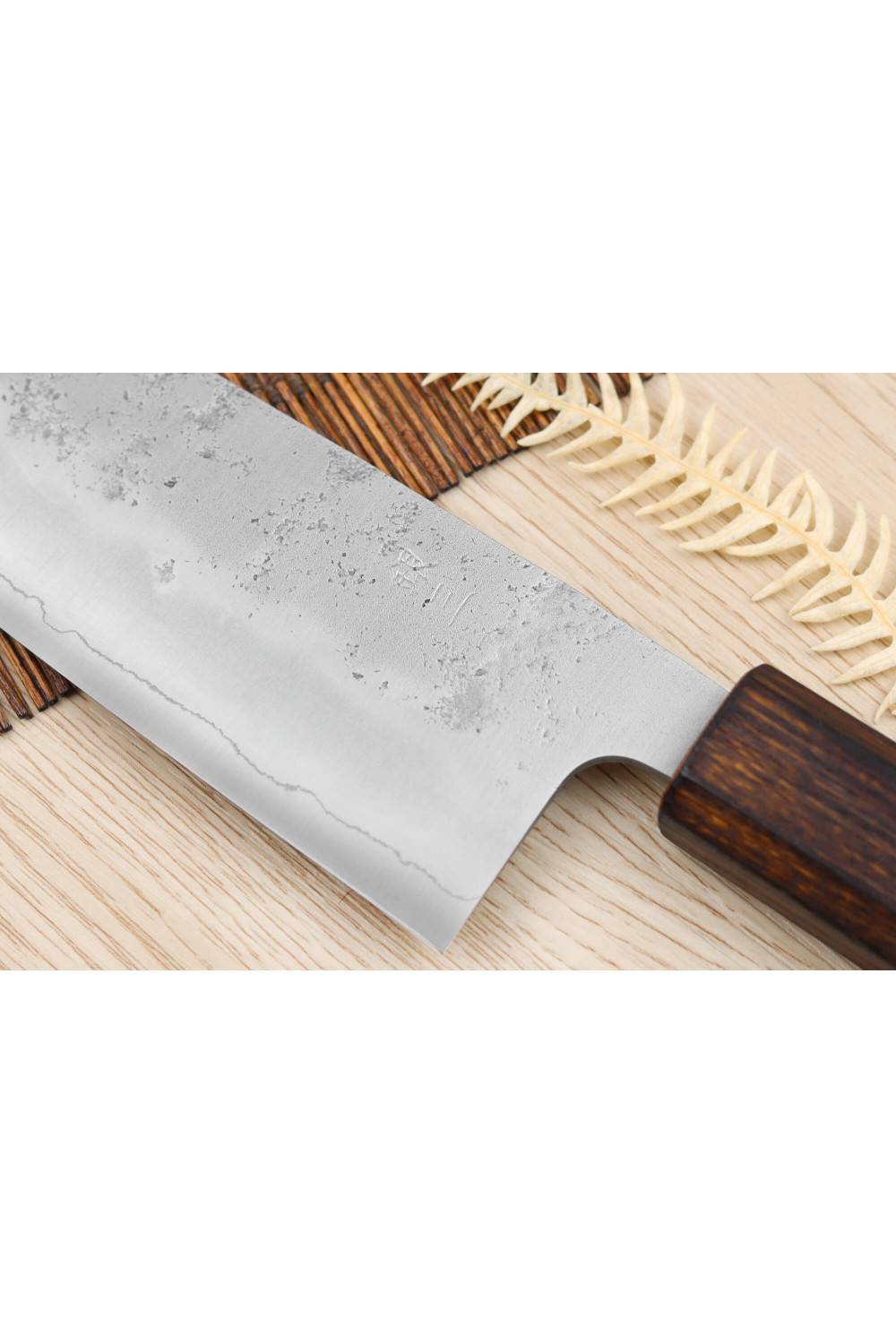
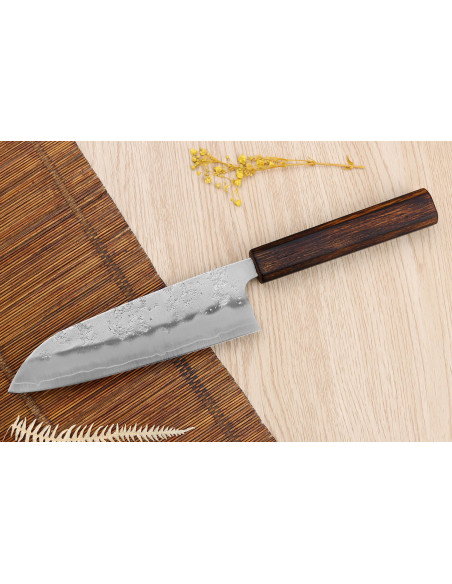
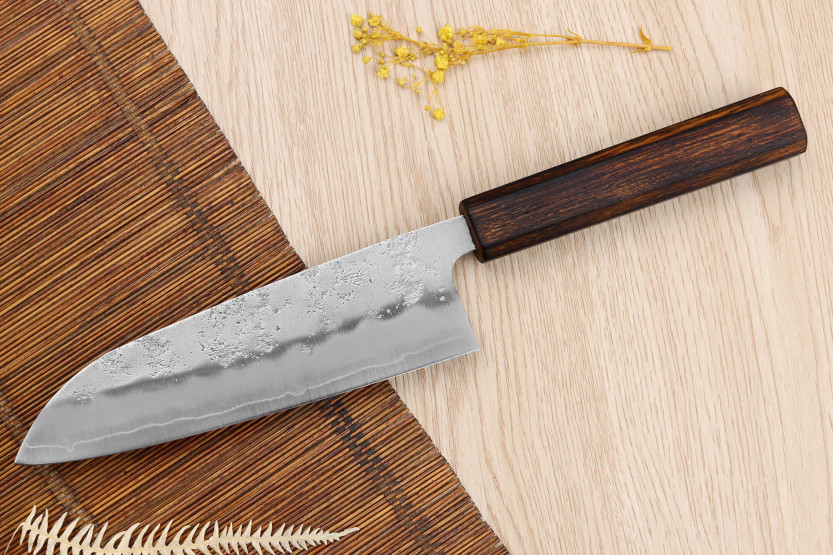
The blade of each Yoshi knife is designed according to the San Maï structure, i.e. it is based on 3 alternating layers of steel. In the center, we have a core of Ginsan steel: this Japanese steel has 0.95% carbon, to make the wire harder and more rigid, and thus hold its edge better over time. It also has a high chromium content, making it more resistant to corrosion, which is appreciated in the kitchen!
This steel achieves a hardness of 59/60 HRC on the Rockwell scale, a level that provides a good compromise in terms of ease of sharpening and edge retention. By the way, you can simply use a Sharpening stone when the need arises.
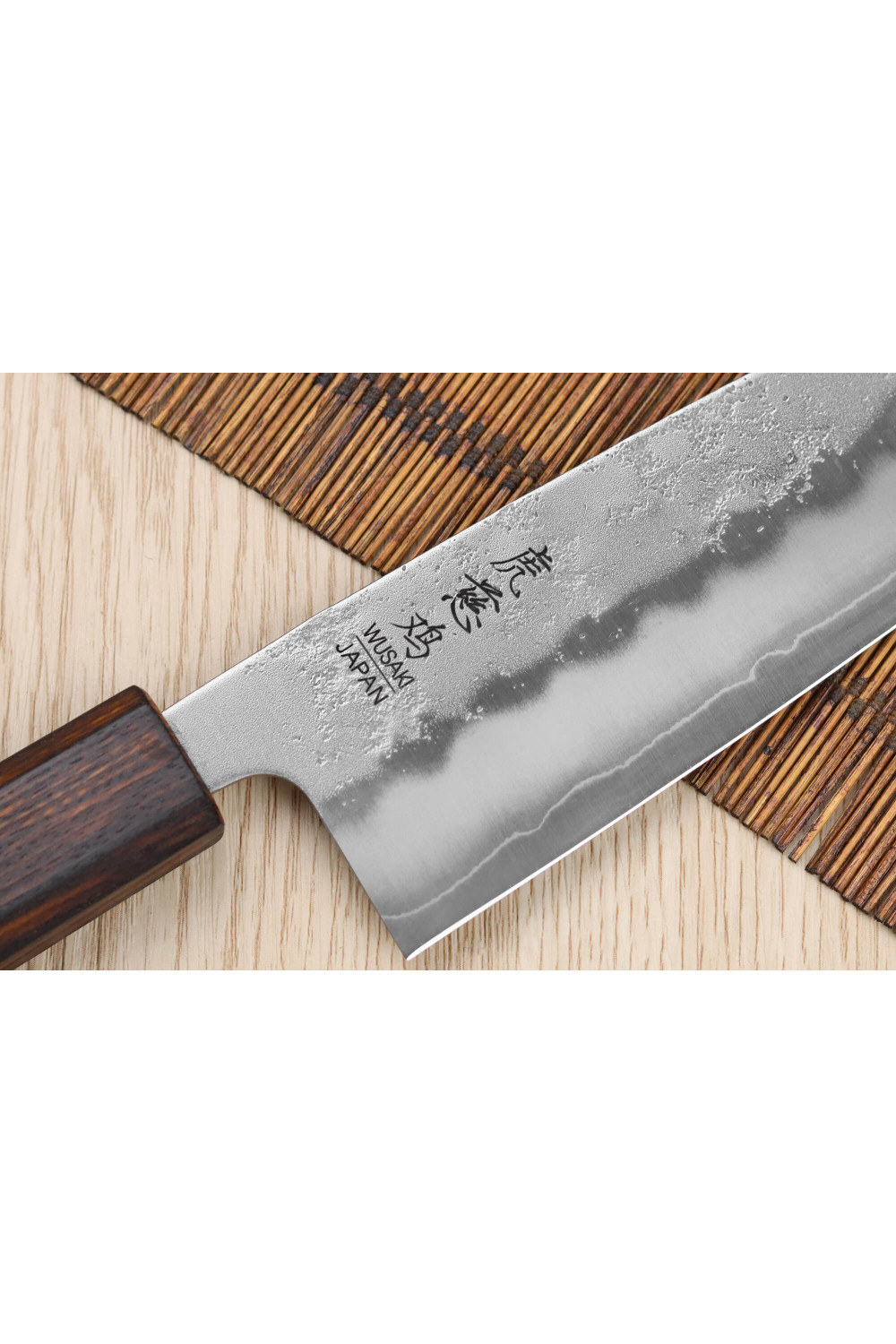
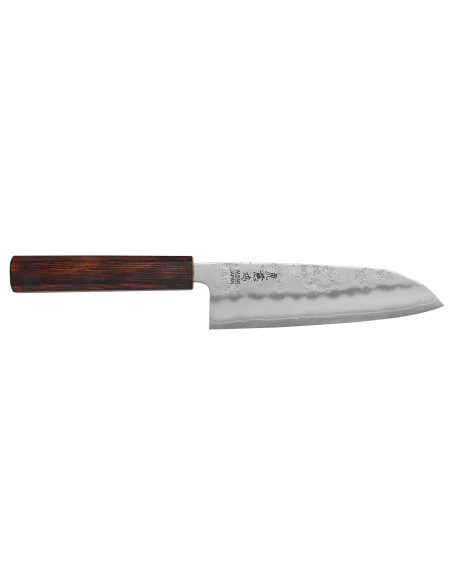
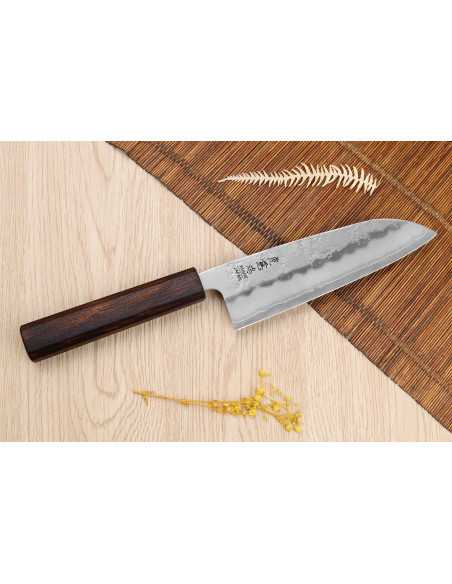
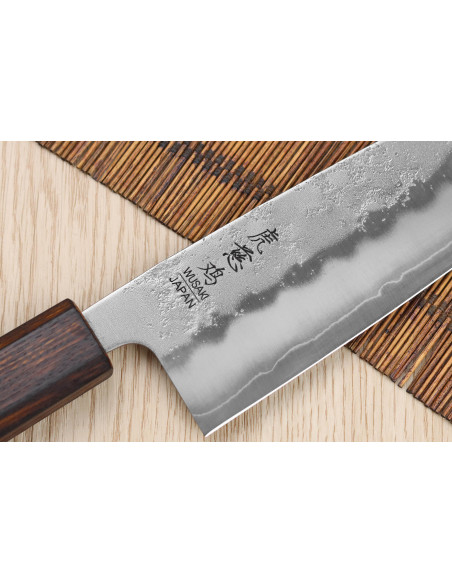
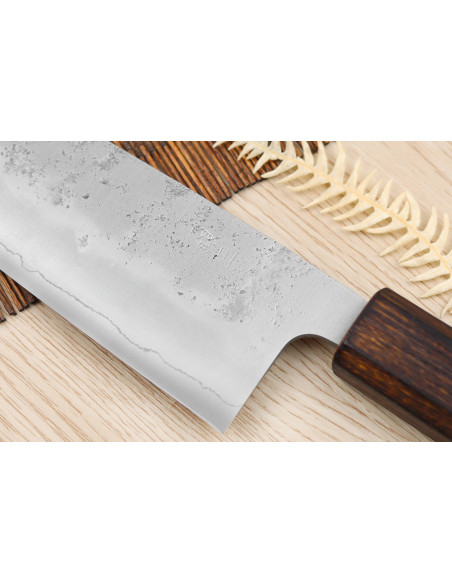
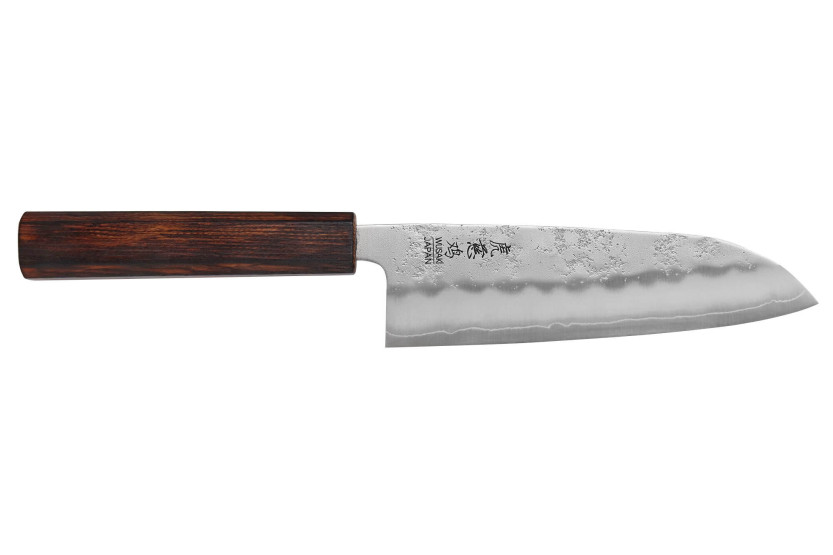
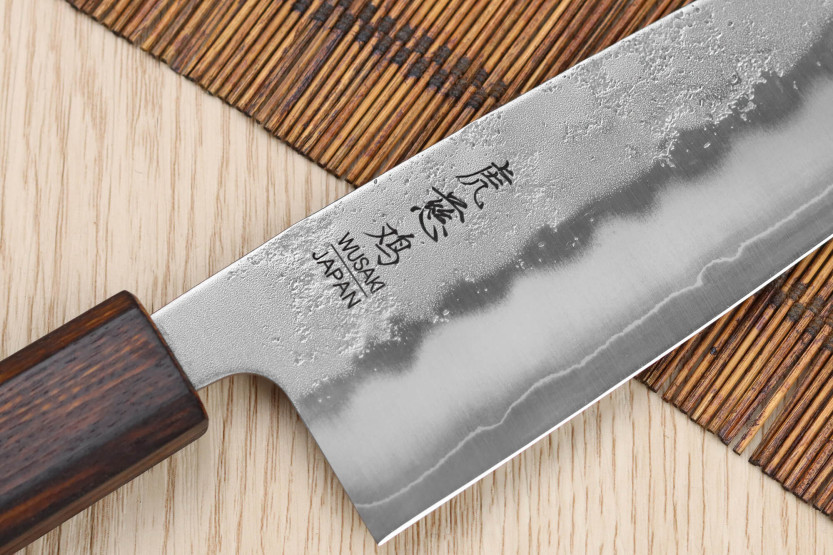
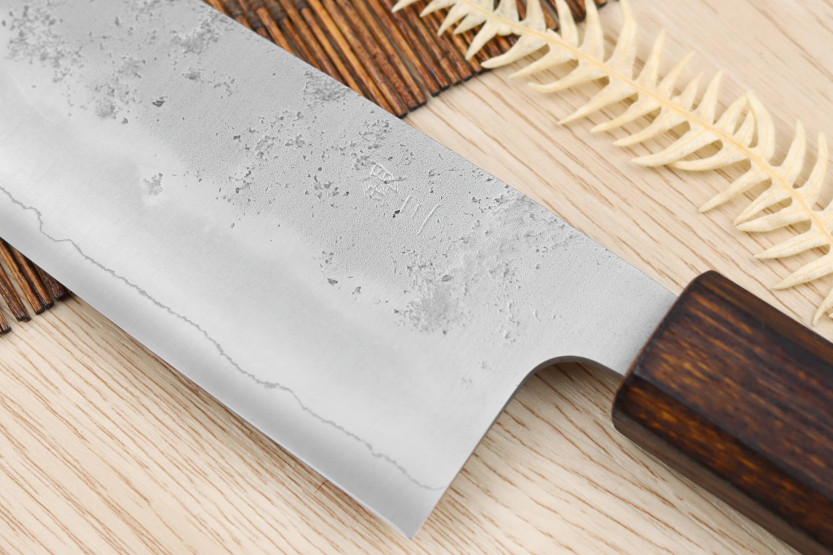
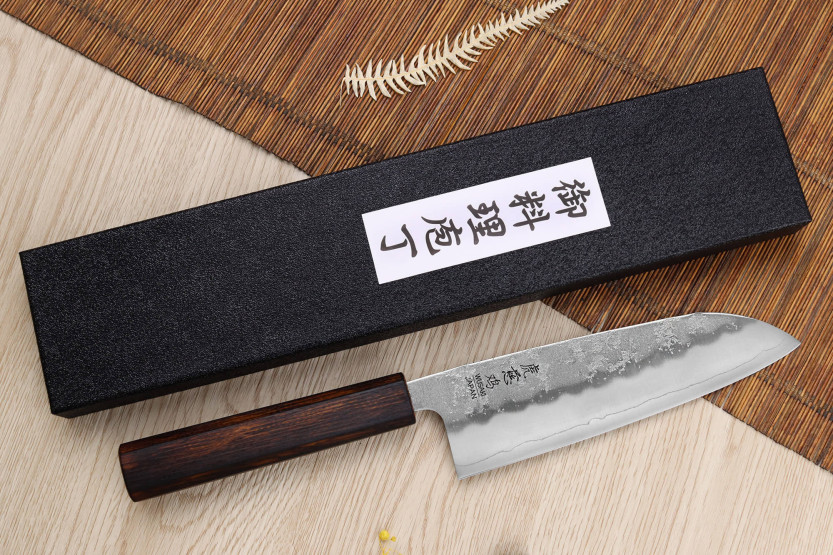
Next, the Ginsan core is surrounded by a layer of stainless steel that sandwiches it (hence the 3 layers counted in the end). This protects the core and adds flexibility to the alloy, making it less brittle in use. The difference between the steels can be seen on the bottom of the blade: a small wave runs along the cutting edge, marking the change in alloy.
Last but not least, the knife has been hammered in an original way, with attractive pitted patterns, as if drops of water had splashed onto the cutting surface.
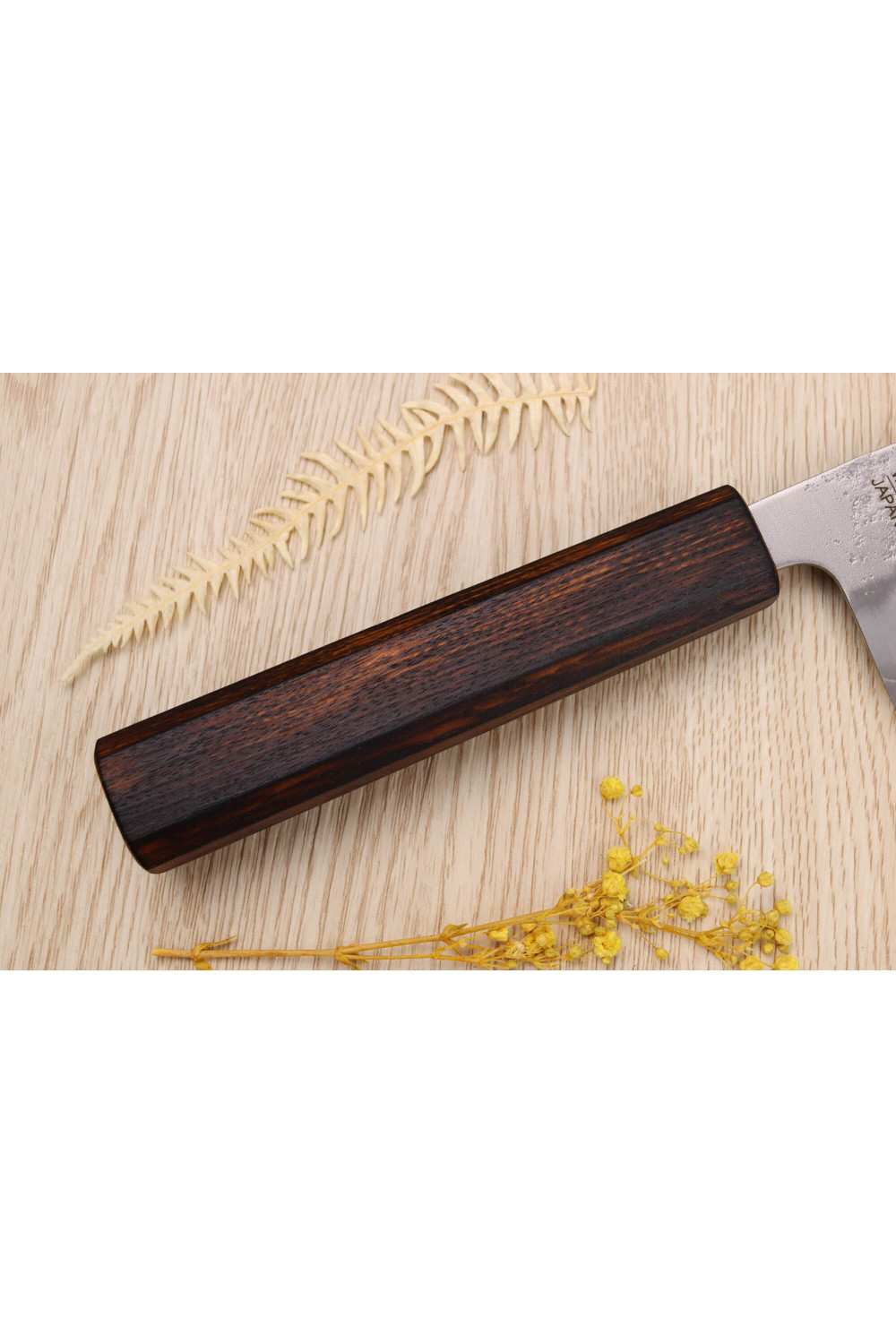
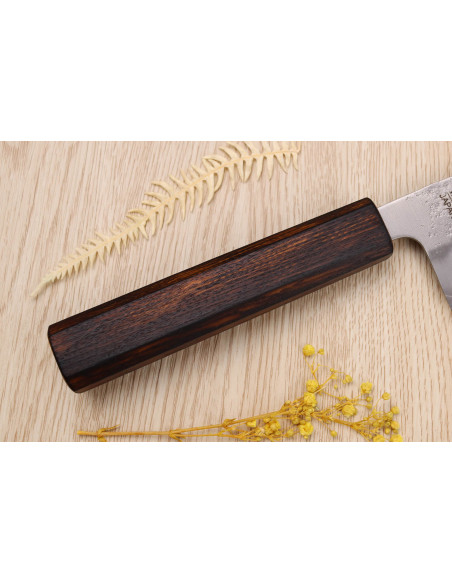
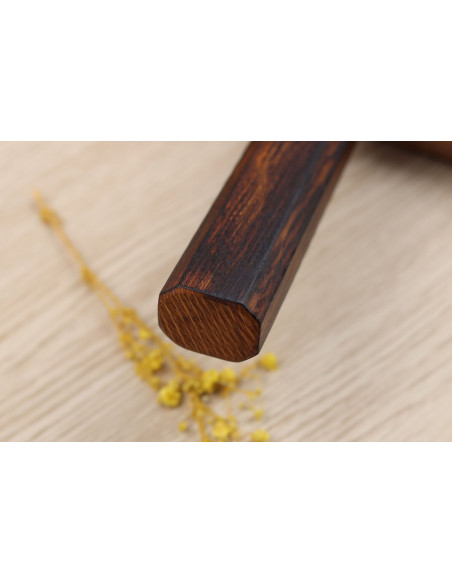
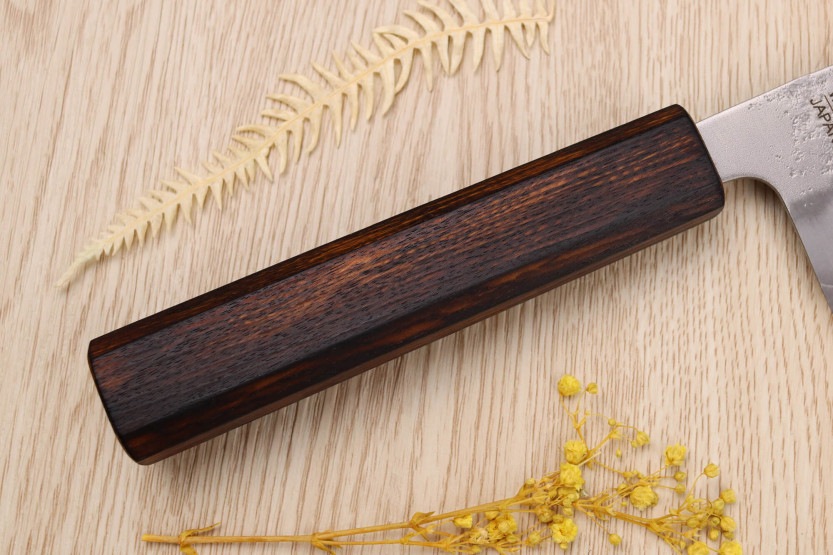
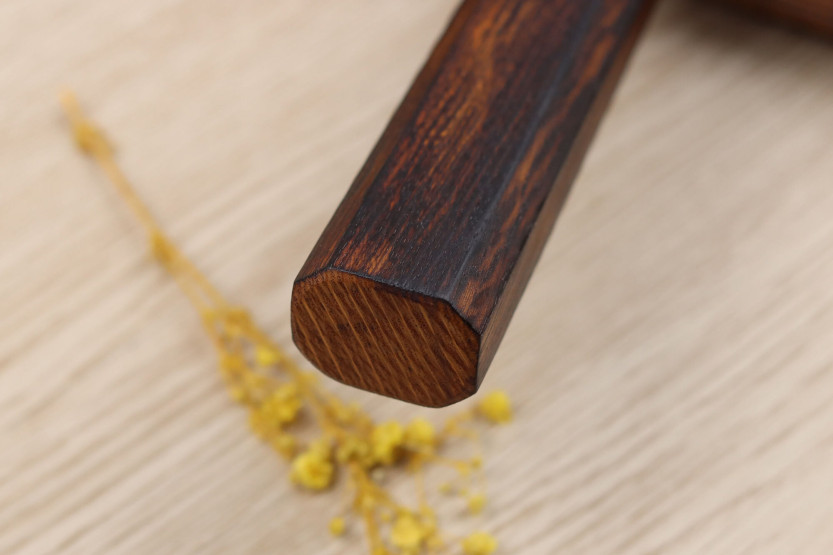
A smoked oak wood handle completes the knife, a robust species that is durable over the long term. With its high density, this wood is resistant to shocks, vibrations and humidity: it deforms with difficulty, even with condensation.
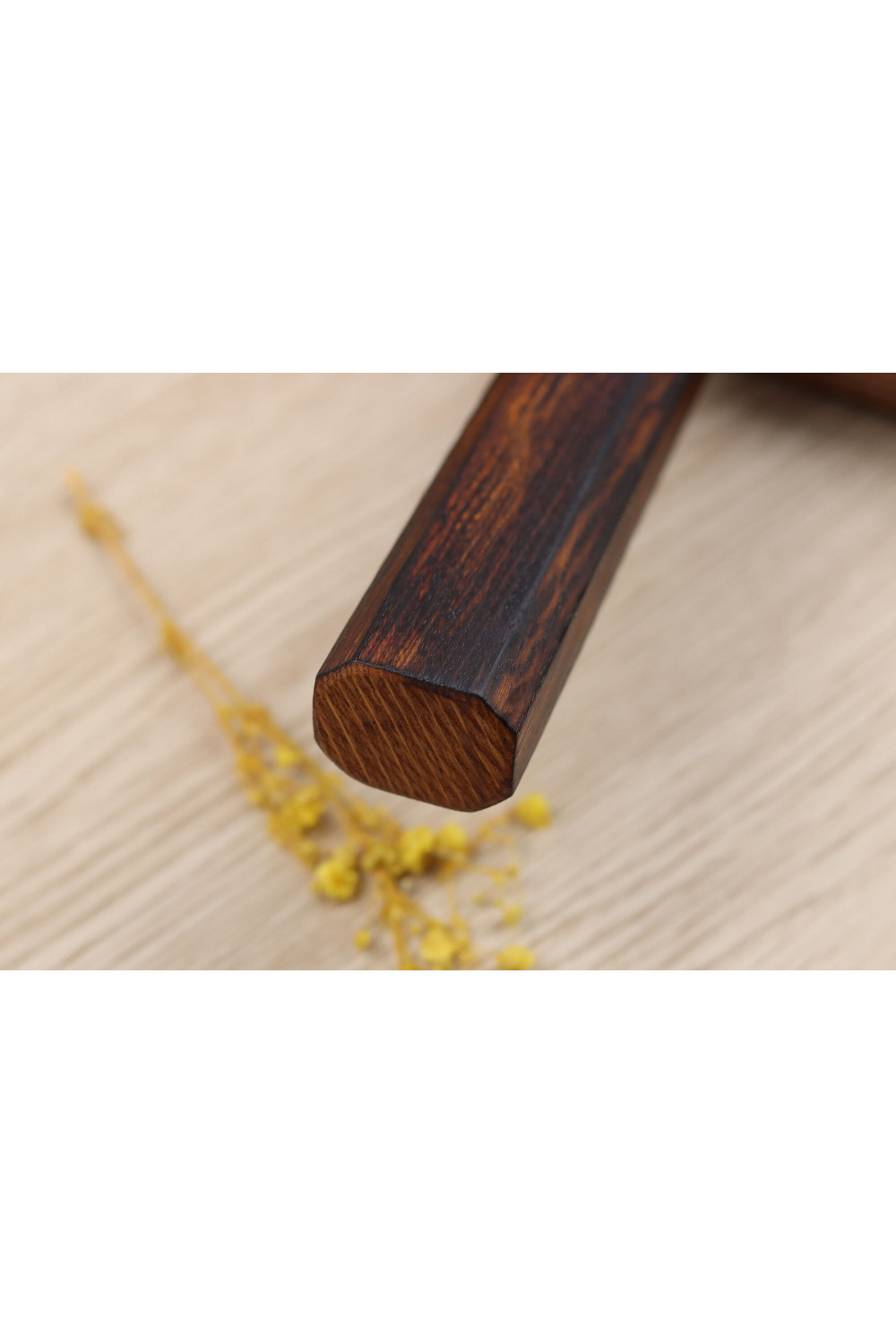
This baikoku oak wood has been smoked: a technique that darkens the wood while bringing out its natural grain. This adds character to your Japanese knife while intensifying its unique grain for an extra touch of authenticity.
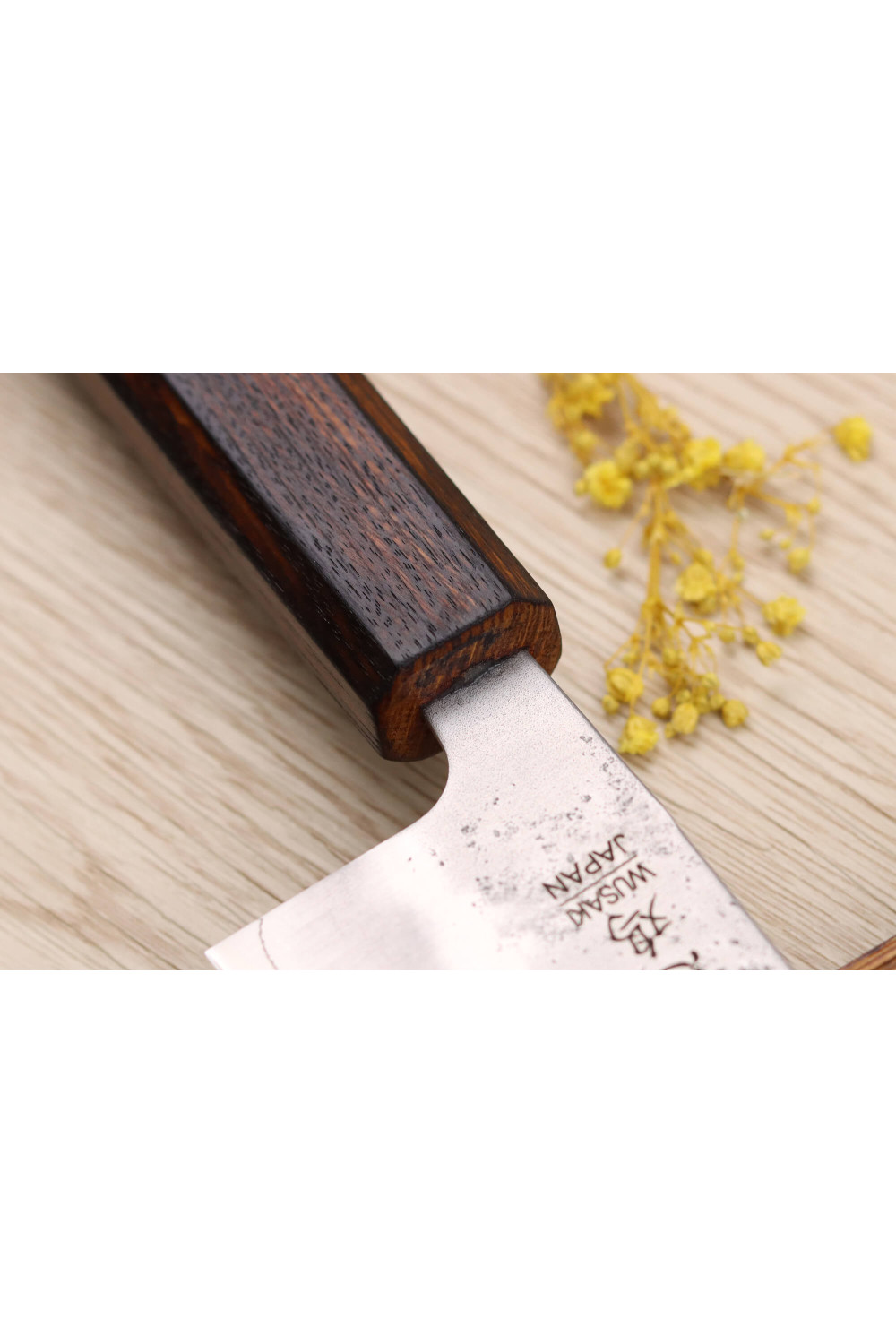
The handle of this handcrafted knife is octagonal in shape, making it suitable for all cooks: left- or right-handed! It offers an ergonomic grip for perfectly controlled handling, especially during prolonged use.
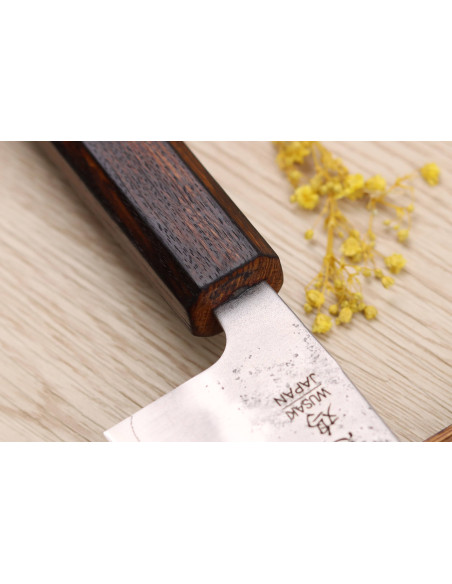
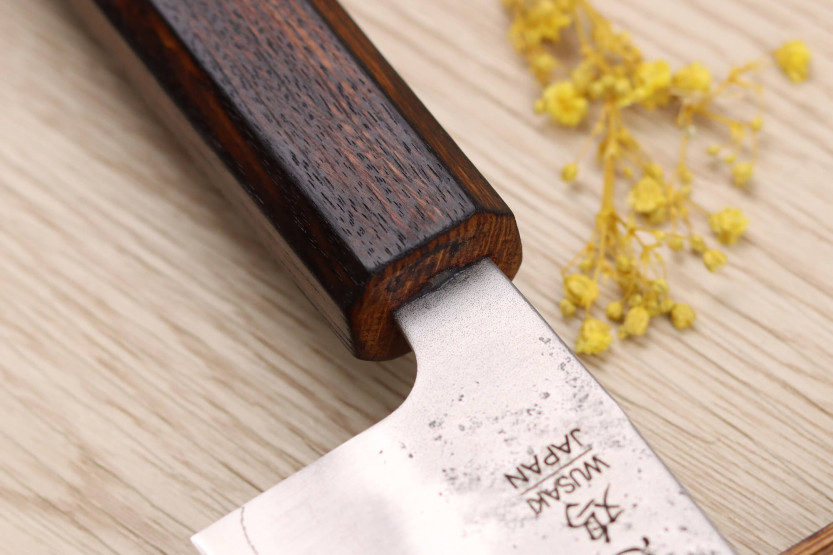
Wood pulp fills the space between the handle and the blade, making it watertight and hygienic (food cannot get into this small space).
Care: the knife should be washed by hand (but not with too much water on the handle), and the dishwasher should be avoided. Don't leave the knife to soak in the sink. Then, once washed, you can wipe it with a soft cloth before putting it away, so that no trace of moisture remains. This way, you'll be able to appreciate its original appearance over time.
Do you like Wusaki knives? Come and discover all our other ranges!





 By buying this product you can collect up to


 (5)
 (1)
 (0)
 (0)
 (0)
 (0)