An efficient San Maï blade in VG10 steel
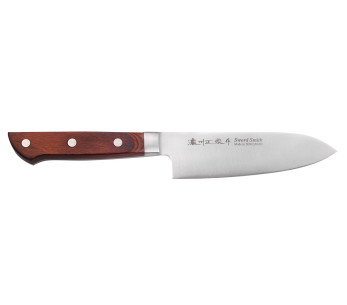
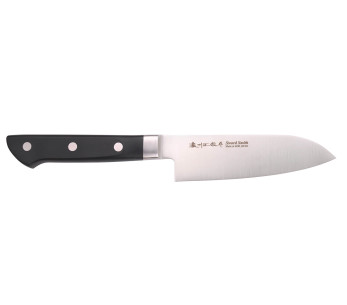
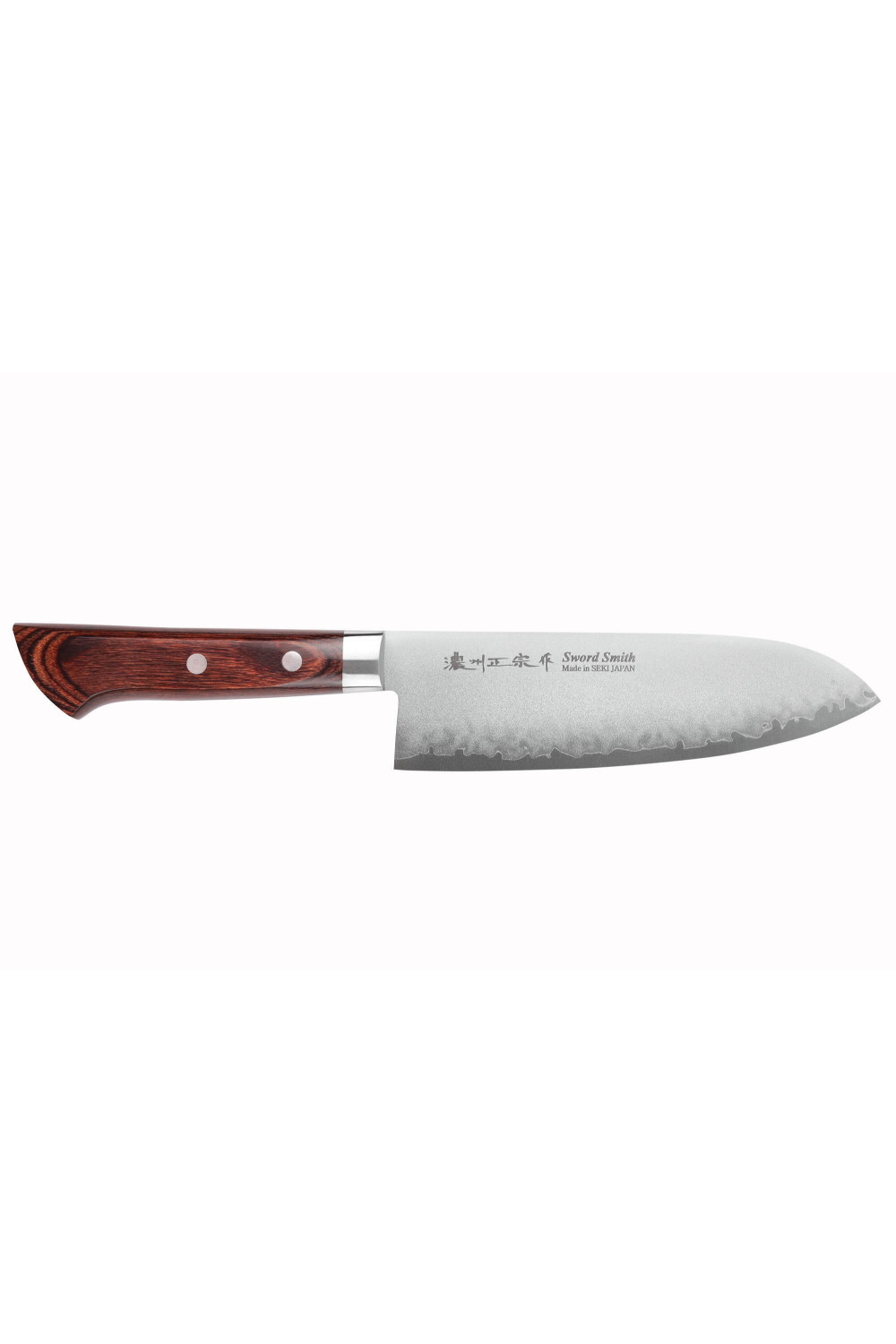
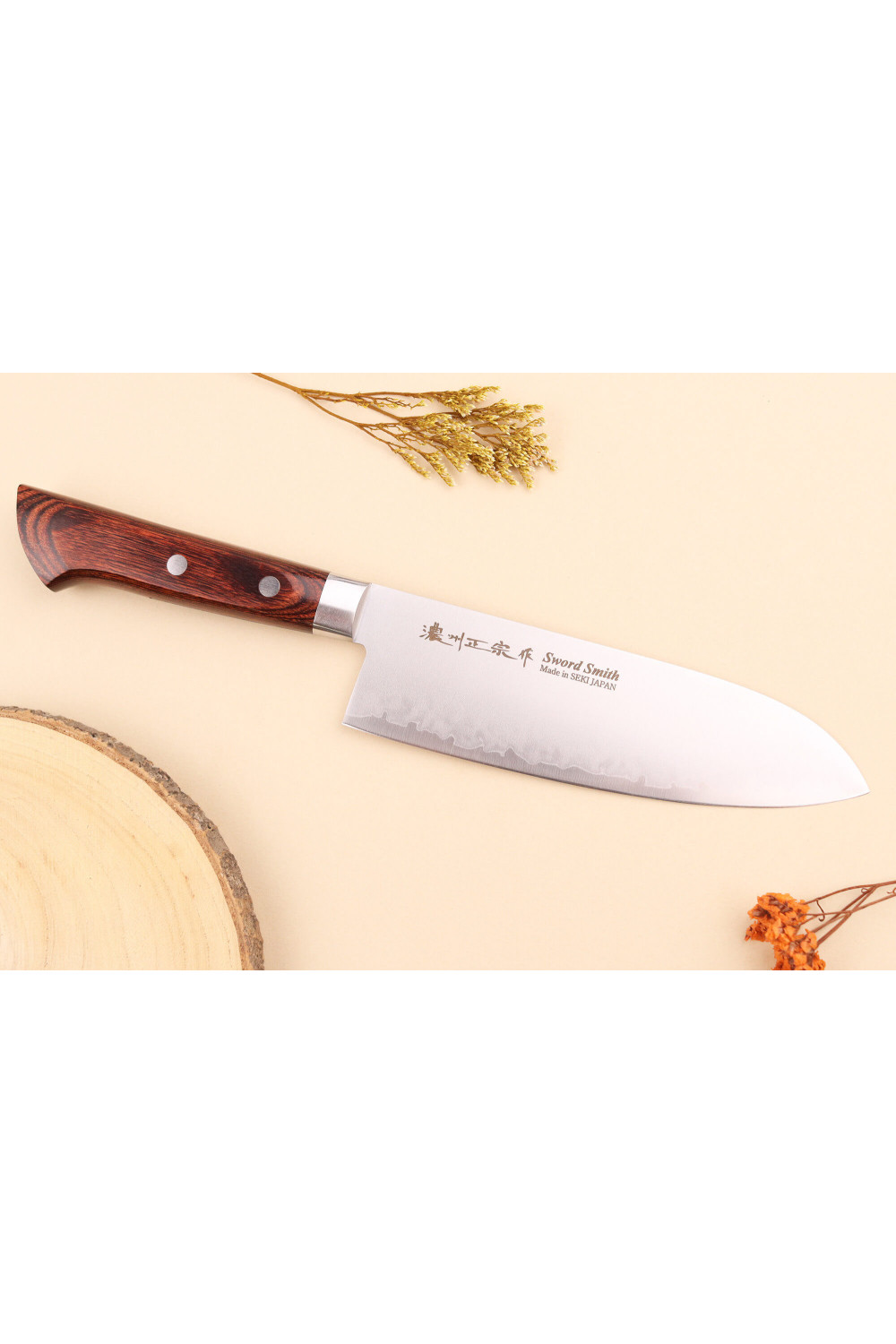
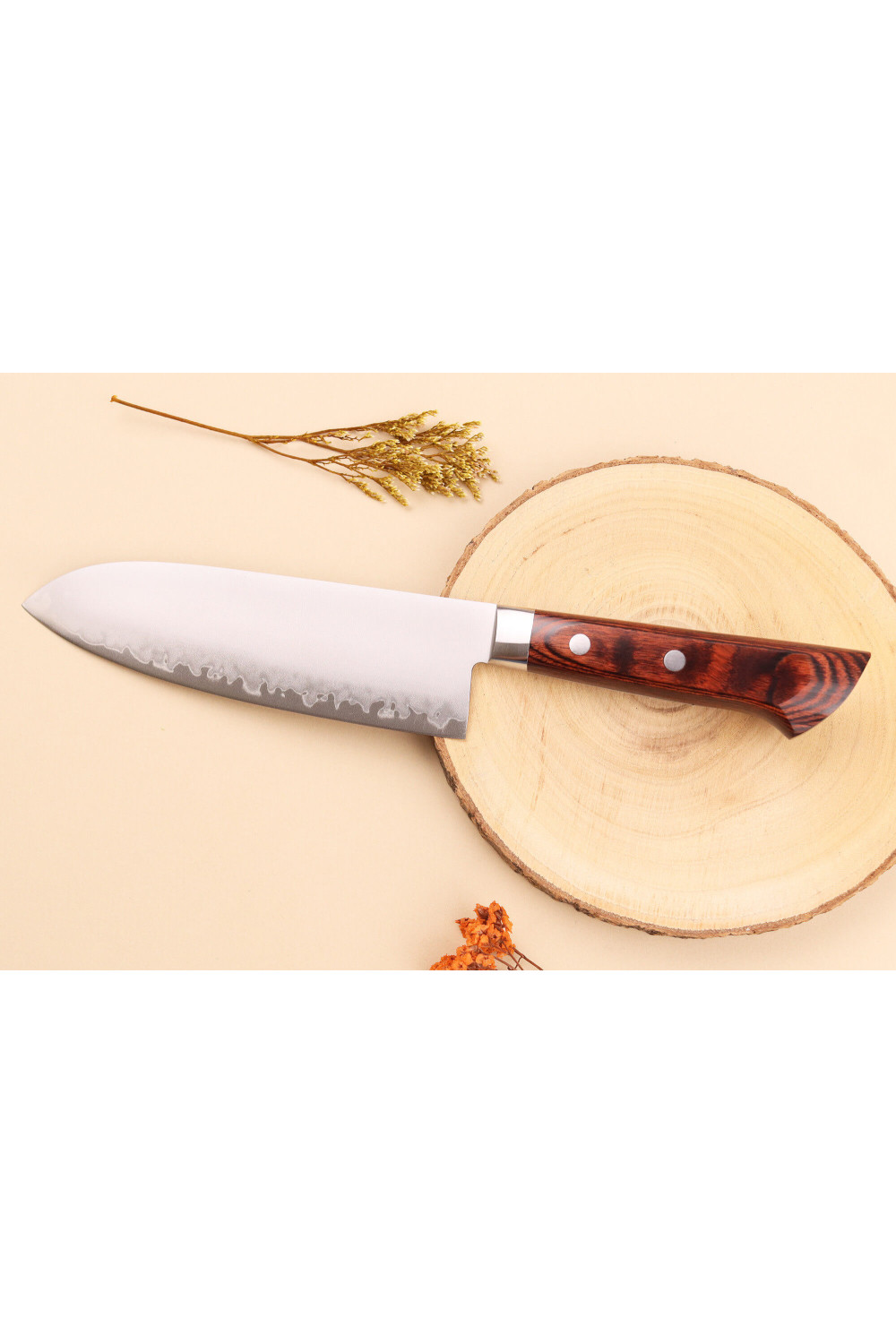
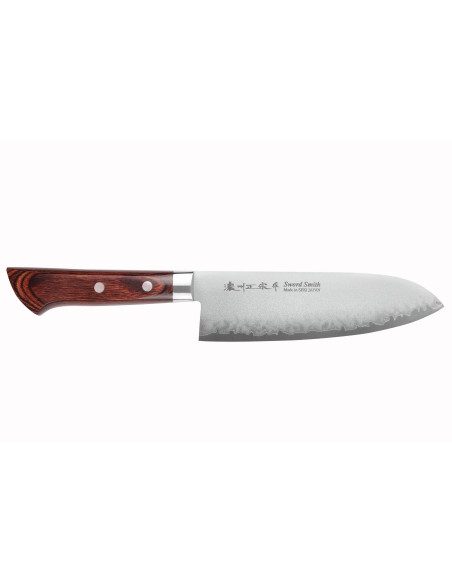
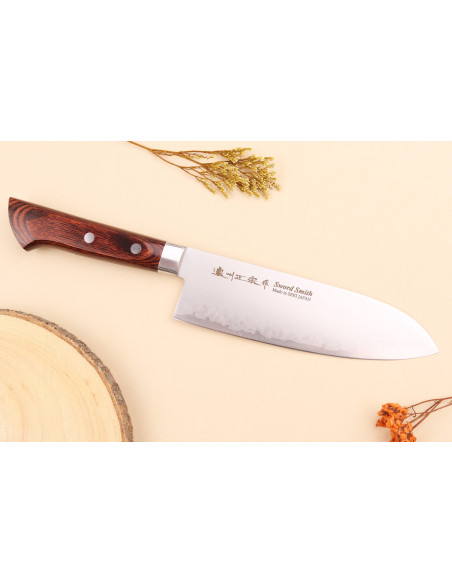
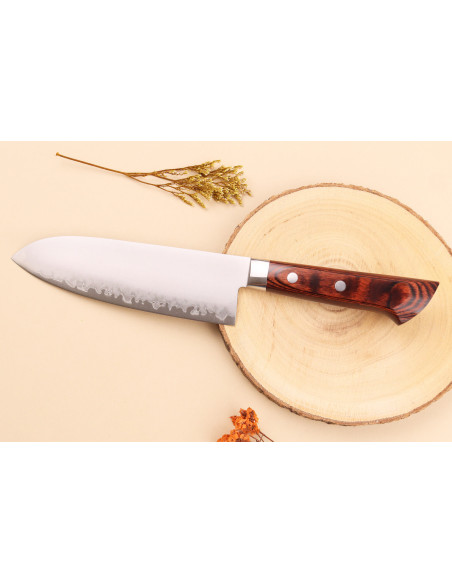
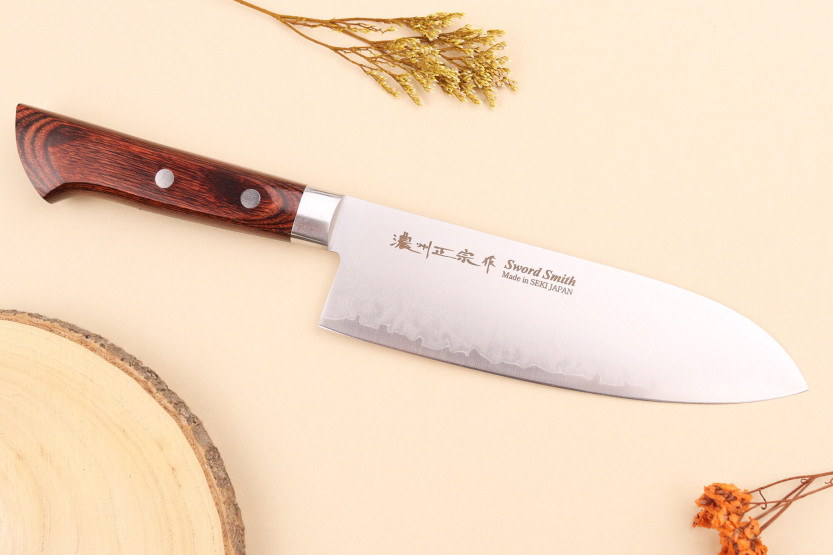
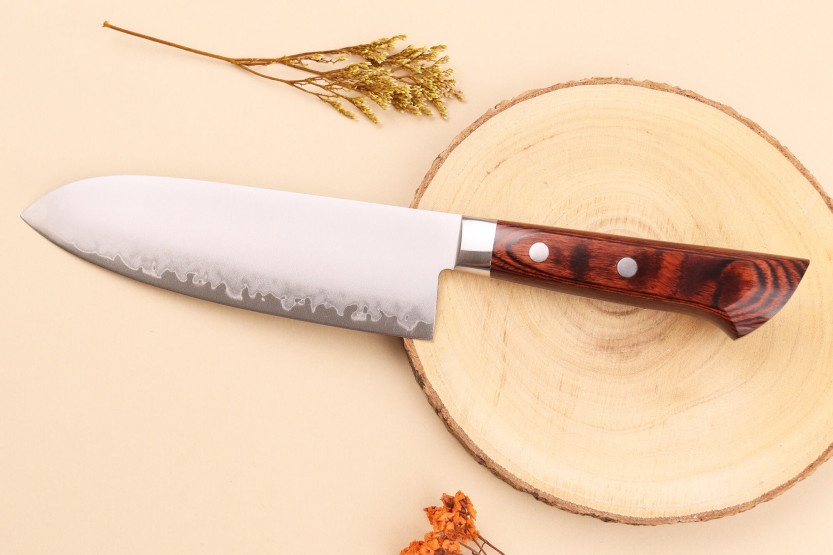
The Japanese santoku knife is a multi-purpose knife that can be used to make a variety of cuts, just like a chef's knife. It cuts efficiently through foods such as fruit, vegetables and meat. However, it is not designed for slicing the hardest foods, such as squash, bones or frozen foods.
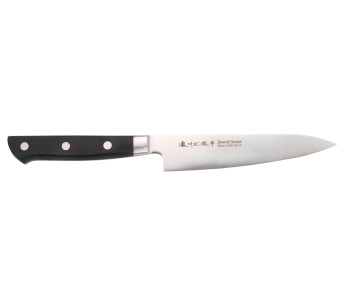
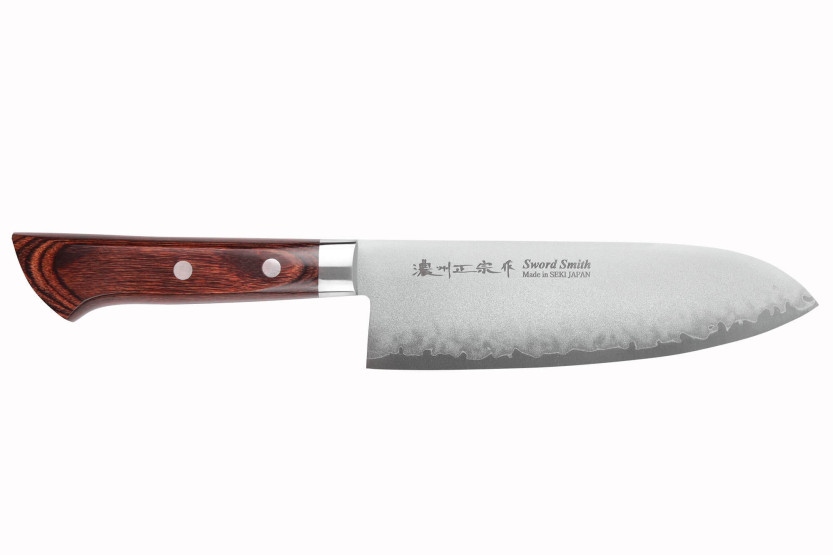
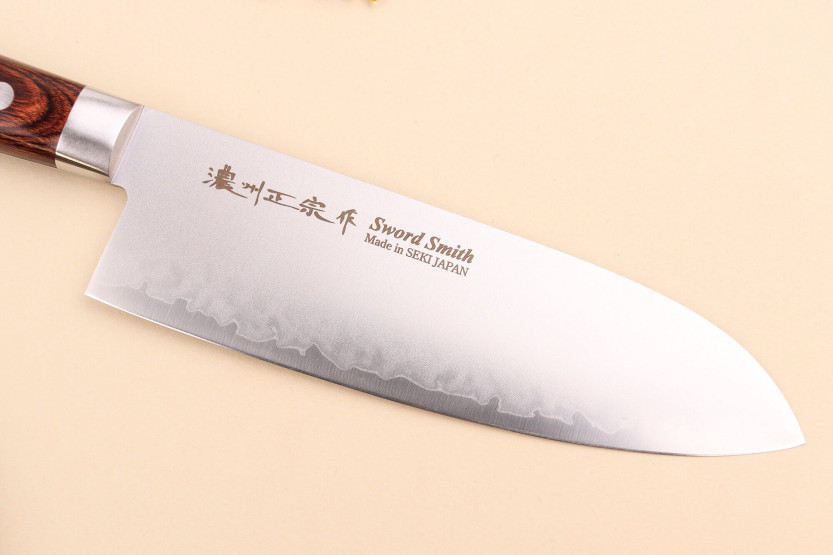
This knife features a 17cm blade with a typically Japanese San Mai structure. This technique consists of forging a rigid steel core, which is then surrounded by a layer of softer steel, folded on either side of the core. This gives the core greater flexibility while protecting it.
The core of this blade is made of Japanese VG10 steel, a well-known alloy produced by the renowned Takefu Special Steel. With a carbon content of almost 1%, this alloy offers enhanced hardness, reaching 60 HRC on the Rockwell scale. You benefit from excellent edge retention and optimal cutting performance.
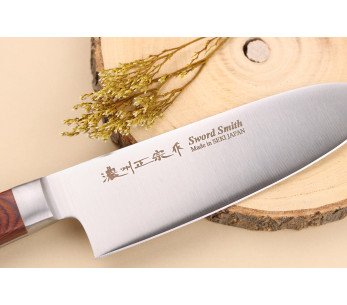
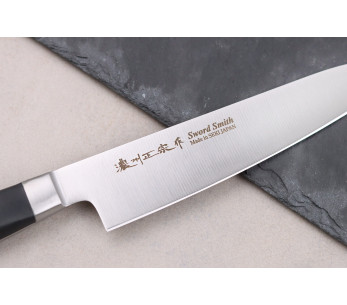
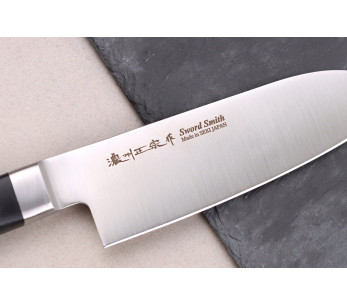
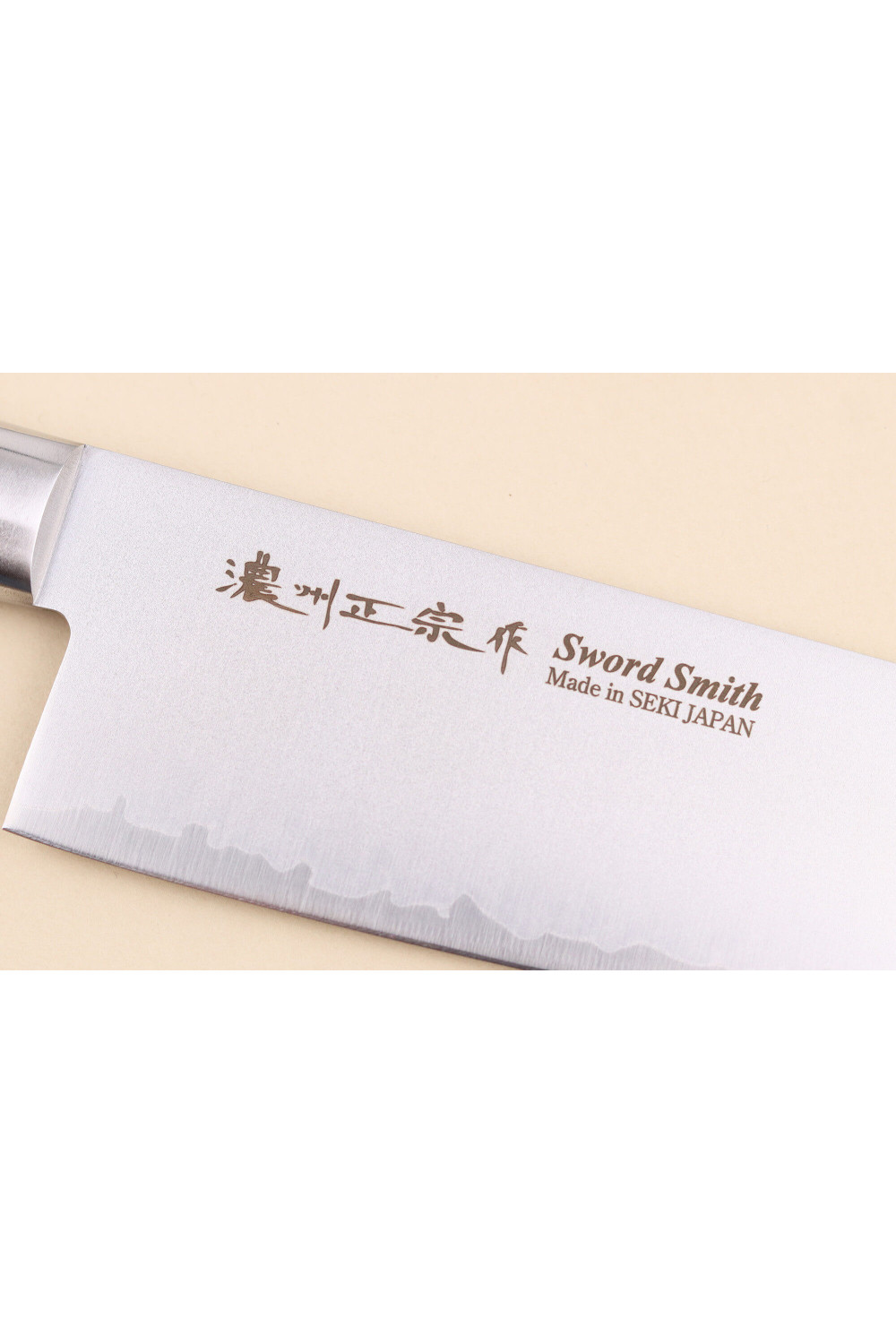
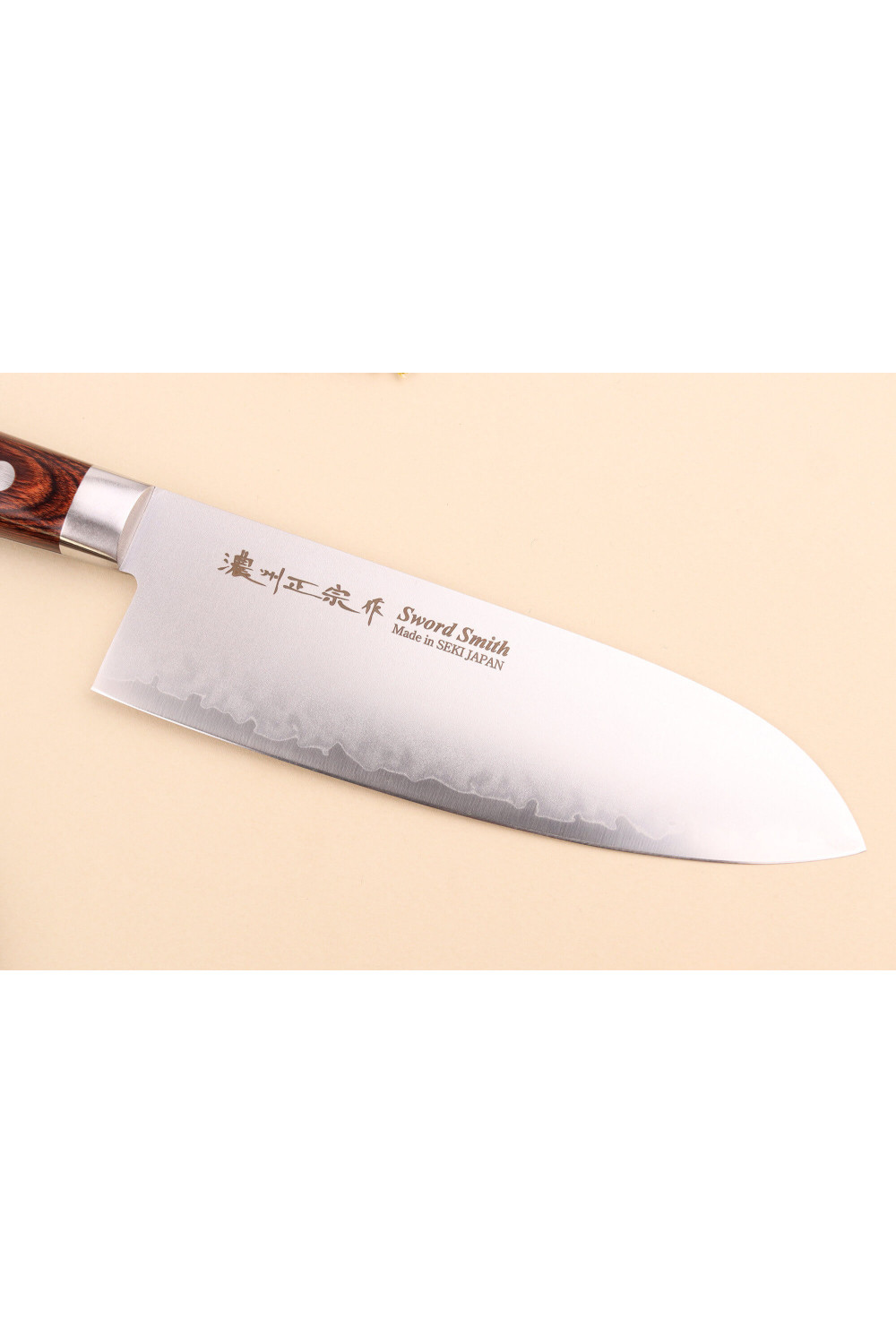
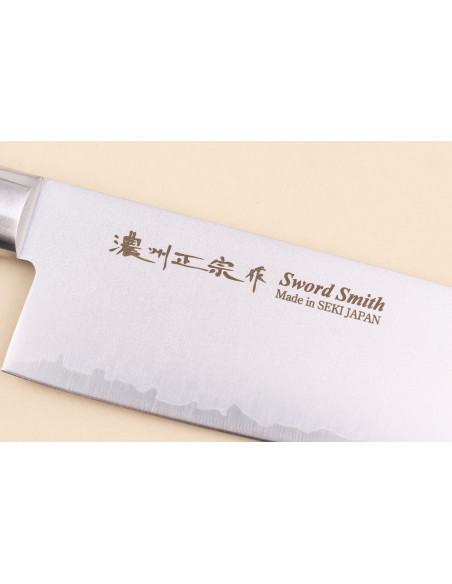
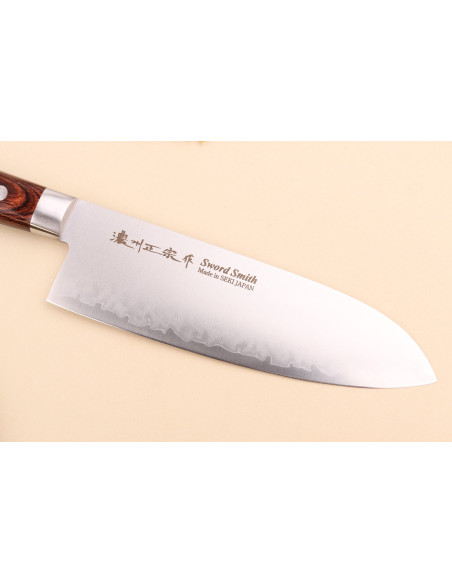
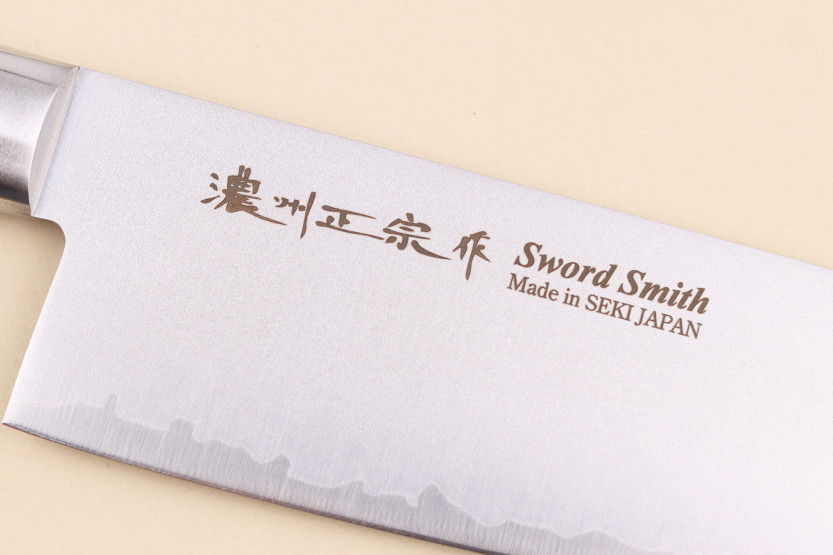
This VG10 steel core is enveloped bya softer layer of steel, folded in on itself to create the two additional layers. This outer layer adds flexibility to the core, making it less susceptible to breakage when cutting. You can also observe the superimposition of steel layers along the cutting edge, creating a fine wave of random patterns.
The blade has been pre-sharpened to be ready for use as soon as you receive the knife. It has been polished, giving it a timelessly elegant appearance.
The handy Pakka wood handle
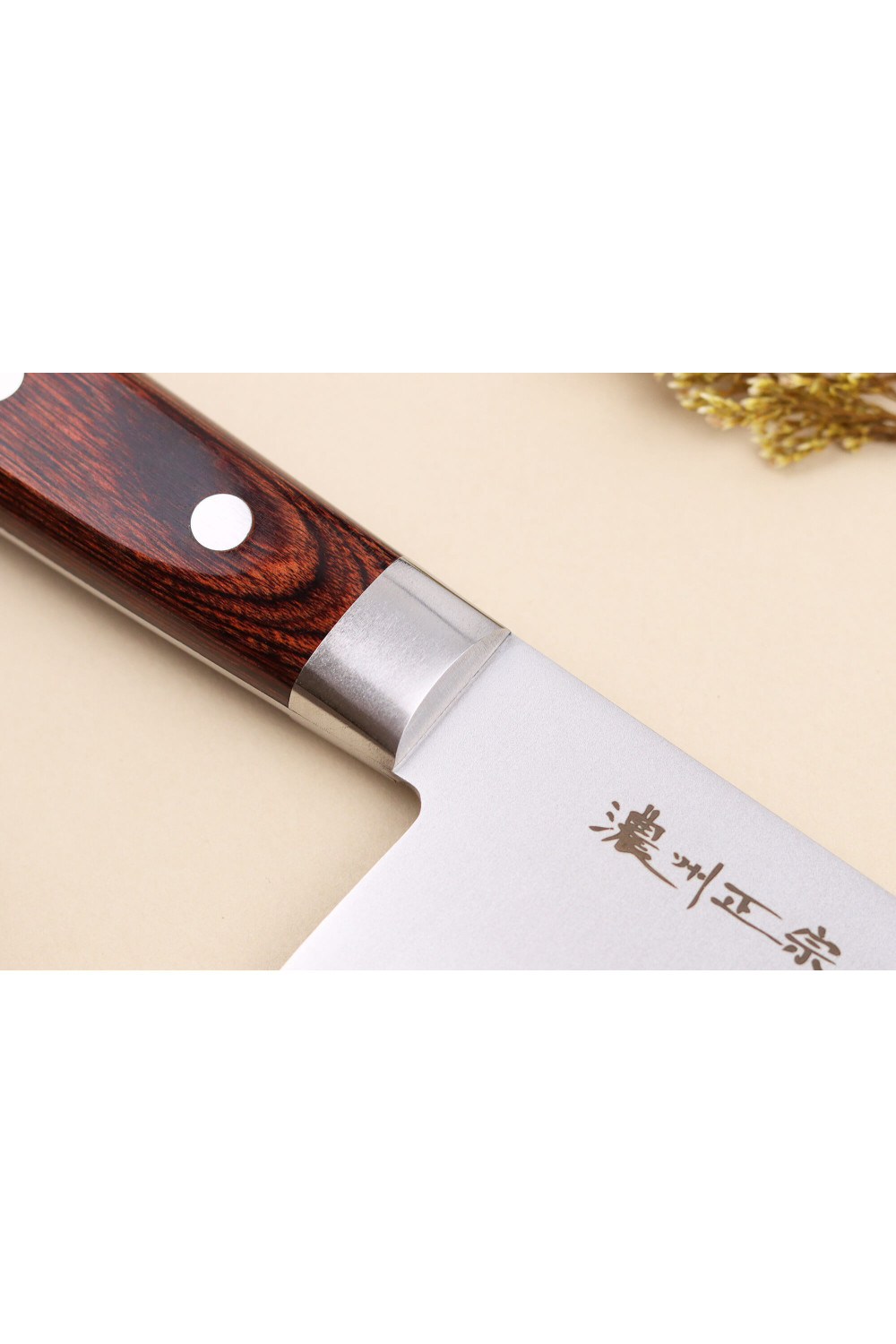
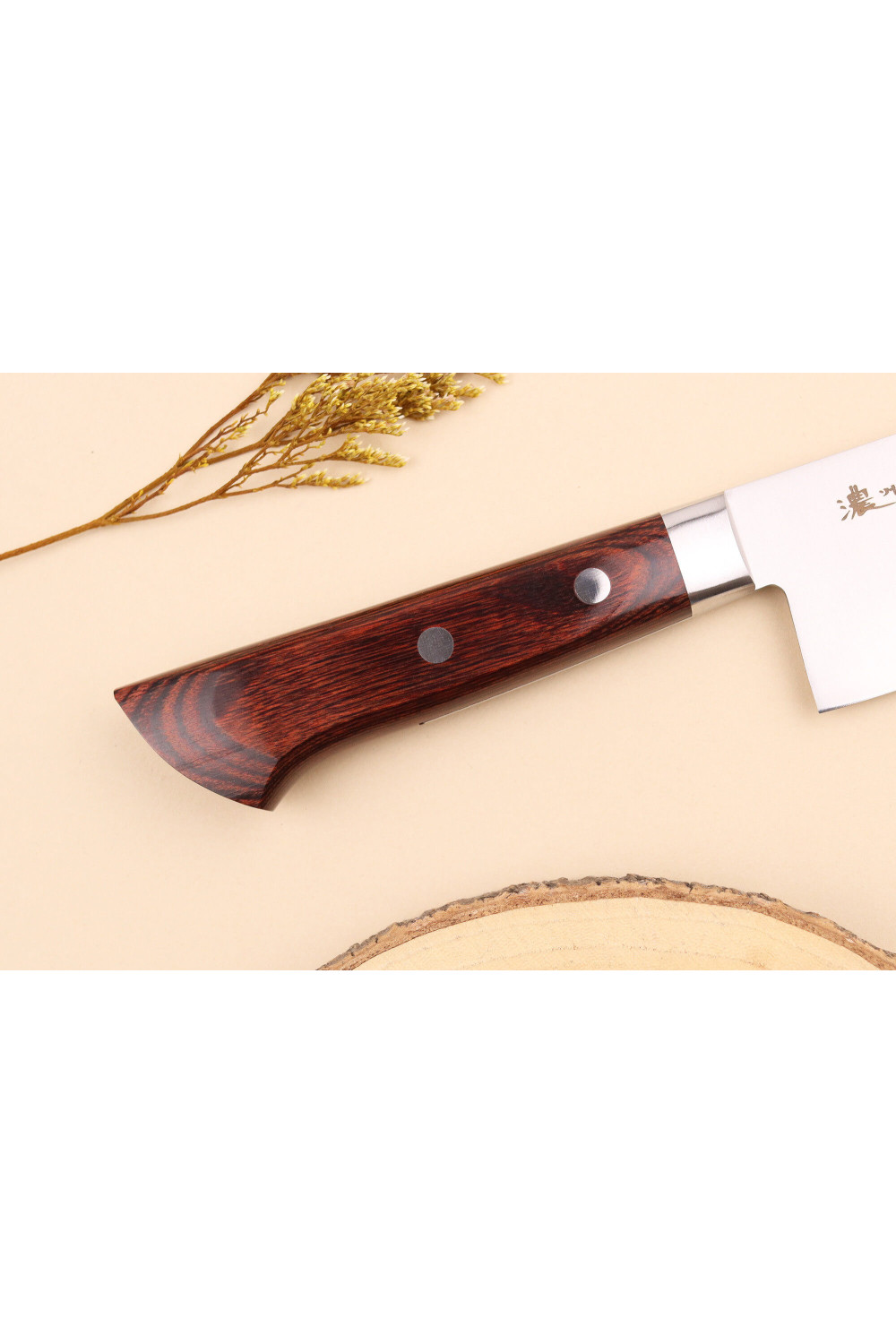
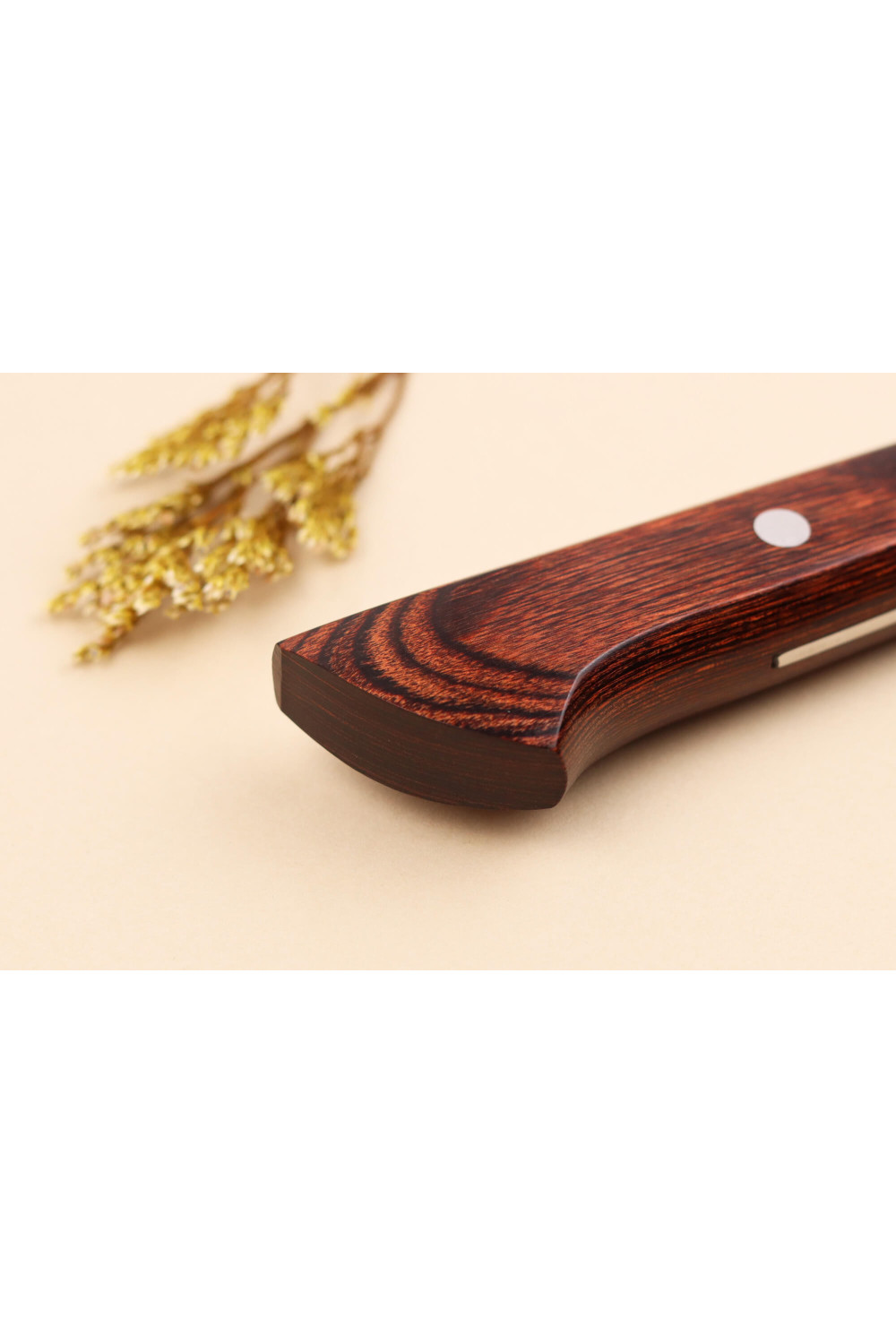
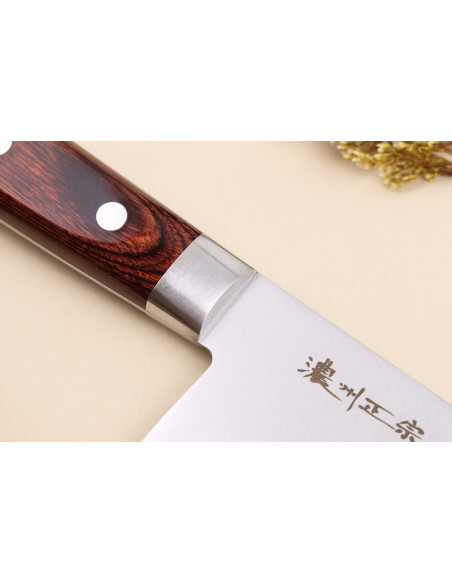
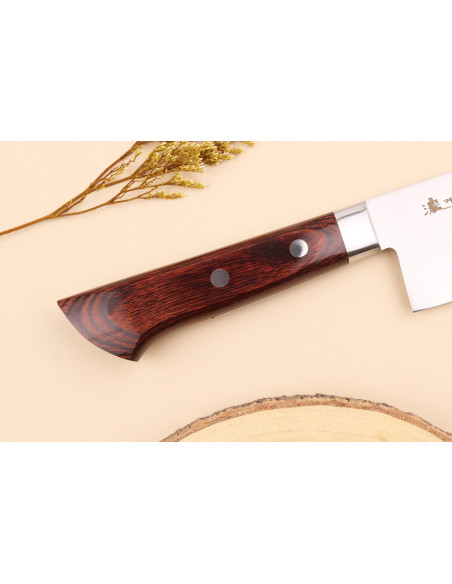
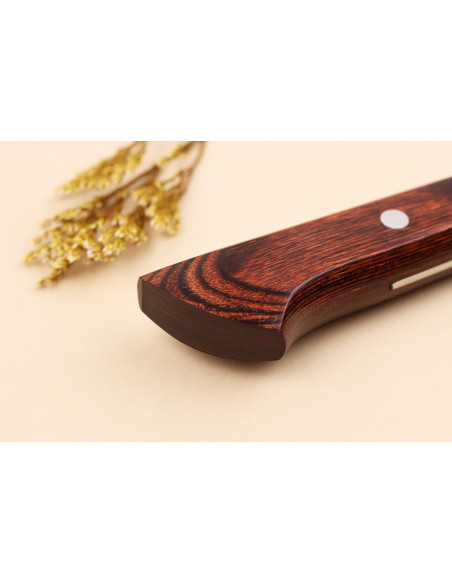
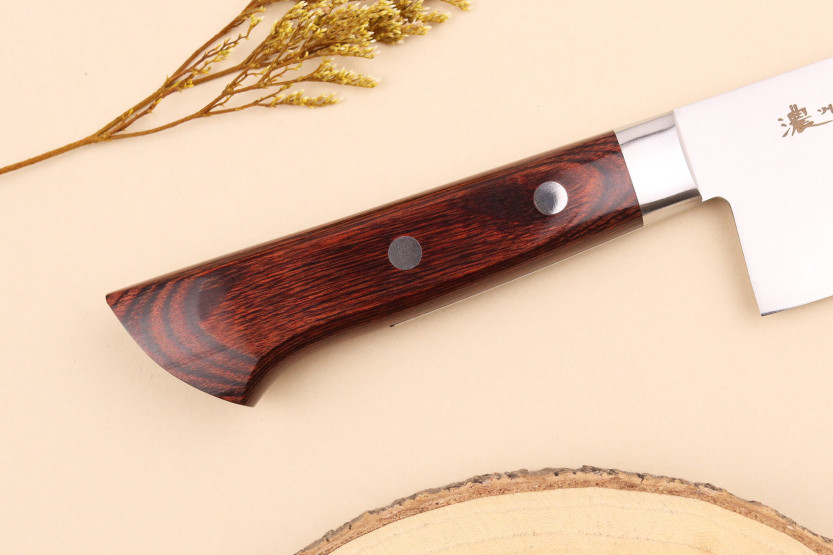
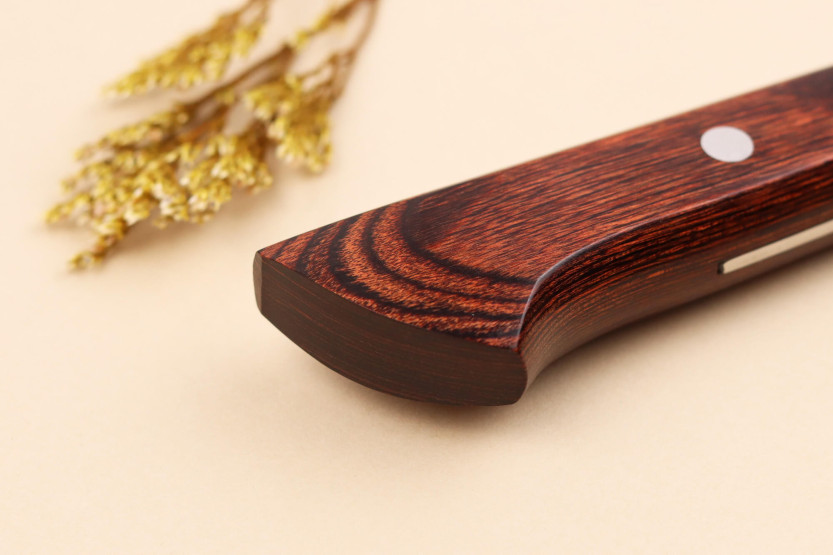
Your Satake knife features a brown Pakka wood handle, a composite material renowned for its strength and antibacterial properties. Composed of resin and laminated wood, all heat-compressed, it offers exceptional durability while retaining the authenticity of the wood, with natural grain highlighted.
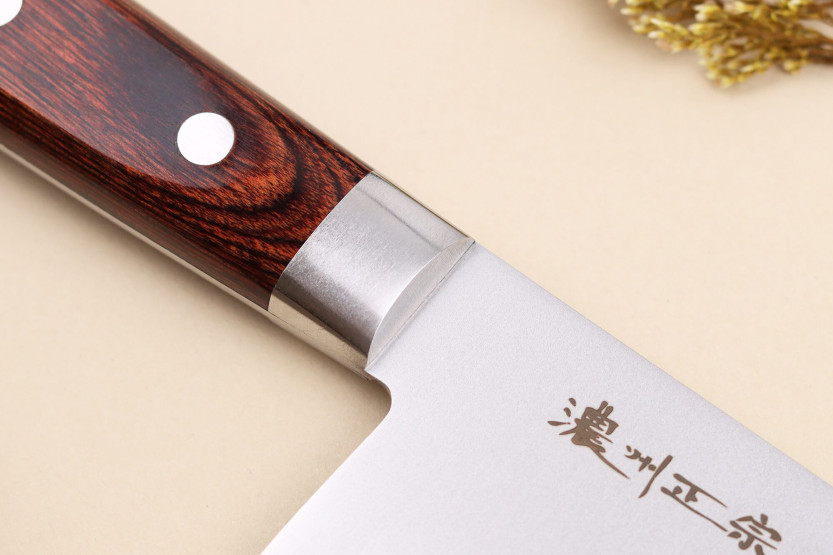
The pakka wood is firmly attached to the tang by two stainless steel rivets, ensuring enhanced durability. A stainless steel bolster links the blade to the handle, guaranteeing optimum balance for your knife.
The handle has a Western shape, suitable for both left- and right-handed cooks. Its ergonomic grip guarantees optimum comfort and handling, even during prolonged use.
To wash your knife, it's important to do so only by hand, using a non-abrasive sponge. After washing, dry it immediately to remove all traces of water, then store it in a dry place. Do not soak it in the sink or put it in the dishwasher.
Many Japanese knives are available on our site!




 By buying this product you can collect up to